Your team can’t coordinate services or protect client information when records sit across spreadsheets, email threads, PDFs, and paper files.
One intake update gets missed. A referral loses its context. Staff spend Friday rebuilding reports instead of supporting clients. Each disconnected record also creates another question for operations or support teams to untangle.
The Business Research Company valued the social work case management software market at $14.89 billion in 2025. Its 2026 report projects the market will reach $29.68 billion by 2030.
Growth doesn’t make the buying decision easier. Case management software for social workers ranges from practice management tools to agency wide human services platforms. Your service model should determine the shortlist.
What’s inside
This guide compares social services case management software for nonprofits, private practices, behavioral health providers, and public programs.
We assessed each product using practical criteria:
- Documentation depth and frontline usability
- Intake, assessment, and care plan support
- Referral coordination and outcome reporting
- Security controls and pricing clarity
- Fit for different organization sizes
The comparison uses vendor product pages, current pricing information, and G2 ratings where available. An unavailable G2 rating appears as N/A rather than an estimate.
TL;DR
- Best for community care coordination: CharityTracker connects shared assistance records, referrals, case notes, and outcome tracking
- Best for private practices: SimplePractice, Zanda, Carepatron, and IntakeQ cover appointment based workflows
- Best for nonprofit program reporting: Bonterra Apricot, Sumac, NewOrg, and PlanStreet support program data and funder reporting
- Best for child and family services: extendedReach focuses on child and family social service agencies
- Best for behavioral health: Exym, Foothold, Healthie, and Noteable combine documentation with care operations
- Best lightweight starting point: Carepatron offers a free plan for smaller care teams
What is social work case management software?
Social work case management software is a system for managing client intake, assessments, case notes, care plans, referrals, services, documents, outcomes, and reporting in one secure workflow.
These systems replace fragmented files with a shared client record. Staff can see what happened, who owns the next task, and whether a service changed the client’s outcome.
Social case management software also supports administrative work. Program managers use structured data for caseload reviews, funder reports, board dashboards, and mandated reporting workflows.
The category overlaps with several adjacent types of social work software. A private practice may need scheduling and billing. A community nonprofit may prioritize referrals and assistance history. Public programs often require configurable workflows across several service areas.
Fit matters more than feature count.
Key features to look for
- Client intake and eligibility screening
- Assessments and configurable forms
- Case notes and treatment documentation
- Care plans and goal tracking
- Referral coordination and service history
- Document storage and electronic signatures
- Alerts and task reminders
- Reporting and outcome tracking
- Role permissions and audit records
- Billing and claims where relevant
How it differs from adjacent software
Practice management software usually focuses on appointment based work. Common functions include scheduling, documentation, payments, insurance billing, and client communication.
Nonprofit CRM software manages donors, volunteers, campaigns, grants, and constituent relationships. Some products add nonprofit case management software as a dedicated module.
Electronic health records focus more heavily on clinical documentation, billing, medication records, and healthcare operations.
Human services case management software often supports several programs, complex reporting requirements, configurable access, and public sector workflows.
Start by mapping your case journey. Then look for software that follows it without forcing staff to duplicate work.
When to use social work case management software
Centralize client records across programs
Use case management software when intake forms, notes, and service records live in separate systems. A shared record gives authorized staff the context needed for handoffs and follow ups.
This matters when one client receives support from several programs. Access permissions should still limit each team to appropriate information.
Coordinate referrals without losing context
Case management software social services teams use should record who made the referral, why it was made, and what happened next.
Closed loop referral tracking helps staff see whether a client received the service. It also reduces repeated status questions across teams.
Prove outcomes to funders and leadership
Choose structured case manager software when monthly reporting requires manual spreadsheet work. Outcome tracking software can connect assessments, service delivery, and progress over time.
The same records can support grant reports, caseload summaries, board updates, and program improvement. Test these reports before signing a contract.
Social work case management software comparison
This table is a shortlist rather than a universal ranking. Each product serves a different operating model, from solo practice work to agency wide human services software.
Pricing reflects current vendor information. Custom pricing means the provider requires a sales conversation. G2 ratings appear only where a current listing was available.
| # | Product | Best for | Key differentiator | Pricing | G2 rating |
|---|---|---|---|---|---|
| 1 | CharityTracker | Community assistance networks | Shared assistance history and referrals | From $20 per user monthly | 4.6/5 |
| 2 | Collaborate | Configurable service programs | Adaptable case and funder workflows | Custom pricing | N/A |
| 3 | Sumac Case Management by Societ | Nonprofit case management | Case plans linked with nonprofit data | From $179 monthly | 4.2/5 |
| 4 | InfoFlo Impact | Nonprofit outcome tracking | Custom case records and reporting | $20 per user monthly | 4.5/5 |
| 5 | NewOrg | Broad nonprofit operations | Programs, forms, records, and reporting | From $250 monthly | 4.7/5 |
| 6 | SimplePractice | Private social work practices | Scheduling, notes, billing, and portal | From $49 monthly | 4.1/5 |
| 7 | Carepatron | Small care teams | Free practice management plan | Free plan | 4.5/5 |
| 8 | IntakeQ | Form heavy intake workflows | Conditional forms and electronic signatures | From $54.90 monthly | N/A |
| 9 | Bonterra Apricot | Nonprofit program reporting | Configurable caseload and outcome analytics | Custom pricing | N/A |
| 10 | Healthie | Health and wellness programs | EHR, telehealth, billing, and engagement | From $49.99 monthly | N/A |
| 11 | Casebook | Human services agencies | Case focused service delivery workflows | Custom pricing | 4.3/5 |
| 12 | extendedReach | Child and family services | Specialized agency focus | Custom pricing | N/A |
| 13 | Exym | Behavioral health agencies | EHR, claims, and care management | Custom pricing | 4.4/5 |
| 14 | Foothold | Multi program human services | Configurable agency wide operations | $15,000 to $100,000 annually | N/A |
| 15 | Zanda | Appointment based practices | Practice management for health providers | From $29 monthly | 4.7/5 |
| 16 | PlanStreet | Public and community programs | Configurable workflows and reporting | Custom pricing | 4.6/5 |
| 17 | Noteable | Behavioral health documentation | Clinical records with practice operations | Contact Noteable for a quote | N/A |
Best 17 tools for social work case management software
1. CharityTracker
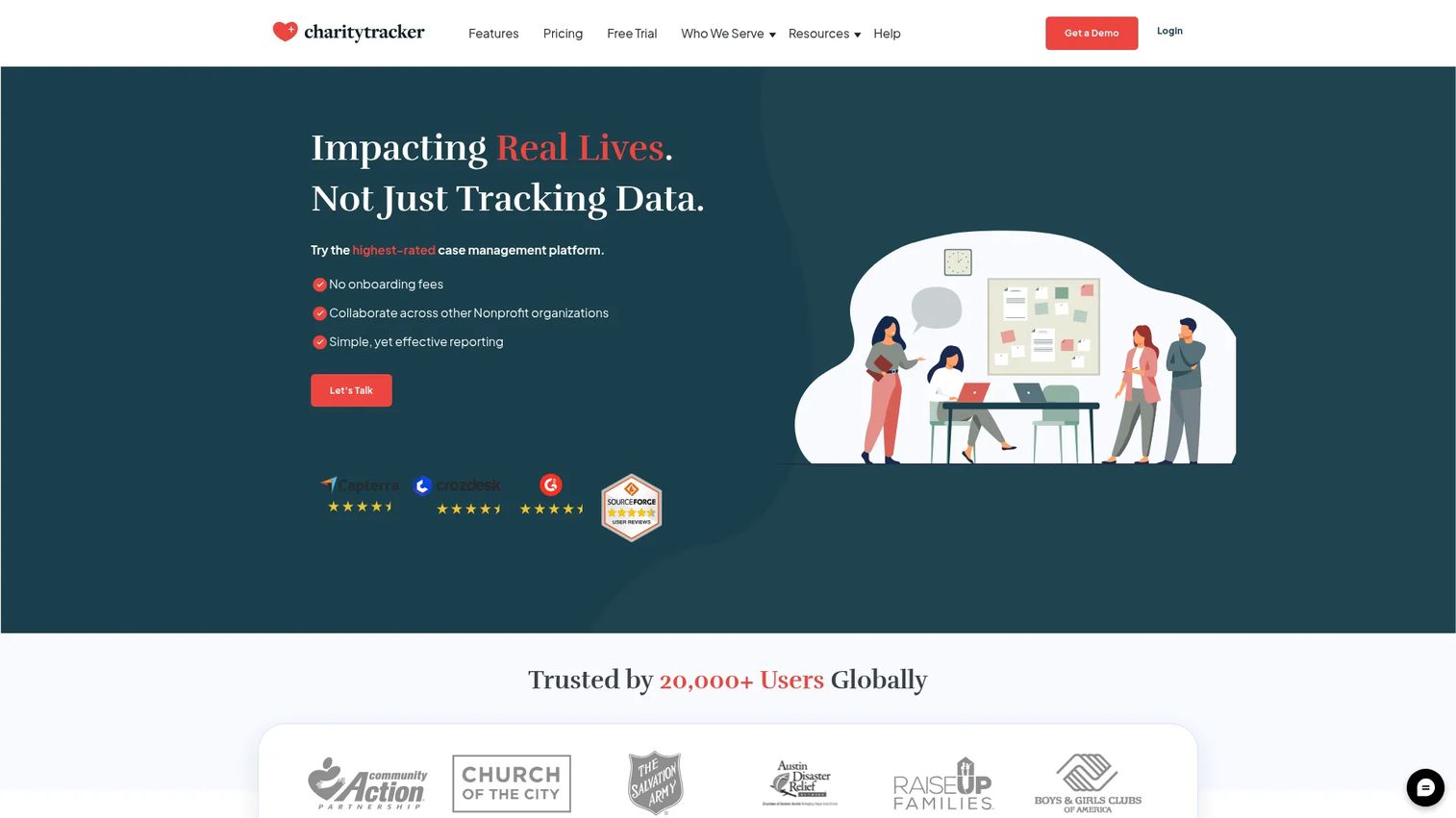
CharityTracker is a cloud based case management CRM for nonprofits, churches, and community service networks. It combines case intake with assistance history, referrals, assessments, and reporting.
The platform suits coalitions where several organizations support the same community. Shared records can help authorized teams coordinate assistance without relying on email updates.
Best for: Community based agencies coordinating assistance across several organizations.
Key features
- Case intake and management
- Interagency referrals
- Assistance history
- Custom assessments
- Outcome reporting
Why choose CharityTracker
Choose CharityTracker when community coordination matters more than claims processing. Client IDs and shared histories also help organizations track repeated assistance.
Private practices that need insurance billing should consider a practice management product instead.
CharityTracker pricing
Basic costs $20 per user monthly, Plus costs $40, and Pro costs $60. Annual billing saves 10%, and a 14 day trial is available.
G2 rating: 4.6/5
2. Collaborate
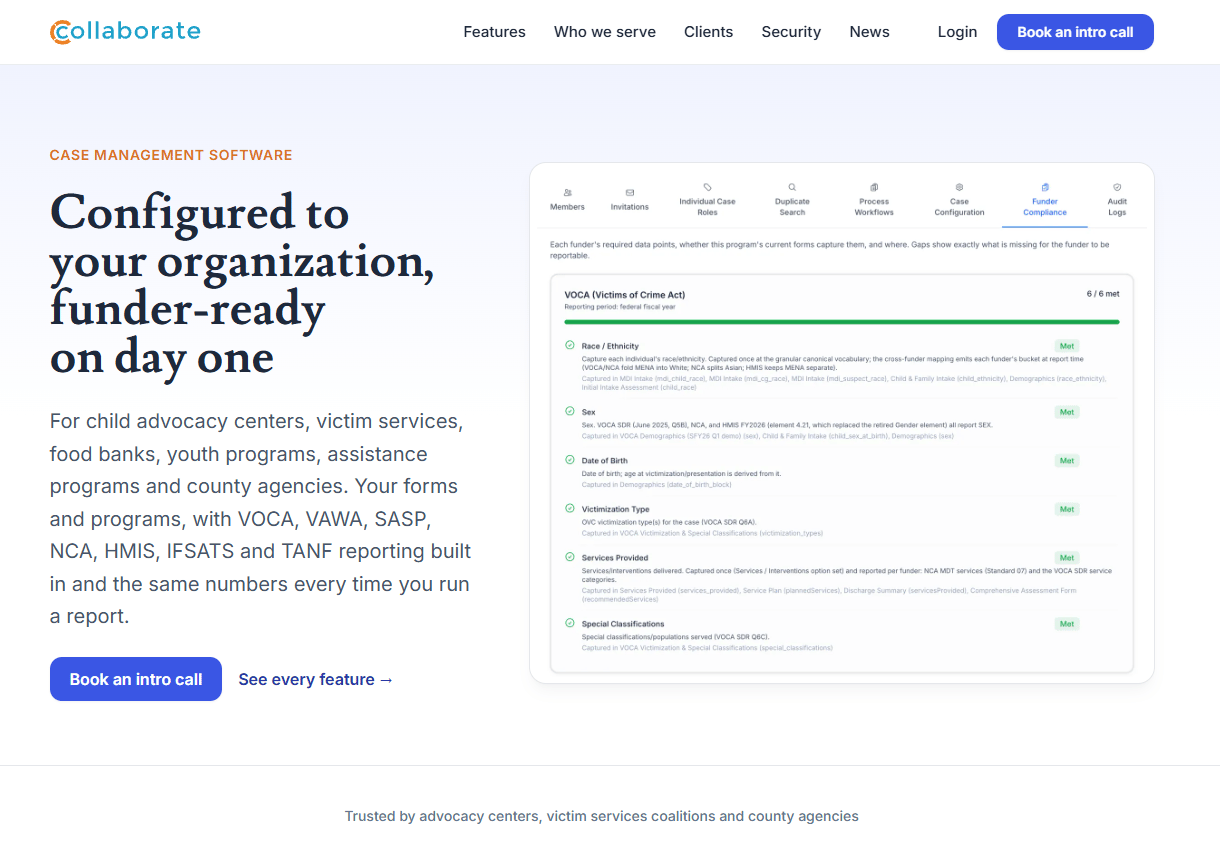
Collaborate is configurable case management software for nonprofits, victim services organizations, child advocacy centers, and government programs.
Teams can structure profiles, intake forms, services, tasks, referrals, notes, and alerts around their programs. The platform also supports funder reporting requirements across several program types.
Best for: Organizations that need configurable workflows across several client service programs.
Key features
- Configurable case profiles
- Intake forms
- Service assignments
- Funder reporting
- External forms
Why choose Collaborate
Collaborate fits teams moving away from spreadsheets while preserving program specific processes. Its reporting support also suits organizations managing several funding requirements.
The vendor states that the platform supports HIPAA requirements and undergoes SOC 2 Type 2 auditing. Request current documentation during evaluation.
Collaborate pricing
Custom pricing considers organization size, user count, and selected modules. The vendor states that it doesn’t charge per seat licensing fees.
3. Sumac Case Management by Societ
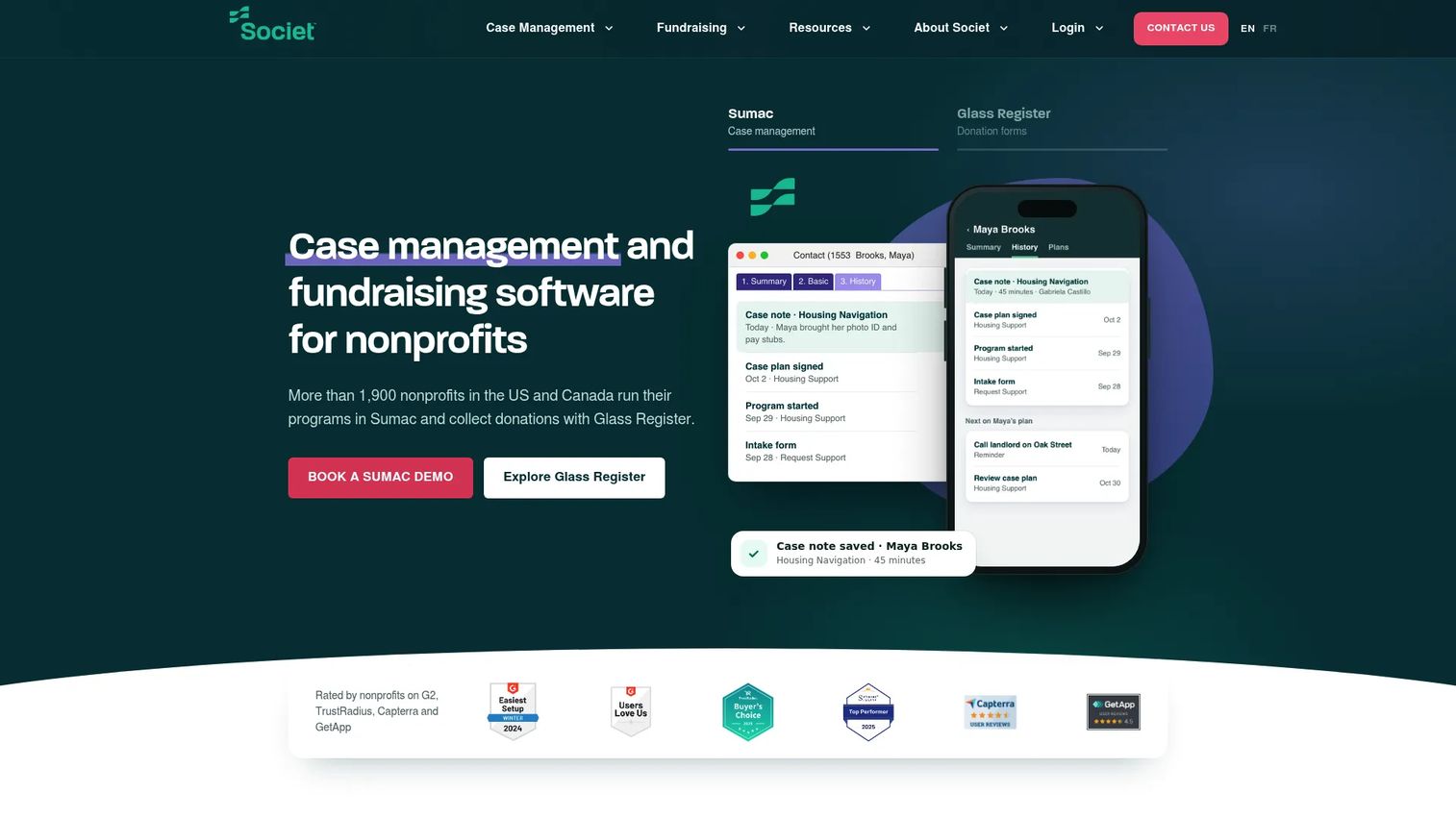
Sumac Case Management by Societ gives nonprofits a shared system for intake, case plans, notes, services, and reporting. Its mobile Case Portal helps caseworkers access records away from the office.
This social services case management software also connects case activity with broader nonprofit constituent data. That makes it useful when programs need a fuller view of each relationship.
Best for: Nonprofits connecting case management with program and constituent records.
Key features
- Online intake forms
- Client case histories
- Signed case plans
- Mobile case access
- Funder reports
Why choose Sumac Case Management by Societ
Sumac fits nonprofits that want client work and organization data connected. Role and program permissions can separate access across departments.
Agencies with specialized public reporting should test every required report during evaluation.
Sumac Case Management by Societ pricing
Plans start at $179 a month. Setup carries a separate quoted fee, and add ons are available.
G2 rating: 4.2/5
4. InfoFlo Impact
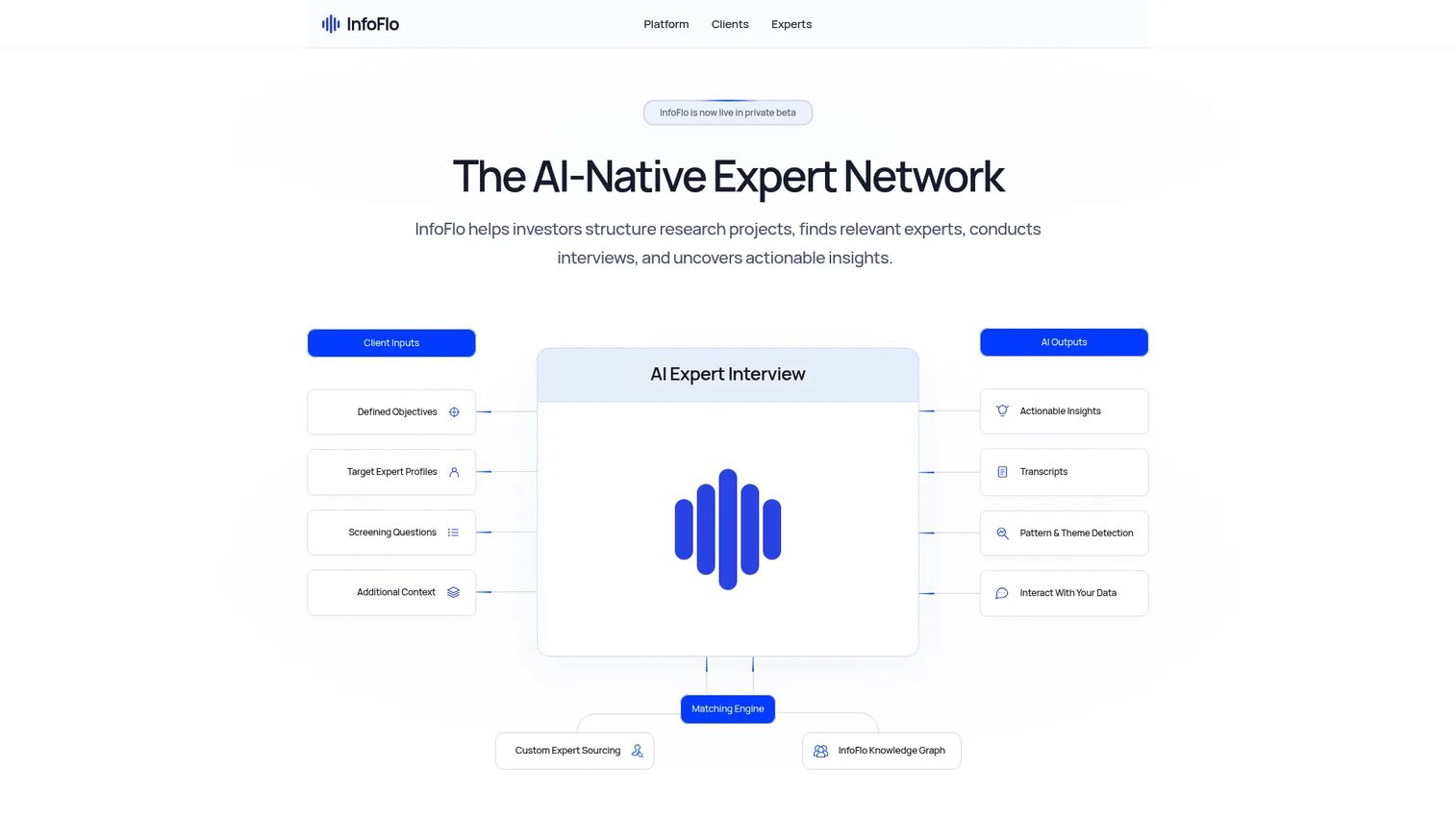
InfoFlo Impact is case management software for nonprofits and human services organizations. Its documented capabilities include client records, referrals, activities, events, and custom reporting.
The product focuses on showing who received support and how services changed outcomes. Reports can be exported to Excel or CSV for further analysis.
Best for: Nonprofits connecting client records with program and outcome tracking.
Key features
- Client case management
- Goal tracking
- Referral records
- Activity management
- Custom reporting
Why choose InfoFlo Impact
InfoFlo Impact suits organizations that need customizable records without adopting a broad public sector platform.
Teams requiring specialized clinical documentation should inspect templates and reporting depth before committing.
InfoFlo Impact pricing
Third party listings report cloud pricing at $20 per user monthly. Additional plans couldn’t be confirmed from the current vendor website.
G2 rating: 4.5/5
5. NewOrg
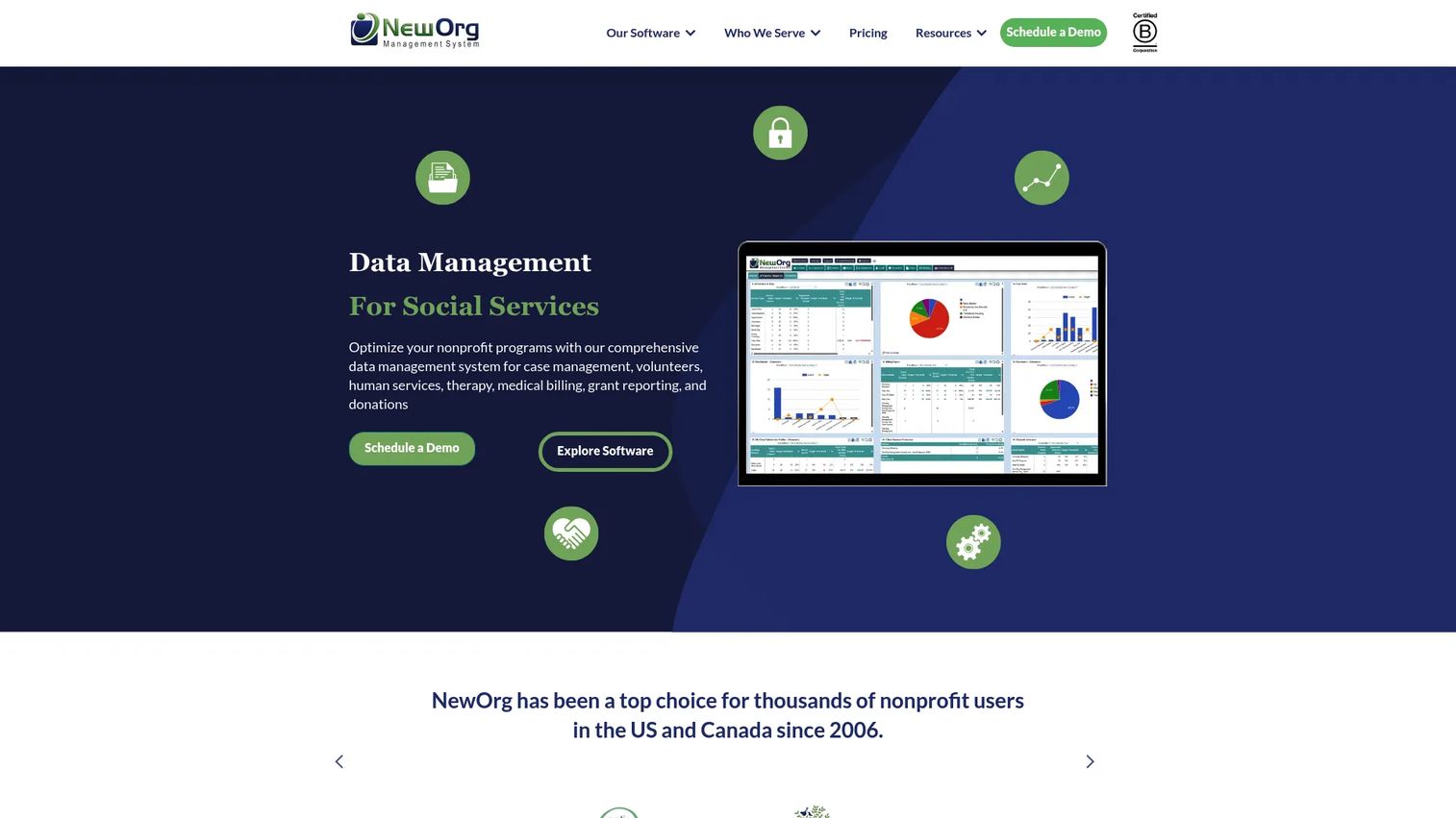
NewOrg combines case management with broader nonprofit operations. It supports secure documents, online forms, electronic signatures, dashboards, communications, and service activity.
This breadth suits organizations that need more than case notes software. Program teams can manage client work while administrators track operations in the same database.
Best for: Nonprofits needing one operational system across programs and administration.
Key features
- Dynamic dashboards
- Secure document management
- Online forms
- Electronic signatures
- Custom reports
Why choose NewOrg
NewOrg fits organizations where case management sits beside grants, communications, and program administration.
A solo practitioner may find a focused scheduling and documentation tool more appropriate.
NewOrg pricing
Pricing starts at $250 monthly for two users. Five users cost $400, while 20 users cost $900 monthly.
Implementation, training, and additional services may cost extra.
G2 rating: 4.7/5
6. SimplePractice
SimplePractice is practice management software for therapists and mental health professionals. It combines scheduling, progress notes, intake, billing, telehealth, secure messaging, and a client portal.
This is a stronger fit for licensed private practices than multi program agencies. Appointment operations and payments sit at the center of the product.
Best for: Solo and small group practices needing scheduling, billing, and documentation.
Key features
- Paperless client intake
- Custom progress notes
- Appointment scheduling
- Billing and claims
- Secure client portal
Why choose SimplePractice
Choose SimplePractice when the case journey revolves around appointments, notes, insurance, and payments.
Community referral networks or grant funded programs will need different reporting structures.
SimplePractice pricing
Standard monthly prices are $49 for Starter, $79 for Essential, and $99 for Plus. A 30 day trial is available.
The vendor currently displays introductory discounts. Groups with six or more practitioners receive custom pricing.
G2 rating: 4.1/5
7. Carepatron
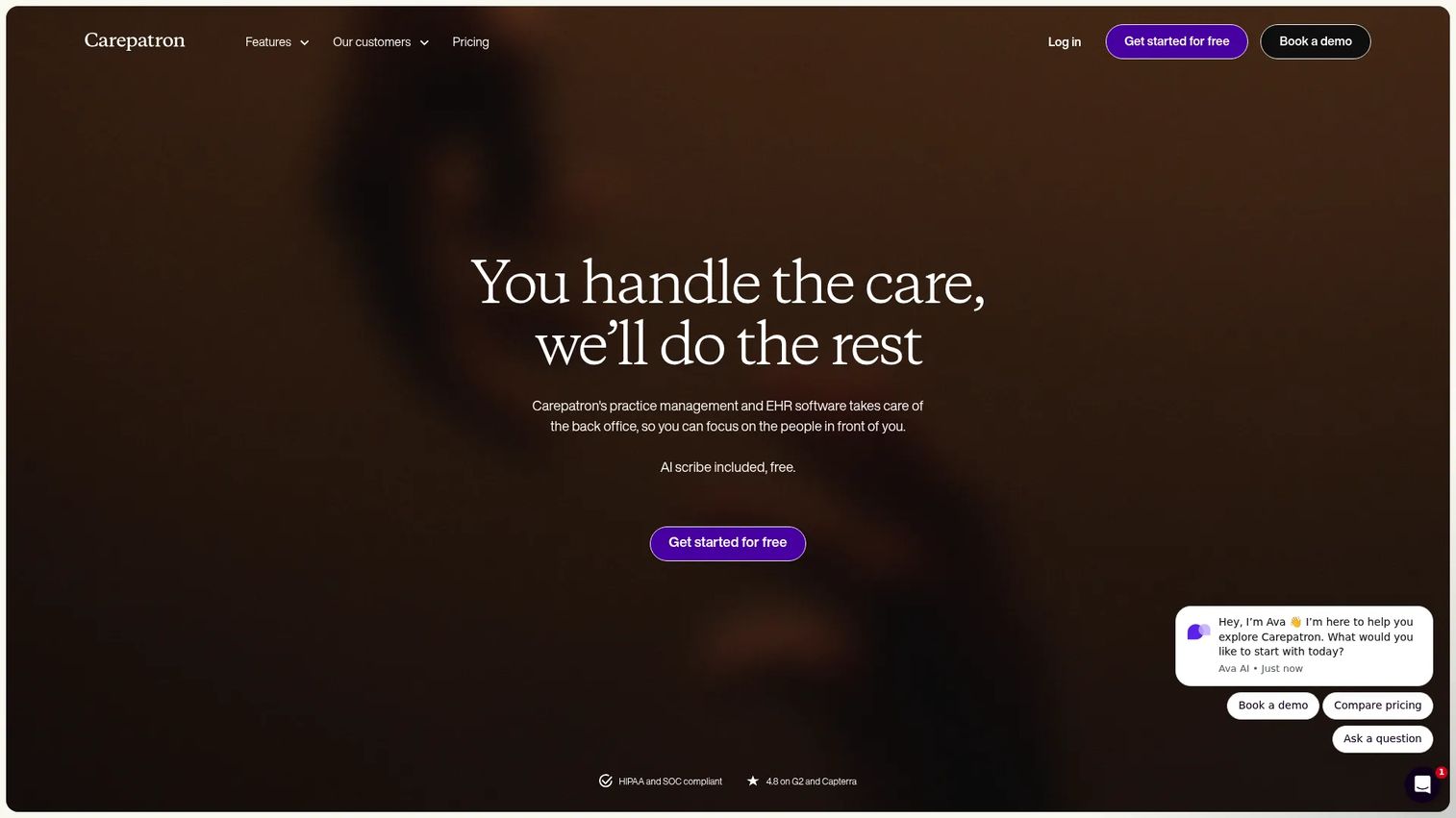
Carepatron combines healthcare practice management with EHR functions. It covers booking, telehealth, clinical notes, treatment plans, billing, payments, and client communication.
Smaller care teams can start with the free tier. This makes Carepatron practical when the immediate priority is replacing disconnected booking and documentation tools.
Best for: Small practices wanting client intake, notes, scheduling, and communication.
Key features
- Online booking
- Clinical notes
- Treatment plans
- Telehealth video
- Billing tools
Why choose Carepatron
Carepatron fits teams seeking a lighter path into digital practice operations. The paid tiers add storage, workflow controls, permissions, and branding.
Organizations with complex funder reporting should test its reporting model carefully.
Carepatron pricing
The Free plan costs $0. Plus costs $31 per user monthly, while Advanced costs $39 with annual billing.
G2 rating: 4.5/5
8. IntakeQ
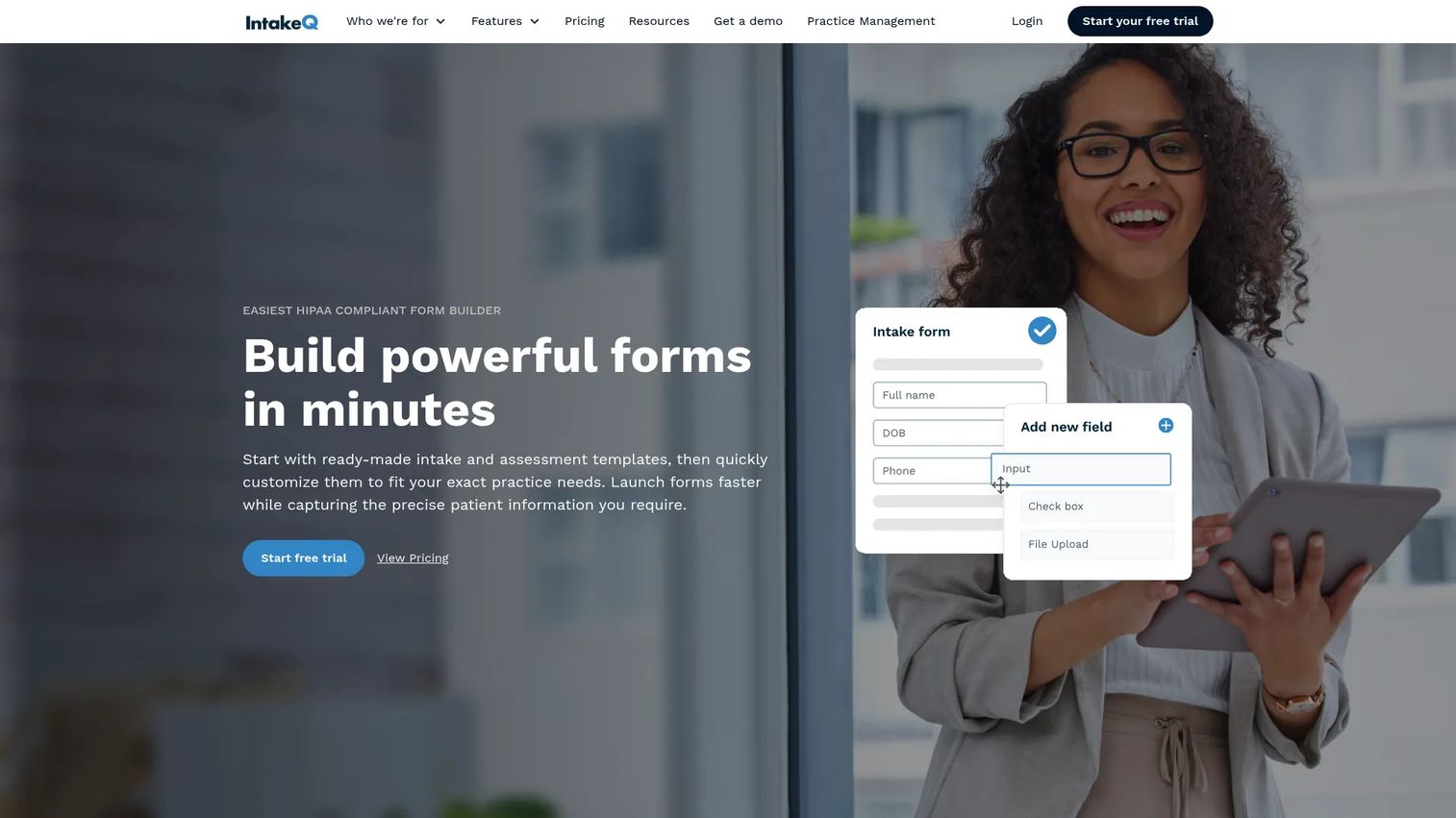
IntakeQ focuses on digital intake forms and practice administration. Its no code forms support conditional logic, electronic signatures, reminders, treatment notes, and document sharing.
The Practice Management plan adds scheduling, payments, telehealth, insurance billing, and a client portal. It fits teams where paperwork slows down onboarding.
Best for: Practices needing stronger intake, consent, and electronic form workflows.
Key features
- Conditional intake forms
- Electronic signatures
- Secure document sharing
- Treatment notes
- Client portal
Why choose IntakeQ
IntakeQ is useful when incomplete forms or consent documents create repeated follow ups. It can also support broader practice operations on the higher plan.
Agencies requiring program outcomes across several services should compare larger platforms.
IntakeQ pricing
Forms costs $54.90 monthly. Practice Management costs $84.90 monthly, and neither plan includes a permanent free tier.
9. Bonterra Apricot
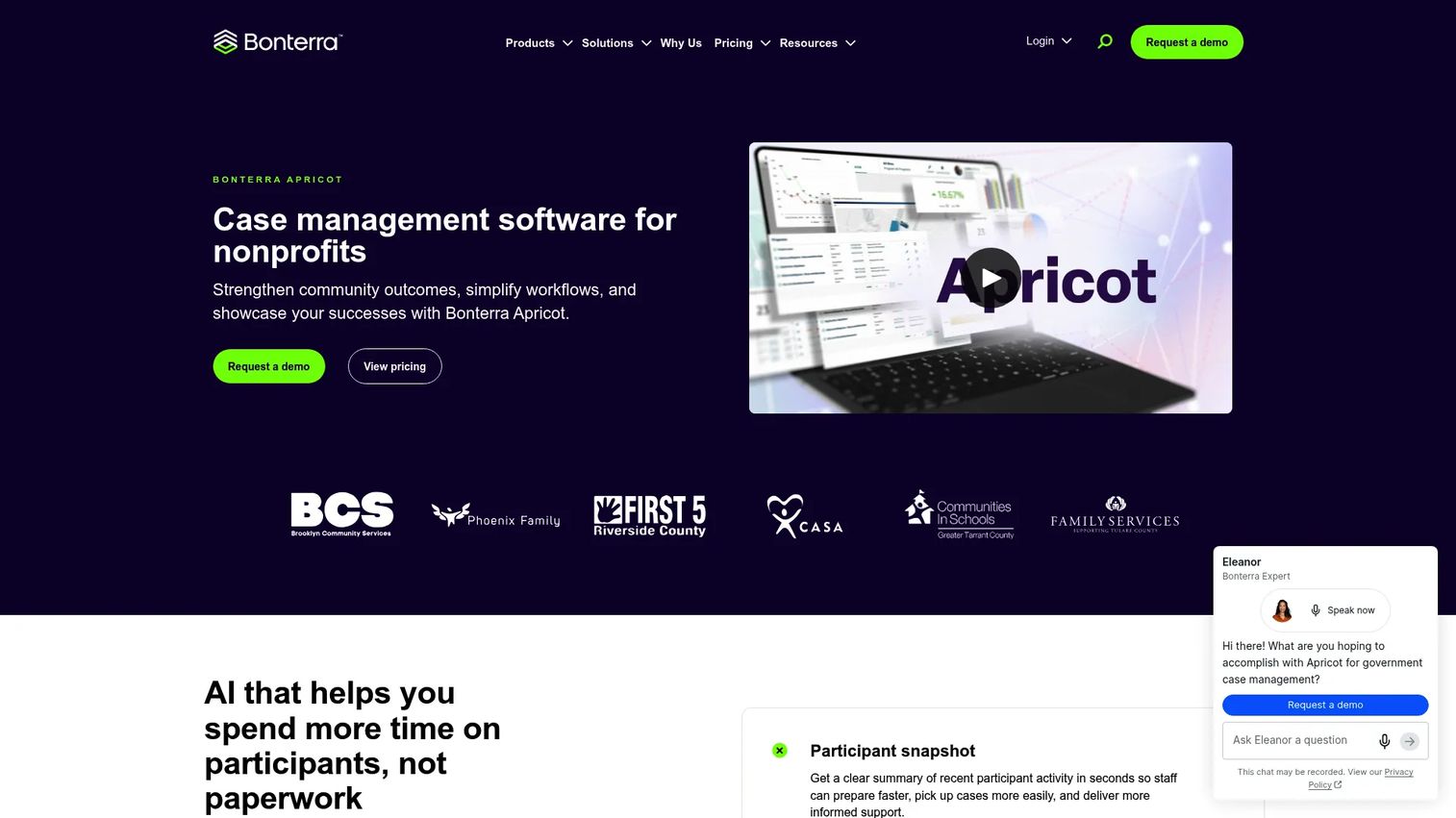
Bonterra Apricot is nonprofit case management software for service organizations and public agencies. It covers caseloads, enrollments, referrals, forms, document storage, workflow automation, and reporting.
Apricot’s configurable structure suits programs accountable to funders. Dashboards and analytics help teams examine participant activity and outcomes across services.
Best for: Nonprofits that prioritize configurable workflows and outcome reporting.
Key features
- Configurable forms
- Client records
- Referral tracking
- Outcome dashboards
- Role permissions
Why choose Bonterra Apricot
Choose Apricot when funder reporting shapes the entire data model. Configurable records can support different programs inside the same organization.
Before buying, identify who will own setup, administration, and report maintenance.
Bonterra Apricot pricing
Custom pricing covers Apricot Essentials, Apricot Pro, and Apricot Enterprise. Organization size, user count, and selected features influence the quote.
10. Healthie
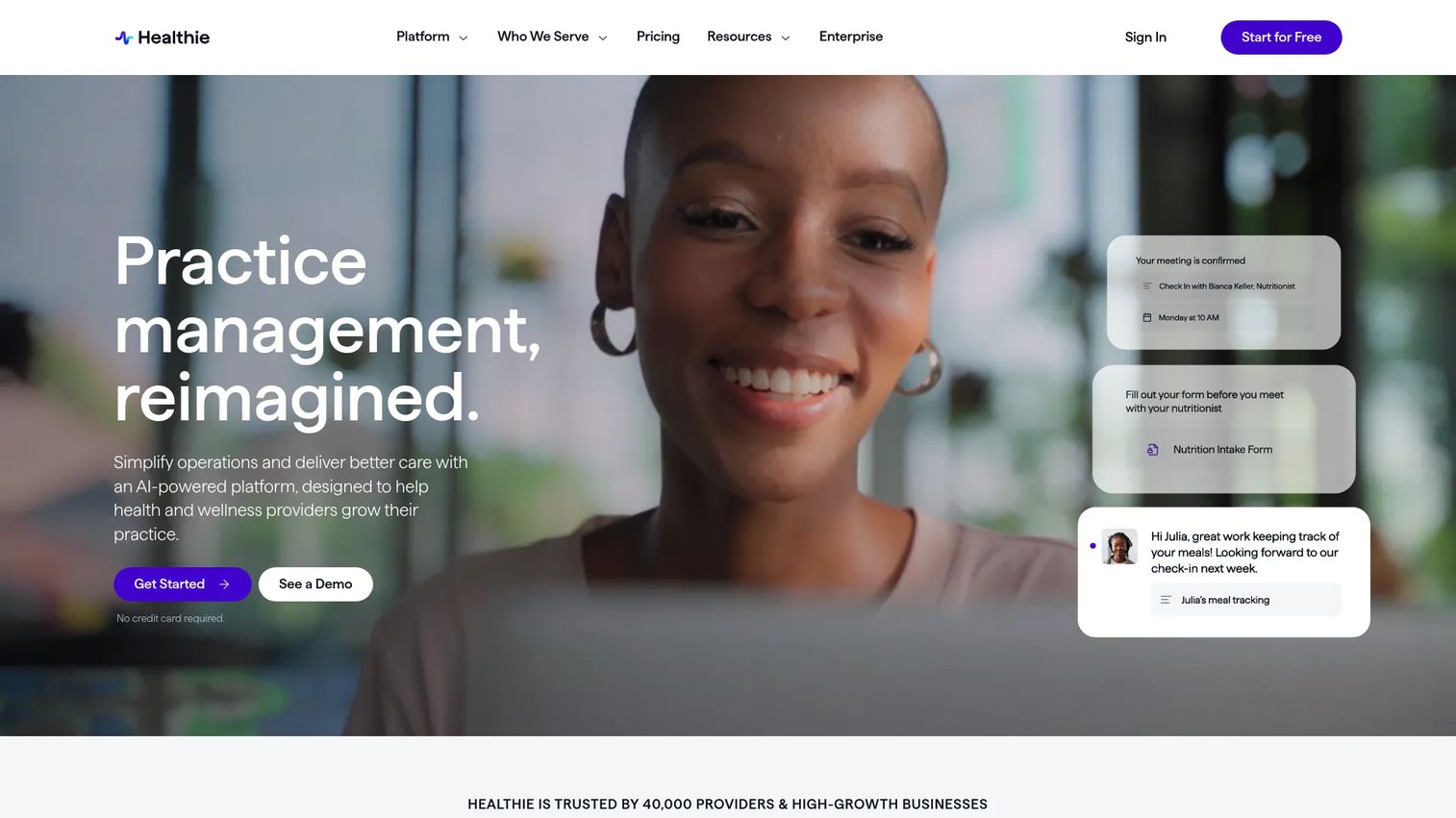
Healthie is a cloud based EHR and practice management platform for healthcare and wellness providers. It combines charting with scheduling, telehealth, billing, forms, programs, and client communication.
Health oriented social work teams may value its mix of documentation and client engagement. Traditional social service agencies should check whether its reporting matches their program requirements.
Best for: Health and wellness programs needing practice operations with client engagement.
Key features
- EHR charting
- Online booking
- Client portal
- Group telehealth
- Billing workflows
Why choose Healthie
Healthie fits care models that blend appointments with structured client programs. Mobile access and secure messaging support ongoing participation between sessions.
It carries less obvious fit for interagency assistance history or grant reporting.
Healthie pricing
Essentials costs $49.99 monthly, Plus costs $129.99, and Group starts at $149.99. A 14 day Plus trial is available.
Annual rates start at $45 monthly.
11. Casebook
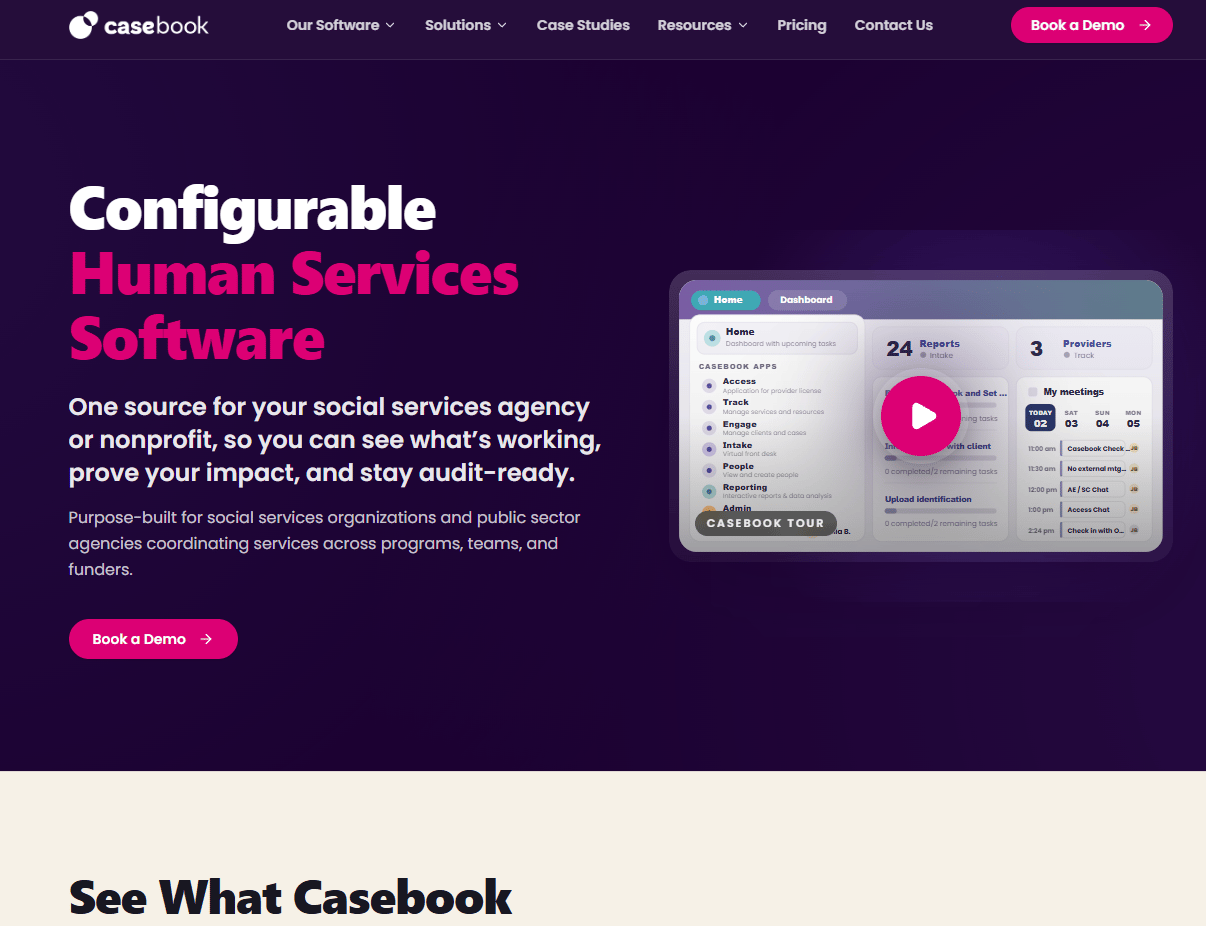
Casebook is configurable human services case management software for nonprofits and public agencies. It centralizes client records, forms, workflows, field documentation, referrals, and reporting.
Caseworkers can document from phones or tablets, including offline. The provider directory supports closed loop referral tracking across service organizations.
Best for: Human services teams managing households, services, referrals, and outcomes.
Key features
- Centralized client database
- Configurable case forms
- Offline field documentation
- Closed loop referrals
- Outcome dashboards
Why choose Casebook
Casebook fits agencies that need social service workflows rather than a repurposed CRM. Role permissions, encryption, and audit logs support controlled record access.
Private practices should assess whether billing and appointment functions meet their requirements.
Casebook pricing
Custom pricing. Ask sales about staff count, programs, data migration, security requirements, and reporting.
G2 rating: 4.3/5
12. extendedReach
extendedReach is web based case management software for child and family social service agencies.
Its specialized positioning separates it from broad case management tools. Teams serving foster care, adoption, or family programs should evaluate the platform against their specific placement and documentation workflows.
Best for: Child and family social service agencies needing specialized case management.
Key features
- Web based case management
- Child services focus
- Family services focus
Why choose extendedReach
extendedReach deserves consideration when general case manager software doesn’t reflect child and family service processes.
The current vendor site provides limited product detail without signing in. Request a workflow demonstration using one representative family case.
extendedReach pricing
Contact extendedReach for a quote. Ask about users, implementation, migration, training, and reporting requirements.
13. Exym
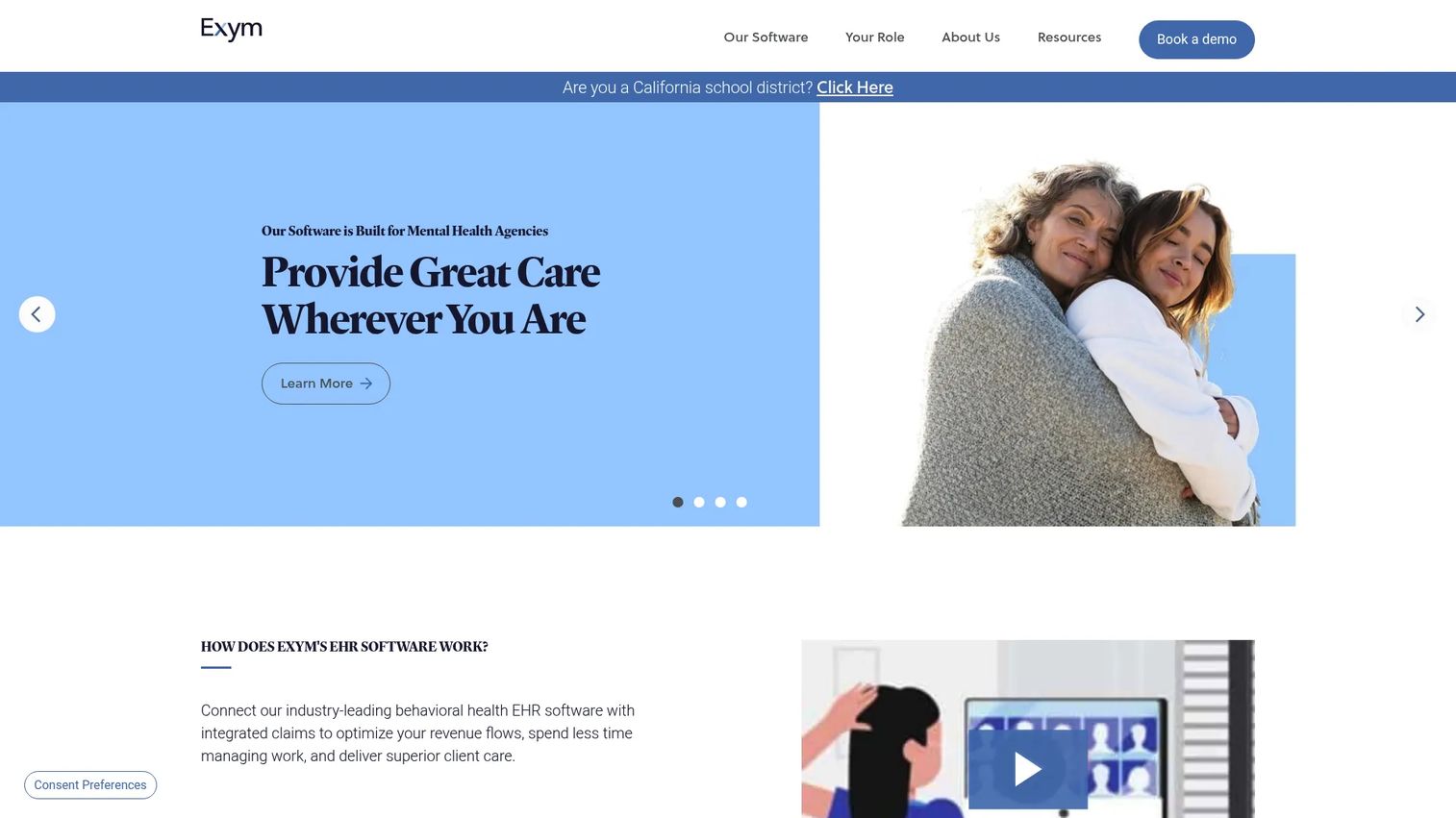
Exym is a configurable behavioral health EHR for mental health agencies. It combines clinical documentation with billing, claims processing, electronic data interchange, and configurable workflows.
The platform targets providers that need structured care records beside revenue cycle operations. That makes it more specialized than general nonprofit case management software.
Best for: Behavioral health agencies with documentation, billing, and claims requirements.
Key features
- Clinical documentation
- Configurable forms
- Claims processing
- Electronic data interchange
- Care workflows
Why choose Exym
Exym fits agencies that need behavioral health records and financial workflows together. Configurable forms can support different programs inside the organization.
Confirm integration and reporting requirements during evaluation.
Exym pricing
Custom pricing includes a monthly per user fee for the Core EHR. Setup carries a separate fee based on agency size and complexity.
G2 rating: 4.4/5
14. Foothold
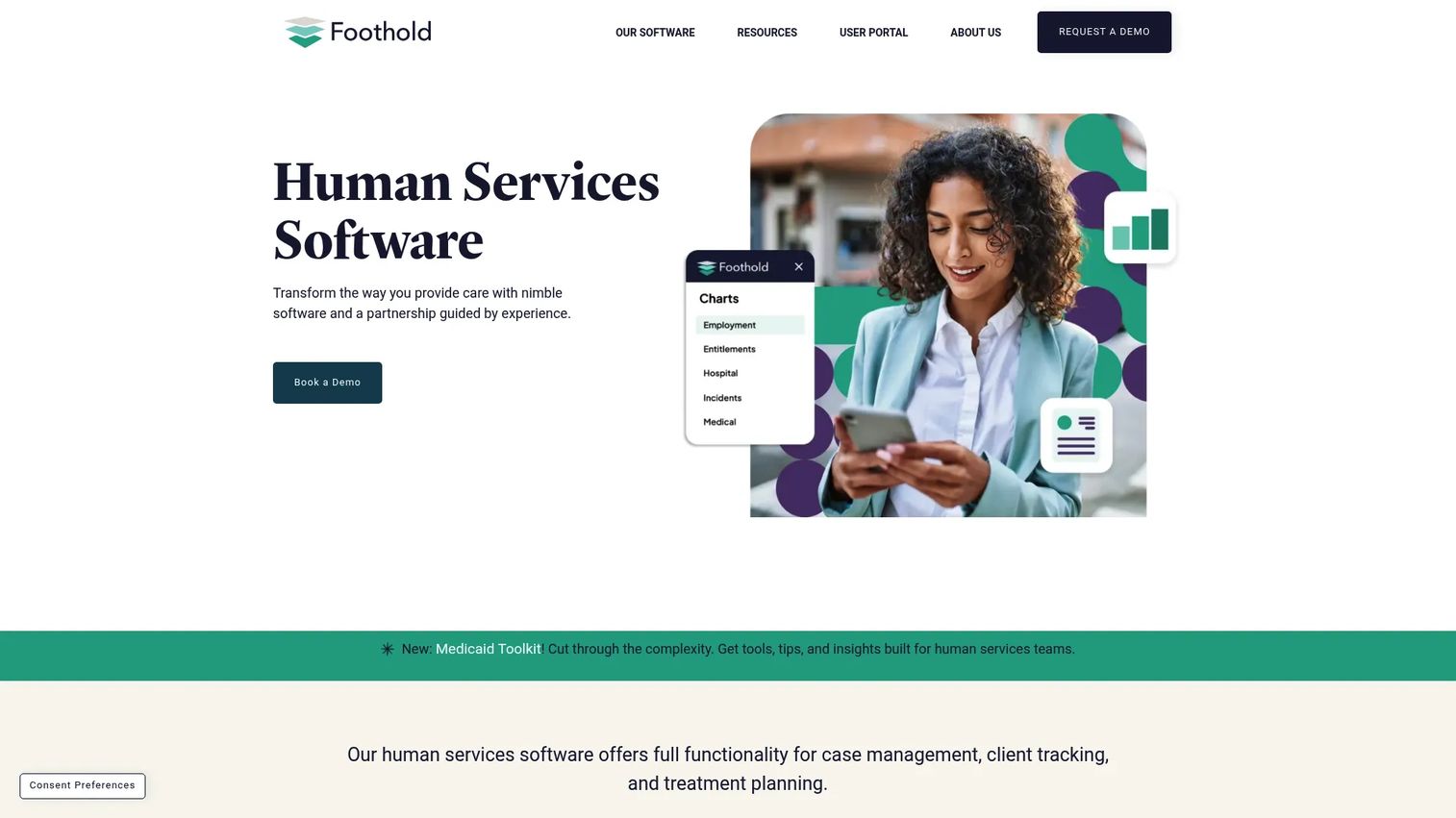
Foothold provides configurable human services software across case management, electronic records, billing, scheduling, and reporting.
Its scope suits agencies operating several programs. Document builders, service records, medical functions, and interoperability tools support broad operational requirements.
Best for: Multi program human services agencies needing an organization wide system of record.
Key features
- Configurable case management
- Service documentation
- Integrated billing
- Program reporting
- Access controls
Why choose Foothold
Foothold fits larger agencies that need records and reporting across complex care programs. Its operational breadth extends beyond focused social work documentation software.
Smaller organizations should evaluate implementation capacity before selecting it.
Foothold pricing
Annual pricing ranges from $15,000 to $100,000. The final quote reflects agency requirements and the selected pricing model.
15. Zanda
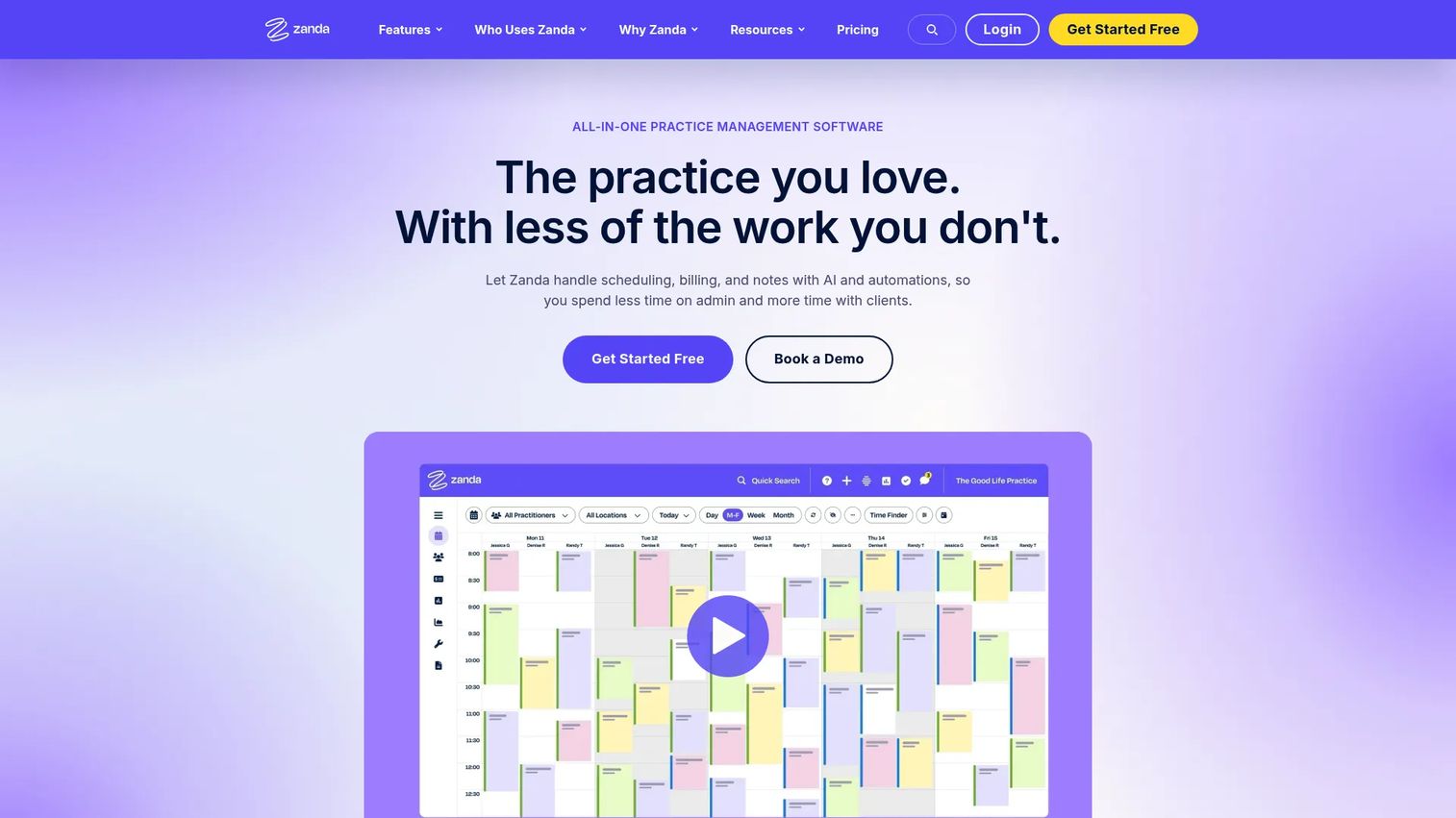
Zanda is practice management software for health providers. It combines scheduling, intake forms, clinical notes, telehealth, payments, insurance billing, and reporting.
The system fits social workers whose client journey follows appointment based care. Its client portal also supports communication and online paperwork.
Best for: Social work practices needing notes, scheduling, billing, and client communication.
Key features
- Appointment calendar
- Online intake forms
- Clinical notes
- Telehealth
- Billing and payments
Why choose Zanda
Zanda suits practices where case management means managing appointments, documentation, reminders, and payments.
Community networks that need shared referrals or public program reporting should consider agency focused software.
Zanda pricing
Starter costs $29 monthly for one practitioner. Growth starts with a $49 base fee, plus $29 for each additional practitioner.
A free trial and introductory discounts are available.
G2 rating: 4.7/5
16. PlanStreet
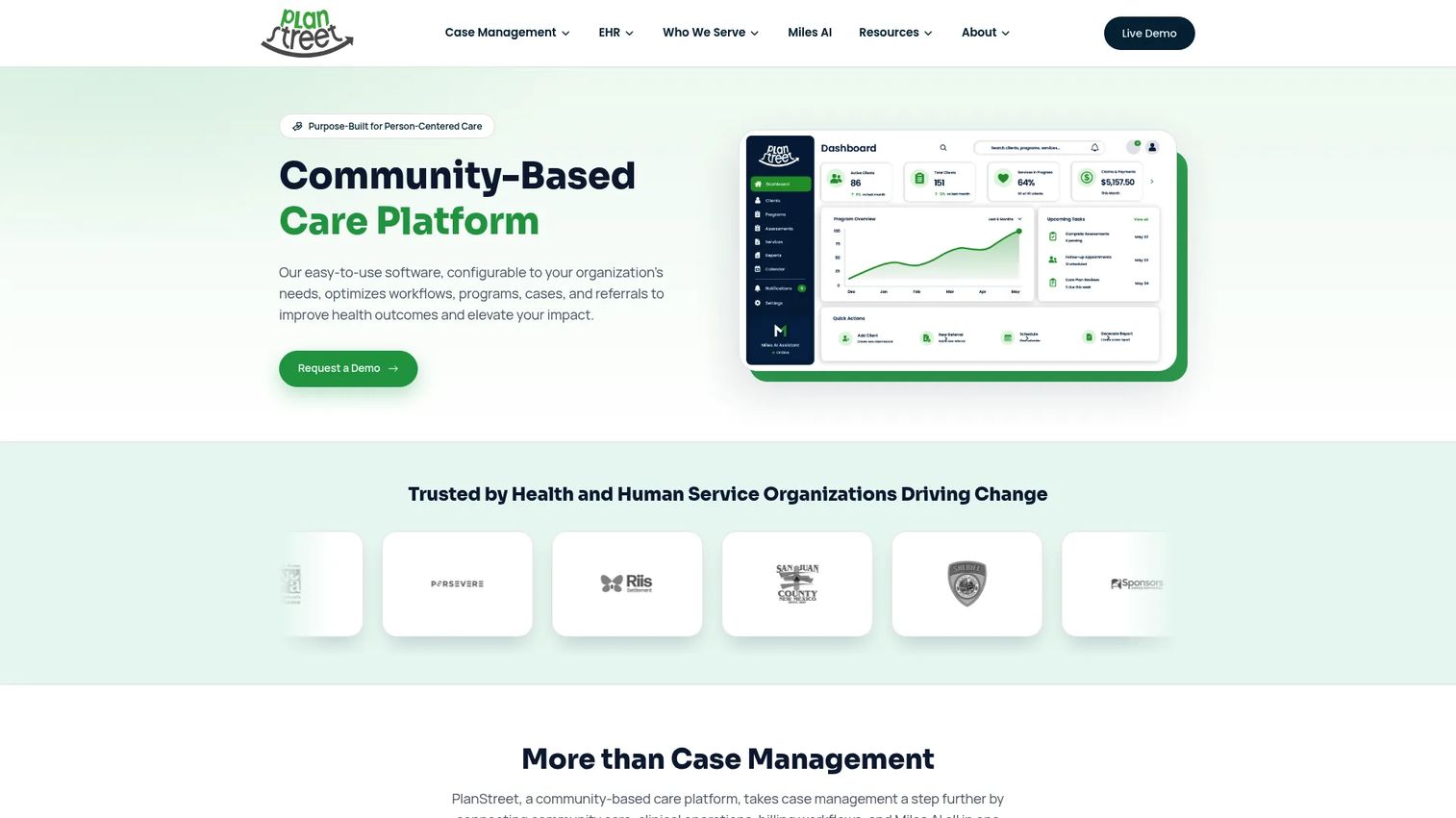
PlanStreet is configurable case management software for health, nonprofit, and public service organizations. It covers intake automation, multi program management, referrals, records, billing, reporting, and client access.
Its broad workflow scope suits teams that need social services reporting software across several programs. Mobile apps support staff working away from a central office.
Best for: Public and community programs needing configurable workflows and reporting.
Key features
- Intake automation
- Multi program management
- Closed loop referrals
- Impact reporting
- Client portal
Why choose PlanStreet
PlanStreet fits organizations that need custom workflows and reporting across service areas. Its documented features also include electronic records, case financials, and mobile access.
Before buying, define internal ownership for configuration and ongoing administration.
PlanStreet pricing
Custom pricing. The quote reflects programs, users, workflows, dashboards, integrations, and security requirements.
G2 rating: 4.6/5
17. Noteable
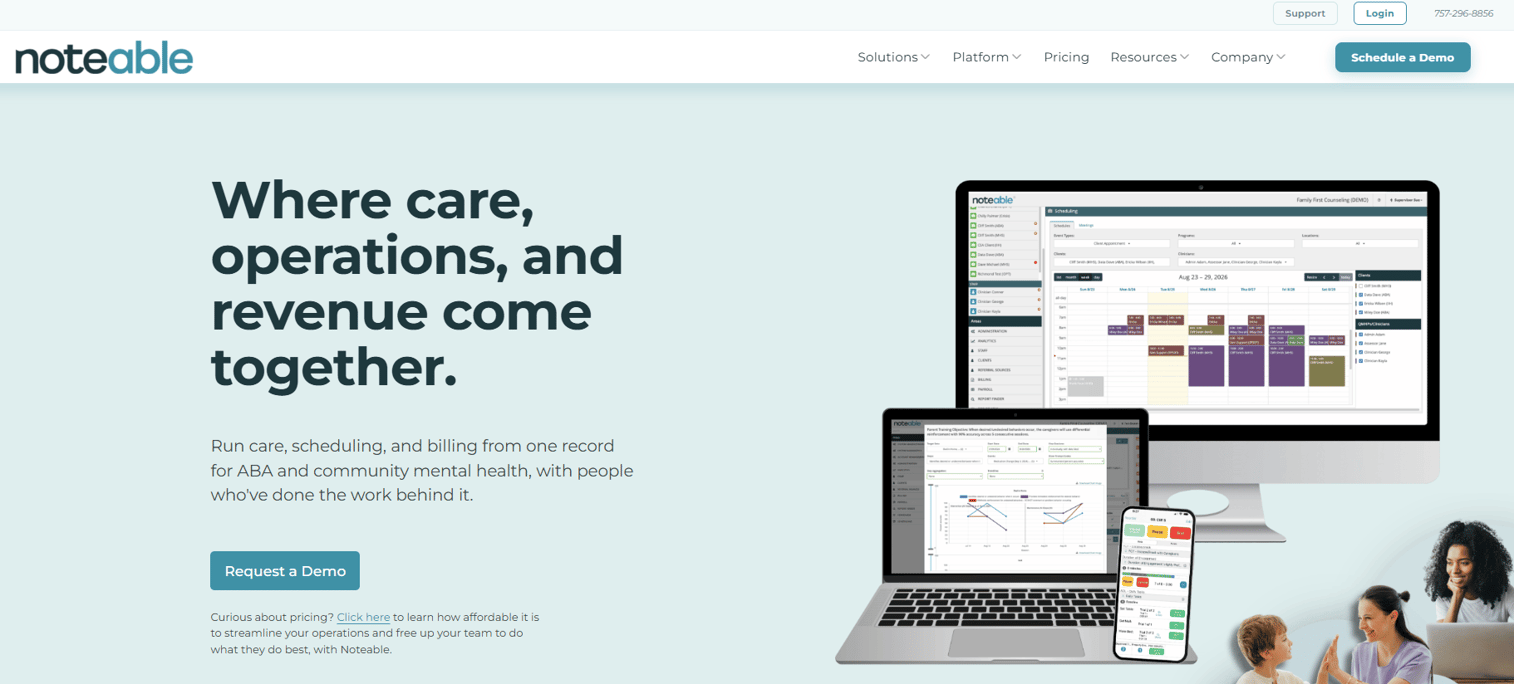
Noteable is a behavioral health EHR and practice management platform for mental health agencies, ABA providers, group homes, and multidisciplinary teams.
Its documented scope includes clinical records, scheduling, billing, telehealth, progress tracking, and reporting. This makes it broader than a standalone case notes tool.
Best for: Behavioral health organizations combining documentation with practice operations.
Key features
- Clinical documentation
- Client records
- Appointment scheduling
- Claims workflows
- Progress tracking
Why choose Noteable
Noteable fits care teams that want documentation connected to scheduling and billing. ABA data collection broadens its relevance for specialized providers.
The supplied vendor domain currently redirects to a domain marketplace. Confirm the product’s current sales and support status before proceeding.
Noteable pricing
Contact Noteable for a quote. A permanent free tier wasn’t identified.
Considerations when choosing social work case management software
Start with the workflow
Map intake, eligibility, assessment, care planning, services, referrals, follow up, reporting, and closure. Make each vendor demonstrate that exact journey.
Software should remove duplicate steps. It shouldn’t move the same administrative mess into a newer interface.
Check confidentiality controls
Review role permissions, audit records, document storage, and program level access. Staff should see the information required for their work.
Involve program leadership, IT, and compliance stakeholders. Request current security documentation from every shortlisted vendor.
Test reporting before signing
Ask vendors to build a funder report and caseload summary during the evaluation. Include an outcome trend, referral status, board dashboard, and staff activity view.
Monthly manual exports indicate the reporting problem remains.
Evaluate frontline adoption
Caseworkers need fast note entry and clear task ownership. Test mobile access, reminders, form completion, and handoffs during the sales demonstration.
Include frontline staff in scoring. Their daily experience will determine record quality.
Calculate the full cost
Compare subscription fees with implementation, migration, training, support, add ons, and internal administration. A low license price can still create substantial operational work.
Nonprofits should also account for grant cycles and approval timing.
Conclusion
The best social work case management software depends on how your organization delivers services.
CharityTracker fits community networks that share assistance histories and referrals. SimplePractice, Carepatron, IntakeQ, and Zanda suit appointment based private practices.
Nonprofits focused on program reporting should compare Bonterra Apricot, Sumac, NewOrg, and PlanStreet. Casebook, extendedReach, Exym, and Foothold address human services or specialized agency workflows.
Build a shortlist of three to five products. Then give each vendor one representative client journey to demonstrate.
Start with intake. Move through assessment, service delivery, referrals, and documentation. Finish with the report your board or funder expects.
The interface matters, but the full workflow tells you whether the software will reduce administrative work. It also shows whether frontline staff can maintain accurate records after rollout.
FAQs
Social work case management software manages intake, client records, assessments, care plans, case notes, referrals, services, and outcomes. It gives authorized teams a shared record for coordination and reporting.
The software may also include document storage, task reminders, billing, or electronic signatures. Exact capabilities vary by service model.
There isn’t one universal best product. CharityTracker fits community care coordination, while SimplePractice and Zanda suit private practices.
Larger agencies can compare Bonterra Apricot, PlanStreet, Foothold, and Casebook. Specialized teams should prioritize software built around their program workflows.
Start with client intake, assessments, case notes, care plans, referrals, document storage, alerts, and outcome reporting. Access permissions and audit records also matter for secure client records.
Prioritize the workflows staff use every week. A long feature list has little value if basic documentation takes too many steps.
No, although the categories overlap. EHR software usually places more emphasis on clinical records, billing, medications, and healthcare documentation.
Social case management software often focuses on eligibility, services, referrals, household records, program outcomes, and funder reporting. Some human services platforms combine both models.
Pricing varies by user count, selected programs, modules, implementation, reporting, and support. Practice tools may start below $50 monthly.
Larger nonprofit and human services platforms often use custom quotes. Include data migration, training, add ons, and internal administration in your cost comparison.
A small nonprofit may need it when staff manage sensitive records, recurring services, referrals, or reporting requirements. The key question is whether current tools preserve context and restrict access appropriately.
Start with a lighter platform if your workflow is straightforward. Confirm that it can produce the reports your organization already submits.
Check role permissions, audit logs, encryption, data retention, secure file storage, and vendor security documentation. Ask how access can be limited by program or staff role.
Include legal, compliance, IT, and funder stakeholders where required. A software purchase alone doesn’t guarantee compliance with any law or standard.
A nonprofit CRM usually manages donors, campaigns, volunteers, grants, and constituent relationships. Case management software tracks client assessments, services, notes, care plans, referrals, and outcomes.
Some platforms combine both. Choose that model when program and fundraising teams need connected records without sharing inappropriate client details.