You don’t need another dashboard. You need to know when a conversation moves before your customer or competitor notices first.
Comment monitoring gets messy because discussions span social networks, forums, review sites, news outlets, and video platforms. DataReportal reported 5.81 billion active social media user identities worldwide in October 2026. Its research also found that the typical user visits 6.66 platforms monthly.
The best social media monitoring tools consolidate those scattered signals. They help you catch relevant mentions, judge urgency, and connect conversations to campaign decisions.
The harder question is whether you need dedicated listening, a social management suite, or enterprise media intelligence. This guide helps you make that call.
What’s inside
This guide compares tools for digital marketers who need better signal without adding unnecessary software.
- Coverage: Social networks, news, forums, reviews, podcasts, and video sources
- Monitoring: Brand mention tracking, comment monitoring, competitor monitoring, and campaign tracking
- Analysis: Sentiment analysis, share of voice, trend detection, and reporting
- Operations: Alert quality, integrations, pricing limits, and response workflows
- Buying guidance: Free tools, social suites, dedicated platforms, and enterprise intelligence
Each platform was assessed using verified vendor information and current G2 ratings where available.
TL;DR
- Best overall for brand monitoring: Brand24 combines mention tracking, sentiment, alerts, and share of voice
- Best for publishing teams: Hootsuite places monitoring beside scheduling, inbox management, and reporting
- Best for structured response workflows: Sprout Social connects social conversations with customer care and team collaboration
- Best for enterprise intelligence: Talkwalker, Meltwater Social Listening, Brandwatch Analytics, and Digimind Social support broader research
- Best for PR teams: Muck Rack connects media monitoring with journalist research and pitching
- Best budget starting points: Metricool, Iconosquare, and Awario offer lower entry prices
What is social media monitoring software?
Social media monitoring software tracks brand mentions, keywords, competitors, campaigns, and customer conversations across social networks and online sources.
It collects discussions that would otherwise remain split across native dashboards. Teams can use those signals to respond to complaints, evaluate campaigns, and measure brand visibility.
Several adjacent categories overlap with social media tracking software:
- Monitoring: Captures mentions and sends alerts about specific conversations
- Listening: Analyzes sentiment, patterns, audience themes, and market trends
- Analytics: Measures engagement, publishing performance, and account growth
- Social management: Adds scheduling, approvals, inbox management, and publishing
- Media monitoring: Extends coverage into news, blogs, podcasts, and earned media
Some platforms cover one job deeply. Others combine social media listening software with publishing or public relations workflows.
Key features to look for
- Mention tracking: Watches brands, products, executives, campaigns, and competitors
- Comment monitoring: Collects public replies, tags, complaints, and questions
- Sentiment analysis: Classifies language and surfaces emotional shifts
- Real time alerts: Flags spikes, negative conversations, or influential mentions
- Share of voice: Compares brand visibility across competitors or campaigns
- Source coverage: Tracks selected social, web, news, forum, and review sources
- Reporting: Creates dashboards, exports, campaign summaries, and stakeholder reports
- Integrations: Routes signals into email, CRM, helpdesk, BI, or publishing workflows
Monitoring and listening are often bundled together, but they solve different questions. Monitoring tells you what happened. Listening helps explain the wider pattern.
When to use social media monitoring software
Catch reputation issues before they spread
Set alerts for complaint spikes, negative sentiment, high reach accounts, and unusual mention volume. Route urgent issues according to severity.
Customer complaints can go to support. Wider reputation risks should reach social leadership or communications teams before the story grows.
Prove campaign impact beyond platform dashboards
Native analytics capture activity inside their own platforms. They often miss earned commentary, creator discussions, forum threads, or review site mentions.
Monitoring adds awareness, sentiment, conversation volume, and share of voice to your campaign reporting. That context helps defend pipeline impact rather than reporting activity alone.
Track competitors and category conversations
Monitor competitor launches, branded keywords, campaign hashtags, and customer reactions. These signals reveal positioning gaps and creative angles worth testing.
Growth teams can use the findings to adjust messaging, prioritize experiments, and explain strategy with market evidence.
Social media monitoring software comparison
Use this table as a shortlist, then trial the strongest candidates with your own keywords. Alert relevance and source coverage matter more than the longest feature list.
Pricing can also change sharply with seats, topics, mention volume, historical access, or add ons.
| # | Product | Best for | Key differentiator | Pricing | G2 rating |
|---|---|---|---|---|---|
| 1 | Brand24 | Brand mention tracking | AI insights, sentiment, alerts, and share of voice | From $249/month | N/A |
| 2 | Hootsuite | Publishing and monitoring | Social management with listening workflows | From $99/user/month, billed annually | 4.3/5 |
| 3 | Sprout Social | Larger social teams | Engagement, listening, reporting, and customer care | From $199/seat/month, billed annually | 4.4/5 |
| 4 | Talkwalker | Enterprise social listening | Broad source and visual listening coverage | Custom pricing | N/A |
| 5 | BrandMentions | Competitive brand tracking | Web and social monitoring with AI analysis | From $79/month, billed annually | 4.8/5 |
| 6 | BuzzSumo | Content monitoring | Content discovery with brand and topic alerts | From $199/month, billed annually | 4.5/5 |
| 7 | Keyhole | Hashtag and campaign tracking | Campaign, influencer, and hashtag analytics | Custom pricing | 4.3/5 |
| 8 | Mention | Lightweight listening | Monitoring with sentiment and competitor benchmarks | From $599/month, billed annually | 4.3/5 |
| 9 | Awario | Budget conscious listening | Boolean search and social selling workflows | From $49/month | 3.9/5 |
| 10 | Agorapulse | Social inbox workflows | Publishing, monitoring, reporting, and comment management | From $79/user/month, billed annually | 4.5/5 |
| 11 | Iconosquare | Analytics focused teams | Competitive benchmarking for supported social channels | Free plan, paid from €9/month annually | 4.4/5 |
| 12 | Muck Rack | PR and earned media | Journalist database with monitoring and pitching | Custom pricing | 4.5/5 |
| 13 | HubSpot Social Media Management Software | CRM connected marketing | Social activity connected with campaigns and contacts | Free plan, paid from $7/seat/month annually | 4.4/5 |
| 14 | Metricool | Small teams | Affordable publishing, analytics, inbox, and competitor tracking | Free plan, paid from $20/month annually | 4.5/5 |
| 15 | Meltwater Social Listening | Enterprise communications | Social and media intelligence across broad sources | Custom pricing | 4.1/5 |
| 16 | Brandwatch Analytics | Consumer intelligence | Historical research, segmentation, and audience analysis | Custom pricing | 4.2/5 |
| 17 | Digimind Social | Competitive intelligence | Market signals with crisis and competitor monitoring | Custom pricing | 4.5/5 |
Best 17 tools for social media monitoring software
1. Brand24
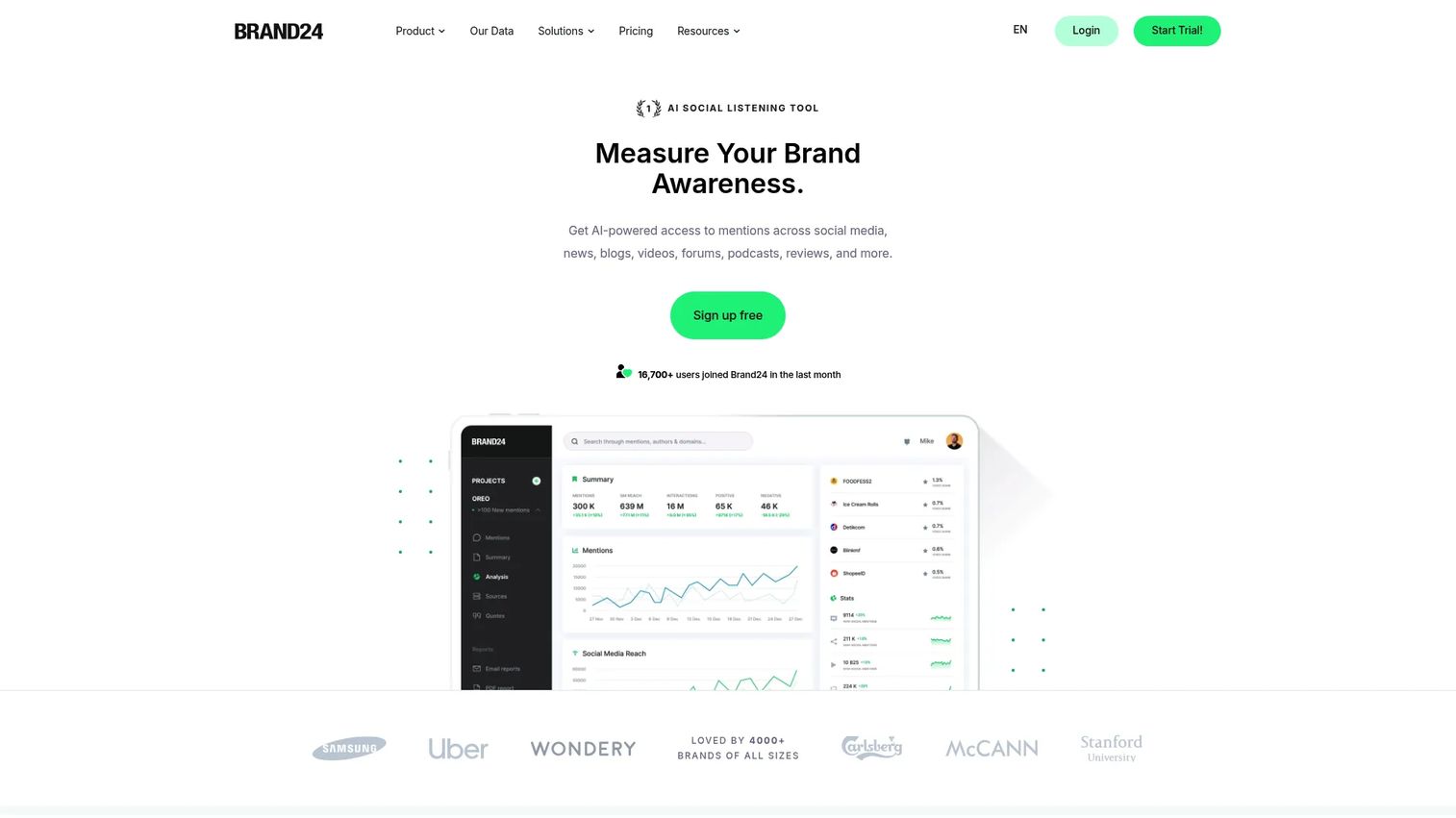
Brand24 is dedicated brand monitoring software for social media, news, blogs, forums, podcasts, reviews, and video sources. It combines real time mention tracking with sentiment, reach data, alerts, and AI generated analysis.
Best for: Growth teams that need quick brand alerts and share of voice without enterprise procurement.
Key features
- Real time mention monitoring
- AI sentiment analysis
- Reach and engagement tracking
- Share of voice reports
- Automated alerts and reports
Why choose Brand24: It keeps the core workflow focused on finding mentions and deciding which deserve action. Automated summaries help marketers review conversation patterns without manually reading every result.
Brand24 pricing: Individual costs $249 per month, or $199 per month annually. A 14 day trial is available.
2. Hootsuite
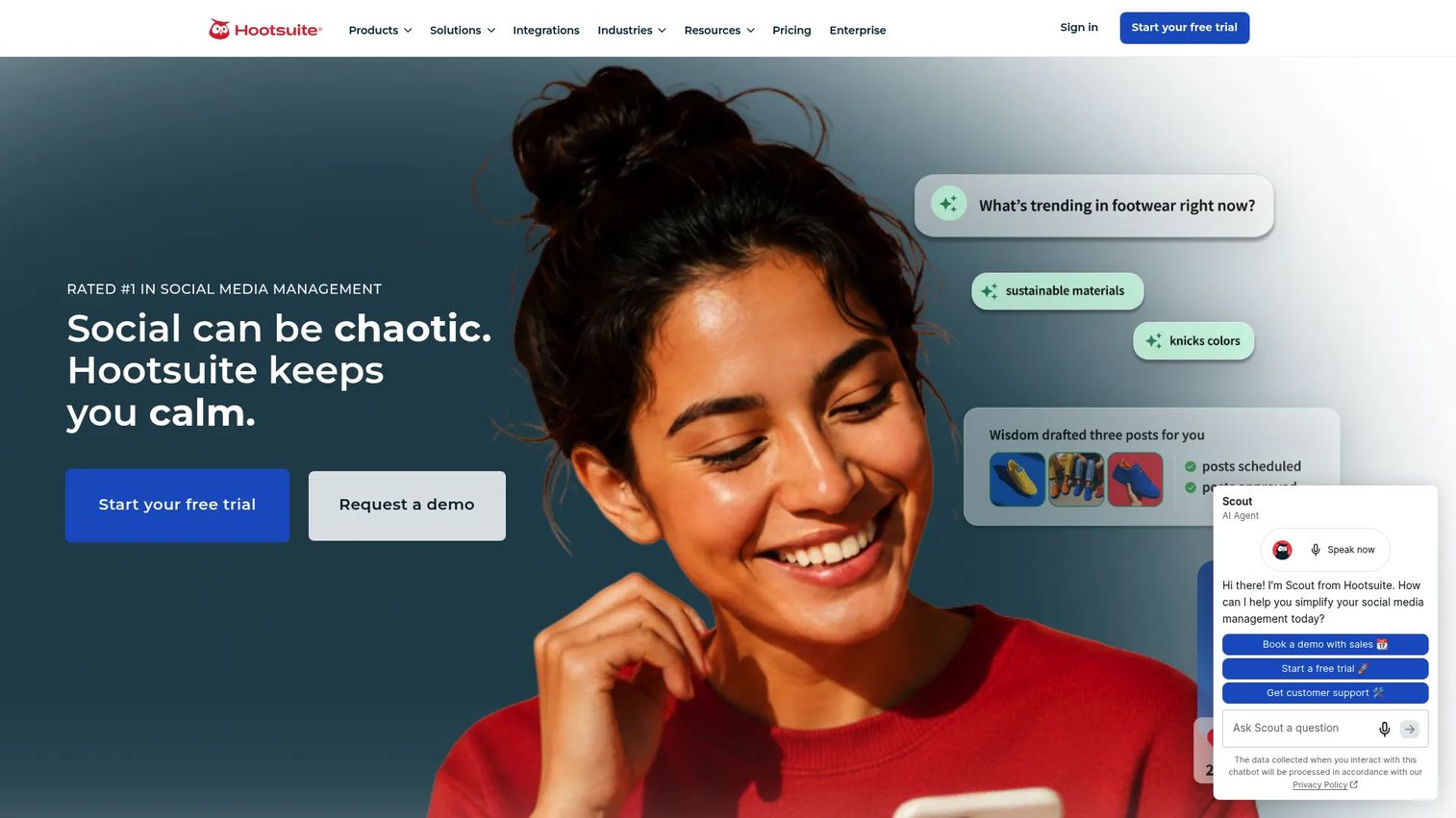
Hootsuite combines social publishing, engagement, analytics, customer care, and listening. It suits teams that want monitoring beside their existing content calendar.
The platform can reduce tool sprawl when social operations already run through a shared publishing suite.
Best for: Social teams that need monitoring beside scheduling, approvals, inbox workflows, and reports.
Key features
- Social scheduling and publishing
- Unified social inbox
- Custom analytics reports
- Social listening
- Team approval workflows
Why choose Hootsuite: Choose it when monitored conversations must flow into daily publishing and response work. Dedicated listening requirements may affect which package your team needs.
Hootsuite pricing: Standard starts at $99 per user monthly with annual billing. A 14 day trial is available.
G2 rating: 4.3/5.
3. Sprout Social
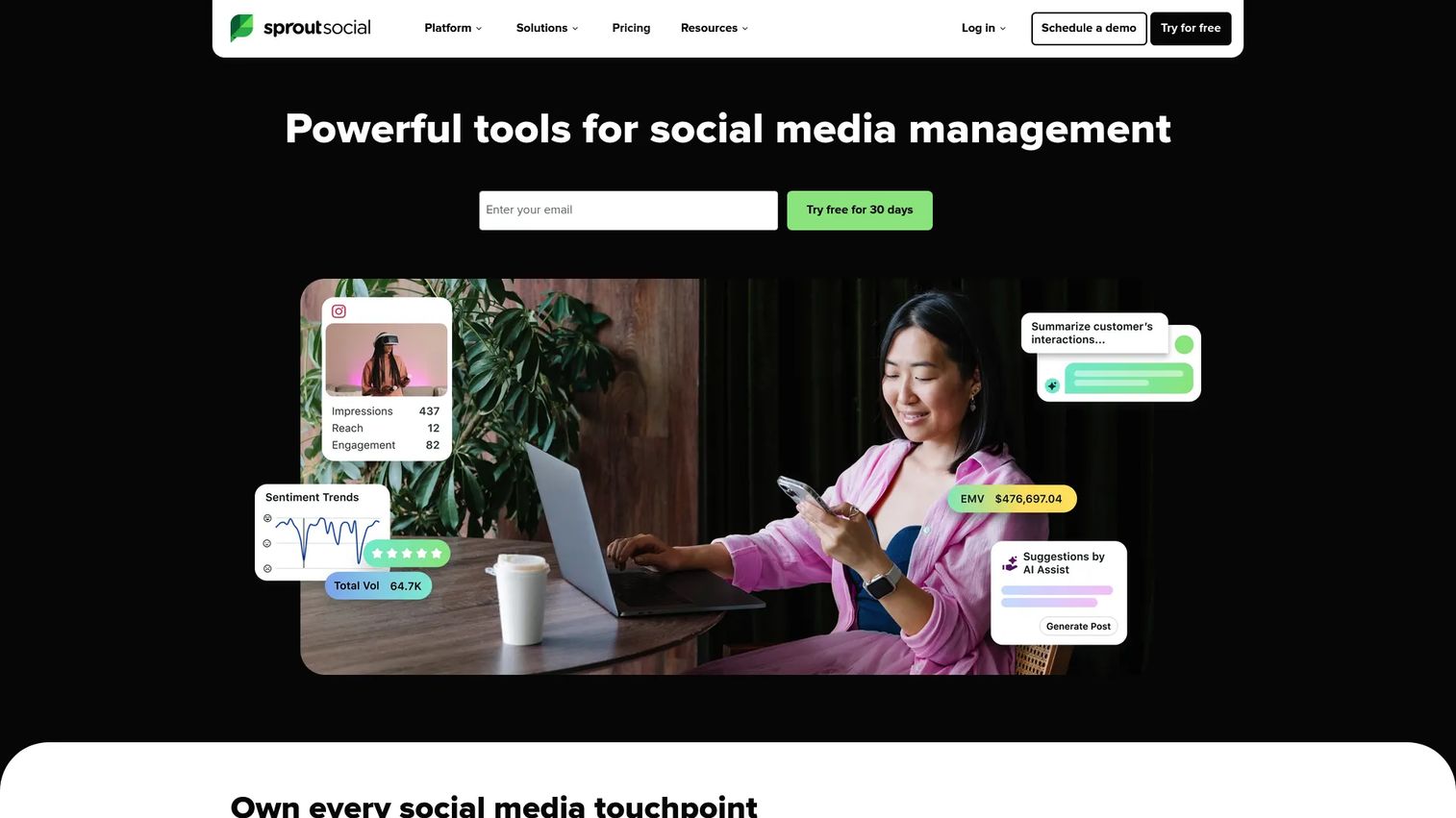
Sprout Social is a social management platform covering publishing, engagement, analytics, listening, reviews, and customer care. Its Smart Inbox consolidates conversations for structured follow up.
Reporting and collaboration features suit larger teams with defined response ownership.
Best for: Midmarket and enterprise social teams managing engagement, governance, and executive reporting.
Key features
- Unified Smart Inbox
- Social listening
- Competitor insights
- Review management
- Customer care workflows
Why choose Sprout Social: It connects monitoring with action. Teams can move from a brand mention to an assigned response without managing a separate inbox.
Sprout Social pricing: Standard starts at $199 per seat monthly with annual billing. A 30 day trial is available.
G2 rating: 4.4/5.
4. Talkwalker
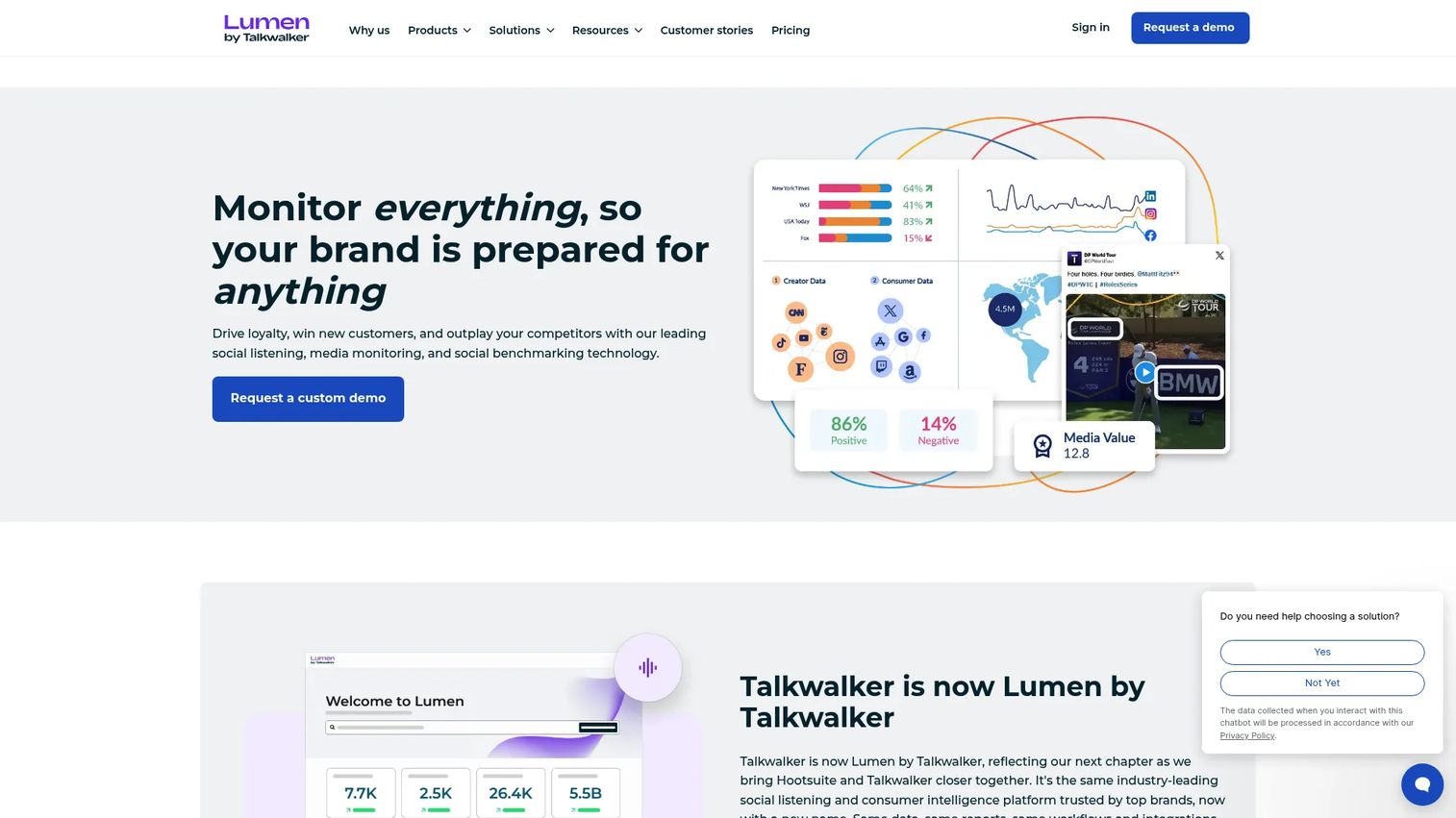
Talkwalker is an enterprise consumer intelligence platform covering social listening, media monitoring, benchmarking, and audience insights. It monitors 30 social networks and more than 150 million websites.
Visual listening expands monitoring into brand appearances within images, video, and audio.
Best for: Global marketing and communications teams needing broad source coverage and trend analysis.
Key features
- Global social listening
- Visual listening
- Real time alerts
- Sentiment analysis
- Custom intelligence dashboards
Why choose Talkwalker: It fits organizations whose research extends beyond owned social accounts. The broader intelligence model supports reputation analysis and category level reporting.
Talkwalker pricing: Custom pricing across Core, Analyze, and Business packages.
5. BrandMentions
BrandMentions tracks brand and competitor discussions across social media, websites, news, blogs, reviews, and forums. Its analysis includes sentiment, emotion, tone, and AI summaries.
Boolean search and white label reports add control for agencies or multi brand teams.
Best for: Marketers comparing brand visibility, competitor mentions, and campaign conversation across social and web sources.
Key features
- Brand monitoring
- Competitor tracking
- AI sentiment analysis
- Influencer identification
- Customizable reports
Why choose BrandMentions: It offers focused competitive monitoring without moving into a larger enterprise intelligence package. Query and mention limits vary by plan.
BrandMentions pricing: Starter costs $99 monthly or $79 per month annually. All plans include a seven day trial.
G2 rating: 4.8/5.
6. BuzzSumo
BuzzSumo combines content research with topic, competitor, backlink, and brand monitoring. It helps marketers understand which stories spread and which creators shape the conversation.
The platform is geared toward content intelligence rather than comment response.
Best for: Content marketers and PR teams researching trends, influential publishers, and media mentions.
Key features
- Content discovery
- Trending feeds
- Topic monitoring
- Competitor research
- Backlink alerts
Why choose BuzzSumo: Pick it when monitoring supports content ideation and digital PR. A social inbox platform fits better when reply management drives the purchase.
BuzzSumo pricing: Content Creation costs $199 per month with annual billing. Other packages use custom pricing.
G2 rating: 4.5/5.
7. Keyhole
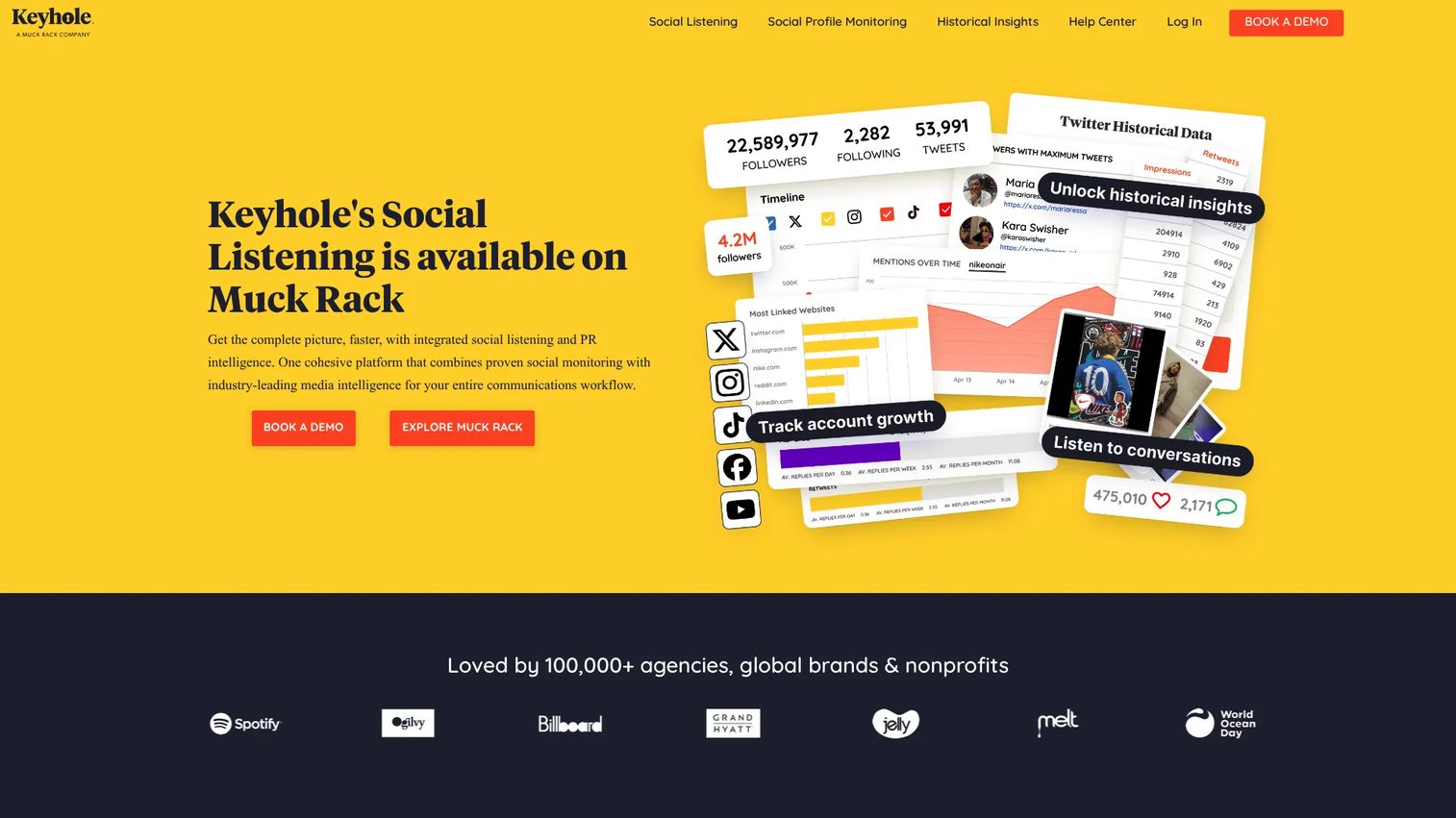
Keyhole focuses on campaign analytics, social listening, hashtag tracking, and influencer measurement. Supported profile monitoring includes Instagram, Facebook, X, TikTok, LinkedIn, and YouTube.
Historical analysis and automated exports help teams package campaign results for stakeholders.
Best for: Marketers measuring branded hashtags, launches, creator activity, and campaign reach.
Key features
- Hashtag tracking
- Influencer analytics
- Campaign reporting
- Competitor tracking
- Custom alerts
Why choose Keyhole: It fits campaign led teams that need a clear view of hashtag and creator performance. Broader media monitoring may require another category of platform.
Keyhole pricing: Custom pricing.
G2 rating: 4.3/5.
8. Mention
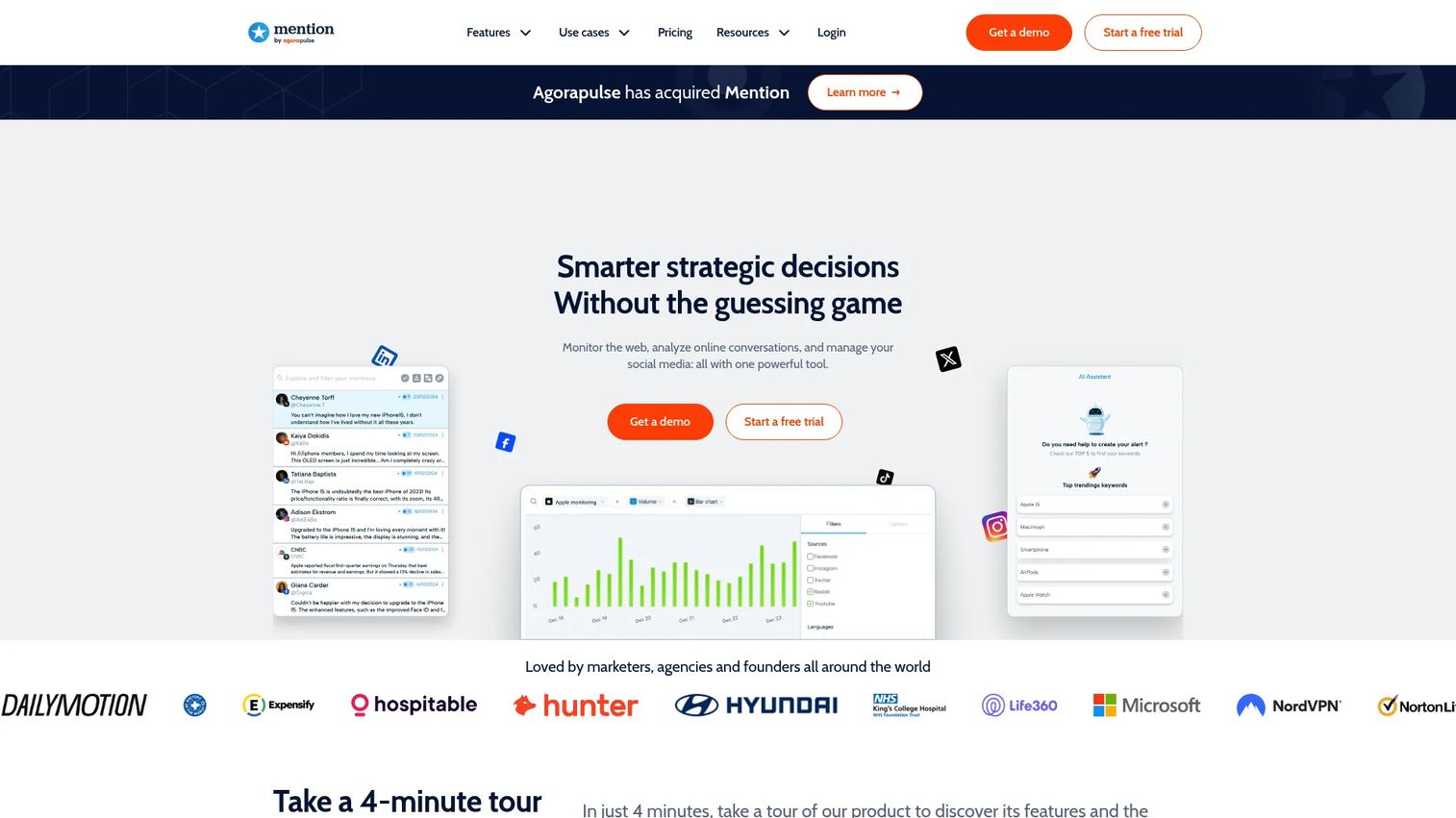
Mention provides social listening and media monitoring for brand reputation, campaigns, and competitor conversations. Its current offer covers real time monitoring, sentiment, trends, share of voice, and reporting.
The company has deprecated its Publish and Respond features, sharpening its focus on listening.
Best for: Marketing and communications teams that need structured monitoring without a publishing suite.
Key features
- Real time source monitoring
- Sentiment analysis
- Share of voice
- Competitor benchmarking
- Custom reports and alerts
Why choose Mention: Use it when listening is the primary job. Teams needing scheduling or a unified response inbox should evaluate a social management suite.
Mention pricing: The Company plan starts at $599 monthly with annual billing. Historical data and API access are paid add ons.
G2 rating: 4.3/5.
9. Awario
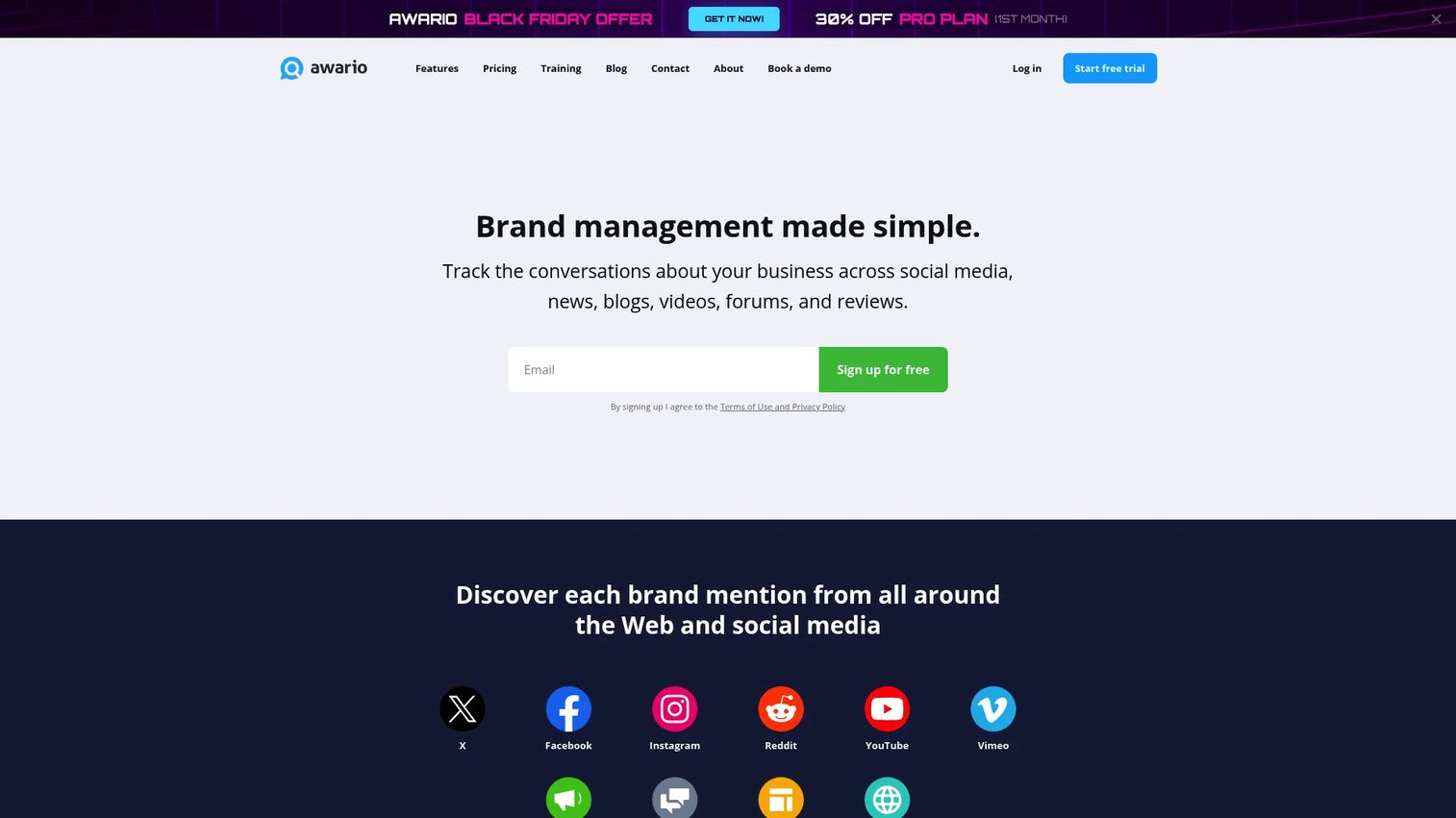
Awario monitors social networks, news, blogs, videos, forums, and reviews. Boolean search gives marketers detailed control over keywords and exclusions.
Its lead discovery feature also surfaces conversations where people seek recommendations related to a tracked category.
Best for: Smaller teams that want query control, competitor monitoring, and social selling signals.
Key features
- Boolean search
- Real time mentions
- Sentiment analysis
- Lead discovery
- White label reports
Why choose Awario: It offers a lower entry price than many dedicated listening platforms. Plans differ by monitored topics, stored mentions, and monthly volume.
Awario pricing: Starter costs $49 monthly or $29 per month annually. A free trial is available.
G2 rating: 3.9/5.
10. Agorapulse
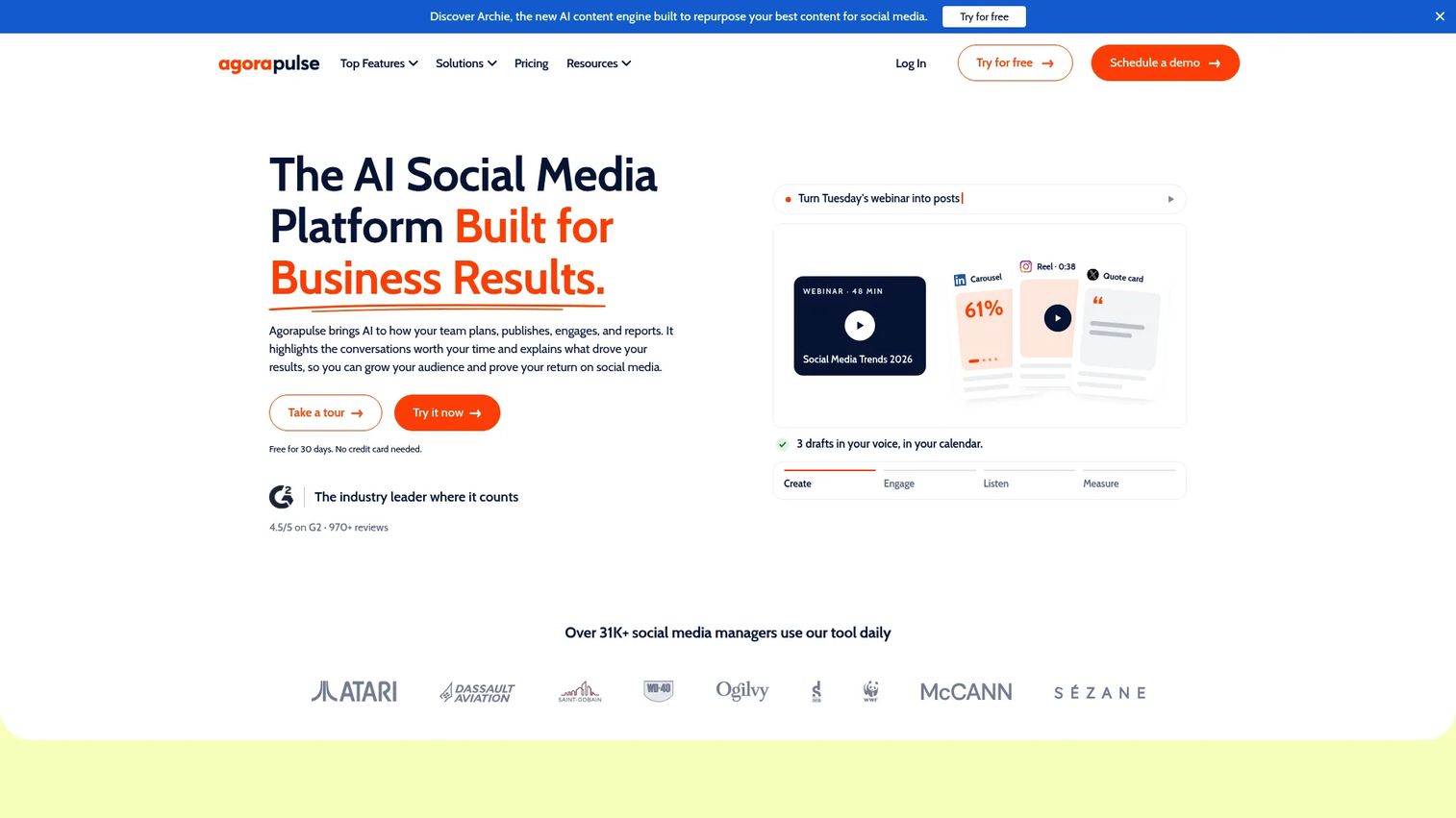
Agorapulse combines publishing, monitoring, reporting, and social inbox management. Comment moderation and team assignments make it useful for brands handling steady engagement volume.
Its reporting includes analytics and social media return on investment measurement.
Best for: Social teams that need comment monitoring tied to response ownership and publishing.
Key features
- Unified social inbox
- Comment moderation
- Publishing calendar
- Team assignments
- Social ROI reports
Why choose Agorapulse: Choose it when the team’s bottleneck is managing conversations after they appear. Broader open web research is outside its main operating model.
Agorapulse pricing: Standard starts at $79 per user monthly with annual billing. Monthly billing costs $99 per user.
G2 rating: 4.5/5.
11. Iconosquare
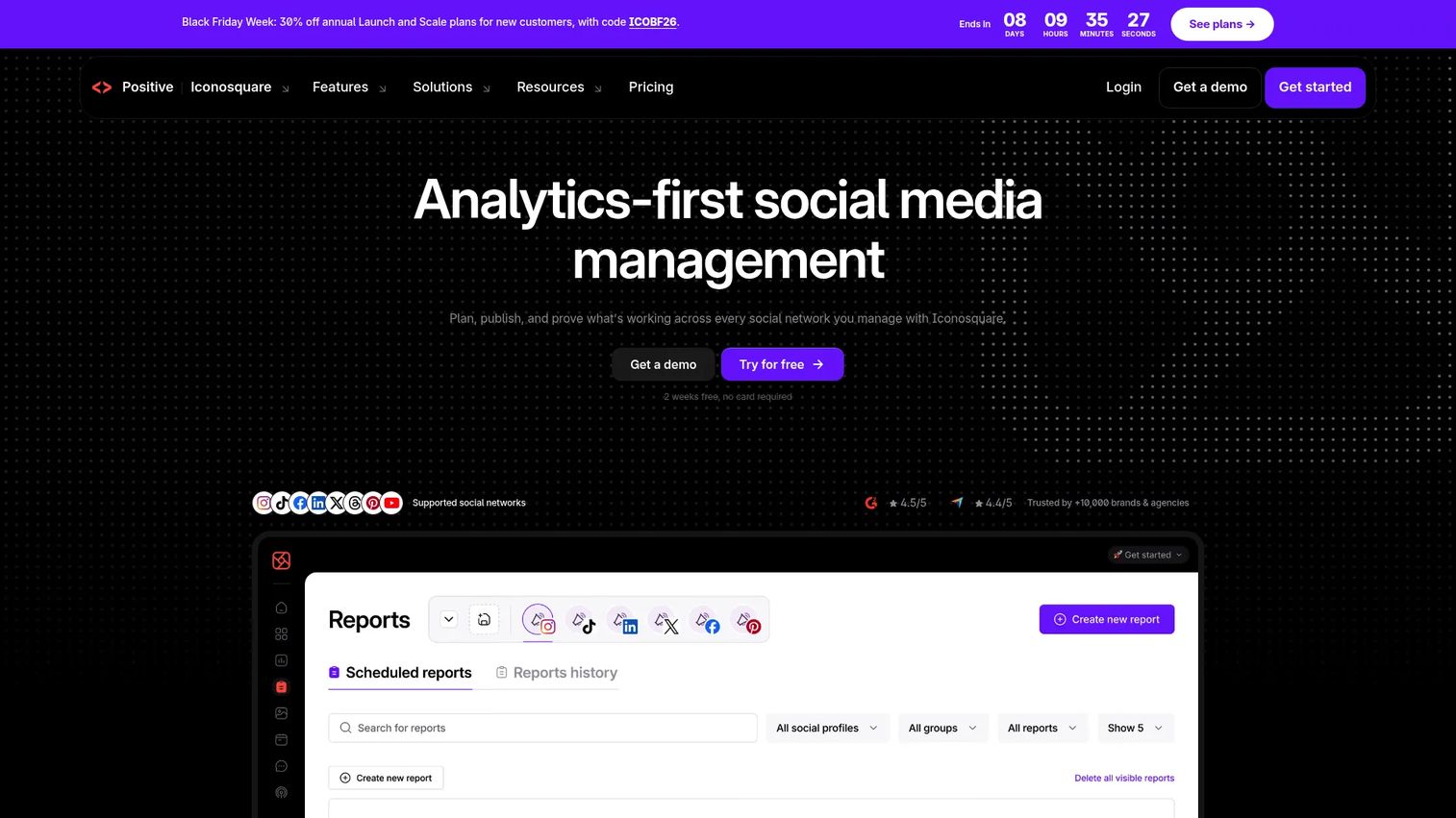
Iconosquare is an analytics focused social media management platform. It combines scheduling, dashboards, reporting, inbox management, and competitive monitoring.
The product suits teams that care more about channel performance than broad open web listening.
Best for: Brands and agencies managing visual social channels with strong reporting requirements.
Key features
- Social analytics dashboards
- Competitor benchmarks
- Automated reporting
- Unified social inbox
- Hashtag monitoring
Why choose Iconosquare: Its lower entry plans make it approachable for analytics focused teams. Monitoring and collaboration depth increase across paid packages.
Iconosquare pricing: A free plan supports two profiles and one user. Starter begins at €9 per month with annual billing.
G2 rating: 4.4/5.
12. Muck Rack
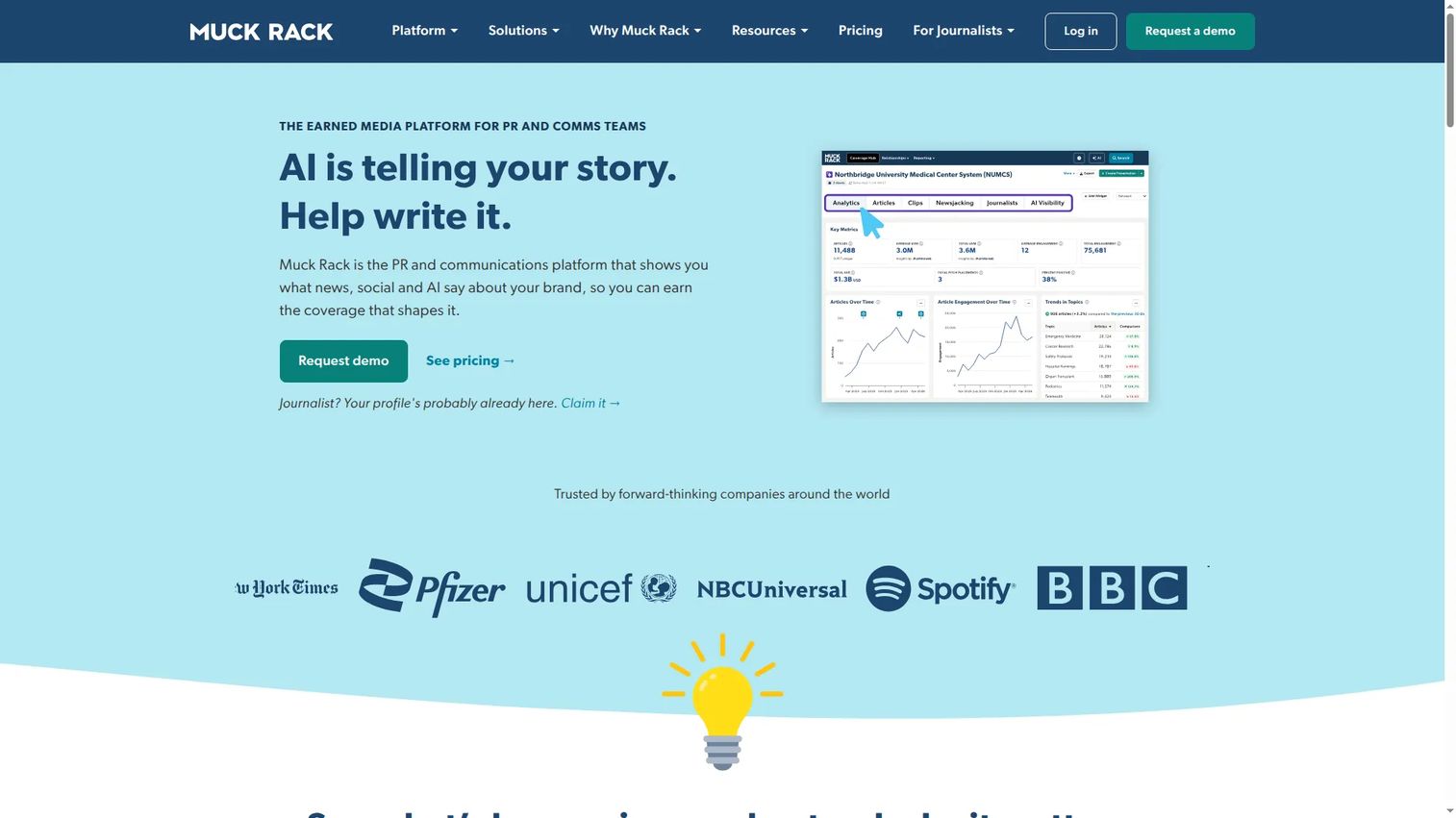
Muck Rack is PR software combining journalist research, media monitoring, pitching, and earned media measurement. It connects coverage alerts with the relationship workflows communications teams already manage.
Its scope reaches beyond standard social scheduling.
Best for: PR teams that need journalist intelligence beside media monitoring and coverage reporting.
Key features
- Media monitoring
- Journalist database
- Pitch tracking
- Coverage reports
- Alerts and digests
Why choose Muck Rack: It fits teams whose monitoring program centers on earned media and journalist relationships. Social publishing is not its primary job.
Muck Rack pricing: Custom pricing across Starter, Standard, and Premier packages. Free tools are available for journalists.
G2 rating: 4.5/5.
13. HubSpot Social Media Management Software
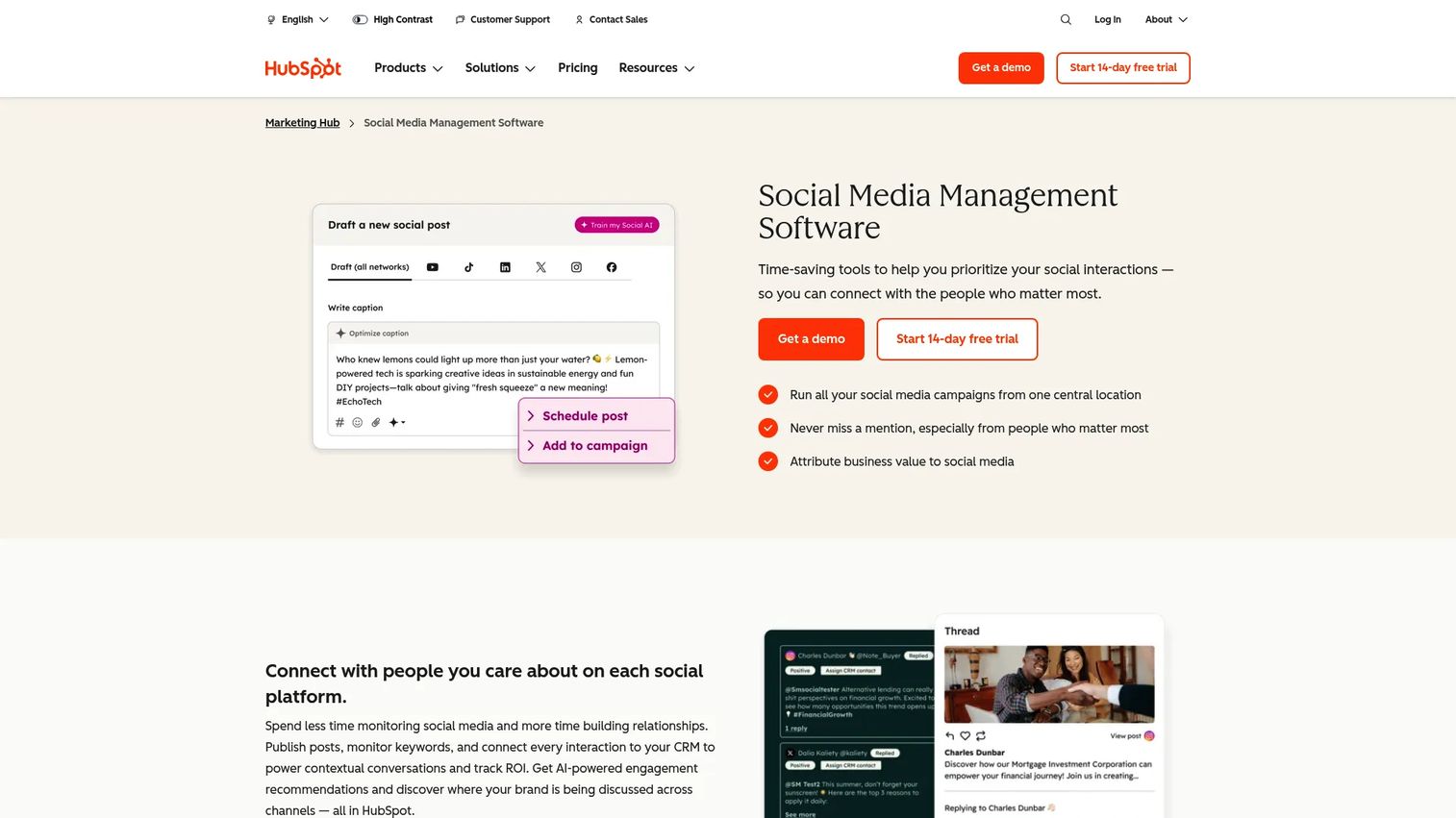
HubSpot Social Media Management Software connects publishing and monitoring with Marketing Hub campaigns. Teams can monitor mentions and keywords while tying activity to CRM records and marketing reports.
Its strongest fit appears when HubSpot already anchors the marketing stack.
Best for: Growth marketers who want social activity connected to campaigns, contacts, and revenue reporting.
Key features
- Social monitoring streams
- CRM attribution
- Campaign reporting
- Social publishing
- AI sentiment insights
Why choose HubSpot Social Media Management Software: It can consolidate social workflows for existing HubSpot customers. Dedicated listening teams may need broader source coverage.
HubSpot Social Media Management Software pricing: Marketing Hub has a free plan. Starter begins at $7 per seat monthly with an annual commitment.
G2 rating: 4.4/5 for HubSpot Marketing Hub.
14. Metricool
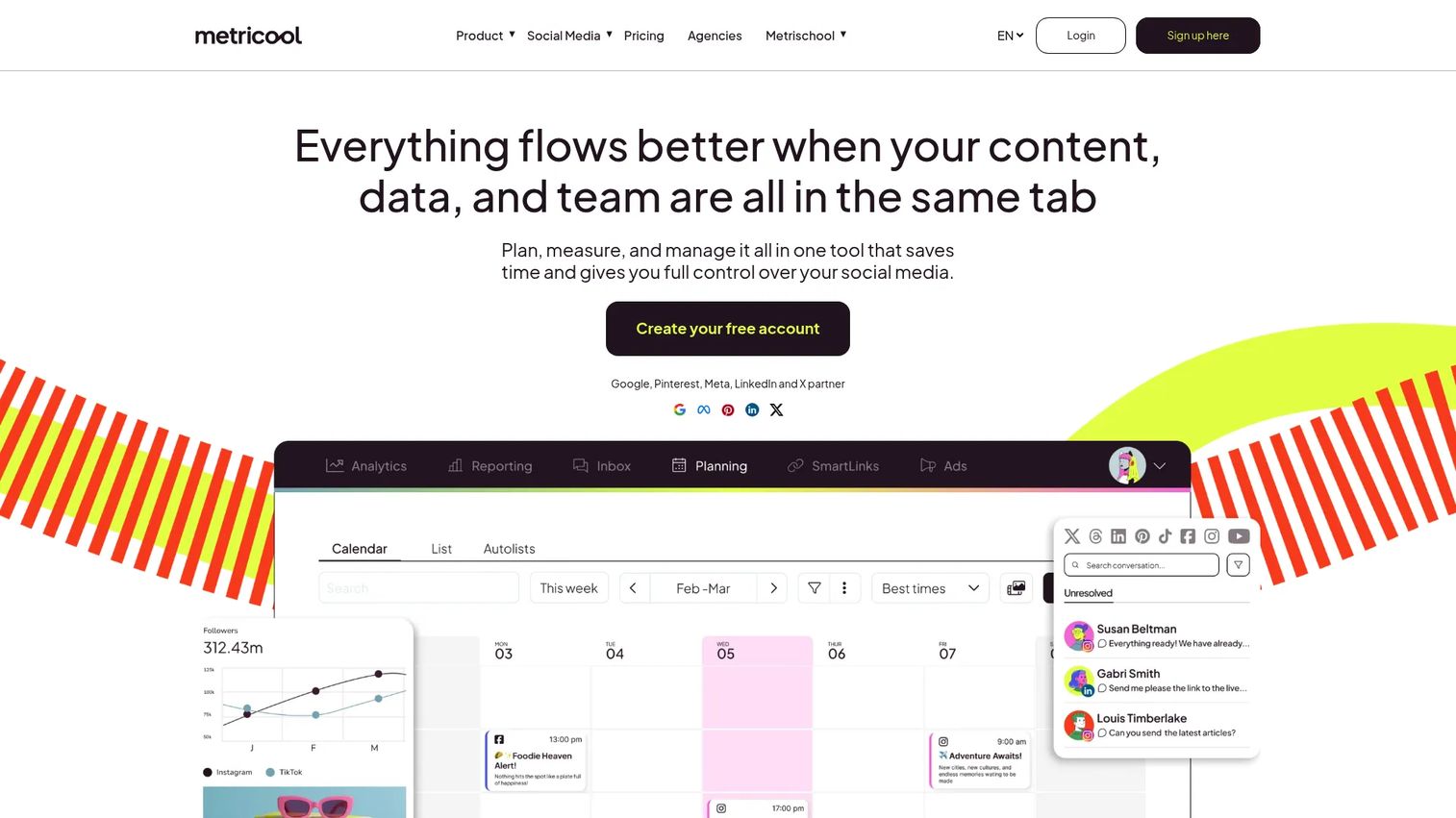
Metricool combines social planning, analytics, reporting, inbox management, and competitor analysis. Its free plan and lower paid starting price suit small teams watching software spend.
It focuses on daily social operations rather than broad media intelligence.
Best for: Freelancers and small marketing teams consolidating scheduling, reporting, and basic competitor tracking.
Key features
- Social scheduling
- Analytics dashboards
- Competitor analysis
- Shared inbox
- Automated reports
Why choose Metricool: It replaces several lightweight social utilities without enterprise pricing. Dedicated brand mention tracking may still require a listening platform.
Metricool pricing: The free plan supports one brand. Starter begins at $20 per month with annual billing.
G2 rating: 4.5/5.
15. Meltwater Social Listening
Meltwater Social Listening combines social listening with media intelligence. It monitors conversations across social networks, news, forums, and Reddit.
Real time alerts can surface volume spikes, sentiment shifts, or selected terms. Executive dashboards support reputation and competitive reporting.
Best for: Enterprise communications teams combining social intelligence with media monitoring and crisis detection.
Key features
- Cross channel monitoring
- Crisis alerts
- AI narrative summaries
- Share of voice
- Executive dashboards
Why choose Meltwater Social Listening: It connects social signals with broader communications reporting. Procurement should account for selected capabilities, regions, users, and integrations.
Meltwater Social Listening pricing: Custom pricing across Starter, Pro, Enterprise, and Agency plans. Meltwater doesn’t offer a self serve trial.
G2 rating: 4.1/5 for Meltwater.
16. Brandwatch Analytics
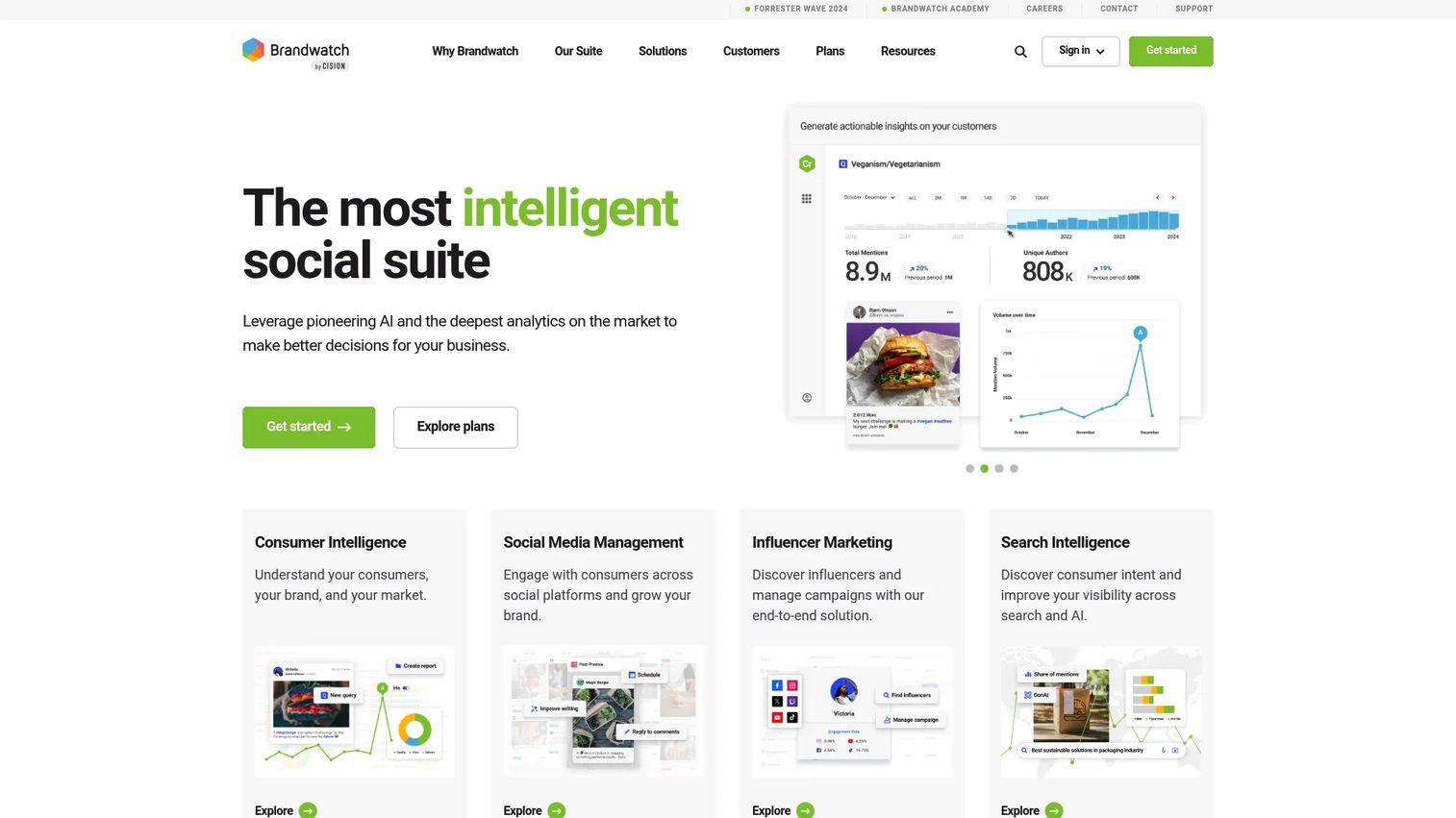
Brandwatch Analytics supports enterprise social intelligence and consumer research. It analyzes conversations across social networks, blogs, forums, news, reviews, and video sites.
AI capabilities cover sentiment, topics, entities, demographics, influencers, and image analysis.
Best for: Insights and research teams needing historical analysis, audience segmentation, and trend research.
Key features
- Consumer intelligence
- Historical research
- Audience segmentation
- Image analysis
- Automated reports
Why choose Brandwatch Analytics: It suits teams conducting research beyond day to day alerting. The wider platform also covers social management and influencer marketing.
Brandwatch Analytics pricing: Custom pricing for standard and enterprise plans.
G2 rating: 4.2/5 for Brandwatch’s G2 seller profile.
17. Digimind Social
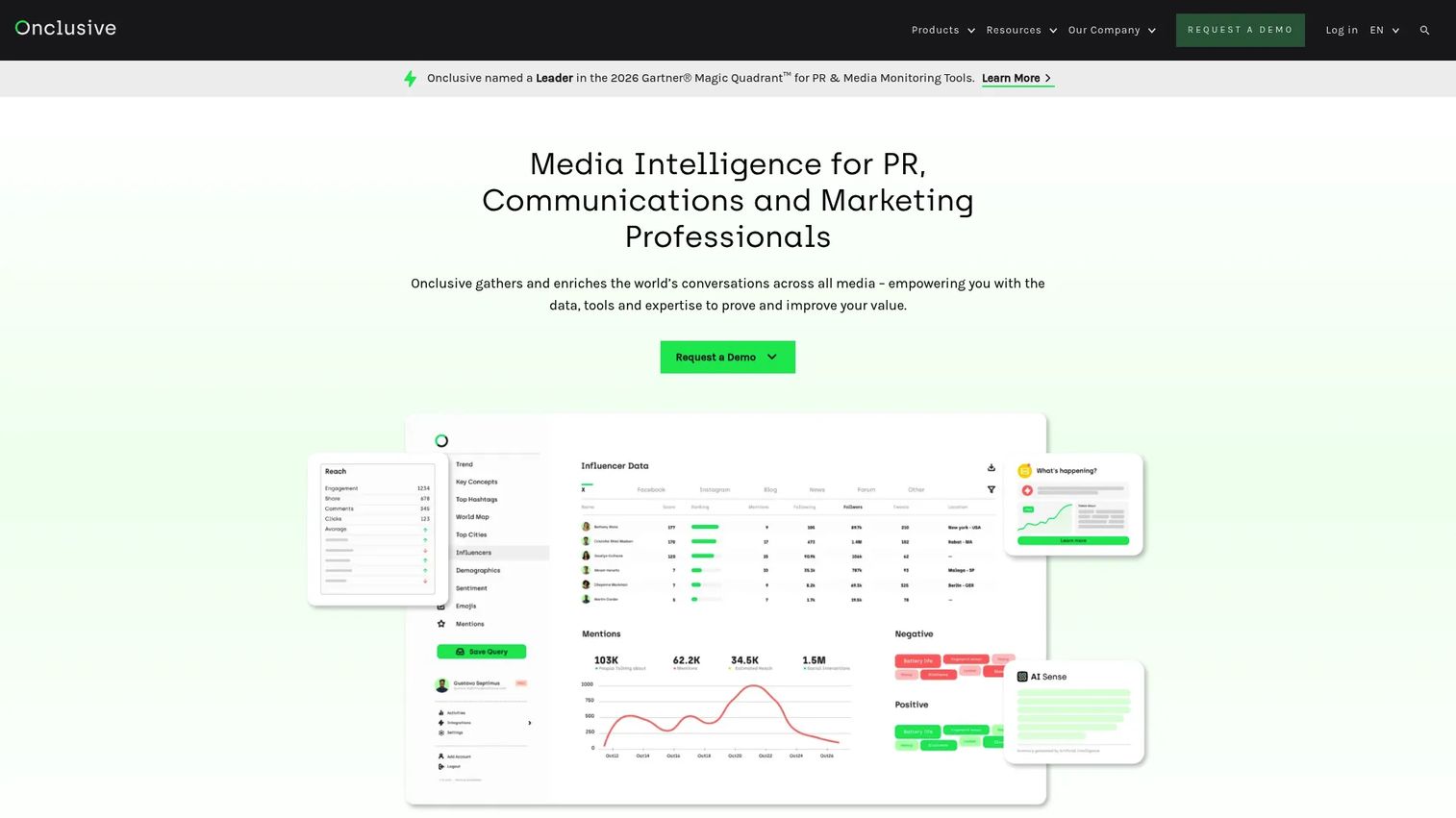
Digimind Social provides social listening for brand reputation, competitor analysis, market signals, and crisis monitoring. Its capabilities include sentiment tracking and alerts for selected keywords or negative conversation shifts.
The supplied research notes that the current product appears under Onclusive Social on G2.
Best for: Global marketing and communications teams combining competitor intelligence with reputation monitoring.
Key features
- Social listening
- Competitive intelligence
- Sentiment tracking
- Crisis alerts
- Historical data
Why choose Digimind Social: It fits organizations treating social conversation as market intelligence. Current packaging and procurement run through the vendor’s sales process.
Digimind Social pricing: Custom pricing.
G2 rating: 4.5/5 under the current Onclusive Social listing.
Considerations when choosing social media monitoring software
Source coverage
List the channels your team must monitor before comparing vendors. Include relevant social networks, review sites, forums, news sources, podcasts, or video platforms.
Platform API restrictions can affect what each provider collects. Ask vendors to demonstrate coverage using your own keywords.
Alert quality
Real time alerts help only when they identify meaningful changes. Test spike detection, high reach mentions, negative sentiment, and routing into email or team workflows.
Run a trial during an active campaign. Count useful alerts and false positives rather than comparing feature checklists.
Sentiment and share of voice accuracy
Sentiment analysis is directionally useful, but language context matters. Test sarcasm, slang, multilingual posts, and industry terms before using results in executive reporting.
For share of voice, inspect the underlying query. A poor competitor query produces a polished but misleading chart.
Pricing limits
The subscription price rarely tells the whole story. Costs can change with seats, tracked topics, mention volume, saved searches, historical data, exports, or add ons.
Estimate your likely usage after six months. A cheap entry tier can become expensive once campaigns and markets multiply.
Workflow fit
Decide whether the platform replaces existing social media management tools or adds another login. Prioritize integrations that support your reporting and response process.
Growth teams should also check whether data connects with CRM, marketing automation, BI, helpdesk, or publishing systems. Better integration makes attribution easier to defend.
Conclusion
The right choice depends on which workflow is currently breaking.
Choose Brand24 for dedicated brand mention tracking with sentiment and accessible reporting. Hootsuite, Sprout Social, Agorapulse, and Metricool fit teams combining monitoring with daily social management.
Talkwalker, Meltwater Social Listening, Brandwatch Analytics, and Digimind Social suit enterprise listening or market intelligence programs. Muck Rack is the clearer fit for PR and earned media workflows.
BuzzSumo supports content research, while Keyhole focuses on hashtag and campaign measurement. HubSpot works best when CRM connected attribution matters more than broad open web monitoring.
Before buying, run your own keywords through the platform. Measure source coverage, alert relevance, and reporting usefulness. Then calculate the cost at expected mention volume and seat count.
Once monitoring identifies growing interest, send buyers somewhere more useful than a static campaign page. Interactive product demos support landing pages, email follow ups, events, and product education through guided, clickable experiences.
Start your journey with Guideflow today!
FAQs
Social media monitoring software tracks brand mentions, keywords, competitors, campaigns, comments, and customer conversations. It collects signals from supported social networks and online sources, then sends alerts or organizes them for analysis.
Teams use it for reputation monitoring, campaign measurement, customer insight, and competitor research.
Monitoring captures individual mentions and alerts teams when relevant conversations appear. Social media listening tools analyze patterns across larger datasets.
Listening commonly covers sentiment, trends, share of voice, audience themes, and category conversations over time.
Brand24 and BrandMentions suit teams needing dedicated mention tracking. Awario offers Boolean search at a lower starting price.
Metricool and Iconosquare fit small teams that also need scheduling or analytics. Compare mention limits, alert routing, source access, and reporting before choosing.
Talkwalker, Meltwater Social Listening, Brandwatch Analytics, Sprout Social, and Digimind Social fit enterprise evaluation lists. Their strengths differ across consumer intelligence, communications, customer care, and market research.
Enterprise buyers should assess governance, source coverage, reporting flexibility, procurement support, and integration requirements.
Free social media monitoring tools can cover basic native analytics or simple alerts. They fit low volume tracking when one person owns the workflow.
Paid platforms become more useful for cross channel coverage, sentiment, historical data, shared reporting, and structured response processes.
Most dedicated social listening platforms in this guide include sentiment analysis. Examples include Brand24, Talkwalker, BrandMentions, Mention, Awario, Meltwater, Brandwatch, and Digimind Social.
Accuracy varies by language and context. Test each system using your brand terms, competitor names, slang, and recurring customer phrases.
Yes. Competitor monitoring can cover brand names, product terms, campaign hashtags, launches, and share of voice.
Results depend on source access and query design. Use exclusions and Boolean logic where available to remove unrelated mentions.
Use monitoring data to improve creative testing, campaign reporting, crisis response, customer research, and competitive positioning. Route service issues to support and high intent conversations to the appropriate commercial team.
For reporting, connect conversation trends with campaign dates and business outcomes. This produces stronger evidence than reporting mention volume alone.