If customers finish your training course and still open tickets about the same workflow, the problem may not be course delivery. It may be what the course asks them to do. Passive video and static modules tell people what a product looks like. They rarely replicate the experience of using it. That gap between completion rates and actual product confidence is why so many CS teams are evaluating Skilljar alternatives right now.
This roundup covers 15 options across two distinct categories: Customer education LMS platforms that manage courses, learner records, certification, and curricula, and one demo automation platform for hands-on product practice. Docebo, TalentLMS, and Absorb LMS lead the LMS shortlist. Guideflow is the pick for teams that want customers to click through product workflows rather than watch someone else do it. Skilljar competitors range from enterprise-grade learning systems to lightweight training tools, so the right answer depends on what your customers actually need to do after a lesson.
93% of organizations increased investment in customer education in the past year, according to LearnUpon's State of Customer Education (2025). The global LMS market was valued at $28.6 billion in 2025, per Grand View Research's Learning Management Systems Market Report (2026). The category is growing, but completion numbers alone are not moving the needle for enough CS teams.
TL;DR
- Best for hands-on product lessons: Guideflow, a demo automation platform that lets customers practice workflows step by step, with analytics showing completion and drop-off by step.
- Best enterprise customer education LMS: Docebo (G2: 4.3/5) or Cornerstone Learn (G2: 4.0/5) for organizations that need learning across employees, customers, and partners in one system.
- Best for accessible, lower-cost training: TalentLMS, starting at $119/month with a free plan for up to 5 users, is the fastest way to launch structured training without enterprise overhead.
- Best for branded customer academies: Absorb LMS (G2: 4.6/5) or Northpass for teams that want a polished learner experience and external training portals.
- Best collaborative learning option: 360Learning, starting at $8/user per month, where subject-matter experts help build and maintain course content.
- Best open-source route: Moodle (G2: 4.1/5) for organizations with technical resources that want full control and customization.
- This list covers 15 tools. Fourteen are LMS or training platforms; one is a demo automation platform. The Category column in the table helps you tell a direct swap from a category addition.
What's inside
- Why teams compare Skilljar alternatives
- A 15-tool comparison table with category labels, G2 ratings, free plan status, and starting prices
- Per-tool cards with best-fit guidance, key features, sourced shortfalls, and pricing
- Use-case routing for customer education, hands-on product practice, lower-cost options, and enterprise learning
- When to stay with Skilljar
What is Skilljar?
Skilljar is a customer education LMS built to help companies create branded academies, deliver training, manage certifications, monetize courses, and measure learner progress. It sits in the customer education LMS category alongside tools like Northpass and Absorb LMS, though it has built a stronger market position than most direct alternatives.
CS and customer education teams use Skilljar to design learning paths, run live training sessions, issue credentials, and track completion across customer and partner audiences. Its integrations cover CRM, analytics, payment tools, and support platforms, which makes it a credible system of record for external training programs.
Key strengths from Skilljar's own positioning:
- Branded customer academies with configurable portals
- Learning paths and structured curricula for onboarding and feature adoption
- Certification, credentialing, and monetization capabilities
- Integrations with CRM, analytics, and customer success tools
- Reporting on training completion and education ROI
Why teams look for Skilljar alternatives
Teams usually compare Skilljar alternatives when they need a different pricing model, a broader enterprise learning platform, more configurable academy branding, or a way to help customers practice workflows rather than just watch them.
Pricing and packaging pressure
Skilljar prices by quote and does not publish a public tier structure. For CS leaders building a business case, that creates friction early. G2 reviewers frequently flag that total cost can grow quickly as learner volumes, portal counts, and integration requirements expand. Teams at earlier growth stages or on tighter budgets often start the comparison process here.
Passive content does not build product confidence
Courses completed does not equal workflows understood. G2 reviewers of Skilljar and similar platforms note that customers can progress through a learning path and still need CSM support for the same tasks the course covered. When the learning objective is "can a customer perform this workflow without help," a passive lesson format delivers measurably lower confidence than a hands-on practice environment.
Reporting stops at completion
LMS reporting shows enrollment, completion, and certification progress. What it rarely shows is where inside a workflow customers get stuck. That granularity, the step where someone gives up inside a product sequence, is what CS teams need to reduce tickets and improve time-to-value. Standard LMS analytics do not reach inside the product experience.
Different audiences need different tools
Customer education, partner enablement, employee compliance training, and internal SOP documentation are four different jobs. Skilljar was built for the first. Teams that need to handle all four inside one platform, or that need enterprise-grade governance for workforce learning, often find that an adjacent LMS fits better.
How we picked these Skilljar alternatives
Each platform was evaluated on fit for customer education, partner training, or employee learning; course delivery and curriculum management; certification and reporting depth; branding and academy configuration; integrations with CRM, analytics, and support tools; pricing transparency; and G2 rating availability. According to LearnUpon's State of Customer Education (2025), 92% of organizations expect their customer education programs to continue growing, which makes tool fit a medium-term investment, not a quick swap.
This list includes 14 LMS and training platforms plus one demo automation platform. The LMS tools manage courses, learner records, and certifications. Guideflow adds hands-on product practice when the learning goal is workflow understanding.
Skilljar alternatives at a glance
Guideflow leads as the best option for hands-on product lessons. TalentLMS, Docebo, and Absorb LMS are the strongest LMS shortlist picks for most CS teams. The table covers all 15 tools with category labels so you can tell a direct LMS swap from a category addition.
| # | Tool | Category | Best for | G2 rating | Free plan | Starting price |
|---|---|---|---|---|---|---|
| 1 | Guideflow | Demo automation platform | Hands-on product practice inside onboarding and CS programs | 5.0/5 | Yes | $0 (free), $35/user/month (annual) |
| 2 | Docebo | Enterprise learning platform | Multi-audience enterprise learning | 4.3/5 | No | Custom pricing |
| 3 | TalentLMS | Customer education LMS | Accessible training launch without enterprise overhead | 4.6/5 | Yes (up to 5 users) | $119/month |
| 4 | Litmos | Corporate LMS | Structured compliance and customer training | 4.3 | No | $8K/year |
| 5 | Cornerstone Learn | Enterprise learning platform | Workforce learning and skills development at scale | 4.0/5 | No | Custom pricing |
| 6 | Adobe Learning Manager | Enterprise learning platform | Enterprise learning with Adobe content and AI | 4.0/5 | No | Custom pricing |
| 7 | 360Learning | Collaborative learning platform | Expert-led collaborative course creation | 4.6/5 | No (free trial) | $8/user/month |
| 8 | Absorb LMS | Customer education LMS | Branded external training with strong learner experience | 4.6/5 | No | Custom pricing |
| 9 | Moodle | Open-source LMS | Customizable open-source training for technical teams | 4.1/5 | Yes (self-hosted) | Free (self-hosted) |
| 10 | Mykademy | Customer education LMS | Cost-conscious branded academy setup | 4.9/5 | No (14-day trial) | From $79/month |
| 11 | AcademyOcean LMS | Customer education LMS | AI-assisted employee and customer training | 4.9/5 | No | From $250/month |
| 12 | Northpass | Customer education LMS | Focused external customer and partner training | 4.5/5 | No | Custom pricing |
| 13 | eFront | Corporate LMS | Configurable multi-tenant enterprise training | 4.5/5 | No | $720/month |
| 14 | EasyLMS | Training operations platform | Lightweight courses, exams, and certificates | 4.3/5 | Yes (14-day trial) | From €70/month |
| 15 | Trainual | Knowledge transfer platform | Internal SOP documentation and employee onboarding | 4.7/5 | No | $3/user/month |
The best Skilljar alternatives in 2026
1. Guideflow (demo automation platform)
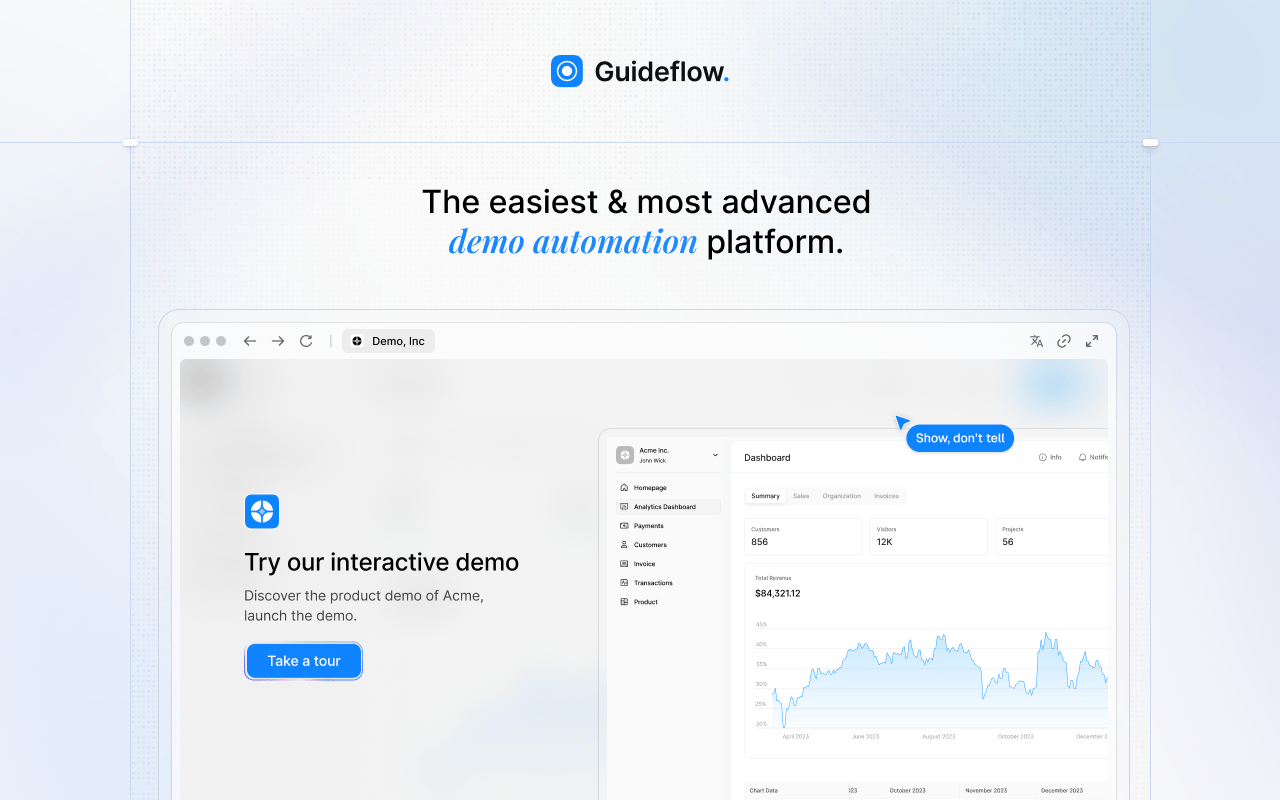
Guideflow occupies a different category from every other tool in this list. It does not replace a learning management system. It replaces the passive product lesson inside one, adding the hands-on practice layer that LMS platforms cannot deliver on their own. For CS and onboarding teams whose customers complete courses but still cannot perform key workflows, Guideflow is where that gap closes.
Best for: Customer success and onboarding teams that want customers to click through product workflows before or after a formal course.
What it is: Guideflow is a demo automation platform supporting interactive demos, demo pages, demo centers, sandboxes, live demos, and mobile demos. Teams use it to build clickable product experiences that customers can explore without a live CSM call. More than 500,000 guideflows have been created across the platform.
Key features:
- Interactive demos for step-by-step product practice, embedded in onboarding emails, help center articles, or alongside course modules
- Demo centers for organizing product lessons by role, use case, or journey stage
- Sandboxes for open exploration when customers need to validate a workflow on their own terms
- Capture through the Chrome extension or the native app using screenshot, HTML, and video modes; step content and CTAs are written automatically
- Step-level analytics for completion, drop-off, and viewer flow, with personalization tools to tailor content by audience segment
Where Guideflow falls short: Guideflow is not a full LMS. It does not manage course catalogs, learner transcripts, certification programs, SCORM administration, or curriculum governance. Teams that need formal exams, accreditation, and structured learner records need an LMS alongside it.
Pricing: Free plan available. Solo: $35/user/month (annual). Growth: $499/month (annual). Advanced: $1,499/month (annual). Enterprise: From $2,999/month. CRM records are created only when a viewer identifies through an in-demo form or a personalized link; visitor identification works at the company level.
G2: 5.0
How it compares to Skilljar: Skilljar manages the customer education program. Guideflow adds the hands-on product layer that shows customers how a workflow operates step by step and reveals exactly where they stop.
2. Docebo (enterprise learning platform)
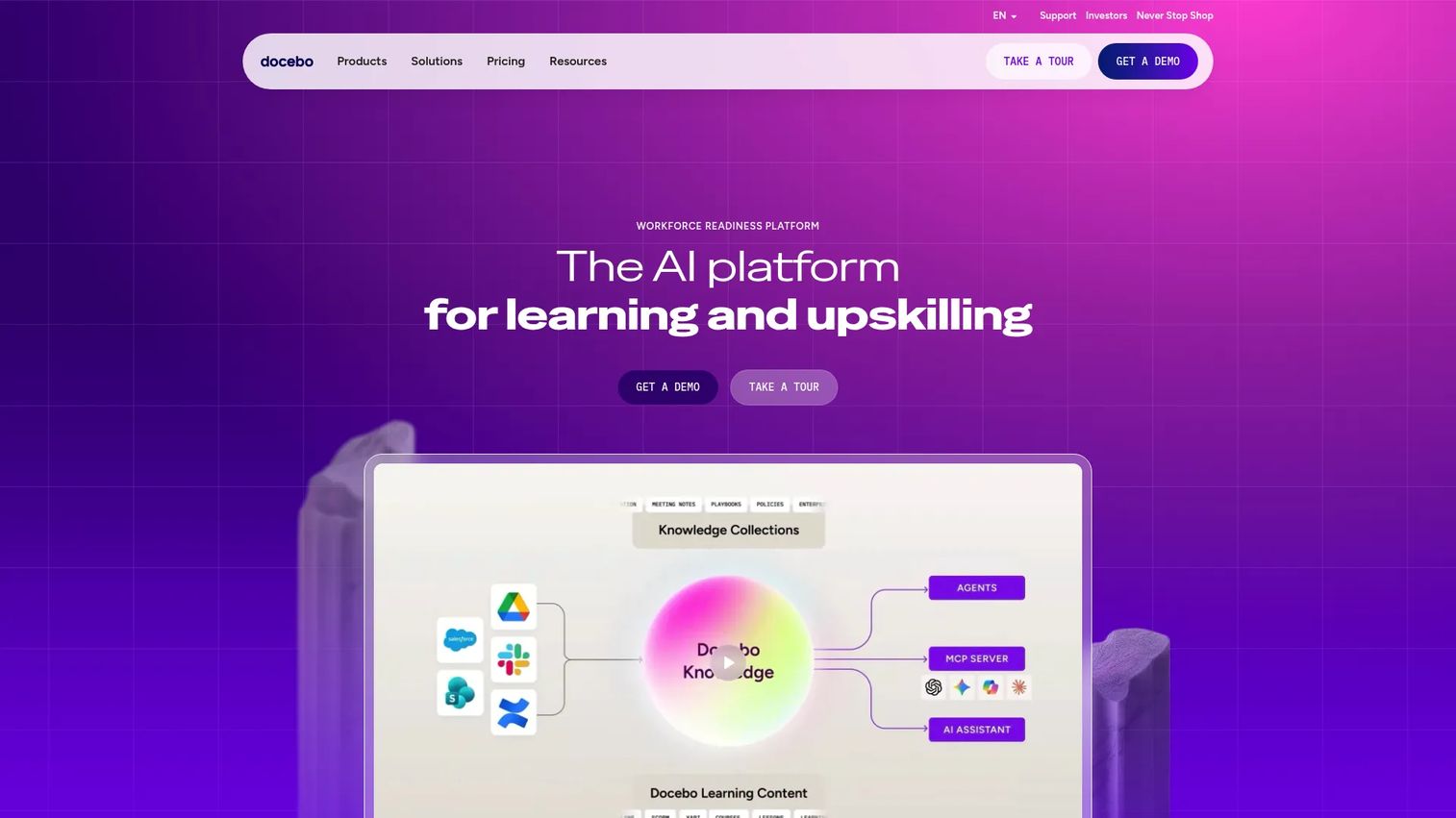
Docebo is one of the more capable enterprise platforms in this field, covering employees, customers, partners, and members inside a single system. Organizations that have outgrown standalone customer education tools often land here when they need broader governance and cross-audience reporting.
Best for: Mid-market and enterprise organizations delivering scalable training to multiple audiences under one administration layer.
What it is: Docebo is an AI-powered learning platform for creating, delivering, and measuring learning across employees, customers, partners, and members. It carries a 4.3/5 on G2 and offers Elevate and Enterprise plans, both priced by custom quote based on active users and organizational scope.
Key features:
- AI-powered content creation, recommendations, and search across the learner experience
- Learning paths, certifications, and compliance tracking
- Multi-audience support covering customers, partners, employees, and extended enterprise
- Learning insights, automation, and integration with common GTM and HR stacks
- Live, on-demand, mobile, and social learning options
Where Docebo falls short: G2 reviewers cite implementation complexity and a steep admin learning curve as frequent friction points, particularly for smaller CS teams standing up their first academy. Contract size and onboarding timelines can extend a rollout significantly, and some reviewers note that reporting customization takes meaningful admin time.
Pricing: Custom pricing. Docebo's Elevate and Enterprise plans are based on active-user volume.
G2 rating: 4.3/5
How it compares to Skilljar: Docebo is the stronger fit when the buyer needs a broader enterprise learning system rather than a purpose-built customer education academy. If the scope goes beyond customer training into workforce readiness, Docebo adds capabilities Skilljar does not cover.
3. TalentLMS (customer education LMS)
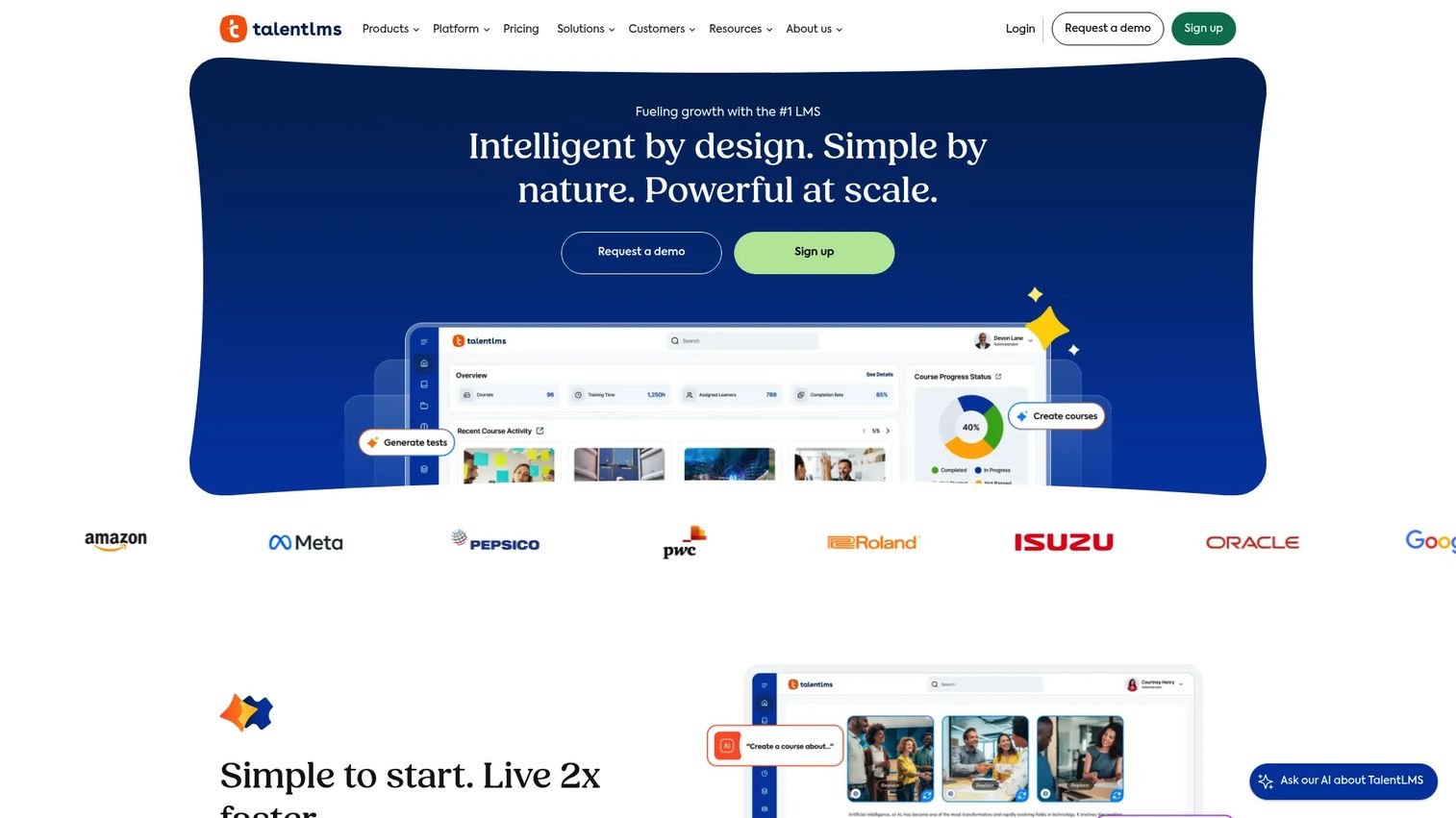
TalentLMS is probably the most accessible entry point in this list for CS teams that need to launch training without a long implementation cycle. The free tier handles small-team pilots, and the paid plans are priced at a level most SaaS CS budgets can defend quickly.
Best for: Organizations needing a scalable LMS for employee, onboarding, partner, or customer training, with a fast path to launch.
What it is: TalentLMS is a cloud learning management system for training across employees, customers, and partners. It carries a 4.6/5 on G2 and offers Core at $119/month, Grow at $229/month, Pro at $449/month, and Enterprise by custom quote.
Key features:
- Unlimited courses on paid plans
- AI-assisted course creation and translation
- Learning paths, analytics, and certifications
- Branding, automations, and integrations
- Free plan covering up to 5 users and 10 courses
Where TalentLMS falls short: G2 reviewers flag limited reporting depth at lower tiers and UI constraints around advanced academy customization. Teams with mature customer education programs note that deep LMS governance and customer-specific portal configuration require the higher tiers, which narrows the cost advantage.
Pricing: Core: $119/month. Grow: $229/month. Pro: $449/month. Enterprise: Custom. Free plan available for up to 5 users and 10 courses; plans are based on monthly active users.
G2 rating: 4.6/5
How it compares to Skilljar: TalentLMS is the better option when speed and cost are the primary drivers. For teams that need advanced customer academy depth, Skilljar's purpose-built customer education tooling runs deeper, but TalentLMS covers the core LMS jobs at a price point that is straightforward to approve.
4. Litmos (corporate LMS)
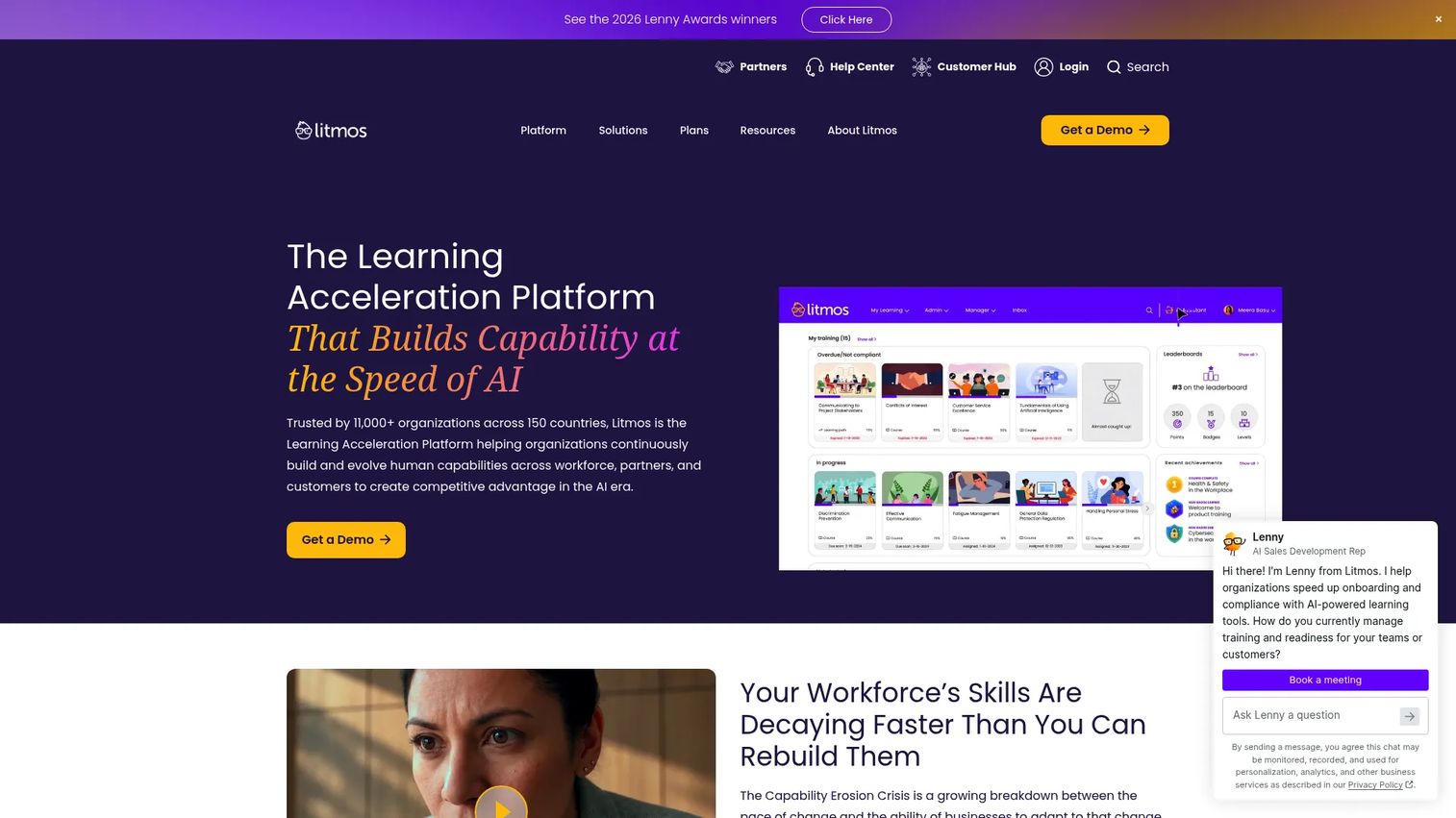
Litmos has long been a recognized name in corporate and compliance training, and it has expanded its customer and partner training coverage. It suits organizations that need to run structured training programs across both internal and external audiences.
Best for: Mid-market and enterprise organizations delivering training across employees, customers, and partner teams with compliance requirements.
What it is: Litmos is an AI-powered learning management system for training employees, customers, and partners. Its Foundation plan starts at $8K per year; Platinum is $15K per year; Platinum AI pricing requires a sales conversation.
Key features:
- AI-assisted content authoring, AI video assessments, and personalized recommendations
- Compliance management, certifications, and assessment workflows
- Learning paths, collections, and mobile learning support
- Instructor-led and virtual instructor-led training
- Reporting dashboards and integrations
Where Litmos falls short: G2 reviewers cite limitations in admin experience and reporting customization, particularly for complex customer academy configurations. Some users note support responsiveness as an area for improvement, and UI polish scores lower than the platform average for this category.
Pricing: Foundation: $8K per year. Platinum: $15K per year. Platinum AI: Contact sales. No confirmed free tier.
How it compares to Skilljar: Litmos is the stronger fit for organizations that need to blend customer education with internal compliance training. For pure customer academy use cases, Skilljar remains more specialized; Litmos earns its place when both audiences need coverage.
5. Cornerstone Learn (enterprise learning platform)
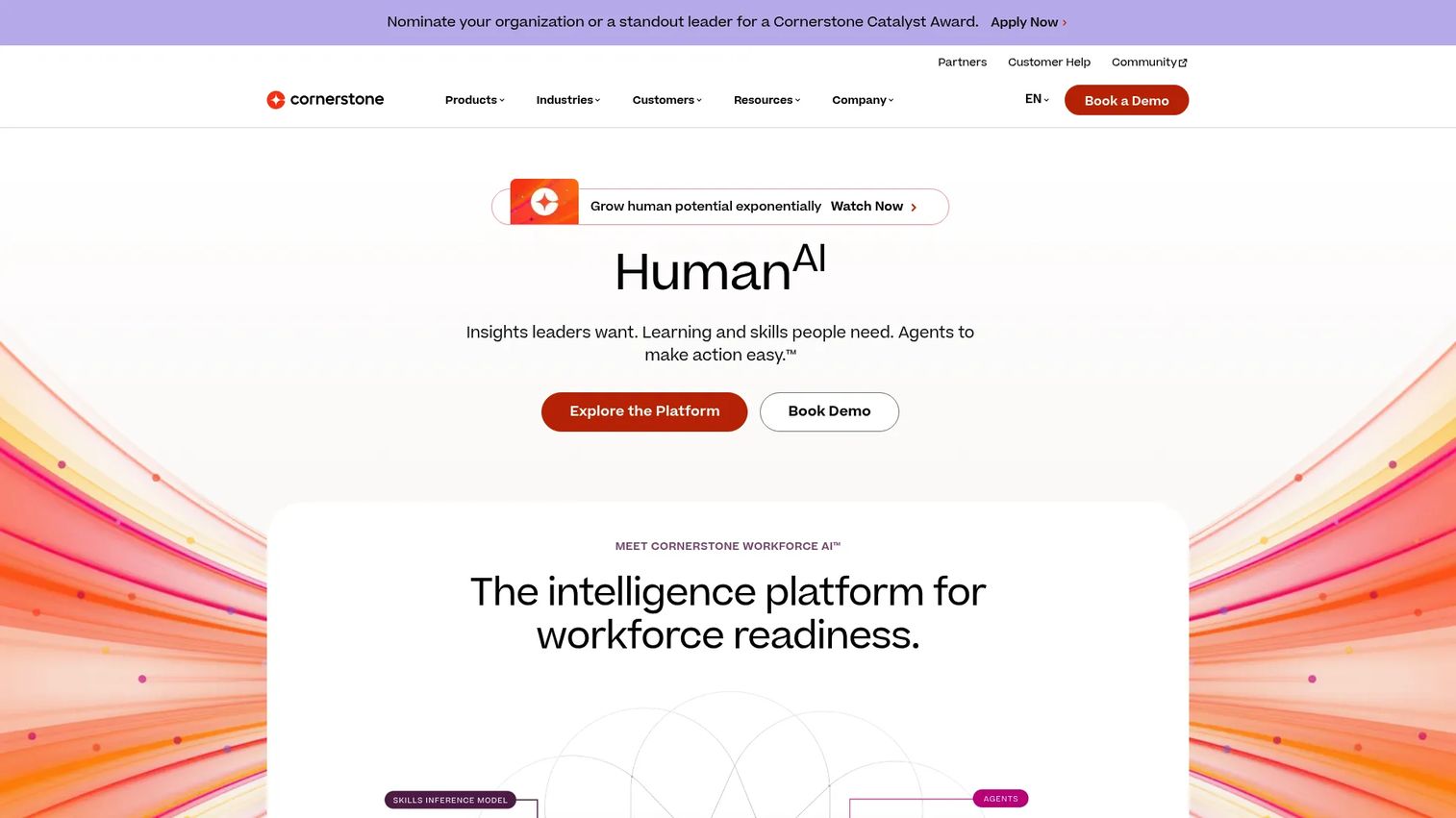
Cornerstone Learn comes from a talent management background, and that heritage shapes its positioning. It is built for large organizations managing workforce readiness, compliance, and skills development at scale, not primarily for SaaS customer academies.
Best for: Large organizations with formal learning governance, compliance training, and employee development needs alongside customer education.
What it is: Cornerstone Learn is an AI-powered enterprise learning solution for compliance, workforce readiness, skill development, and role-based learning. It carries a 4.0/5 on G2 and uses a per-employee-per-year pricing model by custom quote.
Key features:
- AI-powered learning recommendations and assistants
- Role-based and skill-based learning paths with personalized assignment
- Compliance monitoring with audit-ready evidence trails
- Certification, recertification management, and assessment tools
- Mobile learning with offline access and HR system integrations
Where Cornerstone Learn falls short: G2 reviewers consistently cite heavy implementation effort, high total cost, and significant admin complexity. Teams that want a quick-start customer education academy find the onboarding cycle longer than expected, and the platform's enterprise governance layer adds overhead that smaller CS teams rarely need.
Pricing: Learn+ plan priced per employee per year by custom quote.
G2 rating: 4.0/5
How it compares to Skilljar: Cornerstone Learn is the right call when the organization needs workforce learning depth and HR integrations alongside customer education. For SaaS teams focused purely on external customer academies, the implementation overhead often outweighs the added breadth.
6. Adobe Learning Manager (enterprise learning platform)
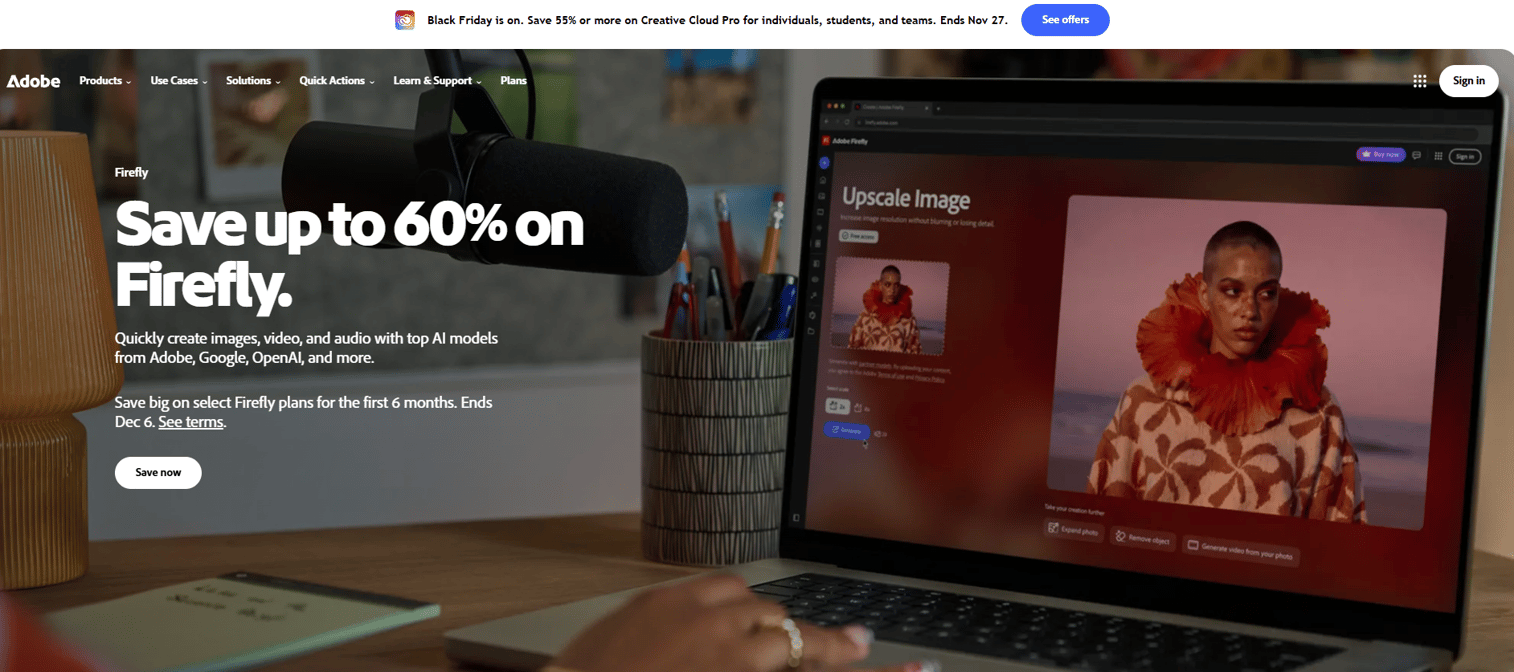
Adobe Learning Manager is a natural fit for enterprise teams already running Adobe content operations. Its AI-native positioning and blended learning capabilities give it depth, but the absence of public pricing limits early-stage evaluation.
Best for: Enterprises wanting a polished, blended learning experience with broad training support across employees, customers, and partners.
What it is: Adobe Learning Manager is an AI-native learning management system for delivering personalized, blended, and trackable learning. It offers Prime and Ultimate packages by custom quote and carries a 4.0/5 on G2.
Key features:
- AI-powered recommendations, semantic search, and multiple AI agents for learning paths and insights
- Blended learning combining self-paced, instructor-led, and virtual instructor-led training
- Fluidic Player supporting SCORM, AICC, xAPI, video, and PDF content
- Gamification, social learning, and custom reporting
- APIs and enterprise integrations
Where Adobe Learning Manager falls short: G2 reviewers note a steeper admin learning curve and high implementation investment compared to purpose-built customer education platforms. Cost and setup complexity are cited frequently as blockers for teams without dedicated learning operations resources.
Pricing: Prime and Ultimate packages; custom pricing only.
G2 rating: 4.0/5
How it compares to Skilljar: Adobe Learning Manager makes more sense when enterprise training operations are already embedded in an Adobe stack, or when the organization needs learning at a scale Skilljar's academy focus does not reach.
7. 360Learning (collaborative learning platform)
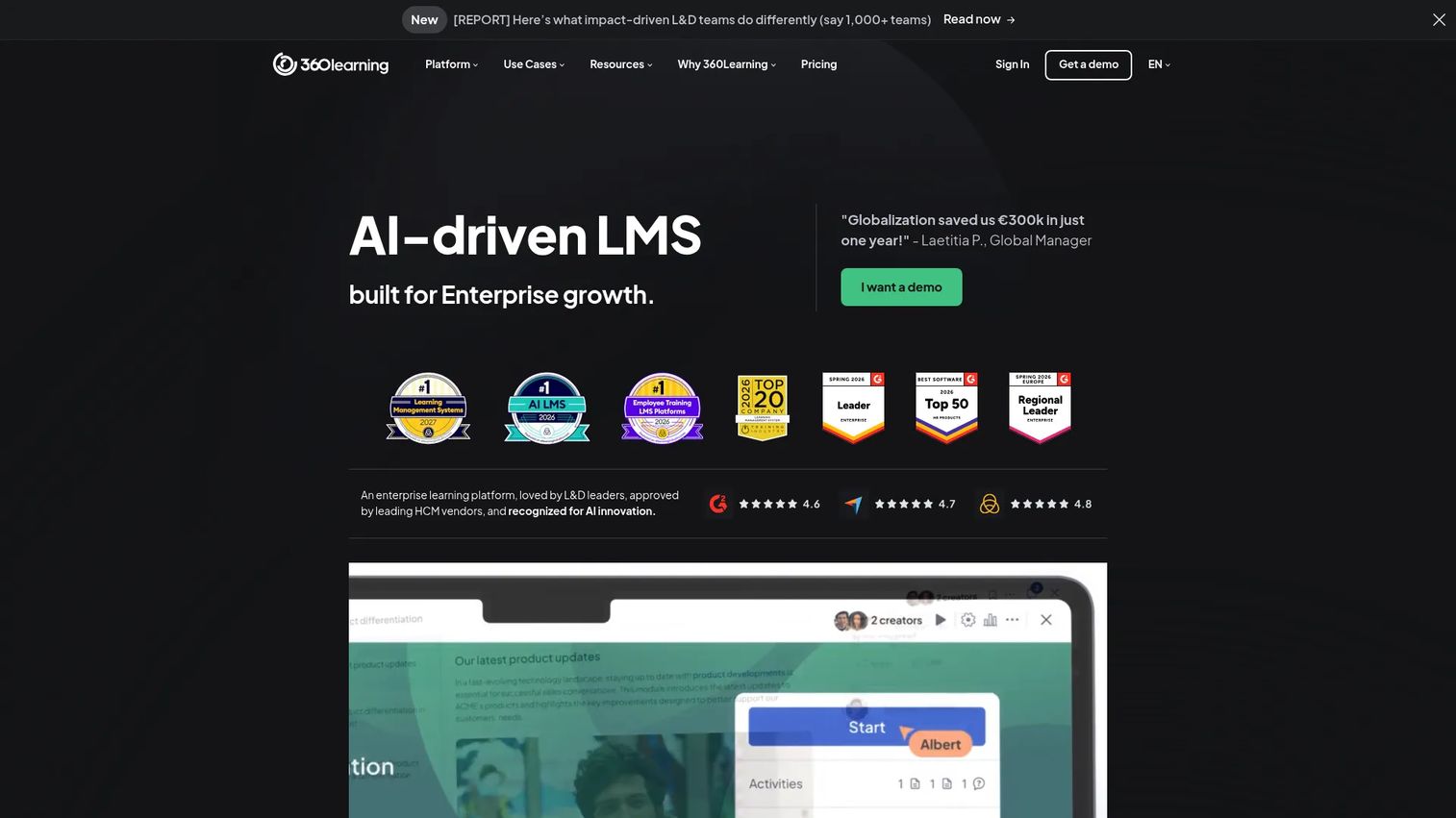
360Learning takes a fundamentally different approach to course creation. Subject-matter experts inside the organization co-author and iterate on training content, which suits teams where product knowledge is distributed and CSMs cannot afford to maintain course material alone.
Best for: Organizations scaling expert-led training, where internal contributors need to build and update learning content without an L&D bottleneck.
What it is: 360Learning is an AI-powered collaborative learning platform and LMS for training employees, customers, and partners. It carries a 4.6/5 on G2 and starts at $8/user per month for up to 100 users on the Team plan. Business and Enterprise plans use custom pricing.
Key features:
- Collaborative course authoring with peer feedback loops
- AI-assisted authoring and smart recommendations
- SCORM player and blended learning support
- Gamification, ILT/vILT sessions, and advanced analytics
- AI Companion for learner support and content queries
Where 360Learning falls short: G2 reviewers note that reporting depth and enterprise LMS governance features lag behind larger platforms. Teams needing deep certification management and rigid learner record administration sometimes find the collaborative model adds noise. Custom pricing for Business and Enterprise plans can make total cost difficult to forecast.
Pricing: Team: $8/user per month (up to 100 users, billed monthly). Business: Custom. Enterprise: Custom. Free trial available for Team.
G2 rating: 4.6/5
How it compares to Skilljar: 360Learning is worth evaluating when the team wants course content built collaboratively by product experts and CSMs, rather than produced by a central team. Skilljar's purpose-built customer education tooling serves more structured academy programs; 360Learning serves learning cultures where iteration speed matters more.
8. Absorb LMS (customer education LMS)
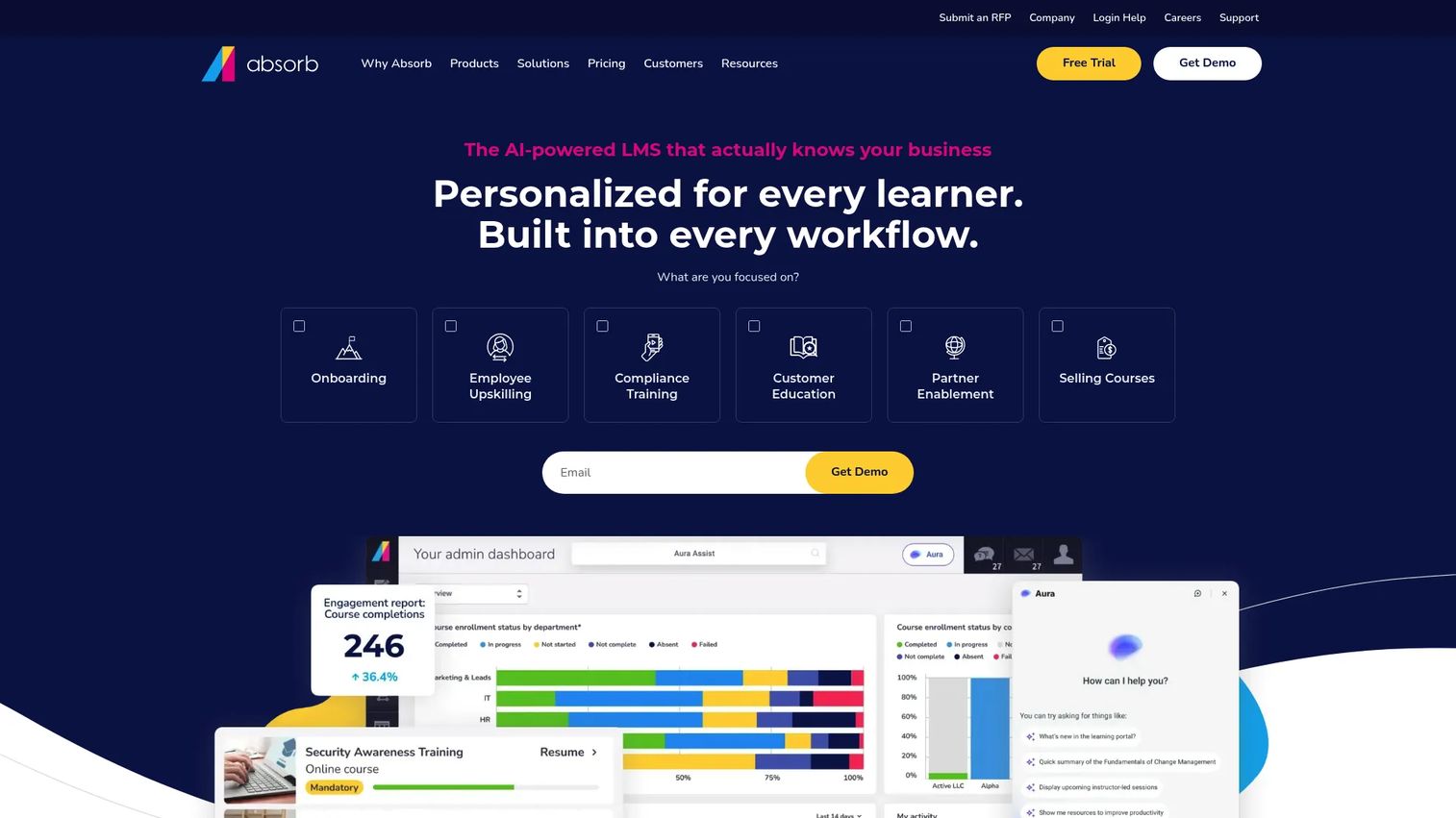
Absorb LMS positions itself as a polished alternative for external and internal training. The learner experience earns high marks, and its e-commerce capability makes it one of the more practical options for teams monetizing customer training.
Best for: Organizations that want a branded customer academy with a strong learner experience, flexible administration, and PCI-compliant course sales.
What it is: Absorb LMS is an AI-powered learning management system for training employees, customers, partners, and other learners. It carries a 4.6/5 on G2. Pricing is collected through a learner-count form and is not publicly listed.
Key features:
- AI-assisted course creation with quizzes, videos, translations, and AI voiceovers
- Personalized upskilling and skills-based auto-assignment
- PCI-compliant e-commerce for selling courses externally
- Custom reporting for compliance, learner engagement, and ROI
- Integrations with ADP, Workday, and Salesforce, plus a broad API
Where Absorb LMS falls short: G2 reviewers cite implementation effort and pricing opacity as the main friction points. Advanced reporting customization requires meaningful admin investment, and some reviewers note that pricing grows with learner volume in ways that become hard to forecast at scale.
Pricing: Custom pricing. Contact for a quote based on learner count and usage.
G2 rating: 4.6/5
How it compares to Skilljar: Absorb LMS is a direct customer education alternative for teams that want academy branding, extended enterprise capabilities, and course monetization in a single platform. The evaluation often comes down to which tool's learner portal and admin model fits the team's workflow preferences.
9. Moodle (open-source LMS)
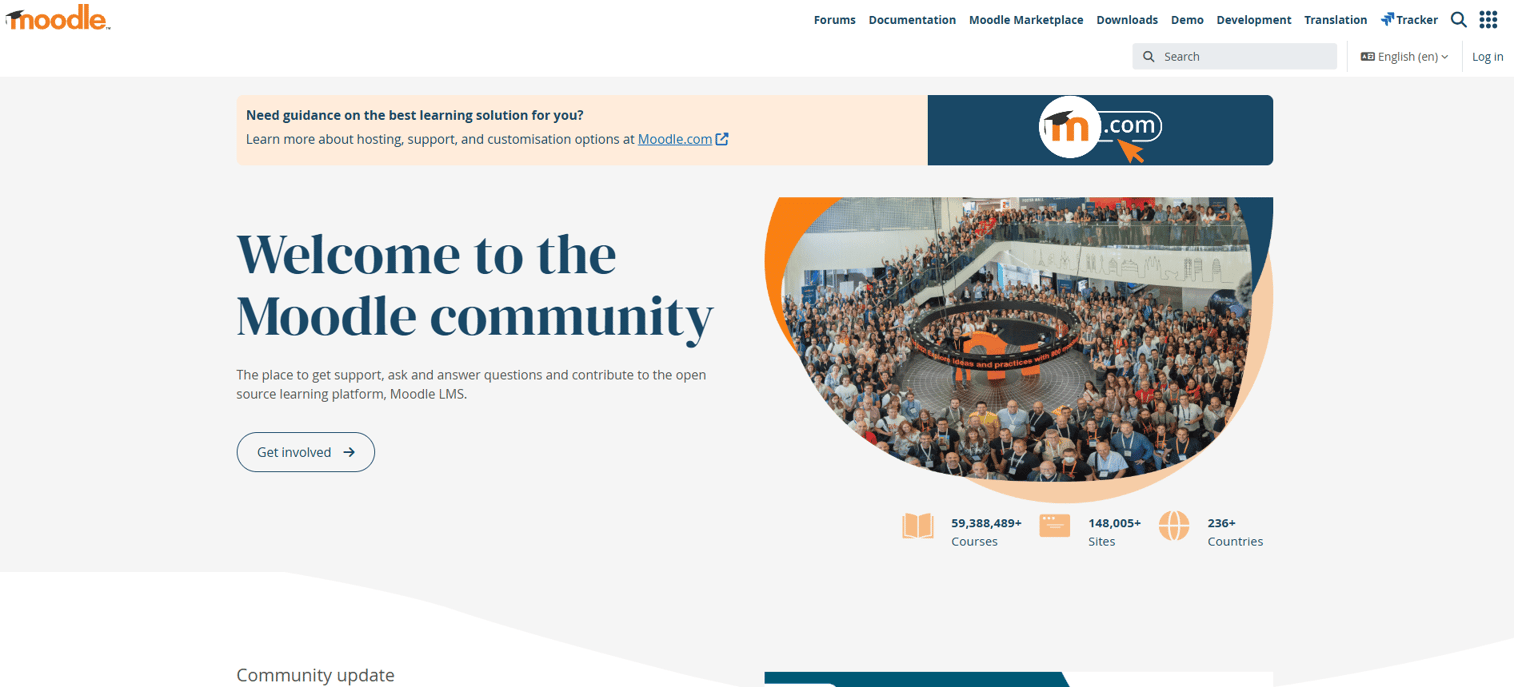
Moodle is the open-source LMS benchmark. Its flexibility is genuine, but so is the technical investment. Teams that can support a self-hosted deployment get a fully customizable platform; teams that cannot will spend more on maintenance than they would on a SaaS alternative.
Best for: Schools, universities, training providers, and organizations with technical resources that need a customizable LMS with community-backed extensibility.
What it is: Moodle is an open-source learning management system for education, training, onboarding, and compliance learning. It carries a 4.1/5 on G2. Self-hosted Moodle is free; MoodleCloud subscription plans are available for managed hosting billed annually in AUD.
Key features:
- Course creation, learning activities, quizzes, assignments, and certificates
- Competency frameworks, progress tracking, and forums
- Mobile access including offline learning
- Extensive plugin ecosystem for extensions and integrations
- Self-hosting and MoodleCloud deployment options
Where Moodle falls short: G2 reviewers consistently name UI polish and admin complexity as limitations compared to commercial LMS platforms. Self-hosting adds infrastructure maintenance that grows with learner volume, and organizations without dedicated technical staff find the plugin model more burden than benefit.
Pricing: Self-hosted Moodle LMS is free. MoodleCloud plans cover quotas from 50 to 750 users; current plan prices are billed annually in AUD.
G2 rating: 4.1/5
How it compares to Skilljar: Moodle is the better option when control, customization, and cost are the dominant factors and the team has the technical capacity to manage hosting. Skilljar is the stronger choice when a managed, branded customer education platform is the priority.
10. Mykademy (customer education LMS)
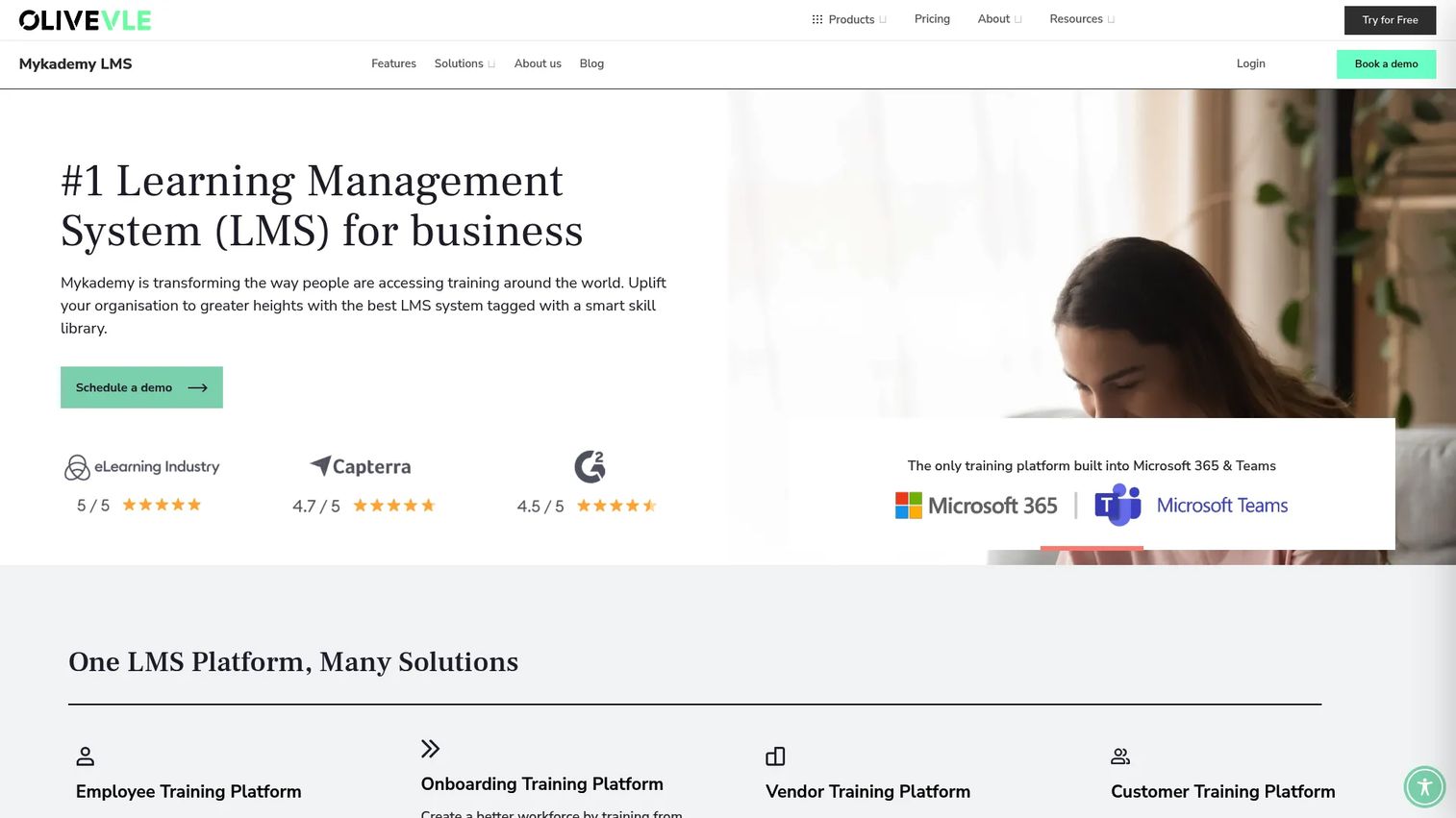
Mykademy positions itself as a migration-friendly, cost-conscious alternative with branded academy setup and guided onboarding support. Its G2 rating is notably high, though its review footprint is smaller than the category leaders.
Best for: Organizations prioritizing affordability and guided migration to a branded LMS with SCORM support.
What it is: Mykademy is a cloud-based learning management platform for creating, delivering, managing, and selling online training. It carries a 4.9/5 on G2 and starts from $79/month with a 14-day free trial.
Key features:
- Branded white-label website and mobile app
- Course and curriculum builder with SCORM and HTML content support
- Assessments, quizzes, assignments, and digital certificates
- Live training and virtual classroom
- Learner progress tracking, reports, and payment gateway integrations for course sales
Where Mykademy falls short: Mykademy's review presence on G2 is limited compared to Docebo, TalentLMS, or Absorb LMS, which makes it harder to validate enterprise-scale performance claims. Integration depth and advanced enterprise features lag behind the larger platforms on the list.
Pricing: From $79/month. No free tier; 14-day trial available.
G2 rating: 4.9/5
How it compares to Skilljar: Mykademy is worth evaluating for teams focused on cost and migration support. Skilljar remains stronger for established customer education programs at scale where integration depth and reporting maturity matter more.
11. AcademyOcean LMS (customer education LMS)
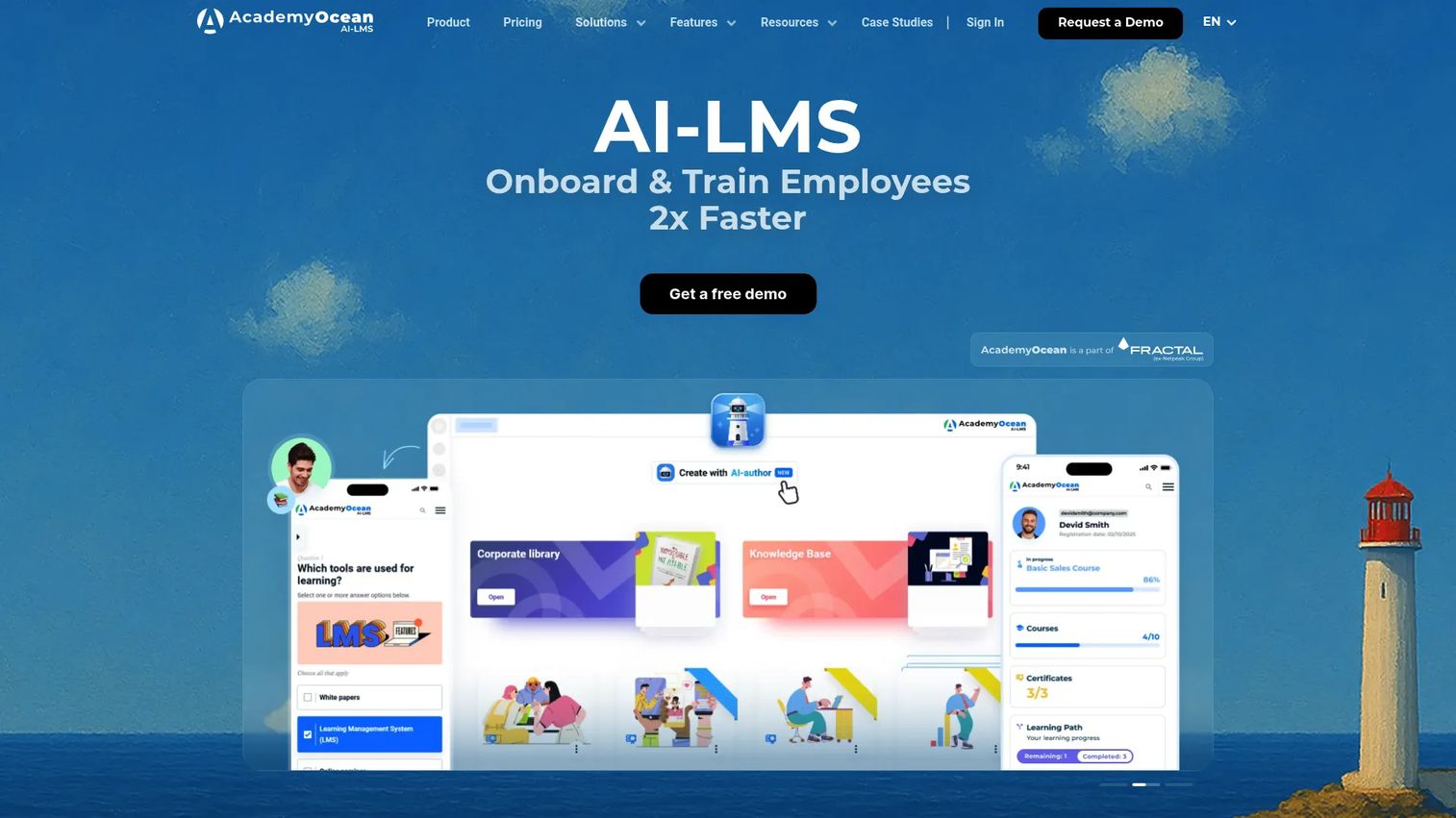
AcademyOcean is purpose-built for training rather than broad enterprise learning, which makes it one of the more direct Skilljar comparisons in the list. Its AI-assisted course creation and analytics sit alongside a learner-profile approach that suits SaaS onboarding and product education programs.
Best for: Growing and mid-sized SaaS organizations that need AI-assisted employee and customer training with strong assessment and reporting.
What it is: AcademyOcean LMS is an AI-powered learning management system for employee onboarding, training delivery, assessments, and analytics. It carries a 4.9/5 on G2 and starts at $250/month for the Essential plan.
Key features:
- AI-powered course and quiz creation from existing content
- Multimedia course authoring with personalized learning paths
- Quizzes, assessments, certifications, and automated grading
- Dashboards, reports, and AI-powered analytics
- Wave AI-copilot for learner questions based on training content
Where AcademyOcean LMS falls short: G2 reviewers note that integration options are narrower than larger platforms, and deep CRM connectivity can require manual configuration. The pricing step between Essential and Professional is significant, and some reviewers flag the customization depth of the reporting layer.
Pricing: Essential: From $250/month. Professional: From $500/month. Enterprise: Custom.
G2 rating: 4.9/5
How it compares to Skilljar: AcademyOcean is a direct comparison for teams that want a dedicated customer education LMS with AI authoring and structured academy delivery. The evaluation often comes down to integration depth, portal customization, and total cost at the learner volumes in play.
12. Northpass (customer education LMS)
Northpass was an independent customer education platform before it was acquired by Gainsight, which now surfaces it through the Skilljar product line. The platform carries a focused feature set for external customer and partner training, with branded academy portals and certification workflows.
Best for: Mid-market and enterprise organizations delivering customer or partner education through branded academies.
What it is: Northpass is a customer education learning platform, now presented through Gainsight's Skilljar offering. It supports on-demand courses, VILT sessions, learning paths, branded academy sites, single sign-on, certificates, course monetization, and integrations with Salesforce, Gainsight, Zoom, Webex, and Zendesk.
Key features:
- Branded academy sites with learner portal configuration
- Learning paths, on-demand courses, and VILT sessions
- Certificates, credentials, and course monetization
- SSO for administrators
- Integrations with Salesforce, Gainsight, Zoom, and Zendesk
Where Northpass falls short: Because Northpass now lives within the Gainsight and Skilljar ecosystem, independent evaluation is limited. Prospective buyers should clarify how the Northpass product is packaged, priced, and supported within Gainsight's current offering. No standalone G2 rating or public numeric pricing is currently available.
G2: 4.5
How it compares to Skilljar: Given the Gainsight acquisition, Northpass now shares significant positioning overlap with Skilljar itself. Evaluate it when the team is already embedded in the Gainsight ecosystem or needs tight integration with Gainsight CS workflows.
13. eFront (corporate LMS)
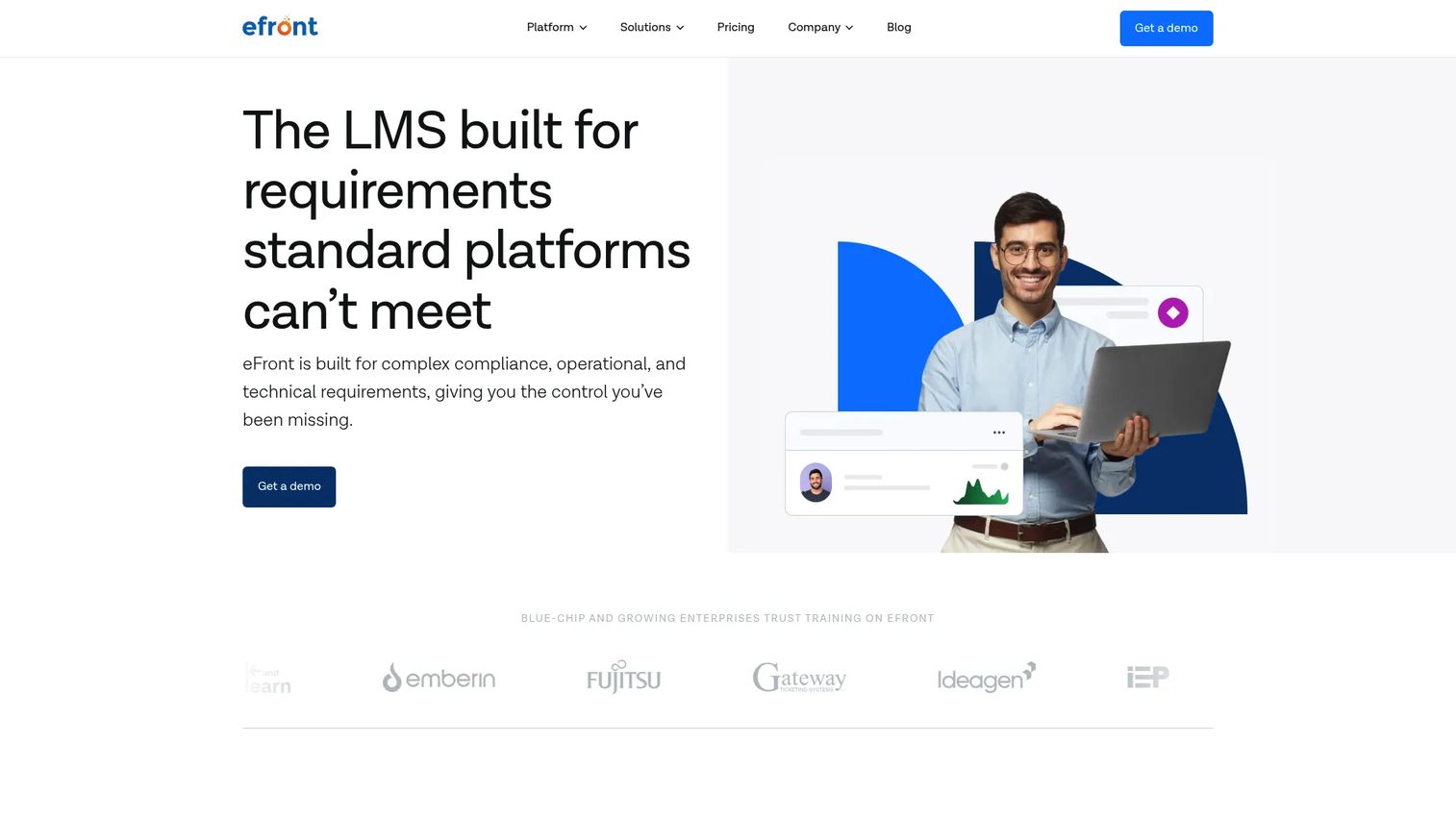
eFront is built for multi-tenancy and configurable enterprise training, which differentiates it from the customer-academy-focused platforms in this list. If the organization needs to deliver separate training programs to distinct learner groups under independent administration, eFront's branch model is a genuine differentiator.
Best for: Medium-to-large enterprises that need configurable LMS infrastructure for complex training across separate learner groups or business units.
What it is: eFront is an enterprise learning management system for complex compliance, operational, and technical training requirements. It carries a 4.5/5 on G2 and starts at $720/month (billed annually) for 300 registered users.
Key features:
- AI-powered course generation
- Multi-tenancy with enterprise customization and branch management
- SCORM and xAPI (Tin Can) support
- Gamification, certifications, and learning paths
- Custom reports, SSO, REST API, and mobile app
Where eFront falls short: G2 reviewers cite UI modernization as a frequent concern, with the admin interface described as dated compared to newer LMS platforms. The setup process is non-trivial, and reviewer feedback points to a learning curve for admins building multi-tenant configurations.
Pricing: Registered plan: $720/month (annual, from 300 registered users). Active plan: $1,600/month (annual, from 100 active users). On-premises: Custom. No free tier.
G2 rating: 4.5/5
How it compares to Skilljar: eFront is stronger when the organization needs configurable multi-tenant training for separate business units or partner groups. Skilljar is more directly optimized for SaaS customer education programs.
14. EasyLMS (training operations platform)
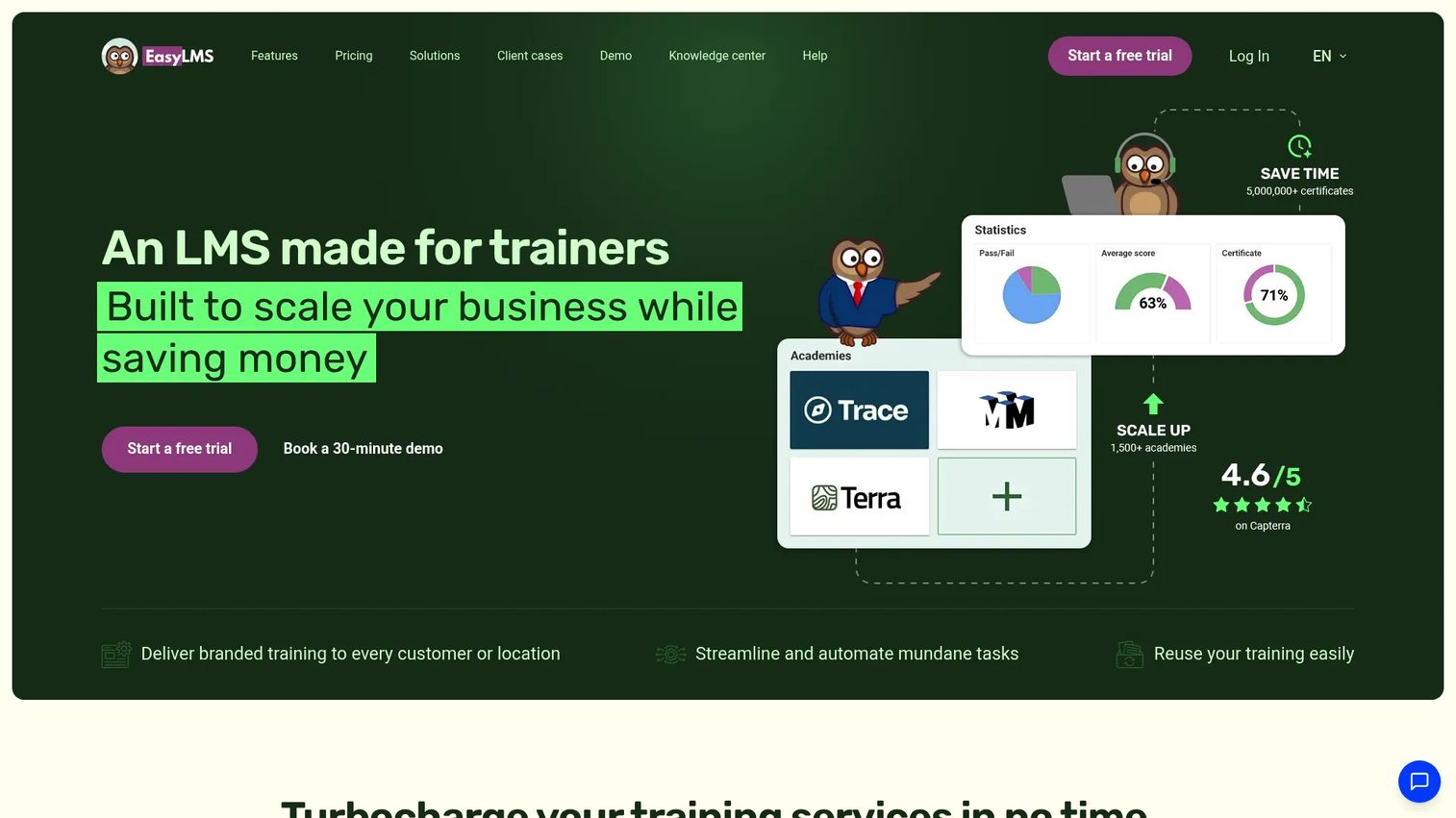
EasyLMS does exactly what its name suggests. It covers course creation, exams, certificates, and learner tracking without the overhead of an enterprise LMS rollout. For teams that need lightweight assessments and branded training academies at a low entry cost, it is a practical option.
Best for: Training providers, consultancies, franchises, and organizations that need branded courses, exams, and certificates without a large LMS implementation.
What it is: Easy LMS is a learning management platform for creating, delivering, and tracking courses, exams, certificates, and training academies. Plans start at €70/month. No G2 rating was confirmed in available primary sources.
Key features:
- Course and exam creation with custom certificates
- White-label academies with custom URLs
- Progress and performance reporting
- Webhooks and participant API
- SCORM upload support
Where EasyLMS falls short: EasyLMS is not built for complex customer education operations. It lacks the deep integration, certification governance, and learner analytics that growing SaaS customer education programs typically require. It is not a one-to-one replacement for teams running mature academy programs.
Pricing: Basic: €70/month. Advanced: €200/month. Annual billing adds two months free. 14-day free trial available.
G2: 4.3
How it compares to Skilljar: EasyLMS covers simple training and assessment programs. It should be evaluated when the primary need is lightweight course delivery and certificates, not a full customer education academy.
15. Trainual (knowledge transfer platform)
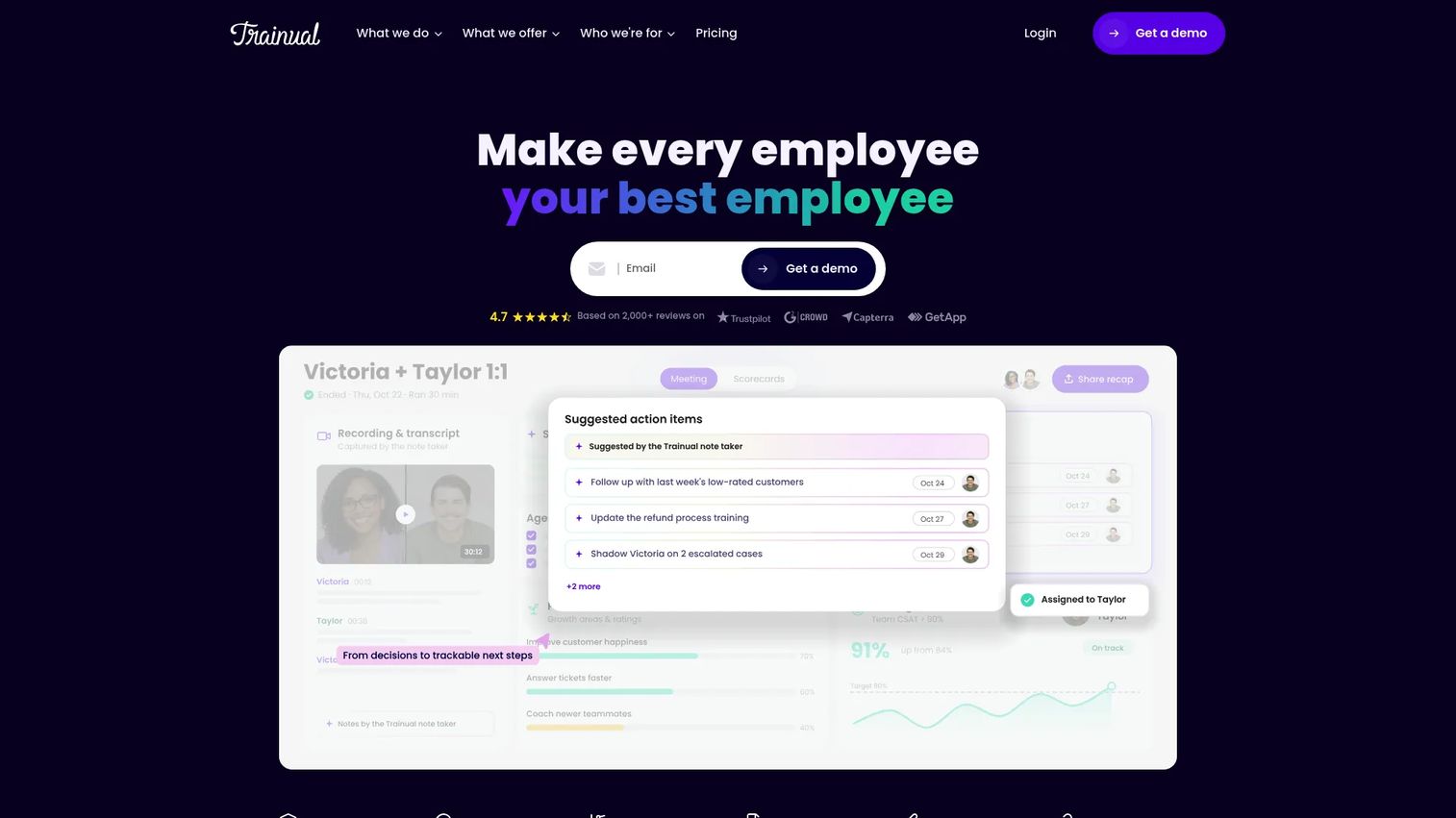
Trainual belongs in this list with an important caveat: It is not a customer education LMS. It is a process documentation and training platform built for internal team onboarding, SOP management, and operational alignment. It earns its place here because some teams comparing Skilljar alternatives are actually looking for internal training tooling, not an external academy.
Best for: Growing companies seeking a platform for SOP documentation, employee onboarding, role accountability, and internal operational training.
What it is: Trainual is AI-powered software combining employee training, knowledge management, operations, and performance management. It carries a 4.7/5 on G2 and starts at $3/user/month (annual).
Key features:
- AI-assisted documentation and knowledge search
- Role-based training paths, testing, tracking, and reporting
- Interactive org charts, roles, responsibilities, and delegation
- Performance reviews, feedback, and growth area tracking
- Meetings, goals, scorecards, decisions, and action tracking
Where Trainual falls short: Trainual is not designed for external customer academy delivery, customer certification programs, or learner analytics suited to customer education reporting. It lacks the LMS standards compliance (SCORM, xAPI) and partner portal capabilities that most SaaS customer education teams need.
Pricing: Core: $3/user/month (annual). Pro: $4/user/month (annual). Premium: $5/user/month (annual). Enterprise: $3,000 annually minimum, 10-seat minimum.
G2 rating: 4.7/5
How it compares to Skilljar: Trainual serves internal training and SOP documentation. It is not a direct customer education LMS replacement and should not be evaluated as one for most SaaS CS use cases.
What is the best Skilljar alternative for customer education?
Docebo, Absorb LMS, AcademyOcean LMS, and Northpass are the strongest LMS shortlist picks for customer education. Guideflow is the best addition when the learning objective is hands-on product practice.
For broader enterprise learning that spans employees, customers, and partners, Docebo and Cornerstone Learn cover the most ground. For branded customer academies with strong learner experience, Absorb LMS delivers. For teams focused squarely on customer education with AI-assisted authoring, AcademyOcean LMS is worth a close look. Northpass is worth evaluating if the team is already in the Gainsight ecosystem. Add Guideflow when customers need to practice a workflow inside the training journey, not just watch it.
Which Skilljar alternative works best for hands-on product lessons?
Guideflow is the right fit when customers need to click through a product workflow step by step rather than watching a recorded lesson.
The gap it fills is specific: LMS platforms deliver course content; Guideflow delivers the product experience itself. Use it after a course module to give customers a step-by-step practice session, embed it in help center articles to replace static screenshots, send it inside onboarding emails, or organize multiple lessons by persona and feature in a demo center. Step-level analytics show completion and drop-off, so CS teams can pinpoint exactly where customers stop without waiting for a support ticket. Use it alongside an LMS, not instead of one.
What is the best lower-cost Skilljar alternative?
TalentLMS, EasyLMS, Moodle, and Mykademy are the first tools to evaluate when cost is the primary constraint.
TalentLMS starts at $119/month with a free tier for small teams and covers the core LMS jobs without enterprise overhead. EasyLMS starts at €70/month and suits lightweight courses and certificate programs. Moodle is free to self-host if the team can handle technical maintenance. Mykademy starts at $79/month with a 14-day trial. Lower cost typically shifts effort into setup, maintenance, or reporting gaps, so factor that in when comparing total investment.
Which Skilljar alternative is best for enterprise learning?
Docebo, Cornerstone Learn, Adobe Learning Manager, Litmos, and eFront are the strongest enterprise-oriented options.
Docebo covers the broadest multi-audience scope. Cornerstone Learn goes deepest on workforce readiness and HR learning integration. Adobe Learning Manager earns its place in organizations already running Adobe content operations. Litmos suits structured compliance and customer training programs. eFront handles configurable multi-tenant training for organizations with separate learner groups. All five require procurement engagement, security review, and meaningful implementation planning.
When should you stay with Skilljar?
Stay with Skilljar if the academy is working, customers are progressing through curricula, and your CS team has stable reporting on completion and certification.
Switching costs are real. If your team has built a mature academy with integrated CRM workflows, established certification programs, and reliable completion reporting, a platform migration would slow the current onboarding motion. If partners, customers, and CSMs depend on existing academy URLs, branding, and learning paths, the disruption of migration may outweigh any platform benefit.
A few specific scenarios where staying makes sense: The existing academy is deeply integrated with your CRM and support stack; your certification programs are running smoothly and certificates carry external credibility; your customer education team has stable analytics and the reporting is working; the problem is content quality or CSM bandwidth, not platform fit.
If customers complete lessons but still open tickets about the same workflow, the right move may be adding a product practice layer alongside Skilljar rather than replacing it.
Why teams add Guideflow to customer education programs
The most common gap in customer education programs is not curriculum coverage. It is the absence of a product practice layer. Customers can watch a lesson, follow a learning path, and pass a quiz, then open a support ticket about the same workflow. The lesson told them what to do. It did not give them the experience of doing it.
Guideflow's interactive demos cover that gap. A CSM embeds a step-by-step product experience alongside a course module, inside a help article, or in an onboarding email sequence. Customers click through the actual interface, in the right order, at their own pace. Step-level analytics from Guideflow's analyze feature show which step causes most drop-offs, so the CSM can prioritize their coaching time before tickets arrive.
Demo centers organize product lessons by persona, feature, or journey stage. Sandboxes let customers explore freely when they need to validate a specific workflow without CSM involvement. The capture process runs through the Chrome extension or native app, and step content is written automatically. Translation into more than 30 languages covers multilingual customer bases without rebuilding content manually.
Guideflow integrates with HubSpot, Salesforce, Pipedrive, Zoho, and Marketo. CRM records are created when a viewer identifies through an in-demo form or a personalized link. Company-level visitor identification connects learning engagement to CS and GTM workflows. It is not a replacement for an LMS; it is what happens between the course and the confident customer.
Start your journey with Guideflow today!
FAQs: Skilljar alternatives
Docebo, Absorb LMS, AcademyOcean LMS, and Northpass are the strongest direct alternatives for teams running customer education programs. The best choice depends on academy complexity, integration requirements, certification depth, and reporting needs. Docebo suits broader multi-audience learning; Absorb LMS and AcademyOcean LMS are more directly positioned around customer and partner training. Guideflow is a category addition, not a replacement, for teams that want customers to practice workflows alongside formal course content.
TalentLMS, EasyLMS, Moodle, and Mykademy are the most cost-accessible options. TalentLMS has a free plan for up to 5 users and paid plans from $119/month. EasyLMS starts at €70/month. Moodle is free to self-host. Mykademy starts at $79/month. Final cost across all these platforms depends on learner volume, admin seats, portal count, integrations, and support tier requirements.
Guideflow is not a full LMS replacement. It is a demo automation platform for hands-on product education. It can replace passive product lessons, screenshots, and recorded videos inside an onboarding or training program when the goal is workflow understanding. Teams that need course catalogs, learner transcripts, certification management, and SCORM administration still need an LMS alongside it.
Evaluate course delivery and curriculum management, learning path and assessment depth, certification and credentialing workflows, CRM and support tool integrations, branding and academy configuration options, completion and certification reporting, and whether the platform supports hands-on product learning alongside formal course delivery. Time-to-value and ongoing maintenance burden matter as much as the initial feature set.
Many LMS platforms in this list cover partner education alongside customer and employee training. For dedicated partner training programs, look for separate learner portals or branching, role-based access control, co-branded training configuration, certification at the partner level, and partner-specific analytics. Absorb LMS, Docebo, Litmos, eFront, and Northpass are worth shortlisting for partner training programs. Confirm portal and credentialing capabilities directly with each vendor before committing.
Start by inventorying your current courses, learner records, certificates, academy pages, integrations, and analytics baselines before touching any new platform. Map content and data export formats to what the target system can import. Run a pilot with a small learner cohort on the new platform before moving production traffic. Keep both systems running during a transition window where your CSMs can catch gaps. Confirm reporting continuity and CRM integration behavior before decommissioning the original setup.
An LMS manages curriculum, learner records, courses, assessments, certificates, and program reporting. A demo automation platform, like Guideflow, lets customers interact directly with product experiences. For customer education programs, many CS teams need both: The LMS for curriculum structure and certification, and a product practice layer for workflow comprehension and step-level drop-off data.
For structured onboarding academies, the strongest shortlist options are TalentLMS, Absorb LMS, AcademyOcean LMS, and Northpass. For product workflow learning alongside formal onboarding content, Guideflow lets customers practice the steps that drive activation without requiring a live CSM session. Combining an LMS for curriculum delivery with Guideflow for product practice covers both completion metrics and actual time-to-value outcomes.