U.S. search advertising revenue hit $114.2 billion in 2025, up 11% year over year, according to the IAB/PwC Internet Advertising Revenue Report (2026). That figure tells you advertiser demand is real and growing. What it does not tell you is how much of that demand your site is actually capturing.
Traffic is not the same as yield. A page that pulls 50,000 monthly visitors from search can generate almost nothing in publisher ad revenue if the monetization layer is missing, misconfigured, or matched to the wrong demand source. Growth marketers know this pressure: Leadership sees the traffic numbers and asks why revenue per session is flat. The honest answer is often that intent is leaking into pageviews instead of measurable clicks, sponsored listings, or search feed earnings.
The right search monetization platform closes that gap. Some connect you to advertiser bidding through sponsored search results. Others power onsite search experiences, manage feed links across partners, or add video and programmatic demand to pages that search already drives. Choosing between them requires knowing what your traffic model actually looks like and what reporting depth your team can act on.
What's inside
This guide compares 14 search monetization platforms for 2026, covering search feed operators, publisher ad networks, onsite search tools, and ad operations infrastructure.
Tools were selected based on:
- Revenue model fit: How the platform earns and pays out, including CPC, revenue share, and partner terms
- Search intent coverage: Whether the tool addresses onsite search, search syndication, or intent-adjacent monetization
- Reporting depth: Access to RPM, EPC, CTR, CPC, and feed-level performance data
- Publisher and marketer workflow fit: Implementation complexity and stack compatibility
TL;DR
- Best overall for broad website monetization: Google AdSense, free to join and backed by the largest advertiser network
- Best for onsite search intent: Google AdSense for Search, which monetizes user queries directly inside your site
- Best for search feed operations: Swaarm, with keyword discovery, automated report imports, and feed link management
- Best for high-volume search monetization: System1, built for performance-oriented media businesses at scale
- Best for premium publishers: Raptive, with managed ad operations and revenue optimization for established content sites
- Best for programmatic and video expansion: Nexxen or Connatix, for publishers that want CTV and video demand on search-driven pages
What are search monetization platforms?
Search monetization platforms help publishers, media companies, affiliate teams, and marketers earn revenue from user search intent through sponsored listings, search feeds, related-search units, advertiser bidding, and performance reporting.
The category spans several distinct platform types. Some are ad networks that connect publisher inventory to advertiser demand. Others are search feed partners that syndicate sponsored results and pay out on a CPC or revenue-share model. A third group are workflow platforms that help teams manage feed links, partner dashboards, and performance reporting without building custom integrations. Broader publisher monetization platforms with search-ad adjacency sit in a fourth category, adding display, video, and programmatic demand alongside search inventory.
Key capabilities to look for:
- Search feed access: Sponsored listings or syndicated search results tied to user queries
- Ad demand: Advertiser bids matched to search queries or related topics on your pages
- Related search units: Content-driven search suggestions that trigger monetized clicks on engagement
- Reporting: RPM (revenue per thousand impressions), CPC (cost per click), CTR (click-through rate), EPC (earnings per click), revenue per session, and partner performance breakdowns
- Traffic quality controls: Source validation, policy compliance, and fraud prevention
- Optimization workflows: Keyword testing, feed selection, placement experimentation, and payout analysis
- Partner management: Feed link creation, publisher account dashboards, and payout tracking
Quick metric definitions:
| Metric | What it measures |
|---|---|
| RPM | Revenue earned per 1,000 page impressions |
| CPC | Cost paid by the advertiser per click |
| CTR | Percentage of impressions that result in a click |
| EPC | Earnings generated per click on your content or feed |
When to use search monetization platforms
Monetize high-intent search traffic
Users who search onsite, click related-search suggestions, or arrive through query-driven landing pages signal real purchase or research intent. A search monetization platform turns that intent into sponsored clicks or partner revenue instead of letting it stop at a pageview. Compare the incremental yield against your current revenue per session before committing to a new partner, so you have a baseline to measure against.
Add revenue without multiplying ad units
Search monetization can earn from intent rather than piling on more display units. This matters when display RPMs have plateaued or when leadership wants revenue growth without damaging session depth. Every implementation still needs placement testing, policy review, and query quality controls, so plan that work before expecting clean numbers.
Track monetization across feeds and partners
Running multiple feeds, traffic sources, and partner dashboards creates a reconciliation problem fast. Platforms with automated reporting imports, feed link management, and consolidated dashboards reduce the spreadsheet work. Less time in spreadsheets means more time optimizing the feeds that actually move revenue.
Search monetization platforms comparison
Pricing in this category is rarely a fixed monthly number. Most platforms earn through revenue share, CPC payouts, advertiser spend, or custom partner contracts. Where a vendor does not post pricing, the table notes custom terms or partner agreements. G2 ratings are current as of October 2026; N/A indicates no active G2 listing for that product.
| # | Product | Best for | Key differentiator | Pricing | G2 rating |
|---|---|---|---|---|---|
| 1 | Google AdSense | Broad website monetization | Largest advertiser demand pool, simple setup | Free | 4.2/5 |
| 2 | Google AdSense for Search | Onsite search monetization | Query-targeted ads using Google Search Network demand | Free | 4.2/5 |
| 3 | Microsoft Ads Search Syndication | Search syndication partnerships | Microsoft advertiser demand across Bing and partner network | No minimum spend; CPC-based | N/A |
| 4 | Yahoo Search Feed | Search-feed monetization | Sponsored listings through Yahoo search demand | Partner agreement | N/A |
| 5 | System1 | High-volume search monetization | AI-powered Responsive Acquisition Marketing Platform | Partner agreement | 4.5/5 |
| 6 | Coinis | AI ad creation and campaign optimization | AI creative production combined with campaign launching | From $10 credits; plans from $39/mo | 5.0/5 |
| 7 | Swaarm | Search-feed workflow management | Real-time tracking, keyword tools, feed link management | From €850/mo | 4.8/5 |
| 8 | Taboola | Native-to-search content monetization | Performance advertising across open-web publisher inventory | CPC/CPM-based; contact sales | 3.7/5 |
| 9 | Raptive | Premium publisher monetization | Managed ad revenue operations and AI-powered yield insights | Revenue share; application required | N/A |
| 10 | Admarketplace | Sponsored search listings | Intent-matched CPC monetization across AI search and browser surfaces | Custom CPC; contact sales | 2.8/5 |
| 11 | Nexxen | Programmatic and CTV monetization | Full-stack DSP, SSP, and omnichannel campaign infrastructure | Custom; contact sales | 3.8/5 |
| 12 | Connatix | Video-led publisher monetization | Video delivery, monetization, and ad infrastructure via JWX | Custom; contact sales | N/A |
| 13 | MobileFuse | Mobile and cross-screen advertising | Targeted cross-screen campaigns with purchase and location data | Custom; contact sales | N/A |
| 14 | Aditude | Publisher ad operations | Managed Prebid Server, AI floor pricing, real-time yield analytics | Custom; contact sales | N/A |
Best 14 search monetization platforms for 2026
1. Google AdSense

Google AdSense is the most widely used website monetization program for publishers. It connects approved websites to Google's advertiser demand and automates much of the placement and bidding work through Auto ads. Publishers can also configure manual ad units, choosing formats, sizes, and placements to control how ads appear alongside their content.
Best for: Content publishers and website owners who want access to a large advertiser pool with minimal technical setup.
Key features
- Auto ads for automated placement optimization
- Manual ad units with format and size controls
- Content-based and audience-based ad targeting
- Brand safety and ad blocking controls
- Performance reporting with revenue and impression data
Why choose Google AdSense: The trust and scale here are hard to replicate. If your site is content-driven and you want a single monetization partner that requires no ongoing negotiation, AdSense covers most of the basics. It is broader than search monetization alone, which means search traffic benefits alongside all other traffic sources.
Google AdSense pricing: AdSense is free to join. Publishers earn revenue through Google's revenue-share model based on ad clicks, impressions, and interactions.
G2 rating: 4.2/5
2. Google AdSense for Search
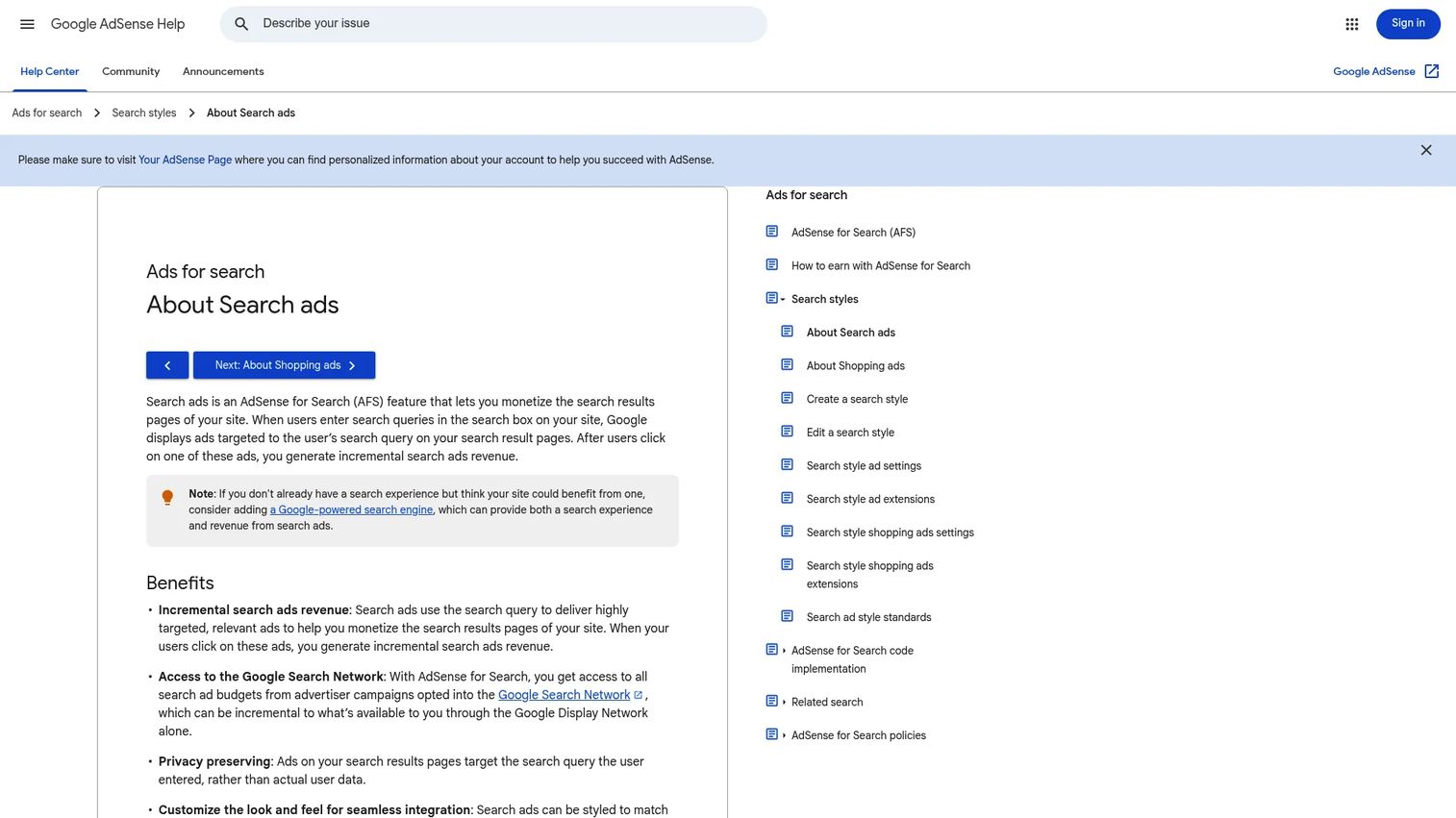
Google AdSense for Search is a distinct product within the AdSense family that monetizes onsite search experiences. When a user types a query into your site's search box, the results page shows ads matched to that query, drawn from the Google Search Network. Publishers receive 51% of the revenue Google recognizes from those search ad interactions, as documented on Google's official AdSense support page.
Best for: Publishers with meaningful onsite search volume who want query-level ad monetization without building direct advertiser relationships.
Key features
- Query-based search ads tied directly to user intent
- Shopping ads in onsite search results
- Access to Google Search Network advertiser demand
- Customizable ad styling including fonts, colors, and layout
- Related search features for content and search pages
Why choose Google AdSense for Search: If users already search inside your site, this is the most direct path from that behavior to revenue. It requires no new demand partnerships because Google's advertiser pool handles the bidding. The tradeoff is that your search result pages look and feel Google-adjacent, which may not suit every brand.
Google AdSense for Search pricing: Free to join as part of AdSense. The 51% publisher revenue share applies to search ad earnings.
G2 rating: 4.2/5
3. Microsoft Ads Search Syndication

Microsoft Ads Search Syndication gives approved search publishers access to Microsoft's advertiser demand across Bing and its network of search partners. Publishers distribute sponsored search results through their own search experiences, earning on a CPC basis from Microsoft advertiser bids. The platform supports Responsive Search Ads, Dynamic Search Ads, ad extensions, and direct import from Google Ads campaigns.
Best for: Search publishers and partners with high-quality traffic who want to add Microsoft search demand alongside or instead of Google-only monetization.
Key features
- Search syndication to Bing and partner sites
- Responsive Search Ads and Dynamic Search Ads
- Ad extensions for richer sponsored results
- Google Ads campaign import for faster setup
- Partner performance and campaign reporting
Why choose Microsoft Ads Search Syndication: This is the most direct path to Microsoft advertiser demand for search publishers. Traffic quality matters more than volume here; the approval process reflects that. Consider it when your search inventory already meets the standards required and you want a second major demand source that diversifies away from Google.
Microsoft Ads Search Syndication pricing: No minimum spend and no signup fee. Advertisers set their own bids and daily budgets, paying only when ads are clicked. Publisher revenue share terms come through the partner agreement process.
4. Yahoo Search Feed
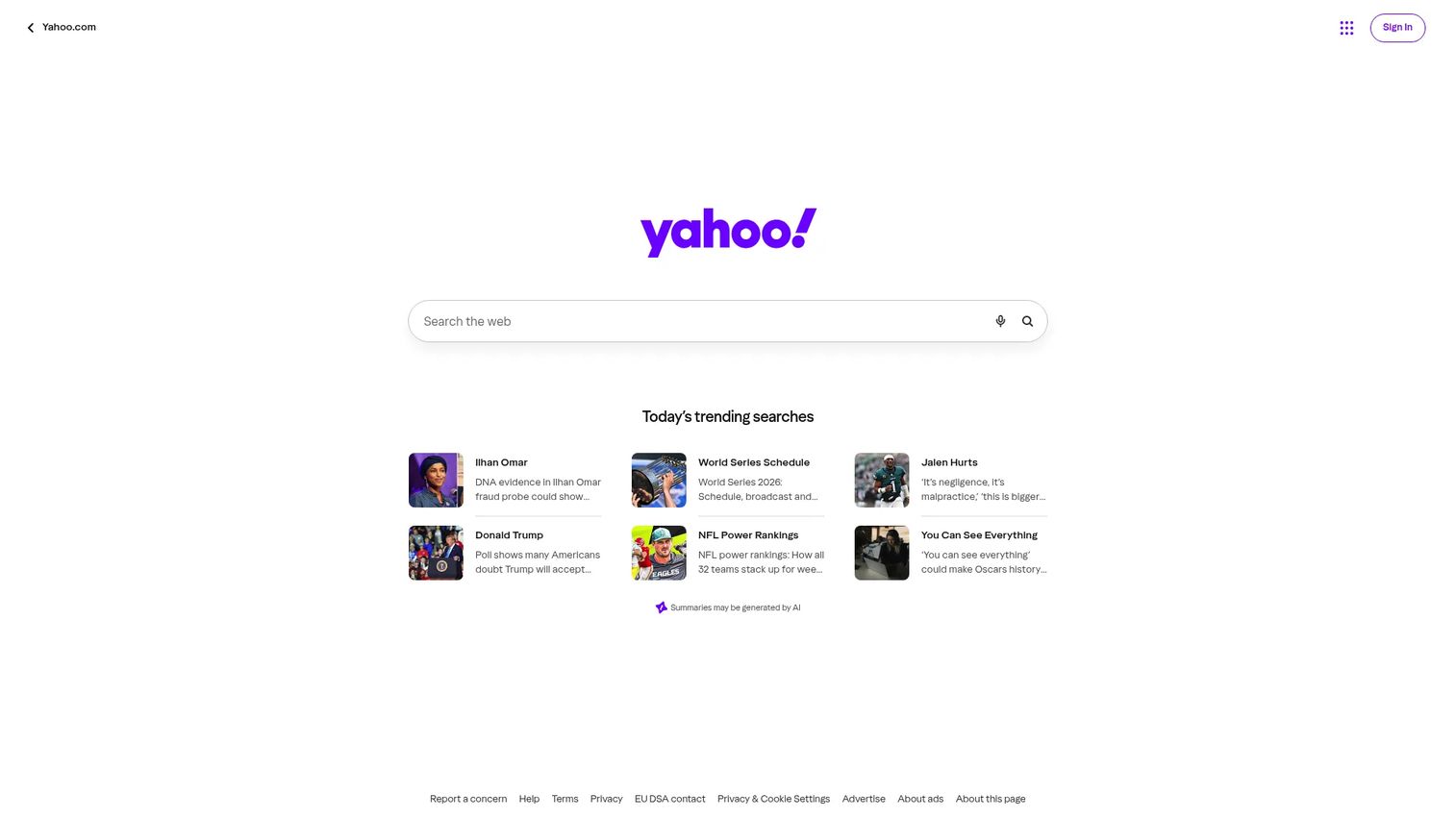
Yahoo Search Feed offers search-feed monetization for publishers and traffic partners through sponsored listings tied to Yahoo search demand. Like Microsoft's syndication program, access depends on a partner approval process and commercial terms set through partnership discussions rather than a self-serve pricing page.
Best for: Publishers and affiliates with search-style traffic and experience navigating search-feed partnerships.
Key features
- Sponsored search listings through Yahoo demand
- Search feed access for partner publishers
- Query-based monetization for approved traffic
- Partner performance tracking
- Geographic coverage across Yahoo search markets
Why choose Yahoo Search Feed: It works best when your team already understands search-feed economics and wants a third demand source beyond Google and Microsoft. The commercial terms and eligibility requirements come through Yahoo's partner program, so expect a conversation before getting access.
Yahoo Search Feed pricing: Pricing runs through partner agreements on a revenue-share basis. Contact Yahoo's publisher partnership team for current terms.
5. System1

System1 operates a Responsive Acquisition Marketing Platform (RAMP) that uses AI and machine learning to power customer acquisition, publishing, search, and subscription media. It is relevant for high-volume search monetization operators, owned-media businesses, and partners that need more than a self-serve ad unit. System1 manages properties like MapQuest and operates across search, intent-driven advertising, and performance monetization.
Best for: High-volume search monetization businesses and intent-driven media operators with scale and traffic quality.
Key features
- Omnichannel and omnivertical customer acquisition
- AI-powered campaign automation and optimization
- Search monetization across owned and partner media
- Advertising campaign management and performance reporting
- Self-service and partnership monetization tools
Why choose System1: Choose it when your business has the traffic volume, quality, and operational maturity to work with a performance partner rather than a self-serve platform. The AI optimization layer is the main differentiator; it moves spend toward the queries and placements that perform without constant manual tuning.
System1 pricing: Commercial terms are partnership-based. Contact System1 directly for current partner program details and revenue-share structures.
G2 rating: 4.5/5
6. Coinis
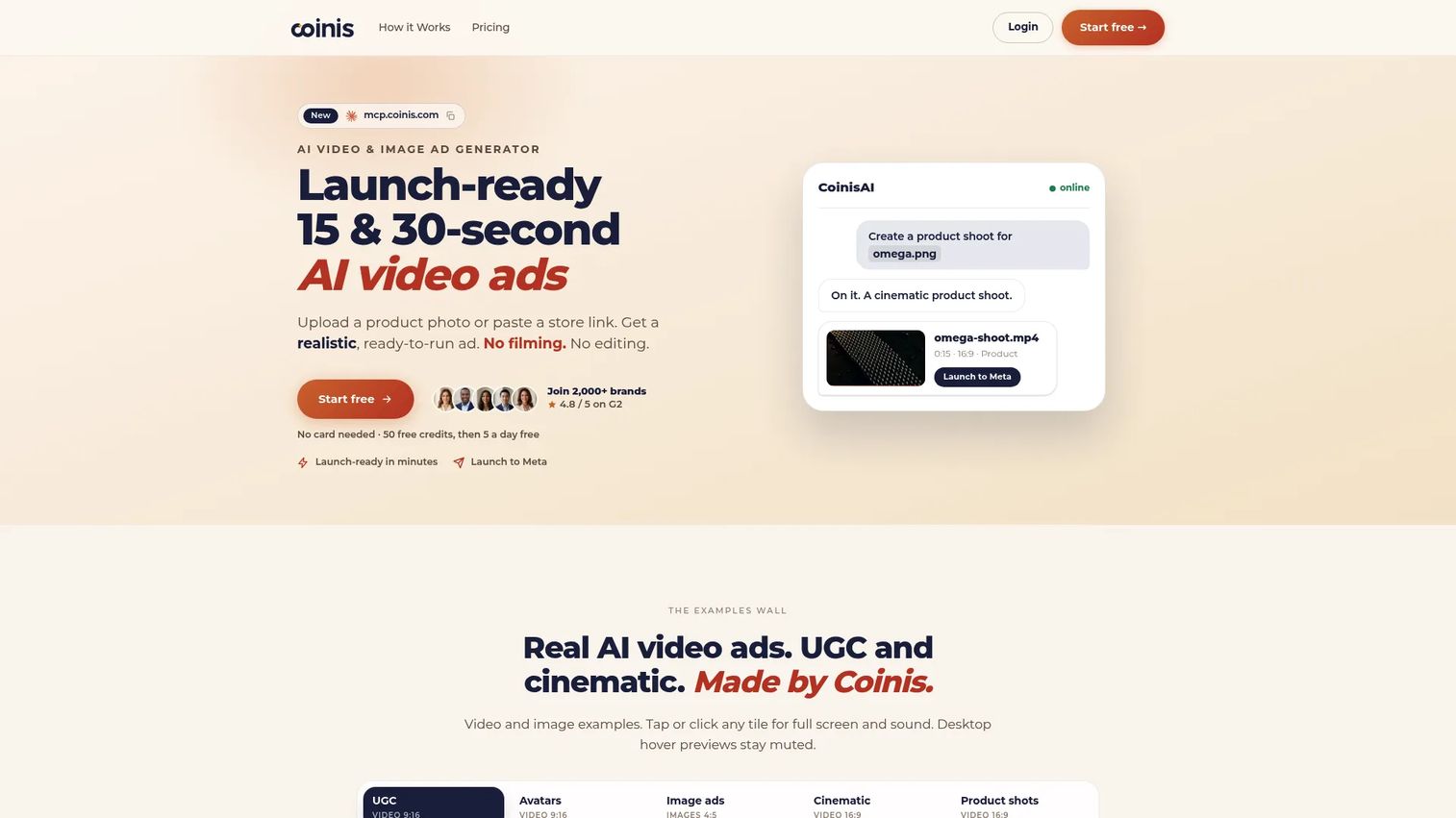
Coinis is an AI advertising platform built for creating, launching, tracking, and optimizing ad campaigns. Its core differentiator is AI creative production: Generating images, videos, UGC content, and copy, then combining that with campaign launching to Meta and performance tracking across ROAS, CPA, CPC, CPM, CTR, and conversion metrics. It also includes AI campaign optimization that pauses underperformers and scales winners automatically.
Best for: Ecommerce brands and performance marketers that want AI-generated ad creative combined with campaign management and optimization in one platform.
Key features
- AI image, video, UGC, and copy ad generation
- Campaign launching with Meta support
- Performance tracking across ROAS, CPA, CPC, CPM, and CTR
- AI optimization that pauses underperformers and scales winners
- Organic publishing and bulk campaign launching
Why choose Coinis: If your team's creative bottleneck is holding back campaign velocity, Coinis compresses the gap between idea and live ad. The AI optimization layer handles the bid management work, which is useful for teams running multiple campaigns without a dedicated ad ops person.
Coinis pricing: A Pay as You Go option starts with credits from $10 (credits never expire). The Creator plan runs $39/month billed annually or $49/month on a monthly basis. Scale is $119/month annually or $149/month, and Pro is $249/month annually or $299/month. Agency and Enterprise tiers require a sales conversation. A free access level includes 50 credits and up to 5 free generations per day.
G2 rating: 5.0/5
7. Swaarm
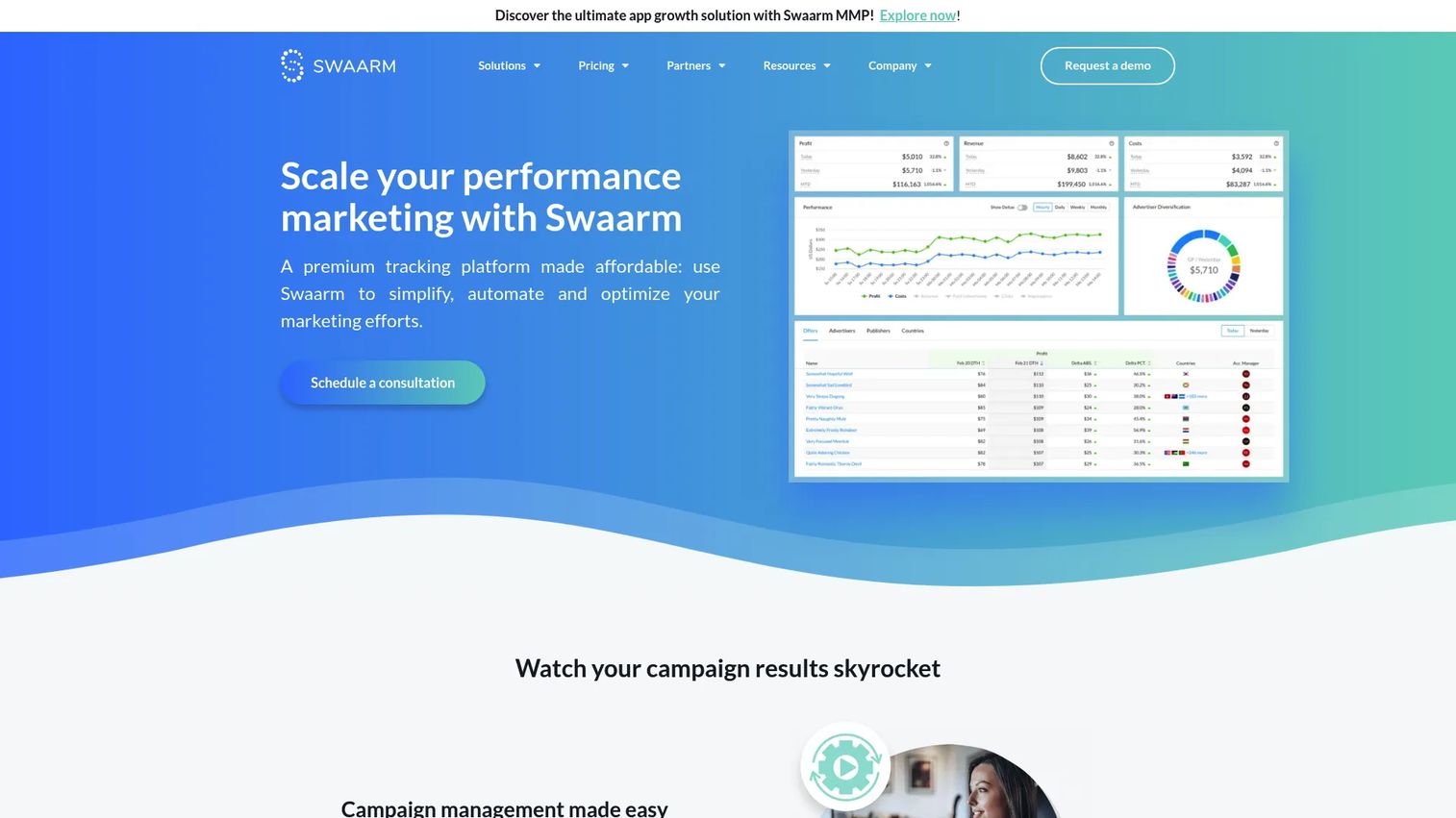
Swaarm is a performance marketing and mobile measurement platform built for tracking, managing, analyzing, and optimizing campaigns. For search monetization teams specifically, it addresses the operational layer: Keyword discovery, real-time campaign reporting, automated report imports, partner dashboards, feed link management, and fraud prevention. If your bottleneck is stitching together data from multiple feeds and partners, Swaarm handles that consolidation.
Best for: Performance marketing teams, agencies, and search monetization operators managing multiple partners, feeds, and reporting workflows at scale.
Key features
- Real-time campaign tracking and reporting
- Campaign automation and optimization rules
- Real-time fraud prevention and traffic filtering
- Partner dashboard and feed link management
- Automated report imports and search metrics consolidation
Why choose Swaarm: The value is operational, not demand-side. Swaarm does not bring new advertiser dollars; it reduces the time your team spends reconciling data across partners. Teams running four or more monetization relationships will find the consolidated reporting worth the setup investment.
Swaarm pricing: The CORE plan starts at €850 per month and includes reporting, link monitoring, custom domain setup, onboarding support, and privacy features. The SCALE plan adds advanced automation, targeting, integrations, and fraud prevention tools at custom pricing.
G2 rating: 4.8/5 (22 reviews)
8. Taboola
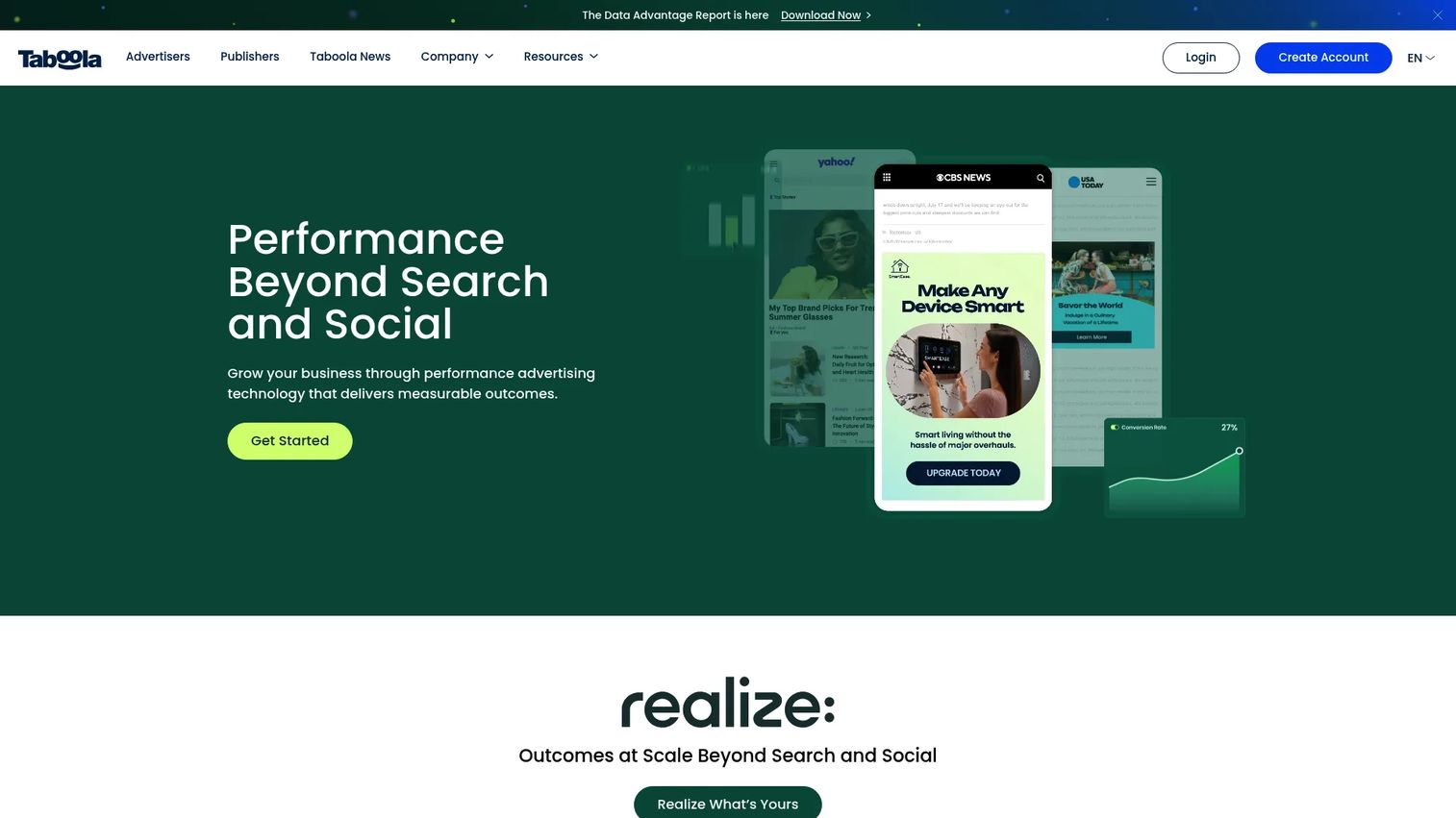
Taboola is a performance advertising platform that helps businesses reach audiences across open-web publisher inventory through native recommendations, sponsored content, and video. It is not a pure search feed provider, but it is relevant for publishers monetizing content pages that search traffic reaches. When users arrive from search and land on editorial or product pages, Taboola's native ad units can add incremental yield from discovery-intent clicks.
Best for: Publishers with large content audiences who want native monetization alongside or beyond display ads on search-driven pages.
Key features
- Native content recommendations and sponsored listings
- Performance advertising with CPC, CPM, vCPM, and CPCV billing
- First-party audience targeting across publisher inventory
- Native, display, video, and vertical-video creative formats
- Campaign management, reporting, and conversion optimization
Why choose Taboola: It fits when search traffic lands on content pages and the editorial experience can support recommended content units without disrupting the user journey. The adjacency to search monetization is real but indirect; treat it as incremental yield on top of your primary monetization layer, not a replacement for a search feed partner.
Taboola pricing: Taboola operates on CPC, CPM, vCPM, and CPCV billing models. Publisher commercial agreements and advertiser spend levels are set through sales conversations.
G2 rating: 3.7/5
9. Raptive
Raptive is a managed ad monetization and revenue optimization platform for content publishers. It handles ad placement, video monetization, advertiser relationship management, and ongoing revenue recommendations through its AI-powered Raptive Compass insights tool. Publishers apply and go through an eligibility review; the minimum requirement is 25,000 monthly pageviews, with additional standards around content, analytics, and domain quality.
Best for: Established content publishers that want managed ad revenue support rather than a self-serve search feed or ad network.
Key features
- Custom ad placement and yield optimization
- Video monetization and hosting
- Publisher revenue and traffic dashboards
- Advertiser relationship management
- AI-powered Raptive Compass insights and recommendations
Why choose Raptive: It fits teams that care about total publisher yield, not only search-feed monetization. If managing ad placements, demand partners, and reporting is pulling your team away from content and growth work, a managed platform like Raptive reduces that operational drag. The tradeoff is eligibility requirements and a revenue-share model.
Raptive pricing: Raptive operates through a revenue-share model. Pricing and share terms are set through the application and approval process. There is no self-serve pricing page.
10. Admarketplace
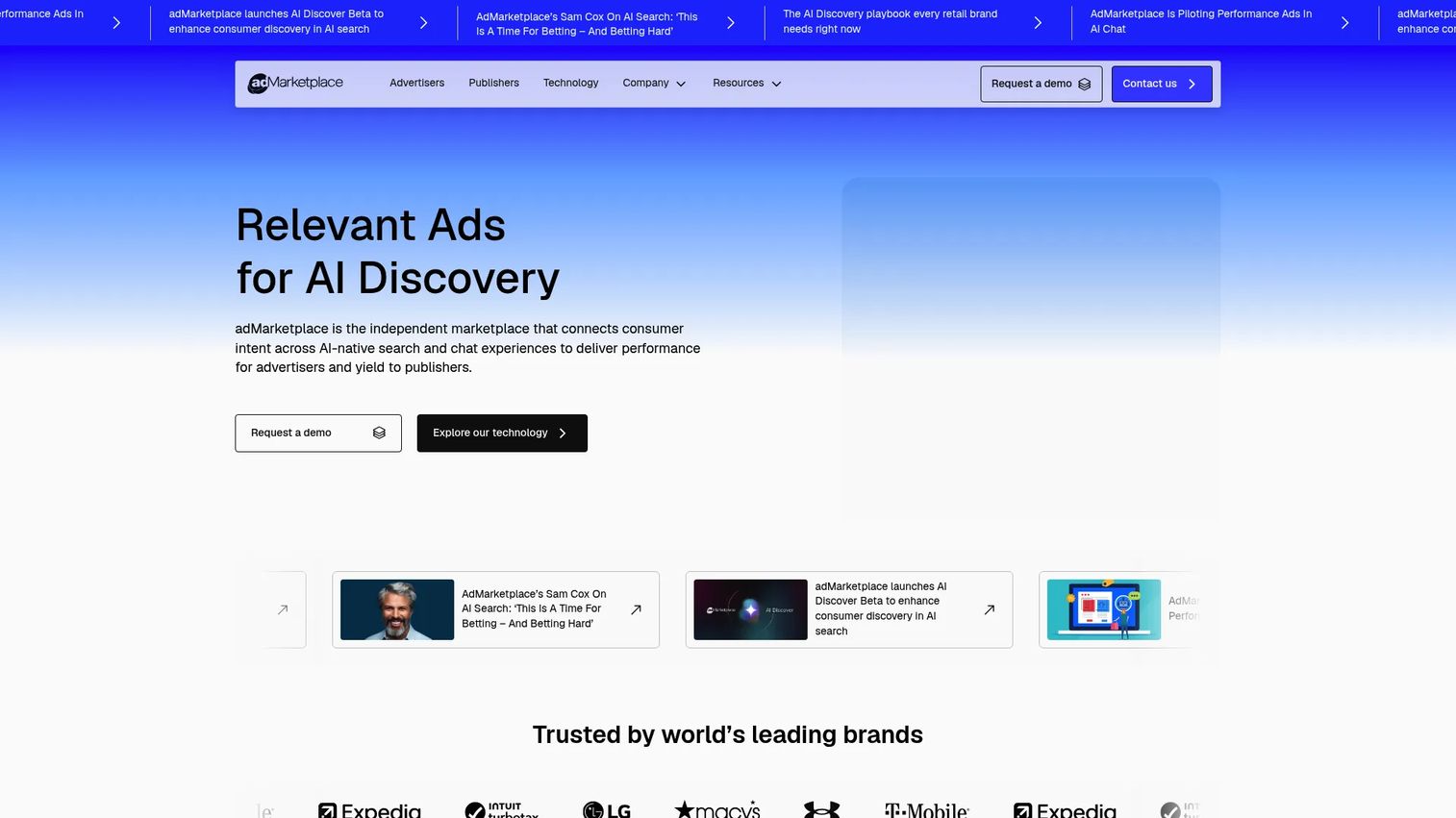
Admarketplace is an independent advertising marketplace that extracts consumer intent across AI-native search, chat experiences, browsers, and shopping apps. Its Context Intent Vector technology processes real-time search behavior to match advertisers with high-intent moments, and its Arena Ad Engine handles semantic ad selection, auction dynamics, and yield optimization. Publishers earn on a CPC basis when intent-matched ads appear on their properties.
Best for: Commerce, retail, and publisher search surfaces where the monetization event is close to a buying decision.
Key features
- Real-time consumer intent extraction via Context Intent Vector
- Semantic ad selection and yield optimization through Arena Ad Engine
- Native sponsored tiles, text ads, and product listing ads
- AMPlify campaign activation with full-funnel reporting
- CPC-based advertising across AI chat, browsers, and shopping apps
Why choose Admarketplace: It is a strong fit when your traffic carries transactional intent and advertisers are willing to pay for performance-oriented placements close to a buying decision. The focus on emerging surfaces like AI chat and browser-based search makes it worth evaluating as those channels grow in 2026.
Admarketplace pricing: Media is priced on a custom pay-per-click model. Contact Admarketplace's team for advertiser and publisher terms.
G2 rating: 2.8/5
11. Nexxen
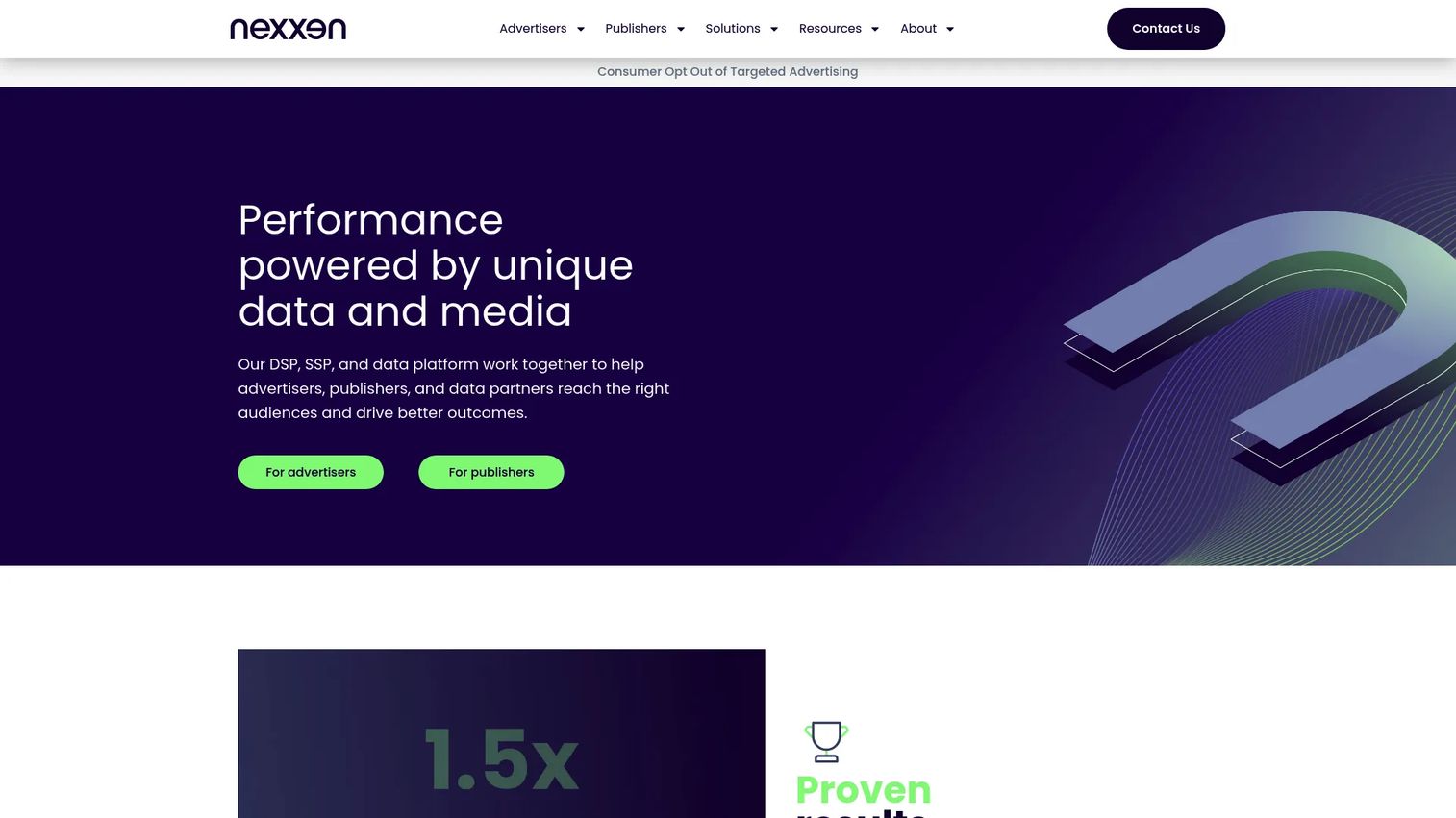
Nexxen is a full-stack advertising technology platform combining a DSP, SSP, proprietary audience intelligence, AI-powered planning, and omnichannel campaign infrastructure. It is adjacent to search monetization rather than a direct search feed tool. Its relevance is strongest for publishers that monetize across video, connected TV, and programmatic channels and want a single platform to manage that inventory alongside search-driven page traffic.
Best for: Publishers and advertisers expanding monetization across programmatic, video, and connected TV surfaces beyond pure search feeds.
Key features
- Unified DSP and SSP activation
- Proprietary audience and contextual intelligence through Nexxen Discovery
- AI-powered planning, optimization, and reporting via nexAI
- Cross-screen and connected TV campaign management
- Full-funnel programmatic advertising infrastructure
Why choose Nexxen: It fits teams that want broader ad monetization infrastructure and already have search traffic flowing into multiple content or video surfaces. As a standalone search monetization tool, it is overbuilt. As part of a broader publisher tech stack, the unified DSP and SSP combination reduces the number of separate platforms your team has to manage.
Nexxen pricing: Pricing is custom and set through platform agreements. Contact Nexxen directly for publisher and advertiser terms.
G2 rating: 3.8/5
12. Connatix
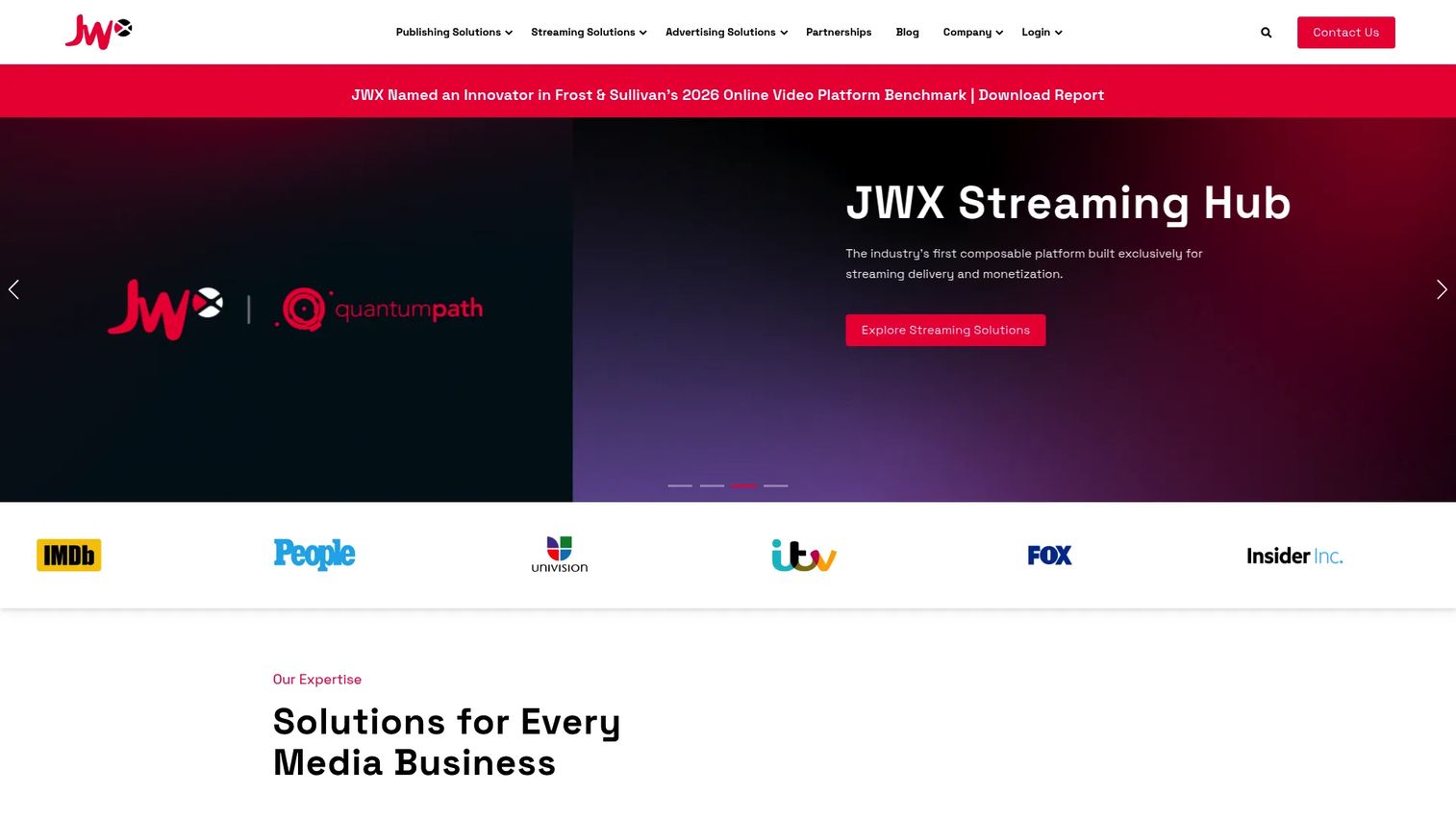
Connatix, now presented through JWX, provides video technology and monetization infrastructure for publishers, streamers, broadcasters, and advertisers. Its connection to search monetization is specific: When search traffic lands on editorial pages, video inventory can raise revenue per session materially compared to display-only pages. JWX pricing pages describe solution editions including Express Edition, Publishing, and Broadcasting, all requiring a sales conversation.
Best for: Publishers that want to monetize search-driven pageviews with video inventory and have the editorial content to support video engagement.
Key features
- Media and content management for VOD and live video
- Video monetization and ad delivery infrastructure
- HTML5 web, mobile, and CTV players
- Video analytics and data intelligence
- Programmatic demand across display and video
Why choose Connatix: Choose it when your site attracts search traffic to editorial pages and video can raise yield without relying only on display ads. The merger with JW Player through JWX means the platform covers the full video delivery and monetization stack in one relationship, which simplifies vendor management.
Connatix pricing: All plans require a sales conversation. The Express Edition, Publishing, and Broadcasting editions are documented on the JWX pricing page, but prices are not displayed.
13. MobileFuse

MobileFuse is a digital advertising technology company providing targeted cross-screen campaigns across video, display, rich media, mobile, and connected TV. Its relevance to search monetization is mobile-first: When users arrive at your content or landing pages through mobile search, MobileFuse's ad formats and audience targeting can monetize those sessions across video, display, and interactive units. Targeting draws on purchase data, location signals, and contextual data.
Best for: Mobile-first publishers and app teams monetizing audiences who arrive through mobile search or app-based query behavior.
Key features
- Cross-screen video, display, and rich media advertising
- Custom audience targeting using purchase, visitation, contextual, and location data
- Interactive ad formats including shoppable, playable, and fusion video units
- CTV and mobile advertising demand
- Campaign measurement and performance reporting
Why choose MobileFuse: It fits monetization strategies where a meaningful share of search traffic comes through mobile and the team wants ad formats that perform better than standard banners on small screens. The interactive and shoppable formats are worth testing when mobile session depth is already strong.
MobileFuse pricing: Pricing is custom. Contact MobileFuse for current advertiser and publisher commercial terms.
14. Aditude
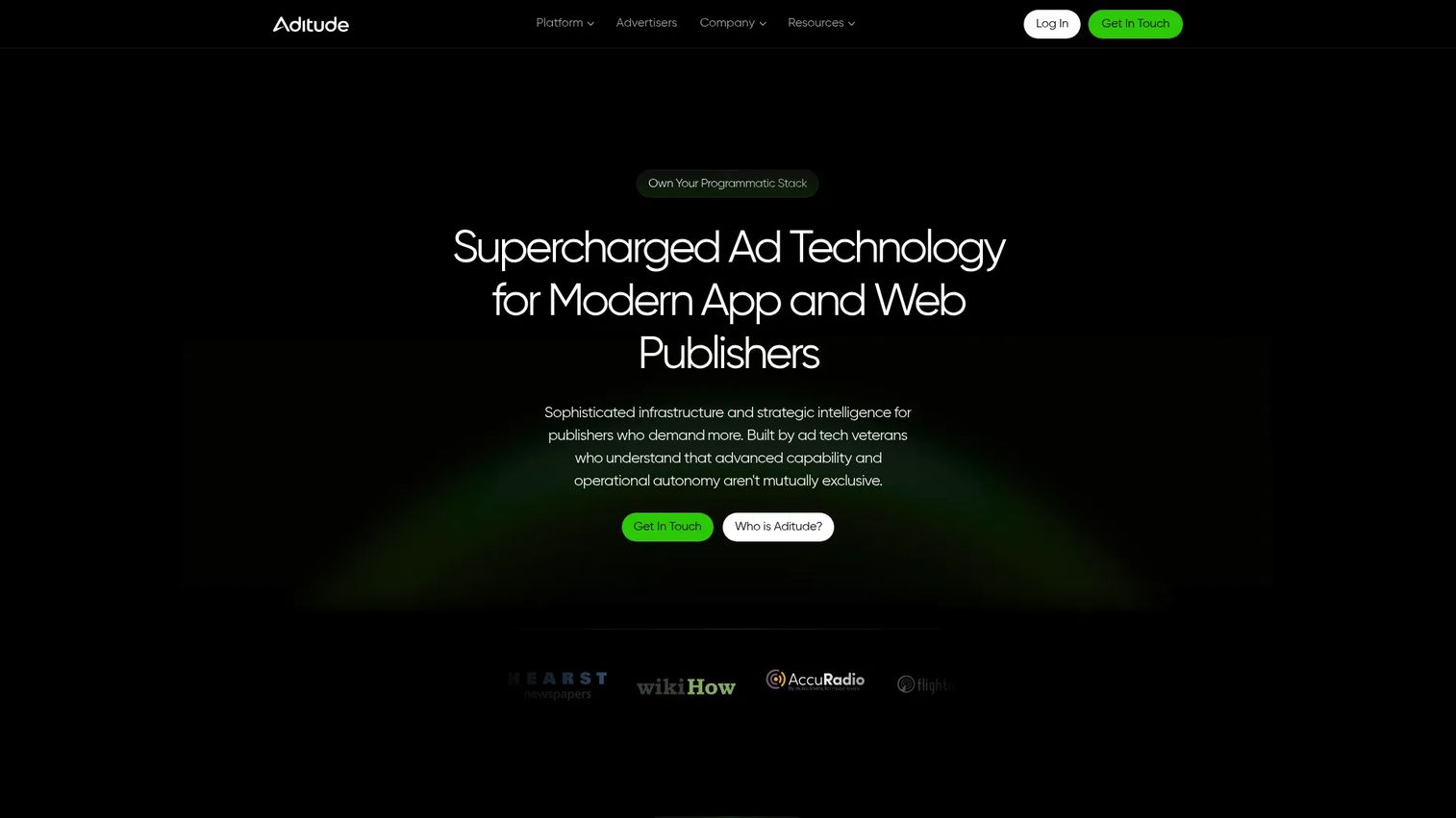
Aditude is a unified ad technology platform for web and app publishers focused on programmatic monetization control. Its Cloud Wrapper delivers managed Prebid Server infrastructure, removing the engineering burden of maintaining header bidding at scale. AI-powered dynamic floor pricing adjusts bid floors in real time, and the platform provides revenue analytics, dashboards, alerts, and AI-generated recommendations to help publishers optimize yield across demand partners.
Best for: Enterprise web and app publishers managing header bidding and programmatic demand who want yield optimization without heavy engineering involvement.
Key features
- Cloud Wrapper with managed Prebid Server infrastructure
- AI-powered dynamic floor pricing
- Real-time revenue analytics and AI-generated recommendations
- Demand management across programmatic partners
- Publisher ad operations support and yield optimization
Why choose Aditude: It addresses the operational complexity challenge directly. Publishers running multiple demand partners through header bidding often see revenue variation they cannot explain, because floor pricing and auction dynamics are poorly tuned. Aditude's AI floor pricing and consolidated reporting give ad ops teams the visibility to act on those gaps without rebuilding their stack.
Aditude pricing: Pricing is custom and requires a sales conversation. Contact Aditude for current terms based on traffic volume and demand partner configuration.
Considerations when choosing a search monetization platform
Revenue model
Understand whether a platform pays on revenue share, CPC, advertiser spend, or a managed service fee before signing anything. Revenue share sounds simple, but the percentage varies by traffic category, geography, and partner tier. CPC models give you more predictability per click but depend heavily on bid density for your query types. Ask for sample payout data by traffic source before committing.
Traffic quality requirements
Every platform on this list cares about where your traffic comes from and whether engagement patterns look legitimate. Search feed partners in particular can reduce payouts or suspend access when traffic quality metrics fall outside expected ranges. Document your traffic sources, referral patterns, and session behavior before applying to a new partner.
Reporting depth
Top-line earnings numbers hide the signal you need. Look for access to RPM, EPC, CTR, CPC, feed-level performance, query-level performance, and revenue by source. If a platform's dashboard only shows total revenue without source breakdowns, you cannot tell which feed, query type, or traffic source is profitable. That gap makes optimization impossible and attribution arguments with leadership inevitable.
Implementation effort
Approval flows, tag deployment, search box integration, feed link setup, and reporting imports all take time. Faster setup is not always better when skipping quality controls creates problems later. Build an honest estimate of engineering, QA, and partner onboarding time before selecting a platform, especially if your team does not have dedicated ad ops support.
Fit with your current stack
The platform should connect to your existing analytics, BI, CRM, and publisher ad infrastructure without creating a new data island. Ask about integrations with the tools you already use to report on CAC, RPM, and campaign performance. A monetization platform that adds a standalone dashboard nobody checks is a cost, not a revenue source.
Conclusion
Search monetization is a broad category. The right platform is decided by what your traffic model looks like, not by which platform has the highest brand recognition.
For broad website monetization with minimal setup, Google AdSense is the default starting point. If onsite search volume is meaningful, AdSense for Search converts that behavior into query-level ad revenue directly. Microsoft Ads Search Syndication and Yahoo Search Feed add alternative demand sources for publishers whose traffic quality meets partner standards.
Swaarm earns its place when operational complexity is the bottleneck: Multiple feeds, partners, and reporting sources that need consolidation. System1 fits higher-volume operations that benefit from AI-driven performance optimization. Raptive suits established content publishers that want managed support instead of a self-serve setup.
Taboola, Nexxen, Connatix, MobileFuse, and Aditude address adjacent monetization needs, including native discovery, programmatic demand, video yield, mobile advertising, and header bidding infrastructure. These belong in the stack when search traffic flows into surfaces that benefit from those formats.
Before adding a new platform: Audit your search traffic volume, calculate current revenue per session, and identify where yield is leaking. Test one monetization path before layering in additional partners.
If your team also builds software and needs buyers to understand product value before scheduling a call, interactive demos reduce that evaluation friction. Start your journey with Guideflow today!
FAQs
Search monetization platforms help publishers, affiliate teams, and marketers earn revenue from user search intent. They do this through sponsored listings, search feeds that pay on a CPC or revenue-share model, related-search units that trigger monetized clicks, and performance reporting tools that track RPM, EPC, CTR, and revenue by source.
Most platforms operate on one of two models. Ad networks earn from advertiser spend and share a percentage with publishers. Search feed providers pay publishers for each click on a sponsored result, with the payout set by advertiser bids for that query. The exact payout depends on traffic category, geographic location, query intent, and the partner agreement in place.
Standard AdSense monetizes general website content with display ads matched to the page or the visitor. AdSense for Search specifically monetizes the search results pages your site generates when users type queries into an onsite search box. The two products share the same account system but serve different intent moments and pay differently. AdSense for Search publishers receive 51% of revenue Google recognizes from those search interactions.
Related search on content refers to units that display search suggestions or topic links connected to the page's content. When a user clicks one of those suggestions, it can trigger a new search or a sponsored result. Monetization depends on the advertiser demand for those query topics, the user's click behavior, and compliance with the platform's policy requirements for how those units are displayed.
RPM tells you how much you earn per thousand impressions and is the clearest cross-partner comparison metric. EPC reveals how much each click earns, which helps you evaluate feed quality. CTR shows whether users are actually engaging with your search units. CPC gives you the advertiser-side bid context. Revenue per session ties everything together by showing total search monetization yield per visit. Reporting that stops at total revenue hides which traffic source, query type, or partner is actually driving results.
Publishers are the most common fit, but the category also covers affiliates running search-style landing pages, app teams monetizing in-app search behavior, media companies adding revenue to editorial search experiences, and performance marketers who own high-intent traffic and want to maximize per-session yield. The shared requirement is a meaningful volume of user search behavior that can be matched to advertiser demand.
Start with your traffic source and volume. If you have onsite search behavior, AdSense for Search is the simplest starting point. If you run search-style landing pages at volume and already have feed experience, Microsoft and Yahoo syndication partnerships add demand. If operational complexity across multiple partners is the problem, a workflow tool like Swaarm consolidates reporting and feed management. Match the platform type to the specific gap in your current setup rather than selecting by brand name alone.
Yes, if ad units distract from the content users came for or if search results feel commercially irrelevant. The risk is highest with related-search units placed too prominently or with feed partners whose sponsored results do not match the query intent on your site. Test placement, measure session depth and bounce rate alongside revenue metrics, and avoid scaling any monetization path before confirming that engagement holds up under real traffic conditions.