A route change hits at 6:15 a.m. Parents start calling before dispatch has a clean ETA. Your driver needs updated directions. The superintendent wants cost numbers by afternoon. And somewhere in between, a student boards the wrong bus.
This is the daily reality for transportation directors running operations on spreadsheets, printed manifests, or tools that were never designed to work together. According to a 2026 survey by Zonar and School Transportation News, 78% of student transportation professionals now use routing software - yet most still manage GPS tracking, parent communication, and fleet data in separate systems that rarely talk to each other.
The gap between having software and having a connected transportation operation is where most districts lose time, money, and trust with families. The right student transportation software closes that gap by connecting route planning, live dispatch, student visibility, and reporting into a single operating rhythm.
This guide compares 11 school bus transportation software tools to help transportation directors, district operations leaders, and bus contractors shortlist the right fit before booking demos or issuing an RFP.
What's inside
This guide covers 11 school transportation software tools evaluated for 2026. Every entry includes a best-for description, key features, pricing guidance, and G2 rating.
- Who it's for: Transportation directors, district operations leaders, school business officials, bus contractors, and IT managers comparing tools
- How tools were chosen: Category fit, routing depth, GPS and telematics capability, parent communication, and reporting breadth
- What each entry includes: Best for, key features, pricing, and verified G2 rating
- How to use it: Shortlist 3 to 4 vendors, map your current workflow, then ask each vendor to demo a live scenario with sample district data
TL;DR
- Best broad student transportation platform: Tyler Technologies Student Transportation covers routing, GPS, fleet maintenance, activity trips, and parent communication under one vendor
- Best for route-heavy district operations: BusBoss and Transfinder both focus on school bus routing software with strong planning depth
- Best for student visibility and parent communication: Edulog connects route intelligence with driver tools and a parent portal
- Best for route planning in smaller districts: BusPlanner suits teams that need focused school bus route planning without enterprise overhead
- Best for GPS-first fleet visibility: Samsara, Verizon Connect, and Geotab offer strong telematics; pair them with a school-specific routing tool
- Best for onboard safety technology: Safe Fleet specializes in school bus safety systems, video, and enforcement tools
What is school transportation software?
School transportation software is a platform that helps school districts and transportation providers plan routes, assign students, manage buses and drivers, track vehicles, communicate with families, and report on transportation performance.
At the core, it replaces manual coordination across printed manifests, radio dispatchers, and disconnected spreadsheets with a single operational record. The best platforms cover the full workflow from route design to afternoon dismissal.
Routing and planning: Route creation, stop assignment, bell schedule management, boundary logic, transfers, and special-needs transportation requirements. This is where school bus routing software earns its keep - optimized routes cut fuel costs and reduce driver time before the school year starts.
Dispatch and live operations: Route changes, driver communication, vehicle substitutions, and incident response. School bus dispatching software lets coordinators push updates to drivers in real time rather than relying on phone calls or radio.
GPS and telematics: Vehicle location, route adherence, ETA visibility, and fleet performance data. GPS school bus tracking gives dispatchers a live map view and gives families confidence in arrival times.
Student visibility: Student ridership tracking, boarding events, eligibility records, and student-level transportation data. The same 2026 Zonar and School Transportation News survey found that 41% of districts already use ridership tracking and 33% plan to add it soon.
Parent communication: Mobile apps, automated alerts, stop-level ETA updates, and ridership notifications. By 2026, 72% of surveyed school districts offer rider-tracking or parent apps, according to School Bus Fleet.
Fleet and asset management: Inspections, work orders, maintenance schedules, and preventive maintenance alerts. Fleet maintenance software for schools reduces surprise breakdowns during morning runs.
Reporting: Cost per route, on-time performance, vehicle utilization, safety metrics, and compliance documentation for boards and state agencies.
Route-only tools handle stop assignment and optimization. Full transportation management platforms add dispatch, real-time GPS, parent communication, and fleet maintenance on top of routing. Knowing which gap you're solving first narrows the shortlist quickly.
When to use school transportation software
Plan safer routes before the school year starts
Transportation teams use school bus routing software to assign stops, model bell schedules, account for special-needs requirements, and reduce total route time before operations go live. Getting routes right before day one avoids the operational scramble that follows a poorly planned start. A route optimization tool can identify stop consolidations and mileage reductions that save fuel costs across the year.
Track buses and communicate changes in real time
GPS tracking paired with a parent communication app gives dispatchers a live picture of every vehicle and gives families confidence about pickup times. School bus dispatching software lets coordinators push route changes to drivers instantly rather than managing updates by phone. Parents receive automated ETA alerts instead of calling the transportation office.
Measure cost, service levels, and fleet performance
Transportation reporting gives directors the data they need for board presentations, budget justifications, and state compliance submissions. Good reporting connects route-level cost data with vehicle utilization and maintenance history, so operations leaders can show exactly where the transportation budget goes and where efficiency gains are possible.
School transportation software comparison
The table below is a shortlist tool. Pricing is quote-based for most vendors in this category; the notes reflect what was verified against vendor pages and review platforms at time of writing. Check each vendor's current pricing page and G2 listing before publication.
| # | Product | Best for | Key differentiator | Pricing | G2 rating |
|---|---|---|---|---|---|
| 1 | Tyler Technologies Student Transportation | Broad district platform | Routing, GPS, fleet, activity trips, and parent app in one suite | Custom pricing | 4.5/5 |
| 2 | BusBoss | Route-heavy operations | Multi-tier routing platform with student ridership and dispatch | Custom pricing | 5.0/5 |
| 3 | Transfinder | Mature routing suite | Routefinder PLUS with parent engagement and fleet tools | Custom pricing | 4.0/5 |
| 4 | Edulog | Student visibility and family communication | Route intelligence, driver tools, and parent portal | Custom pricing | N/A |
| 5 | Samsara | GPS-first fleet visibility | AI dash cams, driver safety, and connected fleet analytics | Custom pricing | 4.5/5 |
| 6 | Verizon Connect | Fleet tracking and telematics | GPS, route history, driver behavior, and ELD compliance | Custom pricing | 3.8/5 |
| 7 | Safe Fleet | Onboard safety technology | Stop-arm enforcement, video surveillance, and ALPR | Custom pricing | N/A |
| 8 | Busology Tech | School-focused operations | Routing, GPS, ridership, fleet maintenance, and field trips | Custom pricing | N/A |
| 9 | BusPlanner | Canadian districts and complex planning | Redistricting, zoning, financial planning, and dispatch | Custom pricing | N/A |
| 10 | TrackSchoolBus | Tracking and parent updates | Multi-mode attendance, geo-fencing, and parent apps | Custom pricing | N/A |
| 11 | Geotab | Extensible fleet telematics | Open platform with engine diagnostics and Marketplace integrations | Custom pricing | 4.5/5 |
Best 11 school transportation software tools for 2026
1. Tyler Technologies Student Transportation
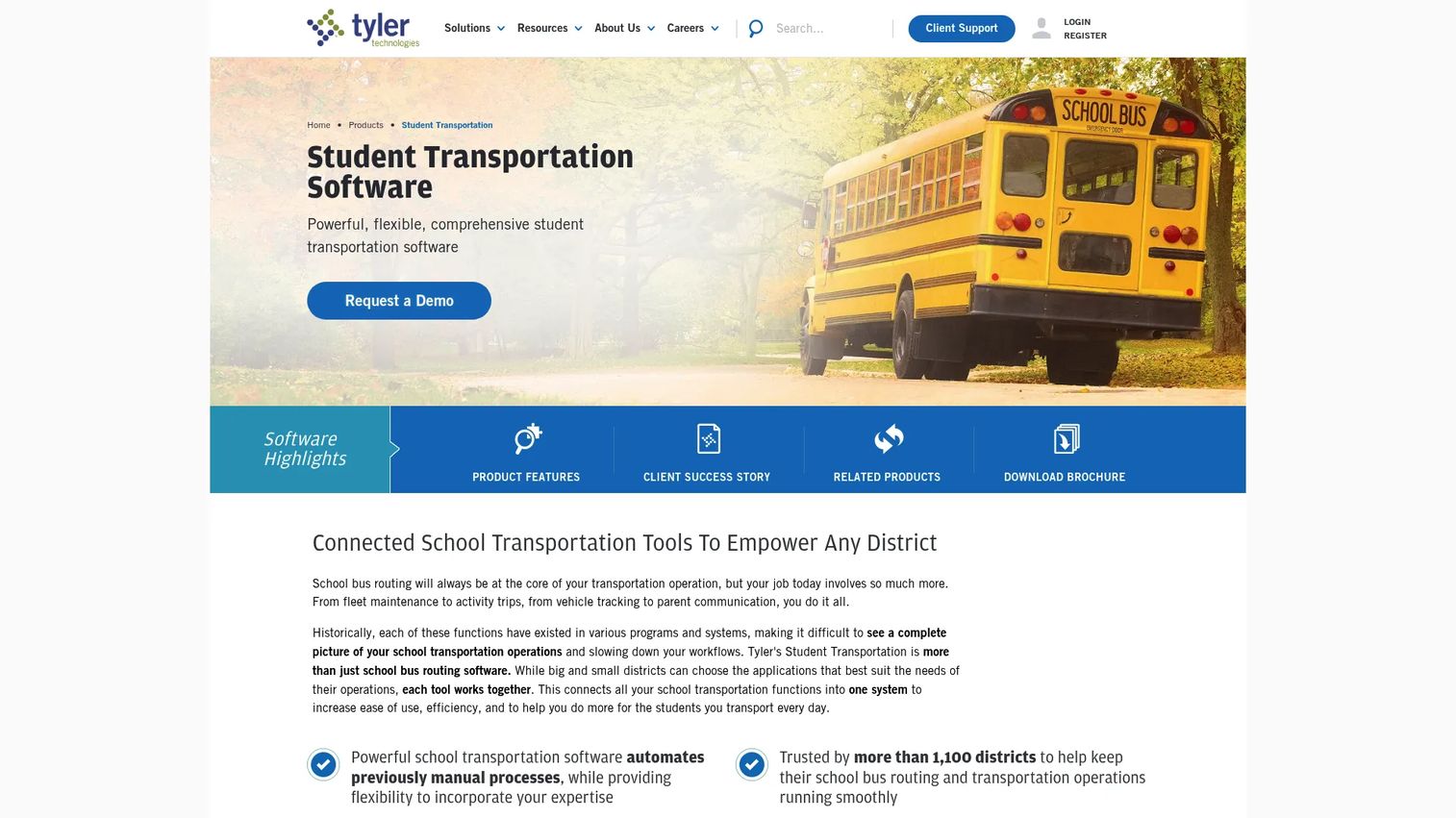
Tyler Technologies Student Transportation is a connected transportation suite built for K-12 districts that want routing, fleet operations, GPS tracking, driver tools, and parent communication managed under one vendor. The platform covers the full transportation workflow from route planning through activity trip management and board-level reporting. Tyler's breadth makes it a natural anchor for larger districts coordinating across multiple schools, routes, and vehicle types.
Best for: Larger districts and transportation contractors needing a connected student transportation platform across routing, dispatch, fleet, and parent communication.
Key features
- School bus routing and route optimization
- GPS vehicle tracking and telematics
- Onboard driver tablets with turn-by-turn directions, timekeeping, and inspections
- Parent communication app for stop, route, and pickup updates
- Fleet maintenance, work orders, and preventive maintenance scheduling
- Activity trip request and resource management
Why choose Tyler Technologies: Choose Tyler when you need routing, dispatch, fleet maintenance, and parent communication to operate from a single system. It suits districts where fragmentation across tools is the primary operational problem.
Tyler Technologies pricing: Pricing is quote-based and not displayed on the vendor site. Contact Tyler directly to request a proposal for your district size and module set. G2 reviewers report this product under the related Tyler Versatrans listing.
G2 rating: 4.5/5 (based on Tyler Versatrans reviews on G2)
2. BusBoss
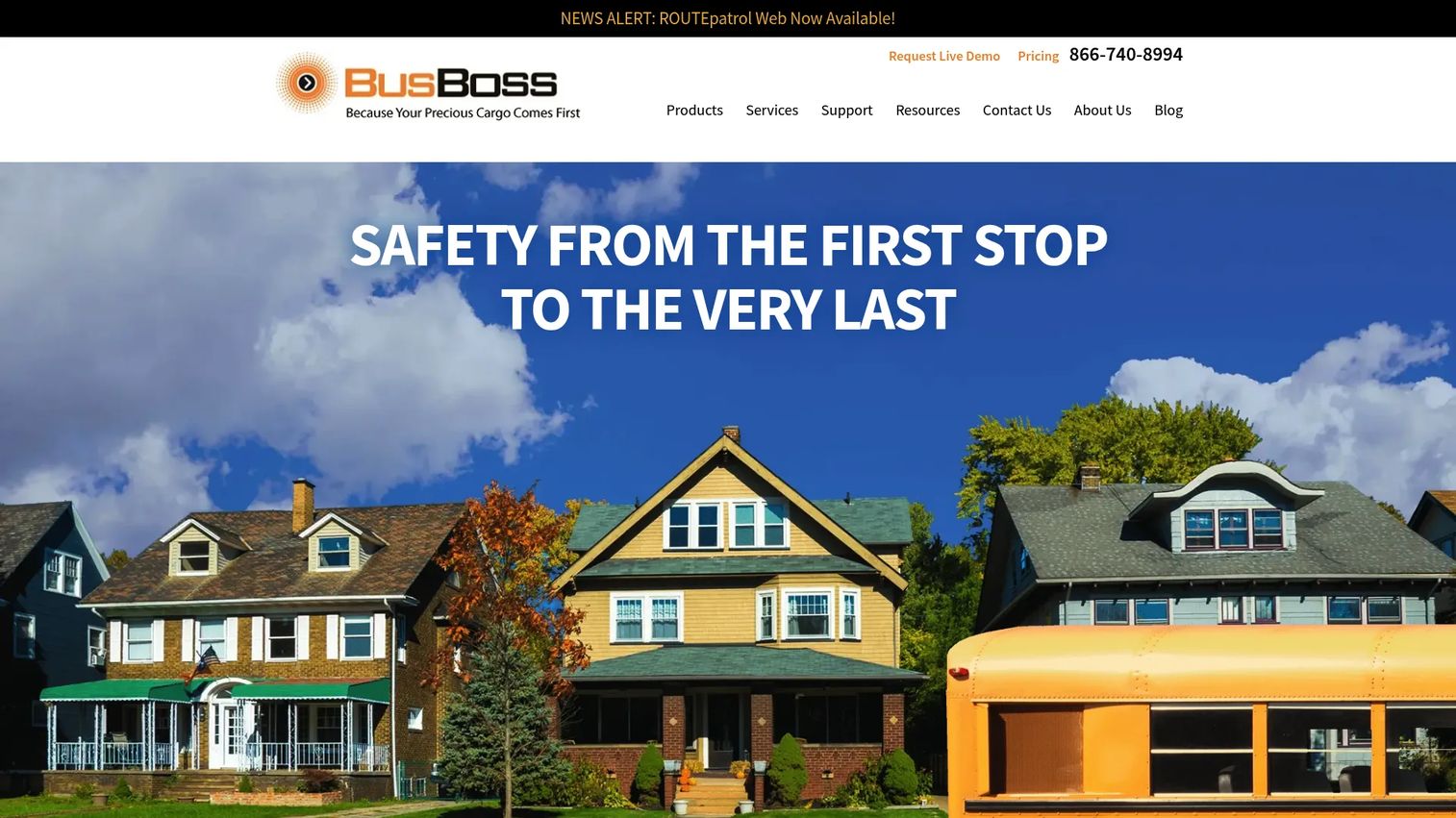
BusBoss is a student transportation management platform focused on school bus routing, real-time GPS tracking, student ridership accountability, and parent communication. The platform offers multiple product packages (Express, Professional, SaaS, Enterprise, and Complete Solution) to match different district sizes and operational maturity levels. BusBoss includes SIS integrations, driver dispatch coordination, and implementation support as part of its core offering.
Best for: Districts where routing accuracy, student assignments, and implementation support matter more than a lightweight tracking app.
Key features
- Route planning and optimization
- Real-time GPS bus tracking
- Student ridership tracking and accountability
- Driver navigation and dispatch coordination
- Parent notification and bus visibility tools
- Student information system integrations
Why choose BusBoss: BusBoss suits districts that want a school bus routing software provider with structured product tiers and hands-on implementation help. The tiered packaging lets smaller districts start with what they need and add modules as operations grow.
BusBoss pricing: BusBoss publishes product tier comparisons on its website but does not display prices for any package. Request a quote directly at busboss.com to get pricing for your fleet size and module requirements.
G2 rating: 5.0/5 (based on 1 review on G2)
3. Transfinder
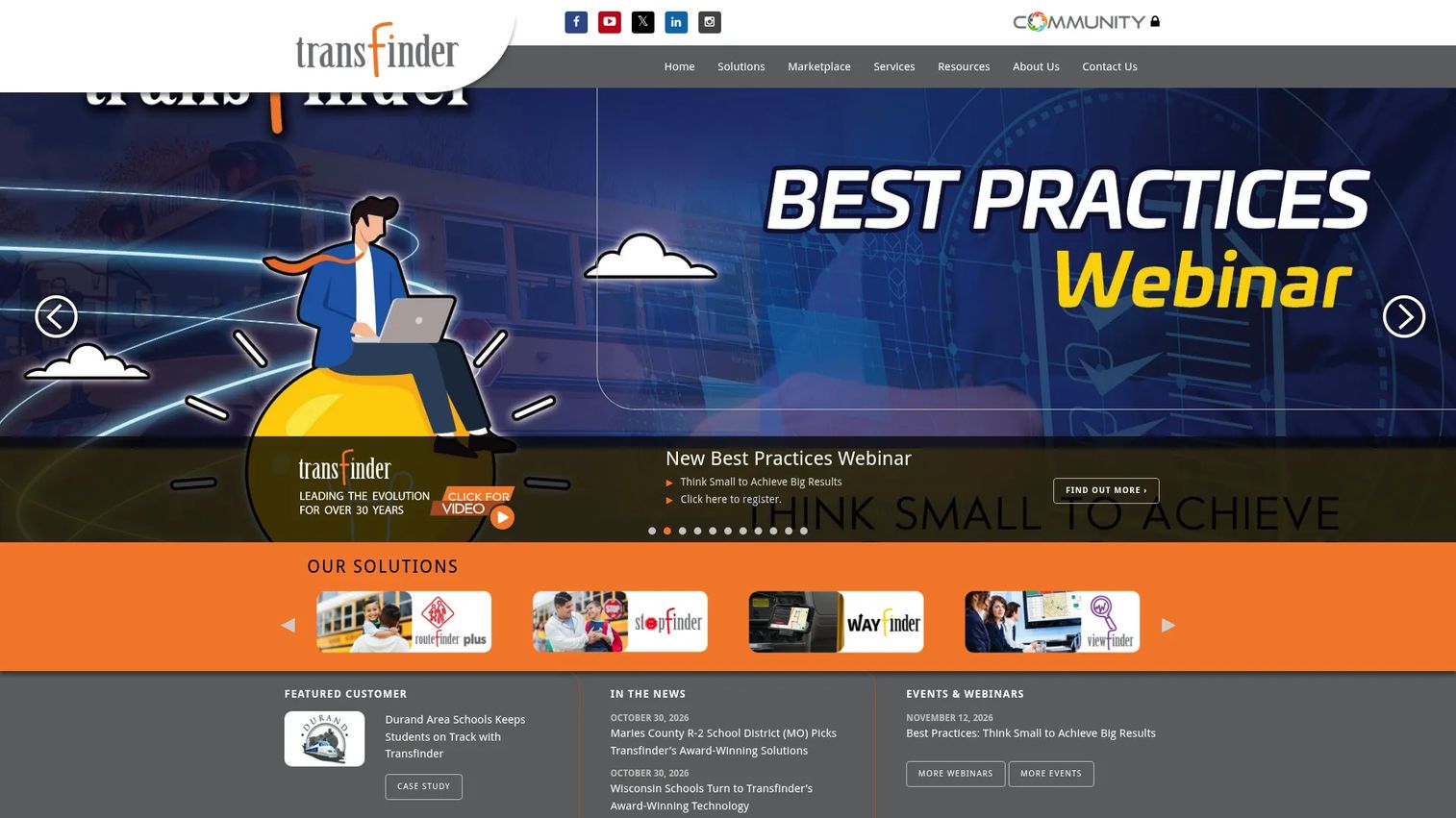
Transfinder provides K-12 student transportation management software with a routing-first architecture and a broad set of supporting modules. Its flagship routing product, Routefinder PLUS, handles route optimization, stop assignment, and boundary logic. Supporting modules cover parent engagement, driver navigation, in-vehicle forms, fleet maintenance, and field trip management, making Transfinder a good choice for districts that want proven school bus routing software with operational depth beyond routing alone.
Best for: Transportation departments that want a mature routing suite with supporting modules for driver tools, parent communication, and fleet management.
Key features
- Routefinder PLUS school bus routing and transportation management
- GPS bus tracking and route adherence
- Parent engagement app with real-time bus information
- Driver navigation, attendance tracking, and in-vehicle forms
- Field trip request, approval, and resource management
- Fleet and asset maintenance management
Why choose Transfinder: Transfinder is a strong fit when route optimization is the primary buying driver and the team also needs parent engagement and field trip workflows. Its long track record in K-12 transportation gives district teams a known implementation path.
Transfinder pricing: No prices are displayed on the Transfinder website. Reach out through transfinder.com to get a quote for your district's configuration.
G2 rating: 4.0/5 (based on 2 reviews on G2)
4. Edulog
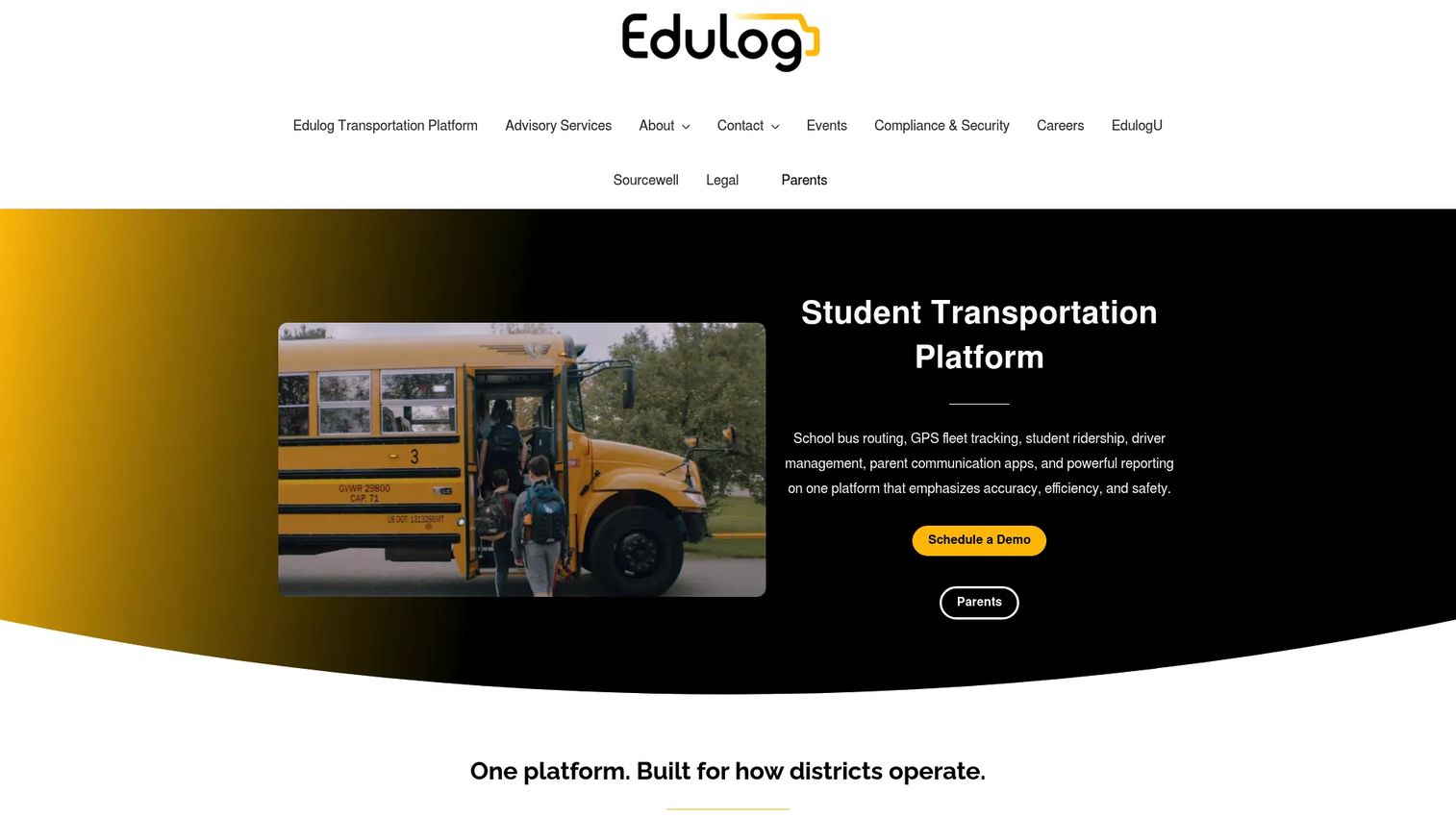
Edulog is a cloud-based student transportation resource management platform serving school districts, bus contractors, special-needs transporters, and Head Start programs. The platform connects routing management, real-time vehicle tracking, and a Parent Portal in a single system. Edulog's route intelligence tools help transportation teams model and analyze routes rather than simply displaying them, which gives planning staff a sharper picture of where efficiency gains are available.
Best for: Districts prioritizing student-level visibility, route intelligence, and family communication alongside standard routing and GPS tracking.
Key features
- Routing management and route optimization
- Route intelligence and performance analysis
- Real-time vehicle tracking and telematics
- Parent Portal with route information, notifications, and two-way messaging
- Driver experience tools and navigation support
Why choose Edulog: Choose Edulog when the goal is connecting transportation planning with student-level data and parent communication rather than buying separate systems for each. It works across district-run fleets and contracted operations.
Edulog pricing: Schedule a demo at edulog.com to get pricing based on your district's size and operational requirements.
5. Samsara
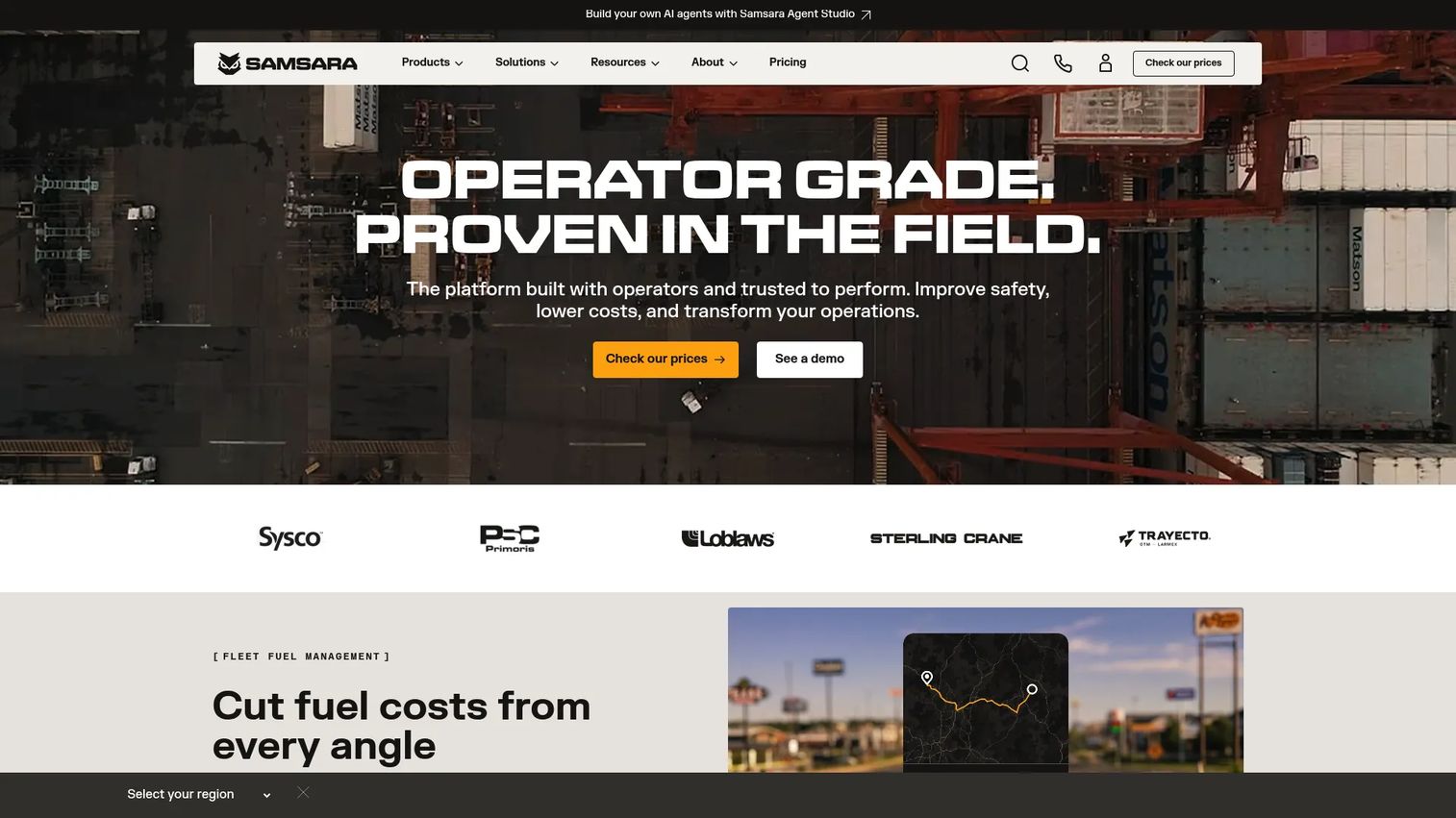
Samsara is a connected operations platform built for fleet management, driver safety, and equipment tracking across industries including school transportation. Its core strengths are real-time GPS tracking, AI-powered dash cameras, driver coaching, vehicle diagnostics, and fleet analytics. Samsara is not school-specific routing software; districts using it for bus operations typically pair it with a school bus routing tool that handles stop assignments and bell schedules.
Best for: Transportation teams whose primary need is GPS-first fleet visibility, driver safety coaching, and telematics reporting rather than school-specific route planning.
Key features
- Real-time GPS tracking, routing, fuel management, and compliance
- AI dash cams and driver coaching with in-cab safety alerts
- Vehicle diagnostics and equipment maintenance tracking
- Driver and fleet apps with worker safety workflows
- Open API and integrations with reporting and operations tools
Why choose Samsara: Samsara performs best when safety coaching, vehicle diagnostics, and fleet analytics are the buying priority. Districts that already have routing software and need to add live fleet visibility and driver behavior monitoring will find Samsara's telematics depth hard to match.
Samsara pricing: Samsara prices by fleet size, required features, contract length, and hardware bundling. Contact Samsara sales for a quote. The Samsara Driver App is separately available as a free download.
G2 rating: 4.5/5
6. Verizon Connect
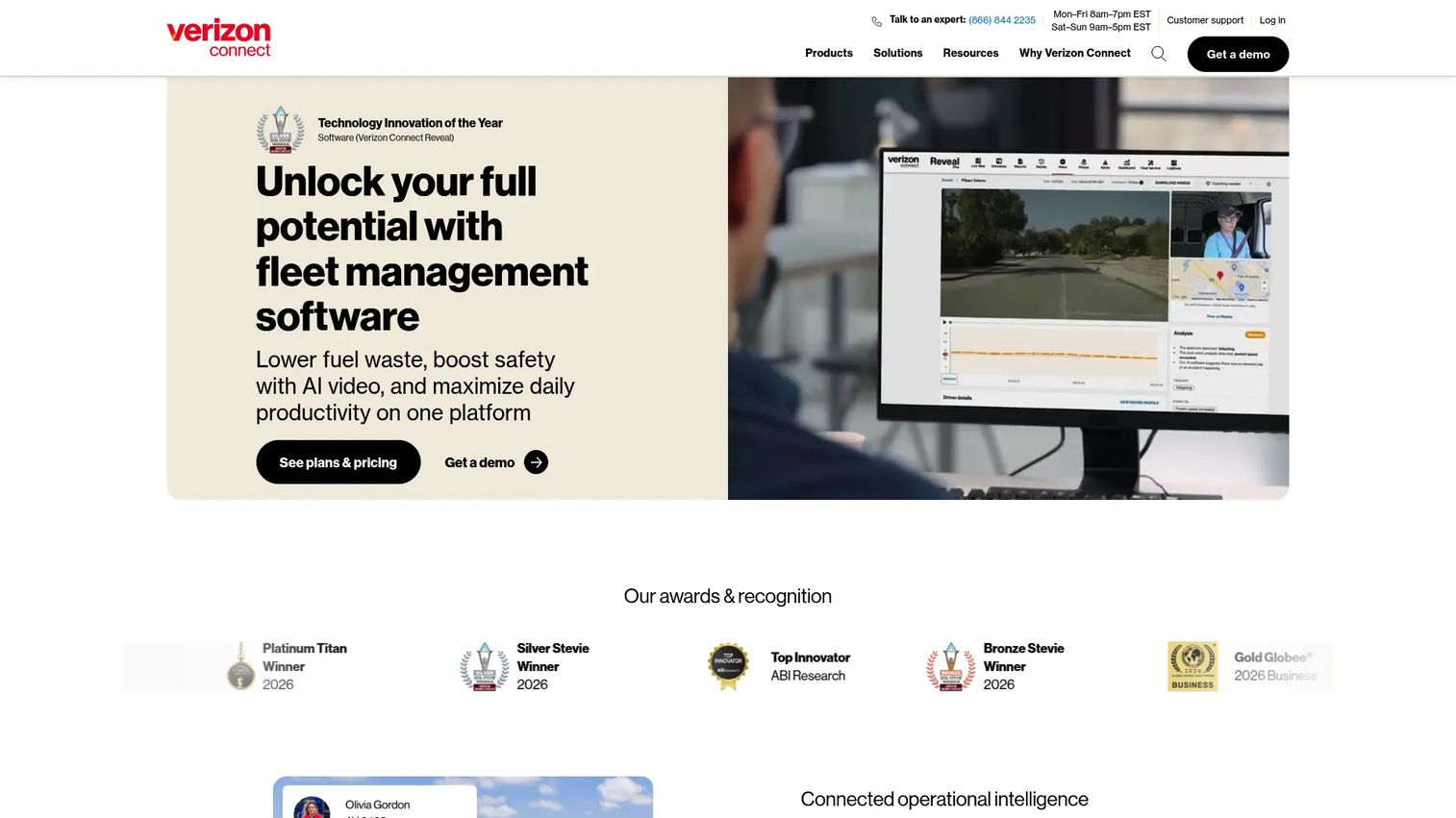
Verizon Connect provides fleet management and telematics software for tracking vehicles, assets, drivers, and mobile workforces. For school transportation teams, the platform delivers GPS vehicle tracking, route history, driver safety scorecards, fleet maintenance alerts, EV fleet management, and ELD and DVIR compliance tools. Like Samsara, it is not school-specific routing software, so districts may need a dedicated school bus route planner alongside it.
Best for: Districts and bus contractors that want GPS fleet tracking and telematics from an established provider with compliance and driver behavior tools built in.
Key features
- Real-time GPS vehicle and asset tracking
- Geofences, route history, and fleet dashboards
- AI dashcams and integrated video safety
- Driver safety scorecards and behavior monitoring
- Vehicle maintenance alerts and diagnostics
- ELD, DVIR, and compliance tools
Why choose Verizon Connect: Verizon Connect suits operations where fleet oversight, driver accountability, and compliance reporting are the primary buying drivers. Bus contractors managing mixed commercial and school vehicle fleets often find its breadth useful across all vehicle types.
Verizon Connect pricing: Contact Verizon Connect through verizonconnect.com to request current pricing for your fleet.
G2 rating: 3.8/5
7. Safe Fleet
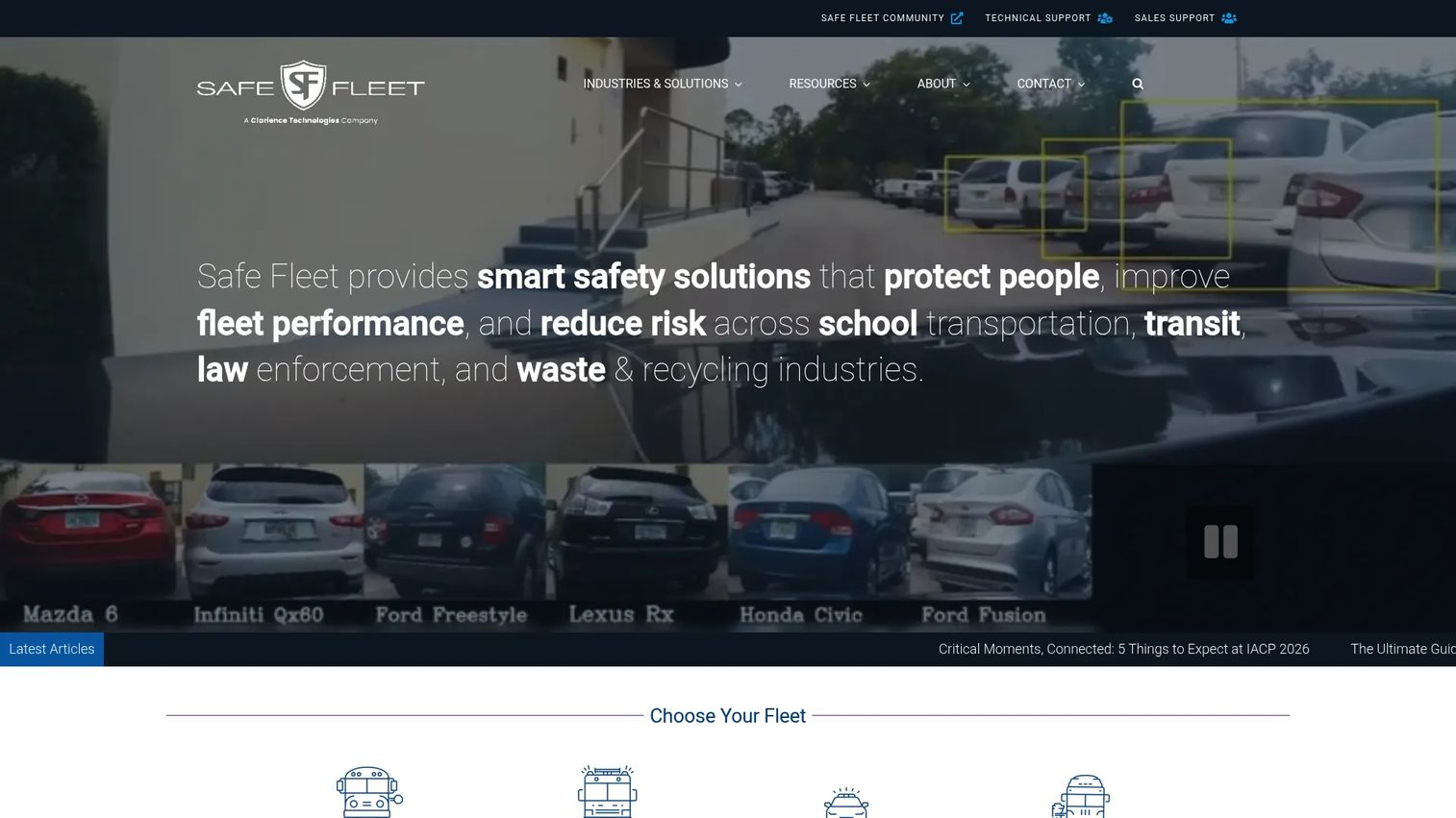
Safe Fleet is a safety and fleet technology provider focused on school transportation, transit, law enforcement, and waste fleets. Its school bus product set centers on onboard safety systems rather than routing or dispatch software. Core offerings include the Stop Arm Violation Enforcement System (SAVES), Automated Bus Lane Enforcement (ABLE), cloud-based video evidence management, Automated License Plate Recognition (ALPR), and video surveillance systems. Safe Fleet addresses the safety technology layer, not transportation management software for routing or fleet operations.
Best for: School transportation teams whose primary buying trigger is onboard safety systems, stop-arm enforcement, and video evidence management.
Key features
- Stop Arm Violation Enforcement System (SAVES)
- Automated Bus Lane Enforcement (ABLE)
- Cloud-based video evidence management
- Automated License Plate Recognition (ALPR)
- Video surveillance and onboard camera systems
- MirrorLESS Vision System
Why choose Safe Fleet: Safe Fleet is the right evaluation when safety hardware and enforcement technology are the gap to close. It complements routing and dispatch platforms rather than replacing them.
Safe Fleet pricing: Safe Fleet uses quote-based contracts. Contact safefleet.net to request pricing for your fleet's safety technology requirements.
8. Busology Tech
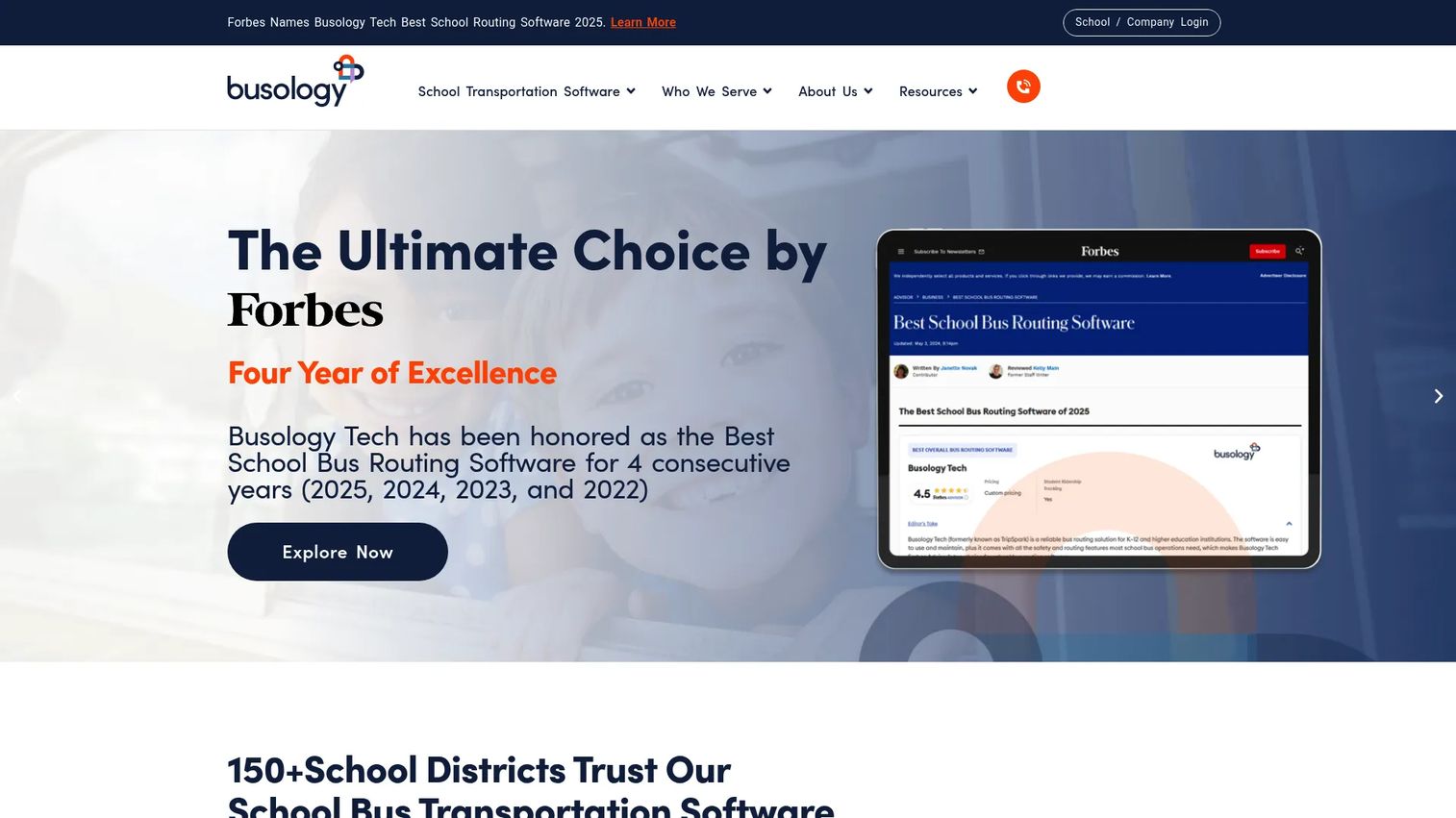
Busology Tech is a school transportation management platform serving K-12 districts, special-needs transportation providers, and transportation agencies. The platform covers routing and scheduling, real-time GPS tracking, student ridership and attendance, fleet maintenance, school bus navigation, driver electronic timesheets, field trip management, and pre- and post-trip inspections. Mobile apps and hardware are included as part of the complete solution.
Best for: K-12 districts and special-needs transportation providers that need a school-focused toolset covering routing, tracking, ridership, and fleet maintenance.
Key features
- Routing and scheduling
- Real-time GPS tracking
- Student ridership and attendance tracking
- Fleet maintenance and management
- Field trip management and pre/post-trip inspections
- Driver electronic timesheets and navigation
- Mobile apps and hardware
Why choose Busology Tech: Busology Tech suits districts that want a school transportation software provider focused exclusively on the K-12 market. Pricing adjusts by bus count and required features, which makes it approachable for smaller fleets.
Busology Tech pricing: Pricing is flexible and based on number of buses and required features. Request a custom quote through busologytech.com.
9. BusPlanner
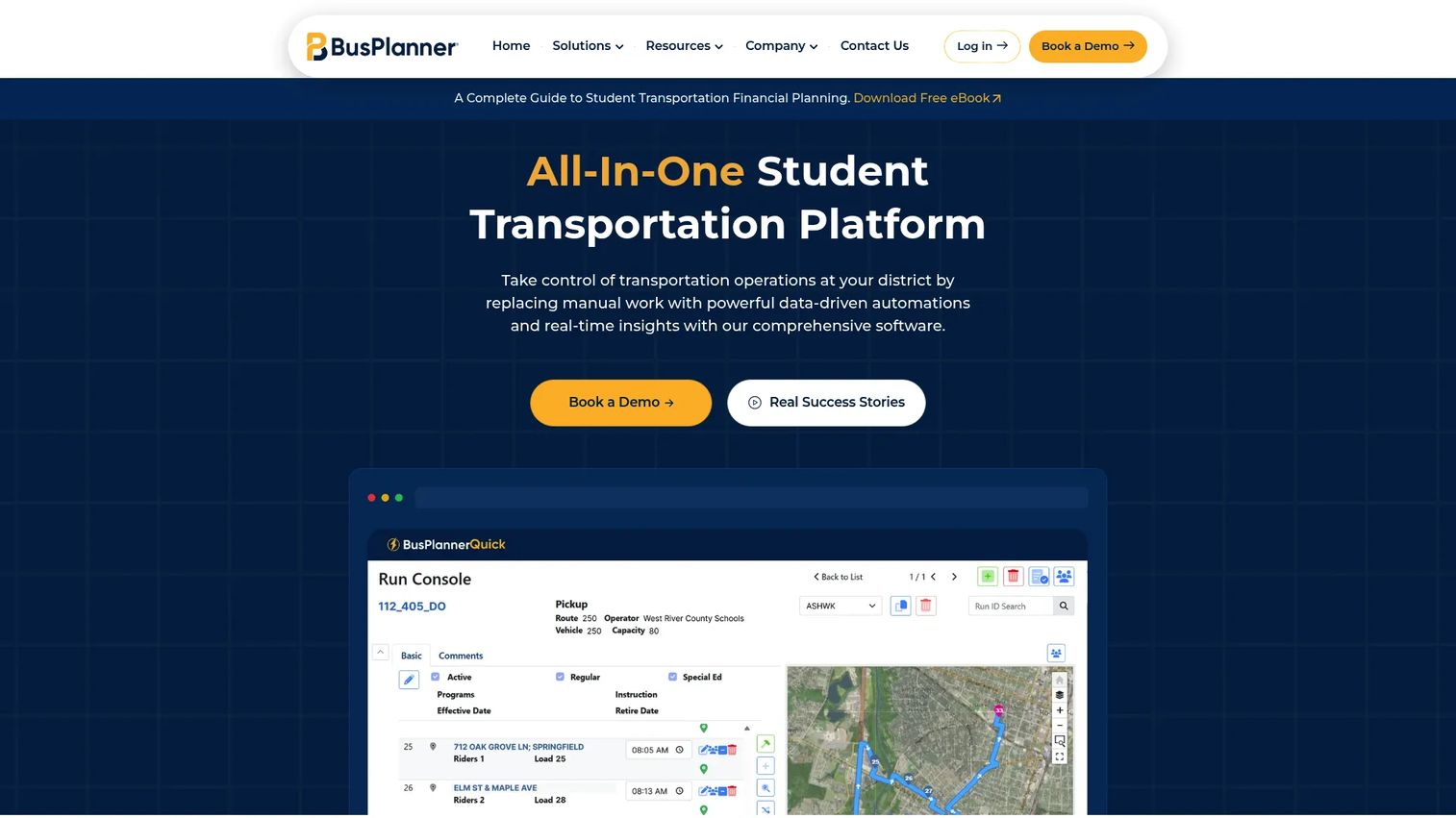
BusPlanner is an all-in-one student transportation platform built for school districts managing complex planning requirements. Its feature set covers core route planning and optimization, real-time GPS tracking, fleet management, dispatch management, ridership tracking, school bus inspections, redistricting and zoning, financial planning, and parent and staff online portals. BusPlanner has a particularly strong fit for Canadian school boards and transportation consortia that manage eligibility rules, boundary planning, and multi-board coordination.
Best for: Canadian school boards and transportation departments managing complex route planning, eligibility rules, redistricting, and financial planning alongside standard GPS and dispatch tools.
Key features
- Core route planning and optimization
- Redistricting, zoning, and boundary planning
- Real-time GPS tracking and analysis
- Fleet management and school bus inspections
- Ridership tracking and dispatch management
- Financial planning and reporting
- Parent and staff online portals
Why choose BusPlanner: BusPlanner excels for teams managing complex planning across boards, bell schedules, and eligibility constraints. Its financial planning module and redistricting tools give transportation directors data they can take directly into budget conversations.
BusPlanner pricing: Contact the BusPlanner team through busplanner.com to request a demo and quote.
10. TrackSchoolBus
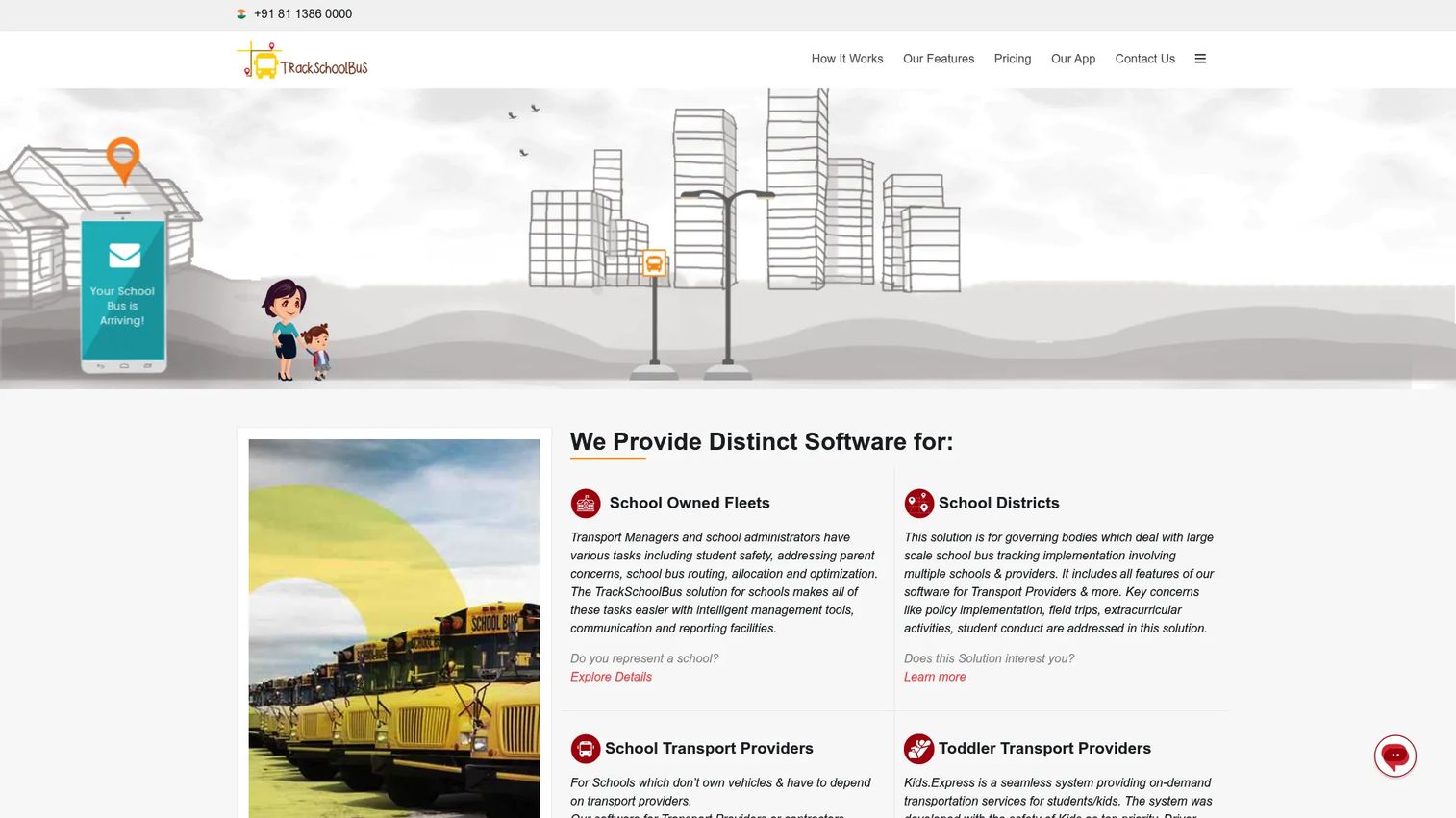
TrackSchoolBus is a school transportation management platform combining bus tracking, route planning, student attendance, and parent communication in a single system. It supports student attendance through smart devices, RFID, or contactless technology. Geo-fencing triggers real-time notifications for parents and administrators. The platform also includes online payments and transportation fare management, which suits schools managing paid transportation programs. Five pricing packages are available, covering monitoring, manual attendance, automated attendance, contactless attendance, and bus surveillance.
Best for: Schools and districts whose primary pain is "where is the bus?" combined with a need for automated student attendance and parent notification tools.
Key features
- Real-time school bus tracking and route history
- Route planning, auto-routing, and optimization
- Student attendance via smart devices, RFID, or contactless options
- Geo-fencing and real-time parent notifications
- Online payments and transportation fare management
- Parent, driver, and transport manager apps
Why choose TrackSchoolBus: TrackSchoolBus suits schools that want tracking and parent updates without buying a full fleet management suite. The multi-mode attendance options make it practical for schools moving from manual attendance to automated ridership data.
TrackSchoolBus pricing: Contact TrackSchoolBus through trackschoolbus.com or request a demo to get current pricing.
11. Geotab
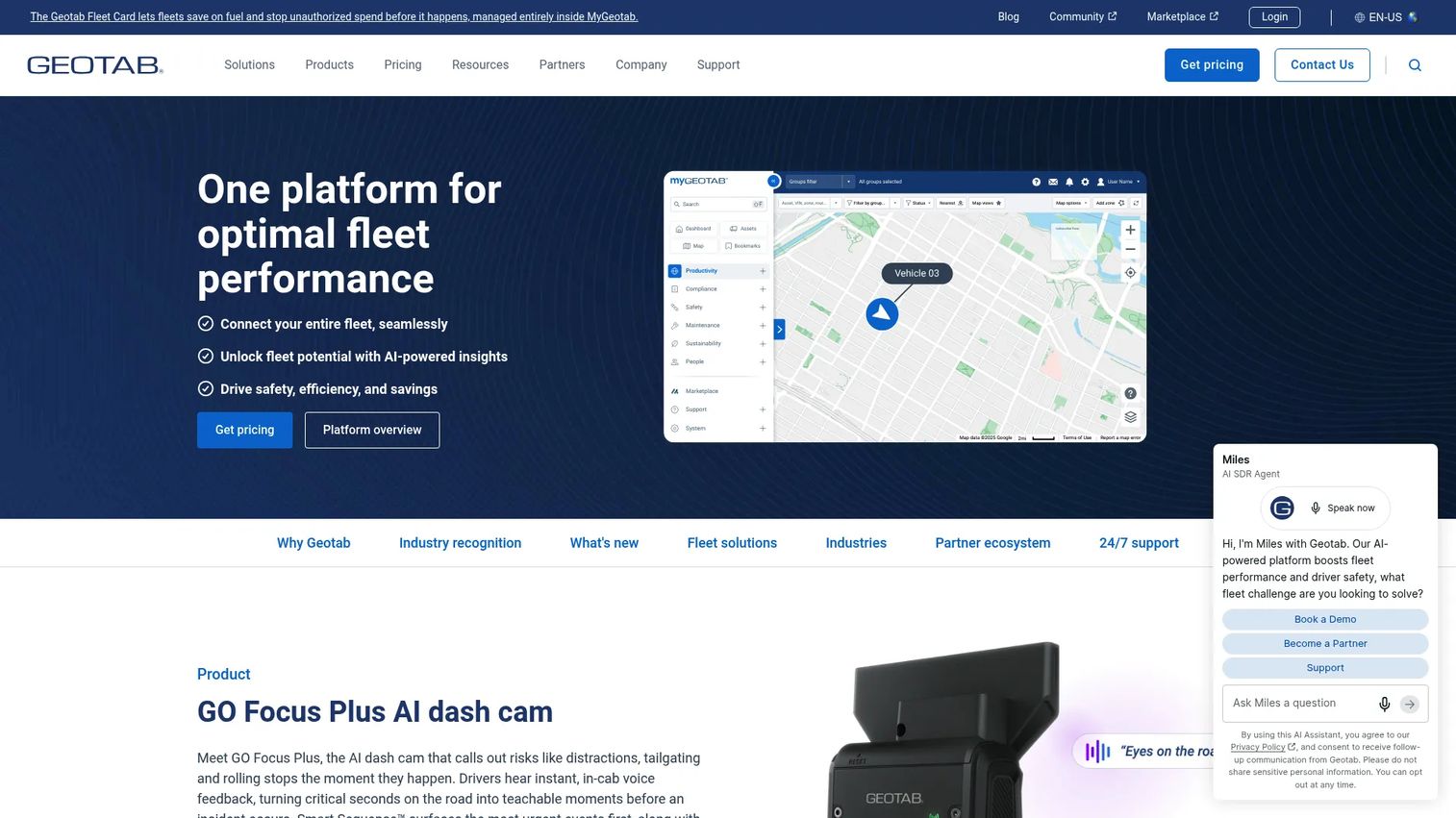
Geotab is a telematics and fleet management platform used across industries, including school transportation. Its open architecture connects GPS vehicle tracking, engine diagnostics, driver behavior data, EV fleet management, and AI-powered insights through a Marketplace of third-party integrations. Districts use Geotab for fleet visibility, safety monitoring, and vehicle data rather than school-specific routing. School bus routing functionality typically requires a separate tool or a Marketplace partner.
Best for: Districts and contractors that need extensible telematics, engine diagnostics, and integration flexibility across a mixed or large vehicle fleet.
Key features
- Real-time GPS vehicle and asset tracking
- Engine diagnostics, battery, and EV data monitoring
- Driver behavior data and safety reporting
- Fleet rules, geofencing, dashboards, and alerts
- Marketplace integrations with third-party applications
- Fleet performance and sustainability reporting
Why choose Geotab: Geotab performs best for transportation teams that prioritize vehicle data depth, open integrations, and cross-fleet visibility. Its Marketplace lets districts connect school-specific routing tools or other operational software to Geotab's telematics backbone.
Geotab pricing: Geotab pricing includes an upfront device cost and an ongoing monthly service fee. Plans vary by region and product. Contact an authorized Geotab reseller for current pricing.
G2 rating: 4.5/5
Considerations when choosing school transportation software
Routing depth
There is a significant difference between basic route creation and full routing with boundary logic, special-needs transportation, multiple residences, bell schedules, and transfer management. Confirm whether the tool handles your district's specific routing complexity before moving to a demo. Ask vendors to show a live scenario that includes special-needs routing or multi-school bell schedule conflicts.
Live operations visibility
GPS tracking quality varies. Evaluate how quickly dispatchers can see vehicle location, how route adherence is reported, and how fast the system pushes updates to drivers during a live route change. School bus dispatching software that relies on manual input from drivers is not the same as a system with continuous telematics telemetry.
Parent communication and student tracking
Parent apps and ETA alerts have become table stakes in 2026, with 72% of districts offering these tools according to School Bus Fleet. Verify what data drives the parent notification (GPS position, driver input, RFID scan, or scheduled stop time) and how frequently the app updates. Accuracy matters more than feature count when parents are deciding whether to trust the system.
Integrations and data quality
Most routing platforms need to sync student eligibility data from your student information system. Confirm SIS compatibility, sync frequency, field mapping, and who owns the data before signing. SIS integrations that run nightly rather than in real time create gaps during enrollment changes.
Implementation and support
School transportation software affects every morning and afternoon run. Ask vendors specifically how they handle back-to-school deadlines, what data migration looks like, and what support is available during the first 90 days of operation. A strong product with weak implementation support is a risk during the first week of school.
Conclusion
School transportation software is not a single-category purchase. Some districts need routing depth. Others need live telematics. Many need both, plus parent communication that families trust and reporting that holds up under board scrutiny.
For broad platform needs, Tyler Technologies Student Transportation covers the most operational ground. BusBoss and Transfinder are the strongest choices when school bus routing software is the primary buying driver. Edulog connects routing with student-level visibility and parent communication. BusPlanner suits teams with focused planning needs or complex Canadian multi-board operations. Samsara, Verizon Connect, and Geotab deliver strong telematics for fleet-first buyers. Safe Fleet addresses onboard safety technology. TrackSchoolBus suits schools prioritizing tracking and parent updates without full fleet management overhead.
The practical next step: Shortlist 3 to 4 vendors, map your current workflow from route planning through afternoon dispatch, and ask each vendor to demo a live scenario using sample district data. Verify SIS integration and implementation support before you get to price negotiation.
Start your journey with Guideflow today!
FAQs
School transportation software is a platform that helps districts and transportation providers plan bus routes, assign students to stops, track vehicles by GPS, communicate with families, manage fleet maintenance, and report on transportation performance. It replaces manual coordination across printed schedules, radio dispatchers, and spreadsheets with a connected operational record. The best platforms cover the full workflow from pre-year route design through daily dispatch and board-level reporting.
The right choice depends on the district's primary operational gap. Tyler Technologies Student Transportation suits large districts that need routing, GPS, fleet, and parent communication under one vendor. BusBoss, Transfinder, and Edulog serve route-heavy teams with strong planning requirements. Samsara, Verizon Connect, and Geotab are better fits when fleet telematics and driver safety are the priority over school-specific routing.
School bus routing software focuses on route creation, stop assignment, bell schedule management, and student eligibility. School transportation software is a broader category that adds GPS tracking, school bus dispatching software, parent communication, student ridership tracking, fleet maintenance, and transportation reporting on top of routing. Many teams start with routing tools and add operational modules as the program matures.
Most vendors in this category price by quote. The price depends on fleet size, student count, the specific modules required, SIS integrations, implementation scope, and support level. Request pricing for the exact modules you plan to use, and ask vendors to separate the base platform cost from implementation, training, and hardware.
Many school-focused platforms include SIS integrations, but compatibility and sync frequency vary by vendor. Verify that your SIS is on the supported list, confirm whether data syncs in real time or overnight, and understand how field mapping is handled before signing. Data ownership and what happens to student records if you cancel are also worth clarifying upfront.
Some platforms include student ridership tracking through GPS-based stop events, RFID card scanning, barcode check-in, or driver input. The method matters. GPS-based tracking shows when a bus passed a stop. RFID or contactless scanning confirms which students boarded. Ask vendors to demonstrate exactly how ridership data is captured and how parents and administrators receive that information.
Not always. Tyler Technologies, BusBoss, Transfinder, Edulog, BusPlanner, Busology Tech, and TrackSchoolBus all include both routing and GPS tracking in their platforms. Samsara, Verizon Connect, and Geotab are strong telematics tools that may need a school-specific routing tool alongside them. The right setup depends on whether routing accuracy or live fleet visibility is the larger gap in your current operations.
Ask vendors to show route creation from scratch, a live route change pushed to a driver mid-run, a parent notification triggered by that change, a student record update from the SIS, and a standard reporting export your team would use for board presentations. Using realistic sample data from your district size makes it easier to judge whether the tool fits your actual workflow rather than a vendor's ideal scenario.