

Your reps have more content than ever. Battlecards, decks, talk tracks, product guides. And they still freeze on the first real objection.
That gap is the whole problem. Content sitting in a library is not the same as a rep who can say the right thing, at the right moment, on a live call. Most enablement teams measure the wrong thing. They track completion, not capability. Someone finished the module. Fine. Can they actually run discovery under pressure?
The sales readiness platforms market was worth roughly $2.5B in 2024 and is forecast to reach $7.3B by 2033, a 12.8% CAGR through 2033, according to Verified Market Reports (2024). That growth reflects a simple shift: leadership stopped accepting training activity as proof of anything. They want evidence reps can perform.
So the real question when you evaluate sales readiness software is not "does it hold our content?" It is "does it prove behavior changed?" That distinction runs through every tool below.
What's inside
This guide is for sales enablement managers, RevOps leaders, and sales leadership who need to shorten ramp, standardize coaching, and tie readiness activity to revenue outcomes.
We chose the eight tools below against four criteria that matter most to buyers:
- Readiness proof: does it measure capability, not just course completion?
- Coaching and certification: are practice, role-play, and scoring manager-friendly?
- Analytics and integrations: does it connect readiness activity to CRM and pipeline data?
- Maintainability: can a small team keep content and plays current without drowning?
TL;DR
- Best for enterprise enablement: Highspot and Showpad both combine content, readiness, and buyer engagement in one platform.
- Best for readiness scoring and certification: Mindtickle is built around scorecards, reinforcement, and assessments.
- Best for balanced enablement and governance: Seismic pairs content management with learning and coaching.
- Best for practice-heavy teams: Kendo focuses on AI role-play, call review, and coaching.
- Best for coaching-driven distributed teams: Allego leans on video coaching and conversation intelligence.
- Best for peer learning and onboarding: SalesHood centers on collaboration, playbooks, and certification.
- Best for reinforcement and retention: Qstream uses spaced microlearning to fight knowledge decay.
What is sales readiness software?
Sales readiness software is a category of tools that prepare sellers to perform in live buyer conversations through structured practice, coaching, certification, and readiness measurement. Unlike a content library, a sales readiness platform focuses on whether a rep can execute, not just whether they consumed material.
The sales readiness definition most enablement teams work from is simple: readiness is proven capability at a specific point in time. A rep is ready when they can run the play, handle the objection, and hit the talk track without a script in front of them.
Here are the core capabilities most sales readiness tools share:
- Practice and role-play: simulated buyer conversations, pitch practice, and AI-driven scenarios that let reps rehearse before the real call.
- Coaching and certification: manager coaching workflows, pitch scoring, and certification workflows that gate reps until they demonstrate a skill.
- Readiness scoring: a readiness score that combines assessment results, practice performance, and reinforcement into a single view of who is ready.
- Content relevance: mapping talk tracks, battlecards, and plays to stage, persona, and ICP so reps grab the right thing.
- Continuous reinforcement: spaced repetition and microlearning that reinforce knowledge after the initial training event.
- Analytics and integrations: dashboards plus CRM integration that tie readiness activity to win rate, cycle length, and ramp.
The distinction between sales readiness and sales enablement matters here. Enablement is the broader system of content, plays, and process. Readiness is the slice focused on proving reps can perform. Many platforms in this guide do both, which is why the category overlaps.
When to use sales readiness software
Onboard reps faster when growth creates a ramp bottleneck
Rapid headcount growth turns onboarding into a queue. A sales readiness platform standardizes onboarding paths, certifies reps against a repeatable bar, and drives ramp acceleration by cohort. Instead of shadowing calls for weeks, new hires practice against scenarios and certify before they touch a real deal.
Reinforce messaging after launches or competitive shifts
Product updates and new competitive threats break message consistency fast. Continuous reinforcement and certification workflows push updated talk tracks to the field and confirm reps absorbed them. You get proof the new positioning landed, not just an email that says it shipped.
Coach managers with repeatable, measurable workflows
Frontline managers are the highest-leverage coaching resource and the most inconsistent. Readiness tools give managers scorecards, call review, and structured coaching loops so feedback is repeatable and measurable. That turns coaching from a vibe into a metric you can track over time.
Sales readiness software comparison
Use this table to shortlist by team fit before you read the full sections. Most platforms here price on a custom, per-user basis, so the practical filter is not sticker price. It is whether the tool proves readiness the way your team needs.
| # | Product | Best for | Key differentiator | Pricing | G2 rating |
|---|---|---|---|---|---|
| 1 | Showpad | Enterprise field teams needing enablement plus buyer engagement | AI role-play, content experiences, and 3D/AR buyer demos | Quote-based, per-user | 4.6/5 |
| 2 | Highspot | Enterprise GTM teams wanting a unified enablement platform | AI content governance, plays, training, and coaching | Custom, contact sales | 4.7/5 |
| 3 | Seismic | Enterprise revenue teams needing content plus learning | Content management paired with learning and coaching | Contact sales | Not listed |
| 4 | Mindtickle | Teams prioritizing readiness scoring and certification | Scorecards, reinforcement, and AI role-play | Custom, request demo | 4.7/5 |
| 5 | Allego | Distributed, coaching-driven revenue teams | Video coaching plus conversation intelligence | Quote-based, per-user | 4.6/5 |
| 6 | SalesHood | Teams focused on peer learning and onboarding | Collaborative playbooks and certification | Quote-based | 4.6/5 |
| 7 | Qstream | Large orgs fighting knowledge decay | Spaced microlearning for retention | Free trial, then contact sales | 4.5/5 |
| 8 | Kendo | Practice-heavy teams wanting AI role-play | AI role-play, call review, and call scoring | Free, then $55/seat/mo | 4.8/5 |
Best 8 sales readiness software for 2026
1. Showpad
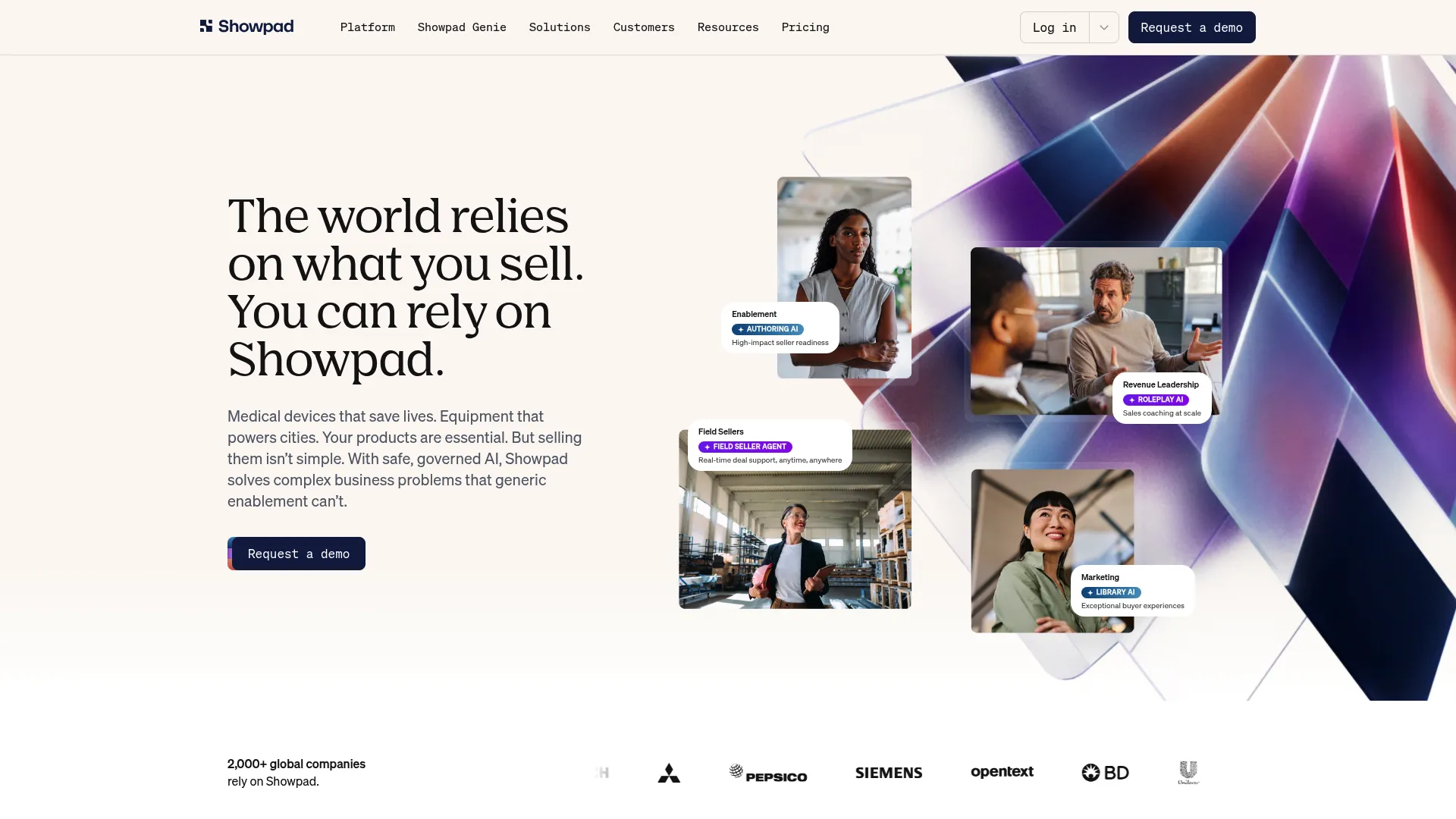
Showpad is an AI-native revenue effectiveness platform that combines sales enablement, content management, buyer engagement, and readiness in one place. It is built for enterprise revenue teams in complex, field-driven industries. The readiness layer covers training, AI role-play, and certifications, so reps rehearse the pitch and get scored before they carry it into a deal.
What sets Showpad apart for enablement managers is that readiness lives next to content and buyer engagement. A rep practices a talk track, then pulls the exact content experience for the deal stage, then shares a collaborative workspace with the buyer. That connection matters when you are trying to prove readiness activity moved a deal, not just closed a module.
Best for: enterprise field teams that need sales enablement, readiness, and buyer engagement in a single platform.
Key strengths
- Content management with experiences, collections, and shared spaces
- Readiness tools including training, AI role-play, and certifications
- Buyer engagement with 3D/AR demos and collaborative workspaces
- Analytics tying content and readiness to buyer activity
Why choose Showpad: if your reps sell in field-heavy, complex industries and you want readiness tied directly to buyer-facing content, Showpad keeps both motions under one roof.
Showpad pricing: Showpad is licensed per user with three plans, Professional, Advanced, and Expert, each listed as request a quote. No public numeric pricing is shown.
2. Highspot
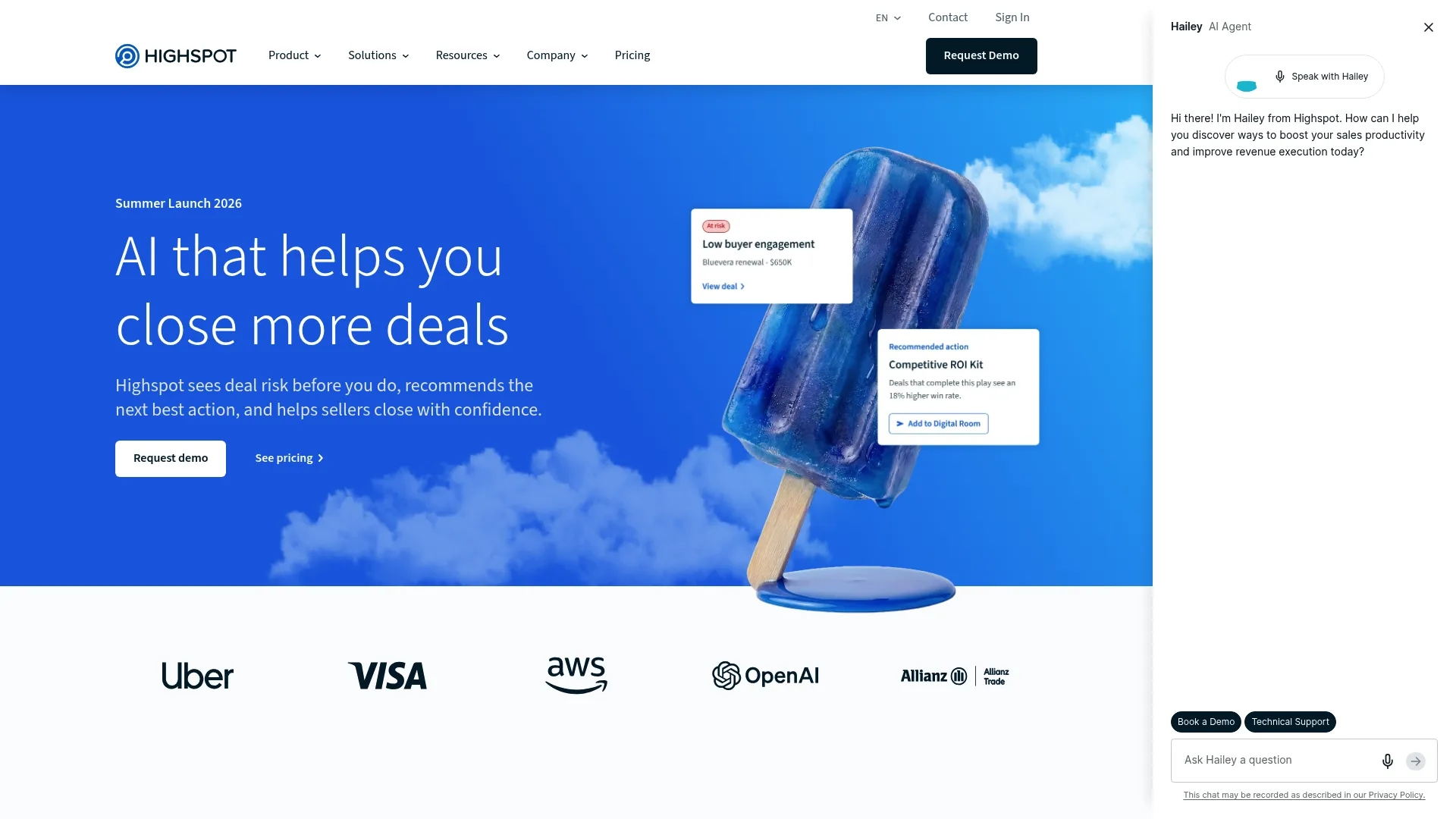
Highspot is an AI-powered go-to-market enablement platform spanning content, guidance, training, coaching, and analytics. It positions readiness as an operating system that runs across enablement, marketing, managers, and RevOps rather than a standalone training module. That framing fits teams who want readiness embedded in daily workflow, not bolted on.
For the enablement manager, the draw is connected data. Highspot ties content usage, sales plays, training, and coaching into one analytics view. You can see which reps completed a certification, which plays they actually ran, and how that maps to deal activity. Its tiered structure moves from equip and engage, to train and practice, to coach and reinforce, so you can scale readiness depth as the team matures.
Best for: enterprise GTM teams that want content, training, and coaching governed in one unified platform.
Key strengths
- AI-powered content organization and governance
- Sales plays, digital sales rooms, and buyer engagement
- Sales training, coaching, and role-play
- Connected analytics across content, readiness, and deals
Why choose Highspot: if you need readiness to live inside the same system your reps already use for content and plays, Highspot reduces the tool-switching that kills adoption.
Highspot pricing: Highspot uses custom, quote-based pricing across three tiers, Good, Better, and Best. The pricing page states pricing is tailored by capabilities, use cases, org size, and license count. Contact sales for a quote.
3. Seismic
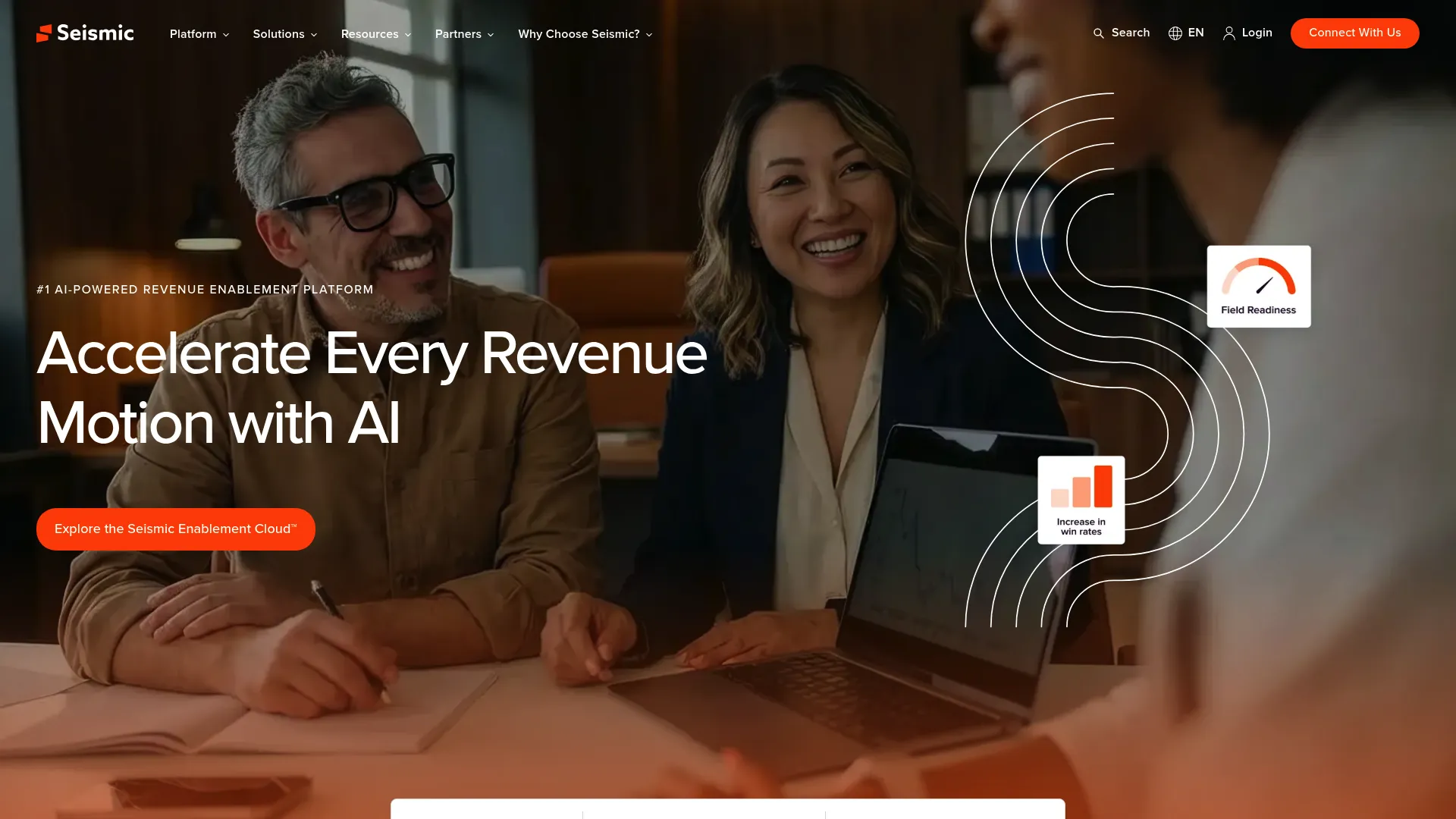
Seismic is a revenue enablement platform for sales, marketing, and customer-facing teams. Its strength is combining deep content management with learning and coaching, which suits teams where governance and content sprawl are the primary pain. If your enablement problem is scattered, outdated, duplicated content as much as it is readiness, Seismic addresses both sides.
The learning and coaching layer supports continuous practice, certification, and analytics inside the same platform that governs your content library. Digital sales rooms extend that into buyer-facing engagement. For enterprise teams with heavy versioning, approval, and permission requirements, Seismic leans into governance that a small enablement team can actually maintain.
Best for: enterprise go-to-market teams that need enablement, content, and coaching in one governed platform.
Key strengths
- Content management and library with governance
- Learning and coaching workflows
- Digital sales rooms for buyer engagement
- Analytics across content and learning activity
Why choose Seismic: if content governance and readiness are equal priorities, Seismic handles both without forcing you to stitch two systems together.
Seismic pricing: Seismic does not publish public pricing and uses a demo or contact-sales motion. Reach out for a custom quote.
4. Mindtickle
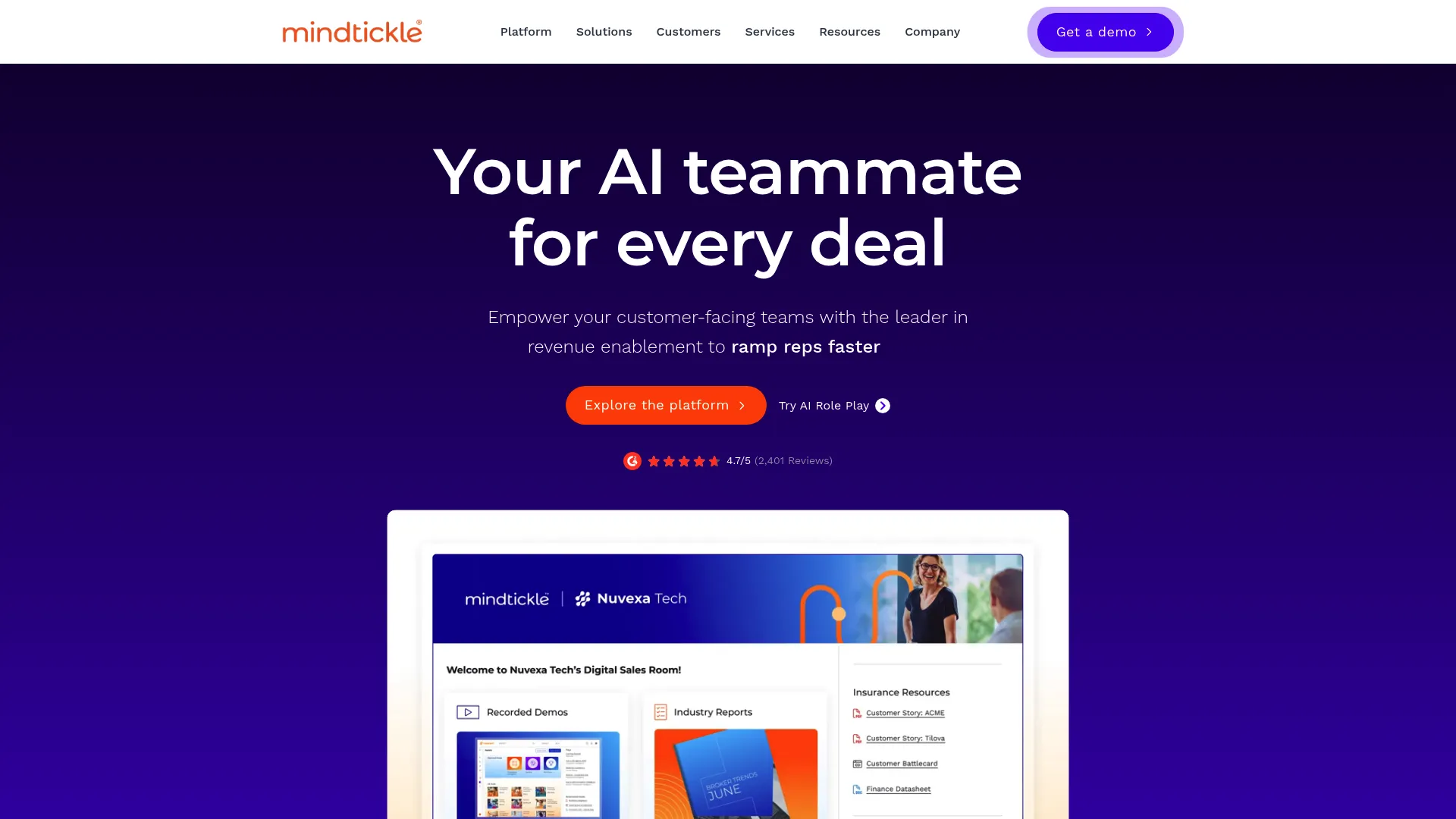
Mindtickle is an AI-powered revenue enablement platform built around training, coaching, content, conversation intelligence, and digital sales rooms. It is the tool teams reach for when readiness scoring is the point. Scorecards, reinforcement, and assessments sit at the center, which makes it a strong fit for coaching and certification programs that need a defensible readiness score.
For enablement managers, the value is that Mindtickle treats readiness as measurable. AI role-play and pitch practice let reps rehearse, then managers score against a rubric. Reinforcement keeps knowledge from decaying after onboarding. Because assessments and manager workflows connect, you can point leadership at a cohort and say who is ready, backed by data rather than gut feel.
Best for: enterprise revenue teams that want readiness scoring, practice, and certification as the core motion.
Key strengths
- AI role-play and pitch practice
- Sales training and coaching workflows
- Sales content management and digital sales rooms
- Scorecards and reinforcement for readiness measurement
Why choose Mindtickle: if you need to prove readiness with scorecards and reinforcement rather than completion rates, Mindtickle is purpose-built for that.
Mindtickle pricing: Mindtickle does not publish public pricing. The site directs visitors to request a demo for a customized quote.
5. Allego
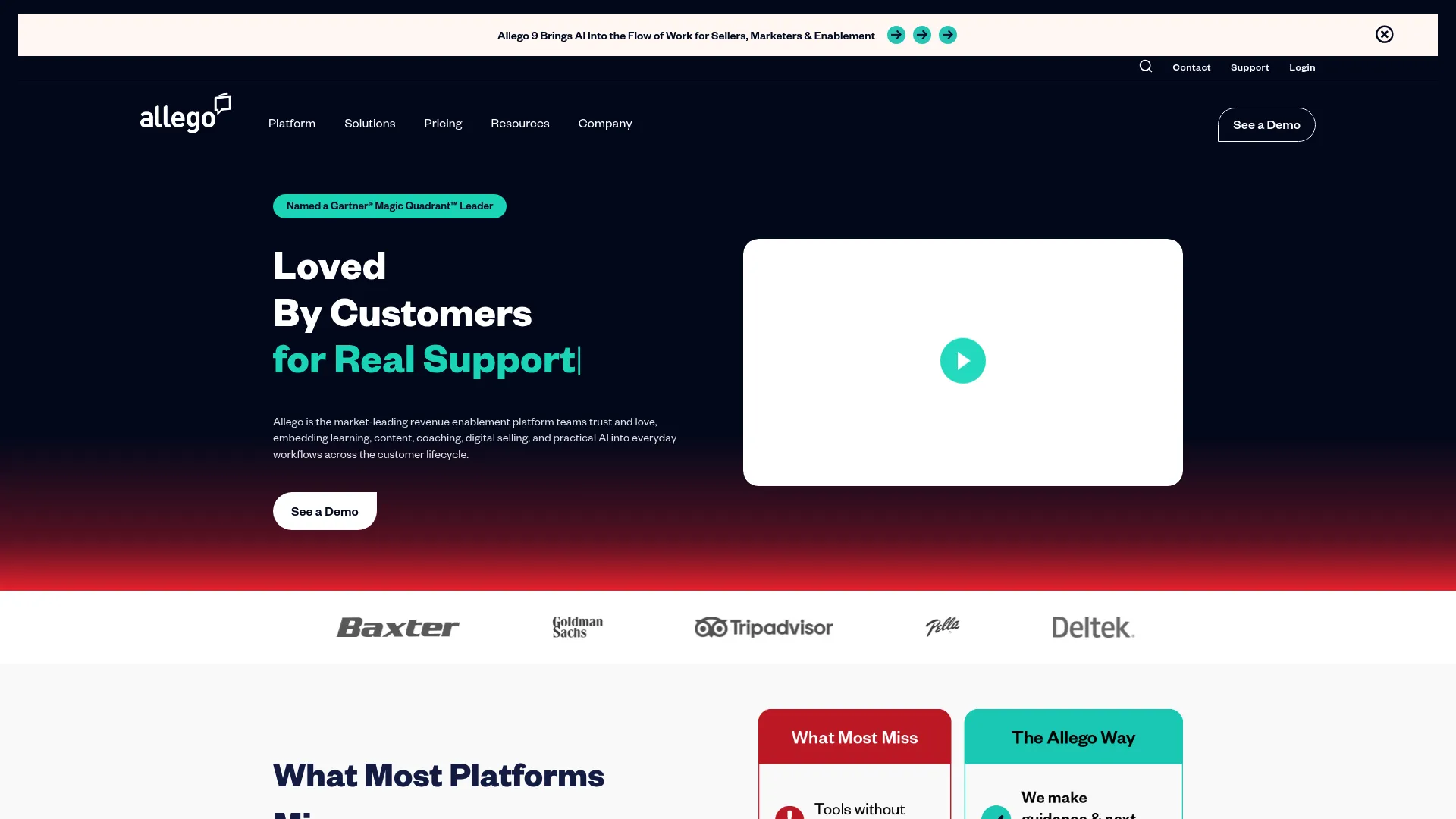
Allego is a revenue enablement platform covering learning, coaching, content, conversation intelligence, and digital sales rooms. Its center of gravity is video-based learning and coaching, which makes it a fit for distributed teams where reps and managers cannot sit in the same room. Coaching-driven organizations use it to capture, review, and score real and practiced conversations.
For the enablement manager running a remote or hybrid team, the appeal is that coaching does not depend on scheduling. Reps record practice pitches, managers leave timestamped feedback, and conversation intelligence surfaces patterns across real calls. AI role-play adds a practice loop for objection handling and certification. That combination keeps coaching consistent even when the team spans time zones.
Best for: mid-market and enterprise revenue teams that need coaching and learning to work across a distributed field.
Key strengths
- Modern learning with conversation intelligence
- AI role-play for practice, coaching, and certification
- Content management and digital sales rooms
- Video-based feedback for asynchronous coaching
Why choose Allego: if your team is distributed and coaching keeps slipping because calendars never align, Allego makes asynchronous coaching the default.
Allego pricing: Allego prices per user per month, billed annually upfront, and varies by seats and contract length. Plans include Modern Learning with Conversation Intelligence, AI Role Play, Content Management, and Digital Rooms with Deal Navigator, each listed as contact us.
6. SalesHood
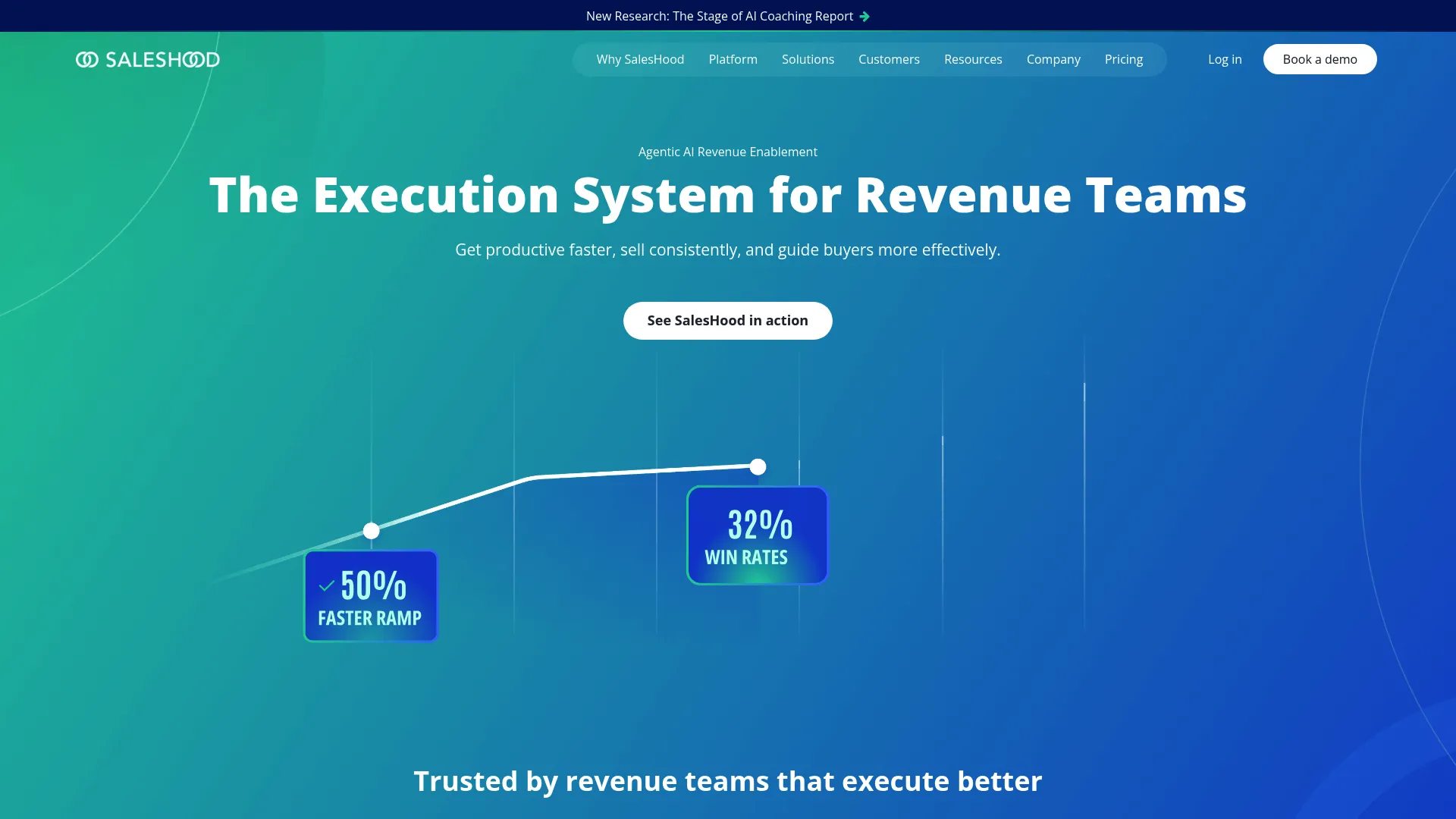
SalesHood is a sales enablement platform for training, coaching, content management, and buyer engagement. It leans into peer learning and collaboration, which makes it a fit for teams that want reps learning from each other rather than only from top-down modules. Onboarding, playbooks, and certification form the backbone of how teams use it.
For enablement managers, SalesHood works well when culture and collaboration are part of the readiness plan. AI pitch practice and role-play let reps rehearse, while shared playbooks and peer feedback build message consistency across the team. Digital sales rooms and mutual action plans extend readiness into live deals. The result is onboarding that feels collaborative rather than compliance-driven, which tends to lift adoption.
Best for: revenue teams that want peer learning, onboarding, and certification in an AI-enabled enablement suite.
Key strengths
- AI pitch practice and AI role-play
- Digital sales rooms and mutual action plans
- Content management and reporting insights
- Collaborative playbooks for peer learning
Why choose SalesHood: if adoption is your bottleneck and you want readiness that reps engage with because peers are involved, SalesHood is built around that dynamic.
SalesHood pricing: SalesHood shows plan names, Essential, Pro, and Unlimited, on its pricing page but no public numeric prices. It prompts visitors to talk to a pricing expert.
7. Qstream
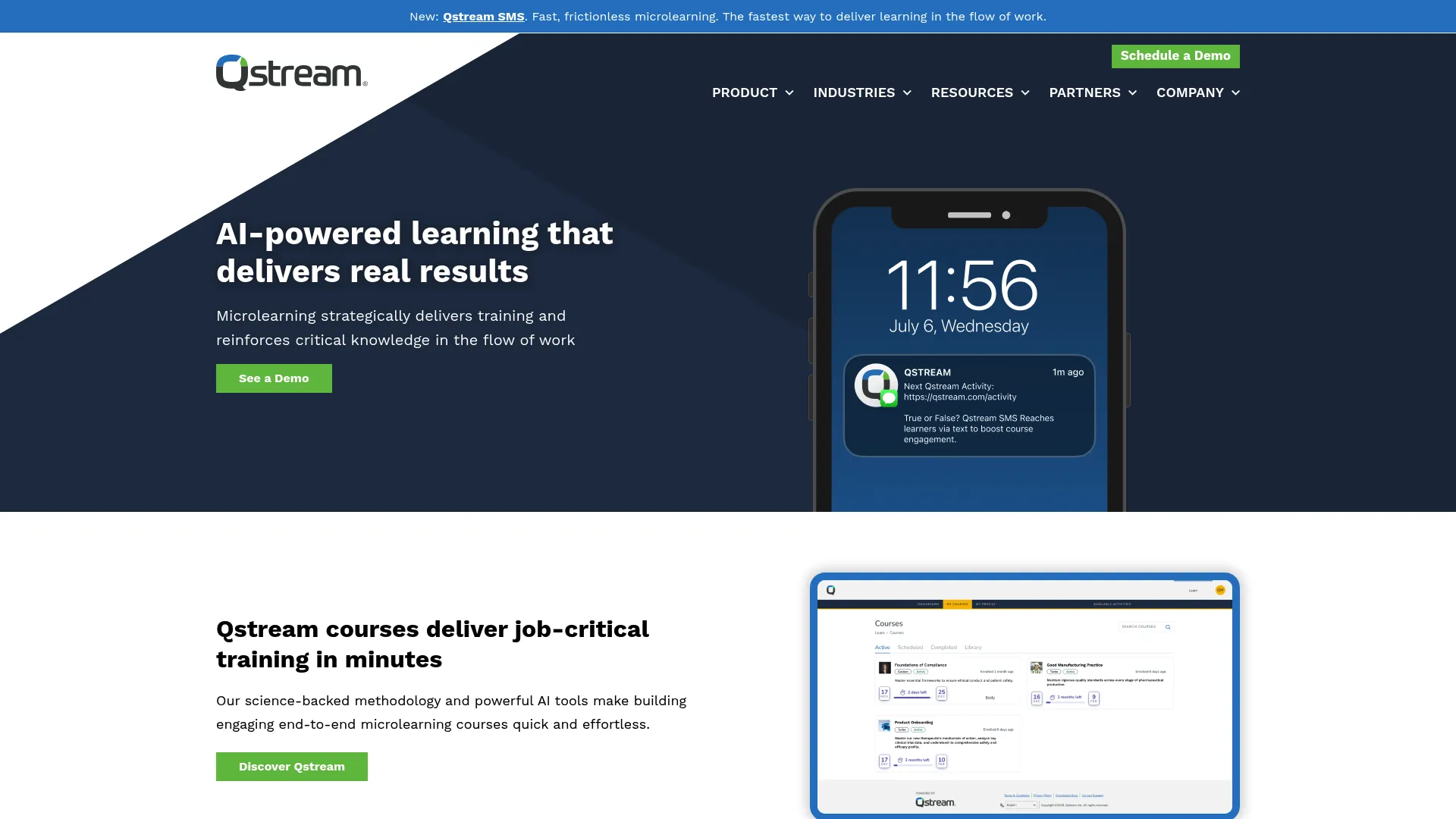
Qstream is an enterprise microlearning and knowledge reinforcement platform. Where most tools focus on the training event, Qstream focuses on what happens after it, the slow decay of knowledge that erodes readiness weeks later. Spaced learning and reinforcement are the core, which makes it a strong complement to any onboarding program.
For enablement managers, Qstream answers a specific problem: reps pass certification, then forget half of it by the next quarter. AI-powered microlearning delivers short, spaced challenges that reinforce product knowledge and messaging over time. Real-time analytics show which reps retained what, and coaching insights flag where reinforcement is failing. It is less a full enablement suite and more a reinforcement engine that keeps readiness from eroding.
Best for: large organizations that need science-backed microlearning and coaching analytics to sustain retention.
Key strengths
- AI-powered microlearning course creation
- Spaced learning for knowledge retention
- Real-time analytics and coaching insights
- Reinforcement that sustains readiness over time
Why choose Qstream: if your reps pass training and then forget it, Qstream is built specifically to fight that decay with spaced reinforcement.
Qstream pricing: Qstream offers a free trial. No public numeric pricing or tiers are listed, and pricing appears to be sales-led. Contact Qstream for a quote.
8. Kendo
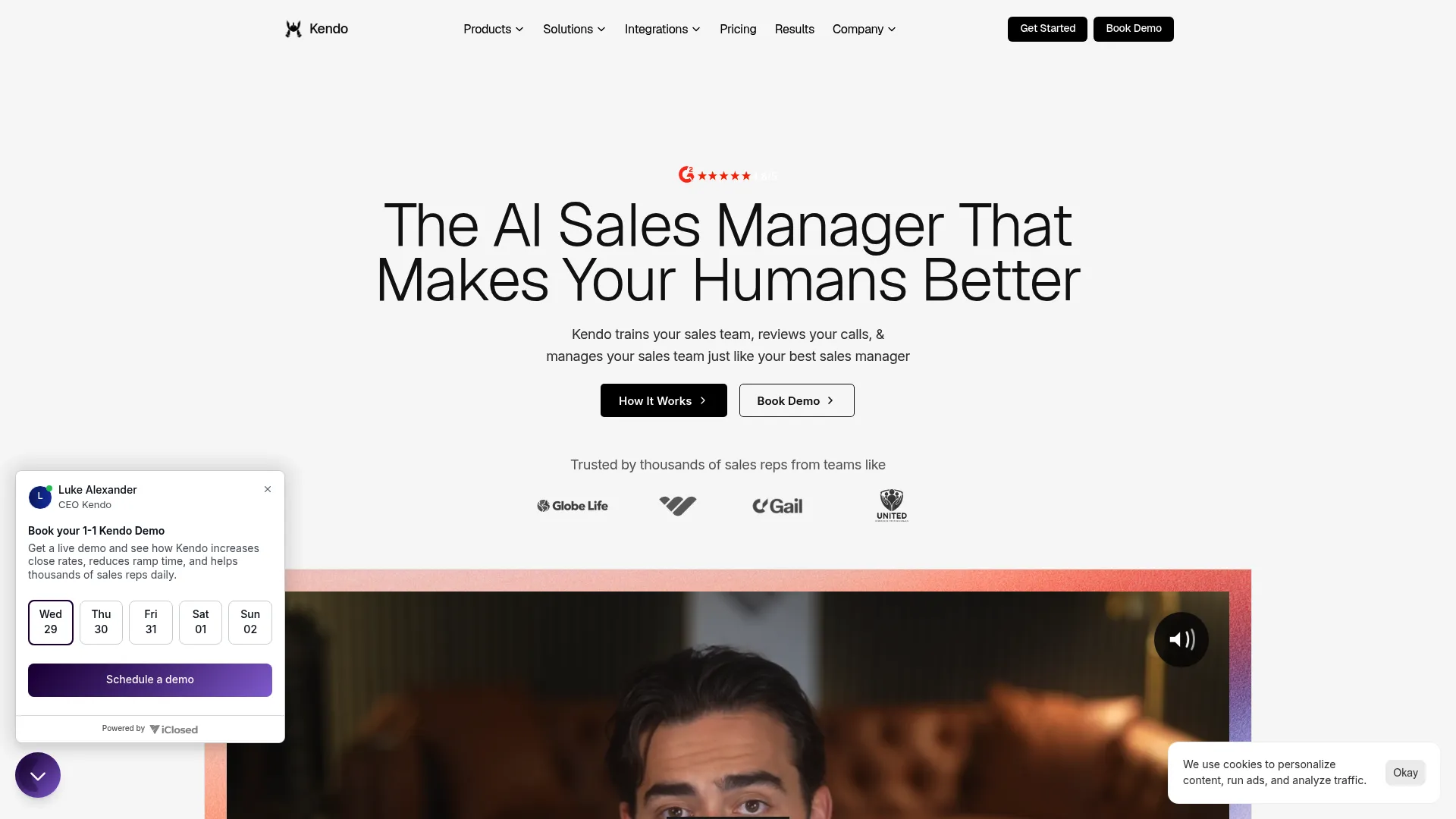
Kendo is an AI sales management and training suite built around role-play, call review, and coaching. It is the most practice-forward tool on this list, and one of the few with transparent, public pricing. If your priority is proving a rep can perform before they touch a live call, Kendo is designed for exactly that loop.
For enablement managers, Kendo turns practice into something measurable and repeatable. Reps run AI role-play against customizable prospects, then AI call review and call scoring grade the conversation. Manager tools and analytics roll that up so you can see who is improving and who needs coaching. Because pricing starts free and scales per seat, it is also the easiest tool here to pilot with a small team before you commit.
Best for: sales teams that want AI role-play and call coaching to train and score reps before live calls.
Key strengths
- AI role-play with customizable prospects
- AI call review and call scoring
- Coaching and manager tools with analytics
- Practice-to-live-call scoring for readiness proof
Why choose Kendo: if you want to prove readiness through scored practice and you want to start small with public pricing, Kendo is the most direct fit.
Kendo pricing: Kendo offers a Free plan at $0 per seat/month, a Pro plan at $55 per seat/month, a Max plan at $100 per seat/month, and a custom Enterprise plan.
Considerations before you buy
The list narrows fast once you apply your own reality. Here is the buyer's checklist to run each tool against.
Does it prove behavior change or only content completion?
The core question. A tool that reports 90% training completion tells you nothing about whether reps can perform. Look for scorecards, practice scoring, and certification that gates on demonstrated skill. If the analytics stop at "finished," keep looking.
Is coaching manager-friendly or admin-heavy?
Frontline managers are your coaching engine, and they will not use a tool that adds admin. Check whether managers can review calls, leave feedback, and score practice without an enablement admin standing over them. The best manager coaching workflows fit into the rhythm managers already have.
Do the integrations connect readiness to outcomes?
Analytics and integrations are where readiness proves its worth. Verify CRM integration with Salesforce or your system of record, plus connections to call recording and sales engagement tools. Without that, you can show training activity but never tie it to win rate, cycle length, or ramp.
Can a small team maintain it?
Governance, versioning, ownership, and expiration decide whether content stays current or rots. Constant product and messaging change means a platform that is painful to update will drift out of date within a quarter. Confirm a small team can keep plays and certifications fresh.
Does it map to your buying trigger?
If rapid headcount growth is the trigger, weight onboarding and ramp. If a launch broke message consistency, weight reinforcement and certification. Buy for the trigger in front of you, not the feature list.
Conclusion
The right sales readiness platform depends on which problem is loudest.
If you want enablement, readiness, and buyer engagement in one enterprise platform, look at Showpad and Highspot. If readiness scoring and certification are the whole point, Mindtickle is purpose-built for it. If content governance and readiness are equal priorities, Seismic handles both. For distributed teams that live on coaching, Allego makes asynchronous feedback the default. For peer learning and collaborative onboarding, SalesHood fits the culture. For reinforcement that fights knowledge decay, Qstream is the reinforcement engine. And for practice-heavy teams that want scored role-play with public, easy-to-pilot pricing, Kendo is the most direct choice.
Start with your buying trigger, shortlist two tools that map to it, and run a pilot against a single cohort. Measure ramp time and certification pass rates against your current baseline before you scale.
Whichever readiness tool you land on, remember that reps also need a low-friction way to show your product to buyers. That is where an interactive demo fits into the wider stack. Teams pair readiness with self-serve product experiences from platforms like Guideflow, building interactive demos reps can share as leave-behinds, organizing them in a Demo Center for enablement, letting technical buyers explore in a sandbox, and using engagement data to analyze buyer intent. You can personalize each demo by persona and integrate the signals into your CRM.
Start your journey with Guideflow today!
FAQs
Sales readiness software prepares sellers to perform in live buyer conversations through practice, coaching, certification, and readiness measurement. Unlike a content library, it focuses on proving a rep can execute a play or handle an objection, not just whether they consumed the material. The output is a readiness score you can defend to leadership.
Sales training software delivers courses and tracks completion. Sales readiness software goes further, measuring whether the training actually changed behavior through practice scoring, role-play, and certification. The distinction between sales readiness and sales training is proof: training says a rep learned something, readiness says a rep can do it under pressure.
Sales enablement is the broader system of content, plays, process, and measurement. Readiness is the slice focused on preparing and proving sellers can perform. Most platforms in this guide do both, which is why the categories overlap, but readiness-first tools weight practice, coaching, and scoring more heavily than content distribution.
Prioritize practice and role-play, coaching and certification workflows, a readiness score that reflects demonstrated skill, continuous reinforcement, and analytics and integrations that connect activity to pipeline. Above all, confirm the platform proves behavior change rather than reporting course completion. A sales readiness checklist should always start with that single test.
Baseline first, then compare. Track time-to-first-meeting, opp, and close, certification pass rates, and ramp time by cohort before rollout. After rollout, measure influenced outcomes like win rate, stage conversion, and sales cycle length. The cleanest ROI story ties a readiness activity, such as certification, to a downstream metric like faster ramp.
Most enterprise sales readiness platforms integrate with Salesforce, and many support Dynamics 365, HubSpot, and other systems of record. Integration is what lets you connect readiness activity to real deal data. Always verify the specific CRM, call recording, and sales engagement connections you need during evaluation, since depth varies by vendor and tier.
Teams facing a ramp bottleneck from fast hiring, message drift after launches, or inconsistent coaching across managers benefit most. Sales enablement managers, RevOps, and sales leadership are the primary owners. The strongest case appears when leadership wants proof that readiness activity moves win rates and cycle time, not just training completion.
For coaching and certification specifically, Mindtickle is often chosen because scorecards, reinforcement, and assessments sit at its core. Kendo is a strong fit for practice-first coaching through AI role-play and call scoring, with public pricing that makes piloting easy. Allego suits distributed teams that need video-based coaching to work asynchronously across time zones.








.avif)