Your pricing spreadsheet can show what changed. It rarely explains what should change next.
That gap becomes painful during a launch. Finance wants margin protection. Sales expects room to negotiate. Leadership asks how the new price will affect conversion.
Meanwhile, competitor moves and discount leakage keep changing the assumptions underneath your model.
Pricing optimization software gives teams a stronger basis for setting and testing prices. It combines price elasticity modeling with transaction data, competitor inputs, and margin guardrails.
The category is growing as companies move beyond manual analysis. Mordor Intelligence valued the global market at $1.68 billion in 2025. Its 2026 report forecasts $4.17 billion by 2031.
For product marketing managers, the value goes beyond finding a number. You need pricing recommendations that survive field pushback and give Sales proof points they can defend.
What’s inside
This guide compares 17 pricing optimization tools for teams working across B2B, retail, ecommerce, hospitality, and government contracting.
We selected platforms according to their relevance across five areas:
- Price elasticity modeling and scenario testing
- Competitor inputs and pricing intelligence
- Margin guardrails and approval controls
- CRM, ERP, CPQ, and ecommerce connections
- Operational fit for pricing, finance, Sales, and PMM teams
Each entry covers its ideal user, key capabilities, pricing, and current G2 rating where available.
TL;DR
- Best overall for enterprise pricing teams: Pricefx supports broad price management, optimization, governance, and execution
- Best for B2B sales guidance: Zilliant provides account-specific recommendations for manufacturers and distributors
- Best for complex commercial pricing: Vendavo connects margin analysis with quoting, rebates, and price execution
- Best for retail optimization: Competera combines elasticity modeling with competitive and demand inputs
- Best for ecommerce monitoring: Prisync tracks competitor prices and supports automated repricing
- Best for vacation rentals: PriceLabs and Wheelhouse apply revenue management to nightly rates
What is pricing optimization software?
Pricing optimization software helps companies set, test, and adjust prices using demand, costs, customer segments, transaction history, and margin targets.
It replaces disconnected spreadsheet analysis with a governed decision process. Teams can model scenarios, generate pricing recommendations, and route exceptions through approval workflows.
Different categories require different optimization methods. B2B pricing software often concentrates on account-specific pricing and discount guidance. Retail pricing optimization software models SKU-level demand, promotions, and competitor movement.
Ecommerce pricing software puts more weight on competitor price tracking and automated repricing. Hospitality platforms use occupancy, seasonality, local demand, and booking pace.
Product marketing usually sits between the model and the market. A PMM may use the output to defend packaging changes, update positioning, and prepare Sales for pricing objections.
Key capabilities to look for
- Price elasticity modeling
- Competitor price tracking
- Dynamic pricing rules
- Margin floors and guardrails
- Scenario simulation
- Discount optimization
- Approval workflows
- ERP, CRM, CPQ, and ecommerce integrations
- Pricing analytics dashboards
- Price list management
The right capability depends on the decision you need to improve. Competitor monitoring alone won’t replace margin optimization software. Likewise, a broad enterprise platform may be excessive for a retailer tracking a small catalog.
Pricing optimization versus price management
Price management software organizes, governs, and publishes prices. It handles price lists, agreements, rules, and approval processes.
Pricing optimization recommends what a price should be. It uses models or business rules to estimate how a change affects demand, revenue, and profitability.
Many enterprise platforms combine both jobs. They recommend a price, apply governance, and send the approved output into commercial systems.
When to use pricing optimization software
Set prices before a launch
Use price optimization software when launching a product, bundle, packaging model, or new market offer. It helps teams compare willingness to pay, competitor anchors, and margin impact before publishing a price.
PMMs can turn those findings into launch messaging and sales enablement. The goal is a price change Sales can explain, rather than a number handed down without context.
Protect margins during market shifts
Cost increases and competitor movement can erode margin before monthly reporting catches the change. Pricing automation software can enforce floors, flag risky discounts, and test proposed adjustments.
Finance gets clearer controls. RevOps gains an approval process, while PMM can prepare the market narrative before the change goes live.
Scale pricing across many SKUs or accounts
Manual pricing breaks when a company has thousands of products, regional rules, or customer-specific agreements. Pricing optimization tools centralize recommendations, approvals, and performance analysis.
Retailers can manage category-level decisions. Manufacturers can guide account pricing, while rental operators can adjust nightly rates using demand signals.
Pricing optimization software comparison
The table below separates broad pricing suites from specialized pricing intelligence software. Start with the pricing motion you need to improve, then compare data requirements and execution paths.
A high G2 rating doesn’t settle the choice. The platform must also connect recommendations to the systems where your team manages quotes, product catalogs, or nightly rates.
| # | Product | Best for | Key differentiator | Pricing | G2 rating |
|---|---|---|---|---|---|
| 1 | Pricefx | Enterprise pricing teams | Governed B2B pricing optimization and execution | Custom pricing | 4.4/5 |
| 2 | Zilliant | B2B sales price guidance | Account-specific recommendations and agreements | Custom pricing | 4.4/5 |
| 3 | Vendavo | Manufacturers and distributors | Pricing, margin, rebates, and quoting | Custom pricing | 4.3/5 |
| 4 | Conga Price Optimization and Management | Connected quote-to-price workflows | Pricing tied to CPQ and commercial processes | Custom annual pricing | 4.2/5 |
| 5 | Competera | Retail price optimization | Elasticity modeling with competitive inputs | Custom pricing | 4.9/5 |
| 6 | Quicklizard | Retail and ecommerce dynamic pricing | Governed SKU-level pricing automation | Custom pricing | 4.6/5 |
| 7 | PROS | Airline pricing and retailing | Dynamic pricing and offer management | Custom pricing | No rating yet |
| 8 | Revionics | Retail and grocery pricing | Base, promotion, and markdown optimization | Custom pricing | 4.5/5 |
| 9 | RELEX Solutions | Retail planning and pricing | Pricing connected with planning workflows | Custom pricing | Not available |
| 10 | Pricemoov | Omnichannel pricing teams | Centralized B2B and B2C pricing decisions | Custom pricing | Not available |
| 11 | Prisync | Ecommerce competitor monitoring | Price tracking with automated repricing | From $99 per month | 4.7/5 |
| 12 | Price2Spy | Price monitoring teams | Competitive tracking, matching, and alerts | Custom pricing | Not available |
| 13 | PriceLabs | Vacation rental revenue management | Demand-based nightly pricing | From $14.49 per listing monthly | Not available |
| 14 | Wheelhouse | Vacation rental hosts and managers | Flexible rental revenue management | Free, paid from 1% of revenue | 4.9/5 |
| 15 | Omnia Retail | Retail pricing automation | AI-assisted monitoring and dynamic pricing | From €399 per month | 4.4/5 |
| 16 | BlackCurve | Ecommerce pricing teams | Pricing rules with competitor intelligence | From £140 per month annually | Not available |
| 17 | Deltek ProPricer | Government contractors | Governed proposal pricing and cost modeling | Custom pricing | 4.6/5 |
Best 17 tools for pricing optimization software
These tools cover broad enterprise pricing, retail optimization, ecommerce repricing, rental revenue management, and proposal cost modeling.
The order reflects relevance to setting and testing prices using elasticity, competitive signals, and margin controls.
1. Pricefx

Pricefx is an enterprise pricing intelligence platform for complex B2B organizations. It manages pricing across customers, products, channels, regions, and individual deals.
The platform combines price management with optimization, quoting, agreements, and rebates. Pricing agents also monitor risks and commercial opportunities.
Best for: Large B2B organizations that need governed pricing strategy and execution.
Key features
- AI price and deal optimization
- Pricing risk and opportunity monitoring
- Price management and quoting
- Agreement and rebate support
- ERP and CRM integrations
Why choose Pricefx: Pricefx fits teams that need more than isolated price recommendations. Its wider scope supports pricing governance and commercial execution across complicated operating structures.
Pricefx pricing: Custom pricing. Annual order forms consider revenue, geographic scope, and business unit usage.
G2 rating: 4.4/5.
2. Zilliant
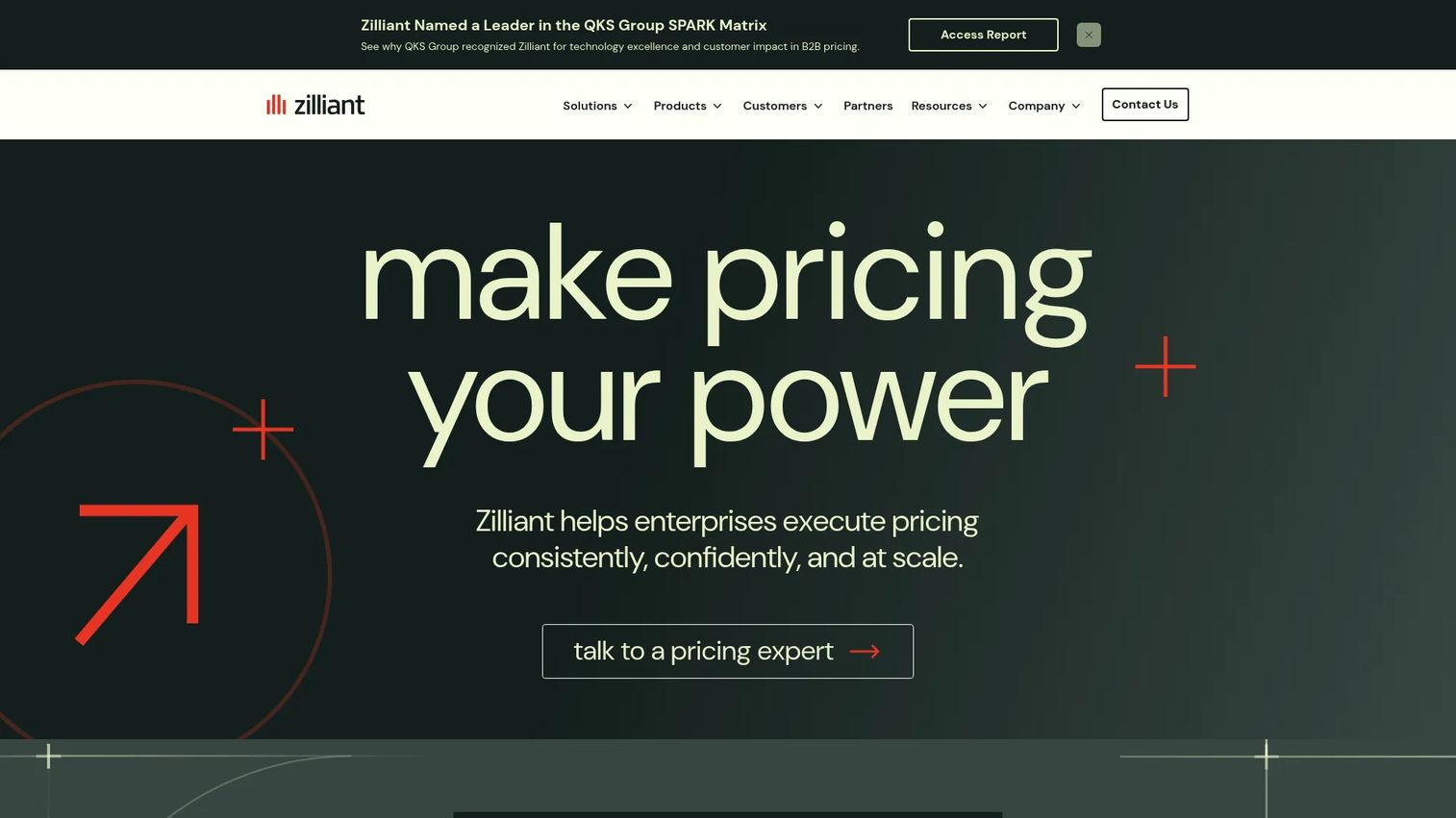
Zilliant provides B2B pricing software for manufacturers and distributors. It focuses on price guidance, account agreements, sales actions, and CPQ workflows.
Teams can model pricing scenarios before pushing guidance to the field. That matters when Sales needs specific reasoning behind a recommended price or discount.
Best for: Enterprise B2B teams managing account-specific prices and sales agreements.
Key features
- Product and customer price management
- Pricing scenario modeling
- Customer agreement management
- Prioritized sales actions
- CPQ pricing controls
Why choose Zilliant: Shortlist Zilliant when sales adoption matters as much as model quality. Its account-level guidance can make pricing recommendations easier to use during active deals.
Zilliant pricing: Custom pricing.
G2 rating: 4.4/5.
3. Vendavo
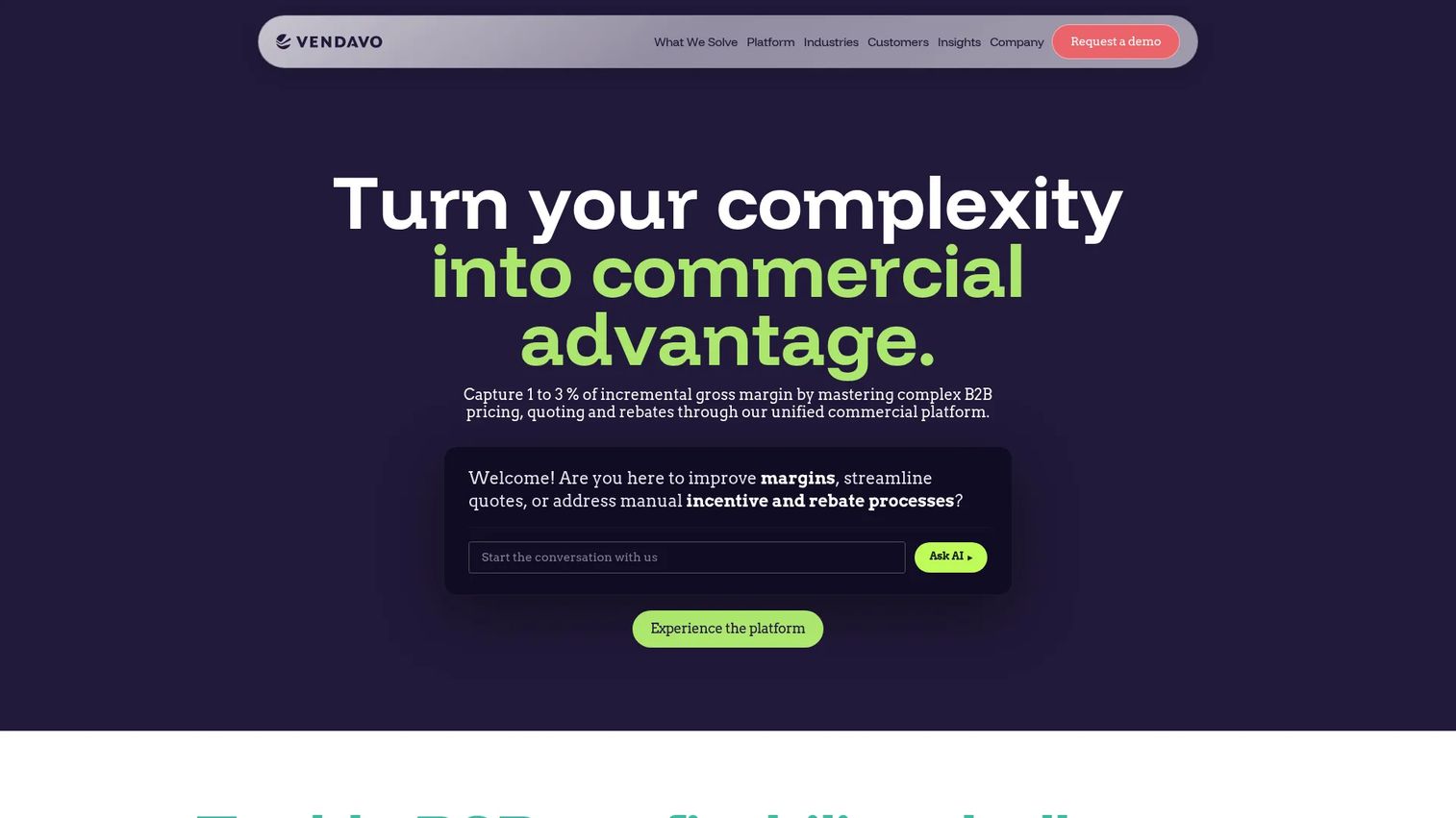
Vendavo provides an AI-powered commercial platform for B2B pricing, quoting, rebates, and margin analysis. It serves manufacturers, distributors, and services companies with complicated pricing structures.
Its pricing recommendations sit alongside agreement management and commercial analytics. That combination helps teams connect pricing policy with seller behavior.
Best for: Commercial teams managing complex portfolios, rebates, and discount structures.
Key features
- AI-generated price recommendations
- Quoting and agreement management
- Rebate and incentive management
- Margin bridge analysis
- Conversational pricing insights
Why choose Vendavo: Vendavo suits organizations moving away from spreadsheet-heavy commercial pricing. It gives Finance and Sales a shared view of margin performance.
Vendavo pricing: Custom pricing.
G2 rating: 4.3/5.
4. Conga Price Optimization and Management
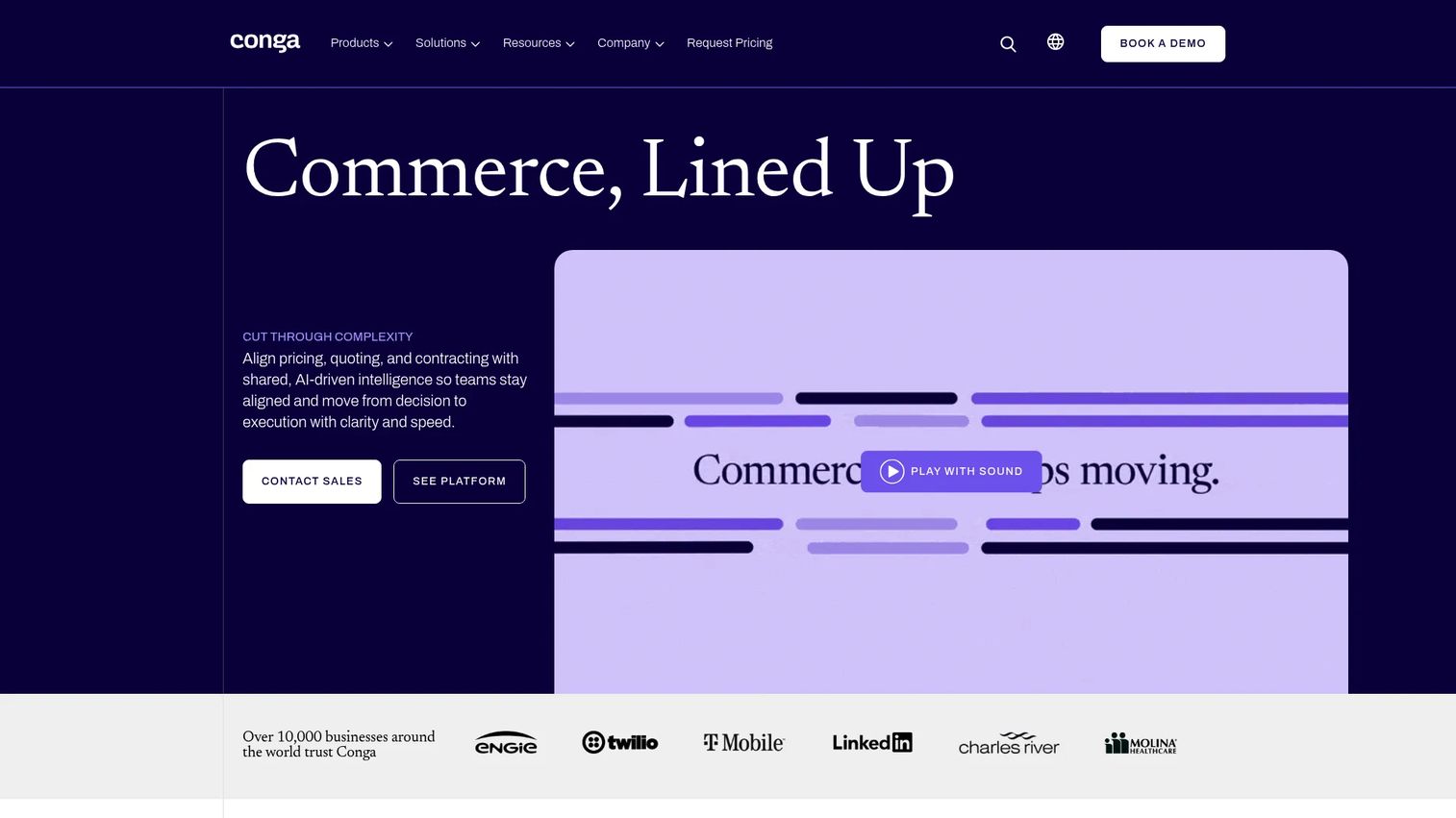
Conga Price Optimization and Management connects pricing strategy with commercial workflows. It manages price lists across products, regions, customer segments, and sales channels.
The platform provides AI-driven recommendations, scenario modeling, and transactional price delivery. Its CPQ connections make it relevant when optimized prices must reach quoting workflows.
Best for: Enterprises connecting pricing governance with CPQ and revenue operations.
Key features
- Omnichannel price list management
- AI-driven price recommendations
- Multi-tier approval workflows
- Scenario modeling
- ERP and CPQ integrations
Why choose Conga: Conga belongs on the shortlist when pricing execution is tied closely to quoting. It helps teams connect approved strategy with commercial processes.
Conga pricing: Custom annual pricing based on Revenue Under Management.
G2 rating: 4.2/5.
5. Competera
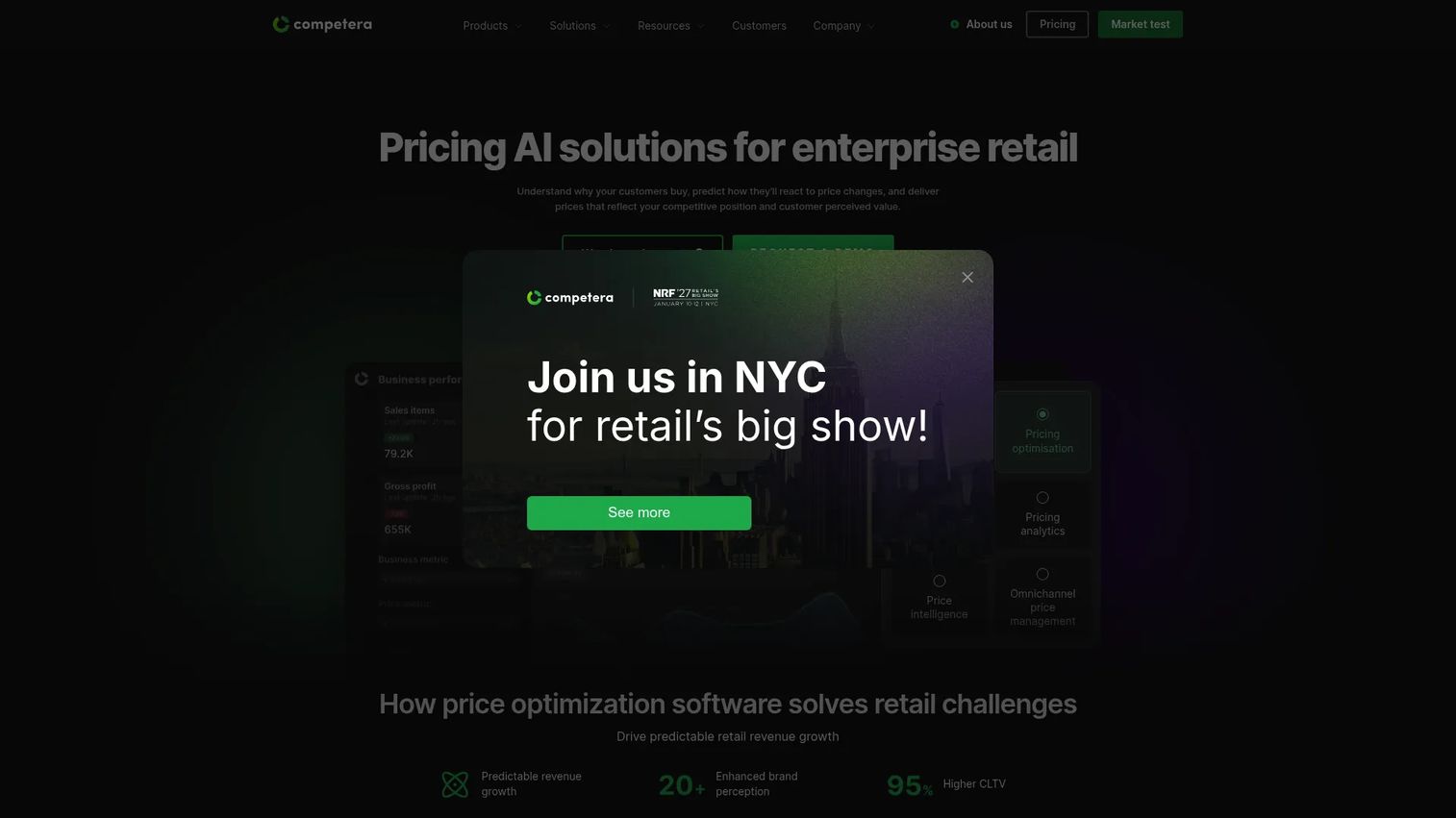
Competera is retail pricing optimization software built around demand and competitive inputs. It supports elasticity modeling, what-if analysis, and automated pricing decisions.
Retail pricing teams can combine market signals with margin goals. Merchandising leaders can also evaluate promotional or markdown decisions before execution.
Best for: Enterprise retailers needing demand-led and competitive price optimization.
Key features
- Price elasticity modeling
- Competitive price monitoring
- What-if simulations
- Promotion and markdown optimization
- Omnichannel price management
Why choose Competera: Choose Competera when competitor data is one input within a broader retail model. Its simulations help PMMs and category teams defend the logic behind changes.
Competera pricing: Custom pricing across Competitive Data, Adaptive AI, and Contextual AI editions.
G2 rating: 4.9/5.
6. Quicklizard
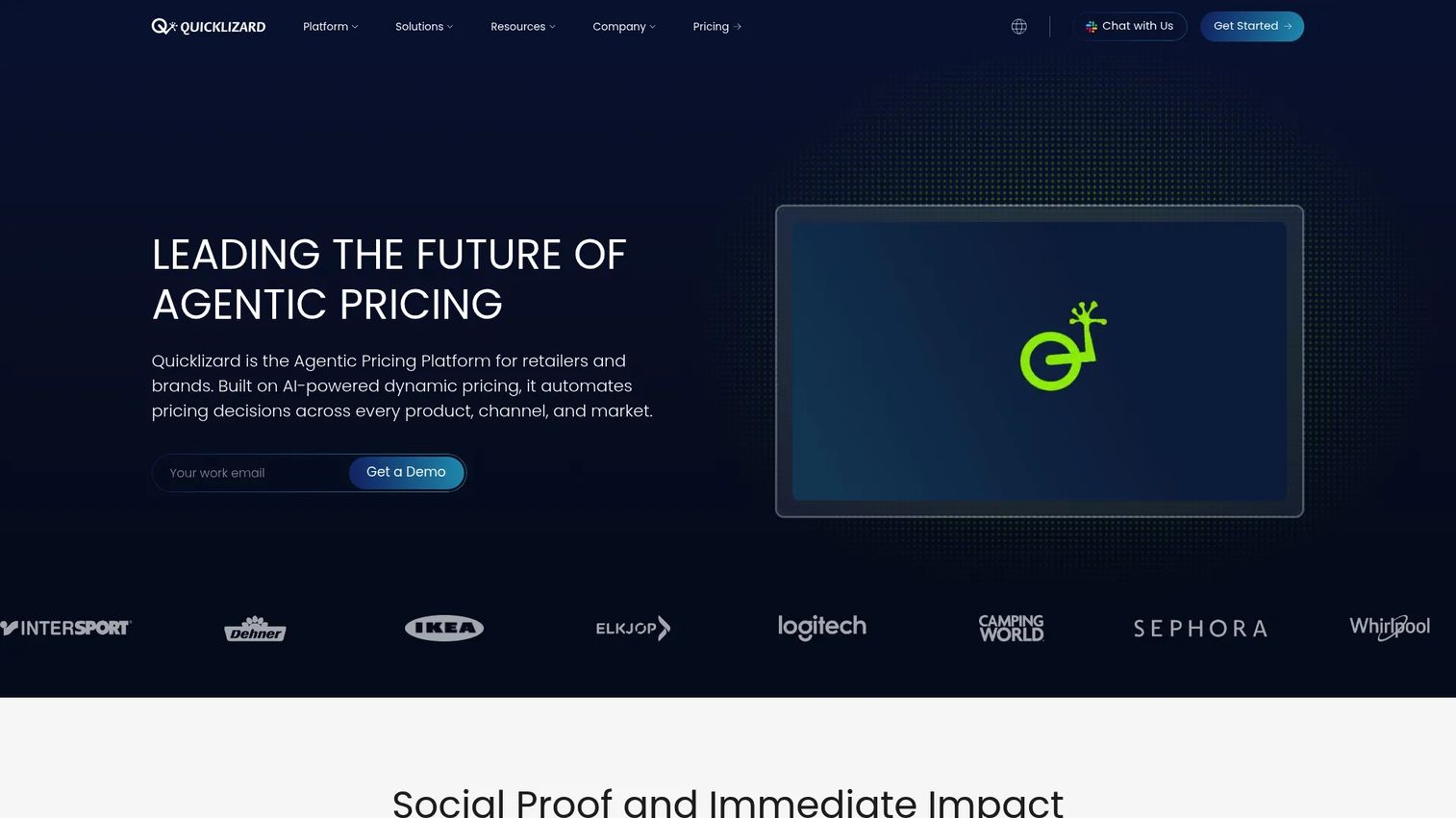
Quicklizard provides dynamic pricing software for retailers and direct-to-consumer brands. It combines demand forecasting, competitive intelligence, and configurable business rules.
SKU-level elasticity supports frequent price changes across ecommerce, marketplaces, and physical stores. Teams can also add approvals or manual overrides.
Best for: Retailers managing frequent pricing changes across large catalogs.
Key features
- AI-driven dynamic pricing
- SKU-level price elasticity
- Competitive pricing intelligence
- Omnichannel price execution
- Rules, guardrails, and approvals
Why choose Quicklizard: Quicklizard fits businesses that want pricing automation without removing commercial control. Guardrails give teams a way to constrain automated recommendations.
Quicklizard pricing: Custom pricing across Standard, Enterprise, and Revenue Under Management plans.
G2 rating: 4.6/5.
7. PROS
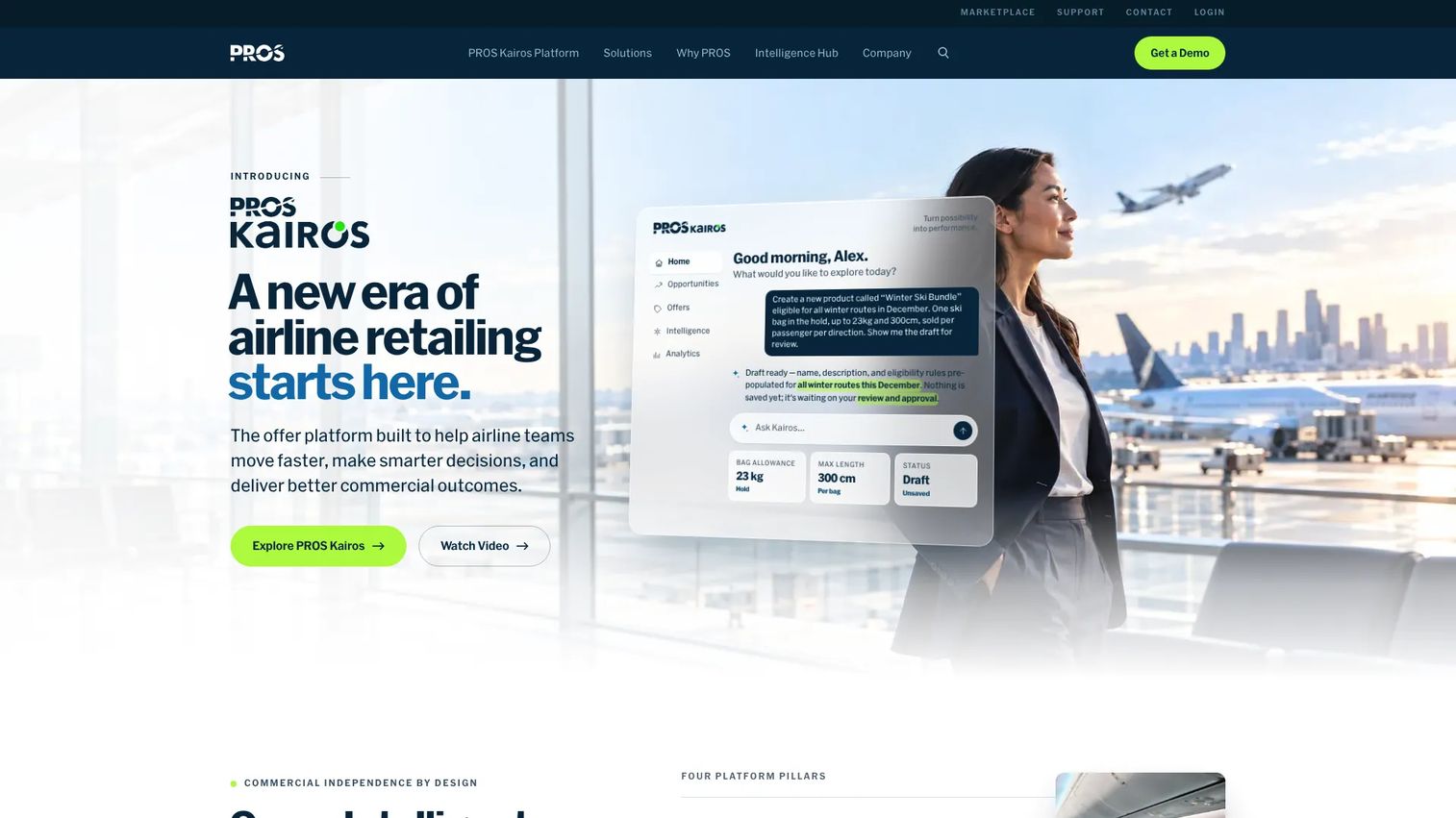
PROS provides AI pricing and offer-management software for airlines. Its platform covers revenue management, shopping, merchandising, and distribution.
The pricing layer supports dynamic and continuous pricing. It is specialized for airline retailing rather than broad retail or general B2B price management.
Best for: Airlines modernizing pricing, offer creation, and revenue management.
Key features
- Dynamic and continuous pricing
- Airline offer creation
- Revenue management tools
- Product catalog management
- Shopping and distribution support
Why choose PROS: PROS fits airline teams that need pricing connected with offer creation and distribution. General ecommerce teams should consider a platform aligned with retail catalogs.
PROS pricing: Custom pricing.
8. Revionics
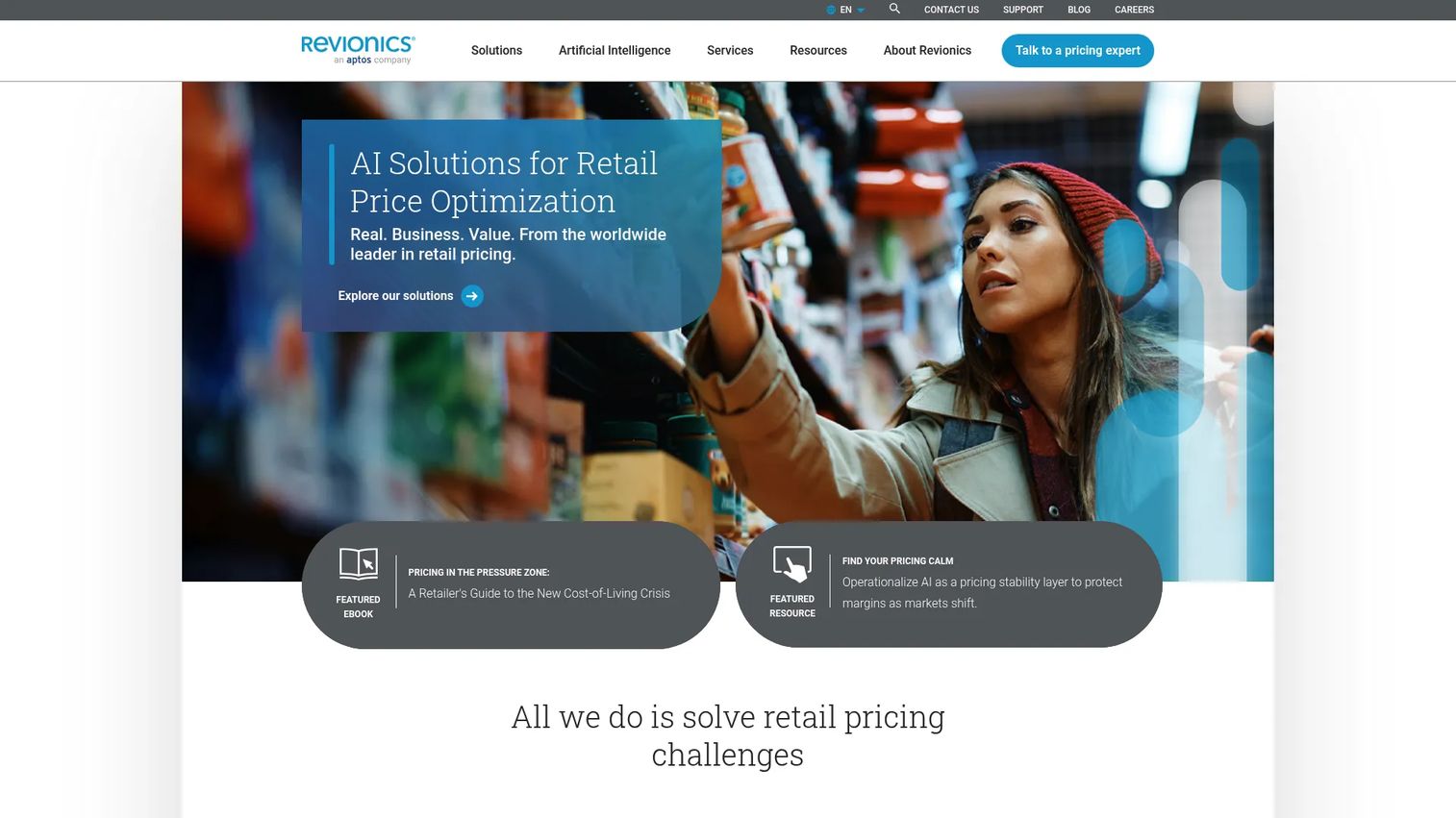
Revionics provides AI-powered retail pricing optimization for enterprise retailers. It covers base prices, promotions, and markdowns.
The platform supports pricing recommendations alongside strategic pricing services. This makes it relevant for retailers building a formal category pricing program.
Best for: Enterprise retailers optimizing base, promotional, and markdown prices.
Key features
- Base price optimization
- Promotion optimization
- Markdown optimization
- AI pricing recommendations
- Strategic pricing services
Why choose Revionics: Revionics suits retailers that treat pricing as a category-level discipline. Its coverage spans recurring shelf prices and time-bound promotional decisions.
Revionics pricing: Custom pricing.
G2 rating: 4.5/5.
9. RELEX Solutions
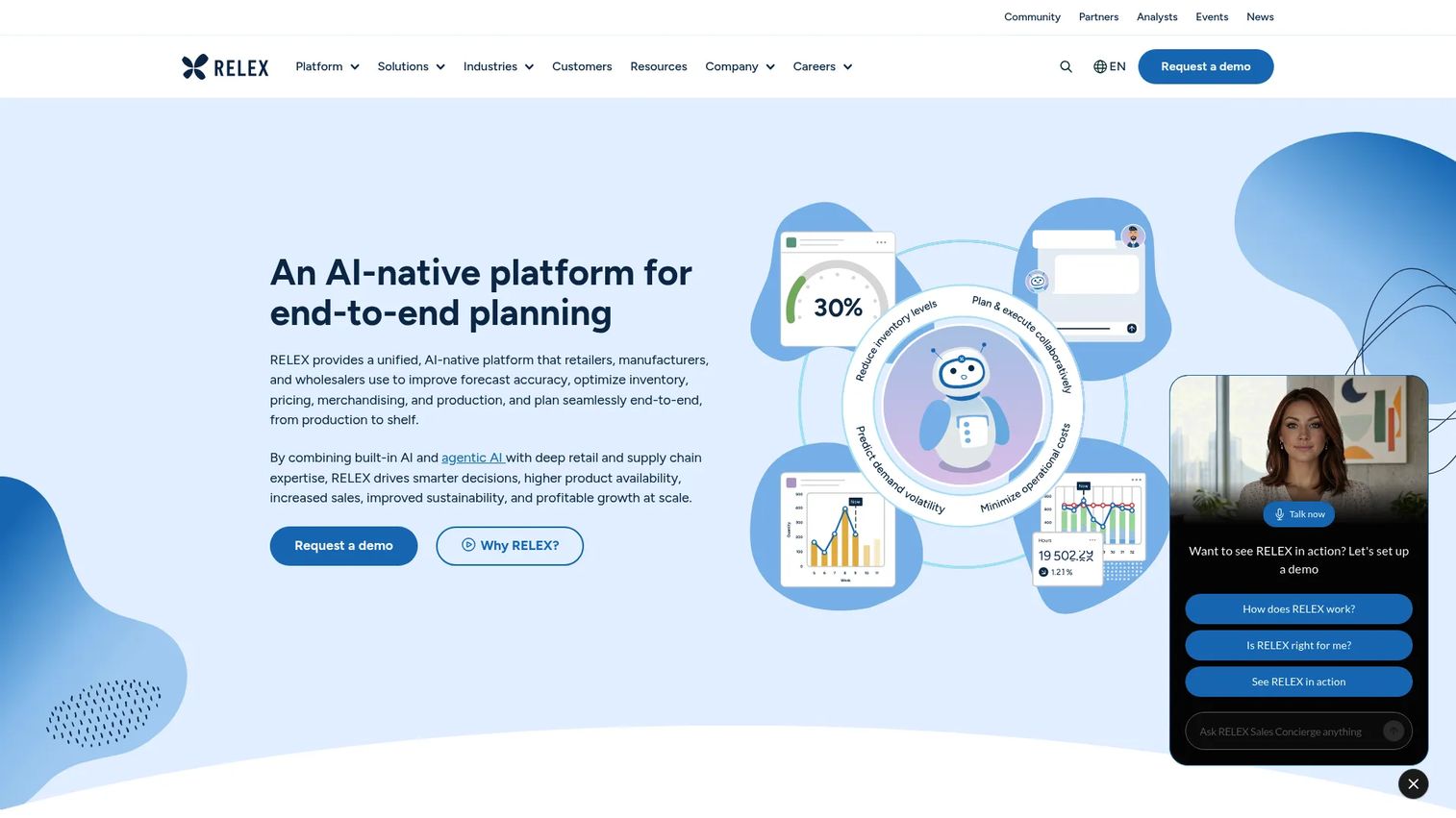
RELEX Solutions is an AI-native planning platform for retailers, manufacturers, and wholesalers. Its scope includes demand planning, merchandising, inventory, and pricing.
The appeal is connected retail decision-making. Pricing can sit alongside promotion planning and supply chain workflows rather than operating in isolation.
Best for: Retailers connecting pricing decisions with planning and inventory operations.
Key features
- Demand planning and sensing
- Pricing and promotion planning
- Inventory and replenishment planning
- Assortment optimization
- Store execution planning
Why choose RELEX Solutions: RELEX fits teams seeking a broader retail planning environment. Buyers focused only on price optimization may prefer a narrower platform.
RELEX Solutions pricing: Custom pricing.
10. Pricemoov
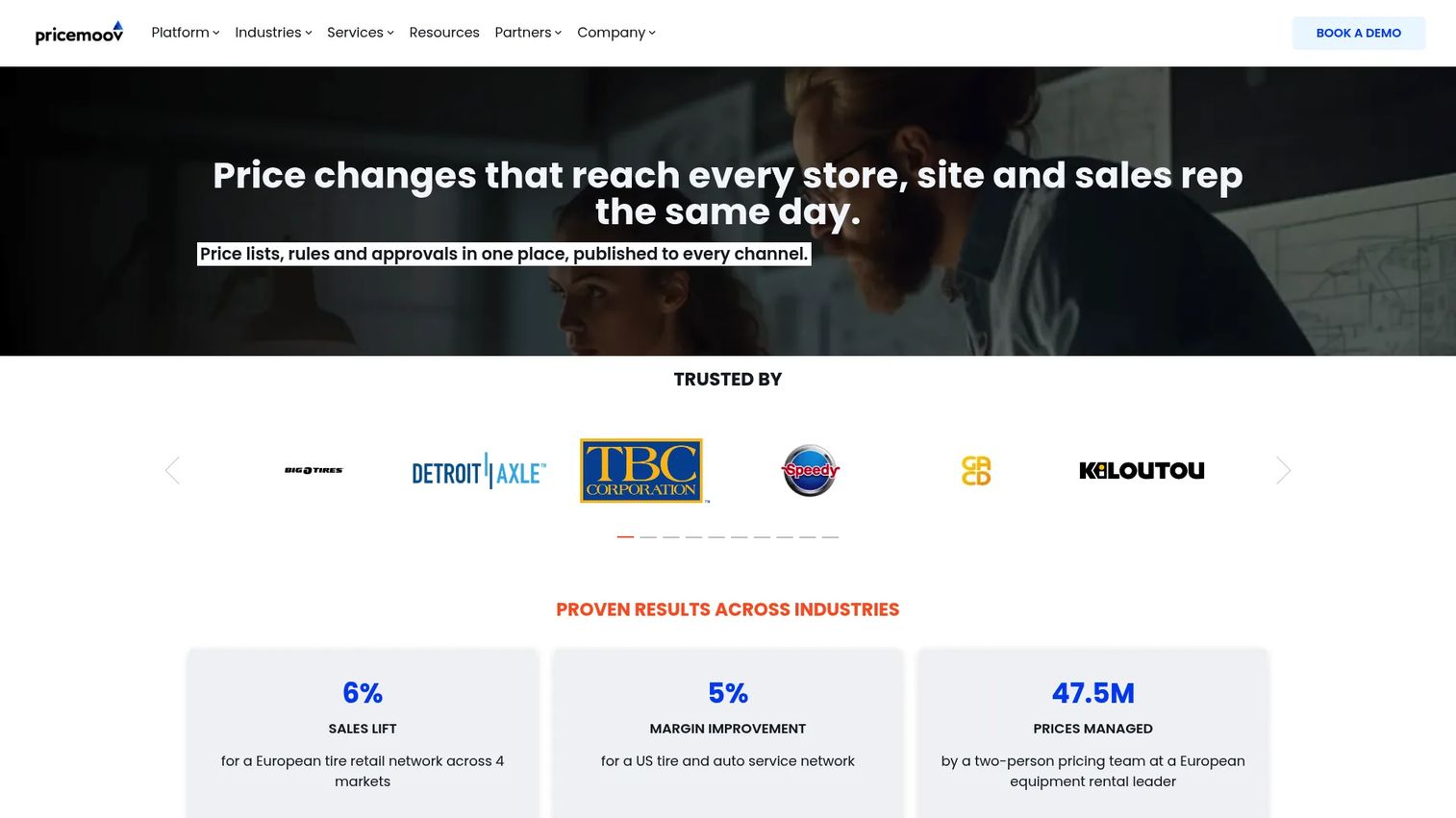
Pricemoov centralizes B2B and B2C pricing across products, channels, and customer segments. It combines price management with recommendations and impact simulation.
The platform also supports agreements, approval workflows, and sales guidance. Those capabilities suit companies replacing fragmented spreadsheets with a governed pricing process.
Best for: Omnichannel companies centralizing pricing decisions and execution.
Key features
- Price list and rule management
- AI-powered recommendations
- Pricing impact simulation
- Centralized agreement management
- Deal approval workflows
Why choose Pricemoov: Pricemoov fits teams that need structure across regions or product lines. Its simulation tools support internal discussions before prices reach customers.
Pricemoov pricing: Custom pricing.
11. Prisync
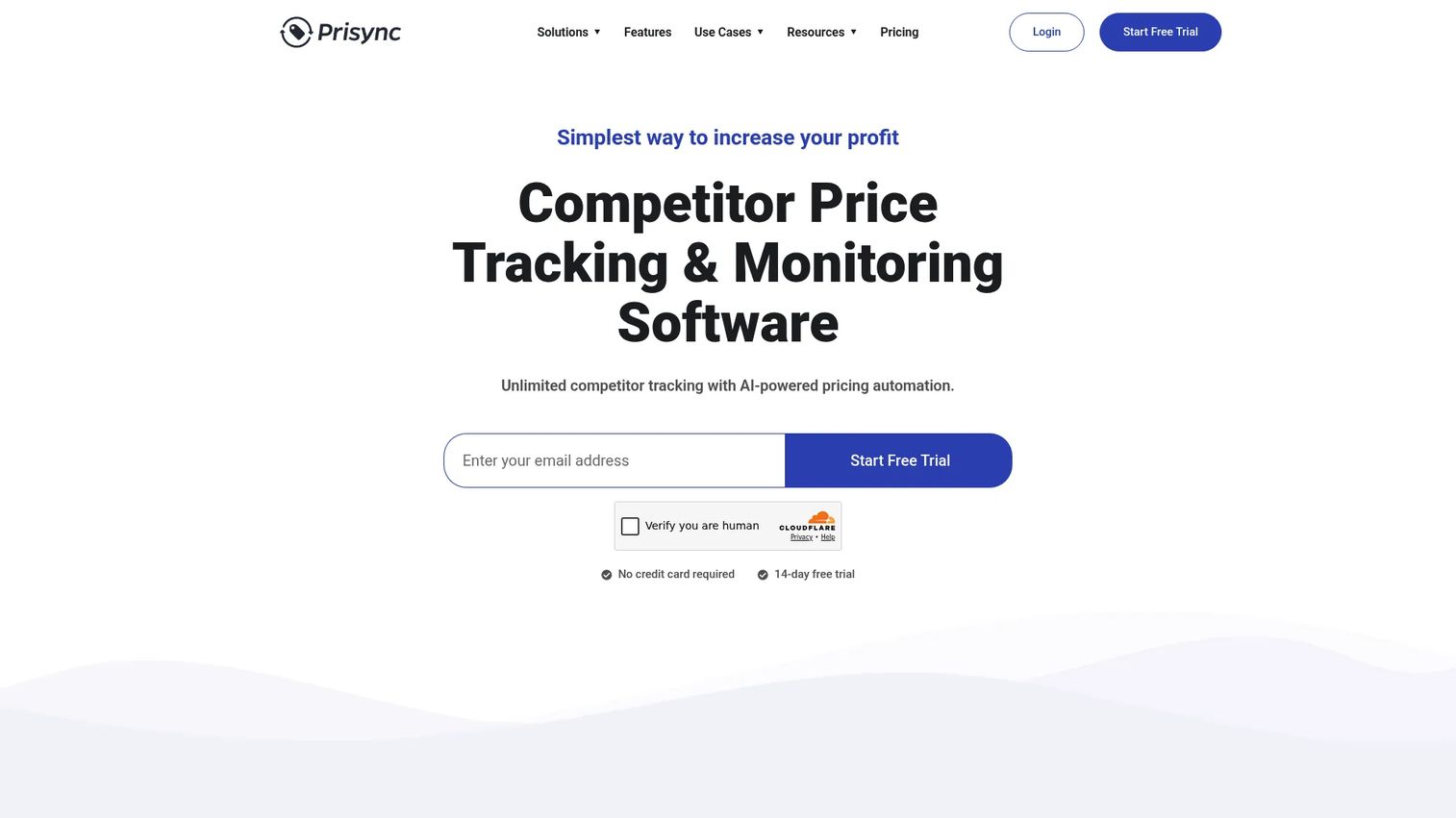
Prisync provides ecommerce competitor price tracking and automated repricing. It monitors competitor prices and stock availability for retailers, brands, and manufacturers.
This is a focused ecommerce pricing software option. It emphasizes market visibility rather than enterprise agreement management or complex B2B optimization.
Best for: Ecommerce teams tracking competitors and automating product repricing.
Key features
- Competitor price tracking
- Stock availability monitoring
- Dynamic repricing
- Price change notifications
- Marketplace monitoring
Why choose Prisync: Prisync works when competitor visibility is the immediate problem. PMMs can use its data to assess price positioning before updating campaign claims.
Prisync pricing: Professional costs $99 monthly. A 14-day free trial is available.
G2 rating: 4.7/5.
12. Price2Spy
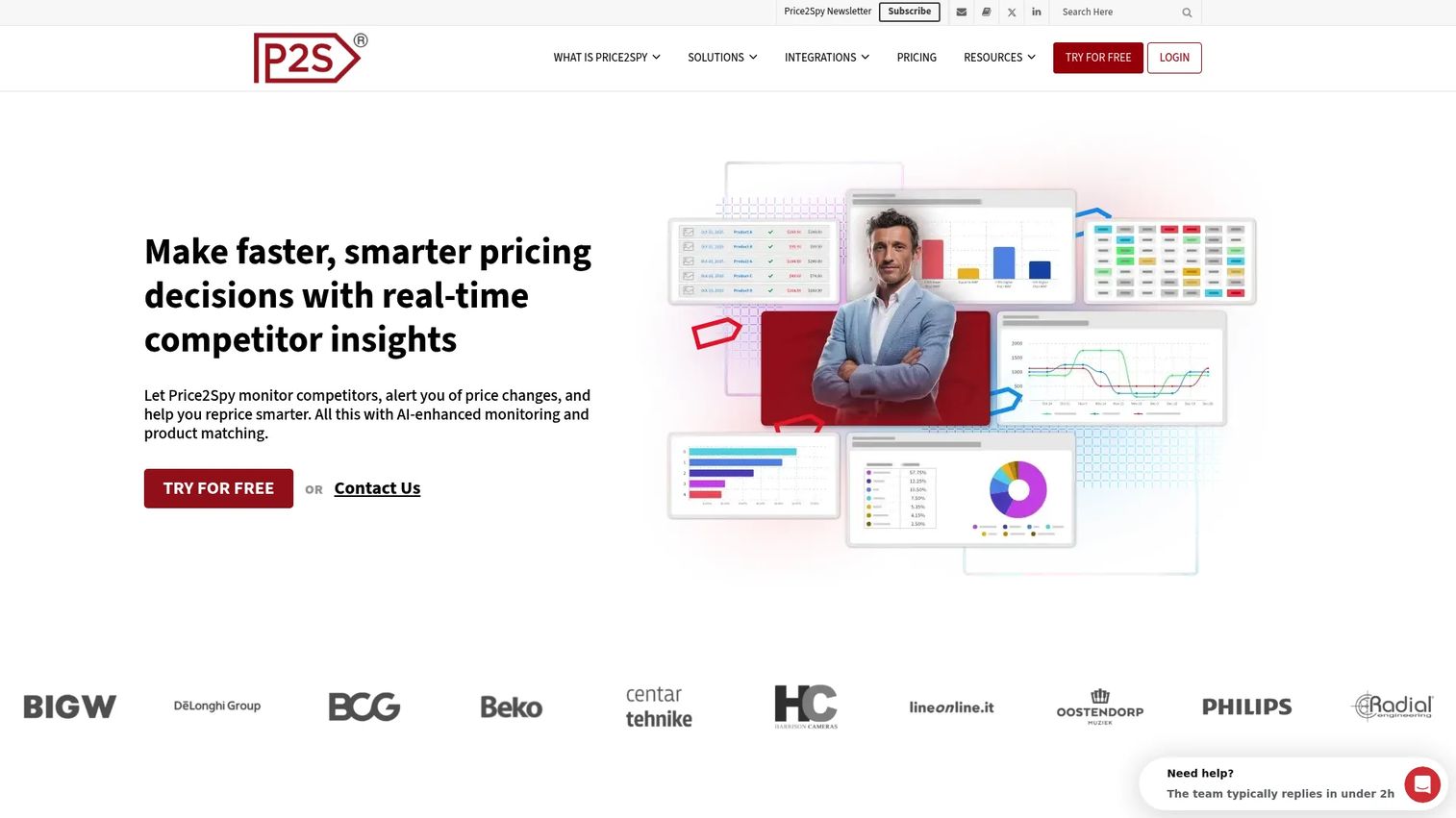
Price2Spy monitors competitor prices across ecommerce sites and marketplaces. It also supports product matching, alerts, reporting, and rule-based repricing.
Its strength is pricing intelligence. Teams can use it alongside a broader optimization system when competitor monitoring is only one part of the model.
Best for: Ecommerce brands needing detailed competitor monitoring and alerts.
Key features
- Competitor price monitoring
- Product matching
- MAP monitoring
- Rule-based repricing
- API access
Why choose Price2Spy: Price2Spy suits teams that need market data before advanced optimization. It helps replace manual checks without forcing a broad enterprise implementation.
Price2Spy pricing: Custom pricing. A 14-day free trial is available.
13. PriceLabs
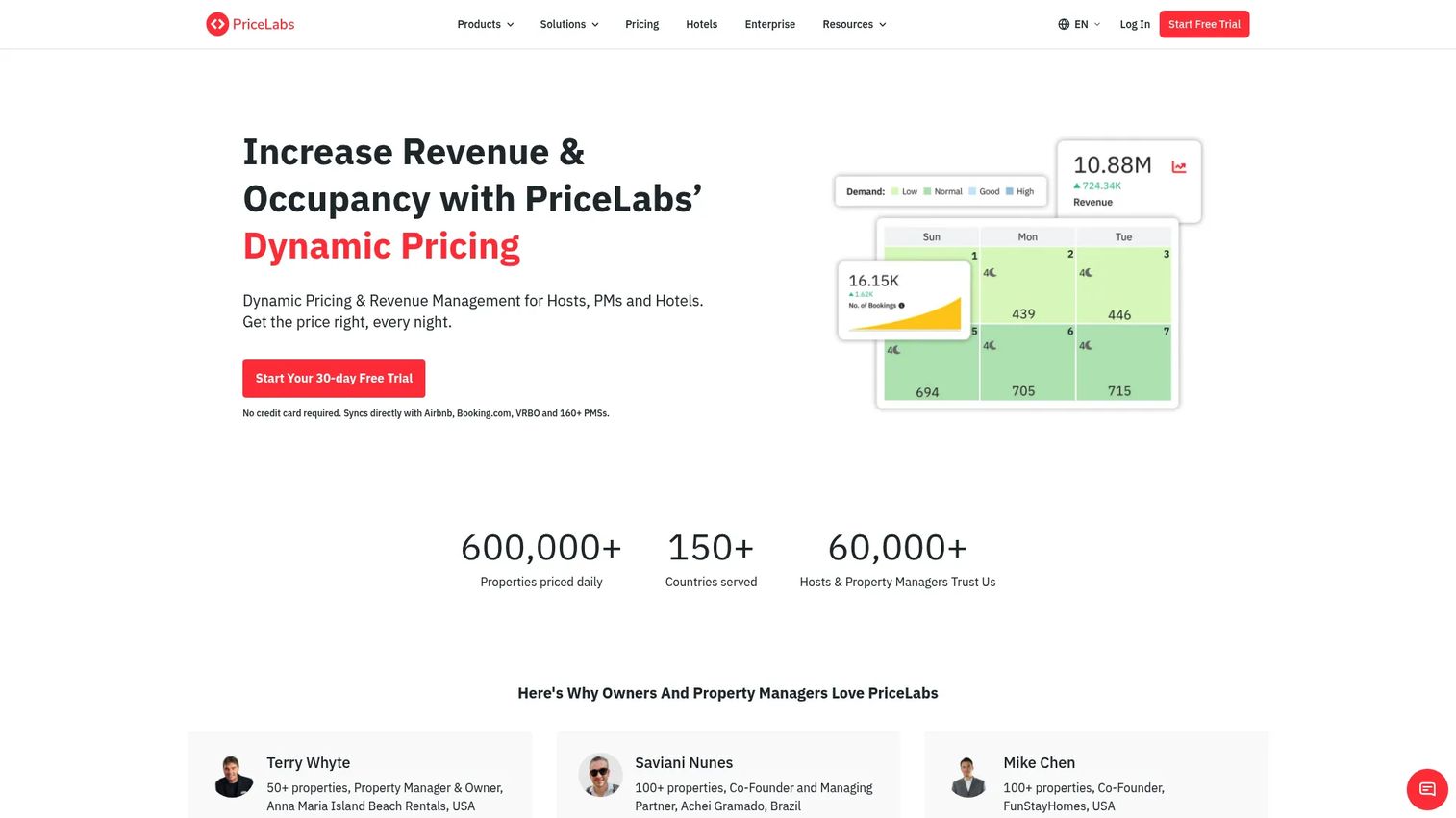
PriceLabs is revenue management software for vacation rentals and hotels. It recommends nightly rates using demand, market trends, seasons, events, and holidays.
Portfolio analytics cover occupancy, average daily rate, and revenue per available rental. Market dashboards provide competitive comparisons through configurable comp sets.
Best for: Vacation rental hosts and managers automating nightly pricing.
Key features
- Dynamic nightly pricing
- Occupancy-based pricing controls
- Portfolio revenue analytics
- Market comparison dashboards
- Property management integrations
Why choose PriceLabs: PriceLabs fits rental operators who need category-specific demand signals. It isn’t designed for B2B agreements or retail SKU pricing.
PriceLabs pricing: Starts at $14.49 per listing monthly, plus taxes. A 30-day free trial is available.
14. Wheelhouse
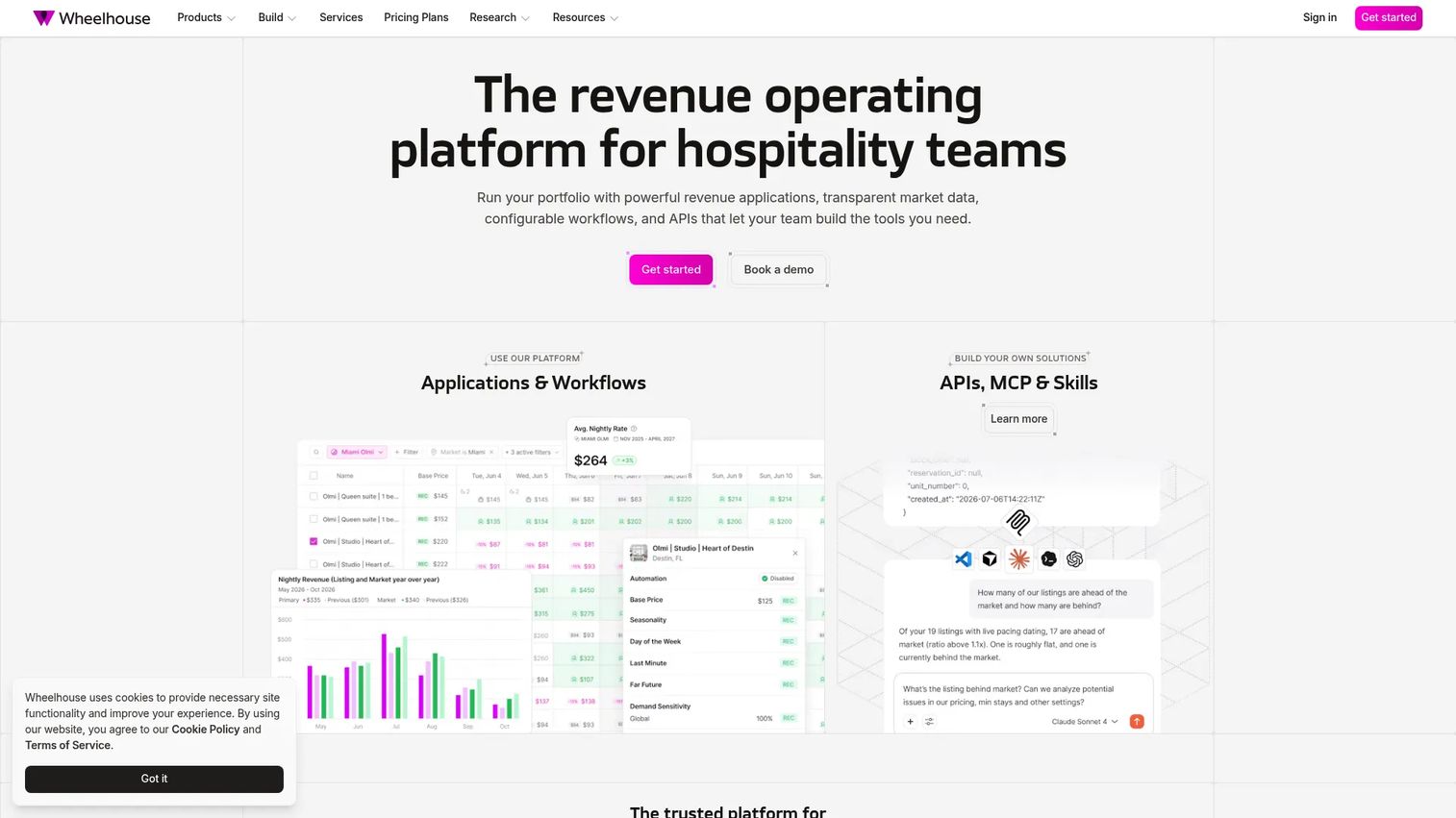
Wheelhouse provides dynamic pricing and revenue management for short-term rentals. It combines pricing recommendations with market benchmarking and portfolio controls.
Operators can configure custom rates and pricing rules. The platform also provides forward-looking rates with historical and future performance data.
Best for: Hosts and property managers wanting flexible rental pricing controls.
Key features
- Dynamic pricing recommendations
- Daily price syncing
- Competitive benchmarking
- Portfolio management
- Custom pricing rules
Why choose Wheelhouse: Wheelhouse suits rental operators who want automated recommendations with strategy controls. Its free plan also supports early evaluation.
Wheelhouse pricing: Free plan available. Pro Flex costs 1% of revenue with a $2.99 monthly minimum.
G2 rating: 4.9/5.
15. Omnia Retail
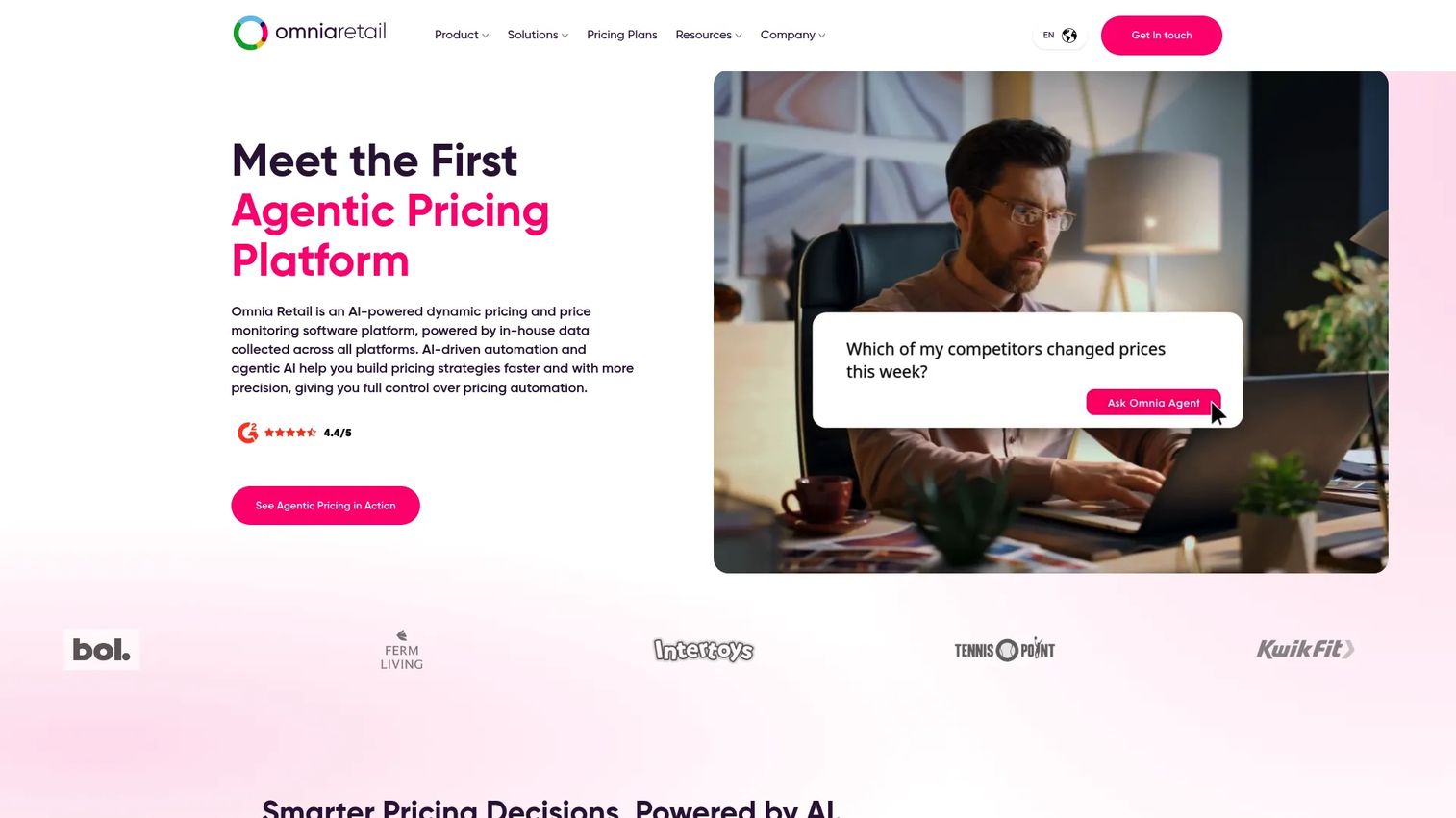
Omnia Retail provides price monitoring and dynamic pricing for retailers and direct-to-consumer brands. It collects competitor data across marketplaces, domains, and other commercial sources.
Its dynamic pricing features automate strategies using business rules. An AI pricing agent supports analysis and recommendations.
Best for: Retailers seeking competitor monitoring and automated price execution.
Key features
- AI price monitoring
- Dynamic pricing automation
- Competitor marketplace tracking
- Automated pricing strategies
- Pricing analysis agent
Why choose Omnia Retail: Omnia fits teams that want monitoring and execution in the same platform. It offers a clearer entry point than many quote-based enterprise suites.
Omnia Retail pricing: SMB plans start at €399 monthly. Enterprise plans use custom pricing.
G2 rating: 4.4/5.
16. BlackCurve
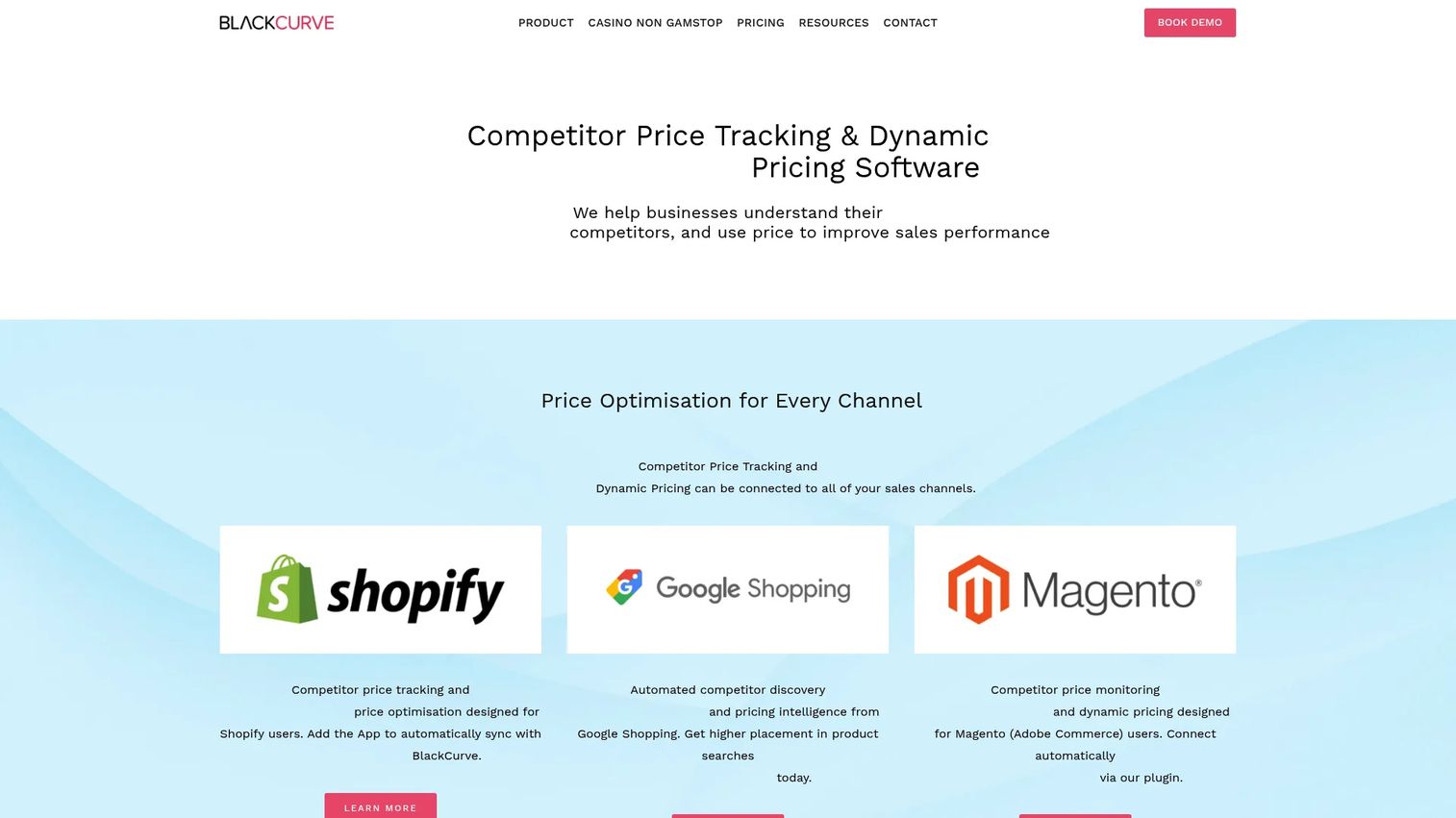
BlackCurve offers cloud-based price management, optimization, and competitor tracking. It also includes dynamic pricing and configure-price-quote capabilities.
Retailers can create pricing rules, manage exceptions, and control price lists. Inventory inputs support decisions about when a price change makes commercial sense.
Best for: Ecommerce teams combining competitor intelligence with pricing rules.
Key features
- Competitor price tracking
- Dynamic pricing
- Pricing rules and exceptions
- Margin controls
- Quote builder
Why choose BlackCurve: BlackCurve fits teams seeking more control than a monitoring-only tool provides. Its published tiers also make initial budgeting more direct.
BlackCurve pricing: Team starts at £140 monthly when billed annually, plus a £420 setup fee. A 30-day trial is available.
17. Deltek ProPricer
Deltek ProPricer is proposal pricing software built for federal contractors. It supports cost modeling, governed rates, scenario analysis, and audit-ready reporting.
This platform addresses proposal pricing rather than retail dynamic pricing. Teams can model bid costs and route complex proposals through controlled workflows.
Best for: Federal contractors building defensible and governed proposal prices.
Key features
- Governed rate management
- Advanced cost modeling
- Real-time scenario analysis
- Approval controls and audit trails
- Submission-ready reporting
Why choose Deltek ProPricer: Deltek ProPricer fits government contractors with specialized proposal requirements. Retailers and ecommerce teams should choose category-specific software instead.
Deltek ProPricer pricing: Custom pricing across Essentials and Enterprise packages.
G2 rating: 4.6/5.
Considerations when choosing pricing optimization software
Start with the pricing decision you need to improve
Map the platform to a specific decision. That could be list price, discount guidance, promotion planning, nightly rates, or marketplace repricing.
Avoid buying an enterprise suite when the immediate need is competitor monitoring. PMMs should connect the chosen decision to launch quality and sales readiness.
Check whether your data can support the model
Price elasticity modeling depends on reliable transaction history, cost data, customer segments, and product hierarchies. Weak inputs produce recommendations that teams won’t trust.
Ask vendors what minimum history they need. Review how the platform handles sparse data and new products.
Validate margin guardrails and approvals
Look for price floors, exception rules, and discount thresholds. Finance should see why a recommendation changed, while Sales needs a clear path for overrides.
Strong pricing governance also makes enablement easier. PMMs can explain the policy without turning every exception into a separate debate.
Review integrations before the product presentation
Confirm the required CRM, ERP, CPQ, ecommerce, billing, and warehouse connections. Ask whether approved prices flow back into the system of record.
Clarify who owns the integration work. Responsibility may sit with IT, RevOps, pricing operations, or the vendor.
Plan for ongoing pricing management
Pricing implementation continues after launch. Teams must monitor models, update rules, and review commercial outcomes.
PMMs should also plan how pricing insights become positioning, launch materials, and field enablement. A recommendation has little value if sellers can’t explain it.
Conclusion
The strongest shortlist depends on the pricing motion.
Enterprise B2B teams should begin with Pricefx, Zilliant, Vendavo, Conga Price Optimization and Management, or PROS. Compare how each platform handles guidance, approvals, and commercial execution.
Retail teams should evaluate Competera, Revionics, RELEX Solutions, Omnia Retail, and Quicklizard. Focus on elasticity, promotional context, and category-level controls.
Ecommerce teams can start with Prisync, Price2Spy, BlackCurve, or Quicklizard. These tools put more emphasis on competitor data and repricing.
PriceLabs and Wheelhouse address vacation rental revenue management. Deltek ProPricer serves the specialized proposal workflows used by federal contractors.
Shortlist three platforms based on the pricing decision you need to improve first. Then pressure-test each option against your data, integrations, and approval workflow.
FAQs
Pricing optimization software recommends prices using inputs such as demand, costs, competitor prices, customer segments, and transaction history. Outputs may include price recommendations, scenario simulations, or automated pricing rules.
Companies use it to improve pricing consistency and protect margin. Many platforms also support approvals and integrations with commercial systems.
Pricing optimization determines what a price should be. It uses models or business rules to evaluate demand, margin, competitive position, and commercial goals.
Dynamic pricing software automates price changes when defined conditions occur. Those adjustments usually rely on optimization models, rules, or a combination of both.
Pricefx, Zilliant, Vendavo, Conga Price Optimization and Management, and PROS serve different B2B pricing contexts. Pricefx and Vendavo cover broad enterprise pricing workflows.
Zilliant emphasizes account-specific guidance and agreements. Conga connects pricing with CPQ, while PROS focuses on airline retailing and offer management.
B2B buyers should prioritize discount guidance, approval controls, and relevant commercial integrations.
Competera, Revionics, RELEX Solutions, Omnia Retail, and Quicklizard all address retail pricing. Their scope differs across optimization, planning, competitor intelligence, and automated execution.
Retail teams should examine elasticity support and promotional context. Category controls and SKU-level guardrails also matter when price changes happen frequently.
Yes. Platforms with scenario modeling, simulations, or controlled rollout capabilities can compare proposed prices before broad deployment.
Define a baseline before running the test. Track conversion, margin, and customer response using the same measurement window.
PMMs should also align test findings with updated messaging and sales enablement. A successful price test still needs a clear market explanation.
Common inputs include transaction history, product data, costs, customer segments, competitor prices, and channel performance. Retail platforms may also use inventory or promotional data.
Data quality directly affects recommendation quality. Check product hierarchies and customer records before implementation.
Integration readiness matters too. The platform needs a reliable way to receive inputs and return approved prices.
Enterprise pricing suites commonly use custom pricing. Contract value can reflect revenue, geographic coverage, modules, implementation work, and integration requirements.
Ecommerce monitoring platforms are more likely to publish monthly plans. Rental pricing tools often charge per listing or use a percentage of booking revenue.
Compare subscription cost with setup, support, and internal data work. A lower license price can still carry a larger implementation burden.
Start with the pricing decision that needs improvement. Identify whether the priority is list pricing, discount control, promotion planning, competitor tracking, or revenue management.
Next, assess data readiness and required integrations. Ask vendors how their recommendations are explained and overridden.
Finally, assign ongoing ownership. Pricing teams need a clear process for model monitoring, rule changes, performance reviews, and field communication.