Your sales team has more leads than context. SDRs chase recent form fills, AEs reconstruct account history, and managers question why yesterday’s MQL became today’s dead end.
Predictive lead scoring software promises a better queue. Yet a score only helps when reps understand it and the system triggers the right action.
Salesforce’s 2024 State of Sales found that 81% of sales teams use AI. Among those teams, 83% reported revenue growth, compared with 66% of teams without AI.
The useful question is not whether a platform uses AI. Ask whether its model has enough reliable data, explains its recommendations, and connects scores to lead routing. Miss one of those pieces, and you get another dashboard that reps ignore.
What’s inside
This guide is for sales, marketing, and RevOps teams comparing sales lead scoring systems. The 17 tools were selected for category relevance and recurring visibility in predictive scoring research.
The comparison weighs:
- Scoring approach: Predictive, rules based, account based, or hybrid
- Data foundation: CRM history, enrichment, behavior, and intent signals
- Scoring transparency: Visible factors, score history, and reason codes
- Workflow activation: Routing, alerts, CRM updates, and sales sequences
- Commercial fit: Pricing model, G2 rating, and target customer profile
TL;DR
- Best overall for CRM native scoring: HubSpot combines customer data, marketing automation, and sales workflows
- Best for enterprise CRM teams: Salesforce puts AI and automation inside established sales processes
- Best for account based marketing: 6sense and Demandbase prioritize accounts using intent and engagement
- Best for custom predictions: MadKudu and Pecan AI suit data mature revenue teams
- Best for outbound prioritization: Apollo and Clay connect enrichment with prospecting workflows
- Best for smaller teams: Zoho CRM, Freshsales, and Pipedrive offer accessible CRM foundations
What is predictive lead scoring software?
Predictive lead scoring software uses historical outcomes and current buyer signals to estimate which leads or accounts are most likely to convert.
Traditional lead scoring assigns fixed points to actions or attributes. A pricing page visit might add points, while a student email address subtracts them. Predictive scoring examines patterns across larger datasets and updates conversion estimates from those relationships.
Most lead scoring platforms produce one or more outputs:
- Numeric scores: Ranked values attached to contacts or accounts
- Fit labels: Categories based on ICP alignment
- Buying stages: Indicators of where an account sits in its research process
- Conversion predictions: Estimated likelihood of reaching a defined outcome
- Priority queues: Ordered lists for SDRs or account owners
Contact level scoring fits inbound motions where an individual requests information or starts a trial. Account scoring works better when several stakeholders research a product before anyone contacts sales.
The operational payoff comes after the calculation. A useful score can change ownership, create a task, suppress an irrelevant nurture, or enroll a prospect in a sequence.
Common predictive scoring inputs
- Firmographic data: Company size, industry, geography, and revenue
- Technographic data: Installed tools, integrations, and stack fit
- Behavioral data: Website activity, forms, email clicks, and product usage
- Intent data: Research topics, account activity, and buying signals
- CRM data: Lifecycle stages, closed outcomes, and opportunity history
- Negative signals: Inactivity, poor fit, unsubscribes, and invalid records
Behavioral inputs can also include engagement with an interactive product experience. Treat those signals as inputs to a scoring stack, rather than a replacement for the scoring platform.
Predictive scoring versus rules based scoring
| Scoring type | How it works | Best fit | Watch for |
|---|---|---|---|
| Manual scoring | Reps rank leads using judgment | Low volume, relationship led sales | Inconsistent criteria across reps |
| Rules based scoring | Teams assign points to known signals | Simple funnels needing transparency | Rules require regular maintenance |
| Predictive scoring | Models learn patterns from historical outcomes | Large datasets with many interacting signals | Weak data can distort predictions |
| Hybrid scoring | Predictive outputs combine with business rules | Teams needing automation plus control | Conflicting logic between models and rules |
Rules based scoring remains useful when your funnel is straightforward. Predictive models become valuable when manual weighting cannot process the signal volume.
When to use predictive lead scoring software
Prioritize reps around conversion likelihood
Use predictive scoring when SDRs work large inbound queues and cannot research every record first. A ranked queue helps them focus on prospects with stronger fit or engagement.
The model should also expose enough context for the first outreach. A score without reasons leaves reps guessing.
Score accounts for ABM buying committees
Account based marketing scoring aggregates activity across several people from the same company. This approach fits longer sales cycles where technical evaluators and economic buyers research separately.
Account owner alerts can surface buying stage changes before a known contact submits a form.
Turn engagement data into routing workflows
A score matters when it changes what happens next. Connect thresholds to territory assignment, rep tasks, nurture changes, and sequence enrollment.
Define the sales handoff workflow before choosing a platform. Otherwise, teams often automate an unclear process and create more noise.
Predictive lead scoring software comparison
The best predictive lead scoring tools serve different operating models. CRM platforms keep scoring close to daily sales work. ABM systems prioritize accounts, while data platforms help RevOps build custom models.
The table reflects vendor pricing and G2 ratings researched in November 2026.
| # | Product | Best for | Key differentiator | Pricing | G2 rating |
|---|---|---|---|---|---|
| 1 | HubSpot | CRM native scoring | Shared marketing and sales customer platform | Free plan, paid plans from $7 per seat monthly | 4.4/5 |
| 2 | Salesforce | Enterprise CRM scoring | Customizable CRM with integrated AI and automation | Free plan, paid plans from $25 per user monthly | 4.4/5 |
| 3 | Marketo | Enterprise marketing automation | Lead scoring inside cross channel campaign programs | Custom pricing based on database size | 4.1/5 |
| 4 | 6sense | ABM and account scoring | Predictive intelligence with account intent signals | Custom pricing | 4.1/5 |
| 5 | ZoomInfo | B2B data and intent | Verified data combined with buying signals | Custom pricing | 4.5/5 |
| 6 | Demandbase | Enterprise ABM | Predictive account selection and engagement signals | Custom pricing | 4.4/5 |
| 7 | MadKudu | AI assisted prioritization | Account research grounded in first party signals | Custom pricing | 4.5/5 |
| 8 | Pecan AI | Custom predictive models | Automated model building and prediction delivery | Custom pricing | 4.7/5 |
| 9 | Apollo | Outbound prioritization | Prospect data combined with engagement workflows | Free plan, paid plans from $49 per seat monthly | 4.7/5 |
| 10 | Clay | RevOps scoring workflows | Multi provider enrichment and flexible GTM automation | Free plan, paid plans from $167 monthly | 4.6/5 |
| 11 | ActiveCampaign | Marketing automation scoring | Engagement data inside automated customer journeys | Custom pricing by contacts and plan | 4.4/5 |
| 12 | Zoho CRM | Affordable CRM scoring | Configurable CRM with predictive intelligence | Free plan, paid plans from $14 per user monthly | 4.1/5 |
| 13 | Freshsales | AI assisted sales CRM | Freddy AI with contact scoring and pipeline tools | From $9 per user monthly | Not available |
| 14 | Outfunnel | Pipedrive marketing sync | Marketing engagement and visitor data inside CRM | From $29 monthly | 4.4/5 |
| 15 | Warmly | Website visitor intent | Visitor identification with intent scoring and alerts | Free plan, paid plans from $10,000 yearly | 4.5/5 |
| 16 | Openprise | Data quality and routing | Data orchestration behind reliable scoring workflows | From $35,000 yearly | 4.9/5 |
| 17 | Pipedrive | Simple pipeline prioritization | Activity focused CRM with automation and reporting | From $14 per seat monthly | 4.3/5 |
Best 17 tools for predictive lead scoring software
1. HubSpot
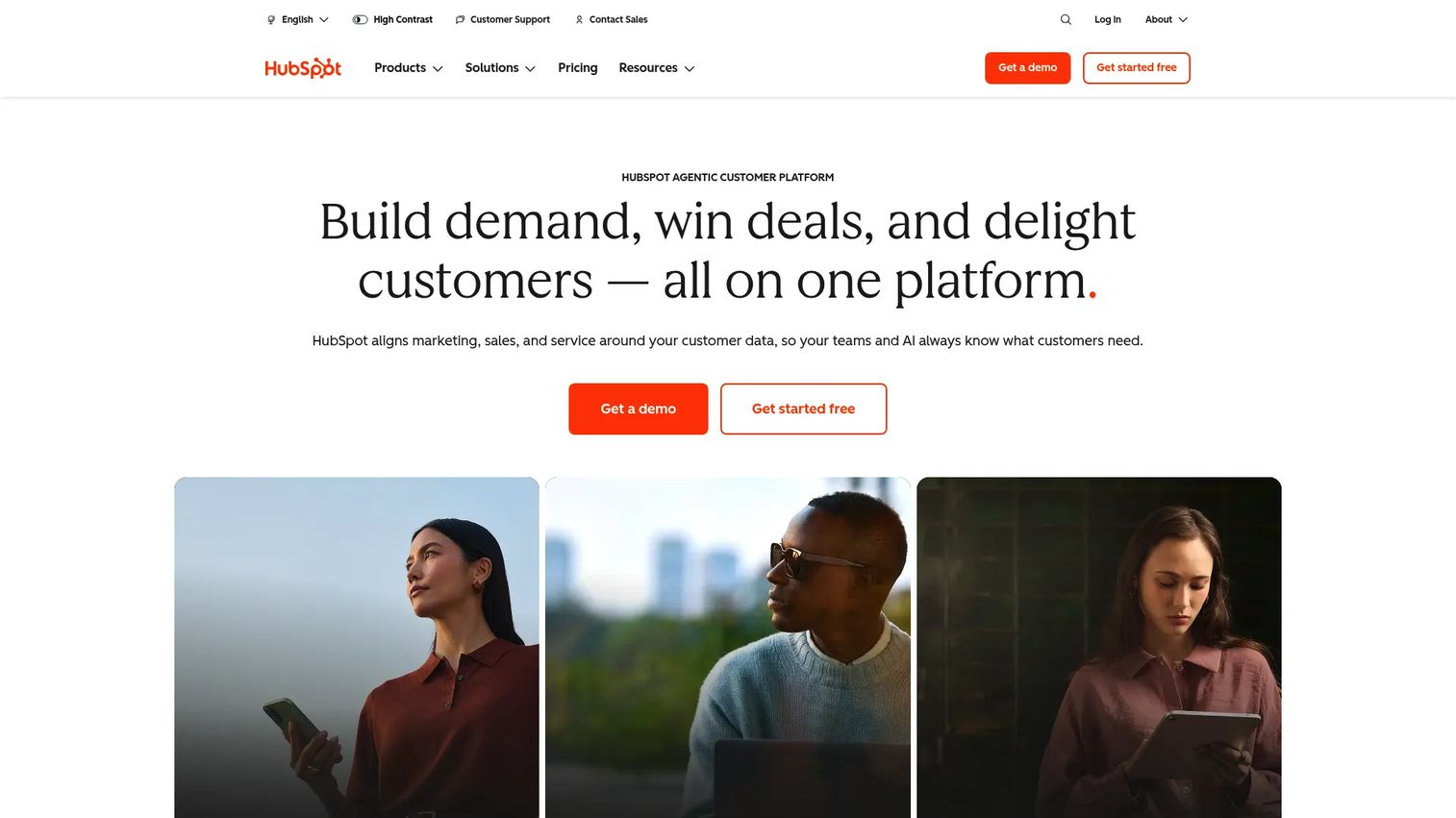
HubSpot combines marketing, sales, service, content, CRM, and data management capabilities. It suits teams that want lead scoring marketing automation connected to a shared customer record.
Its main advantage is workflow proximity. Marketing can automate engagement while sales views the resulting customer context inside the same broader platform.
Best for: Sales and marketing teams that want CRM context and automation together.
Key features
- Marketing automation and email campaigns
- Sales pipeline and deal management
- Customer data management and reporting
- AI customer and sales agents
- Website and content management
Why choose HubSpot: Choose it when disconnected marketing and sales records are weakening handoffs. Its wider customer platform can reduce data movement between separate systems.
HubSpot pricing: Free tools are available. Starter costs $7 per seat monthly, while Professional starts at $800 monthly.
G2 rating: 4.4/5 for HubSpot Marketing Hub.
2. Salesforce
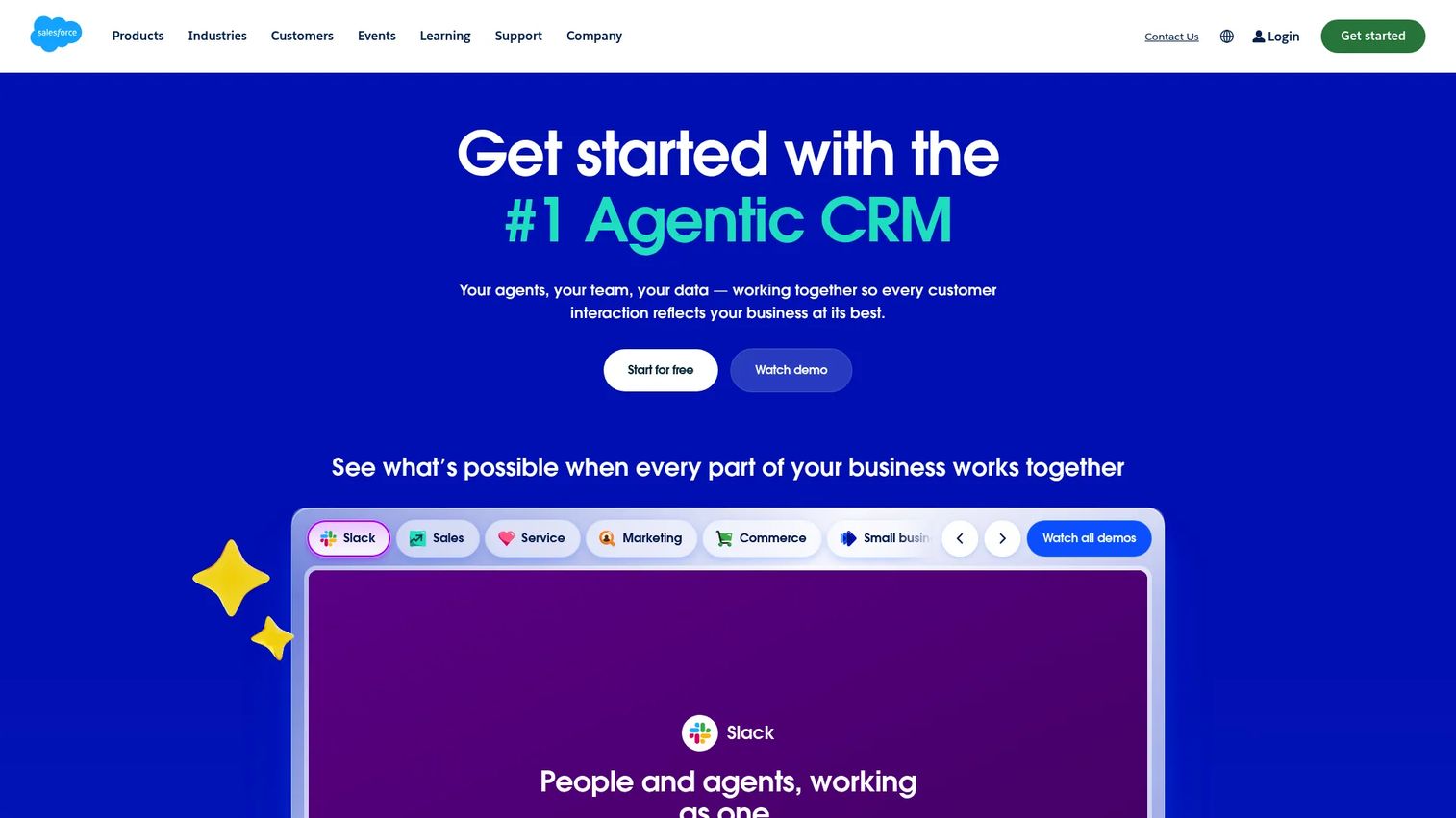
Salesforce is a customizable CRM platform covering sales, service, marketing, analytics, and collaboration. It fits organizations already managing territories and opportunity workflows inside Salesforce.
The platform includes AI capabilities, workflow automation, forecasting, and extensive reporting. Those functions let RevOps connect prioritization to existing CRM processes.
Best for: Enterprise sales organizations with established Salesforce governance and reporting.
Key features
- Lead and opportunity management
- Sales forecasting and quoting
- Workflow automation and customization
- AI and Agentforce capabilities
- Reporting and analytics
Why choose Salesforce: Use it when scores must appear where managers inspect pipeline and reps manage accounts. Existing CRM adoption can reduce another system change.
Salesforce pricing: Free Suite costs $0. Starter Suite begins at $25 per user monthly.
G2 rating: 4.4/5 for Salesforce Sales Cloud.
3. Marketo
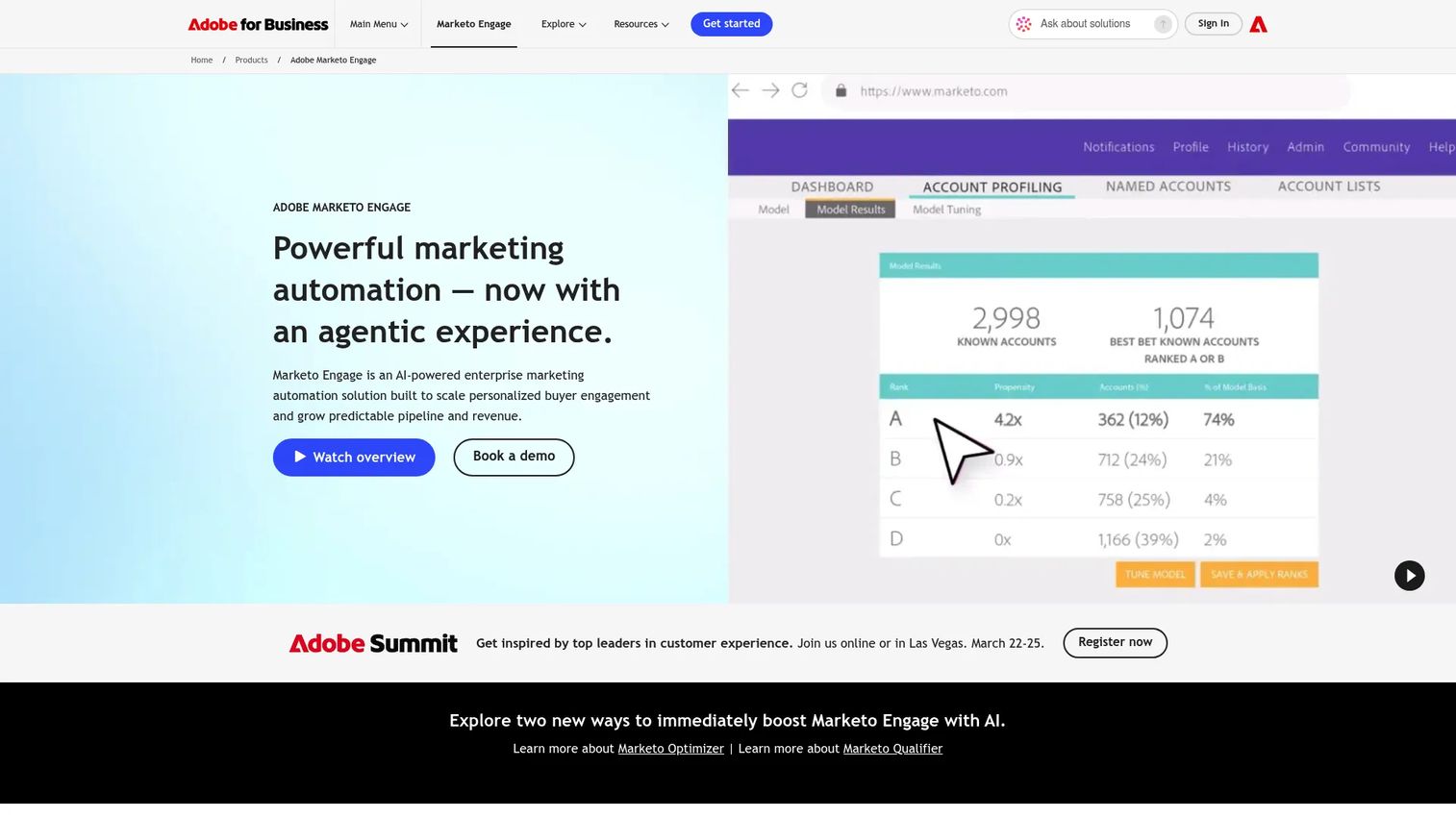
Marketo is an enterprise marketing automation platform for buyer engagement and pipeline programs. It supports lead scoring, CRM integration, campaign automation, and audience segmentation.
Marketo works best when MQL scoring sits inside a broader nurture architecture. Dedicated marketing operations ownership helps keep lifecycle logic and CRM synchronization aligned.
Best for: Enterprise demand generation teams running complex nurture and lifecycle programs.
Key features
- Lead scoring and sales intelligence
- Campaign and journey automation
- Dynamic content and personalization
- CRM integration
- Marketing analytics and attribution
Why choose Marketo: Pick it when scoring drives several marketing programs before sales accepts a lead. Its depth suits teams with mature campaign operations.
Marketo pricing: Custom pricing across Growth, Select, Prime, and Ultimate packages. Cost is based on database size.
G2 rating: 4.1/5.
4. 6sense
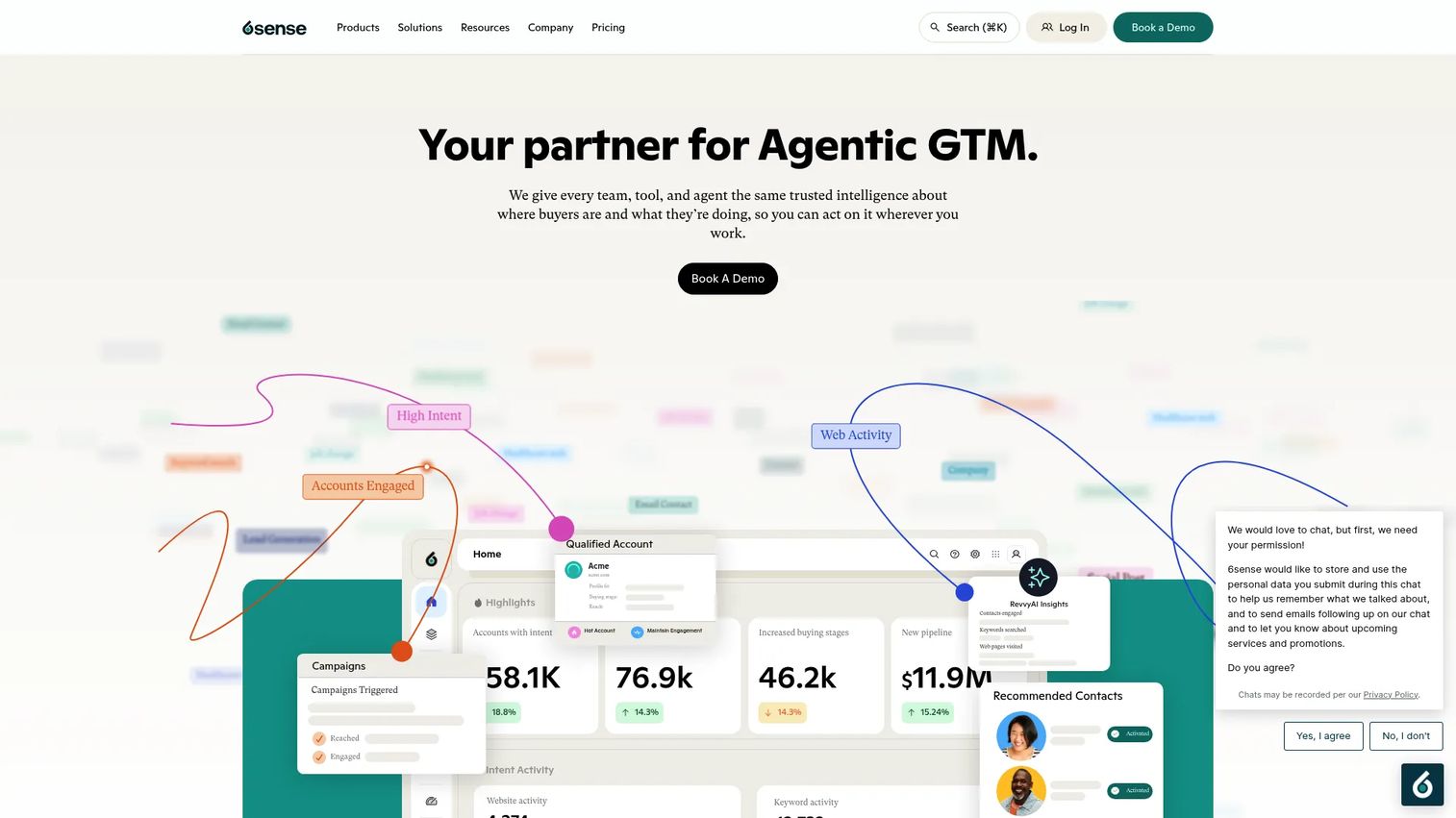
6sense provides B2B account intelligence, intent signals, predictive insights, and coordinated revenue workflows. Its account based approach helps teams prioritize companies before every buyer becomes known.
The platform combines company data with account activity and sales intelligence. This structure fits ABM programs where several stakeholders influence one opportunity.
Best for: Midmarket and enterprise teams coordinating sales around target accounts.
Key features
- Account intent signals
- Predictive intelligence
- Company and contact data
- Dynamic account segments
- CRM and revenue integrations
Why choose 6sense: Choose it when the account matters more than an individual form fill. It supports prioritization across broader buying activity.
6sense pricing: Custom pricing reflects seats, credits, records, data packs, and selected products.
G2 rating: 4.1/5.
5. ZoomInfo
ZoomInfo combines B2B company data with contact intelligence, buying signals, and workflow tools. It is useful when missing or stale records weaken a lead scoring model.
Accurate job titles and company attributes give firmographic scoring a stronger foundation. Intent signals then add evidence that an account may be researching a relevant topic.
Best for: Revenue teams that need enrichment and buyer signals from one provider.
Key features
- Contact and company search
- Buyer intent signals
- CRM data enrichment
- Sales automation
- Account based marketing
Why choose ZoomInfo: Select it when data quality is the primary scoring bottleneck. Cleaner records help routing rules identify the correct owner.
ZoomInfo pricing: Custom pricing. Packages reflect the selected B2B data use cases.
G2 rating: 4.5/5.
6. Demandbase
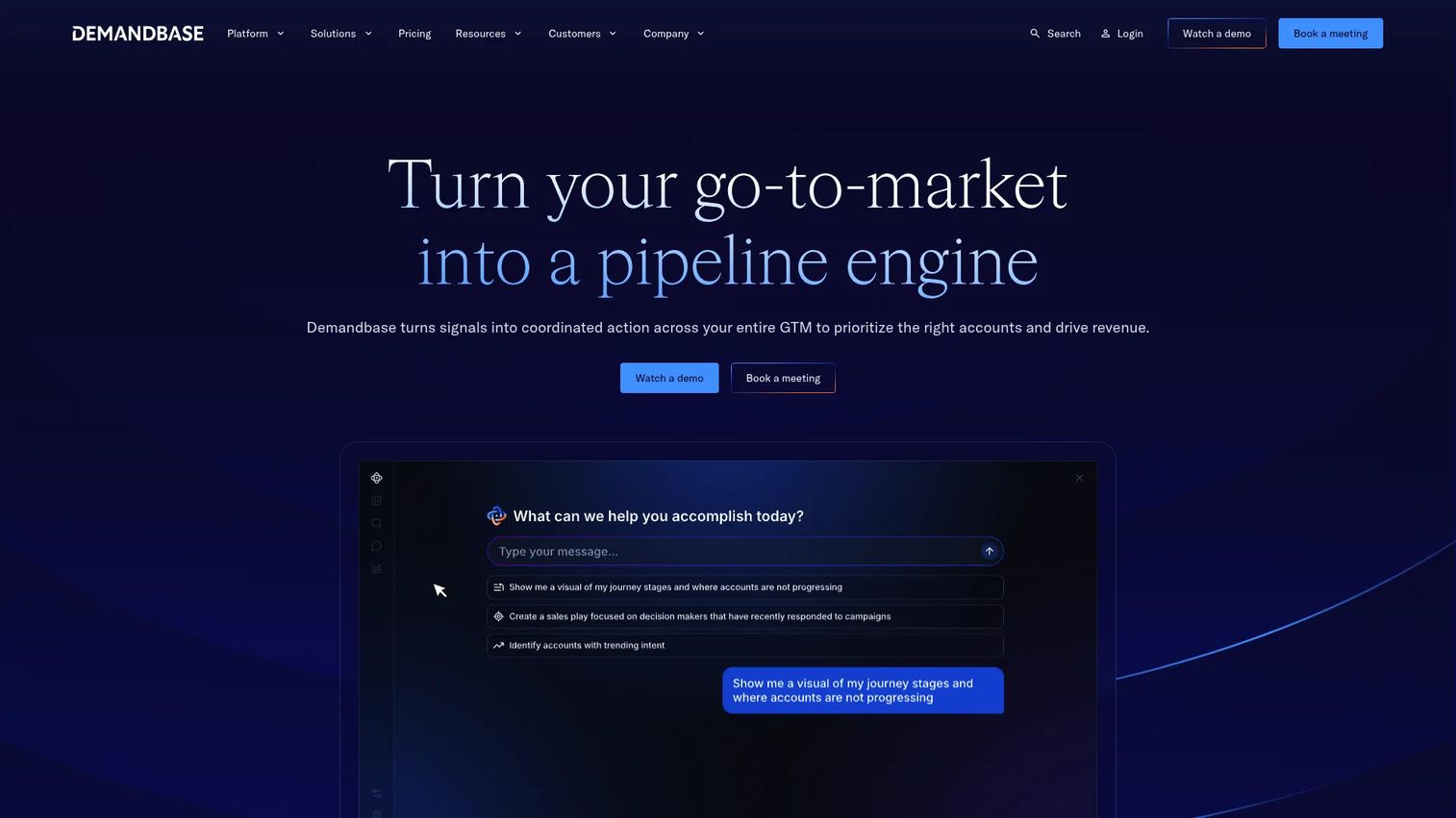
Demandbase is an account based GTM platform for sales and marketing teams. It combines predictive account selection with intent and engagement signals.
The account focus suits enterprise deals where several people research before procurement begins. Sales and marketing can use the same account intelligence to coordinate campaigns and outreach.
Best for: Enterprise ABM teams managing long cycles and buying committees.
Key features
- Predictive account selection
- Intent and engagement signals
- Account intelligence
- Sales prioritization
- ABM activation
Why choose Demandbase: Use it when account scoring must guide both advertising and sales action. It fits teams with an established target account strategy.
Demandbase pricing: Custom pricing covers its GTM platform, advertising, and data offerings.
G2 rating: 4.4/5 for Demandbase One.
7. MadKudu
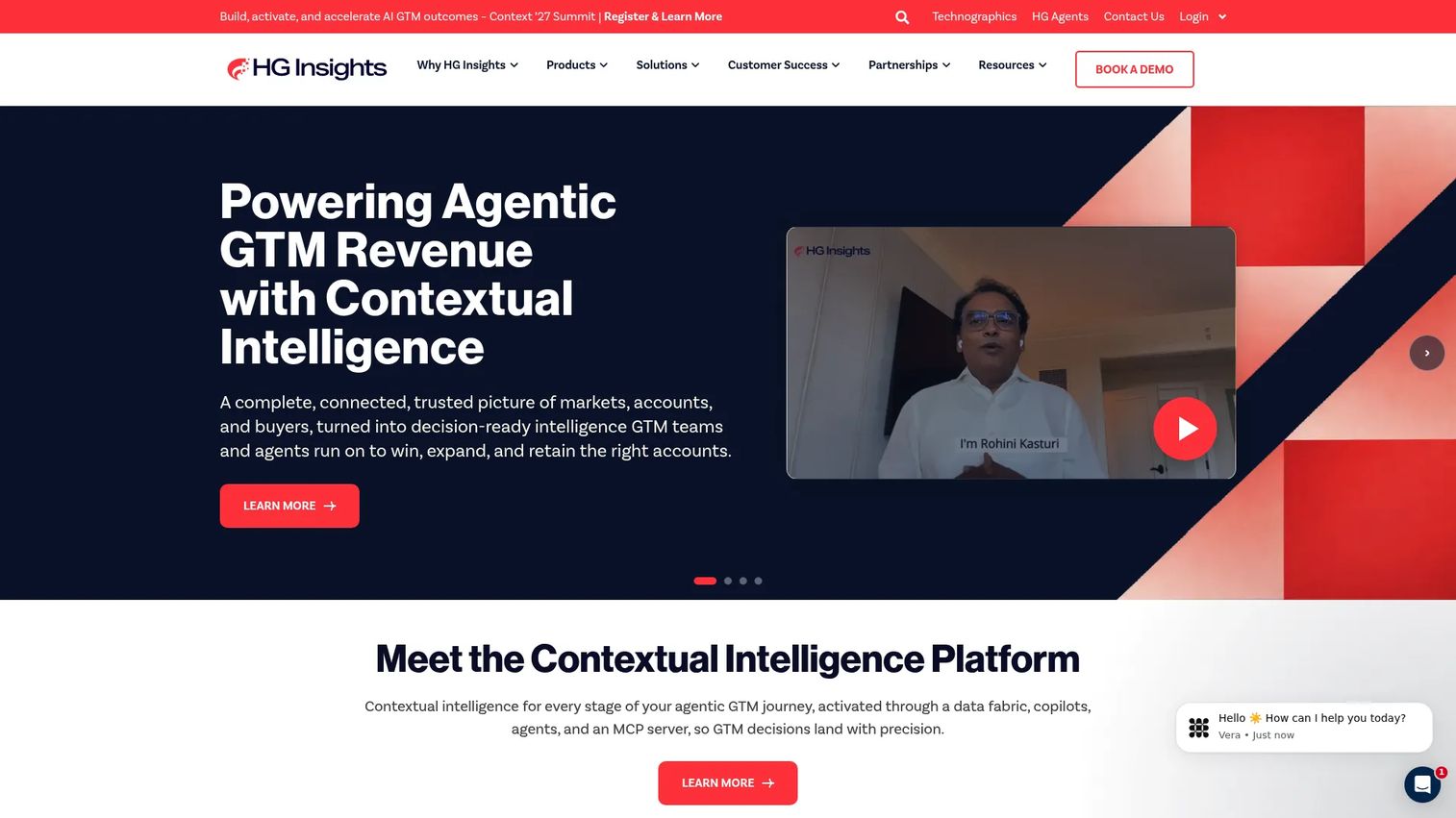
MadKudu is now part of HG Insights. Its current positioning centers on AI assisted account research and lead prioritization using first party signals.
The platform can bring cited account context into Salesforce or HubSpot workflows. Contact discovery also draws from more than 15 data providers.
Best for: Revenue teams seeking account research and prospect prioritization inside CRM workflows.
Key features
- AI assisted account research
- First party signal analysis
- Salesforce and HubSpot workflows
- Contact discovery
- Multi provider enrichment
Why choose MadKudu: Consider it when reps need context beside prioritization. Current positioning extends beyond the earlier predictive scoring category.
MadKudu pricing: Custom pricing through HG Insights.
G2 rating: 4.5/5.
8. Pecan AI
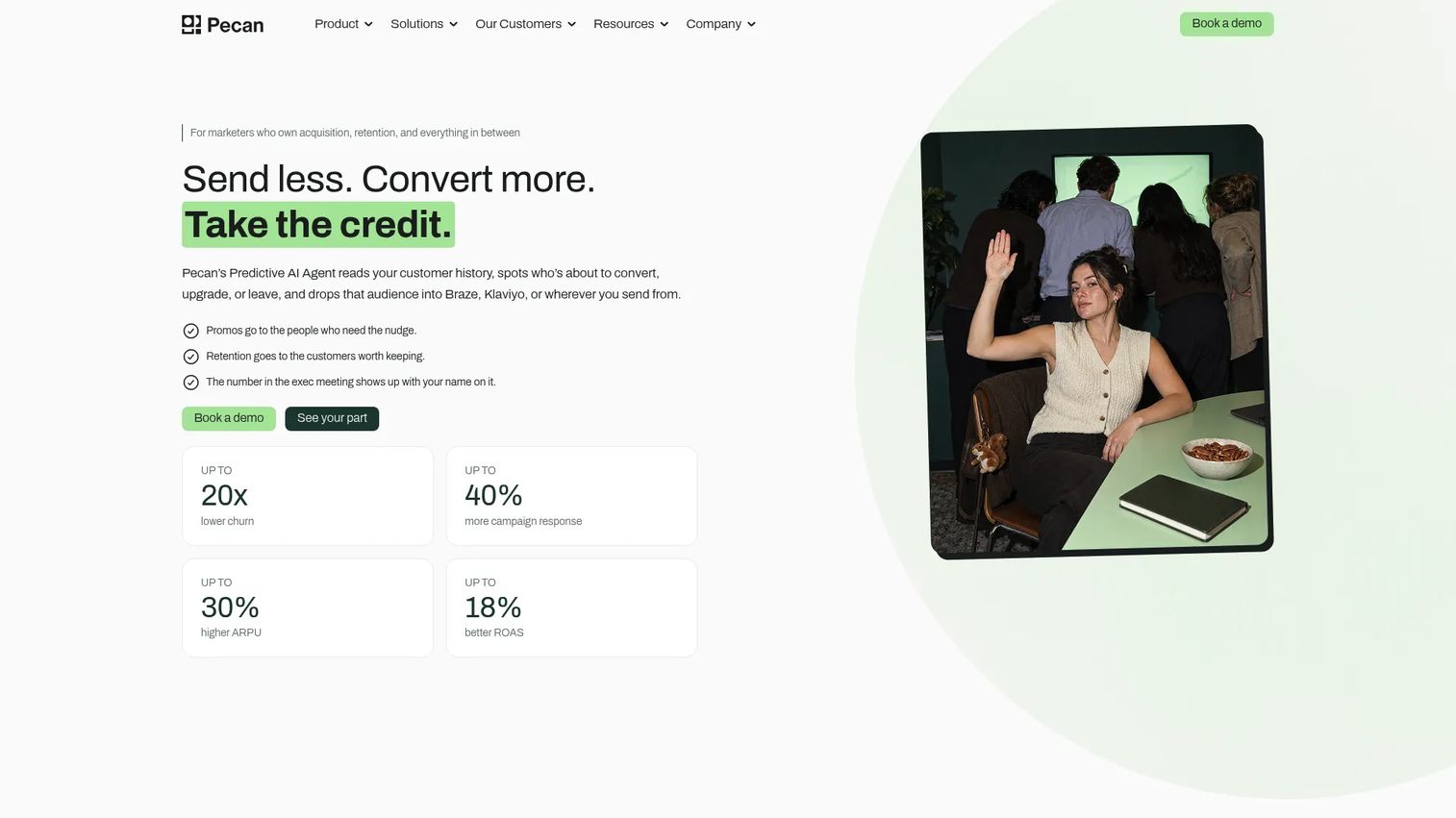
Pecan AI builds and validates predictive models from historical business data. Its Predictive AI Agent handles preparation, feature engineering, model creation, and prediction delivery.
Teams can send outputs into CRMs, data warehouses, marketing platforms, or BI dashboards. Monitoring and retraining help models respond as business conditions change.
Best for: Data mature marketing and operations teams needing custom conversion predictions.
Key features
- Automated predictive modeling
- Feature engineering and selection
- Model monitoring and retraining
- Prediction delivery
- Predictive chat and notebooks
Why choose Pecan AI: Pick it when you have useful historical data but limited data science capacity. It supports predictions beyond a single lead score.
Pecan AI pricing: Custom pricing across Starter, Team, and Business packages. All plans use annual billing.
G2 rating: 4.7/5.
9. Apollo
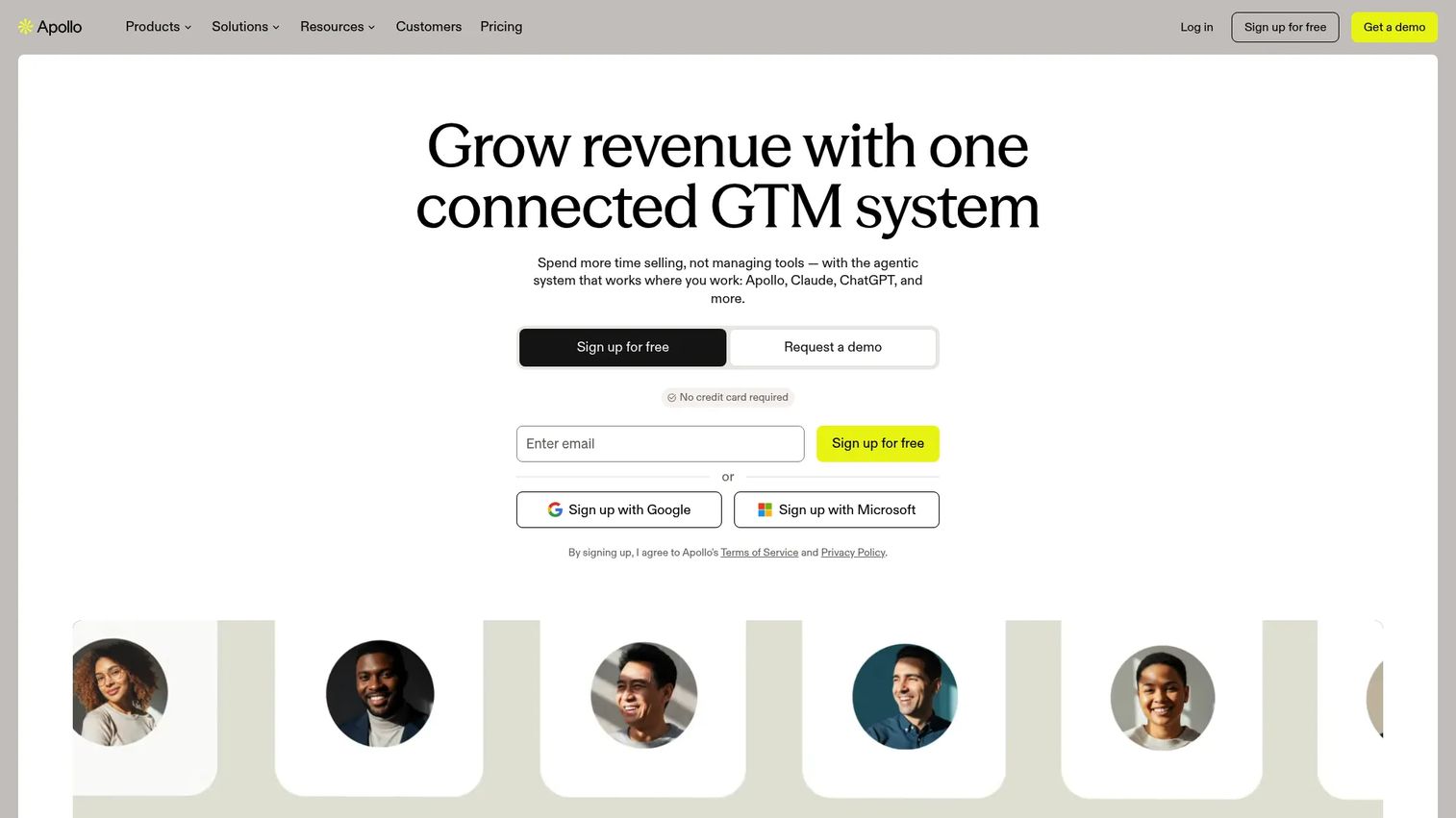
Apollo combines B2B prospect data with enrichment, outreach, and pipeline workflows. Its AI agents support account research and lead prioritization.
The platform fits outbound teams that want prospect discovery close to execution. Reps can research accounts and move selected contacts into engagement workflows.
Best for: SDR teams combining prospecting, prioritization, and sequencing.
Key features
- B2B company and contact data
- AI lead prioritization
- Email sequencing
- Waterfall enrichment
- Prospecting and dialing workspace
Why choose Apollo: Use it when the score primarily decides who enters outbound today. It reduces the gap between research and first contact.
Apollo pricing: Free plan available. Basic starts at $49 per seat monthly with annual billing.
G2 rating: 4.7/5.
10. Clay
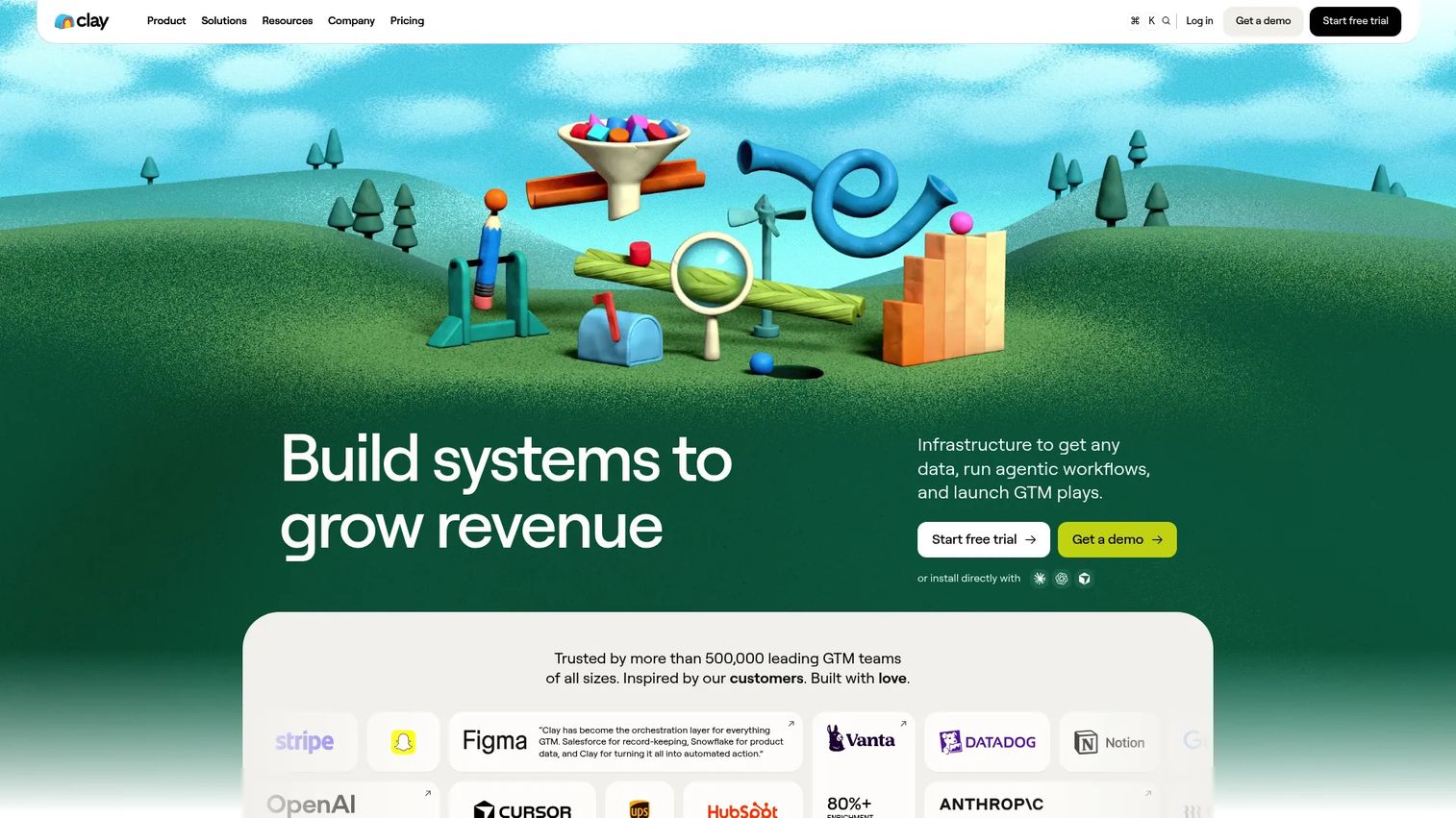
Clay helps GTM teams build enrichment, research, and workflow automation across multiple data providers. RevOps can combine waterfall enrichment with formulas and signals.
This flexibility works well while a scoring model is still evolving. Teams can test inputs before moving stable logic into their CRM.
Best for: RevOps teams building enrichment based prioritization workflows.
Key features
- Multi provider enrichment waterfalls
- AI research with Claygent
- CRM synchronization
- Job change and web signals
- Audience and outreach workflows
Why choose Clay: Select it when fixed platform logic feels premature. Its table based workflow supports rapid testing across several data sources.
Clay pricing: Free plan includes limited actions and credits. Launch starts at $167 monthly with annual billing.
G2 rating: 4.6/5.
11. ActiveCampaign
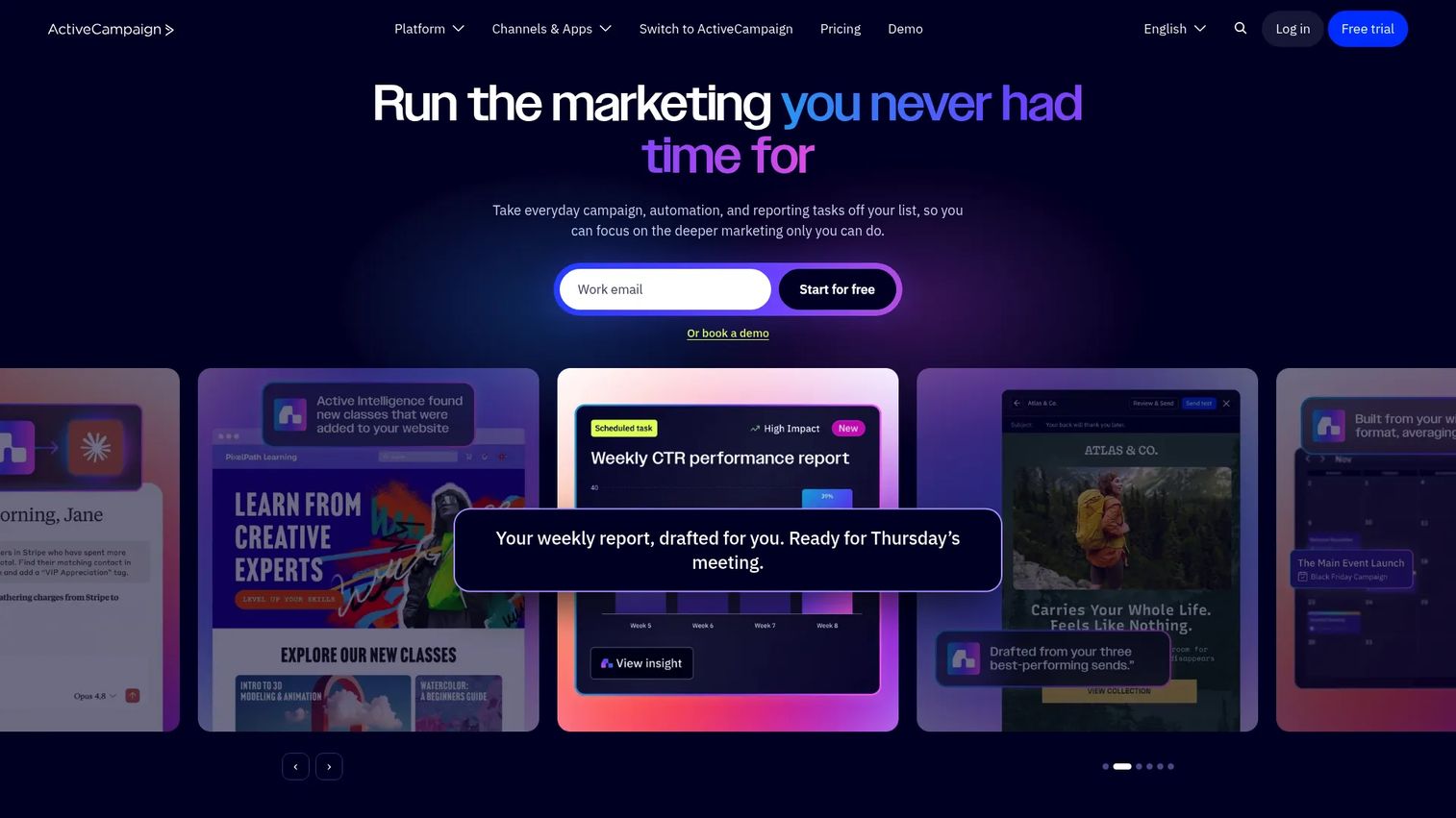
ActiveCampaign provides marketing automation across email, SMS, and WhatsApp. Its automation builder supports segmentation and engagement driven customer journeys.
This platform suits teams where scoring primarily changes nurture timing or follow up. It serves a different motion from enterprise account based prediction.
Best for: Smaller marketing teams connecting engagement with automated follow up.
Key features
- Multistep marketing automation
- Email engagement tracking
- Advanced audience segmentation
- Predictive sending
- CRM and app integrations
Why choose ActiveCampaign: Consider it when email behavior drives MQL scoring and nurture decisions. Contact volume affects the commercial fit.
ActiveCampaign pricing: Custom pricing across Starter, Plus, Pro, and Enterprise. Cost scales with contact count.
G2 rating: 4.4/5.
12. Zoho CRM
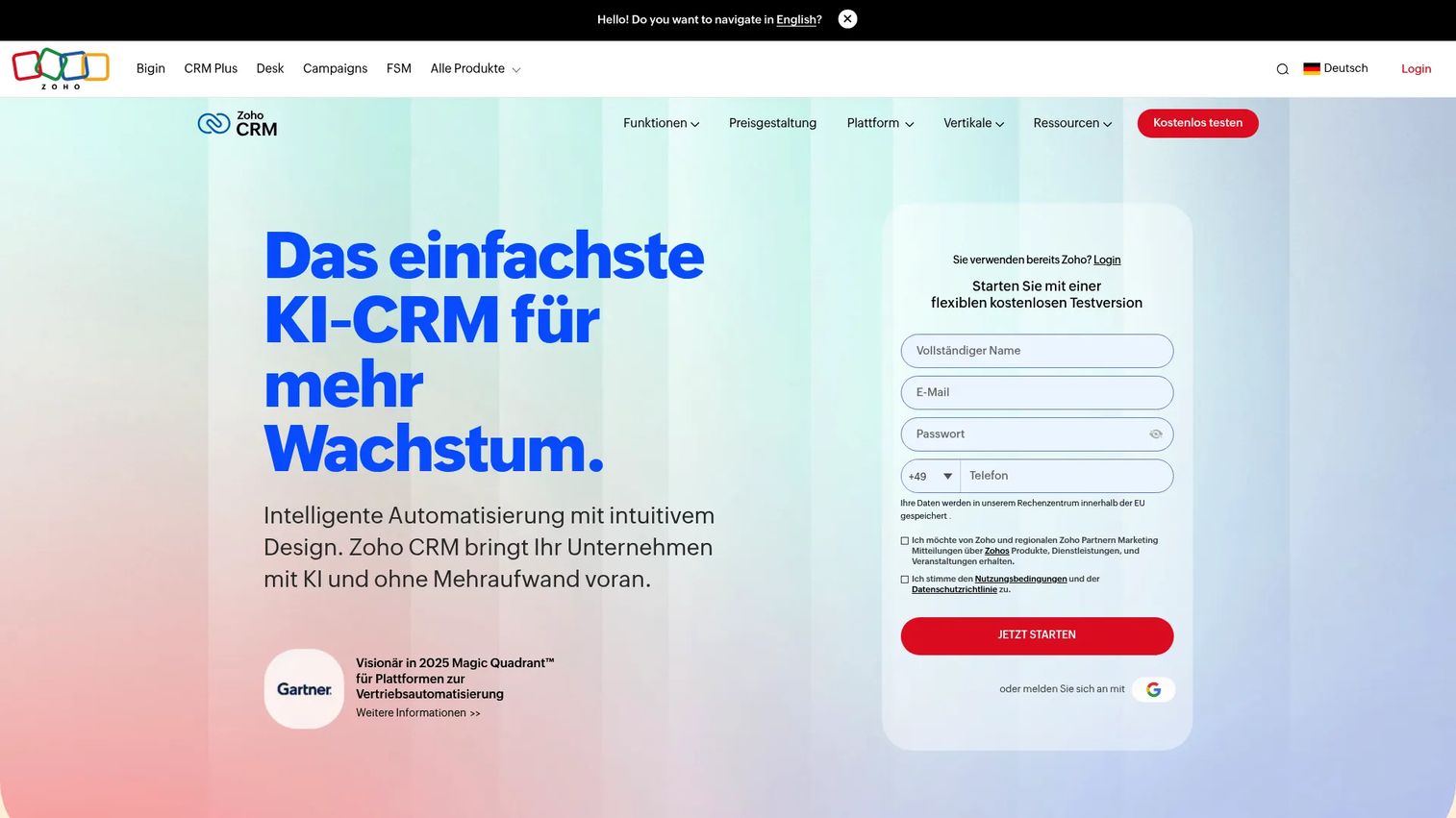
Zoho CRM combines sales automation with predictive intelligence and Zia assistance. It supports configurable CRM processes without enterprise level starting costs.
Sales teams can manage contacts and deals alongside workflows, reports, and forecasting. This makes it a practical starting point for CRM lead scoring.
Best for: Growing teams wanting configurable sales processes at an accessible price.
Key features
- Lead and deal management
- Workflow and process automation
- Zia AI assistance
- Sales forecasting and reports
- Custom modules and dashboards
Why choose Zoho CRM: Pick it when clean CRM adoption matters before advanced modeling. Its free edition supports up to three users.
Zoho CRM pricing: Free edition available. Standard starts at $14 per user monthly with annual billing.
G2 rating: 4.1/5.
13. Freshsales
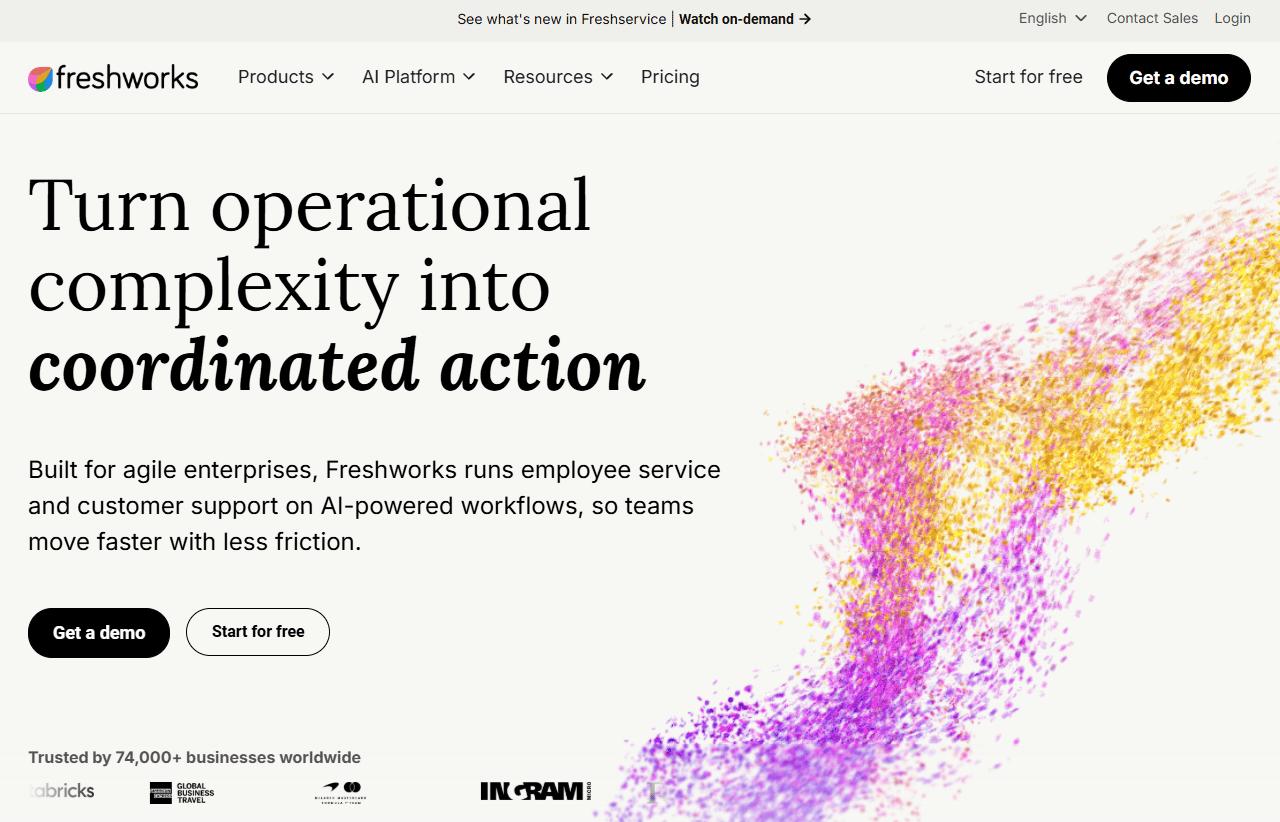
Freshsales is an AI assisted sales CRM for managing leads, conversations, and pipelines. Freddy AI supports lead and deal work alongside email assistance.
The Pro plan adds contact scoring, sales sequences, and deal insights. This combination suits teams that want prioritization inside a focused CRM.
Best for: Small and midsize sales teams wanting CRM based contact scoring.
Key features
- Lead qualification and routing
- Freddy AI assistance
- Contact scoring
- Workflow automation
- Pipeline and deal management
Why choose Freshsales: Choose it when reps need an approachable CRM with built in prioritization. Larger ABM programs will require a broader account intelligence layer.
Freshsales pricing: Growth starts at $9 per user monthly. Pro costs $39 per user monthly with annual billing.
14. Outfunnel
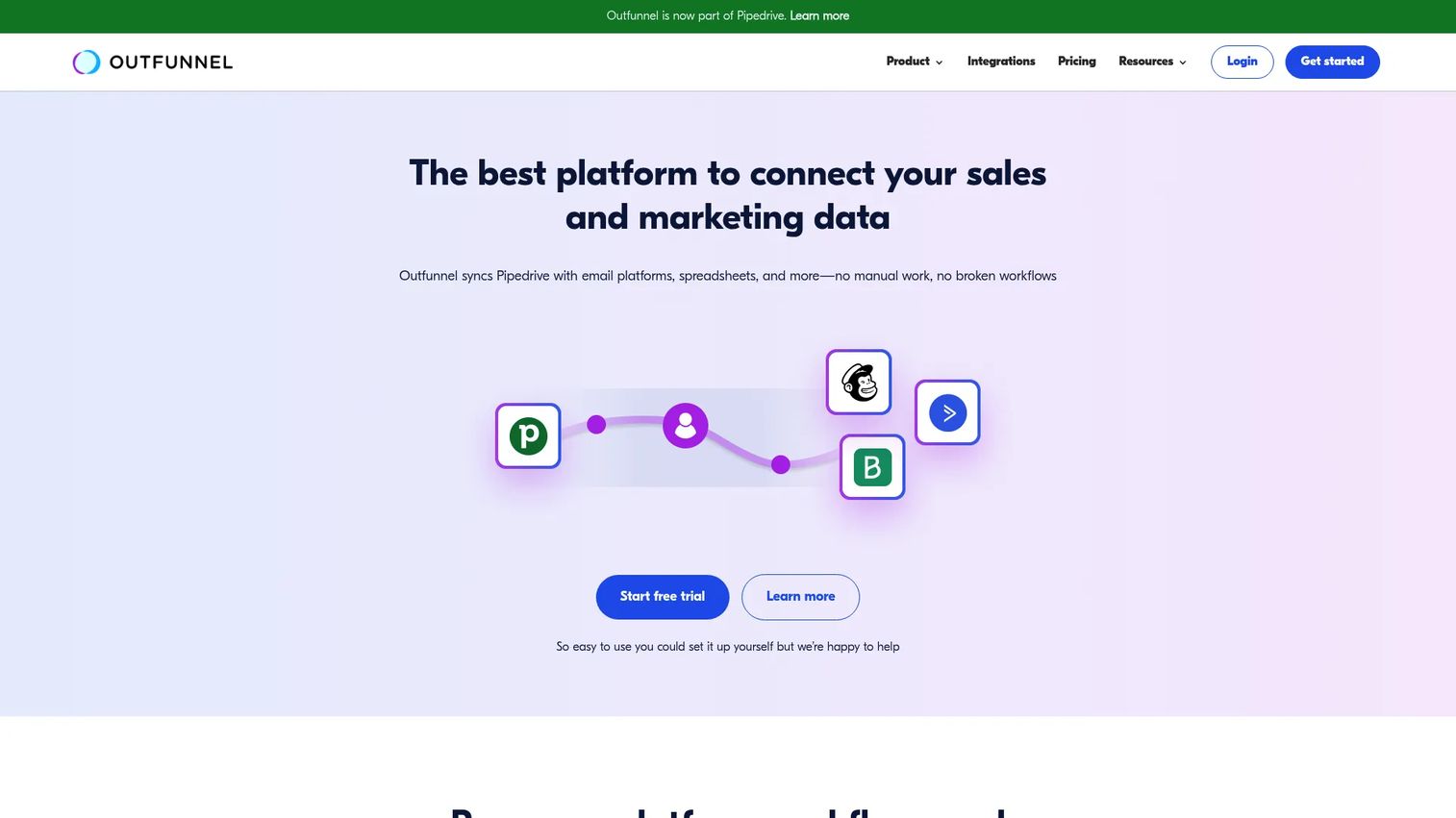
Outfunnel connects Pipedrive with marketing and web form applications. It synchronizes contacts and engagement data into the CRM.
Current product materials state that lead scoring is unavailable to new customers. Its role in this list now centers on data synchronization rather than new scoring deployments.
Best for: Pipedrive teams needing marketing engagement visible inside CRM records.
Key features
- Bidirectional contact synchronization
- Marketing engagement sync
- Web visitor tracking
- Form data synchronization
- Pipedrive focused workflows
Why choose Outfunnel: Consider it when the sales handoff problem comes from missing marketing context. New buyers should not select it specifically for lead scoring.
Outfunnel pricing: Basic starts at $29 monthly. Every plan includes a 14 day trial.
G2 rating: 4.4/5.
15. Warmly
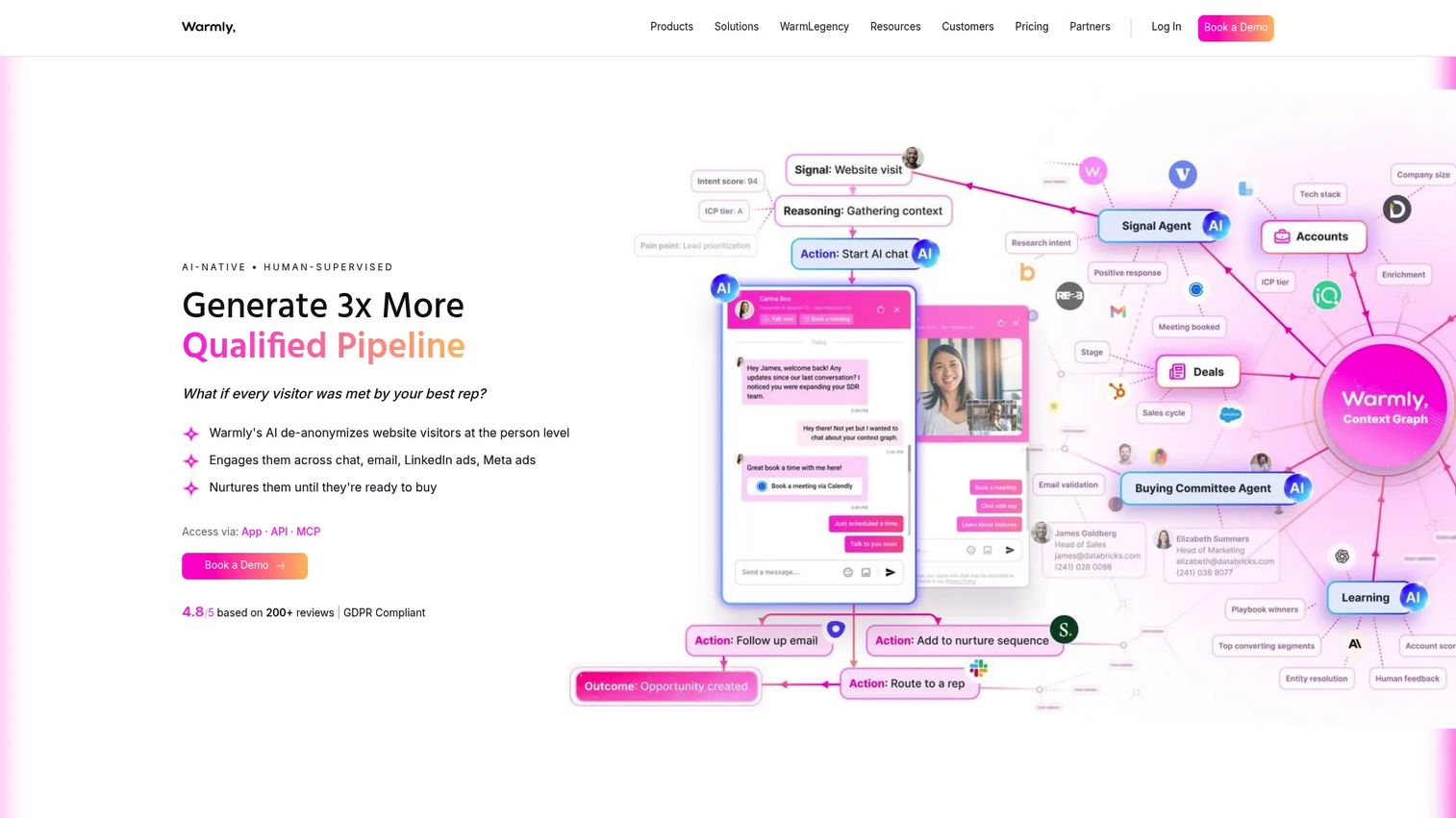
Warmly identifies website visitors and combines that activity with intent scoring. It can trigger alerts, route leads, and synchronize context into CRM workflows.
This approach helps sales teams respond while account interest is active. It is especially relevant when anonymous website traffic hides useful buying signals.
Best for: B2B teams prioritizing website visitors and in market accounts.
Key features
- Visitor and company identification
- ICP filtering and intent scoring
- Real time sales alerts
- CRM sync and lead routing
- Automated inbound qualification
Why choose Warmly: Use it when website intent is the missing prioritization signal. Its free tier supports initial visitor identification.
Warmly pricing: Free plan available. AI Web Deanonymization starts at $10,000 yearly.
G2 rating: 4.5/5.
16. Openprise
Openprise is a data orchestration platform for GTM operations. It cleans and standardizes records before supporting matching, scoring, segmentation, and routing.
This foundation matters when duplicate accounts or inconsistent fields weaken every downstream model. Openprise also connects CRM, marketing automation, ERP, and data warehouse systems.
Best for: Enterprise RevOps teams with complex data quality and routing requirements.
Key features
- Data cleansing and standardization
- Deduplication and identity resolution
- Lead to account matching
- Scoring and routing workflows
- More than 400 connectors
Why choose Openprise: Select it when unreliable source data is damaging lead qualification. It is a data operations layer, rather than a lightweight scoring widget.
Openprise pricing: Professional starts at $35,000 annually. Enterprise uses custom pricing.
G2 rating: 4.9/5.
17. Pipedrive
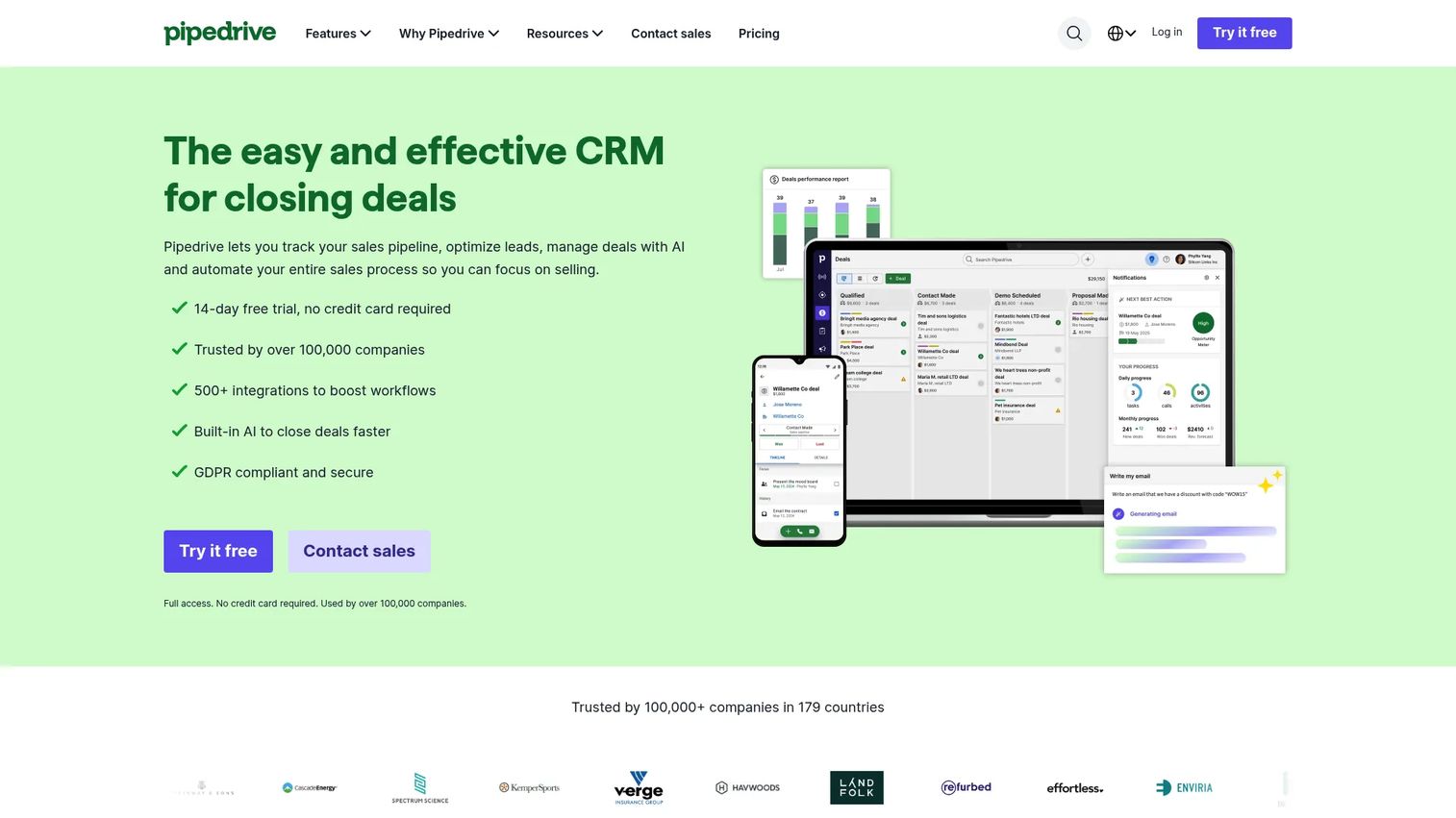
Pipedrive is a pipeline focused CRM for managing leads and sales activity. It includes automation, reporting, email synchronization, and nurturing sequences.
The platform supports process visibility more than advanced predictive modeling. Smaller teams can use its lead inbox and activity data to establish consistent prioritization first.
Best for: Small sales teams that value pipeline clarity and rep adoption.
Key features
- Lead and pipeline management
- Activity tracking
- Sales automation
- Email synchronization
- Reporting and analytics
Why choose Pipedrive: Choose it when clean execution matters more than a custom lead scoring model. A dependable CRM process creates better data for later prediction.
Pipedrive pricing: Lite starts at $14 per seat monthly with annual billing. A 14 day trial is available.
G2 rating: 4.3/5.
Considerations when choosing predictive lead scoring software
Data requirements
Ask what historical outcomes the model needs and which fields must be complete. Review the required lookback period, conversion events, and record volume before signing.
Bad source data creates confident but weak recommendations. Plan data cleanup before model training.
Model transparency
Reps need to understand why a lead ranks highly. Check whether the platform exposes influential factors, score changes, and reason codes.
Transparency also helps RevOps identify outdated assumptions when the ICP changes.
CRM and workflow fit
Place scores inside the system where reps already manage pipeline. Another isolated dashboard adds tool sprawl and weakens adoption.
Review how the platform writes values back to contact, account, and opportunity records.
Account level versus contact level scoring
Inbound teams often prioritize individuals. ABM programs need account scoring because several stakeholders can research independently.
Hybrid motions should examine whether both score types can inform the same territory and ownership rules.
Routing and activation
Define what happens when a score crosses a threshold. Possible actions include assigning an owner, creating a task, changing nurture status, or starting a sequence.
Measure whether those actions improve meeting conversion and pipeline quality. The score itself is not the outcome.
Conclusion
Start with your sales motion, rather than the longest feature list.
HubSpot and Salesforce fit teams that want prioritization close to CRM workflows. Marketo connects scoring with enterprise marketing automation.
For account based programs, 6sense and Demandbase combine account intelligence with intent signals. MadKudu or Pecan AI suit organizations with richer data and more customized prediction needs.
Apollo and Clay serve outbound teams that want enrichment close to prospecting. Zoho CRM, Freshsales, Outfunnel, and Pipedrive offer narrower options for smaller revenue teams.
Whichever platform you shortlist, test three things before rollout. Check whether the model has enough data, whether reps understand the output, and whether scores trigger action.
Once the scoring foundation works, richer buyer engagement signals can help sales teams prioritize follow up with more context.
Start your journey with Guideflow today!
FAQs
Predictive lead scoring software estimates which leads or accounts are most likely to reach a defined conversion outcome. It analyzes historical results alongside fit, behavior, CRM activity, and intent signals.
The output can be a numeric score, priority tier, buying stage, or conversion probability.
Rules based scoring assigns points through manually defined conditions. Predictive scoring uses statistical or machine learning models to find patterns in historical outcomes.
Many teams use a hybrid model. Predictive outputs rank likelihood, while business rules enforce territory or qualification requirements.
Requirements differ between vendors and models. You need enough successful and unsuccessful outcomes for the system to identify recurring patterns.
Ask vendors about minimum conversion counts, record volume, and required history. Also review how missing fields affect the model.
It can operate from a data warehouse or another customer database. However, CRM history usually supplies lifecycle stages and opportunity outcomes that improve the model’s usefulness.
A CRM also gives sales teams a place to see scores and act on them.
Yes. Account scoring aggregates activity across multiple contacts and anonymous visitors from the same company.
ABM teams can combine intent data with engagement and firmographic fit. The resulting score helps prioritize accounts rather than individual form fills.
A rules based CRM setup can be configured quickly when fields and ownership rules already exist. Custom predictive models require more work around data preparation and outcome definitions.
Implementation time also depends on integrations, model training, testing, and routing design.
Entry level CRM platforms can start below $20 per user monthly. Data enrichment and outbound products often charge by seats, contacts, or usage.
Enterprise ABM platforms usually use custom pricing. Evaluate implementation support and data costs alongside subscription fees.
Useful inputs include firmographic fit, technology use, website behavior, CRM history, product activity, and buying intent. Negative scoring can reduce priority for inactivity or poor fit.
Choose signals that match your sales motion. An inbound SMB funnel needs different evidence from an enterprise buying committee.
Yes, provided it has clean historical data and analytics support. The team also needs a stable definition of the conversion event being predicted.
Many organizations begin with rules or enrichment formulas. They move to custom predictive analytics once data volume and operational maturity increase.