You built the review cycle in a spreadsheet. One tab per manager, a shared doc for goals, a Slack thread for reminders. Then the company grew. Now half the reviews are late, ratings mean different things depending on who wrote them, and leadership wants a report you cannot actually produce without three days of copy-paste.
This is where manual appraisal breaks. Not because HR is disorganized, but because spreadsheets have no workflow, no reminders, no version control, and no defensible audit trail. When you have 12 managers, that is annoying. When you have 60, it is a liability.
The market has responded. The global performance appraisal and management software market reached USD 7.2 billion in 2025 and is forecast to hit USD 17.9 billion by 2034, growing at a 10.27% CAGR, according to IMARC Group (2025). Buyers are moving off spreadsheets fast, and the tools have gotten far better at review cycles, 360 degree feedback software workflows, goal tracking, and the reporting HR needs to defend a promotion or a pay decision.
The tricky part is choosing. The category ranges from dedicated performance review platforms to full HR suites where appraisals are one module. The right pick depends on how complex your review process is, how much continuous feedback you want between cycles, and how deeply the tool needs to integrate with your existing HRIS. This guide walks through eight options and the exact criteria that separate them.
What's inside
This guide covers eight performance appraisal software tools for HR teams and managers who need a centralized, repeatable review process instead of scattered docs. We selected tools on six criteria: review workflow depth, 360 feedback support, goal tracking, reporting and analytics, integrations, and ease of administration. Some are dedicated performance systems. Some are broader HR platforms with performance built in. We chose them for practical fit against real buying scenarios, not brand recognition alone. Every pricing figure and G2 rating below was verified against first-party sources in July 2026.
TL;DR
- Best overall for structured performance management: Lattice.
- Best for people analytics and culture feedback: Culture Amp.
- Best for small to mid-size teams that want HR breadth: BambooHR.
- Best for customizable review workflows: PerformYard.
- Best for manager coaching and check-ins: 15Five.
- Best for broader talent and engagement workflows: Leapsome.
- Best for all-in-one HR platform buyers: HiBob.
- Best for companies standardizing on a broader workforce platform: Rippling.
What performance appraisal software actually is
Performance appraisal software is a centralized system for running employee reviews, tracking goals, collecting feedback, and building development plans in one place instead of across spreadsheets, static templates, and ad hoc Google Docs. It replaces manual review docs with structured workflows, automated reminders, and reporting that HR and leadership can rely on for talent decisions.
The category overlaps with performance management software and employee review system tools, but the core job is the same: standardize how reviews happen and make the output measurable. Core capabilities usually include:
- Formal review cycles (annual, quarterly, project-based, and probationary)
- Continuous feedback and lightweight check-ins between cycles
- Goal setting and progress tracking against objectives
- 360-degree feedback with peer and manager input
- Reporting, analytics, and calibration across teams
- Integrations with HRIS, payroll, and communication tools
The strongest employee appraisal software connects these pieces. Goals link to review forms, feedback ties to development plans, and every rating rolls up into analytics HR can filter by team, manager, or cycle. That connection is what turns a review event into a performance program.
What performance appraisal software should do for HR teams and managers
Replace spreadsheet chaos with a repeatable workflow
Manual review processes create three predictable problems: inconsistency, missed deadlines, and poor visibility. Different managers write in different formats, some finish late, and nobody has a clean view of who completed what. A performance review platform fixes this by standardizing forms, routing approvals, sending automated reminders, and tracking completion rates in real time. HR stops chasing people and starts managing a process.
Support continuous feedback between review cycles
Annual reviews alone leave 11 months of blind spots. Modern teams pair the formal cycle with continuous feedback: weekly or biweekly check-ins, manager coaching notes, peer praise, and ongoing feedback loops. This gives managers something to reference when the formal appraisal comes around, instead of trying to remember what happened in Q1. It also catches problems while they are still fixable.
Connect reviews to goals and development plans
The best tools tie performance comments directly to objectives, skills growth, and next-step action plans. When a review references a specific goal the employee set six months ago, the conversation gets concrete. When it ends with a documented development plan, manager follow-through becomes trackable rather than aspirational. This linkage is what makes appraisals drive behavior instead of just documenting it.
Make reporting and calibration defensible
HR needs visibility into completion rates, rating distribution, manager participation, and review quality. When leadership asks why one team rates everyone a 4 and another rates everyone a 3, you need calibration tools and distribution reports to answer. Bias checks, rating normalization, and clean exports turn subjective reviews into data you can defend in a promotion committee or a compensation review.
When to use performance appraisal software
When spreadsheets start breaking at scale
Use it when you have more managers, more teams, or more review cycles than HR can track manually. The tipping point usually lands somewhere between 30 and 75 employees, when the review cycle stops fitting in one person's head and starts requiring a system.
When manager consistency is slipping
Use it when different managers write reviews in different styles, with uneven quality and inconsistent deadlines. Standardized review forms and calibration bring everyone onto the same scale, which matters the moment reviews start feeding pay or promotion decisions.
When leadership wants better talent decisions
Use it when HR needs data-backed insight for promotions, performance trends, succession planning, or compensation. Analytics and reporting turn a pile of review docs into the kind of evidence a leadership team can act on.
When you need a more continuous performance culture
Use it when the organization wants regular feedback, coaching, and goal visibility instead of a once-a-year event. Continuous feedback and check-in cadences build the muscle that annual reviews alone never will.
Comparison table
Here is a fast way to compare category fit, review depth, and platform breadth across all eight tools. Pricing and G2 ratings were verified against first-party sources in July 2026. Where a vendor does not publish list pricing, the plan structure is noted and the exact figure is quote-based.
| # | Product | Intent | Key differentiation | Pricing | G2 rating |
|---|---|---|---|---|---|
| 1 | Lattice | Structured performance management | Integrated performance, goals, engagement, and comp | From $8/user/month (annual) | 4.7/5 |
| 2 | Culture Amp | People analytics and culture | Engagement plus performance with AI coaching | Quote-based, annual | 4.5/5 |
| 3 | BambooHR | HR breadth for growing teams | All-in-one HRIS with performance layered in | From $10/employee/month | 4.4/5 |
| 4 | PerformYard | Customizable review workflows | Modular, configurable performance management | From $5-10/person/month | 4.7/5 |
| 5 | 15Five | Manager coaching and check-ins | Continuous performance plus manager enablement | From $4/user/month (annual) | 4.6/5 |
| 6 | Leapsome | Talent, learning, and performance | HRIS plus talent suite with AI agents | Quote-based | 4.8/5 |
| 7 | HiBob | All-in-one HR platform | Core HR with talent and performance modules | Quote-based | 4.5/5 |
| 8 | Rippling | Workforce platform consolidation | Unified HR, IT, payroll, and performance | From $8/user/month + $40 base | 4.8/5 |
1. Lattice
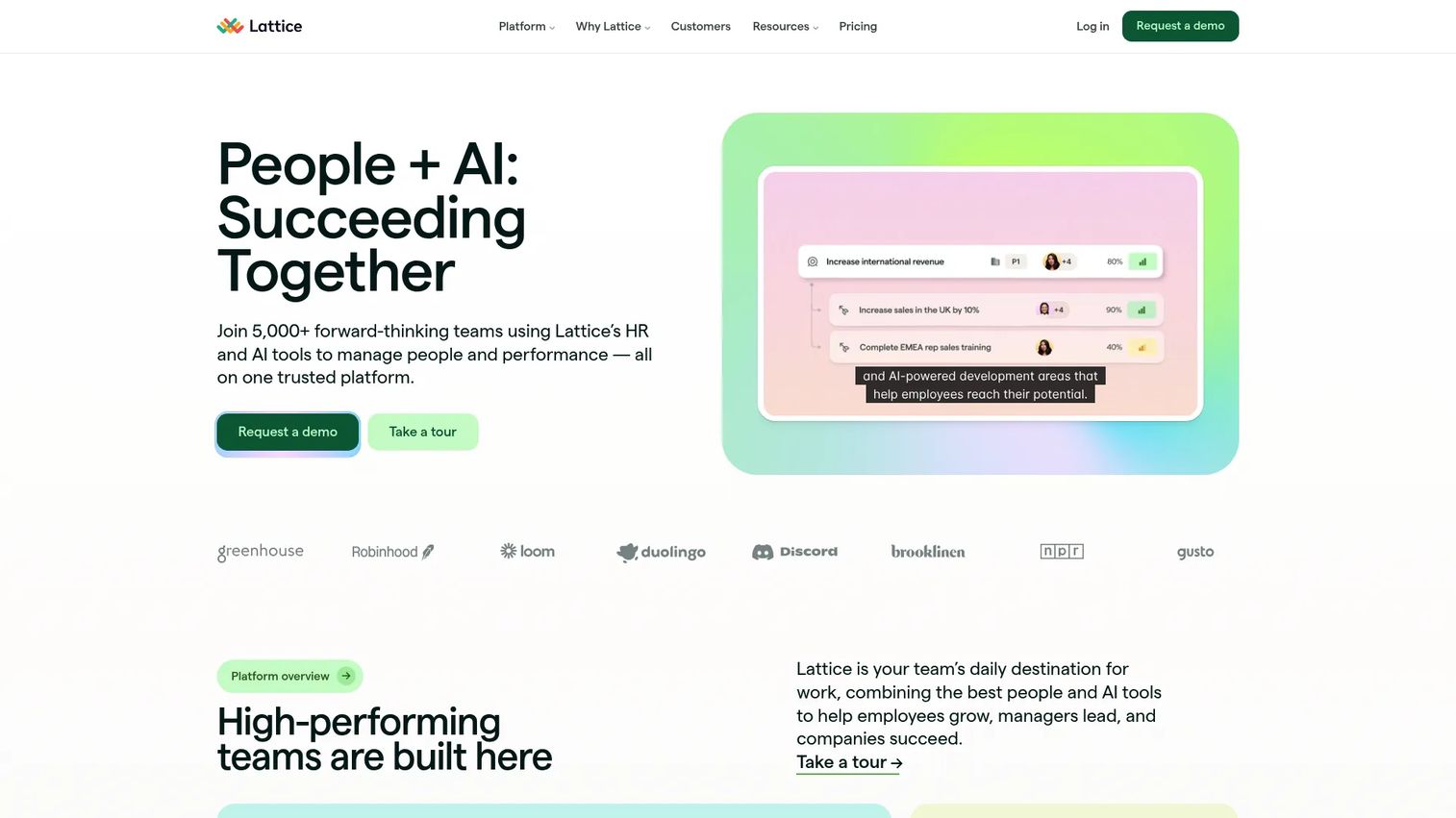
Lattice is a people management platform built around performance, goals, engagement, growth, and compensation. It is the tool most often shortlisted when HR wants a mature, dedicated performance system rather than a light add-on. For teams that care about calibration, manager adoption, and scalable review cycles, Lattice tends to be the default comparison point.
Best for: Mid-market and enterprise HR teams that want an integrated people management suite with deep performance workflows.
Key strengths
- Customizable performance reviews: Configure review cycles, forms, and rating scales to match how your organization actually evaluates people.
- Goals and OKRs tracking: Tie individual objectives to team and company goals, with progress visible inside the review.
- Feedback and 1:1 tools: Continuous feedback, praise, and structured one-on-ones keep coaching alive between formal cycles.
Why choose Lattice
Lattice performs best when HR intends to actually operationalize a review cadence and manager coaching, not just digitize a form. The platform is modular, so you can start with performance and add engagement, growth, or compensation as the program matures. Teams that want one system to grow into, rather than a narrow point tool, tend to land here.
Pricing
Lattice publishes per-seat pricing for its core products. Performance and Goals & OKRs can each be purchased individually at $8 per user per month, billed annually in USD, with a minimum annual agreement of $4,000. Engagement, Grow, and Compensation are additional products, and pricing for those tiers is not fully shown on the public pricing page. There is no free tier.
2. Culture Amp
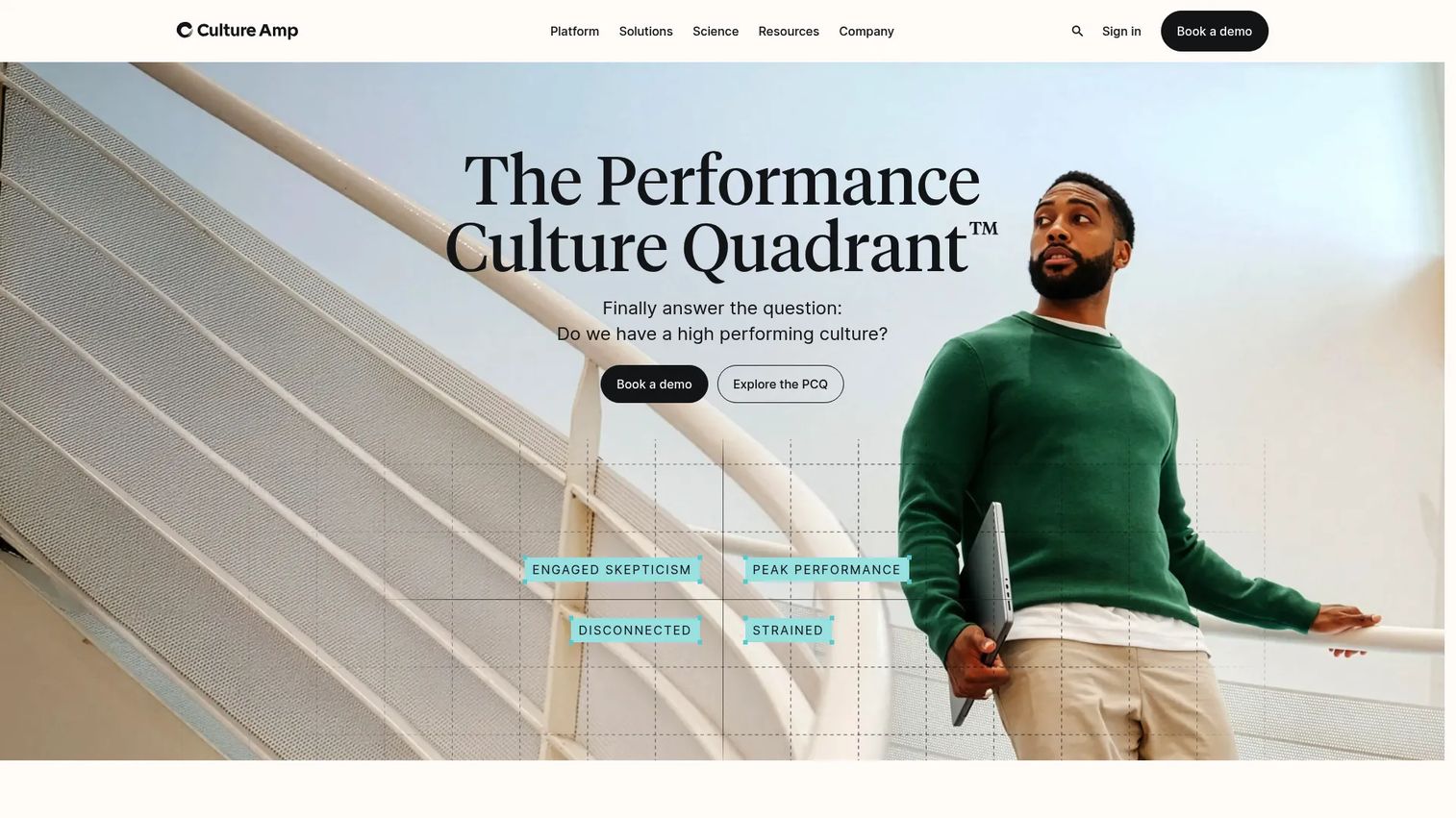
Culture Amp is an employee experience platform that connects engagement, performance, and development. It is the pick when leadership wants performance management treated as part of a broader people strategy, with reviews sitting alongside engagement surveys and people analytics rather than in isolation.
Best for: Mid-market and enterprise teams that want performance reviews tied to culture and employee experience data.
Key strengths
- Engagement and pulse surveys: Measure sentiment continuously and connect it to performance and retention trends.
- Performance reviews, goals, and continuous feedback: Run structured cycles while keeping ongoing feedback and goal progress in the same system.
- AI Coach and people analytics: Surface insights across engagement and performance data, with coaching prompts for managers.
Why choose Culture Amp
Culture Amp excels when the goal is insight, not just process. If leadership wants to understand how performance connects to engagement, retention, and organizational health, the analytics depth here is the draw. It suits people teams that see appraisals as one input into a larger employee experience picture.
Pricing
Culture Amp uses quote-based pricing that depends on employee count, the products chosen, and service tier. Its Engage, Perform, and Develop products, plus an Enterprise plan, are all billed annually. No public numeric prices are shown on the pricing page, so you will need to request a quote for accurate figures.
3. BambooHR
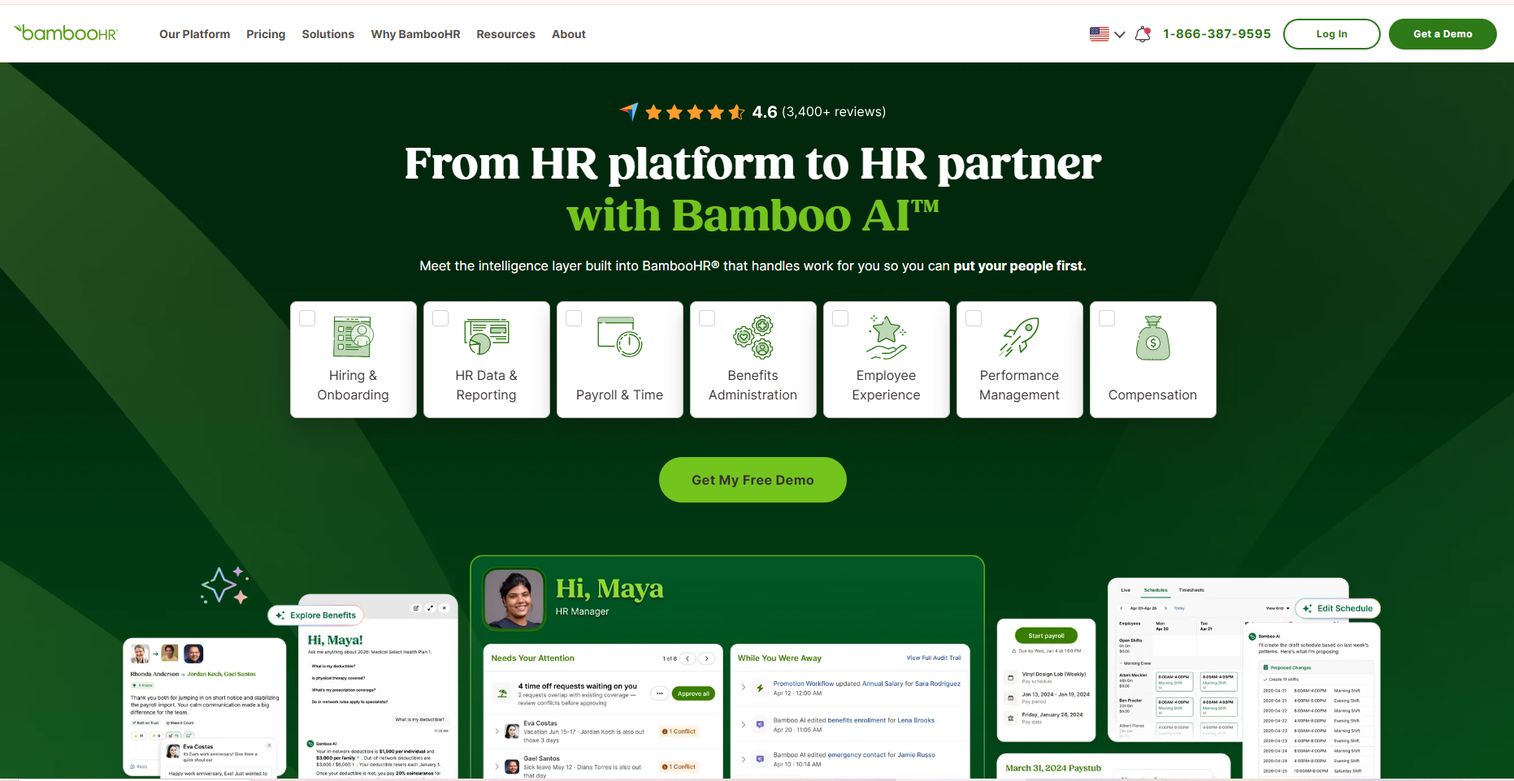
BambooHR is cloud-based HR software for growing organizations, with performance management layered into a broader HRIS. It fits buyers who want employee reviews inside a system that also handles HR data, time tracking, and self-service, rather than a standalone performance suite.
Best for: Growing companies that want an all-in-one HRIS with reporting, time tracking, and mobile self-service.
Key strengths
- HR data and reporting: A single source of truth for employee records, with reporting that spans performance and core HR.
- Time and attendance: Tracking built into the same platform, reducing the number of systems HR juggles.
- Mobile app and employee self-service: Employees and managers handle reviews, goals, and requests from their phones.
Why choose BambooHR
BambooHR fits teams that value simplicity and lower administrative overhead over a deep, dedicated performance suite. If the priority is HR system consolidation with solid goals, 1:1s, and 360 feedback included, this is a practical choice. It is especially strong for smaller HR teams that cannot dedicate a person to managing a specialist tool.
Pricing
BambooHR publishes per-employee pricing. For companies with more than 25 employees, the Core plan starts at $10 per employee per month, Pro at $17, and Elite at $25. For 25 or fewer employees, pricing starts at a $250 monthly flat rate. There is no free tier. Performance management may be included or added depending on plan, so confirm during quoting.
4. PerformYard
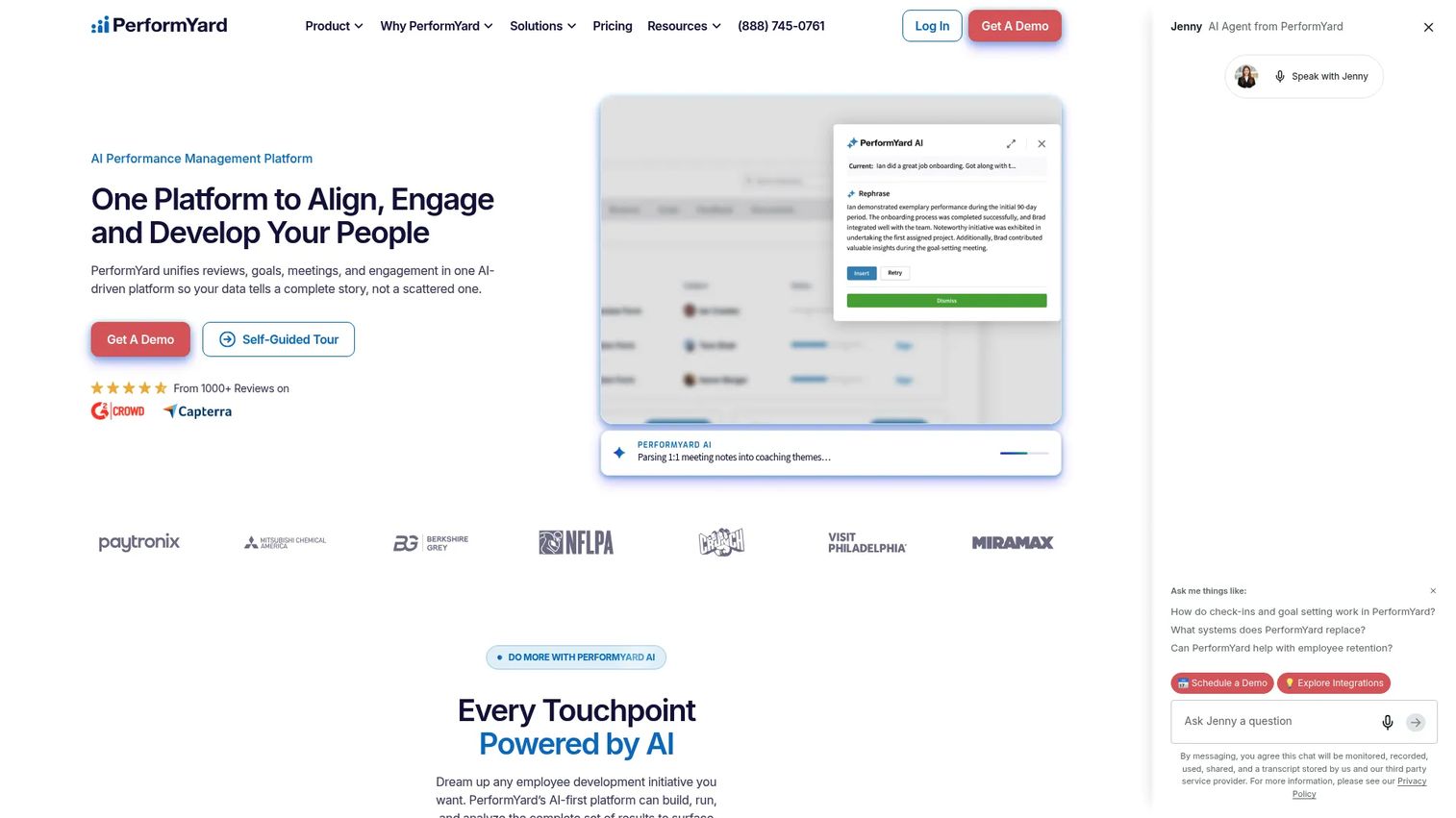
PerformYard is performance management software built around flexible, configurable review workflows. It is the option for HR teams that already have a defined review process and want software to mirror it closely, rather than force them into a rigid template.
Best for: Mid-market HR teams that want configurable performance management with reviews, goals, feedback, and engagement tools.
Key strengths
- Performance reviews and check-ins: Highly customizable cycles, forms, and approval flows that match your existing process.
- Goal management and continuous feedback: Connect objectives to reviews and keep feedback flowing between cycles.
- Engagement surveys and 1:1 meetings: Add engagement and structured meetings as modules when you need them.
Why choose PerformYard
PerformYard suits HR-led processes where control matters more than platform breadth. If you want to run annual, quarterly, project-based, and probationary cycles exactly your way, the customization depth is the reason to look here. It gives HR flexibility without a lot of platform bloat to administer.
Pricing
PerformYard uses modular package pricing. Performance Management starts at $5 to $10 per person per month, billed annually, with a minimum applying. Add-ons include PerformYard AI at roughly $1 to $3 per person per month, Employee Engagement at $1 to $3, and Meetings and Surveys each at $2 to $4. There is no free tier, and final pricing is built from the modules you select.
5. 15Five
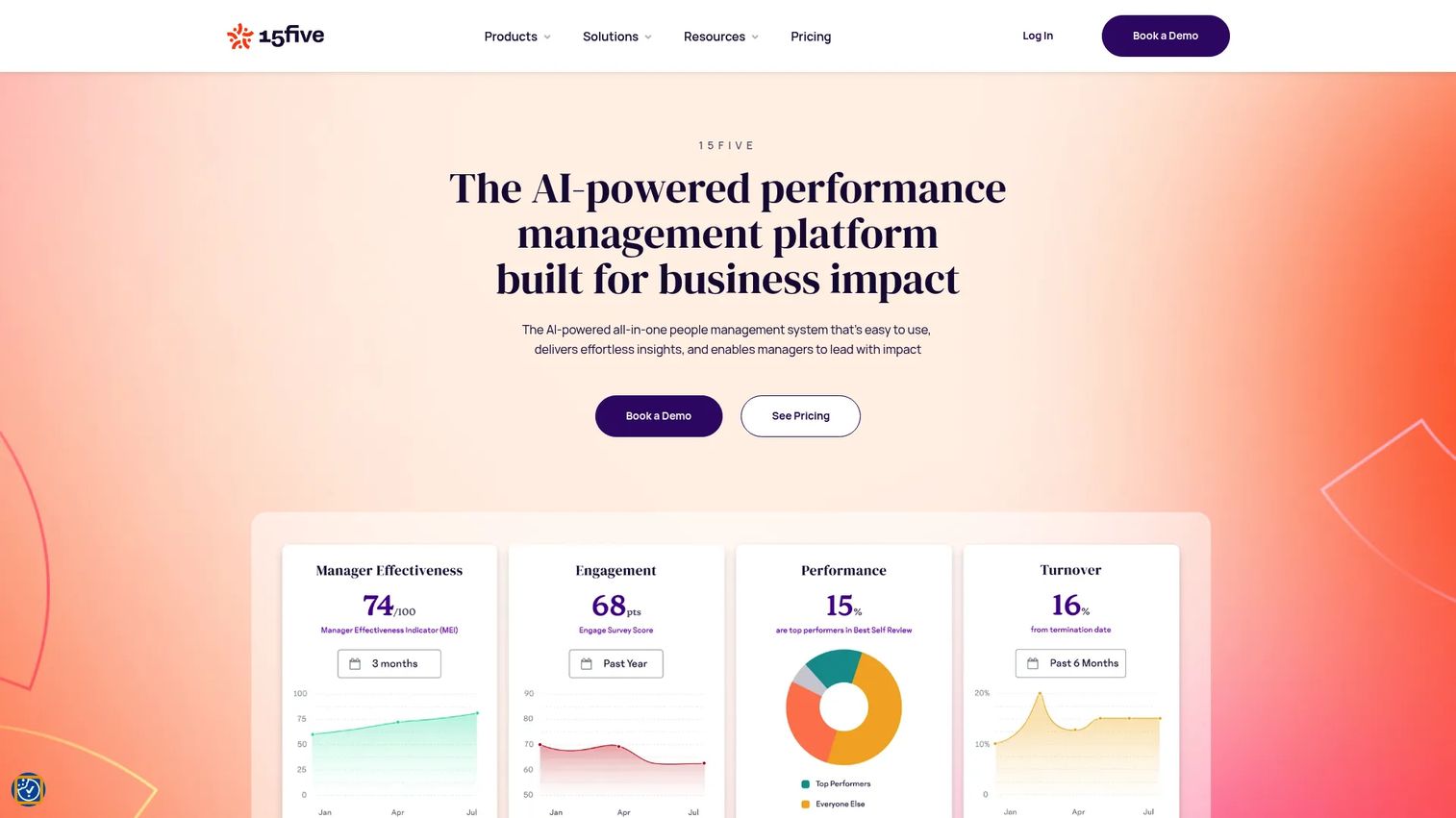
15Five is a performance and people management platform built around manager effectiveness and continuous performance. It centers on check-ins, feedback, and coaching, making it the pick for organizations trying to build an ongoing performance culture rather than a once-a-year review event.
Best for: People teams that want performance, engagement, and manager-effectiveness tools in one platform.
Key strengths
- Employee engagement surveys: Regular pulse and engagement measurement tied to manager action.
- Performance reviews and 360 feedback: Structured cycles with peer input, running alongside ongoing check-ins.
- OKRs, goals, and 1-on-1s: Weekly cadence tools that keep goals and coaching conversations continuous.
Why choose 15Five
15Five fits manager-led teams that value cadence and accountability. If your bottleneck is inconsistent manager coaching, the weekly check-in and manager enablement tooling directly addresses it. It works best in organizations willing to commit to a regular feedback rhythm rather than treating reviews as a calendar event.
Pricing
15Five publishes three annual-billed plans. Engage starts at $4 per user per month, Perform at $11, and Total Platform at $16. Add-ons include Manager Products, Kona AI, and Compensation packages. There is no free tier, so choose the plan that matches whether you need engagement, performance, or both.
6. Leapsome
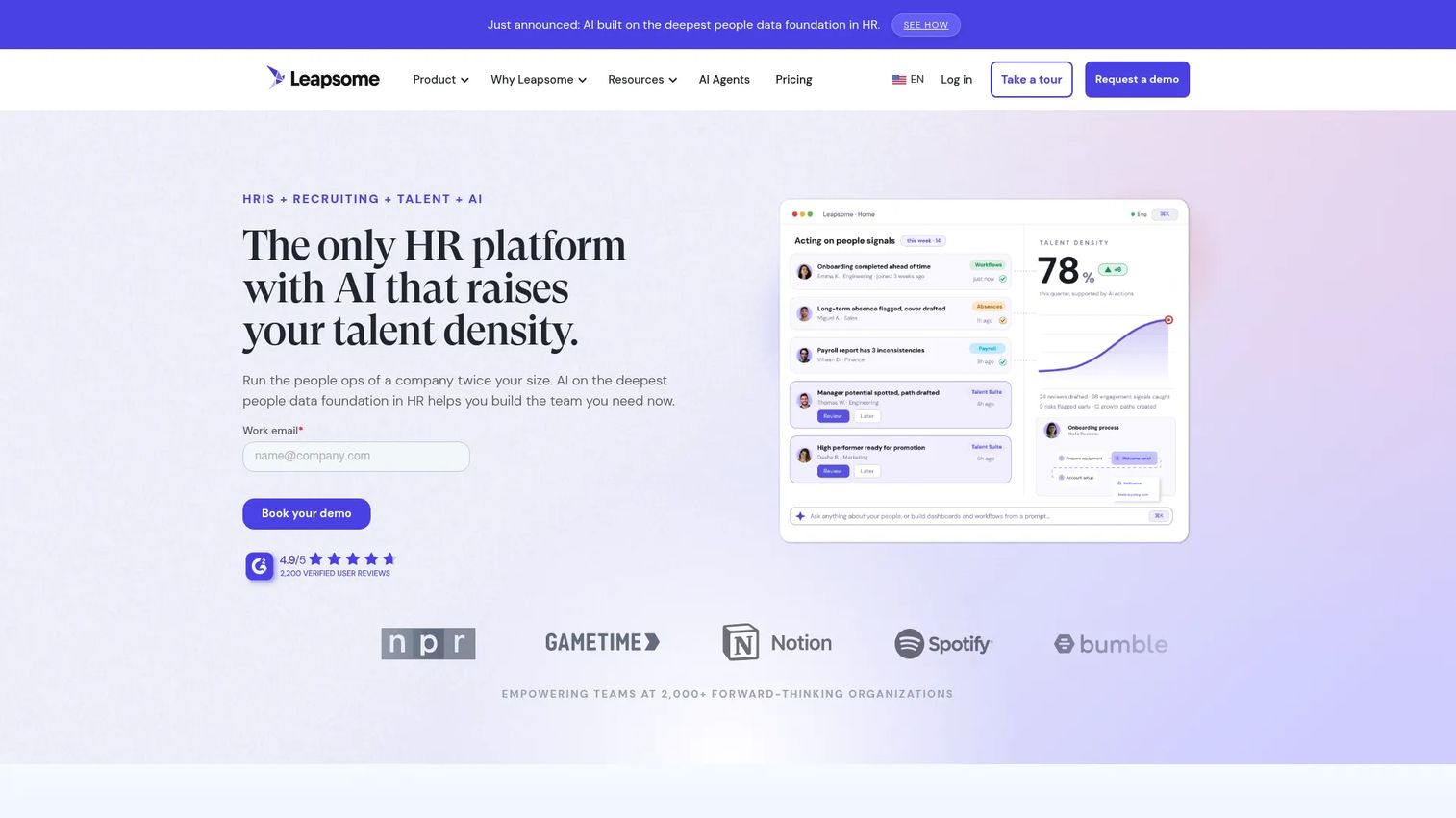
Leapsome is an AI-powered HR platform with a built-in HRIS and a broad talent suite spanning performance, learning, and development. It works well when buyers want performance management connected to learning and other people workflows in one system rather than stitched across tools.
Best for: Mid-market and enterprise HR teams that want an all-in-one people platform.
Key strengths
- HRIS with core people operations: Employee records, onboarding, absence management, time tracking, and payroll prep in one place.
- Full talent suite: Performance reviews, goals and OKRs, engagement surveys, learning, and compensation.
- AI agents for HR workflows: Analytics and recommendations that support review, goal, and feedback processes.
Why choose Leapsome
Leapsome fits companies that want one platform for multiple talent processes, especially where learning and development sit close to performance. If you want reviews, goals, and skills growth connected rather than siloed, the breadth is the appeal. It suits scaling teams consolidating several point tools into a single people platform.
Pricing
Leapsome uses quote-based pricing that depends on employee count, the modules used, and contract length. The company offers a 14-day free trial with no credit card required. No public numeric starting price is shown, so request a quote scoped to your headcount and module selection.
7. HiBob
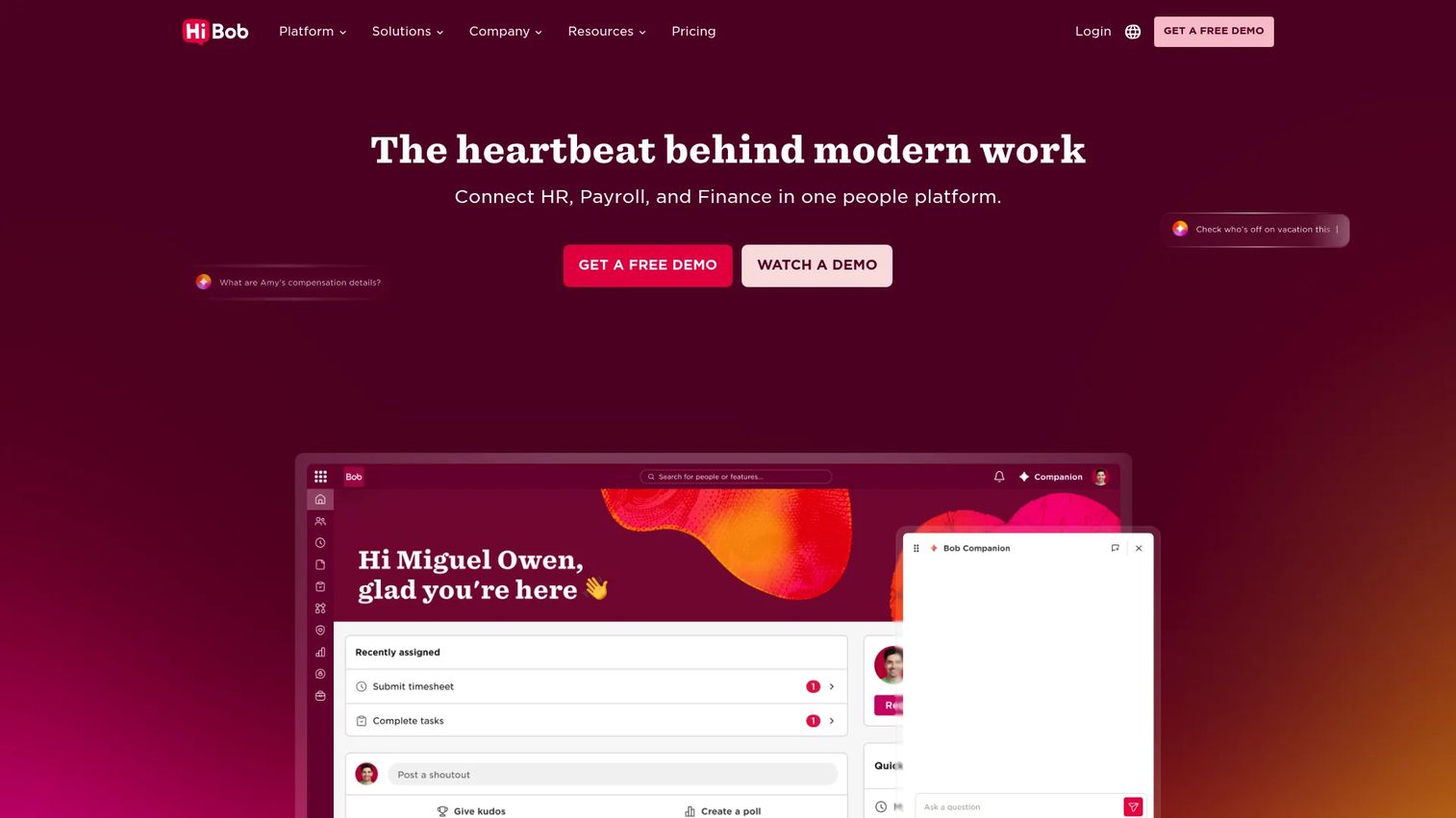
HiBob is a cloud-based HCM platform covering HR, payroll, finance, and people management, with performance workflows built into the employee system of record. It fits HR teams that want appraisals inside a modern, usable HRIS rather than a separate performance app.
Best for: Mid-sized and multinational companies needing an integrated HR platform.
Key strengths
- Core HR and HRIS: A single system of record with strong day-to-day usability for HR, managers, and employees.
- Talent suite: Hiring, performance, and learning modules that connect to the core HR data.
- Workforce planning and compensation: Planning, comp, and finance modules for growing and multinational teams.
Why choose HiBob
HiBob is a fit when HR wants performance management inside an employee system of record with a strong day-to-day experience. If manager and employee adoption hinges on a clean, modern interface, that usability is a real differentiator here. It works well for growing companies and distributed teams that want HR breadth without a clunky feel.
Pricing
HiBob uses customized pricing based on employee count and the modules you select. The pricing page directs visitors to request a tailored proposal rather than showing public prices, so exact figures come through a quote. Confirm which performance and talent modules are included in your proposal.
8. Rippling
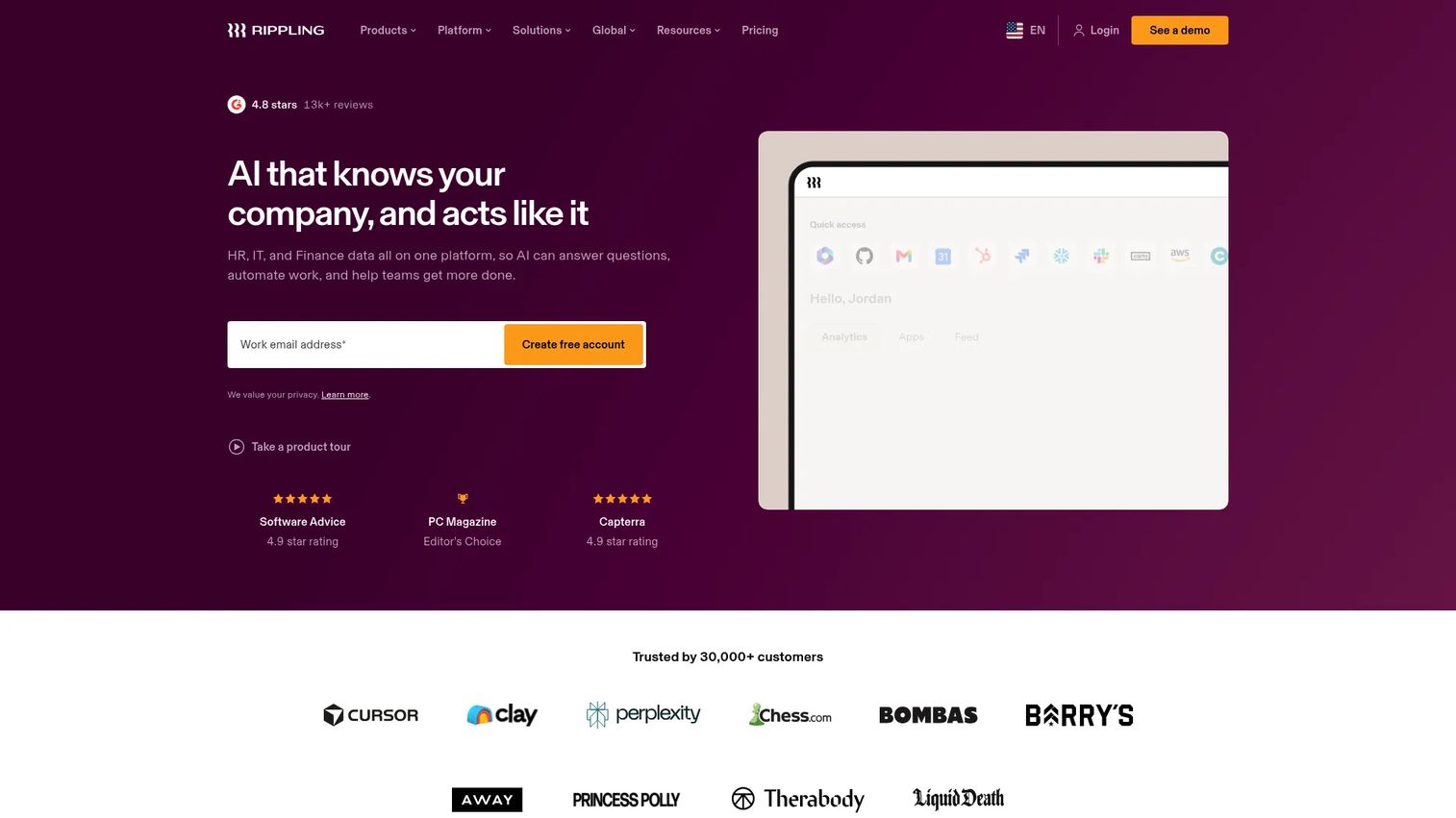
Rippling is a unified workforce platform spanning HR, IT, payroll, and spend management, with performance management as one part of a much larger system. It fits teams trying to reduce vendor sprawl and keep HR workflows, provisioning, and payroll in one place.
Best for: Companies that want one system for HR, IT, payroll, and spend automation.
Key strengths
- Unified workforce platform: HR, payroll, IT, and finance operations connected through shared employee data.
- Modular products: Payroll, benefits, device management, and spend tools you can turn on as needed.
- AI-powered automation: Workflows and analytics that run across connected business data, including performance.
Why choose Rippling
Rippling is the platform consolidation play rather than the deepest standalone performance specialist. If your priority is one system of record that automates provisioning, payroll, and HR workflows together, performance management comes along as part of that unified stack. It suits companies standardizing their entire people operation on a single platform.
Pricing
Rippling uses custom, quote-based pricing overall. Its small-business page lists a starting price of $8 per user per month plus a $40 per month base fee, with modular products added on top. There is no free tier, and the final figure depends on which modules you enable.
Considerations before you choose
Review cycle flexibility
Confirm the tool supports the cycle types you actually run: annual, quarterly, project-based, probationary, and any custom cadence. A tool that only handles annual reviews will fight you the moment you want a mid-year check-in or a 90-day new-hire review. Ask to see the cycle configuration during a trial.
Goal and feedback linkage
Goals, feedback, and review forms should connect, not live in separate modules that never talk to each other. When a review can pull in a goal's progress and a quarter of continuous feedback automatically, the appraisal writes itself. When they are siloed, managers duplicate work and context gets lost.
Reporting and analytics
Check the dashboards, export options, and manager-level visibility before you commit. You want completion rates, rating distribution, manager participation, and calibration views out of the box. Confirm you can export clean data for a promotion or compensation committee without manual rework.
Integrations
Map the tool against your stack: HRIS, payroll, Slack, email, calendar, and identity provider. HRIS integrations matter most, since a disconnected performance tool means double data entry and stale org charts. Confirm the specific integrations you rely on are supported, not just "available."
Governance and adoption
Look at permissions, calibration, automated reminders, and audit trails. These are what make reviews defensible and keep them on schedule. Then look at manager adoption support, because the best appraisal workflow fails if managers will not use it. Simple interfaces and in-workflow reminders drive far higher completion rates than mandates alone.
Conclusion
The right performance appraisal software depends on whether you need a dedicated performance system or a broader HR suite. Lattice is the strongest pick for structured performance programs with calibration and manager coaching. Culture Amp leads when you want analytics-led culture and engagement tied to reviews. BambooHR wins on HR simplicity for growing teams, and PerformYard is the choice when you need highly customizable review workflows.
For continuous feedback and manager enablement, 15Five stands out. Leapsome fits teams connecting performance to learning, HiBob suits buyers who want appraisals inside a modern HRIS, and Rippling is the platform consolidation play for companies unifying HR, IT, and payroll.
Start with the tool that best matches your review complexity, reporting needs, and manager adoption reality. Run a real cycle in a trial before you commit, because the difference between a tool that fits your process and one that fights it only shows up when managers start writing actual reviews.
FAQs
Performance appraisal software is a centralized system for running employee reviews, tracking goals, collecting feedback, and building development plans. It replaces spreadsheets and static forms with structured review cycles, automated reminders, and reporting HR can rely on for talent decisions.
HR teams, managers, and employees all use it. HR usually owns configuration, cycle scheduling, and reporting. Managers write reviews and run check-ins, while employees complete self-assessments, set goals, and give peer feedback.
The core features are configurable review cycles, 360 degree feedback, goal tracking, analytics and reporting, integrations with your HRIS, and automated reminders. The best tools connect these so goals, feedback, and reviews reference each other rather than living in separate modules.
It standardizes review forms, enforces deadlines with automated reminders, routes approvals, and centralizes reporting in one workflow. Instead of chasing managers across tabs and docs, HR tracks completion rates and rating distribution in real time and exports clean data on demand.
For most modern teams, continuous feedback carries more day-to-day weight because it improves coaching and visibility throughout the year. Annual reviews still matter for formal calibration, promotion, and compensation decisions. The strongest approach pairs both: ongoing check-ins feeding a structured formal cycle.
Verify review cycle flexibility, reporting and analytics depth, integration fit with your HRIS and payroll, governance features like calibration and audit trails, and manager adoption support. Run a full review cycle in a trial so you see how the appraisal workflow behaves with real managers before you commit.