You signed the partner. You sent the welcome email. You set up the portal. And then nothing.
Three weeks later, that partner still hasn't registered a deal, still can't explain the product, and is probably telling your competitor's channel team "we're evaluating our options."
Partner programs don't stall because the contracts are wrong. They stall because onboarding doesn't actually turn signed partners into selling partners. According to Forrester (2025), 67% of B2B partner ecosystem decision-makers expect partner-influenced revenue to grow more than 30% year over year. That growth only materializes if partners reach first meaningful selling activity, and most onboarding tools stop well short of that.
This guide compares 14 partner onboarding software tools across full PRM platforms, partner portals, LMS systems, CRM-native workflows, and demo automation. The goal is to help you match the right tool to the actual bottleneck in your partner activation motion.
What's inside
This guide is for partner marketing managers, channel operations leaders, and revenue teams building or scaling a partner program. Tools were selected based on:
- Coverage of partner activation workflows, not just portal access
- CRM integration depth for connecting partner activity to pipeline
- Fit across different partner types: Resellers, referral partners, agencies, and technology partners
- Pricing and G2 ratings verified from live sources during drafting
The list spans five categories, so you can pick the type that matches your onboarding gap rather than buying the biggest platform in the room.
TL;DR
- Best for partner-facing product content: Guideflow lets partners click through the product, revisit a Demo Center, and reach product understanding without another enablement call
- Best for CRM-native partner onboarding: Introw connects partner journeys directly to HubSpot or Salesforce workflows
- Best for mature PRM programs: Impartner and ZINFI cover the full partner lifecycle from recruitment to performance
- Best for straightforward channel management: Channeltivity and Kiflo give mid-market and SMB teams practical PRM without an enterprise rollout
- Best for partner training and certification: Docebo and LearnUpon handle structured learning paths at scale
- Best for Salesforce or HubSpot-centered teams: Salesforce Partner Cloud and HubSpot keep partner onboarding inside your existing CRM
What is partner onboarding software?
Partner onboarding software helps companies activate new channel, reseller, referral, agency, and technology partners through structured workflows, training, resource access, product education, milestone tracking, and partner data management.
The category is not a fixed product type. It includes PRM platforms, learning management systems, partner portals, CRM workflow tools, document collection systems, certification engines, and demo automation, depending on where your onboarding actually breaks down.
The goal isn't account creation. A signed partner who can't explain or show your product is functionally inactive. Good onboarding software should answer four questions for every partner at every stage:
- What does this partner need to do next?
- Do they have the resources to do it?
- Can they explain and show the product?
- Where are they stuck?
Core capabilities to look for
- Partner onboarding workflows and task assignment
- Milestone tracking and progress visibility
- CRM integration and partner data sync
- Partner portal or resource hub
- Role-based learning paths and certifications
- Document collection and approvals
- Product education through interactive demos
- Analytics on completion rates, engagement, and drop-off steps
- Governance, permissions, and version control
Partner onboarding software versus PRM software
PRM software manages the full partner lifecycle, covering recruitment, deal registration, MDF, performance tracking, and co-marketing alongside onboarding. Partner onboarding software focuses narrowly on activating a new partner. Many PRM platforms include onboarding modules. Some teams get better results by combining a lightweight onboarding tool with a CRM instead of buying a full PRM.
Partner onboarding software versus partner portal software
A portal answers "where is the resource?" Onboarding software answers "what should this partner do next?" Portals store content. Onboarding tools sequence progress. A Demo Center used for partner education functions differently from a traditional resource library: It tracks who engaged, which steps they completed, and where they dropped off.
When to use partner onboarding software
Move signed partners toward first selling activity
Signing a partner doesn't create pipeline. The onboarding system needs to guide each partner through product knowledge, required documentation, certification, and first deal readiness before that partner can contribute revenue. If partners consistently wait on your team to run the first co-sell call, the onboarding process has a gap.
Replace scattered enablement calls and static PDFs
Partner teams often repeat the same product explanation across dozens of new partners every quarter. Centralizing that journey into self-serve resources, including interactive demos partners can revisit on their own time, cuts the manual load and gives partners something they can actually use in partner-led selling.
Measure readiness across partner types
Resellers, referral partners, agencies, MSPs, and technology partners need different onboarding paths and different readiness signals. A good system tracks each partner's progress by type, tier, and region, so you can see who is ready for first deal registration and who needs a nudge before you can count them in your forecast.
Partner onboarding software comparison
Each tool below serves a specific onboarding use case. The table maps where each one fits so you can filter by your actual bottleneck before reading the full entries.
| # | Product | Best for | Key differentiator | Pricing | G2 rating |
|---|---|---|---|---|---|
| 1 | Introw | CRM-native partner onboarding | Embedded partner workflows with HubSpot and Salesforce sync | Free plan available; paid plans contact sales | 4.8/5 |
| 2 | Impartner | Mature PRM programs | Full partner lifecycle from recruitment to performance | Custom pricing | 4.4/5 |
| 3 | Channeltivity | Mid-market channel teams | Practical PRM with deal registration and MDF management | Custom pricing | 4.7/5 |
| 4 | Magentrix | Branded partner portals | Configurable portals with community and LMS built in | From $1,000/month | 4.6/5 |
| 5 | ZINFI | Enterprise channel programs | 30 unified channel management applications | From $1,450/month (billed annually) | 4.9/5 |
| 6 | Kiflo | SMB partner programs | AI-powered PRM integrated with HubSpot and Salesforce | From $399/month | 4.7/5 |
| 7 | Guideflow | Partner-facing product content | Interactive demos and Demo Centers with completion analytics | Free plan available; paid from $35/month | 5.0/5 |
| 8 | Channelscaler | Channel operations at scale | Modular, fixed-price channel program automation | From $50k per module annually | 4.4/5 |
| 9 | Unifyr | Partner recruitment and enablement | AI-powered PRM with agent-based partner management | Custom pricing | 4.4/5 |
| 10 | Salesforce Partner Cloud | Salesforce-based partner programs | Native Salesforce partner experience with CRM integration | From $25/member/month (billed annually) | 4.3/5 |
| 11 | HubSpot | HubSpot-based partner onboarding | CRM workflows and partner pipeline tracking inside HubSpot | Free plan available; paid from $7/seat/month | 4.4/5 |
| 12 | Docebo | Partner training and certification | Extended enterprise learning paths with AI content tools | From $9/user (250-user minimum) | 4.3/5 |
| 13 | LearnUpon | Partner learning programs | External training portals with branching learning journeys | Custom pricing (from 100 users) | 4.5/5 |
| 14 | AgilityPortal | Partner portal and communication | Intranet-style portal with knowledge base and task management | From $99/month | 4.8/5 |
Best 14 partner onboarding software tools for 2026
1. Introw
Introw is a partner relationship management platform built to manage partner programs from a single CRM-connected hub. It handles partner portals, deal and lead registration, shared pipeline visibility, commissions, and content enablement, all with two-way sync to HubSpot and Salesforce. The platform includes a partner LMS with courses and certifications, plus AI-powered partner support tools. Introw is designed so partner teams can run onboarding and co-selling without toggling between tools.
Best for: B2B SaaS teams that want partner onboarding tightly connected to CRM workflows and shared pipeline data.
Key features
- Branded no-code partner portals
- Deal and lead registration with shared pipeline
- Partner LMS with courses and certifications
- Commission plans and affiliate campaign management
- AI assistant and partner support integrations
Why choose Introw: If your biggest onboarding problem is visibility, specifically seeing which partners are active, which deals they've registered, and where they're stuck inside your CRM, Introw solves that without forcing partners into a separate system.
Introw pricing: Introw offers a free Starter plan covering one partner and one seat, with deal registration, CRM integration, and content sharing included. Pro, Scale, and Enterprise plans scale by partner count.
G2 rating: 4.8/5
2. Impartner
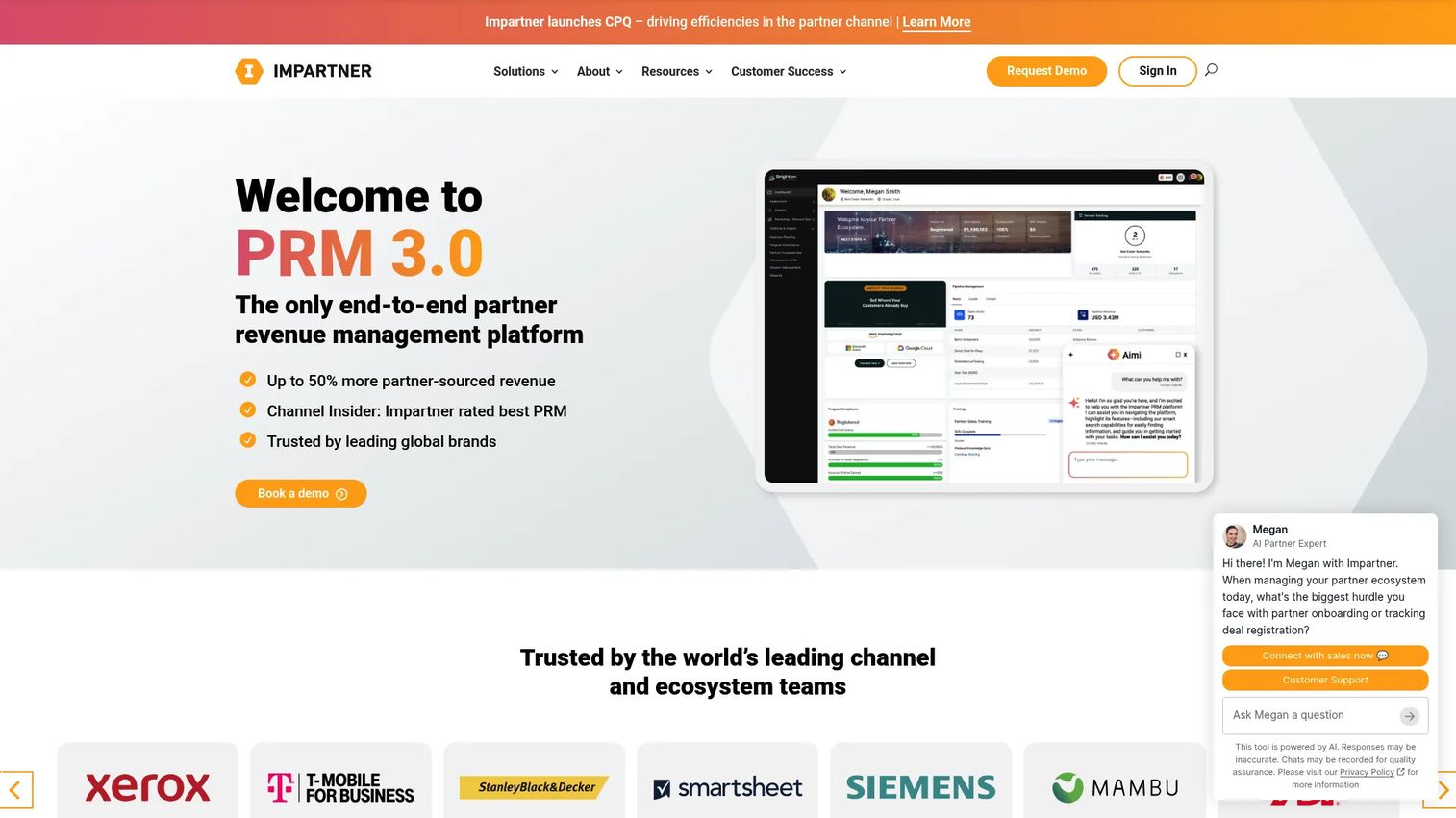
Impartner provides partner revenue management software for companies running complex, multi-tier partner programs. The platform covers partner lifecycle management from recruitment through performance measurement, including partner marketing automation, MDF, deal registration, co-selling, training, and certification. AI-powered workflow orchestration sits across all modules.
Best for: Established partner programs with multiple partner tiers, diverse partner types, and mature lifecycle management requirements.
Key features
- Partner lifecycle management and recruitment workflows
- Partner marketing automation and MDF management
- Deal registration, pipeline management, and co-selling
- Partner training and certification
- AI-powered intelligence and workflow orchestration
Why choose Impartner: Choose Impartner when onboarding can't be separated from the broader partner program. If you need deal registration, MDF, channel analytics, and partner marketing running from a single system alongside onboarding, Impartner is built for that scope.
Impartner pricing: Impartner directs all pricing inquiries to their sales team. If budget visibility matters before evaluation, ask for a range during the initial call.
G2 rating: 4.4/5
3. Channeltivity
Channeltivity is a configurable PRM platform designed for teams that need partner onboarding, deal registration, lead distribution, and partner communications without an enterprise-scale implementation. It supports reseller, distributor, referral, dealer, and technology partner programs with practical tooling for the core PRM use cases. CRM integrations with Salesforce and HubSpot are included.
Best for: Mid-market channel teams that want a focused PRM with deal registration and MDF management, without overcomplicating the setup.
Key features
- Partner portal and onboarding workflows
- Deal registration and lead distribution
- MDF management and approvals
- Training, certification, and content library
- Channel reporting and dashboards
Why choose Channeltivity: Channeltivity works when the team knows which partner program features they need and doesn't want to pay for modules they won't use. Its Growth, Mid-Market, and Enterprise tiers let programs scale without rebuilding from scratch.
Channeltivity pricing: Channeltivity tailors pricing to program structure and scale across its Growth, Mid-Market, and Enterprise tiers. Specific amounts aren't listed; contact their team for a quote matched to your partner count and feature requirements.
G2 rating: 4.7/5
4. Magentrix
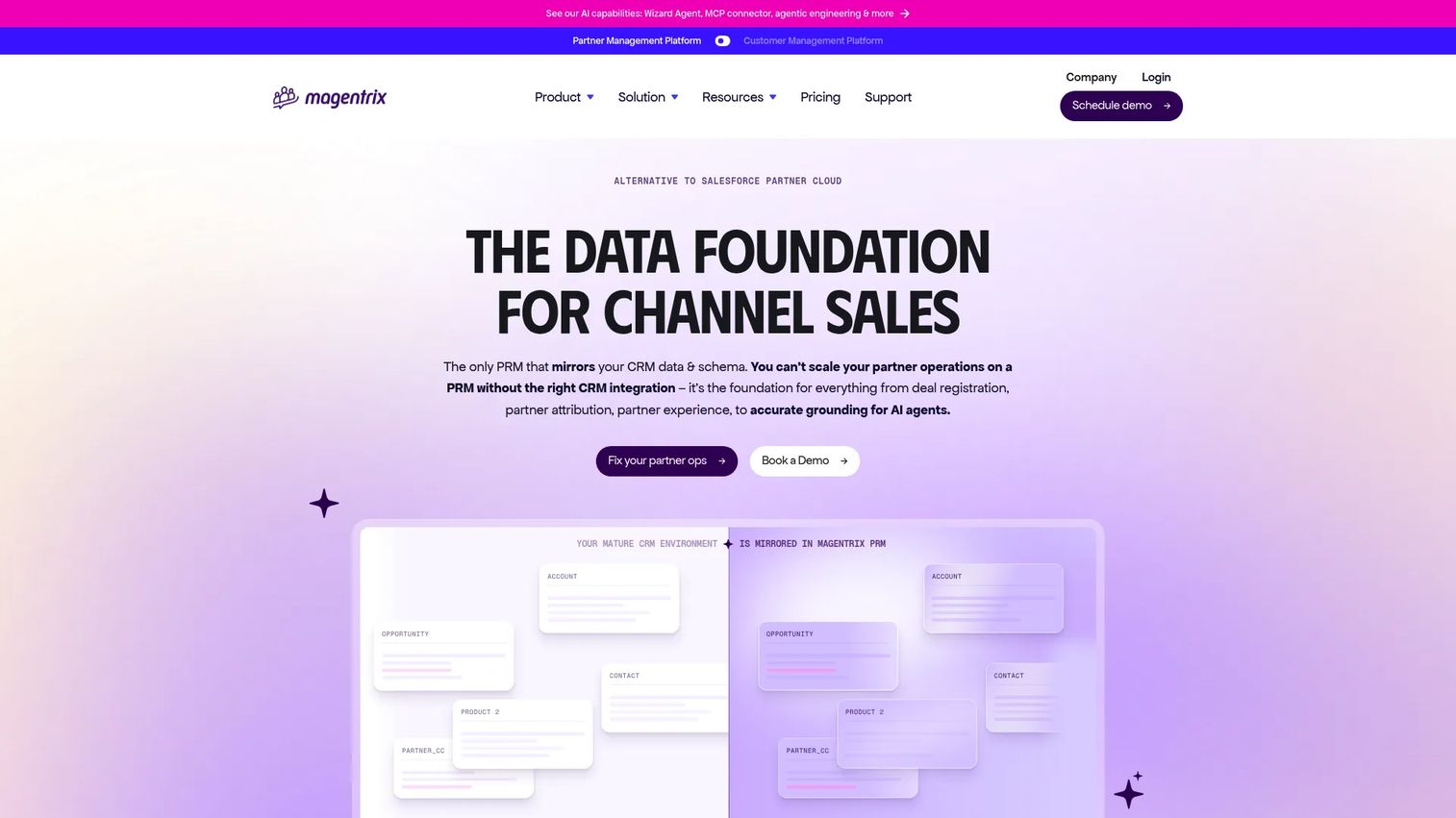
Magentrix is a partner relationship management and customer portal platform with strong customization and community capabilities. Beyond standard portal features, it includes a built-in LMS with certifications, document management, partner journey workflows, and an AI wizard agent for ticket deflection and semantic search. It connects to HubSpot, Salesforce, and Microsoft Dynamics.
Best for: Companies that need highly branded, configurable partner portals with community, training, and CRM integration built into the same environment.
Key features
- Configurable partner portals with community features
- Built-in LMS with certifications and gamification
- Partner journey and onboarding workflow builder
- Document management, wikis, and knowledge bases
- CRM integrations with HubSpot, Salesforce, and Microsoft Dynamics
Why choose Magentrix: When the partner experience itself matters, meaning you want partners to feel like they're in a destination built for them rather than a generic task list, Magentrix gives you the design and configuration control to build that.
Magentrix pricing: Essentials starts at $1,000/month; Advanced is $1,200/month. Both can be billed monthly, with annual pricing available on request. The Unlimited plan is custom-priced and adds unlimited users, additional storefronts, and a developer sandbox.
G2 rating: 4.6/5
5. ZINFI
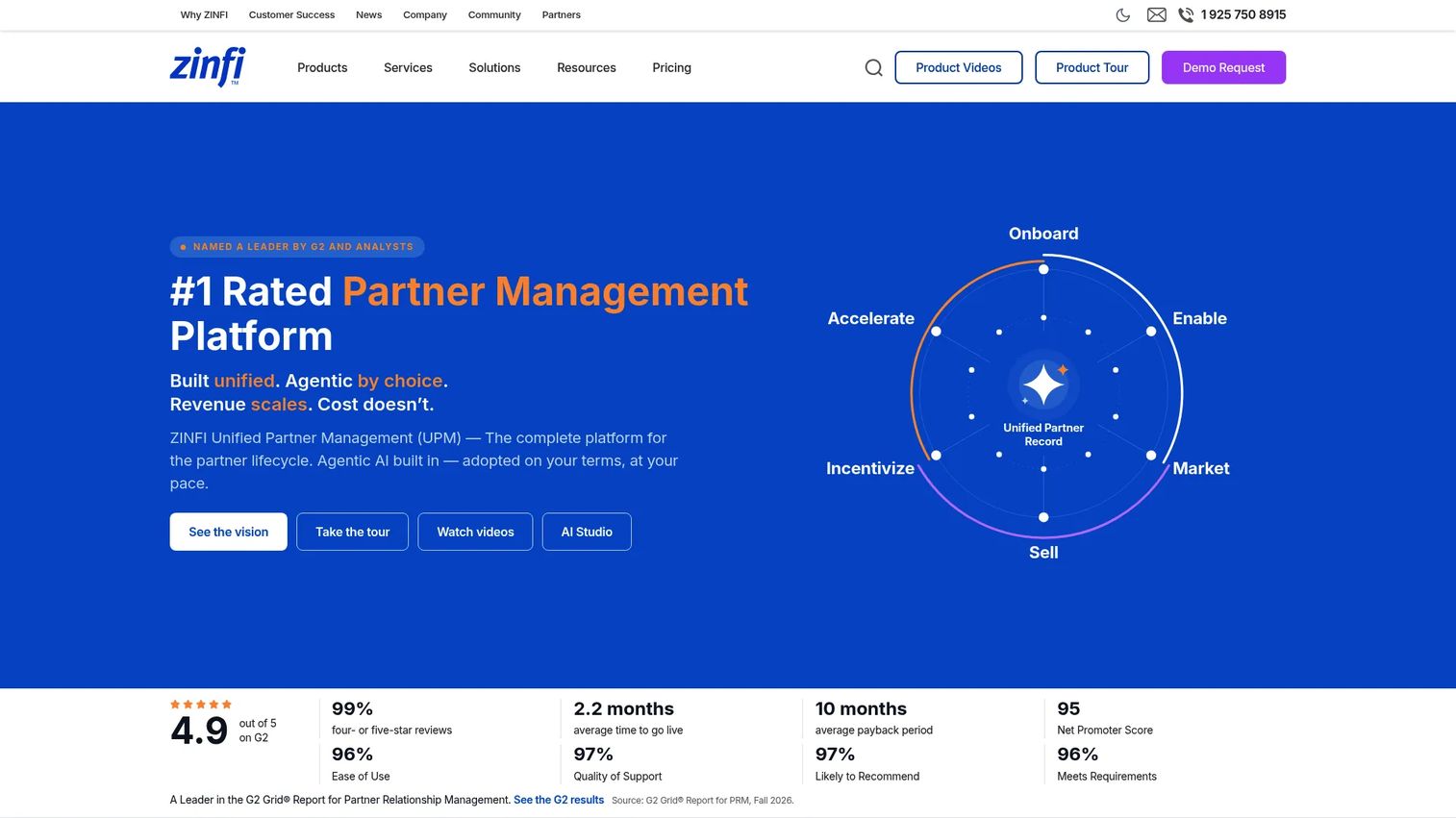
ZINFI offers Unified Partner Management software with up to 30 lifecycle applications covering every phase of a channel program. That includes partner onboarding and training, through-partner marketing, lead and deal management, MDF, commissions, rebates, partner communities, and AI tools. It's one of the most comprehensive platforms in the category and positions itself toward technology and manufacturing companies running global partner programs.
Best for: Enterprise partner programs with multiple partner motions, advanced channel operations requirements, and the need for a single platform across onboarding, marketing, and performance.
Key features
- Partner onboarding and program management workflows
- Through-partner email, social, microsite, and event marketing
- Lead management, deal registration, co-selling, and CPQ
- MDF, commissions, rebates, and partner payments
- Partner community, marketplace, and AI capabilities
Why choose ZINFI: ZINFI earns its place when you need onboarding to sit inside a full channel operating model, not bolted onto a CRM. Its Starter plan at $1,450/month (billed annually) covers 6 lifecycle applications, which is enough for most programs starting to formalize.
ZINFI pricing: Starter is $1,450/month billed annually; Professional is $2,350/month. Enterprise is custom-priced and includes all 30 lifecycle applications. Setup and configuration fees apply separately. A free trial is available.
G2 rating: 4.9/5
6. Kiflo
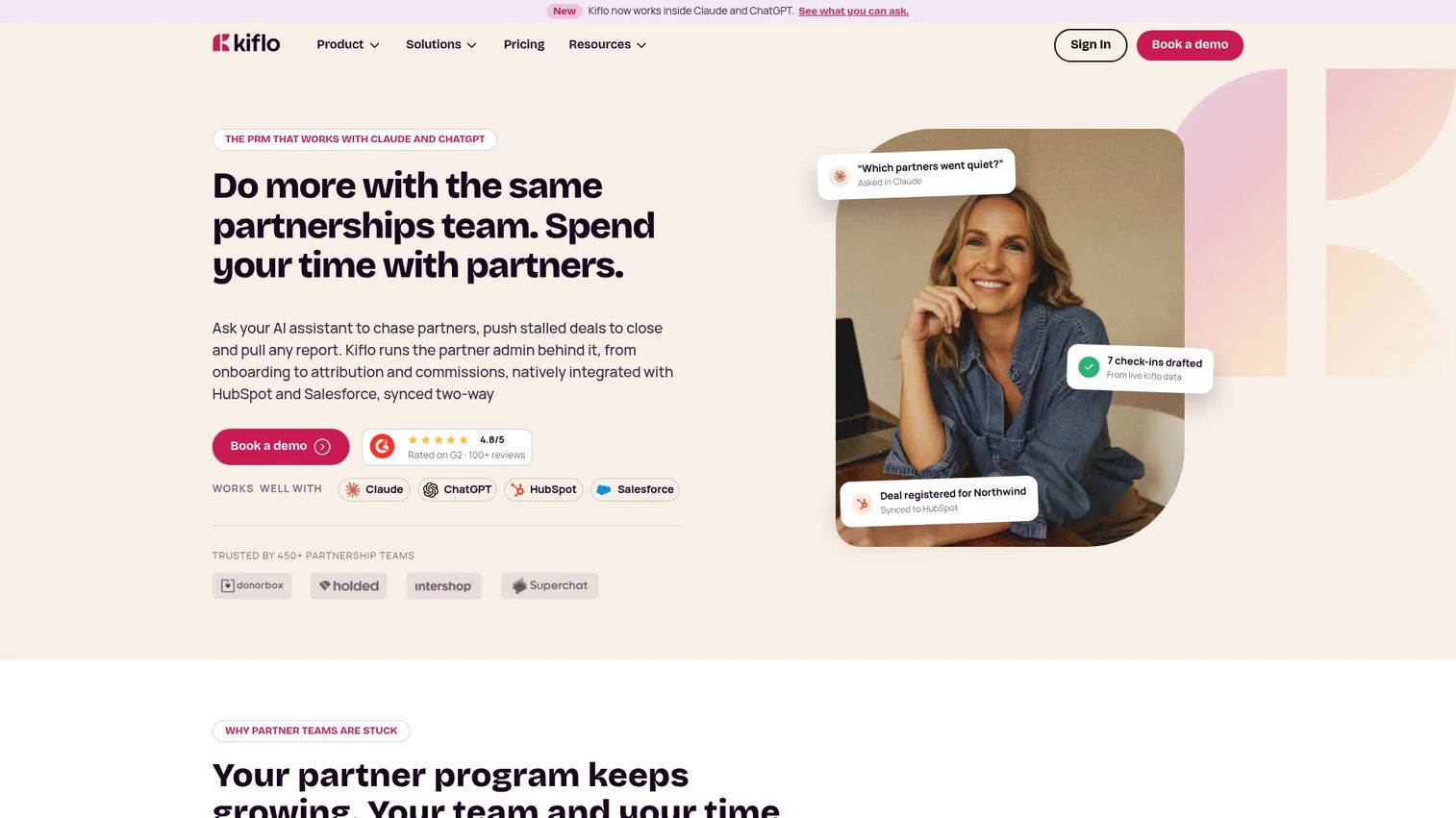
Kiflo is an AI-powered PRM platform built for B2B companies managing partner revenue through HubSpot or Salesforce. The platform handles partner onboarding, deal and lead registration, commission calculation, account mapping, co-selling, and revenue tracking. Its Core plan supports up to 50 active partners; Plus and Premier plans scale to unlimited partners and add enterprise SSO and dedicated support.
Best for: SMB and mid-market partner teams that have outgrown spreadsheets but don't need a full enterprise PRM rollout.
Key features
- AI access through Claude and ChatGPT integrations
- HubSpot and Salesforce two-way synchronization
- Partner portal with deal and lead registration
- Automatic commission calculation and revenue attribution
- Account mapping and co-selling tools
Why choose Kiflo: Kiflo gives early-stage and growing partner programs PRM structure without an enterprise implementation timeline. At $399/month for Core, it's one of the more accessible starting points for teams building partner-sourced pipeline from scratch.
Kiflo pricing: Core is $399/month (10% savings with annual billing) and supports up to 50 active partners. Plus and Premier are sales-led and scale to unlimited partners, with Premier adding enterprise SSO, co-branded collateral, and a dedicated success manager.
G2 rating: 4.7/5
7. Guideflow
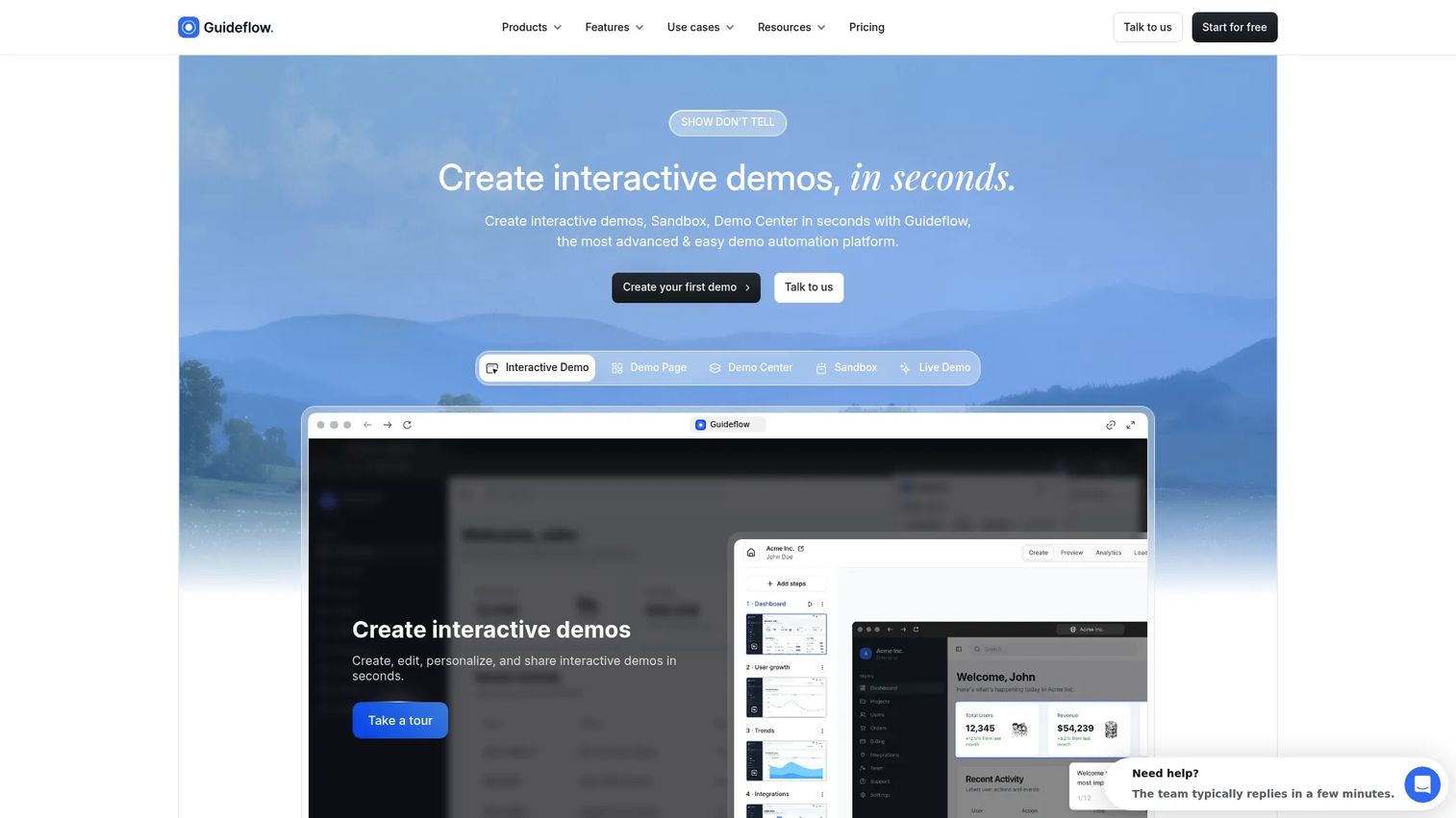
Guideflow is a demo automation platform that solves a specific partner onboarding gap: Partners who understand the portal but still can't explain or show the product. Where PRM tools handle workflows, portals, and pipeline, Guideflow handles product understanding. Partners click through interactive demos at their own pace, revisit a Demo Center as a branded product education hub, and use the same experiences in partner-led selling without waiting for another enablement call.
Guideflow's demo formats cover different partner learning moments: Interactive demos guide partners through curated product paths for sales enablement, onboarding, feature education, and partner-led outreach; sandboxes give technically curious partners full freedom to explore product workflows on their own terms; Demo Centers organize all partner-facing demos in one branded destination. Analytics track completion rate, step-level engagement, and drop-off points, so partner marketers can see which product stories land and which ones need work.
Best for: Partner marketing teams whose main gap is product understanding, specifically partners who keep asking for another enablement call, another deck, or another product explanation.
Key features
- Interactive demos for self-paced partner product education
- Demo Centers as branded partner resource hubs
- Sandboxes for hands-on product exploration
- Personalization of demos by partner type, region, or product line
- Completion rate, step engagement, and drop-off analytics
Why choose Guideflow: Choose Guideflow when the blocker is product knowledge, not portal access. If your partners can log into the portal but still can't pitch the product, interactive demos and Demo Centers replace the endless enablement call cycle with something partners can revisit and share on their own. It's not a PRM, LMS, or commission tool. It's the layer that makes partner product education measurable.
Guideflow pricing: Free plan available. Solo is $35/month. Growth is $499/month and Advanced is $1,499/month. Enterprise pricing starts at $2,999/month on annual billing.
G2 rating: 5.0/5
Start your journey with Guideflow today!
8. Channelscaler
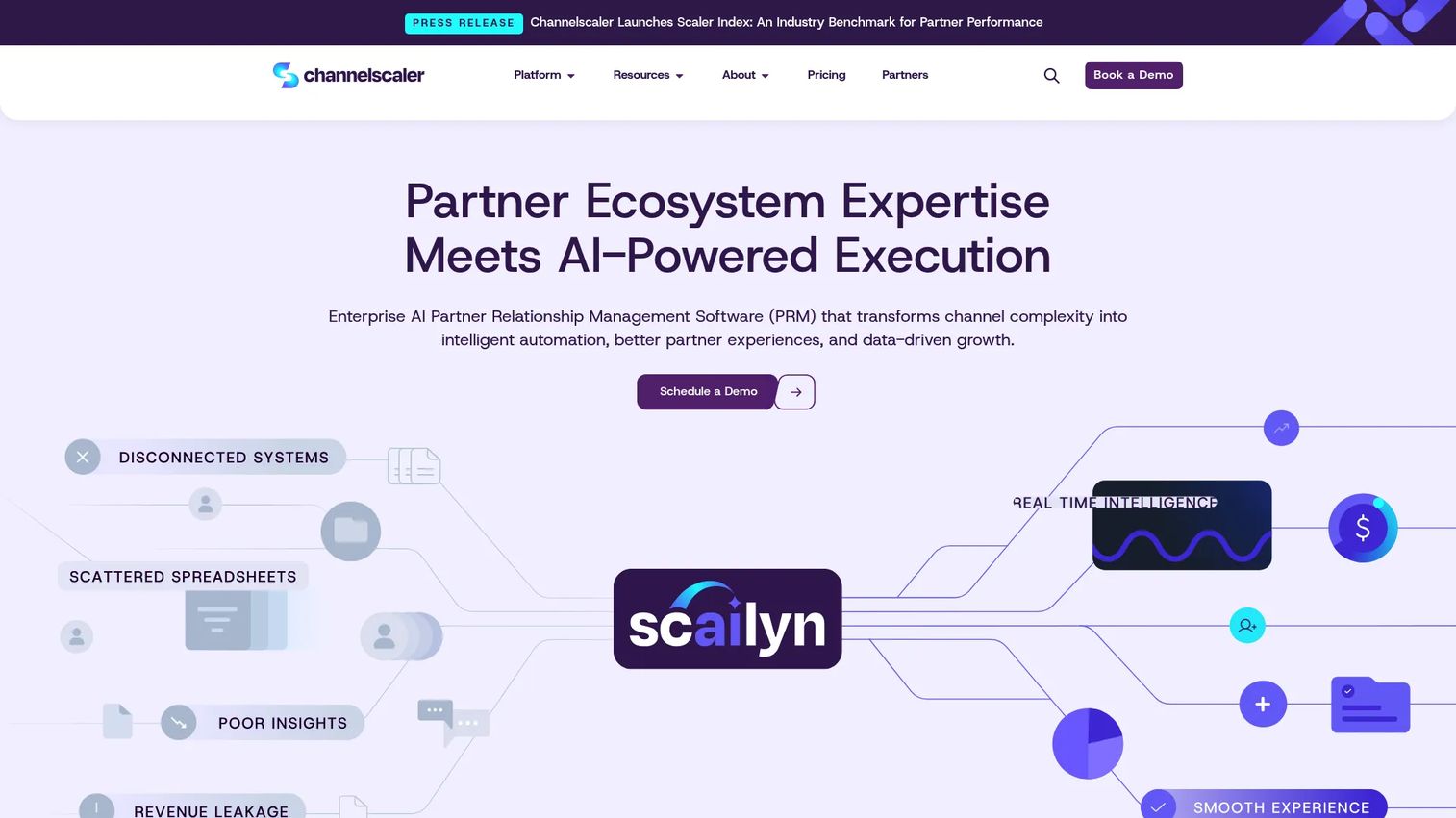
Channelscaler is a channel operations and partner management platform designed for mid-market and enterprise organizations managing complex partner programs. It covers partner relationship management, deal registration, MDF and incentive management, content delivery, training, and program analytics. Its pricing model is modular and fixed-price, which differs from most per-seat PRM platforms.
Best for: Channel operations teams scaling partner processes that need a full-program platform with predictable, module-based costs.
Key features
- Partner relationship management and partner portals
- Deal registration, MDF, promotions, and incentive management
- Content delivery and training modules
- Partner analytics and program compliance tracking
- Implementation, support, and maintenance included in pricing
Why choose Channelscaler: Channelscaler's fixed-price-per-module model works when you're tired of per-seat pricing that scales against you as the partner program grows. The included implementation and ongoing support also reduce internal overhead for smaller channel operations teams.
Channelscaler pricing: Pricing starts at $50k per module annually. All plans include implementation, configuration, support, maintenance, training, and unlimited users. Custom quotes are required.
G2 rating: 4.4/5
9. Unifyr
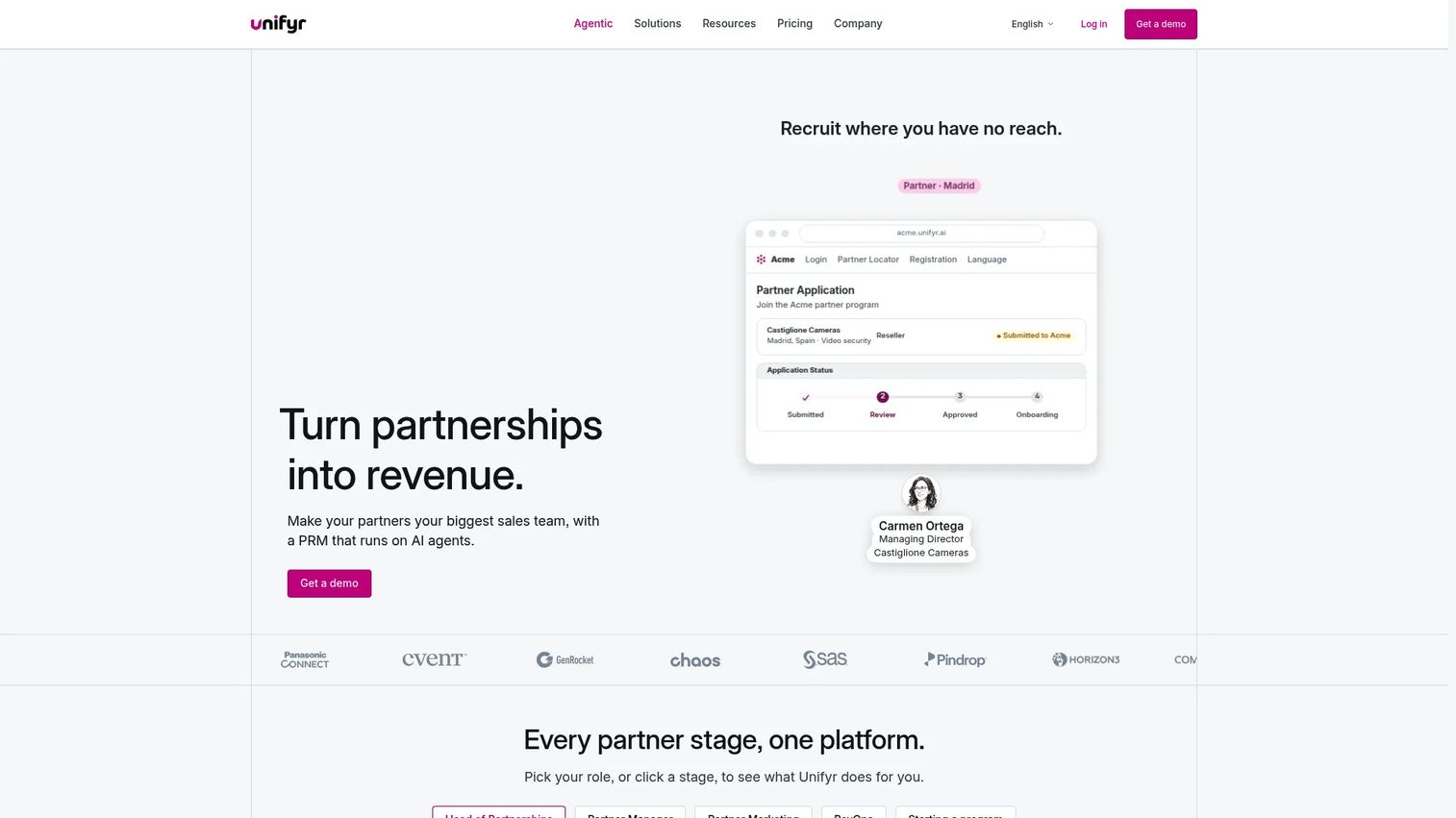
Unifyr is an AI-powered partner relationship management platform for recruiting, onboarding, enabling, marketing to, and managing channel partners. It includes deal and lead registration, partner portal, training and certification management, MDF management, co-marketing campaigns, and an AI agent layer with MCP-based Agent Connect. Three plan tiers, Activate, Grow, and Scale, map to program maturity.
Best for: Companies managing structured partner, reseller, referral, or channel programs that want AI-assisted partner operations built into the platform from the start.
Key features
- Partner recruitment, onboarding, and enablement workflows
- Deal and lead registration with CRM integrations
- Partner training, certification, and resource management
- MDF management and co-marketing campaign tools
- AI agents including MCP-based Agent Connect
Why choose Unifyr: Unifyr works when you want AI assistance baked into partner operations rather than layered on top. The Activate tier is designed for new or lean partner programs, while Scale targets large, global, or multi-tier programs.
Unifyr pricing: Activate, Grow, and Scale plans are available.
G2 rating: 4.4/5
10. Salesforce Partner Cloud
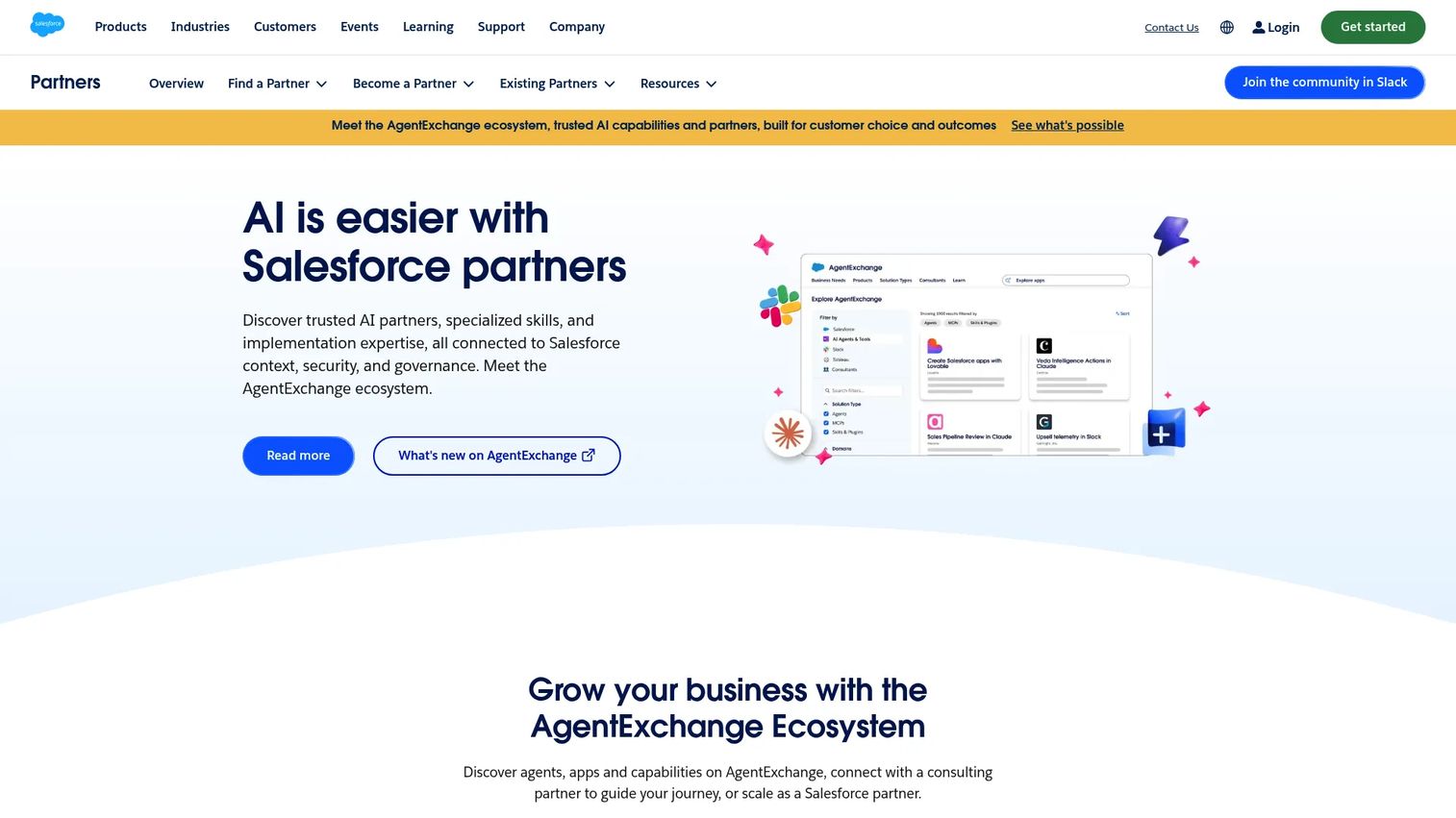
Salesforce Partner Cloud is a Salesforce-native platform for recruiting, enabling, managing, and incentivizing channel partners. It delivers personalized partner portals, deal registration, lead routing, partner learning programs, co-branding, MDF, account planning, and AI-powered partner selling tools, all inside Salesforce. It requires Salesforce Enterprise edition or greater.
Best for: Salesforce-heavy organizations where partner onboarding, deal registration, and partner pipeline all need to live in the same CRM architecture.
Key features
- Personalized partner portals and onboarding experiences
- Deal registration, lead routing, and partner collaboration
- Partner learning programs and enablement content
- Partner marketing, co-branding, and MDF management
- AI-powered partner selling and channel analytics
Why choose Salesforce Partner Cloud: If Salesforce is already your system of record, keeping partner onboarding inside that architecture avoids the data sync problems that plague most PRM-to-CRM integrations. The tradeoff is that it requires an existing Salesforce investment and comes with the associated admin overhead.
Salesforce Partner Cloud pricing: Partner Relationship Management starts at $25/member/month (billed annually). Partner Ecosystem Management is $50/member/month. Channel Revenue Management pricing requires a custom quote. No free plan is offered.
G2 rating: 4.3/5
11. HubSpot
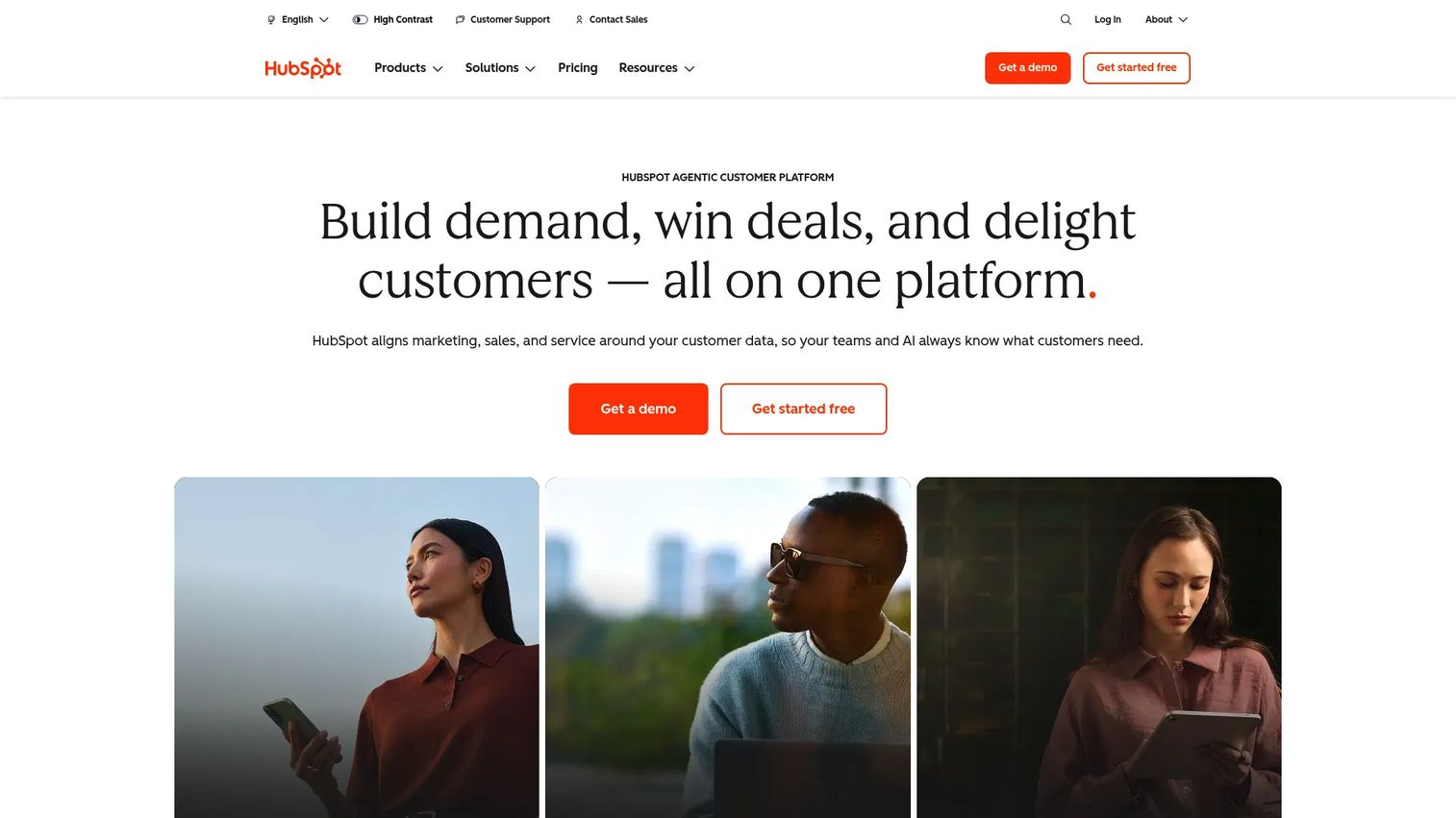
HubSpot is an AI-powered CRM and customer platform combining marketing automation, sales pipeline management, customer service, and revenue operations. For partner teams, HubSpot's CRM workflows, deal pipelines, email automation, and reporting can support partner onboarding and partner-sourced pipeline tracking without a dedicated PRM. It's not a purpose-built partner platform, but many teams use it as one when their partner motion is closely tied to their marketing and sales systems.
Best for: Teams already using HubSpot to manage pipeline who want to run partner onboarding inside the same CRM rather than adding a separate PRM.
Key features
- Smart CRM with partner pipeline workflows
- Marketing automation and email sequences for partner communication
- Deal pipelines and revenue tracking for partner-sourced deals
- Forms and list segmentation for partner segmentation
- AI-powered agents and reporting dashboards
Why choose HubSpot: HubSpot is the right call when your partner volume is manageable and your partner program lives close to your marketing and sales motion. It won't replace a dedicated PRM for complex programs, but it works well for referral partner programs and early-stage channel operations.
HubSpot pricing: Free plan available. Starter is $7/seat/month (billed monthly). Professional is $1,300/month. Enterprise is $4,700/month.
G2 rating: 4.4/5
12. Docebo
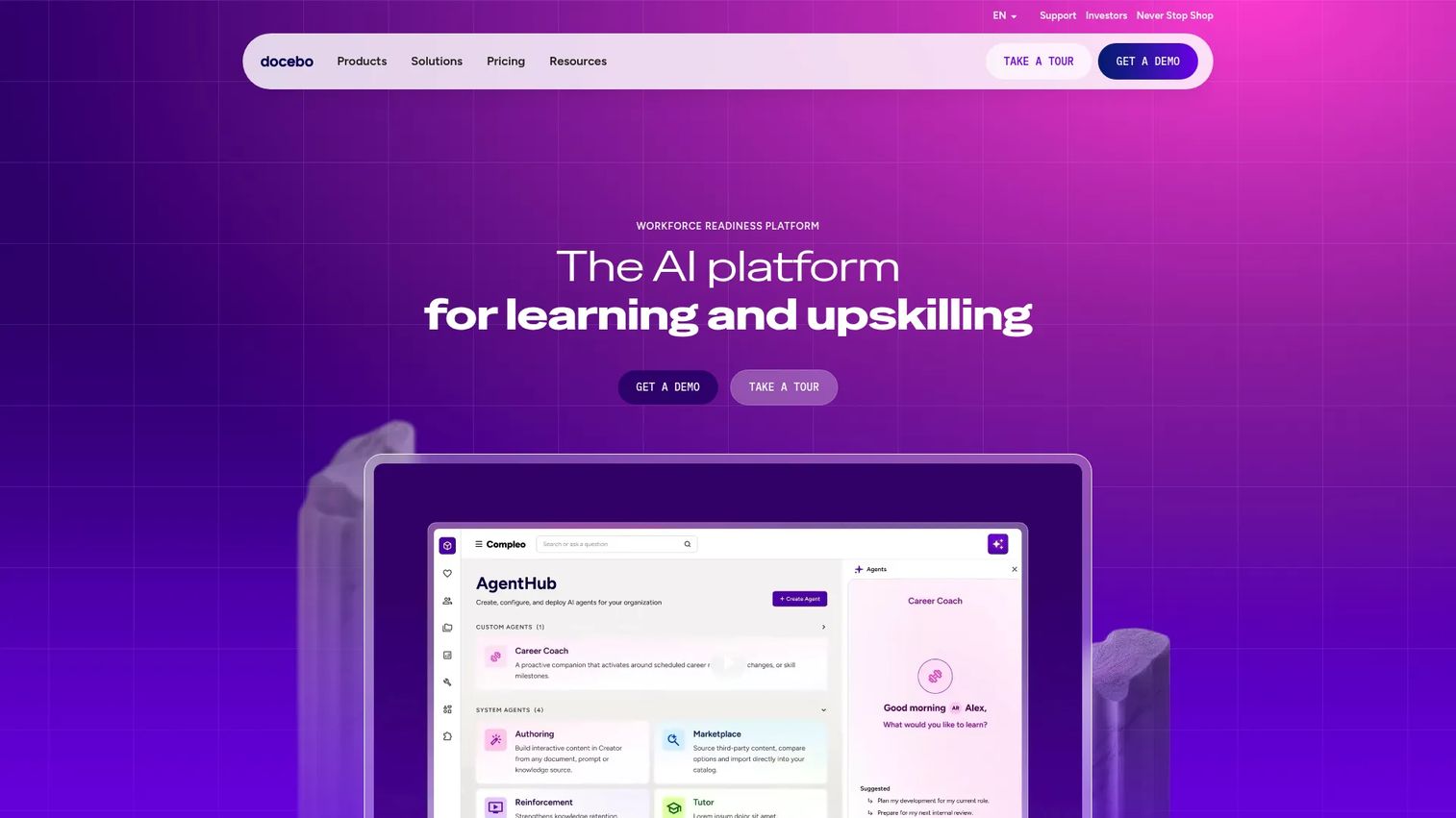
Docebo is an AI-powered learning platform designed for employee, customer, partner, and member training. For partner programs, its extended enterprise learning capabilities let companies build separate training environments for external audiences. Features include AI-powered content creation, certification and compliance tracking, mobile and social learning, and deep reporting.
Best for: Companies whose partner onboarding bottleneck is structured training at scale, particularly where certifications matter and content volume is high.
Key features
- Learning paths with blended and social learning formats
- AI-powered content creation and learning assistant
- Certification, compliance tracking, and reporting
- Extended enterprise learning for external audiences
- Mobile learning and integrations with CRM and analytics tools
Why choose Docebo: Docebo earns its place when partner readiness depends on formal learning programs rather than a portal and a resource library. If certification completion is a prerequisite for deal registration, Docebo gives you the structure to enforce and track that at scale.
Docebo pricing: Docebo's pricing page lists Elevate and Enterprise plans as custom-priced. The platform's learning page notes a starting point of $9/user with a 250-user minimum. Contact their team for a full quote.
G2 rating: 4.3/5
13. LearnUpon
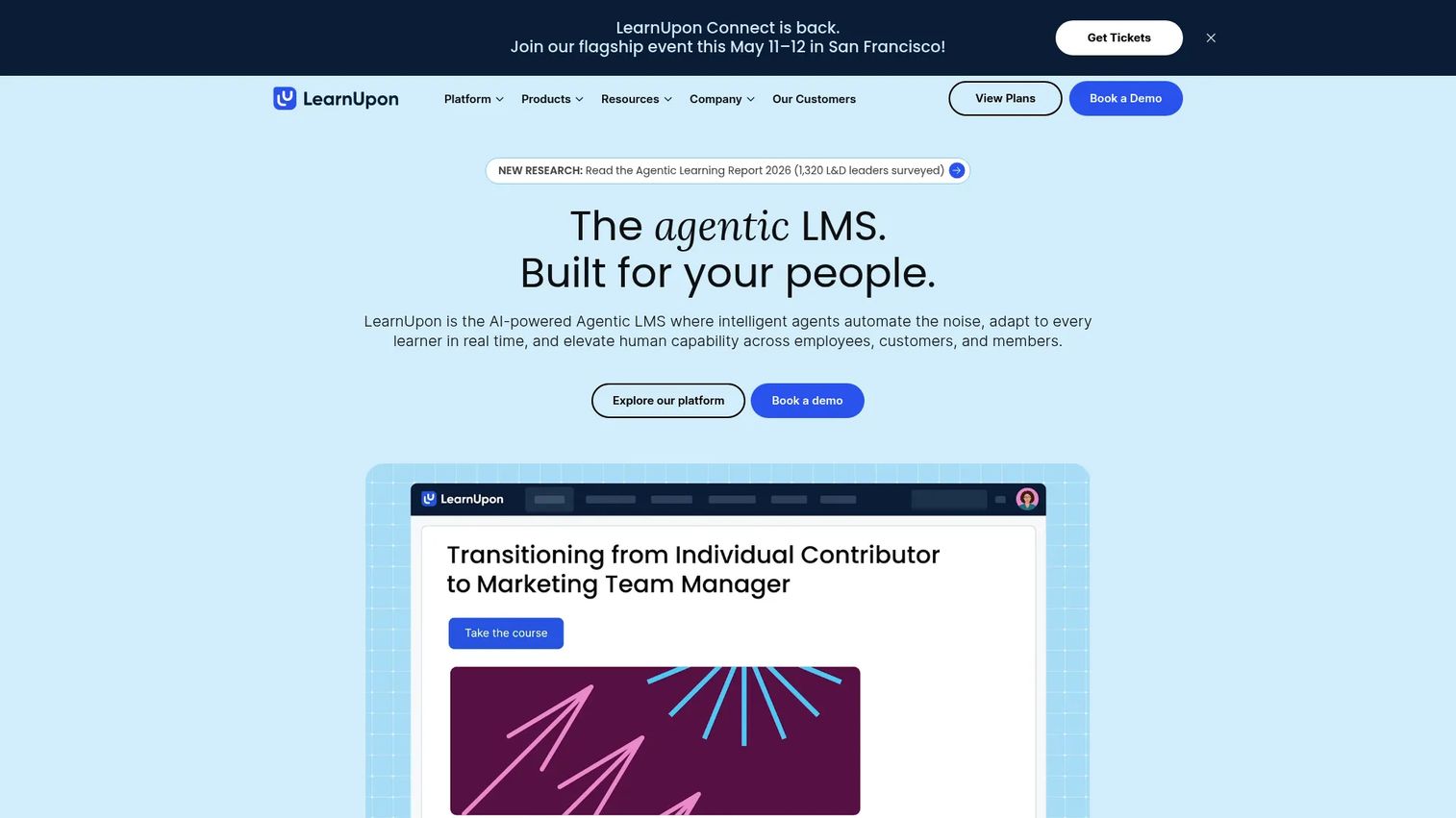
LearnUpon is an agentic learning management system built for mid-market and enterprise organizations running employee, customer, association, and partner training programs. Learning Portals let teams create separate branded environments for each audience. AI-powered course authoring with Create+, branching Learning Journeys, certifications, eCommerce, and 24/7/365 technical support come standard across all plans.
Best for: Teams that need a training portal for partners, customers, and other external learners from one platform, with branching paths and certification tracking.
Key features
- Learning Portals for multi-audience training environments
- AI-powered course authoring with branching learning journeys
- Certifications, exams, and learner reporting
- Live learning, eCommerce, and assignment management
- Integrations with HubSpot, Salesforce, HRIS, SSO, and webinar tools
Why choose LearnUpon: LearnUpon works best when the partner onboarding job is primarily training delivery and certification tracking. Its portal architecture is particularly useful for companies supporting multiple partner types that each need a different branded learning experience.
LearnUpon pricing: Plans for Employees (from 100 users), Customer Education (from 300 users), and Associations (from 150 users) are contact-based. All plans include implementation consulting and round-the-clock technical support.
G2 rating: 4.5/5
14. AgilityPortal
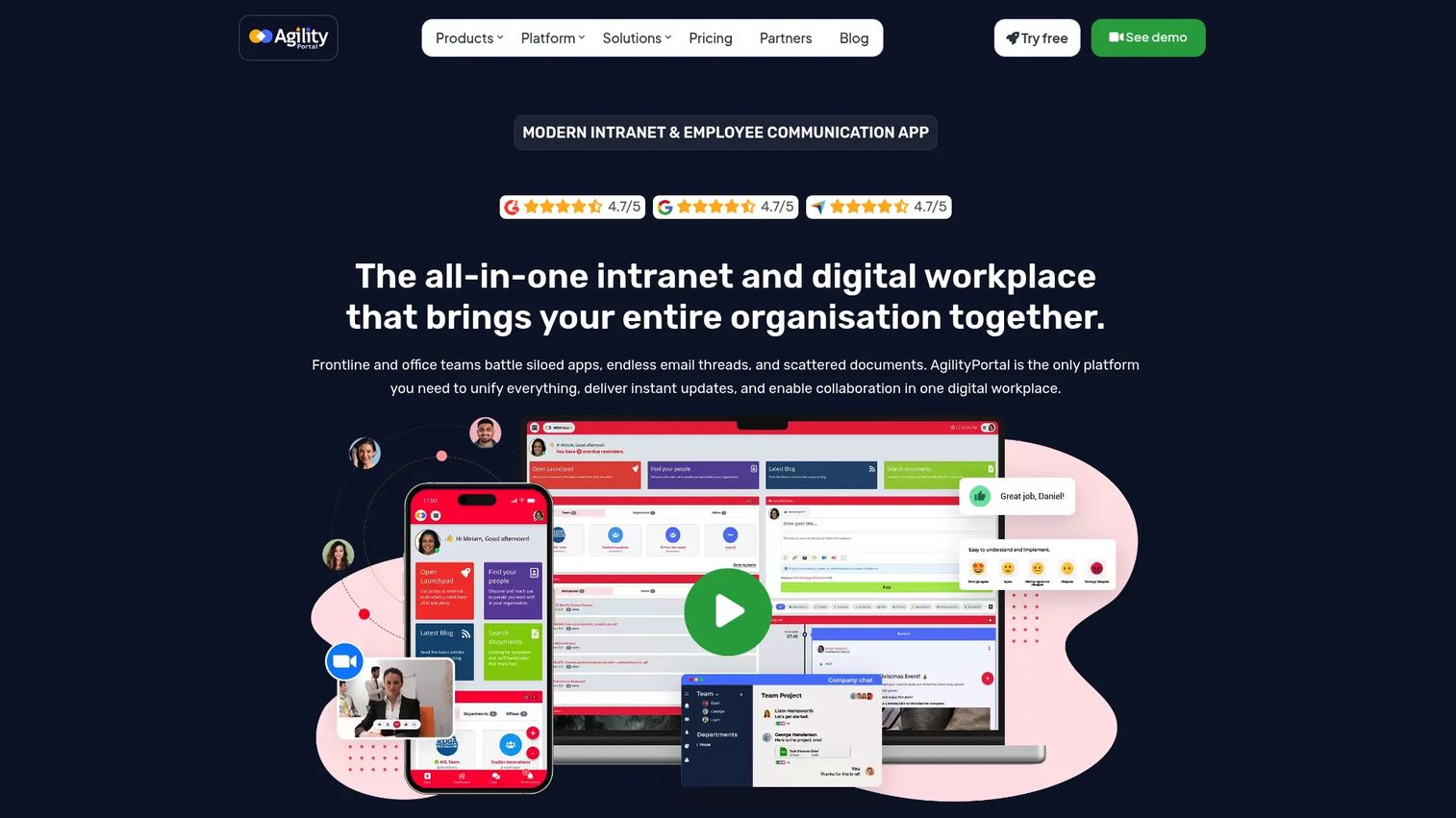
AgilityPortal is a modern intranet and employee communication app that serves as a knowledge and collaboration hub for distributed teams. For partner onboarding use cases, it provides a centralized portal for content, knowledge bases, announcements, document management, and task management. It includes surveys, gamification, recognition tools, and project management alongside its communication features.
Best for: Teams that need a partner portal with built-in communication, document sharing, and knowledge access, particularly where internal and external collaboration overlap.
Key features
- Knowledge base, wikis, and document management
- Internal communication tools: News, announcements, and chat
- Surveys, polls, gamification, and recognition features
- Project and task management with shift planning
- Employee directory and collaboration dashboards
Why choose AgilityPortal: AgilityPortal fits partner programs where the onboarding challenge is information access and communication rather than deal registration or pipeline tracking. It's not a PRM, so deal management and CRM sync aren't its strengths. It is a practical hub for smaller programs that need centralized resources without PRM complexity.
AgilityPortal pricing: Small plan is $99/month. Medium plan is $499/month. Large is custom-priced. A 14-day free trial is available.
G2 rating: 4.8/5
Considerations when choosing partner onboarding software
Start with the actual bottleneck
Most partner programs have one critical failure point: Workflow chaos, product ignorance, CRM gaps, or scattered content. Buying a full PRM when the real issue is that partners can't explain the product is an expensive non-solution. Map the gap before evaluating tools.
Match software to partner type
A reseller program needs deal registration and MDF. A referral partner program needs CRM sync and attribution. A technology partner program needs product education and integration storytelling. The same platform rarely solves all three equally well, so know which partner type drives your onboarding volume.
Verify CRM fit before anything else
Partner onboarding data has limited value if it lives outside your system of record. Check which CRMs each tool supports natively, and what "integration" actually means. Two-way sync and native CRM objects are different from a webhook and a Zapier connection.
Measure readiness, not portal logins
Meaningful partner onboarding metrics include onboarding completion rate, certification pass rate, time to first deal registration, demo completion rate, and partner-sourced pipeline. If the only metric your tool surfaces is "partner logged in," you're measuring activity, not activation.
Check what partners actually experience
Most partner portal evaluations focus on the admin view. Walk through the partner journey from invitation to first selling activity before committing. A portal that's hard to navigate kills adoption faster than missing features.
Conclusion
The right partner onboarding software depends on where your activation motion actually breaks down.
For CRM-native workflows, Introw is the strongest starting point. Impartner, ZINFI, and Channeltivity cover mature PRM needs at different price points and program sizes. Kiflo gives smaller teams PRM structure without the enterprise overhead. Salesforce Partner Cloud and HubSpot make sense when your partner program runs inside your existing CRM.
For partner training and certification at scale, Docebo and LearnUpon both handle extended enterprise learning programs. Magentrix and Unifyr work well when branded portals and AI-assisted partner operations matter. Channelscaler suits channel operations teams that want fixed-price program management.
Guideflow fills a different gap: Partner product understanding. If your partners can access the portal but still can't show the product without you on a call, interactive demos and Demo Centers replace the manual enablement cycle with something measurable and self-serve.
The common thread across all 14 tools: Partner onboarding only matters if it moves partners toward first meaningful selling activity. A portal login isn't activation. A finished training module isn't activation. The metric that matters is a partner who can explain and show your product well enough to register a deal.
Start your journey with Guideflow today!
FAQs about partner onboarding software
Partner onboarding software helps companies activate new channel, reseller, referral, agency, and technology partners through structured workflows, training, resource access, product education, and milestone tracking. The category spans full PRM platforms, LMS systems, partner portals, CRM-native tools, and demo automation, depending on where onboarding breaks down for each program.
PRM software manages the full partner lifecycle, covering recruitment, deal registration, MDF, performance measurement, and partner marketing. Partner onboarding software focuses narrowly on activating a new partner from signed contract to first selling activity. Many PRM platforms include onboarding modules, but some programs get better results by combining a focused onboarding tool with their existing CRM.
A solid partner onboarding process covers invitation and profile setup, required document collection, product education, training and certification, resource access, milestone tracking, and a clear path to first deal registration or first co-marketing activity. The specific steps vary by partner type, product complexity, and program tier.
Most purpose-built partner onboarding platforms offer CRM integrations, but integration depth varies significantly. Native two-way sync with Salesforce or HubSpot is different from a one-direction data push. Partner activity, deal registration, and pipeline data are only useful if they flow accurately into the CRM where revenue decisions happen.
The most reliable indicators of a healthy partner onboarding process are onboarding completion rate, time to first deal registration, certification pass rate, product demo completion rate, drop-off step in training or enablement content, and partner-sourced pipeline. Portal logins and resource downloads indicate activity, but first selling activity is the signal that matters for revenue forecasting.
A partner portal stores resources and gives partners a place to access content. Partner onboarding software guides progress through a defined sequence of steps and tracks where each partner stands. A portal can be part of an onboarding experience, but a portal alone doesn't answer "what should this partner do next?" or show you which partners are stuck before they go inactive.
Interactive demos and Demo Centers work well when partners need to understand and demonstrate a product without waiting for a live enablement session. These formats let partners click through product experiences at their own pace, revisit specific flows, and build confidence before engaging with prospects. Completion rate and step-level analytics show which product stories are landing.
Most programs target 30 to 90 days from signed agreement to first meaningful selling activity, depending on product complexity, the number of required certifications, and the partner type. Reseller partners with technical products may need longer. Referral partners with a simple product explanation may hit readiness faster. The more self-serve the onboarding content, the faster partners tend to move through it.