A vendor needs access to a PLC at 2 a.m. The maintenance issue is urgent. Giving them a broad VPN connection may resolve the ticket, but it also creates an access path your security team must explain during the next audit.
That gap between operational urgency and security accountability is where most remote access problems live. According to the SANS 2025 ICS/OT Security Survey, 50% of reported ICS/OT incidents began with unauthorized access. The same survey found that 22% of organizations experienced an ICS/OT cybersecurity incident in 2025, and 60% cited lack of internal resources as the top blocker to implementing full remote access controls.
The right OT secure remote access software lets a qualified person reach a specific industrial asset for a defined task, within a bounded window, while producing a complete record that operations and security can both use. This guide helps you find it.
What's inside
This guide compares eight OT secure remote access solutions for teams managing industrial assets, critical infrastructure, and third-party support workflows. Selection criteria include:
- Zero Trust and least privilege controls, including just-in-time and time-bound access
- Vendor, contractor, and OEM access governance with approval workflows
- Session recording, keystroke auditing, and audit trail quality
- Compatibility with legacy OT devices: PLCs, HMIs, RTUs, SCADA servers, and industrial protocols
- Deployment architecture, from browser-based access and gateways to hardware-enforced models
- Pricing transparency and commercial model
TL;DR
- Best for distributed Zero Trust OT access: Xage Secure Remote Access, built for identity-based controls across multi-site industrial environments
- Best for OT visibility plus secure access: Claroty xDome Secure Access, which connects remote access governance to asset inventory and risk context
- Best for privileged access governance: BeyondTrust Privileged Remote Access, for teams extending PAM practices into OT
- Best for high-consequence environments: Waterfall HERA, with hardware-enforced separation and unidirectional architecture
- Best for machine builders and OEM service: Secomea, purpose-built for distributed industrial gateway deployments
- Best detailed session evidence: Dispel, with disposable infrastructure and over-the-shoulder monitoring
- Best for audit-driven critical infrastructure: TDi Technologies ConsoleWorks, with keystroke-level records and continuous compliance reporting
- Best for identity-first hybrid OT access: Cyolo, reducing inbound network exposure with Zero Trust microsegmentation
What is OT secure remote access software?
OT secure remote access software controls and records remote connections to operational technology assets, such as PLCs, HMIs, SCADA systems, RTUs, and industrial control servers, while limiting each user to the systems and actions required for their specific task.
This category is distinct from standard IT remote access because the consequences of a session extend beyond data. A misconfigured PLC or an unauthorized command can affect a physical process. Legacy devices may lack agent support, modern authentication, or frequent patch cycles. Network paths may cross isolated zones or reach systems with no routable address. Vendor and OEM maintenance creates recurring third-party identity exposure that standing VPN accounts rarely contain well.
Key capabilities to evaluate
- Identity verification and MFA before session initiation
- Just-in-time and time-bound access with automatic revocation
- Asset-level authorization, not just subnet or zone access
- Session recording, live monitoring, and keystroke capture
- Credential vaulting or credential injection to avoid shared passwords
- Support for industrial protocols: RDP, VNC, SSH, Telnet, OPC, serial, and proprietary variants
- Network segmentation controls that limit lateral movement
- Audit log export for compliance reporting and incident response
- Emergency access workflows with approval trails
How OT secure remote access differs from adjacent categories
| Category | Primary job | Why it may be insufficient alone |
|---|---|---|
| Traditional VPN | Connects users to a network segment | Often grants more reach than a maintenance task requires |
| Jump server | Central access point for remote sessions | Becomes a high-value target without strong identity and session controls |
| Generic ZTNA | Application access for IT workloads | May not support industrial protocols, legacy assets, or OT operating models |
| OT secure remote access software | Controlled access to OT assets and workflows | Designed around industrial safety, uptime, vendor governance, and auditability |
When to use OT secure remote access software
Govern OEM, contractor, and service partner access
Recurring third-party support creates standing access risk. An OEM with a VPN account that predates the last personnel change is a common audit finding. OT secure remote access software lets you issue named identities, scope access to a specific device or application, set a maintenance window, and revoke it automatically. The session record stays whether or not the vendor notices it.
Support remote troubleshooting without broad network exposure
A maintenance engineer needs to reach a specific HMI or PLC programming workstation. Asset-level authorization means the session terminates at the target device, not at the network boundary. Combine that with live session monitoring and you can observe the session in progress and disconnect if something looks wrong.
Modernize VPN and jump server workflows
The triggers for re-evaluation tend to cluster: Recurring firewall rule changes for vendor access, unmanaged shared credentials on a jump host, missing session logs from the last maintenance window, or an audit finding that asks who accessed what and when. OT remote access security platforms replace or augment these workflows with identity-verified, time-limited, and fully logged sessions, reducing the manual overhead that makes access governance unsustainable at scale.
OT secure remote access software comparison
The table below is a shortlist for initial scoping. Use it to identify the platforms worth a proof of concept, not as a substitute for architecture validation with your OT security and operations teams.
| # | Product | Best for | Key differentiator | Pricing | G2 rating |
|---|---|---|---|---|---|
| 1 | Xage Secure Remote Access | Distributed OT and critical infrastructure | Identity-based controls across OT, IT, and cyber-physical environments | Contact for quote | 4.0/5 |
| 2 | Claroty xDome Secure Access | OT visibility plus secure access | Secure access within a broader CPS security platform | Contact for quote | 4.7/5 |
| 3 | BeyondTrust Privileged Remote Access | Privileged vendor and operator access | Mature privileged session controls and protocol support | Contact for quote | 4.5/5 |
| 4 | Waterfall HERA | High-consequence OT environments | Hardware-enforced remote access architecture | Contact for quote | Not listed on G2 |
| 5 | Secomea | Machine builders and OEM remote service | OT-focused remote access gateway and maintenance workflows | Contact for quote | 4.2/5 |
| 6 | Dispel | Controlled industrial access with session controls | Disposable infrastructure and moving target defense model | Contact for quote | 4.8/5 |
| 7 | TDi Technologies ConsoleWorks | Audited access to industrial and critical systems | Keystroke-level monitoring and continuous compliance reporting | Contact for quote | 4.5/5 |
| 8 | Cyolo | Identity-centric access for hybrid OT environments | Zero Trust access without traditional inbound network exposure | Contact for quote | 3.0/5 |
Best 8 OT secure remote access software for 2026
1. Xage Secure Remote Access
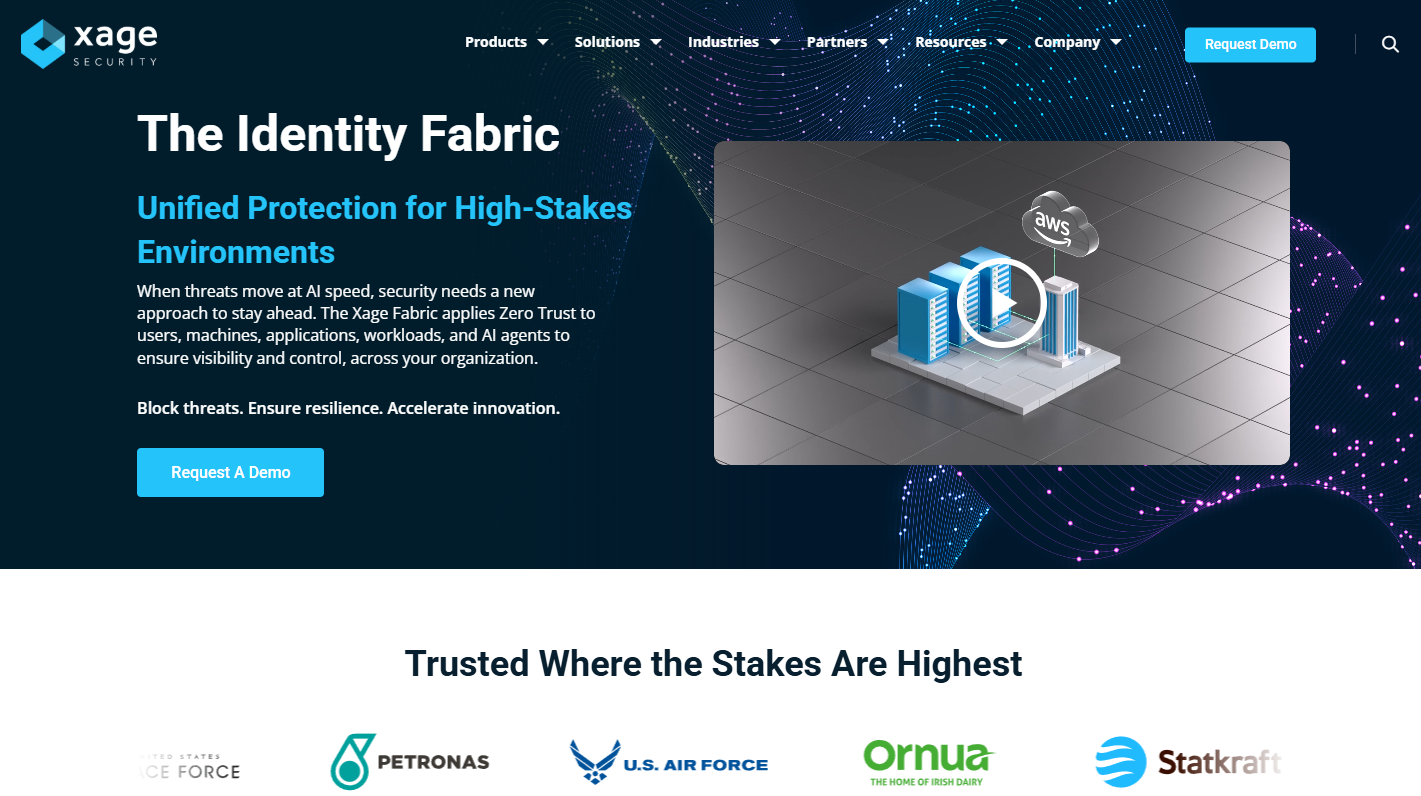
Xage Security provides Zero Trust secure remote access for IT, OT, and cyber-physical systems. Its identity-based enforcement model reaches individual assets rather than network segments, which matters when your OT environment spans multiple sites, legacy controllers, and rotating contractor populations. The platform supports agentless, browser-based access, so it can reach assets that cannot run endpoint software.
Best for: Enterprise organizations managing distributed industrial environments where contractors, OEMs, and internal teams all need controlled, asset-level access.
Key features
- Browser-based, agentless access without VPN or network reconfiguration
- Granular identity-based policies down to individual assets
- Just-in-time vendor access with automatic privilege revocation
- Session recording, shadowing, collaboration, and tamper-proof audit logs
- Automatic password rotation and distributed credential vaulting
Why choose Xage: Xage fits teams that need a single policy layer across OT and IT without restructuring the network. Its distributed credentialing model reduces the blast radius if one access path is compromised, which matters in environments where segmentation is hard to enforce at the network layer alone.
Xage pricing: Xage prices by quote. Cost drivers include the number of protected sites, asset count, privileged user population, and third-party access scope. Contact Xage sales for a scoped proposal.
G2 rating: 4.0/5
2. Claroty xDome Secure Access
Claroty built xDome Secure Access as a component of a broader cyber-physical system security platform. It delivers Zero Trust access controls alongside OT asset inventory and exposure context, so access decisions can be informed by what the system knows about the asset being accessed. This integration suits security teams that want remote access governance connected to their broader OT security operations rather than running as a standalone layer.
Best for: Security teams building or extending a CPS security program who want remote access decisions informed by asset inventory and risk context.
Key features
- Zero Trust access policies with privileged access management capabilities
- Agentless access via RDP, SSH, HTTPS, VNC, and micro-tunneling for proprietary protocols
- Just-in-time access with session logging, recording, and live monitoring
- Disconnect controls and identity provider integrations
- SIEM integration for centralized audit workflows
Why choose Claroty xDome Secure Access: The platform is most relevant when OT security, exposure management, and remote access governance sit under one program owner. Connecting access decisions to asset visibility reduces the risk of authorizing a session to an asset whose exposure profile has changed since the last review.
Claroty pricing: Claroty prices by quote. Enterprise scope, deployment model, asset count, and platform module selection drive the commercial structure. Contact Claroty for a tailored quote.
G2 rating: 4.7/5 (based on 6 reviews on G2 for Claroty).
3. BeyondTrust Privileged Remote Access
BeyondTrust Privileged Remote Access extends privileged access management into OT and industrial environments. It enforces least privilege for vendor sessions, internal administrators, and cloud infrastructure access, with full session recording and credential controls that prevent credentials from being shared or stored outside the platform. Teams with existing PAM programs will find its governance model familiar.
Best for: Organizations with mature identity security or PAM programs that need to extend disciplined privileged access practices into OT and operational environments.
Key features
- VPN-less remote access with least privilege and just-in-time controls
- Privileged session recording, auditing, and live session monitoring
- Credential vaulting and credential injection for shared or embedded credentials
- Protocol support: RDP, VNC, HTTPS, SSH, SQL, and more
- Per-session MFA controls and copy-and-paste restrictions
Why choose BeyondTrust: Its fit is strongest for teams that need consistent privileged access governance across IT and OT in a single platform. It can reach non-routable and legacy systems where broad network exposure is architecturally unacceptable, and its session evidence supports incident response alongside routine audits.
BeyondTrust pricing: BeyondTrust instructs prospective customers to contact sales for a quote. Cost drivers include users, managed endpoints, privileged access scope, and support tier.
G2 rating: 4.5/5 on G2 for Privileged Remote Access.
4. Waterfall HERA
Waterfall Security built HERA around hardware-enforced separation rather than software-defined policy alone. It uses dual unidirectional gateways with physically separated inbound and outbound channels, a design that limits what can flow back toward the OT environment even if a software component is compromised. The result is a remote access model that limits inbound connectivity risk while preserving operational visibility for authorized sessions.
Best for: Operators in energy, utilities, manufacturing, and other high-consequence environments where the architecture of remote access matters as much as the policy layer.
Key features
- Dual unidirectional gateways with physically separated channels
- Session recording and real-time session moderation
- Zero Trust time-based access controls with fine-grain user management
- TPM-based client-side security and protocol isolation
- SIEM export for centralized logging and audit workflows
Why choose Waterfall HERA: This platform belongs on the shortlist when operational consequences drive the design decision. Hardware enforcement means the access boundary does not depend solely on software configuration, which appeals to teams in environments where a misconfigured rule can affect physical processes.
Waterfall HERA pricing: HERA pricing is available by quote. Hardware, site design, deployment architecture, and redundancy requirements all influence cost. Contact Waterfall Security for a scoped proposal.
5. Secomea
Secomea focuses on OT environments where machine builders and industrial OEMs need controlled access to customer equipment across many field locations. Its gateway-based model supports PLC programming workstations, HMIs, SCADA systems, and serial or USB-connected devices. The platform handles the access and audit requirements of remote service workflows without requiring customers to open inbound network connections.
Best for: Machine builders, industrial OEMs, and service organizations supporting distributed customer equipment across multiple field sites.
Key features
- Agentless browser-based access: RDP, VNC, SSH, and Telnet
- Industrial gateway connectivity for PLCs, HMIs, DCS, RTUs, and serial equipment
- Real-time session monitoring, audit logs, and session recordings
- Role-based access controls, MFA, SSO, and access-request approvals
- Secure file transfer and machine data collection capabilities
Why choose Secomea: Secomea is worth evaluating when remote maintenance and troubleshooting need to work reliably across diverse machine estates in customer facilities. Its subscription pricing is built around active SiteManagers, endpoints, and concurrent users, which maps naturally to a service organization managing many customer deployments.
Secomea pricing: Secomea prices by quote. Subscription cost depends on active SiteManagers, endpoint count, and concurrent user load. Contact Secomea for a proposal scoped to your deployment.
G2 rating: 4.2/5 based on 3 reviews on G2.
6. Dispel
Dispel approaches OT remote access through disposable, session-based infrastructure. Rather than maintaining persistent access paths that can be targeted between use, Dispel spins up connectivity on demand and tears it down afterward. This moving target defense model reduces the value of compromising any single access component because the infrastructure changes with each session.
Best for: Utilities, industrial operators, and service teams that need granular access governance with detailed session records and minimal persistent attack surface.
Key features
- Browser Connect, Virtual Desktop, and Local Application access modes
- Moving Target Defense with disposable, session-based infrastructure
- Session recording, audit logging, and over-the-shoulder monitoring
- Access control list enforcement per session
- Segmented facility connectivity per authorized user
Why choose Dispel: Dispel fits organizations that want to reduce persistent infrastructure exposure without giving up detailed user oversight. Authorizing, observing, and revoking access without maintaining a standing VPN tunnel changes the security posture at the network layer, not just the policy layer. Its 4.8/5 G2 rating reflects strong user satisfaction across a small review base.
Dispel pricing: Dispel pricing requires contacting sales. Support plans include a base tier included with subscriptions and a premium tier priced separately. Contact Dispel for a proposal covering your site count, user population, and deployment scope.
G2 rating: 4.8/5 on G2 for Dispel.
7. TDi Technologies ConsoleWorks
TDi Technologies ConsoleWorks operates as an intelligent operations platform for critical infrastructure, combining OT and IT asset inventory, secure remote access, configuration management, credential management, and continuous compliance reporting in one system. Its keystroke-level auditing captures what a privileged user typed during a session, not just that a session occurred, which supports detailed incident response and access reviews.
Best for: Organizations with strict audit requirements in regulated or critical infrastructure sectors that need a complete, centralized record of user actions across industrial systems.
Key features
- Protocol-native secure remote access with MFA and policy controls
- Keystroke-level auditing and session recording
- Continuous compliance measurement across mapped frameworks
- Configuration and change management with baseline drift detection
- Automated endpoint credential rotation and centralized credential management
Why choose ConsoleWorks: The platform earns its place when audit evidence needs to go beyond session metadata. Keystroke records support investigations, access reviews, vendor accountability assessments, and knowledge transfer after personnel changes. Teams managing NERC CIP or similar framework requirements may find the continuous compliance reporting reduces manual evidence collection work.
ConsoleWorks pricing: ConsoleWorks pricing requires a quote. Deployment size, system integrations, audit retention requirements, and user roles influence the package. Contact TDi Technologies for a scoped proposal.
G2 rating: 4.5/5 based on 2 reviews on G2.
8. Cyolo
Cyolo delivers secure remote access for OT and critical infrastructure through an identity-first architecture that avoids traditional inbound network exposure. Rather than routing sessions through a central gateway that becomes a single point of failure, Cyolo applies Zero Trust microsegmentation to control what each user can reach across hybrid IT and OT environments. Its AI-powered session intelligence layer flags anomalies in real time.
Best for: Industrial organizations in manufacturing, energy, utilities, and data centers that need identity-centric remote access across hybrid environments without traditional inbound connectivity.
Key features
- Just-in-time access with MFA, built-in credential vault, and agentless access
- Zero Trust microsegmentation with OT asset discovery
- Secure remote privileged access with session supervision and recording
- File transfer malware protection
- AI-powered session intelligence and real-time risk monitoring
Why choose Cyolo: Cyolo deserves evaluation when a team needs to reduce dependency on VPN connectivity while applying access rules at the identity and application layer. Its architecture avoids exposing OT assets through inbound connections, which changes the risk equation for environments that cannot easily isolate every network segment. Note that its current G2 rating is based on a small review sample.
Cyolo pricing: Cyolo prices by quote. Billing is generally annual. Cost drivers include users, protected applications, sites, and deployment model. Contact Cyolo for a tailored proposal.
G2 rating: 3.0/5 based on 4 reviews on G2.
Considerations when choosing OT secure remote access software
Validate the access architecture before the feature checklist
A platform can offer MFA and session recording while still creating an architecture your OT security team cannot approve. Confirm how sessions enter each site, traverse OT zones, terminate, and reach the intended asset. Ask specifically whether any inbound port opens to the OT network during a session.
Map privileges to assets and maintenance windows
Evaluate whether access can be scoped by person, contractor company, site, device type, protocol, and time window. Broad access groups become hard to review as vendor populations grow. Just-in-time access with automatic expiry removes the need to manually revoke standing permissions after a maintenance event.
Test legacy protocols and industrial applications
Do not accept generic protocol support claims. Build a proof of concept around your actual engineering tools, HMI software, PLC programming environments, and network conditions. A platform that handles RDP and SSH cleanly may still struggle with a proprietary serial-to-IP bridge or an older SCADA historian.
Treat session evidence as an operational requirement
Session recordings, command logs, keystroke captures, and session metadata serve more than compliance audits. They support incident response, root cause analysis after a process upset, vendor accountability, and knowledge transfer when a long-tenured operator leaves. Evaluate evidence quality and retrieval speed alongside coverage.
Plan ownership across security, operations, and product
A remote access rollout can stall when OT operations sees it as a security project and security sees it as an operational problem. Define ownership for access policy authoring, vendor onboarding, exception approvals, release change handling, and reporting before selecting a platform. The right tool for your environment is the one your team will maintain as systems change.
Conclusion
The eight platforms in this guide cover distinct architectural approaches to OT remote access security. Xage fits distributed, multi-site environments where identity-based controls need to reach legacy and modern assets alike. Claroty xDome Secure Access makes sense when secure remote access must connect to a broader OT visibility and CPS security program. BeyondTrust suits teams extending mature privileged access governance into OT. Waterfall HERA belongs in high-consequence environments where hardware-enforced separation is a design requirement, not an option.
For industrial OEM and machine builder workflows, Secomea's gateway model handles the distributed service patterns most IT-centric platforms miss. Dispel, ConsoleWorks, and Cyolo each offer distinct architectural answers: Disposable infrastructure with strong session evidence, keystroke-level audit depth for regulated environments, and identity-first microsegmentation for hybrid OT networks.
Start the evaluation with your architecture constraints: How sessions enter your OT environment, which legacy assets must be reached, which vendor populations need governed access, and what audit evidence your security and operations teams need to act on. The right OT secure remote access software is the one that fits your environment's actual constraints, not just the feature checklist.
FAQs
OT secure remote access software manages and controls remote connections to operational technology assets, including PLCs, HMIs, SCADA servers, RTUs, and industrial control servers. It limits each session to the systems and actions the authorized user requires for their specific task, records the session, and produces audit evidence that operations and security teams can use.
OT remote access affects physical processes, not only data. A session that reaches a PLC or SCADA system can influence equipment behavior, which means safety and uptime constraints shape access design in ways that IT environments rarely require. Legacy OT devices may not support modern agents, frequent patching, or endpoint controls, and industrial protocols often differ from the TCP/IP stacks that IT remote access tools assume.
Many platforms in this category reduce or eliminate dependence on traditional VPN access by authorizing users to specific applications, devices, or sessions rather than network segments. Whether a full replacement is viable depends on your site architecture, the protocols your assets use, and whether your operational workflows require any network-layer connectivity that asset-level access cannot substitute.
Core controls include MFA before session initiation, least privilege scoping at the asset or application level, just-in-time access with automatic expiry, session recording and live monitoring, credential vaulting or injection to prevent shared password use, and access revocation that takes effect immediately. Granular authorization and approval workflows for vendor sessions add accountability for third-party access events.
Assign named identities rather than shared accounts. Use approval workflows to authorize each maintenance event individually. Scope access to the specific asset or application needed for the task, set a time limit, and record the session. Conduct periodic access reviews to remove vendor accounts that no longer correspond to active relationships.
Compatibility varies across platforms and device generations. Agentless and gateway-based approaches generally handle legacy assets better than agent-dependent models because they do not require software installation on the endpoint. Test your actual device types, engineering applications, and protocol paths in a proof of concept before committing to a platform.
Consider your machine fleet scale, the diversity of customer site network configurations, remote service frequency, and whether your customers control the OT network or you do. Gateway architecture compatibility, OEM access workflow support, and whether the commercial model fits a service organization managing many customer deployments are the practical factors that determine whether a platform works in the field.
Access controls and session evidence can help organizations produce audit records, demonstrate access policy enforcement, and satisfy internal governance requirements. Session logs, keystroke captures, and time-stamped recordings show who accessed what system, when, for how long, and what actions they took. This article is not legal or compliance advice; map specific control requirements to your applicable frameworks with your security and legal teams.