Picking an NFT platform is not just choosing where to list a JPEG. You are choosing liquidity depth, buyer trust signals, chain access, wallet behavior, creator control, and the operational surface your users will actually experience when they transact.
The stakes shifted in 2026. According to DappRadar's 2025 market report, 2.14 million wallets traded NFTs in Q3 2025, up 28.6% from Q1 of the same year. The market recovered volume, but platform activity consolidated fast. Several once-prominent names closed or restricted operations. The platforms that remained active sharpened their positioning around specific chains, buyer profiles, or infrastructure use cases.
For a SaaS founder evaluating whether NFTs belong in a loyalty program, a collectibles marketplace, or a product launch, the choice of platform determines who your buyers are, how much it costs to transact, and whether the operational workflow survives contact with your team.
This guide cuts through the noise. It maps 15 NFT platforms to the jobs they actually do in 2026, so you can pick the right surface for your use case rather than the platform with the loudest homepage.
What's inside
This guide compares 15 NFT platforms for buyers, creators, traders, founders, and Web3 teams evaluating platform fit in 2026.
- Who it's for: Founders researching digital asset strategy, collectors comparing marketplaces, creators choosing where to mint, traders evaluating liquidity, and product teams assessing NFT infrastructure
- How items were chosen: Current platform activity, chain coverage, fee transparency, creator tooling, and wallet support
- A note on closures: Research confirmed that several platforms on the original candidate list closed in 2025 or early 2026. Each entry reflects current status. Verify fees and availability directly with each platform before transacting.
TL;DR
- Best overall NFT marketplace: OpenSea for broad collection discovery and multichain access
- Best for Solana traders: Tensor for Solana-focused trading with advanced bidding tools
- Best for curated digital art: SuperRare for collectors who care about artist identity and curation
- Best for active Ethereum trading: Blur for professional traders who prioritize speed and liquidity
- Best for NFT infrastructure: Reservoir (now operating as Relay) for developers building crosschain experiences
- Best for no-code drops: Bueno for creators launching generative collections without developer support
- Platforms to verify before using: Kraken NFT has closed or significantly restricted operations as of 2026
What is an NFT platform?
An NFT platform is a website, application, or infrastructure product that lets users create, buy, sell, trade, finance, or build experiences around non-fungible tokens.
The term covers several distinct product types that serve different buyers:
- Marketplaces: Secondary markets for buying and selling NFTs (OpenSea, Magic Eden, Rarible)
- Trading platforms: Interfaces optimized for active traders who care about execution speed and market data (Blur, Tensor)
- Creator platforms: Tools for minting collections, managing drops, and setting royalties (Rarible, Bueno)
- Art-focused platforms: Curated venues for digital artists and serious collectors (SuperRare, Exchange Art)
- Infrastructure platforms: APIs, orderbooks, and data rails for developers building their own NFT experiences (Reservoir)
- Physical collectible platforms: Services that tokenize real-world assets like graded cards and watches (Courtyard.io)
Key capabilities to look for
- Wallet connection and supported wallet types
- Chain support (Ethereum, Solana, Polygon, Base, Bitcoin Ordinals)
- Collection discovery and browsing
- Listing, bidding, and offer tools
- Minting and drop management
- Royalty and creator revenue controls
- Fee visibility across all transaction types
- Trading analytics and portfolio tracking
- API access for developers
- Verification signals for buyers
Most platforms in this article are marketplaces. A few cover adjacent functions because the keyword "NFT platforms" maps to broader intent: Founders and developers researching the full scope of what NFT infrastructure looks like in 2026, not only the buying interface.
When to use an NFT platform
Buy and sell existing NFT collections
Secondary-market buyers should prioritize verified collections, liquidity depth, and clear fee disclosure before connecting a wallet. A polished interface with thin trading activity creates a worse buying experience than a plain marketplace with active bids. Check collection volume, floor movement, and recent sales before committing. Broad marketplaces like OpenSea work well here because they consolidate inventory from multiple collections on multiple chains.
Launch a creator or brand collection
Founders testing NFT-based loyalty programs or limited digital collectibles need creator tooling: Minting workflows, royalty settings, allowlist management, and collection storytelling. The right platform for a brand drop is usually not the same as the right one for a trader. Rarible and Bueno both serve this need well, though they approach it differently: Rarible through branded marketplace infrastructure, Bueno through no-code generative art and smart contract deployment.
Build NFT functionality into a product
Product teams integrating NFT features into a SaaS product, marketplace, or wallet application need API access, orderbook data, and crosschain infrastructure. This is where tools like Reservoir become relevant. Connecting to a consumer marketplace for this purpose creates unnecessary friction. Infrastructure-layer products give you the data and transaction rails directly.
NFT platform comparison
The table below maps 15 platforms to their primary use case, pricing model, and G2 availability. Many NFT platforms predate B2B SaaS review categories and do not appear on G2. Where no listing exists, G2 is marked N/A.
Verify all fees, chain support, and platform availability directly before transacting. Several entries in this table are closed as of 2026. Those are marked accordingly.
| # | Product | Best for | Key use case | Pricing | G2 rating |
|---|---|---|---|---|---|
| 1 | OpenSea | Broad marketplace access | Multichain NFT discovery and trading | 1% sale fee | 4.4/5 |
| 2 | Magic Eden | Solana and multichain trading | NFT trading with Packs and Solana launchpad | 2% transaction fee | N/A |
| 3 | Rarible | Creators and brands | Multichain drops and branded marketplace creation | Free self-serve; enterprise contact sales | 4.0/5 |
| 4 | Blur | Professional Ethereum traders | Fast sweeping, collection bidding, portfolio tools | 0% marketplace fee | N/A |
| 5 | Tensor | Solana NFT traders | Collection analytics, advanced bids, Solana liquidity | 2% taker fee | N/A |
| 6 | SuperRare | Curated digital art collectors | 1/1 artworks, Liquid Editions, physical art | Contact platform for rates | N/A |
| 7 | X2Y2 | Ethereum traders | NFT listings and collection offers (verify status) | Verify current fees | N/A |
| 8 | LooksRare | NFT traders (verify status) | Trading marketplace with incentive mechanics | Verify current fees | N/A |
| 9 | Exchange Art | Solana digital art | Fine art marketplace on Solana | 5% primary / 2.5% secondary | N/A |
| 10 | Solanart | Solana collectors | Solana NFT buying, selling, and launchpad | Verify current fees | N/A |
| 11 | Courtyard.io | Physical collectible collectors | Tokenized graded cards, free vaulting, 0% seller fees | Free to join; individual item pricing | N/A |
| 12 | Reservoir | Developers and builders | Crosschain swaps and bridging across 85+ chains | Contact for pricing | 4.3/5 |
| 13 | Bueno | No-code NFT creators | Generative art, drops, smart contracts on Ethereum and Base | From $0.19 per token; 5% of primary sales | N/A |
| 14 | Kraken NFT | Exchange users (closed) | Marketplace closed February 2025 | N/A | N/A |
| 15 | OpenSea app | Mobile NFT discovery | NFT browsing, portfolio, and trading on mobile | Same fees as OpenSea | 4.4/5 |
Best 15 NFT platforms for 2026
1. OpenSea
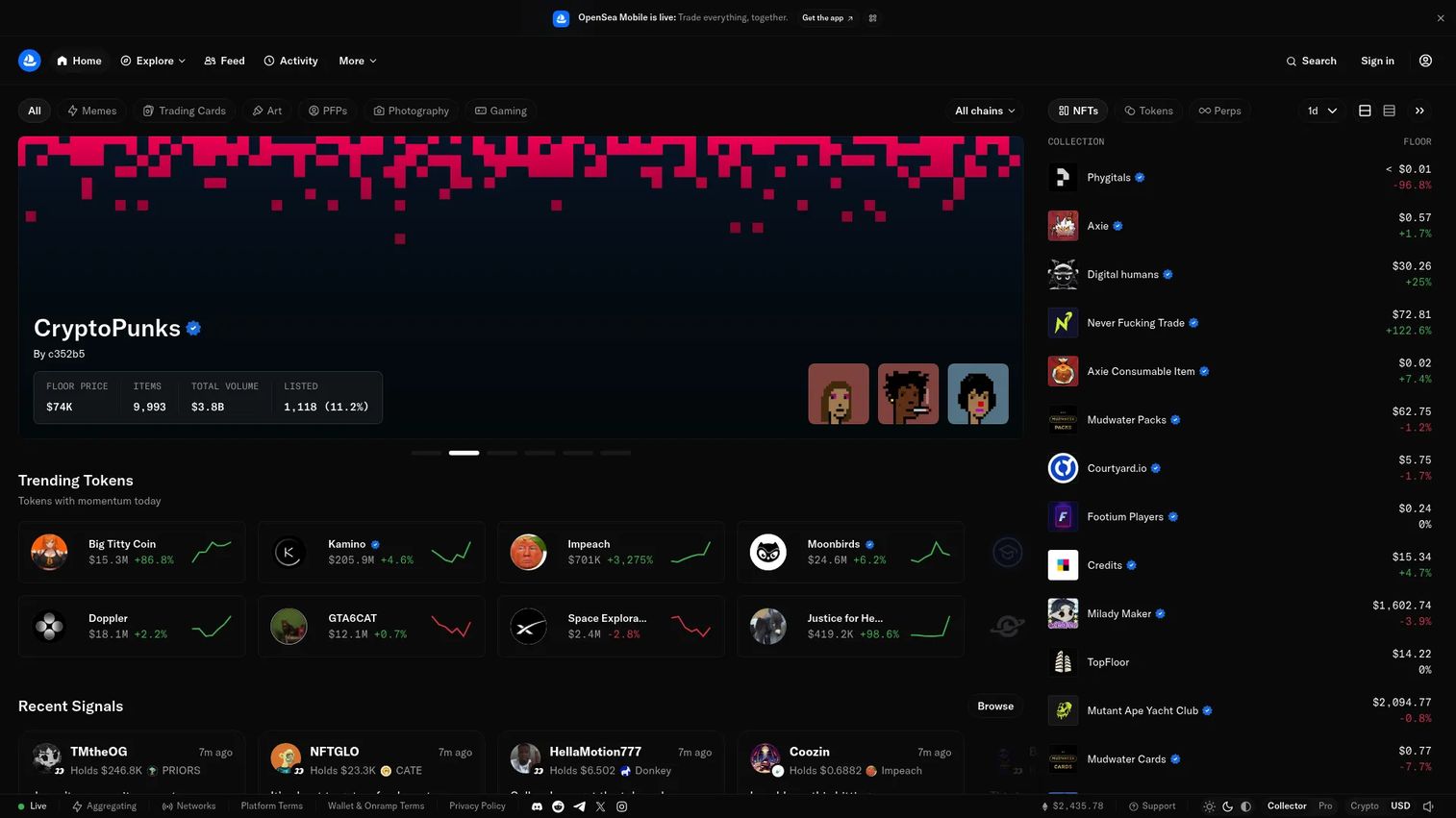
OpenSea is a peer-to-peer marketplace for discovering, buying, selling, and minting NFTs across multiple blockchains. It supports token swapping, perpetuals trading, and primary drops alongside its secondary marketplace. For founders who want a quick read on mainstream NFT buyer behavior, OpenSea provides the widest inventory and the most active cross-chain collection data.
Best for: Buyers and teams that want broad NFT collection discovery across major blockchain ecosystems.
Key features
- Multichain NFT buying, selling, and minting
- Token swaps and perpetuals trading
- OpenSea Studio for creator tools and collection management
- Portfolio and on-chain activity tracking
- API access for NFT, marketplace, and analytics data
Why choose OpenSea: It is the reference marketplace for understanding who buys NFTs and what they pay. Founders testing a collectibles strategy will find more collection depth here than anywhere else.
OpenSea pricing: Account creation and browsing are free. NFT sales cost 1% per transaction. Primary drops cost 10% per NFT minted. Token swaps cost 0.5% per swap, and perpetuals trades cost 0.01% per trade. Network gas fees apply separately depending on the chain.
G2 rating: 4.4/5
2. Magic Eden
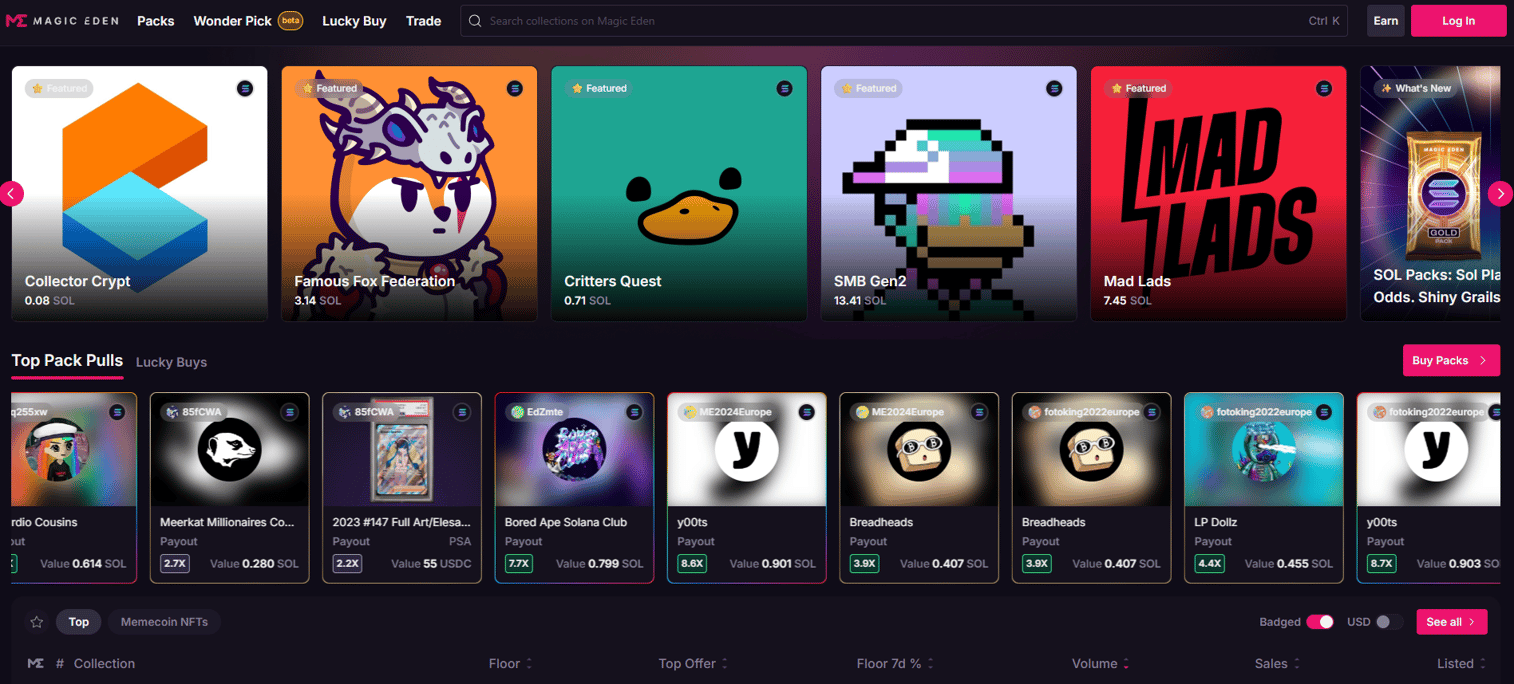
Magic Eden started as a Solana-native NFT marketplace and expanded to multiple chains. As of March 2026, the platform officially ended EVM-chain and Bitcoin marketplace support, refocusing on Solana Marketplace, Solana Packs, and Solana Lucky Buy. If your audience is active in Solana, Magic Eden remains a primary destination. Cross-chain ambitions should now be tested elsewhere.
Best for: Solana-native collectors and teams running drops or trading in the Solana ecosystem.
Key features
- Solana NFT trading with bulk listing and offers
- Packs for revealing NFTs and tokenized Pokémon cards
- Lucky Buy for NFT-based discovery mechanics
- Wallet-based portfolio management and collection watchlists
- Launchpad for Solana NFT projects
Why choose Magic Eden: Its Solana ecosystem depth is genuine. Founders building Web3 loyalty programs tied to Solana audiences will find buyer volume and collection inventory that smaller Solana-only platforms cannot match.
Magic Eden pricing: Listing fees are 0%. Magic Eden takes a 2% transaction fee on completed sales. Creator royalties may also apply depending on the collection.
3. Rarible
Rarible operates as a multichain NFT marketplace for digital and physical collectibles. Its RaribleX product allows brands and creators to build no-code branded marketplaces on Ethereum, Polygon, Base, and Solana. Transaction fees run 2% on Ethereum, Base, and Polygon and 1.5% on Solana. This is one of the more founder-friendly NFT platforms for teams that want to test a branded digital collectible experience without custom infrastructure.
Best for: Creators and brands testing NFT drops or building a branded marketplace across multiple chains.
Key features
- Multichain NFT buying, selling, and collection offers
- Tokenized physical collectibles including graded cards
- Gacha-style packs for Pokémon, sports cards, and anime
- RaribleX no-code branded marketplace creation
- Card, Apple Pay, and Google Pay checkout via MoonPay
Why choose Rarible: The branded marketplace path gives founders a way to run a named storefront without building from scratch. The free RaribleX self-serve tier lowers the cost to test whether NFT drops resonate with your audience.
Rarible pricing: The RaribleX self-serve plan is free and covers Ethereum, Polygon, and ERC-721 or ERC-1155 tokens. Enterprise branded marketplaces with any-chain support and custom integrations require contacting sales.
G2 rating: 4.0/5
4. Blur
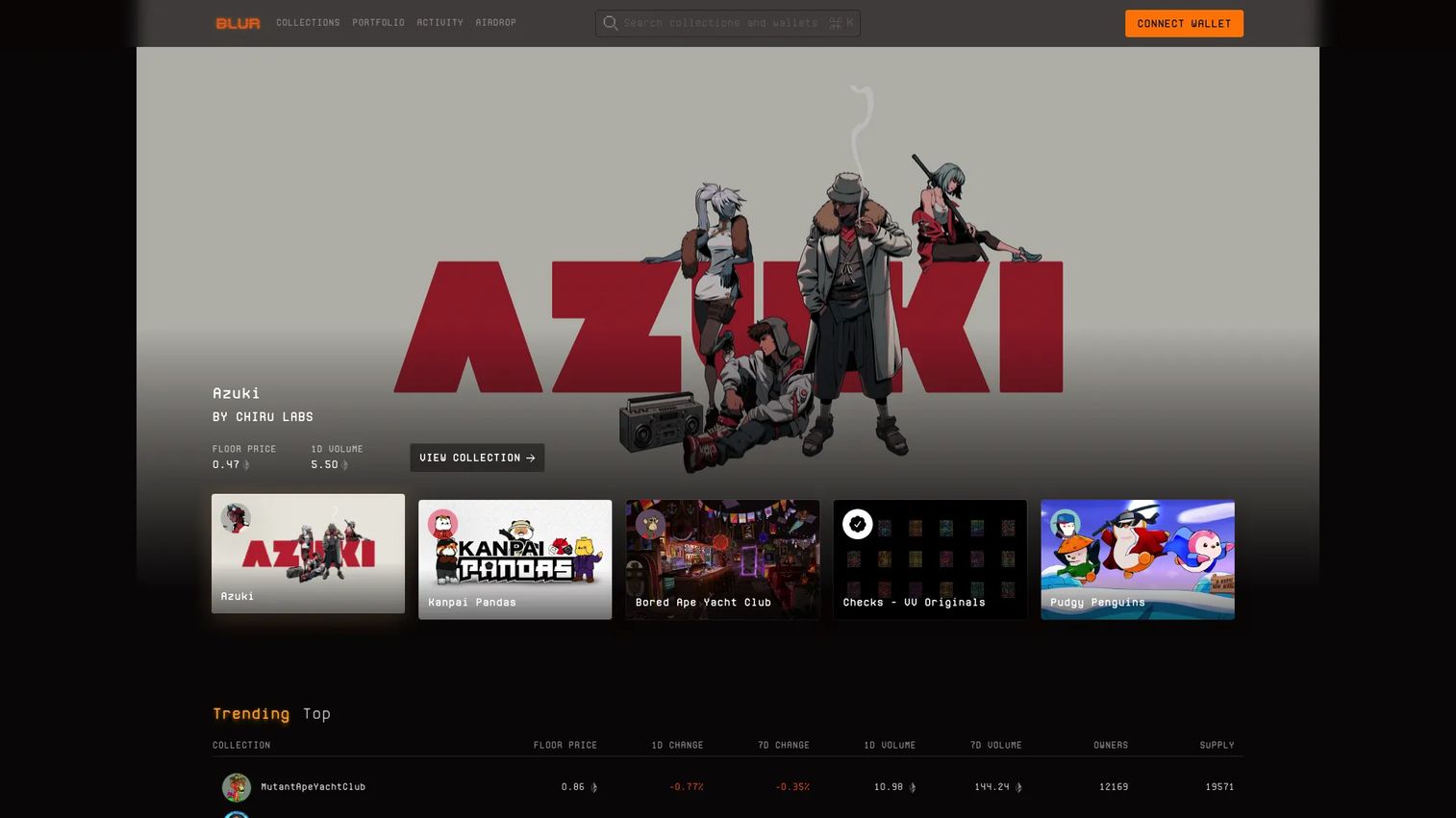
Blur is an NFT marketplace built for professional Ethereum traders. The interface prioritizes execution: Fast sweeping across listings, cross-marketplace aggregation, collection bidding, and portfolio analytics. Beginners will find it less oriented toward discovery and more toward market mechanics. Founders can use it as a reference for what power-user NFT trading UX looks like at its most optimized.
Best for: Active Ethereum NFT traders who prioritize liquidity, speed, and market depth over guided collection discovery.
Key features
- Cross-marketplace NFT sweeping
- Collection-wide bidding tools
- Floor price tracking and portfolio analytics
- NFT reveal sniping
- Ethereum NFT trading with 0% marketplace fees
Why choose Blur: Zero marketplace fees and deep Ethereum collection liquidity make it the default for traders moving volume. It is not the right surface for a first-time buyer or a creator looking for storytelling tools.
Blur pricing: Blur charges 0% marketplace fees. Network gas fees apply, and creators may set royalties on their collections. Verify the current fee and royalty structure directly on the platform before trading.
5. Tensor
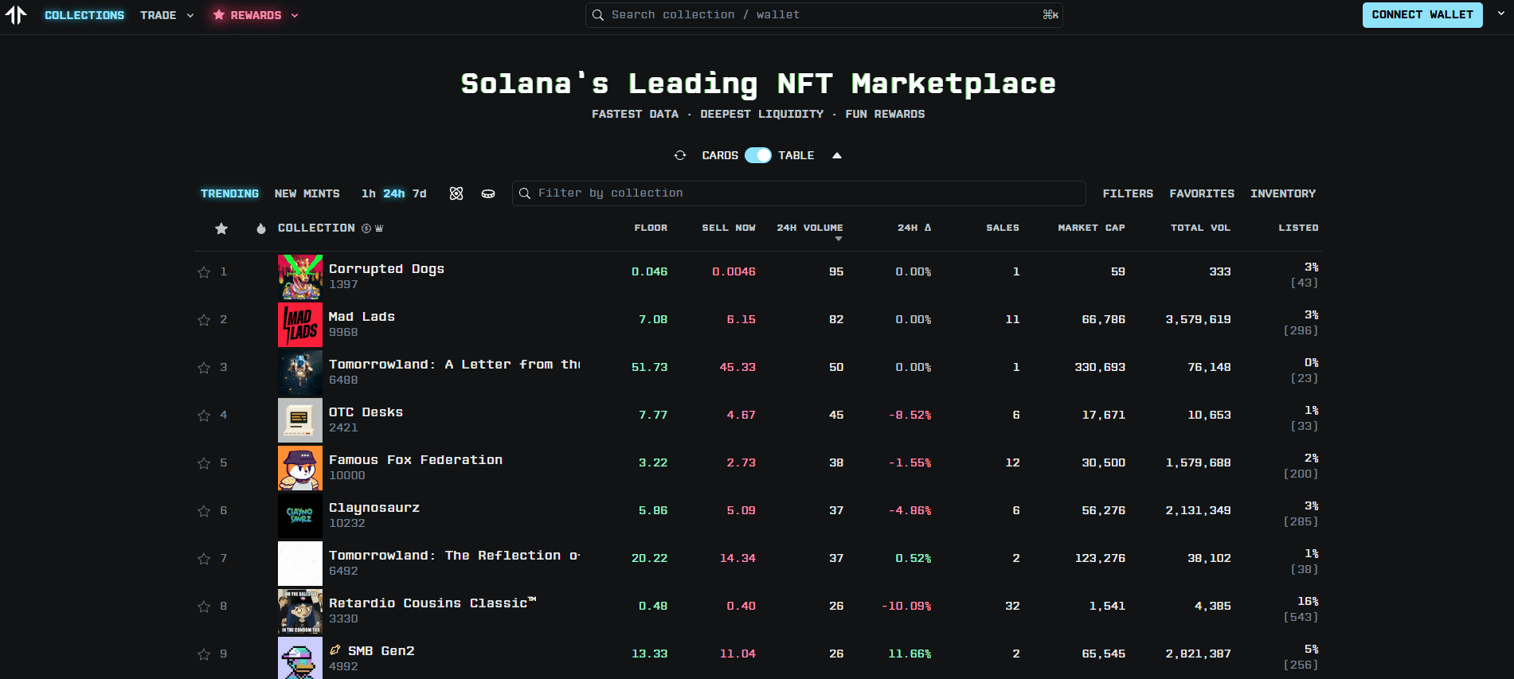
Tensor is a Solana NFT trading platform covering more than 30,000 Solana collections. It is built for traders who want real-time market data, collection-wide bids, and market-making orders rather than a browsing-first experience. Tensor also provides launchpad tools for creators. For founders building in the Solana ecosystem, it shows what serious traders expect from marketplace analytics.
Best for: Solana NFT traders who need advanced analytics, bidding, and collection-level market data.
Key features
- Real-time trading interface across 30,000+ Solana collections
- Collection-wide bids and market-making orders
- Portfolio tracking and collection analytics
- NFT launchpad for creators
- Trader-first workflow design
Why choose Tensor: Its collection depth and bidding infrastructure make it the strongest Solana trading venue currently active. If your product serves Solana-native users, studying Tensor's UX is worth the time.
Tensor pricing: Tensor charges a 2% taker fee and 0% maker fee. Creator royalties may apply depending on the collection.
6. SuperRare
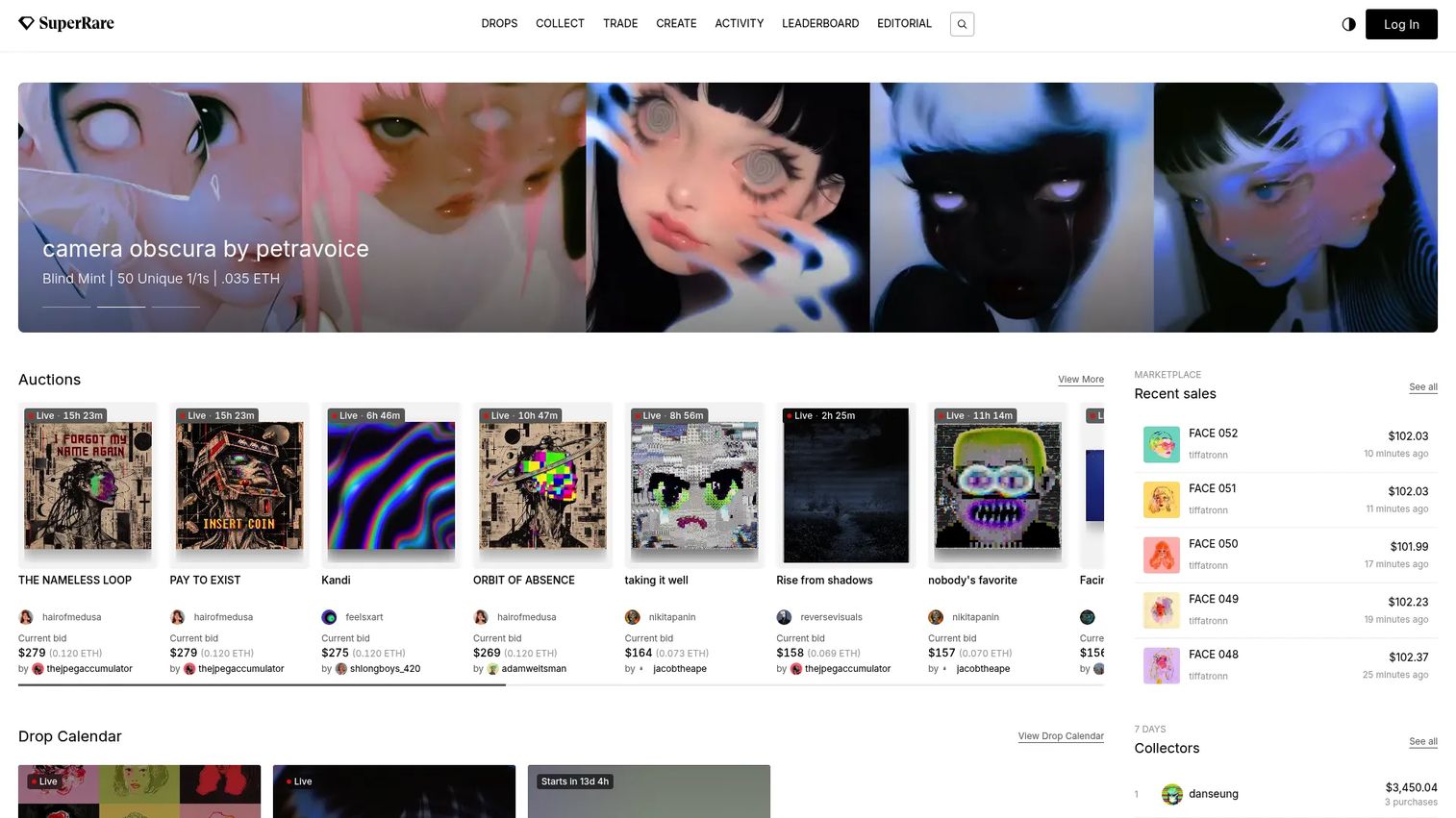
SuperRare is a digital and physical art marketplace focused on curated 1/1 artworks and limited editions. It supports auctions, fixed-price sales, collection offers, and Liquid Editions, which are artworks with tradable tokens attached. Physical artwork releases and credit card checkout for USDC listings round out the buying experience. Founders considering premium digital collectibles tied to brand credibility should study how SuperRare handles scarcity and artist identity.
Best for: Collectors and creators focused on curated digital art where artist identity and provenance matter.
Key features
- 1/1 digital artworks and limited editions
- Liquid Editions with tradable artwork tokens
- Physical artwork and managed print releases
- Auctions, fixed-price sales, and collection offers
- Credit card checkout for eligible USDC listings
Why choose SuperRare: The curation model creates buyer trust that open marketplaces cannot replicate. For founders whose brand positioning depends on perceived scarcity and art credibility, this is the most studied reference in the category.
SuperRare pricing: Transaction fees and commissions apply to sales; check the platform directly for current rates before listing.
7. X2Y2
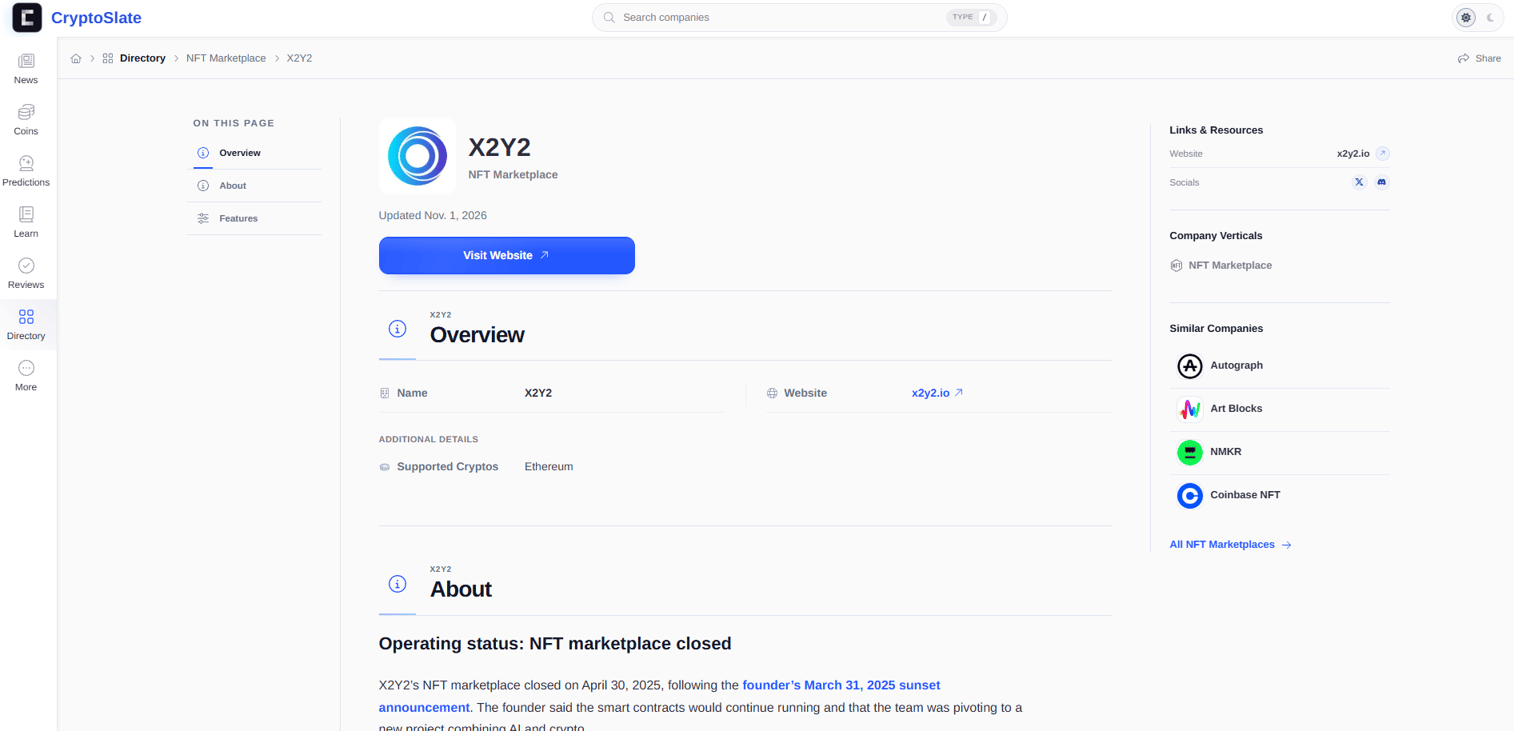
X2Y2 operated as an Ethereum NFT marketplace with collection offers, bulk actions, and trading rewards. The official homepage was inaccessible during research for this article, and no first-party pricing or feature confirmation could be completed. Verify current platform status and fee structure directly before attempting to use it.
Best for: Ethereum NFT traders comparing marketplace alternatives, subject to confirming the platform remains active.
Key features
- NFT marketplace listings and collection offers
- Bulk NFT actions
- Ethereum trading
- Historical rewards mechanics
Why choose X2Y2: Confirm current status before including it in your evaluation. Its historical positioning as a low-fee Ethereum alternative is worth noting, but activity should be verified independently.
X2Y2 pricing: Check the official platform before transacting.
8. LooksRare
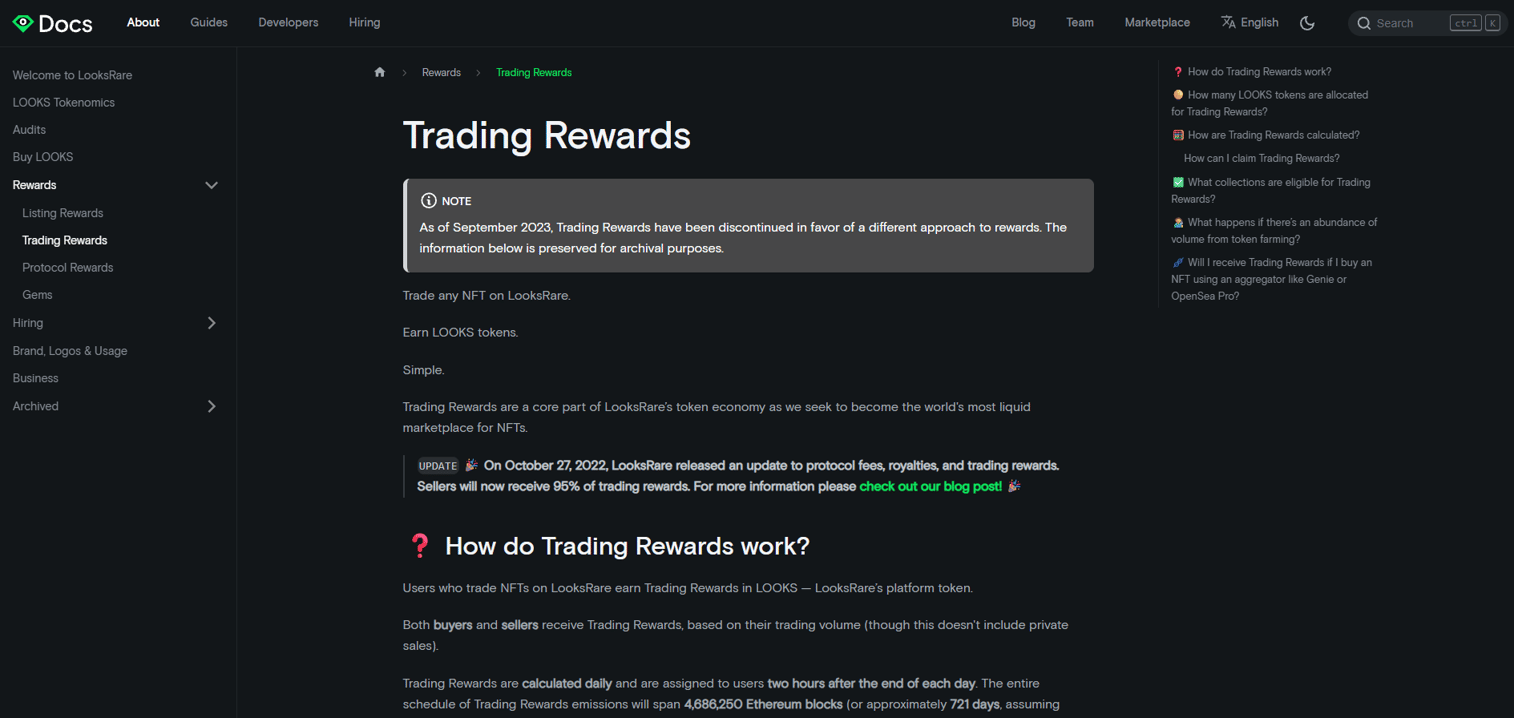
LooksRare was known for its trading rewards mechanics and community incentive model on Ethereum. During research for this article, the official homepage redirected to a parked domain page, and no first-party pricing or feature information could be confirmed. Treat it as unverified for current operational use.
Best for: Verify platform availability before including in any evaluation.
Key features
- Historical: NFT listings, collection offers, and trading rewards
- Ethereum NFT marketplace mechanics
Why choose LooksRare: Its incentive model was widely studied as a case study in how rewards shape marketplace behavior. For current trading, confirm whether the platform is active before proceeding.
LooksRare pricing: Check the platform directly.
9. Exchange Art
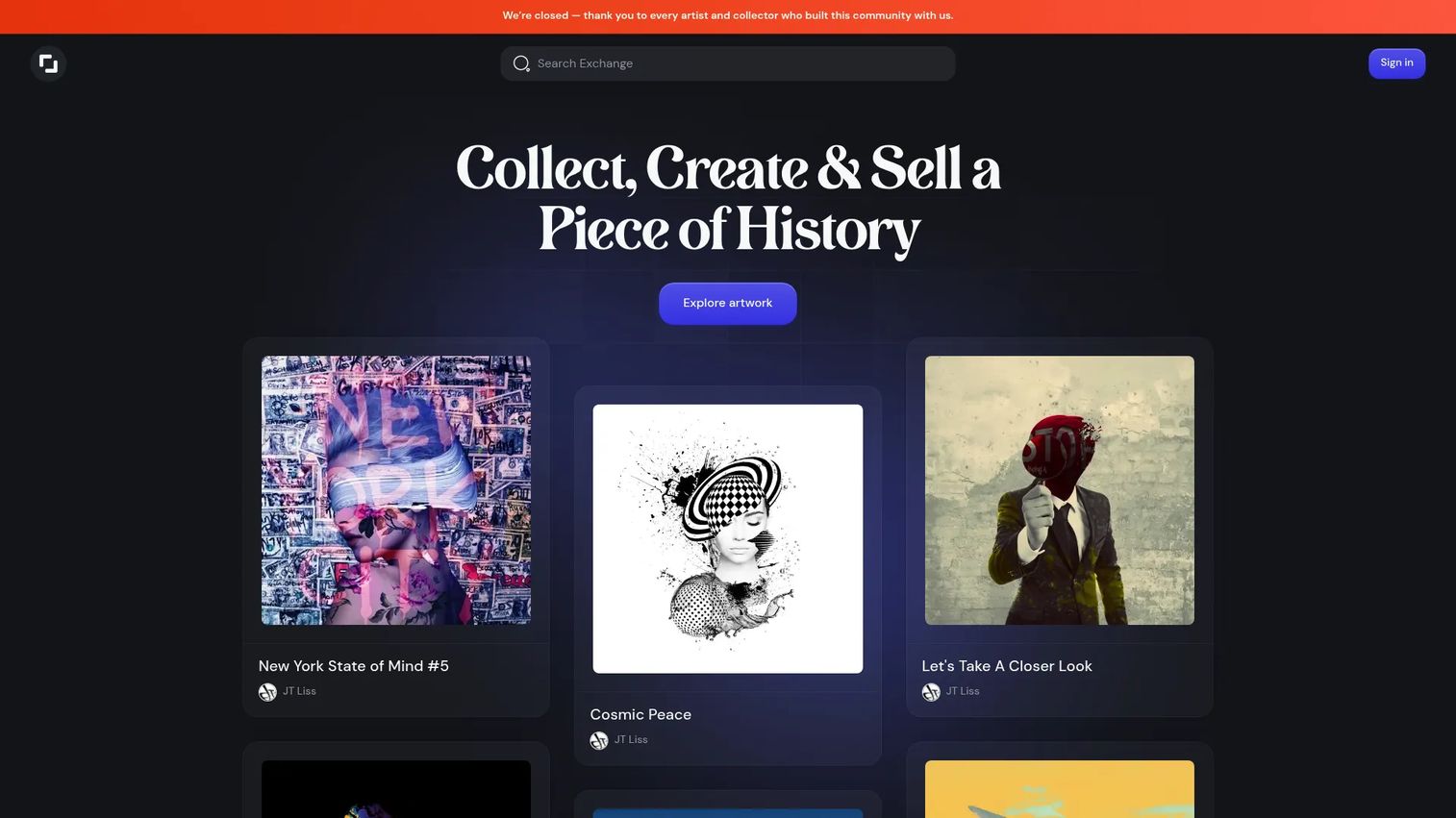
Exchange Art is a digital fine art marketplace operating on Solana. It supports fixed-price sales, reserve-price auctions, editions, and primary drops through the ArtDrop tool. Artists and collectors focused on 1/1 Solana digital art use it as a primary destination. The fee structure is transparent: 5% on primary sales, 2.5% on secondary sales, and no listing fee.
Best for: Solana-based artists and collectors focused on digital fine art and one-of-one works.
Key features
- Fixed-price, reserve-price, and auction sale formats
- Editions and limited-print releases
- ArtDrop tool for primary sale management
- Artist profiles and collection pages
- No listing fee on any sale format
Why choose Exchange Art: Its Solana focus and transparent fee structure make it a strong choice for founders evaluating niche marketplace design for a specific ecosystem. The absence of a listing fee lowers the barrier for creators testing a new collection.
Exchange Art pricing: Primary sales carry a 5% platform fee. Secondary sales carry a 2.5% fee. Listing is free.
10. Solanart
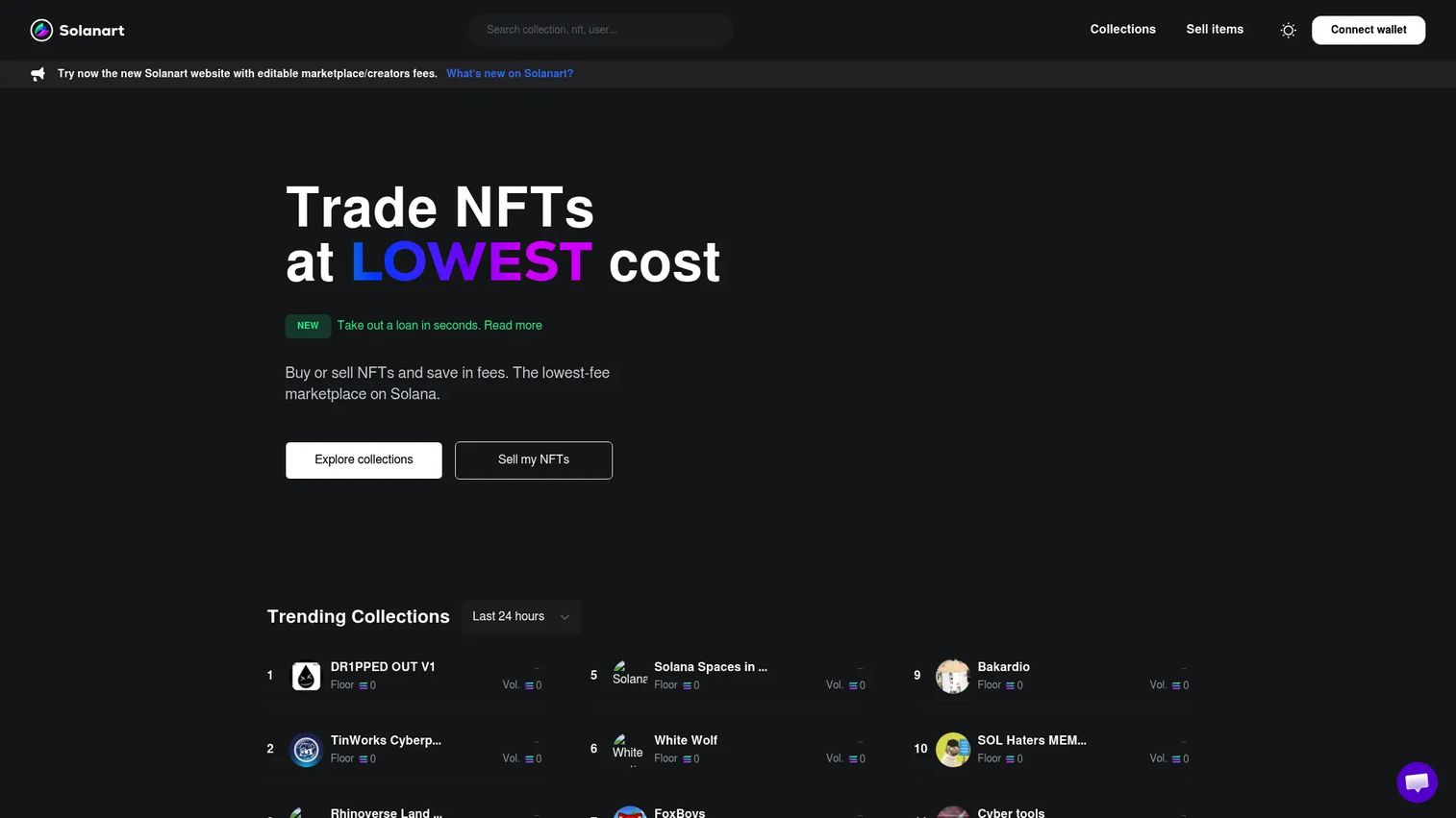
Solanart is a Solana NFT marketplace for buying, selling, and discovering digital collectibles. The official homepage returned a 403 error during research for this article, and first-party fees could not be confirmed. Solanart's presence in the Solana ecosystem directory remains, but operational status and current fee structure should be verified before use.
Best for: Solana NFT collectors comparing marketplace options, subject to confirming the platform is currently active.
Key features
- Solana NFT collection browsing
- Buy, sell, and trade
- Launchpad for Solana NFT projects
- Wallet connection
Why choose Solanart: Verify current platform availability before evaluating it seriously. Magic Eden and Tensor both offer stronger verified Solana marketplace experiences as of 2026.
Solanart pricing: Check the platform directly before listing or buying.
11. Courtyard.io
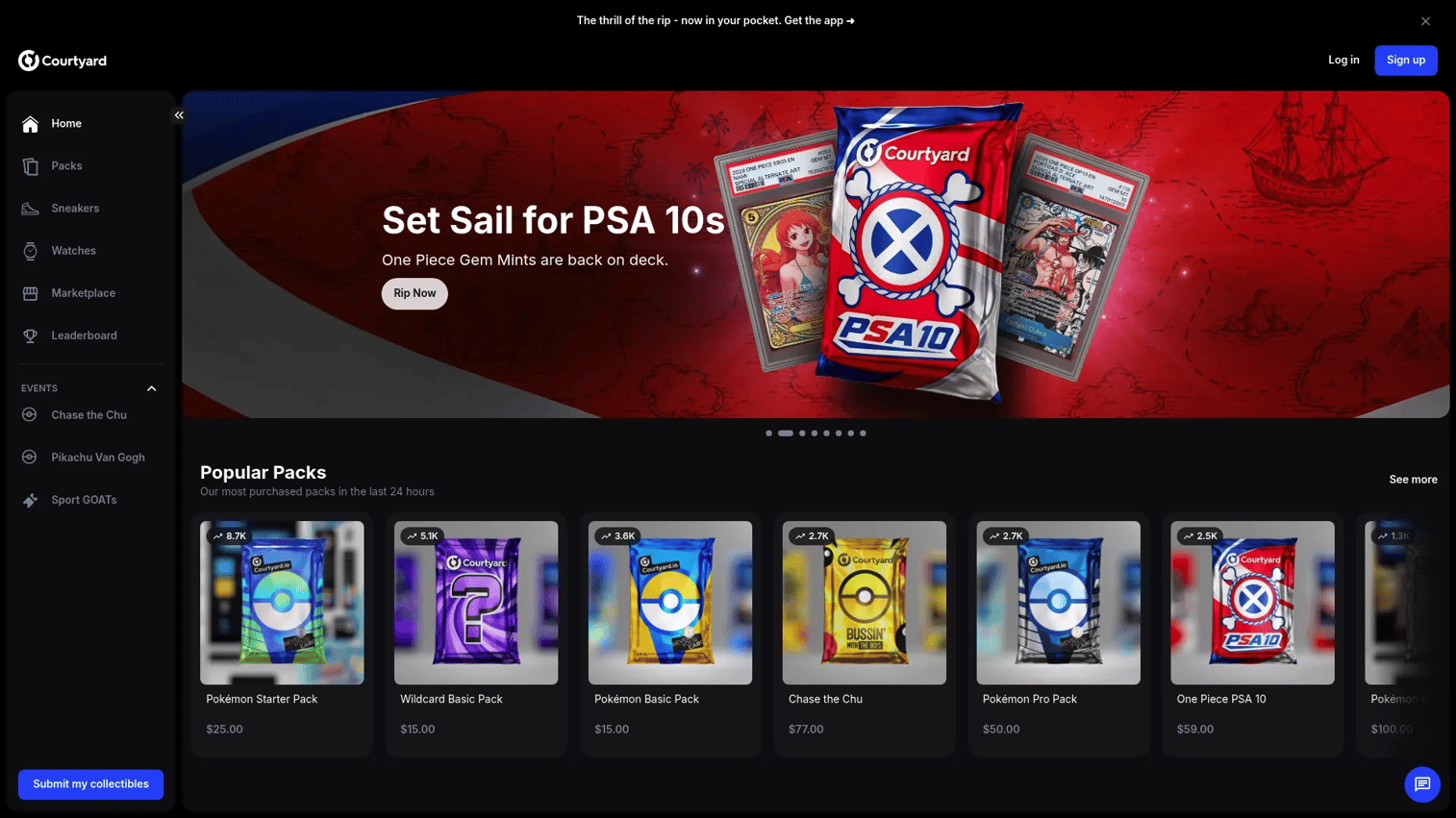
Courtyard.io tokenizes physical collectibles: Graded trading cards, comics, sneakers, and watches. Items are vaulted and insured at no cost to the owner. The platform offers digital packs that reveal real graded collectibles, a secondary marketplace with 0% seller fees, and worldwide physical redemption. On-chain ownership and transaction history tie each item to a verifiable digital record.
Best for: Collectors and founders exploring tokenized physical asset ownership and redemption workflows.
Key features
- Digital packs revealing real authenticated collectibles
- Marketplace with 0% seller fees for eligible listings
- Free vaulting and insurance with worldwide redemption
- On-chain ownership and transaction history
- Instant buyback offers on eligible items
Why choose Courtyard.io: The physical-to-digital ownership model fills a gap that pure-digital marketplaces cannot. For founders thinking about NFTs tied to physical products, loyalty rewards with tangible value, or collectibles with offline redemption, this is the clearest operational example currently running.
Courtyard.io pricing: Free to join. Free vaulting and insurance. Seller fees are 0% for eligible marketplace listings. Individual collectibles and packs are priced per item, not through software subscription plans.
12. Reservoir
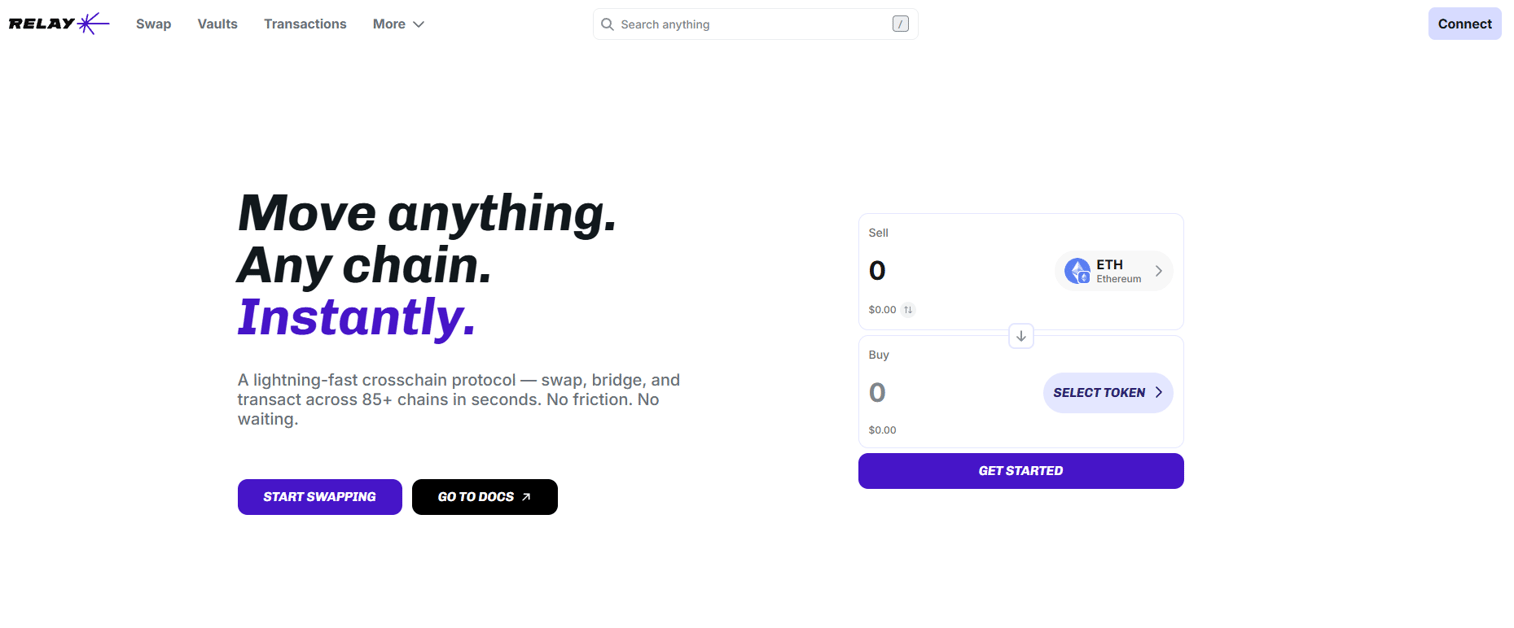
Reservoir now operates primarily as Relay (relay.link), a crosschain infrastructure product supporting swaps and bridging across 85+ chains. The original NFT marketplace API positioning has evolved toward crosschain payments infrastructure for wallets, fintech applications, and developers. If you are building NFT functionality or crosschain transactions into a product, Reservoir/Relay provides the developer tooling, though pricing requires a conversation with the team.
Best for: Developers and product teams building crosschain payment, swap, or asset-movement experiences.
Key features
- Crosschain swaps and bridging across 85+ chains
- Fee sponsorship and smart wallet support
- Premium app fees and referrer tracking
- Developer API access
- Support for fintech and wallet integrations
Why choose Reservoir: For SaaS founders whose product needs crosschain transaction infrastructure, this is one of the more mature options in the category. Understand that the product has shifted from pure NFT marketplace APIs toward a broader crosschain payments focus.
Reservoir pricing: Contact the team for current developer pricing and usage tiers.
G2 rating: 4.3/5
13. Bueno
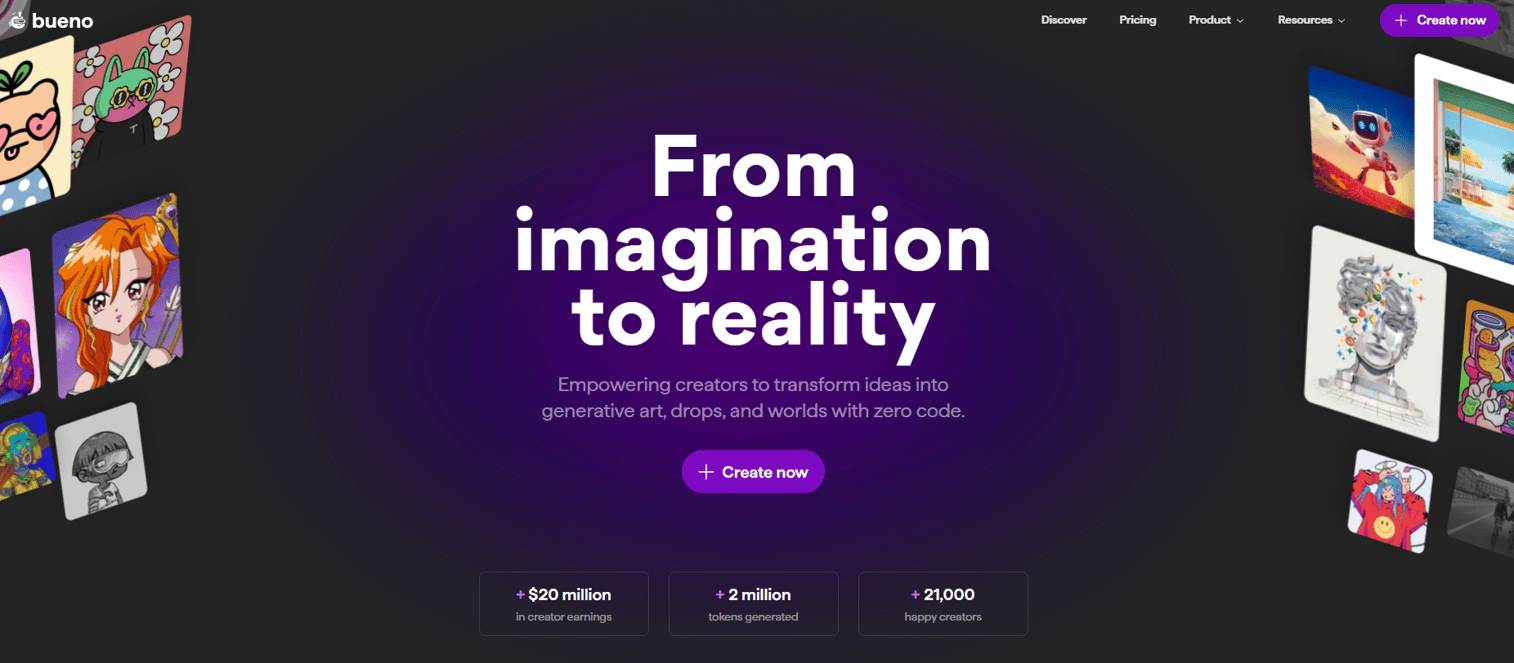
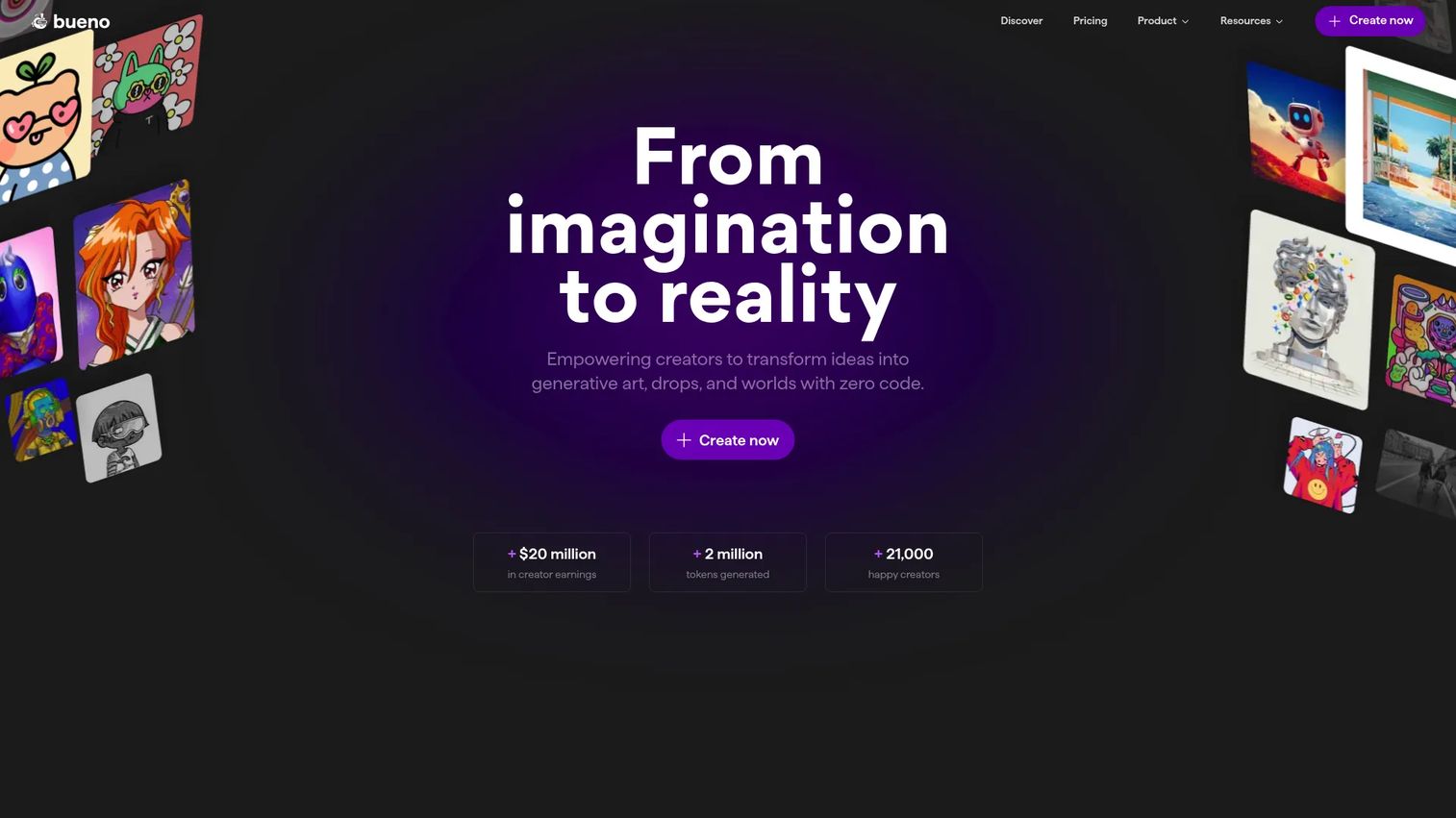
Bueno gives NFT creators no-code tools for generative art, smart contract deployment, collection drops, and interactive Web3 experiences. Art generation starts free and charges per token generated. Drops deploy free and take 5% of primary sales. No developer resources are required to get a collection live on Ethereum, Polygon, or Base. For founders testing NFT drop mechanics before committing to custom infrastructure, this is one of the fastest paths to a working launch.
Best for: Creators and founders launching generative NFT collections without developer support.
Key features
- Generative NFT art creation with layers and rarity rules
- No-code smart contract deployment for Ethereum, Polygon, and Base
- Drops with customizable sale phases and allowlist support
- Buenoverse interactive Web3 worlds
- Custom forms for allowlists, surveys, and event registration
Why choose Bueno: The pay-as-you-go model (no upfront cost, 5% of sales if collectors buy) removes the financial risk from testing a first drop. Founders can validate whether NFT-based engagement works for their audience before spending on custom contract development.
Bueno pricing: Art generation costs $0.19 per token. Drops deploy free and take 5% of primary sales when collectors buy. Forms are free to use.
14. Kraken NFT
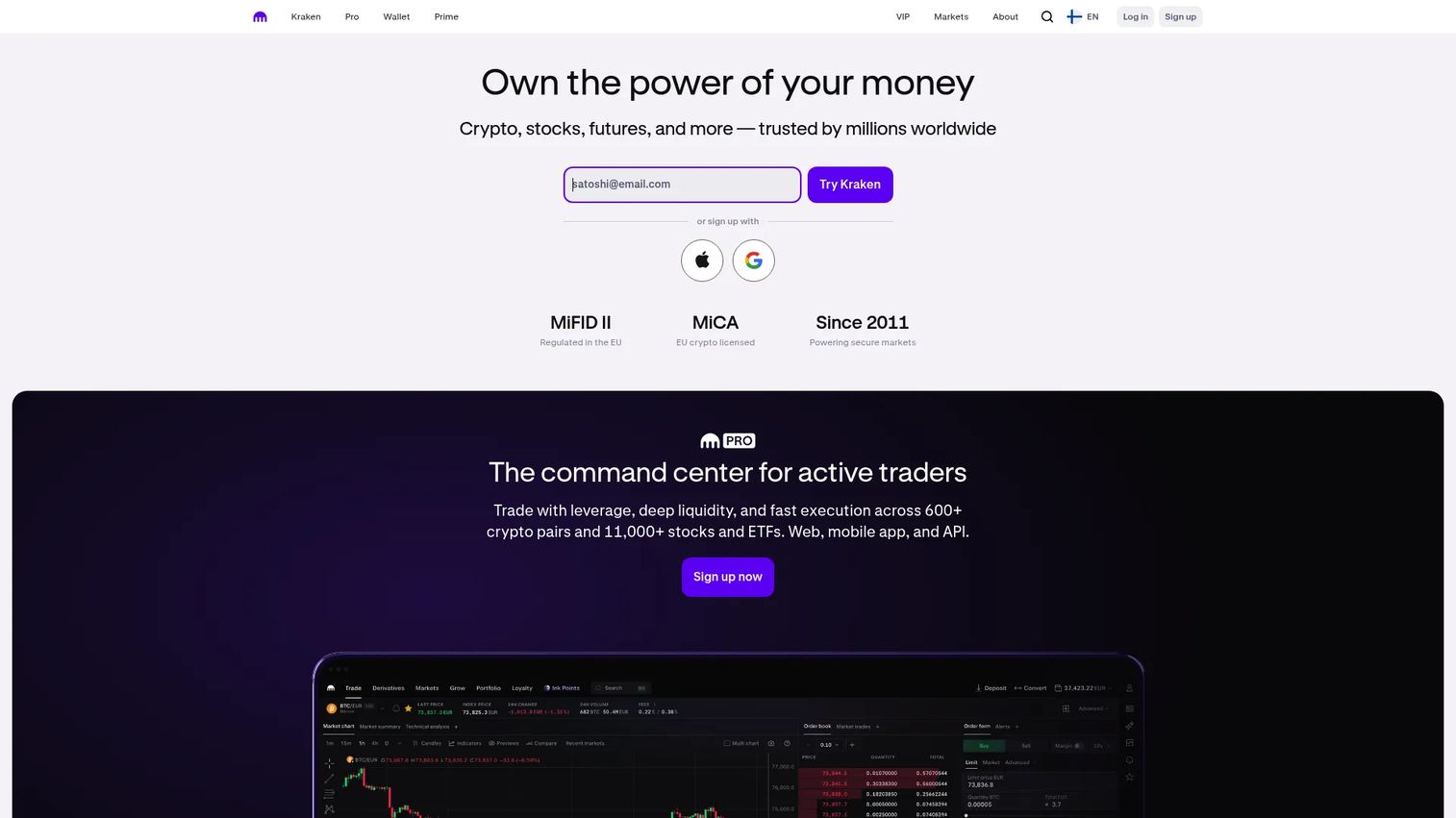
Kraken NFT entered withdrawal-only mode on November 27, 2024, and was fully closed by February 27, 2025. The URL now redirects to Kraken's general exchange homepage. No NFT marketplace functionality remains available.
Best for: No current use case. The marketplace is closed.
Key features
- Historical: Zero-gas-fee trading while NFTs were held on Kraken
- Rarity rankings and collection discovery
- Fiat and crypto payment support across multiple chains
Why choose Kraken NFT: Do not include it in your platform selection. Its exchange-linked custody model was an interesting distribution experiment, but no operational NFT marketplace product exists at this address.
Kraken NFT pricing: The marketplace is closed.
15. OpenSea app
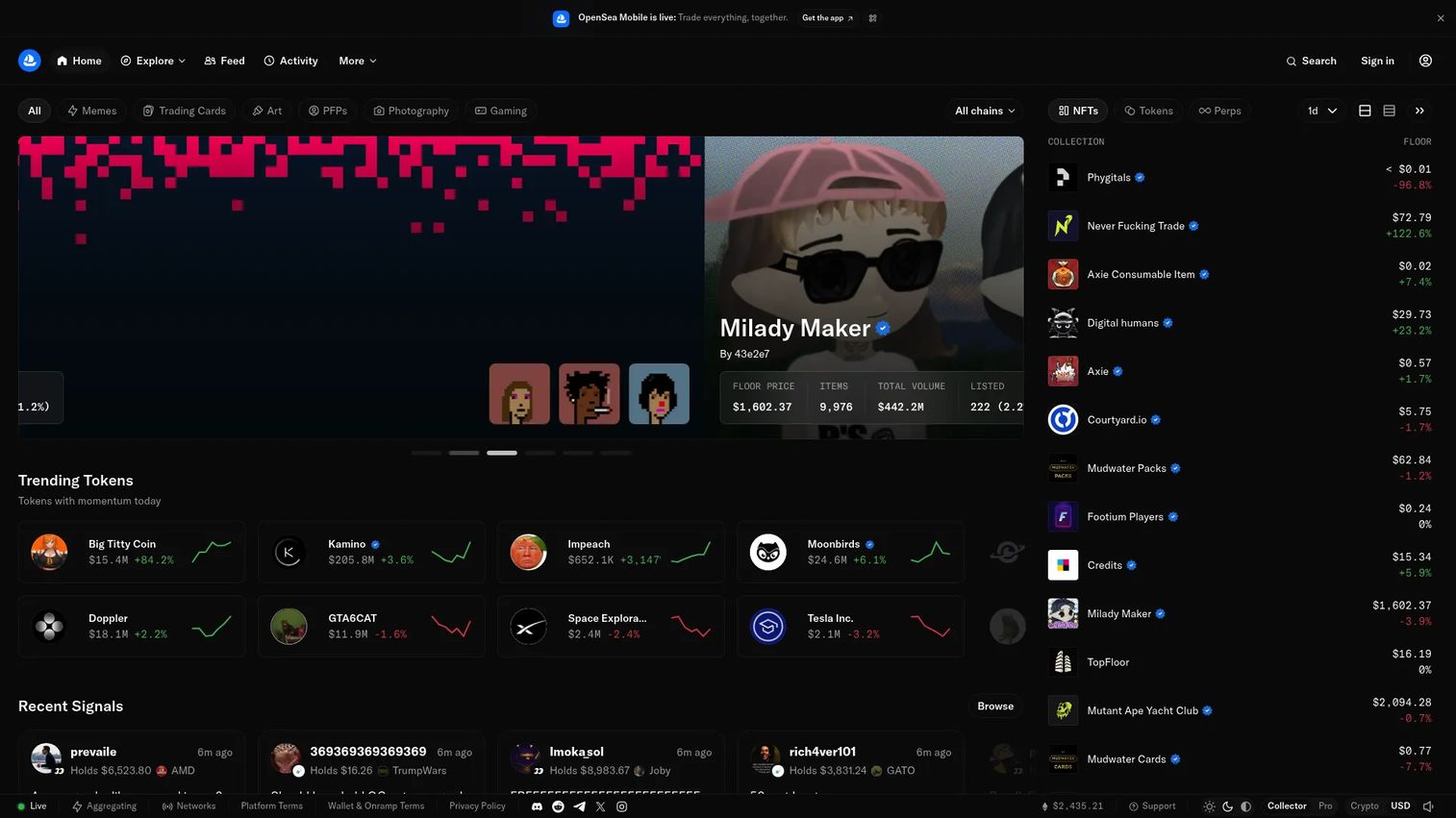
The OpenSea app brings the core OpenSea marketplace experience to mobile. Collectors can browse collections, track watchlists, check portfolio holdings, view on-chain activity, and receive marketplace notifications without opening a browser. The same transaction fees as OpenSea's web platform apply. For founders who want to understand how mobile NFT discovery behavior works, spending time in the app is more instructive than reading about it.
Best for: Collectors and founders who want NFT discovery and portfolio access from their phone.
Key features
- Mobile NFT collection browsing and discovery
- Watchlist and portfolio tracking
- Marketplace activity notifications
- Holdings and trade history views
- Access to OpenSea's full multichain inventory
Why choose OpenSea app: The mobile experience matters more than it once did, particularly for NFT-based loyalty and collectibles programs targeting consumer audiences. Understanding how buyers interact with their portfolio on mobile shapes better product decisions.
OpenSea app pricing: The app is free to download. The same fee structure applies as OpenSea's web platform: 1% on NFT sales, 10% on primary drops, 0.5% on token swaps. Network fees apply on all chains.
G2 rating: 4.4/5
Considerations
Start with the chain your audience already uses
The best NFT platform is often the one where your target buyers already hold wallets and assets. Ethereum has the deepest secondary-market liquidity for most collection categories. Solana has fast transaction speeds, lower costs, and a growing collector base. Polygon and Base have emerged as lower-fee alternatives for consumer-scale drops. If your audience has no existing Web3 activity, the chain question comes after the product-market fit question.
Check liquidity before you check design
A polished interface with thin trading activity creates a disappointing launch. Review collection volume, bid depth, floor movement, and recent sales before choosing a marketplace for a drop. For secondary-market buyers, low liquidity means slow exits and wide bid-ask spreads. DappRadar and CryptoSlam both provide current collection volume data across chains.
Understand every fee before you list or mint
NFT platform fees compound: Marketplace fees, creator royalties, gas costs, payment processing for fiat checkout, storage for physical collectibles, and redemption fees where physical delivery is involved. The total cost of a transaction often differs substantially from the headline fee. Verify the full fee schedule on each platform's official fee page before transacting.
Decide whether you need a marketplace or infrastructure
Consumer teams running drops or selling to collectors usually need OpenSea, Magic Eden, Rarible, or a creator-focused platform like Bueno. Product teams building NFT features into a SaaS product need API access, orderbook data, and crosschain infrastructure, which currently points toward Reservoir/Relay.
Treat security as an ongoing workflow
NFT platform security depends on the user's behavior as much as the platform's. Only connect wallets through official URLs, verify collection contract addresses before bidding, review wallet approvals regularly and revoke unused permissions, and use a hardware wallet for high-value holdings. Fake collections, phishing links, and malicious approval requests are persistent risks across all platforms.
Conclusion
A meaningful number of NFT platforms on the original candidate list for this article have closed or restricted operations since 2025. Kraken NFT is offline. X2Y2, LooksRare, and Solanart each have verification questions around current status.
The platforms that remain active and credible cover distinct jobs. For broad marketplace access across chains, OpenSea is still the reference standard. Magic Eden and Tensor serve the Solana ecosystem, with Tensor oriented toward traders and Magic Eden toward broader marketplace activity. Blur covers professional Ethereum trading. SuperRare and Exchange Art serve art-focused collecting. Rarible and Bueno give creators a path to branded drops. Courtyard.io handles physical collectible tokenization. Reservoir provides the crosschain infrastructure layer for developers.
The right platform is the one with the right buyers, the right chain, enough liquidity, and an operational workflow your team can support. Do not pick a platform because it has the loudest homepage or the most recognizable name from 2022. Check current activity, verify fees, and confirm the product still exists before building anything around it.
If you are using interactive demos to explain complex SaaS or Web3 products to buyers and operators, Guideflow gives your team a way to show how things work without scheduling a live call or provisioning a live environment.
FAQs
OpenSea is the most widely used starting point for buyers because it covers the most chains and has the deepest collection inventory. The OpenSea app makes the experience accessible from mobile. For beginners interested in physical collectibles with less technical complexity, Courtyard.io offers a guided purchase and vault experience.
A marketplace focuses on buying and selling NFTs in secondary markets. The broader category of NFT platforms includes minting tools, launchpads, lending protocols, branded storefront creators, trading analytics platforms, infrastructure APIs, and physical collectible services. Most consumer-facing products are marketplaces, but the category is wider.
Fees change, vary by chain, and depend on whether royalties, gas, payment processing, and storage are included in the calculation. Blur publicly charges 0% marketplace fees but gas costs still apply. Courtyard.io charges 0% seller fees for eligible listings. Tensor charges 2% taker fees on Solana with 0% maker fees. Check each platform's current fee page before listing or buying, as these figures shift.
Tensor and Magic Eden are both active Solana-focused platforms with strong collection inventory. Tensor is oriented toward traders who want analytics and advanced bidding. Magic Eden covers a broader buyer profile including Packs and launchpad activity. Exchange Art serves Solana-based digital art collecting with a focused fine art audience. Solanart is worth verifying for current operational status before use.
Art-focused platforms prioritize curation, artist profiles, collector trust, and presentation quality. SuperRare is the most established curated art platform currently operating on Ethereum. Exchange Art provides a Solana-based fine art experience with transparent fees and no listing costs. Rarible and Bueno both serve creators who want to run drops, though they lean more toward collection mechanics than gallery-style curation.
No platform eliminates the risks associated with self-custody and on-chain transactions. The most common risks include phishing links impersonating official sites, fake or copycat collections with identical artwork, malicious wallet approvals that give contracts access to your assets, and smart contract vulnerabilities. Always use official URLs, verify contract addresses against the project's own channels, review active wallet approvals regularly, and consider a hardware wallet for significant holdings.
Yes, but product-market fit comes before token mechanics. The core question is whether your customers have or want Web3 wallets. Forcing wallet onboarding onto a non-crypto audience creates friction that outweighs any loyalty benefit. If your audience is already Web3-active, NFT-based rewards with tangible utility (access, redemption, transferability) can outperform points systems. Start with the customer problem, not the token mechanic, and confirm regulatory suitability with legal counsel before launching.
Buyers and creators collecting or selling NFTs generally need a marketplace or creator platform. Product teams building NFT features into a SaaS product, wallet, or fintech application typically need API access to orderbook data, collection metadata, transaction routing, and crosschain infrastructure. Reservoir/Relay currently provides crosschain infrastructure at that level. Choosing the wrong layer creates unnecessary complexity on both sides: A marketplace interface where you need raw data, or an API where your audience needs a consumer buying experience.