

You picked a listing platform because a peer swore by it. Six months later your agents are copying data between three systems, your IDX feed breaks on Fridays, and nobody can tell you which listings are compliant with your local board's rules.
That's not a discipline problem. It's a stack problem.
The multiple listing service sits at the center of almost every residential transaction. According to Market Growth Reports (2026), 96% of residential property transactions involved MLS-based listing software, and roughly 580 regional MLS organizations served about 1.6 million licensed agents in the United States as of 2024. When your MLS listing software doesn't fit how your team actually works, the friction shows up everywhere: in listing accuracy, in agent time, in the lag between a price change and what a buyer sees online.
The market has grown to match. DataHorizzon Research (2024) put the global MLS listing software market at USD 1.87 billion in 2024, projected to reach USD 3.68 billion by 2033, with 72% of deployments already cloud-based. More systems, more coverage, more decisions to get wrong.
This guide cuts through that. Below is a practical breakdown of the platforms and reference points real estate teams actually use, from consumer-facing search portals to member-only MLS systems to the software marketplaces where you compare vendors.
What's inside
This guide is for brokers, brokerage operators, MLS admins, and software buyers comparing MLS platforms or MLS-connected workflows. We selected the seven entries based on four criteria that matter when you're scaling a team, not just running a search:
- Coverage and access model: public search versus member-only access, and how much of the local market each reaches.
- Workflow fit: listing management, compliance support, and how the tool plugs into daily broker and agent work.
- Integration depth: IDX integration, CRM integration, and real estate website integration.
- Decision usefulness: whether the platform helps you compare, distribute, or manage listings at scale.
TL;DR
- Best free consumer search portal: MLS.com for broad state, metro, and near-me discovery.
- Best for comparing vendors: G2 for verified reviews and feature taxonomy on real estate MLS software.
- Best member-facing MLS platform: flexmls.com for mobile-first listing entry and Spark API integrations.
- Best authority on what MLS is: the National Association of Realtors for cooperative-model context and compliance framing.
- Best consumer reach: Zillow and Realtor.com for public-facing distribution and lead generation.
- Best for commercial teams: Crexi for CRE listings, comps, and market analytics.
What is MLS software?
MLS software is the system real estate professionals use to enter, maintain, search, and distribute property listings through a multiple listing service, the shared database where cooperating brokers list and find homes for sale.
The term covers a few distinct layers that buyers often confuse. The MLS itself is the local or regional database governed by a board or association. MLS listing software is the member-facing application agents log into to manage listings. And IDX (Internet Data Exchange) is the mechanism that syndicates MLS listings to broker and agent websites for public property search.
Core capabilities to expect from real estate MLS software:
- Listing management: create, edit, and maintain listings with photos, status changes, and price updates.
- MLS search: filter active inventory by location, price, status, and property attributes.
- Compliance controls: enforce board rules on data accuracy, required fields, and public versus member-only fields.
- IDX integration: push approved MLS listings to real estate websites for consumer search.
- CRM integration: connect listing and contact data to the tools agents use to follow up.
- Local market coverage: access the inventory specific to your region's MLS.
Public search portals like Zillow and MLS.com sit downstream of this. They surface MLS listings to consumers searching for "MLS listings near me," but the authoritative listing data still originates from member-only MLS systems. That distinction matters when you're deciding what to buy: a consumer portal drives visibility, while member MLS software runs the operational backbone.
When to use each type of platform
The category isn't one tool. It's a set of tools for different jobs, and matching the job to the platform saves you the consolidation headache later.
Run daily listing operations
If your team enters, edits, and maintains listings every day, you need member-facing MLS listing software tied to your local MLS. This is where compliance, listing management, and Spark or IDX feeds live. flexmls.com is built for this layer.
Distribute listings to consumers
If your goal is visibility and lead generation, public portals do the heavy lifting. Zillow and Realtor.com pull large buyer audiences and give agents advertising and lead tools on top of MLS-sourced inventory.
Compare and shortlist vendors
If you're evaluating which platform to adopt, a software marketplace helps. G2 aggregates verified reviews and feature comparisons so you can pattern-match against teams your size before committing.
MLS software comparison
Here's how the seven entries compare across intent, use case, pricing, and rating. Pricing and ratings are drawn from each provider's own pages and G2 listings as of mid-2026. Consumer portals and membership bodies don't map cleanly to a per-seat price, so those cells reflect what's publicly stated.
| # | Product | Intent | Key use case | Pricing | G2 rating |
|---|---|---|---|---|---|
| 1 | MLS.com | Consumer search | Free listing and agent discovery | Free search | Not listed |
| 2 | G2 | Vendor comparison | Reviews and feature taxonomy | Free; paid vendor plans | 4.6/5 |
| 3 | flexmls.com | Member MLS platform | Mobile listing entry and IDX via Spark API | Contact sales | 4.8/5 |
| 4 | National Association of Realtors | Authority and membership | MLS definition, advocacy, member benefits | $156 per member/year | Not listed |
| 5 | Zillow | Consumer distribution | Home search and agent lead gen | Free; Premier Agent varies | 3.9/5 |
| 6 | Realtor.com | Consumer distribution | Listing promotion and lead tools | Free; localized paid plans | 3.5/5 |
| 7 | Crexi | Commercial listings | CRE search, comps, and analytics | Free; from $299/mo | 4.6/5 |
Best 7 MLS software and platforms for real estate teams
1. MLS.com

MLS.com is a free consumer-facing portal for browsing real estate listings and finding local agents. It leans on a state picker, metro search, and near-me discovery, and it surfaces new homes, foreclosures, and agent listings alongside standard for-sale inventory. It is independently operated and not affiliated with the local MLS systems that hold the authoritative data.
For a broker, MLS.com is less an operational tool and more a distribution and discovery surface. It shows how consumers actually search: by state, by city, by zip, by county. That behavior maps directly to how you should think about public search versus member-only access, since the portal displays a downstream view of MLS listings rather than the member database itself.
Best for: consumers and agents who want a free way to search real estate listings and find local agents.
Key features
- Search listings by state, city, zip, or county
- Find real estate agents by market
- New homes, foreclosures, and for-sale browsing
- Buyer and seller resources plus a real estate glossary
Why choose MLS.com: It's a zero-cost way to see how listings reach the public and where near-me search sends buyers. It's a reference point for coverage breadth, not a member operations platform.
MLS.com pricing: Searching homes and agents through the site is free. No public paid plan pricing is listed on the first-party site.
2. G2
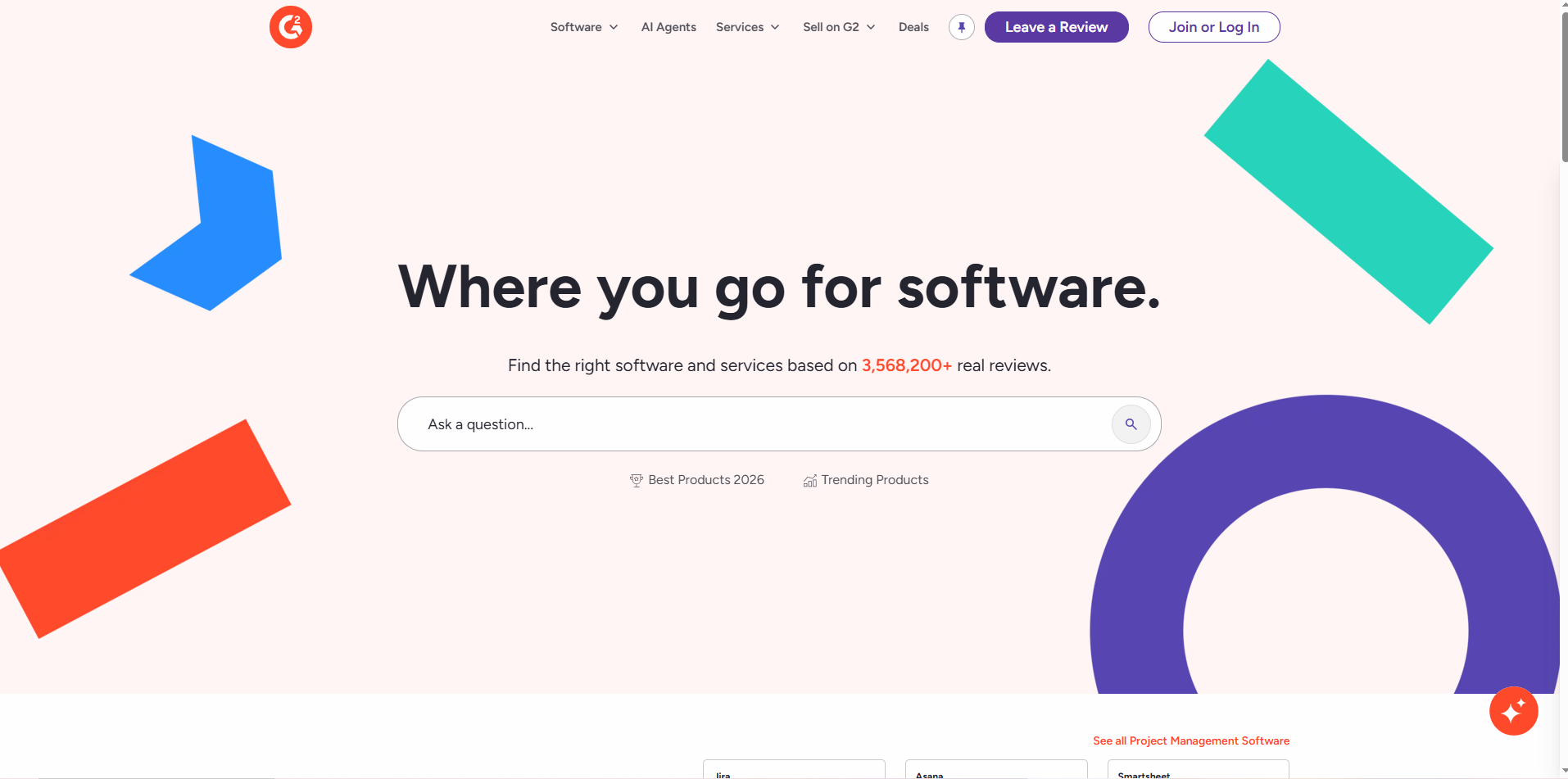
G2 is a B2B software marketplace and reviews platform. For MLS software real estate professionals evaluating vendors, it's the category lens: G2 explains the software taxonomy, maps the IDX and listing-management feature set, and lets you filter by verified reviews from teams like yours.
This is where founder-minded operators do the shortlisting work. Instead of trusting one peer recommendation, you can compare real estate MLS software across pricing, integrations, and satisfaction scores, then read what actual users say about compliance handling and IDX integration before you book a single demo.
Best for: teams researching and comparing MLS software vendors before committing to a platform.
Key features
- Peer reviews and side-by-side software comparisons
- Buyer intent and market intelligence
- Vendor profiles, review collection, and campaign tools
Why choose G2: When you want evidence over anecdote, a marketplace with verified reviews shortens the evaluation. It's the fastest way to sanity-check a vendor's real-world fit against your stack.
G2 pricing: A free tier is available. Paid vendor plans include Starter (reported at $299/month for the first year or $2,999 for the first year), with Professional and Enterprise tiers available on request. G2 holds a 4.6/5 rating on its own reviews page.
3. flexmls.com

Flexmls is a fully mobile MLS platform built for real estate professionals and MLS organizations. Unlike the consumer portals above, this is the member-only layer: agents log in to enter and maintain listings, run MLS search, and push approved data out through IDX and third-party integrations.
For brokerage operators, flexmls sits at the operational core. It works across web, iOS, Android, and mobile web, which matters when agents update listings from the field. Its Spark API supports IDX integration and third-party connections, so you can tie listing data into a real estate website or downstream tools without manual re-entry. That's the workflow repeatability that keeps listing accuracy high as your team grows.
Best for: MLS organizations and real estate professionals who need a configurable, mobile-first MLS system.
Key features
- Mobile MLS access across web, iOS, Android, and mobile web
- Listing entry and maintenance tools
- IDX and third-party integration via Spark API
Why choose flexmls.com: If your priority is the member-facing engine, listing management, compliance fields, and clean data feeds, this is the operational layer the consumer portals depend on. It's the system your agents live in daily.
flexmls.com pricing: Public pricing is not shown on the site; MLS leaders are directed to request a demo or contact sales. flexmls holds a 4.8/5 rating on its G2 product page.
4. National Association of Realtors
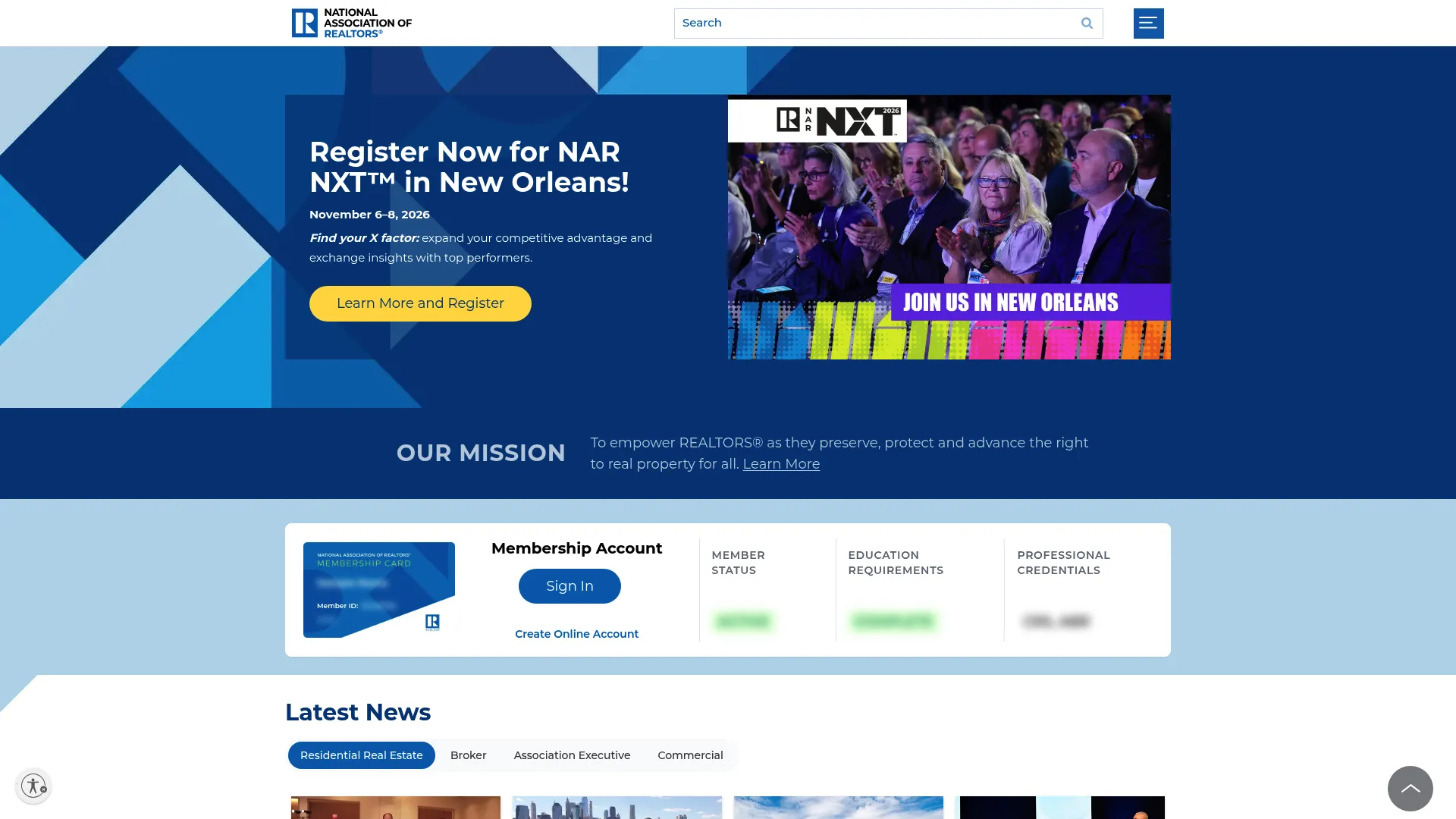
National Association of Realtors is the U.S. trade association for REALTORS® and the clearest authority on what the MLS actually is and why it matters. It isn't software. It's the membership body that provides advocacy, legal resources, education, and the context that frames how the cooperative brokerage model works.
For a broker, NAR is where the "what is MLS" and "what does MLS stand for" questions get answered with authority. The multiple listing service exists because cooperating brokers agree to share inventory: a listing broker offers compensation to a buyer's broker, sellers get broad exposure, and buyers get access to pooled listings. NAR also frames the public versus restricted data boundary that shapes every MLS software decision you make.
Best for: real estate professionals who need membership, advocacy, and the authoritative definition of MLS market structure.
Key features
- National REALTOR® membership and dues administration
- Advocacy and policy resources
- Member benefits program with partner offers and savings
Why choose the National Association of Realtors: When you need to understand the rules and structure behind MLS listings, not just the software, NAR is the source. It sets the cooperative model your listing workflows operate inside.
National Association of Realtors pricing: 2026 national membership dues are $156 per member per year, billed through the primary local association. A separate 2026 special assessment is $45 per member.
5. Zillow

Zillow is a high-traffic U.S. housing marketplace for buying, renting, selling, and agent marketing. It's a consumer discovery destination first: buyers search homes, filter by market, and browse rentals, while agents use it for lead generation and marketing on top of MLS-sourced inventory.
For a brokerage, Zillow complements member MLS data rather than replacing it. The authoritative listing still lives in your MLS, but Zillow's public reach turns that inventory into buyer visibility and inbound leads. When you evaluate distribution, this is where "MLS listings near me" search volume actually converts into contacts, which is why Premier Agent lead economics matter to your CAC math.
Best for: buyers, renters, sellers, and agents who want a high-traffic marketplace plus lead tools.
Key features
- Home search and listings
- Rental search and online applications
- Agent lead generation and marketing tools
Why choose Zillow: For consumer reach and lead volume, few platforms match its traffic. It's a distribution and demand layer that sits on top of your MLS data, not the operational system itself.
Zillow pricing: Home search is free. Zillow Premier Agent pricing varies by market and expected connections, with reported averages of $223 per connection in major metros and $139 in non-major metros. Zillow Rentals charges a $35 application fee for 30 days of unlimited applications. Zillow holds a 3.9/5 rating on G2.
6. Realtor.com
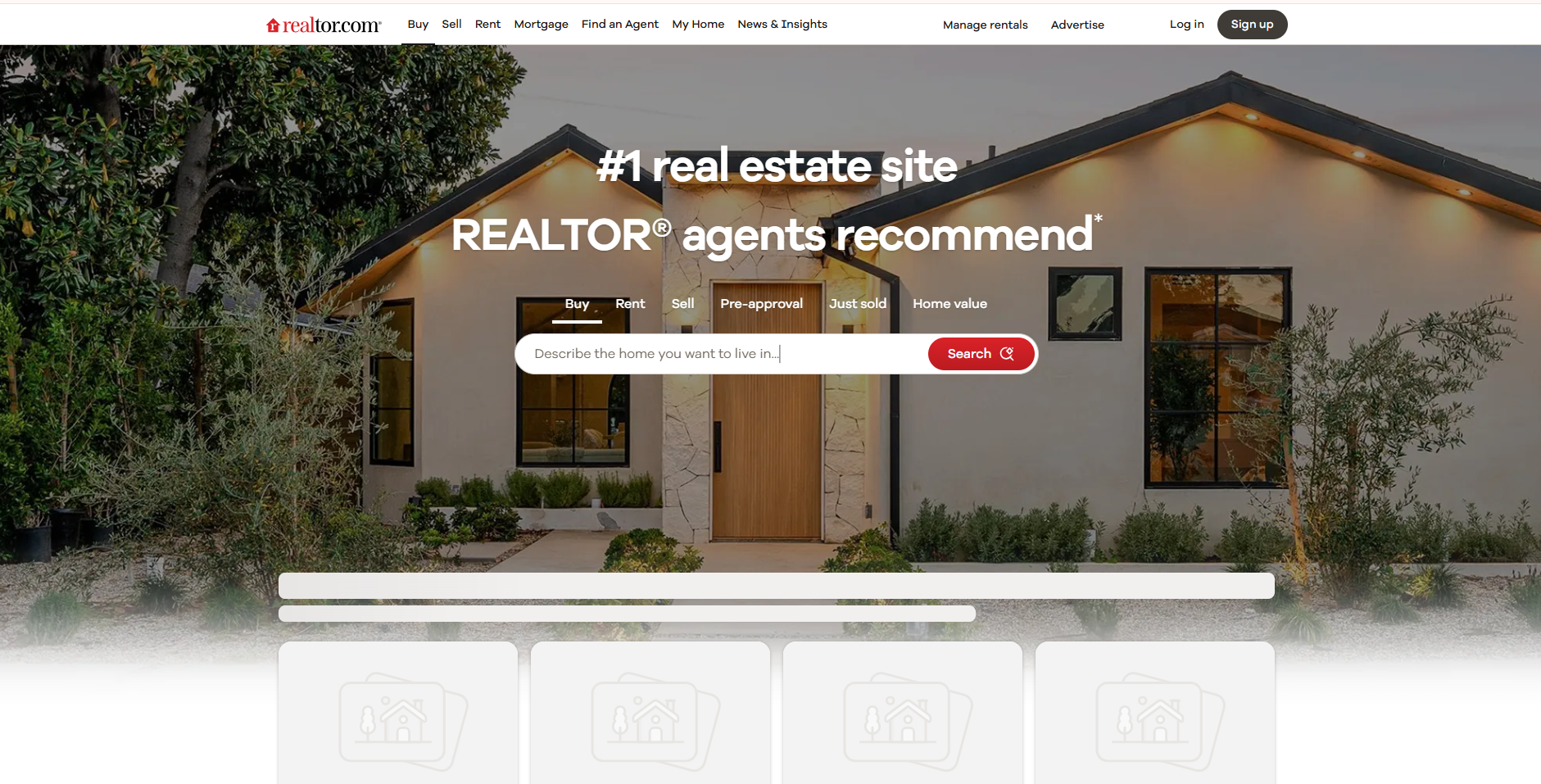
Realtor.com is a real estate search and marketing platform for both consumers and professionals. It's a high-visibility listing distribution channel: home shoppers search and browse inventory, while agents get lead generation, listing promotion, and brand advertising products.
For real estate teams, Realtor.com fits the same distribution slot as Zillow but with its own audience and syndication relevance. It pulls MLS-connected listings into consumer search and layers conversion tools on top. If your goal is broad buyer reach and local browsing depth, it's a second distribution channel worth running alongside your member MLS platform, especially when you're spreading lead sources to keep pipeline predictable.
Best for: home shoppers and agents who want search plus lead-generation and listing-promotion tools.
Key features
- Home search for buyers, renters, and sellers
- Lead generation and conversion tools for agents
- Listing promotion and brand advertising products
Why choose Realtor.com: As a second consumer channel, it diversifies where your MLS listings reach buyers. It pairs public search reach with agent-facing promotion tools.
Realtor.com pricing: Home search is free. The Online Store shows real-time pricing by ZIP code, so paid agent plans are localized rather than a single public number. Realtor.com holds a 3.5/5 rating on G2.
7. Crexi
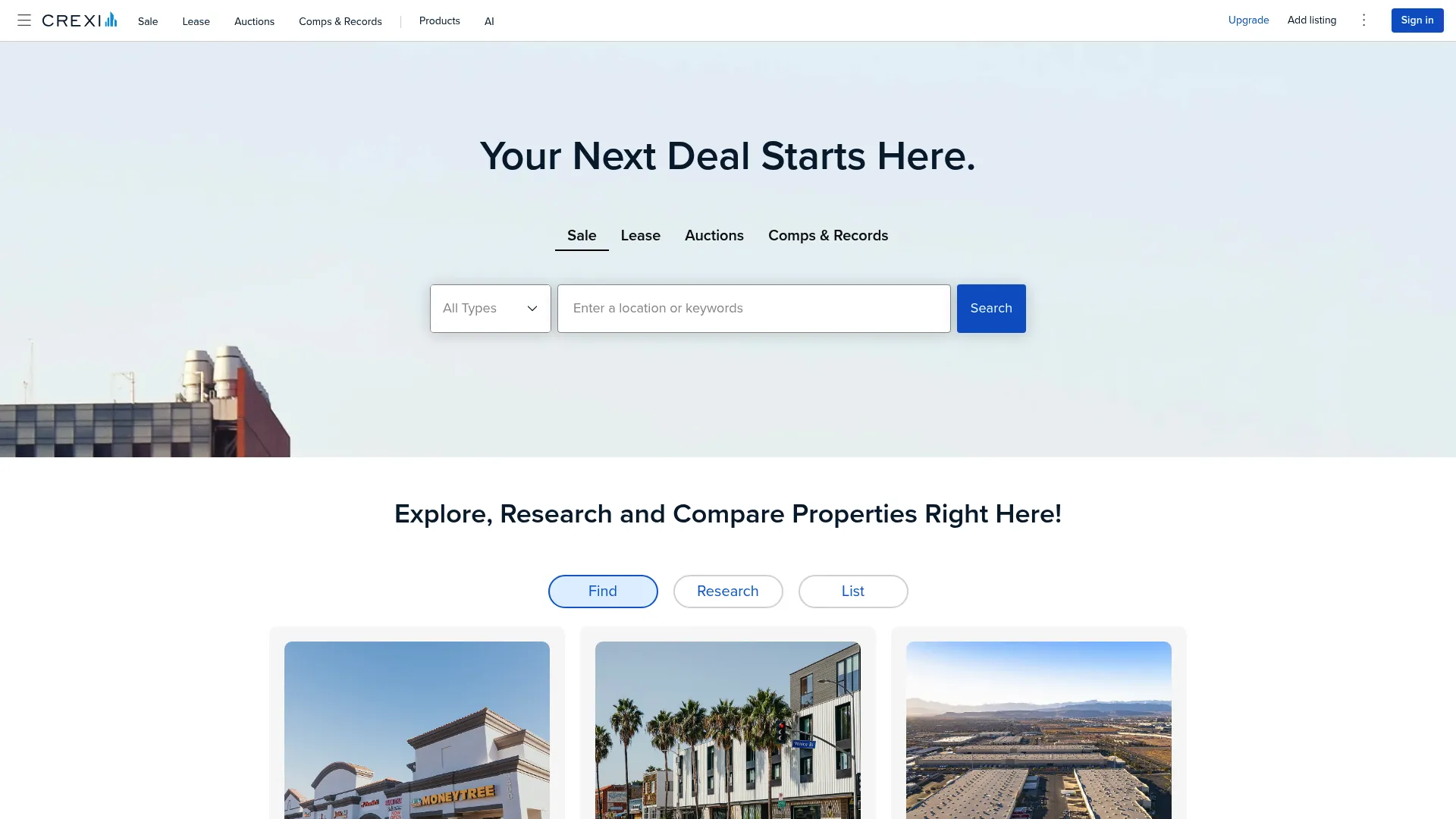
Crexi is a commercial real estate platform for listing, researching, and transacting properties. It sits outside the residential MLS model but covers a parallel need: CRE brokers, investors, and analysts use it for commercial property records, sales comps, market analytics, and lead generation.
For teams that touch commercial inventory, Crexi is the platform you evaluate alongside MLS-linked residential tools. Residential MLS systems rarely cover CRE well, so operators running mixed portfolios lean on Crexi for commercial listings, demographic maps, and broker tools. If your book includes commercial deals, this is the specialized layer that fills the gap.
Best for: commercial real estate brokers, investors, and analysts who need listings plus deep property research.
Key features
- Commercial property records and sales comps
- Market analytics and demographic maps
- Broker tools for listings and lead generation
Why choose Crexi: When your work extends into commercial real estate, residential MLS software leaves gaps. Crexi covers CRE listings and research that the residential systems don't.
Crexi pricing: A free plan is available. The Intelligence plan starts at $299/month, with annual pricing available through sales, and a Pro tier offered on an annual subscription. Crexi holds a 4.6/5 rating on G2.
What to evaluate before you commit
Before you sign anything, run each platform against the criteria that actually determine fit for a growing team.
Local market coverage
The best MLS software in one region may not serve your board at all. MLS systems are regional, so confirm the platform connects to your specific local MLS and covers the inventory your agents work. Coverage gaps create the exact data-silo problem you're trying to avoid.
Public search versus member-only access
Decide what you're actually buying. Consumer portals surface listings to the public for reach and leads. Member MLS software runs your operational backbone with compliance and listing management. Most teams need both, and clarity here prevents overpaying for the wrong layer.
IDX and website integration
If listings need to appear on your site, verify IDX integration and real estate website integration up front. Check which feeds are supported, how often data refreshes, and whether the connection holds up without manual intervention. A brittle feed costs agent time every week.
CRM integration and workflow fit
Listing data is only useful if it reaches follow-up. Confirm CRM integration so contact and listing records sync without re-entry. The goal is one system of record, not five dashboards your team stitches together by hand.
Compliance and listing management
Every board has rules on data accuracy, required fields, and what's public versus restricted. Confirm the platform enforces your local compliance requirements and makes listing management fast enough that agents actually keep data current.
Conclusion
The right choice depends on which job you're solving, not which tool a peer happened to like.
For member operations, flexmls.com is the mobile-first MLS platform that runs listing management and IDX feeds. For consumer reach and lead generation, Zillow and Realtor.com carry the traffic that turns MLS listings into buyers. For understanding the cooperative model and compliance structure behind all of it, the National Association of Realtors is the authority. For commercial inventory, Crexi fills the gap residential systems leave. And when you're still comparing vendors, MLS.com shows how consumers search while G2 gives you verified reviews to shortlist against.
Start where your friction is worst. If listing accuracy and agent time are the problem, fix the member layer first. If pipeline is the problem, invest in distribution. Then match the platform to your local coverage and integration needs, because a tool that doesn't connect to your board or your CRM will cost you more than it saves.
FAQs
MLS stands for multiple listing service. It's a shared database where cooperating brokers list properties for sale and find inventory listed by other brokers. The cooperative model gives sellers broad exposure and buyers access to pooled listings across a local market.
MLS software is the member-facing application agents use to enter, maintain, and search listings inside the MLS database. IDX (Internet Data Exchange) is the mechanism that syndicates approved MLS listings out to broker and agent websites for public property search. One runs operations; the other handles consumer-facing distribution.
Full member-only access is restricted to licensed real estate professionals who belong to the local MLS or association. Consumers see a downstream, public view of MLS listings through portals like Zillow, Realtor.com, and MLS.com, but the authoritative member database and its restricted fields stay behind login.
Listing agents update MLS listings directly in their member MLS software, changing status, price, photos, and details. Those updates then flow to connected IDX feeds and consumer portals. Mobile-first platforms like flexmls let agents make changes from the field, which keeps listing accuracy high.
Buyers can search a public view of MLS listings through consumer portals such as Zillow, Realtor.com, and MLS.com, including "MLS listings near me" style searches. Direct member-only access to the full MLS database, with restricted fields and compliance data, is limited to licensed professionals.
Prioritize local market coverage for your specific board, then listing management, compliance controls, IDX integration, and CRM integration. Confirm the platform connects to your real estate website and syncs cleanly, so agents work in one system of record rather than copying data across tools.
No. MLS systems are regional, governed by local boards and associations, so both coverage and rules vary by market. A platform that serves one region may not connect to your local MLS at all. Always confirm local coverage and compliance support before committing.
They connect through IDX integration, which syndicates approved MLS listings to broker and agent websites for public property search. APIs like flexmls's Spark API also support third-party connections, letting teams tie listing data into their real estate website and CRM without manual re-entry.