You open a spreadsheet to confirm who paid for the spring season. Then a second spreadsheet for field assignments. Then a text thread with three coaches asking about a rained-out game. Then a fourth tab to check who signed the waiver.
The sport is the easy part. The admin work is what breaks.
Most league operators do not want another tool. They want to stop registration, payments, scheduling, and parent communication from living in five different places at once. When a league grows past a couple dozen teams, manual tracking stops being a nuisance and starts costing real money in missed payments, double-booked fields, and volunteer hours nobody has.
That pain is why the category is expanding. Over 67% of organized amateur and semi-professional sports leagues now use digital scheduling systems, according to Market Growth Reports (2026). The same research puts the sports league management software market at USD 203.15 million in 2026, growing at a 9.2% CAGR through 2035.
The question is no longer whether to consolidate. It is which platform fits your sport mix, league size, and revenue model.
What's inside
This guide is built for league operators, sports admins, parks and rec managers, and youth sports organizers who are ready to move off spreadsheets or stitch together fewer tools. We selected platforms based on real operational fit, not feature-list length.
- Operational breadth: registration, payments, scheduling, communications, rosters, reporting, and facilities in one system
- Fit by segment: sport type, league size, and revenue model
- Pricing model: flat fee, transaction-based, or custom, and whether a free tier exists
- Depth where it counts: field booking, reporting, and support quality
Seven platforms made the list. Each entry covers who it fits, what it does well, and what it costs.
TL;DR
- Best for all-in-one youth sports operations: LeagueApps
- Best for flat-fee league operations with facility tools: TeamSideline
- Best for facilities and field booking: SportsKey
- Best for parks, rec, and multi-program organizations: CommunityPass
- Best for youth sports clubs and governing bodies: SportsEngine HQ
- Best for broad, self-serve league administration: SportsPlus
- Best for budget-conscious operators and simpler leagues: Playpass
If you run a youth sports organization and want registration, scheduling, and payments in one place, start with LeagueApps or SportsEngine HQ. If field and facility booking is your core headache, look at SportsKey first. If budget is the constraint, Playpass has a genuine free tier.
What is league management software
League management software is a single system that helps sports organizations run registration, payments, scheduling, communications, rosters, reporting, and facilities without juggling separate tools. It replaces the spreadsheet-plus-email-plus-text-thread patchwork that most leagues start with.
A good sports league management software platform handles both the front office (what parents and players see) and the back office (what admins and treasurers manage). The core capabilities usually include:
- Online team registration and player registration: signups, waivers, and roster building
- Payment processing and billing: installments, refunds, discounts, and automated receipts
- Scheduling software: game, practice, bracket, and facility scheduling with conflict prevention
- Communications: email, text, chat, and app-based messaging and alerts for parents, coaches, and players
- Roster management: team assignments, eligibility, and player records
- Reporting and analytics: financial reporting, participation metrics, and program-level visibility
- Multi-sport and multi-program support: running several sports or seasons from one account
Compared to spreadsheets, a league management platform removes the manual reconciliation. When a parent registers and pays, the roster updates, the waiver is on file, and the receipt goes out automatically. Nobody re-keys anything.
The adoption data reflects how much of this work is moving off manual tracking. Market Growth Reports (2026) found that 58% of leagues now rely on automated player registration tools, and that share keeps climbing as leagues grow past what a volunteer can manage by hand.
When to use league management software
Replace spreadsheets with one operational system
Spreadsheets work until they do not. The failure point is usually scale: once you have more than a handful of teams, manual tracking creates errors, double work, and missed payments. A treasurer chasing unpaid registrations by hand will always miss a few. A scheduler copying field times across tabs will eventually double-book.
A league management platform makes the data single-source. One record for each player, one status for each payment, one calendar for each field.
Run registration and payments together
Registration and payment belong in the same flow. When they live in separate tools, you end up with players on rosters who never paid and payments you cannot match to a registration.
The right software collects the signup, the waiver, and the payment in one sequence. Installments, discounts, and refunds are handled inside the system, so your financial reporting stays clean without manual cleanup.
Coordinate schedules, rosters, and alerts at scale
The moment your league adds more teams, more fields, or more parent communications, coordination becomes the bottleneck. A weather cancellation should trigger one alert to the right teams, not twenty individual texts.
This is where sports team management software earns its cost: automated scheduling that respects field availability, roster management that syncs with registration, and parent communications that reach everyone at once.
Comparison table
The table below sorts the seven platforms by overall relevance to general league operations. Read it as a shortlist starter: match the "best for" column to your situation, then read the full section for the two or three that fit.
Ratings and pricing reflect verified public sources at the time of writing. Where a vendor keeps pricing custom, that is noted directly.
| # | Product | Best for | Key differentiator | Pricing | G2 rating |
|---|---|---|---|---|---|
| 1 | LeagueApps | All-in-one youth sports operations | No subscription fee, priced as a small percentage per transaction | Transaction-based plus one-time setup fee; custom quote | 4.8/5 |
| 2 | TeamSideline | Flat-fee league operations with facility management | Flat annual fee, no per-transaction fees | From $599.00/year | 4.8/5 |
| 3 | SportsKey | Facilities and field booking | Facility scheduling, booking, and financial reporting | Pro, Advanced, Enterprise; custom quote, free trial | 4.9/5 |
| 4 | CommunityPass | Parks, rec, and multi-program organizations | Recreation and school program management at scale | From $3,000 to $10,000/year; custom quote | 4.0/5 |
| 5 | SportsEngine HQ | Youth sports clubs and governing bodies | Memberships, eligibility, and a large youth sports network | Custom pricing; free HQ subscription available | 4.5/5 |
| 6 | SportsPlus | Broad, self-serve league administration | Wide feature coverage across scheduling, registration, and payments | Custom pricing | Not available |
| 7 | Playpass | Budget-conscious operators and simpler leagues | Genuine free tier with paid upgrades | Free; paid plans from $9/month | Not available |
Best league management software for 2026
1. LeagueApps
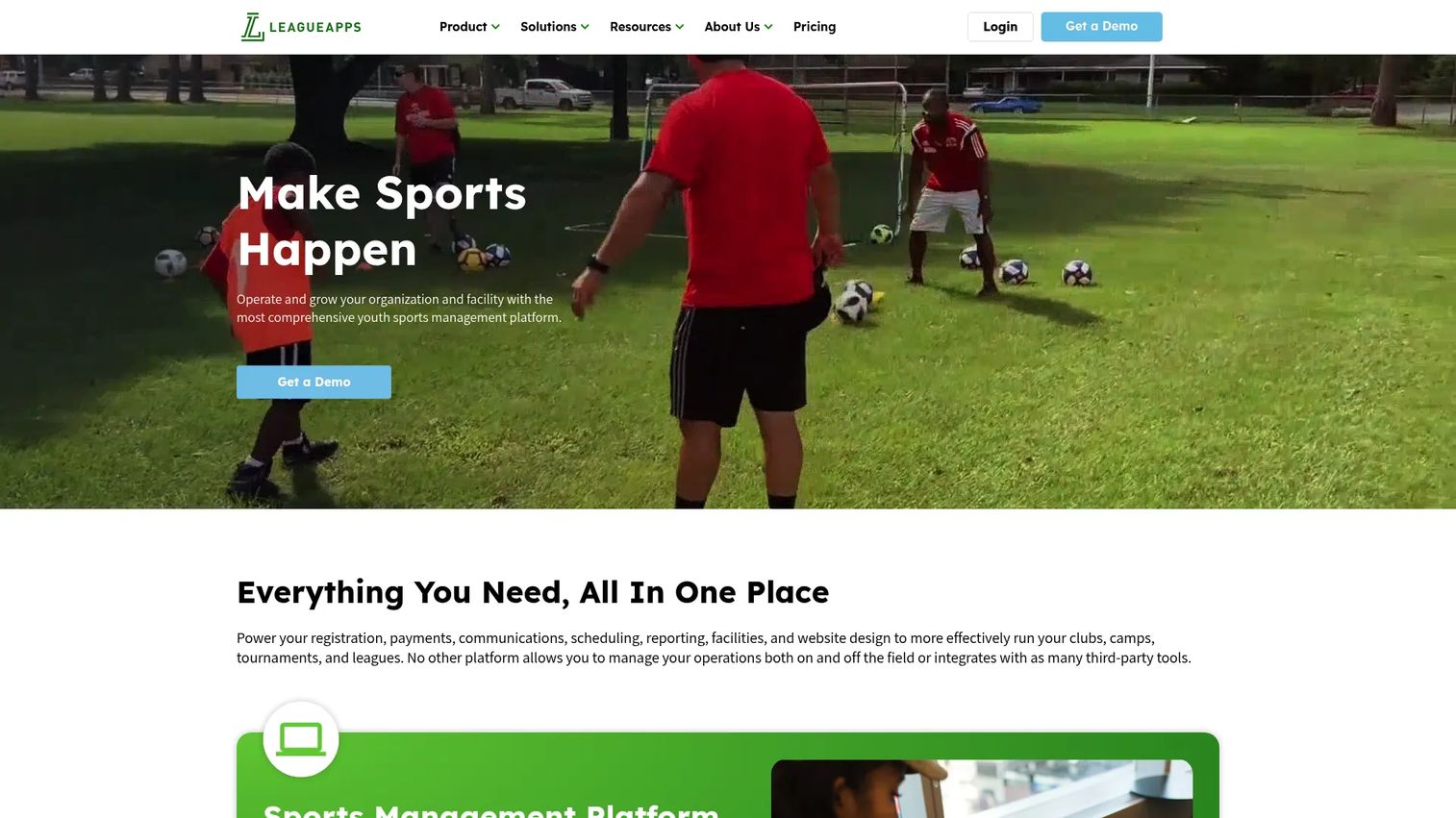
LeagueApps is youth sports management software built for leagues, clubs, tournaments, camps, and facilities. It positions itself as an all-in-one platform, and the breadth is real: registration, payment collection, scheduling, standings, communication tools, and mobile apps all run from one place. For a youth sports organization tired of stitching together a registration tool, a payment processor, and a group texting app, this is the kind of consolidation the category exists to deliver.
The standout is the pricing model. LeagueApps charges no subscription fee. Instead, pricing is based on a small percentage of each payment transaction, plus a one-time setup fee and optional add-ons. For a league that runs seasonal revenue through the platform, that structure aligns cost with actual activity rather than a fixed annual bill.
Best for: Youth sports organizations needing an all-in-one registration, scheduling, and communication platform.
Key strengths
- Registration and payment collection in one flow
- Scheduling and standings management
- Communication tools and mobile apps
Why choose LeagueApps: If you run youth sports and want registration, payments, and communications under one roof with no fixed subscription, LeagueApps fits cleanly. The transaction-based model suits leagues with steady seasonal payment volume.
LeagueApps pricing: No subscription fees. Pricing is a small percentage of each payment transaction, plus a one-time setup fee and optional add-ons. No public dollar amount is listed; pricing is quote-based.
LeagueApps holds a 4.8/5 rating on G2.
2. TeamSideline

TeamSideline is sports league management software covering registration, scheduling, communications, and team websites for both youth and adult organizations. Its feature set is unusually wide for the price point, reaching into officials management, volunteer management, membership management, and facility management alongside the core league tools.
The differentiator is the pricing structure. TeamSideline charges a flat annual fee with no per-transaction fees and no long-term contracts. For a league that processes a lot of payment volume, a flat fee can cost far less than a percentage-based model over a full season. Add-on modules are priced per module, so you pay for facility management or officials tools only if you need them.
Best for: Youth and adult sports organizations needing an all-in-one league operations platform.
Key strengths
- Player registration and game scheduling
- League communications, mobile app, and site builder
- Officials, volunteer, membership, and facility management
Why choose TeamSideline: Pick TeamSideline when you want predictable, flat annual pricing and broad operational coverage including field and facility management. It suits leagues that would rather budget a fixed number than pay a cut of every transaction.
TeamSideline pricing: Flat annual fee with no per-transaction fees and no long-term contracts. The pricing edition starts at $599.00 per year, with add-on modules priced per module.
TeamSideline holds a 4.8/5 rating on G2.
3. SportsKey
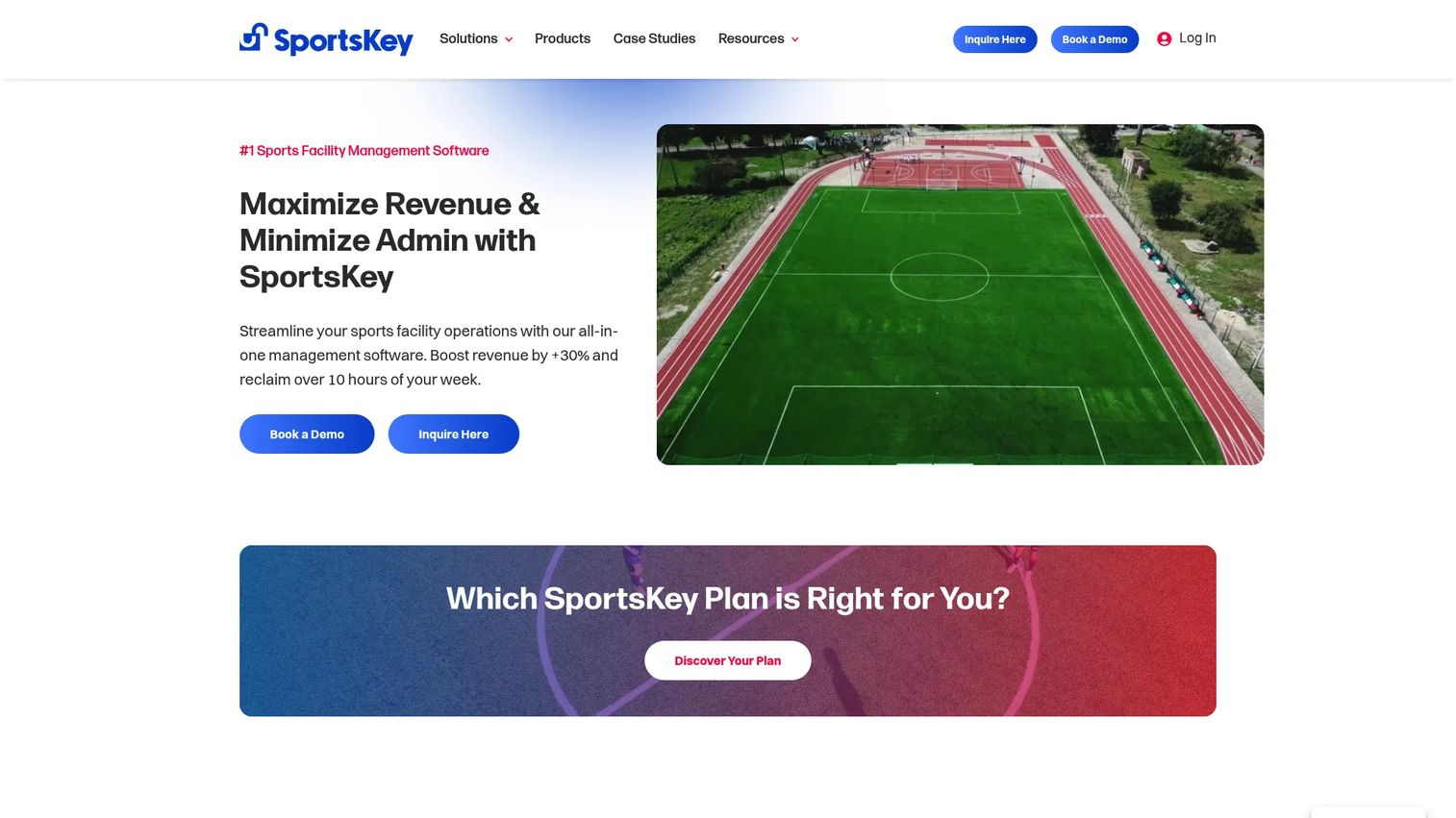
SportsKey is sports facility management and online booking software. Where the other platforms lead with registration, SportsKey leads with facilities. If your primary operational headache is field booking, court scheduling, and keeping facility revenue organized, this is the tool built around that job. It pairs online booking and scheduling with payments, invoicing, and financial reporting, plus business intelligence and analytics for operators who want visibility into utilization and revenue.
That focus makes it a strong fit for schools, recreation operators, and facility owners who rent or allocate space to multiple leagues and programs. The scheduling and payment layer supports the booking side rather than treating it as an afterthought.
Best for: Sports facilities, schools, and recreation operators managing bookings, payments, and scheduling.
Key strengths
- Online booking and scheduling
- Payments, invoicing, and financial reporting
- Business intelligence and analytics
Why choose SportsKey: Choose SportsKey when facility and field booking is the core of your operation, not a side feature. The analytics and financial reporting give facility operators the revenue visibility that registration-first tools often lack.
SportsKey pricing: Public plans are Pro, Advanced, and Enterprise, with no public dollar figures listed. A free trial and a discovery call are available.
SportsKey holds a 4.9/5 rating on G2.
4. CommunityPass
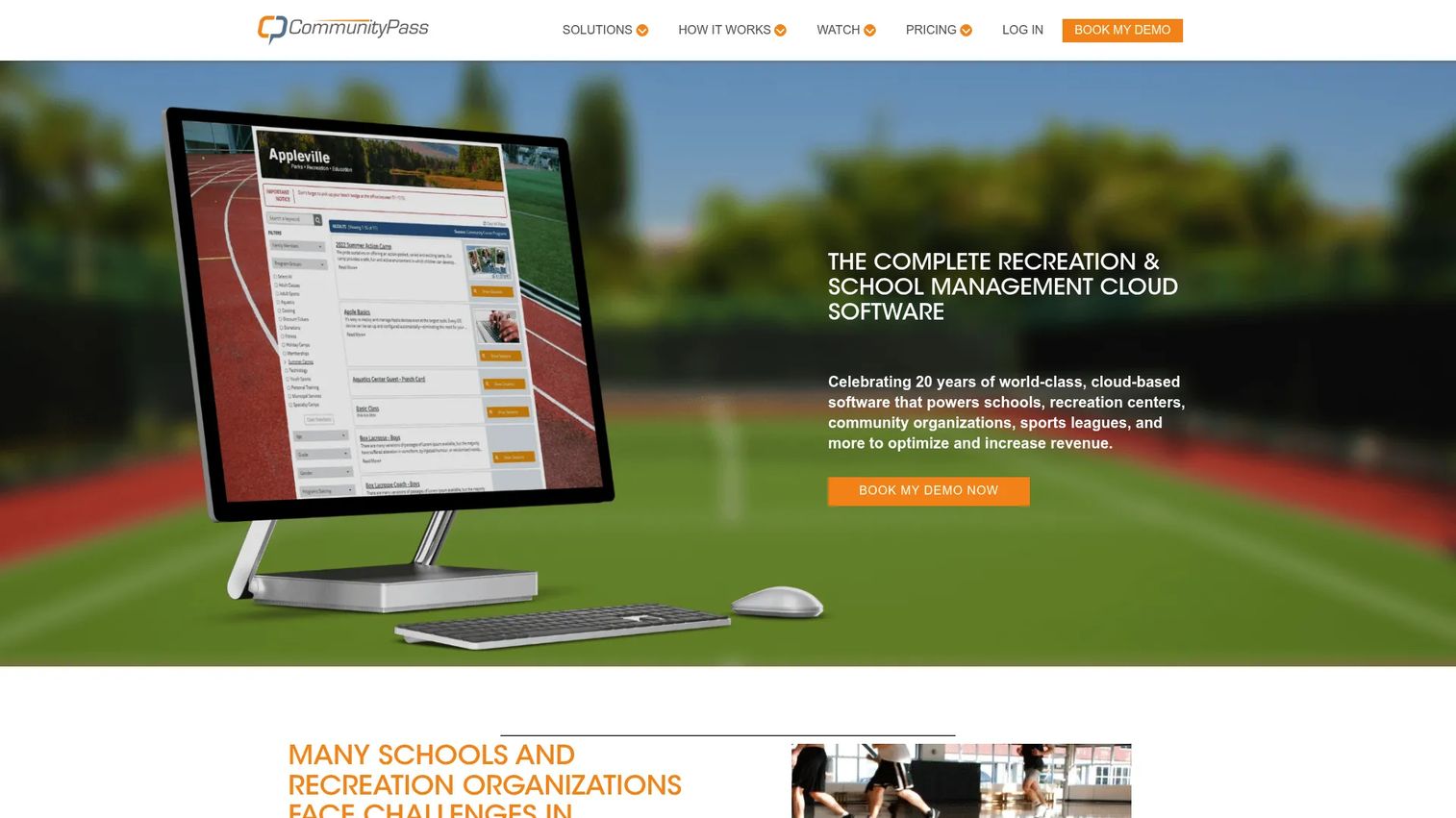
CommunityPass is cloud-based recreation and school management software built for online registration, payments, attendance, communications, and reporting. It reaches beyond a single sport into broader recreation and community program operations, which makes it a fit for parks and rec departments and schools running multiple programs at once. Integrated payment processing supports recurring billing and payment plans, and the platform adds digital attendance with authorized check-in and check-out.
The multi-program angle is the point of difference. If you manage sports alongside camps, classes, and other community programs, a platform designed for that mix handles the operational spread better than a sports-only tool.
Best for: Parks, recreation departments, and schools needing registration and payment management.
Key strengths
- Online registration and purchases
- Integrated payment processing with recurring billing and payment plans
- Digital attendance and authorized check-in and check-out
Why choose CommunityPass: Pick CommunityPass when your organization runs recreation and school programs beyond just leagues, and you need registration, payments, and attendance across all of them. The multi-program management fits parks and rec operations especially well.
CommunityPass pricing: Recreation pricing is subscription-based across Essentials, Membership, Recreation, and Enterprise packages. Listed pricing starts from $3,000 to $10,000 yearly, with a custom quote for specifics.
CommunityPass holds a 4.0/5 rating on G2.
5. SportsEngine HQ
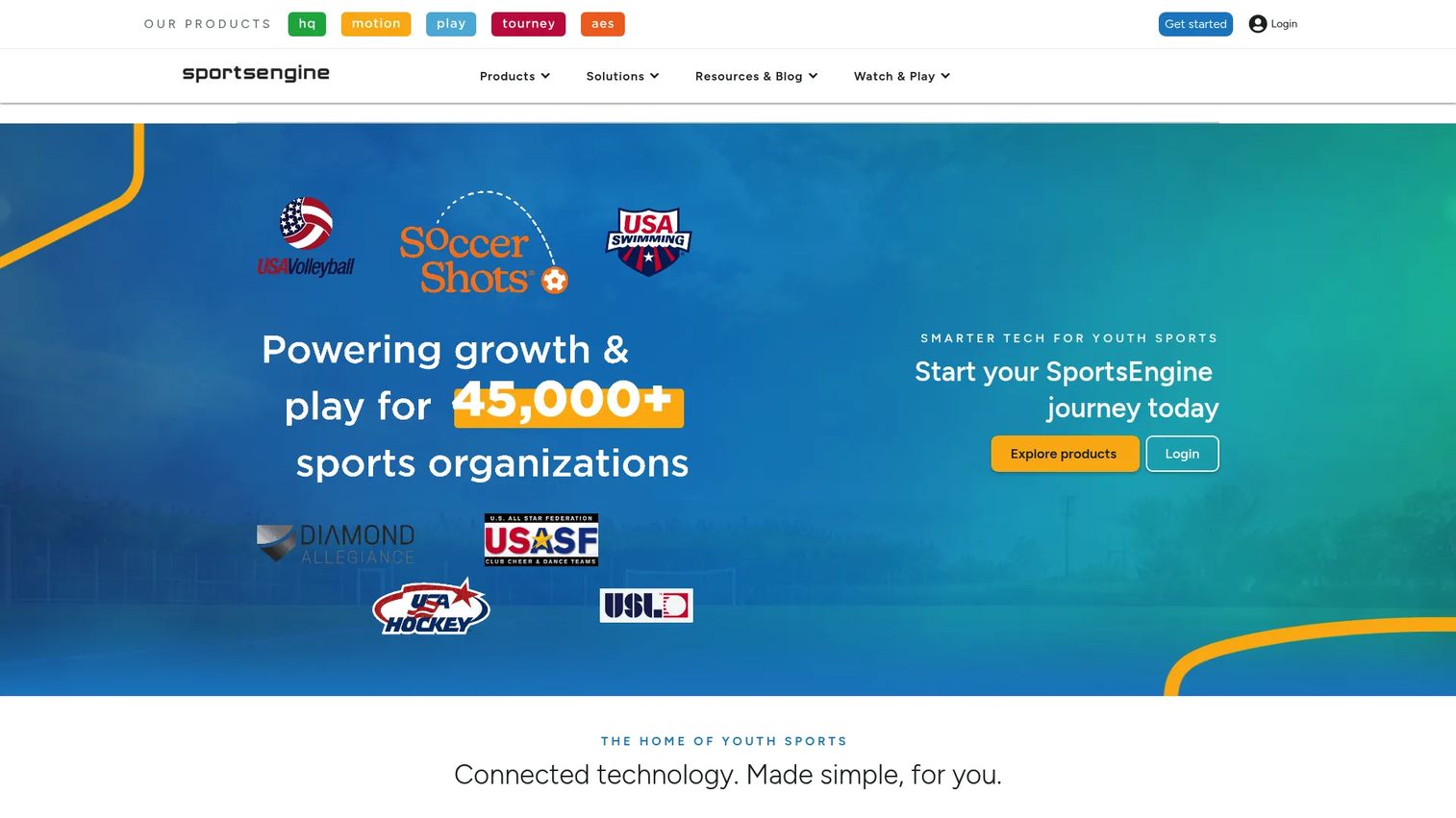
SportsEngine HQ is a youth sports operations platform for organizations, clubs, leagues, and governing bodies. It covers the full operational spread: online registration, scheduling, payments, a team mobile app, communication tools, and custom websites. What sets it apart is memberships and eligibility management, which matters for governing bodies and clubs that have to track player eligibility across a season or league structure.
Its scale is part of the appeal. SportsEngine HQ sits inside a large youth sports network, which can help with visibility and discoverability for clubs and leagues that want to be found by families in their area.
Best for: Youth sports clubs and leagues needing an all-in-one admin platform.
Key strengths
- Online registration, scheduling, and payments
- Team mobile app and communication tools
- Memberships, eligibility management, and custom websites
Why choose SportsEngine HQ: Choose SportsEngine HQ when you run a youth sports club or governing body that needs eligibility and membership management alongside standard league operations. The free HQ subscription lowers the barrier to starting.
SportsEngine HQ pricing: Pricing is custom and quote-based on the brand site. A free SportsEngine HQ subscription is also mentioned, though no public numeric price is listed.
SportsEngine HQ holds a 4.5/5 rating on G2.
6. SportsPlus
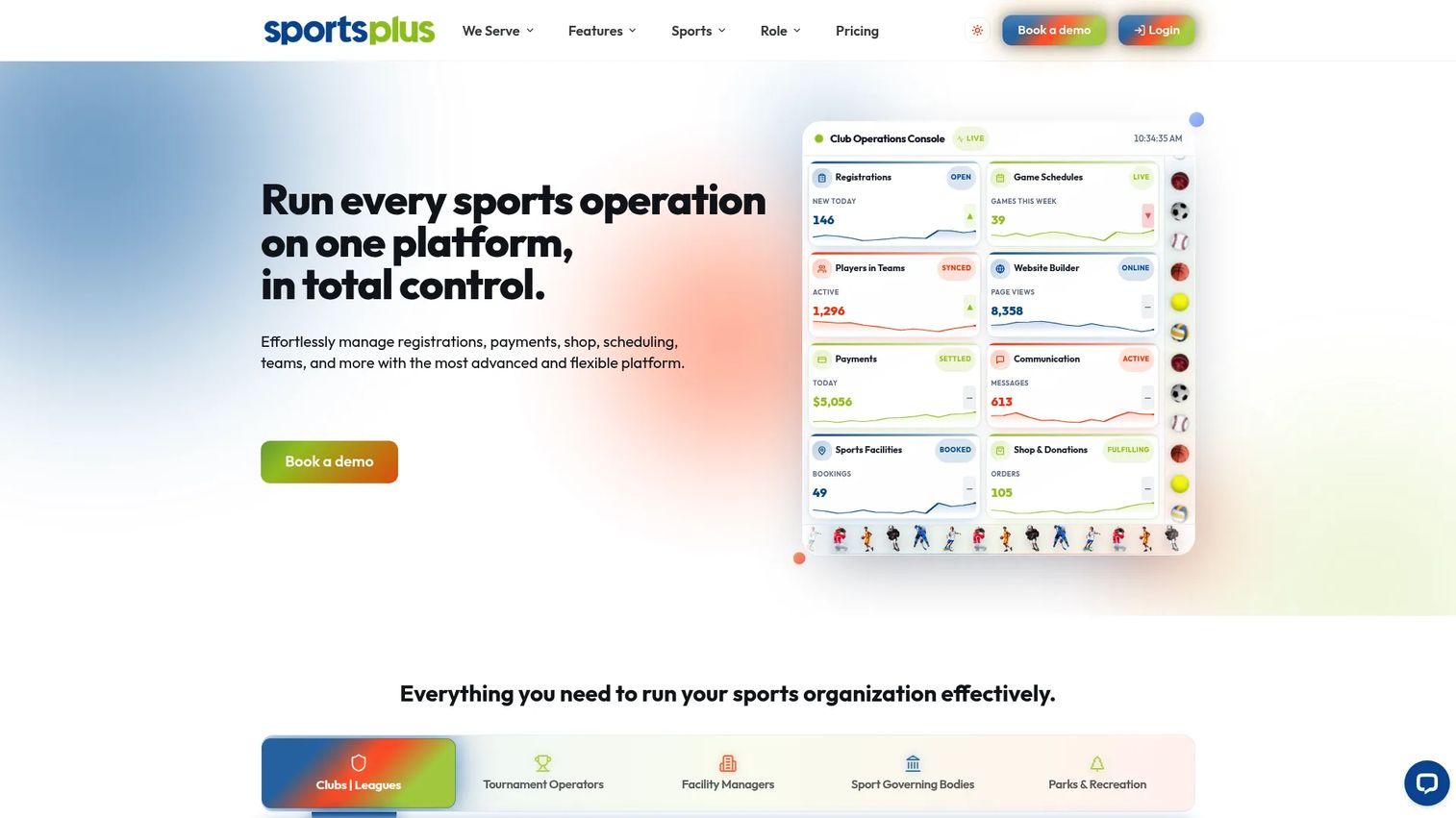
SportsPlus is sports organization administration software covering scheduling, registration, payments, and communication for teams and leagues that want broad operational coverage from one platform. It aims to be a single system for the day-to-day work of running a sports organization, from signups through game-day coordination.
For operators who value having most functions in one login rather than a specialized best-of-breed tool for each job, SportsPlus fits that consolidation goal. It suits leagues and clubs that want wide coverage and self-serve administration without paying for separate scheduling and registration products.
Best for: Teams and leagues wanting broad operational coverage across scheduling, registration, payments, and communication in one platform.
Key strengths
- Scheduling and registration in one system
- Payment collection and billing
- Communication tools for teams and leagues
Why choose SportsPlus: Pick SportsPlus when you want wide operational coverage from a single platform and prefer consolidation over specialized tools. Before committing, confirm the specific modules you need are included in your plan tier.
SportsPlus pricing: Pricing is custom. Confirm current tiers and included features directly with the vendor before purchase.
A current G2 rating for SportsPlus was not available at the time of writing.
7. Playpass
Playpass is sports management software for scheduling, registrations, memberships, waivers, bookings, messaging, and website and store building. Its appeal is simplicity and price. The schedule maker includes online scoring and standings, registration supports recurring memberships, and the platform rounds out with waiver signing, bookings, messaging, and sponsor and website tools.
The reason budget-conscious operators land here is the free tier. Playpass offers a genuine Free plan, with paid upgrades that scale as your league grows. Non-profits get 50% off paid plans. For a small or new league that cannot justify a flat annual fee or a percentage cut of every payment, starting free and upgrading later is a practical path.
Best for: Sports organizations needing league scheduling and registration tools without a large upfront cost.
Key strengths
- Schedule maker with online scoring and standings
- Online registration and recurring memberships
- Waiver signing, bookings, messaging, and website tools
Why choose Playpass: Choose Playpass when budget is the constraint and you want to start free, then scale into paid features as the league grows. Non-profit discounts make it especially attractive for volunteer-run organizations.
Playpass pricing: Free plan available. Paid plans are Plus at $9/month, Pro at $19/month, and Max at $99/month. Non-profits get 50% off paid plans, starting at $4.50/month.
A verified G2 rating for Playpass was not available at the time of writing.
Considerations
Before you commit, run each shortlisted platform through this checklist. The goal is to avoid implementation regret by testing the software against your actual operations, not a feature demo.
Registration and payment flow
Check whether the tool handles waivers, installments, refunds, discounts, and receipts without manual cleanup. The test is whether a single parent registration updates the roster, files the waiver, collects payment processing, and sends the receipt in one sequence. If any step falls back to a spreadsheet, the consolidation is incomplete.
Scheduling and conflict handling
Look for automated fixture generation, field booking, weather-change handling, and double-booking prevention. Ask specifically how the scheduling software resolves a field conflict and how it pushes a rescheduled game to the affected teams. Manual conflict resolution is where scheduling tools quietly fail at scale.
Communication and parent experience
Look for email, text, chat, and app notifications, plus clarity for parents and coaches. Parent communications are the highest-volume, most visible part of running a league. A weather cancellation should be one action that reaches the right teams, not a manual scramble.
Reporting and operational visibility
Look for financial reporting, participation metrics, and program-level visibility. Reporting and analytics are what let you see revenue, registration trends, and where money is leaking across a multi-sport programs setup. Weak reporting turns every board meeting into a manual data pull.
Support, onboarding, and migration
Look for setup help, support speed, data migration, and training quality. The move off spreadsheets is where most implementations stall. Ask how the vendor migrates your existing rosters and payment records, and how fast support responds during your peak registration window.
Conclusion
The seven platforms here solve the same core problem, running registration, payments, scheduling, communications, and facilities from one place, but they fit different operations.
- All-in-one youth sports: LeagueApps and SportsEngine HQ cover the full operational spread, with LeagueApps aligning cost to transaction volume and SportsEngine HQ adding eligibility and membership management.
- Flat-fee and facility-heavy: TeamSideline gives predictable annual pricing with facility tools, while SportsKey is the pick when field booking is the whole job.
- Multi-program and budget-conscious: CommunityPass fits parks and rec running many programs at once, and Playpass gives budget-conscious operators a genuine free starting point, with SportsPlus offering broad self-serve coverage.
The next step is a short pilot. Pick the two platforms that match your "best for" line, run a single season or program through each, and test the registration-to-payment flow with real data. The tool that keeps your rosters, payments, and schedules in sync without manual cleanup is the one worth committing to.
FAQs
League management software is a single system that runs sports operations: registration, payments, scheduling, communications, rosters, reporting, and facilities. It replaces the spreadsheet-and-email patchwork most leagues start with by keeping player, payment, and schedule data in one place. Sports league management software handles both the parent-facing front office and the admin-facing back office.
Yes. Playpass offers a genuine free tier for scheduling and registration, with paid upgrades as your league grows and 50% off paid plans for non-profits. SportsEngine HQ also mentions a free HQ subscription. Free tiers usually limit advanced features, so check whether your must-have functions (like payment plans or facility booking) are included before committing.
For youth sports management software, prioritize online player registration with waivers, integrated payment processing, automated scheduling with conflict prevention, and strong parent communications. Roster management and reporting matter as you scale. Eligibility and membership management become important for clubs and governing bodies tracking players across seasons.
The best platforms combine registration and payment into one flow. A parent signs up, signs the waiver, and pays in a single sequence, and the roster updates automatically. Payment processing typically supports installments, discounts, refunds, and automated receipts, which keeps your financial reporting clean without manual reconciliation.
For scheduling-heavy leagues, look for automated fixture generation, field booking, and double-booking prevention. TeamSideline and SportsPlus include scheduling inside broader league operations, while SportsKey is built specifically around facility and booking scheduling. The key test is how the software resolves a field conflict and pushes rescheduled games to affected teams.
Yes, though depth varies. SportsKey is built around facility management and field booking as its core function, with utilization and revenue analytics. TeamSideline and CommunityPass include facility management alongside registration and payments. If field booking is your primary headache, choose a platform that treats it as a core feature rather than an add-on.
Ask how the vendor migrates your existing rosters, payment records, and schedules, and how long that takes. Confirm the registration-to-payment flow works without manual cleanup, and test how communications reach parents during a cancellation. Sports team management software should reduce manual work, so verify the data stays single-source across registration, payments, and scheduling.
Match the tool to your scale and revenue model. An all-in-one league management platform like LeagueApps or SportsEngine HQ suits organizations running many teams, programs, and payment volume. A simpler tool like Playpass fits small or new leagues that need core scheduling and registration without a large upfront cost. Run a single season through your top two before deciding.