Your risk register says one thing. Audit evidence says another. Compliance keeps a separate tracker, while the board expects one clear exposure report by Friday.
This fragmentation also affects technical evaluations. Presales teams must explain data ownership, controls mapping, permissions, integrations, and remediation workflows without losing the buyer in disconnected systems.
The IIA and Baker Tilly reported in 2025 that 59% of surveyed ERM programs still rely on basic tools such as spreadsheets and word processing files. Integrated risk management software replaces those disconnected records with traceable workflows across risk, compliance, audit, controls, and board reporting.
The central test is simple. Can the platform connect a risk to its controls, tests, findings, owners, and executive reporting?
What’s inside
This guide compares 17 integrated risk management tools for enterprise evaluation in 2026. It is written for risk buyers and presales teams supporting security, procurement, RFP, or technical validation conversations.
We evaluated each platform across these areas:
- Risk to control traceability
- Audit and assurance workflows
- Compliance and regulatory coverage
- Third party and operational risk depth
- Reporting and executive visibility
Pricing comes from vendor sources. G2 ratings reflect the current research supplied for this comparison. Features should still be tested against your workflows during a structured product evaluation.
TL;DR
- Best overall enterprise IRM pick: Riskonnect covers interconnected risk, compliance, claims, insurance, and resilience programs
- Best for mature GRC programs: Archer supports connected controls, governance workflows, and regulatory change management
- Best for complex regulated enterprises: MetricStream and IBM OpenPages support broad compliance, audit, and control requirements
- Best for board visibility: Diligent connects governance work with board communication and leadership reporting
- Best configurable options: Onspring and LogicGate Risk Cloud support flexible workflows without extensive custom development
- Best for financial institutions: Ncontracts connects risk, vendor oversight, continuity, compliance, and findings management
What is integrated risk management software?
Integrated risk management software is a centralized platform that connects risk, compliance, controls, audit, third party oversight, resilience, and reporting.
An integrated risk management system gives teams a shared model for risks and related business processes. It replaces isolated trackers with structured ownership, assessment, testing, evidence, remediation, and reporting workflows.
For presales teams, this category often appears during enterprise security reviews or procurement. Buyers may ask how your product exchanges data with their GRC platform or supports evidence requests. Understanding the category makes those conversations easier to navigate.
Core capabilities of integrated risk management software
Common IRM software capabilities include:
- Risk registers and taxonomy management
- Controls libraries and mapping
- Compliance obligations and policy workflows
- Audit planning and control testing
- Evidence collection and findings management
- Vendor and third party assessments
- Incident and remediation tracking
- Business continuity and resilience planning
- Risk analytics and executive reporting
- Workflow approvals and business system integrations
The strongest platforms provide traceability across these records. A risk should connect to relevant controls. Those controls should link to tests, evidence, issues, accountable owners, and remediation deadlines.
That relationship model separates an integrated risk management platform from a collection of point tools.
How IRM differs from GRC and ERM
Enterprise risk management software focuses on identifying, assessing, monitoring, and responding to organizational risk. It often supports risk appetite reporting and executive oversight.
A GRC platform connects governance, risk, and compliance processes. Its scope commonly includes controls, policies, regulatory obligations, audits, and evidence.
IRM extends the connected model across multiple risk disciplines. These may include operational risk, cyber risk, vendor oversight, resilience, insurance, and internal audit.
Vendors use these labels differently. Evaluate the workflows and data relationships rather than relying on category names.
When to use integrated risk management software
Connect risk, compliance, and audit data
Use an integrated risk management system when spreadsheets or point tools produce conflicting records. The platform should map risks to controls, tests, evidence, and findings.
For technical evaluation, ask the vendor to trace one record through the full process. A polished risk heat map proves little if the underlying relationships break.
Prepare for board and regulator reporting
Leadership needs a defensible view of exposure, control health, and remediation progress. Manual report assembly creates version conflicts and weakens confidence in the result.
IRM software can standardize the source data behind board reporting. Risk and audit teams can then explain how each summary connects to operational records.
Standardize evaluation across business units
Growing organizations often inherit different scoring methods, taxonomies, and escalation paths. That makes consolidated reporting unreliable.
Use enterprise risk software to establish shared assessment models and approval workflows. This matters when ownership spans security, procurement, finance, operations, compliance, and internal audit.
Integrated risk management software comparison
The best integrated risk management software depends on your operating model. Broad platforms cover several risk domains, while specialized products focus on access controls, financial institutions, or claims operations.
For presales evaluation, treat the table as a shortlist rather than a final verdict. Build a product scenario that tests risk capture, controls mapping, evidence, findings, and reporting from start to finish.
| # | Product | Best for | Key differentiator | Pricing | G2 rating |
|---|---|---|---|---|---|
| 1 | Riskonnect | Broad enterprise risk programs | Connected risk, compliance, claims, insurance, and resilience | Custom pricing | 4.4/5 |
| 2 | Archer | Mature enterprise GRC teams | Connected controls and regulatory change workflows | Custom pricing | 3.6/5 |
| 3 | LogicManager | ERM program maturity | Taxonomy based relationship mapping and risk accountability | Custom fixed price licensing | 4.2/5 |
| 4 | MetricStream | Complex regulated enterprises | Federated GRC data model across enterprise risk domains | Custom pricing | 3.8/5 |
| 5 | IBM OpenPages | Enterprise data and governance programs | Visual GRC modeling with embedded AI automation | From USD 3,300 | 4.2/5 |
| 6 | Diligent | Board and governance visibility | Board workflows connected with audit and risk management | Custom pricing | 4.5/5 |
| 7 | Optro | GRC intelligence programs | Continuous control testing and risk insight | Custom pricing | 4.6/5 |
| 8 | Camms | Configurable enterprise risk programs | Risk, continuity, compliance, and insurable risk coverage | Custom pricing | Not available |
| 9 | ServiceNow | Workflow led enterprise operations | Risk processes connected with broader enterprise workflows | Custom pricing | 4.4/5 |
| 10 | Onspring | Configurable GRC teams | Flexible workflows, surveys, dashboards, and mapping | Custom pricing | 4.7/5 |
| 11 | LogicGate Risk Cloud | Agile risk and compliance teams | Graph based relationships and configurable applications | Custom pricing | 4.6/5 |
| 12 | SAI360 | Compliance heavy organizations | Risk, ethics, policy, audit, and training coverage | Custom pricing | 4.2/5 |
| 13 | Pathlock | Access risk and controls monitoring | Application access governance and continuous controls | Custom pricing | 4.3/5 |
| 14 | SureCloud | Cyber and compliance teams | Multi domain GRC with cyber risk alignment | From £15,000 per year | 4.2/5 |
| 15 | Origami Risk | Operational risk and insurance teams | Risk, claims, safety, insurance, and field workflows | Custom pricing | 4.5/5 |
| 16 | SAP Risk Management | SAP centered enterprises | Risk monitoring inside SAP business environments | Custom pricing | 4.2/5 |
| 17 | Ncontracts | Financial institutions | Financial risk, vendor oversight, continuity, and compliance | Custom pricing | 4.7/5 |
Best 17 tools for integrated risk management software
1. Riskonnect
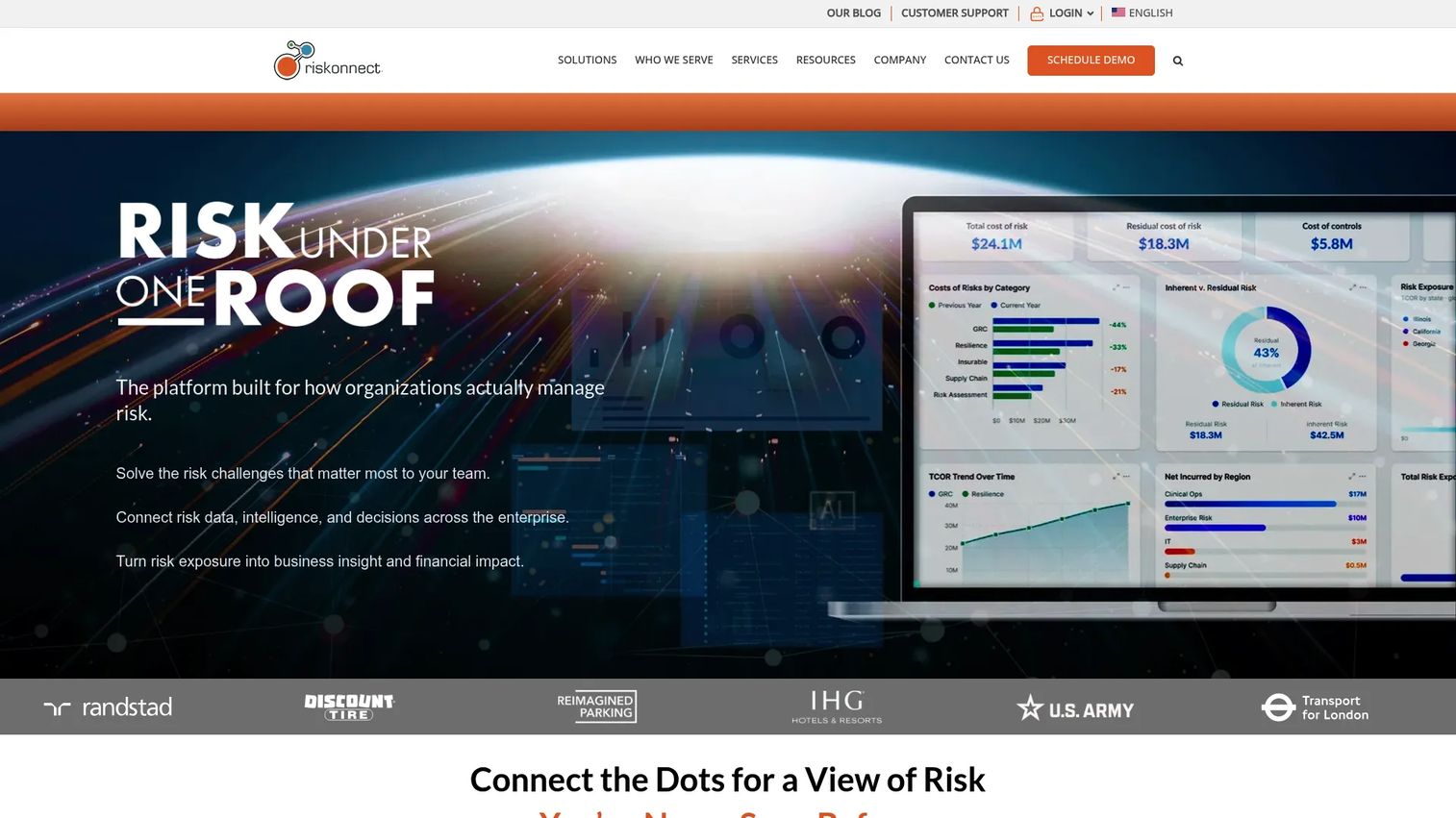
Riskonnect provides integrated software for governance, risk, compliance, claims, insurance, business continuity, and resilience. Its broad scope suits enterprises moving from separate risk functions toward a connected operating model.
The platform covers traditional GRC work alongside health and safety, claims administration, operational resilience, and emergency communication. This breadth helps organizations that need leadership reporting across several risk domains.
Best for: Large or regulated organizations that need broad risk coverage across departments.
Key features
- Enterprise risk and compliance management
- Claims and policy administration
- Third party risk workflows
- Business continuity and crisis management
- Asset exposure analytics and executive reporting
Why choose Riskonnect: Choose it when risk data spans business units and several operational disciplines. Its interconnected model fits enterprises seeking more than risk register software.
Riskonnect pricing: Custom pricing. Cost is driven by users, modules, implementation scope, project complexity, and customization.
G2 rating: 4.4/5.
2. Archer
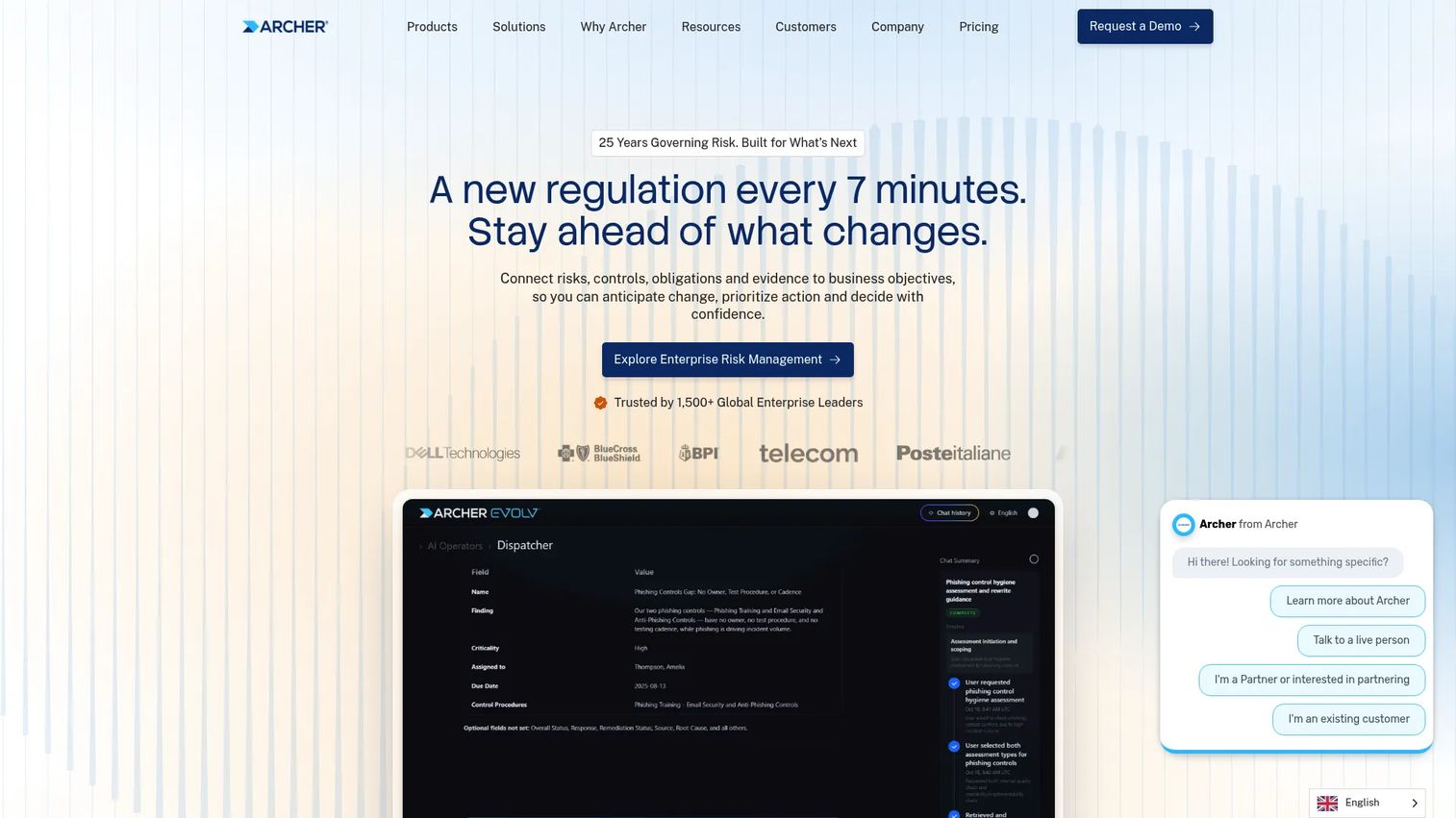
Archer is an enterprise GRC platform covering operational risk, IT risk, security risk, third party oversight, resilience, compliance, and audit management. It is built for mature programs with connected governance requirements.
Archer also supports regulatory horizon scanning and obligation extraction. Continuous mapping links obligations with policies, controls, and evidence across the organization.
Best for: Large, regulated enterprises with complex governance processes and strong internal ownership.
Key features
- Regulatory horizon scanning
- Continuous controls mapping
- Enterprise and operational risk management
- Audit and resilience management
- Scenario analysis and governed AI
Why choose Archer: Its configuration depth suits teams with established taxonomies and formal oversight. Buyers should test whether internal administrators can manage changes without creating a long service backlog.
Archer pricing: Custom pricing. Prospective customers request pricing through an account representative.
G2 rating: 3.6/5.
3. LogicManager
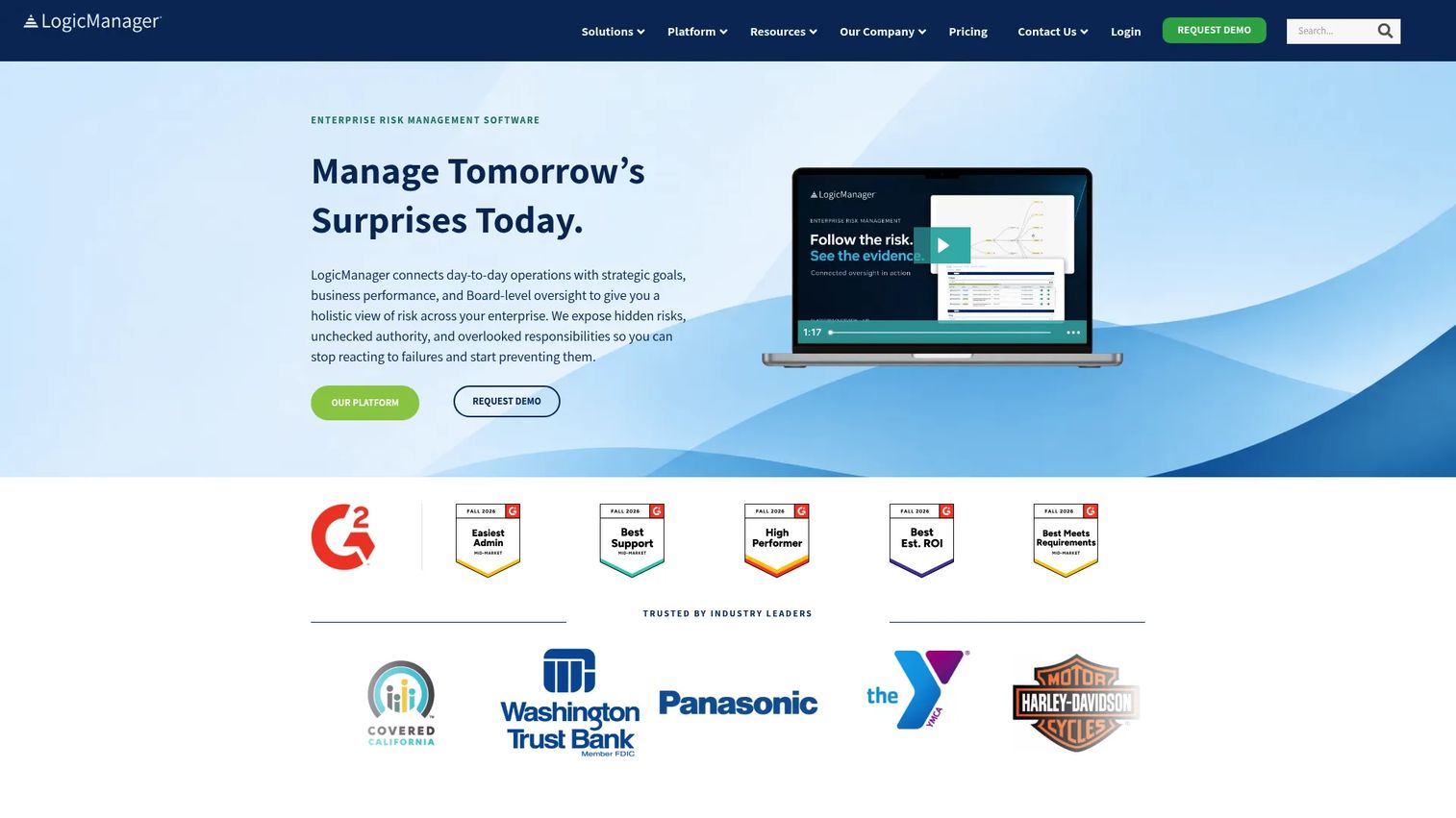
LogicManager provides enterprise risk management software that connects risks, controls, vendors, processes, and decisions. Its taxonomy based model helps teams show how risk relationships affect business objectives.
Standardized assessment criteria support consistent scoring across departments. Dashboards, heat maps, and risk matrices give leadership a consolidated view without rebuilding reports from separate files.
Best for: Organizations formalizing ERM accountability and risk based planning.
Key features
- Standardized risk assessments
- Controls and mitigation workflows
- Dynamic dashboards and heat maps
- Taxonomy based relationship mapping
- Risk impact analysis and guidance
Why choose LogicManager: It provides a structured path from risk identification to ownership and mitigation. That documentation also helps presales teams answer technical validation questions with consistent evidence.
LogicManager pricing: Custom fixed price licensing. Pricing includes licensing, onboarding, advisory services, and unlimited users.
G2 rating: 4.2/5.
4. MetricStream
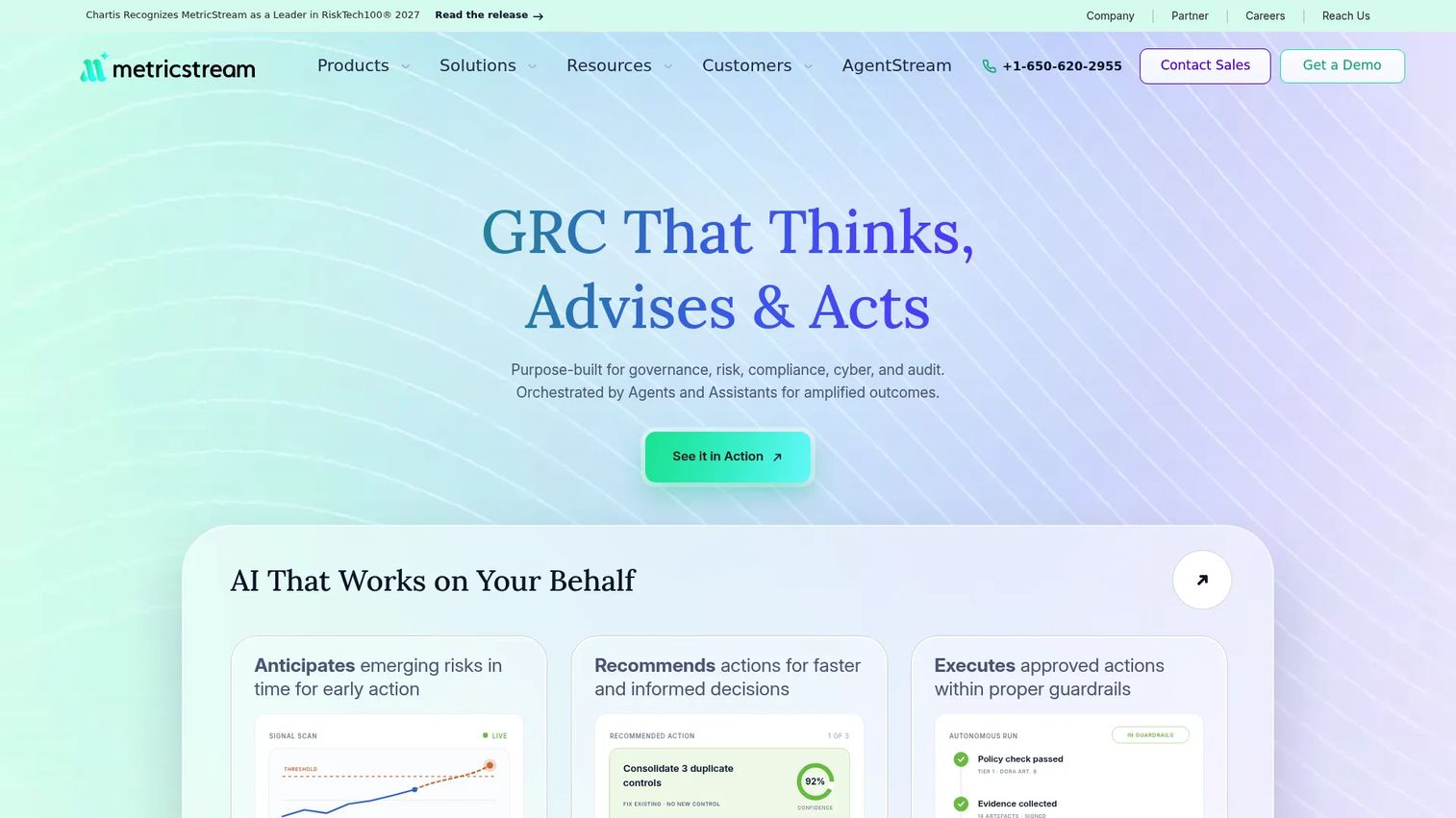
MetricStream provides enterprise governance, risk, compliance, cyber, audit, third party risk, and resilience software. Its federated data model connects controls, policies, evidence, issues, audits, assets, and external parties.
AppStudio supports configurable forms, business rules, templates, and dashboards. APIs and connectors bring enterprise data into the GRC context for monitoring and analysis.
Best for: Large regulated organizations managing several risk and compliance programs.
Key features
- Federated GRC data model
- Configurable forms and workflows
- Enterprise APIs and connectors
- AI assistants and predictive insights
- Contextual dashboards and analytics
Why choose MetricStream: Its breadth fits organizations standardizing governance across regions or business units. Presales teams should validate implementation ownership and integration requirements early.
MetricStream pricing: Custom pricing. Buyers submit their program requirements to receive a quote.
G2 rating: 3.8/5.
5. IBM OpenPages
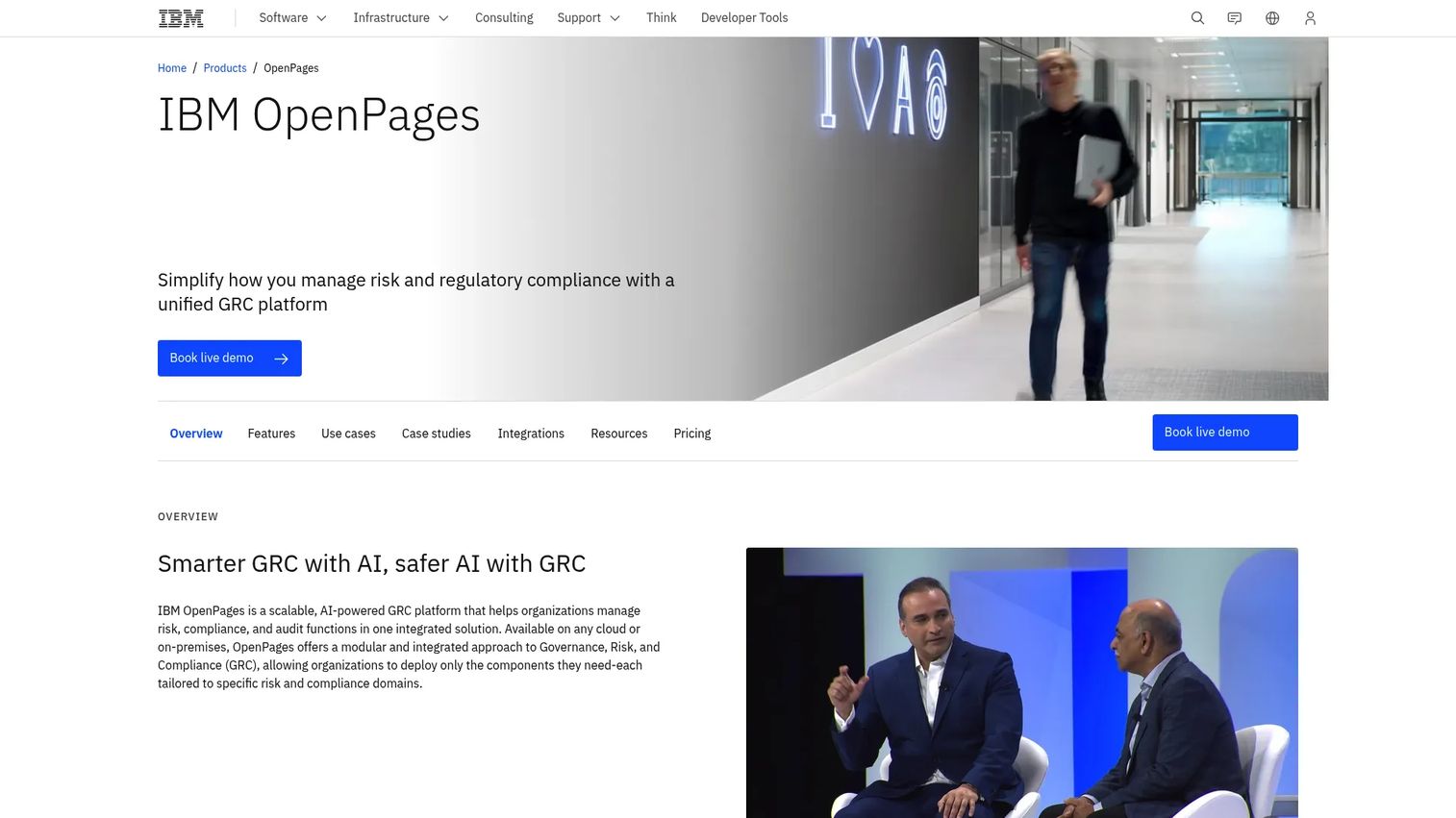
IBM OpenPages is an enterprise GRC platform for integrated risk, compliance, and audit operations. Its visual GRC Canvas helps teams model relationships between processes, risks, and controls.
Embedded AI can support classification and issue creation. API connections also allow organizations to use watsonx.ai, custom models, or third party AI services.
Best for: Enterprises connecting governance workflows with large data and analytics environments.
Key features
- Visual GRC process modeling
- Risk and control relationship mapping
- Embedded classification automation
- Automated issue creation
- API connections for AI models
Why choose IBM OpenPages: It suits enterprises that want governance depth within a broader data architecture. Smaller teams should compare its deployment options against their available administration capacity.
IBM OpenPages pricing: Essentials starts at USD 3,300. Standard starts at USD 6,050, Single Solution at USD 6,250, and Enterprise at USD 9,000.
G2 rating: 4.2/5.
6. Diligent
Diligent combines governance, risk, compliance, audit, and board management software. This positioning makes it relevant when risk teams must communicate assurance work directly to directors and senior leaders.
Board capabilities include secure document sharing, approvals, electronic signatures, messaging, and audit logs. Its audit tools add project setup, approval workflows, and specialist AI agents.
Best for: Organizations connecting operational assurance with governance and board workflows.
Key features
- Board book creation and summaries
- Secure board document sharing
- Approvals and electronic signatures
- Audit project workflows
- Risk scanning and audit logs
Why choose Diligent: It fits teams where executive communication is part of the risk process. Evaluate how underlying risk records flow into board materials during the product demonstration.
Diligent pricing: Custom pricing. Diligent prepares quotes for each organization.
G2 rating: 4.5/5 for Diligent Boards.
7. Optro
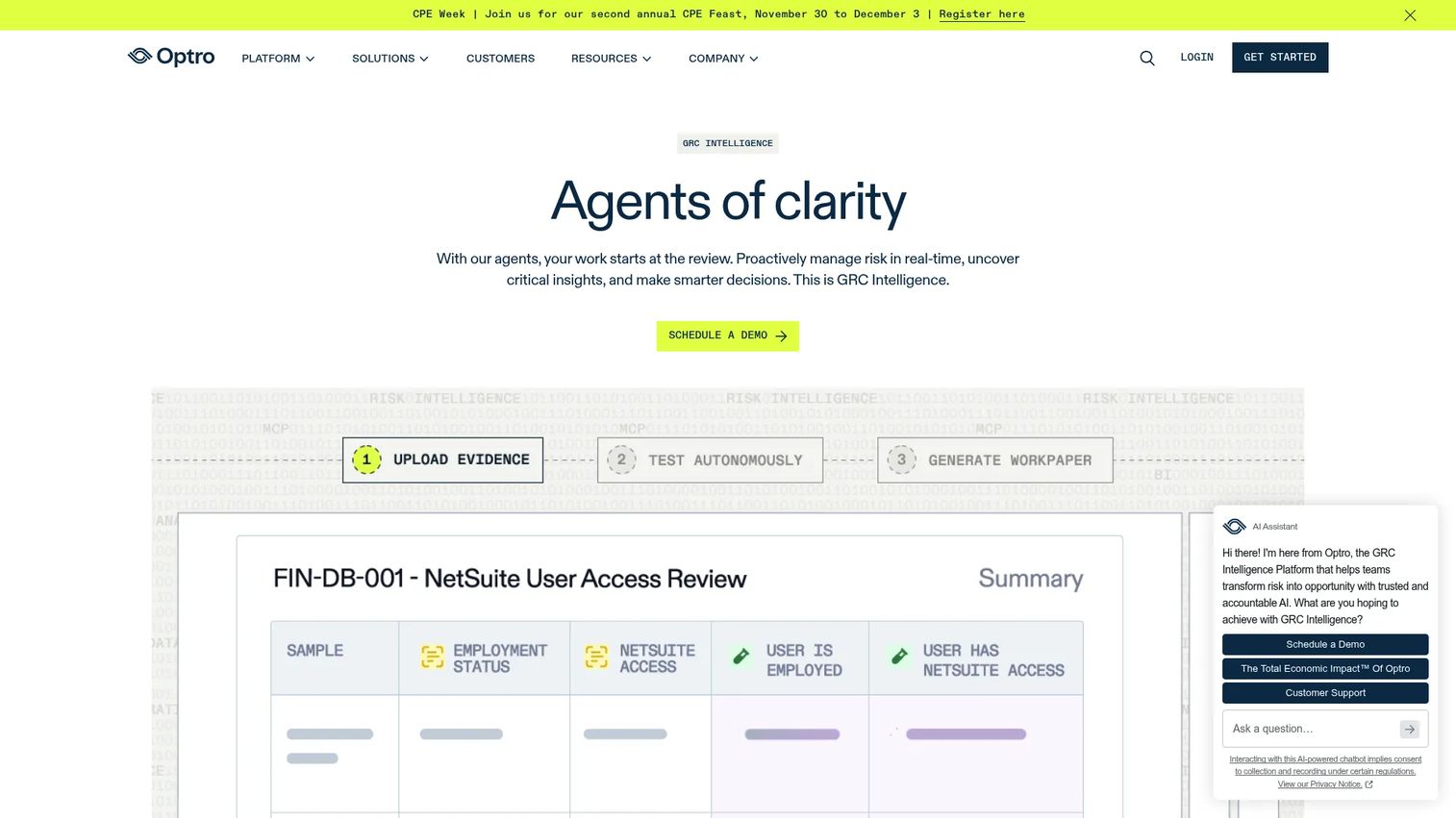
Optro is a GRC intelligence platform for audit, risk, compliance, and information security teams. It combines connected governance workflows with monitoring, control testing, reporting, and AI agents.
The platform supports more than 30 compliance frameworks and over 200 integrations. These figures make integration coverage an important area to inspect against your existing systems.
Best for: Enterprise GRC teams seeking monitoring and intelligence across connected programs.
Key features
- Agentic AI for GRC workflows
- Continuous control testing
- Live risk monitoring
- Custom reports and dashboards
- API connectivity and integrations
Why choose Optro: Consider it when continuous oversight matters alongside traditional assessments. Ask the vendor to show how AI generated outputs are reviewed, approved, and recorded.
Optro pricing: Custom pricing. Quotes reflect the selected products and program scope.
G2 rating: 4.6/5.
8. Camms
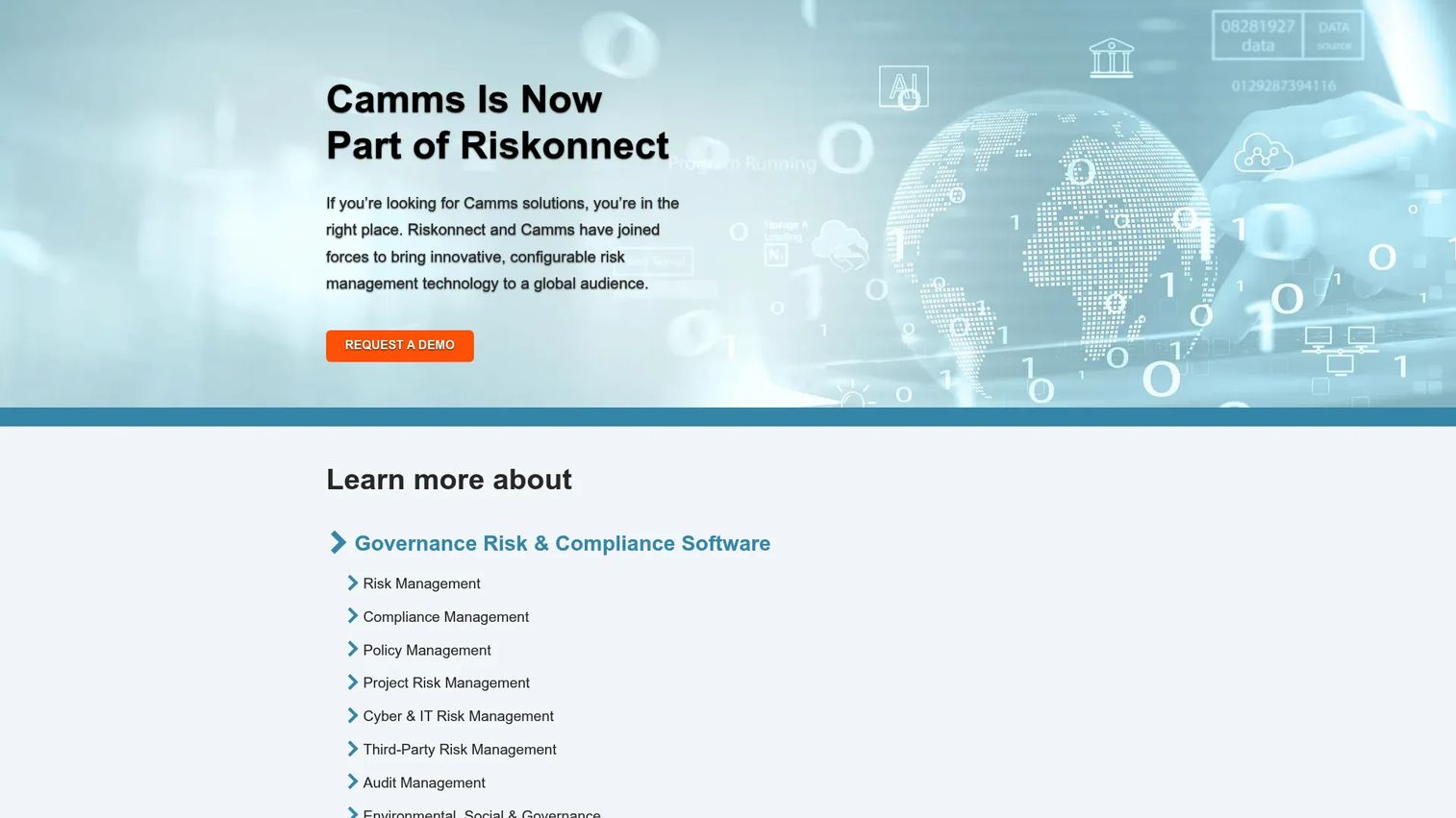
Camms provides configurable software for governance, risk, compliance, continuity, resilience, and insurable risk management. It is now part of Riskonnect.
Its capabilities cover policy work, audits, third party oversight, cyber risk, and environmental governance. This range supports organizations building a shared model across several assurance disciplines.
Best for: Organizations seeking configurable enterprise risk and continuity workflows.
Key features
- Enterprise risk management
- Compliance and policy management
- Audit management
- Business continuity and resilience
- Third party and cyber risk
Why choose Camms: Its broad domain coverage suits teams consolidating several governance workflows. Buyers should clarify the current product roadmap and integration model following the acquisition.
Camms pricing: Custom pricing. Fees vary by order form and authorized user count.
9. ServiceNow
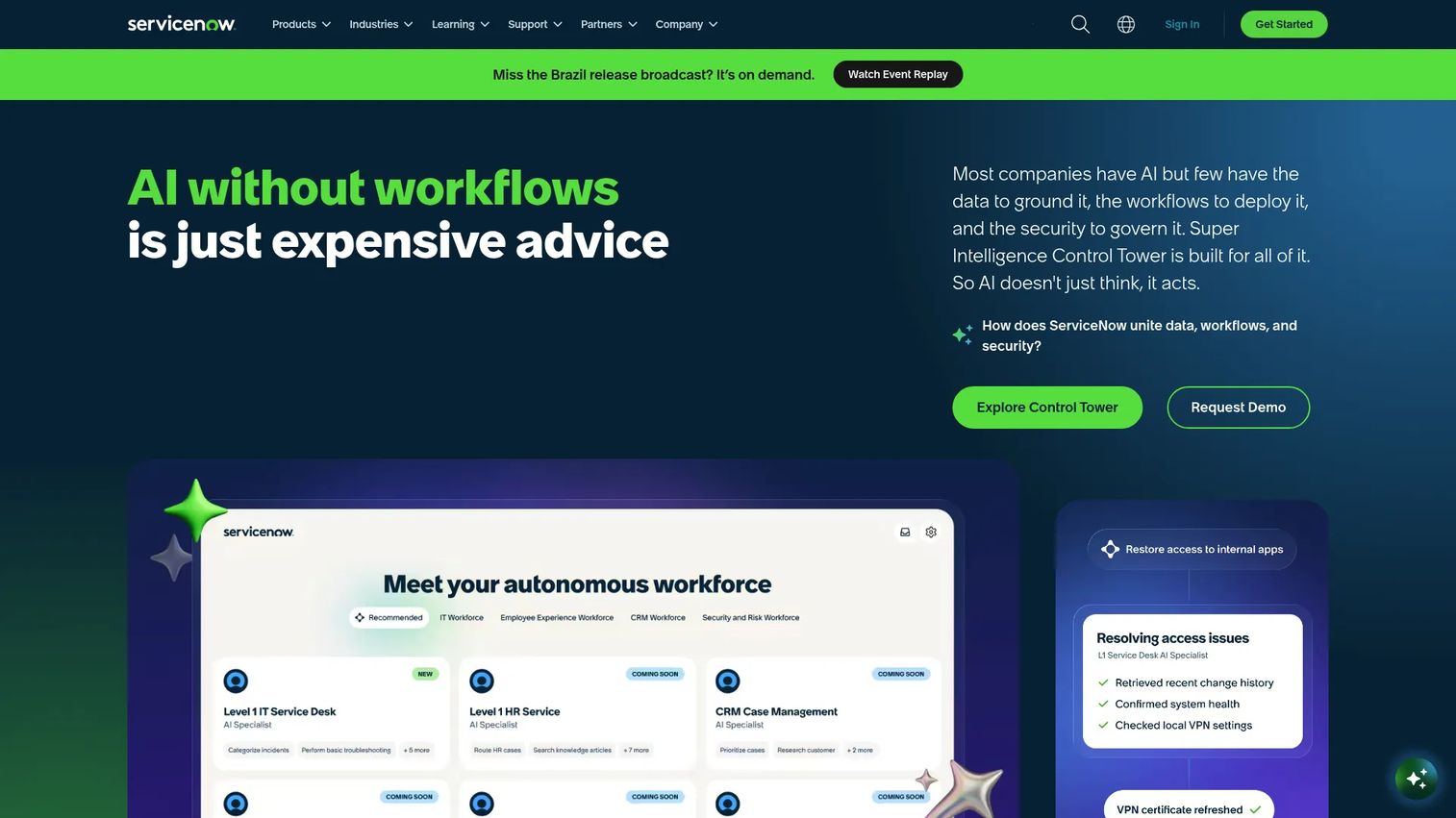
ServiceNow provides an enterprise cloud platform for workflow automation, service management, security, and business operations. Its risk capabilities fit organizations already using the wider platform.
Workflow Data Fabric connects information across systems. Low code application development also allows teams to extend workflows around established operating processes.
Best for: Large enterprises connecting risk processes with IT and operational workflows.
Key features
- AI assisted workflow automation
- Enterprise service management
- Security and operational workflows
- Low code application development
- Connected enterprise data
Why choose ServiceNow: It is strongest when risk teams can use existing platform data and operating workflows. During evaluation, trace a risk event from an operational system into assessment and remediation.
ServiceNow pricing: Custom pricing. Available product tiers include Foundation, Advanced, and Prime.
G2 rating: 4.4/5 for ServiceNow overall.
10. Onspring
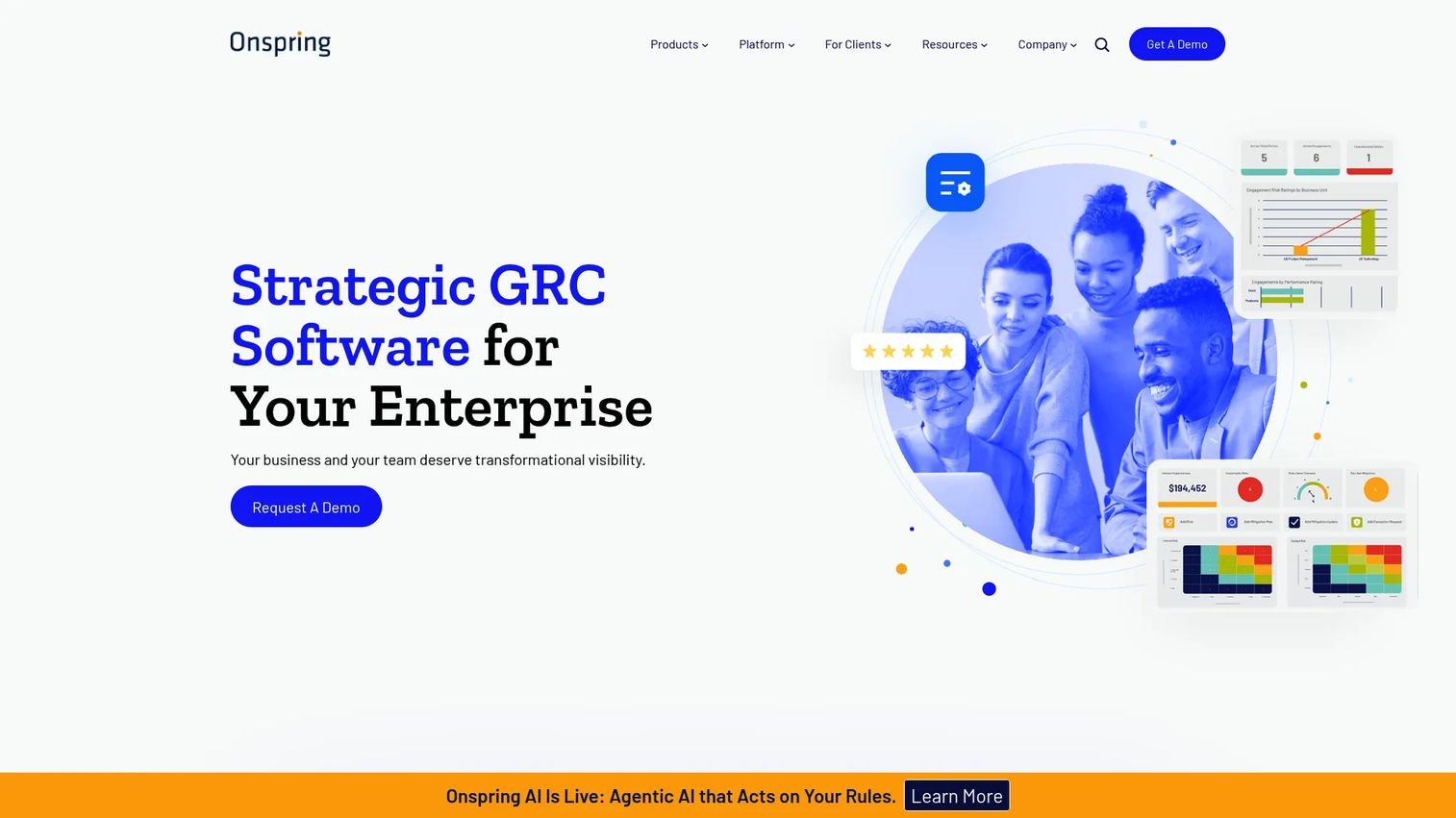
Onspring is a cloud based GRC platform for risk, compliance, audit, policy, and vendor management programs. Its configurable model supports business process automation without custom application development.
Teams can connect surveys, tasks, alerts, data references, and reporting. Access controls help separate responsibilities across administrators, assessors, owners, and reviewers.
Best for: Organizations that want configurable GRC workflows without extensive development.
Key features
- Live reporting and dashboards
- Workflow automation
- Surveys with branching logic
- Risk and control mapping
- Access controls and alerts
Why choose Onspring: It fits teams that expect their workflows to change as the program matures. Test configuration tasks during evaluation rather than viewing only finished dashboards.
Onspring pricing: Custom pricing across Bronze, Silver, Gold, and Platinum levels. Cost reflects licensing, platform level, and optional AI.
G2 rating: 4.7/5.
11. LogicGate Risk Cloud
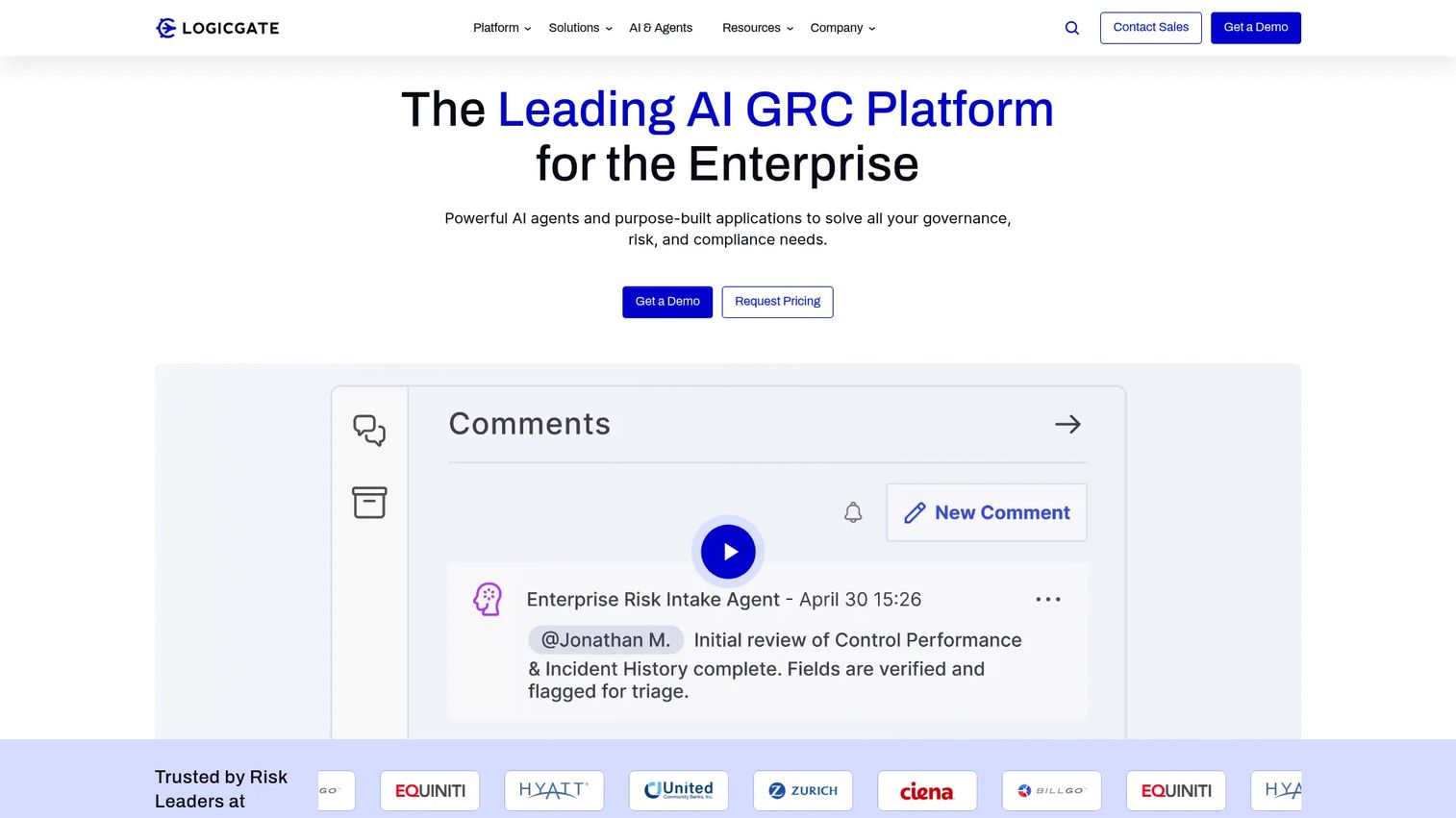
LogicGate Risk Cloud is an AI enabled GRC platform built around purpose designed applications and configurable workflows. Its graph database connects controls, assets, and risks.
Continuous compliance monitoring and automated control testing support ongoing assurance. Risk Cloud also provides APIs, integrations, analytics, and GRC agents.
Best for: Midmarket and enterprise teams designing connected risk and compliance workflows.
Key features
- Configurable graph database
- Automated control testing
- Continuous compliance monitoring
- GRC agents and workflow automation
- Live analytics and APIs
Why choose LogicGate Risk Cloud: It fits teams moving from manual processes to structured applications. Ask who can modify data relationships and how changes affect reporting.
LogicGate Risk Cloud pricing: Custom pricing. Cost reflects applications, Power User licenses, added features, and services.
G2 rating: 4.6/5.
12. SAI360
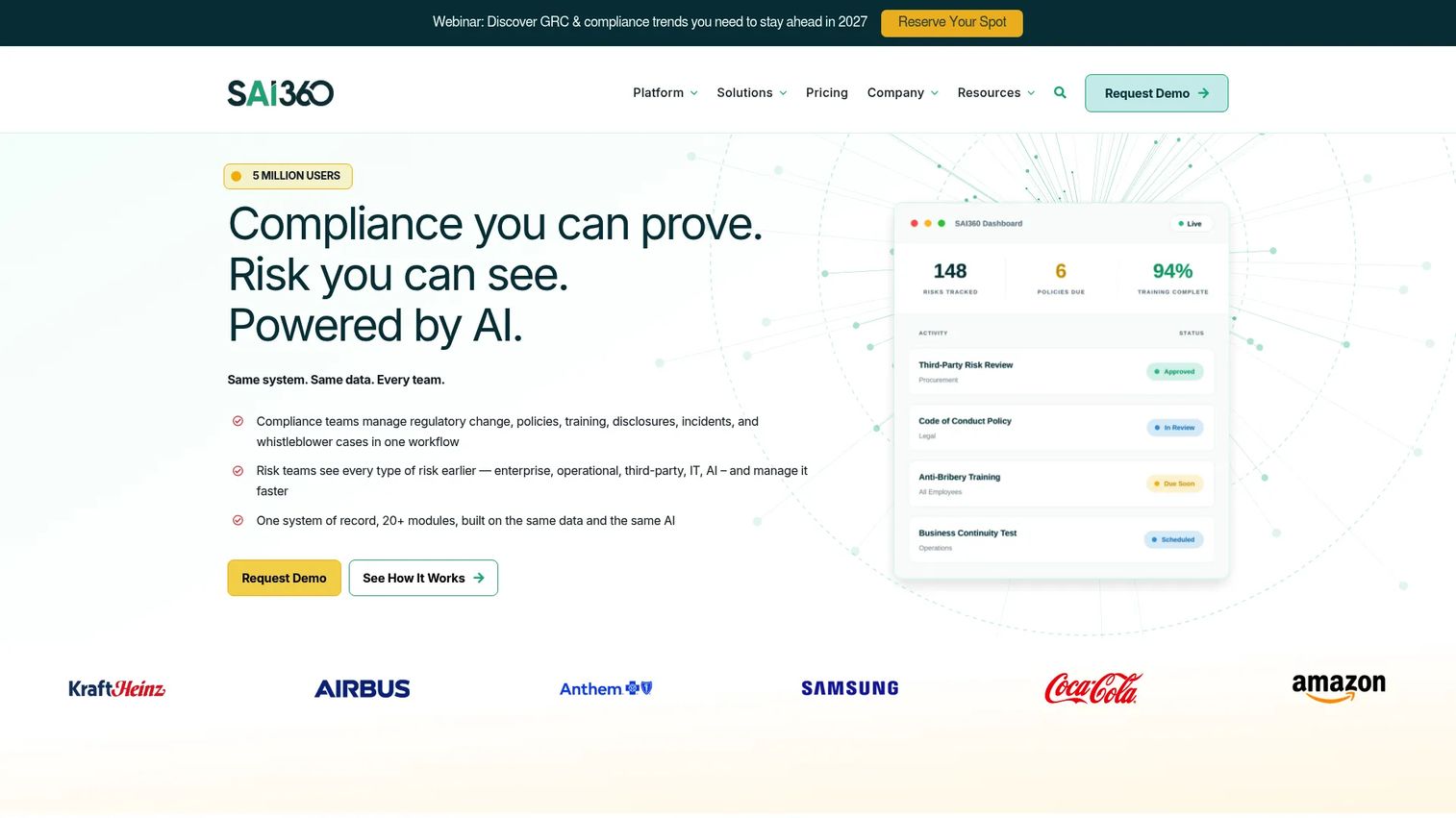
SAI360 connects governance, enterprise risk, compliance, ethics, audit, policy, incident, and training programs. Its scope suits organizations where risk processes and compliance culture share ownership.
The platform includes business continuity, internal controls, IT risk, and third party oversight. Ethics and compliance training adds an education layer alongside operational workflows.
Best for: Compliance heavy organizations seeking risk and ethics coverage together.
Key features
- Enterprise and operational risk
- Internal controls and audit
- Policy and incident management
- Business continuity management
- Ethics and compliance training
Why choose SAI360: It fits programs combining formal control work with workforce education. Evaluate reporting across both operational records and training activity.
SAI360 pricing: Custom pricing across Essentials, Professional, and Enterprise editions. Cost reflects organization size, modules, maturity, and implementation requirements.
G2 rating: 4.2/5.
13. Pathlock
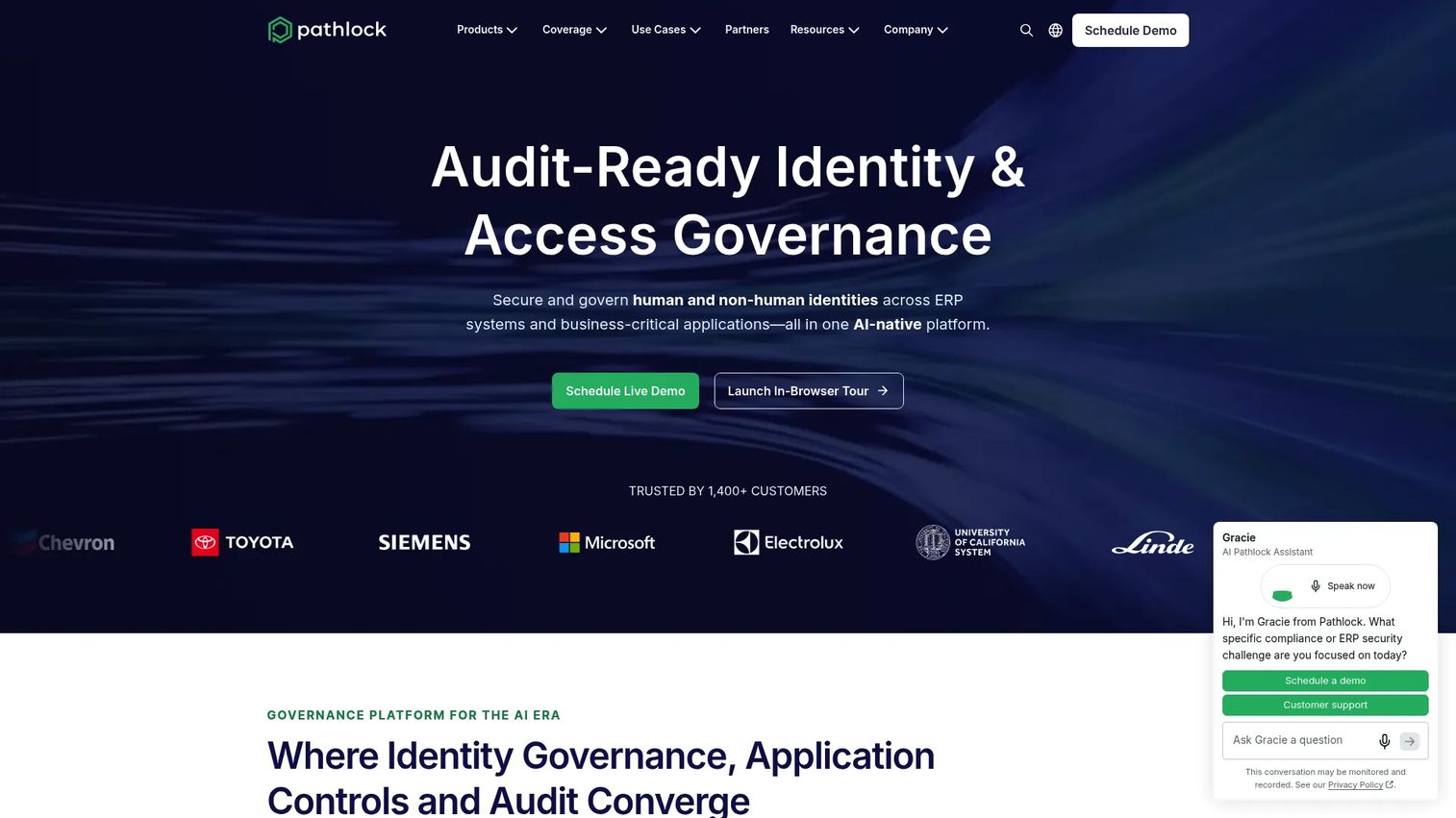
Pathlock focuses on identity governance, access risk, application controls, audit assurance, and ERP security. It supports business critical applications including SAP, Oracle, and Workday environments.
Its controls cover segregation of duties, access reviews, elevated privileges, provisioning, and ongoing monitoring. This specialization differs from broad enterprise risk platforms.
Best for: Regulated enterprises focused on access risk and application controls.
Key features
- Access risk analysis
- Segregation of duties controls
- User access reviews
- Elevated access management
- Continuous controls monitoring
Why choose Pathlock: Select it when application access and control enforcement drive the requirement. Broader ERM buyers may need it alongside another integrated risk management platform.
Pathlock pricing: Custom pricing. Request a quote for product and deployment costs.
G2 rating: 4.3/5.
14. SureCloud
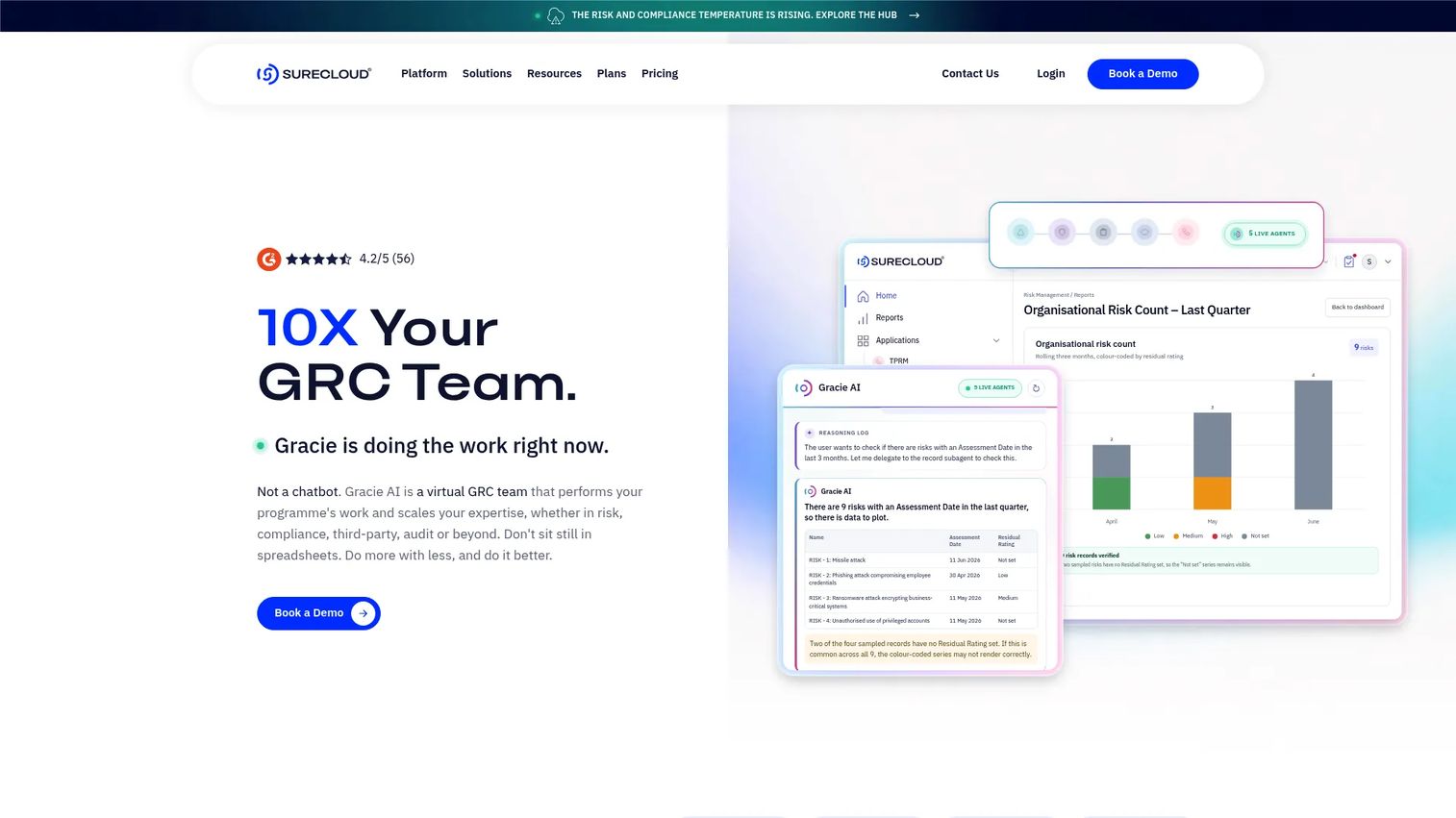
SureCloud connects risk, compliance, audit, third party oversight, privacy, and resilience workflows. Its platform combines configurable GRC processes with cyber risk management.
Capabilities include centralized registers, incident tracking, policy management, evidence collection, and continuous control monitoring. AI agents support analysis and workflow execution.
Best for: Midmarket and enterprise teams aligning cyber risk with compliance operations.
Key features
- Centralized risk registers
- Automated evidence collection
- Control testing and monitoring
- Third party risk management
- Business continuity and resilience
Why choose SureCloud: It fits teams that want cyber risk and compliance in a shared operating model. Validate how existing security tools feed evidence and control status into the platform.
SureCloud pricing: Foundations starts at £15,000 per year. Current plans include Assure, Automate, and Orchestrate with custom pricing.
G2 rating: 4.2/5.
15. Origami Risk
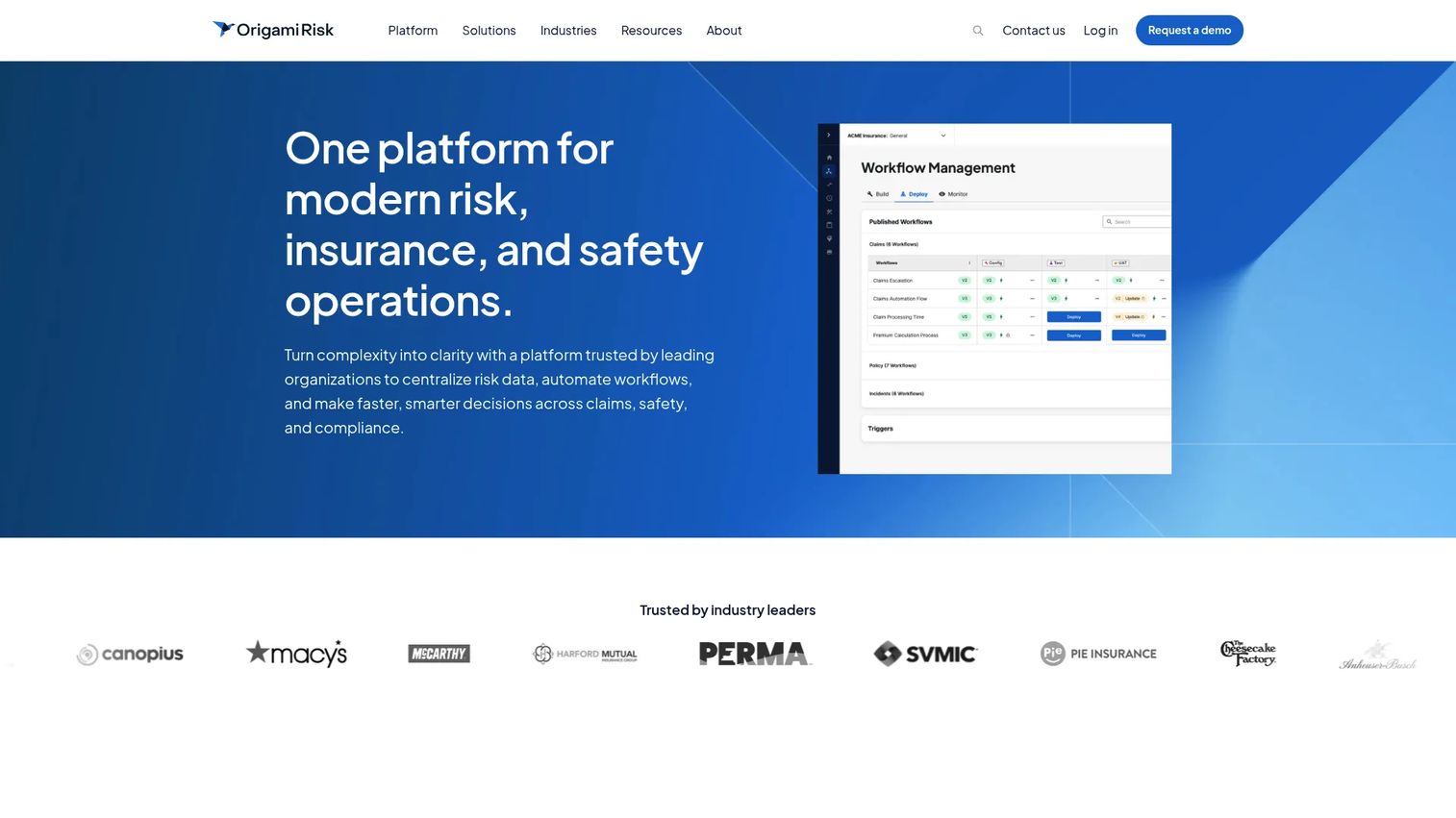
Origami Risk is a cloud platform for risk, insurance, safety, claims, and compliance operations. It suits organizations where risk management intersects with field activity and insurance programs.
Configurable workflows support incident reporting, audits, inspections, and claims processes. Its mobile application also supports offline field work.
Best for: Organizations managing operational risk, claims, insurance, safety, or compliance across multiple locations.
Key features
- Claims and insurance management
- Safety and incident workflows
- Configurable workflow automation
- Mobile audits and inspections
- Reporting and analytics dashboards
Why choose Origami Risk: It fits operational programs where incidents can lead to claims, investigations, or insurance activity. This focus distinguishes it from compliance centered GRC products.
Origami Risk pricing: Custom pricing. Request a quote for software and implementation costs.
G2 rating: 4.5/5.
16. SAP Risk Management
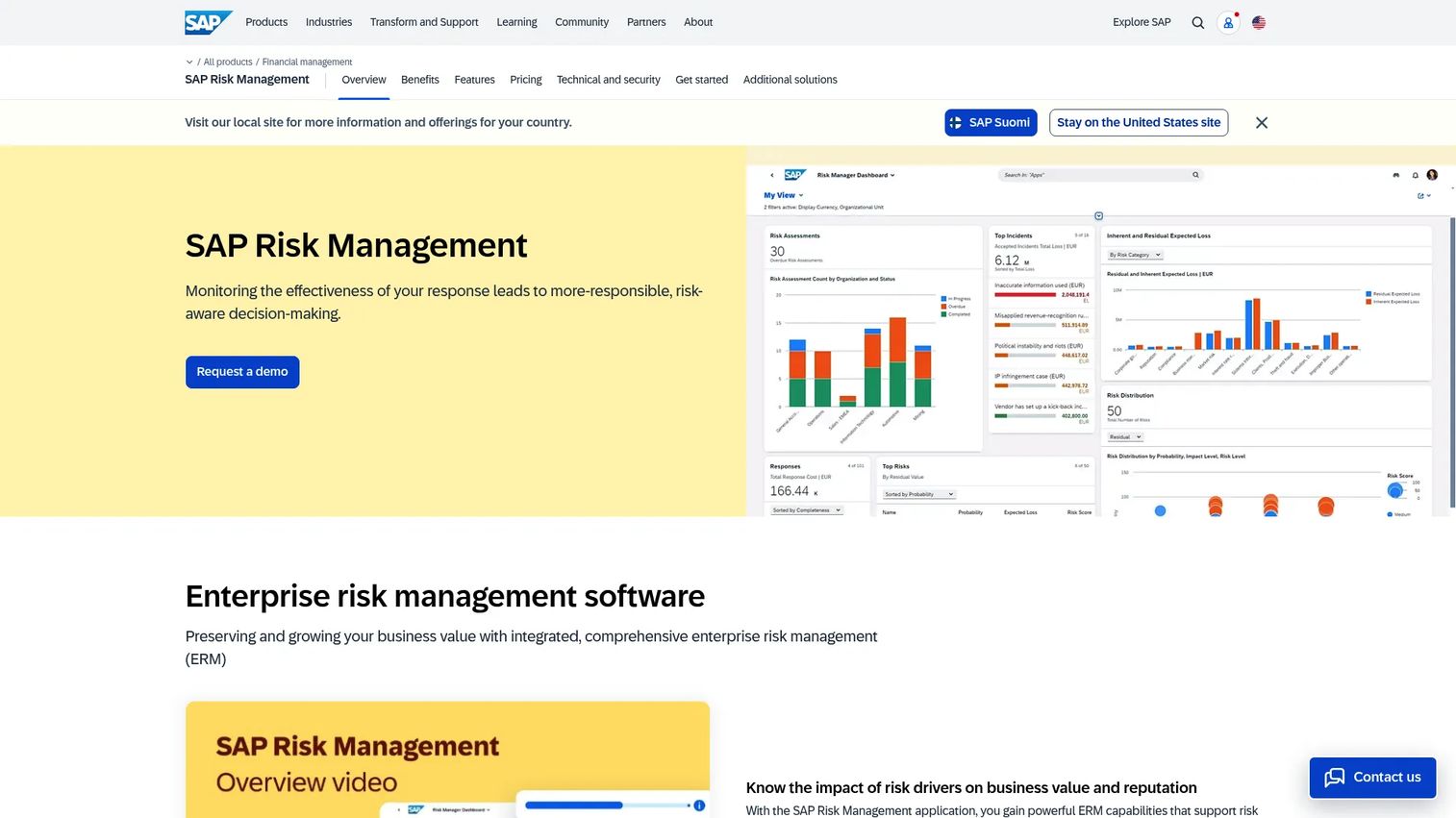
SAP Risk Management supports identifying, assessing, analyzing, monitoring, and responding to enterprise risks. It is designed for organizations connecting risk processes with SAP business environments.
Capabilities include quantitative analysis, qualitative assessment, key risk indicators, and automated monitoring. Guided workflows support consistent evaluation and response.
Best for: Large SAP centered enterprises connecting risk with financial and operational processes.
Key features
- Risk strategy and planning
- Quantitative and qualitative analysis
- Key risk indicator monitoring
- Guided risk workflows
- SAP business data connections
Why choose SAP Risk Management: It fits enterprises already running critical operations through SAP. Organizations outside that environment should closely examine integration effort and available business context.
SAP Risk Management pricing: Custom pricing for the private cloud edition. Contract structure and duration are provided on request.
G2 rating: 4.2/5.
17. Ncontracts
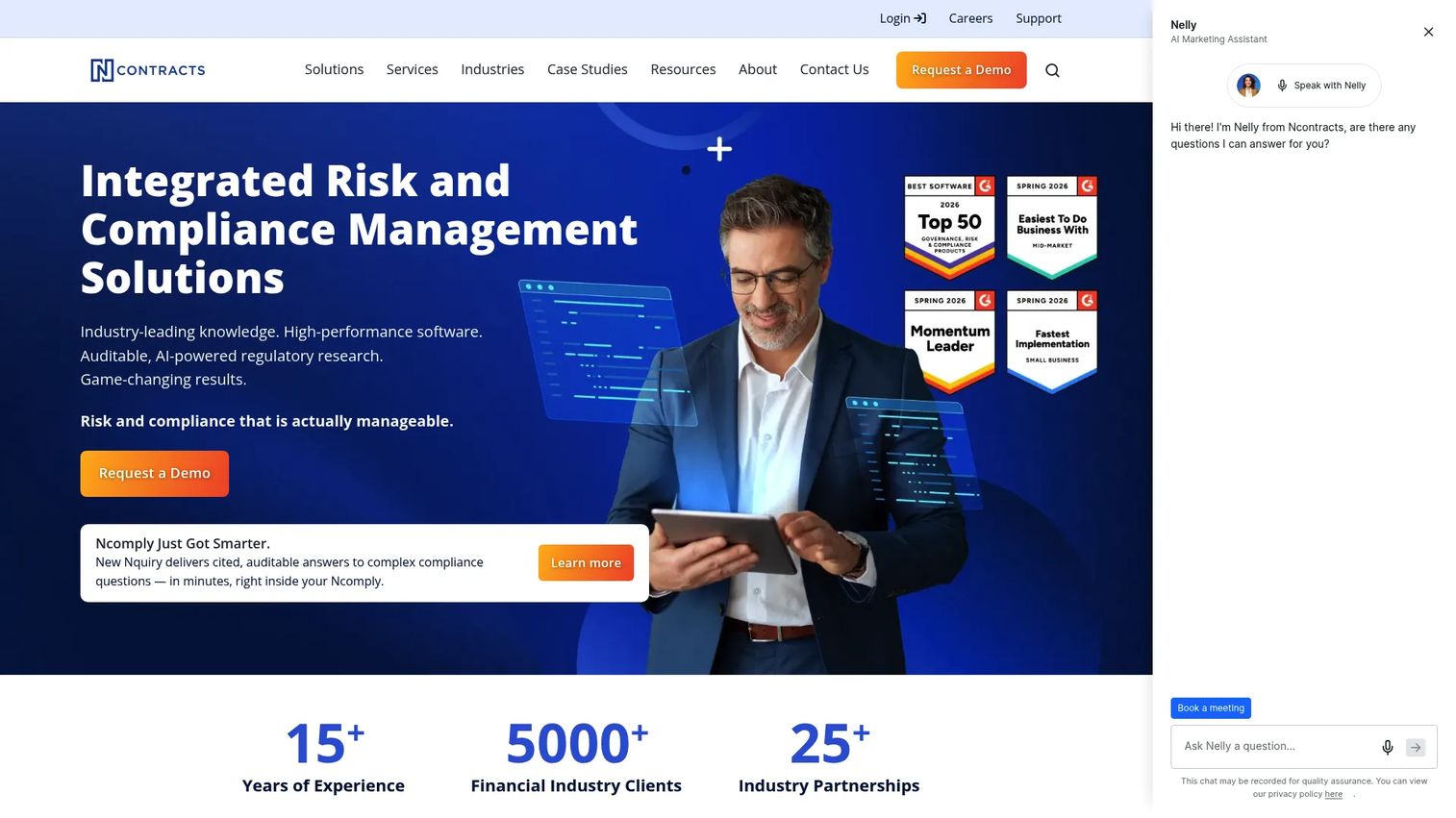
Ncontracts provides integrated risk management and compliance software for financial institutions. Its products cover enterprise risk, vendor oversight, findings, audits, continuity, and regulatory work.
The platform also supports vendor due diligence and contract management. Compliance capabilities include regulatory updates and AI assisted answers for financial organizations.
Best for: Banks, credit unions, mortgage companies, fintechs, and other regulated financial organizations.
Key features
- Enterprise risk assessments
- Vendor lifecycle management
- Compliance management
- Findings and audit management
- Business continuity planning
Why choose Ncontracts: Its financial sector focus helps teams connect regulatory, vendor, continuity, and findings workflows. Buyers outside financial services will usually find broader enterprise platforms more relevant.
Ncontracts pricing: Custom pricing. Cost reflects institution size, selected modules, and implementation scope.
G2 rating: 4.7/5.
Considerations when choosing integrated risk management software
Map risks to controls, tests, and findings
Start with risk to control traceability. Ask whether one register entry connects to controls, evidence, audit tests, open findings, owners, and remediation status.
This relationship should remain visible in dashboards and reports. If users must reconcile separate exports, the integrated model has broken down.
Check workflow fit before demo polish
A polished dashboard can hide weak operational workflows. Test assessment launches, evidence requests, finding assignment, escalation, and board report creation.
Presales teams should bring a scripted scenario with named roles and expected outputs. This makes product differences easier to defend internally.
Validate integrations and data ownership
Document required connections before shortlisting vendors. Common sources include identity systems, ERP platforms, procurement tools, ticketing systems, security products, and document repositories.
Ask what data moves, where it resides, and how failures are handled. Include API limits and synchronization frequency in the technical review.
Evaluate reporting for different audiences
Board members need concise exposure summaries. Control owners need tasks, due dates, evidence requirements, and escalation status.
Confirm that each audience gets the appropriate detail without duplicating data. Also test risk appetite reporting and assurance mapping if those matter to your program.
Pressure test implementation effort
IRM implementation often requires taxonomy design, data migration, permissions, and process alignment. Change management can matter as much as product configuration.
Ask for an implementation plan tied to your first use case. The longest feature list rarely predicts the fastest route to value.
Conclusion
Integrated risk management tools differ most in scope, operating model, and implementation fit.
Riskonnect, Archer, MetricStream, IBM OpenPages, and ServiceNow support broad enterprise programs. LogicManager, Camms, and Diligent suit buyers focused on ERM maturity or governance visibility.
Onspring and LogicGate Risk Cloud provide configurable workflows. Pathlock, SureCloud, Origami Risk, SAP Risk Management, and Ncontracts serve more specialized contexts.
Shortlist three to five products using your risk scope, existing systems, regulatory burden, and implementation capacity. Then run one scenario through every product:
- Add an operational risk to the register
- Map it to existing controls
- Test a control and collect evidence
- Open a finding with an owner
- Report remediation status to leadership
If your team sells complex software and needs buyers to understand product value before a live call, Start your journey with Guideflow today!
FAQs
Integrated risk management software connects enterprise risk, compliance, controls, audit, third party oversight, resilience, and reporting in a centralized system. It helps teams understand relationships between risks and the processes used to manage them.
A typical platform supports assessment, evidence, findings, ownership, remediation, and executive reporting. Scope varies considerably between vendors.
ERM software focuses on identifying, assessing, monitoring, and responding to enterprise risks. GRC software connects governance, risk, and compliance processes such as controls, policies, obligations, and audits.
IRM software connects multiple risk disciplines across the organization. Vendors use these labels differently, so evaluate the supported workflows and data model.
Core features include risk registers, controls mapping, audit workflows, issue remediation, third party assessments, and business continuity planning. Reporting should support operational users and senior leadership.
Also examine policy management, evidence collection, approvals, permissions, and integrations. The required mix depends on your risk program.
Test complete workflows rather than viewing prepared dashboards. Trace one risk through assessment, controls, testing, evidence, findings, remediation, and board reporting.
Evaluate implementation effort, reporting depth, integrations, permission controls, and support. Include business users in the evaluation because administrators alone cannot prove adoption.
Many enterprise platforms use custom pricing. Cost commonly reflects modules, user counts, implementation work, integrations, support, and contract structure.
IBM OpenPages lists editions starting at USD 3,300. SureCloud also lists a Foundations starting point of £15,000 per year.
Yes, mature IRM workflows can replace spreadsheet based registers, assessments, and remediation trackers. A successful migration still requires taxonomy design and clear ownership.
The objective is shared risk data with controlled workflows and reporting. Moving an inconsistent spreadsheet into software without redesigning the process preserves the original problem.
Common users include enterprise risk, compliance, audit, security, procurement, finance, operations, legal, and business continuity teams. Executives and board members usually consume consolidated reporting.
Presales and technical evaluators may also encounter IRM requirements during procurement. They often support integration, security, data ownership, and evidence discussions.
Ask the vendor to trace one risk to controls, evidence, findings, and board reporting. Then inspect how ownership, escalation, permissions, and overdue remediation work.
Also ask which integrations are available and how data synchronization is monitored. Close with implementation timing, required internal resources, and migration responsibilities.