Student records live in one system. Financial aid sits in another. Advising notes are in a spreadsheet. Continuing education runs on something the IT team built in 2011. This is the data architecture at most colleges and universities, and it creates real institutional risk: Slow reporting, manual reconciliation between systems, inconsistent student experiences, and painful decisions about what to migrate first.
According to Grand View Research (2026), higher education accounts for 64.1% of student information system market revenue. The category is consolidating, cloud migration is accelerating, and institutions that delay SIS modernization are falling further behind on student success outcomes, compliance reporting, and enrollment efficiency.
The question is not whether your institution needs a modern SIS. The question is which platform fits your operating model, not just your feature checklist. Enterprise ERPs built for 50,000-student research universities behave very differently from cloud-first platforms built for graduate programs or continuing education. Getting that fit wrong costs two to four years of implementation pain.
This guide cuts through the vendor marketing to give you a decision-ready shortlist.
What's inside
This guide compares 15 higher education SIS platforms for 2026. Items were selected based on market relevance, institutional fit range, and product depth across student lifecycle workflows.
Evaluation criteria:
- Student lifecycle coverage, from applicant through alumni and lifelong learner
- Academic records and enrollment depth, including registrar, advising, and degree audit
- Integration readiness across LMS, ERP, CRM, finance, and reporting systems
- Security, governance, and implementation support
- Fit across traditional, continuing education, and non-credit models
TL;DR
- Best for enterprise higher education suites: Ellucian Student, Workday Student, Oracle Fusion Cloud Student
- Best for long-established registrar depth: Ellucian Banner, PeopleSoft Campus Solutions
- Best for private colleges and smaller institutions: Jenzabar One, Populi, Blackbaud Student Information System
- Best for continuing education and lifelong learning: Modern Campus, Full Fabric
- Best for flexible cloud-first deployments: Classe365, Classter, Thesis Student Management
- Best for UK and international institutional operations: Tribal SITS
What is higher education student information system software?
Higher education student information system software is the central system colleges and universities use to manage student records, enrollment, academic progress, financial interactions, compliance reporting, and student-facing services.
An SIS (student information system) serves as the operational core for the full student lifecycle, from the moment an application arrives through graduation and, in many institutions, into alumni and continuing learner relationships. Key functions include:
- Admissions handoff from CRM to enrolled student records
- Enrollment and course registration
- Academic records, transcripts, and degree history
- Degree planning and audit
- Grades and academic standing
- Financial aid and student account management
- Student self-service portals
- Institutional reporting and compliance exports
- Lifecycle data management from applicant to lifelong learner
Key capabilities to look for
- Enrollment and registration workflows
- Academic records and transcripts
- Student self-service portals
- Degree planning and advising
- Financial aid and billing connections
- LMS, ERP, and finance integrations
- Reporting, analytics, and compliance exports
- Role-based access controls
- Cloud scalability and data governance
SIS versus adjacent systems
Understanding where the SIS ends and other systems begin matters for integration planning:
- LMS: Manages course delivery, assignments, learning content, and classroom engagement
- CRM: Manages recruitment communications and prospect relationships
- ERP: Manages finance, HR, and broader campus operations
- SIS: Holds the student academic record and lifecycle data
Most institutions need all four categories working together. The SIS is the authoritative source for who is enrolled, what they studied, and what they owe.
When to use a higher education SIS
Replace fragmented student records
When enrollment lives in one system, billing in another, and advising notes in a spreadsheet, reporting becomes a manual reconciliation exercise every term. Registrar staff spend hours resolving discrepancies that a unified SIS would eliminate automatically. At the board level, fragmented records mean you cannot answer basic retention questions without assembling data from four different sources.
Support enrollment and retention work
A modern SIS connects admissions handoffs, registration, degree progress tracking, advising touchpoints, and early alert signals in one place. When advisors can see a student's full academic picture alongside financial holds and attendance patterns, they can intervene earlier. According to the Pathify Student Digital Experience Survey (2025), 75% of students prefer accessing student services through a single centralized platform.
Scale continuing education and lifelong learning
Traditional term-based SIS workflows often struggle with non-credit courses, executive education cohorts, stackable credentials, and self-paced enrollment. Institutions expanding into workforce development or professional certificates need platforms designed for flexible program models, not systems retrofitted from a semester-credit framework.
Higher education student information systems comparison
The table below is a shortlist to frame your evaluation, not a final buying decision. Verify pricing, implementation scope, migration requirements, and current G2 ratings directly with vendors before procurement.
| # | Product | Best for | Key differentiator | Pricing | G2 rating |
|---|---|---|---|---|---|
| 1 | Ellucian Student | Enterprise lifecycle management | AI-powered student success and aid | Custom pricing | 3.4/5 |
| 2 | Ellucian Banner | Complex registrar environments | Established higher ed ERP depth | Custom pricing | 3.4/5 |
| 3 | Workday Student | Cloud-first institutional alignment | Unified finance, HR, and student data | Custom pricing | 4.0/5 |
| 4 | Oracle Fusion Cloud Student | Oracle-infrastructure institutions | Published per-student subscription pricing | From $7/student/month | 4.0/5 |
| 5 | Anthology Student | Student-centered lifecycle platforms | Student engagement and records combined | Custom pricing | 3.4/5 |
| 6 | Jenzabar One | Small to mid-sized institutions | Connected ERP and SIS for higher education | Custom pricing | 4.0/5 |
| 7 | Thesis Student Management | UK and Canadian universities | Configurable cloud SIS replacing legacy | Custom pricing | N/A |
| 8 | Tribal SITS | UK and international institutions | Statutory reporting and admissions depth | Custom pricing | 3.8/5 |
| 9 | Full Fabric | Graduate and executive education | Admissions CRM plus lifecycle management | Custom pricing | 4.8/5 |
| 10 | Modern Campus | Continuing education expansion | Non-credit, catalog, and learner registration | Custom pricing | 4.1/5 |
| 11 | Classe365 | Smaller institutions and academies | Transparent per-student pricing with add-ons | From $100/month | 4.3/5 |
| 12 | Classter | Modular cloud deployments | Per-student pricing across configurable modules | From €8.50/student | 4.6/5 |
| 13 | Populi | Small colleges needing an all-in-one | Published flat-rate plus per-student billing | $199/month + $9/student | 4.0/5 |
| 14 | Blackbaud Student Information System | Private schools in Blackbaud's platform | Student records tied to advancement and fundraising | Custom pricing | 4.2/5 |
| 15 | PeopleSoft Campus Solutions | Large Oracle PeopleSoft environments | Deep student administration with long institutional track record | Custom pricing | 3.7/5 |
Best 15 higher education student information systems for 2026
1. Ellucian Student
Ellucian Student is a cloud-native SIS built to support the full student lifecycle, from recruiting and admissions through academic planning, financial aid, and student success. The platform centers on AI-assisted workflows across scholarship matching, early alerts, degree discovery, and curriculum governance. It is designed for large colleges and universities that need a modern student administration layer connected to broader institutional data.
Best for: Large higher education institutions modernizing core student operations with cloud-native architecture.
Key features
- Student lifecycle management from recruiting through graduation
- AI scholarship matching and cost transparency
- Academic planning, degree audit, and early alert tools
- Curriculum governance with demand forecasting and approval workflows
- Role-based dashboards and compliance controls
Why choose Ellucian Student: The platform suits institutions ready to consolidate student administration and financial aid into a single AI-assisted environment. It carries depth across both academic operations and enrollment management, which matters when institutions are unifying fragmented systems at scale.
Ellucian Student pricing: Ellucian prices by engagement scope and institutional size. Contact Ellucian directly for a quote. Implementation and module selection drive total cost materially.
G2 rating: 3.4/5
2. Ellucian Banner
Ellucian Banner is one of the most deeply established higher education SIS and ERP platforms in the market. It covers student lifecycle management, registration and advising, financial aid processing, and campus administration alongside HR, payroll, and finance modules. Many large public and private universities have operated Banner environments for decades, and Ellucian continues to extend it with SaaS capabilities.
Best for: Institutions with complex registrar workflows and long-standing Ellucian environments that need continuity and depth.
Key features
- Student lifecycle management and registration tools
- Financial aid processing and distribution workflows
- Academic records, degree history, and advising support
- Human resources, payroll, and financial management modules
- Interoperable SaaS modules with learning system integrations
Why choose Ellucian Banner: The platform fits institutions that prioritize reliability, registrar depth, and continuity across legacy higher education operations. For institutions already on Banner, modernization projects often build outward from existing environments rather than replacing them wholesale.
Ellucian Banner pricing: Contact Ellucian for a quote. Migration and modernization scope can materially change total project cost, so request a full implementation estimate alongside license pricing.
G2 rating: 3.4/5
3. Workday Student
Workday Student extends Workday's cloud enterprise platform into student administration, connecting student records, academic operations, student finance, and advising to the same data model that powers Workday's HR and finance products. It is built for institutions that want student data to exist in the same operational layer as payroll, general ledger, and workforce planning.
Best for: Institutions already invested in Workday's finance or HR platform that want to align student operations with enterprise architecture.
Key features
- Cloud-native student administration and records
- Unified institutional data model connecting finance, HR, and student data
- Student financials, billing, and payment workflows
- Academic advising, planning, and registration tools
- Mobile-friendly student hubs with personalized dashboards
Why choose Workday Student: The strongest fit is at institutions undertaking a broader Workday enterprise deployment, where consolidating student operations into the same platform eliminates the data handoffs between siloed systems. Enterprise implementation discipline is essential to get the value.
Workday Student pricing: Contact Workday directly for pricing. The platform is enterprise-priced and scoped by institutional complexity.
G2 rating: 4.0/5
4. Oracle Fusion Cloud Student
Oracle Fusion Cloud Student supports academic operations inside Oracle's cloud enterprise environment, covering admissions, curriculum management, enrollment, grades, student financials, and advising. It is one of the few platforms in this category with publicly disclosed subscription pricing, making it easier to model costs before engaging a sales process.
Best for: Institutions standardizing on Oracle Cloud infrastructure that want student operations in the same platform as finance and HR.
Key features
- Admissions application and form management
- Curriculum, programs, enrollment, courses, and grades management
- Student financials, fees, discounts, and account reporting
- Advising and campus community capabilities
- Oracle platform connectivity for analytics and reporting
Why choose Oracle Fusion Cloud Student: Institutions with existing Oracle Cloud investments gain the most from tighter data integration between student records and enterprise operations. The published pricing structure also makes early-stage financial modeling more straightforward than most enterprise SIS vendors.
Oracle Fusion Cloud Student pricing: Fusion Student Management Cloud Service starts at $7.00 per hosted FTE student per month (2,000-student minimum). Oracle Student Financial Planning Cloud Service is also $7.00 per student aid recipient per month.
G2 rating: 4.0/5
5. Anthology Student
Anthology Student is a cloud-based SIS with ERP capabilities covering the student lifecycle, academic records, enrollment, financial aid, student accounts, and institutional reporting. Anthology positions it for colleges that want a higher education focused platform built around student engagement data alongside administrative functions.
Best for: Colleges seeking a student-centered platform from a dedicated higher education software vendor.
Key features
- Student records management and academic records
- Enrollment, registration, and course management
- Financial aid processing and student accounts
- Student engagement data and advising support
- Reporting, analytics, automation, and configurable workflows
Why choose Anthology Student: The platform suits institutions that want SIS functionality tied to student engagement and institutional effectiveness, rather than a generic enterprise ERP adapted for higher education. Faculty workload management and housing applications round out the administrative scope.
Anthology Student pricing: Contact Anthology to request a demo and scoped quote.
G2 rating: 3.4/5
6. Jenzabar One
Jenzabar One is a unified cloud ERP and SIS platform designed specifically for higher education. It connects student records, registration, advising, financial aid, retention workflows, finance, HR, and analytics into one platform. It is relevant for private colleges, community colleges, and mid-sized institutions that need broad administrative coverage without the overhead of a large enterprise deployment.
Best for: Small to mid-sized institutions that need connected SIS and ERP coverage without a large-scale enterprise rebuild.
Key features
- Student records, registration, and advising workflows
- Financial aid support and retention tools
- Campus operations including HR and finance modules
- Reporting dashboards and analytics
- Student recruitment and advancement modules
Why choose Jenzabar One: The platform fits institutions that want a higher education specialist partner and a connected system that handles several administrative functions from the same data layer. G2 reviewers with 59 reviews rate it at 4.0/5, which suggests reasonable satisfaction relative to complexity.
Jenzabar One pricing: Contact Jenzabar directly for a quote. Pricing is determined by institutional size and selected modules.
G2 rating: 4.0/5
7. Thesis Student Management
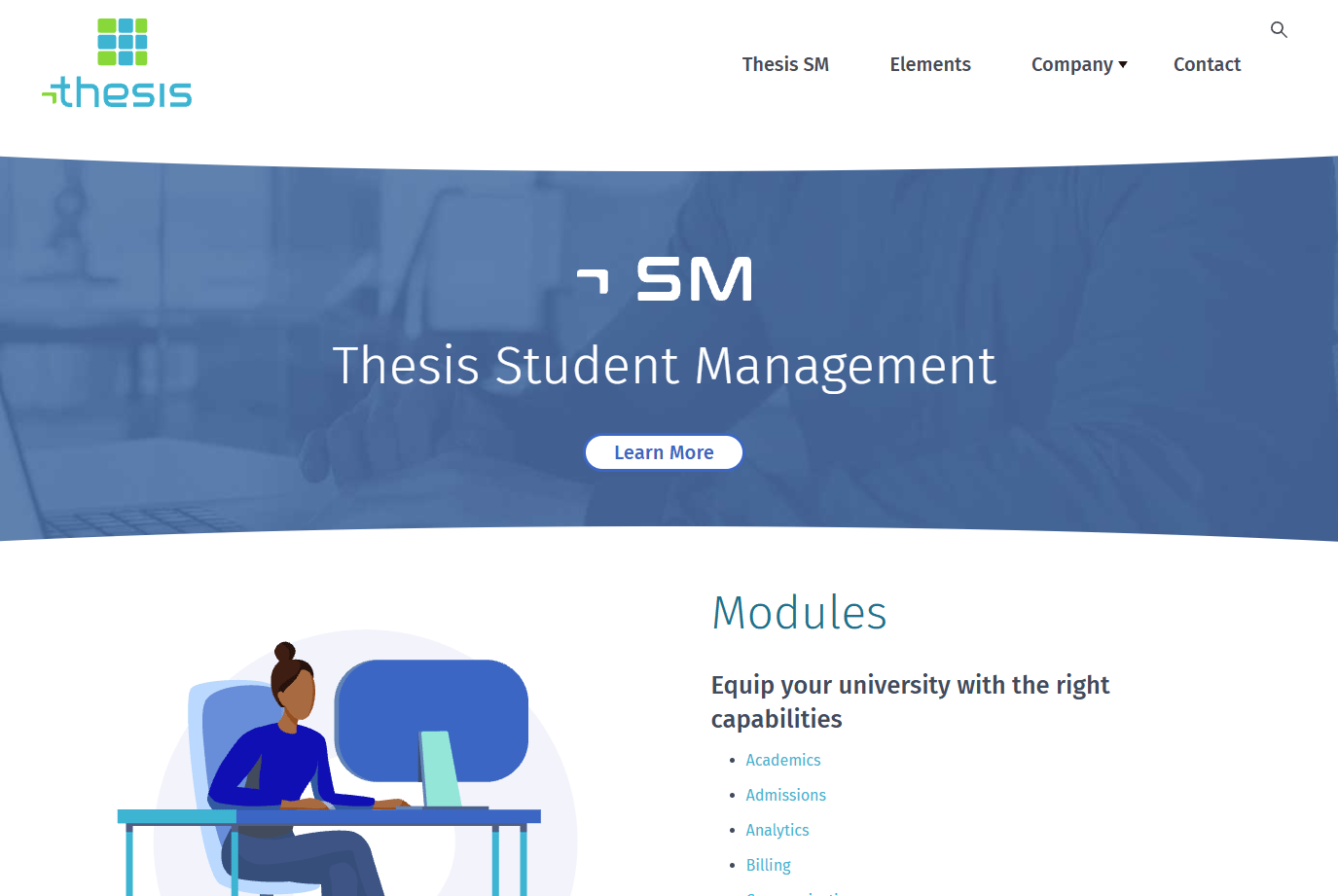
Thesis Student Management is a cloud-based SIS built for medium to large universities, with a particular focus on UK and Canadian institutions. It covers academics, admissions, analytics, billing, communications, financial aid, student life, and reporting through configurable modules and open APIs. The platform targets institutions replacing legacy on-premises systems with a modern, configurable cloud alternative.
Best for: Medium to large UK and Canadian universities replacing legacy systems with configurable cloud student management.
Key features
- Academics, admissions, and student life modules
- Billing, financial aid, and communications workflows
- Analytics, reporting, and compliance exports
- Workflow automation and self-service portal
- Open APIs and configurable process design
Why choose Thesis Student Management: The platform fits institutions that need configuration flexibility without heavy custom development. For UK and Canadian institutions navigating specific regulatory and reporting requirements, the localization and internationalization support matters.
Thesis Student Management pricing: Contact Thesis directly for pricing. The platform is scoped by institution size and selected modules.
8. Tribal SITS
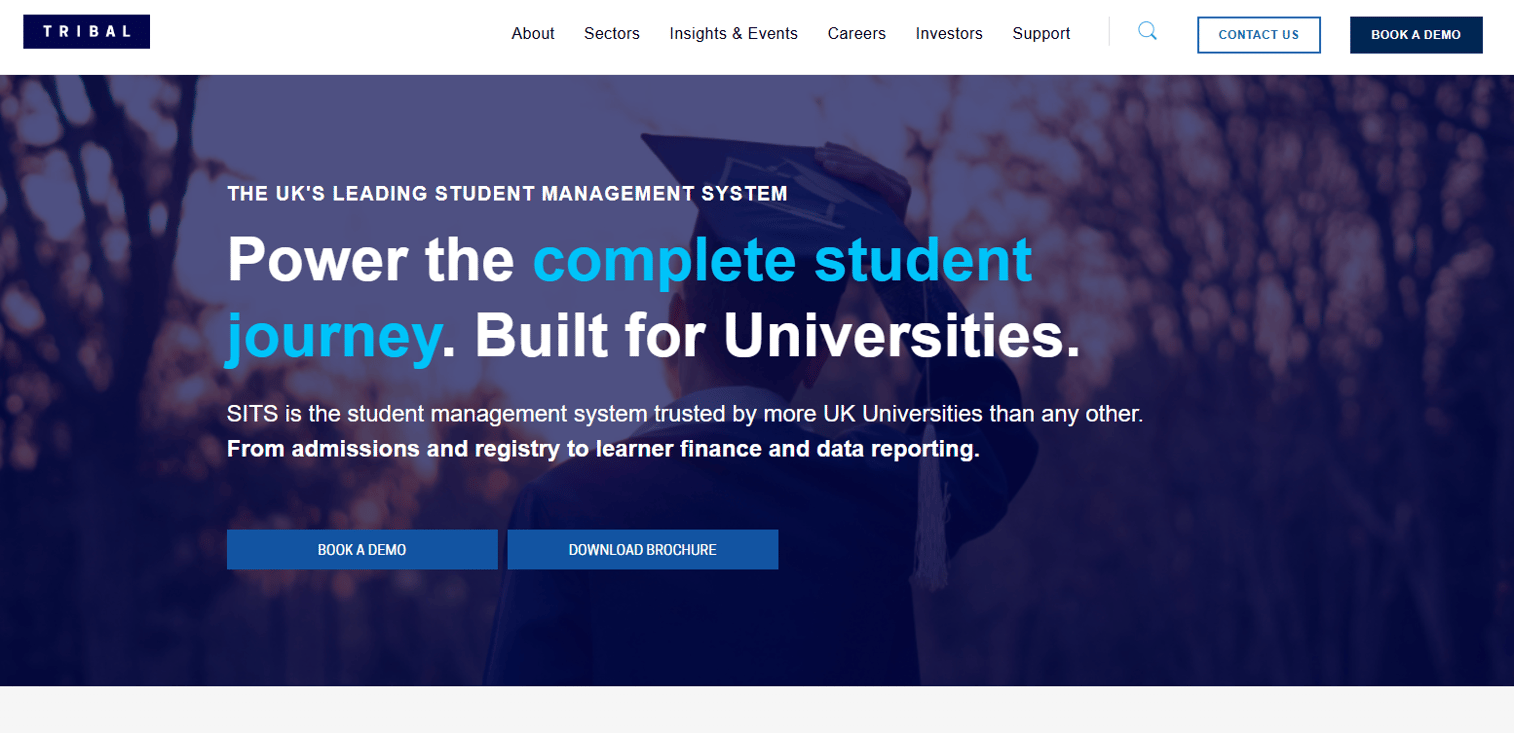
Tribal SITS is a higher education student management platform with strong adoption across UK and international universities. It covers the full student administration lifecycle, including admissions, enrollment, curriculum management, academic records, statutory reporting, and progression. For institutions operating in markets with complex regulatory reporting requirements, SITS carries depth that general-purpose SIS platforms often lack.
Best for: UK and international institutions with complex student administration and statutory reporting requirements.
Key features
- Admissions portal and online applications
- Student self-service and account management
- Curriculum management and progression tracking
- Statutory and compliance reporting
- Academic records and global payment support
Why choose Tribal SITS: Regional reporting depth and established market presence across UK higher education make SITS a strong fit where local compliance and institutional process alignment carry more weight than platform brand recognition. The Tribal G2 seller profile shows a 3.8/5 rating with five reviews.
Tribal SITS pricing: Contact Tribal directly for pricing.
G2 rating: 3.8/5
9. Full Fabric
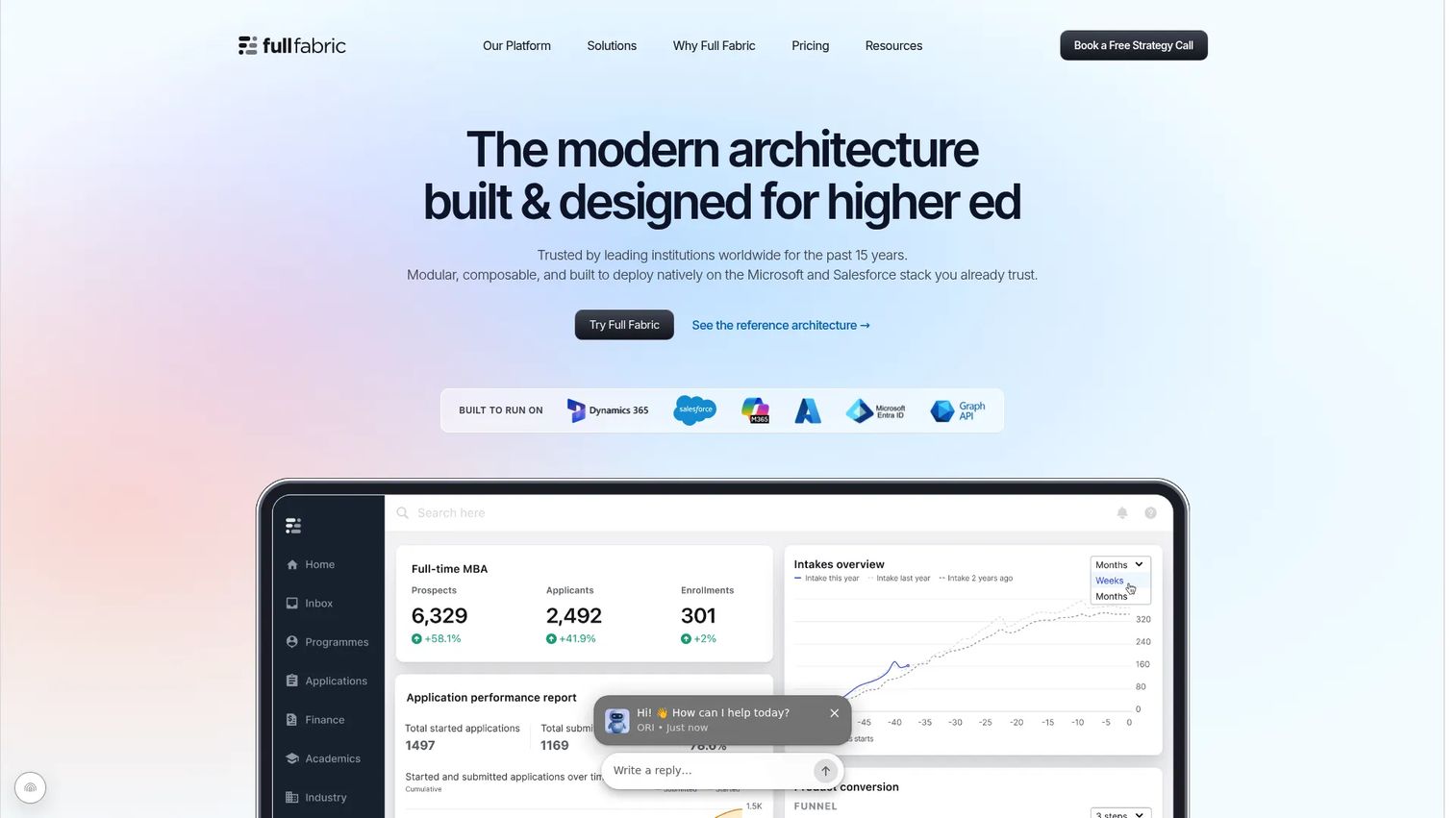
Full Fabric is a modular higher education platform connecting CRM, admissions, and SIS capabilities in one environment. It covers the learner lifecycle with particular strength in admissions, application management, marketing automation, program and course management, and alumni engagement. It is especially relevant for graduate programs, executive education, and institutions managing complex, non-traditional learner journeys alongside traditional enrollment.
Best for: Institutions that need flexible admissions workflows and lifelong learning lifecycle management alongside traditional SIS functions.
Key features
- Admissions and application management with CRM workflows
- Lead management and marketing automation
- Student information and academic management
- Events management and online payments
- Alumni management and analytics
Why choose Full Fabric: The platform fits institutions where admissions process complexity and learner engagement across multiple program types drive platform requirements. At 4.8/5 on G2 across seven reviews, it carries strong satisfaction signals for its target segment.
Full Fabric pricing: Contact Full Fabric for a scoped quote.
G2 rating: 4.8/5
10. Modern Campus
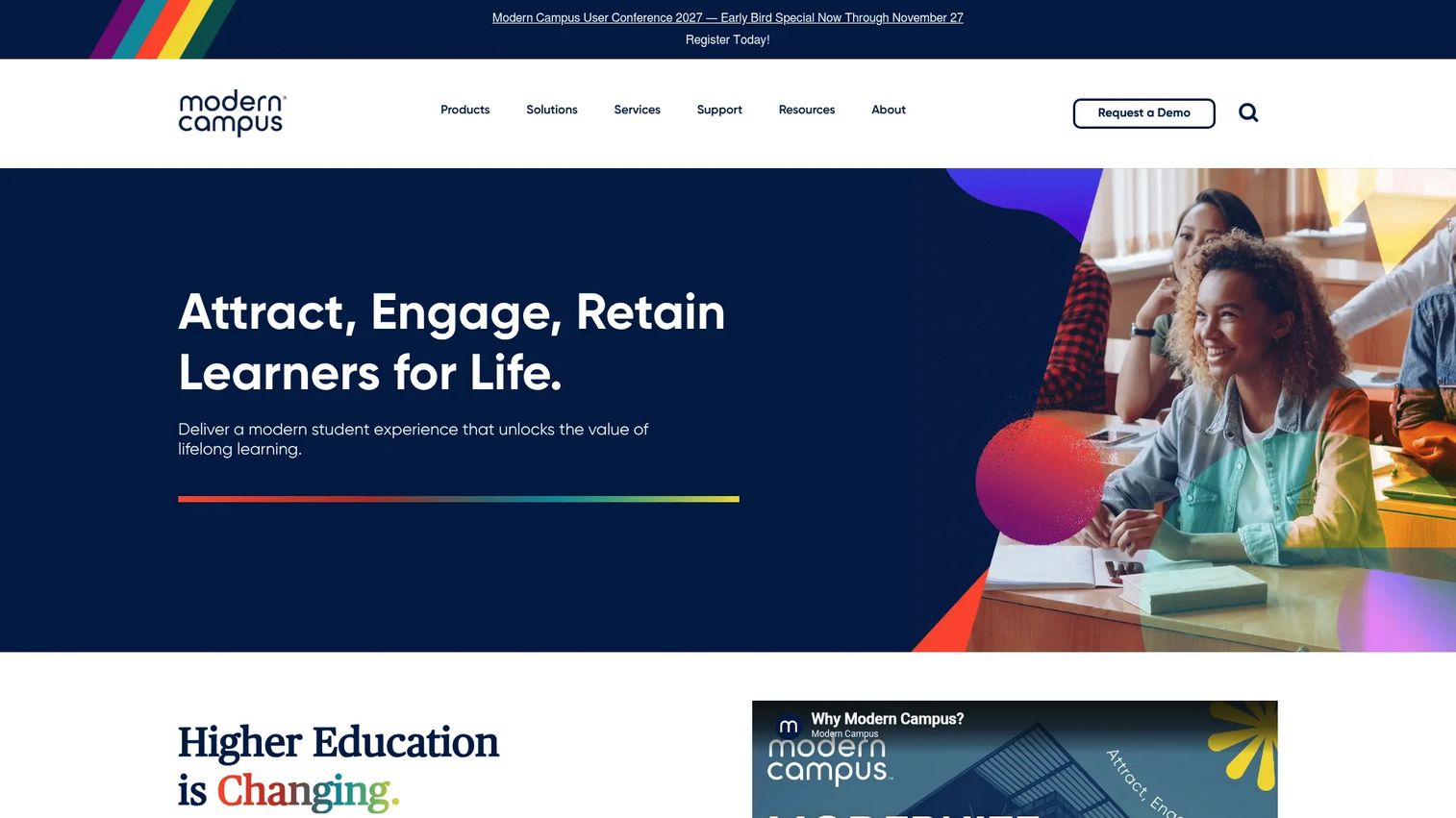
Modern Campus provides software built exclusively for higher education, with strong coverage across continuing education, workforce development, web content management, curriculum management, and student engagement. For institutions whose growth strategy depends on non-credit programs, professional certificates, and lifelong learning, Modern Campus addresses the operational gaps that traditional term-based SIS platforms leave open.
Best for: Institutions expanding continuing education, workforce programs, and lifelong learning operations beyond what a traditional SIS supports.
Key features
- Continuing education and workforce development workflows
- Course catalog and learner registration
- Payment processing and enrollment for non-credit programs
- Student engagement with personalized outreach and event management
- Web content management and digital engagement tools
Why choose Modern Campus: The platform fits institutions whose enrollment strategy increasingly depends on non-traditional learners. It covers the discovery-to-registration-to-completion workflow for non-credit programs in a way that most enterprise SIS platforms do not address natively.
Modern Campus pricing: Contact Modern Campus for a quote. Pricing varies by product modules and institutional scale.
G2 rating: 4.1/5
11. Classe365
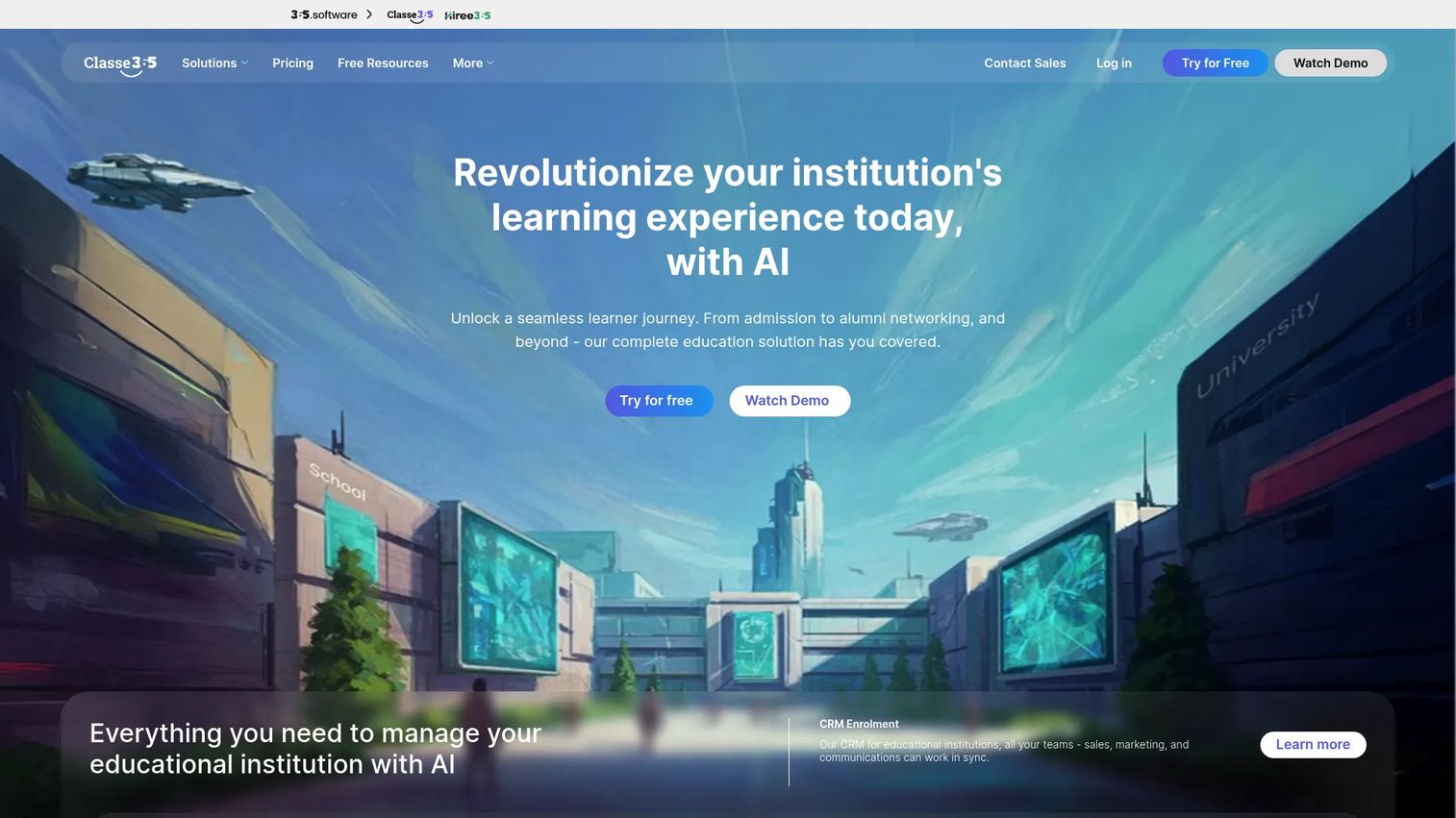
Classe365 is a cloud-based education management platform combining SIS, LMS, admissions, finance, and CRM in one environment. It is designed for schools, universities, academies, and corporate learning providers. Pricing is transparent and scales with student count, which makes it accessible for smaller institutions that need to model costs without a lengthy sales process.
Best for: Smaller institutions and education providers that want an integrated cloud platform with transparent, volume-based pricing.
Key features
- Pre-admission and enrollment management
- Student information with academics, attendance, grading, and transcripts
- Learning management system integration
- Fees, invoicing, and accounting modules
- CRM, alumni, degree audit, and AI-assisted modules
Why choose Classe365: The per-student pricing model and 15-day free trial make it accessible for institutions that need to validate fit before committing to a large enterprise contract. For organizations managing student counts under 1,000, the transparent cost structure is a meaningful advantage over quote-only platforms.
Classe365 pricing: Plans start at $100/month for up to 100 students. Add-on modules run $75/month each. A 15-day free trial is available without a credit card. Enterprise Pro pricing requires contacting sales.
G2 rating: 4.3/5
12. Classter
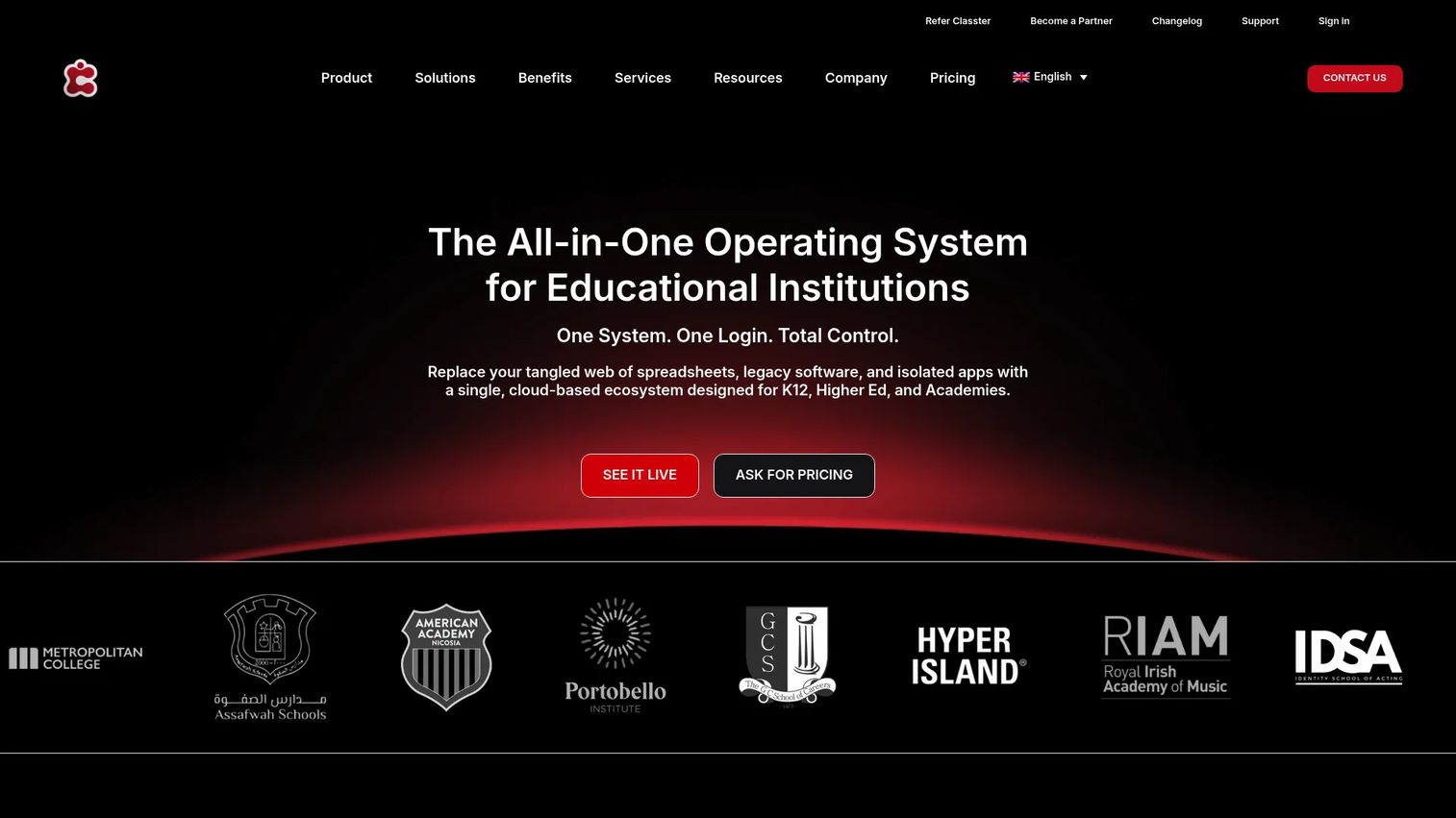
Classter is a cloud-based student information, school management, LMS, CRM, and ERP platform for educational institutions. It supports admissions, academics, billing, student and faculty portals, integrations with 40+ tools, and a mobile app. Pricing is per-student and modular, which allows institutions to start with core functionality and add modules as requirements grow.
Best for: Schools, academies, and higher education institutions seeking a modular cloud SIS with published per-student pricing.
Key features
- Admissions and applicant management
- Academics and LMS with timetables, attendance, grading, and gradebooks
- Billing and payments module
- Student, faculty, and alumni portals
- Integrations with 40+ external tools and mobile app
Why choose Classter: The 4.6/5 G2 rating across 23 reviews reflects strong user satisfaction, and the per-student module pricing gives institutions flexibility to scope what they actually need. Higher education buyers should assess whether the platform's breadth across K-12 and higher education markets creates any workflow fit gaps for institutional complexity.
Classter pricing: Core module starts at €8.50 per student. Additional modules such as Academics and LMS are priced at €6.50 per student each. A worked example on the pricing page shows €25,500 per year for 1,000 students.
G2 rating: 4.6/5
13. Populi
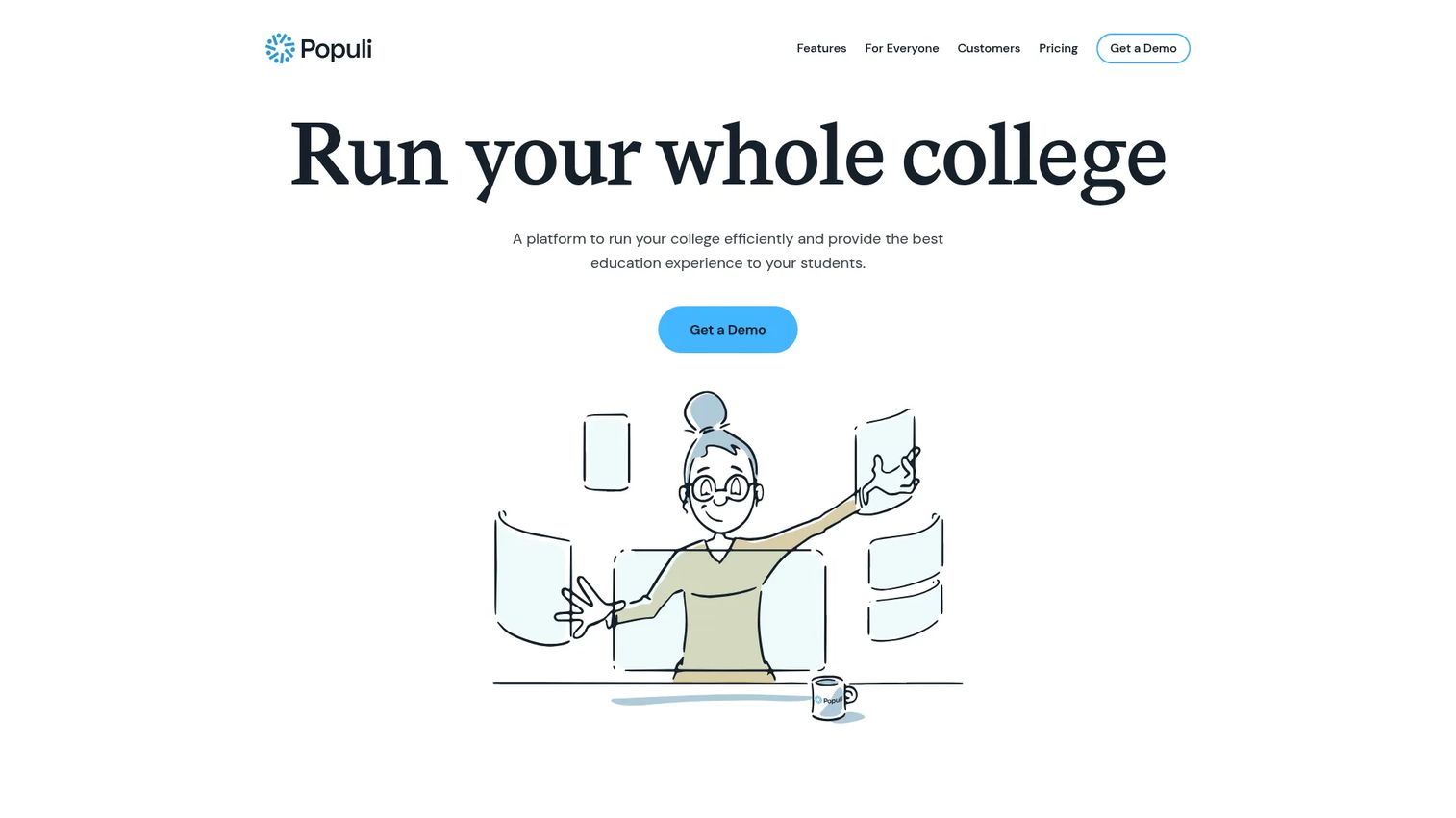
Populi is a web-based college management platform combining SIS, LMS, admissions CRM, billing, financial aid, and advancement into one environment. It is built specifically for small and mid-sized colleges, with a pricing structure that includes software, support, implementation, data migration, training, and storage in a single monthly fee. For smaller institutions that cannot absorb a lengthy enterprise implementation, Populi's scope-to-price ratio is hard to match.
Best for: Small colleges that need a practical all-in-one campus system with straightforward, predictable pricing.
Key features
- Student records, transcripts, degree audits, and registration
- Built-in LMS with assignments, grading, attendance, and video conferencing
- Admissions CRM with online applications and automations
- Billing, financial aid support, and advancement tools
- Reporting tools for institutional data
Why choose Populi: The all-in monthly pricing model, which includes implementation and ongoing support, removes the hidden costs that commonly inflate total cost of ownership on larger platforms. Small colleges evaluating enterprise SIS platforms should compare the full implementation cost, not just license fees.
Populi pricing: $199/month plus $9/month per billable student. All software, support, implementation, data migration, and training are included. A trial account is available.
G2 rating: 4.0/5
14. Blackbaud Student Information System
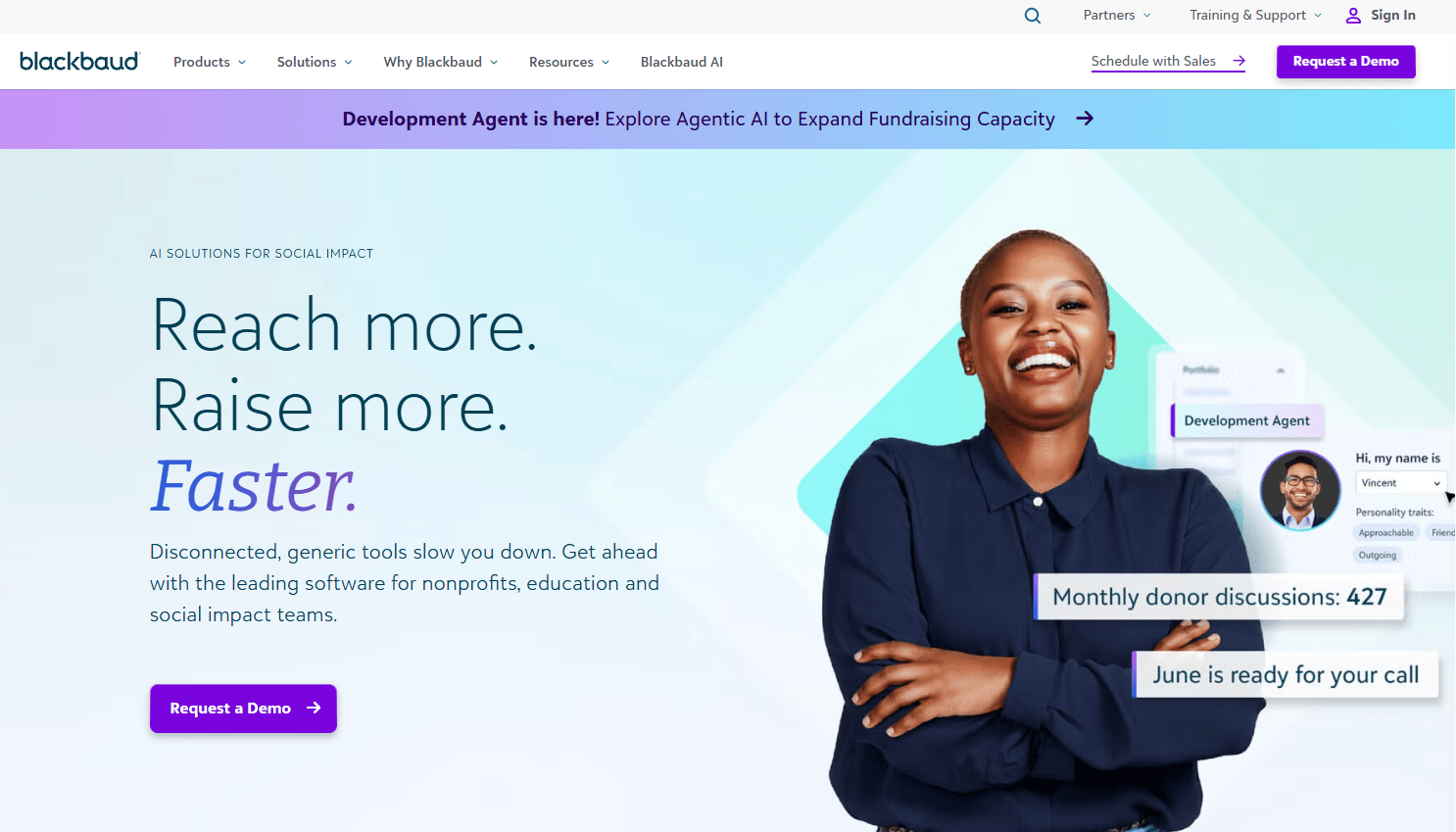
Blackbaud Student Information System centralizes student records, academics, scheduling, grading, attendance, communications, and learning management. It is tightly integrated with Blackbaud's advancement, fundraising, and relationship management platform, which makes it most relevant for private institutions where student operations and development activities need to share data.
Best for: Private institutions and education providers already in Blackbaud's platform who need student operations connected to advancement and fundraising.
Key features
- 360-degree student view and centralized records
- Attendance, scheduling, grading, report cards, and transcripts
- Course requests and schedule management
- Family portal with student information access
- Integrated Blackbaud learning management system
Why choose Blackbaud Student Information System: The strongest case for this platform is at institutions where the advancement team, development staff, and academic operations all need to reference the same student record. Outside that context, higher education buyers should confirm that the platform's K-12 heritage aligns with their institutional workflows before proceeding.
Blackbaud Student Information System pricing: Blackbaud prices by organization size, selected modules, and support levels. Contact Blackbaud for a scoped quote.
G2 rating: 4.2/5
15. PeopleSoft Campus Solutions

PeopleSoft Campus Solutions is Oracle's long-established higher education enterprise system covering student administration, admissions, enrollment, academic records, advising, financial aid, student financials, and self-service portals. It has been deployed at many large public research universities and continues to operate at institutions that have built significant processes around its data model.
Best for: Large institutions maintaining or modernizing existing Oracle PeopleSoft environments.
Key features
- Campus community and personal information management
- Recruiting, admissions, and student records
- Academic advising and degree audit
- Financial aid processing and student financials
- Campus self-service for enrollment and financial accounts
Why choose PeopleSoft Campus Solutions: Institutions already on PeopleSoft have the most to gain from continued investment in the platform, particularly if a full migration to a newer SIS would take multiple years and carry high risk. Institutions evaluating PeopleSoft as a new system should assess Oracle's cloud roadmap and the total cost of a modern implementation against cloud-native alternatives.
PeopleSoft Campus Solutions pricing: Contact Oracle directly for pricing. The platform is enterprise-priced.
G2 rating: 3.7/5
Considerations when choosing a higher education SIS
Student lifecycle fit
Evaluate whether the platform supports your institution's actual lifecycle: Applicant, admitted, enrolled, graduated, returning learner, and non-credit participant. Platforms built for traditional four-year enrollment can struggle with executive education cohorts, stackable credentials, and workforce programs. Map your learner types before evaluating feature lists.
Integration readiness
Ask vendors for API documentation, not just a slide about integrations. The most important connections are LMS, ERP, finance, identity management (SSO, LDAP), data warehouse, payment processing, and advising tools. Request references from institutions running the same integration stack you need. According to the Pathify Student Digital Experience Survey (2025), 95% of students said they would use a unified digital platform if their institution offered one, which puts the integration burden squarely on the institutional technology layer.
Implementation and migration risk
SIS replacement at complex institutions can take 18 months to several years. Require detailed migration plans, data mapping documentation, testing cycles, rollback procedures, and change management support before signing a contract. Ask specifically about how the vendor handles mid-migration product updates and term changeovers.
Security and compliance
Evaluate role-based permissions, MFA, SSO, audit trails, encryption at rest and in transit, backup cadence, and incident response procedures. FERPA-aware data handling should be documented, not assumed. This is not legal advice: Engage your institution's legal and IT security teams for compliance review before selecting a vendor.
Vendor proof and demo quality
Require vendors to demonstrate real workflows, not slide decks. The five workflows that expose system fit most effectively are: Admit-to-enroll, register-to-pay, advise-to-completion, grade-to-transcript, and report-to-intervention. Ask for role-specific views for the registrar, advisor, student, faculty member, and IT administrator separately.
How to evaluate SIS vendors before a demo
A demo is only as useful as the scorecard you bring to it.
Build a workflow scorecard
Before any vendor call, document the five core workflows your institution needs to verify:
- Admit-to-enroll: From application decision to registered student
- Register-to-pay: From course selection to payment confirmation and financial aid disbursement
- Advise-to-completion: From academic standing flag to advisor note to intervention outcome
- Grade-to-transcript: From faculty gradebook to official academic record
- Report-to-intervention: From attendance or grade data to early alert and advisor assignment
For each workflow, write down who the user is, what system it touches today, and where it breaks. That becomes your demo script.
Ask for role-specific demos
A single executive overview does not expose workflow friction. Request separate demonstrations for the registrar, the advisor, the student portal, the faculty gradebook view, the financial aid officer, and the IT administrator. Each role surface will reveal different gaps.
Validate integrations early
Ask where data originates for each workflow, how it syncs across systems, what happens when a term configuration changes, and how errors surface and get resolved. Integration failures cause the most post-go-live pain, and vendors are least likely to surface them proactively in a demo.
Track unanswered questions
Maintain a shared evaluation log with columns for the question, the owner, the vendor's response, the proof required, and the decision impact. SIS evaluations involve dozens of stakeholders across registrar, IT, finance, student affairs, and faculty governance. Without a shared log, critical questions get lost between meeting cycles.
When comparing vendors through this process, interactive product demos can help buying committee members revisit specific SIS workflows after the live call, particularly when stakeholders miss the first walkthrough. This is an evaluation tactic, not a replacement for direct vendor engagement.
Conclusion
Higher education SIS selection is a long-cycle institutional decision with significant implementation risk on both sides of a good or bad choice. The right platform for a large public research university is not the right platform for a 500-student private college running executive education alongside a traditional undergraduate program.
Use this shortlist as a starting point:
- Enterprise suites: Ellucian Student, Workday Student, Oracle Fusion Cloud Student
- Established registrar depth: Ellucian Banner, PeopleSoft Campus Solutions
- Small to mid-sized institutions: Jenzabar One, Populi, Blackbaud Student Information System
- Continuing education and lifelong learning: Modern Campus, Full Fabric
- Cloud and international options: Thesis Student Management, Tribal SITS, Classe365, Classter
The practical next step is to build a shortlist of three to five platforms matched to your institutional model, create a workflow scorecard using the five workflows above, and require each vendor to demonstrate those workflows with representative data. Procurement decisions made from slide decks cost far more in implementation surprises than the time a structured evaluation takes.
If your team sells complex software and needs buyers to understand workflows before a live call, interactive demos can shorten the path from interest to evaluation. Start your journey with Guideflow today!
FAQs
A student information system (SIS) in higher education is the central platform colleges and universities use to manage student records, enrollment, academic progress, financial aid, billing, advising, compliance reporting, and student-facing services. It differs from an LMS, which manages course delivery and learning content, and from a CRM, which manages recruitment and prospect communications. The SIS holds the authoritative student academic record and lifecycle data from application through graduation.
Common examples include Ellucian Student, Ellucian Banner, Workday Student, Oracle Fusion Cloud Student, Jenzabar One, and Populi. Enterprise platforms like Ellucian and Workday serve large research universities, while Jenzabar One and Populi are frequently used by smaller private colleges and community colleges. Oracle Fusion Cloud Student is used by institutions standardizing on Oracle's cloud infrastructure.
Colleges should evaluate lifecycle fit, records depth, integration readiness, implementation risk, security, reporting requirements, vendor support, and total cost. The most useful step before vendor demos is building a workflow scorecard covering admit-to-enroll, register-to-pay, advise-to-completion, grade-to-transcript, and report-to-intervention. Scoring each workflow against your institutional requirements gives you a consistent basis for comparison.
Implementation timelines vary by institution size, existing system complexity, data migration scope, integration count, and configuration requirements. Complex enterprise projects at large research universities can take 18 months to several years. Smaller deployments at institutions with cleaner data and fewer integration dependencies can move significantly faster. Always request a detailed project plan with testing cycles and go-live milestones before contract signature.
An SIS manages student records and institutional administration: Enrollment, transcripts, financial aid, billing, degree audit, and compliance. An LMS manages course delivery: Assignments, learning content, discussion boards, grading, and classroom engagement. Most institutions need both systems integrated so that enrollment status from the SIS flows into course access in the LMS and grades flow back for transcript recording.
The highest-priority integrations are LMS for course access and grade transfer, ERP for finance and HR data alignment, identity management for SSO and directory sync, payment processing for student billing, advising tools for academic planning workflows, and data warehouse connections for institutional reporting. Ask vendors for API documentation and request live integration references from institutions running the same stack before finalizing a selection.
Yes, if your institution runs non-credit courses, workforce development programs, executive education, certificates, or stackable credentials. Traditional term-based SIS platforms often handle these models poorly because they are built around semester credit hours, cohort enrollment cycles, and financial aid structures that do not apply to self-paced or non-credit programs. Platforms like Modern Campus and Full Fabric are designed specifically for these learner types alongside traditional enrollment.
Ask vendors to demonstrate five specific workflows using representative institutional data: Admit-to-enroll, register-to-pay, advise-to-completion, grade-to-transcript, and report-to-intervention. Request separate views for each user role, including the registrar, advisor, student, faculty member, and financial aid officer. Also ask what breaks when term configurations change and how integration errors surface and get resolved. A vendor that cannot demonstrate these workflows with real data is a risk.