Your berth schedule is in one system. Vendor costs are in another. Vessel updates arrive through email, radio calls, AIS feeds, and spreadsheets. By the time operations agrees on the latest plan, the vessel call has moved again.
Port and harbor operations involve time-sensitive handoffs across terminals, vessels, pilots, agents, service providers, cargo teams, finance, and port authorities. When those handoffs run through disconnected systems, margin leaks and throughput stalls. Tideworks reported in March 2026 that POMTOC deployed cloud-based Mainsail 10 and Spinnaker to support operational scalability, integrated workflows, and higher cargo volumes, a signal that even growing regional terminals are now treating software infrastructure as a competitive variable.
The global port management software market reached $2.54 billion in 2025, according to Straits Research. Yet most ports still coordinate across email threads and disconnected tools.
The real decision here is not which vendor wins. It is which software category matches the workflow that is costing you time, margin, or throughput. A full terminal operating system, a port-call cost platform, and a marina management tool solve different operational problems.
What's inside
This guide compares 11 harbor operations software tools across the five core maritime software categories. It is written for founders evaluating the category, operators replacing spreadsheet coordination, and operations leaders who need a system that works on day one.
Tools were selected based on:
- Fit for terminal, port-call, tracking, or marina workflows
- Operational visibility and coordination depth
- Integration requirements and implementation scope
- Pricing transparency and likely first-year cost drivers
TL;DR
- Best for port-call cost and Disbursement Account management: HarborLab handles DA validation, approval workflows, and vendor coordination for shipping principals and agents
- Best for large container terminal execution: Navis N4 covers vessel, yard, gate, and cargo workflows at scale
- Best for cloud terminal operations with planning depth: Tideworks Mainsail 10 and Spinnaker cover execution and planning as a paired system
- Best for regional ports with visible pricing: MarineBerth starts at $400 per berth per month with published tiers
- Best for multi-location marina operations: HarborLink is purpose-built for marina portfolios with slip, billing, and occupancy management
- Choose the category before you choose the vendor. A vessel tracking tool, a terminal operating system, and a port-cost platform solve different problems. Buying the wrong category creates integration work without reducing the actual operational bottleneck
What is harbor operations software?
Harbor operations software is a category of maritime systems that helps ports, terminals, vessel operators, ship agents, and marina teams plan, execute, track, and analyze daily waterfront operations.
The category is not one product type. It spans five distinct subcategories, each addressing a different operational constraint.
Core categories within harbor operations software
- Terminal operating systems (TOS): Cargo, yard, gate, berth, equipment, and terminal execution workflows. Used by large and mid-sized marine and container terminals.
- Port-call and DA management: Cost estimation, approvals, service-provider coordination, and settlement. Used by ship operators, principals, and agents managing recurring vessel calls.
- Port community systems: Coordination and data exchange between port stakeholders including terminals, customs, agents, and authorities. Used at larger ports with multi-organization operating models.
- Vessel tracking and fleet visibility: Location, alerts, telemetry, and compliance reporting. Used by fleet operators, maritime authorities, and logistics teams.
- Marina management: Slip occupancy, reservations, billing, tenant records, and multi-property portfolios. Used by marina operators and waterfront real estate groups.
Key capabilities to look for
- Vessel scheduling and berth planning
- Cargo, yard, gate, and equipment coordination
- Service-provider and agent workflows
- Cost allocation, DA review, approvals, and settlement
- AIS, EDI, ERP, and equipment integrations
- Audit trails, permissions, and operational reporting
- Mobile and role-based access for dispatch and field teams
What harbor operations software is not
Harbor management software is not a standalone accounting system, a generic project management platform, or a substitute for a full ERP. Vessel tracking alone is not a terminal operating system. Marina management software does not replace container-terminal execution.
When to use harbor operations software
Coordinate terminal movements as volumes grow
Container terminals, bulk terminals, and intermodal facilities need one operational record for vessel, yard, gate, cargo, equipment, and dispatch activity. When decisions must coordinate across many users and systems in real time, a full TOS reduces handoff errors and keeps operations aligned through shift changes and vessel-call updates.
Control port-call costs before they become margin leakage
Ship operators, principals, and agents managing DA estimates, vendor pricing, approval workflows, and cash-flow tracking face a distinct buying problem. This is not a TOS problem. It is a cost-visibility and approval problem. A port-call cost platform structures the estimate, routes it for approval, and settles against actuals, which stops cost overruns from compounding across recurring port calls.
Give leaders a live view across sites or berths
Multi-terminal, harbor, and marina operators often need portfolio visibility without chasing individual teams for status updates. A visual operations layer or an integrated operating platform can address this faster and at lower cost than deploying a large enterprise TOS across every site.
Harbor operations software comparison
These platforms do not all compete for the same job. Use this table to identify the software category that matches your operating model before you start vendor conversations.
| # | Product | Best for | Key use case | Pricing | G2 rating |
|---|---|---|---|---|---|
| 1 | HarborLab | Ship operators and port agencies | DA validation, cost estimation, approvals, settlements | Contact for quote | Not listed on G2 |
| 2 | PortCommunity | Large ports needing multi-stakeholder coordination | Port-wide communication and operational data exchange | Contact for quote | Not listed on G2 |
| 3 | Navis N4 | Large container terminals | Vessel, yard, gate, cargo, and equipment execution | Contact for quote | 4.6/5 (Kaleris/Navis, G2) |
| 4 | Tideworks Mainsail 10 | Marine terminals modernizing TOS | Cloud terminal operations, inventory, billing | Contact for quote | Not listed on G2 |
| 5 | Tideworks Spinnaker | Terminal planning teams | Vessel, yard, berth, and rail planning | Contact for quote | Not listed on G2 |
| 6 | Jade Master Terminal | Mixed-cargo terminals | General cargo, RORO, and container terminal operations | Contact for quote | Not listed on G2 |
| 7 | Octopi TOS | Small and mid-sized terminals | Cloud-based TOS with EDI, planning, and invoicing | Contact for quote | 4.5/5 (Kaleris, G2) |
| 8 | MarineBerth | Regional and mid-sized ports | Vessel, cargo, crew, and berth operations | From $400/berth/month | Not listed on G2 |
| 9 | ORBCOMM Vessel Tracking | Maritime fleets and authorities | Satellite tracking, geofencing, alerts, compliance | Contact for quote | 4.5/5 (G2) |
| 10 | Kaleris | Complex terminal and logistics networks | Terminal, yard, rail, and transportation coordination | Contact for quote | 4.5/5 (G2) |
| 11 | HarborLink | Single and multi-property marina operators | Slip, reservation, billing, and portfolio management | From $349/month | Not listed on G2 |
11 best harbor operations software for 2026
The right tool depends on where the operational bottleneck lives. Start with the workflow, then assess implementation scope, integration requirements, and the number of people who must use the platform every day.
1. HarborLab
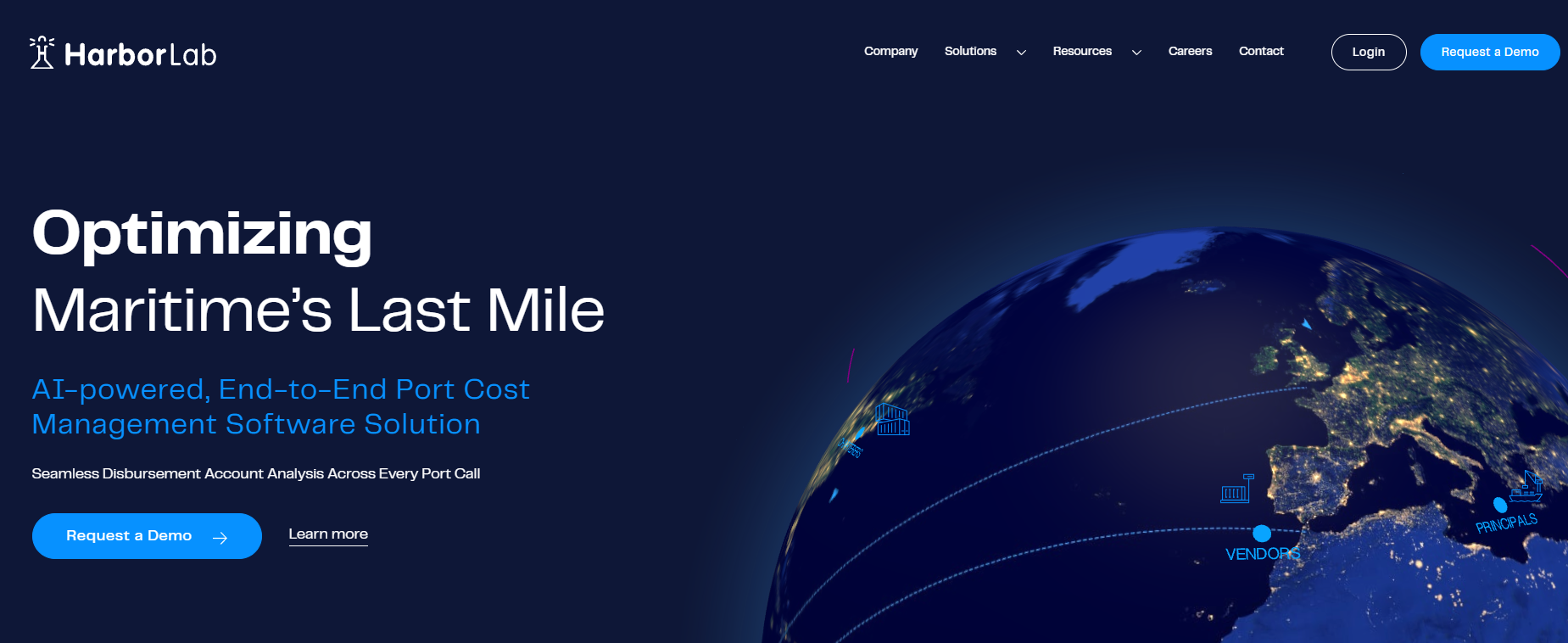
HarborLab is an AI-powered port cost and disbursement account management platform for maritime operations. It covers the full port-call cost lifecycle: Cost estimation using live tariff data, DA validation and approval, agency and vendor appointment, price benchmarking, and automated balance settlements. The platform is built for shipowners, vessel operators, charterers, and maritime service providers managing recurring port calls at volume.
Best for: Ship operators and port agencies where port-call cost control and DA processing are the primary operational constraint.
Key features
- Port cost estimation with live tariff data
- Disbursement Account validation and approval routing
- Vendor and agent appointment management
- Price benchmarking and negotiation support
- Automated payments and balance settlements
Why choose HarborLab: It is the focused pick when cost overruns on recurring port calls are eating margin. Teams that need full container-yard execution or gate operations should look at the TOS options below.
HarborLab pricing: HarborLab quotes by vessel-call volume, workflow scope, integration requirements, and user roles. Contact the vendor directly. Ask whether implementation and data onboarding are priced separately from the subscription.
2. PortCommunity
PortCommunity is a port community and coordination platform designed for large ports where vessel schedules, cargo activities, service providers, agents, authorities, and terminal stakeholders need a shared operating record. According to the IAPH World Ports Tracker (2025), port community systems were operational in almost half of participating ports, with another 18% actively moving toward implementation. That adoption rate reflects how fragmented multi-organization port coordination has historically been.
Best for: Large ports and terminal communities where fragmented collaboration across organizations is the core operational problem.
Key features
- Multi-stakeholder data exchange and coordination
- Port activity coordination across agents, terminals, and authorities
- Vessel scheduling visibility shared across parties
- Cargo-flow communication and status tracking
- Multi-party operational workflows
Why choose PortCommunity: Use it when the issue is cross-organization coordination rather than a single terminal's internal execution. Verify current product status and integration capabilities directly with the vendor before shortlisting.
PortCommunity pricing: Contact the vendor for a quote. Pricing drivers include port size, the number of participating organizations, required integrations, onboarding scope, and governance requirements.
3. Navis N4
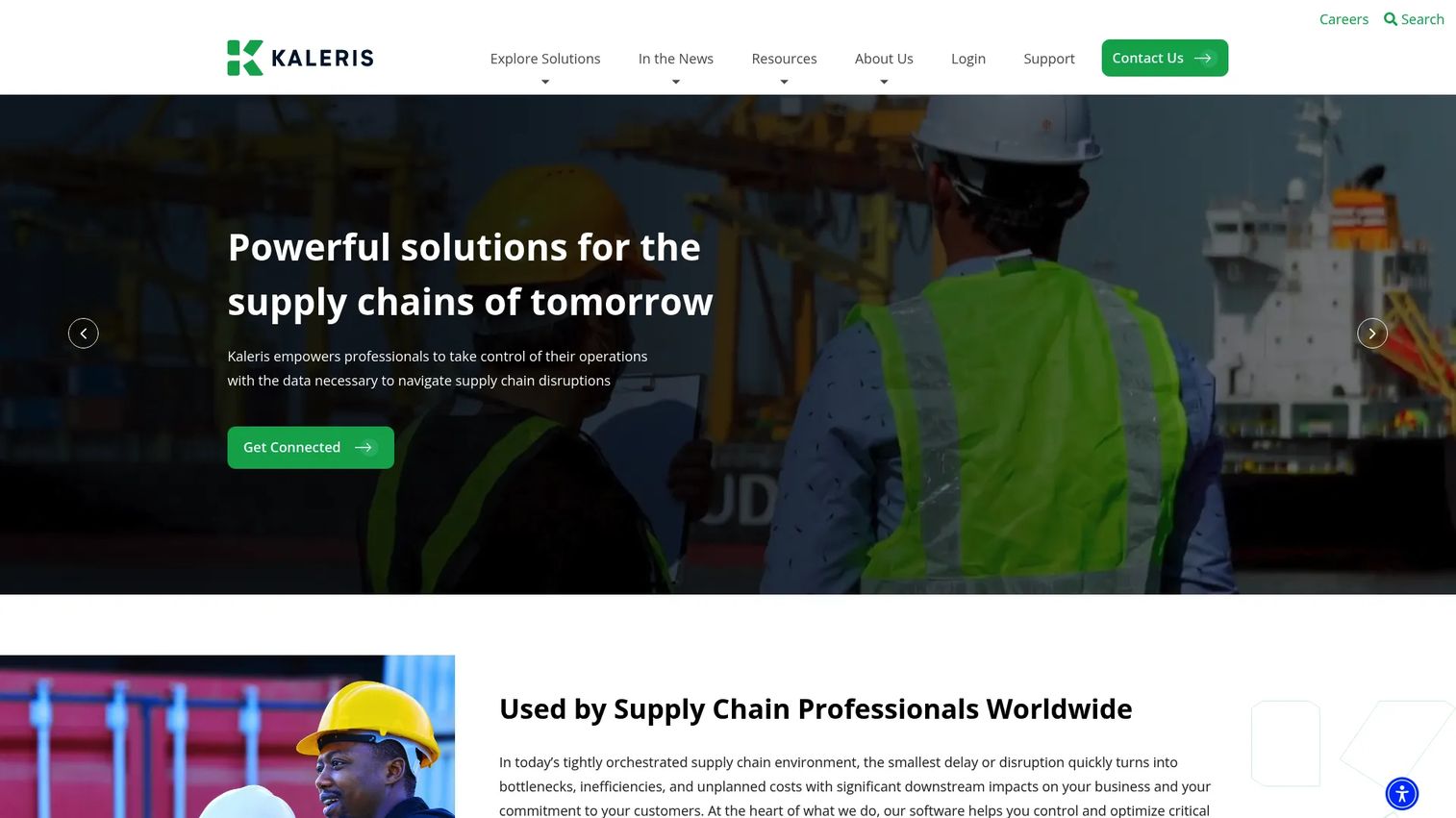
Navis N4 is an enterprise terminal operating system for complex container terminal execution. Now part of the Kaleris family, N4 covers planning and operational control across vessel, yard, gate, cargo, and equipment workflows. It supports yard planning and automated container decking, real-time routing and dispatching, vessel stowage planning, RTG optimization, and Control Room visualization for containers, cranes, and trucks.
Best for: Large container terminals that need deep operational execution, extensive integrations, and long-term platform governance.
Key features
- Vessel and berth planning with stowage automation
- Yard inventory management and automated decking
- Gate operations control and real-time dispatch
- RTG and equipment optimization
- Control Room visualization across terminal assets
Why choose Navis N4: It is the fit for terminals where throughput, yard coordination, and operational standardization justify a full enterprise TOS program. A small marina or a team solving a port-call cost problem does not need this level of complexity.
Navis N4 pricing: Contact Navis or Kaleris for a quote. Budget for implementation, terminal configuration, integrations, training, support packages, and hardware dependencies in the first-year cost model.
G2 rating: 4.6/5
4. Tideworks Mainsail 10
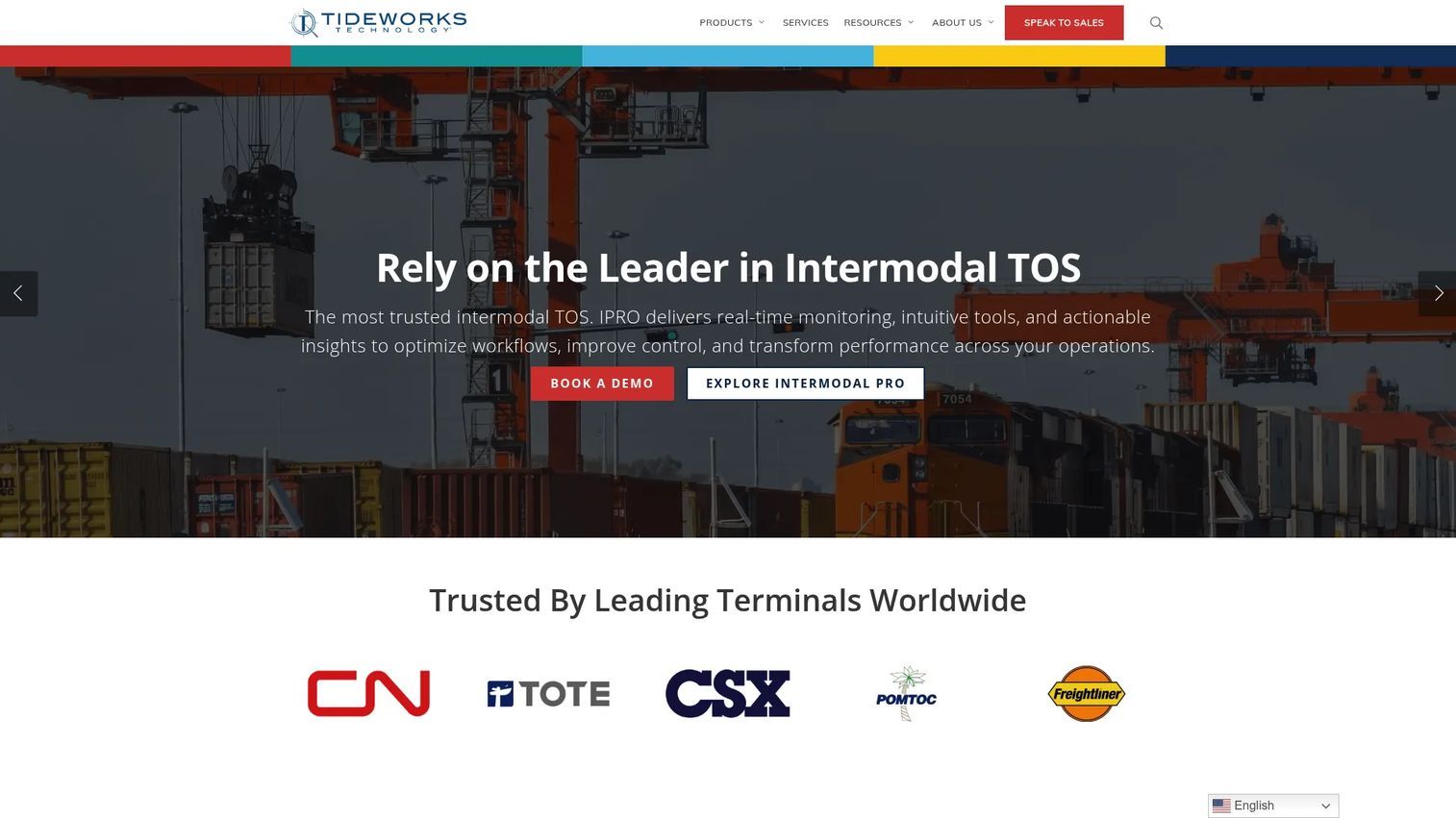
Tideworks Mainsail 10 is a marine terminal operating system built for real-time inventory control, configurable workflows, billing, reporting, and third-party integrations. POMTOC deployed Mainsail 10 alongside Spinnaker in March 2026 to support operational scalability, integrated workflows, and higher cargo volumes, according to Tideworks. The platform uses a responsive browser-based design with role-based applications, saved searches, hot-key navigation, and REST API integrations.
Best for: Marine terminals modernizing their terminal execution systems and moving toward cloud delivery.
Key features
- Role-based applications and permissions
- Real-time inventory control and reporting
- Responsive browser-based design with customizable workflows
- Third-party integrations via REST APIs and real-time messaging
- Billing and invoicing capabilities
Why choose Tideworks Mainsail 10: Strong fit when a terminal needs a core TOS and wants to pair execution with planning modules. Mainsail 10 and Spinnaker are complementary products, not interchangeable. Clarify which modules are in scope before engaging the vendor.
Tideworks Mainsail 10 pricing: Contact Tideworks for a quote. Ask specifically about subscription terms, deployment services, integration work, training, and migration from legacy terminal systems.
5. Tideworks Spinnaker
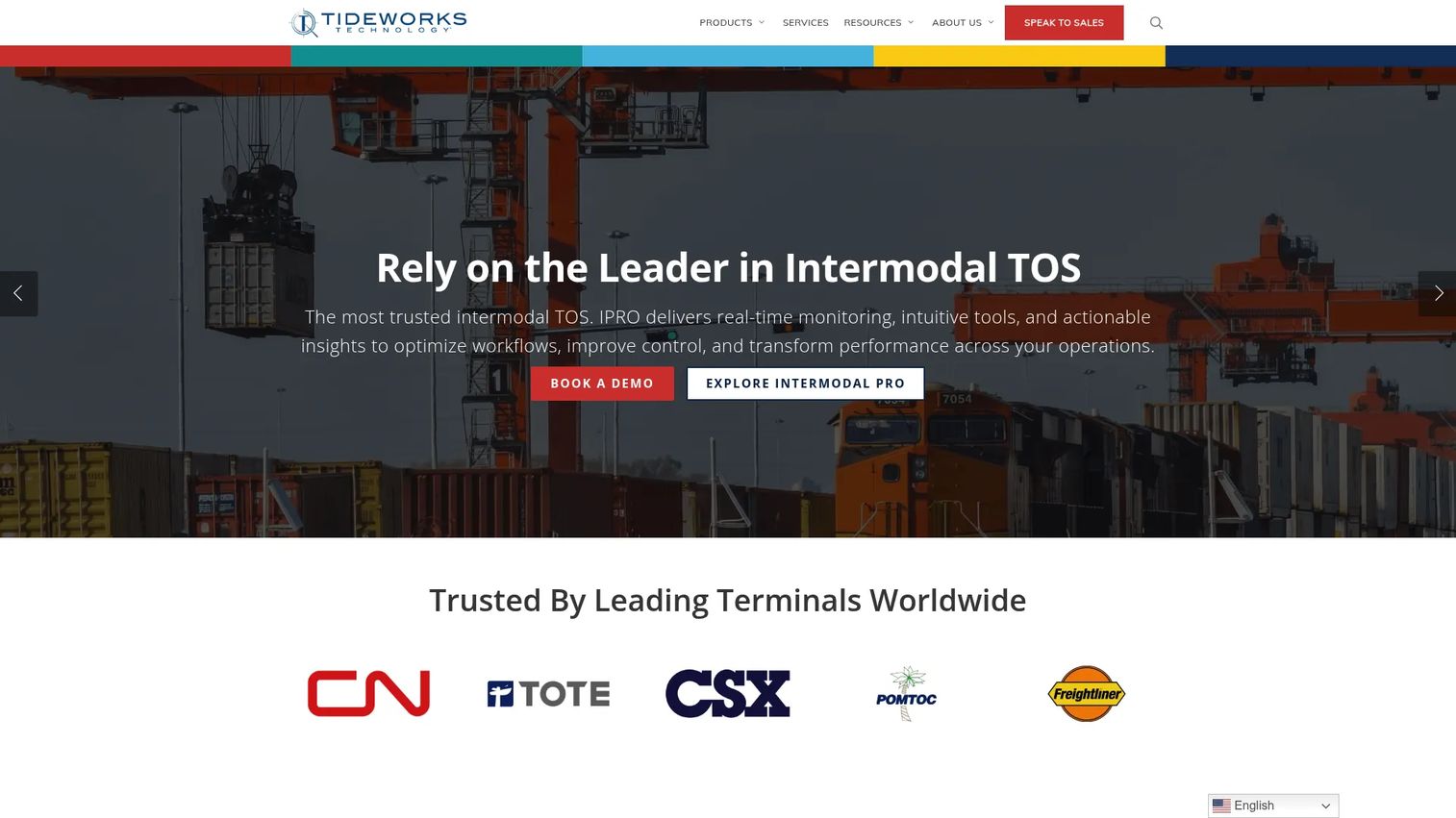
Tideworks Spinnaker is a graphical planning management system for container terminals. It focuses on terminal planning and command visibility: Vessel, berth, yard, and rail planning with automated discharge sequencing, yard-space optimization, and real-time inventory visibility. It includes workflow scheduling, electronic work-order creation, and mobile client access for field teams.
Best for: Terminal planning teams that need to coordinate execution decisions before and during vessel calls.
Key features
- Graphical vessel, berth, yard, and rail planning
- Automated discharge sequencing and stowage planning
- Yard-space optimization and container location assignment
- Real-time inventory visibility with list and find tools
- Mobile client access for field operations
Why choose Tideworks Spinnaker: Use it when planning quality and real-time command visibility are the weak points in terminal operations. Treat it as part of a broader TOS discussion rather than a standalone replacement for every harbor management need.
Tideworks Spinnaker pricing: Contact Tideworks for a quote. Confirm whether the license is independent, bundled with terminal systems, or purchased through a broader implementation program.
6. Jade Master Terminal
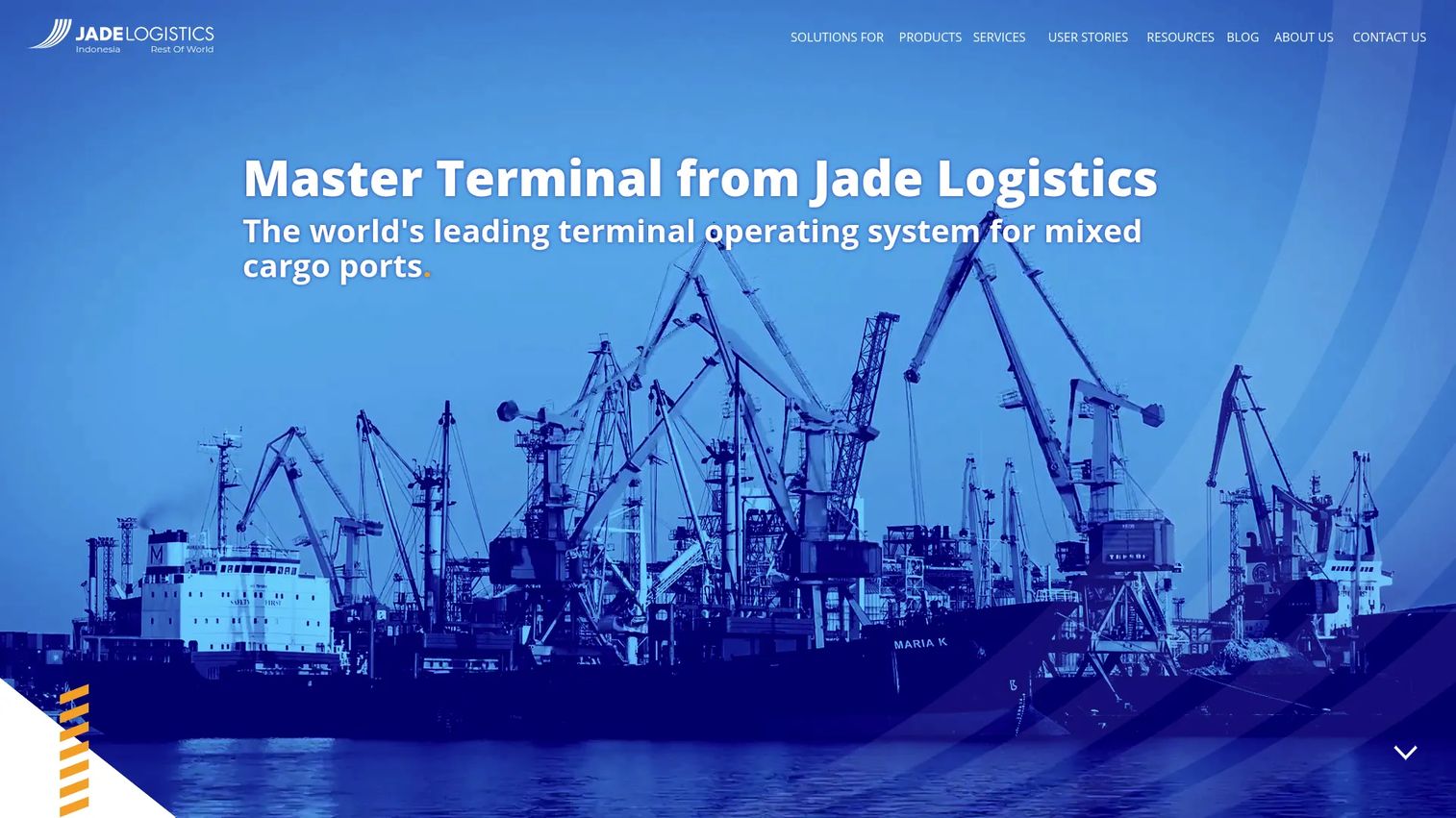
Jade Master Terminal is a terminal operating system for mixed-cargo port operations, including general cargo, RORO, and container terminals. The platform provides a real-time integrated view of port operations and cargo, with support for gate operations, warehousing, harbor management, invoicing, and sub-terminal management. It handles multiple terminals, sites, and time zones within a single system, with handheld, vehicle, and web applications for field teams.
Best for: Mixed-cargo ports and terminals needing an integrated terminal operating system outside the largest enterprise TOS deployments.
Key features
- Real-time integrated view of port operations and cargo
- Support for mixed cargo, RORO, and container terminals
- Gate operations, warehousing, and harbor management
- Handheld, vehicle, and web applications for field access
- Multiple terminals, sites, and sub-terminals in one system
Why choose Jade Master Terminal: Evaluate it when the terminal needs focused operations visibility across mixed cargo types without a platform built exclusively for large container-terminal complexity. Validate current integrations and implementation resources during vendor evaluation.
Jade Master Terminal pricing: Contact Jade Logistics for a quote. Ask how pricing changes by terminal count, module scope, transaction volume, integration requirements, and support level.
7. Octopi TOS
Octopi TOS, now part of Kaleris, is a cloud-based terminal operating system for small and medium-sized container, mixed-cargo, and inland terminals. It covers container and general-cargo management, real-time KPI dashboards, EDI supporting EDIFACT and ANSI X12, berth and vessel planning, yard planning, and automatic invoicing. The SaaS delivery model makes it accessible to growing terminals that are moving away from manual coordination without starting from a large enterprise TOS program.
Best for: Growing terminals that need structured terminal workflows, EDI, and operational visibility without an enterprise-scale rollout.
Key features
- Container and general-cargo management
- Real-time KPI dashboards
- EDI support: EDIFACT and ANSI X12
- Berth, vessel, and yard planning
- Automatic invoicing
Why choose Octopi TOS: Consider it when operational standardization is the priority and the terminal wants a more focused TOS rollout. Confirm that the platform supports the exact cargo types, terminal equipment, and local reporting obligations required before signing.
Octopi TOS pricing: Contact Kaleris for a quote. Get the pricing model in writing, covering deployment, data migration, integrations, user training, and support response levels.
G2 rating: 4.5/5
8. MarineBerth
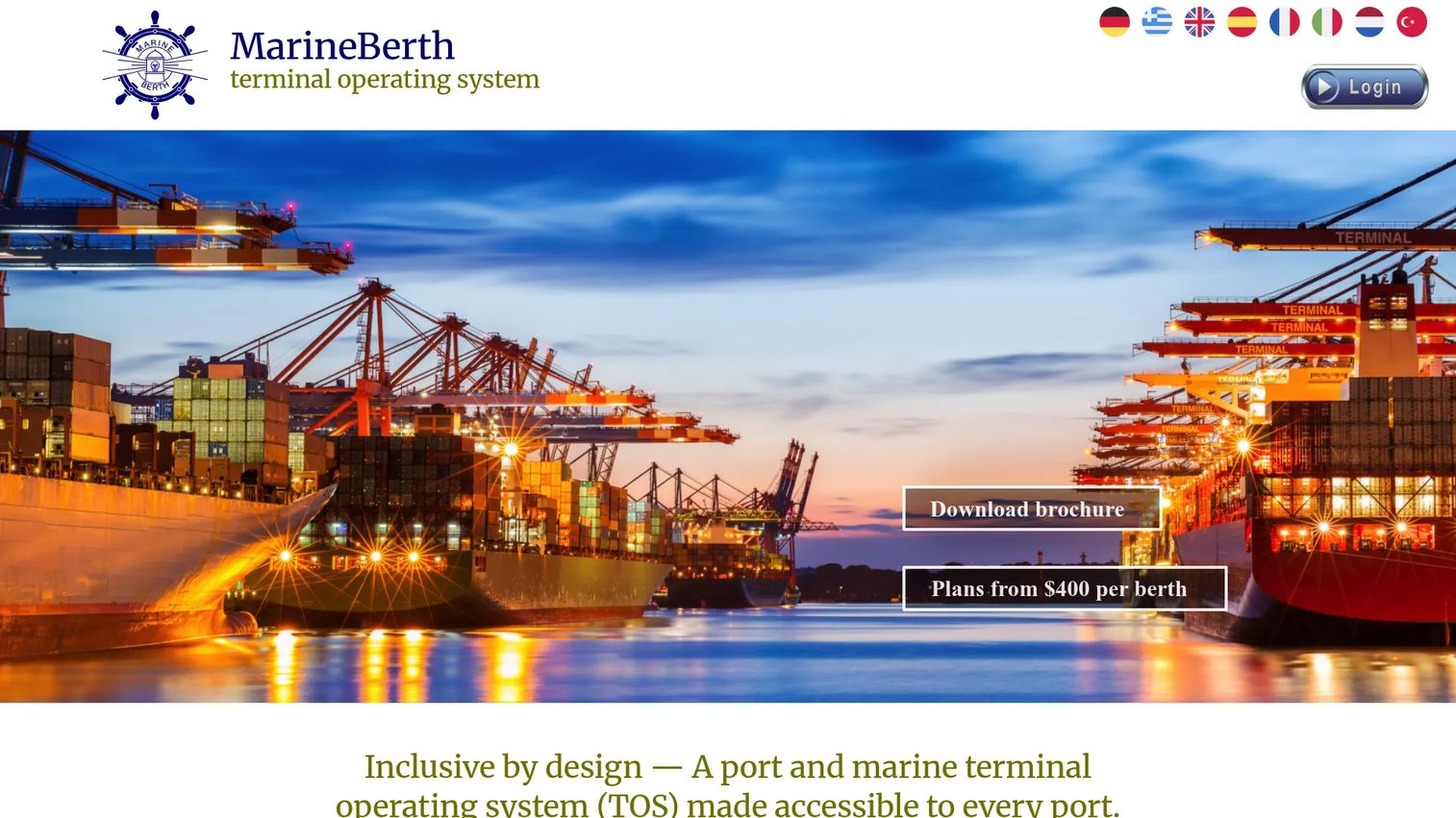
MarineBerth is a port and marine terminal operating system for managing vessel, cargo, and crew movements at regional and mid-sized ports. The platform covers vessel scheduling and operations management, cargo operations records, and crew movement administration. Professional and Enterprise tiers add the PortWatch desktop application for port operations overview. The vendor publishes tiered pricing, which makes it one of the more accessible entry points in this category.
Best for: Regional ports and marine terminals that want core port operations software without a massive terminal modernization program.
Key features
- Vessel scheduling and operations management
- Cargo operations records and tracking
- Crew movement and transit administration
- PortWatch operations overview (Professional and Enterprise)
- Role-based access for port teams
Why choose MarineBerth: It stands out for smaller and mid-sized ports where a full enterprise TOS would be disproportionate. Verify migration support, local operating requirements, and available integrations before committing.
MarineBerth pricing: Basic starts at $400 per berth per month. Professional is $600 per berth per month, and Enterprise is $800 per berth per month. Prices exclude taxes. A one-time PortWatch setup fee applies for aerial imagery and berth configuration. Enterprise also includes telephone support and 20 hours per month of remote user assistance.
9. ORBCOMM Vessel Tracking
ORBCOMM Vessel Tracking provides satellite and hybrid vessel-tracking solutions for maritime visibility, safety, security, and compliance. Core capabilities include satellite AIS tracking beyond coastal regions, vessel location monitoring with configurable reporting intervals, geofencing with entry and exit alerts, tamper detection for GPS jamming and hardware disconnection, and a distress alert button with API-based data integration. It is a monitoring and visibility product, not a terminal operating system.
Best for: Fleet operators, maritime authorities, fishing fleets, and logistics teams where vessel location and monitoring data is the primary requirement.
Key features
- Satellite AIS vessel tracking beyond coastal regions
- Configurable location reporting intervals
- Geofencing with entry and exit alerts
- Tamper detection for GPS jamming and power loss
- Distress alert button and API data integration
Why choose ORBCOMM Vessel Tracking: Use it when fleet visibility is the operational bottleneck. It should complement, not replace, a full TOS where the reader also needs yard, gate, cargo, and berth execution workflows.
ORBCOMM Vessel Tracking pricing: ORBCOMM states that service fees are specified in customer agreements and subscription fees require contacting an account manager or sales team. Contact ORBCOMM directly. Confirm hardware, connectivity, installation, and data retention costs before comparing contracts.
G2 rating: 4.5/5
10. Kaleris
Kaleris provides supply-chain execution software for terminal, yard, transportation, rail, maintenance, and ocean-carrier operations. The platform covers marine and mixed-cargo terminal operating systems, yard management with real-time location and automated gate check-in, and multimodal transportation management across rail, private fleets, and carrier networks. Navis N4 and Octopi TOS are products within the Kaleris portfolio.
Best for: Enterprise shippers, terminals, yards, and rail operators managing complex, multimodal supply-chain execution across multiple facilities.
Key features
- Terminal operating systems for marine and mixed-cargo terminals
- Yard management with real-time location and task automation
- Automated gate check-in and processing
- Multimodal transportation management across rail and carriers
- Enterprise integrations across supply-chain execution
Why choose Kaleris: Consider it when harbor operations connect tightly to rail, inland logistics, and broader transportation networks. Validate which specific module maps to your terminal type before describing Kaleris as a harbor operations solution.
Kaleris pricing: Enterprise software pricing is not displayed on the Kaleris website. Contact Kaleris directly. Ask how pricing changes by module, terminal footprint, integration scope, and support tier.
G2 rating: 4.5/5
11. HarborLink
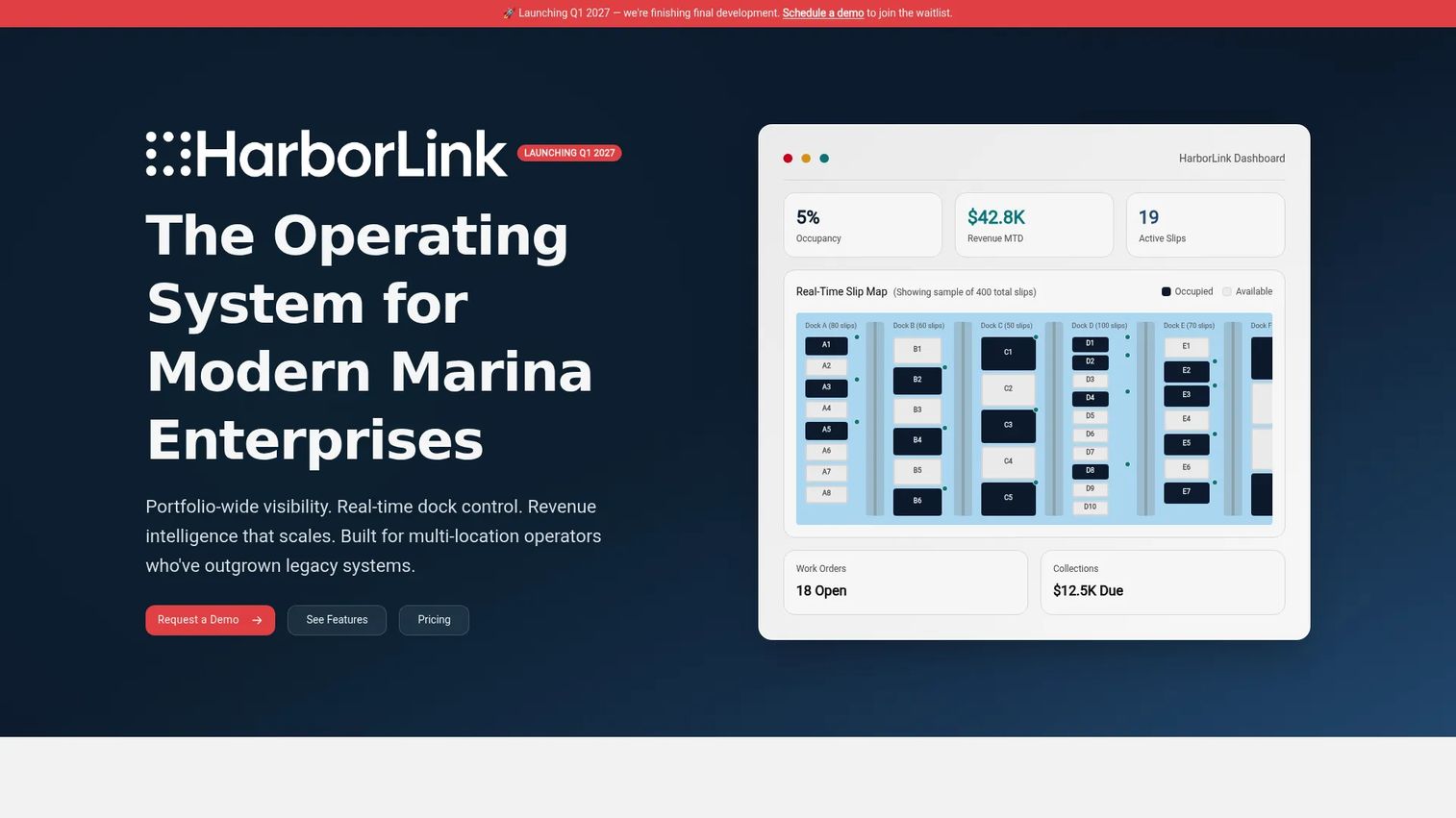
HarborLink is a cloud-native marina management platform for modern marina enterprises and multi-location operators. It covers real-time dock status and interactive slip maps, tenant and vessel record management, agreement and documentation workflows, billing with utility reconciliation and delinquency tracking, work orders, incident logging, and portfolio-level revenue and occupancy analytics. The platform is API-first and built for multi-tenant portfolio management, which makes it relevant for PE-backed marina groups evaluating operational infrastructure.
Best for: Marina operators and portfolio groups managing single or multiple marina properties where slip management, billing, and occupancy reporting are the operational core.
Key features
- Real-time dock status and interactive slip maps
- Tenant, vessel, and agreement management
- Billing, utility reconciliation, and delinquency workflows
- Work orders and incident logging
- Portfolio-level revenue, occupancy, and forecasting analytics
Why choose HarborLink: It is the most specialized fit on this list for marina operations. Do not shortlist it for cargo-terminal execution. For waterfront operators managing multiple marina properties, it is the purpose-built choice on this list.
HarborLink pricing: Starter is $349 per month or $3,490 per year. Professional is $899 per month or $8,990 per year. Additional marinas cost $199 per marina per month. Additional users cost $25 per user per month. Turnkey data migration is a one-time fee of $2,999 for a single marina or $4,999 for up to five properties. Enterprise pricing is custom.
Considerations when choosing harbor operations software
Match the platform to the operational bottleneck
Identify the one workflow costing the most time, margin, or throughput: Terminal execution, port-call cost control, stakeholder coordination, vessel tracking, or marina operations. A platform built for a different category adds integration work without addressing the actual constraint.
Budget for implementation, not only the license
For any TOS or port community platform, the contract price is one line item. Data migration, terminal configuration, AIS and ERP integrations, EDI setup, role-based training, support packages, and hardware or telemetry dependencies often exceed the annual subscription cost in year one. Require vendors to scope implementation separately from software fees.
Test the exception workflow, not the happy path
During any vendor demonstration, ask the vendor to show a realistic exception: A delayed vessel arrival, a berth reassignment, a DA approval failure, a gate congestion scenario, or a marina billing dispute. A polished demo of normal operations tells you little about how the system behaves under operational pressure.
Verify governance, audit trails, and access controls
Harbor operations software touches financial data, cargo records, vessel movements, and external stakeholders. Confirm role-based access controls, audit trail depth, data ownership terms, uptime commitments, API access policies, and incident notification language before signing.
Plan for adoption across every role that touches the workflow
The buyer is rarely one team. A TOS deployment involves terminal operators, dispatchers, finance, vessel agents, IT, and external stakeholders. A system that works only for a project team will fail during daily shift operations. Require vendors to show how multi-role adoption is supported in training, documentation, and ongoing support.
How to choose the right harbor operations software
Choose a full terminal operating system when execution is the problem
Navis N4 fits large container terminals with complex yard, gate, and equipment coordination. Tideworks Mainsail 10 and Spinnaker work as a paired system for marine terminals modernizing their execution and planning layers. Jade Master Terminal covers mixed-cargo and RORO terminals outside the largest enterprise deployments. Octopi TOS suits small to mid-sized terminals moving from manual coordination to cloud-based workflows. Kaleris is the broadest option when terminal operations connect to rail, yard, and multimodal transportation networks.
Choose port-call cost software when margin control is the problem
HarborLab is the clear pick when the organization needs DA management, port-cost validation, service-provider coordination, approvals, and settlement control across recurring vessel calls. It solves a distinct buying problem from terminal execution software.
Choose a port community or operations layer when cross-organization coordination is the problem
PortCommunity fits broad stakeholder coordination at large, multi-organization ports. MarineBerth covers regional and mid-sized port operational workflows with a transparent pricing structure that makes vendor evaluation straightforward.
Choose a specialized platform when the business is a marina or fleet
HarborLink is the purpose-built pick for marina portfolio operations. ORBCOMM Vessel Tracking covers fleet visibility and monitoring without the terminal execution overhead that most TOS platforms carry.
Conclusion
Harbor management software is not one category. The useful shortlist depends entirely on where the operational bottleneck lives.
HarborLab is the focused pick for port-call cost control and Disbursement Account workflows. Navis N4 and Tideworks Mainsail 10 with Spinnaker address container and marine terminal execution at scale. Jade Master Terminal and Octopi TOS serve mixed-cargo terminals at different complexity levels. MarineBerth offers a more accessible entry point for regional ports with published pricing. ORBCOMM handles fleet visibility for operators who need location and compliance data. Kaleris spans the broadest supply-chain execution footprint. HarborLink is the specialized marina operations pick.
Start with one workflow that is costing measurable time, margin, or throughput. Require every vendor to demonstrate that specific scenario with your operating constraints, not a scripted product tour.
For SaaS companies building and selling complex operational software in categories like this one, letting buyers explore product workflows before a live technical session can shorten evaluation cycles materially. Start your journey with Guideflow today!
FAQs about harbor operations software
Harbor operations software covers the systems that ports, terminals, ship agents, vessel operators, and marina teams use to coordinate waterfront operations. The category includes terminal operating systems, port-call cost tools, port community systems, vessel tracking platforms, and marina management software. Each subcategory addresses a distinct operational job.
A terminal operating system focuses on internal terminal execution: Vessel, yard, gate, cargo, equipment, and dispatch workflows within a terminal facility. Port management software often has a broader scope that spans multiple organizations, berth scheduling, harbor activity, and administrative operations across a port authority or community. The two categories overlap but serve different primary users.
Container terminals typically evaluate full terminal operating systems with vessel planning, yard management, gate workflows, equipment coordination, EDI integrations, and operational reporting. Buyers should validate cargo type, terminal automation level, equipment compatibility, and local reporting requirements before committing to a platform.
Some platforms focus specifically on that workflow. DA management tools handle cost estimates, vendor and agent coordination, approval routing, allocation, payments, and settlements against actuals. Terminal operating systems focus on physical execution and typically do not cover DA processing. These are separate buying decisions.
Pricing ranges from published berth-based or site-based monthly plans to enterprise quotes with no public figures. MarineBerth starts at $400 per berth per month with three published tiers. HarborLink starts at $349 per month. Most TOS vendors, including Navis and Kaleris, quote based on terminal size, module scope, and integration footprint. Include implementation, data migration, interfaces, support, training, and hardware or telemetry in the evaluation budget.
Many platforms support some combination of AIS, ERP, EDI, APIs, terminal equipment, and financial systems. The practical question is whether the specific integration you need is maintained, tested in production environments similar to yours, and included in the commercial proposal rather than treated as a custom development item.
Ask the vendor to demonstrate a realistic exception workflow, not just normal operations. Relevant scenarios include a delayed vessel arrival, a berth reassignment, gate congestion, a DA approval failure, a tracking alert, or a marina billing conflict. The exception reveals how the system handles the operational conditions that actually cause revenue and throughput loss.
Marina management is a specialized branch of the broader harbor operations category. It prioritizes slip inventory, reservations, tenant records, vessel documentation, billing, utilities, and multi-property portfolio reporting rather than container-yard or cargo-terminal execution. A marina management tool should not be shortlisted for bulk cargo or container terminal operations, and vice versa.