Your rank tracker shows stable positions. Google Search Console looks fine. But leadership wants to know why a competitor keeps showing up when buyers ask ChatGPT which tools to use.
That question is now a standard agenda item in marketing reviews. According to Adobe (2025), AI-driven referral traffic to U.S. websites grew more than 10x between July 2024 and February 2025. The same research found that 36% of surveyed generative AI users have replaced traditional search with AI assistants. Rank tracking alone no longer tells the full story.
Generative engine optimization tools close that gap. They track where your brand appears in AI-generated answers, which sources get cited, what sentiment surrounds your mentions, and how competitors perform across ChatGPT, Gemini, Perplexity, Claude, Copilot, and Google AI Overviews.
The challenge: The GEO market grew fast and filled up with tools that look similar on the surface. Some are deep analytics platforms. Others are SEO-suite add-ons. A few are content workflow tools with monitoring bolted on. This guide helps you tell them apart and pick the right one for your situation.
What's inside
This guide compares 20 generative engine optimization tools for 2026, chosen for AI visibility tracking, prompt monitoring, citation analysis, and content workflow support.
- Coverage: Tools evaluated across AI engine support, prompt methodology, and citation depth
- Use case: Brand visibility, competitive benchmarking, source intelligence, and content optimization
- Buyer lens: Startup, mid-market, agency, and enterprise fit all represented
- Verification: Pricing sourced from vendor pages and G2; ratings verified at time of writing
Written for digital marketers, SEO leads, content teams, and demand gen managers who need to prove AI search visibility beyond Google rankings.
TL;DR
- Best overall GEO platform: Profound, for teams that need enterprise AI visibility, prompt tracking, and competitive intelligence in one place
- Best for mid-market brand tracking: Peec AI, for marketers who want clean share-of-voice reporting without a heavy rollout
- Best for citation and source intelligence: Evertune and Gumshoe.AI, for understanding why AI engines cite specific pages
- Best for SEO teams extending into GEO: Semrush AI Toolkit and Ahrefs Brand Radar, because they sit inside existing SEO workflows
- Best for content operations: AirOps and Writesonic, for teams whose bottleneck is acting on GEO findings, not just finding them
- Best low-friction starting points: HubSpot AEO Grader and ZipTie.Dev, for quick diagnostics before committing to a full platform
What is generative engine optimization software?
Generative engine optimization software helps brands measure and improve how they appear in AI-generated answers across systems like ChatGPT, Google AI Overviews, Gemini, Perplexity, Claude, and Copilot.
Unlike traditional SEO tools that track blue-link rankings, GEO tools monitor brand mentions inside conversational outputs, citation sources, answer sentiment, competitor share of voice, and prompt-level performance. AI systems may recommend your brand without sending a single click, which means your visibility and your traffic can move in opposite directions.
GEO does not replace SEO. Crawlability, page authority, structured content, and technical health still determine whether AI engines can access and trust your pages. GEO builds on top of that foundation to answer the next question: Once the content is indexable, is your brand actually showing up in the answers buyers are reading?
AEO (answer engine optimization) and AI search optimization overlap with GEO. The distinction is loose in practice, but AEO often focuses on direct-answer readiness for specific queries, while GEO focuses on generative responses, recommendations, and brand share of voice across AI platforms.
Key capabilities in GEO tools
- Multi-engine prompt tracking across ChatGPT, Gemini, Perplexity, Claude, Copilot, and others
- Brand mention monitoring inside AI-generated answers
- Citation and source analysis showing which pages influence responses
- Share of voice reporting across brands and competitors
- Sentiment analysis of how AI describes your brand
- Competitor benchmarking across prompts and categories
- AI readiness audits for crawlability and content structure
- Content optimization briefs and workflow automation
- Reporting integrations with analytics and CRM tools
GEO, SEO, AEO, and AI search optimization
| Term | What it tracks | Primary user | Example metric |
|---|---|---|---|
| SEO | Rankings, backlinks, technical health | SEO team | Keyword position, organic clicks |
| GEO | AI answer visibility, citations, brand mentions | Marketing, SEO, brand | Share of voice in AI answers |
| AEO | Direct-answer readiness across search and assistants | Content, SEO | Answer box win rate |
| AI search optimization | Visibility across AI platforms broadly | Growth, SEO, content | Mention frequency across engines |
| LLM visibility | Brand presence inside large language model outputs | Brand, PR, demand gen | Sentiment score, citation count |
When to use generative engine optimization tools
Track whether AI engines mention your brand
Your category already exists in AI-generated answers. When a buyer asks ChatGPT for a shortlist of tools in your space, something appears. The question is whether your brand is on that list or not. GEO tools let you run prompts matching real buyer queries and see exactly how often your brand gets named, in what context, and how that compares to competitors. This becomes urgent when leadership asks why a competitor appears in AI recommendations more often than you do.
Find the sources AI systems trust
Citation tracking shows which pages, review sites, community threads, and third-party content influence AI answers in your category. This lets you prioritize where to focus: Updating a product page, earning coverage on a trusted review site, strengthening documentation, or pursuing digital PR placements. AI systems synthesize many sources, so knowing which ones carry weight is more useful than guessing what to publish next.
Connect AI visibility to pipeline reporting
Dashboards showing brand mentions have limited value unless you can connect them to business outcomes. GEO platforms with analytics integrations let you track AI-referred traffic in GA4, monitor assisted conversions from AI-sourced sessions, and report on how content updates affect visibility over time. If you cannot tie AI visibility to pipeline, the data becomes a vanity metric. Choose tools that support reporting workflows your finance and revenue teams will accept.
Generative engine optimization tools comparison
The table below is a fast scan. Pricing and ratings were sourced from vendor pages and G2 listings. For enterprise tools with no published pricing, the table reflects the available tier structure.
| # | Product | Best for | Key differentiator | Pricing | G2 rating |
|---|---|---|---|---|---|
| 1 | Profound | Enterprise AI visibility | Deep prompt tracking and competitive intelligence | Free trial; enterprise custom | 4.5/5 |
| 2 | Peec AI | Mid-market brand visibility | Clean share-of-voice monitoring | From $95/mo | 4.7/5 |
| 3 | AthenaHQ | Enterprise GEO operations | AI search intelligence with team dashboards | Free tier; from $295/mo | 4.9/5 |
| 4 | Evertune | Source and citation intelligence | Prompt credits model across 11 AI models | From $60/mo | Not listed on G2 |
| 5 | Otterly AI | Accessible LLM monitoring | Credit-based prompt tracking with free trial | From €29/mo | 4.7/5 |
| 6 | Scrunch AI | Brand accuracy monitoring | AI answer auditing with Agent Experience Platform | From $250/mo | 4.6/5 |
| 7 | Rankscale AI | GEO rank tracking | 17+ AI engines, keyword-style visibility scoring | From $20/mo | 5.0/5 |
| 8 | Writesonic | Content optimization workflows | GEO-aware monitoring with AI content creation | From $79/mo | 4.7/5 |
| 9 | Semrush AI Toolkit | SEO teams expanding into GEO | AI visibility inside a broader SEO suite | From $99/mo per domain | 4.4/5 |
| 10 | Ahrefs Brand Radar | SEO and brand monitoring | Multi-platform brand visibility across AI and social | From $50/mo | 4.5/5 |
| 11 | AirOps | Content operations | Workflow automation for AI-search-ready content | Free tier available | 4.7/5 |
| 12 | Gumshoe.AI | Competitive AI visibility | Persona-based audits with citation and sentiment | From $99/mo | 4.8/5 |
| 13 | Goodie AI | AI search optimization | Revenue attribution tied to AI visibility | From $295/mo | 4.9/5 |
| 14 | GetCito | Citation monitoring | Open-source platform with hosted paid tiers | Free (self-hosted); from $599/mo | 4.3/5 |
| 15 | HubSpot AEO Grader | Quick AEO diagnostics | Free one-time brand readiness check | Free | 4.5/5 |
| 16 | SE Visible | SEO-adjacent GEO tracking | Daily tracking across ChatGPT, Gemini, Copilot | From $71/mo | 4.6/5 |
| 17 | Adobe LLM Optimizer | Enterprise Adobe stacks | CDN-edge content deployment for AI visibility | Contact for pricing | Not listed on G2 |
| 18 | Conductor | Enterprise organic marketing | GEO insights inside a broader SEO program | Contact for pricing | 4.5/5 |
| 19 | BrightEdge | Large SEO organizations | AI search reporting inside enterprise SEO | Contact for pricing | 4.4/5 |
| 20 | ZipTie.Dev | Technical AI visibility | Monitoring across 7 AI engines with page audits | From $25.65/mo | 4.5/5 |
Best 20 generative engine optimization tools for 2026
1. Profound
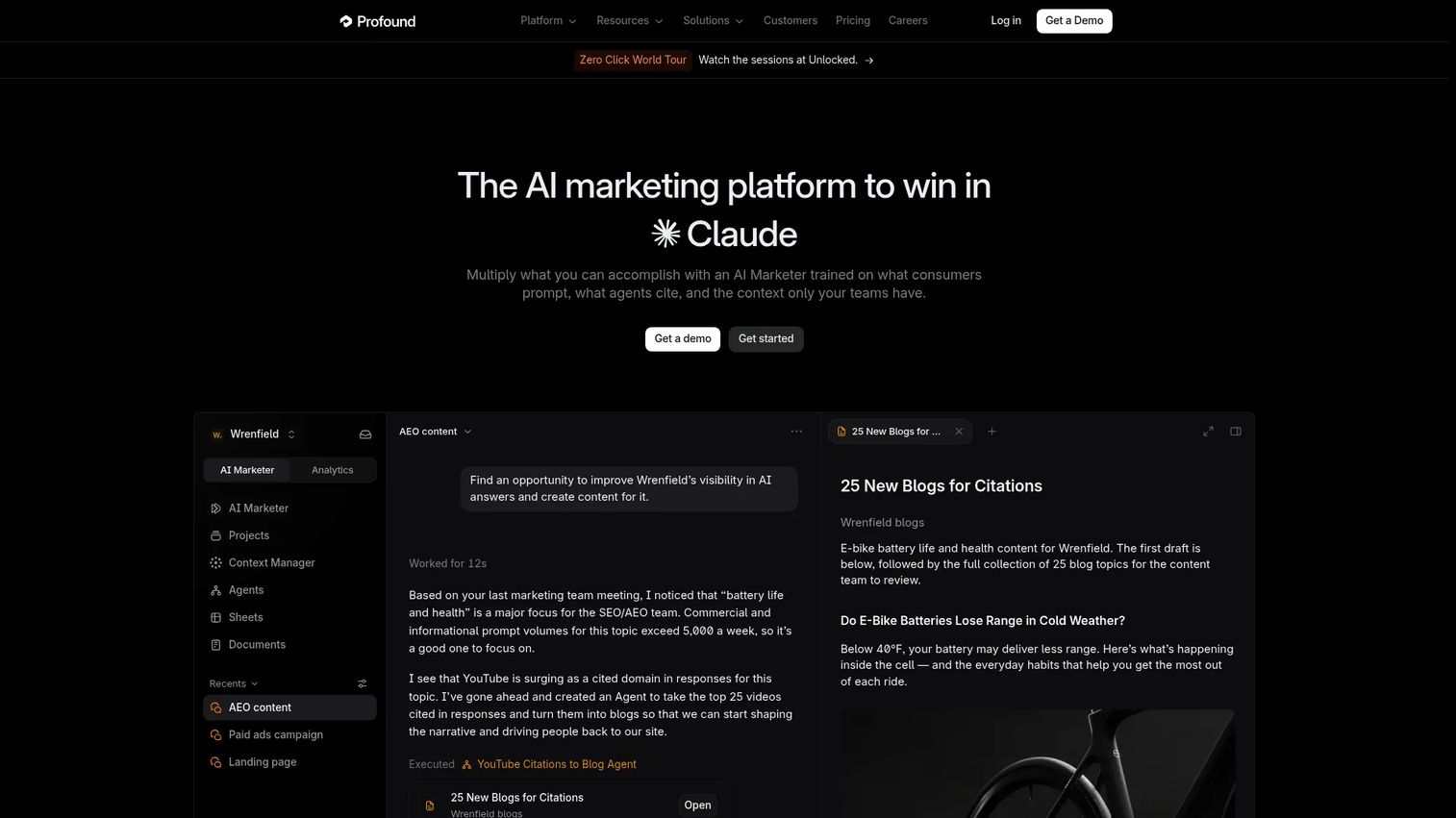
Profound is an AI marketing platform for researching, analyzing, and executing work across AI search and other channels. It combines Answer Engine Insights for brand and competitor visibility with an AI Marketer that runs credit-based agent workflows, prompt volume analysis, and AI-sourced traffic attribution. Teams use it to measure where they appear in AI answers, understand how competitors perform, and act on content and brand gaps through automated workflows.
Best for: Enterprise marketers, SEO leaders, and agency teams running AI visibility measurement as a primary reporting function.
Key features
- Answer Engine Insights for brand and competitor AI visibility
- Prompt Volumes analysis across categories and engines
- Agent Analytics for AI-sourced traffic attribution
- Context Manager for controlling brand knowledge inputs
- Profound Sheets for running agents at scale
Why choose Profound: Choose it when AI visibility reporting has moved from experiment to boardroom metric. The former Starter and Growth plans were retired in September 2026, so the current path is a 7-day free trial followed by enterprise custom pricing.
Profound pricing: A 7-day free trial includes 50 daily prompt credits. Beyond the trial, pricing is enterprise custom; ask sales about prompt volume, engine coverage, and SSO availability.
G2 rating: 4.5/5
2. Peec AI
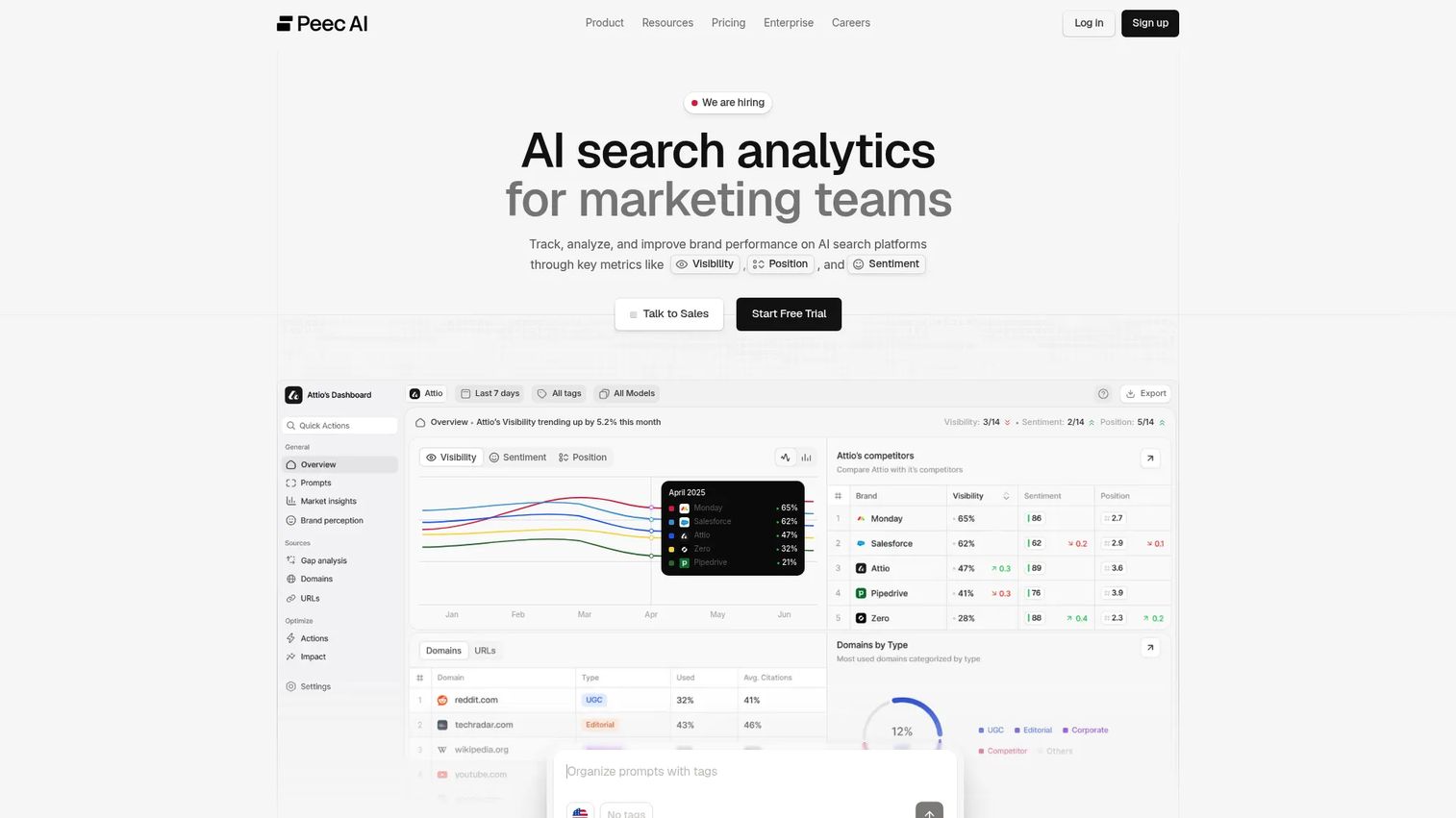
Peec AI is an AI search analytics platform for marketing teams tracking brand performance across AI platforms. It covers AI visibility, position, sentiment, and share-of-voice monitoring alongside competitor benchmarking, prompt discovery, and brand perception analysis. The platform also includes AI shopping analytics for SKU-level product visibility and AI bot crawlability reporting.
Best for: Mid-market marketing and SEO teams measuring AI brand visibility and comparing share of voice against competitors.
Key features
- AI visibility, position, sentiment, and share-of-voice tracking
- Prompt discovery, management, and competitor benchmarking
- AI shopping and SKU-level product visibility analytics
- Brand perception analysis and fact-checking
- Recommendations, reporting, API, MCP, and integrations
Why choose Peec AI: The structured prompt tiers make it predictable to budget: Starter at 50 prompts suits one-brand monitoring, while Advanced at 350 prompts covers multi-brand or agency work. Enterprise buyers should verify integration depth before committing.
Peec AI pricing: Starter is $95/mo (50 prompts, 1 project). Pro is $245/mo (150 prompts, 2 projects). Advanced is $495/mo (350 prompts, 5 projects). Enterprise pricing is custom on annual terms.
G2 rating: 4.7/5
3. AthenaHQ
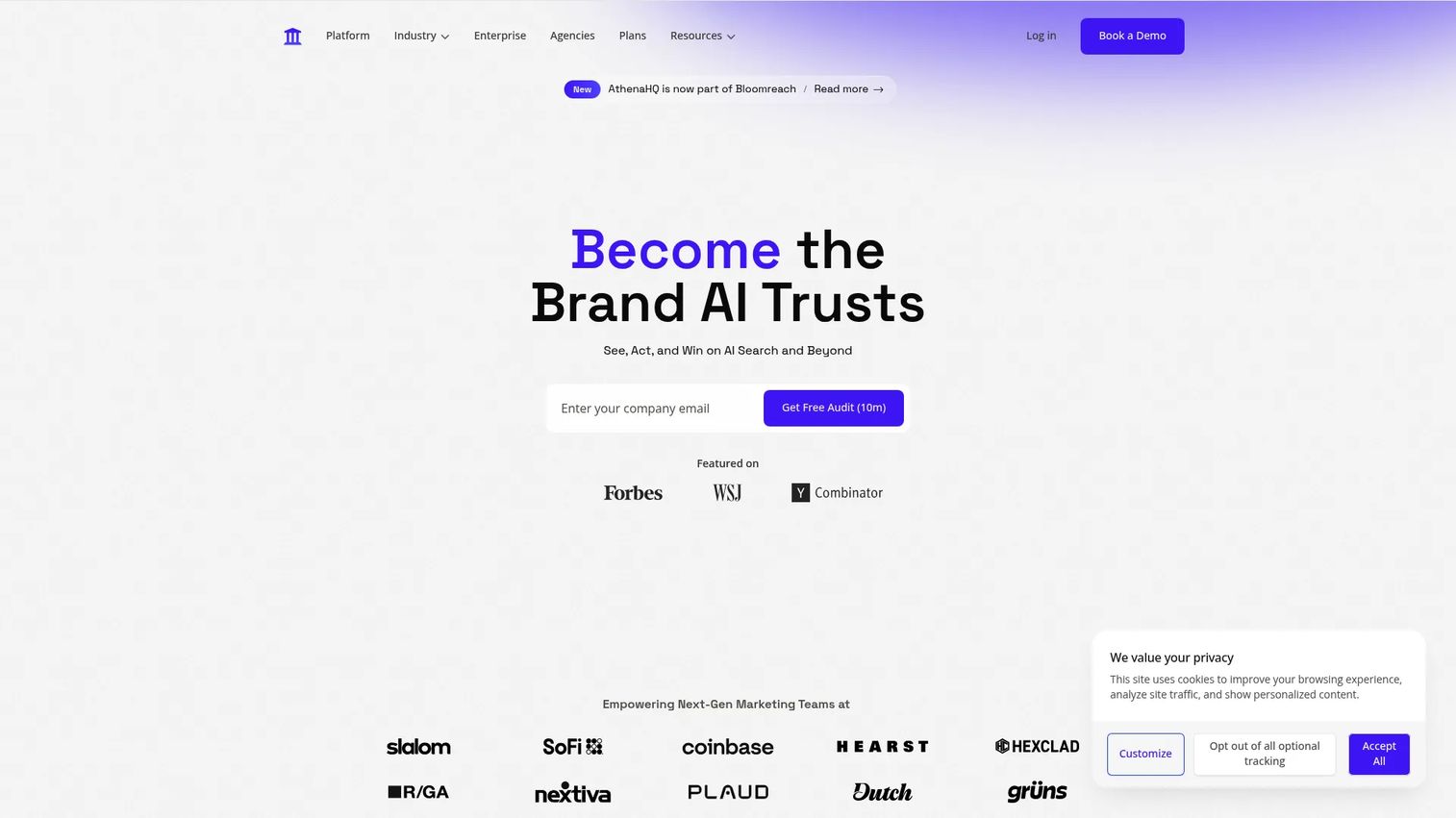
AthenaHQ is a GEO and AEO platform for marketing, brand, and growth teams monitoring AI search performance. It tracks brand visibility across major AI models, analyzes prompt responses with source and competitor breakdowns, provides content recommendations, and delivers executive dashboards for team-level reporting.
Best for: Enterprise teams building a repeatable GEO reporting process with multiple stakeholders needing consistent data.
Key features
- Cross-platform AI visibility tracking across major AI models
- Prompt and response analysis with sources and competitor insights
- Content recommendations and optimization agents
- Competitor monitoring and visibility insights
- Enterprise reporting, integrations, and executive dashboards
Why choose AthenaHQ: The free Essential tier (300 credits) lets teams validate the platform before committing. The 4.9/5 G2 rating is the highest in this list, making it a strong candidate when credibility with leadership matters.
AthenaHQ pricing: Essential is free (300 credits). Starter is $295/month (3,600 credits). Enterprise is custom with advanced governance and dedicated support.
G2 rating: 4.9/5
4. Evertune
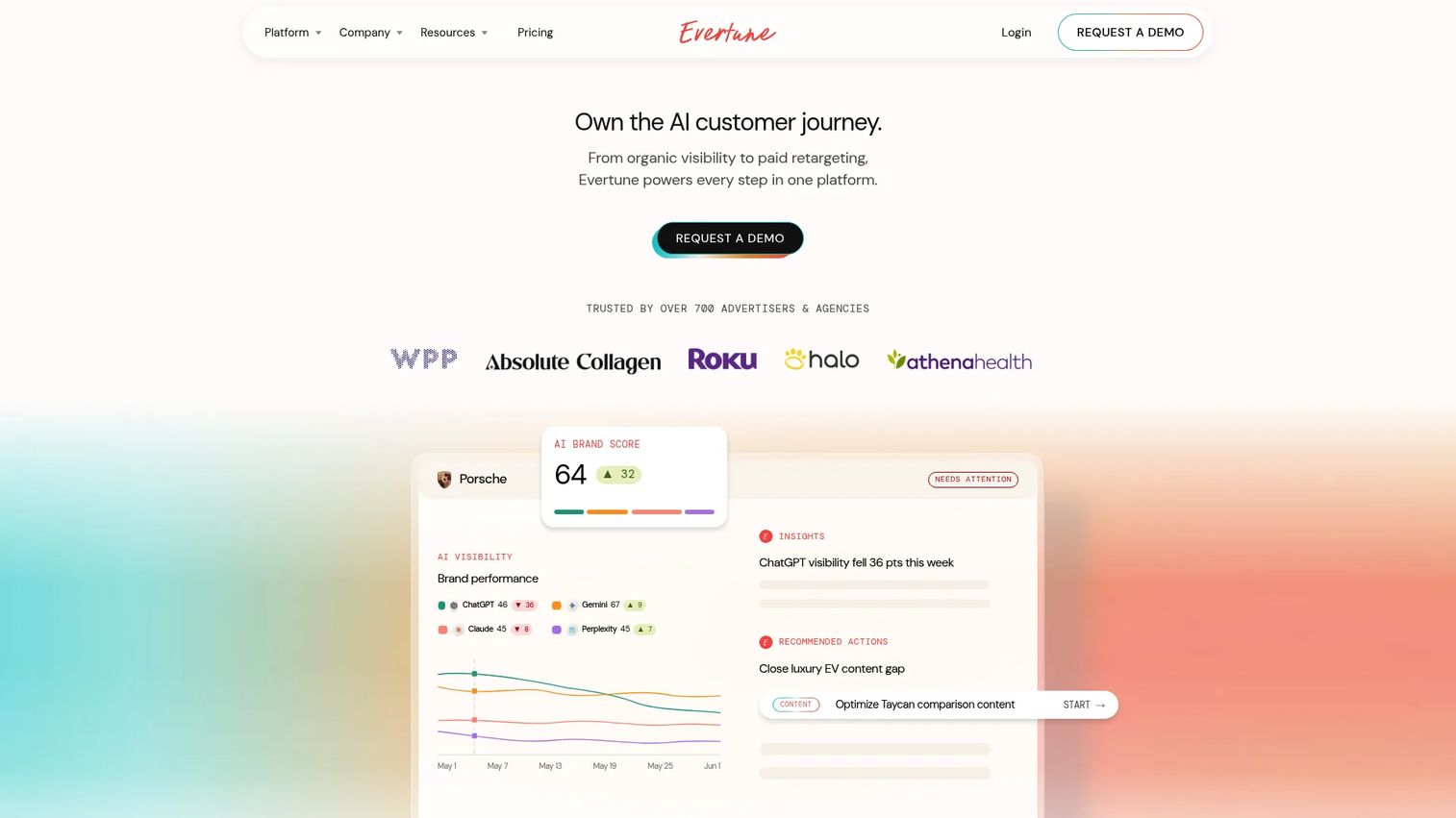
Evertune is an AI visibility platform that helps brands measure, optimize, and advertise across AI search and recommendation systems. It tracks brand mentions and competitor presence using a prompt-credit model, provides an AI Brand Index score, runs site audits for LLM optimization, and includes a Content Agent for generating and updating AI-ready content. The platform also supports ChatGPT advertising and AI retargeting for teams ready to invest in AI channel spend.
Best for: Brand and content teams that want to understand why AI engines cite certain sources and how to influence those signals.
Key features
- AI visibility tracking across 5 to 11 AI models depending on plan
- Competitor benchmarking and AI Brand Index scoring
- Prompt research and prompt-volume analysis
- Content Agent for generating and optimizing AI-ready content
- Site Audit for AI crawler and LLM optimization
Why choose Evertune: The Starter plan at $60/mo gives access to 5 AI models and an Ads Manager, making it one of the more affordable ways to get prompt-credit tracking with advertising intent. The Pro plan at $800/mo (billed annually) expands to 11 models and adds AI retargeting.
Evertune pricing: Starter is $60/mo (5 AI models, 5,000 prompt credits). Pro is $800/mo billed annually (11 models, 100,000 credits, Content Agent). Enterprise is custom with unlimited content generation and SSO.
G2 rating: Not listed on G2
5. Otterly AI
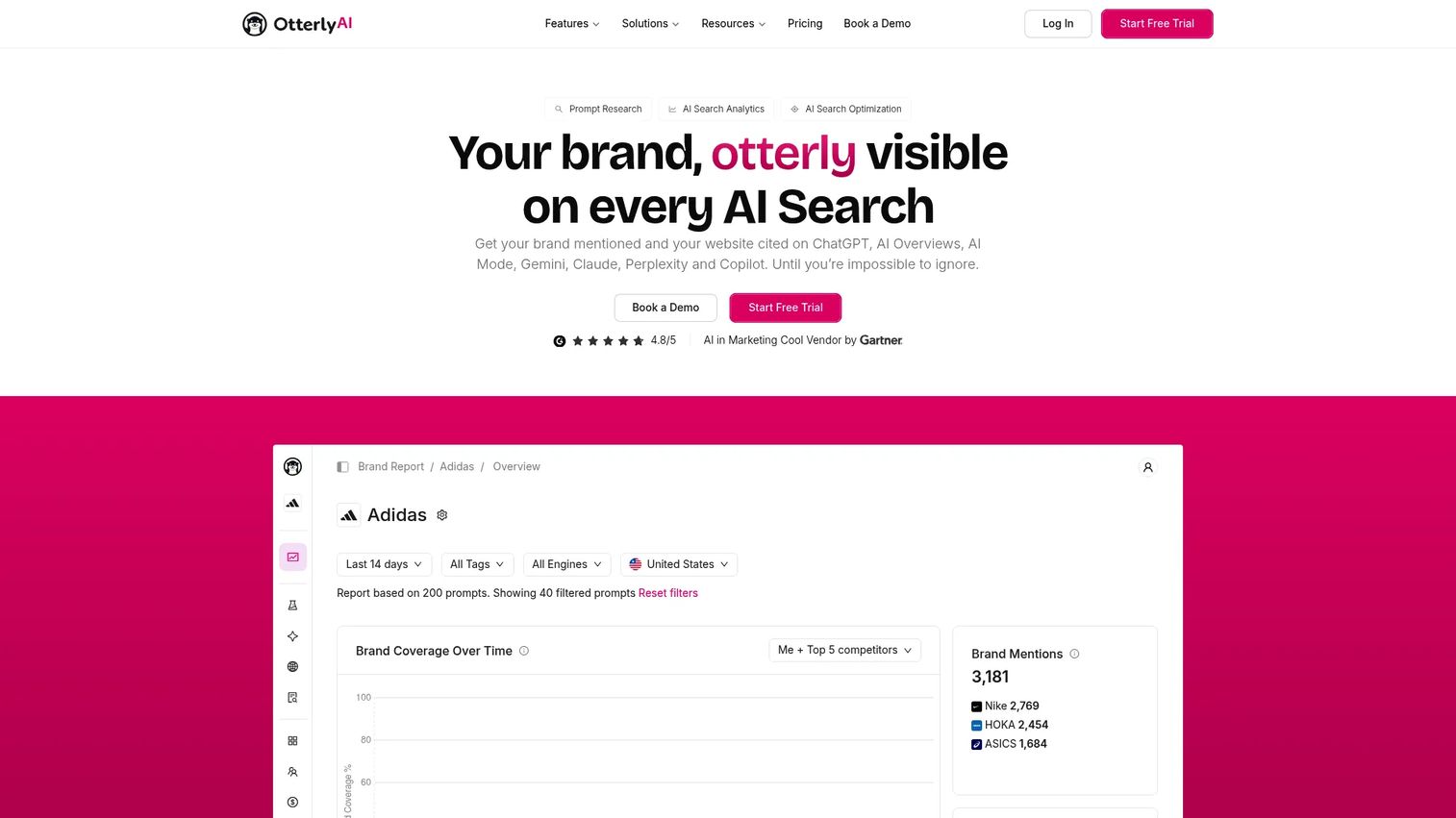
Otterly AI is a content intelligence platform for monitoring brand visibility across AI search engines. It covers AI prompt research, analytics, brand visibility tracking, content audits, GEO optimization recommendations, competitive benchmarking, and domain citation tracking. Pricing is in euros, and annual billing provides a 15% discount.
Best for: Small and mid-sized marketing teams and agencies starting GEO tracking without a heavy enterprise rollout.
Key features
- AI prompt research and tracking
- AI search analytics and brand visibility monitoring
- Content audits and crawlability checks
- GEO optimization recommendations
- Competitive benchmarking and sentiment analysis
Why choose Otterly AI: The Lite plan at €29/mo covers 16 prompts, which is enough for a single-brand baseline. Teams running multiple clients or brands will want Standard (120 prompts) or Premium (403 prompts). A free trial is available before committing.
Otterly AI pricing: Lite is €29/mo (16 prompts, 2,000 credits). Standard is €189/mo (120 prompts). Premium is €489/mo (403 prompts). Enterprise is custom. Annual billing saves 15%.
G2 rating: 4.7/5
6. Scrunch AI
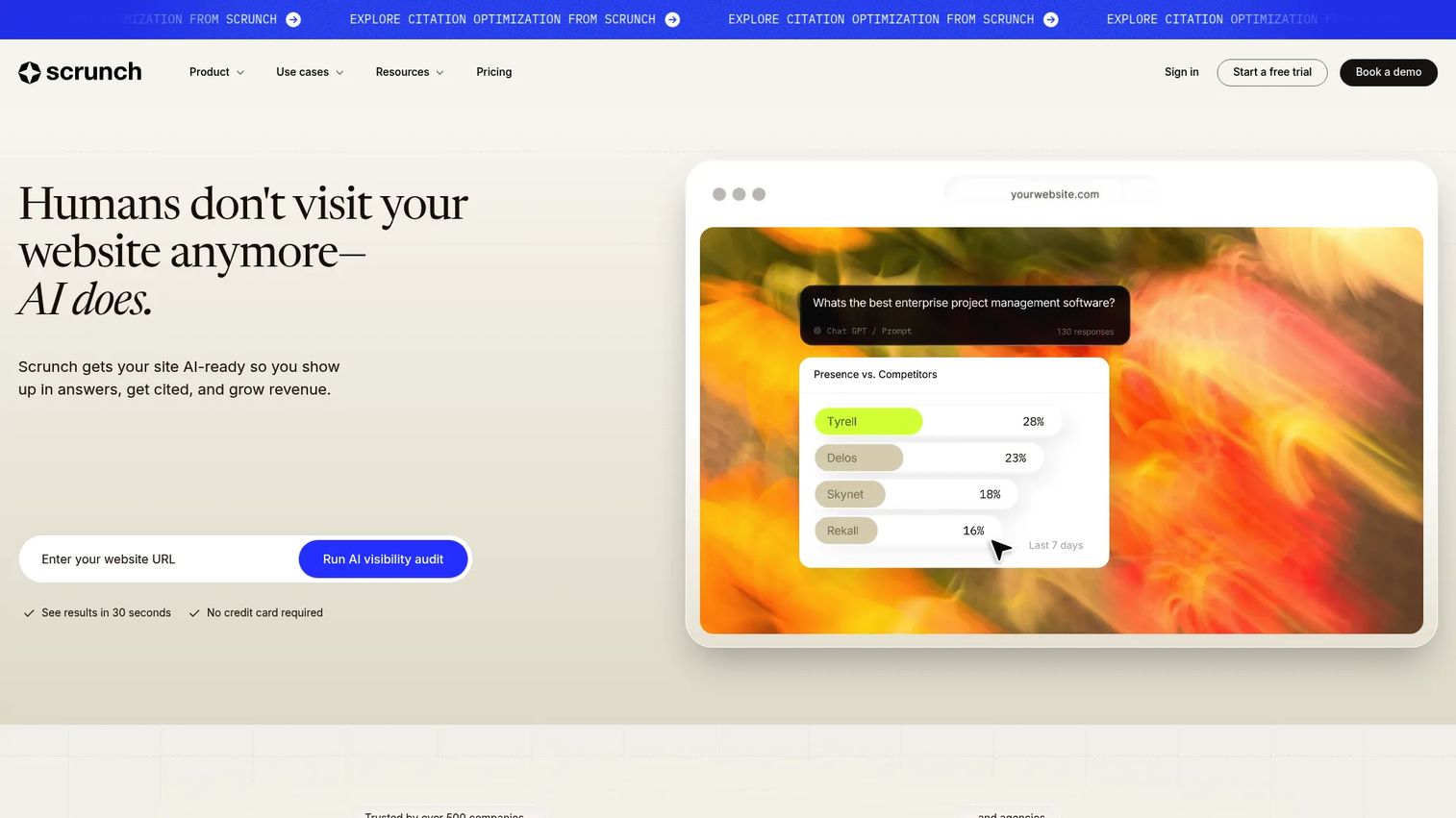
Scrunch AI is an AI search visibility platform focused on brand accuracy and citation monitoring. It audits how AI platforms describe your brand, flags where information is wrong or outdated, and delivers optimization recommendations. The platform's Agent Experience Platform (AXP) also serves AI-optimized content directly to AI agents, which makes it useful for teams managing brand accuracy across multiple AI surfaces.
Best for: Brand, PR, and marketing teams where the risk is misinformation, outdated messaging, or incorrect product descriptions in AI answers.
Key features
- AI-platform visibility and citation monitoring
- Site audits with insights and recommendations
- Agent Experience Platform for AI-optimized content delivery
- Support for 4+ LLMs on Core plans
- API access and SSO on Enterprise
Why choose Scrunch AI: The accuracy and correction workflow is what separates it from pure visibility trackers. If your brand is described incorrectly by AI systems, Scrunch is built to identify and fix that. A 7-day free trial is available on all plans.
Scrunch AI pricing: Core is $250/mo (125 prompts, 5 site audits/mo, 4 LLMs). Agency Core is $500/mo. Enterprise and Agency Enterprise are custom. No free tier; 7-day trial available.
G2 rating: 4.6/5
7. Rankscale AI
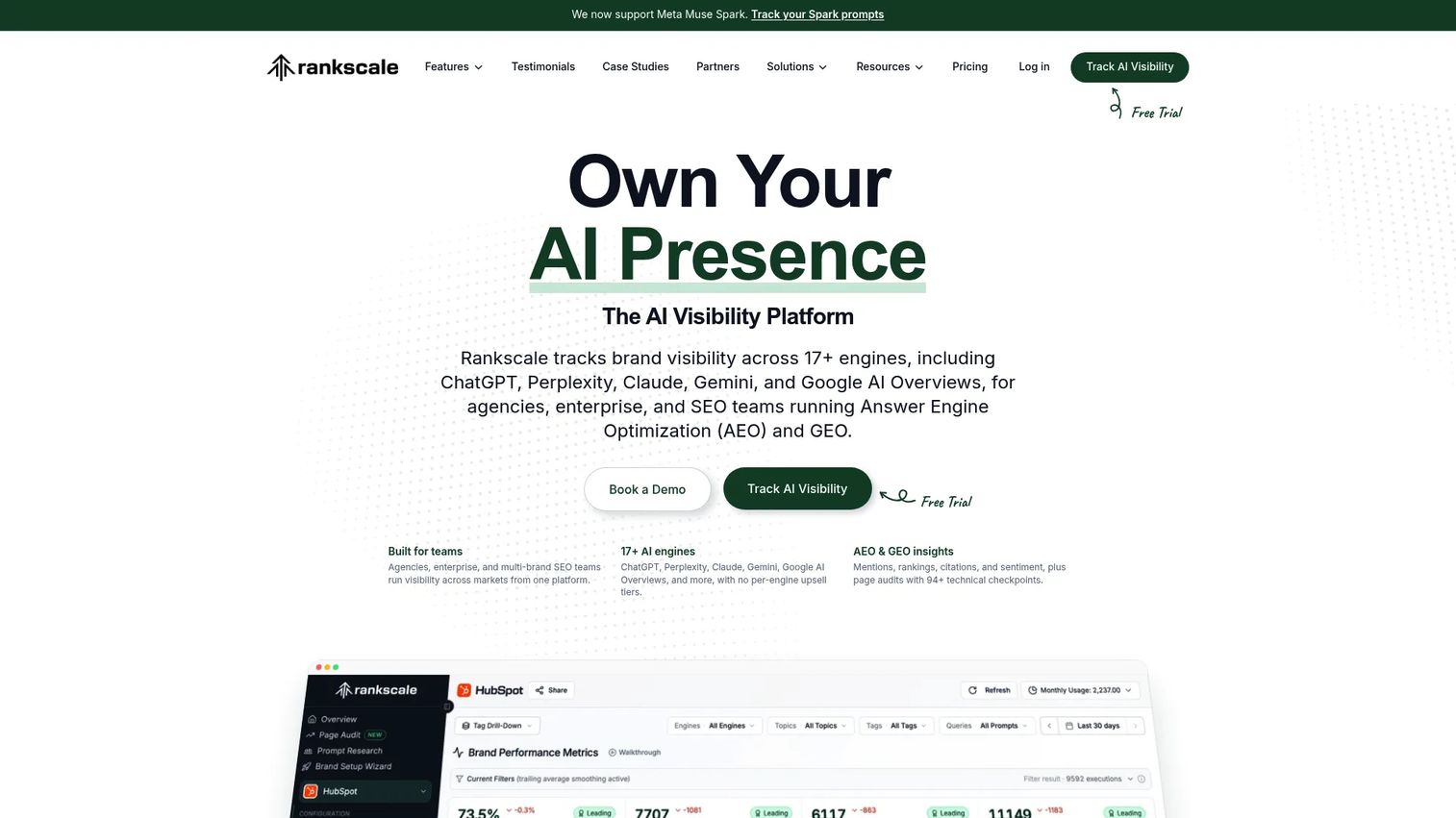
Rankscale AI is an AI visibility platform for tracking brand presence across generative search engines, with coverage across 17+ AI engines. It offers competitor tracking, citation and sentiment analysis, page audits with AI-readiness checks, and reporting dashboards. For SEO teams used to rank tracking, Rankscale's keyword-style scoring makes GEO metrics feel familiar.
Best for: Agencies, enterprises, and SEO teams that want GEO metrics presented in a format close to traditional rank tracking.
Key features
- AI visibility tracking across 17+ AI engines
- Competitor, citation, source, and sentiment analysis
- Page audits with AI-readiness and technical SEO checks
- Credit-based plans with API access
- Collaboration and dashboard features
Why choose Rankscale AI: The 5.0/5 G2 rating is the highest verified score in this list. The Essentials plan at $20/mo (yearly only) is the lowest entry price among tools with engine breadth of 17+. Worth evaluating if engine coverage is a primary criterion.
Rankscale AI pricing: Essentials is $20/mo billed annually only. Pro is $99/mo. Pro+ is $229/mo. Growth is $385/mo. Enterprise is $780/mo. A free trial is available on Pro.
G2 rating: 5.0/5
8. Writesonic
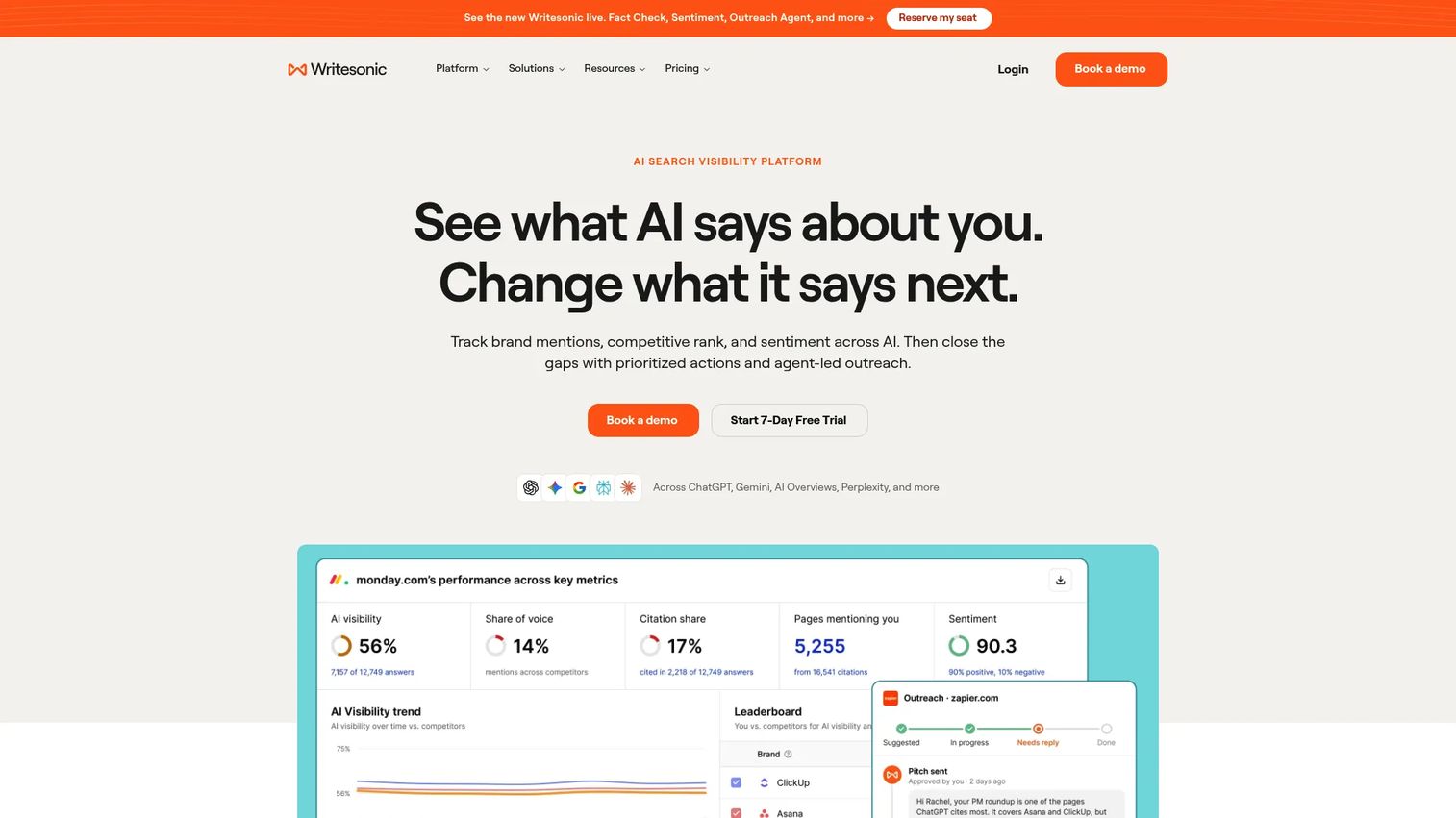
Writesonic is an AI search visibility platform that combines brand monitoring with content creation. It tracks brand mentions, competitive rank, and sentiment across ChatGPT, Gemini, Google AI Overviews, Perplexity, and other AI platforms. An Action Center surfaces content gaps, citation opportunities, and technical issues to prioritize. Teams also get access to AI Article Writer and AI Content Agent for acting on those recommendations directly.
Best for: Content teams whose bottleneck is acting on GEO findings, not only discovering them.
Key features
- AI visibility monitoring across ChatGPT, Gemini, Perplexity, and AI Overviews
- Prioritized Action Center for content gaps and citation opportunities
- AI Article Writer and AI Content Agent
- AI Shopping Analytics and AI Ads Tracker
- AI bot analytics and technical AI-crawler audits
Why choose Writesonic: If your team already produces content and needs to close the loop between visibility data and publishing, Writesonic covers both sides. Analytics-first teams focused purely on monitoring should compare it against dedicated GEO platforms for prompt methodology depth.
Writesonic pricing: Starter is $79/mo billed annually. Basic is $199/mo. Growth is $399/mo. Enterprise is custom. Free trial available on Starter, Basic, and Growth plans.
G2 rating: 4.7/5
9. Semrush AI Toolkit
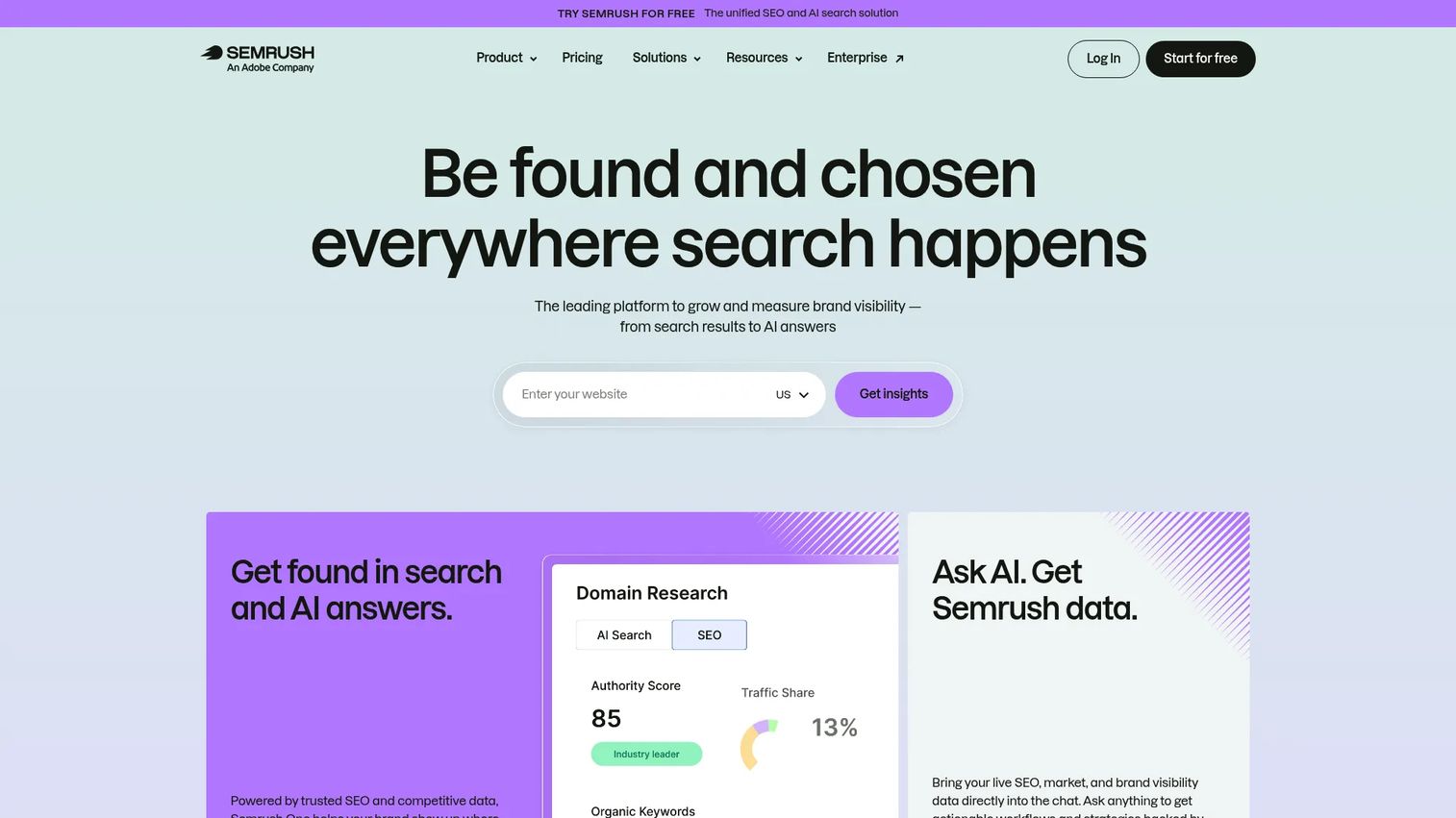
Semrush offers an AI Visibility Toolkit that extends existing SEO workflows into AI search monitoring. It tracks brand visibility across ChatGPT, Google AI, Gemini, Perplexity, Claude, and AI Overviews, with brand sentiment monitoring, competitor analysis, prompt research, and AI-readiness site auditing. For teams already running Semrush for SEO, adding AI visibility keeps reporting inside a familiar interface.
Best for: SEO teams that want AI visibility inside a broader SEO suite without switching tools.
Key features
- AI visibility tracking across ChatGPT, Google AI, Gemini, Perplexity, Claude, and AI Overviews
- AI brand sentiment and share-of-voice monitoring
- Competitor analysis and prompt research (25 custom daily prompts on Base)
- AI-readiness site auditing
- Keyword research, position tracking, and backlink analysis included
Why choose Semrush AI Toolkit: Choose it when your team runs SEO reporting in Semrush and wants GEO data in the same workspace. Standalone GEO vendors tend to offer deeper prompt methodology and more granular citation tracking for teams where AI visibility is the primary focus.
Semrush AI Toolkit pricing: Base is $99/mo per domain, billed annually. Enterprise is custom. A limited AI visibility feature set is available on the free Semrush plan.
G2 rating: 4.4/5
10. Ahrefs Brand Radar
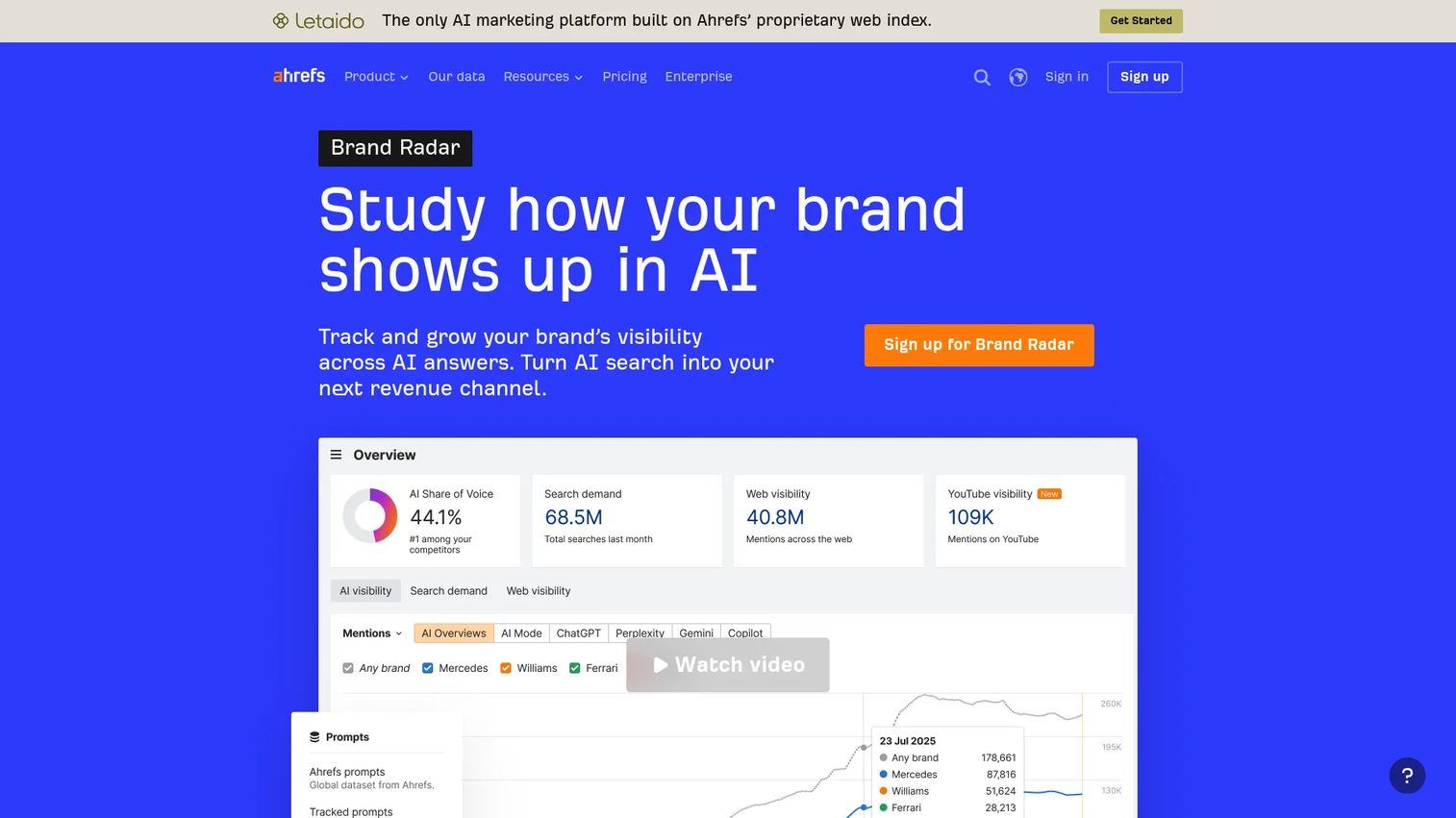
Ahrefs Brand Radar tracks brand visibility across AI platforms including Google AI Overviews, Google AI Mode, ChatGPT, Perplexity, Gemini, Copilot, Grok, and Claude. It benchmarks AI visibility against competitors, identifies which pages and domains get cited, and combines those signals with search demand, YouTube, Reddit, and TikTok data. For teams already using Ahrefs for SEO, Brand Radar adds a brand and AI visibility layer without a separate subscription.
Best for: SEO teams adding brand visibility monitoring to existing Ahrefs workflows.
Key features
- Brand visibility tracking across 8 AI platforms including Grok and Claude
- Competitor benchmarking and cited page identification
- Search demand and web visibility alongside AI signals
- Reddit, YouTube, and TikTok mention tracking
- Custom prompt monitoring
Why choose Ahrefs Brand Radar: The AI visibility coverage spans more platforms than most tools in this list, including Grok. Pricing starts at $50/mo for custom prompt packages, with Brand Radar AI starting at $199/mo for structured brand tracking. Good fit for teams that want broad AI platform coverage alongside non-AI brand signals.
Ahrefs Brand Radar pricing: Custom prompt packages start at $50/mo. Brand Radar AI starts at $199/mo. The all-platform package including 2,500 monthly prompt checks is $699/mo.
G2 rating: 4.5/5
11. AirOps
AirOps is an AI search platform for measuring buyer visibility and executing content programs. It combines AI and traditional search visibility intelligence (covering prompts, citations, competitors, and opportunities) with agent-powered workflows for researching, creating, reviewing, publishing, and refreshing content. Teams use it to close the gap between knowing they have a GEO problem and actually fixing it.
Best for: Content operations teams building repeatable GEO workflows at scale across many pages.
Key features
- AI and traditional search visibility intelligence with competitor insights
- Agent-powered workflows for content creation, review, and publishing
- Brand Kits and Knowledge Bases for consistent content production
- CMS, SEO, AEO, social, and project management integrations
- MCP and API access
Why choose AirOps: Solo and Pro plans are available free to start, which makes it easy to test the workflow before committing. If your team's constraint is execution speed rather than visibility data depth, AirOps is designed around that problem. Pair it with a dedicated visibility tracker if deeper prompt monitoring is needed alongside the content operations.
AirOps pricing: Solo and Pro plans start free. Enterprise is contact-sales. Overage on the Solo plan costs $0.025 per task.
G2 rating: 4.7/5
12. Gumshoe.AI
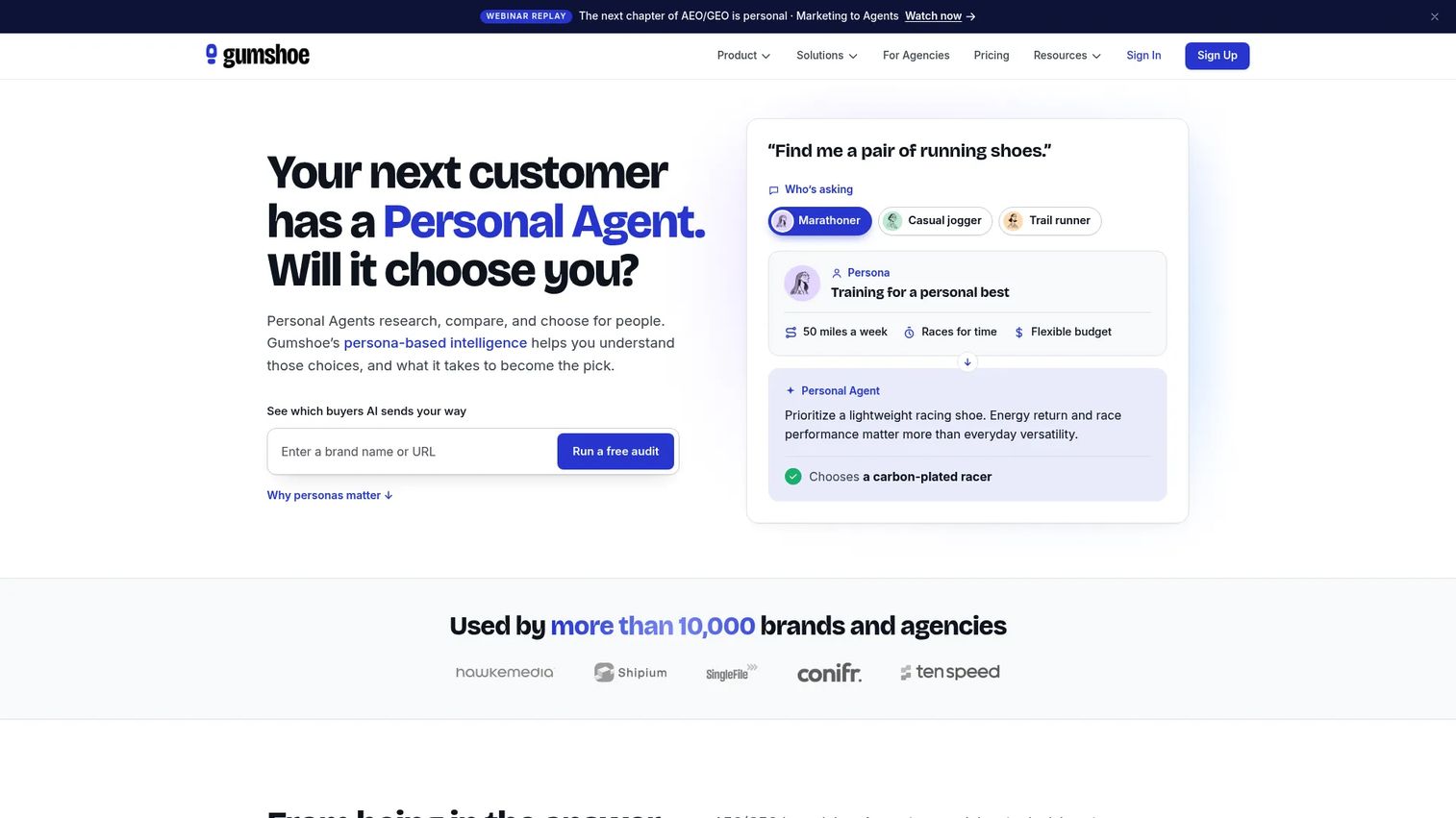
Gumshoe.AI is an AI search visibility platform that measures how AI models describe and recommend brands across buyer personas. It runs persona-based visibility audits, tracks competitive brand mentions, analyzes citation sources, scores sentiment, and flags technical crawlability issues. A free sample audit is available before purchasing a plan.
Best for: Competitive marketers and SEO teams tracking where competitors beat them in AI-generated answers.
Key features
- Persona-based AI visibility audits across multiple AI models
- Competitive visibility and brand-mention tracking
- Citation analysis showing sources used by AI models
- Sentiment analysis of brand mentions
- Technical audits for crawlability and AI readability
Why choose Gumshoe.AI: The persona-based audit approach is more granular than keyword-level tracking. If you need to know how AI describes your brand to a CFO versus a technical buyer, Gumshoe is built for that level of segmentation. Paid plans are priced per project, so agency and multi-brand teams should budget accordingly.
Gumshoe.AI pricing: Free sample available one time. Build your own plan starts at $99/mo per project. The Gumshoe Playbook (all audits plus daily monitoring) is $299/mo per project. Add-ons for Sentiment, Content, and Citation Audits are $100/mo each.
G2 rating: 4.8/5
13. Goodie AI
Goodie AI is an answer engine optimization platform for monitoring, optimizing, and measuring brand visibility across AI search and agentic commerce surfaces. It covers prompt research, visibility monitoring, prioritized optimization actions, AI-optimized content generation, revenue attribution, and AI traffic analytics. The platform connects AI visibility data to actual revenue impact, which addresses the attribution gap that frustrates growth marketers.
Best for: Marketing teams that need end-to-end AI visibility measurement tied to revenue, not just brand mention counts.
Key features
- Prompt research and visibility monitoring across AI models
- Prioritized optimization actions and AI-optimized content generation
- Revenue attribution and AI traffic analytics
- 5 tracked models on Core plan
- MCP and optimization tooling included
Why choose Goodie AI: The revenue attribution feature separates it from pure monitoring tools. When your CFO asks what AI visibility is worth in pipeline terms, Goodie is designed to answer that question. A 7-day free trial is available. Pro and Enterprise pricing requires a demo request.
Goodie AI pricing: Core is $295/mo (5 models, 110 prompts, 50 optimizations/mo). Pro and Enterprise pricing is not publicly listed; request a demo for those tiers.
G2 rating: 4.9/5
14. GetCito
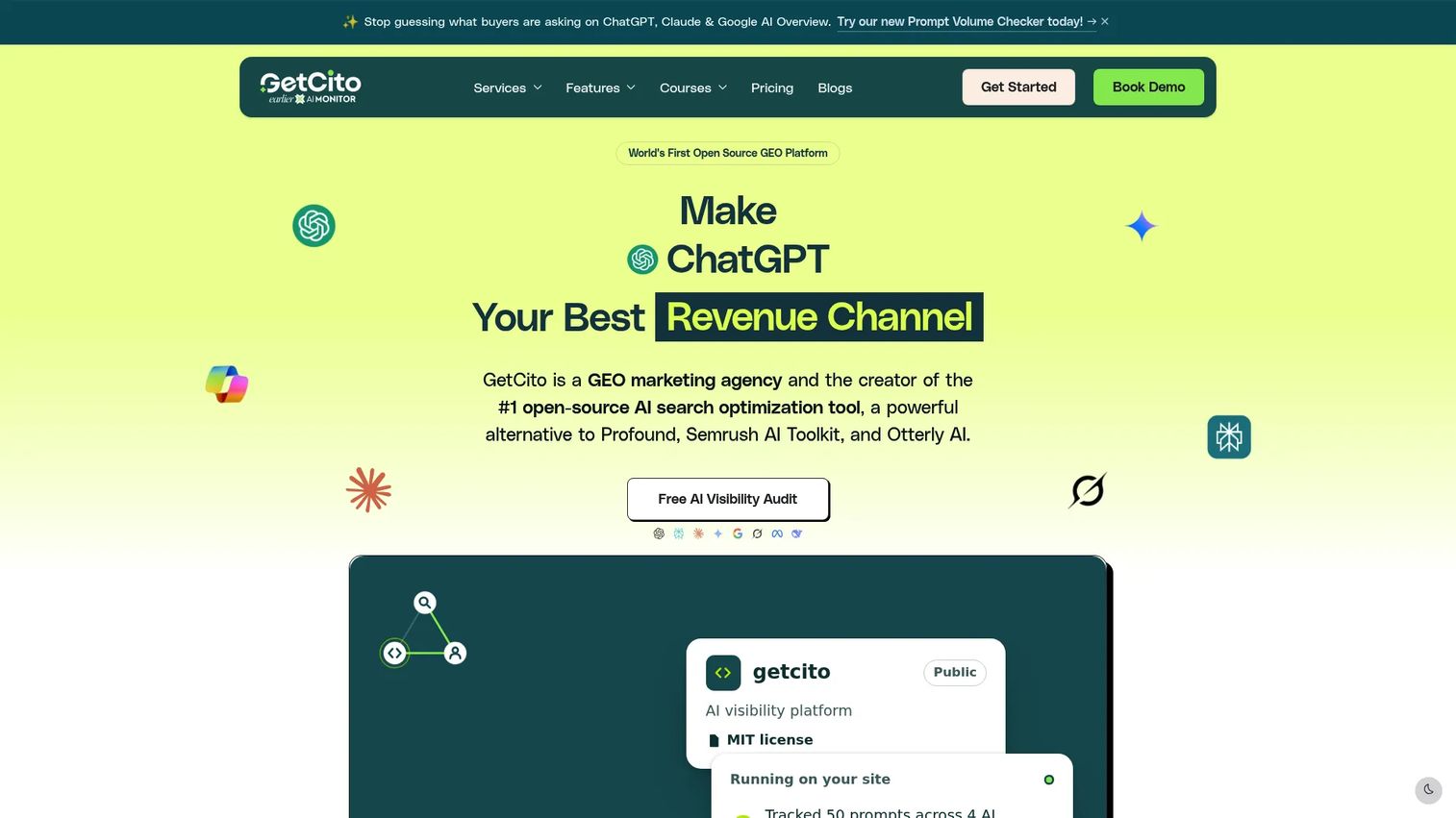
GetCito is an open-source generative engine optimization platform with both self-hosted and hosted paid tiers. It tracks AI visibility across platforms, monitors competitor activity, runs AI crawlability and indexability audits, tracks brand mentions and citations, and surfaces sentiment trends. The open-source free tier is self-hosted, making it unusual in this category.
Best for: Technical marketers and developers who want to self-host a GEO monitoring tool or test the platform before paying for hosted tiers.
Key features
- AI visibility checking across AI platforms
- Competitor monitoring and benchmarking
- AI crawlability and indexability audits
- Brand mention and citation tracking
- Sentiment and trend analysis
Why choose GetCito: The self-hosted free option makes it accessible for teams with developer resources who want full data control. The hosted Growth plan at $599/mo adds human GEO services alongside the platform, which is a different value proposition than pure SaaS tools. Pair it with a broader SEO analytics stack if pipeline reporting is a priority.
GetCito pricing: Free self-hosted tier available. Growth Plan is $599/mo (hosted, with human GEO services). Scale Plan is $999/mo. Enterprise is custom.
G2 rating: 4.3/5
15. HubSpot AEO Grader

HubSpot offers a free AEO Grader that runs a one-time diagnostic of how ChatGPT, Perplexity, and Gemini describe and assess your brand. It checks AI visibility across five dimensions, including brand perception analysis, competitive positioning, and content recommendations, with no account required.
Best for: Marketing and SEO teams that want a quick baseline of AI brand visibility before investing in a full GEO platform.
Key features
- AI visibility assessment across ChatGPT, Perplexity, and Gemini
- Brand perception analysis across five dimensions
- Competitive positioning and recommendations
- One-time diagnostic with no account required
- Fast output with actionable suggestions
Why choose HubSpot AEO Grader: Choose it as a low-friction entry point. It tells you where you stand in three AI engines today, which is enough to start a conversation with leadership or inform a tool decision. For ongoing prompt tracking, compare it against HubSpot AEO (the continuous paid product) or dedicated GEO platforms.
HubSpot AEO Grader pricing: Free; one-time use. Distinct from HubSpot AEO, which is a separate paid product for continuous monitoring.
G2 rating: 4.5/5 (rating is for HubSpot AEO, not the Grader specifically)
16. SE Visible
SE Visible is an AI visibility platform that monitors brand presence across AI search engines and chatbots. It tracks mentions, citations, and sentiment on a daily basis across ChatGPT, Gemini, Copilot, and Google AI Mode. A Google Data Studio connector and API are included, which helps teams connect AI visibility data to existing reporting dashboards.
Best for: SEO teams adding AI visibility tracking to existing reporting workflows without switching their primary analytics platform.
Key features
- AI visibility and mention tracking
- Citation and source monitoring
- Sentiment analysis and competitive benchmarking
- Daily tracking across ChatGPT, Gemini, Copilot, and Google AI Mode
- API and Google Data Studio connector
Why choose SE Visible: The Data Studio connector is practical for growth marketers who need AI visibility to show up alongside other channel data in a shared dashboard. The Basic plan starts at $71/mo, and a 10-day free trial is available. Pricing was sourced from G2; verify on the vendor's site before purchasing.
SE Visible pricing: Basic is $71/mo. Core is $151/mo. Agency is $319/mo. Custom plan available. Annual billing saves 20%. 10-day free trial.
G2 rating: 4.6/5
17. Adobe LLM Optimizer
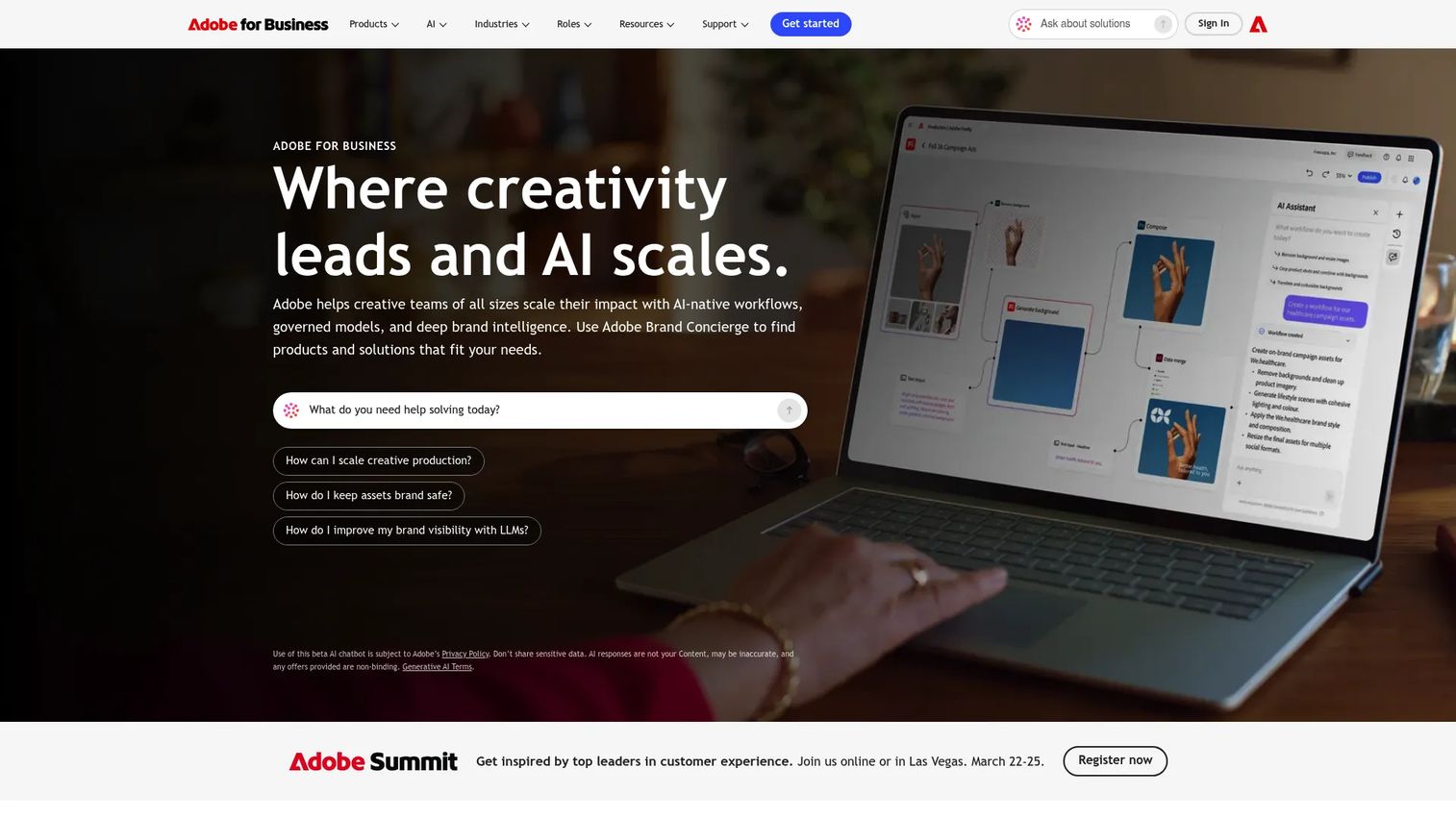
Adobe LLM Optimizer, now sold as Adobe Brand Visibility for new customers as of July 2026, is an enterprise platform for measuring and improving how brands appear in AI-generated answers. It tracks brand mentions, citations, sentiment, and share of voice across major AI platforms, then deploys AI-ready content, metadata, and structured-data fixes at the CDN edge. It also connects AI visibility data with Adobe Analytics and Customer Journey Analytics to measure conversions and revenue.
Best for: Enterprise marketing teams already running Adobe Analytics or Customer Journey Analytics that need AI visibility inside the same data infrastructure.
Key features
- Brand mentions, citations, sentiment, and share-of-voice tracking
- CDN-edge deployment of AI-ready content and structured data
- Off-site optimization guidance for Wikipedia, YouTube, Reddit, and earned media
- Adobe Analytics and Customer Journey Analytics integration
- AI visibility gap identification with prioritized optimization
Why choose Adobe LLM Optimizer: Choose it when AI visibility must connect directly to Adobe's analytics stack. The CDN-edge content deployment is a capability most standalone GEO tools do not offer. Existing Adobe customers gain the most from the integration; teams without Adobe infrastructure should evaluate standalone platforms first.
Adobe LLM Optimizer pricing: Contact Adobe for pricing. No plan details are displayed; expect enterprise custom terms.
G2 rating: Not listed on G2
18. Conductor
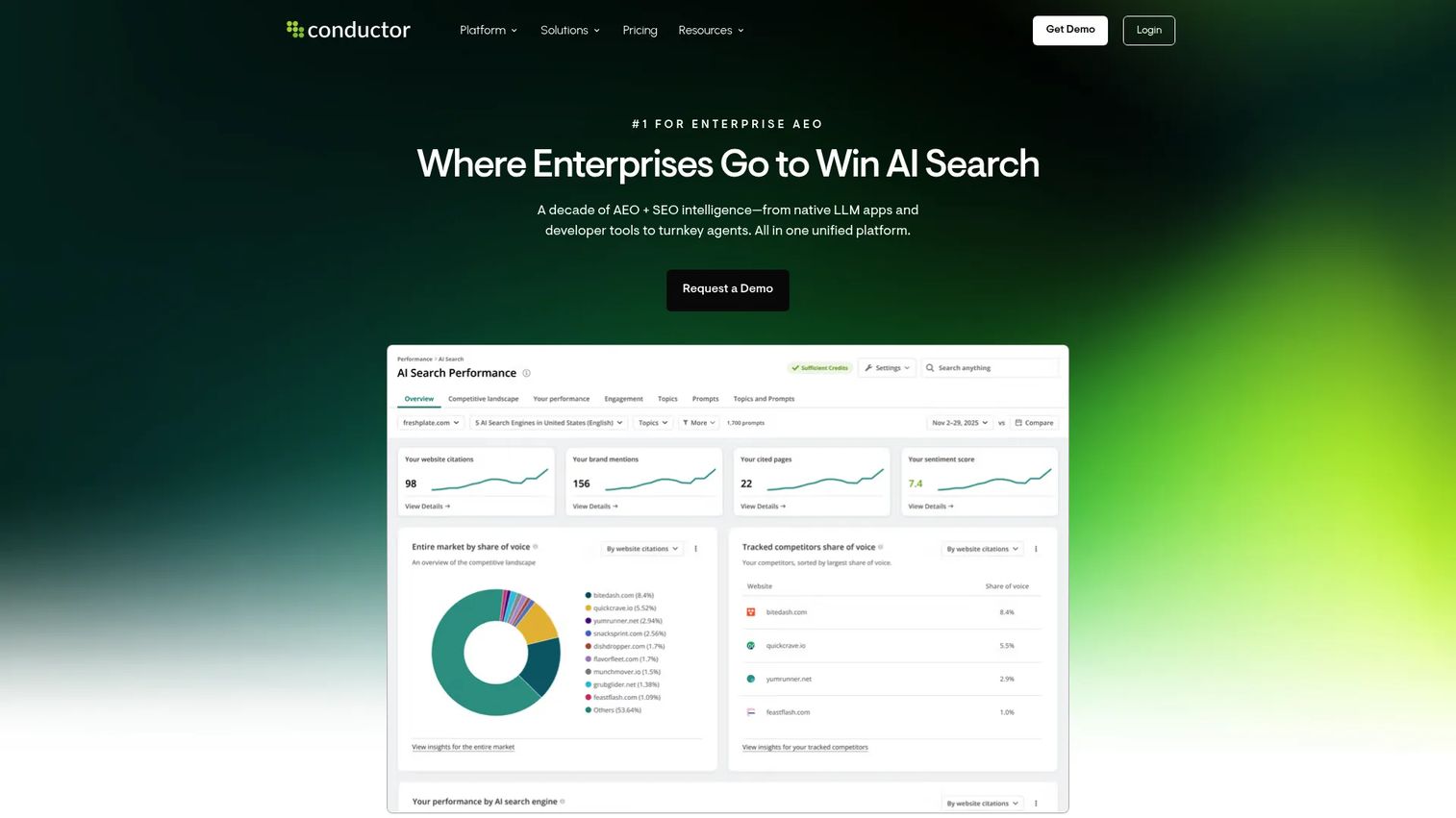
Conductor is an enterprise AEO and SEO platform for improving visibility across AI answer engines and traditional search. It tracks AI search visibility across ChatGPT and Perplexity, provides AI content generation and optimization tools, runs 24/7 technical website monitoring, and delivers executive dashboards for team-level reporting. For teams managing organic marketing at enterprise scale, it positions GEO as one layer within a broader program.
Best for: Enterprise SEO and content teams that want AI visibility within a broader organic marketing and technical monitoring system.
Key features
- AI search visibility tracking across answer engines
- AI content generation and optimization with writing assistance and scoring
- 24/7 website monitoring, technical SEO reporting, and alerting
- Executive dashboards and team governance
- Essentials, Growth, and Enterprise plan tiers
Why choose Conductor: Choose it when your team already runs organic marketing at enterprise scale and wants GEO to be part of a unified program rather than a separate tool. Teams focused primarily on prompt-level AI tracking may find dedicated GEO platforms offer deeper methodology.
Conductor pricing: Essentials, Growth, and Enterprise plans are described on the site; no numeric prices are listed. Contact sales for a custom quote.
G2 rating: 4.5/5
19. BrightEdge
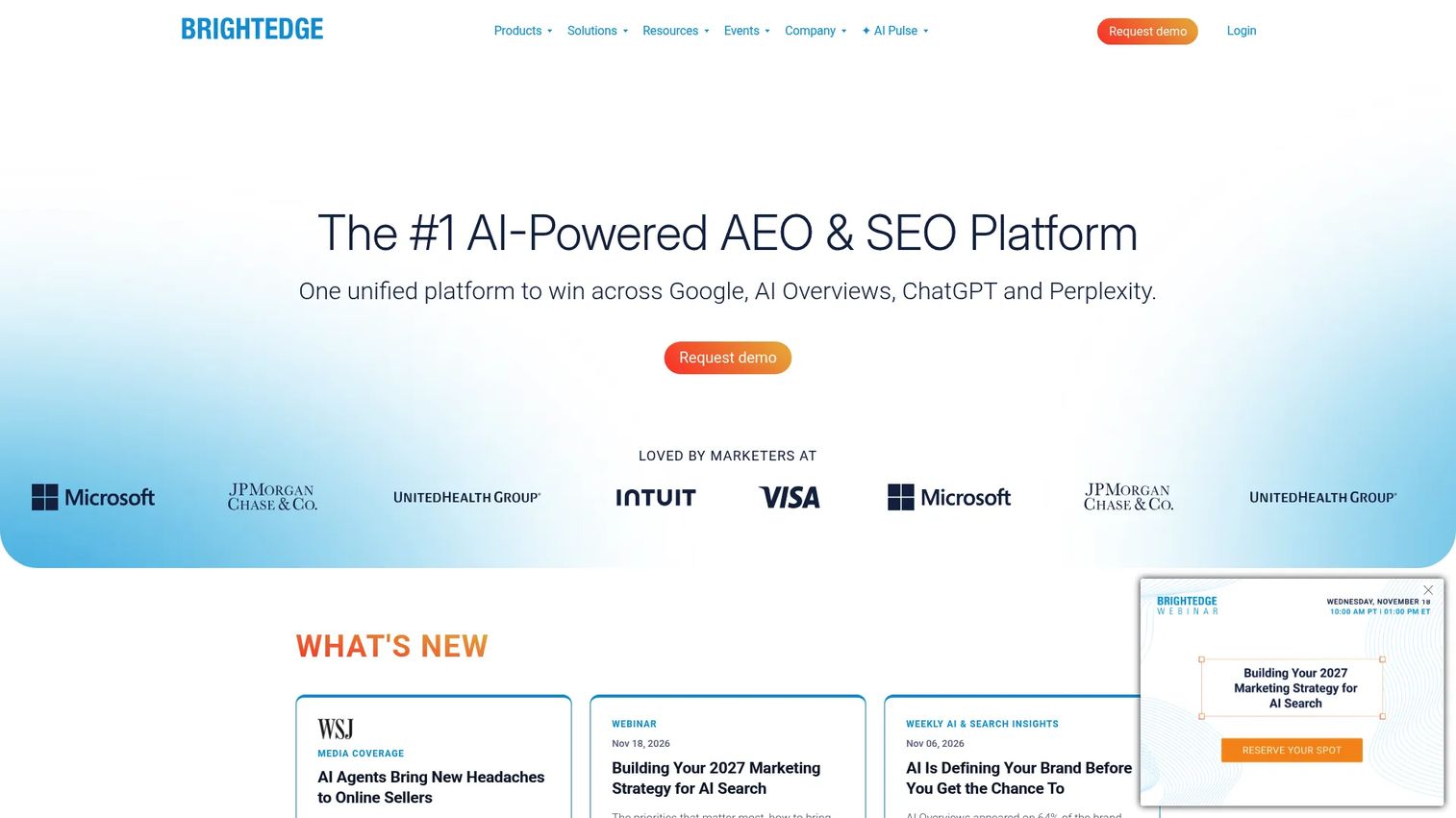
BrightEdge is an enterprise SEO and content performance platform that includes AI search reporting. It covers keyword and content performance, technical site auditing through ContentIQ, competitive Share of Voice, backlink management, and local, global, and mobile content tracking. For large organizations with mature SEO operations, BrightEdge adds AI search visibility to an existing enterprise reporting infrastructure.
Best for: Large SEO organizations adding AI search visibility to an established enterprise SEO program.
Key features
- Enterprise SEO analytics with AI search reporting
- Keyword and content performance recommendations
- Technical site auditing through ContentIQ
- Competitive Share of Voice and Keyword Discovery
- Customizable dashboards, reporting, and forecasting
Why choose BrightEdge: Choose it when AI visibility needs to live inside an enterprise SEO program with existing governance, stakeholders, and reporting cadences. Marketers focused only on AI monitoring should compare specialized GEO platforms for prompt-methodology depth and citation analysis.
BrightEdge pricing: Contact sales. No pricing is on the site; expect annual enterprise contracts.
G2 rating: 4.4/5
20. ZipTie.Dev
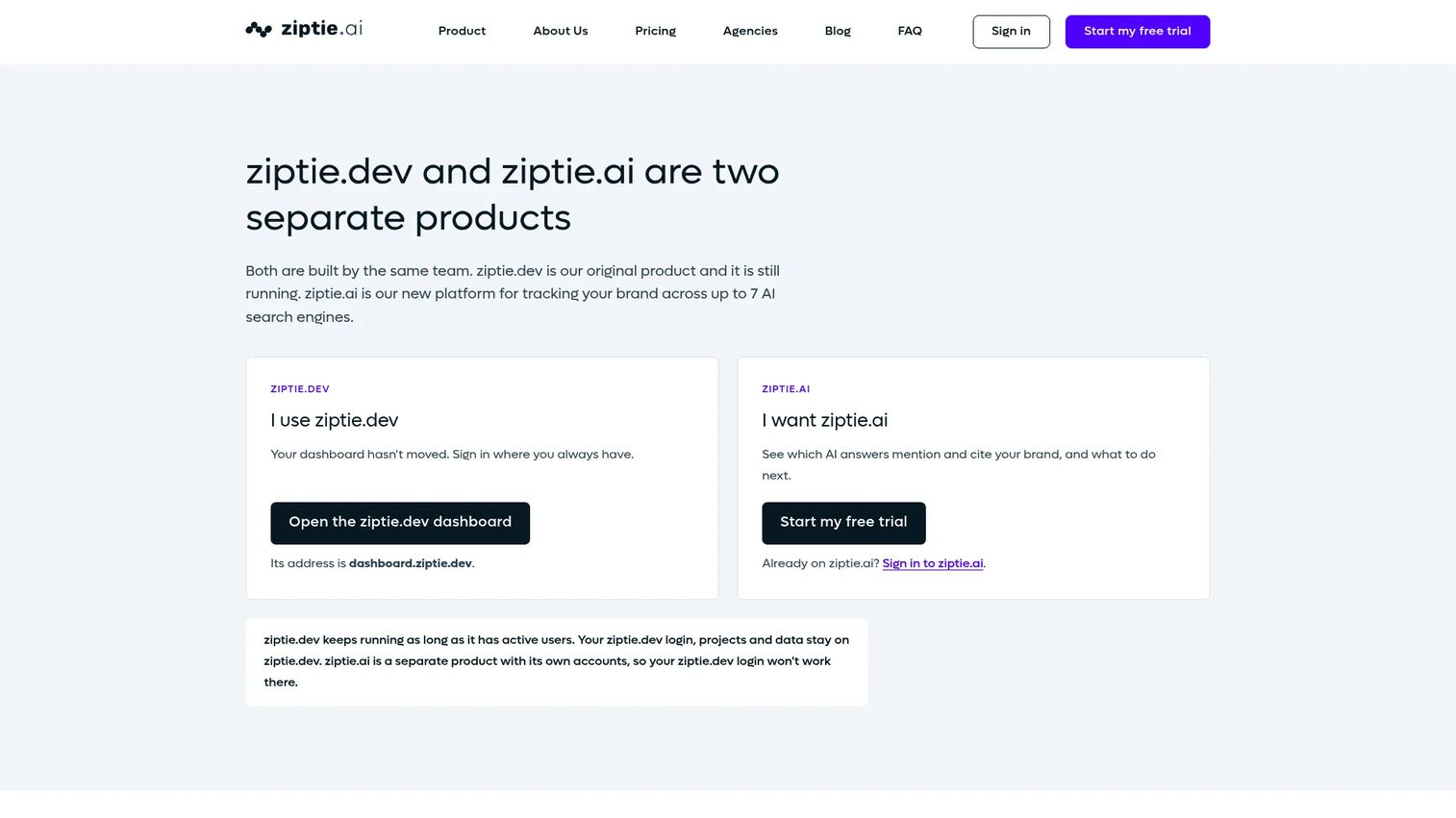
ZipTie.Dev is an AI search visibility platform monitoring brand mentions, citations, sentiment, and competitors across seven AI engines including ChatGPT, Google AI Overviews, Perplexity, Google AI Mode, Microsoft Copilot, Bing AI Overview, and Google Gemini. It includes an Action Center, page audits, content generation, exports, Google Search Console and GA4 integrations, and API and MCP access. A 7-day free trial includes 25 daily prompts.
Best for: Marketing, SEO, and content teams wanting broad AI engine coverage at a low entry price, with technical audit depth included.
Key features
- AI search monitoring across 7 engines including Bing AI Overview and Google AI Mode
- Tracking of brand mentions, citations, sentiment, competitors, and cited URLs
- Action Center with page audits and content generation
- Google Search Console and GA4 integrations
- API, MCP access, and exports
Why choose ZipTie.Dev: At $25.65/mo for the Starter plan, ZipTie.Dev offers broad engine coverage at the lowest entry price in this list. The GA4 and Search Console integrations mean AI visibility data sits alongside existing analytics, which is practical for growth marketers who want to avoid a separate reporting workflow.
ZipTie.Dev pricing: Starter is $25.65/mo. Professional is $340.20/mo. Enterprise is $1,647/mo. 7-day free trial with 25 daily prompts.
G2 rating: 4.5/5
Considerations when choosing generative engine optimization tools
Engine coverage and answer formats
ChatGPT coverage alone is not enough. Buyers use Google AI Overviews, Google AI Mode, Gemini, Perplexity, Claude, Copilot, and Grok across different stages of a decision. Ask vendors which engines they monitor, how often they sample responses, and whether they capture answer formats like tables, product lists, and citations separately from plain-text summaries.
Prompt methodology and sampling
AI answers vary by time, location, logged-in state, and prompt wording. Two tools running the same query on the same day can return different results. Ask whether prompts are vendor-generated or custom, how often they sample, whether they repeat queries to capture variability, and whether they store raw outputs for auditability. Methodology is what separates data you can defend from data that creates questions.
Citation and source transparency
The most actionable insight in a GEO tool is not your visibility score. It is which pages and third-party sources influence the answers you care about. Prioritize platforms that show individual cited URLs, source frequency, competitor source overlap, and gaps where trusted sources in your category do not include your content.
Reporting, integrations, and ROI
A dashboard that does not connect to your existing reporting creates another siloed metric. Check whether the tool integrates with GA4, Google Search Console, your CRM, or BI tools. The ability to show AI-referred traffic alongside assisted conversions in the same report is what turns a GEO tool from a monitoring expense into a defensible budget line.
Pricing fit and tool consolidation
The most common objection among growth marketers is "what does this replace?" Compare standalone GEO platforms against SEO-suite add-ons (Semrush, Ahrefs) and content workflow tools (AirOps, Writesonic). If your SEO spend already covers brand monitoring, check whether an add-on covers your use case before adding a separate platform.
Conclusion
The 20 tools in this guide cover the full range of GEO needs. For dedicated AI visibility tracking, Profound, Peec AI, AthenaHQ, Otterly AI, and Rankscale AI each offer prompt-based monitoring with varying depth and pricing. For citation and source intelligence, Evertune, Gumshoe.AI, Goodie AI, and GetCito are the focused options. If your team already runs Semrush or Ahrefs, the AI Toolkit and Brand Radar additions are the fastest path to GEO data without changing your stack. AirOps and Writesonic are the right picks when execution speed is the bottleneck. For quick diagnostics before committing to any platform, start with HubSpot AEO Grader or ZipTie.Dev.
The right starting point for most teams: Measure 10 to 25 prompts across your category for 30 days. Track results weekly against 3 to 5 competitors across 4 to 6 answer engines. Record mentions, sentiment, citation sources, and AI-referred traffic. That baseline tells you which type of tool you actually need before you spend.
Start your journey with Guideflow today!
FAQs
Generative engine optimization tools are software platforms that track and improve how a brand appears in AI-generated answers across systems like ChatGPT, Gemini, Perplexity, Claude, Copilot, and Google AI Overviews. They monitor brand mentions, citation sources, answer sentiment, share of voice, and competitor presence inside conversational AI outputs rather than traditional search rankings.
SEO tools track rankings, backlinks, technical health, and organic page performance. GEO tools track AI-generated answers, citations, prompts, and AI brand recommendations. GEO extends SEO rather than replacing it. AI engines rely on crawlable, authoritative content to generate answers, so technical and content SEO still determines whether your pages can be accessed and cited.
The metrics worth tracking are AI visibility frequency, brand mention count, citation source quality, source overlap with competitors, answer sentiment, and share of voice across engines. Where possible, connect those signals to AI-referred traffic and assisted conversions in your analytics stack. Visibility numbers without a business outcome are hard to defend in a budget review.
No. ChatGPT is one platform, and buyers use many others. Google AI Overviews, Google AI Mode, Gemini, Perplexity, Claude, Copilot, and Grok all generate product and brand recommendations. Coverage across multiple engines gives a more accurate picture of where you stand with actual buyers.
Yes. AI-generated answers regularly mention brands without linking to them or sending any traffic. Many GEO platforms capture these unlinked mentions, track how often they occur, and monitor the sentiment surrounding them. This is the core measurement problem GEO tools exist to solve: You can be recommended in AI answers while your analytics show no AI-referred sessions.
GEO tools capture AI-generated responses to prompts, then parse the sources surfaced or cited within those outputs. Some platforms track source frequency, source quality signals, and competitor source overlap. The better tools store raw answer outputs so you can audit what was said and what was cited at a specific point in time.
AEO focuses on answer readiness across search and assistant surfaces, often emphasizing structured data, FAQ schema, and direct-answer formatting. GEO focuses on visibility, brand recommendations, and citation presence inside generative AI responses. The categories overlap significantly in practice, and many platforms use both terms. The practical difference is that AEO thinking centers on how content is structured, while GEO thinking centers on how brands show up in AI outputs.
Start with 10 to 25 prompts that reflect real buyer queries in your category. Run them across 4 to 6 answer engines, track results weekly for 30 days, and record your brand mentions, competitor presence, citation sources, and sentiment. After 30 days, check whether AI-referred traffic in GA4 correlates with the visibility patterns you observed. That 30-day dataset is enough to decide whether you need a dedicated GEO platform, an SEO-suite add-on, or a content workflow tool.