Your cloud infrastructure can be locked down tight while employee credentials circulate freely on criminal forums. Endpoint protection does not follow a password after it leaves your environment. One reused credential from an infostealer infection can become an access path into production, customer data, or financial systems before anyone inside your company knows it exists.
According to Breachsense (2026), 1.56 billion fresh credentials were exposed through infostealer infections in 2025 alone. The dark web monitoring market itself reached USD 2.73 billion in 2026, projected to grow to USD 5.50 billion by 2031, according to Mordor Intelligence (2026). That growth reflects how many organizations have learned, the hard way, that perimeter security does not cover external exposure.
The challenge is that dark web monitoring tools are not interchangeable. Some find exposed credentials. Others support threat intelligence, technical investigation, identity protection, or response automation. The category spans enterprise platforms, consumer identity services, open-source crawlers, IAM systems, and SIEM products. Choosing the wrong one creates another dashboard nobody owns.
The real question is not whether to monitor. It is what happens after an exposure is found.
What's inside
This guide covers 40 tools across five categories: Enterprise threat intelligence platforms, consumer identity protection services, technical dark web investigation utilities, identity and access management tools used for response, and SIEM and SOAR systems that route alerts into remediation workflows. It also includes adjacent products that appear in this conversation but serve a different primary job.
Tools were selected based on:
- Coverage of credential, identity, and corporate data exposure
- Evidence quality and identity-matching capability
- Response workflow and integration depth
- Pricing transparency and fit across company stages
TL;DR
- Best for enterprise exposure monitoring: Lunar by Webz.io and Cyble Vision offer broad source coverage, threat scoring, and investigation workflows for security teams
- Best for credential leak detection: NordStellar covers external attack surfaces, leaked credentials, and dark-web activity with G2 scores of 5.0
- Best for technical investigators: Censys, Onion Scan, TorBot, and Hunchly support discovery, crawling, and evidence capture for researchers
- Best for consumer identity protection: Aura, IdentityForce, and Experian IdentityWorks combine dark web alerts with credit monitoring and restoration support
- Best for SaaS founders: Assign ownership first. The best product is the one your new security leader can run independently, with alerts that flow directly into IAM and ticketing workflows
What is dark web monitoring software?
Dark web monitoring software continuously searches underground sources for exposed credentials, personal information, corporate data, threat indicators, and discussions relevant to a monitored person, domain, brand, or organization.
What dark web monitoring detects
Coverage varies by provider, but the most capable platforms can surface:
- Corporate email addresses and associated passwords
- API keys and access tokens
- Session cookies from infostealer infections
- Infostealer logs containing full credential sets
- Payment details and financial account data
- Customer records and personal identifiers
- Brand impersonation assets and phishing kits
- Executive and employee identity data
- Mentions of planned attacks or active data sales
How dark web monitoring works
- Define monitored identities, domains, brands, or keywords
- Search indexed and continuously collected underground sources
- Match findings to known identities or organizational assets
- Validate evidence and reduce false positives
- Alert the responsible team with context and severity
- Trigger containment actions: Credential resets, session revocation, MFA enforcement, or escalation
Main categories of tools
| Category | Primary job | Typical buyer | Main output |
|---|---|---|---|
| Enterprise threat intelligence | Monitor criminal sources and exposed organizational data | Security and threat intelligence teams | Validated alerts and evidence |
| Credential exposure monitoring | Detect compromised employee or customer credentials | IT, IAM, fraud, and security teams | Exposure alerts and reset workflows |
| Consumer identity protection | Monitor personal identity and credit risk | Individuals and families | Alerts, restoration, insurance |
| Technical investigation tools | Search, crawl, capture, or analyze underground sources | Researchers and investigators | Search results, evidence, case records |
| Security workflow integrations | Route findings into existing response systems | SOC and infrastructure teams | Tickets, playbooks, containment actions |
Dark web versus deep web
The deep web includes content that is unindexed or access-controlled, such as private databases, intranets, and authenticated portals. The dark web refers to intentionally hidden services requiring specialized access, primarily through the Tor network. Monitoring coverage varies significantly by provider and source type, and no single tool covers every channel.
When to use dark web monitoring tools
Detect exposed employee credentials before account takeover
Infostealer malware collects credentials from infected devices and uploads them to criminal marketplaces, sometimes within hours. A monitoring platform that surfaces corporate email addresses, reused passwords, and session artifacts gives your security team a window to reset credentials and revoke sessions before an attacker uses them. The next step is always an identity reset, MFA enforcement, or sign-in log review.
Monitor vendors, executives, and high-risk identities
A compromised vendor account can create access risk well beyond the vendor's own environment, particularly when third-party integrations share permissions with production systems. Executive identities also attract targeted phishing campaigns. Separate monitoring for privileged users, contractors, and key executives gives you earlier signals on the highest-impact exposure scenarios.
Connect external exposure to internal response
An alert with no owner is just noise. Configure monitoring platforms to push findings into your identity provider, SIEM, ticketing system, or Slack channel. The exposure record should carry a severity rating, a source context, and a clear response deadline. Detection only shortens dwell time when someone is accountable for containment.
Dark web monitoring tools comparison
The table below maps 40 tools across the full landscape. Not every entry is a direct dark web monitoring platform. IAM tools, SIEMs, credit bureaus, and research organizations appear here because they are part of the response workflow or are commonly evaluated alongside dedicated monitoring services. Treat the category column as your guide to where each product actually fits.
| # | Product | Best for | Key differentiator | Pricing | G2 rating |
|---|---|---|---|---|---|
| 1 | Lunar by Webz.io | Enterprise threat intelligence | Continuous dark web monitoring with AI-powered search and threat scoring | Custom pricing | 4.8 |
| 2 | NordStellar | Attack surface and credential exposure | External vulnerability scanning plus dark-web monitoring in one platform | From $5,000/year | 5.0 |
| 3 | Cyble Vision | Enterprise digital risk protection | Unified threat intelligence across surface, deep, and dark web | Custom pricing | 4.8 |
| 4 | Ahmia.fi | Onion service discovery | Free, open-source indexed search of Tor .onion services | Free | N/A |
| 5 | Censys | Internet asset exposure research | Real-time internet-wide scanning with threat-hunting and ASM | Free tier; credits from $100 | 4.8 |
| 6 | Onion Scan | Hidden service security auditing | Free OPSEC and misconfiguration scanner for .onion services | Free (open source) | N/A |
| 7 | Tor2Web | Onion content access via browser | Web-gateway access to Tor services without Tor Browser | N/A | N/A |
| 8 | TorBot | Dark web OSINT crawling | Open-source .onion site crawler with link-tree visualization | Free (open source) | N/A |
| 9 | Onion Search Engine | Tor network search and monitoring API | Privacy-focused search with REST API and keyword monitoring | Free; paid from $19/month | N/A |
| 10 | Hunchly | Investigation evidence capture | Browser-based automatic capture, tagging, and court-ready reporting | Free tier; Classic $169/year | N/A |
| 11 | Wallpics | Not a dark web monitoring tool | Custom photo wall tiles; unrelated to cybersecurity | From $139 (one-time) | N/A |
| 12 | Solvexia | Financial workflow automation | No-code data automation for finance teams; not a monitoring platform | Custom pricing | 4.7 |
| 13 | Fortinet | Enterprise network security | Integrated cybersecurity fabric with threat detection | Custom pricing | 4.4 |
| 14 | LifeLock | Consumer identity protection | Identity monitoring, restoration, and scam reimbursement | From $10.42/month | 4.6 |
| 15 | Norton 360 | Multi-device consumer security | Antivirus, VPN, dark web monitoring, and parental controls bundled | From $39.99/year | N/A |
| 16 | Coveron | Consumer identity and cyber insurance | Dark web monitoring plus personal cyber insurance in one plan | From $4.99/month | N/A |
| 17 | NordVPN | Consumer VPN with dark web alerts | VPN privacy with Dark Web Monitor feature included | From DKK 20/month | N/A |
| 18 | Aura | All-in-one consumer identity safety | Identity, financial, privacy, and device protection bundled | From $12/month | 4.2 |
| 19 | Identity Guard | Consumer identity and credit monitoring | Dark web alerts combined with 3-bureau credit monitoring | From $12.50/month | 4.3 |
| 20 | IBM Watson | Enterprise AI and analytics | AI platform for NLP, search, and ML; not a monitoring product | Free tier; Standard from $1,110/month | 4.2 |
| 21 | Surfshark Alert | Consumer breach and leak alerts | Email, password, credit card, and ID monitoring via bundle | From $2.49/month (bundle) | 4.0 |
| 22 | Surfshark VPN | Consumer VPN privacy | VPN with CleanWeb threat blocking and unlimited connections | From $2.49/month | 4.0 |
| 23 | Surfshark Antivirus | Bundled device security | Real-time malware scanning within the Surfshark One bundle | From DKK 14.89/month (bundle) | 4.0 |
| 24 | Incogni | Personal data broker removal | Automated removal requests to 420+ data broker sites | From $7.99/month | N/A |
| 25 | IdentityForce | Consumer identity theft protection | Dark web monitoring with dedicated restoration specialists and 30-day trial | From $19.90/month | N/A |
| 26 | ID Watchdog | Consumer identity and credit monitoring | Identity theft monitoring and alerts with credit bureau coverage | From $14.95/month | 4.4 |
| 27 | Experian IdentityWorks | Credit-bureau-connected identity monitoring | Dark web surveillance with CreditLock and up to $1M theft insurance | Free tier; Premium $24.99/month | N/A |
| 28 | Equifax | Credit and identity data solutions | Credit risk, fraud prevention, and identity verification for businesses | Custom pricing | 4.4 |
| 29 | Experian | Data, credit, and fraud solutions | Business credit reports and data solutions across industries | From $69.95/report | 4.4 |
| 30 | TransUnion | Enterprise credit and fraud analytics | TruValidate fraud prevention and TruAudience marketing data | Custom pricing | 4.3 |
| 31 | VantageScore 3.0 | Credit scoring model | Consumer credit score model; not a standalone monitoring platform | N/A | N/A |
| 32 | FICO | Credit scoring and analytics | Credit scoring and financial analytics; not a monitoring platform | Custom pricing | N/A |
| 33 | Active Directory | Enterprise identity management | On-premises directory for access control and credential response | Included in Microsoft licensing | N/A |
| 34 | Okta | Cloud identity and access management | MFA, SSO, lifecycle management, and risk-based access policies | Custom pricing | N/A |
| 35 | Entra ID | Microsoft identity protection | Risk-based sign-in detection and conditional access for Microsoft environments | Included in Microsoft 365 plans | N/A |
| 36 | Splunk | SIEM and security analytics | Log ingestion, correlation, and detection across hybrid environments | Custom pricing | N/A |
| 37 | Microsoft Sentinel | Cloud-native SIEM and SOAR | AI-driven threat detection and automated playbooks on Azure | Consumption-based pricing | N/A |
| 38 | Elastic | Search-based security analytics | Open, flexible security analytics with detection rules and investigation | Free tier; paid plans available | N/A |
| 39 | Cortex XSOAR | Security orchestration and response | Playbook automation, case management, and alert enrichment | Custom pricing | N/A |
| 40 | Gartner | Research and advisory | Market intelligence for vendor evaluation; not a monitoring product | Subscription-based access | N/A |
Pricing and ratings verified September 2026 from each vendor's official pricing page and G2 listing.
Best 40 dark web monitoring tools for 2026
1. Lunar by Webz.io
!Lunar by Webz.io dark web monitoring dashboard
Lunar by Webz.io is a dark web intelligence and monitoring platform that continuously crawls underground sources and surfaces threats relevant to an organization's credentials, domains, executives, and digital assets. It combines real-time alerting with AI-powered search, threat scoring, and investigation workflows for security teams and MSSPs.
Best for: Security operations teams and threat intelligence analysts needing continuous dark web coverage with evidence-grade findings.
Key features
- Continuous monitoring with real-time alerts for credential leaks and ransomware indications
- AI-powered search with customized queries and filtering
- Threat scoring and visualization for prioritizing findings
- Investigation workflows for compromised identities, devices, and assets
- Coverage of criminal forums, paste sites, and underground marketplaces
Why choose Lunar: Lunar fits security teams that need to monitor multiple organizational identities at scale, with enough evidence context to triage and escalate without manual research.
Lunar pricing: Pricing is tailored by product, usage volume, and service requirements. Contact Webz.io for a quote.
Lunar holds a G2 rating of 4.8/5.
2. NordStellar
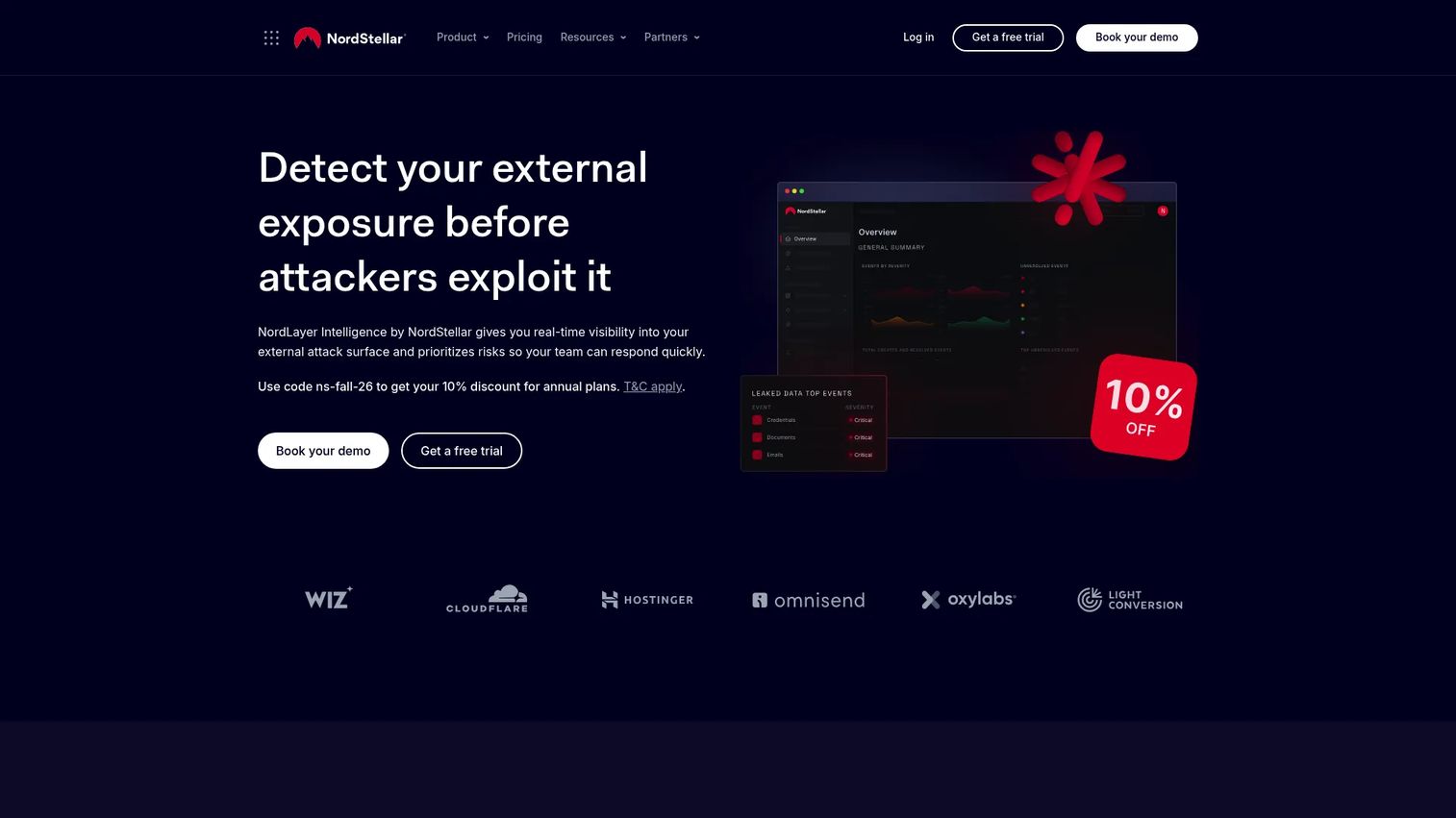
NordStellar is a threat exposure management platform that combines external attack surface scanning with dark web and criminal forum monitoring. It surfaces leaked credentials, malware infections, and brand impersonation risks from a single interface.
Best for: Security teams at mid-market and enterprise companies that need both external attack surface visibility and dark-web credential monitoring together.
Key features
- External vulnerability and attack-surface scanning
- Dark-web and criminal-forum monitoring
- Leaked credential and malware-infection detection
- Brand impersonation monitoring
- Support for up to 900 monitored assets on the Essential plan
Why choose NordStellar: The combination of external attack surface management and dark web monitoring in one platform reduces the number of tools a security team needs to operate. At a 5.0 G2 rating, reviewer sentiment is consistently strong.
NordStellar pricing: The Essential plan starts at $5,000/year for up to 900 monitored assets. Growth and Brand Protect+ plans are available at custom pricing for larger asset sets.
NordStellar holds a G2 rating of 5.0/5.
3. Cyble Vision
Cyble Vision is an AI-native threat intelligence and digital risk protection platform that monitors surface, deep, and dark web sources for threats against an organization's brand, domain, credentials, executives, and supply chain.
Best for: Enterprise security teams needing unified threat intelligence with attack surface visibility, brand monitoring, and executive protection in one platform.
Key features
- Dark web and cybercrime source monitoring
- External attack surface management
- Brand and domain protection with phishing kit detection
- Threat actor profiling and attribution
- Real-time alerts and third-party risk management
Why choose Cyble Vision: Cyble covers a broader threat surface than most dedicated credential monitors, including supply chain risk and executive identity. It suits security programs that have moved beyond reactive credential monitoring and need proactive intelligence.
Cyble Vision pricing: Custom pricing. Contact Cyble directly for a quote based on your monitored scope and seat requirements.
Cyble Vision holds a G2 rating of 4.8/5.
4. Ahmia.fi
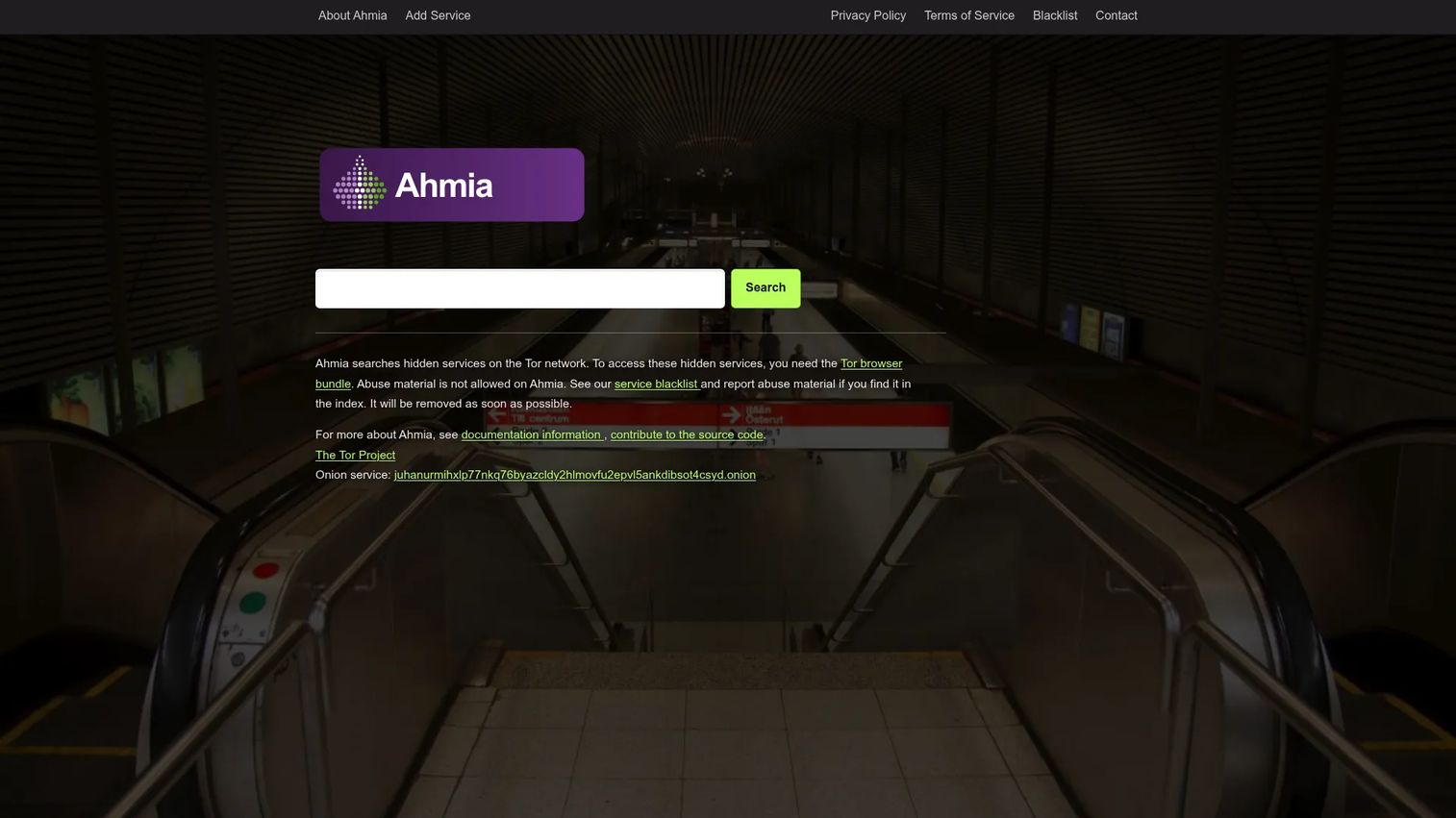
Ahmia.fi is a free, open-source search engine that indexes publicly accessible Tor .onion services. It allows users to search hidden services without requiring Tor Browser and is maintained as a non-commercial project focused on privacy.
Best for: Researchers and investigators performing initial discovery of indexed onion services, without needing continuous monitoring capability.
Key features
- Searches publicly accessible Tor .onion services
- Non-commercial, privacy-focused, no tracking
- Open-source crawling and indexing
- Removes abusive content from its index
Why choose Ahmia: Ahmia is the right starting point for researchers who need to understand what onion services are publicly indexed. It is a discovery tool, not a continuous monitoring platform, so pair it with a dedicated service if ongoing exposure tracking is the goal.
Ahmia pricing: Free. Ahmia is a non-commercial open-source project with no paid plans.
5. Censys
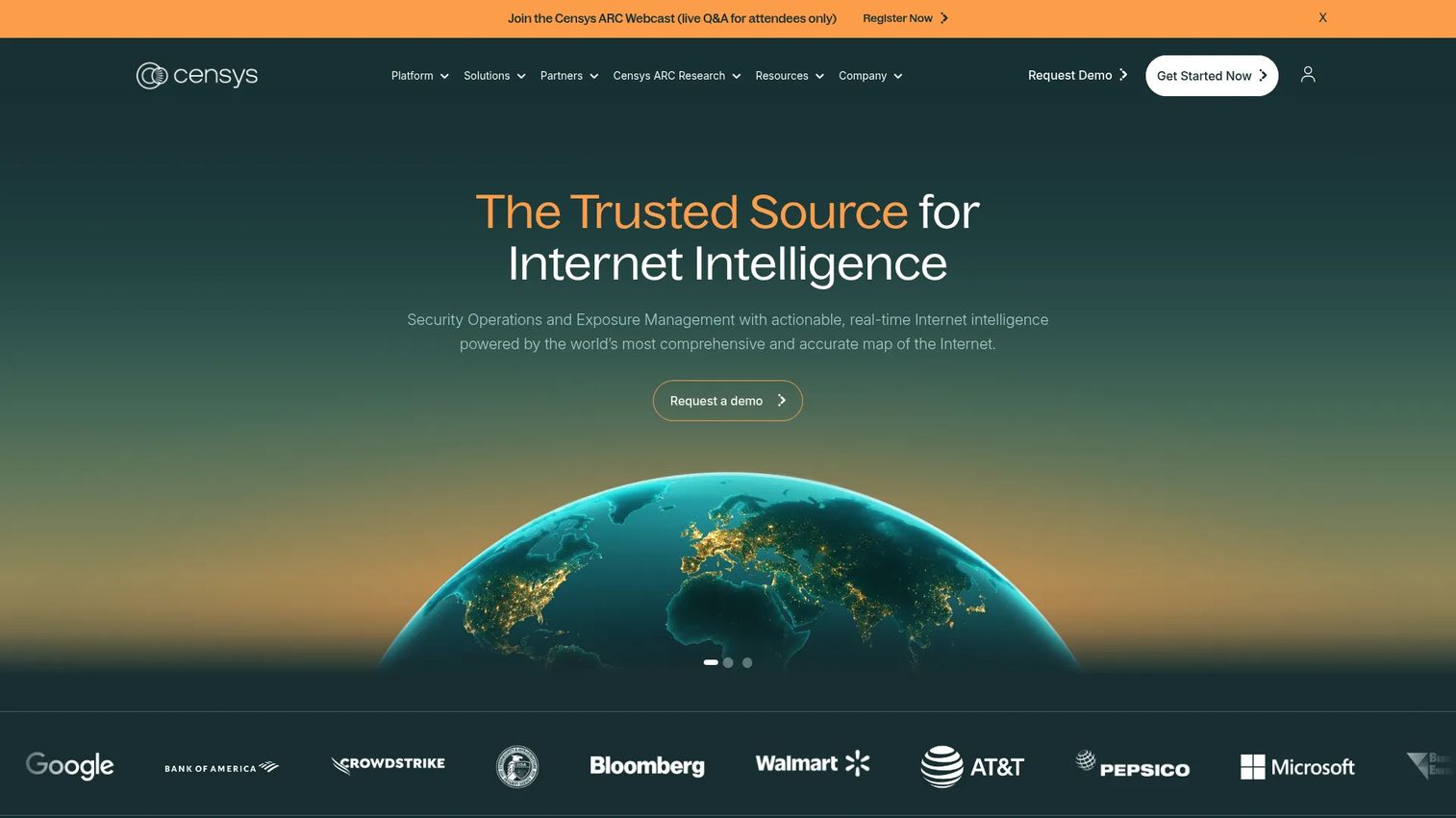
Censys provides real-time internet intelligence for security operations, threat hunting, and external attack surface management. It scans the public internet continuously and indexes IP addresses, ports, services, certificates, and web properties.
Best for: Security researchers, threat hunters, and SOC teams mapping adversary infrastructure or managing external exposure across a complex asset inventory.
Key features
- Internet-wide search across IPs, ports, services, certificates, and DNS
- Adversary infrastructure investigation and threat hunting
- External attack surface management and exposure monitoring
- Historical asset context and change detection
- API access with security platform integrations
Why choose Censys: Censys provides internet-scale visibility that complements dark web monitoring. When a credential alert surfaces, Censys helps you understand what exposed assets an attacker could target next.
Censys pricing: A free tier includes 100 credits per month. Credit packages for deeper access start at $100. Enterprise plans covering Core, Adversary Investigation, and Security Operations require contacting sales.
Censys holds a G2 rating of 4.8/5.
6. Onion Scan
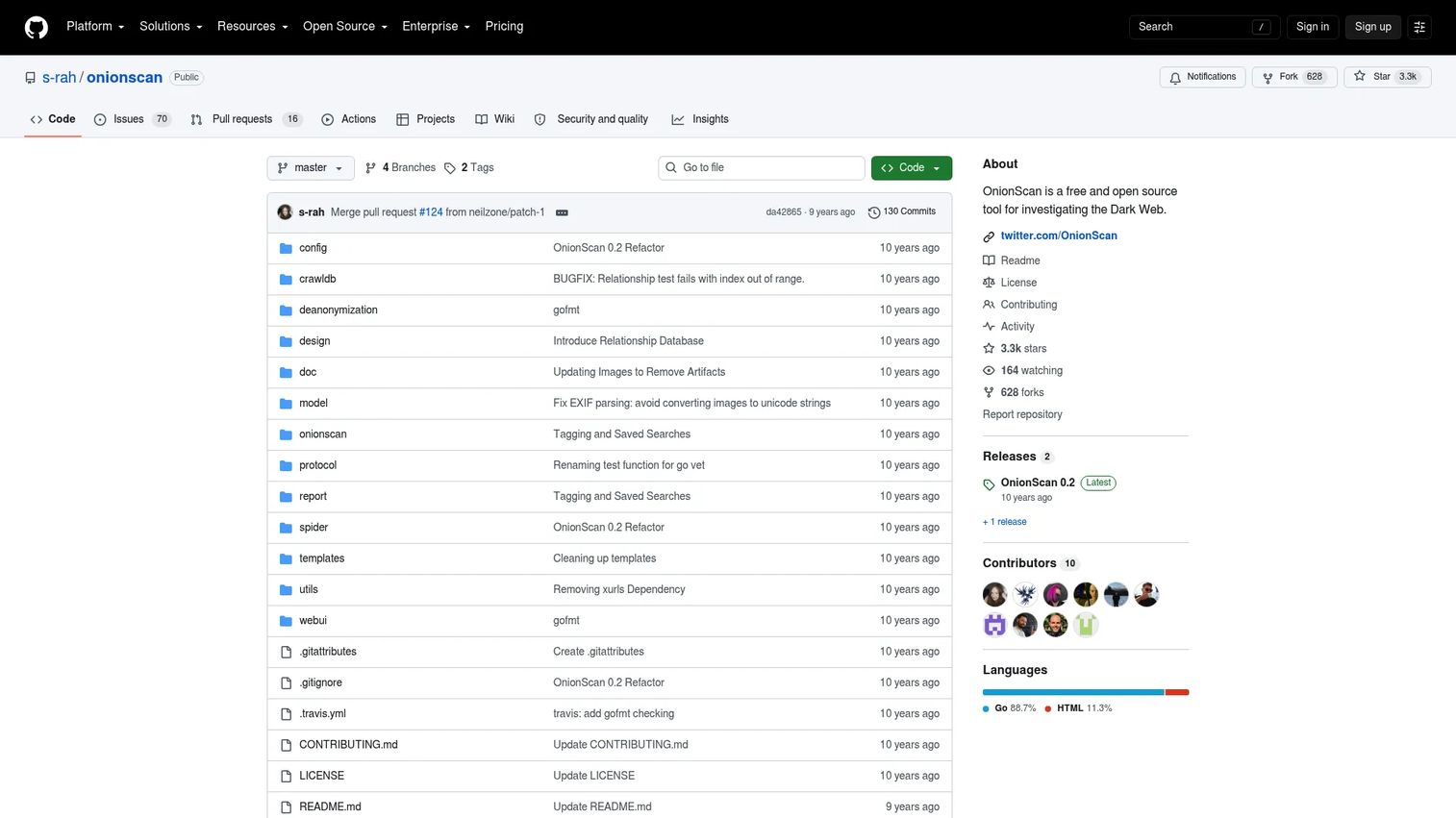
Onion Scan is a free, open-source tool for investigating hidden services on the Tor network. It scans .onion addresses for operational security misconfigurations and privacy issues, producing risk-rated reports across high, medium, and low severity findings.
Best for: Security researchers and hidden service operators who need to audit their own infrastructure or investigate third-party onion services for OPSEC failures.
Key features
- Scans .onion services for OPSEC misconfigurations
- Produces high, medium, and low risk reports
- Supports verbose output and JSON export
- Includes a correlation lab for identity correlation across services
- Configurable scan types
Why choose Onion Scan: For teams running their own onion infrastructure or conducting security research into hidden services, Onion Scan surfaces configuration problems that manual review would miss. It requires Go 1.6 or 1.7 and technical setup, so it fits researchers rather than operational security teams.
Onion Scan pricing: Free and open source. No paid plans or licensing fees.
7. Tor2Web
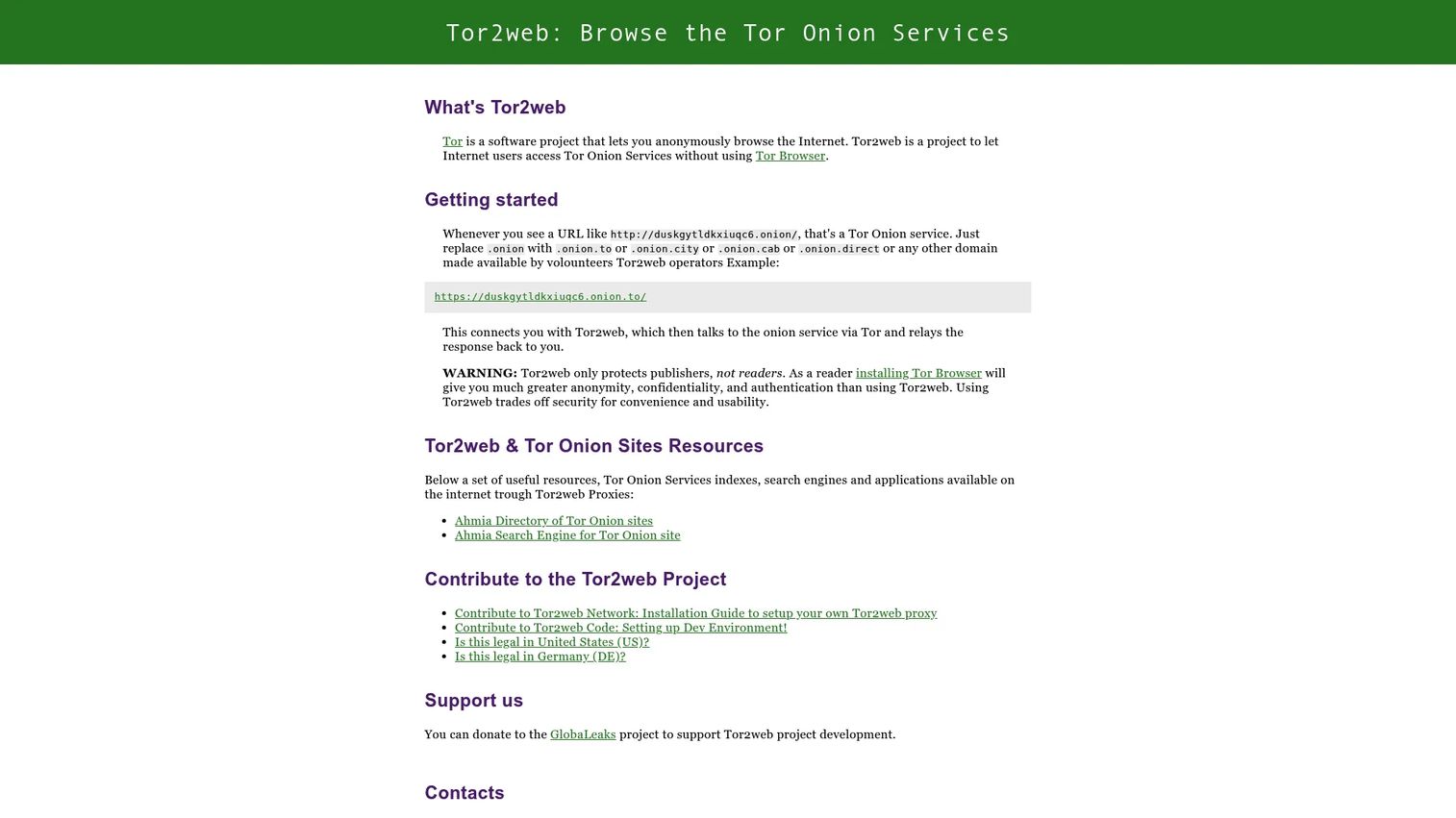
Tor2Web is a project that lets users access Tor .onion services through standard web browsers via proxy gateways, without running Tor Browser locally. It is a visibility and convenience tool, not a monitoring service.
Best for: Researchers who need occasional access to onion content without full Tor Browser configuration.
Key features
- Web-gateway access to Tor .onion services
- No local Tor client required
- Directory of Tor onion services and search engine resources
Why choose Tor2Web: Tor2Web is useful for one-off research access to onion content. It carries real privacy and security limitations because traffic passes through a proxy rather than the Tor network directly. It does not provide monitoring, alerting, or evidence capture.
Tor2Web pricing: No verified commercial pricing was found. The project is maintained as an open resource.
8. TorBot
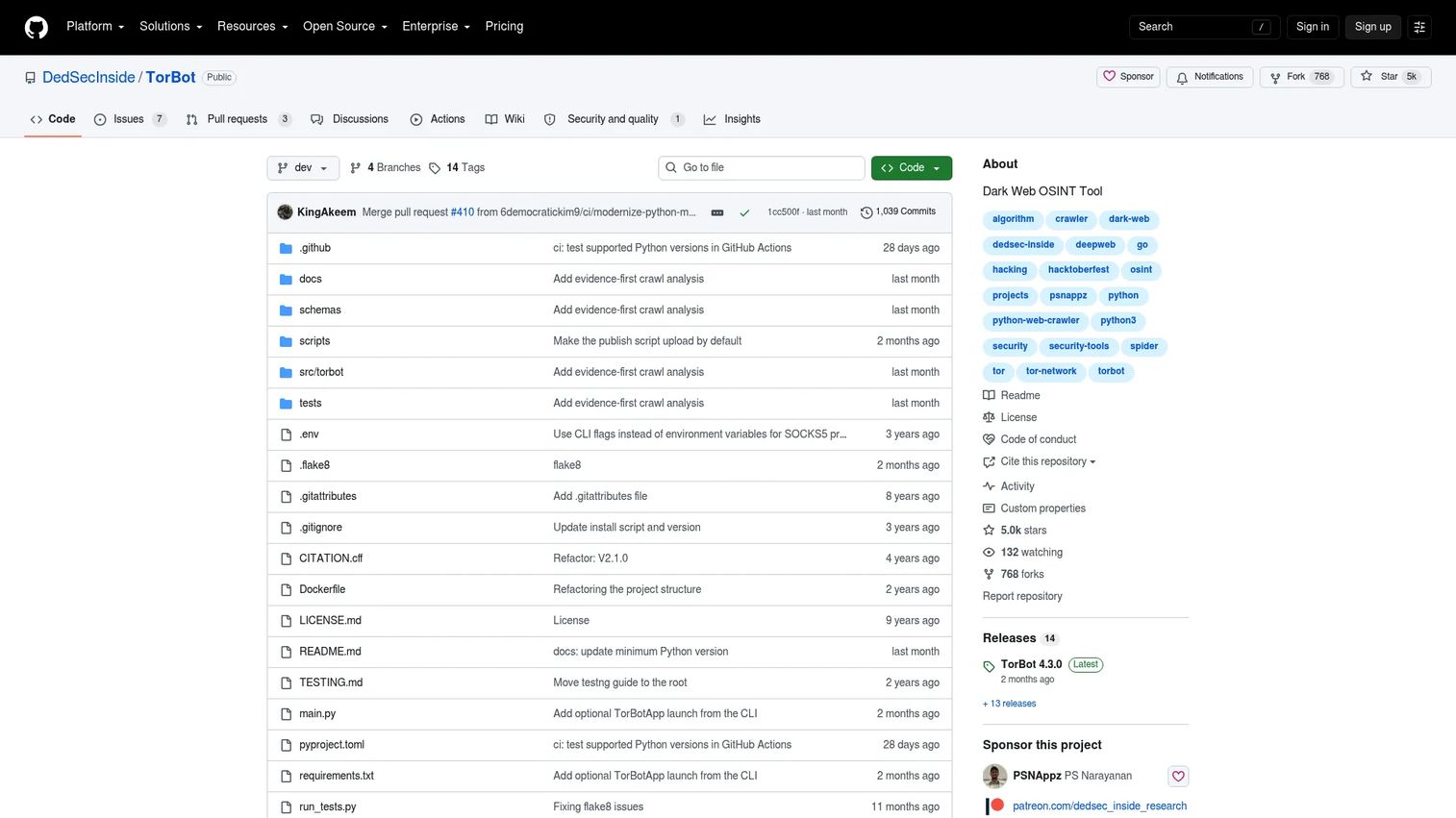
TorBot is an open-source OSINT tool for crawling and analyzing dark web sites. It traverses .onion URLs, extracts link trees, and exports structured data for analysis.
Best for: Technical researchers conducting dark web OSINT who need automated site crawling and link discovery.
Key features
- Onion crawler for .onion and custom domains
- Link-tree visualization and JSON export
- Open source under GNU General Public License
- Community-maintained with active GitHub repository
Why choose TorBot: TorBot handles the repetitive task of crawling interconnected onion sites, which saves significant time in manual OSINT workflows. Setup requires technical knowledge and a working Tor environment. It does not provide continuous monitoring or credential alerting.
TorBot pricing: Free and open source. No paid plans.
9. Onion Search Engine
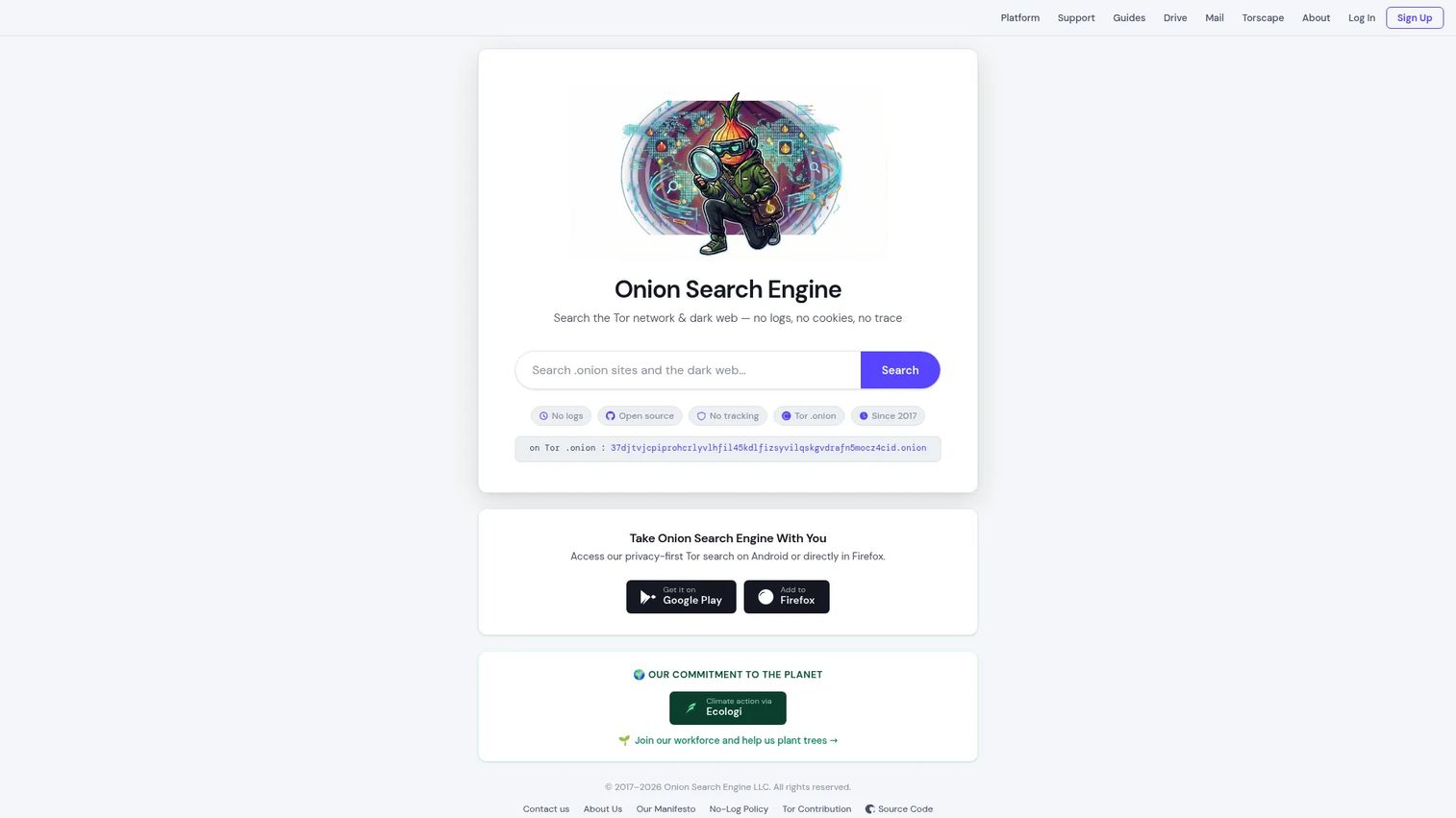
Onion Search Engine is a privacy-focused search engine for the Tor network and .onion sites that also offers a REST API for programmatic monitoring of keywords, brands, domains, and email addresses across dark web sources.
Best for: Researchers and teams that need both manual search access and API-based monitoring of brand or domain mentions across indexed onion content.
Key features
- Searches the Tor network with no logs, cookies, or tracking
- REST API with structured JSON results
- Keyword, brand, domain, and email monitoring
- Historical snapshots, metadata, link-graph, and vulnerability APIs
Why choose Onion Search Engine: The API tier is what separates this tool from basic onion search engines. Teams can pipe brand mentions, domain references, or email address appearances directly into their workflows.
Onion Search Engine pricing: A free Developer plan includes 1,000 API requests per month. The Plus plan is $19/month for 10,000 requests. The Researcher plan is $99/month for 50,000 requests. Enterprise pricing is custom.
10. Hunchly
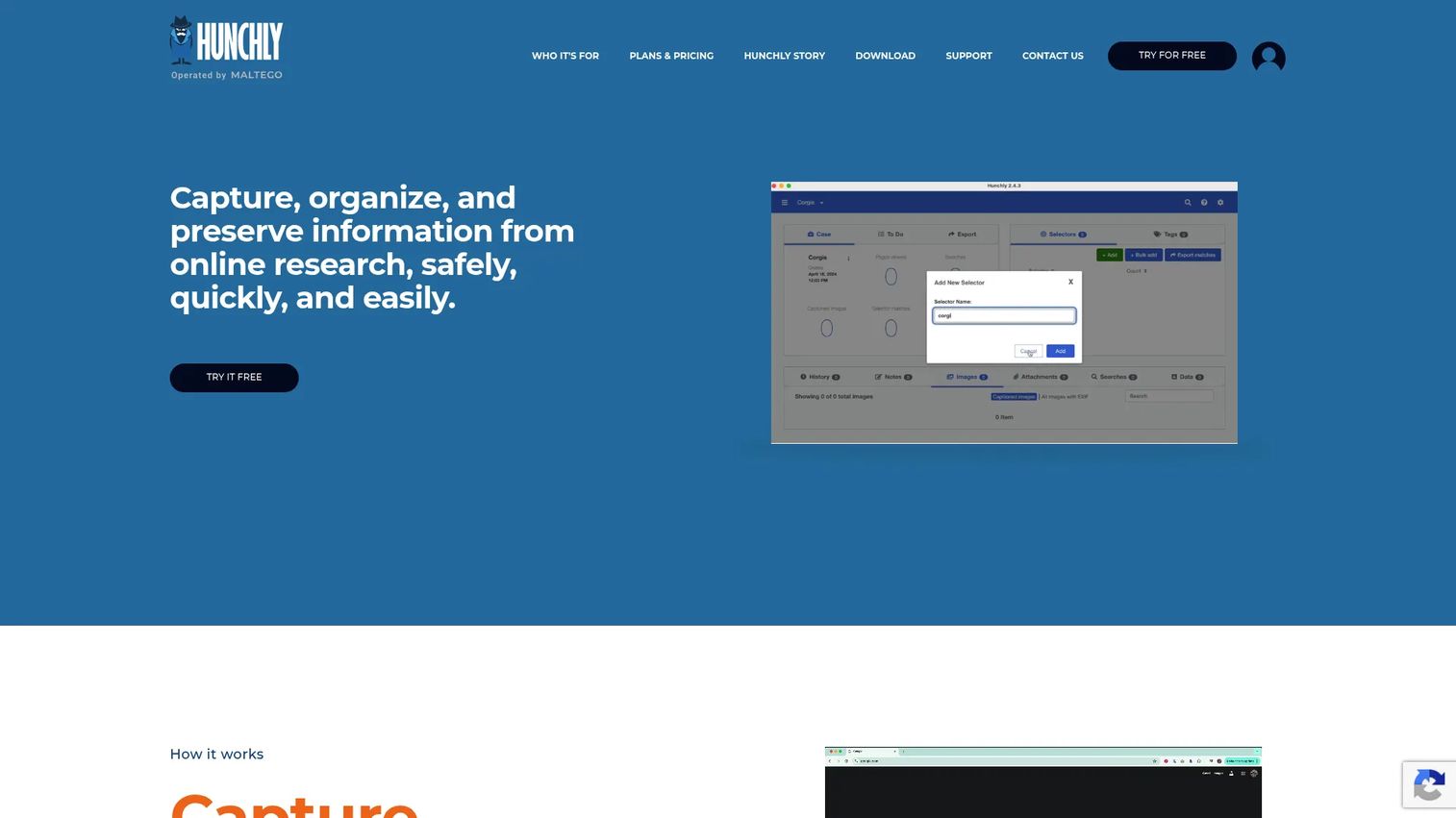
Hunchly is browser-based online investigation software that automatically captures, timestamps, hashes, and organizes web research as investigators browse. It produces court-ready reports and evidence packages without manual screenshot workflows.
Best for: Investigators, journalists, law enforcement analysts, and cybersecurity researchers who need documented, auditable evidence trails from online research sessions.
Key features
- Automatic URL capture, timestamping, and SHA-256 hashing
- Tags, notes, selectors, and full-text search across captured content
- Court- and client-ready report generation
- Evidence package export with integrity verification
Why choose Hunchly: Hunchly is the right tool when evidence integrity and repeatability matter. For dark web investigations where documentation will be used in legal proceedings or internal incident reports, automated capture removes the risk of incomplete records.
Hunchly pricing: A free version is available with no time limit. The Classic plan with local storage is $169/year. Cloud storage options require contacting sales.
11. Wallpics
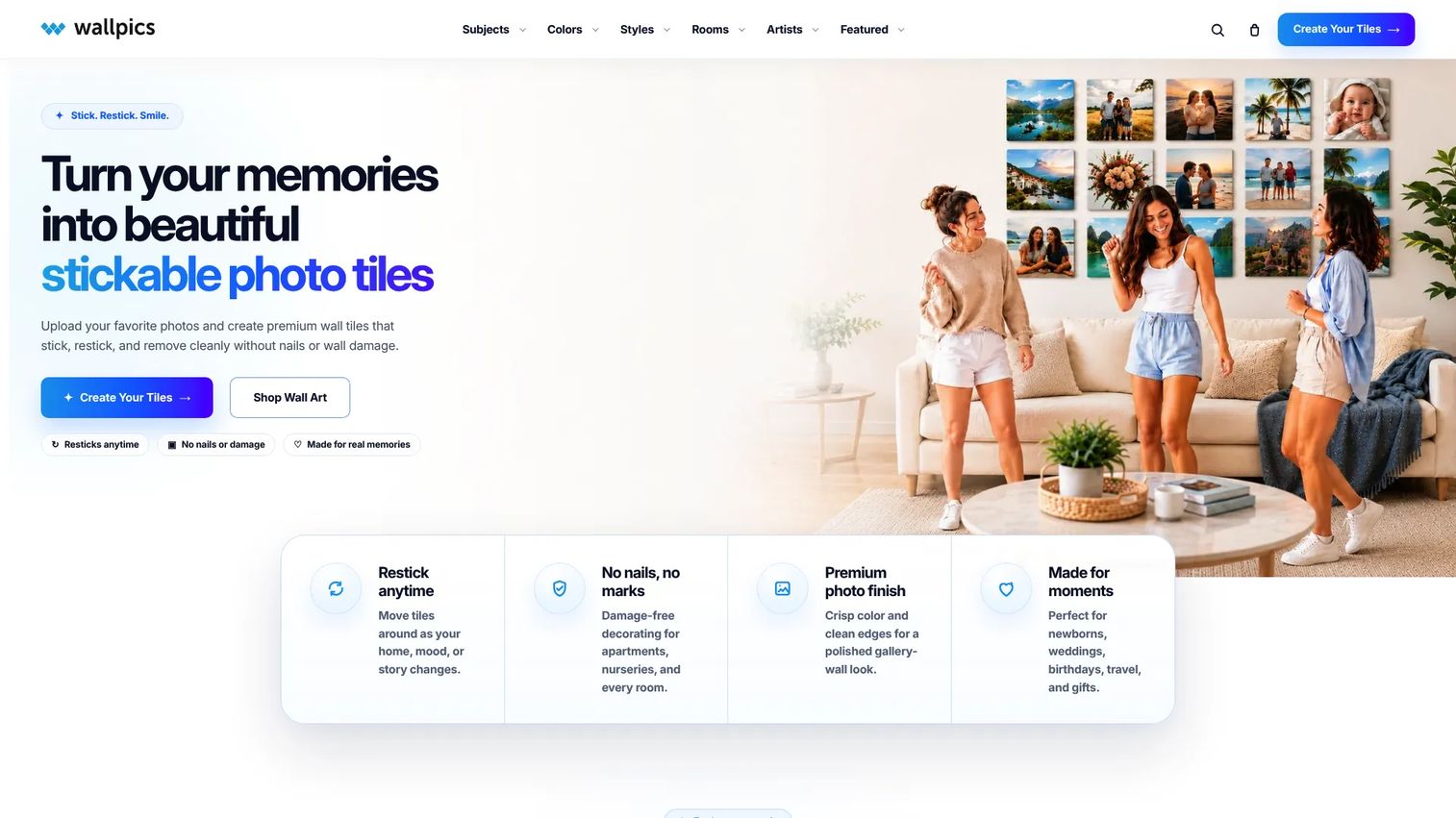
Wallpics sells custom stickable photo tiles and wall art for home décor. It has no relationship to dark web monitoring, cybersecurity, or threat intelligence.
Best for: Consumers decorating personal spaces with custom photo prints.
Key features
- Custom photo tile printing
- Stickable and repositionable mounting
- Bundle pricing for multiple tiles
Why choose Wallpics: Wallpics does not belong in a dark web monitoring evaluation. It appears in this list due to a naming overlap in certain category directories. Skip it and focus on the threat intelligence and identity protection options.
Wallpics pricing: Bundles start at $139 for 8 tiles, $199 for 12 tiles, and $249 for 16 tiles (one-time purchase, promotional pricing).
12. Solvexia
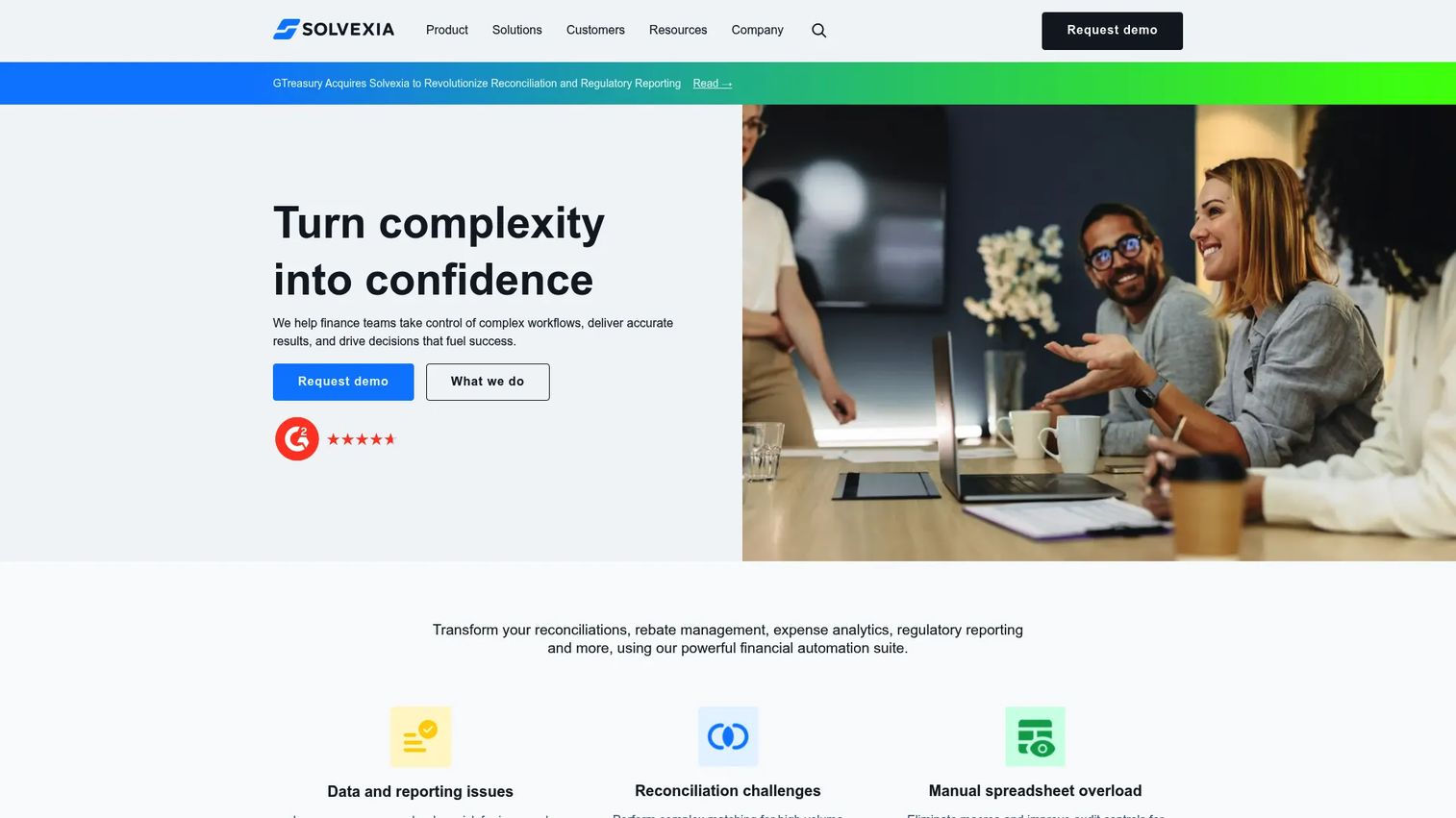
Solvexia is a no-code financial automation platform for data preparation, reconciliation, reporting, and governance workflows. It serves finance and accounting teams and has no dark web monitoring capability.
Best for: Finance and operations teams automating complex, high-volume reconciliation and reporting processes.
Key features
- Drag-and-drop data transformation and workflow automation
- Reconciliation, reporting, and analytics dashboards
- Audit trails, access controls, and data governance
- Connects data from multiple source systems and formats
Why choose Solvexia: Solvexia belongs in a financial automation shortlist, not a security monitoring one. It is included here for completeness because it surfaces in some category aggregator lists alongside monitoring tools. Evaluate it separately for finance workflow use cases.
Solvexia pricing: Contact sales. The price varies by user count and required resources.
Solvexia holds a G2 rating of 4.7/5.
13. Fortinet
Fortinet provides integrated cybersecurity and networking through its Security Fabric platform, covering firewalls, endpoint protection, SIEM, SOAR, threat intelligence, and secure access.
Best for: Enterprise organizations standardizing on a consolidated security platform that includes threat intelligence alongside network and endpoint protection.
Key features
- Next-generation firewalls with AI-powered threat detection
- FortiGuard threat intelligence integration
- Unified management and visibility across hybrid environments
- Endpoint protection and response
- SIEM and SOAR integration through FortiSIEM and FortiSOAR
Why choose Fortinet: Fortinet's dark web monitoring capability sits within a broader security platform rather than as a standalone service. Organizations already invested in the Fortinet Security Fabric get threat intelligence as part of the stack. Evaluate it alongside dedicated monitoring platforms if dark web coverage is the primary need.
Fortinet pricing: Custom pricing. Contact Fortinet or a reseller for a quote based on product scope and deployment size.
Fortinet holds a G2 rating of 4.4/5.
14. LifeLock

LifeLock provides consumer identity theft protection with dark web monitoring, financial account alerts, automatic data broker removal, and identity restoration support backed by a dedicated specialist team.
Best for: Individuals and families seeking monitored identity protection with restoration support and scam reimbursement.
Key features
- Identity and dark web monitoring with alerts
- Credit and bank account monitoring
- Automatic data broker removal
- Identity theft coverage and restoration specialists
- Scam reimbursement
Why choose LifeLock: LifeLock is a consumer product with restoration services, making it appropriate for personal use or executive protection at the individual level. It is not designed for enterprise credential monitoring across a workforce.
LifeLock pricing: The Core plan starts at $10.42/month in the first year (renews at $12.49/month billed monthly). Advanced is $16.67/month first year. Total is $29.17/month first year. A 60-day money-back guarantee applies to annual plans.
LifeLock holds a G2 rating of 4.6/5 for its business benefits offering.
15. Norton 360
Norton 360 is an all-in-one consumer security suite that bundles antivirus, VPN, dark web monitoring, password manager, scam protection, and cloud backup into tiered annual plans.
Best for: Families and individuals seeking multi-device protection with dark web monitoring as part of a broader security bundle.
Key features
- Antivirus, malware, and ransomware protection
- Dark web monitoring for personal credentials
- VPN, password manager, and 50 GB cloud backup
- Scam Protection and Deepfake Protection
- Parental controls on Deluxe and above
Why choose Norton 360: Norton 360 suits individuals who want a single subscription covering device protection, VPN privacy, and identity monitoring. The dark web monitoring feature alerts on detected personal data exposures. It is a consumer product and does not fit enterprise credential monitoring workflows.
Norton 360 pricing: Standard is $39.99 for the first year. Deluxe is $49.99 for the first year. Norton 360 with LifeLock Select Plus is $99.99 for the first year. All plans are billed annually.
16. Coveron
Coveron is a consumer identity theft protection and personal cyber insurance service that bundles 24/7 dark web monitoring, three-bureau credit monitoring, criminal records monitoring, and insurance for cyberattack, fraud, and home title protection.
Best for: Individuals and families seeking bundled identity monitoring, fraud protection, and personal cyber insurance in one plan.
Key features
- 24/7 dark web and malware breach monitoring
- Three-bureau credit monitoring and credit lock
- Cyber extortion, online fraud, and cyberattack insurance
- Home title protection
- VPN and antivirus on the Full Protection plan
Why choose Coveron: Coveron stands out for combining monitoring with insurance coverage in a single low-cost plan. The Full Protection tier adds VPN and antivirus, making it a comprehensive personal cybersecurity bundle for individuals who want coverage beyond alerts.
Coveron pricing: Scam Protection starts at $4.99/month. Identity Theft Protection is $6.99/month. Full Protection is $10.99/month. Two-year plans are also available.
17. NordVPN
NordVPN is a consumer VPN and online security service that includes a Dark Web Monitor feature on paid plans, alerting users when their email address appears in a known data breach.
Best for: Individuals and households seeking VPN privacy with dark web breach alerts included in their existing subscription.
Key features
- High-speed VPN with NordLynx and OpenVPN protocols
- Dark Web Monitor and Dark Web Monitor Pro for breach alerts
- CleanWeb ad, tracker, malware, and phishing blocking
- Meshnet for secure device networking
- Up to 10 simultaneous device connections
Why choose NordVPN: Dark web monitoring is a secondary feature within NordVPN, not its primary job. Choose it if VPN privacy is the core requirement and you want breach alerts included. For enterprise credential monitoring or full identity protection, a dedicated platform is a better fit.
NordVPN pricing: Plans are displayed in DKK on the official pricing page. The Basic plan starts at DKK 20/month on a two-year plan. Complete and Ultra tiers add more security features at higher monthly rates. Contact NordVPN for local currency pricing.
18. Aura
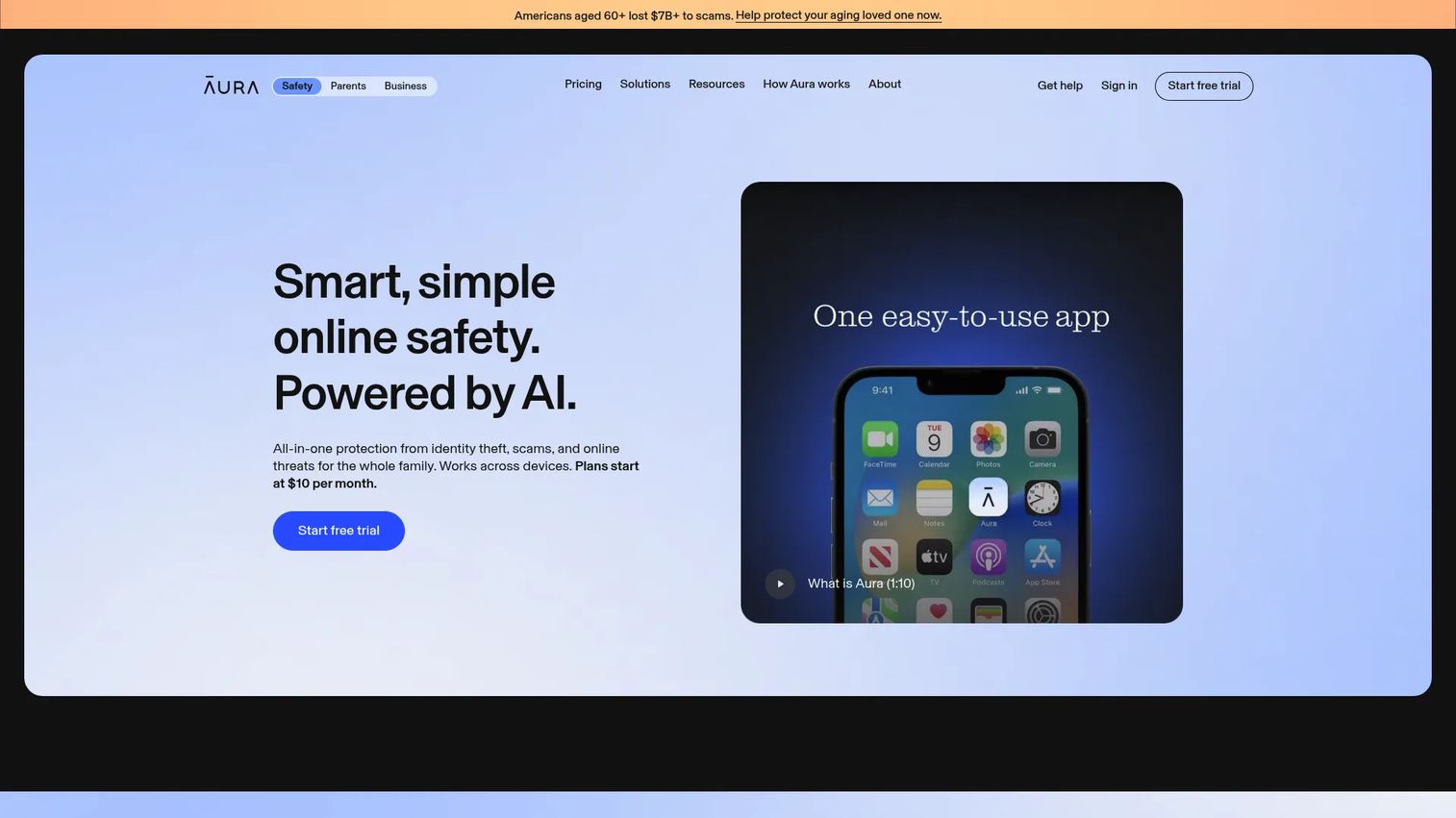
Aura is an all-in-one online safety service combining identity theft protection, three-bureau credit and financial monitoring, data broker removal from 425+ sites, antivirus, VPN, password management, and family safety features.
Best for: Individuals and families seeking the broadest bundled coverage across identity, financial, privacy, and device protection.
Key features
- Identity theft protection and fraud remediation
- Three-bureau credit monitoring and financial transaction alerts
- Data removal from 425+ data broker and people-search sites
- Antivirus, VPN, and password manager
- Parental controls and child identity protection
Why choose Aura: Aura covers more ground than most consumer identity services. The data broker removal feature addresses the upstream exposure that feeds dark web listings, making it a proactive complement to reactive alert-based tools.
Aura pricing: The Individual plan is $12/month billed annually ($15/month billed monthly). The Couple plan is $22/month annually. The Family plan is $32/month annually. A 14-day free trial is available on all plans.
Aura holds a G2 rating of 4.2/5.
19. Identity Guard
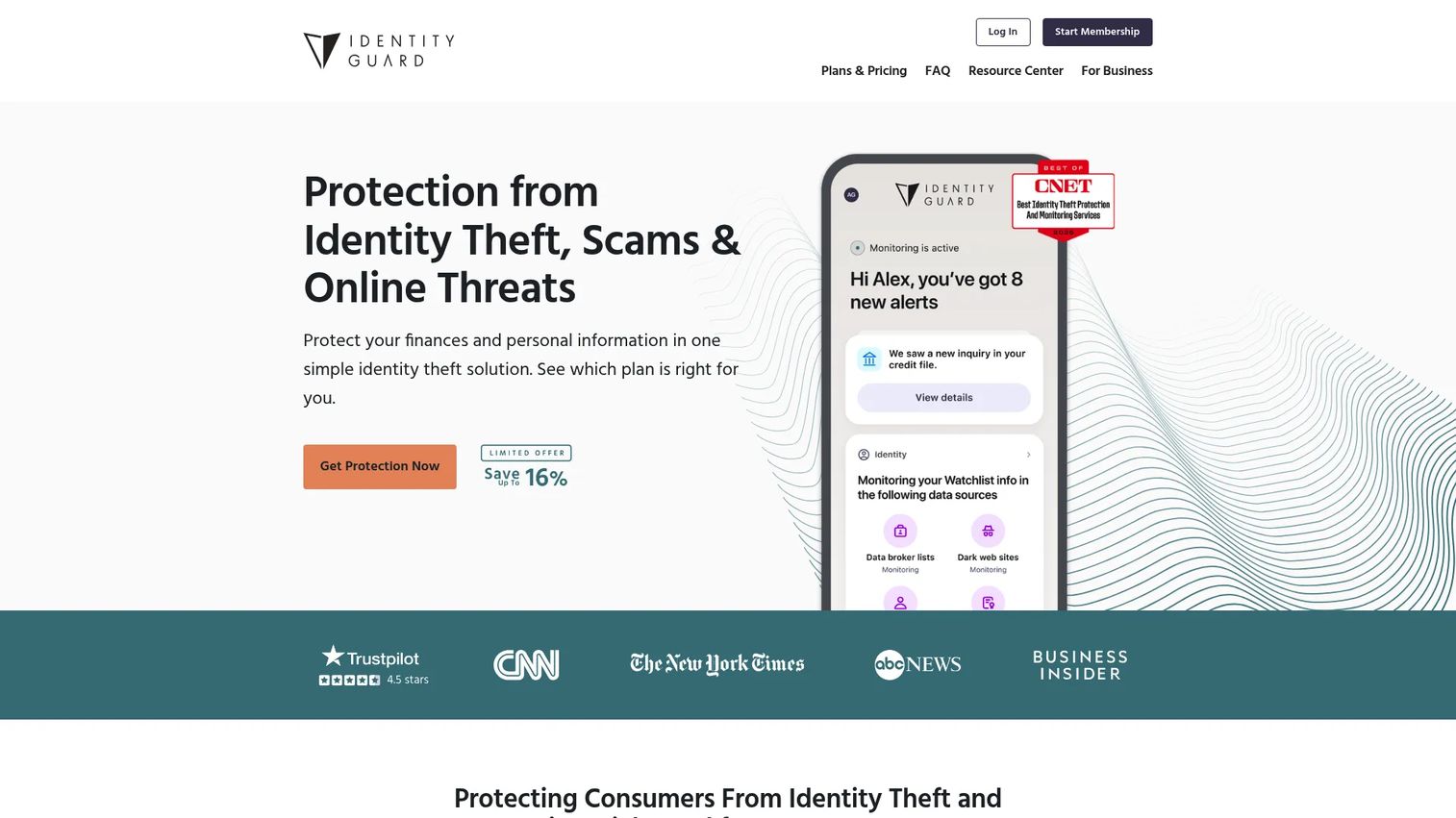
Identity Guard provides identity theft protection, dark web monitoring, three-bureau credit monitoring, bank account alerts, and fraud resolution support for individuals and families.
Best for: Individuals seeking identity monitoring paired with credit tracking and restoration support at a mid-range price point.
Key features
- Dark web monitoring and data breach notifications
- Three-bureau credit monitoring with monthly scores
- Bank account and high-risk transaction monitoring
- Safe browsing tool and password manager
- Identity theft insurance and fraud resolution support
Why choose Identity Guard: Identity Guard combines dark web alerts with credit monitoring and resolution services in a single subscription. The Value plan offers entry-level coverage; Standard and Ultra tiers add credit reports, scores, and extended financial monitoring.
Identity Guard pricing: The Value plan starts at $12.50/month ($150 billed annually in the first year). Standard is $16.67/month. Ultra is $25.00/month. No free tier is available.
Identity Guard holds a G2 rating of 4.3/5.
20. IBM Watson
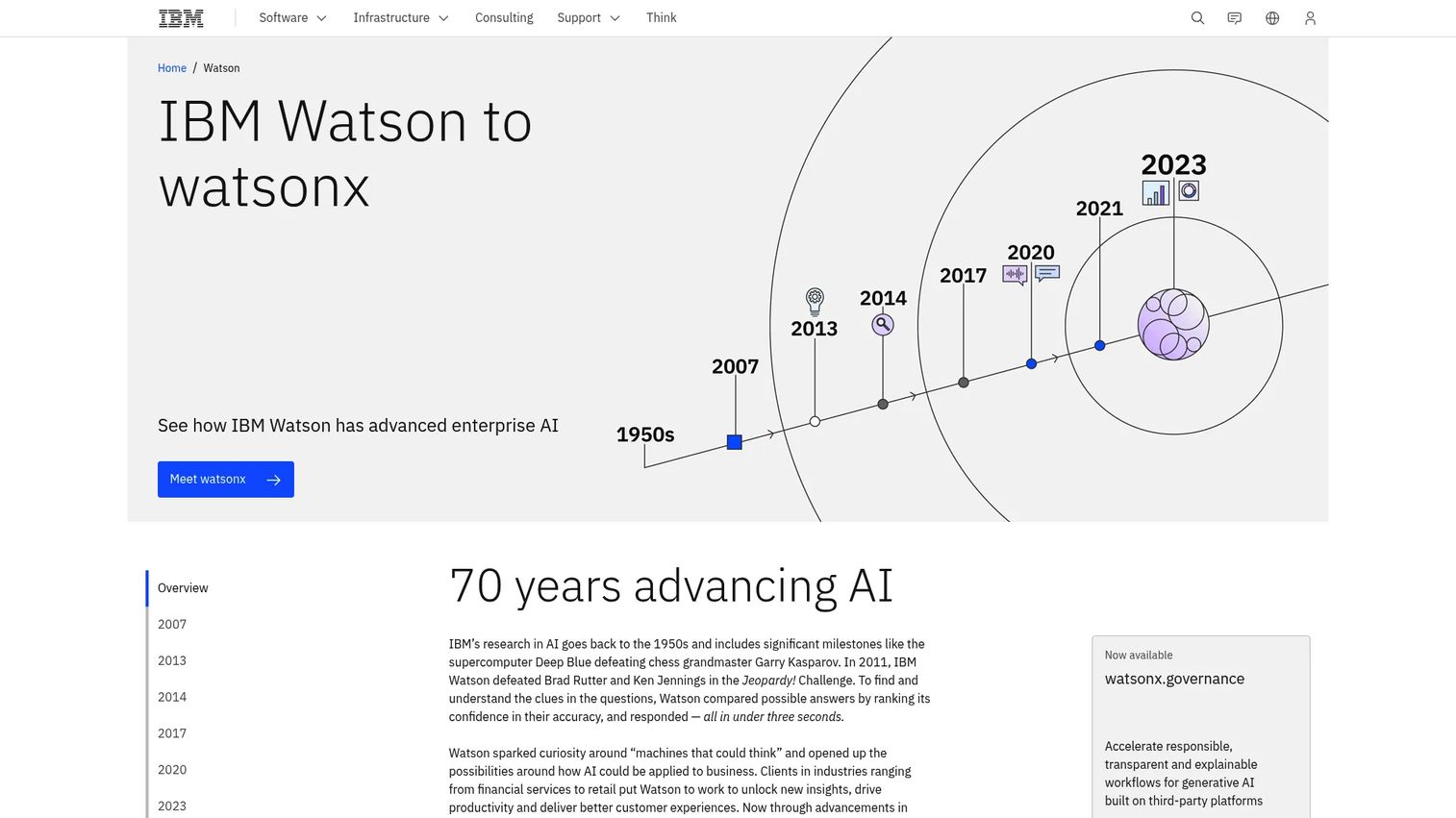
IBM Watson is IBM's portfolio of enterprise AI services covering natural language processing, machine learning, generative AI, enterprise search, and data science platform capabilities.
Best for: Enterprise organizations building, deploying, and governing AI applications and analytics workflows across cloud environments.
Key features
- Natural language processing for entity, sentiment, and relation extraction
- Enterprise search with semantic passage retrieval
- Data science model development, training, and deployment
- Generative AI application development with RAG and fine-tuning
- Conversational interface development
Why choose IBM Watson: IBM Watson is an AI platform, not a dark web monitoring product. IBM does offer threat intelligence products separately under its security portfolio, but Watson itself addresses AI and analytics workloads. Evaluate dedicated monitoring platforms for dark web exposure needs.
IBM Watson pricing: The watsonx.ai free toolbox playground is available at no cost. The Essentials tier starts at $0/month on a pay-as-you-go basis. The Standard tier starts at $1,110/month.
IBM Watson holds a G2 rating of 4.2/5 for Watson Studio.
21. Surfshark Alert
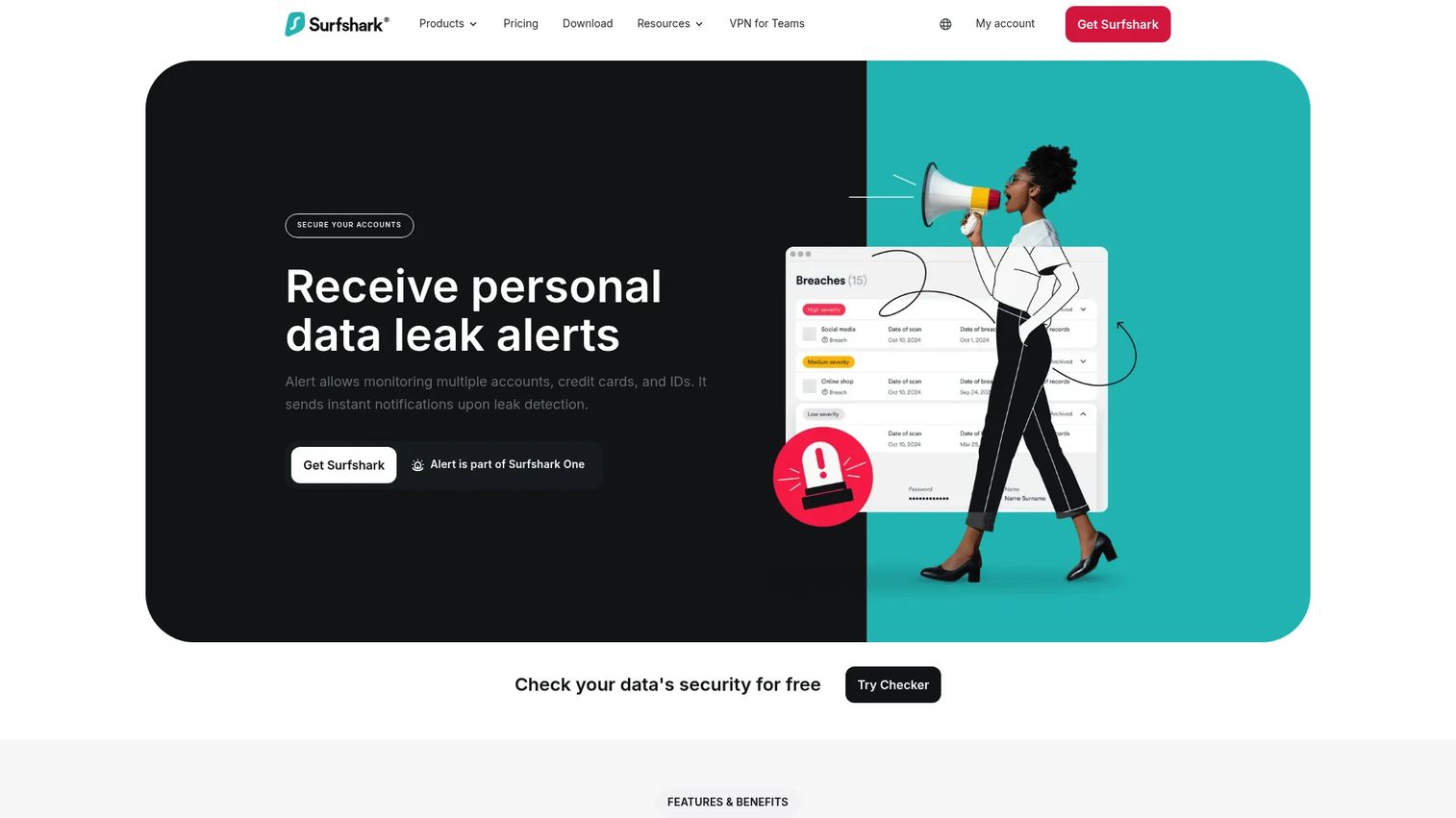
Surfshark Alert is a 24/7 data breach monitoring feature that alerts users when personal email addresses, passwords, credit card numbers, or identification documents appear in known breaches. It is included in Surfshark's Starter, One, and One+ bundles.
Best for: Individuals wanting continuous breach monitoring bundled with VPN and other privacy tools at a low monthly cost.
Key features
- Email and password leak monitoring
- Credit card and ID document breach alerts
- Social Security number and international ID monitoring across 90+ countries
- Malware-related leak alerts
- Breach reports and notifications
Why choose Surfshark Alert: Surfshark Alert is not available as a standalone product. It comes as part of the Surfshark bundle, so it suits users who already want VPN and antivirus coverage and want breach monitoring included without a separate subscription.
Surfshark Alert pricing: Included in the Surfshark Starter bundle at $2.49/month on a 24-month plan ($67.23 billed upfront for the first 27 months). Surfshark One is $2.79/month and One+ is $4.49/month on the same billing terms.
Surfshark holds a G2 rating of 4.0/5.
22. Surfshark VPN
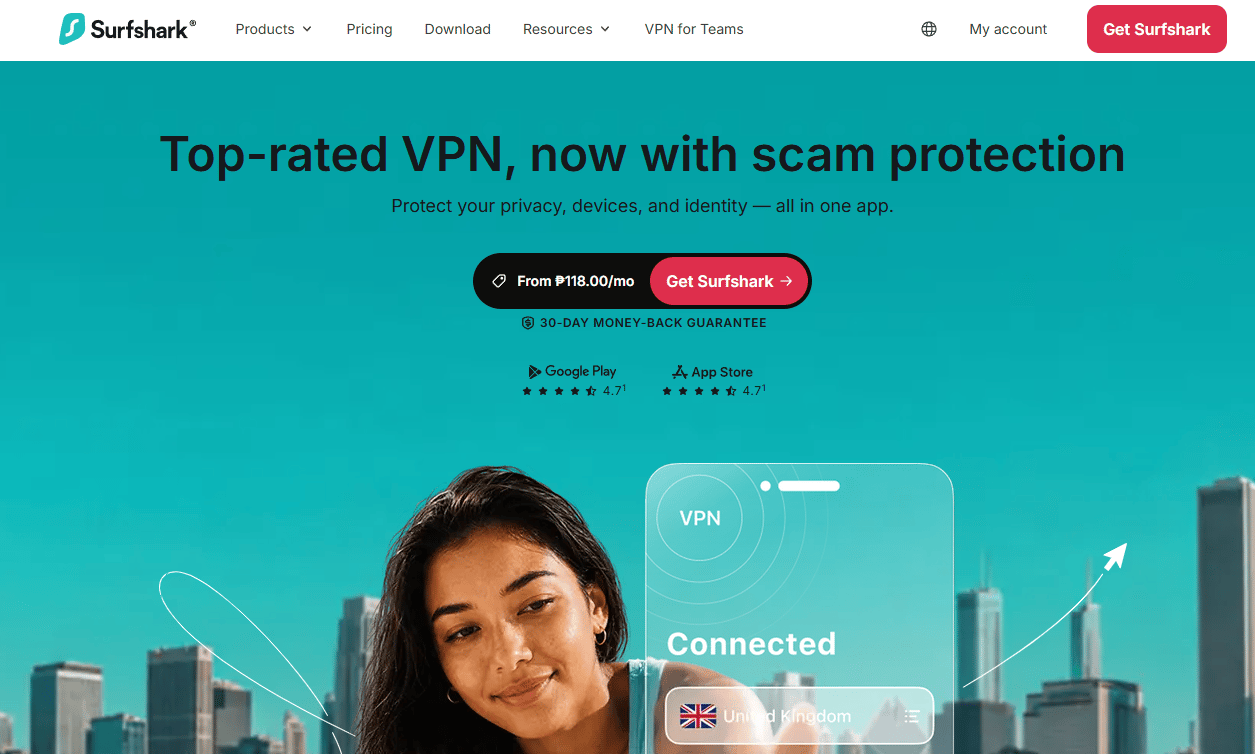
Surfshark VPN encrypts internet traffic, masks IP addresses, and blocks ads, trackers, and malware through its CleanWeb feature. It supports unlimited simultaneous connections and RAM-only servers with a no-logs policy.
Best for: Individuals and households needing VPN privacy across unlimited devices at a competitive price.
Key features
- Unlimited simultaneous device connections
- CleanWeb ad, tracker, malware, and phishing blocking
- Kill switch and split tunneling
- Dynamic MultiHop and IP Rotator
- RAM-only servers and no-logs policy
Why choose Surfshark VPN: VPN protection reduces the risk of credential interception on public networks but does not monitor the dark web for already-exposed credentials. Pair Surfshark VPN with a dedicated monitoring service if credential exposure detection is a priority.
Surfshark VPN pricing: The Starter plan is $2.49/month on a 24-month plan. One is $2.79/month and One+ is $4.49/month on the same terms.
Surfshark holds a G2 rating of 4.0/5.
23. Surfshark Antivirus
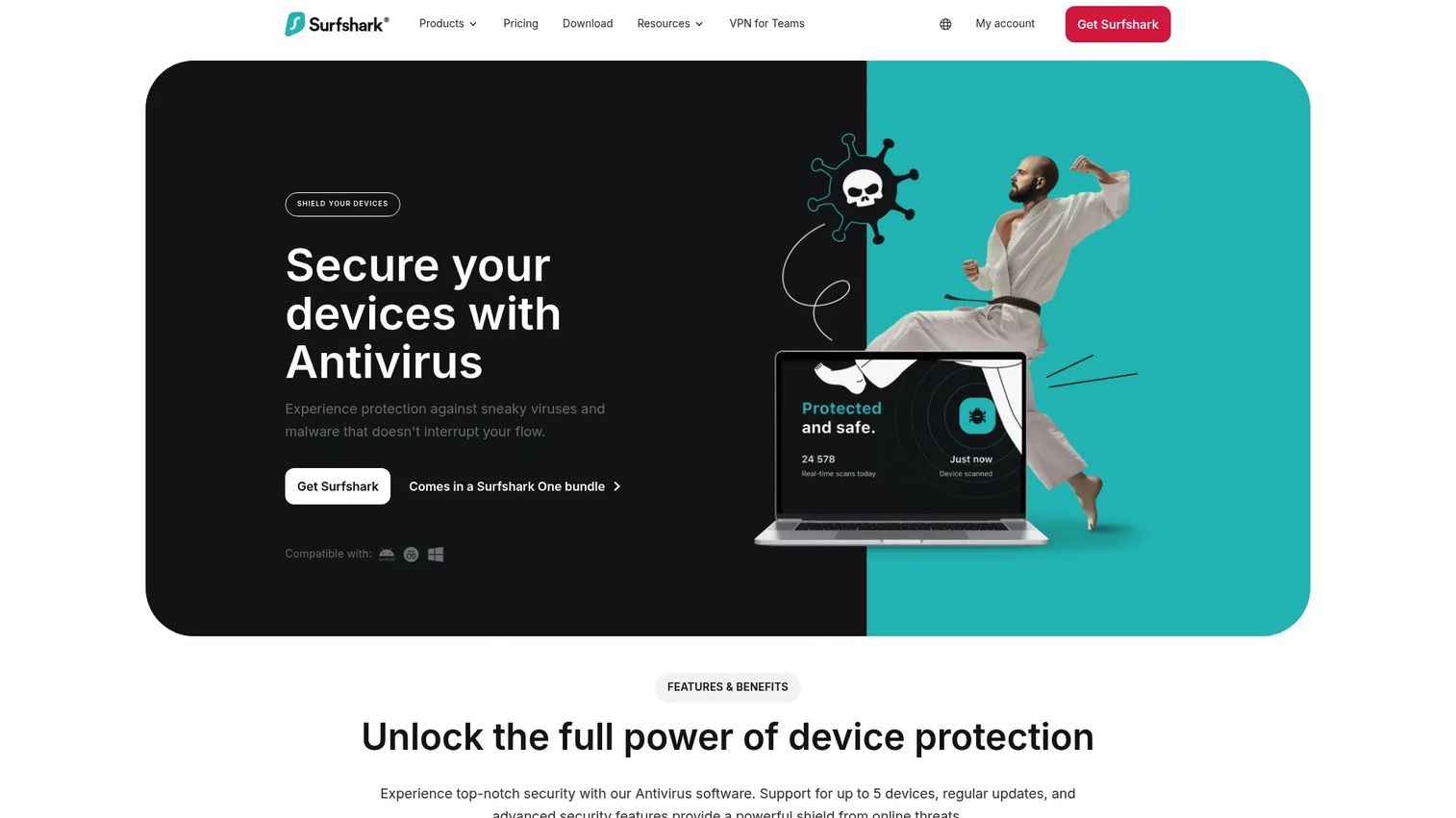
Surfshark Antivirus provides real-time malware, spyware, and ransomware protection with webcam blocking and scheduled scans. It is available exclusively within the Surfshark One bundle and is not sold as a standalone product.
Best for: Individuals and households seeking bundled device protection alongside VPN and breach monitoring.
Key features
- Real-time spyware and malware scanning
- Webcam protection
- Customizable scheduled, full, and quick scans
- Cloud Protect scanning and database updates every 3 hours
- Support for up to 5 devices
Why choose Surfshark Antivirus: Antivirus protection addresses infostealer infections at the endpoint, which is a direct upstream cause of dark web credential exposure. Surfshark Antivirus suits users who want device protection within the Surfshark bundle rather than a standalone endpoint security product.
Surfshark Antivirus pricing: Included in the Surfshark One bundle, which starts at DKK 18.59/month on a two-year plan. Surfshark One is not available as a standalone antivirus purchase.
Surfshark holds a G2 rating of 4.0/5.
24. Incogni
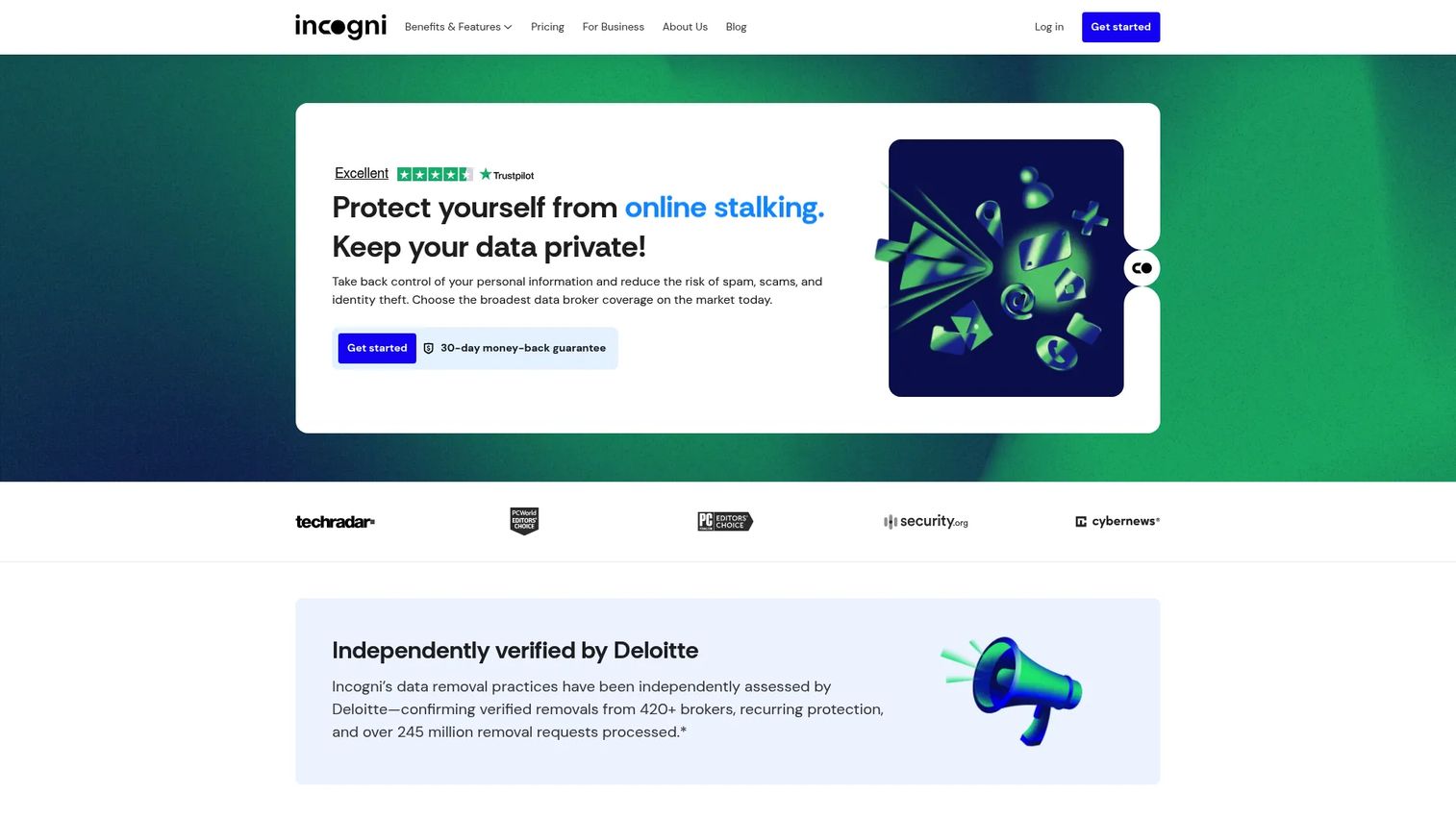
Incogni automates the removal of personal information from data brokers and people-search sites, sending recurring removal requests to 420+ sites and reporting monthly progress.
Best for: Individuals and families wanting automated, recurring personal data removal from data brokers to reduce their exposure footprint.
Key features
- Automated removal requests to 420+ data broker sites
- Recurring removals and monthly progress reports
- Custom removals covering 3,000+ additional sites
- Removal of multiple emails, addresses, and phone numbers
- Family account management for up to 5 members
Why choose Incogni: Incogni addresses the upstream problem: When personal data disappears from data brokers, there is less raw material for phishing campaigns and targeted attacks. It does not monitor the dark web directly, so use it alongside a dedicated monitoring service for full coverage.
Incogni pricing: The Standard plan is $7.99/month ($95.88 billed annually). Unlimited is $14.99/month. Family is $15.99/month. Family Unlimited is $22.99/month. No free tier is available.
25. IdentityForce
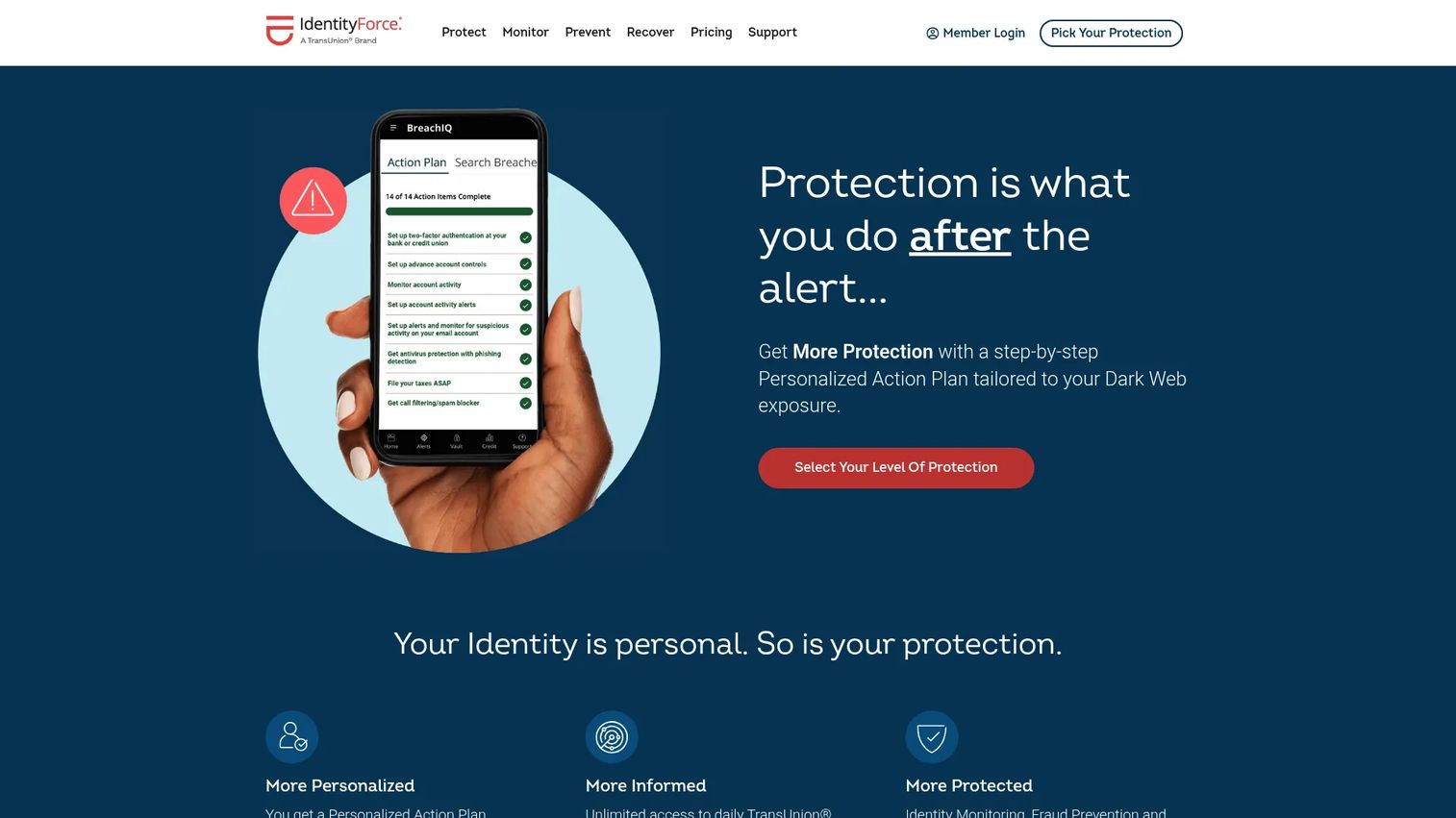
IdentityForce provides identity theft protection, dark web monitoring, credit monitoring, advanced fraud monitoring, and dedicated restoration specialists with a 30-day free trial on individual plans.
Best for: Individuals and families seeking comprehensive identity monitoring with dedicated restoration support and a risk-free trial period.
Key features
- 24/7 dark web monitoring and breach alerts
- Three-bureau credit monitoring, reports, and alerts
- Advanced fraud monitoring
- Dedicated identity restoration specialists
- Mobile app and mobile attack control
Why choose IdentityForce: The combination of dark web monitoring and dedicated restoration specialists makes IdentityForce well-suited for individuals who want expert help if an identity theft incident occurs, not just an alert.
IdentityForce pricing: UltraSecure Individual is $19.90/month or $199.90/year after a 30-day trial. UltraSecure+Credit Individual adds three-bureau credit monitoring at $34.90/month or $349.90/year. Family plans start at $24.90/month.
26. ID Watchdog
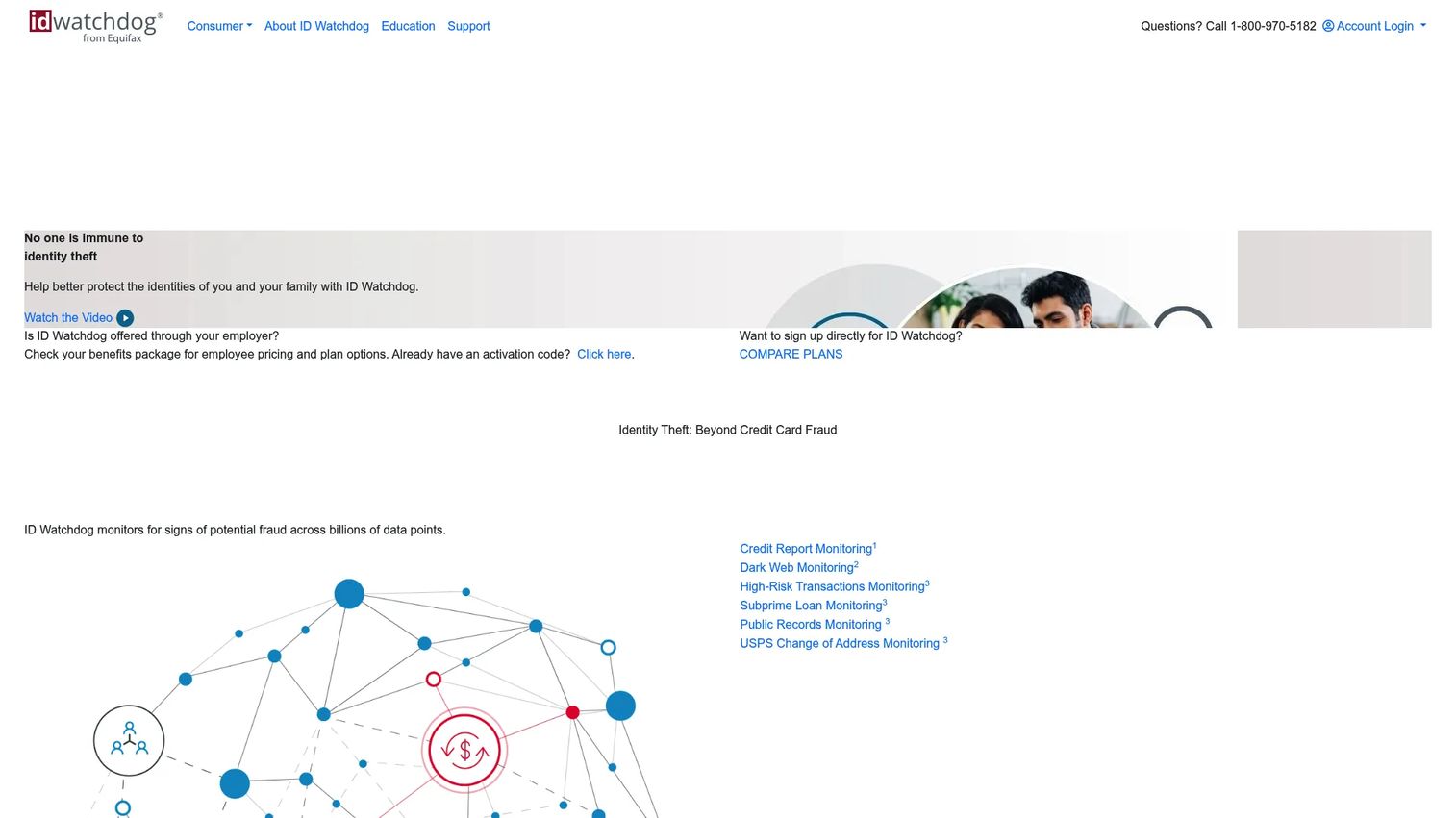
ID Watchdog is an identity theft protection service offering dark web monitoring, credit monitoring, identity theft alerts, and recovery support, often distributed through employee benefit programs.
Best for: Individuals and employees accessing identity protection through a workplace benefits program.
Key features
- Dark web monitoring and identity theft alerts
- Credit monitoring
- Identity theft recovery support
- Available through employer benefit channels
Why choose ID Watchdog: ID Watchdog is a practical choice for teams offering identity protection as an employee benefit, where program management and benefit integration matter as much as feature depth.
ID Watchdog pricing: The ID Watchdog Select plan is $14.95/month.
ID Watchdog holds a G2 rating of 4.4/5.
27. Experian IdentityWorks
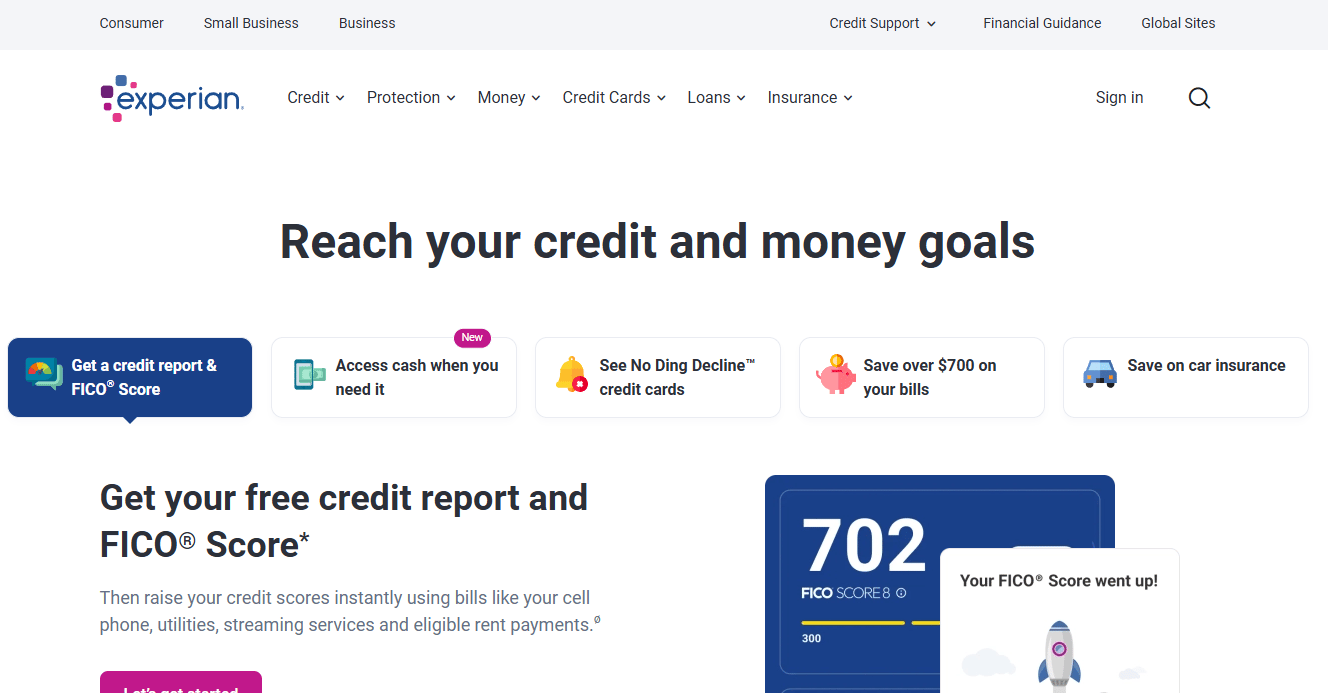
Experian IdentityWorks is a consumer identity protection service offering dark web surveillance, credit monitoring, privacy scans, CreditLock, fraud resolution support, and identity theft insurance up to $1 million.
Best for: Individuals seeking credit-bureau-connected identity monitoring with a free entry-level tier and strong restoration coverage.
Key features
- Three-bureau credit monitoring and alerts
- Dark web surveillance and Social Security number trace alerts
- Monthly privacy scans and removal assistance
- Experian CreditLock
- Identity theft insurance up to $1 million
Why choose Experian IdentityWorks: The free Basic plan covers Experian credit monitoring, making it a low-commitment starting point. Premium adds full dark web surveillance, privacy scans, and insurance for individuals who need broader protection.
Experian IdentityWorks pricing: The Basic plan is free. Premium is $24.99/month after a 7-day free trial. The Family plan is $34.99/month after a 7-day trial.
28. Equifax
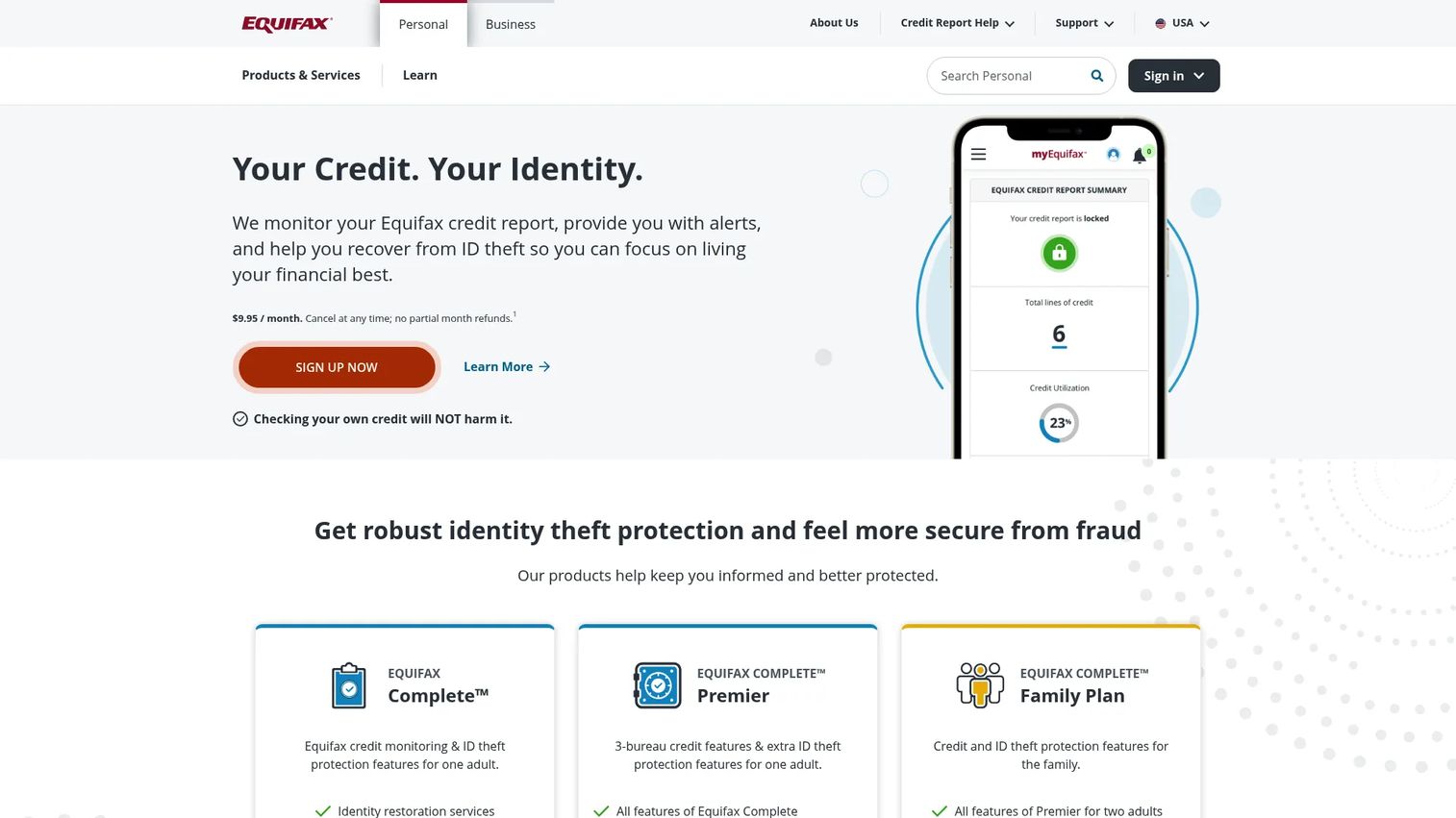
Equifax is a global data, analytics, and technology company providing credit risk data, identity verification, fraud prevention, and employment verification solutions for businesses and government agencies.
Best for: Businesses and organizations needing credit risk assessment, fraud prevention, and identity verification data at scale.
Key features
- Credit risk data, scores, and decisioning tools
- Identity verification and fraud prevention
- Employment, income, and education verification
Why choose Equifax: Equifax provides the underlying credit and identity data that powers many consumer monitoring services. For direct dark web exposure monitoring, evaluate dedicated platforms. Equifax fits where credit risk assessment and identity verification are the primary data need.
Equifax pricing: Pricing varies by product, region, and volume. Contact Equifax for a quote.
Equifax holds a G2 rating of 4.4/5.
29. Experian
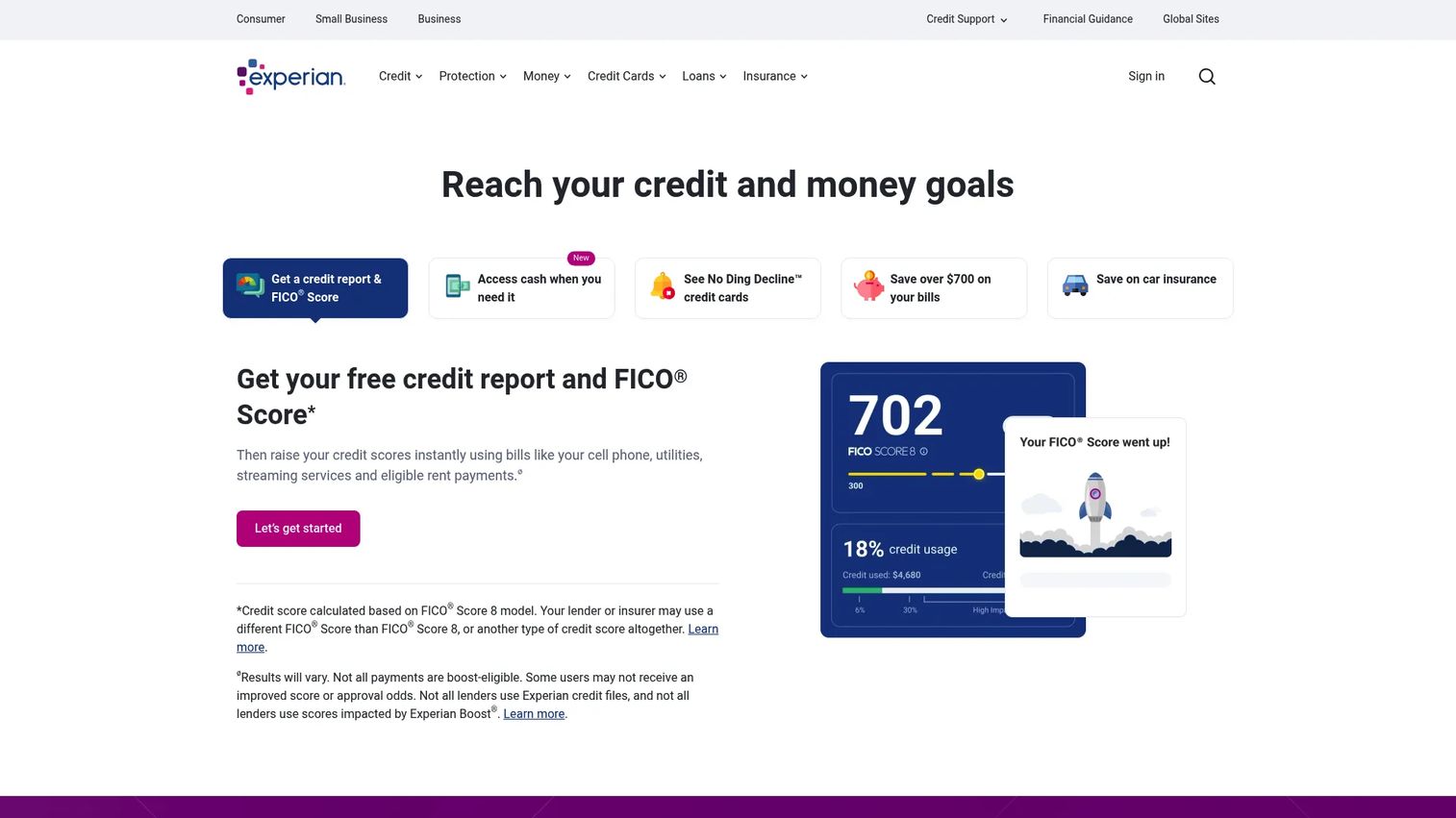
Experian is a global data and technology company providing credit decisioning, fraud management, identity solutions, marketing analytics, and workforce and healthcare data products.
Best for: Organizations needing data-driven credit, fraud, identity, or marketing analytics across consumer and commercial segments.
Key features
- Credit decisioning and profile reports
- Fraud management and identity solutions
- Data quality, analytics, and model development
- Marketing and customer engagement solutions
- Workforce and healthcare solutions
Why choose Experian: Experian is a data infrastructure company. Individual consumers access IdentityWorks (entry 27 above) for personal monitoring. Business customers use Experian products for credit analytics, fraud prevention, and data enrichment rather than dark web surveillance.
Experian pricing: Business credit reports start at $69.95 per report. Annual plans for credit intelligence products start at $199/year. Enterprise products require contacting sales.
Experian holds a G2 rating of 4.4/5.
30. TransUnion
TransUnion provides data, analytics, credit risk, fraud prevention, identity verification, marketing, communications, and investigative solutions for businesses across multiple sectors.
Best for: Organizations needing enterprise credit risk management, fraud prevention analytics, or investigative data solutions.
Key features
- Fraud prevention and identity verification through TruValidate
- Credit risk management and advanced analytics through TruVision
- Investigative searches and due diligence through TruLookup
- Marketing and audience targeting through TruAudience
- Consumer financial health and identity protection through TruEmpower
Why choose TransUnion: Like the other major credit bureaus, TransUnion primarily serves as a data and analytics infrastructure provider for businesses. For dark web monitoring, assess dedicated threat intelligence platforms. TruLookup may be relevant for investigators needing background and identity data.
TransUnion pricing: Business solution pricing requires contacting TransUnion. Consumer products are available directly through the TransUnion website.
TransUnion holds a G2 rating of 4.3/5.
31. VantageScore 3.0

VantageScore 3.0 is a consumer credit scoring model developed collaboratively by the three major credit bureaus. It produces a numerical credit score used by lenders and financial services companies to assess consumer creditworthiness.
Best for: Understanding one of the two major credit scoring models used in consumer lending.
Key features
- Tri-bureau consumer credit scoring model
- Scores range from 300 to 850
- Used alongside FICO scores by lenders and financial institutions
Why choose VantageScore 3.0: VantageScore is a scoring methodology, not a monitoring platform. It appears here because some identity protection services report VantageScore alongside FICO scores. It does not monitor the dark web or detect credential exposure independently.
VantageScore 3.0 pricing: VantageScore is a scoring model accessed through credit bureau products and services. No standalone product pricing applies.
32. FICO
FICO develops credit scoring models, decision management platforms, and analytics software used by banks, insurers, retailers, and healthcare organizations for risk decisioning and fraud detection.
Best for: Financial institutions and lenders using FICO scores and decision management platforms for credit and fraud risk assessment.
Key features
- FICO Score credit scoring model
- Decision management and optimization platforms
- Fraud detection and analytics for financial services
Why choose FICO: FICO scores appear in many consumer credit and identity monitoring reports, but FICO itself is a financial analytics company rather than a dark web monitoring product. Evaluate FICO Decision Management if your need is credit risk automation. For credential exposure monitoring, dedicated platforms address that job directly.
FICO pricing: Custom pricing. FICO serves enterprise financial institutions; contact sales for product-specific pricing.
33. Active Directory
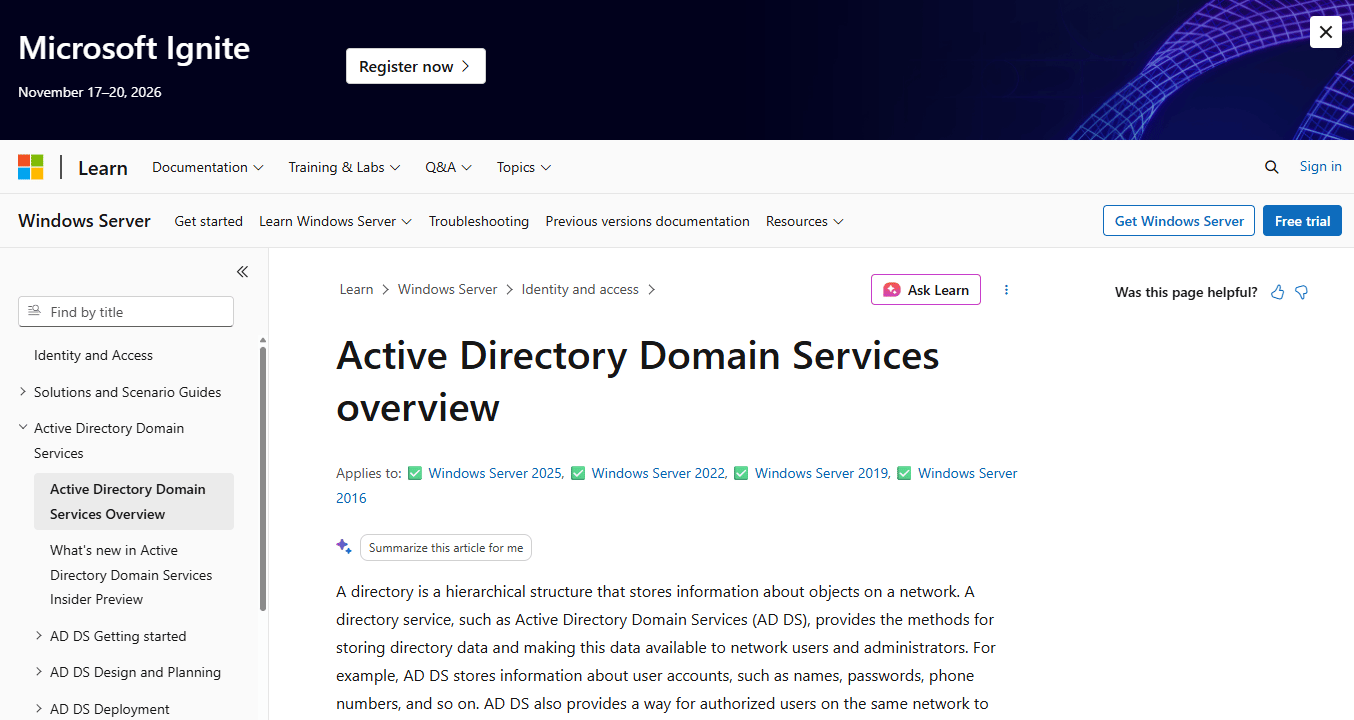
Active Directory is Microsoft's on-premises directory service for managing user identities, authentication, authorization, and group policies in Windows environments.
Best for: Enterprise organizations managing on-premises user identities, access controls, and group policies across Windows infrastructure.
Key features
- User and group identity management
- Kerberos and NTLM authentication
- Group policy management
- Integration with Microsoft security and productivity tools
Why choose Active Directory: Active Directory is the response layer, not the monitoring layer. When a dark web monitoring alert identifies a compromised credential, the immediate action is forcing a password reset and revoking sessions in Active Directory. It is an essential part of the containment workflow, but it does not detect external exposure on its own.
Active Directory pricing: Included in Microsoft server licensing. Contact Microsoft or a reseller for current licensing terms.
34. Okta
Okta is a cloud-based identity and access management platform providing SSO, MFA, lifecycle management, risk-based access policies, and integrations across thousands of applications.
Best for: Organizations standardizing on cloud-based identity management with MFA enforcement, lifecycle automation, and risk-based access controls.
Key features
- Single sign-on across cloud and on-premises applications
- Adaptive MFA and risk-based access policies
- Automated lifecycle management for user provisioning and deprovisioning
- ThreatInsight for detecting and blocking malicious sign-in attempts
- Integrations with 7,000+ applications
Why choose Okta: Okta handles the response side of a credential exposure incident. When monitoring detects a compromised identity, Okta enables immediate session revocation, MFA step-up, and automated deprovisioning. Pairing Okta with a dedicated dark web monitoring platform closes the loop between detection and containment.
Okta pricing: Custom pricing. Contact Okta for a quote based on user count and product modules.
No standalone G2 listing verified for Okta specifically as a dark web monitoring tool.
35. Entra ID
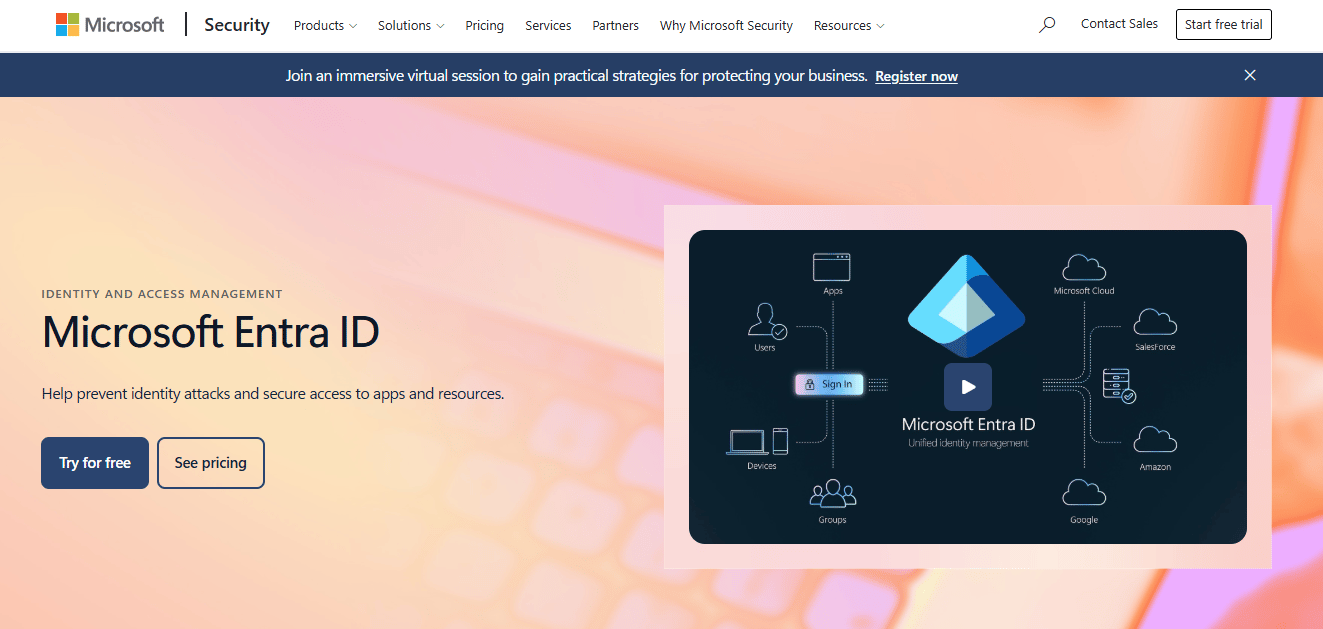
Entra ID (formerly Azure Active Directory) is Microsoft's cloud-native identity platform providing SSO, MFA, conditional access, identity protection, and risk-based sign-in detection for Microsoft 365 and Azure environments.
Best for: Organizations within the Microsoft ecosystem needing cloud identity management, conditional access, and sign-in risk detection.
Key features
- Risk-based sign-in detection and automated response
- Conditional access policies based on user risk and device compliance
- MFA and passwordless authentication
- Identity Protection with leaked credential detection via Microsoft's threat intelligence
- Integration with Microsoft 365, Azure, and third-party applications
Why choose Entra ID: Entra ID includes leaked credential detection through Microsoft's own threat intelligence feeds, which means it surfaces some dark web credential exposure natively within the Microsoft stack. For organizations already on Microsoft 365, this is a strong baseline. Supplement with a dedicated monitoring platform for broader coverage of criminal forums and non-Microsoft sources.
Entra ID pricing: Included in Microsoft 365 Business Premium and certain Microsoft Entra licensing tiers. Contact Microsoft for current plan details.
36. Splunk
Splunk is a SIEM and security analytics platform that ingests machine data from across an organization's environment, correlates it into detections, and supports investigation and response workflows.
Best for: Enterprise SOC teams that need to ingest, correlate, and act on security data including dark web monitoring alerts from third-party sources.
Key features
- Log ingestion and search across hybrid cloud and on-premises environments
- Correlation rules and detection engineering
- Security investigations and incident management
- SOAR integration and automated playbook execution
- Dashboards, reporting, and compliance workflows
Why choose Splunk: Splunk does not monitor the dark web natively, but it is where dark web alerts become actionable at scale. Feed findings from a dedicated monitoring platform into Splunk, correlate them with sign-in logs and endpoint telemetry, and trigger response playbooks automatically. Splunk is the orchestration layer, not the detection source.
Splunk pricing: Custom pricing. Splunk uses both ingest-volume and workload-based pricing models. Contact Splunk or a partner for current terms.
37. Microsoft Sentinel
Microsoft Sentinel is a cloud-native SIEM and SOAR platform built on Azure that provides AI-driven threat detection, automated response playbooks, and integrated investigation workflows.
Best for: Organizations running on Azure or Microsoft 365 that need a cloud-native SIEM with built-in automation and Microsoft ecosystem integration.
Key features
- AI-driven threat detection across enterprise data sources
- Automated response playbooks (Logic Apps)
- Incident management and investigation tools
- Integration with Microsoft Defender, Entra ID, and third-party connectors
- Consumption-based pricing tied to data ingestion volume
Why choose Microsoft Sentinel: Sentinel receives dark web monitoring alerts through data connectors and correlates them with internal telemetry from Entra ID, Defender, and other sources. For Microsoft-first environments, Sentinel consolidates SIEM and SOAR in one place, reducing the number of tools a security team manages.
Microsoft Sentinel pricing: Consumption-based pricing tied to data ingestion volume in gigabytes per day. Commitment tiers are available for predictable costs. Check the Azure pricing calculator for current rates.
38. Elastic
Elastic provides search-based security analytics through the Elastic Security platform, supporting log ingestion, threat detection with prebuilt rules, investigation workflows, and endpoint protection.
Best for: Security teams that need flexible, open-architecture security analytics with strong search capabilities and the ability to customize detection logic.
Key features
- Search-based log analysis across structured and unstructured data
- Prebuilt detection rules and MITRE ATT&CK coverage
- Investigation timelines and case management
- Endpoint detection and response integration
- Open architecture with broad data source support
Why choose Elastic: Elastic's open architecture makes it a strong choice for teams with diverse data sources and custom detection requirements. Like Splunk and Sentinel, Elastic does not monitor the dark web natively. Feed external monitoring findings into Elastic for correlation and response at scale.
Elastic pricing: A free tier is available for self-managed deployments. Cloud-managed plans start with consumption-based pricing on Elastic Cloud. Enterprise plans require contacting Elastic for current terms.
39. Cortex XSOAR
Cortex XSOAR is a security orchestration, automation, and response platform from Palo Alto Networks that manages playbooks, case management, alert enrichment, and automated remediation across security tools.
Best for: Enterprise SOC teams managing high alert volumes across multiple security tools who need playbook automation and centralized incident management.
Key features
- Playbook automation for alert triage and remediation
- Case management and investigation collaboration
- Alert enrichment through hundreds of integrations
- Threat intelligence management and deduplication
- Marketplace with prebuilt packs for common use cases
Why choose Cortex XSOAR: When a dark web monitoring alert arrives, Cortex XSOAR can automatically enrich the finding, cross-reference it against internal systems, trigger a password reset in Okta or Active Directory, open a ticket, and notify the response team. It turns a manual workflow into a repeatable, auditable process.
Cortex XSOAR pricing: Custom pricing. Contact Palo Alto Networks for a quote based on deployment model and feature scope.
40. Gartner

Gartner is a research and advisory organization providing market analysis, vendor evaluations, Magic Quadrant reports, peer reviews, and advisory services across technology and business disciplines.
Best for: Security leaders and founders using analyst research to shortlist vendors, validate tool categories, and benchmark security programs.
Key features
- Magic Quadrant vendor evaluations by category
- Peer Insights reviews from verified practitioners
- Hype Cycle research for emerging technology
- Advisory and consulting services for security strategy
Why choose Gartner: Gartner is not a dark web monitoring product. It is the research source you use before choosing one. Gartner's Security Operations and Digital Risk Protection reports help you understand which vendors lead their categories, compare features across platforms, and justify purchasing decisions to a board or security committee.
Gartner pricing: Access to Gartner research requires a subscription. Individual reports can be purchased separately. Enterprise subscriptions include broader access to analysts and peer review data. Contact Gartner for current subscription terms.
Considerations when choosing dark web monitoring tools
Coverage and source visibility
Ask specifically which sources a platform monitors. Indexed onion pages, criminal forums, paste sites, infostealer marketplaces, and private channels require different collection methods, and most platforms cover only a subset. A platform that monitors 50 sources may miss the forum where your credentials appeared.
Evidence quality and identity matching
An alert is only useful if it carries verifiable evidence. Look for exact credential matches, timestamps, source context, confidence scoring, and controls that reduce false positives. Vague mentions of a domain name without an associated credential record add noise rather than signal.
Response workflow integration
The critical question is not what the platform detects, it is what it triggers next. Prioritize tools that support password reset workflows, session revocation, MFA enforcement, ticketing integration, and escalation paths. Detection without a response owner creates a queue of unactioned alerts.
Stack integration and operating model
Assess IAM, SIEM, SOAR, ticketing, API, and Slack integration depth before committing. A Series B company moving quickly cannot afford a monitoring dashboard that sits outside the tools the security or IT team uses daily. The tool needs to fit the workflow your new security hire will own.
Cost against exposure and scale
Estimate the total monitoring cost against the number of employee identities, contractor domains, vendor accounts, and executive profiles you need to cover. Factor in alert volume, triage time, and contract terms. A cheap tool that generates 200 low-confidence alerts per day costs more in analyst time than a higher-priced platform that delivers 10 validated findings.
How to choose the right dark web monitoring tool for your team
If you need enterprise exposure monitoring
Choose a dedicated platform covering criminal forums, credential markets, and paste sites with identity matching and real-time alerting. Lunar by Webz.io and Cyble Vision are built for this job. Prioritize coverage of infostealer logs and session cookies alongside standard credential pairs, and confirm that findings push into your existing IAM and SIEM stack.
If your main risk is credential compromise
NordStellar covers external attack surfaces alongside credential monitoring, which is the right combination when you need both asset visibility and leaked password detection. Confirm that alerts connect to your identity provider for automated reset workflows, particularly for privileged accounts and cloud infrastructure credentials.
If you need technical investigation and research
Censys, Onion Scan, TorBot, and Hunchly each address a different part of the investigation workflow: Internet asset mapping, hidden service auditing, site crawling, and evidence capture respectively. Use them in combination for thorough research workflows. None of these tools provide continuous background monitoring for your organization.
If you need consumer identity protection
Aura and IdentityForce offer the broadest combination of dark web alerts, credit monitoring, and restoration support for individuals. Experian IdentityWorks is the right starting point if you want a free tier with the option to upgrade. Choose based on whether credit monitoring or restoration specialist access matters more for your situation.
If you are a Series B SaaS founder
Start with the operating model. Assign an owner before buying anything. The most expensive monitoring platform is the one nobody checks. Define the response playbook for each alert type, confirm that findings push into your IAM and ticketing systems automatically, and measure time from detection to containment during a pilot. The tool that earns its place in your stack is the one that produces a response, not just an alert.
Conclusion
Dark web monitoring covers a wide spectrum of tools, and the right choice depends entirely on what happens after an exposure is found. Enterprise threat intelligence platforms like Lunar by Webz.io, NordStellar, and Cyble Vision are built for continuous organizational monitoring with investigation workflows. Consumer services like Aura, IdentityForce, and Experian IdentityWorks address personal and executive identity protection. Technical tools like Censys, Hunchly, Onion Scan, and TorBot serve researchers and investigators building evidence. IAM platforms like Okta and Entra ID handle the response layer. SIEM and SOAR products like Splunk, Microsoft Sentinel, and Cortex XSOAR turn alerts into automated remediation.
To start:
- Define the identities, domains, vendors, and executives you need to monitor
- Map the response actions for each exposure type before selecting a tool
- Test alert quality and integration depth during a pilot
- Measure time from exposure to containment as your primary success metric
The credit bureaus, scoring models, and research organizations in this list are supporting infrastructure and evaluation resources, not monitoring platforms. Build your monitoring layer first, then connect it to identity and response systems that already live in your stack.
FAQs
Dark web monitoring is the practice of continuously searching underground sources, including criminal forums, paste sites, infostealer markets, and encrypted channels, for exposed credentials, personal information, corporate data, and threat indicators related to a monitored person, domain, or organization. When a match is found, the service alerts the responsible team so they can act before an attacker does.
Yes. Legitimate providers collect and analyze data for defensive purposes without engaging in criminal activity themselves. Buyers should review a provider's data handling practices, privacy policy, legal controls, and approach to source access before purchasing. Reputable platforms hold security certifications and publish clear terms on what data they collect and how long they retain it.
Coverage varies by platform, but leading enterprise tools can detect corporate email addresses and associated passwords, API keys and access tokens, session cookies from infostealer infections, payment details, customer records, brand impersonation assets, phishing kits, executive identity data, and discussions of planned attacks or active data sales. No single platform covers every source type, so ask specifically what a vendor monitors before committing.
Monitoring shortens detection time but does not prevent compromise by itself. Prevention depends on MFA enforcement, strong credential hygiene, session controls, and endpoint protection. A monitoring alert creates the opportunity to contain an incident before an attacker acts. The actual prevention comes from how fast your team resets credentials, revokes sessions, and closes the access path.
Continuous monitoring is the right standard for corporate email addresses, privileged accounts, executive identities, contractor credentials, and high-risk domains. Batch or scheduled monitoring introduces a window during which an exposed credential can be exploited without your knowledge. Frequency should match your threat level and the sensitivity of the identities being monitored.
Validate the exposure with the source context the monitoring platform provides, then force a password reset for the affected account immediately. Revoke all active sessions, verify that MFA is enforced, review recent sign-in logs for unauthorized access, check for lateral movement to connected systems, and document the incident. Notify the affected employee and determine whether customer data was accessible through the compromised account.
Coverage differs significantly between providers. Some platforms monitor only publicly indexed onion services and paste sites. Others collect data from private criminal communities, closed forums, encrypted channels, and infostealer log markets through active infiltration or data partnerships. Ask each vendor specifically which private channels they access and how they validate findings from non-public sources.
Dark web monitoring is one layer of a security program. A complete SaaS security posture also requires identity and access controls, endpoint protection, logging and detection, vulnerability management, data backups, incident response planning, and employee security awareness. Monitoring detects exposure. The rest of the program determines how much damage that exposure can cause.