

A manager wants to reward someone for pulling a launch out of the fire on a Friday night. Simple, right? Then the questions start. What's the budget? Who signs off? Is this taxable? Did the last three people who did something similar get the same thing? And why is finance asking about a $50 gift card in a spreadsheet nobody owns?
That is where most spot bonus programs break. Not at the idea, at the operations. About 60% of U.S. organizations use spot bonuses as part of their total rewards toolkit, according to WorldatWork (2024), yet plenty of them still run the whole thing through email threads and manual approvals.
The real question is not what a spot bonus is. It is how you run one fairly, keep budgets under control, avoid the appearance of favoritism, and track approvals and payouts without a spreadsheet graveyard. This guide compares software built to do exactly that.
What's inside
This guide is for HR, People Ops, and rewards and recognition owners who are choosing software, not learning HR theory. If you sit in RevOps or enablement and own recognition budgets, it applies to you too.
We selected platforms based on four things that matter when you operationalize a program:
- Budget governance: spending limits, allowances, and finance-friendly reporting
- Approvals and policy controls: who can award, who signs off, and audit trails
- Reward variety: points, gift cards, custom rewards, and choice for the recipient
- Ease of administration: how much manual work the tool removes for managers and admins
TL;DR
- Best for manager-led recognition with admin control: Motivosity
- Best for a broad rewards and recognition platform: Reward Gateway | Edenred
- Best for straightforward recognition with light admin: Teamphoria
- Best for a simpler recognition layer on small teams: Brighten
- Best for high adoption and frequent peer recognition: Bonusly
- Best for a configurable recognition system with spend controls: Empuls
- Best for enterprise governance and complex approvals: Awardco
What is spot bonus software
Spot bonus software is a tool that lets managers and peers give one-time rewards for specific behavior or results, with built-in budgets, approval workflows, and tracking so the program stays fair and auditable.
The spot bonus definition is worth pinning down, because search intent here is mixed. A spot bonus is an immediate, discretionary reward tied to a specific action, a project win, a values moment, a cross-team save. The spot bonus meaning is right in the name: recognition awarded on the spot, not at review time. Spot awards, spot rewards, and spot recognition all describe the same category.
Manual spot awards work until they don't. A manager Slacks HR, HR forwards finance, finance cuts a gift card, and nobody logs it against a budget. Multiply that across 40 managers and you get inconsistent amounts, no audit trail, and awkward questions about why one team gets recognized twice as often as another.
Software fixes the operations. Here is what the category typically supports:
- Budget controls: per-manager allowances, department caps, and real-time balances
- Approval workflows: routing, sign-off, and policy enforcement before a payout clears
- Reward variety: points, gift cards, catalogs, charitable donations, and custom rewards
- Reporting and auditability: who awarded what, when, to whom, and against which budget
- Manager enablement: simple award flows so recognition happens in the moment
- Integrations: HRIS, payroll, Slack, and Microsoft Teams
The global rewards and recognition software market, which includes spot bonus programs, was $8.1B in 2025 and is projected to reach $21.5B by 2034 at a 12.4% CAGR, per MarketIntelo (2025). The category is growing because manual recognition does not scale, and neither does spreadsheet governance.
When to use spot bonus software
Reward a project win or milestone
Someone shipped the migration a week early. The trigger is clear and time-sensitive, so recognition needs to land fast. Software helps because the manager can award in the moment without a finance ticket. Automate the budget check and the approval routing so the reward clears before the momentum fades.
Reinforce values-based behavior in real time
A rep helped a struggling teammate hit quota, and nobody asked them to. That is the behavior you want repeated. Tie the award to a named value so the recognition teaches, not just rewards. Automate the values tagging and the visibility so the whole team sees what good looks like.
Give managers a controlled way to recognize cross-team help
Cross-team saves are the hardest to reward, because the person helped is not on your budget or your roster. Software gives managers a controlled allowance and a clear policy, so recognition crosses org lines without breaking budget rules. Automate spend limits and approval sign-off so generosity stays inside the guardrails.
Comparison table
Here is how the seven platforms compare on fit, differentiator, pricing, and G2 rating. Pricing reflects publicly listed figures at the time of writing. Verify current numbers on each vendor's pricing page before you buy.
| # | Product | Best for | Key differentiator | Pricing | G2 rating |
|---|---|---|---|---|---|
| 1 | Motivosity | Manager-led recognition with admin control | Reward accounts plus engagement insights | From $3,000/year | 4.7/5 |
| 2 | Reward Gateway | Edenred | Broad rewards and recognition platform | Recognition, rewards, benefits, and discounts in one hub | From £8 per employee/month (UK small business) |
| 3 | Teamphoria | Straightforward recognition with light admin | Recognition, surveys, and performance in one place | Free up to 5 users; from $3 per employee/month | 4.5/5 |
| 4 | Brighten | A simpler recognition layer for small teams | Slack and Teams native, public pricing | Free up to 10 users; from $49/month | Not listed |
| 5 | Bonusly | High adoption and frequent peer recognition | Point-based peer recognition with a free tier | Free; from $3/user/month | 4.7/5 |
| 6 | Empuls | Configurable recognition with spend controls | Recognition, rewards, surveys, and comms in one platform | From $49/month billed annually | 4.6/5 |
| 7 | Awardco | Enterprise governance and complex approvals | Configurable programs at scale | From $3,000 | 4.9/5 |
Best spot bonus software for 2026
1. Motivosity
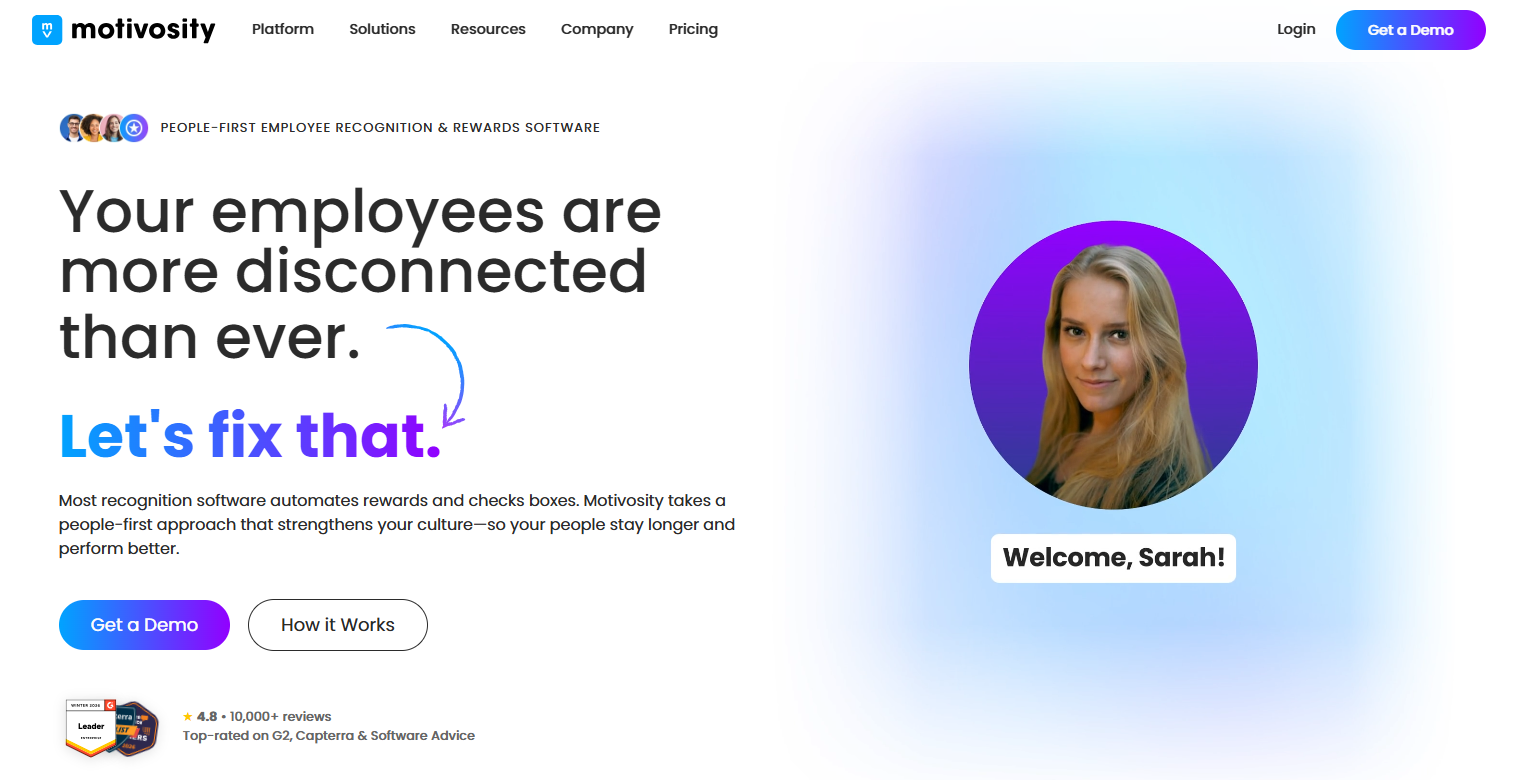
Motivosity is employee recognition and rewards software built around peer-to-peer and manager-to-team recognition, with engagement insights layered on top. For spot bonuses specifically, the appeal is the mix of social recognition and admin oversight. Managers give rewards in the moment, and admins keep visibility on budgets and dashboards. That balance matters when you want recognition to feel spontaneous without losing control of spend.
Best for: Mid-market and enterprise teams that want social recognition plus real admin control.
Key strengths
- Peer-to-peer recognition and rewards
- Manager-to-team recognition tools
- Company-wide engagement insights and dashboards
Why choose Motivosity: If you want recognition that feels cultural rather than transactional, but you still need budget oversight and reporting, Motivosity sits in that middle ground. It suits teams past the spreadsheet stage that want dashboards without heavy configuration.
Motivosity pricing: Custom and modular with a minimum annual investment of $3,000. Ranges scale by company size, roughly $3,000 to $10,000 per year for small business, $7,500 to $75,000 for mid-market, and $40,000 to $300,000+ for enterprise.
2. Reward Gateway | Edenred
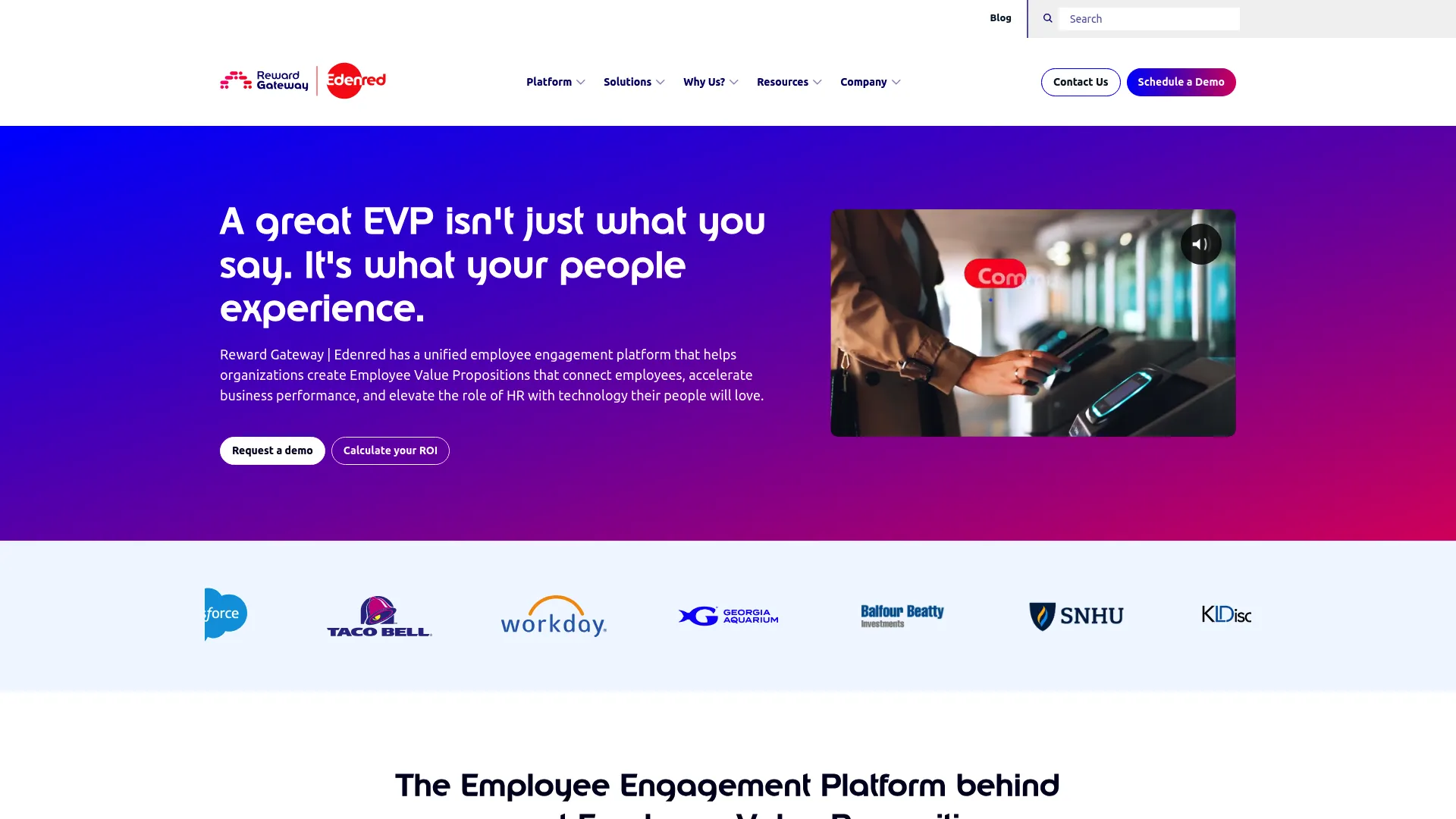
Reward Gateway | Edenred is an employee engagement platform that bundles recognition, rewards, benefits, surveys, communications, and discounts. Spot bonuses live inside a broader ecosystem, so if you want one hub for recognition and wider engagement rather than a single-purpose tool, this fits. The reward choice options are a strength, letting recipients pick what actually motivates them across a wide catalog.
Best for: Mid-sized to enterprise employers wanting a customizable engagement hub, not just a spot award tool.
Key strengths
- Employee engagement platform
- Reward and recognition
- Employee discounts and wellbeing tools
Why choose Reward Gateway: Choose it when spot bonuses are one part of a larger engagement strategy. It is more platform than point tool, which suits organizations consolidating recognition, benefits, and comms under one roof.
Reward Gateway pricing: UK small business plans start from £8 per employee per month billed monthly, or from £6 per employee per month on an annual subscription. Larger organizations use quote-based pricing through a demo request.
3. Teamphoria
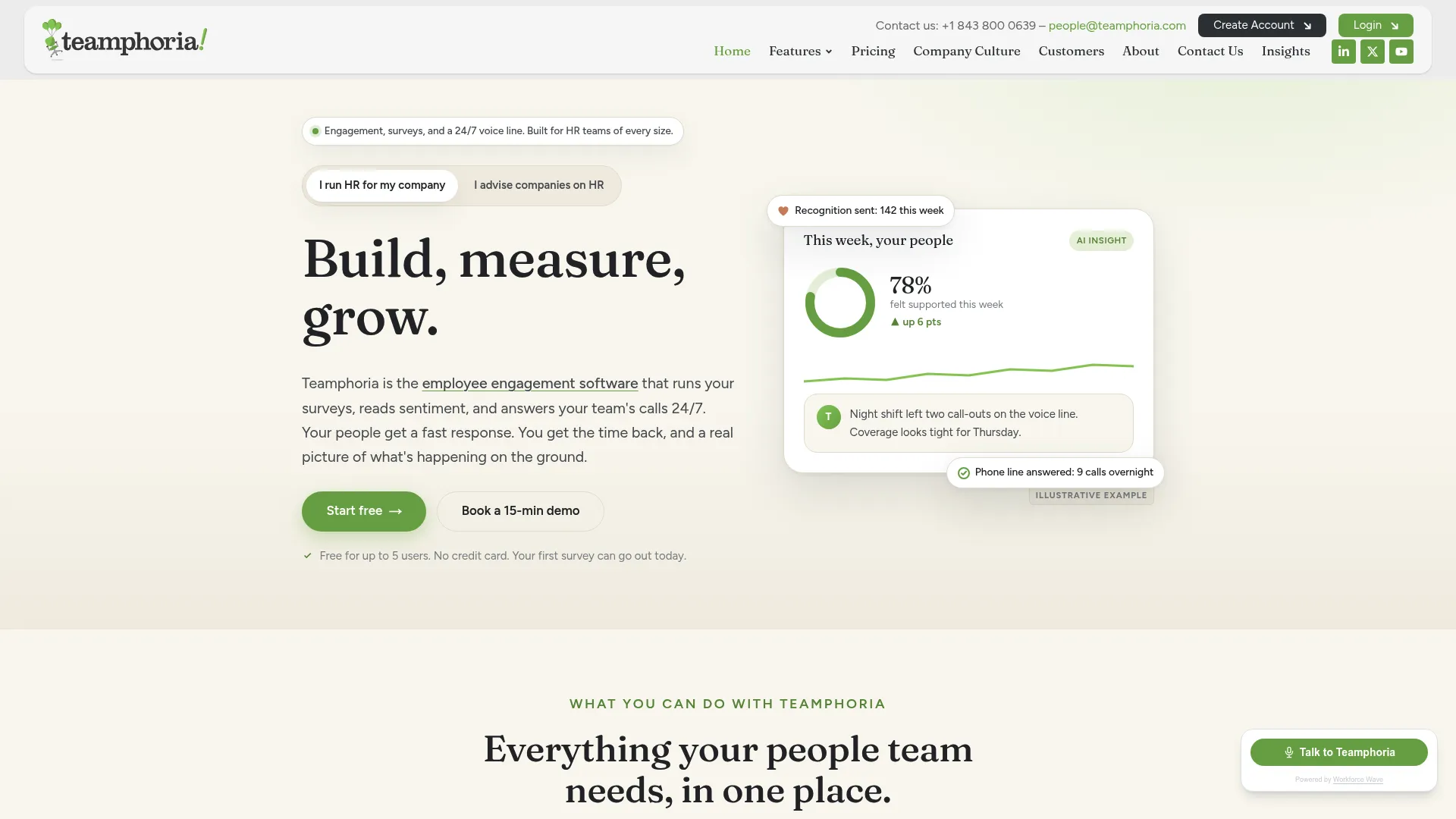
Teamphoria is employee engagement software that combines recognition, surveys, and performance management. For spot recognition, it keeps admin light while still giving you real-time analytics on how recognition flows across teams. That makes it a fit for teams that want straightforward recognition without a heavy implementation, and a free tier lets you test the waters.
Best for: Small to mid-sized teams wanting recognition, engagement, and performance tools in one place.
Key strengths
- Peer-to-peer and manager recognition
- Surveys and pulse surveys
- 360 performance reviews and goal setting
Why choose Teamphoria: Choose it when you want recognition tied to engagement and performance signals, not siloed. The light admin footprint suits teams that do not have a dedicated recognition program owner yet.
Teamphoria pricing: Free plan for up to 5 users. The Engage and Perform plans are $3 per employee per month, and the Full Suite is $5 per employee per month. Custom enterprise quotes are available.
4. Brighten
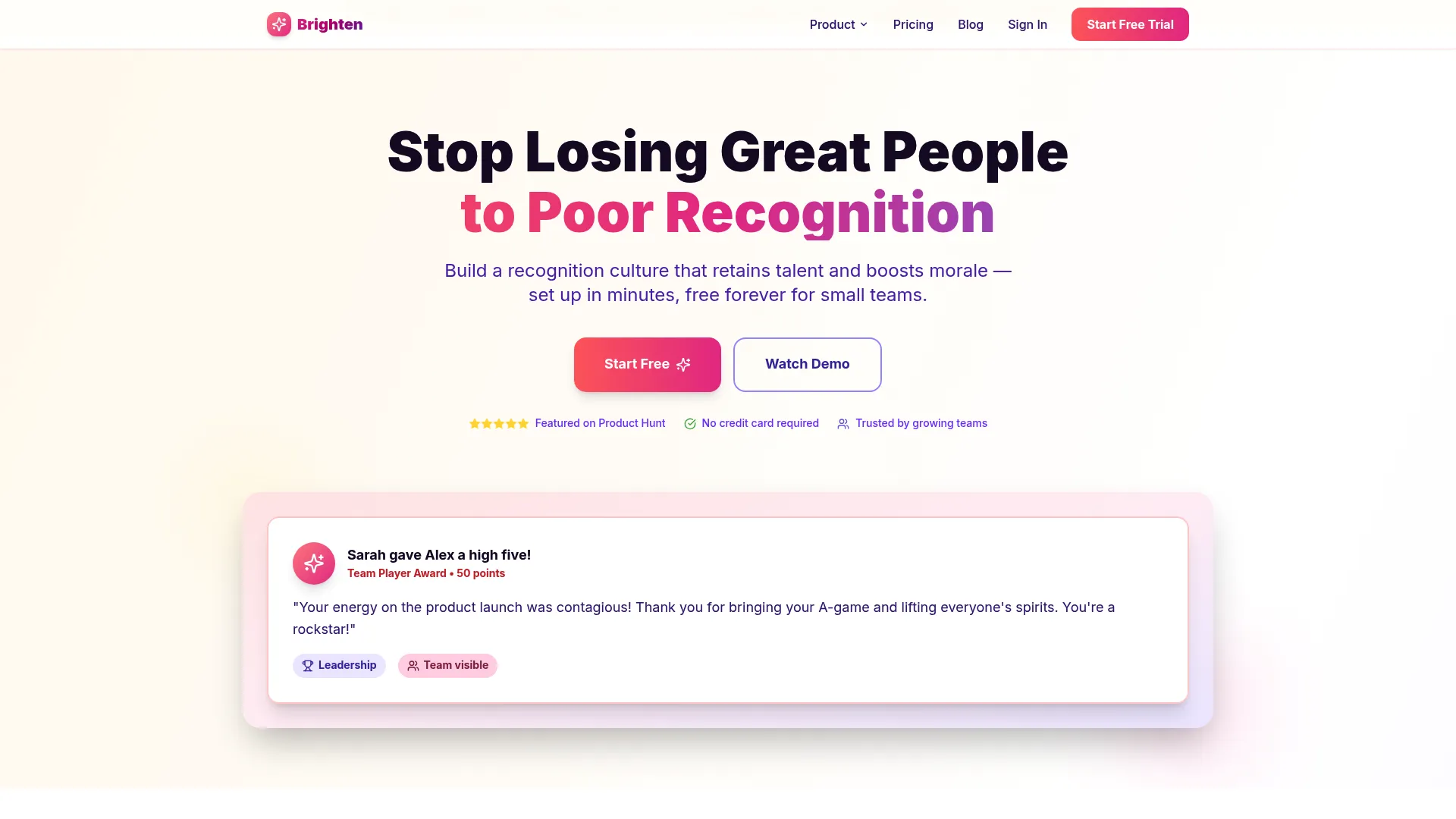
Brighten is an employee recognition platform with native Slack and Microsoft Teams integrations, a rewards marketplace, and analytics. It leans toward lightweight recognition and appreciation workflows, which suits small teams that want recognition to live where people already work. Reward funding and spending are handled through the platform, and the public pricing removes guesswork for teams that want to self-serve.
Best for: Teams that want a simpler employee recognition layer with a free tier and transparent pricing.
Key strengths
- Peer recognition
- Rewards marketplace
- Slack and Microsoft Teams integration
Why choose Brighten: Choose it when you want recognition inside Slack or Teams without a big rollout. Note that Brighten's site indicates the product is in maintenance mode with new signups paused, so confirm availability before you commit.
Brighten pricing: Free plan for up to 10 users. Paid plans start at $49 per month (Starter), then $149 per month (Growth) and $299 per month (Pro). Enterprise uses custom pricing.
5. Bonusly
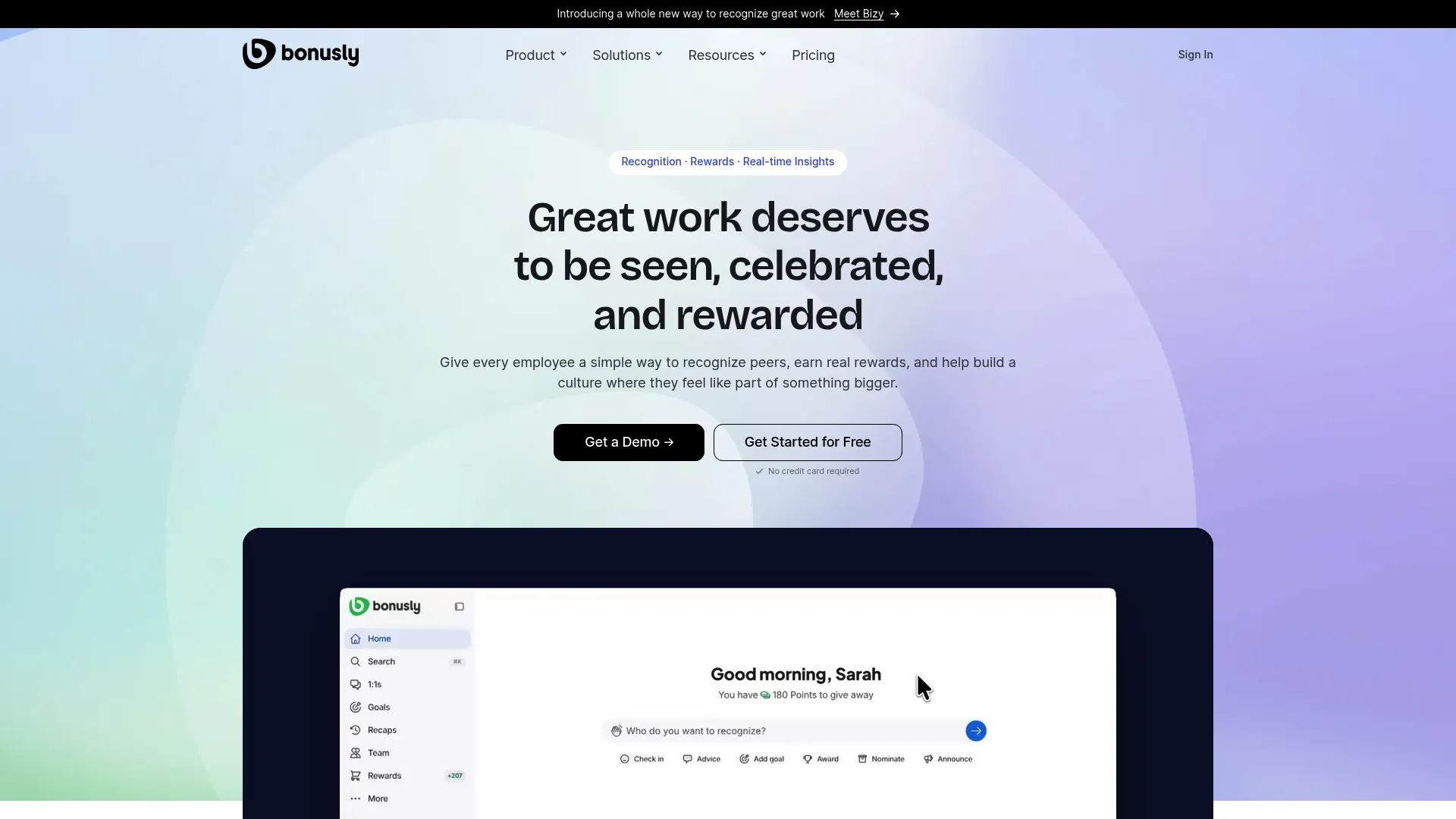
Bonusly is a peer recognition and rewards platform built on flexible, point-based recognition. People give small amounts of points frequently, which drives high adoption and keeps recognition top of mind rather than saved for review season. For spot rewards, that frequency is the point: recognition becomes a habit, and managers plus teams both participate.
Best for: Companies that want high adoption and frequent recognition across the whole team.
Key strengths
- Peer-to-peer recognition
- Meaningful rewards
- Automated milestones
Why choose Bonusly: Choose it when adoption is your main worry. The point-based model lowers the bar to recognize someone, so participation tends to stay high. Automated milestones also cover work anniversaries and birthdays without manual effort.
Bonusly pricing: Free forever plan. Team plans start at $3 per user per month (billed annually) or $5 per user per month with the Bizy AI add-on. Organization plans use custom pricing.
6. Empuls
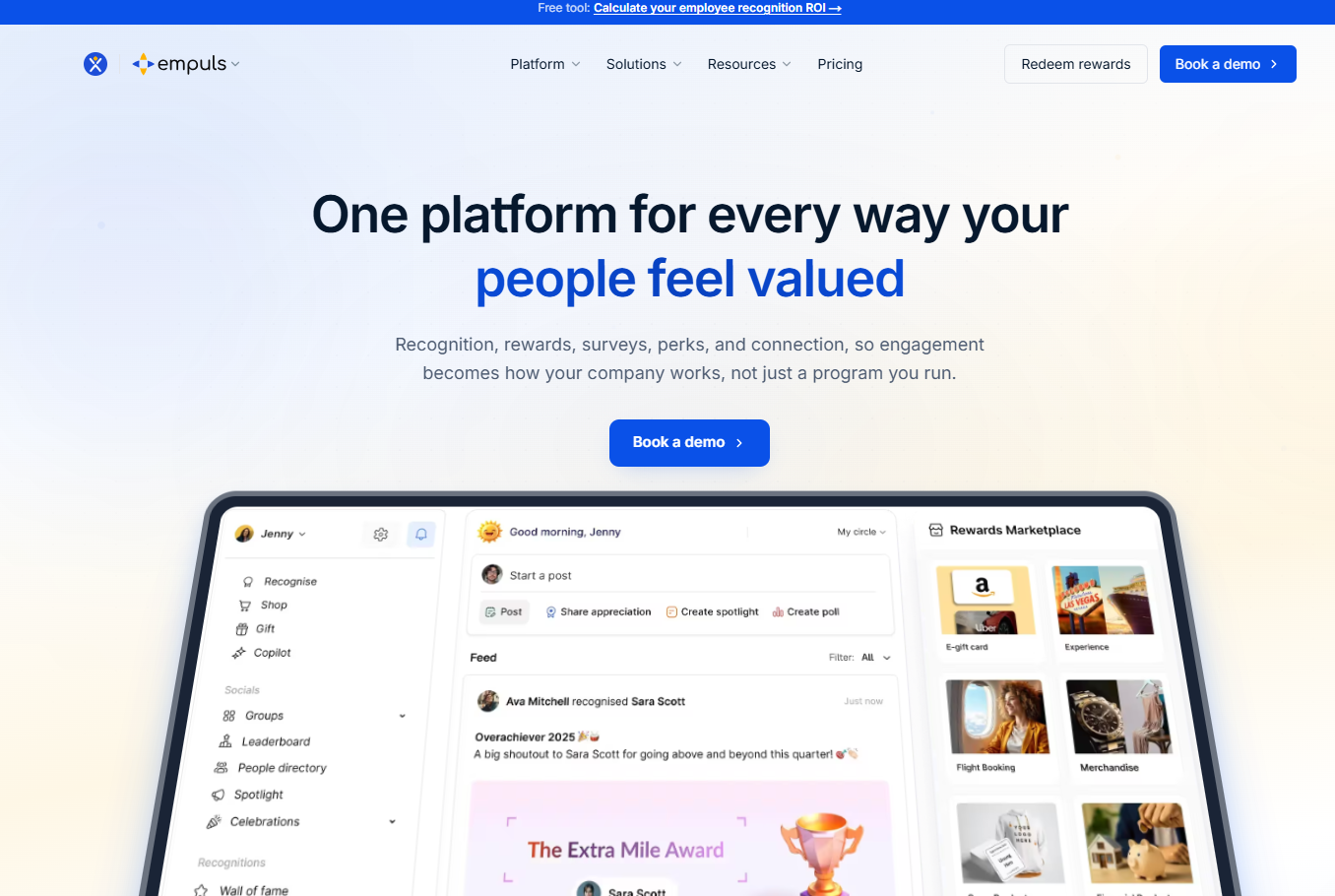
Empuls is an employee engagement platform covering recognition and rewards, surveys and feedback, and internal communication. For spot bonuses, the draw is configurability paired with spend controls, so you can shape reward variety and automation while keeping program oversight. It pulls recognition, rewards, and a social intranet into one system, which suits teams that want a configurable recognition backbone.
Best for: Companies wanting a single platform for recognition, rewards, surveys, and communication.
Key strengths
- Recognition and rewards
- Surveys and feedback
- Social intranet and communication
- Integrations with Teams, Slack, and SSO
Why choose Empuls: Choose it when you want to configure the program to your policy rather than accept defaults. The reward variety and automation reduce manual admin, and the added surveys and comms tools mean recognition connects to broader engagement data.
Empuls pricing: Basic starts at $49 per month billed annually. Professional and Enterprise tiers are custom and quote-based.
7. Awardco
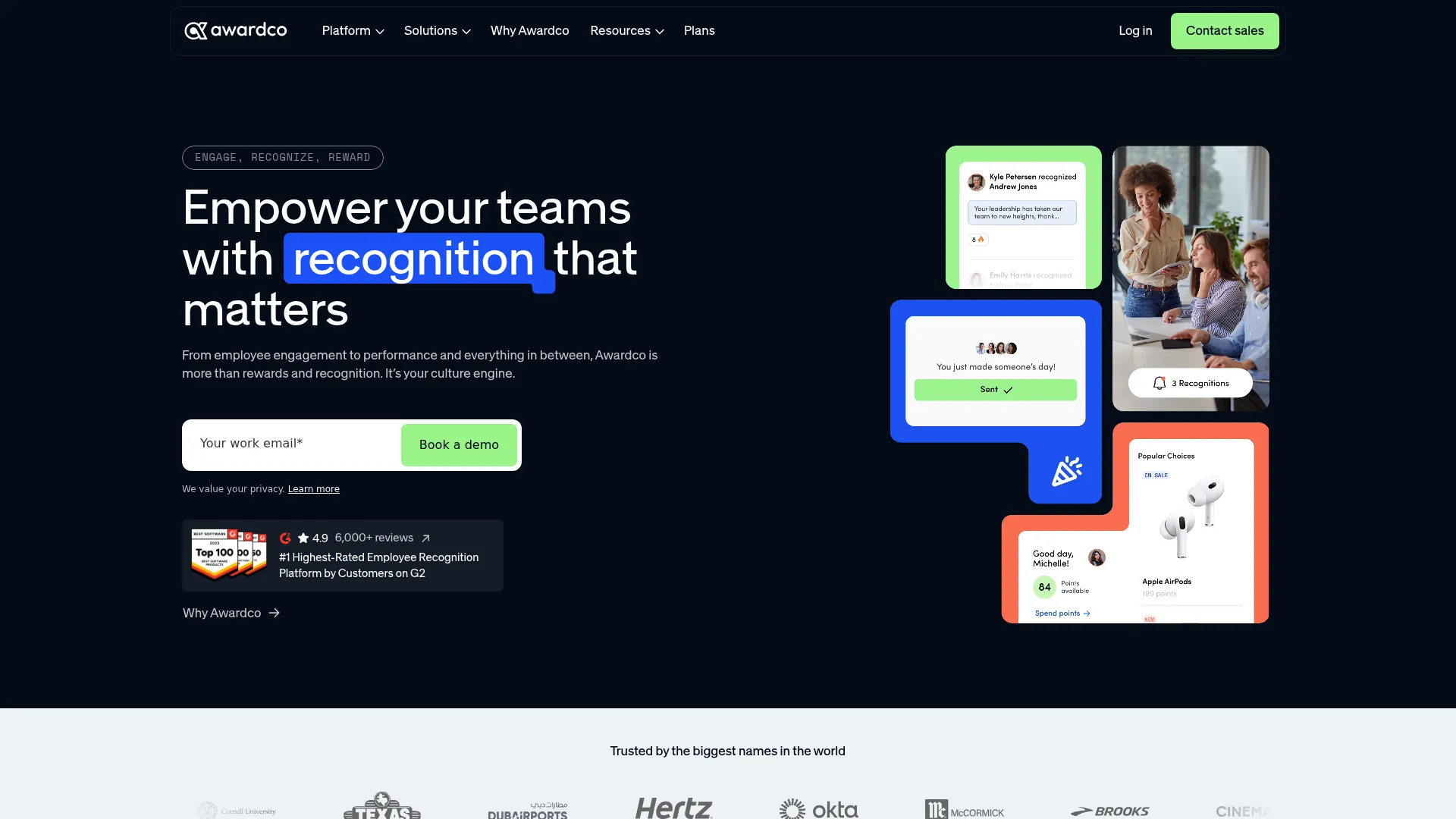
Awardco is an employee recognition, rewards, and engagement platform built for scale. For spot bonuses at larger organizations, the strength is governance: budget control, tracking, and automation that hold up across complex approval and payout needs. When you have many managers, many departments, and a finance team that wants a clean audit trail, that infrastructure matters.
Best for: Mid-market and enterprise companies with complex approval and payout requirements.
Key strengths
- Recognition programs
- Rewards marketplace
- Employee engagement and surveys
Why choose Awardco: Choose it when governance is non-negotiable. Configurable programs, budget controls, and reporting suit organizations where a spot bonus has to route through policy before it clears. The scalable structure fits teams that have outgrown lighter tools.
Awardco pricing: Awardco lists Standard, Scale, and Enterprise plans without full public prices. Startups and small businesses with 100 employees or fewer can request flexible packages starting at $3,000.
Considerations
Before you commit, run the shortlist through this checklist.
Budget governance
Look for per-manager allowances, department caps, and real-time balances. Finance should be able to pull spend by team and period without asking you for a spreadsheet. If budgets live only in the admin's head, the program will drift.
Reward variety
A single reward menu forces everyone into the same choice, which weakens the recognition. Check for points, gift cards, catalogs, charitable options, and custom rewards. The more the recipient chooses, the more the award means.
Approval and policy controls
Confirm the bonus approval workflow matches your policy: who can award, who signs off, and what triggers a review. Look for policy enforcement before payout, not after. This is where fairness and favoritism concerns get resolved.
Reporting and auditability
You want a full trail of who awarded what, when, to whom, and against which budget. This doubles as incentive compensation tracking and as your defense when someone asks why recognition skews one way. Exportable reports beat locked dashboards.
Manager adoption and workforce fit
The best governance fails if managers do not use the tool. Check that the award flow is fast and that it works for frontline and distributed teams, not just desk workers. Manager enablement, mobile access, and Slack or Teams delivery all drive adoption.
Conclusion
There is no single best spot bonus software, only the best fit for how your program runs.
For simpler recognition programs, Teamphoria and Brighten keep admin light and pricing transparent, and Bonusly drives high adoption through frequent, point-based recognition. For more controlled and scalable programs, Motivosity pairs social recognition with admin oversight, and Empuls gives you configurability with spend controls. For enterprise, governance-heavy programs, Awardco and Reward Gateway | Edenred handle complex approvals, budget control, and broad reward variety.
Start with your operational constraints, budget governance, approvals, reporting, then pick the tool that removes the most manual work without introducing favoritism. Shortlist two, run a pilot with a handful of managers, and watch adoption and audit clarity before you roll out company-wide.
If your team also needs to show a product experience without a live call, whether for onboarding, sales follow-ups, customer education, or internal training, Guideflow builds interactive demos that let users experience the product at their own pace through a guided path.
Start your journey with Guideflow today!
FAQs
A spot bonus is a one-time, discretionary reward given immediately for a specific action or result, like a project save or a values moment. It is awarded on the spot rather than at a scheduled review, which is where the name comes from.
A performance bonus is tied to formal, periodic goals and paid on a set cycle, often tied to quota or annual targets. A spot bonus is discretionary and immediate, recognizing a single behavior or outcome as it happens. One rewards sustained results, the other rewards a moment.
Amounts vary widely, from small point-based rewards worth a few dollars to cash awards in the hundreds. The right size depends on the impact recognized and your budget policy. Consistency matters more than the exact figure: similar contributions should earn similar rewards.
Most programs route approval through the awarding manager and, above a threshold, a second sign-off from a department lead or HR. Set spending limits per manager so small awards clear instantly and larger ones trigger review. Software enforces this automatically.
Extra paid time off, a public shout-out tied to a company value, a charitable donation in the recipient's name, a lunch on the company, or a choice from a reward menu. Non-monetary spot recognition often lands well because it feels personal rather than transactional.
Publish clear criteria for what earns an award, apply consistent amounts for similar contributions, and use reporting to spot skew across teams or individuals. Visibility helps: when everyone sees what gets recognized and why, favoritism concerns drop.
At minimum, it should track who awarded what, when, to whom, against which budget, and under which approval. That trail supports fairness reviews, finance reconciliation, and incentive compensation tracking. Exportable reporting is worth confirming before you buy.
Yes, if the tool supports mobile access and fast award flows that do not assume a desk or a laptop. Delivery through Slack, Teams, or a mobile app matters for distributed and frontline workforces. Confirm the recipient experience works without a corporate email in some cases.