A shipment lands. The broker rekeys the same data into three systems. An email chain decides which HTS code is correct. The ABI transmission goes out late, and the clock on clearance keeps running.
That is the day-to-day for a lot of customs teams still holding the whole operation together with spreadsheets and inboxes. It works until volume climbs, or an audit lands, or a new hire has to learn a process that lives only in one person's head.
Customs brokerage software exists to close that gap. It prepares, validates, and transmits electronic customs filing over the Automated Broker Interface, keeps filings visible across the team, and cuts the manual keying that creates errors. According to the U.S. Customs and Border Protection ABI Software Vendors List, dozens of certified vendors handle transactions like Entry, ISF, Drawback, and FTZ, which tells you how specialized this category has become.
The U.S. customs brokerage market reached USD 5.48B in 2026, per Mordor Intelligence (2026), and the software layer underneath it keeps expanding as trade compliance gets more complex. Below is an operator's shortlist for teams that need ABI and ACE reliability, not a generic software roundup.
What's inside
This guide is for customs brokers, compliance leads, and logistics operators comparing customs clearance software before they book demos. It focuses on filing reliability, automation, and visibility, not marketing gloss.
We selected tools on four criteria:
- ABI and ACE support, plus the transmission paths brokers actually file through
- Automation depth: bulk import, EDI, and workflow automation that cut rekeying
- Supported filing modules like ISF, Entry, FTZ, Reconciliation, AMS, and PSC
- Integrations and auditability: ERP, accounting, WMS connections, plus logs and controls
Every entry lists what it does best, who it fits, and pricing where a public number exists.
TL;DR
- Best for full customs operations: CustomsNow, built around trade filing and item management.
- Best for broader logistics platform fit: Magaya, customs inside a freight and supply-chain stack.
- Best for global enterprise compliance: CargoWise, multi-jurisdiction customs at scale.
- Best for authority and vendor verification: U.S. Customs and Border Protection, the source of truth on ABI certification.
- Best for broker teams focused on workflow automation: Descartes, logistics and trade compliance software with deep connectivity.
- Best for mid-market operational scale: 3PL Systems, a combined brokerage and logistics backbone.
- Best for integration-heavy trade compliance: Integration Point, enterprise trade compliance and screening.
What is customs brokerage software
Customs brokerage software is technology that helps brokers and import/export teams prepare, validate, transmit, and manage customs filings with U.S. Customs and Border Protection. It automates ABI submissions, connects to ACE, and keeps a record of every entry the team files.
The core capabilities most teams evaluate:
- ABI and ACE electronic filing: transmit Entry, ISF, and related filings through certified paths
- Import and export forms support: ISF, Entry, PSC, FTZ, Reconciliation, AMS, and PGA messages
- Automation and bulk data import: load line items in bulk instead of keying them one by one
- Compliance validation and audit trails: flag errors before transmission and log every change
- Integrations: connect to ERP, accounting, WMS, and logistics systems so data flows once
Good customs compliance software also standardizes how a team classifies goods, so HTS decisions stop living in someone's memory.
How it differs from generic logistics software
A transportation or warehouse system moves freight and tracks inventory. Customs management software is built for the filing itself: the ABI transaction sets, the CBP validation rules, the forms, and the audit history a regulator can ask for. Generic logistics tools might integrate with a customs module, but the filing engine is a separate discipline. If ACE software connectivity and filing accuracy are the job, a purpose-built customs broker software beats a general logistics platform every time.
When to use
Replace spreadsheets and email chains
At low volume, a spreadsheet and a shared inbox get filings out the door. That breaks as entries climb and manual handoffs multiply. When a missed field means a rejected transmission, or when one person owns a process nobody else can run, it is time for dedicated customs filing software. The trigger is usually error rate and headcount risk, not just volume.
Speed up filings and reduce rekeying
Rekeying the same commercial invoice into multiple systems is where hours and errors pile up. Bulk data import, EDI feeds, and workflow automation pull data in once and reuse it across ISF, Entry, and reconciliation. Teams that automate the repetitive parts free filers to handle exceptions, which is the work that actually needs a human.
Improve compliance and audit readiness
CBP can ask for records years after an entry clears. Validation rules, log history, and standardized forms keep filings consistent so an audit does not turn into an archaeology project. Role-based access and change logs also protect the team when a filing is questioned. Consistent process is the point, and software enforces it better than a checklist.
Comparison table
Here is the shortlist side by side. Pricing reflects public figures where a vendor publishes them; several sell through sales conversations, and government references carry no price at all.
| # | Product | Best for | Key differentiator | Pricing | G2 rating |
|---|---|---|---|---|---|
| 1 | CustomsNow | Full customs operations | Trade-focused filing plus item and tariff tools | From $500/mo | Not rated |
| 2 | Magaya | Logistics platform fit | Customs inside a full freight and warehouse stack | Custom | 4.4/5 |
| 3 | CargoWise | Global enterprise compliance | Multi-jurisdiction customs via Value Packs | Custom | 4.3/5 |
| 4 | U.S. Customs and Border Protection | Authority and verification | Official ABI vendor certification reference | Free | Not rated |
| 5 | Descartes | Workflow automation | Trade compliance across a broad logistics portfolio | From $499/mo | 4.6/5 |
| 6 | 3PL Systems | Mid-market operational scale | Brokerage plus TMS and carrier automation | Custom | 5.0/5 |
| 7 | Integration Point | Integration-heavy compliance | Global trade compliance and screening | Custom | Not rated |
Best 7 customs brokerage software tools for 2026
1. CustomsNow
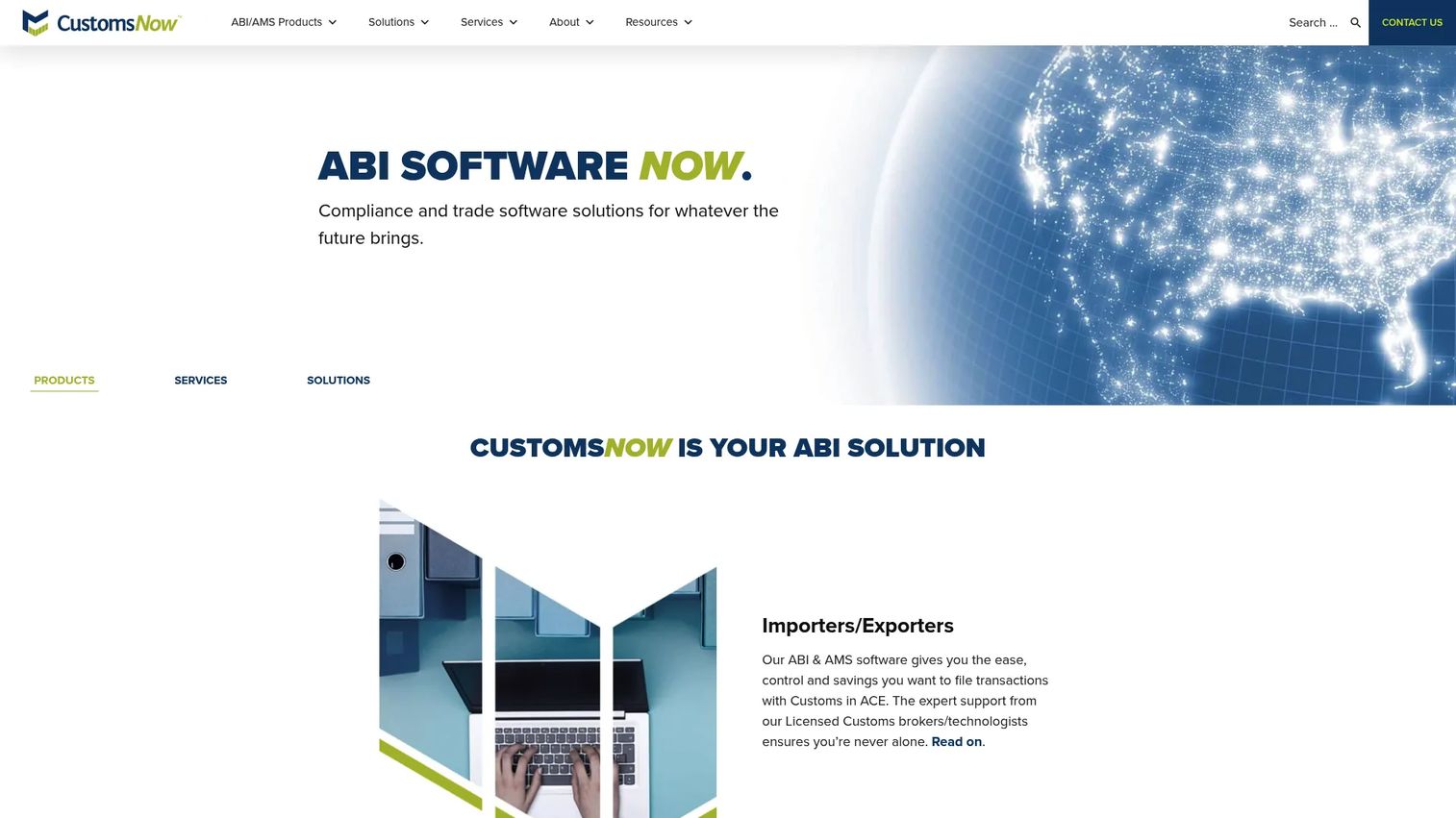
CustomsNow is U.S. customs compliance software and services built for importers, brokers, and logistics teams that want to file directly rather than route everything through a third party. It centers on the filing itself: HTS lookup, item management with customs attributes, and cargo visibility. For a broker team that wants a trade-focused operating system rather than a logistics suite with a customs bolt-on, this is a strong fit.
The platform leans into the operational parts of a brokerage: import item and product management so classifications stay consistent, tariff and duty rate search through HTS lookup, and shipment status visibility through its cargo manifest tools. Teams filing Entry, ISF, PSC, FTZ, and reconciliation work get a system organized around those modules instead of around freight movement.
Best for: Importers and trade compliance teams that want to own their customs filing and item data in one place.
Key features
- HTS lookup with tariff and duty rate search
- Import item and product management (IPM) with customs attributes
- Cargo manifest and shipment status visibility
- Item master management for consistent classification
- Onboarding and transition support for teams leaving legacy systems
Why choose CustomsNow: If your priority is a direct, item-first customs operation with HTS and duty control built in, CustomsNow fits better than a broad logistics platform. It suits teams that treat classification accuracy as the core job.
CustomsNow pricing: The Import Item Product Management Tool (IPM) starts at $500/month. The Harmonized Tariff Schedule (HTS) tool and the Cargo Manifest Query System (CQS) are each $575/month. Billing is monthly, and no free tier is listed.
2. Magaya
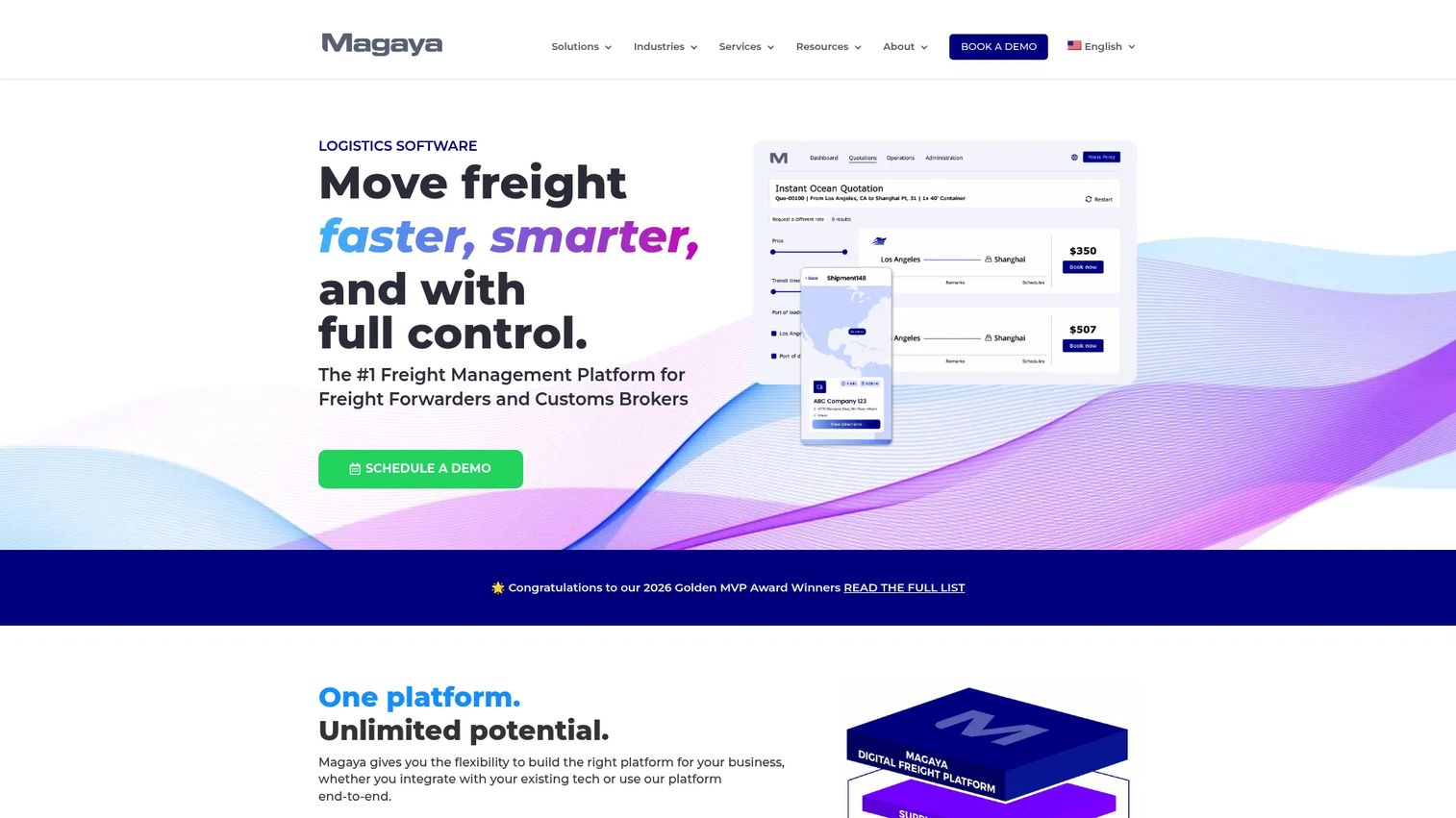
Magaya is logistics software that covers freight forwarding, warehousing, and customs compliance in one connected platform. Customs sits inside a larger supply-chain stack, which makes it a fit for brokers who also forward freight or manage warehouses and want one system of record. The value here is not a standalone filing tool, but customs work living next to the operations that feed it.
Inside that stack, Magaya handles freight quotes and rate management, warehouse and shipment operations, and customs compliance and documentation. For a team running multiple functions, keeping customs filing connected to shipment and warehouse data cuts the rekeying that happens when systems do not talk. Broker operations and connected logistics tooling are the through-line.
Best for: Freight forwarders and customs brokers who want customs filing inside an integrated logistics platform.
Key features
- Freight quotes and rate management
- Warehouse and shipment operations
- Customs compliance and documentation
- Connected supply-chain data across functions
- Broker operations within a single platform
Why choose Magaya: Choose Magaya when customs is one part of a broader logistics operation and you want it connected to forwarding and warehousing. Teams running only customs may not need the full platform breadth.
Magaya pricing: Magaya does not publish public prices. Pricing is tailored to each organization based on the solutions required and the number of users, so you request a quote from their sales team.
3. CargoWise
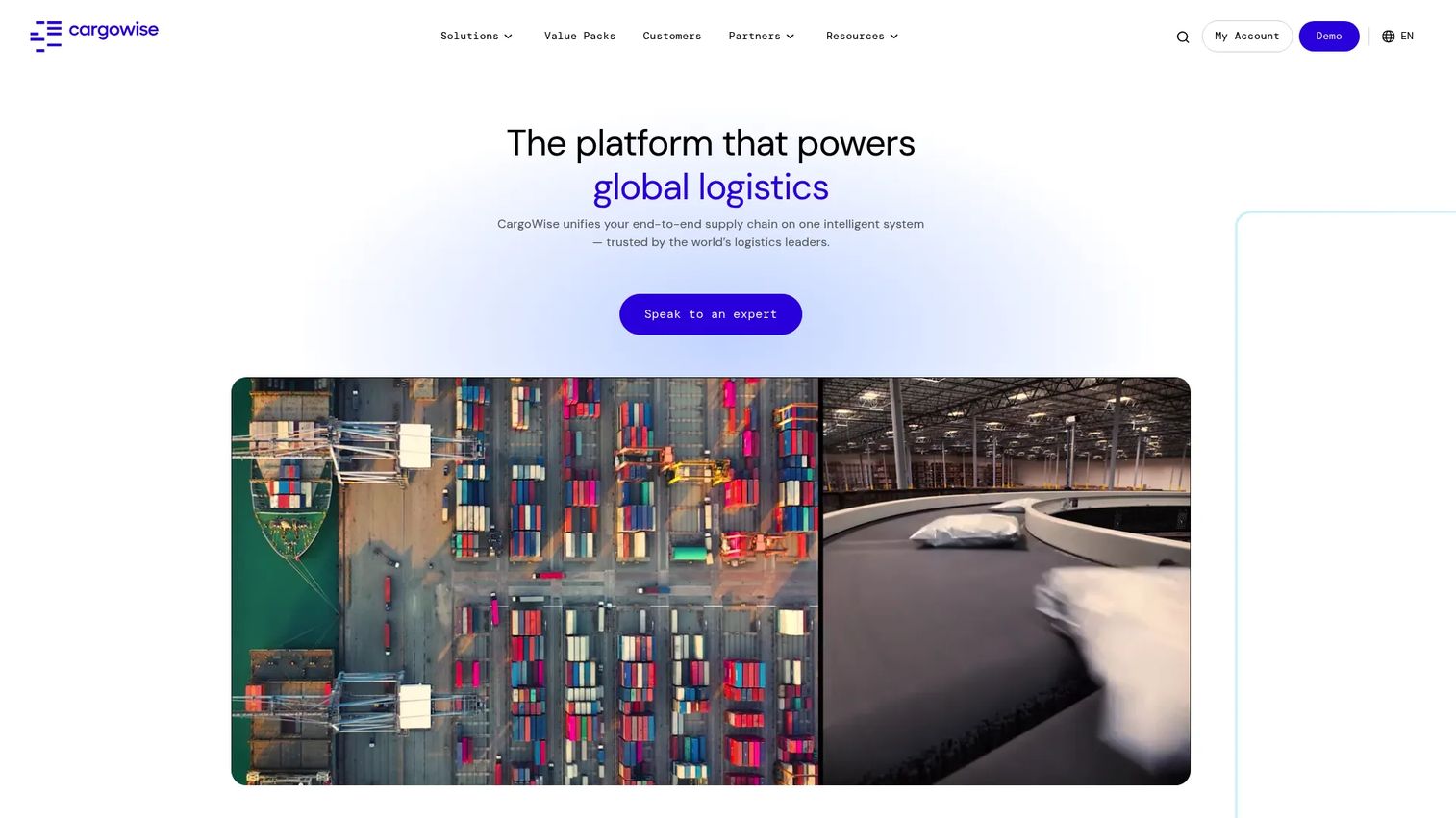
CargoWise is global logistics execution software covering freight forwarding, customs, warehousing, and transport in a single system. It is built for operators working across multiple countries and modes, where customs and compliance have to stay consistent across jurisdictions. For teams that clear goods in more than one market, centralized oversight is the draw.
The platform delivers end-to-end shipment and customs processing, warehouse and land transport capabilities, and workflows sold through CargoWise Value Packs. Running customs alongside multi-modal operations in one system gives larger teams auditability and a single view across borders, which matters when compliance requirements differ by country.
Best for: Freight forwarders and logistics providers that need one system for multi-modal, multi-jurisdiction operations.
Key features
- End-to-end shipment and customs processing
- Value Pack-based logistics workflows
- Warehouse and land transport capabilities
- Multi-jurisdiction customs coverage
- Centralized oversight across modes and borders
Why choose CargoWise: CargoWise fits global operators that need customs, forwarding, and transport in one platform. Smaller domestic-only brokerages may find the breadth more than they need.
CargoWise pricing: CargoWise is sold as Value Packs with published Community Price transaction fees. The actual numeric pricing is listed on a separate Community Pricing page rather than the main product pages, so confirm current fees directly with CargoWise.
4. U.S. Customs and Border Protection

U.S. Customs and Border Protection is not a software vendor in the usual sense. It is the federal agency that runs ABI, ACE, and the customs enforcement your filings answer to. It earns a place on this list as the authority reference every broker should check before trusting any vendor's ABI claim.
The most useful resource here is the CBP ABI Software Vendors List. It names the companies offering Automated Broker Interface software and service bureaus, and it maps which services each supports: Entry, In-bond, DIS, Drawback, FTZ, GBI, and ISF. CBP is explicit that inclusion is not an endorsement, so you confirm capabilities with each vendor directly. Use it as a certification checkpoint, not a shortlist.
Best for: Trade professionals verifying that a tool is genuinely certified for the ABI transactions they file.
Key features
- ABI Software Vendors List with service bureau coverage
- Service scope per vendor: Entry, In-bond, DIS, Drawback, FTZ, GBI, ISF
- Official ABI certification context
- Customs, trade, and import control guidance
- Cargo and traveler inspection authority
Why choose CBP as a reference: Before you sign with any vendor, cross-check them against the ABI Software Vendors List. It is the neutral source that confirms whether a platform can actually transmit the ABI transactions you need.
CBP pricing: CBP is a government agency, not a commercial product. There is no pricing, and the ABI vendor reference is free to access on the official site.
5. Descartes
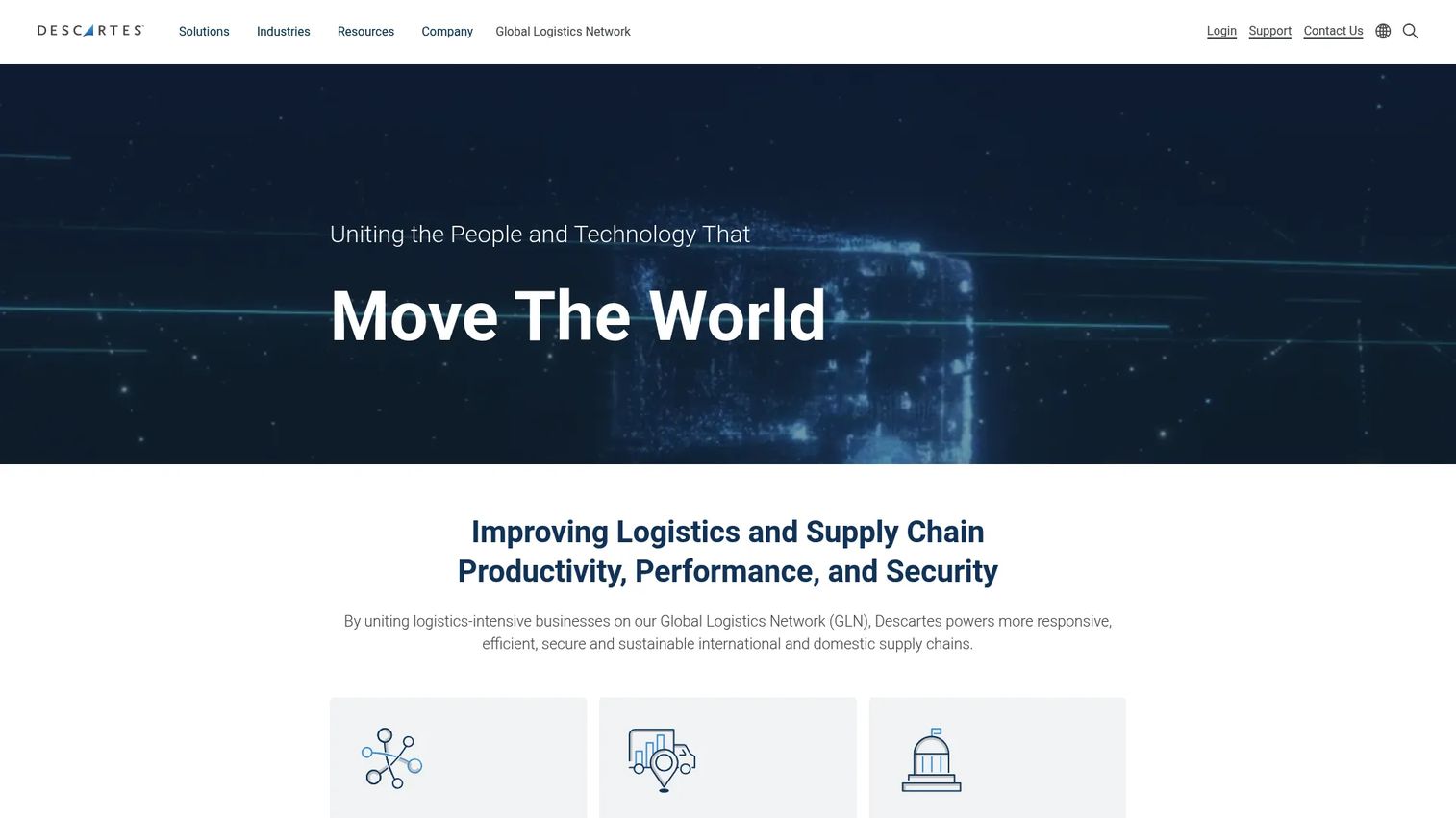
Descartes is a supply chain, logistics, and ecommerce software provider with a broad portfolio that includes trade compliance and screening. For broker teams focused on customs filing automation and data connectivity, Descartes brings trade compliance workflow alongside transportation and ecommerce operations. The appeal is connectivity: customs and compliance data flowing across a wider logistics footprint.
Within the portfolio, Descartes covers transportation management, multichannel ecommerce operations, and trade compliance and screening. Teams that want customs messaging and compliance workflow tied into broader logistics automation get a practical, outcome-focused fit. Import filing automation and integrations are the operational strengths worth evaluating.
Best for: Broker and logistics teams that want trade compliance and customs workflow connected to a broader operations portfolio.
Key features
- Trade compliance and screening
- Transportation management
- Multichannel ecommerce operations
- Customs messaging and data connectivity
- Import filing automation across the portfolio
Why choose Descartes: Descartes fits teams that value integration breadth and want compliance tied into transportation and ecommerce. Confirm which modules cover your exact ABI and ACE filing needs during evaluation.
Descartes pricing: Descartes Sellercloud starts at $1,349/month. Its broader all-in-one ecommerce solutions range from $499 to $2,000+ per month depending on the solution and usage. There is no free tier.
6. 3PL Systems
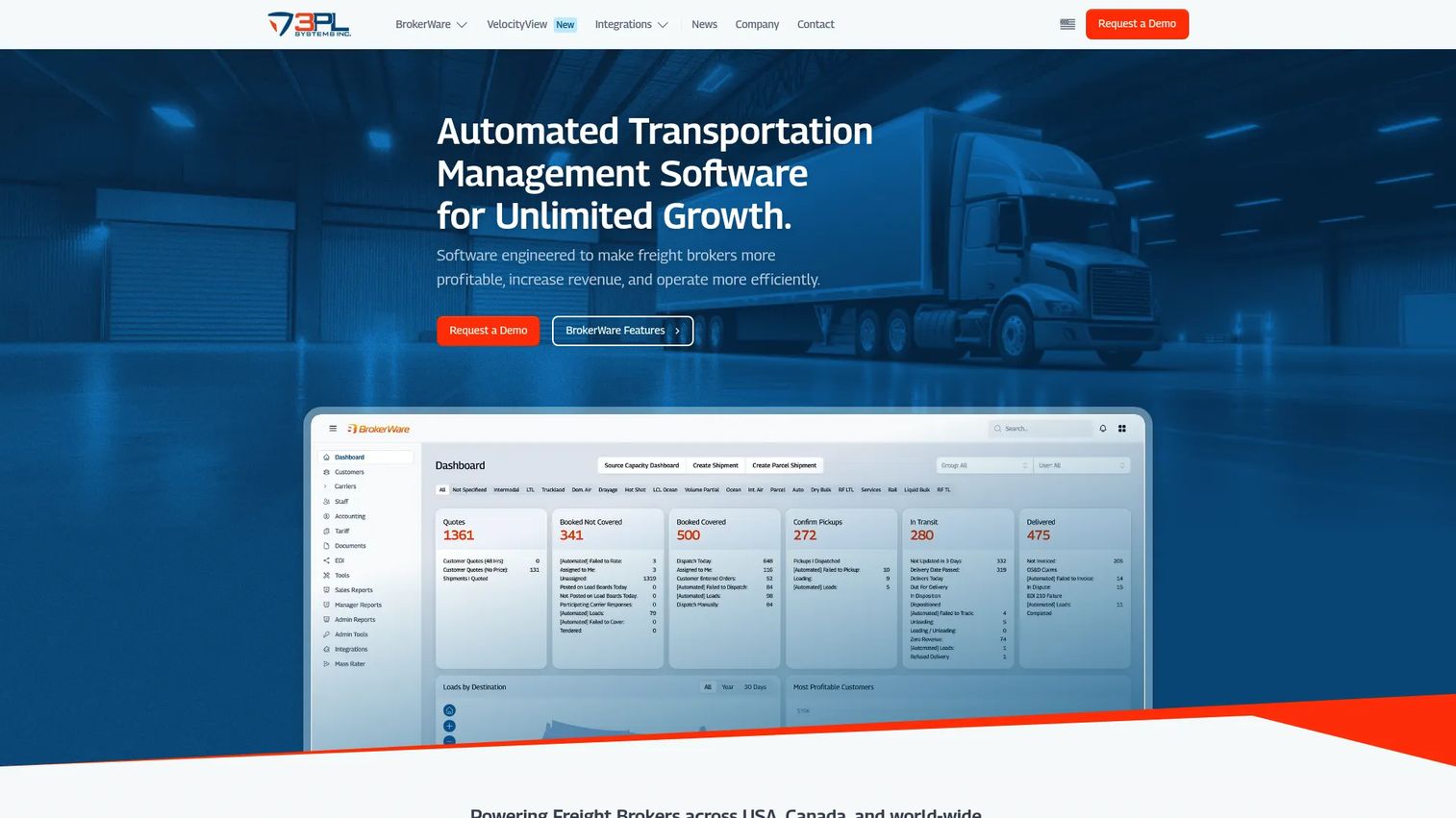
3PL Systems is a freight brokerage TMS with automation for quoting, dispatch, tracking, invoicing, and carrier integrations. It fits mid-market teams that need a combined brokerage and logistics backbone rather than a customs-only tool. Where operational scale and process control across freight and brokerage matter, 3PL Systems provides the operating layer.
The platform handles LTL rating with 100+ carrier integrations, truckload sourcing with public quote links, and dispatching, visibility, accounting, and CRM in one place. For a brokerage running forwarding and related logistics workflows, having quoting, operations, and accounting connected keeps the process tight as volume grows. The focus is practicality and control.
Best for: Freight brokers needing a TMS with LTL rating and operational automation at mid-market scale.
Key features
- LTL rating with 100+ carrier integrations
- Truckload sourcing and public quote links
- Dispatching, visibility, accounting, and CRM
- Combined brokerage and logistics backbone
- Automation across quoting and invoicing
Why choose 3PL Systems: Choose 3PL Systems when you need brokerage operations and a TMS in one system with strong carrier connectivity. Confirm customs filing scope against your ABI requirements during a demo.
3PL Systems pricing: 3PL Systems does not publish public pricing. The site directs prospects to request a demo or contact sales for a quote.
7. Integration Point
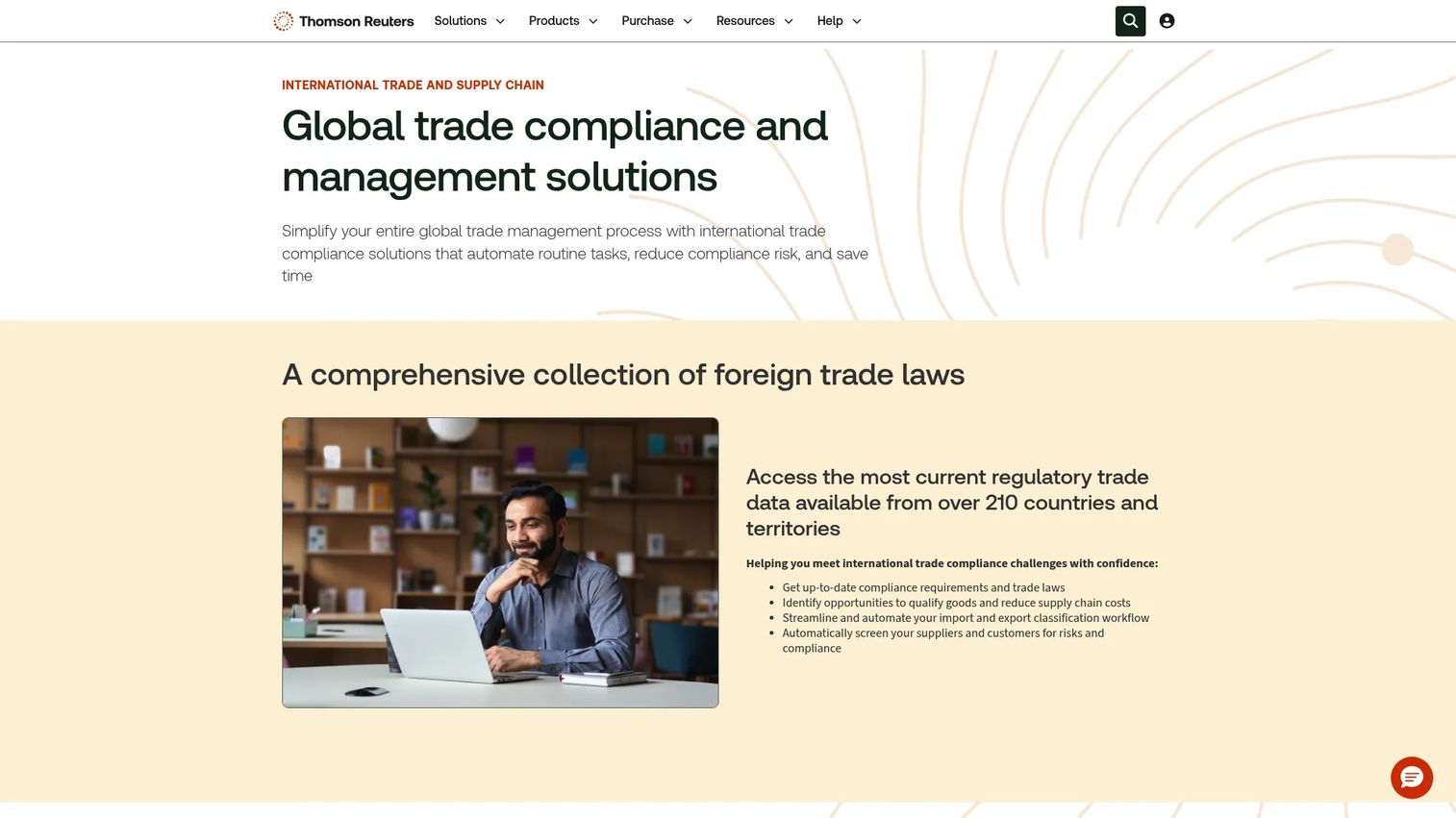
Integration Point is global trade compliance and management software, now presented on Thomson Reuters' international trade and supply chain site. It fits larger operations with multiple systems and complex compliance needs, where customs filing, screening, and classification have to run across a connected stack. Integration depth and visibility are the reasons enterprises look here.
The platform covers global export compliance and management, trade classification workflow automation, and supplier and customer risk screening. For enterprise teams juggling many jurisdictions and internal systems, centralized controls and system connectivity keep trade compliance consistent. Screening and classification automation are the standout capabilities.
Best for: Enterprises needing global trade compliance and export management across many systems.
Key features
- Global export compliance and management
- Trade classification workflow automation
- Supplier and customer risk screening
- Integration-heavy enterprise connectivity
- Centralized controls and visibility
Why choose Integration Point: Integration Point fits enterprise teams with complex, multi-jurisdiction compliance and screening needs. Smaller brokerages focused only on U.S. entry filing may find it more than required.
Integration Point pricing: Integration Point does not publish public pricing. The site points to contact sales, so request a quote for figures tied to your compliance scope.
Considerations
Before you book demos, run every shortlisted tool through the same checklist. These are the criteria that separate a filing engine from a logistics tool with a customs label.
ABI and ACE connectivity
Confirm the tool supports the exact ABI transactions and ACE paths your team files. Cross-check the vendor against the CBP ABI Software Vendors List so a marketing claim matches a certification. Ask which transaction sets are live today, not on a roadmap.
Filing modules and scope
List the forms you file: ISF, Entry, FTZ, Reconciliation, AMS, PSC, and any PGA messages. Then map each against the tool's supported modules. A gap here means a manual workaround later, which is exactly what you are trying to remove.
Integrations and data flow
Evaluate ERP, accounting, WMS, and logistics integrations. The goal is data entered once and reused across filings. Weak integrations reintroduce the rekeying that drives errors, so test the connections that carry your commercial invoice data.
Auditability and controls
Look for change logs, validation rules, and role-based access. CBP can request records long after clearance, so a clear audit trail protects the team. Consistent validation before transmission is what keeps rejection rates down.
Implementation and change management
A migration should remove manual work, not add it. Ask about onboarding support, data import, and how long a realistic go-live takes. The best fit is the tool your team will actually use daily, not the one with the longest feature list.
Conclusion
Seven tools, seven different jobs. CustomsNow suits teams that want a direct, item-first customs operation with HTS and duty control. Magaya and CargoWise fit brokers who need customs inside a broader logistics platform, with CargoWise built for multi-jurisdiction scale. Descartes brings trade compliance connected to a wide operations portfolio, and 3PL Systems pairs brokerage with a capable TMS. Integration Point fits enterprises with complex, multi-system compliance. And U.S. Customs and Border Protection remains the authority you check every vendor against.
Start with your filing volume, the modules you actually file, and the systems you need to connect. Match those against the shortlist, cross-check ABI certification on the CBP vendor list, then book demos with the two or three tools that fit. The right choice is the one that removes rekeying and keeps you audit-ready without adding new manual work.
If you also build product walkthroughs or software demos as part of your evaluation or onboarding process, Guideflow helps teams create interactive product experiences for sales, onboarding, customer education, and support.
FAQs
Customs brokerage software helps brokers and importers prepare, validate, transmit, and manage customs filings with CBP. It automates ABI submissions, connects to ACE, supports forms like ISF and Entry, and keeps an audit trail. In short, customs broker software replaces spreadsheets and manual keying with a purpose-built filing engine.
ABI software transmits customs data to CBP through the Automated Broker Interface, the electronic channel brokers use to file entries and related transactions. It handles the data formatting, validation, and messaging CBP requires, then returns status back to the filer. Certified ABI software is what lets a broker file electronically instead of on paper.
ABI is the Automated Broker Interface, the electronic system brokers use to transmit filings to CBP. ACE, the Automated Commercial Environment, is the broader CBP platform that processes trade data and cargo information across agencies. Put simply, ABI is how you send filings, and ACE software is the environment that receives and processes them.
Small brokers usually want a tool priced and scoped for their volume, with ABI certification and the specific modules they file. CustomsNow suits teams that want direct item-first filing, while a combined platform like 3PL Systems fits brokers who also handle freight operations. Check pricing and confirm certification on the CBP vendor list before you commit.
They reduce manual entry through bulk data import, EDI feeds, and workflow automation that pull commercial invoice data in once and reuse it across ISF, Entry, and reconciliation. Item master management keeps classifications consistent so filers stop re-keying the same HTS data. Fewer keystrokes means fewer rejected transmissions.
ERP, accounting, and WMS integrations matter most, because they carry the data your filings depend on. When those systems feed the customs tool directly, commercial invoice and item data flows once instead of being rekeyed. Logistics and TMS integrations also help when customs sits alongside freight operations.
Start with your filing volume, the modules you file, and the systems you need to connect. Cross-check each vendor against the CBP ABI Software Vendors List, then evaluate automation depth, integrations, and auditability. Book demos with the two or three tools that match your scope, and confirm implementation removes manual work rather than adding it.