Sales needs a customer reference by tomorrow. Customer success says the same advocate has already received two requests. Marketing has a relevant case study, but nobody can find it.
That scramble signals a missing customer reference management workflow. The right customer reference management software gives teams a searchable reference pool, structured approvals, and clear participation history. It also helps match customer proof to open deals without creating reference fatigue.
The business case is straightforward. According to the G2 Buyer Behavior Report, 80% of B2B buyers used customer testimonials early in their decision process in 2024. Another 78% used them during later evaluation.
Your reference program needs to meet that demand while protecting customer relationships and connecting activity to pipeline influence.
What’s inside
This guide compares 17 customer reference software options across purpose built and adjacent categories. It’s written for customer marketing, product marketing, enablement, operations, advocacy, and customer success teams.
We assessed each option against these buying criteria:
- Reference request routing and fulfillment
- Customer profiles and reference matching
- Fatigue tracking and approval controls
- CRM compatibility and reporting
- Verified pricing and G2 ratings
Some entries manage the entire customer reference program. Others support narrower jobs such as advocacy, reviews, referrals, loyalty, research, or sales content distribution.
TL;DR
- Best for CRM driven workflows: Salesforce connects reference activity with account and opportunity records
- Best for customer advocacy programs: Influitive combines advocacy campaigns with rewards, references, reviews, and community features
- Best purpose built option: ReferenceEdge manages reference requests within Salesforce
- Best for customer proof operations: SlapFive connects reference automation with reusable proof and revenue reporting
- Best for loyalty led advocacy: Kangaroo and Preferred Patron Loyalty support rewards based customer engagement
- Best for proof distribution: Highspot surfaces customer evidence within sales enablement workflows
What is customer reference management software?
Customer reference management software helps teams recruit, organize, match, approve, route, and measure customer references used across sales, marketing, and advocacy programs.
A reference management platform replaces scattered spreadsheets, CRM notes, and internal messages with a structured customer reference pool. Each advocate can have a profile covering their industry, role, product usage, geography, company size, and relationship status.
Sales can then submit a reference request connected to an active opportunity. The program owner searches for suitable reference customers, confirms consent, routes approvals, and records participation.
Core jobs customer reference management software handles
- Request intake: Collect sales and marketing reference requests
- Customer profiles: Record account attributes and advocacy preferences
- Reference matching: Match advocates to active deal requirements
- Nomination workflows: Let customer teams propose suitable advocates
- Approval tracking: Record consent and relationship owner approval
- Fatigue controls: Track recent activity and participation limits
- Proof organization: Store testimonials, reviews, stories, and case studies
- Workflow connections: Sync reference activity with CRM records
- Program reporting: Measure coverage, fulfillment, and pipeline influence
The strongest systems help teams balance two competing priorities. Sales needs relevant customer proof quickly. Customer success needs control over who gets contacted and how often.
Customer reference management versus adjacent categories
Customer advocacy software has a broader remit. It recruits advocates and runs activities, rewards, communities, referrals, reviews, and content programs.
Referral management software focuses on customer led lead generation. Review management software collects public feedback and monitors reputation.
Loyalty management software handles points, incentives, and repeat purchase behavior. Sales enablement software helps sellers find approved proof assets during active deals.
Several products below cross these boundaries. Choose according to the workflow you need, rather than the category label alone.
When to use customer reference management software
Match the right customer to an open deal
Use customer reference software when sellers repeatedly ask, “Who do we know like this prospect?”
A searchable pool lets you filter by industry, geography, company size, persona, product, use case, and technology environment. Matching improves when profiles also contain sentiment, implementation stage, and the relationship owner.
Prevent reference fatigue before it costs trust
Reference fatigue appears when the same enthusiastic customers receive every request. It can strain the relationship and make advocates less willing to participate.
Track opt in status, recent contact dates, participation history, and request limits. Give customer success visibility before approving another conversation.
Prove which references influence pipeline
Completed calls are only one reference program metric. Leadership also needs to see opportunity stage, influenced pipeline, deal size, fulfillment time, and closed won outcomes.
Reporting should expose coverage gaps too. If your pool lacks advocates in a target industry or region, recruitment becomes a specific program task.
Customer reference management software comparison
Use this table as a buyer’s shortcut. Purpose built tools appear beside CRM, advocacy, loyalty, referral, review, research, and enablement products.
Pricing comes from vendor pricing pages where available. G2 ratings reflect the supplied live research. “Not verified” means the research did not confirm a matching G2 listing.
| # | Product | Best for | Key differentiator | Pricing | G2 rating |
|---|---|---|---|---|---|
| 1 | Salesforce | CRM driven reference workflows | Opportunity and account context | Free tier, paid plans from $25 per user monthly | 4.4/5 |
| 2 | Influitive | Broad customer advocacy programs | Advocacy campaigns, rewards, and communities | Custom pricing | 4.4/5 |
| 3 | ReferenceEdge | Salesforce native reference operations | Automated reference requests in Salesforce | Custom pricing | 4.6/5 |
| 4 | Orca | Global recruitment services | Recruitment and talent market services | Custom pricing | Not verified |
| 5 | SlapFive | Customer proof and revenue influence | Reference automation with proof management | Custom pricing | 4.5/5 |
| 6 | Upland RO Innovation | Enterprise reference programs | Reference library and usage controls | Custom pricing | 4.1/5 |
| 7 | Kangaroo | Loyalty led customer advocacy | Omnichannel rewards and retention marketing | From $79 monthly | 4.7/5 |
| 8 | InviteReferrals | Customer referral campaigns | Referral tracking across web and mobile | From $79 monthly, billed annually | 4.5/5 |
| 9 | Preferred Patron Loyalty | Configurable loyalty programs | Rewards and marketing automation | From $29 monthly | Not verified |
| 10 | AiTrillion | Ecommerce advocacy programs | Loyalty, reviews, referrals, and messaging | Free tier, paid plans from $19 monthly | 4.8/5 |
| 11 | ReviewFlowz | Review workflow automation | Multichannel monitoring and review attribution | From $35 per review profile monthly | 5.0/5 |
| 12 | Merchant Centric | Multi location reputation programs | Sentiment and competitive analysis | Custom pricing | 4.5/5 |
| 13 | Talon.One | Custom incentive infrastructure | Rule based promotion and loyalty engine | Custom pricing | 4.5/5 |
| 14 | Flyx | Slack based operations automation | AI agent for tasks and workflows | Usage based, starting with $30 credits | Not verified |
| 15 | Dynata+ Platform | Customer and market research | Project based audience research | Pay per project | 4.1/5 |
| 16 | Trustpilot | Public review proof | Review collection and display | Free tier, paid plans from $319 monthly | 3.3/5 |
| 17 | Highspot | Sales proof distribution | Content governance and guided selling | Custom pricing | 4.7/5 |
Best 17 tools for customer reference management software
1. Salesforce
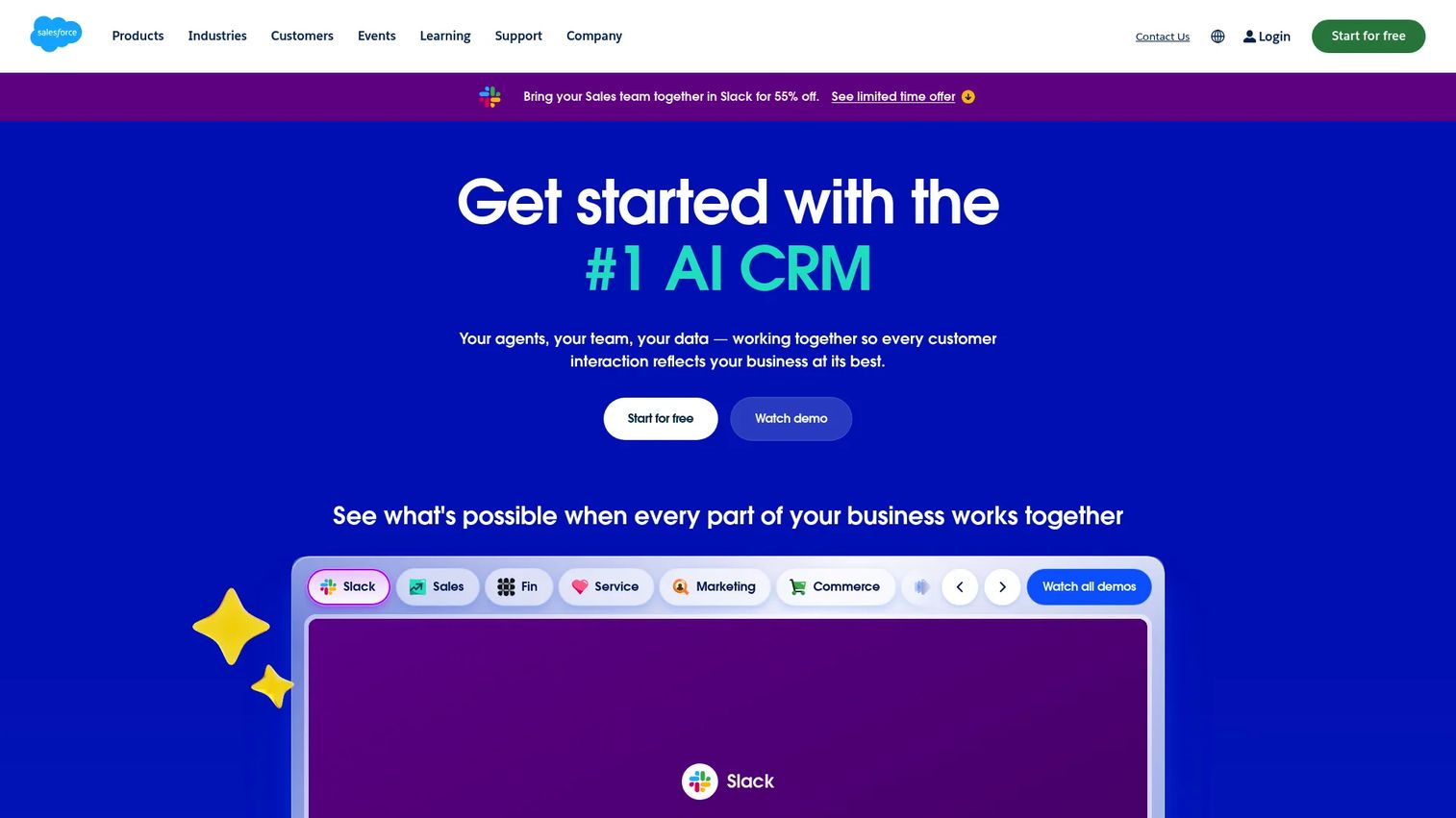
Salesforce provides the CRM foundation for customer reference workflows rather than a dedicated reference application. Teams can connect requests with accounts, contacts, opportunities, tasks, and reporting dashboards.
This approach works when Salesforce already holds the customer and pipeline context. Full reference management usually requires configuration or an extension from its marketplace.
Best for: Revenue teams that want reference activity tied directly to opportunity and account records.
Key features
- Account and opportunity records
- Workflow and process automation
- Quoting and contract approvals
- CRM reporting dashboards
- Browser and mobile access
Why choose Salesforce: Choose it when CRM adoption is strong and reference activity must follow the opportunity lifecycle. Expect configuration work for nomination, matching, consent, and fatigue controls.
Salesforce pricing: Free Suite includes two users. Starter Suite costs $25 per user monthly, billed monthly or annually.
G2 rating
4.4/5
2. Influitive
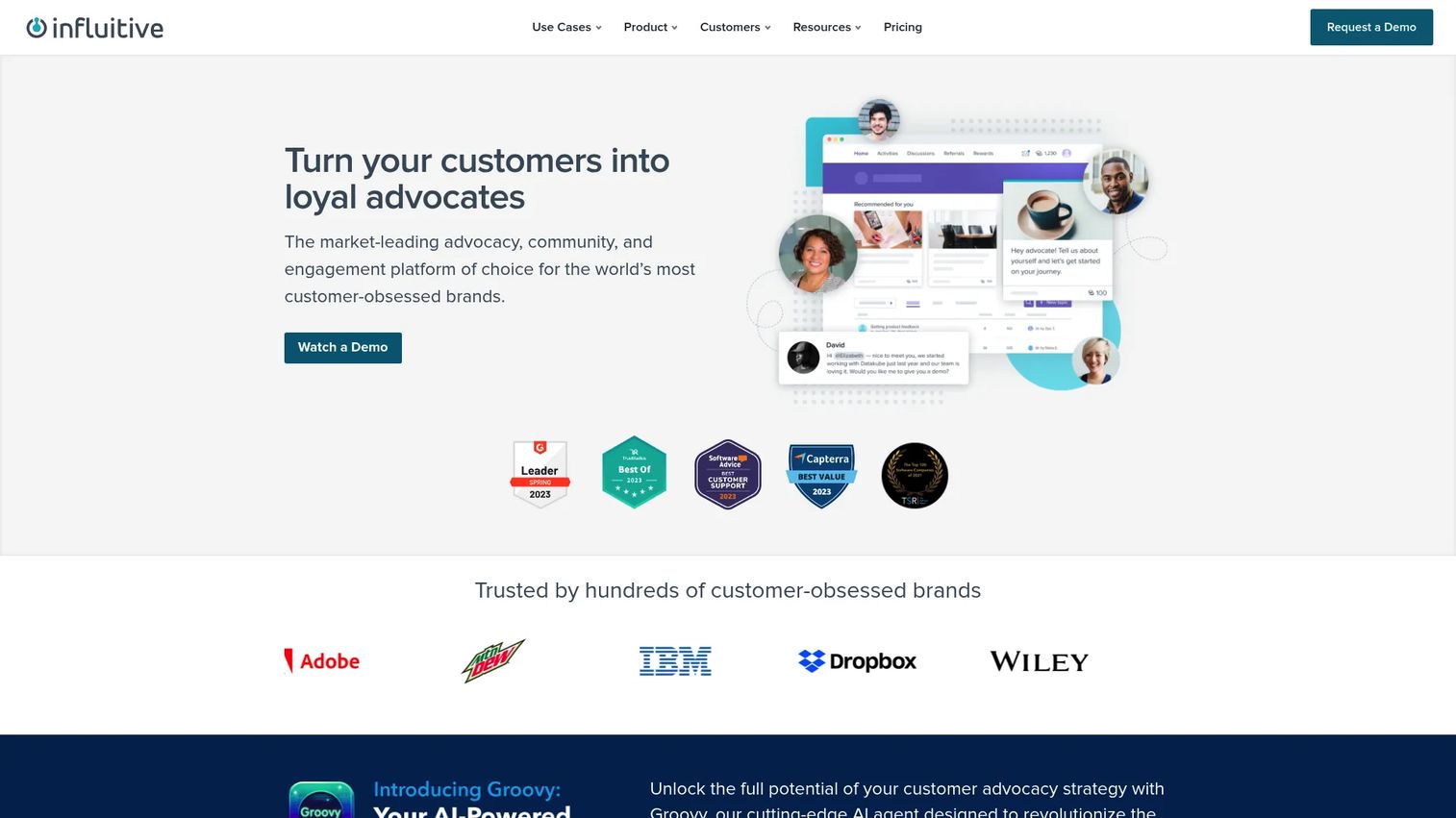
Influitive combines customer advocacy, community, and engagement capabilities. Teams can run campaigns that generate references, referrals, reviews, and ongoing advocate participation.
Its scope extends beyond reference request management. Personalization, rewards, discussions, and community moderation support a broader customer advocacy program.
Best for: Customer marketers running references, reviews, referrals, rewards, and community programs together.
Key features
- Customer advocacy campaigns
- Personalization and targeting
- Loyalty and rewards
- Community discussions and moderation
- Analytics and ROI reporting
Why choose Influitive: Choose it when references sit inside a wider advocate engagement strategy. Its community option also supports knowledge sharing, ideation, and question based participation.
Influitive pricing: Custom pricing. Available plans include Customer Advocacy and Digital Community.
G2 rating
4.4/5
3. ReferenceEdge
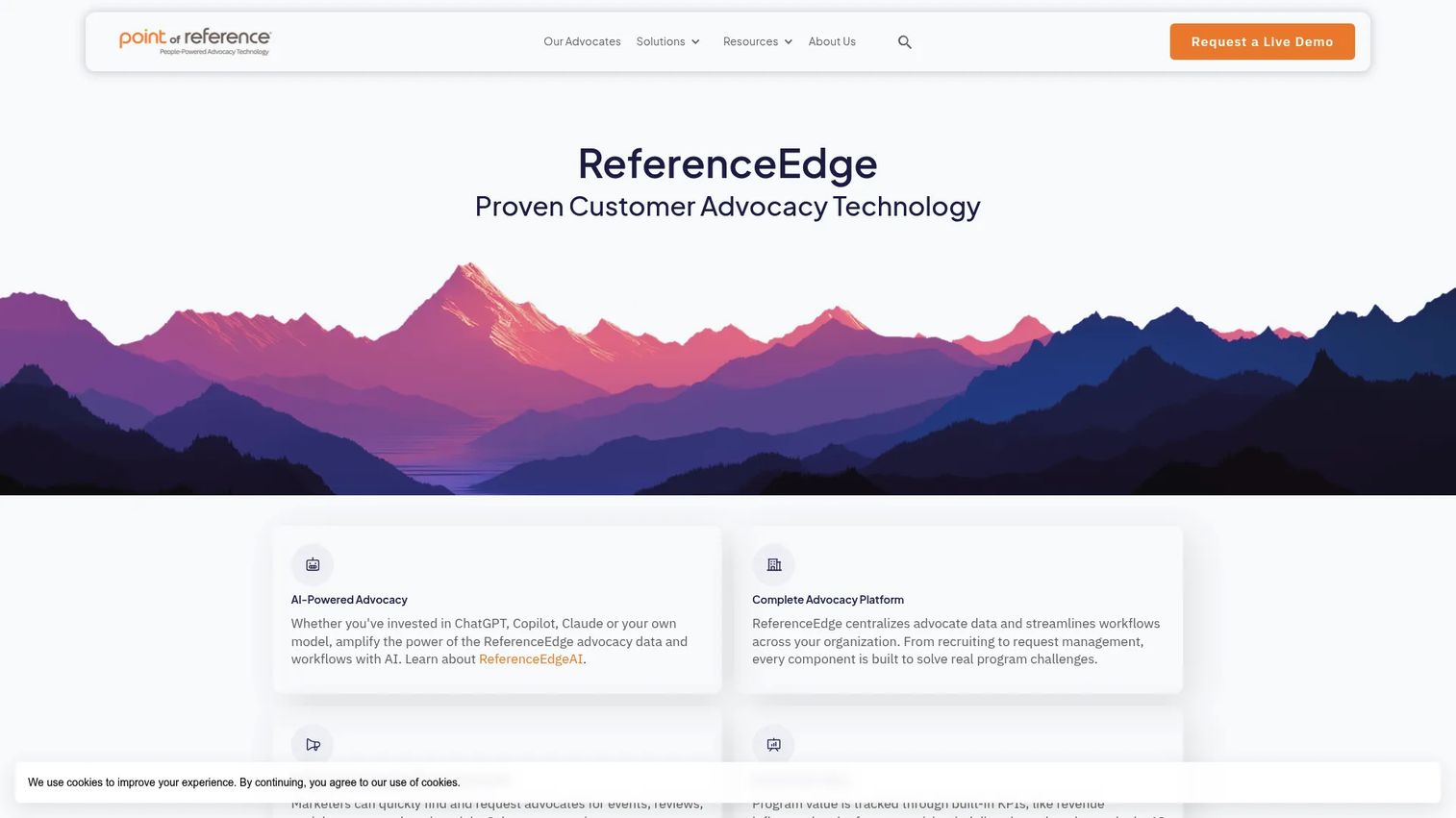
ReferenceEdge is a Salesforce native customer reference management application. It manages advocate information and automates the request workflow within the CRM.
The application tracks usage history and supports rewards, reporting, and dashboards. This structure suits high volume B2B programs with sellers already working in Salesforce.
Best for: B2B customer marketing and advocacy teams running Salesforce reference management workflows.
Key features
- Salesforce native reference workflows
- Automated reference requests
- Customer advocate records
- Reference usage tracking
- Rewards and reporting
Why choose ReferenceEdge: Choose it when sellers need structured request fulfillment without leaving Salesforce. Its purpose built focus is more direct than assembling the workflow from generic CRM objects.
ReferenceEdge pricing: Custom pricing.
G2 rating
4.6/5
4. Orca

Orca currently presents itself as a global professional recruitment firm. Its services cover permanent hiring, contract recruitment, executive search, and recruitment process outsourcing.
The supplied research did not confirm customer reference management software at this domain. Buyers seeking advocate profiles, reference matching, consent, or fatigue controls should treat this listing cautiously.
Best for: Organizations seeking international recruitment and talent market services.
Key features
- Permanent recruitment
- Contract recruitment
- Recruitment process outsourcing
- Salary benchmarking
- Market mapping
Why choose Orca: Choose it for recruitment support rather than customer reference request management. Its verified positioning does not match a B2B customer reference program.
Orca pricing: Custom pricing.
5. SlapFive
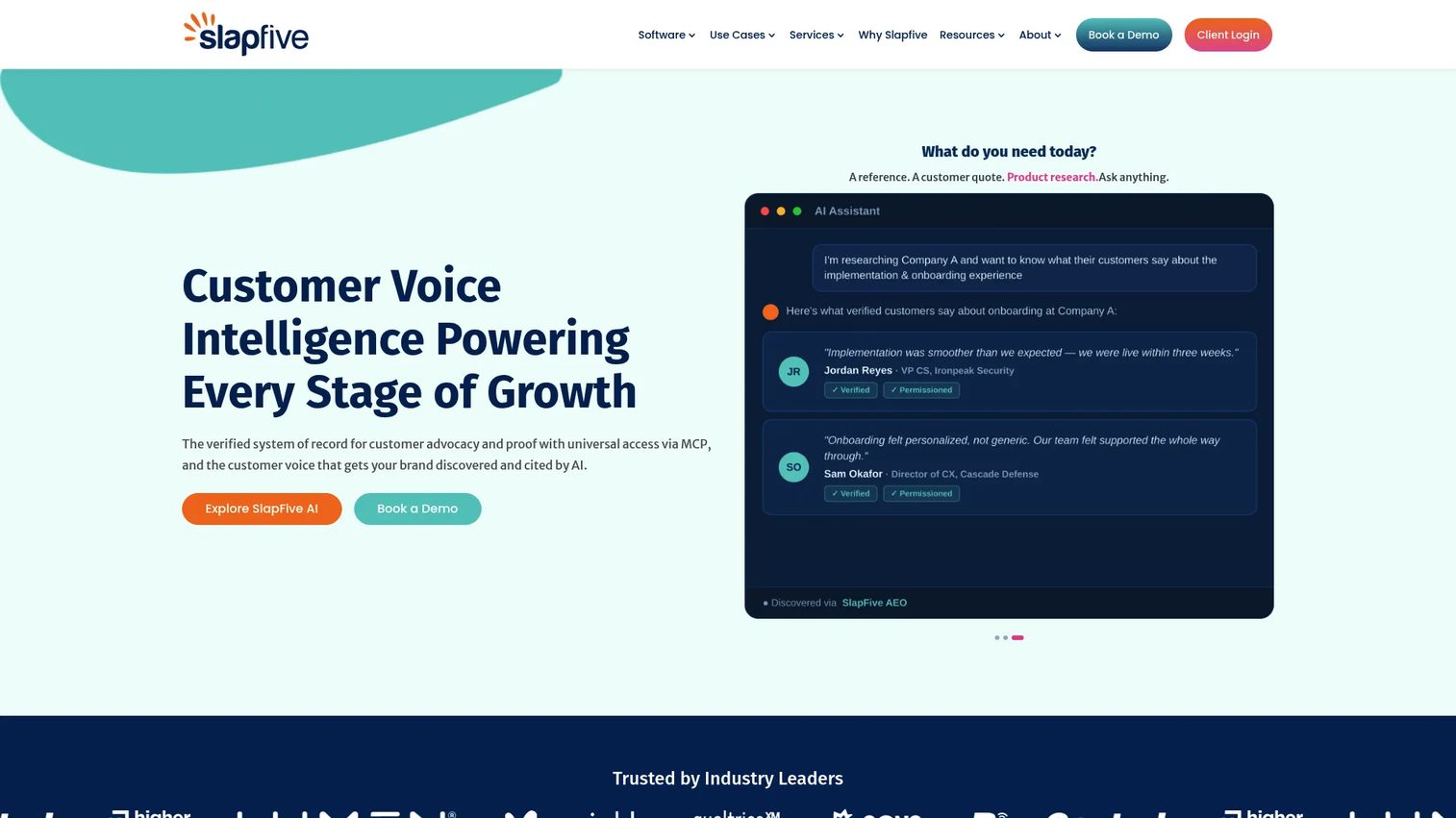
SlapFive combines customer marketing, advocacy, references, referrals, and proof management. It gives teams a shared system for customer voice and revenue influence.
Reference automation supports live customer participation, while proof generation helps teams reuse approved customer evidence. That combination can reduce repeated requests for similar deal support.
Best for: Enterprise teams connecting reference workflows with reusable customer proof and revenue reporting.
Key features
- Customer proof system of record
- Reference workflow automation
- Customer referral programs
- AI powered proof generation
- Revenue influence reporting
Why choose SlapFive: Choose it when your program covers direct references and reusable evidence. It fits teams that need sales support without asking customers to join every deal conversation.
SlapFive pricing: Custom pricing.
G2 rating
4.5/5
6. Upland RO Innovation
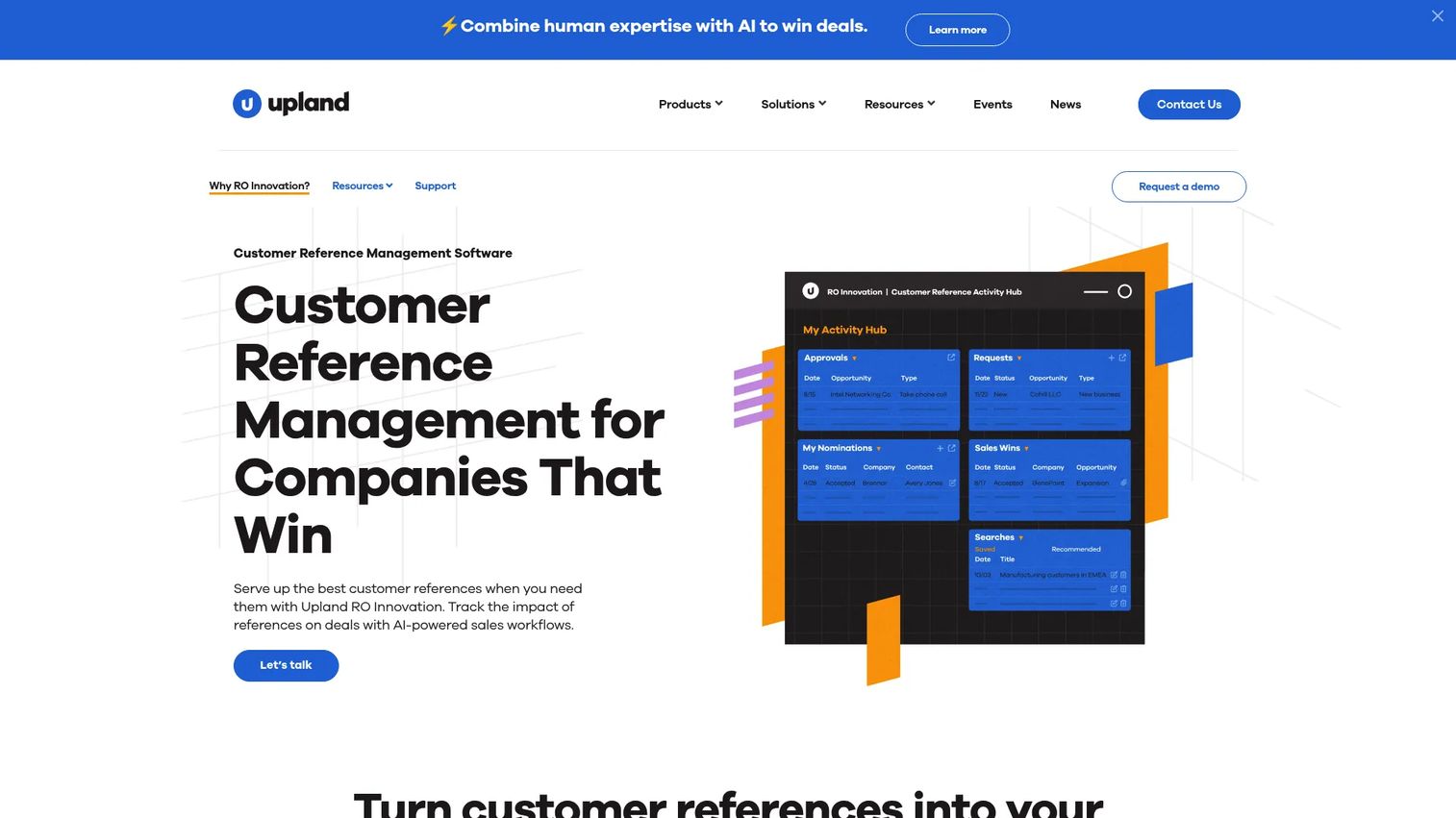
Upland RO Innovation supports enterprise customer reference management and sales enablement. It centralizes customer references and proof content while managing requests, nominations, and usage.
Sales teams can access approved evidence through controlled libraries and custom microsites. CRM connections include Salesforce and Microsoft Dynamics.
Best for: Enterprise advocacy teams managing large reference pools and customer proof libraries.
Key features
- Centralized reference content library
- Automated reference request workflows
- Customer nomination workflows
- Reference usage controls
- Analytics and scheduled reports
Why choose Upland RO Innovation: Choose it when reference operations overlap with sales content governance. It suits established programs that need controlled access and structured reporting.
Upland RO Innovation pricing: Custom pricing.
G2 rating
4.1/5
7. Kangaroo
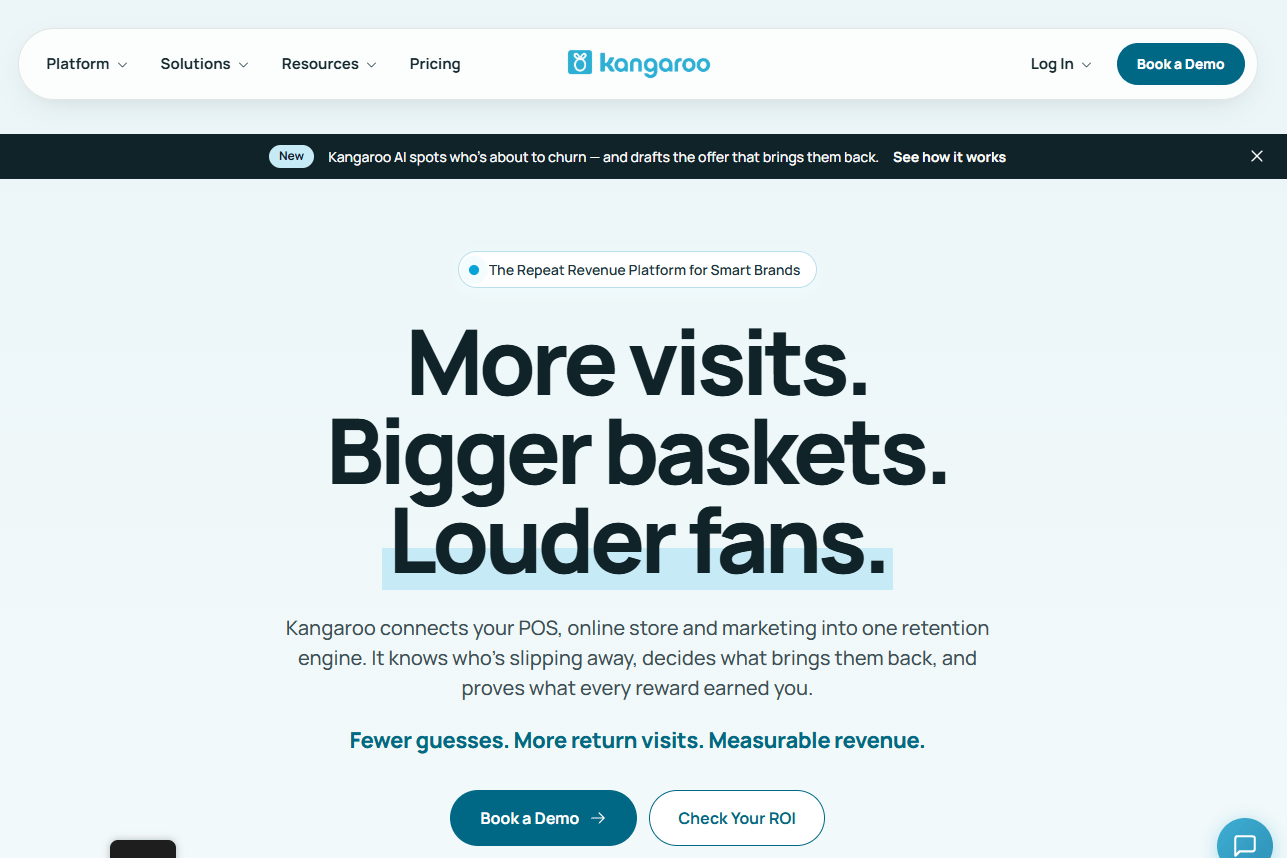
Kangaroo is a loyalty and retention platform for retail, ecommerce, restaurants, and service businesses. It connects rewards with marketing campaigns across point of sale and online channels.
This is an adjacent option rather than classic B2B customer reference software. It can encourage advocacy through loyalty incentives, referrals, segmentation, and repeat engagement.
Best for: Consumer focused businesses turning loyal customers into advocates and referral sources.
Key features
- Points and tier programs
- VIP perks and rewards
- Targeted customer campaigns
- Omnichannel loyalty integrations
- Customer engagement dashboards
Why choose Kangaroo: Choose it when advocacy grows from repeat purchase behavior. Enterprise sales teams needing reference matching for open opportunities should evaluate a purpose built system.
Kangaroo pricing: Core costs $79 monthly. Plus costs $199, while Elite costs $349 monthly.
G2 rating
4.7/5
8. InviteReferrals
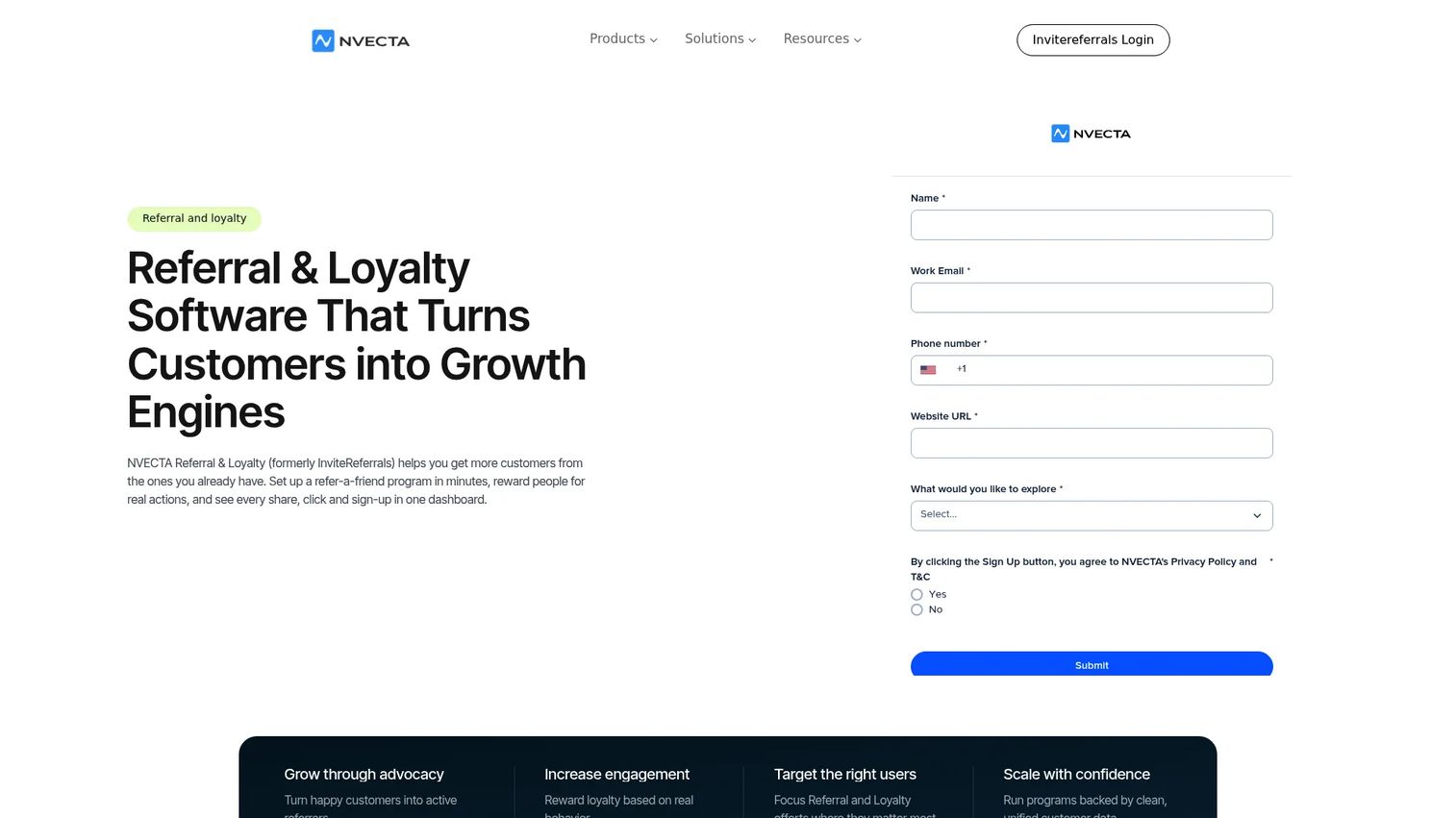
InviteReferrals manages customer referral and loyalty campaigns across web and mobile channels. It tracks shares, clicks, registrations, sales, and mobile app installs.
The product now redirects to the NVECTA Referral and Loyalty brand. Its strongest reference program use case is customer led demand generation rather than private sales reference calls.
Best for: Teams that prioritize customer referrals and trackable advocacy campaigns.
Key features
- Referral campaign management
- Automated reward tracking
- Multichannel customer invitations
- Conversion analytics
- Fraud prevention controls
Why choose InviteReferrals: Choose it when advocates should generate new leads through referrals. Deal specific matching and participation history sit outside its verified core focus.
InviteReferrals pricing: Basic starts at $79 monthly when billed annually. A 14 day trial includes 100 new referrers.
G2 rating
4.5/5
9. Preferred Patron Loyalty
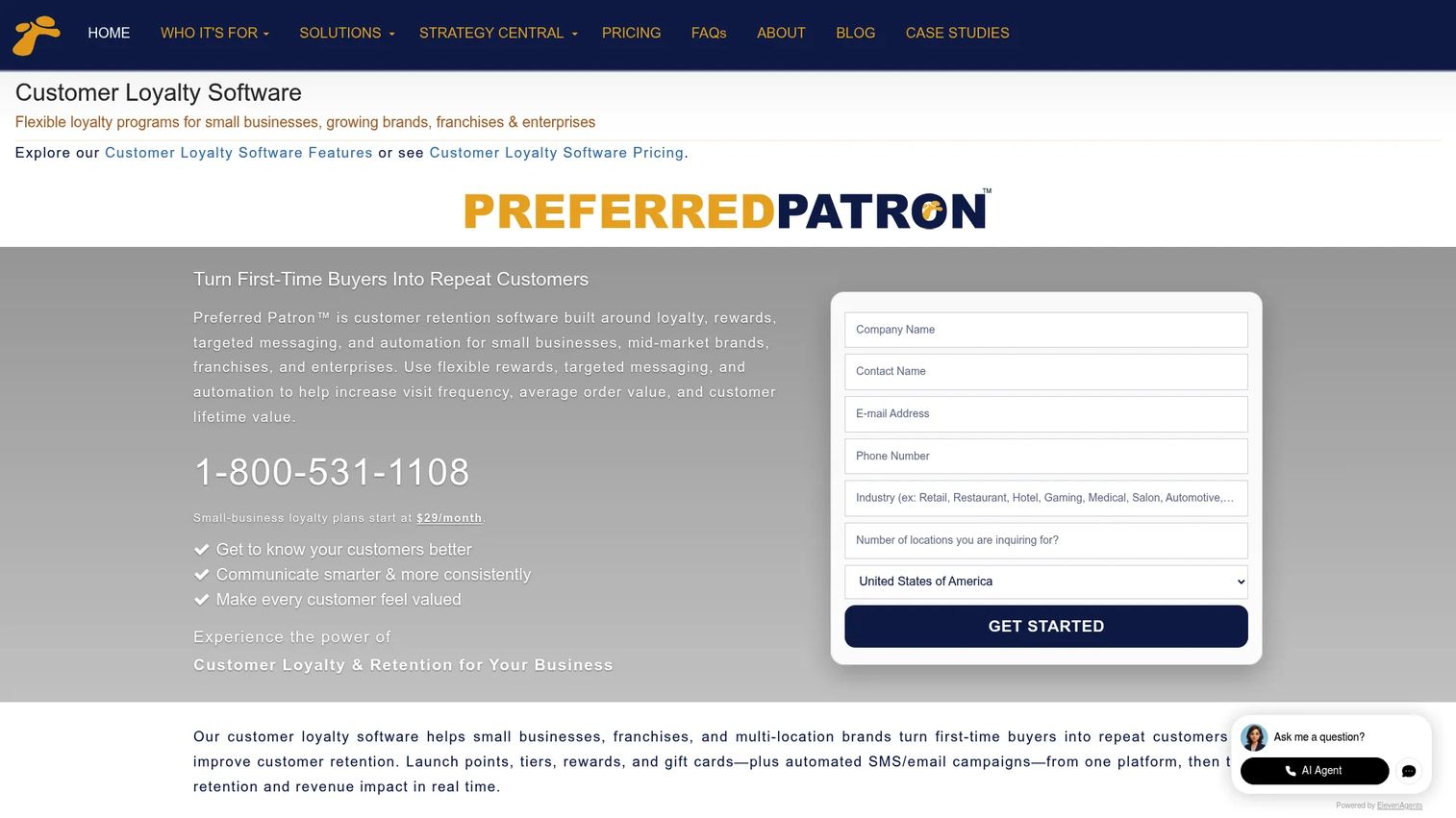
Preferred Patron Loyalty provides configurable loyalty, rewards, marketing automation, and retention tools. Its plans cover small businesses, growing brands, ecommerce, gift cards, and enterprise programs.
Customer segmentation and automated messaging can support advocacy recruitment. However, it does not replace reference request management for complex B2B sales cycles.
Best for: Businesses connecting loyalty programs with rewards based customer advocacy.
Key features
- Loyalty points and tiers
- Rewards management
- Customer segmentation
- Email and SMS campaigns
- Mobile loyalty access
Why choose Preferred Patron Loyalty: Choose it when customer advocacy sits within a loyalty engine. Add CRM workflows if sales needs account matching, consent records, and reference fatigue controls.
Preferred Patron Loyalty pricing: Small Business starts at $29 monthly. Growth starts at $199 monthly under an annual agreement.
10. AiTrillion
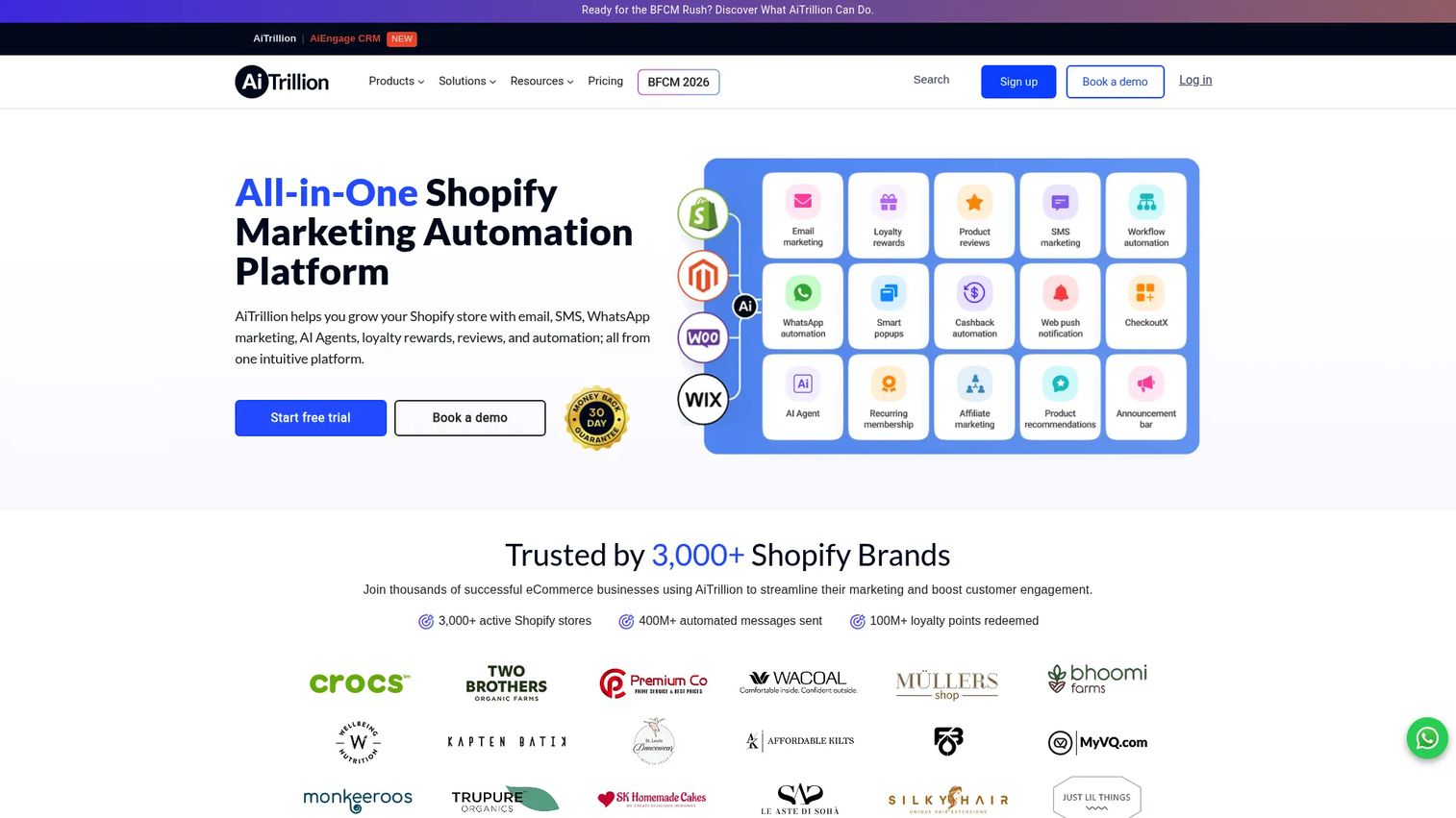
AiTrillion combines ecommerce marketing automation with loyalty, product reviews, referrals, and customer engagement. It is designed primarily for online stores.
Teams can use advocacy signals to identify active customers, collect reviews, and run reward campaigns. Its focus remains ecommerce retention rather than B2B reference request routing.
Best for: Ecommerce teams combining reviews, loyalty, referrals, and lifecycle messaging.
Key features
- Loyalty rewards programs
- Product review collection
- Customer referral campaigns
- Workflow automation
- Email and SMS marketing
Why choose AiTrillion: Choose it when customer advocacy lives inside ecommerce retention. It fits store based teams better than enterprise reference programs with buying committee requirements.
AiTrillion pricing: A free plan supports up to 250 contacts. Paid plans start at $19 monthly with a 14 day trial.
G2 rating
4.8/5
11. ReviewFlowz
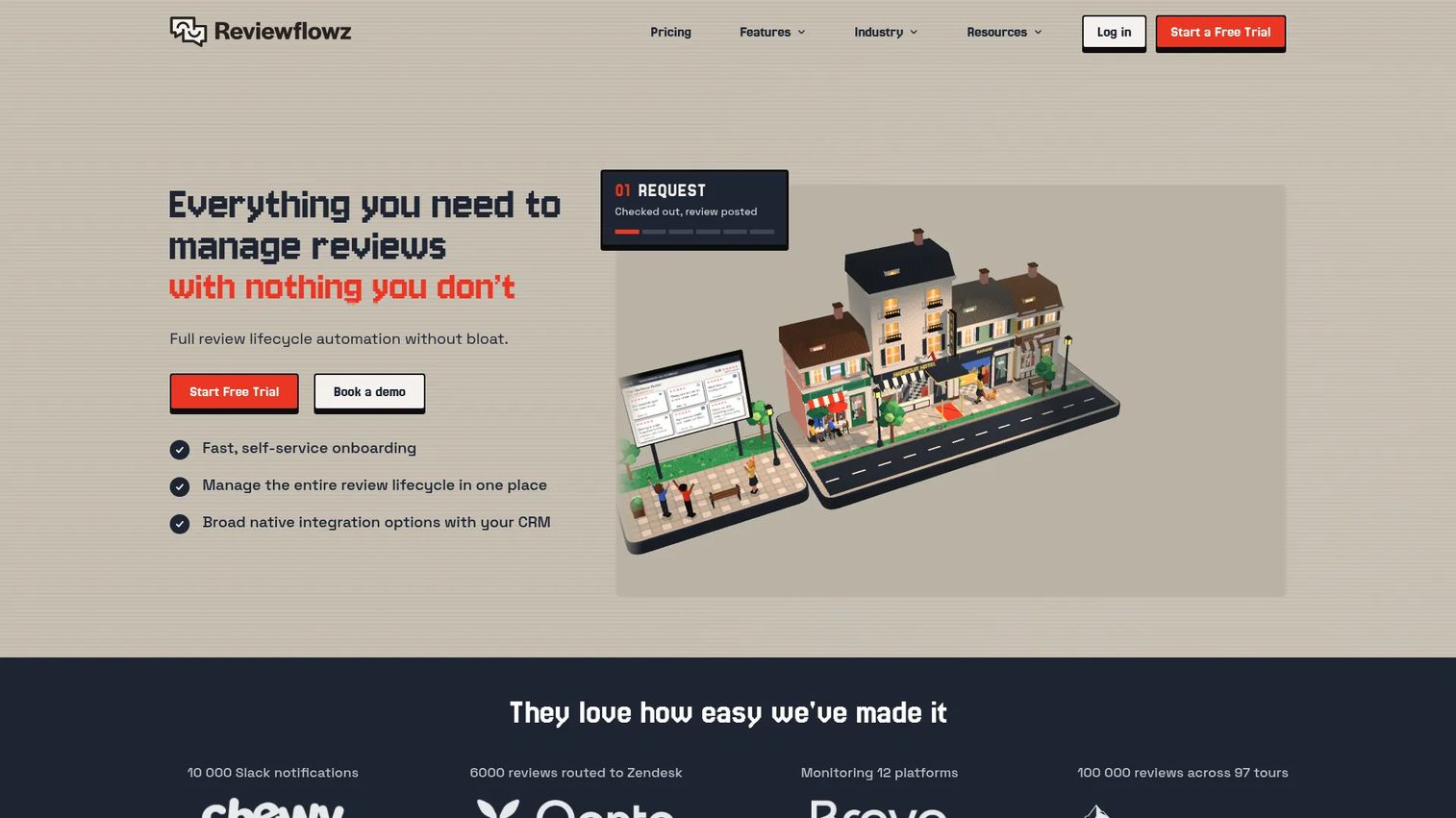
ReviewFlowz automates review collection, monitoring, analysis, and sharing across multiple sources. It also tracks updates, removals, replies, and review attribution.
For customer reference management, its value sits in identifying proof themes and monitoring advocate signals. Live reference matching and sales request fulfillment require another workflow.
Best for: Software teams that treat customer reviews as a central proof source.
Key features
- Automated review requests
- Multiplatform review monitoring
- AI assisted review replies
- Review attribution
- Sentiment and reporting dashboards
Why choose ReviewFlowz: Choose it when review management is your primary customer proof workflow. Its reports and alerts help marketing teams act on new feedback quickly.
ReviewFlowz pricing: SaaS pricing starts at $35 per review profile monthly. A 14 day trial is available.
G2 rating
5.0/5
12. Merchant Centric
Merchant Centric is a customer experience and reputation management system for franchises, chains, and multi location brands. It combines reviews, surveys, listings, and feedback data.
Sentiment analysis can reveal satisfied customers and recurring proof themes. Its operational center is reputation management rather than matching customer advocates to sales opportunities.
Best for: Multi location businesses using reputation data to identify advocacy opportunities.
Key features
- Review monitoring
- AI powered sentiment analysis
- Competitive benchmarking
- Location based reporting
- Reputation management workflows
Why choose Merchant Centric: Choose it when public feedback drives your customer evidence program. Enterprise reference calls still need consent, request routing, and account context elsewhere.
Merchant Centric pricing: Custom pricing for Professional and Enterprise plans.
G2 rating
4.5/5
13. Talon.One
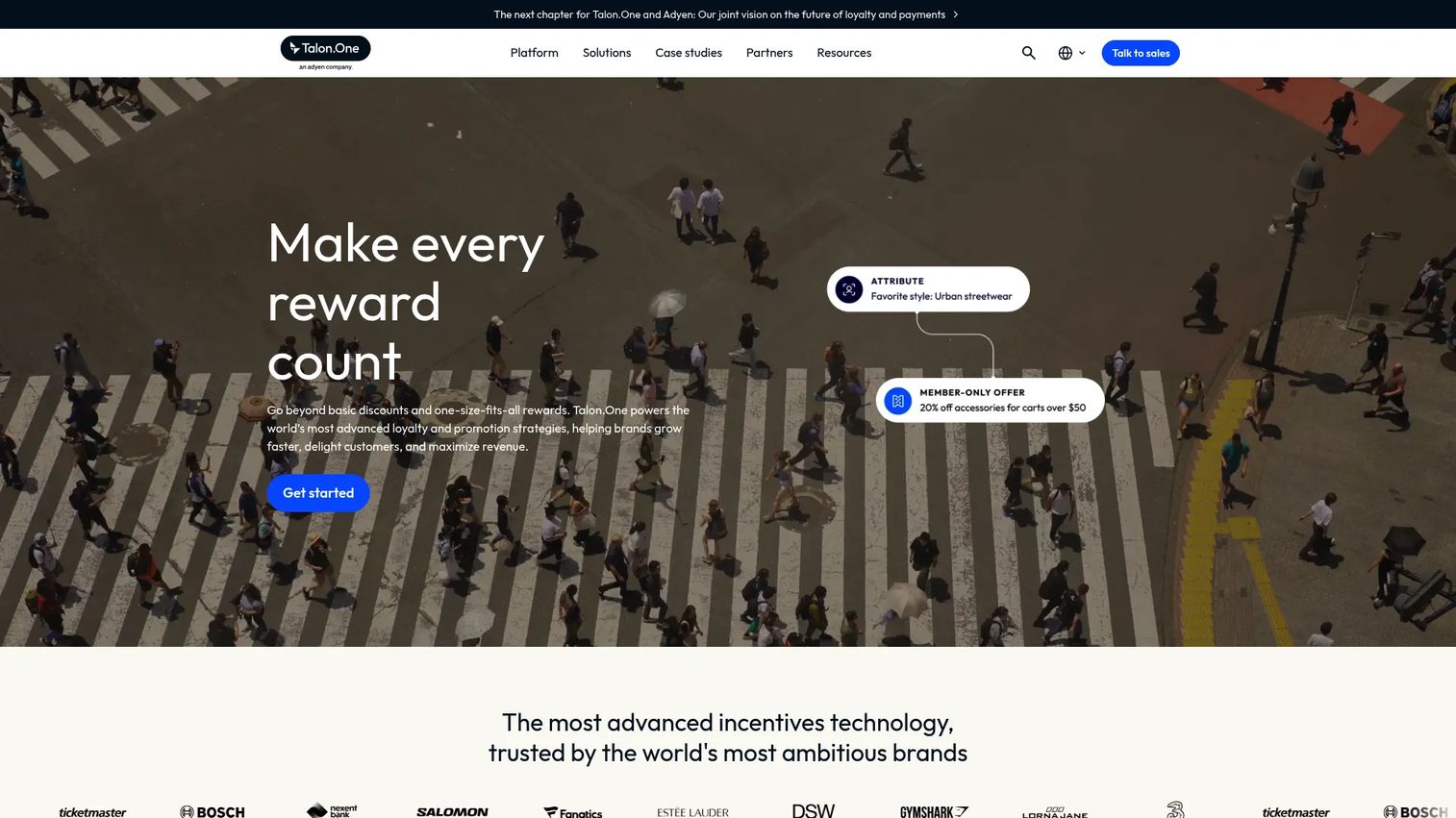
Talon.One provides enterprise infrastructure for loyalty, promotions, referrals, and personalized incentives. Technical teams use its rule engine across web, app, and physical channels.
It can support advocacy programs that need custom reward logic across products or regions. The product is incentive infrastructure rather than a ready made reference request desk.
Best for: Large organizations building custom incentive programs for referrals and advocacy.
Key features
- Enterprise loyalty management
- Rule based promotion engine
- Referral campaign logic
- Personalized customer offers
- Cross channel incentives
Why choose Talon.One: Choose it when incentive flexibility matters more than packaged reference workflows. You will still need customer profiles, participation tracking, and sales request management elsewhere.
Talon.One pricing: Custom pricing. Starter pricing varies with data volume and requires at least 500,000 coupons.
G2 rating
4.5/5
14. Flyx
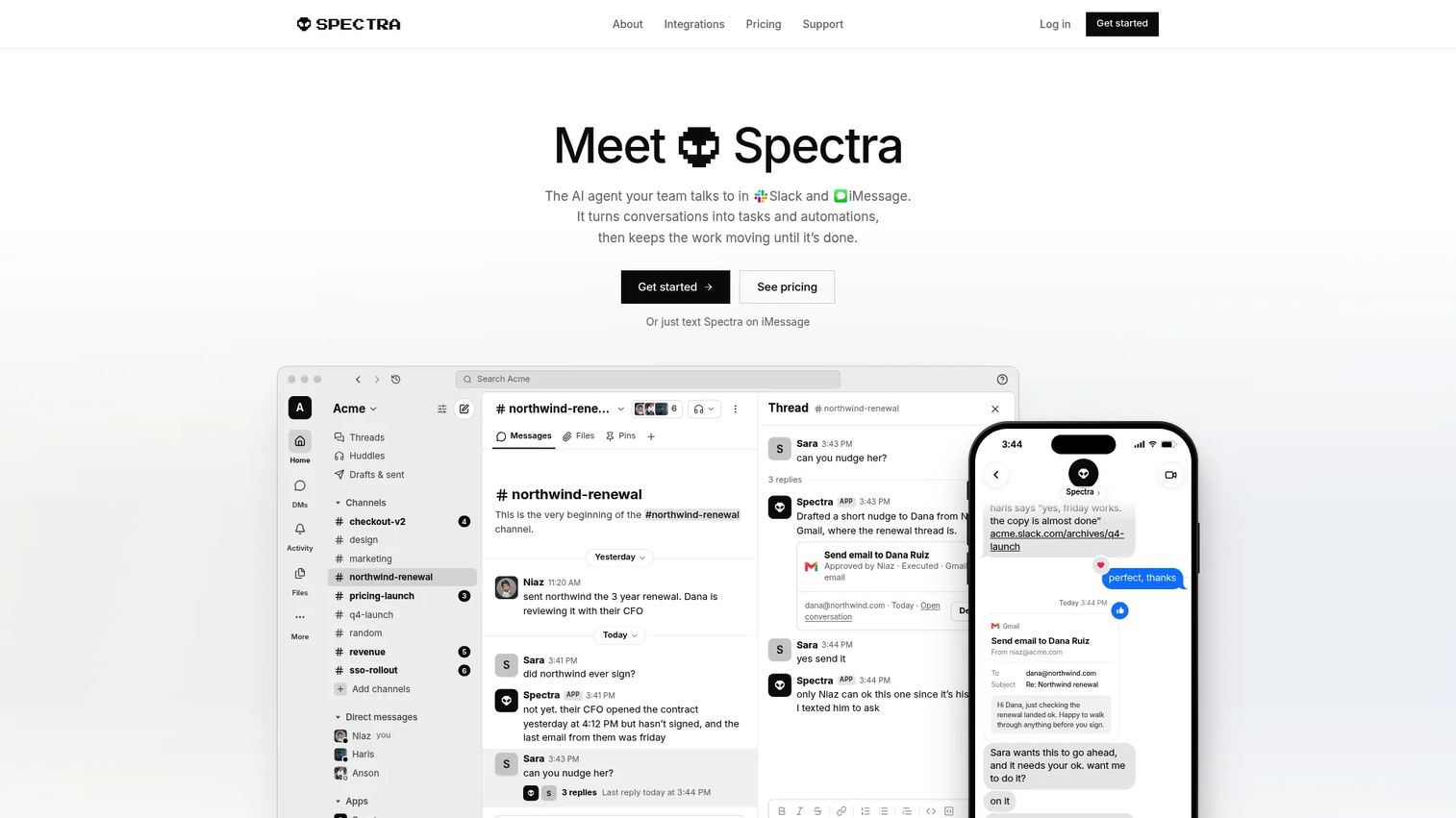
Flyx currently redirects to Spectra. The current product is a Slack based AI operations agent that converts conversations into tasks, automations, and project work.
The verified product does not match customer advocacy, loyalty, or reference management. Its relevance is limited to internal workflow automation around program operations.
Best for: Teams coordinating project tasks and workflow automation through Slack.
Key features
- Slack based AI agent
- Natural language project planning
- Workflow approval controls
- Browser based actions
- Persistent coding computers
Why choose Flyx: Choose the current product for operations automation rather than customer reference management. Buyers should not assume older category listings reflect its present positioning.
Flyx pricing: Usage based pricing starts with $30 in credits. Ongoing charges equal provider cost plus 15%.
15. Dynata+ Platform
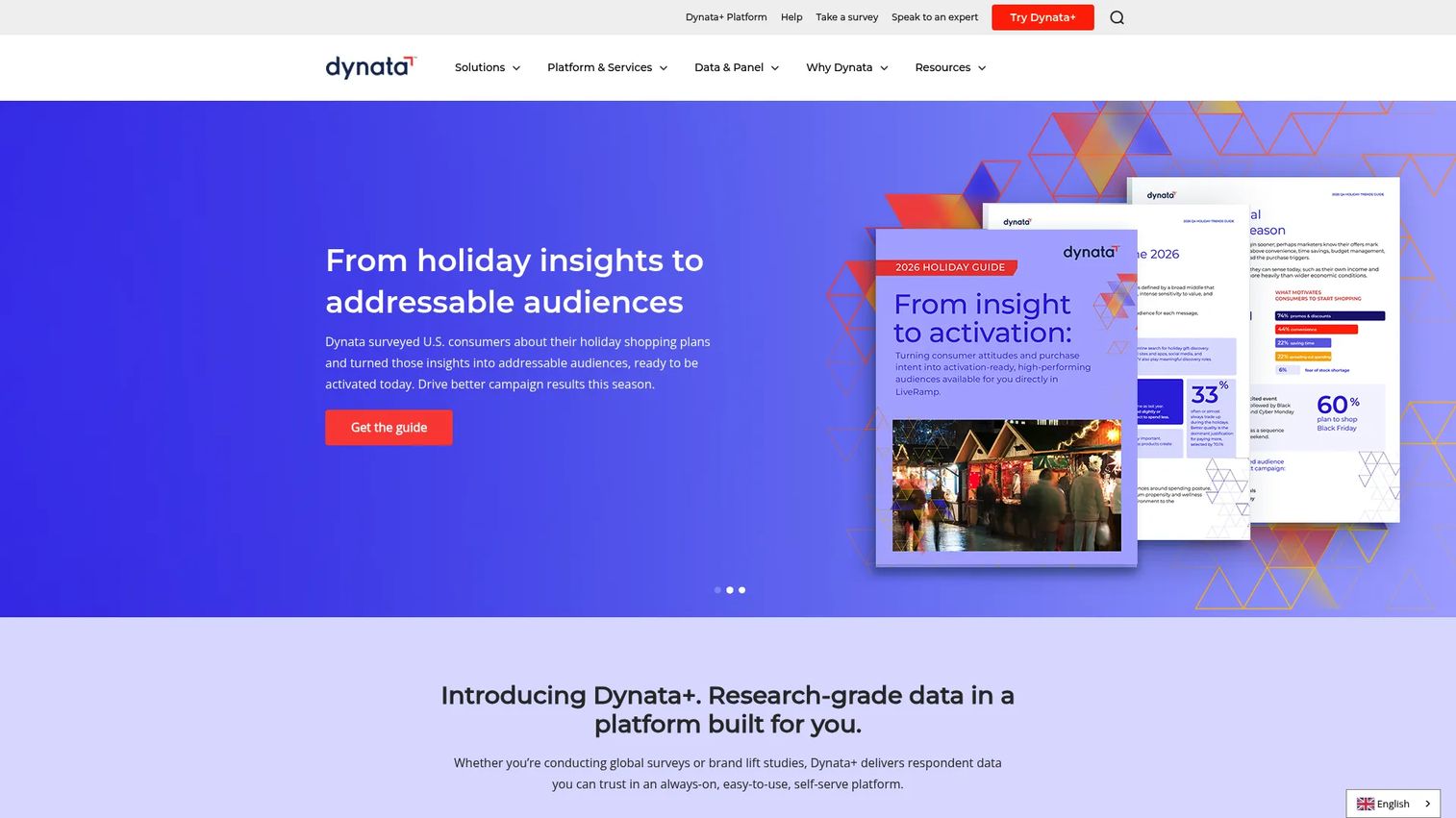
Dynata+ Platform provides self directed audience research and advertising measurement. Teams can configure survey projects, estimate feasibility, manage quotas, and monitor fieldwork.
Its connection to customer reference management comes through evidence gathering. It helps collect structured insights but does not route reference requests to active sales deals.
Best for: Research teams collecting customer or market evidence at scale.
Key features
- Self service audience builder
- Survey project configuration
- Live project dashboards
- Audience quota controls
- Brand lift measurement
Why choose Dynata+ Platform: Choose it when you need survey participants or campaign evidence. Use dedicated reference software for consent, matching, participation history, and sales fulfillment.
Dynata+ Platform pricing: Account creation is free. Customers pay per project and see the cost before launch.
G2 rating
4.1/5
16. Trustpilot
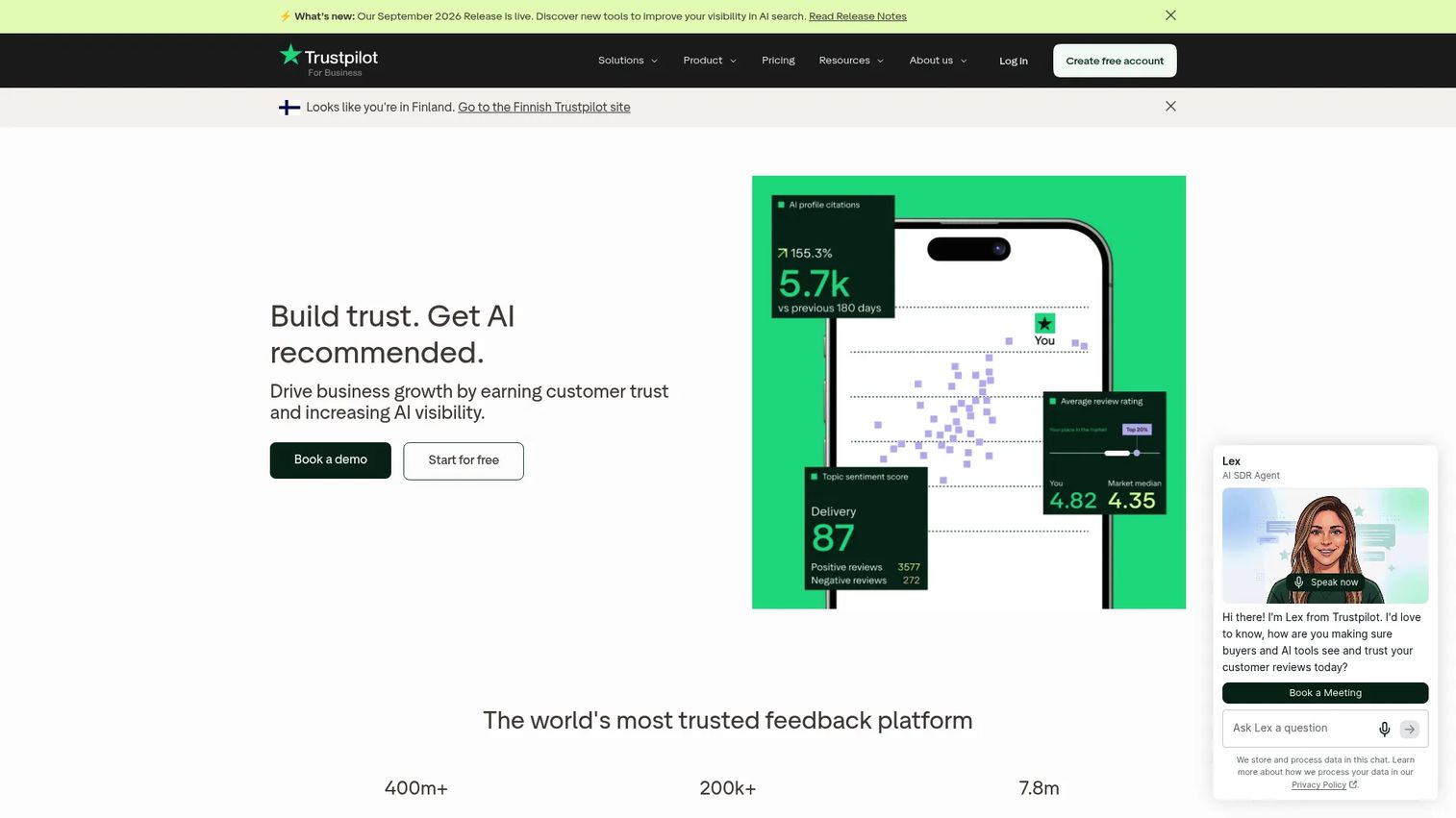
Trustpilot helps businesses collect, manage, analyze, and display customer reviews. Public profiles and website widgets make customer proof visible before a sales conversation.
Trustpilot supports public social proof rather than private reference request management. It can complement a reference program by giving buyers accessible customer evidence earlier.
Best for: Businesses using public customer reviews as visible trust signals.
Key features
- Automated review invitations
- Public business profiles
- Website review widgets
- AI assisted responses
- Review analytics
Why choose Trustpilot: Choose it when buyers need public proof before contacting sales. Pair it with reference management software when opportunities also require private customer conversations.
Trustpilot pricing: A free plan includes 50 monthly review invitations. Plus starts at $319 per domain monthly, billed annually.
G2 rating
3.3/5
17. Highspot
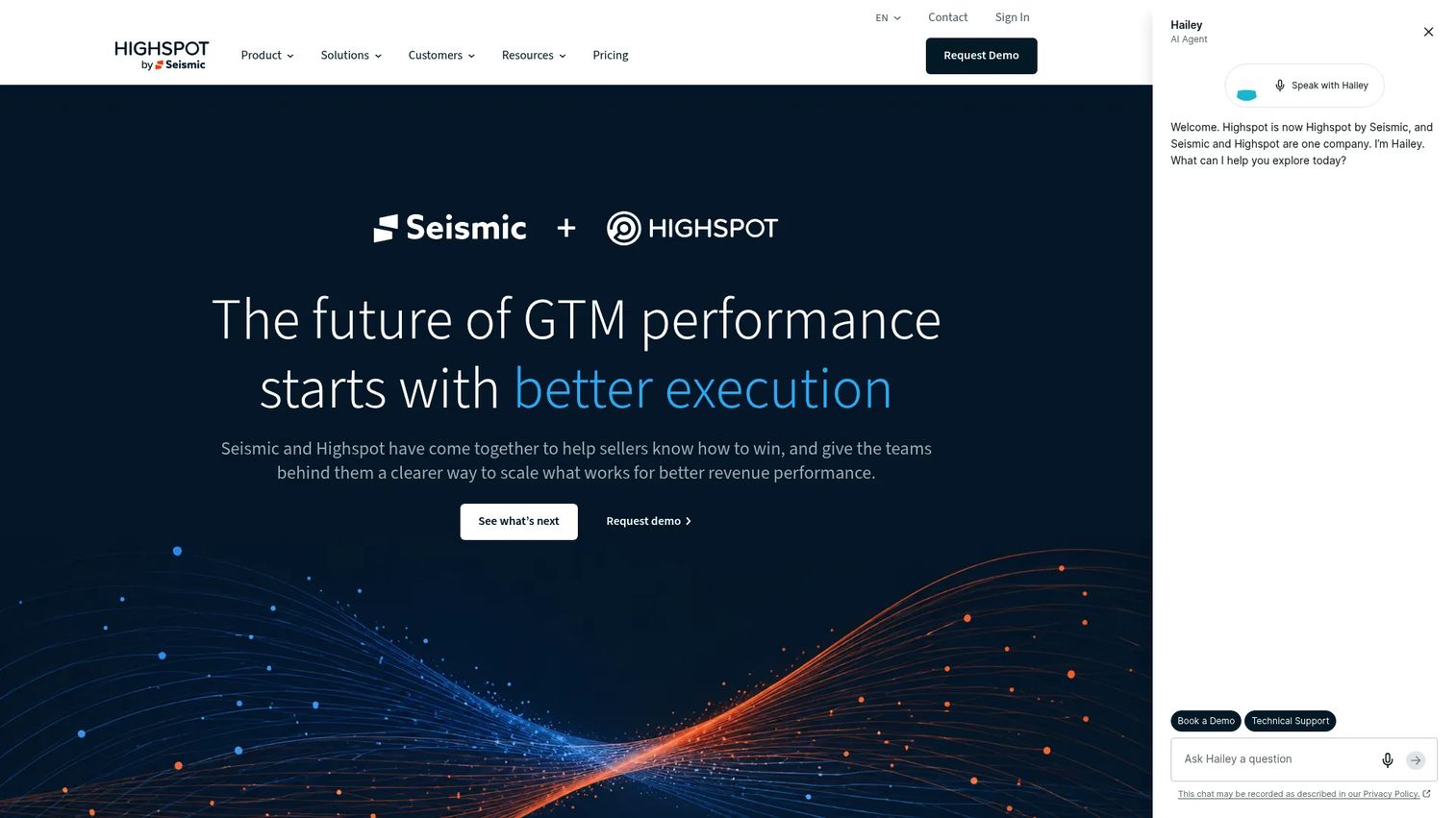
Highspot is a go to market performance platform covering sales content, guidance, training, coaching, buyer engagement, and analytics.
Its customer reference value lies in distribution and governance. Reps can find approved proof within enablement workflows, but the product is not the main system for recruiting or approving reference customers.
Best for: Sales enablement teams that need customer proof available within seller workflows.
Key features
- Sales content management
- AI powered content search
- Guided selling
- Digital sales rooms
- Content usage analytics
Why choose Highspot: Choose it when sellers cannot find or use existing customer evidence. Add dedicated reference software for nomination, approval, matching, and fatigue tracking.
Highspot pricing: Custom pricing across Equip and Engage, Train and Practice, and Coach and Reinforce plans.
G2 rating
4.7/5
Considerations when choosing customer reference management software
Reference matching depth
Basic tags rarely provide enough context for a live deal. Evaluate filters for industry, geography, role, company size, use case, product, sentiment, and implementation stage.
The relationship owner matters too. A suitable customer may still be unavailable because of an open support issue or renewal conversation.
Fatigue and consent controls
Strong customer reference management protects advocates from repeated requests. Look for participation limits, last contact history, opt in status, and approval routing.
Customer success should see each request before outreach begins. This visibility helps preserve trust while keeping sales moving.
CRM and sales workflow fit
Reference requests usually start during an active opportunity. Check whether the system can capture account context, deal stage, request purpose, and deadlines.
Closed loop CRM reporting connects completed activity with pipeline influence. It also reduces manual updates after fulfillment.
Proof asset management
Reference programs create more than customer calls. They also produce case studies, testimonials, reviews, recorded stories, and proof snippets.
Evaluate how the tool stores these assets and surfaces them to sellers. Strong governance prevents outdated or unapproved content from circulating.
Pipeline influence reporting
Leadership will ask whether reference activity affects revenue. Look for reporting by opportunity, segment, account, stage, reference type, and closed won outcome.
Useful dashboards also reveal customer reference pool gaps. Those findings guide advocate recruitment by region, industry, persona, or product line.
Conclusion
The best customer reference software depends on the job your program must perform.
Choose Salesforce or ReferenceEdge when opportunity context and CRM workflow matter most. Influitive, SlapFive, and Upland RO Innovation fit broader customer advocacy operations.
Loyalty and referral programs have different requirements. Kangaroo, InviteReferrals, Preferred Patron Loyalty, and AiTrillion focus on rewards or customer led acquisition. ReviewFlowz, Merchant Centric, and Trustpilot organize public customer proof.
Highspot is strongest when evidence already exists but sellers cannot find it. Talon.One fits teams building custom incentive infrastructure. Dynata+ supports research rather than reference fulfillment.
Start by mapping your current request process. Count repeated asks, measure fulfillment time, and identify missing customer segments. Those gaps will tell you which capabilities deserve budget.
Customer proof becomes more useful when buyers can also experience the product behind it. Guideflow supports interactive product demos for landing pages, sales follow ups, onboarding, customer education, partner enablement, and support.
Start your journey with Guideflow today!
FAQs
Customer reference management software organizes the operational work behind a customer reference program. It helps recruit referenceable customers, manage profiles, route requests, match advocates, record participation, and measure impact.
The system gives sales a reliable request process while helping customer teams control outreach. It also creates a record of which customers participated and when.
Customer reference software focuses on matching customers with specific sales or marketing proof needs. Its main jobs include request intake, consent, participation tracking, fulfillment, and reference fatigue prevention.
Customer advocacy software covers a wider program. It may include communities, rewards, referrals, public reviews, campaigns, and customer generated content.
The software records previous participation, recent contact dates, opt in status, and request limits. Program managers can see whether an advocate has already completed several activities.
Approval workflows can also involve customer success before outreach begins. This check protects the relationship and spreads requests across a broader reference pool.
Start with detailed customer profiles and matching filters. Then evaluate request routing, CRM connections, consent controls, participation history, and proof asset storage.
Reporting should cover fulfillment time, influenced opportunities, advocate activity, and pool coverage gaps. These metrics connect customer reference management with revenue operations.
Many customer reference tools connect with Salesforce, while some operate directly within it. The exact depth differs by vendor and should be checked before purchase.
A strong connection brings account details and opportunity context into the request. It can also send fulfilled activity back into CRM reporting for revenue attribution.
Yes. An early customer reference program can start with CRM fields, a spreadsheet, and clear ownership.
That setup becomes harder when request volume grows or multiple teams contact the same advocates. Dedicated software becomes useful once fatigue, matching speed, approvals, or pipeline reporting create recurring work.
No. Review management software collects public reviews, monitors reputation, and helps businesses respond to feedback.
Customer reference management software coordinates private or controlled customer proof for sales and marketing needs. A mature advocacy program may use both categories together.
Track influenced pipeline and closed won deals that included reference activity. Compare win rates or sales cycle length against similar opportunities without references.
Operational reference program metrics matter too. Monitor request volume, fulfillment time, advocate participation, repeated asks, and coverage gaps across target segments.