Your product team says activation is 34%. Marketing swears it is 41%. Sales reports something else entirely. Nobody is lying. The tracking just lives in six places, none of them agree, and no one owns the reconciliation.
That is the real cost of a broken customer data pipeline. Not the missing dashboard. The slow erosion of trust in every number your team reports.
Customer data infrastructure is the layer that fixes this. It collects events once, governs them with schema enforcement, transforms them in flight, and delivers real-time customer data to the tools that need it. Get it right and data governance stops being a fire drill. Get it wrong and you patch pipelines forever.
The market reflects the pressure. The customer data infrastructure market was worth $4.8B in 2025 and is forecast to hit $20.4B by 2034 at an 18.2% CAGR, according to MarketIntelo (2025). If you are a product manager choosing where instrumentation, governance, and activation live, this guide ranks the tools that matter.
If you are also rethinking how you show product value to prospects and users, clean data feeds that too. Every engagement signal you capture only helps if the plumbing underneath is trustworthy.
What's inside
This guide is built for product managers, growth leads, and data-minded SaaS teams evaluating the architecture layer, not just a single CDP.
Here is how we picked the tools:
- Architecture fit: how much of the collect, govern, transform, activate lifecycle each tool covers
- Governance depth: schema enforcement, consent handling, and data quality controls
- Real-time delivery: streaming and event streaming versus batch-only sync
- Activation breadth: how many destinations each tool syncs to, including reverse ETL
One note on scope. This compares tools used to build customer data infrastructure, which is broader than the CDP category alone. Some tools here are pipelines, some are reverse ETL, some are full CDPs.
TL;DR
- Best for end-to-end infrastructure: RudderStack, the broadest collect-govern-transform-activate stack
- Best for server-side collection and routing: MetaRouter, owned-cloud control at the point of collection
- Best for warehouse-native event infrastructure: Snowplow, granular behavioral events with schema control
- Best for privacy-focused teams: Piwik PRO, analytics plus consent and governance in one place
- Best for warehouse activation and reverse ETL: Census, when the warehouse is already the source of truth
- Best for multi-destination activation: Hightouch, turning warehouse data into action fast
- Best for CDP-style orchestration: Segment, mature collection and a broad destination ecosystem
What is customer data infrastructure
Customer data infrastructure is the foundational layer that collects, governs, transforms, and activates customer data across every tool in your stack. In plain terms, it is the transport and operating layer for your data.
That is the core of the customer data infrastructure definition, and it is also where the CDI vs CDP confusion starts. A CDP is usually the repository or activation platform that sits on top of the infrastructure. CDI is the pipes. The CDP is often one of the destinations those pipes feed.
Here is what the layer actually does:
- Event collection and streaming: capture product and web events, then move them through event streaming in real time or batch, including server-side tracking
- Governance and schema enforcement: validate event shape at ingestion so bad data never reaches downstream tools, protecting data quality
- In-flight transformation: reshape, enrich, and filter events before they land
- Reverse ETL and destination sync: push modeled warehouse data back into operational tools
- Multi-source, multi-destination activation: connect many inputs to many outputs without one-off code
The distinction matters for a PM. If your problem is that events are inconsistent and nobody trusts the numbers, you have an infrastructure problem, not a CDP problem. Adoption of this layer is broad and still climbing. In a 2024 Gartner survey, 68% of organizations had a CDP and 18% were deploying one, though marketers used only 53% of CDP capabilities on average, per Christoph Olivier Consulting (2024).
When to use customer data infrastructure
Unify fragmented tracking across product, marketing, and lifecycle teams
Instrumentation ends up scattered. Product tags one way, marketing tags another, lifecycle emails fire off a third source. Each team trusts its own numbers and distrusts everyone else's. CDI centralizes collection so one event definition serves every team. That kills the reconciliation meetings and makes real-time customer data something people actually believe.
Activate warehouse data across the stack
Your warehouse holds the clean, modeled truth. Your CRM, marketing automation, and support tools do not. Reverse ETL closes that gap by syncing governed warehouse data back into the tools where work happens. This is the heart of customer data activation: insights stop dying in a dashboard and start driving segmentation, scoring, and outreach.
Replace brittle, ad hoc pipelines with governed infrastructure
You know the pattern. Engineering ships a one-off integration, it breaks on a schema change, someone patches it, repeat. The maintenance cost compounds quietly until it eats a full headcount. Governed infrastructure with schema enforcement stops the patching cycle. When a source changes shape, the layer catches it before it corrupts downstream data.
Comparison table
Seven tools, sorted by relevance to a PM building the full CDI layer. Pricing and ratings reflect verified values at the time of writing. Read this as a shortlist, not a ranking of quality.
| # | Product | Best for | Key use case | Pricing | G2 rating |
|---|---|---|---|---|---|
| 1 | RudderStack | End-to-end infrastructure | Collection, transformation, and reverse ETL in one stack | Free; Growth $265/mo; Enterprise custom | 4.7/5 |
| 2 | MetaRouter | Server-side collection | Owned-cloud routing, identity, and consent | Custom | 4.7/5 |
| 3 | Snowplow | Warehouse-native events | Granular behavioral event pipelines | Free trial; quote-based | 4.6/5 |
| 4 | Piwik PRO | Privacy-focused teams | Analytics plus consent and governance | From €35/mo | Not listed |
| 5 | Census | Warehouse activation | Reverse ETL to GTM tools | Transparent, quote-based | 4.5/5 |
| 6 | Hightouch | Multi-destination activation | Reverse ETL to marketing and ad tools | Free plan; Business quote-based | 4.6/5 |
| 7 | Segment | CDP-style orchestration | Collection, identity, broad destinations | Free; Team and Business custom | 4.5/5 |
Best 7 customer data infrastructure tools for 2026
Each entry covers what the tool does, who it fits, key features, the trade-off, and current pricing. Use the sections to match a tool to your actual problem, whether that is collection, governance, transformation, or activation.
1. RudderStack
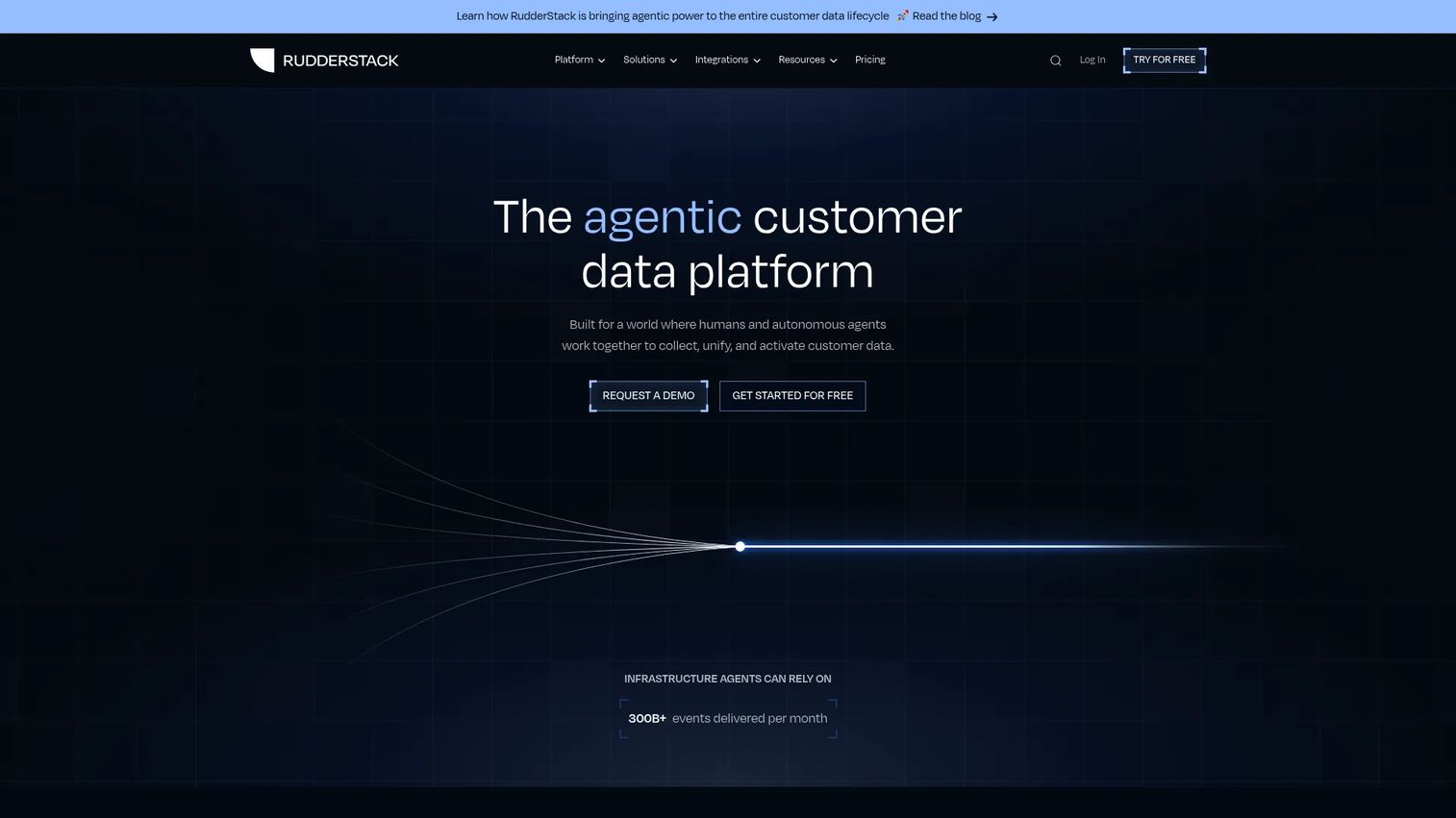
RudderStack is the broadest architecture-first option on this list. It is a warehouse-native customer data platform built to collect, govern, unify, and activate data, and it treats the warehouse as the center of gravity rather than a bolt-on. For a PM who wants one system that spans event collection through reverse ETL, this is the component model to study first.
The appeal is developer ergonomics without giving up governance. Engineers get SDKs and code-based transformations. RevOps and product get destinations and activation. Instrumentation stays in one place, which cuts the ownership ambiguity that fragments most stacks.
Key features
- 16+ SDK sources for client and server-side tracking
- 200+ cloud destinations for multi-destination activation
- JavaScript and Python transformations in flight
- Warehouse-native model with reverse ETL
- Schema and event governance controls
Why choose RudderStack: Pick it when your problem spans the whole lifecycle and you want the warehouse as source of truth. It rewards teams with some engineering appetite and clean release cadence.
RudderStack pricing: Free plan at $0. Growth starts at $265/month. Enterprise is custom, contact sales.
2. MetaRouter
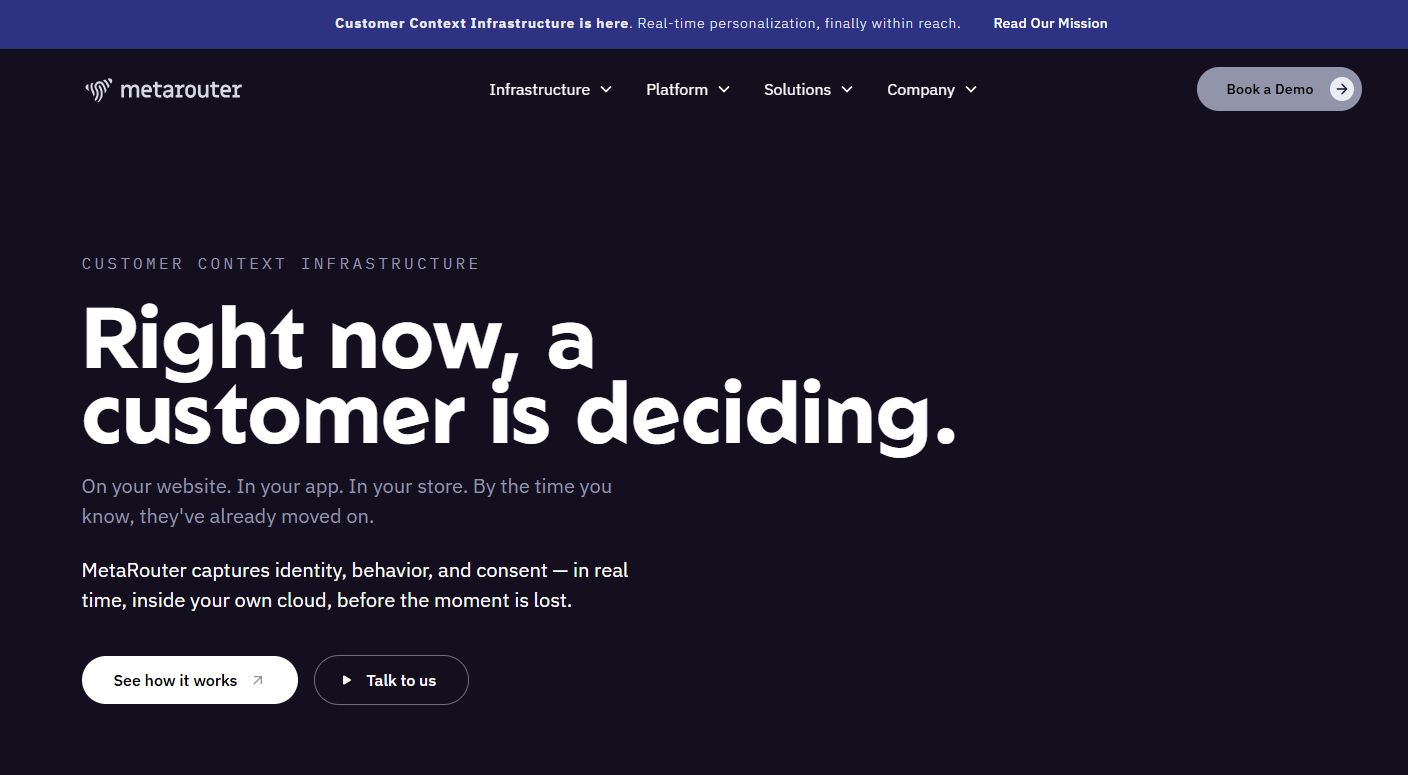
MetaRouter focuses on control at the point of collection. It is enterprise customer data infrastructure for server-side collection, identity resolution, consent enforcement, and activation, all running inside your own cloud. If data ownership and governance are non-negotiable, MetaRouter puts the pipeline where you control it.
Server-side routing also means resilient tracking. Ad blockers and cookie loss chip away at client-side collection, and moving collection server-side keeps data flowing. For teams under privacy scrutiny, consent enforcement built into the routing layer is the differentiator.
Key features
- First-party, server-side customer data infrastructure
- Identity resolution and consent enforcement
- Server-side tag management
- Real-time data transformation
- Owned-cloud deployment for data control
Why choose MetaRouter: Best when a large enterprise needs owned infrastructure and strict governance over where data lives. It fits teams that treat data control as a compliance requirement, not a preference.
MetaRouter pricing: Custom, scoped to your use cases and infrastructure footprint. Contact sales for a proposal.
3. Snowplow
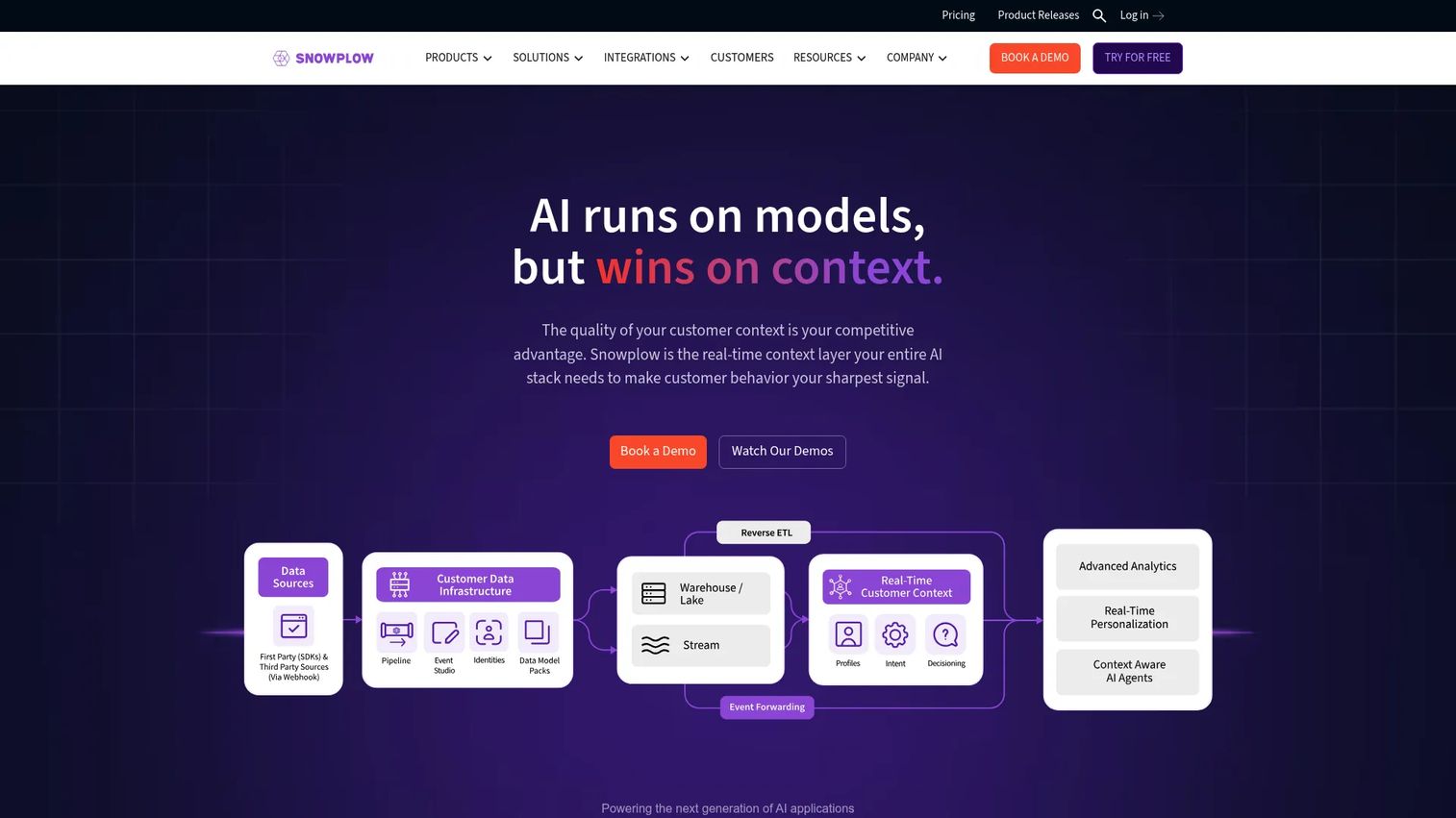
Snowplow is customer data infrastructure for teams that want granular behavioral data they own outright. It collects, validates, enriches, and activates event data in real time, and it gives you schema control that few tools match. If your analytics stack needs event fidelity and flexibility, Snowplow is built for that.
The strength here is data quality at ingestion. In-stream enrichments and quality monitoring catch problems before they hit the warehouse. For a PM who lives on accurate instrumentation, that upstream validation is the thing that keeps your numbers honest.
Key features
- 35+ first-party trackers and webhooks
- In-stream enrichments and data quality monitoring
- Signals for real-time personalization and identity resolution
- Owned, real-time behavioral pipelines
- Schema definition and enforcement
Why choose Snowplow: Choose it when you need owned, real-time behavioral data and analytics flexibility over an opinionated pipeline. It fits teams that want to shape their own event models.
Snowplow pricing: A 14-day free trial is available. Self-hosted and fully managed platform options exist, with quote-based pricing rather than public figures.
4. Piwik PRO
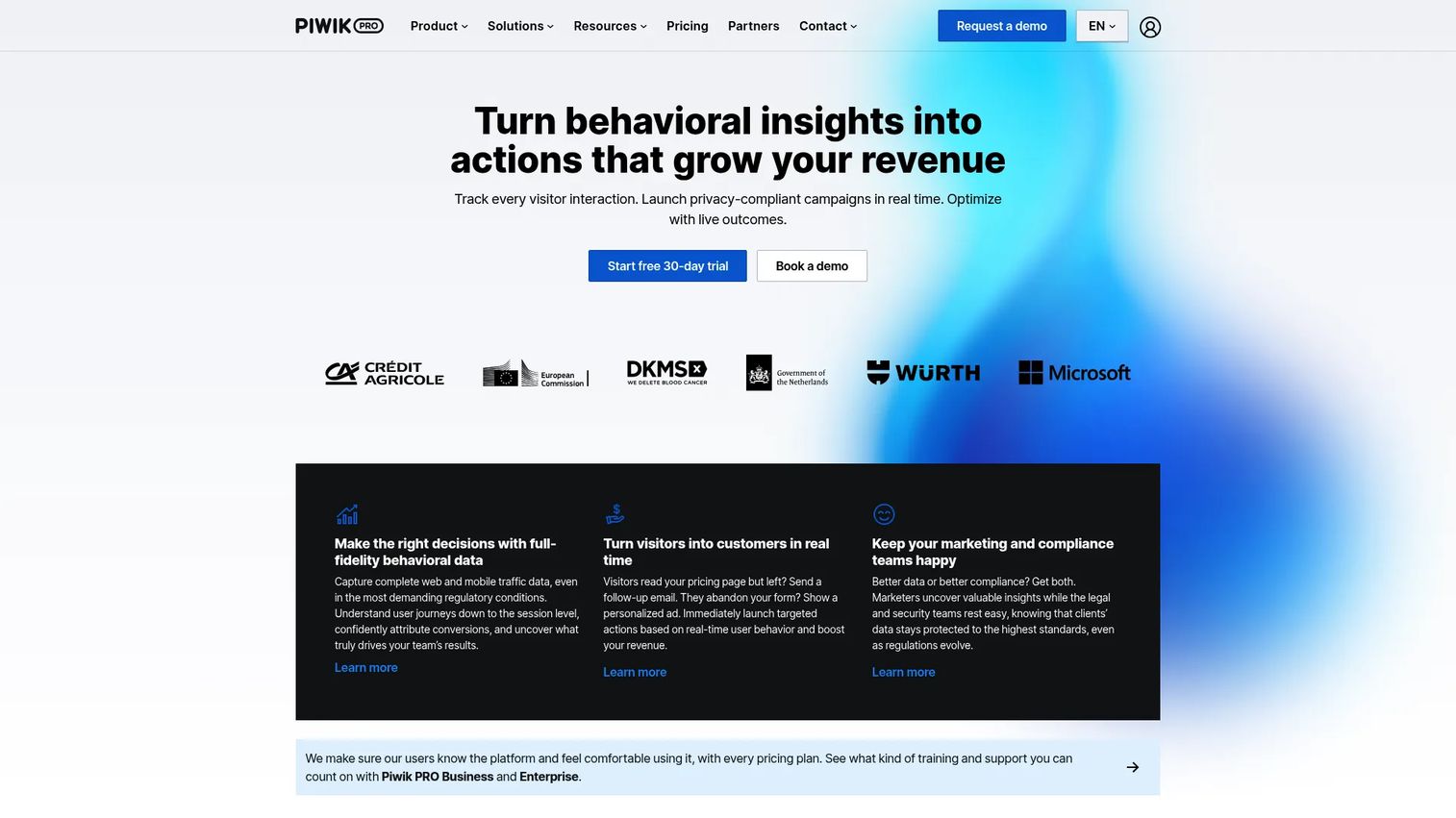
Piwik PRO is a privacy-focused analytics and data activation platform that bundles the governance layer with the analytics layer. It combines analytics, a tag manager, a customer data platform, and a consent management platform in one place. For a compliance-conscious team, that consolidation is the point.
Privacy-first data collection is not an add-on here, it is the core design. Consent handling and analytics live together, which reduces the number of tools that touch sensitive data. If your buyers or your legal team care where personal data flows, this foundational layer answers that question directly.
Key features
- Analytics with privacy-first data collection
- Tag Manager for governed event capture
- Customer Data Platform module
- Consent Management Platform (CMP)
- Governance-friendly foundation
Why choose Piwik PRO: Best when privacy and consent are first-order requirements and you want analytics and governance under one roof. It suits regulated industries and privacy-led products.
Piwik PRO pricing: Business starts from €35/month with up to 20 domains and up to 2M monthly actions. Enterprise starts from €366/month billed annually with higher limits and dedicated support.
5. Census
Census is a data activation and reverse ETL platform for syncing warehouse data into the business tools where teams actually work. When your warehouse is already the trusted source of truth, Census operationalizes those insights by pushing them back into CRM, marketing, and support systems.
The value for a PM is that you skip rebuilding pipelines. Governed warehouse data flows to customer-facing systems through no-code segments, so lifecycle and GTM teams act on the same numbers your analysts modeled. That alignment is what makes customer data activation real instead of theoretical.
Key features
- Reverse ETL and data activation
- 100+ SaaS integrations
- No-code audience building and segments
- Warehouse as source of truth
- Multi-destination sync
Why choose Census: Pick it when the warehouse is trustworthy and the gap is getting that data into GTM tools. It fits data-mature teams that want activation without new pipeline code.
Census pricing: Census publishes transparent pricing language with trial and demo options. Specific plan figures are quote-based, so contact the team for numbers tied to your usage.
6. Hightouch
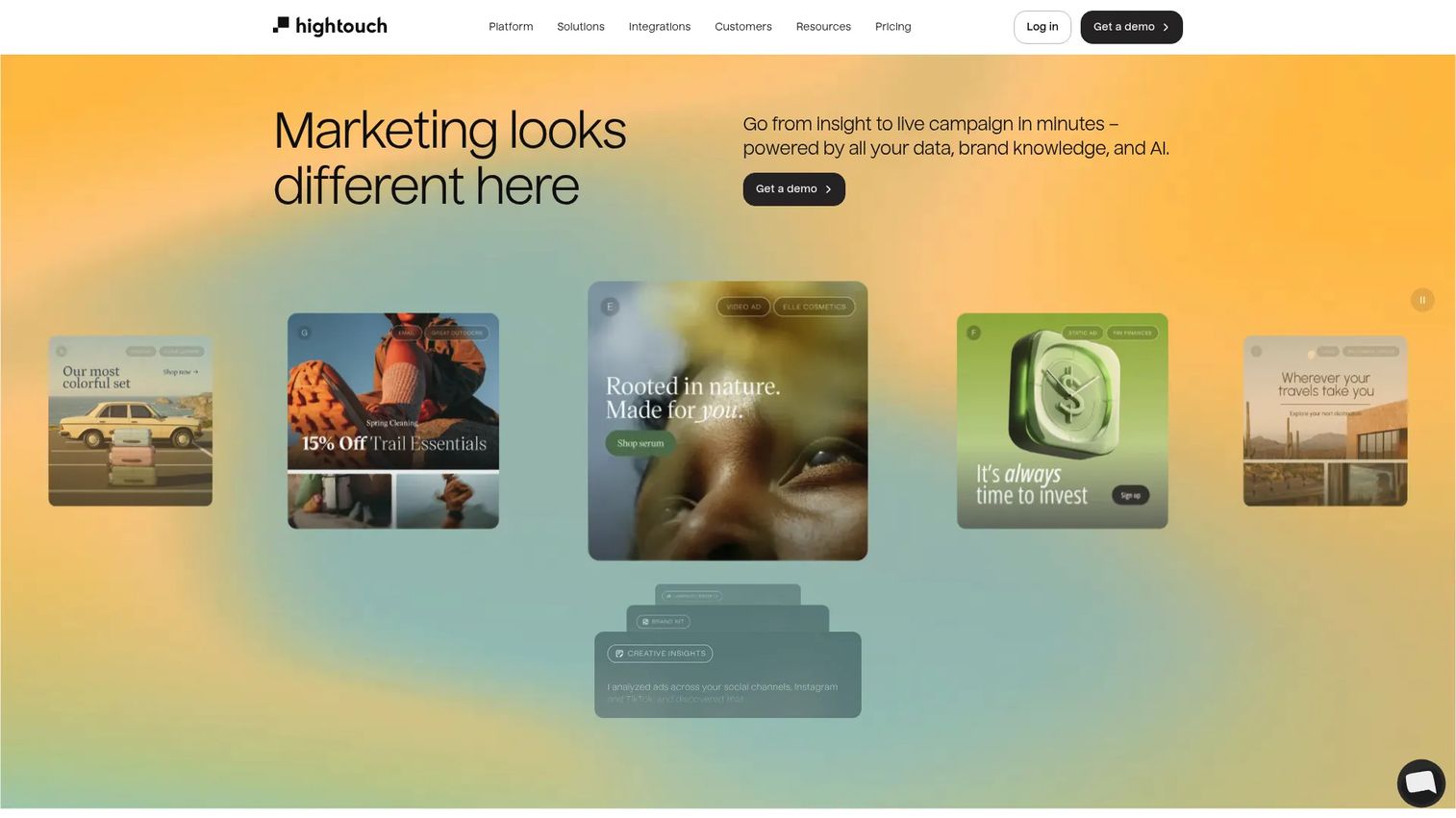
Hightouch is a customer data and AI platform focused on activating warehouse data across marketing and ad tools. It leans into reverse ETL and composable CDP capabilities, so you turn modeled data into action across CRM, marketing automation, and support without building custom integrations.
For a PM who needs multi-destination activation but does not want to own the pipeline plumbing, Hightouch is a practical fit. Usage-based pricing with a free tier means you can validate the motion before committing budget, which suits teams testing activation against real release cadence.
Key features
- Reverse ETL and composable CDP capabilities
- Usage-based pricing with free and self-serve tiers
- Observability, security, and SSO features
- Multi-destination activation to marketing and ad tools
- No-code integration to downstream apps
Why choose Hightouch: Best when you need activation across many destinations fast and want to start on a free tier. It fits teams that value speed to first sync over deep pipeline ownership.
Hightouch pricing: Free plan with 2 active syncs per month. Self-serve plan with 10 active syncs per month. Business tier is quote-based and varies by use case and features.
7. Segment
Segment is the mature CDP-style option for teams that want broad integrations and a familiar operating model. It collects, unifies, governs, and activates customer data, with identity-resolved profiles and a large destination ecosystem. For orchestration and destination breadth, few tools carry the track record Segment does.
The draw is coverage. Real-time collection, identity resolution, and governance tools like debugging and replay give a PM a well-worn path from event to activation. If your priority is a broad ecosystem and a CDP-style workflow the team already understands, Segment is the safe center of the stack.
Key features
- Real-time customer data collection
- Identity-resolved profiles and audiences
- Data governance, debugging, and replay tools
- Broad destination ecosystem
- CDP-style orchestration model
Why choose Segment: Choose it when orchestration and destination breadth matter most and you want a familiar CDP operating model. It fits teams that prioritize ecosystem coverage over warehouse-native architecture.
Segment pricing: Connections offers a Free plan, plus Team and Business plans priced on monthly tracked users. The Customer Data Platform product is contact-sales pricing.
Considerations
Before you commit, run your shortlist against this checklist. The right tool depends less on feature counts and more on how these five questions land for your team.
Source of truth
Decide what owns truth before you buy. Is it the warehouse, the app database, or a CDP? Warehouse-native tools and reverse ETL assume the warehouse. CDP-style tools assume the platform. Pick the tool that matches the architecture you already trust.
Governance and privacy
Look hard at schema enforcement, consent handling, and access controls. Data governance is where quiet failures compound. A tool that validates event shape at ingestion saves you from corrupt downstream data. If you handle personal data, consent tooling is not optional.
Real-time needs
Be honest about whether you need streaming or whether batch is enough. Real-time customer data matters for personalization and time-sensitive triggers. If your use cases are daily syncs and reporting, batch is cheaper and simpler. Do not pay for streaming you will not use.
Activation depth
Map the destinations you actually need. Marketing automation, CRM, support, analytics, ad platforms. Multi-destination activation and reverse ETL breadth vary widely across these tools. Count your real destinations, then check coverage before you shortlist.
Maintenance burden
Name the owner. Someone has to own instrumentation, transformations, and sync failures. Governed infrastructure reduces the patching cycle, but it never eliminates ownership. Choose the tool your team can actually maintain across frequent releases without a dedicated headcount going dark.
Conclusion
The buying pattern is simpler than the vendor noise suggests.
Choose infrastructure-first tools like RudderStack, MetaRouter, or Snowplow when the problem is collection, governance, and delivery. These own the pipeline and give you control over how data is captured and shaped.
Choose reverse ETL tools like Census or Hightouch when the warehouse is already trustworthy and the gap is getting that data into GTM tools. You skip pipeline rebuilds and activate what you already trust.
Choose CDP-style platforms like Segment when orchestration and destination breadth matter most and the team wants a familiar model. Piwik PRO fits when privacy and consent lead the requirements.
Start by naming your source of truth. That single decision narrows the list faster than any feature comparison. Then map your real destinations and your real-time needs, and the right customer analytics stack becomes obvious. Governed infrastructure and clean customer data activation are worth the setup, because trustworthy numbers are the thing every other team decision rests on.
FAQs
Customer data infrastructure is the layer that collects, governs, transforms, and activates customer data across your tools. It is the transport and operating layer for data, handling event collection, schema enforcement, in-flight transformation, and delivery to downstream systems in real time or batch.
CDI is the pipes; a CDP is often a destination those pipes feed. The infrastructure layer moves and governs data across many sources and tools, while a CDP typically stores unified profiles and drives activation on top of that layer. In the CDI vs CDP split, CDI is broader and more foundational.
You need it when your warehouse holds the trusted, modeled data and your operational tools do not. Reverse ETL syncs that governed data back into CRM, marketing, and support systems. If insights keep dying in dashboards, reverse ETL is the missing piece.
Server-side tracking moves data collection off the browser and onto your servers. That makes tracking resilient against ad blockers and cookie loss, and it gives you more control over what data is captured and enriched before it moves downstream. It also strengthens governance and consent enforcement.
Choose RudderStack for the broadest end-to-end, warehouse-native stack. Choose Segment for CDP-style orchestration and the largest destination ecosystem. Choose Snowplow for granular, owned behavioral events with deep schema control. Start with what owns your source of truth and your real-time needs.
Look for strong governance and schema enforcement, event-based collection, low maintenance across frequent releases, and clear activation to your real destinations. Prioritize tools that integrate with your existing data and analytics stack and let you measure impact without a dedicated engineering babysitter.
Schema enforcement validates event shape at ingestion, so malformed data never reaches your warehouse or downstream tools. Governance adds consent handling and access controls on top. Together they protect data quality and stop the quiet corruption that erodes trust in every number.
Yes, when the layer supports event streaming and real-time delivery. Streaming pipelines move events as they happen, which powers time-sensitive triggers and personalization. If your use cases are daily reporting, batch delivery is cheaper and enough, so match the delivery model to the outcome.