A contractor spreadsheet works until the first expired certificate, missed safety training, or site incident forces everyone to reconstruct what happened. At that point, the issue is not paperwork. It is operational control.
According to the AGC and Sage (2025), 61% of construction firms now use cloud-hosted project-management technology, yet contractor risk data still lives in disconnected safety records, inboxes, and approval chains that no single person can see all at once. The result: A contractor can look approved in one system, expired in another, and unknown to the field team entirely. That gap creates jobsite delays, insurance exposure, and the kind of operational surprise that lands on your board agenda instead of being handled by your operations lead.
Contractor risk management software closes that gap. The right tool gives your team a repeatable approval process, current compliance records, and board-ready visibility before a delay forces the issue.
What's inside
This guide covers 16 contractor risk management software tools for construction teams, EHS leaders, procurement managers, and risk-conscious operators in 2026.
- Who it's for: Construction firms, owners, EHS directors, procurement teams, and contractor-heavy operators who need more than a shared spreadsheet
- How tools were selected: Category relevance, contractor prequalification depth, safety and compliance workflow coverage, documentation capabilities, and field usability
- What each entry covers: Pricing, G2 rating, best-fit use case, and key differentiator
- What to verify before buying: Implementation timeline, ERP and HRIS integrations, mobile field workflows, and reporting by audience (executive, EHS, project manager)
TL;DR
- Best overall for contractor prequalification: Highwire covers safety, financial, insurance, and operational risk in a single prequalification workflow
- Best for enterprise contractor networks: Avetta manages supplier and contractor compliance at scale across large organizations
- Best for structured qualification databases: ISN runs contractor qualification and document management through ISNetworld workflows
- Best for EHS-driven programs: EHS Insight (starting at $5k/year) and ProcessMAP support incidents, audits, and compliance operations end to end
- Best for mobile inspections: SafetyCulture and Pervidi put field checklists, corrective actions, and inspection reports on any phone or tablet
- Best for construction project teams: Procore connects contractor workflows directly to project management; Assignar handles field crews and operational scheduling
What is contractor risk management software?
Contractor risk management software helps companies evaluate, approve, monitor, and manage third-party contractors before and during work. It is a broader category than contractor safety software alone. A pure safety tool handles inspections, incidents, and corrective actions. Contractor risk management adds financial health screening, certificate of insurance tracking, prequalification scoring, and portfolio-wide visibility across every active contractor relationship.
The category spans several overlapping subcategories:
- Prequalification platforms: Evaluate contractors before site access using safety records, insurance documentation, financial standing, and capacity assessments
- EHS and safety platforms: Manage incidents, audits, inspections, corrective actions, and training compliance during active work
- Document and compliance trackers: Collect, approve, and monitor expiring certificates, licenses, and safety plans
- Construction operations platforms: Embed contractor risk into broader project management, scheduling, and field reporting workflows
- Workforce credentialing platforms: Verify individual worker qualifications, training histories, and competency levels
Key capabilities to look for:
- Contractor prequalification and risk scoring
- Certificate of insurance and document tracking with expiry alerts
- Safety training and competency verification
- Incident reporting and corrective action workflows
- Mobile inspections, audits, and job safety analyses
- Jobsite readiness and site-access approval
- Subcontractor performance analytics
- Integration with ERP, HRIS, and project management systems
- Reporting for executives, EHS teams, and procurement
The right tool depends on whether your bottleneck is contractor approval before work starts, field safety during work, insurance and document tracking, or portfolio-wide risk reporting.
When to use contractor risk management software
Verify contractors before they reach the jobsite
Every day a contractor arrives on site without verified insurance, current safety training, or an approved license is a day your project and your organization carry unmanaged exposure. Contractor prequalification software creates a repeatable approval gate, so field teams stop relying on email confirmations and folder checks. Tools in this category collect documents, score contractor risk, send expiry alerts, and hold approvals in one auditable record.
Monitor risk across multiple projects
Running five projects simultaneously means five sets of subcontractors, insurance deadlines, and safety incidents that can surface anywhere. A board-ready view of contractor risk across your portfolio should not require your operations lead to manually pull status from each project manager. Multi-site platforms aggregate incidents, compliance gaps, and contractor performance into dashboards leadership can actually use.
Replace spreadsheets with repeatable workflows
Scaling a contractor-heavy operation without a system means every approval is a custom process that routes through whoever happens to know. Repeatable approval workflows, renewal reminders, role-based accountability, and audit trails are what separate an operational program from a founder bottleneck. When you hire a new VP of Operations, the process should work on day one.
Contractor risk management software comparison
The 16 tools below vary significantly by primary workflow. Some focus on contractor prequalification and scoring. Others center on EHS and safety execution. A few embed contractor risk inside broader construction or workforce management platforms. Pricing varies by contractor count, module selection, user count, and contract type, so treat the pricing column as a starting orientation and confirm directly with each vendor.
| # | Product | Best for | Key differentiator | Pricing | G2 rating |
|---|---|---|---|---|---|
| 1 | Highwire | Contractor prequalification | Risk scoring across safety, finance, insurance, and operations | Custom pricing | 4.6/5 |
| 2 | Avetta | Enterprise contractor networks | Supplier prequalification and workforce compliance at scale | Custom pricing | 3.7/5 |
| 3 | ISN | Structured qualification workflows | Contractor management via ISNetworld qualification database | Custom pricing | N/A |
| 4 | EHS Insight | EHS-driven contractor risk | Safety, audits, incidents, and compliance in one modular platform | From $5k/year | 4.6/5 |
| 5 | Origami Risk | Enterprise construction risk | RMIS, EHS, GRC, claims, and insurance in one platform | Custom pricing | 4.5/5 |
| 6 | Mitti | Frontline safety operations | Free tier plus AI-assisted inspections, training, and issue tracking | Free; paid from $24/seat/month | 4.6/5 |
| 7 | SafetyCulture | Mobile inspections and audits | Field checklists, incident reporting, and corrective actions | Free; paid from $24/seat/month | N/A |
| 8 | Contractor Compliance | Document tracking and onboarding | Contractor document collection, approval, and expiry alerts | Custom pricing | N/A |
| 9 | ProcessMAP | Enterprise EHS programs | EHS analytics, incident management, and compliance operations | Custom pricing | 4.2/5 |
| 10 | Vector Solutions EHS | Training-linked EHS management | Safety training connected to incident, inspection, and compliance workflows | Custom pricing | 4.4/5 |
| 11 | Pervidi | Field inspections and audits | Offline mobile inspections with custom forms and corrective actions | Custom pricing | N/A |
| 12 | Assignar | Construction workforce operations | Crew scheduling, field compliance, and resource planning | Custom pricing | 4.4/5 |
| 13 | Procore | Construction project teams | Contractor workflows inside full construction project management | Custom pricing | N/A |
| 14 | Contractor Foreman | Small contractor teams | Affordable project, safety, and field operations in one platform | From $49/month | 4.5/5 |
| 15 | Novara Flex | EHS and site-access compliance | Configurable EHS, contractor risk, and pre-arrival verification | Custom pricing | 4.6/5 |
| 16 | MyPass Global | Workforce credentialing | Skills passports, credential verification, and qualification tracking | From AUD $11.50/worker/month | 4.2/5 |
Best 16 contractor risk management software tools for construction in 2026
1. Highwire
Highwire is a contractor risk management and Contractor Success platform built for owners, general contractors, and capital project teams. It evaluates contractors across safety, financial health, insurance compliance, operational capacity, and regulatory standing before a single worker reaches the jobsite. The platform also offers ongoing risk monitoring so risk levels are tracked throughout the project, not just at the point of approval.
Best for: Construction companies and capital project owners that need a structured contractor risk score before work begins.
Key features
- Contractor prequalification across safety, finance, insurance, and capacity
- Safety inspections with configurable checklists, GPS, and offline mobile support
- Incident management and real-time contractor risk monitoring
- Highwire Network for discovering and connecting with qualified contractors
- Procore integration and open API for data exchange
Why choose Highwire: Choose Highwire when contractor selection risk is your core bottleneck. It gives procurement and operations teams a side-by-side comparison of contractor risk scores before the project starts, and keeps monitoring active after approval.
Highwire pricing: Pricing is customized based on assessment packages and contractor count. Small contractors can often enroll at no cost; client-side pricing requires a quote from Highwire's team.
G2 rating: 4.6/5
2. Avetta
Avetta is a supply-chain risk management platform for organizations that manage large contractor and supplier networks. It handles prequalification, compliance documentation, workforce training, and site-access management from a centralized platform. Avetta positions itself across multiple industries, including construction, energy, manufacturing, and utilities, making it a fit for enterprises with contractor relationships that span categories.
Best for: Enterprise teams managing contractor and supplier compliance across multiple business units.
Key features
- Supplier and contractor prequalification with risk scoring
- Contractor onboarding and document verification
- Worker qualification, training records, and site-access management
- Workforce compliance across contractor tiers
- Risk network data from Avetta's connected contractor ecosystem
Why choose Avetta: Choose Avetta when scale and network breadth matter more than a specialized construction focus. It works best when procurement, safety, and compliance teams need a single approval process across divisions.
Avetta pricing: Pricing is customized based on connections, project risk level, and client requirements. Confirm contractor volume and module needs with Avetta's sales team.
G2 rating: 3.7/5
3. ISN
ISN runs ISNetworld, one of the most widely recognized contractor and supplier information management platforms. Hiring clients use ISNetworld to set qualification requirements; contractors and suppliers collect safety records, insurance documentation, and compliance data to meet those standards. The platform supports health, safety, quality, insurance, sustainability, and cybersecurity management, along with analytics and worker-level tracking through the Empower mobile app.
Best for: Companies that rely on standardized contractor qualification workflows and need contractor data visible across procurement and safety teams.
Key features
- Contractor prequalification and ongoing compliance monitoring
- Health, safety, quality, insurance, and sustainability management
- Worker-level training and qualification tracking via Empower app
- Analytics, reporting, and contractor benchmarking
- Contractor and supplier database across industries and geographies
Why choose ISN: Choose ISN when your clients or partners already require ISNetworld qualification. It is a strong fit when contractor approval depends on a shared data standard rather than a proprietary scoring model.
ISN pricing: Fees are based on workforce size, countries of operation, and subscription type. Pricing is confirmed through ISN's sales process; no public figure is displayed.
4. EHS Insight
EHS Insight is a modular, cloud-based platform for environmental, health, safety, compliance, quality, training, and sustainability management. It handles contractor risk through the safety workflows that matter most after work begins: Incidents, audits, inspections, corrective actions, and compliance obligations. The platform includes an offline-capable mobile app, AI-assisted reporting, and configurable workflows for multi-site teams.
Best for: EHS teams that manage contractor safety, inspections, incidents, and corrective actions across multiple locations.
Key features
- Incident management and OSHA recordkeeping
- Audit and inspection management with corrective actions
- Training management and competency tracking
- Compliance obligation calendars and regulatory reporting
- ESG and sustainability module with AI-assisted analysis
Why choose EHS Insight: Choose EHS Insight when contractor risk shows up primarily in safety events and audit findings rather than at the prequalification stage. It fits teams that need a complete EHS operating record, not just a document checklist.
EHS Insight pricing: The Small and Medium Business plan starts at $5,000 per year billed annually. Enterprise pricing is customized based on contacts, modules, and implementation scope.
G2 rating: 4.6/5
5. Origami Risk
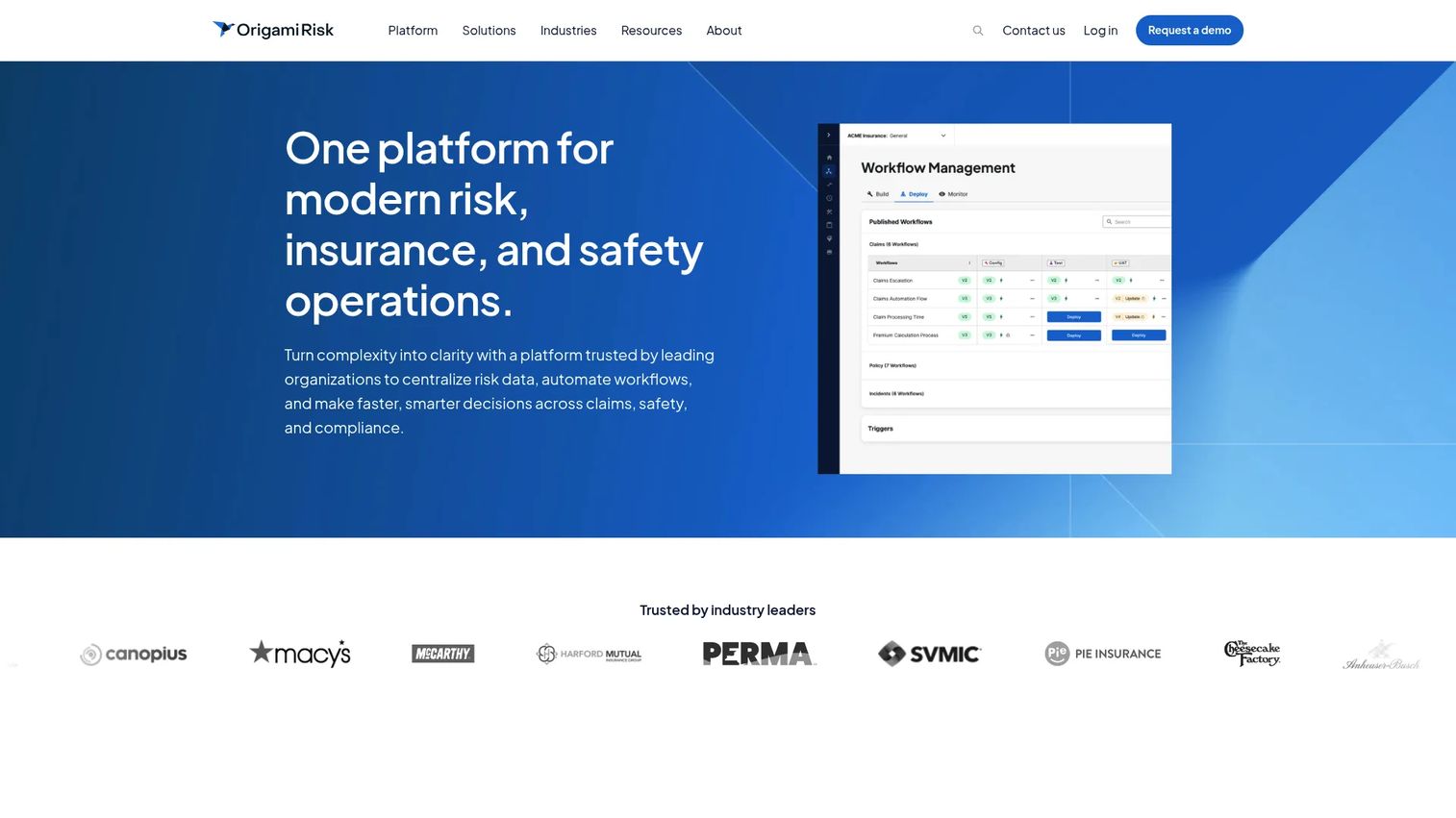
Origami Risk is a cloud-native platform for managing risk, insurance, safety, and compliance operations at enterprise scale. For construction, it connects contractor risk to the broader risk picture: Claims, insurance policies, EHS workflows, and GRC reporting. The platform includes configurable workflows, embedded AI, mobile audits with offline capability, and integrated RMIS and EHS modules.
Best for: Enterprise risk teams that need contractor risk connected to insurance, claims, and portfolio-wide risk data.
Key features
- RMIS capabilities including claims management and insurance tracking
- EHS incident reporting, audits, and corrective actions
- GRC reporting and compliance workflows
- Configurable dashboards and analytics
- Mobile audits with offline access
Why choose Origami Risk: Choose Origami Risk when contractor risk needs to sit beside insurance data and enterprise-level risk reporting. It is a better fit for complex programs than for small teams wanting a focused contractor document tracker.
Origami Risk pricing: Custom pricing. The official site directs prospects to request a demo or contact sales.
G2 rating: 4.5/5
6. Mitti
Mitti is a frontline operations platform for inspections, issue tracking, training, reporting, and workplace safety. It supports contractor safety and compliance through configurable inspection checklists, AI-generated reports, corrective-action tracking, and training management. A free tier for teams up to 10 makes it accessible for smaller operations testing a structured approach before committing to a paid platform.
Best for: Frontline and multi-site teams that need inspection, training, and corrective-action workflows at a manageable entry cost.
Key features
- Checklist-based inspections and audits with AI-generated summaries
- Actions, investigations, and corrective-action tracking
- Training and course management
- Asset and environmental sensor monitoring
- Analytics dashboards and scheduled reports
Why choose Mitti: Choose Mitti when the immediate problem is getting inspections and safety documentation into a consistent, repeatable format. The free tier lets small teams start before a budget approval cycle.
Mitti pricing: Free for teams up to 10 users. Premium plans start at $24 per seat per month billed annually ($29 per seat per month billed monthly). Enterprise pricing requires a quote.
G2 rating: 4.6/5
7. SafetyCulture
SafetyCulture is a workplace operations platform built for frontline teams that need digital inspections, checklists, and corrective actions on their phones. It covers audits, incident reporting, asset checks, training, and analytics. For contractor risk, it is most useful when field inspection quality and incident visibility are the primary gaps rather than vendor prequalification.
Best for: Field teams and safety managers that need mobile inspections and corrective actions across jobsites.
Key features
- Digital inspections and configurable safety checklists
- Task and corrective-action management
- Incident and issue reporting
- Asset management and scheduled maintenance
- Training and upskilling modules
Why choose SafetyCulture: Choose SafetyCulture when jobsite execution is the weak point in your contractor risk program. It works well for teams that need field workers to capture risk signals from any device, including in areas with limited connectivity.
SafetyCulture pricing: Free for up to 10 seats. Premium plans start at $24 per seat per month. Lite seats can be added to paid plans from $5 per seat per month billed annually. Enterprise pricing is custom.
8. Contractor Compliance
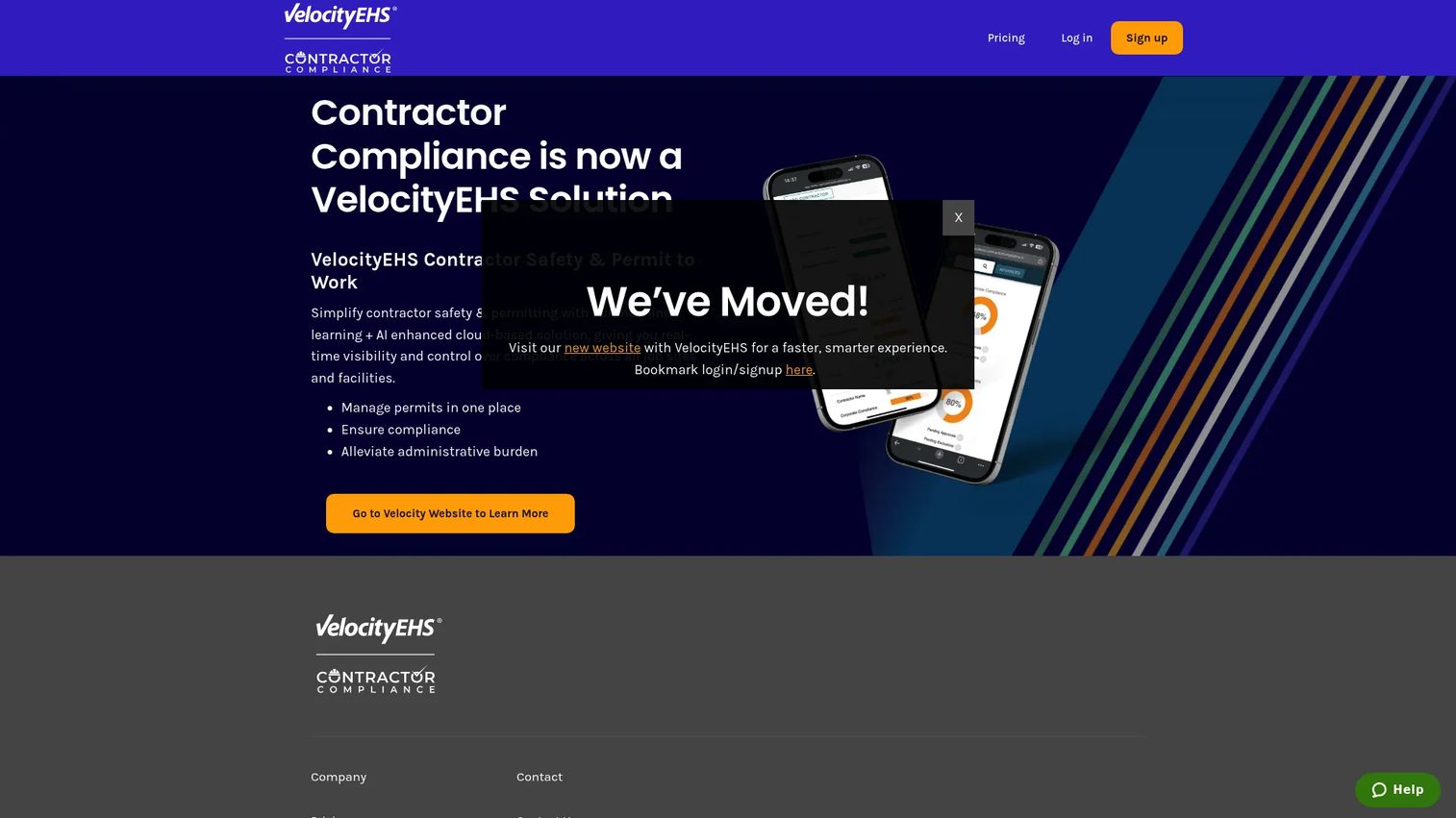
Contractor Compliance is a cloud-based contractor management platform focused on document collection, approval workflows, and expiry tracking. It helps organizations pull contractor onboarding, insurance certificates, OSHA logs, safety records, and licenses out of email and into a structured approval system. The platform includes AI-assisted review of key documents and a self-service contractor portal. Note that Contractor Compliance has moved to VelocityEHS, so confirm the current product roadmap with the vendor before purchasing.
Best for: Teams buried in email-based contractor document collection who need centralized approvals and automated renewal reminders.
Key features
- Contractor qualification and document collection
- Contractor self-service portal for document uploads
- AI-driven review of certificates of insurance and OSHA logs
- Expiry alerts and renewal workflows
- Compliance reporting by contractor and document type
Why choose Contractor Compliance: Choose this platform when document administration is slowing down contractor approval. It fits teams that need cleaner ownership around certificates, licenses, and renewals without building a custom process from scratch.
Contractor Compliance pricing: Pricing options are listed on the official site but specific plan amounts are not publicly displayed. Contact the vendor to confirm pricing based on contractor volume and modules required.
9. ProcessMAP
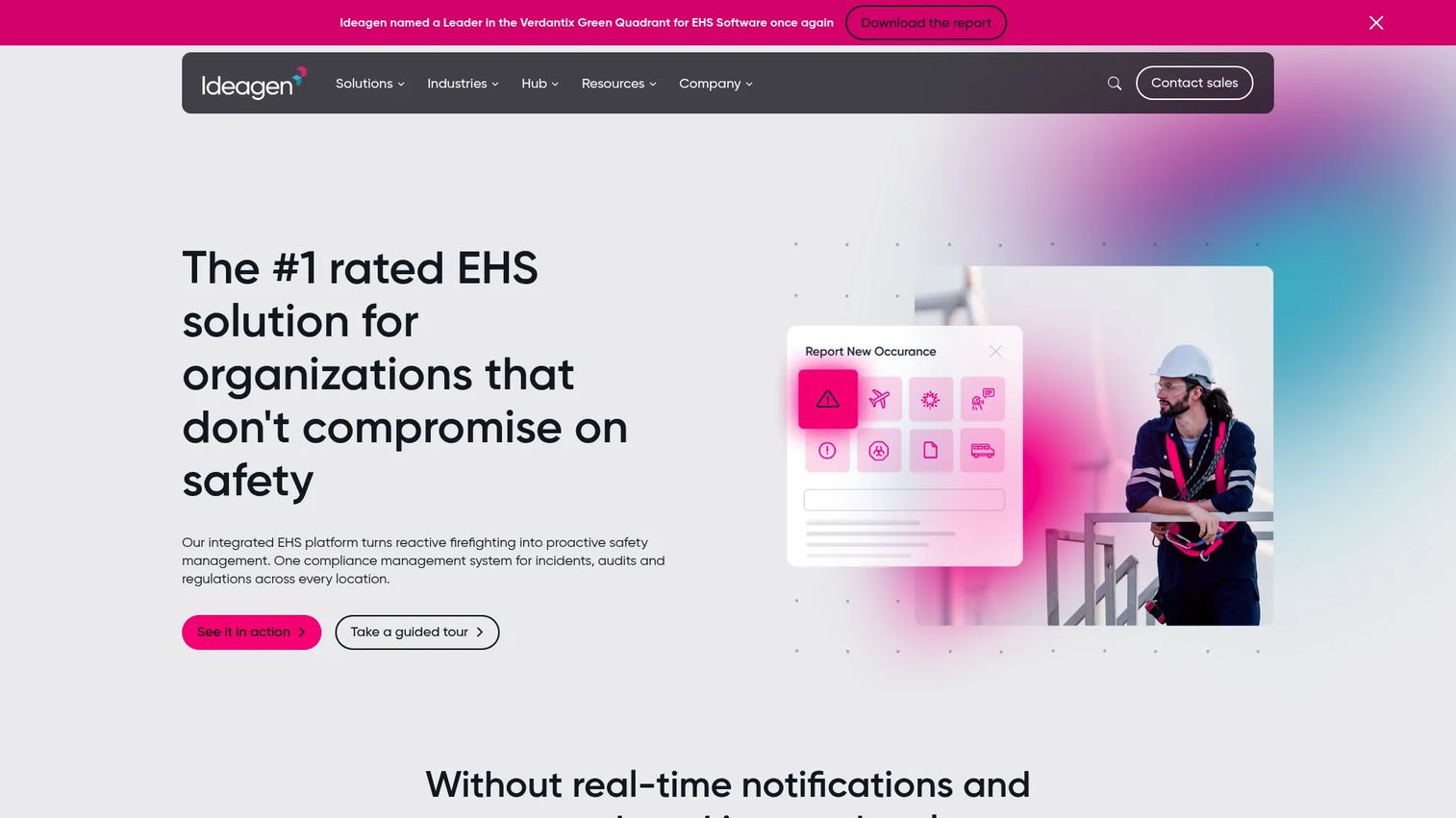
ProcessMAP is an enterprise EHS management platform now operating as Ideagen EHS following an acquisition. It handles incident reporting, compliance operations, audit workflows, EHS analytics, and corrective actions for large, multi-site organizations. For contractor risk, it fits programs where safety events and regulatory adherence drive the visibility requirement rather than insurance or prequalification scoring.
Best for: Enterprise EHS teams that need incident, audit, and compliance workflows connected to analytics and compliance reporting.
Key features
- Incident reporting and safety management
- Compliance reporting and regulatory adherence tracking
- Audit workflows and corrective actions
- Real-time EHS analytics and performance monitoring
- Multi-site program management
Why choose ProcessMAP: Choose ProcessMAP when contractor risk is part of a larger enterprise EHS operating model. It fits teams that need program-level reporting across sites and want a system that connects EHS data to regulatory deadlines.
ProcessMAP pricing: Custom pricing. Confirm current pricing with Ideagen's sales team, as the product is now marketed under the Ideagen EHS brand.
G2 rating: 4.2/5 (reported for Ideagen overall)
10. Vector Solutions EHS
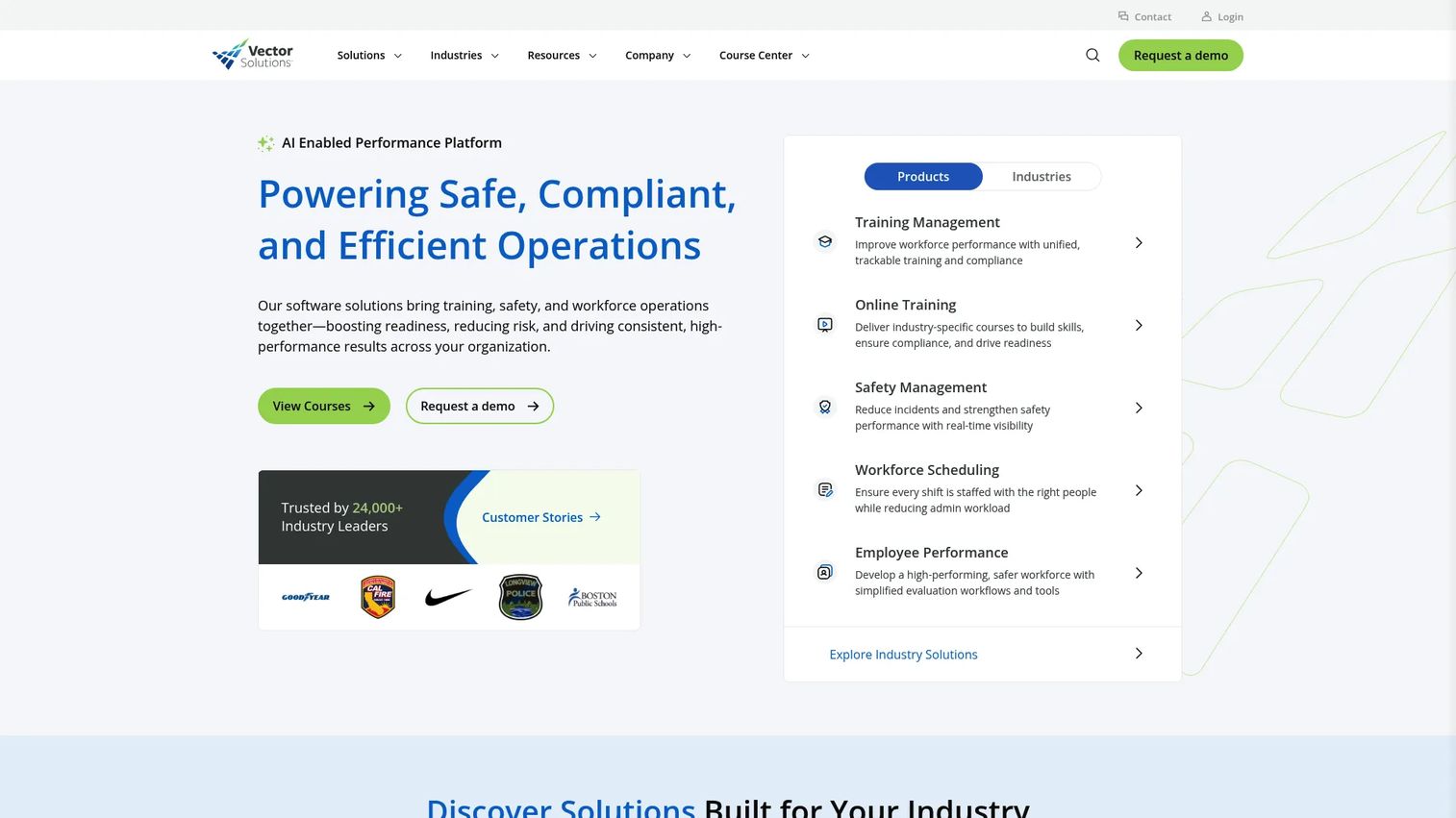
Vector Solutions EHS is an environmental, health, and safety platform that connects safety training directly to incident management, inspection workflows, and compliance tracking. It includes OSHA recordkeeping, job safety analysis, chemical and SDS management, industrial hygiene exposure monitoring, and AI-powered safety training recommendations. The training layer is what distinguishes it from standalone EHS platforms.
Best for: Teams that view contractor readiness through workforce training and need safety learning connected to EHS records.
Key features
- Safety training with AI-powered recommendations
- Incident management and OSHA recordkeeping
- Inspection and audit workflows with customizable checklists
- Hazard reporting and corrective actions
- Chemical management and SDS tracking
Why choose Vector Solutions EHS: Choose Vector Solutions EHS when training verification is central to contractor readiness. It fits operations where proving a worker completed the right training before site access is as important as the inspection record itself.
Vector Solutions EHS pricing: Quote-based pricing. The price varies by organization size and product mix; contact Vector Solutions to confirm based on your contractor count and module requirements.
G2 rating: 4.4/5
11. Pervidi
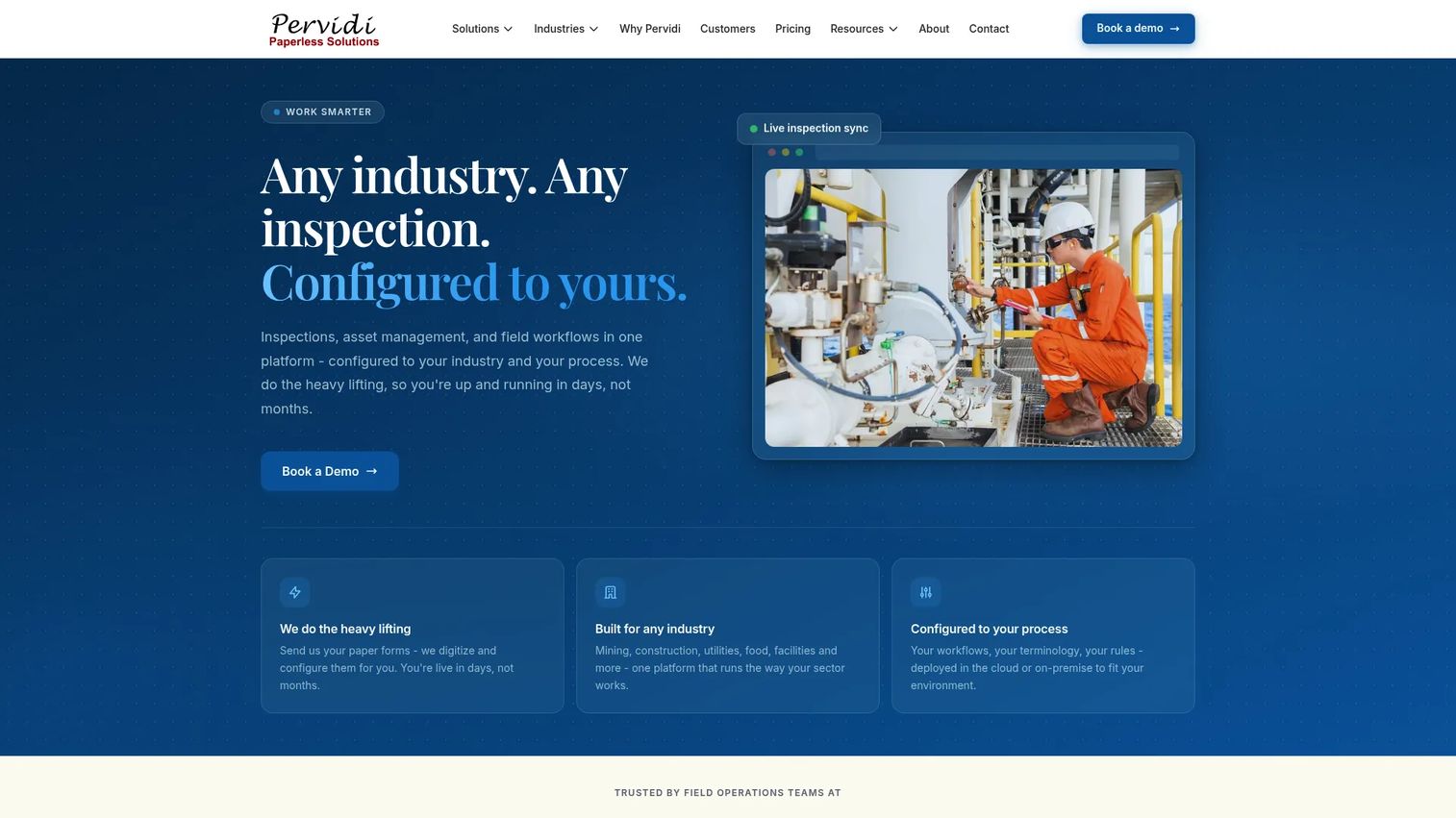
Pervidi is inspection and operational management software built for teams that need highly configurable mobile inspections with offline capability. It covers audits, inspections, checklists, corrective actions, asset management, and work orders, and supports photo, video, GPS, barcode, RFID, and signature capture in the field. Pervidi offers both cloud and on-premise deployment, making it a fit for organizations with specific data residency requirements.
Best for: Field teams that need configurable mobile inspections with offline data capture across asset-heavy or inspection-intensive operations.
Key features
- Offline mobile inspections and digital checklists
- Custom forms, workflows, and corrective-action tracking
- Photo, video, GPS, barcode, and RFID data capture
- Asset and maintenance management with work orders
- Cloud or on-premise deployment with ERP and CMMS integrations
Why choose Pervidi: Choose Pervidi when field inspection quality determines your risk visibility and your team operates in areas with unreliable connectivity. It fits organizations that need structured data from the jobsite rather than a spreadsheet filled in after the fact.
Pervidi pricing: All plans require a tailored quote based on deployment model, user count, project complexity, and support requirements. Cloud plans are typically subscription-based; on-premise may use a one-time license with annual support.
12. Assignar
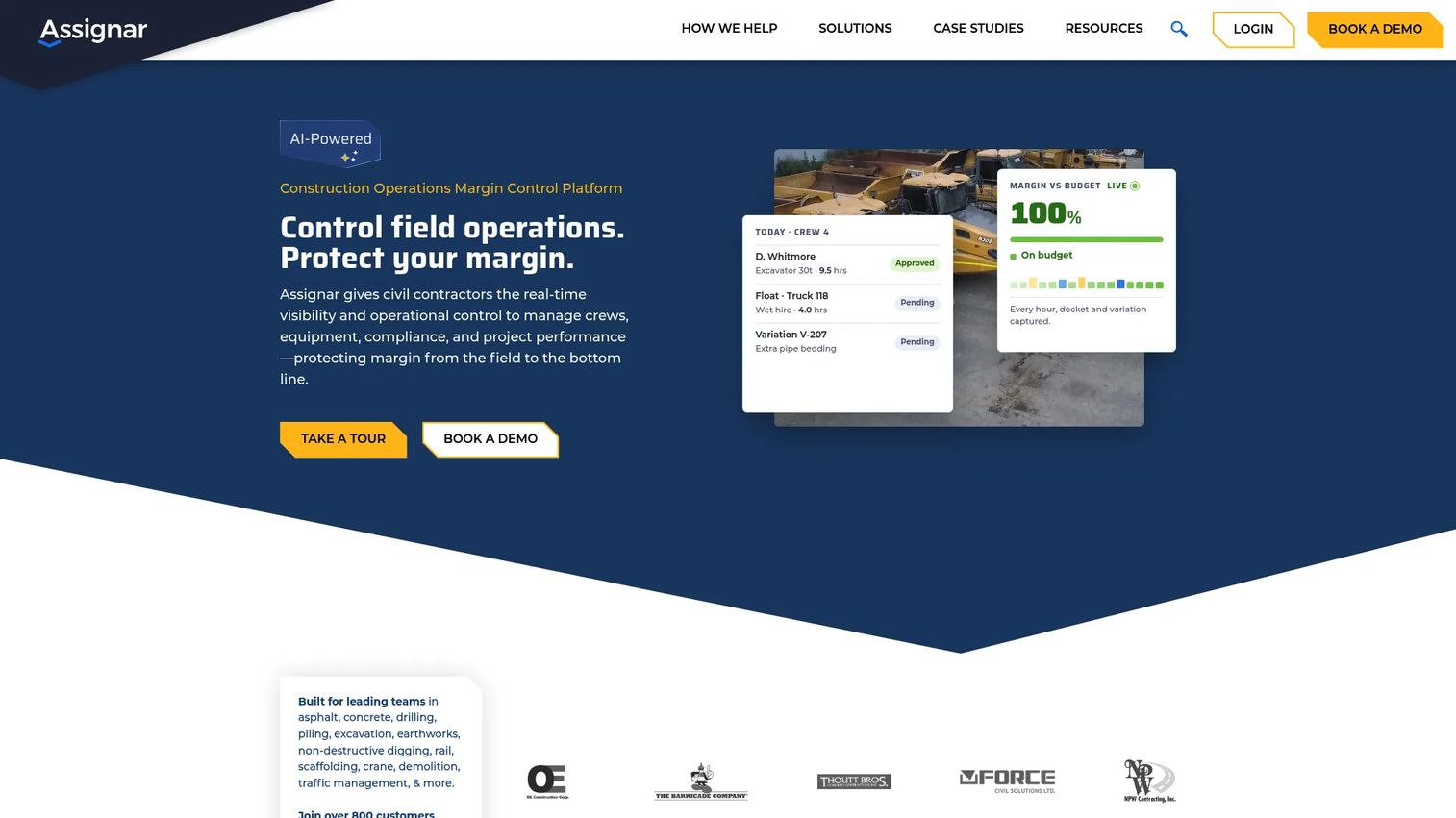
Assignar is a construction operations platform for managing crews, equipment, field compliance, scheduling, and project performance. It covers workforce scheduling, digital forms, mobile timesheets, field work tracking, and compliance documentation. For contractor risk, it fits teams where daily operational control, not just document approval, determines risk exposure.
Best for: Construction contractors and self-performing teams coordinating field workforce, equipment, and compliance across active projects.
Key features
- Crew and equipment scheduling with real-time field visibility
- Mobile timesheets and field work tracking
- Custom digital forms and site reporting
- Compliance tracking tied to workforce and project records
- Equipment visibility and field resource planning
Why choose Assignar: Choose Assignar when contractor risk is tied to daily field execution. It fits teams that need to know who is on site, what they are cleared to do, and what work is scheduled, all in one place.
Assignar pricing: Annual subscription with a one-time onboarding fee. Pricing is based on the selected product package and active user count. Contact Assignar for a quote.
G2 rating: 4.4/5
13. Procore
Procore is a construction management platform that spans preconstruction through project closeout. It handles project management, financial tracking, quality and safety, document control, bid management, and field reporting. Contractor risk sits within the quality and safety tools rather than as a standalone module, making it best suited to teams that already want Procore as their construction operating system.
Best for: Construction teams that want contractor and subcontractor risk workflows embedded inside their full project management platform.
Key features
- Project and document management with version control
- Quality and safety management workflows
- Cost management and financial tracking
- Field reporting and daily logs
- Bid management and subcontractor coordination
Why choose Procore: Choose Procore when contractor risk needs to connect directly with RFIs, schedules, drawings, and field reports. It is strongest when risk data and project data should live in the same system rather than being reconciled across tools.
Procore pricing: Custom pricing based on products required and construction volume. Annual contracts include unlimited users, data storage, and support. Contact Procore for a quote.
14. Contractor Foreman
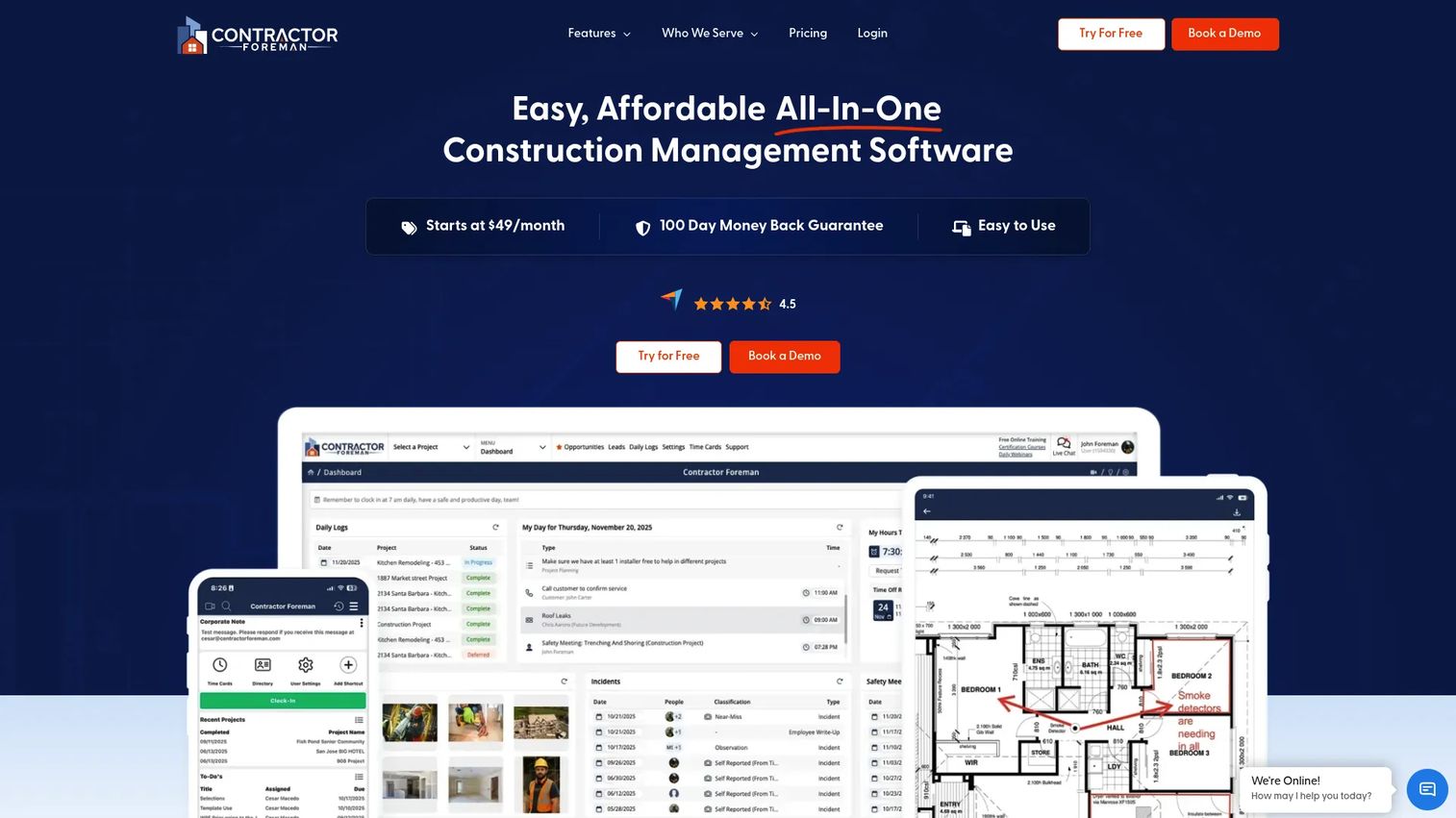
Contractor Foreman is an all-in-one construction management platform built for small to mid-sized contractors. It covers project scheduling, estimates, invoicing, job costing, time cards, daily logs, safety meetings, document storage, and inspections. The pricing structure is one of the most transparent in this category, with plans available without a sales call.
Best for: Small construction teams that need project operations, safety forms, and document storage without enterprise complexity or enterprise pricing.
Key features
- Project scheduling and management
- Safety meetings, forms, and inspection records
- Estimates, invoices, job costing, and online payments
- Daily logs and time cards with crew scheduling
- Document storage and field reporting
Why choose Contractor Foreman: Choose Contractor Foreman when budget and adoption speed matter more than depth in any single risk category. It fits owner-operators and growing contractors that need the basics across safety, project management, and financials without a lengthy implementation.
Contractor Foreman pricing: Annual plans start at $49 per month. Standard, Plus, Pro, and Unlimited tiers range up to $332 per month billed annually. Monthly billing is also available. A 30-day free trial is included on annual plans.
G2 rating: 4.5/5
15. Novara Flex
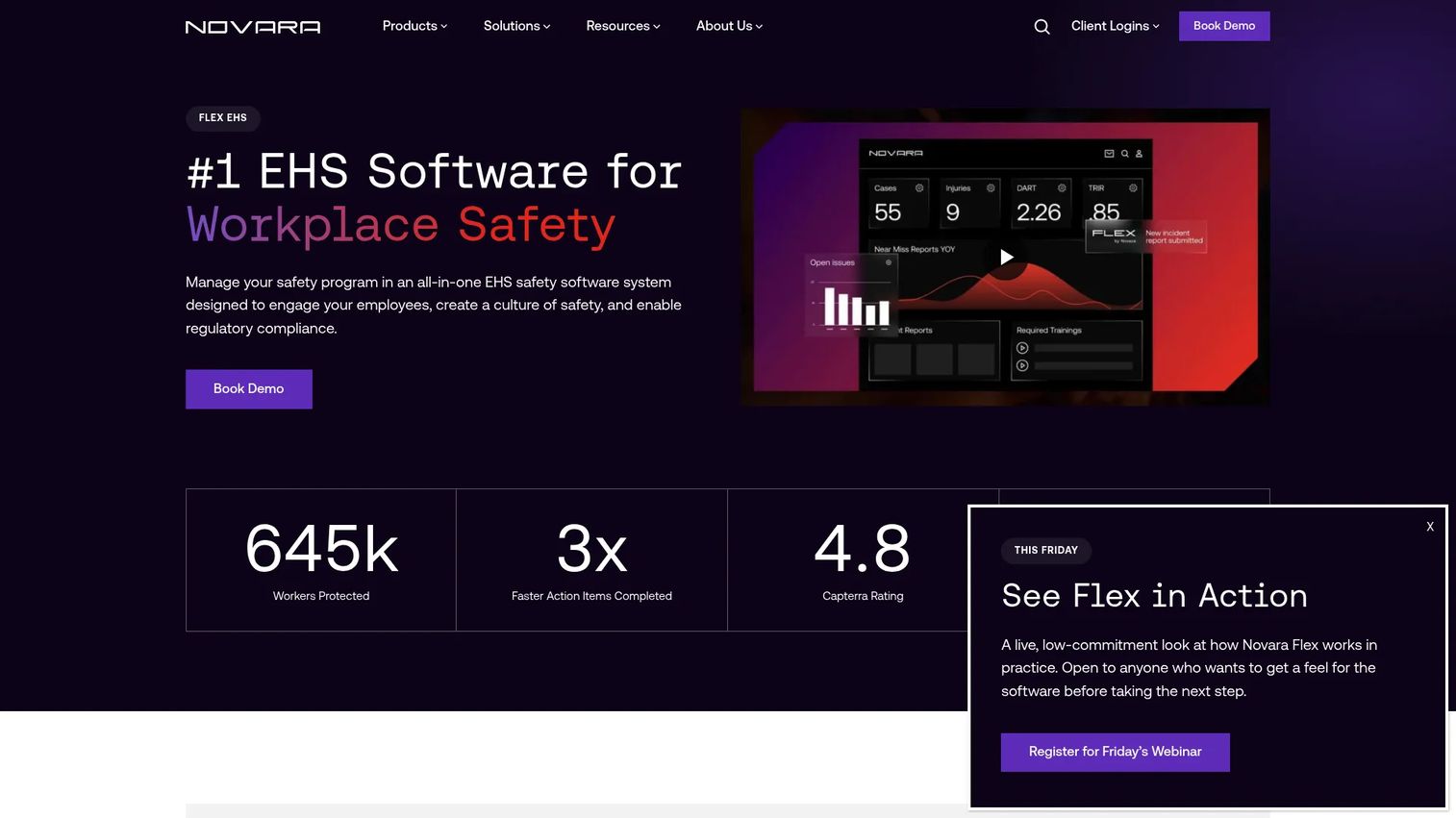
Novara Flex is an EHS and operational risk management platform with a specific contractor risk management module. It covers incident management, audit and inspection workflows, safety and compliance training, SDS management, asset inspections, ESG tracking, and configurable forms. The contractor risk module supports pre-arrival verification, qualification tracking, document review, and site-access workflows for high-risk industries.
Best for: Mid-market and enterprise organizations in high-risk industries that need configurable EHS, contractor compliance, and pre-arrival verification in one platform.
Key features
- Contractor risk management module with site-access workflows
- Incident management and audit workflows
- Compliance training and SDS management
- Configurable forms, dashboards, and mobile access with offline storage
- ESG and sustainability tracking
Why choose Novara Flex: Choose Novara Flex when the handoff between contractor approval and jobsite access is the operational gap. It fits teams that need a clear "ready or not ready" signal before work begins, embedded in a broader EHS program.
Novara Flex pricing: Custom pricing. Contact Novara for a quote based on organization size and module requirements.
G2 rating: 4.6/5
16. MyPass Global
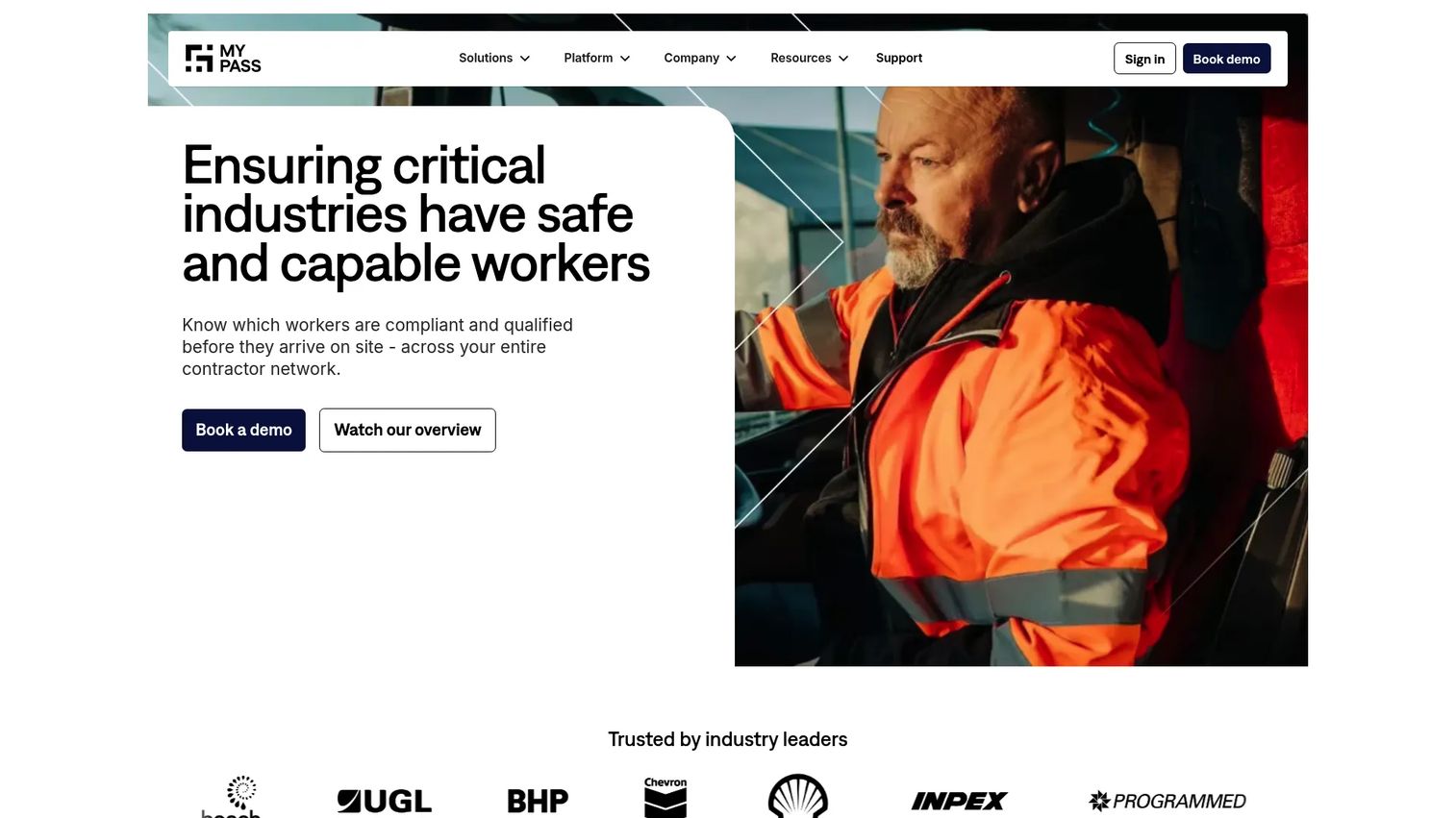
MyPass Global is a workforce compliance and competency management platform built around verified digital Skills Passports. Workers carry a portable credential record that includes training histories, certifications, and qualifications. Asset owners and contractors verify those credentials in real time through mobile QR-code checks and real-time compliance dashboards. It is worker-level risk management rather than company-level prequalification.
Best for: Regulated-industry operators and service providers that need individual worker credential visibility before mobilization.
Key features
- Digital Skills Passports with verified credentials
- Real-time compliance dashboards and qualification expiry alerts
- Duplicate worker detection and competency matching
- Mobile QR-code field verification
- Skills matrices and contractor mobilization workflows
Why choose MyPass Global: Choose MyPass Global when risk lives at the individual worker level. It fits teams that need to confirm whether each specific person has the training, credentials, and competency required for the work assigned.
MyPass Global pricing: Pricing is in AUD. Plans for 5 to 49 active workers run AUD $11.50 per worker per month. Larger bands are priced by flat monthly rate (from AUD $1,109 for 50 to 99 workers). Enterprise pricing for 500-plus workers requires a quote. Worker Skills Passports are free for individual workers.
G2 rating: 4.2/5
Considerations when choosing contractor risk management software
Start with the risk you are actually trying to control
Four distinct needs drive this category: Contractor prequalification, field safety and incident tracking, document and insurance collection, and enterprise risk reporting. Buying an EHS platform when the real bottleneck is pre-arrival insurance verification creates extra work in both directions. Map your primary risk gap before evaluating features.
Check how contractor data stays current
Expiry alerts, contractor self-service portals, renewal workflows, and clear document ownership are what prevent a database from going stale within six months. Ask vendors to show you what happens when a certificate expires: Who gets notified, how the contractor re-submits, and where the approval audit trail lives.
Test the field workflow before you commit
Contractor risk does not live only at the approval stage. Evaluate mobile form speed, offline access for areas without reliable connectivity, QR-code or site-access features, inspection data quality on a phone screen, and how quickly field teams can close corrective actions. A platform that looks clean on a desktop demo can frustrate a field team on a tablet in the sun.
Verify integrations before signing
The integration gap between a new risk tool and your existing ERP, HRIS, project management platform, or access control system usually becomes a manual process inside the new tool. Confirm specific connectors, not just a generic API claim. For scaling operators, a missing integration with Procore, a payroll system, or a training platform adds friction that routes back to whoever owns the process.
Look at reporting by audience
Executives need portfolio-level risk summaries. EHS teams need incident trends and audit completion rates. Project managers need site readiness by contractor. Procurement needs supplier status and renewal calendars. A system that forces everyone into the same dashboard or requires a data export to answer basic questions will not get used consistently.
Conclusion
The right contractor risk management software depends on where your risk actually lives. For prequalification-first programs, Highwire, Avetta, and ISN each offer structured qualification workflows at different scales. For EHS and safety-driven programs, EHS Insight, ProcessMAP, and Vector Solutions EHS cover incidents, audits, and compliance operations end to end. SafetyCulture and Pervidi are the strongest picks when field inspection execution is the gap.
Construction project teams embedded in Procore or Assignar can manage contractor and subcontractor risk within their existing project operations. Contractor Foreman remains the most accessible entry point for smaller contractors who need breadth at a predictable price. For organizations where the risk question [lives at the individual worker level, MyPass Global's Skills Passport approach is worth serious evaluation.
Narrow your shortlist to three or four tools based on your primary workflow, then validate integrations and mobile usability with a real contractor approval scenario before signing.
If your team also needs to show complex software clearly to buyers, create interactive product demos](https://www.guideflow.com/product/interactive-demo) with Guideflow. Start your journey with Guideflow today!
FAQs
Contractor risk management software helps organizations evaluate, approve, monitor, and manage third-party contractors before and during work. Core workflows include contractor prequalification, document collection, certificate of insurance tracking, safety training verification, incident reporting, inspections, expiry alerts, and ongoing performance monitoring. The category is broader than contractor safety software alone because it can also cover financial risk, insurance compliance, and portfolio-wide risk reporting.
Contractor safety software focuses on what happens during active work: Inspections, incidents, audits, corrective actions, and safety training records. Contractor risk management software covers a wider scope that includes financial health screening, insurance verification, prequalification scoring, and supplier risk at the company level. Many platforms in this article do both, but the emphasis differs by tool.
Compare contractor scoring models, insurance tracking depth, document collection workflows, and renewal alert mechanisms. Highwire scores contractors across safety, financial, insurance, and operational dimensions before approval. Avetta manages prequalification across large enterprise supplier networks. ISN uses ISNetworld qualification workflows to standardize contractor data for hiring clients. The right fit depends on whether your program is project-specific, network-scale, or industry-standard.
Small teams should weight entry pricing, time to first value, and operational breadth. Contractor Foreman starts at $49 per month and covers project management, safety forms, scheduling, and document storage without a lengthy implementation. SafetyCulture and Mitti both offer free tiers for teams up to 10 users, making them accessible starting points for inspection and checklist workflows. The right starting point depends on whether the immediate need is documents, inspections, or project operations.
Software can help organize safety documentation, inspection records, incident reports, training completion data, and corrective action logs in ways that support OSHA compliance workflows. It does not guarantee compliance on its own. OSHA compliance requires qualified safety leadership, proper hazard controls, and current regulatory knowledge. Treat software as a system of record and audit trail, not as a compliance guarantee.
At a minimum, look for contractor prequalification workflows, document collection with expiry alerts, certificate of insurance tracking, safety training verification, incident reporting, mobile inspections, audit management, and corrective-action tracking. Integration with your ERP, project management platform, or HRIS and role-based reporting for executives, EHS teams, and procurement leaders are also important for long-term adoption.
Pricing varies by contractor count, module selection, user count, number of locations, and contract length. Contractor Foreman is the most price-transparent option, starting at $49 per month. EHS Insight starts at $5,000 per year for small and medium businesses. Most enterprise platforms, including Highwire, Avetta, ISN, Origami Risk, ProcessMAP, Procore, and Assignar, require a custom quote. MyPass Global publishes AUD pricing by active worker count, starting at AUD $11.50 per worker per month for teams of 5 to 49.
Prioritize multi-site dashboards that roll up contractor status, incident trends, and compliance gaps across locations without requiring manual data pulls. Test contractor self-service workflows to confirm renewal requests and document uploads route correctly at scale. Confirm mobile access and offline capability for field teams on sites without reliable connectivity. Role-based permissions that let project managers see their site without accessing others, while executives see the full portfolio, are essential for organizations with more than a few active locations.