A giveaway looks manageable until entries arrive from five channels, duplicate accounts appear, and someone asks how the winner was selected. Then your spreadsheet becomes a liability.
Digital marketers also need these campaigns to produce more than likes. Every entry should create usable audience data, feed the right system, and support reporting beyond surface engagement.
Dataintelo valued the global contest management software market at $440 million in 2025. It projects the market will reach $967 million by 2034.
The hard part is choosing contest software that fits your campaign mechanics, data requirements, and risk profile. A referral giveaway needs different controls from an awards program with judges and scoring.
What’s inside
This guide compares 17 contest management software tools across promotions, giveaways, sweepstakes, referral campaigns, voting, and awards.
We assessed each platform using four practical criteria:
- Campaign types and entry mechanics
- Fraud controls and winner selection
- Integrations and audience data capture
- Pricing and fit for marketing teams
The list includes lightweight giveaway widgets, broader campaign builders, referral platforms, and competition management software. Pricing comes from current vendor pages where available. G2 ratings reflect the supplied November 2026 research.
TL;DR
- Best overall for giveaway growth: Gleam combines verified actions, referral entries, lead capture, and campaign widgets
- Best for media promotions: Second Street supports ballots, text campaigns, sponsored promotions, and audience data collection
- Best for awards and judging: Judgify, Award Force, OpenWater, and Evalato support structured submissions and scoring
- Best for quick social giveaways: SweepWidget and Woorise provide accessible campaign builders with free plans
- Best for referral-led acquisition: ViralSweep, UpViral, VYPER, and Referral Factory focus on participant-driven growth
- Best for enterprise campaigns: Qualifio and Easypromos provide broader campaign formats and data controls
What is contest software?
Contest software is a platform for building, publishing, managing, and measuring contests, giveaways, sweepstakes, awards programs, voting campaigns, and referral promotions.
Digital marketers use this software to replace manual entry tracking, disconnected forms, and improvised winner selection. The platform manages participant data while supporting campaign publishing and reporting.
Core campaign types
Contest platforms commonly support:
- Giveaways and random-draw sweepstakes
- Skill-based competitions with judged entries
- Photo and video submission campaigns
- Public voting and ballot programs
- Referral contests with sharing incentives
- Awards, grants, abstracts, and application reviews
- Quizzes, polls, games, and instant-win promotions
Some products focus on one category. Others combine online contest software with landing pages, email tools, or broader audience engagement features.
Key capabilities to look for
A capable no-code contest builder should provide:
- Branded campaign pages and embeddable widgets
- Entry forms and participant records
- Social actions and referral tracking
- Duplicate-entry and fraud controls
- Consent fields and data exports
- Random winner selection
- Judging portals and scoring rubrics
- Public voting and gallery tools
- Marketing and ecommerce integrations
- Campaign analytics and attribution data
Where the category starts and ends
Basic form builders can collect submissions. They usually lack referral tracking, random draws, judging, and entry validation.
Social media management tools schedule promotional posts but do not administer eligibility, prizes, or winners. Awards software goes deeper into applications and scoring, although it may lack giveaway-focused marketing features.
The right contest platform should match your promotion type first. Template count matters far less than whether the software supports your entry rules and reporting workflow.
When to use contest software
Grow an owned audience from paid or social traffic
Use a giveaway platform when you want campaign attention to create email subscribers, referral traffic, or consented customer records. It gives participants a defined action beyond liking a post.
Connect the resulting data to your nurture and attribution systems. Otherwise, lead generation contests become another disconnected source of contacts.
Run giveaways without manual entry cleanup
Spreadsheets become difficult to audit once entries arrive through forms, social actions, referrals, and uploads. Contest software can centralize records and flag suspicious activity.
Winner selection software also creates a clearer process for random draws or manual review. Check each platform’s controls before launch because fraud features vary by plan.
Manage judging, voting, or awards workflows
Use competition software when submissions need categories, judges, scorecards, or multiple review rounds. These requirements appear in awards programs, creative contests, grants, and abstract reviews.
Dedicated competition management software also helps organize finalists and entrant communication. A basic giveaway widget rarely covers that operational depth.
Contest software comparison
Use this table to narrow the category before examining individual products. Start with your campaign mechanic and required data handoff.
Prices reflect vendor information supplied in November 2026. Quote-based tools require a sales conversation. A rating of N/A means the research did not confirm a current G2 headline score.
| # | Product | Best for | Key differentiator | Pricing | G2 rating |
|---|---|---|---|---|---|
| 1 | Gleam | Giveaway-led audience growth | Verified actions and referral entries | Free plan, Pro offer at $39/month billed yearly | 4.2/5 |
| 2 | Second Street | Media promotions | Ballots, sponsored campaigns, and audience data | Contact for a quote | 4.7/5 |
| 3 | Judgify | Awards and judged competitions | Submission rules and scorecards | Free plan, Pro from $699 per event | 4.5/5 |
| 4 | ShortStack | Branded campaign pages | Landing pages with entry management | Free plan, Launch from $29/month annually | 4.5/5 |
| 5 | Easypromos | Multi-format promotions | Giveaways, games, voting, and coupons | Basic from $29/month | 4.7/5 |
| 6 | ViralSweep | Ecommerce giveaways | Referral campaigns with sales tracking | Starter from $49/month | 4.5/5 |
| 7 | SweepWidget | Fast giveaway setup | 110+ entry methods | Free plan, Pro from $29/month | 4.8/5 |
| 8 | Qualifio | Enterprise audience data | Interactive campaigns with consent tools | Quote-based pricing | 4.6/5 |
| 9 | Wishpond | Broader lead generation | Contests within a marketing platform | Contact for a quote | 3.6/5 |
| 10 | UpViral | Referral contests and waitlists | Milestones and automated rewards | Starter from $99/month | N/A |
| 11 | VYPER | Gamified referral campaigns | Giveaways with points and leaderboards | Beginner from $19/month | 4.6/5 |
| 12 | Woorise | Forms plus giveaways | Campaign pages with surveys and forms | Free plan, Starter from €20/month | 4.6/5 |
| 13 | Award Force | Formal awards programs | Multi-mode judging and entry payments | Growth from $3,250 annually | 4.7/5 |
| 14 | OpenWater | Complex application reviews | Configurable review workflows | Contact for a quote | 4.4/5 |
| 15 | Evalato | Awards program administration | Multi-round judging | Grow 50 from €2,500 per program | 4.8/5 |
| 16 | Referral Factory | Incentivized referral acquisition | Branded referral portals | Basic from $200/month | 4.8/5 |
| 17 | Rafflecopter | Historical reference only | Simple embeddable giveaway forms | Service closed October 1, 2025 | N/A |
Best 17 tools for contest software
1. Gleam
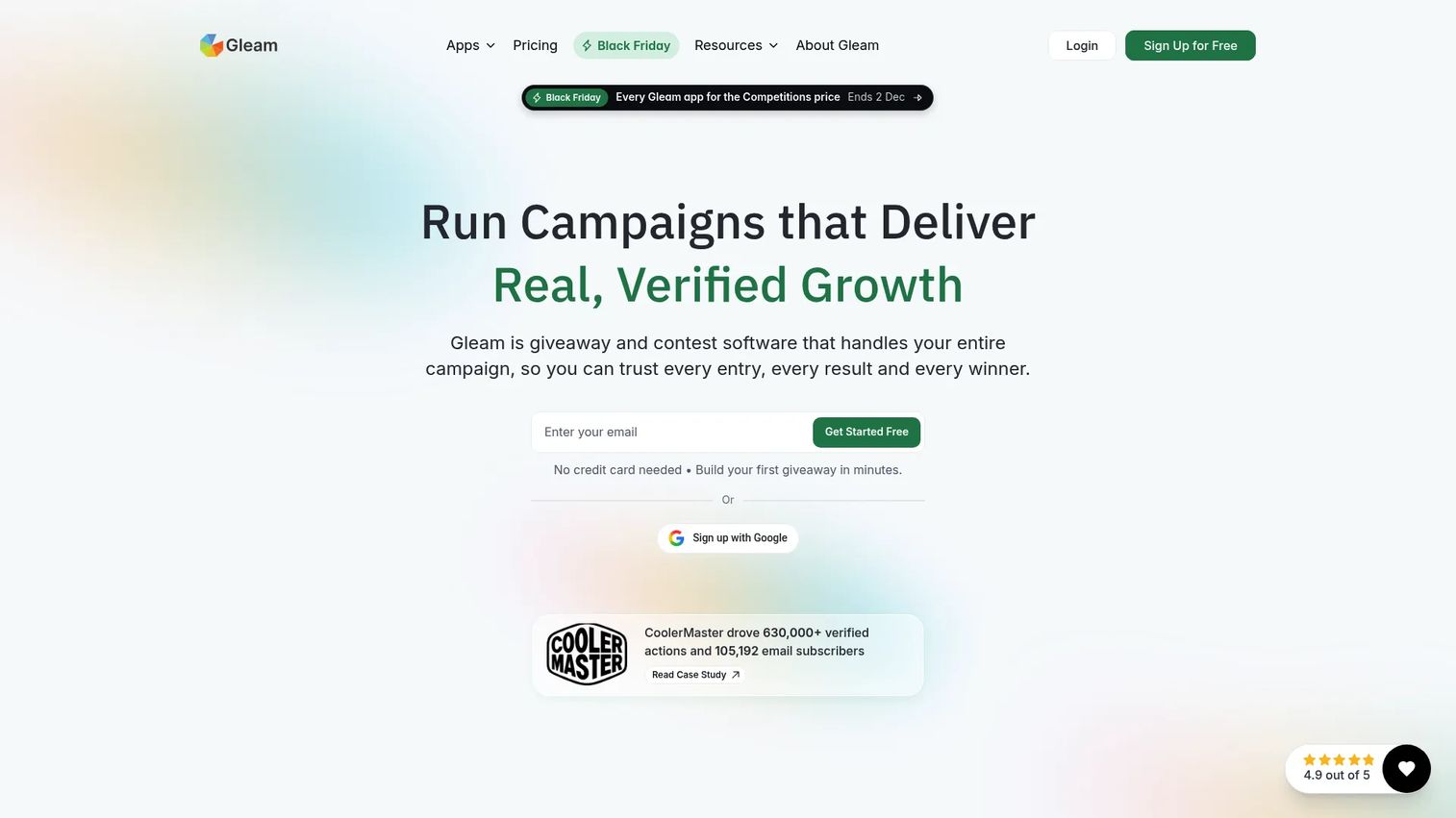
Gleam is a marketing platform for competitions, rewards, lead captures, and user-generated-content galleries. Marketers can connect giveaway participation to social actions, email capture, and referral entries.
Its campaign formats fit ecommerce promotions, creator giveaways, SaaS launches, and other acquisition programs. The broader product set also supports popups and galleries.
Best for: Growth marketers running giveaways tied to email capture and verified social actions.
Key features
- Competitions and giveaways
- Referral entry mechanics
- Social and email actions
- Lead capture forms
- User-generated-content galleries
Why choose Gleam: Choose it when owned audience growth matters alongside participation. Review plan-specific integrations and compliance processes before running regulated promotions.
Gleam pricing: A free plan is available. A Black Friday 2026 offer prices Pro at $39/month when billed yearly.
G2 rating
4.2/5.
2. Second Street
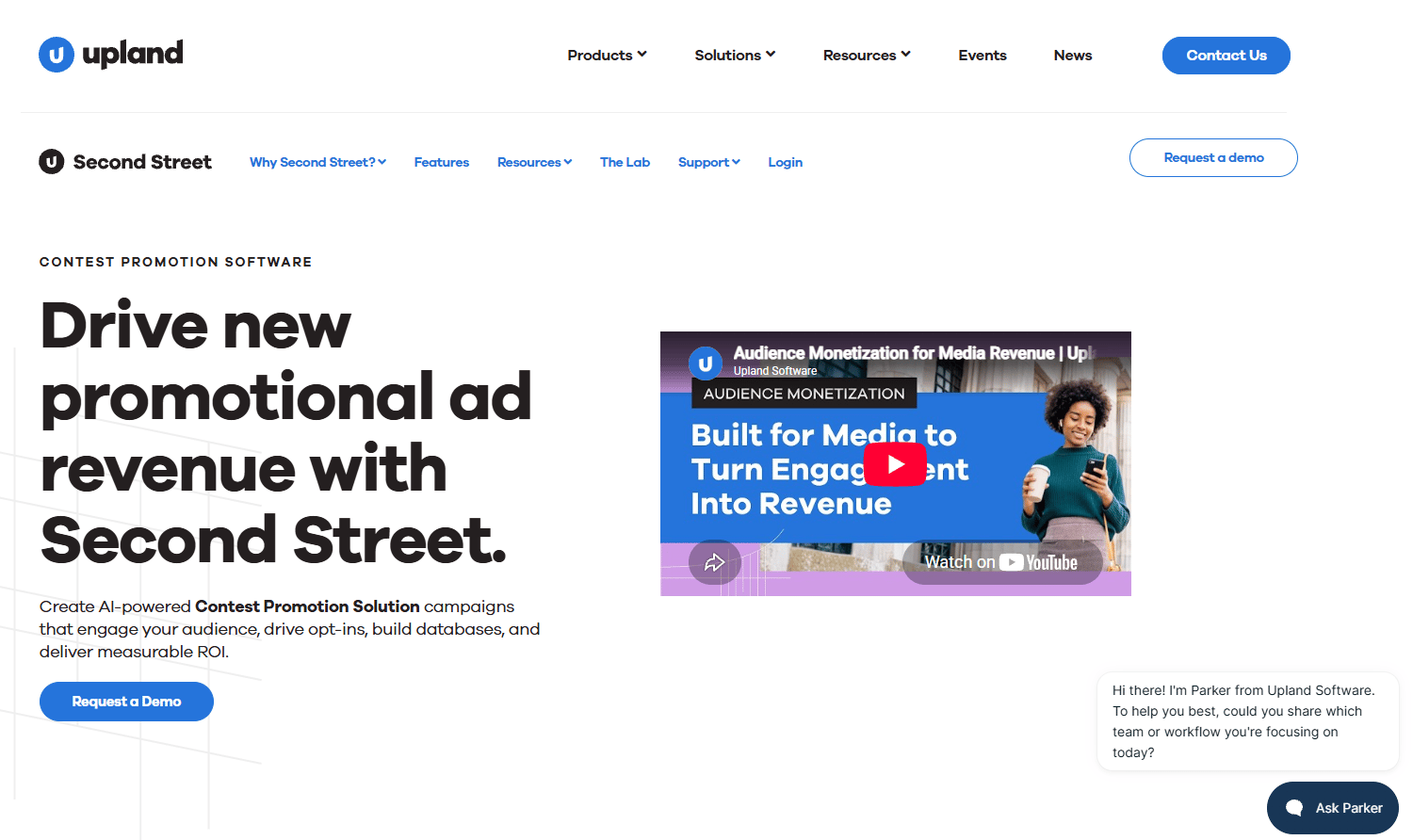
Second Street is audience engagement software for contests, ballots, quizzes, polls, and email campaigns. Its promotion model fits media organizations that connect audience participation with advertiser programs.
Lead-generation questions and opt-ins help publishers collect audience information during each campaign. Sponsored promotions can also connect engagement to commercial packages.
Best for: Media teams turning promotions into audience growth and advertiser revenue.
Key features
- Ballots and voting campaigns
- Text-based promotion formats
- Sponsored promotion workflows
- Audience data collection
- Customizable campaign templates
Why choose Second Street: Pick it when promotions support a wider media revenue strategy. Its campaign formats suit publishers that sell sponsorships around local audience engagement.
Second Street pricing: Contact Second Street for a quote.
G2 rating
4.7/5.
3. Judgify
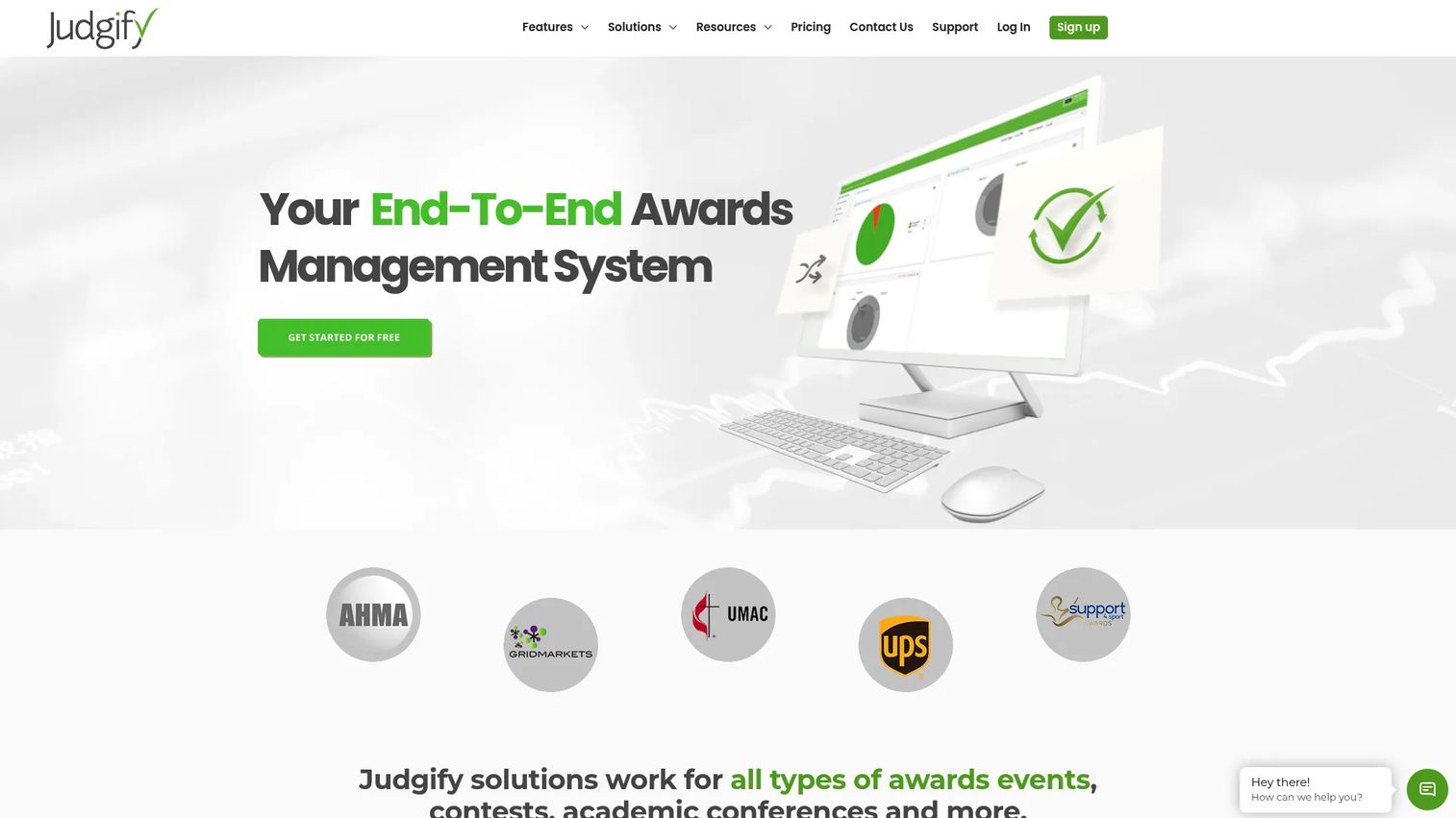
Judgify handles awards, contests, abstracts, and submission management. Organizers can configure categories and rules before assigning entries to judges.
Its scorecards, public voting, and reporting tools suit programs where review quality matters more than viral reach. Common contexts include corporate awards, academic events, and creative competitions.
Best for: Event organizers managing judged contests, awards, abstracts, or competitions.
Key features
- Custom submission rules
- Submission management dashboard
- Judge assignment workflows
- Scorecards and public voting
- Advanced reporting
Why choose Judgify: Use it when entrants move through a structured review process. The free Basic plan also gives smaller programs a practical starting point.
Judgify pricing: Basic is free. Pro costs $699 per event, while Pro Unlimited costs $2,399 yearly.
G2 rating
4.5/5.
4. ShortStack
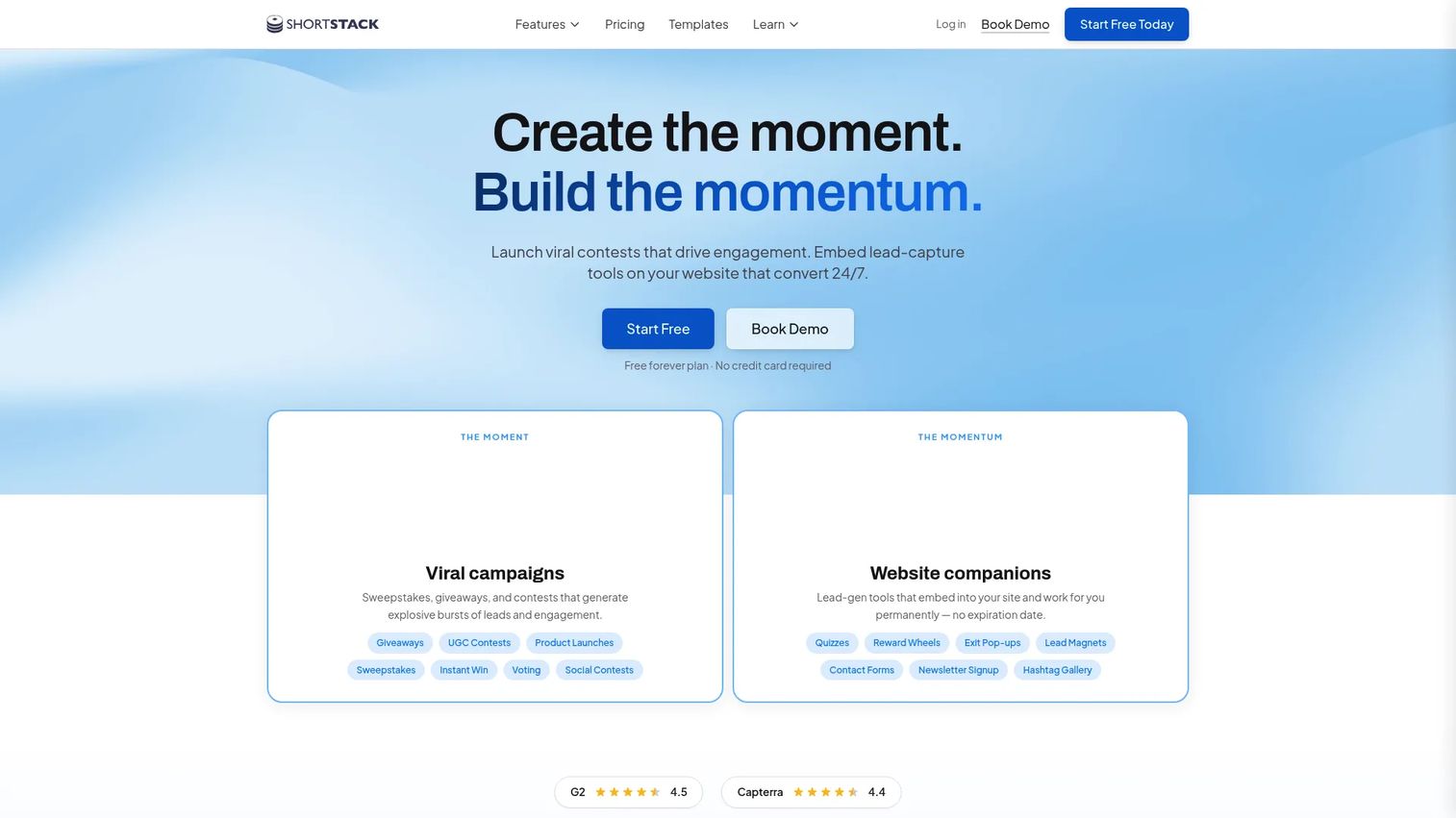
ShortStack combines contests with landing pages, forms, popups, quizzes, and email follow-up. Marketers can publish branded campaigns without relying on a developer for every launch.
The platform includes entry management, winner picking, data exports, and campaign analytics. Referral incentives support promotions where participants earn additional entries.
Best for: Marketing teams that need branded landing pages and flexible contest forms.
Key features
- Landing page builder
- Giveaway campaign templates
- Forms and entry collection
- Winner picking
- Campaign analytics
Why choose ShortStack: It fits teams that need a complete campaign page instead of a basic widget. Its free tier supports testing before a larger launch.
ShortStack pricing: Free includes 500 monthly campaign views and 200 stored entries. Launch starts at $29/month when billed annually.
G2 rating
4.5/5.
5. Easypromos
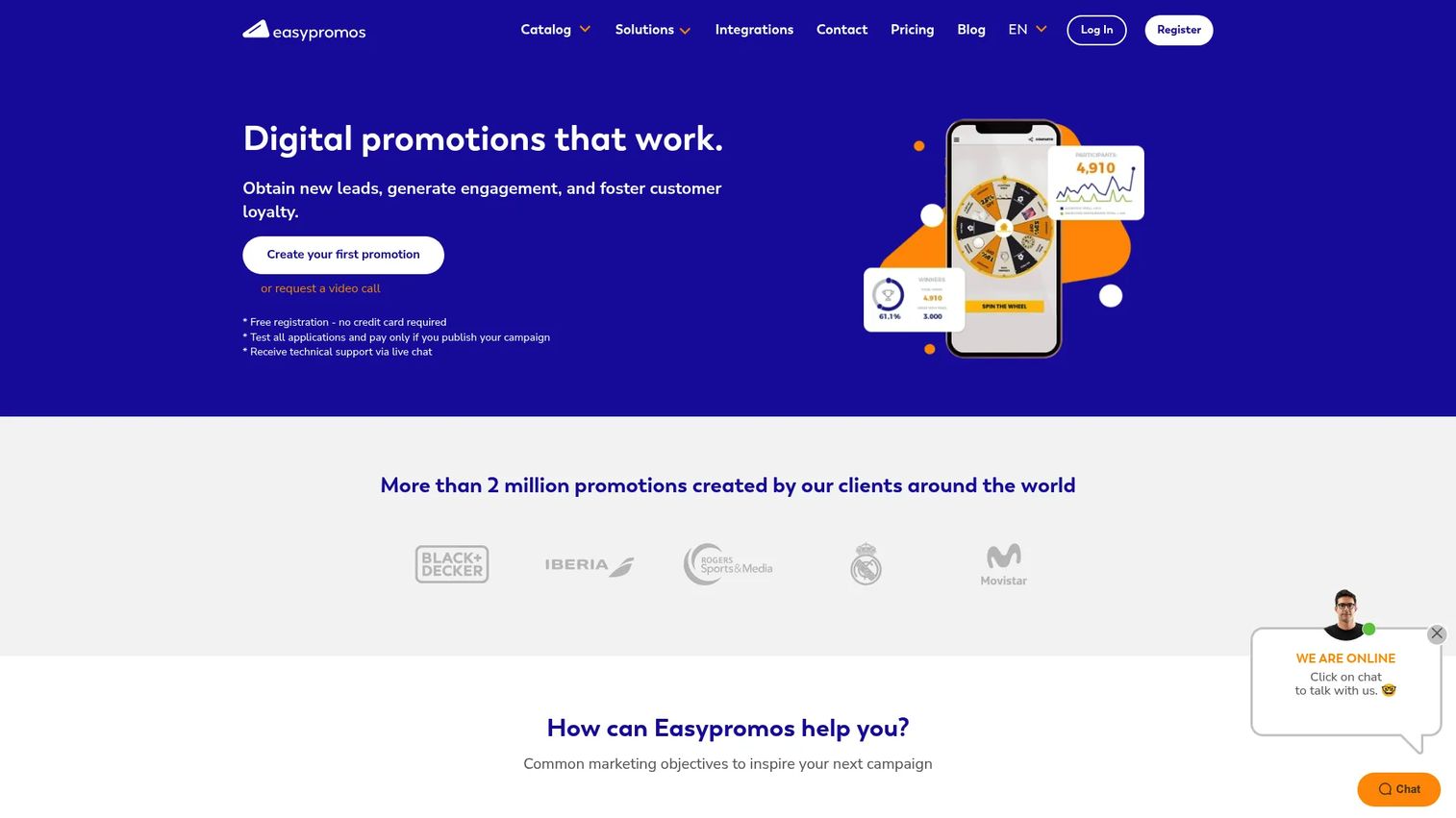
Easypromos supports giveaways, games, quizzes, surveys, coupons, and instant-win campaigns. Its breadth works for teams that rotate promotion types throughout the year.
Built-in fraud protection and prize tools support campaign administration. Marketers can also collect leads and review performance through analytics.
Best for: Teams running varied campaign formats across social channels, websites, and email.
Key features
- Social media giveaways
- Voting campaign tools
- Gamified promotions
- Coupon campaigns
- Fraud protection
Why choose Easypromos: Consider it when your campaign calendar includes several promotion mechanics. Check which applications and controls appear within each plan.
Easypromos pricing: Basic costs $29/month or $290/year. Teams can test applications before payment, and one qualifying social giveaway is free.
G2 rating
4.7/5.
6. ViralSweep
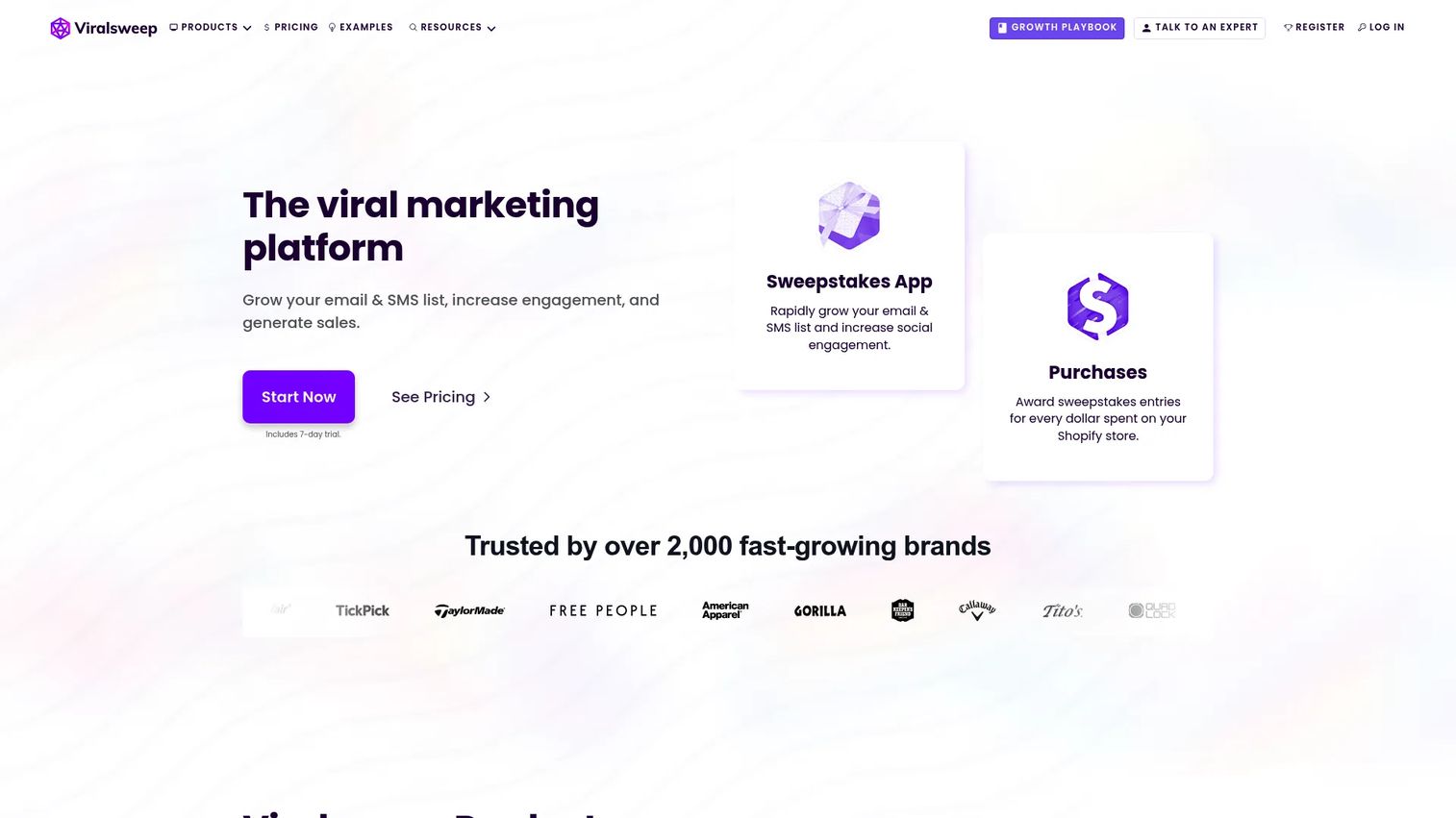
ViralSweep is sweepstakes software for giveaways, contests, instant-win promotions, and referrals. It links email or SMS list growth with social actions and participant sharing.
Campaign analytics cover sales tracking, testing, and audience segmentation. This combination suits ecommerce brands that need measurable acquisition from a promotion.
Best for: Ecommerce marketers running giveaways tied to referrals and audience growth.
Key features
- Sweepstakes campaign builder
- Referral tracking
- Social action entries
- Audience segmentation
- Sales tracking
Why choose ViralSweep: Choose it when sharing loops and participant data drive campaign value. Review your legal and consent workflow separately before launch.
ViralSweep pricing: Starter costs $49/month with monthly billing. Every plan includes a seven-day trial.
G2 rating
4.5/5.
7. SweepWidget

SweepWidget creates embeddable giveaways, contests, and sweepstakes. It supports more than 30 social platforms and over 110 entry methods.
The product also covers referrals, leaderboards, public voting, and instant rewards. Fraud protection helps marketers review bots and suspicious entries.
Best for: Small teams that need a quick giveaway widget with broad entry options.
Key features
- Embeddable giveaway widgets
- Social media entries
- Referral bonuses
- Public voting
- Fraud and bot protection
Why choose SweepWidget: It offers a practical route from campaign idea to published widget. The range of entry methods fits multi-channel social media contest software use cases.
SweepWidget pricing: A free plan is available. Pro starts at $29/month with monthly billing.
G2 rating
4.8/5.
8. Qualifio
Qualifio is an interactive marketing platform for collecting first-party and zero-party data. It offers more than 50 formats across quizzes, games, polls, contests, and instant wins.
Campaigns can run on websites, mobile applications, or standalone landing pages. Consent tools and audience segmentation support larger organizations with formal data processes.
Best for: Enterprise marketing teams using contests within a first-party data strategy.
Key features
- 50+ interactive formats
- No-code campaign builder
- Consent collection tools
- Audience segmentation
- Real-time reporting
Why choose Qualifio: Select it when data governance matters as much as campaign creativity. Its enterprise integrations and permission options fit teams running frequent programs.
Qualifio pricing: Standard and Advanced use quote-based pricing. Contact Qualifio for plan costs.
G2 rating
4.6/5.
9. Wishpond

Wishpond combines contest campaigns with landing pages, forms, email marketing, and workflow automation. It targets small and midsize teams that want broader lead-generation capabilities.
The platform also includes a lead database and sales automation. This scope can reduce tool sprawl when several existing products cover only part of the campaign.
Best for: Smaller teams combining contests with landing pages and lead nurturing.
Key features
- Contest campaigns
- Landing page builder
- Forms and funnels
- Email marketing
- Workflow automation
Why choose Wishpond: Evaluate it when contest software should replace several lightweight marketing tools. Confirm the data flow into your existing reporting stack before buying.
Wishpond pricing: Contact Wishpond for a quote.
G2 rating
3.6/5.
10. UpViral
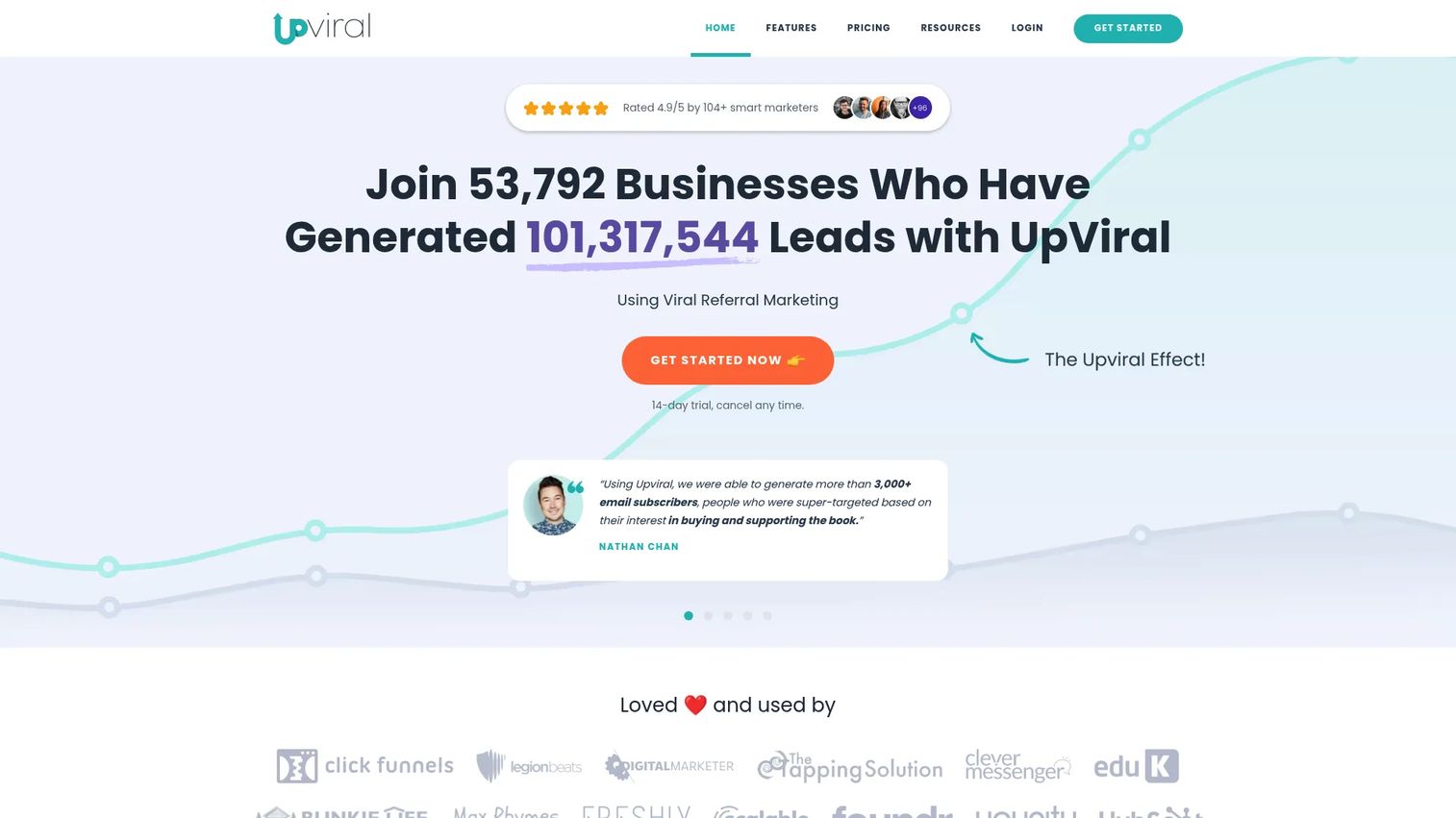
UpViral focuses on referral marketing, sweepstakes, waiting lists, and reward campaigns. Each participant receives a sharing link that tracks referred leads.
Leaderboards and milestone rewards give marketers several ways to motivate repeat sharing. Landing pages, widgets, and popups handle campaign distribution.
Best for: Marketers building referral contests, waitlists, and viral pre-launch campaigns.
Key features
- Referral campaign builder
- Unique sharing links
- Milestone rewards
- Leaderboards
- Automated prize handling
Why choose UpViral: Pick it when participants are expected to recruit the next wave of entrants. Its mechanics favor referral growth over formal judging.
UpViral pricing: Starter costs $99/month. All plans include a 14-day trial, while annual billing saves 20%.
11. VYPER
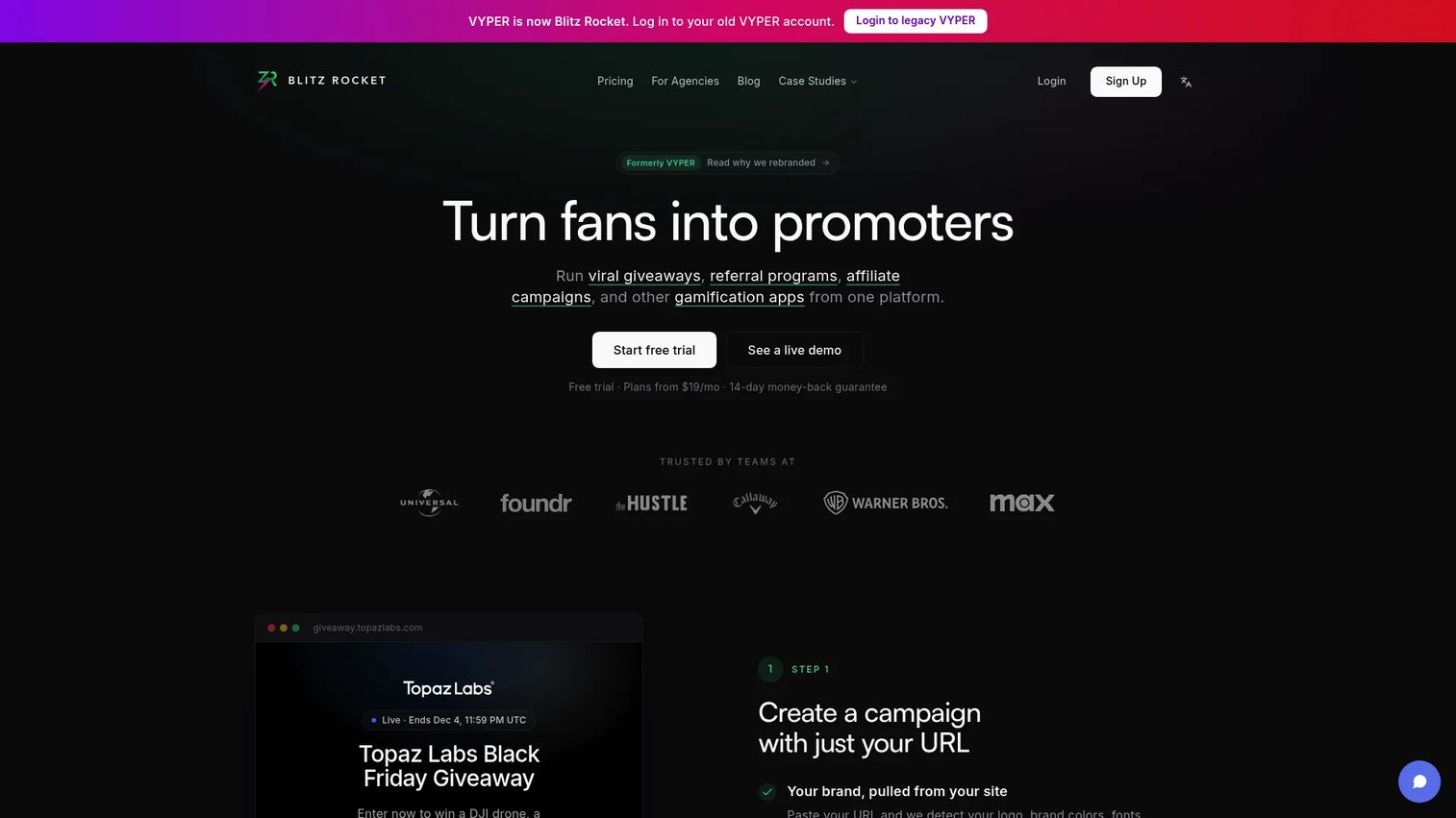
VYPER, now rebranded as Blitz Rocket, supports viral giveaways, referral programs, affiliate campaigns, and gamified audience growth. The product combines points with tiered rewards and leaderboards.
Its current feature set includes AI fraud detection, screenshot verification, and user-generated-content collection. Creators and ecommerce teams can use bonus actions to encourage additional participation.
Best for: Teams running gamified giveaways with strong referral incentives.
Key features
- Viral contests and giveaways
- Referral and ambassador programs
- Points and leaderboards
- AI fraud detection
- Content gating
Why choose VYPER: It suits campaigns built around sharing and gamified participation. Formal awards teams should choose software designed for judges and scoring.
VYPER pricing: Beginner costs $19/month. Every plan includes a 14-day trial.
G2 rating
4.6/5.
12. Woorise
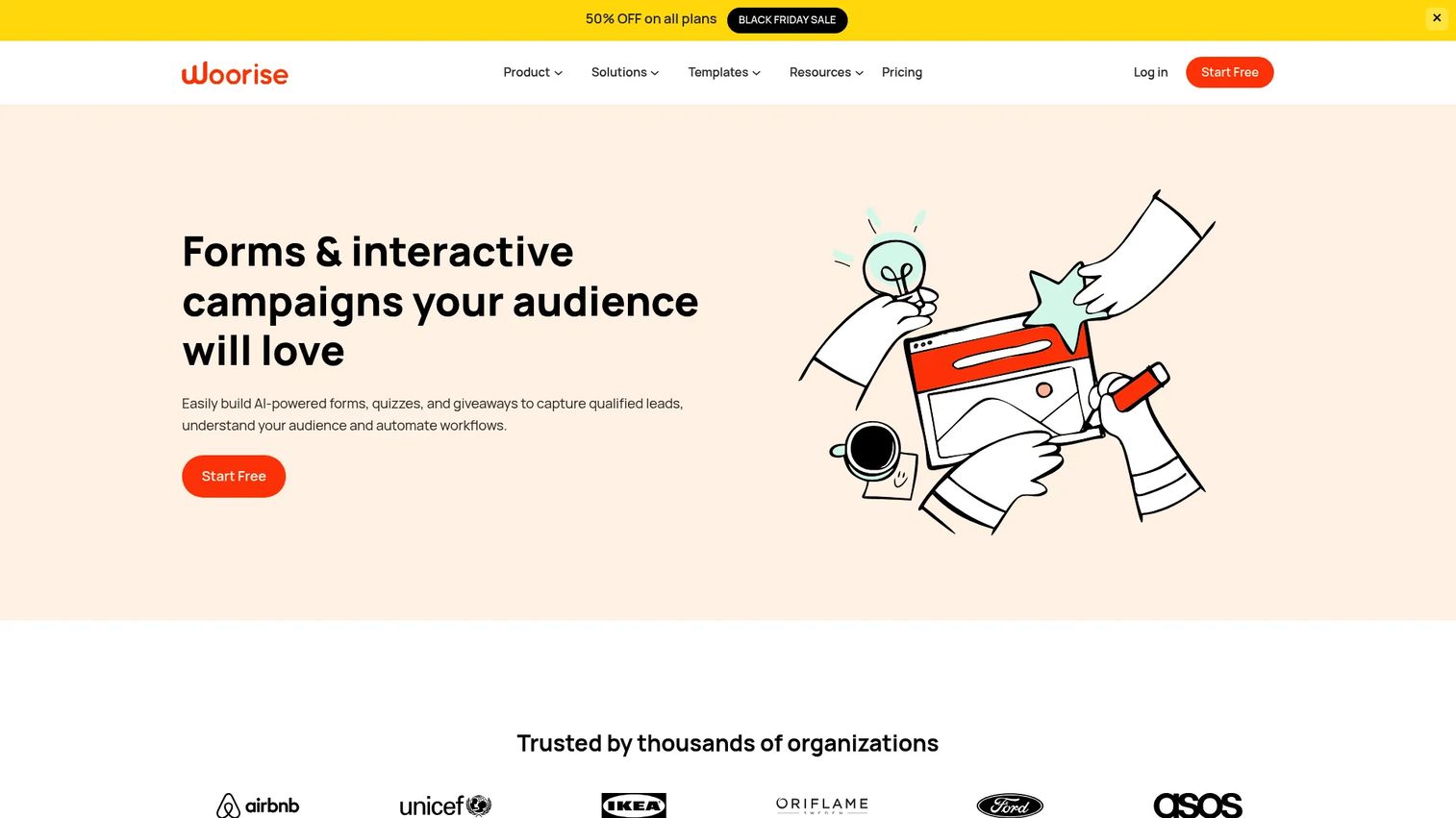
Woorise combines giveaways with forms, surveys, quizzes, landing pages, and popups. It gives lean marketing teams several campaign types within the same product.
Conditional logic and multi-step forms support more involved data collection. Integrations, webhooks, and API access help move participant records into other systems.
Best for: Small teams combining giveaways with forms, surveys, and landing pages.
Key features
- Giveaway builder
- Form builder
- Surveys and quizzes
- Conditional logic
- Landing pages
Why choose Woorise: Consider it when contest campaigns share infrastructure with lead forms or customer research. Its free plan lowers the cost of initial testing.
Woorise pricing: Free costs €0. Starter begins at €20/month, followed by Pro at €35/month.
G2 rating
4.6/5.
13. Award Force

Award Force manages awards, competitions, nominations, and scholarship programs. Organizations can configure entries before assigning submissions to panels and scoring workflows.
The platform includes entry payments, moderation, duplicate detection, and plagiarism detection. Multilingual programs and sponsor placements support larger awards operations.
Best for: Organizations running formal awards, grants, recognition programs, or judged competitions.
Key features
- Configurable entry forms
- Multi-mode judging
- Scoring and feedback
- Entry payment processing
- Duplicate detection
Why choose Award Force: Select it when fairness and operational control outweigh viral acquisition features. The annual pricing model suits established programs with defined budgets.
Award Force pricing: Growth costs $3,250 annually for up to 10,000 entries. Pro costs $6,500 annually.
G2 rating
4.7/5.
14. OpenWater
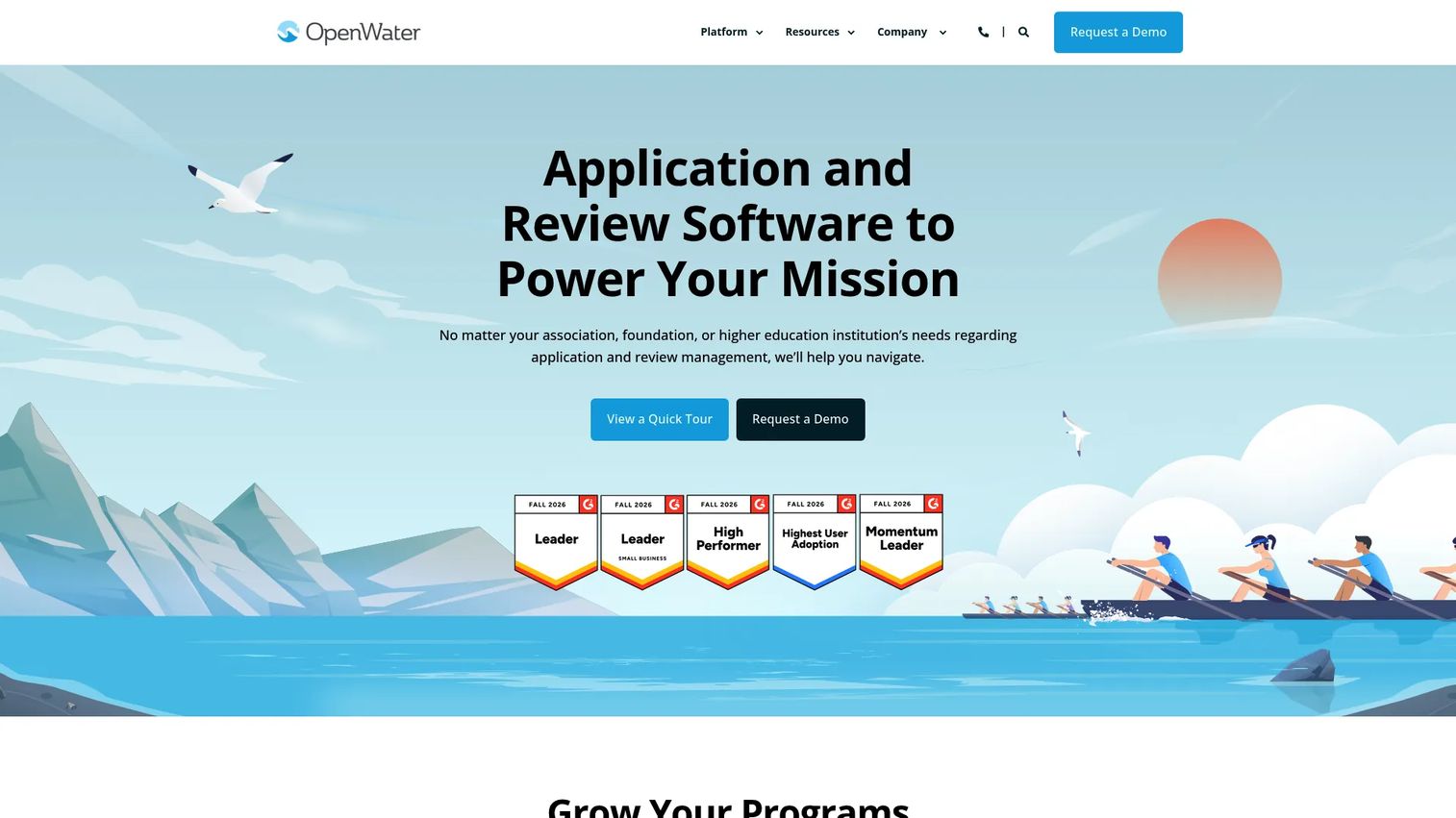
OpenWater manages awards, grants, scholarships, fellowships, abstracts, and application reviews. Its configurable workflows support formal submission programs with several reviewer groups.
Organizers can automate applicant communication and build public galleries. Reporting and integration options support associations, foundations, and educational institutions.
Best for: Organizations managing complex applications, awards, or review committees.
Key features
- Application portals
- Configurable review workflows
- Judge scoring
- Automated communications
- Public galleries
Why choose OpenWater: Use it when the contest resembles an application process. Its workflow depth fits structured reviews better than lightweight social giveaways.
OpenWater pricing: Contact OpenWater for a quote.
G2 rating
4.4/5.
15. Evalato
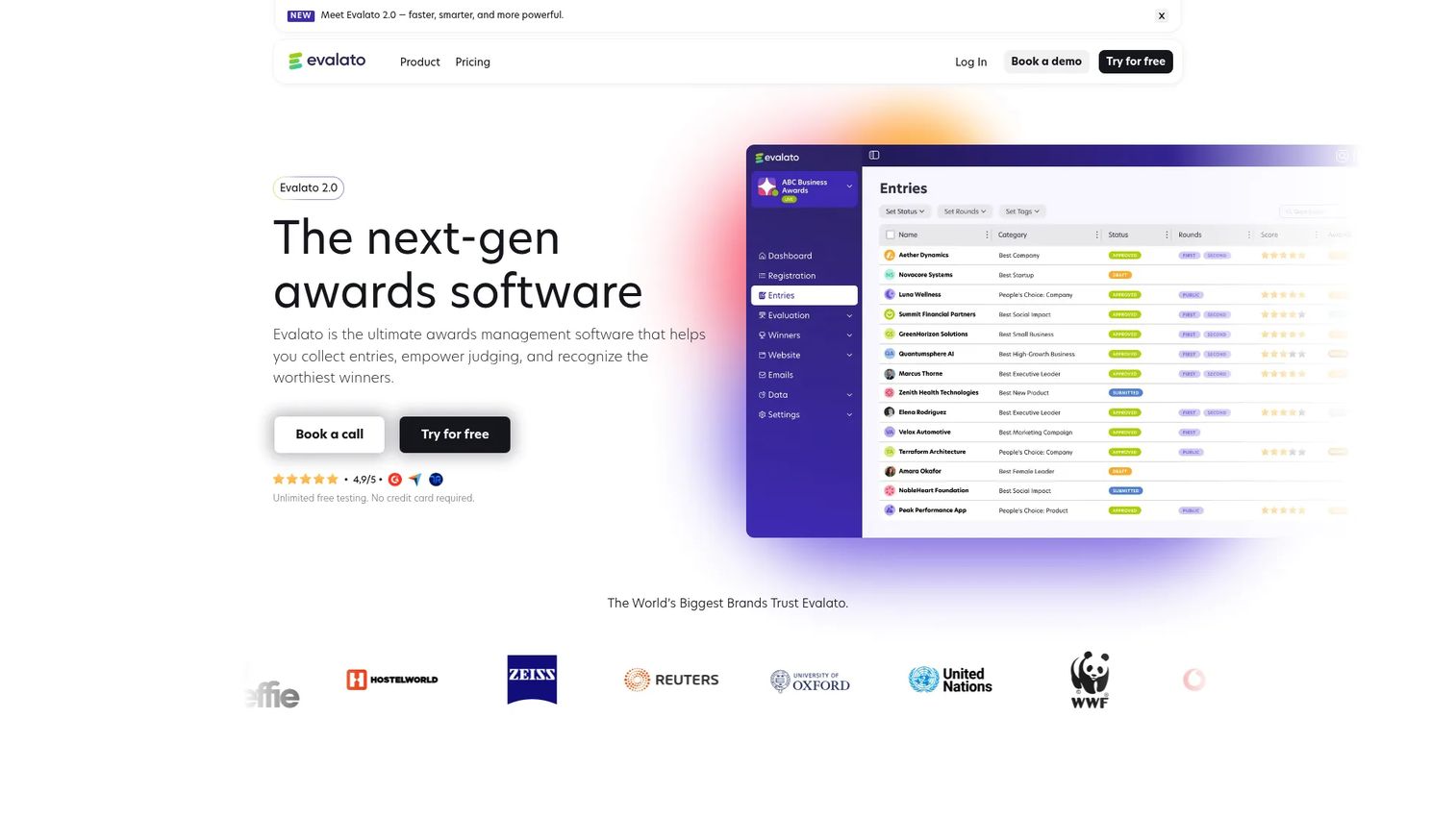
Evalato is awards software for collecting entries, managing judging, and recognizing winners. It supports awards, grants, scholarships, nominations, and other structured programs.
Custom submission forms organize participant data. Multi-round judging helps teams move entries through several assessment stages without relying on email threads.
Best for: Awards teams that need structured submissions and judging without custom systems.
Key features
- Custom submission forms
- Multi-round judging
- Full judging portal
- Entry collection
- Winner galleries
Why choose Evalato: It replaces inbox-based reviews with a defined process for entrants and judges. Program-based pricing also makes costs easier to compare with each award cycle.
Evalato pricing: Grow 50 costs €2,500 per program for up to 50 entries. Pro costs €5,500 for up to 10,000 entries.
G2 rating
4.8/5.
16. Referral Factory
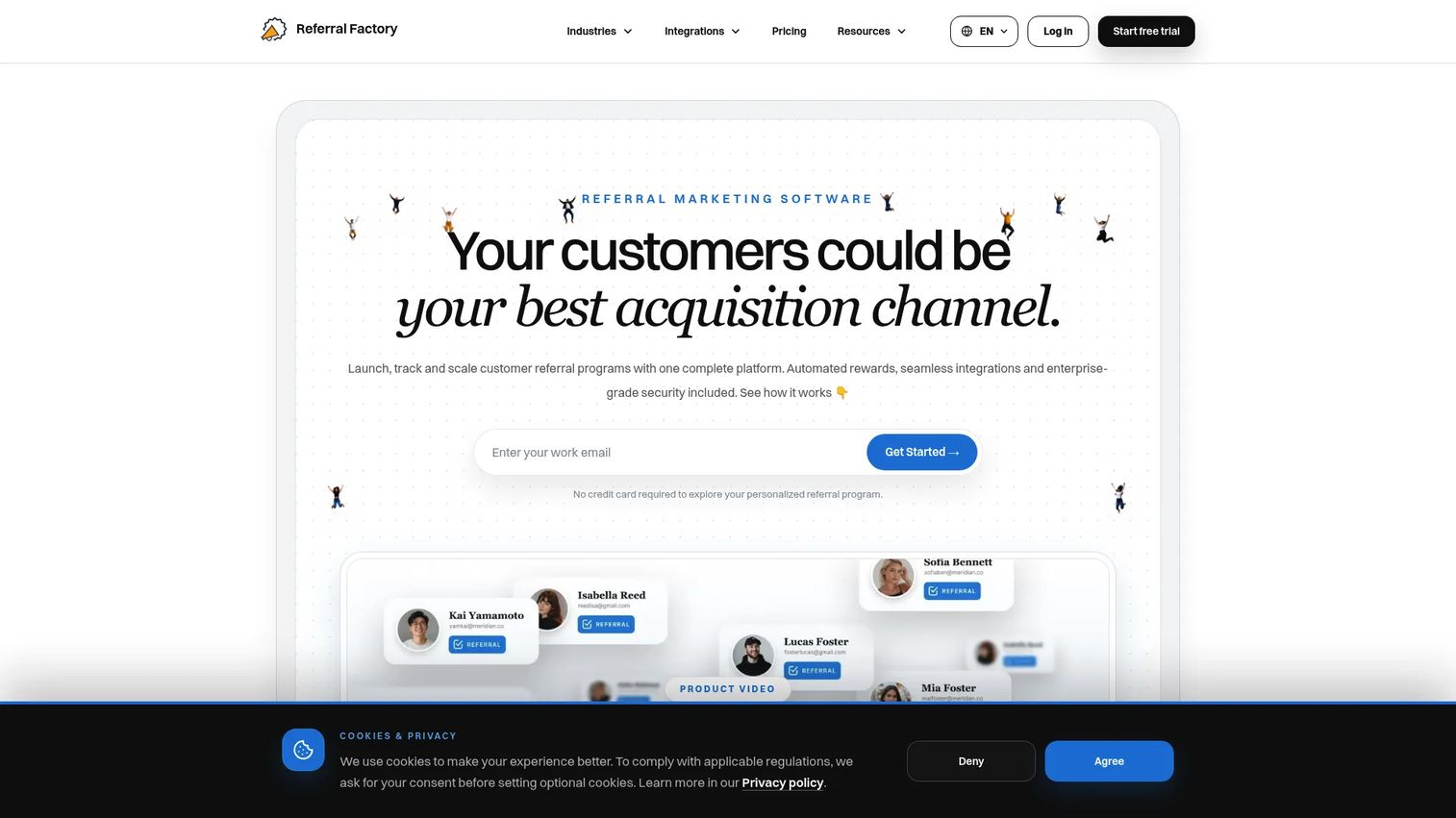
Referral Factory manages referral programs rather than traditional sweepstakes. Teams can create branded referral pages, portals, widgets, and embedded experiences.
Tracking covers referral qualification and reward management. Fraud controls and CRM connections support larger acquisition programs where referred leads are the desired output.
Best for: Teams running incentive campaigns focused on referred leads and customer acquisition.
Key features
- Referral campaign builder
- Branded participant portals
- Reward workflows
- Referral qualification
- Fraud controls
Why choose Referral Factory: Pick it when referral acquisition matters more than total entry volume. It fits repeatable programs better than one-off social giveaways.
Referral Factory pricing: Basic costs $200/month. A 15-day trial is available, and annual billing provides a 20% discount.
G2 rating
4.8/5.
17. Rafflecopter
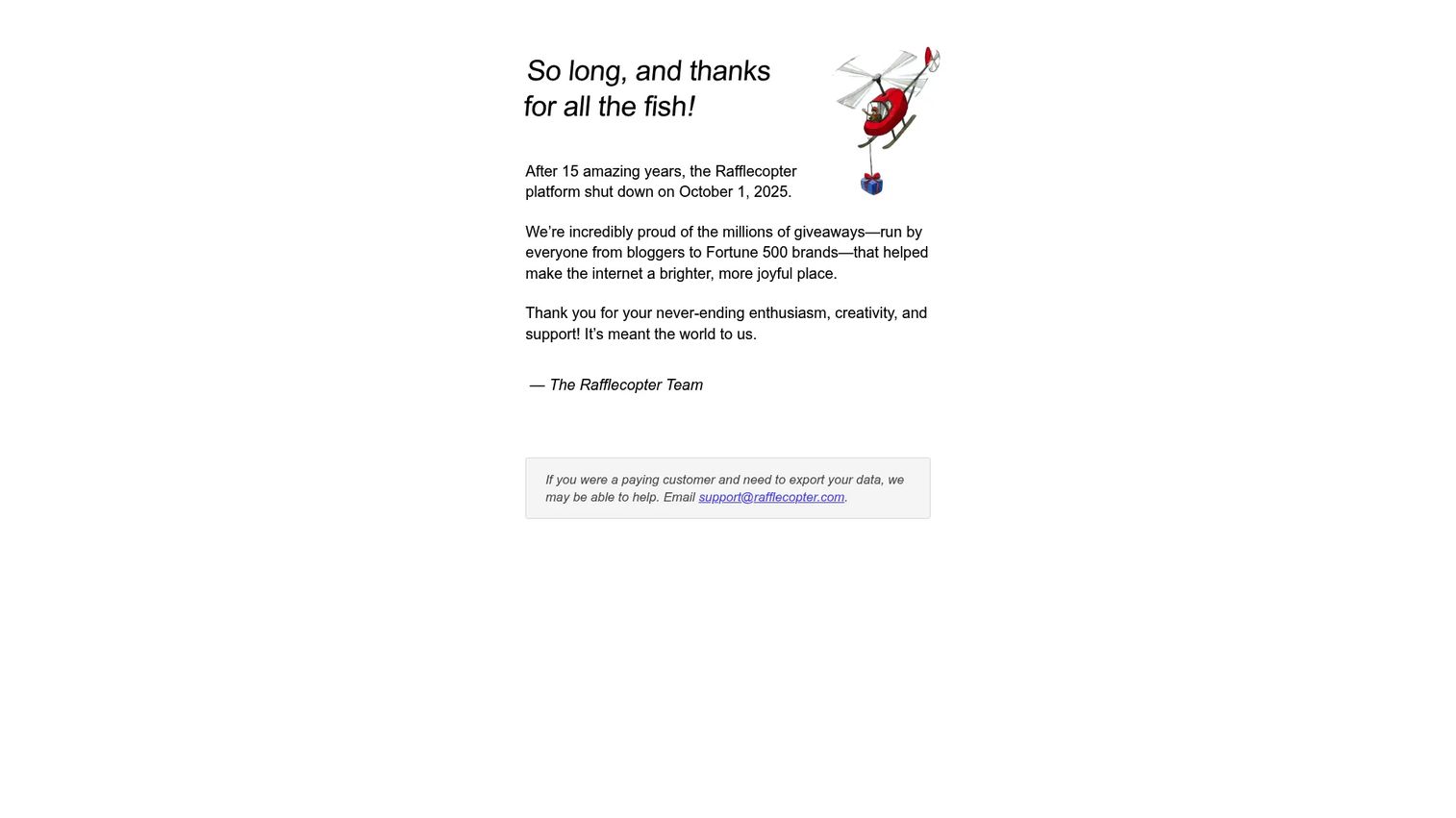
Rafflecopter was an online giveaway and sweepstakes platform for websites, blogs, and social pages. It offered embeddable entry forms, winner administration, analytics, and email-list connections.
The company closed the service on October 1, 2025. It remains relevant to historical comparisons, but teams planning a new 2026 campaign need an active platform.
Best for: Historical reference when migrating an older giveaway workflow.
Key features
- Embeddable giveaway forms
- Custom entry actions
- Sweepstakes administration
- Winner selection
- Basic campaign analytics
Why choose Rafflecopter: Do not choose it for a new campaign because the service has closed. Use its former widget model as a baseline when comparing active alternatives.
Rafflecopter pricing: The service closed on October 1, 2025. Current plans are unavailable.
Considerations when choosing contest software
Match the tool to the campaign mechanic
Start with the participant journey. A random giveaway needs entry validation and winner selection, while awards require judges and rubrics.
Referral campaigns need sharing attribution. Photo contests often need uploads, galleries, moderation, and public voting.
Check fraud prevention before launch
Review how the product handles duplicate IP addresses, disposable emails, bot submissions, and suspicious referrals. Look for manual review tools and audit records.
Fraud controls often change by plan. Test them before paid traffic starts sending entrants to the campaign.
Verify regional legal and consent requirements
Rules vary by location, age eligibility, prize type, and entry method. Your terms may also require consent language or prize disclosures.
Software can capture information and display rules. It does not replace advice from qualified counsel.
Confirm integrations before promising attribution
Check whether participant data reaches your email platform, CRM, analytics stack, or ecommerce system. Review consent fields alongside the contact record.
Add campaign parameters to every acquisition link. A large entry count means little if you cannot trace source or downstream quality.
Evaluate business outcomes
Track valid leads, opt-in rate, cost per lead, and referral participation. For sponsor-backed promotions, include attributable revenue and reporting requirements.
Awards teams should also measure completion, judging progress, and the winner audit trail. Pick metrics before launch rather than after the prize is awarded.
Conclusion
The best contest software matches the mechanics of your campaign and the data you need afterward.
Gleam, ViralSweep, SweepWidget, UpViral, and VYPER fit growth-oriented giveaways. Choose Second Street when media promotions connect to sponsorship packages or audience revenue.
Judgify, Award Force, OpenWater, and Evalato provide deeper competition management software for submissions and judging. Qualifio suits enterprise data collection, while Easypromos supports a broad campaign calendar.
ShortStack and Woorise combine contest creation with landing pages or forms. Wishpond covers a wider marketing workflow, while Referral Factory focuses on referred acquisition.
Before buying, define the entry method and winner process. Then confirm legal requirements, integration paths, and fraud controls. Compare the total software cost against expected lead value or program revenue.
That sequence keeps you from buying the loudest contest platform and discovering too late that it cannot support the campaign you planned.
FAQs
Contest software helps teams create and administer giveaways, sweepstakes, voting campaigns, referral promotions, and awards programs. It can manage entries, participants, winner selection, judging, and reporting.
Marketing teams also use it to capture consented audience data. Awards organizers rely on competition software for submissions and structured reviews.
Giveaway software usually focuses on prize campaigns with social entries, referrals, and random winner selection. It often prioritizes fast setup and audience growth.
Contest management software covers a wider set of workflows. These can include submissions, judges, scoring rubrics, public voting, and multi-stage reviews.
Look for a no-code builder, branded pages, entry management, and usable analytics. Strong platforms also provide consent capture, integrations, fraud controls, and clear winner selection.
Judge the tool by the data it produces after the campaign. Your contacts should reach the correct nurture and attribution systems without spreadsheet cleanup.
Contest tools can flag duplicate entries, suspicious IP activity, disposable email addresses, bots, and referral abuse. Some platforms also provide manual review and entry verification.
Capabilities vary across vendors and plans. Test the controls with sample entries before you launch publicly.
Most business campaigns should receive legal review. Requirements can change according to location, prize value, age eligibility, and how participants enter.
Sweepstakes software can display rules and collect consent. It cannot determine whether your campaign meets every applicable requirement.
Judgify, Award Force, OpenWater, and Evalato are strong options for structured submissions and scoring. They support judges, review workflows, and entrant communication.
Your choice should reflect entry volume and required scoring depth. Payment collection and public galleries may also influence the decision.
Gleam, SweepWidget, ViralSweep, ShortStack, and Easypromos are active options worth evaluating. Each supports a different mix of social actions, referrals, fraud controls, and campaign pages.
Choose according to your entry rules and reporting needs. Verify whether the required social action is supported before publishing campaign terms.
Track opt-in rate, valid lead volume, cost per lead, referral participation, and post-campaign email engagement. Compare lead quality against other acquisition channels using the same qualification standard.
For sponsored promotions, include attributable revenue. If your sales cycle permits, measure influenced pipeline rather than stopping at entry count.