You've got a content calendar, a pile of underperforming pages, and a leadership team asking why organic traffic isn't converting. The dashboard shows sessions. It doesn't tell you which pages are losing rankings, which topics you've missed, or what your customers keep saying in every interview that never makes it into your copy.
That gap is what content analysis tools are built to close. The global content analytics market reached $9.3 billion in 2024 and is projected to hit $26.5 billion by 2030, growing at 18.9% annually, according to Grand View Research (2025). The growth reflects how much pressure marketers are under to prove content ROI, not just report it.
The challenge is that "content analysis" now covers more ground than it used to. Some tools score your drafts against top-ranking pages. Others audit your entire site for decay and cannibalization. A third category codes interview transcripts and survey responses into patterns you can actually use in campaign messaging. And AI has pushed into all three lanes.
The right question isn't "which content analysis tool is best." It's: Which one fits the problem you're actually trying to solve?
What's inside
This guide compares 11 content analysis tools across SEO optimization, content audits, AI-assisted briefs, and qualitative research. Tools were selected based on:
- Coverage of real marketer workflows (not just one use case)
- Pricing transparency and integration quality
- G2 ratings verified at drafting time
- Usefulness for digital and growth marketing teams consolidating their stack
Specifically, the guide covers:
- Tools for SEO scoring and topic coverage
- Tools for sitewide content audits and search performance
- Tools for qualitative coding and customer research
- Pricing, ratings, and best-fit guidance by workflow
- A buying checklist for teams choosing between tools
TL;DR
- Best all-around SEO suite: Semrush handles keyword research, site audits, content optimization, and competitor analysis in one platform
- Best for on-page optimization: Surfer SEO gives writers and editors a real-time content score and term recommendations while they draft
- Best for premium editorial grading: Clearscope produces clean content reports that align writers, editors, and SEO leads without friction
- Best for topic strategy at scale: MarketMuse models authority across large content libraries, with a free tier to start
- Best for lean brief-building: Frase combines SERP research, AI writing, and an optimization score in one workflow
- Best for qualitative research: MAXQDA, NVivo, and ATLAS.ti each handle coding and mixed-methods analysis; your choice turns on collaboration needs and data formats
What are content analysis tools?
Content analysis tools are software platforms that evaluate written, visual, audio, or structured content to identify patterns, quality issues, optimization opportunities, and insights.
The category splits into four distinct workflows, and confusing them leads to buying the wrong tool.
SEO content analysis
This is the most common use case for digital marketers. These tools score pages against search results, flag missing keywords, evaluate metadata, assess readability, and compare your content against competitor pages. The output is a recommended set of changes you can act on before publishing or during a refresh.
Key capabilities in this lane:
- SEO score and content scoring tools
- Keyword placement checks and content recommendations
- Google search-result preview and snippet optimization
- Topic coverage and competitive gap analysis
- Internal link suggestions
Content audit and performance analysis
These tools look at how your existing content performs in search, identifying pages losing traffic, queries driving low CTR, indexing gaps, and cannibalization. Google Search Console is the foundational tool here. Platforms like Semrush build audit workflows on top of that data.
Qualitative content analysis
Qualitative content analysis software handles a different job entirely: Coding interviews, open-ended surveys, support tickets, reviews, and transcripts for themes, sentiment, and patterns. MAXQDA, NVivo, and ATLAS.ti belong here. Marketing teams use them to surface customer language that feeds into positioning, messaging, and campaign strategy.
Capabilities in this lane include:
- Qualitative coding software for interview and survey data
- Conceptual analysis and relational analysis of text
- AI-assisted transcription and AI-assisted summarization
- Mixed-methods research workflows
- Reliability and validity controls for research rigor
AI-assisted content analysis
AI now runs through most tools in this category, covering draft generation, topic gap detection, brief creation, automated transcription, and pattern detection across large content sets.
When to use content analysis tools
Improve pages before traffic drops
Rankings decay before most teams notice. Content analysis tools let you spot thin sections, missing topics, weak metadata, and outdated examples while there's still time to act. Running a quarterly audit with a tool like Semrush or Google Search Console helps you prioritize which pages to refresh based on query data, not gut feel.
Turn customer language into content strategy
What your customers say in interviews and reviews rarely matches what your content team writes. Qualitative analysis tools let you code sales call notes, open-ended survey responses, and support tickets at scale. The output feeds directly into landing page copy, ad messaging, and email subject lines, without requiring another round of research.
Defend content decisions with data
Justifying a six-month content refresh project is easier when you can show which pages are losing clicks and why. Content analysis tools give you the evidence to make that case, whether you're presenting a content scoring comparison, a query-to-page mapping, or a customer-language audit. That evidence also makes budget conversations with leadership more defensible.
Content analysis tools comparison
The table below compares all 11 tools by best-fit workflow, key differentiator, pricing (verified at drafting time), and G2 rating. Use it as a quick-filter before reading the full entries.
| # | Product | Best for | Key differentiator | Pricing | G2 rating |
|---|---|---|---|---|---|
| 1 | Semrush | Full SEO and content analysis suite | Combines content analysis with keyword, competitor, and technical SEO data | From $117.33/mo (billed annually) | 4.4/5 |
| 2 | Surfer SEO | On-page SEO optimization | Real-time content scoring and SERP-based term recommendations | From $49/mo (billed yearly) | 4.8/5 |
| 3 | Clearscope | Premium content grading | Editorial-grade content reports with term recommendations and AI answer visibility | From $129/mo | 4.9/5 |
| 4 | MarketMuse | Topic strategy and content planning | Topic modeling and authority planning for large content libraries | Free tier available; paid tiers: Contact sales | 4.6/5 |
| 5 | Frase | Briefs and AI-assisted content optimization | SERP research, outlines, and optimization score in one workflow | From $39/mo (billed yearly) | 4.8/5 |
| 6 | Yoast SEO | WordPress real-time analysis | Page-level SEO and readability checks inside WordPress | Free plugin; Premium $118.80/year | 4.5/5 |
| 7 | SEO Review Tools | Free SEO content checks | Quick content scoring and snippet previews with no account required | Free tools available; API plans from $75/mo | N/A |
| 8 | MAXQDA | Qualitative and mixed-methods research | Coding, memos, AI Assist, and research visualizations | Contact vendor for pricing | 4.5/5 |
| 9 | NVivo | Academic and enterprise qualitative analysis | Deep coding, transcription, and research project management | Contact vendor for pricing | 4.0/5 |
| 10 | ATLAS.ti | Collaborative qualitative analysis | Text, audio, video, and visual data coding with AI assistance | Contact vendor for pricing | 4.7/5 |
| 11 | Google Search Console | Free search performance analysis | First-party query, indexing, and page performance data | Free | 4.7/5 |
Best 11 content analysis tools for 2026
1. Semrush
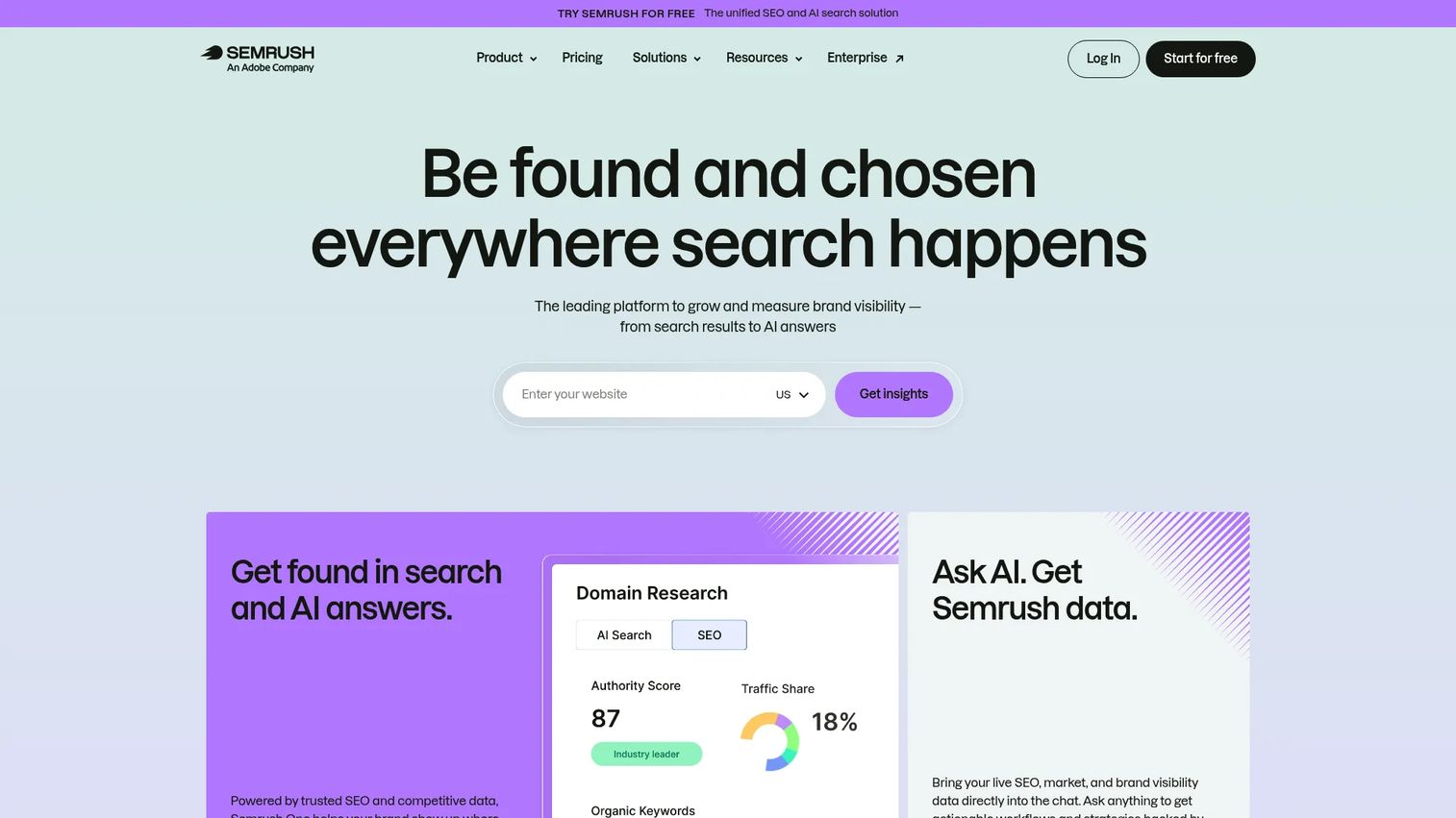
Semrush is a brand-visibility and digital marketing platform covering SEO, content, competitive research, and AI-search visibility. For digital marketers who want content analysis inside a broader SEO platform, it removes the need to stitch together separate tools for keyword research, site audits, and content scoring. The On Page SEO Checker, SEO Content Template, and Topic Research tools sit alongside rank tracking and competitor intelligence in one dashboard.
Best for: Growth teams that want content analysis, SEO research, and competitive reporting without managing multiple point tools.
Key features
- Keyword research and competitor gap analysis
- On Page SEO Checker with actionable recommendations
- Topic Research for identifying content opportunities
- SEO Content Template comparing top-ranking pages
- Position tracking and content audit tools
Why choose Semrush: Choose it when consolidation matters more than deep specialization. It replaces several standalone content tools, which speaks directly to the digital marketer's consolidation pressure. Teams that only need page-level scoring may find the platform broader than their immediate job.
Semrush pricing: Plans start at $117.33/month for the SEO plan (billed annually). A Starter plan runs $165.17/month and Pro+ $248.17/month at annual rates. A free account exists with limited functionality, and a free trial is available on paid plans.
G2 rating: 4.4/5
2. Surfer SEO
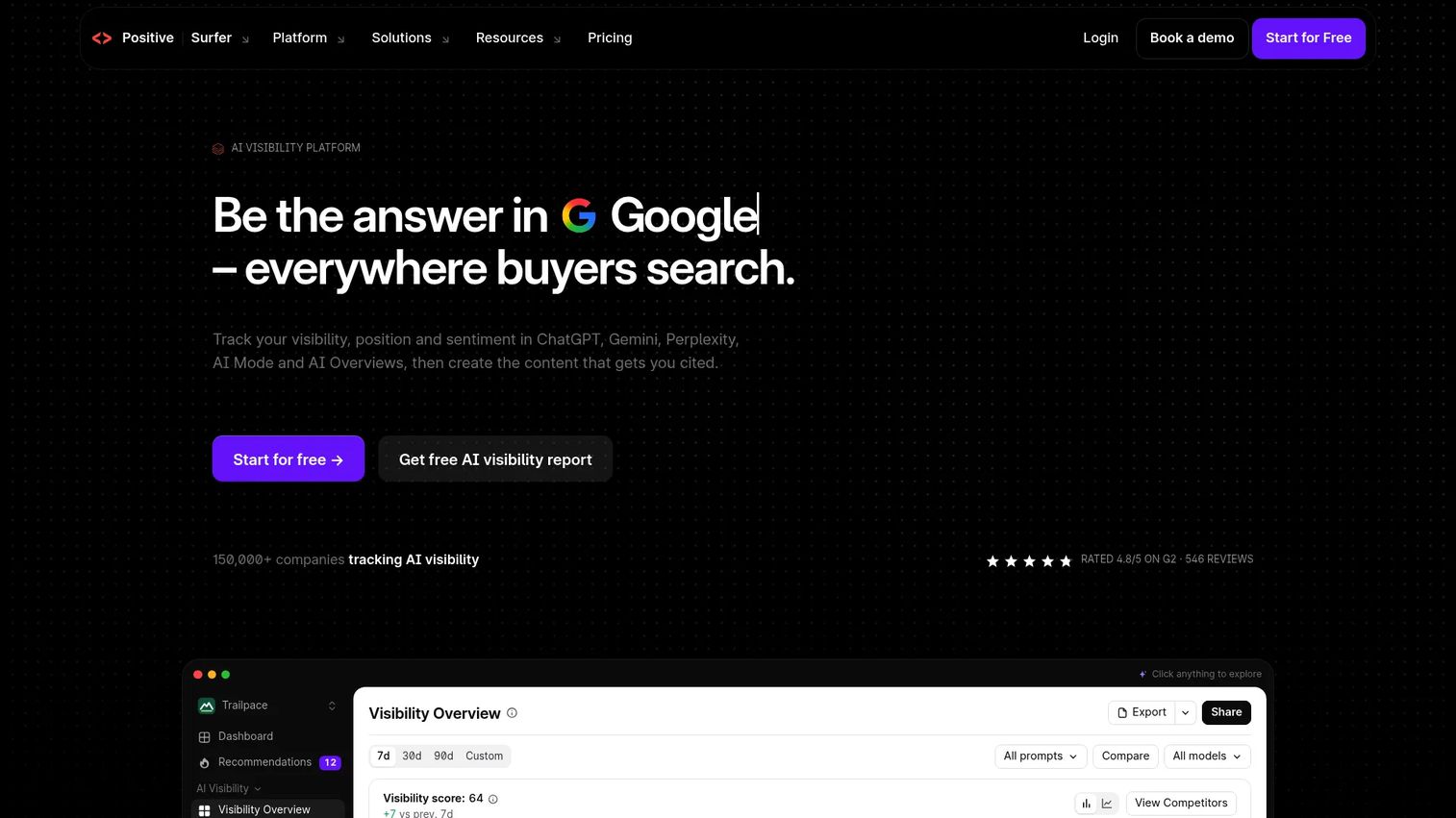
Surfer SEO is an AI search visibility and content optimization platform built around a real-time content score. Writers open a document, enter a keyword, and Surfer pulls SERP data to tell them which terms to include, how long the piece should run, and how to structure headings. The platform has also expanded into AI search visibility tracking across Google AI Overviews, ChatGPT, and Perplexity.
Best for: Marketing teams publishing or refreshing SEO content at a consistent cadence who need page-level guidance before clicking publish.
Key features
- Content Editor with real-time content score
- SERP Analyzer comparing top-ranking competitors
- Keyword suggestions and term frequency guidance
- AI writing assistant (Surfy) integrated into the editor
- AI search visibility tracking across major AI platforms
Why choose Surfer SEO: It is purpose-built for the brief-to-publish workflow, which makes it faster for writers than navigating a broader SEO suite. It is a stronger fit for SEO content optimization than qualitative research or customer language analysis.
Surfer SEO pricing: The Discovery plan starts at $49/month (billed yearly), covering 120 documents and tracking for 10 pages. Standard runs $99/month and Pro $182/month at annual rates. Enterprise pricing is custom.
G2 rating: 4.8/5
3. Clearscope
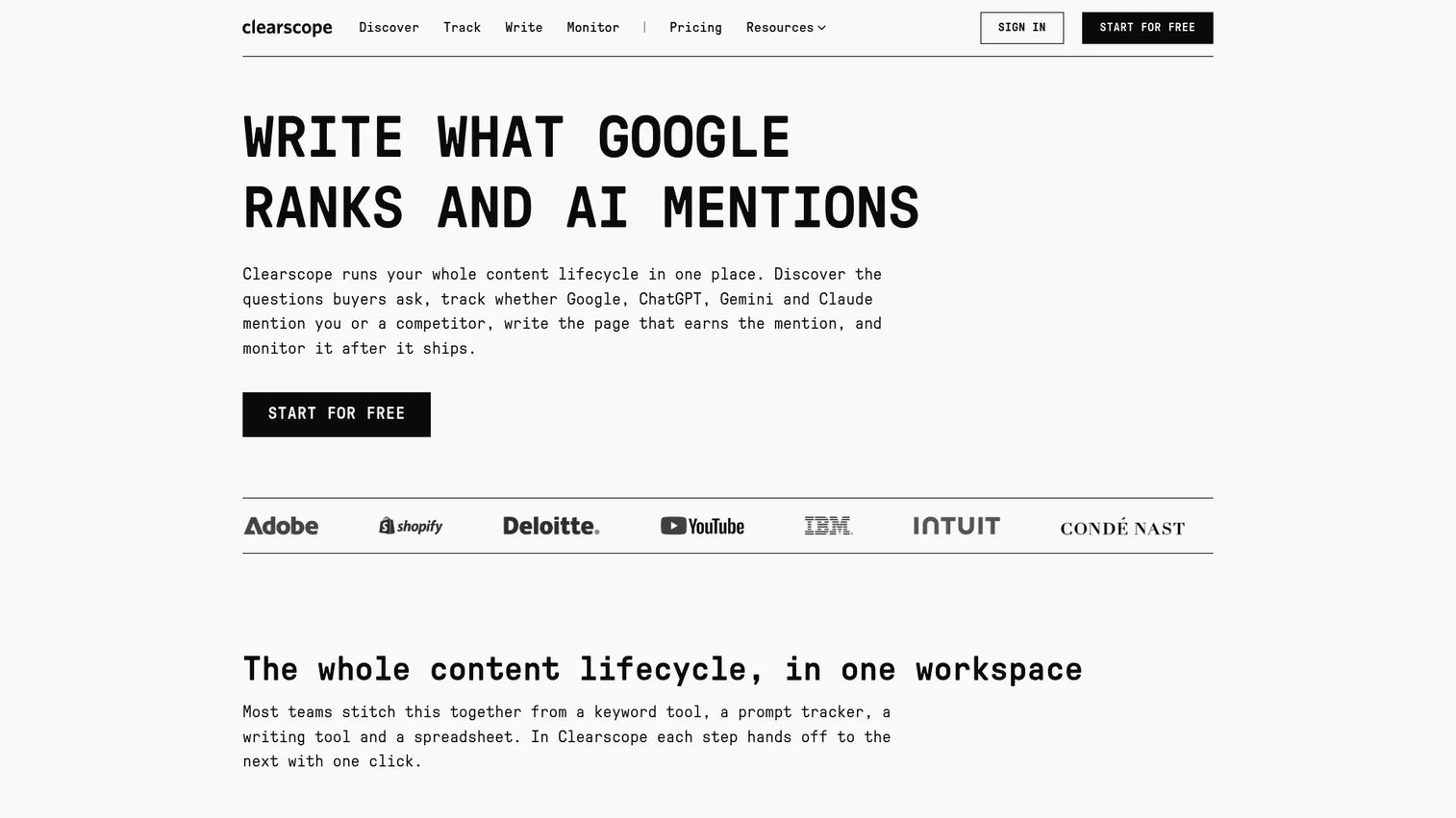
Clearscope is a content discoverability platform that covers keyword research, content optimization, and AI-search visibility monitoring. Its content reports give writers a clear grade, a list of recommended terms with usage counts, and competitive outlines, all in a format that works equally well inside the Clearscope editor or Google Docs. Teams use it to align writers, editors, and SEO leads on exactly what a page needs to cover.
Best for: Content marketing and SEO teams that prioritize editorial clarity and want writers producing well-graded content without ambiguity about what to include.
Key features
- Content reports with real-time grading and recommended terms
- Topic and query discovery with intent analysis
- Content inventory for tracking existing pages
- Google Docs integration for in-editor optimization
- Brand visibility tracking across Google, Gemini, and ChatGPT
Why choose Clearscope: Its grading system is writer-friendly in a way that reduces back-and-forth between SEO and content teams. The 14-day free trial makes evaluation low-risk.
Clearscope pricing: The Essentials plan starts at $129/month (billed monthly), covering 50 tracked queries and 20 monthly Drafts. Business runs $399/month. Enterprise pricing is custom.
G2 rating: 4.9/5
4. MarketMuse
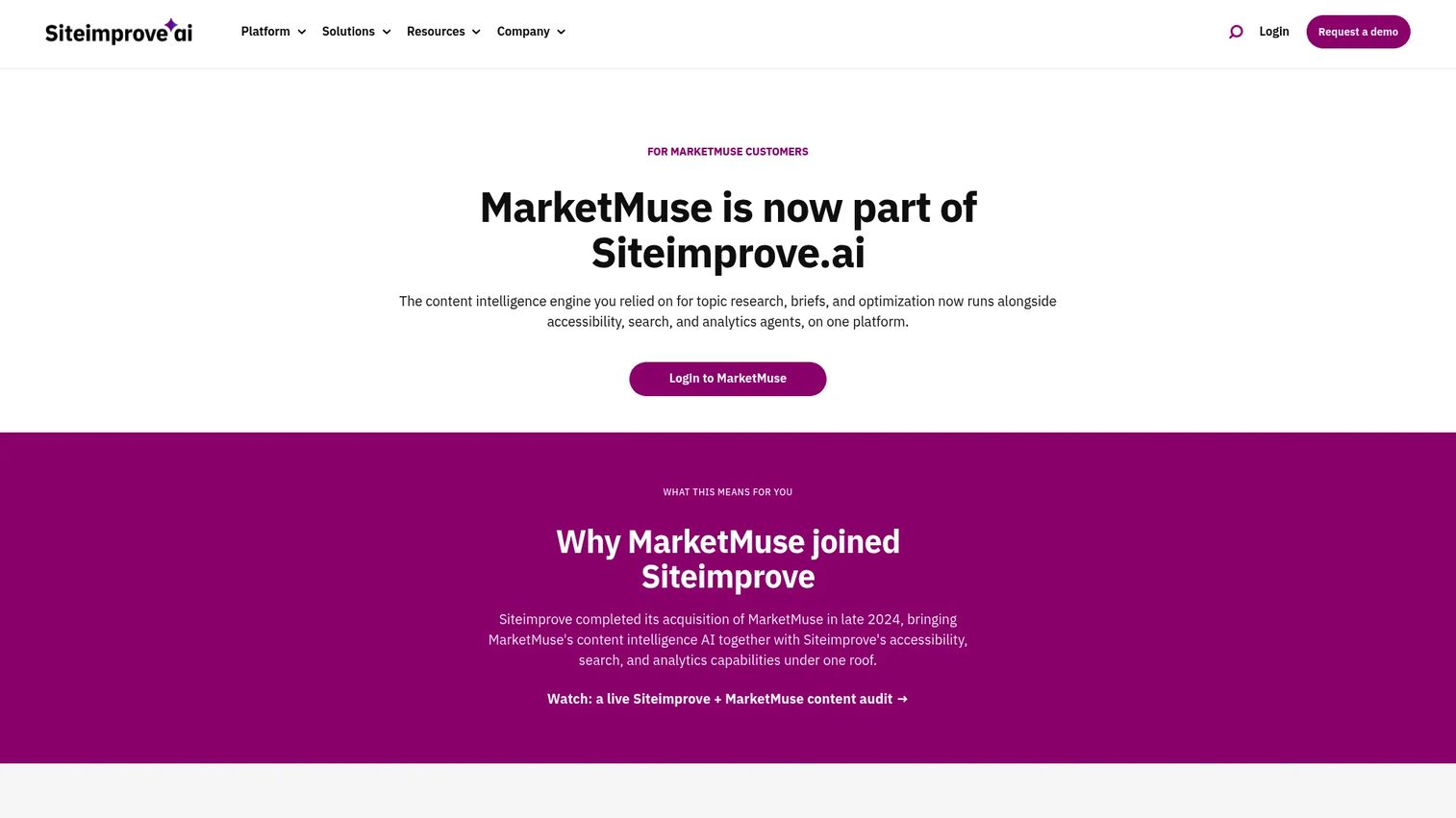
MarketMuse is an AI-powered content intelligence platform for teams managing large content libraries. Where most content analysis tools focus on a single draft, MarketMuse looks at your entire site to model topical authority and surface which topics you've covered well, which you've neglected, and which gaps competitors are exploiting. It includes content briefs, cluster planning, and personalized difficulty scoring.
Best for: SEO and content teams managing substantial content inventories who need to decide what to build, refresh, or retire before writing a single word.
Key features
- Topic modeling and topical authority scoring
- SERP X-Ray and competitive content analysis
- Content briefs with cluster-level planning
- Site content inventory with personalized difficulty metrics
- Internal-link recommendations
Why choose MarketMuse: It answers the strategy question that page-level SEO tools don't address: Where should you invest your content effort across a 500-page site? Smaller teams publishing fewer than 10 pieces per month may find a simpler optimization tool covers their needs.
MarketMuse pricing: A free plan is available with 1 user and 10 queries per month. Paid tiers (Optimize, Research, Strategy) publish feature details but require contacting sales for pricing.
G2 rating: 4.6/5
5. Frase
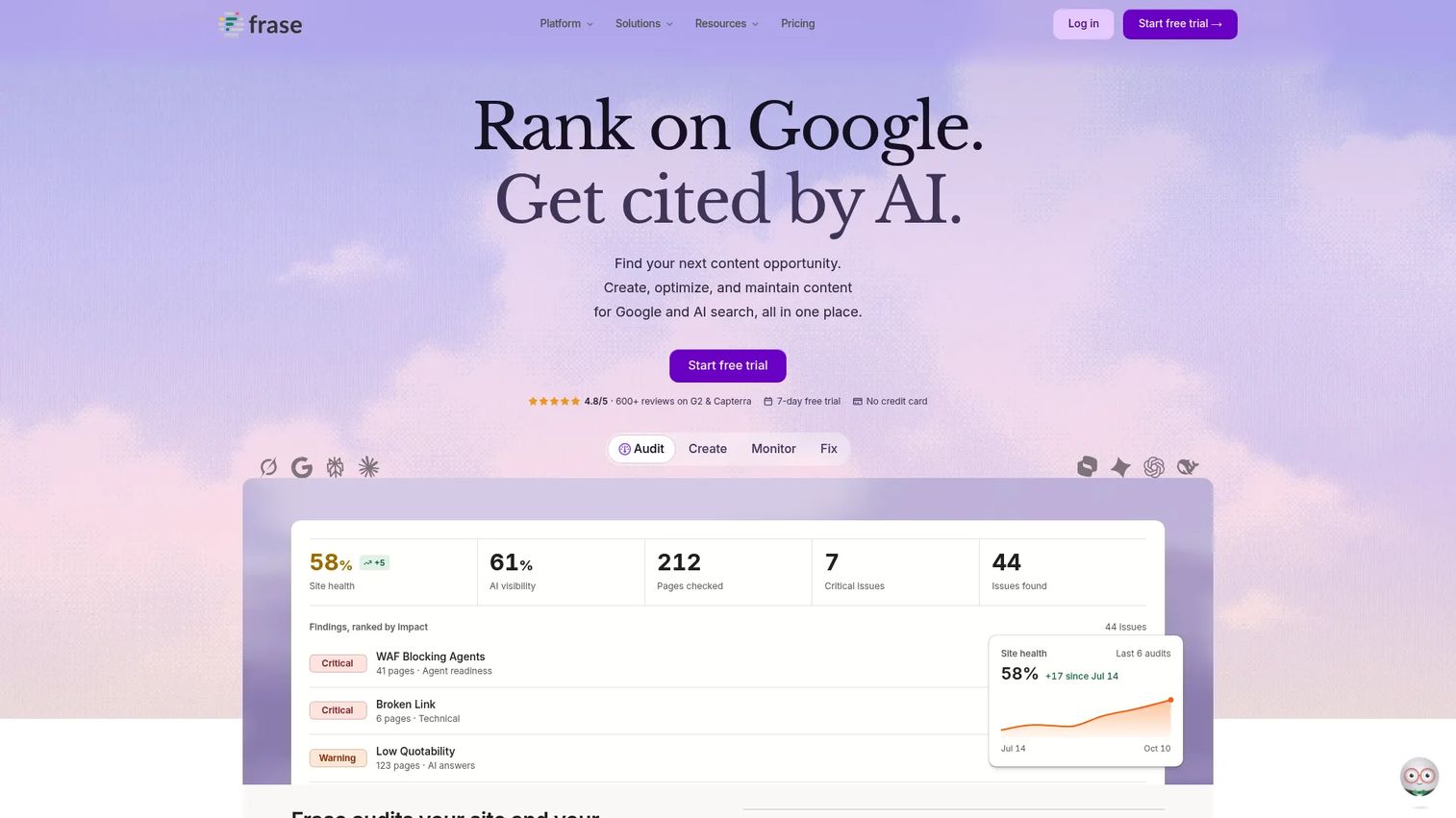
Frase is an SEO and GEO content platform that handles research, brief creation, AI writing, optimization scoring, and content maintenance in one workflow. You enter a topic, and Frase pulls the top-ranking pages, extracts their headings and questions, and builds a brief outline. From there, you can draft with the AI Agent, optimize against a scoring benchmark, and publish directly to WordPress or Webflow.
Best for: Lean content and marketing teams that want to move from brief to optimized draft without toggling between multiple tools.
Key features
- SERP research with competitor question extraction
- AI Agent with Brand Voice for draft generation
- SEO, GEO, and AI visibility scoring
- Site audits and Content Guard for declining pages
- Publishing to WordPress, Webflow, Sanity, Wix, and Frase CMS
Why choose Frase: It packs the most of the SEO content workflow into the lowest entry price on this list, which makes it a strong pick for growth marketers with tight budgets. A 7-day free trial is available with no credit card required.
Frase pricing: The Starter plan is $39/month (billed yearly, $468 annually). Professional runs $103/month and Scale $239/month at annual rates. Enterprise pricing is custom.
G2 rating: 4.8/5
6. Yoast SEO
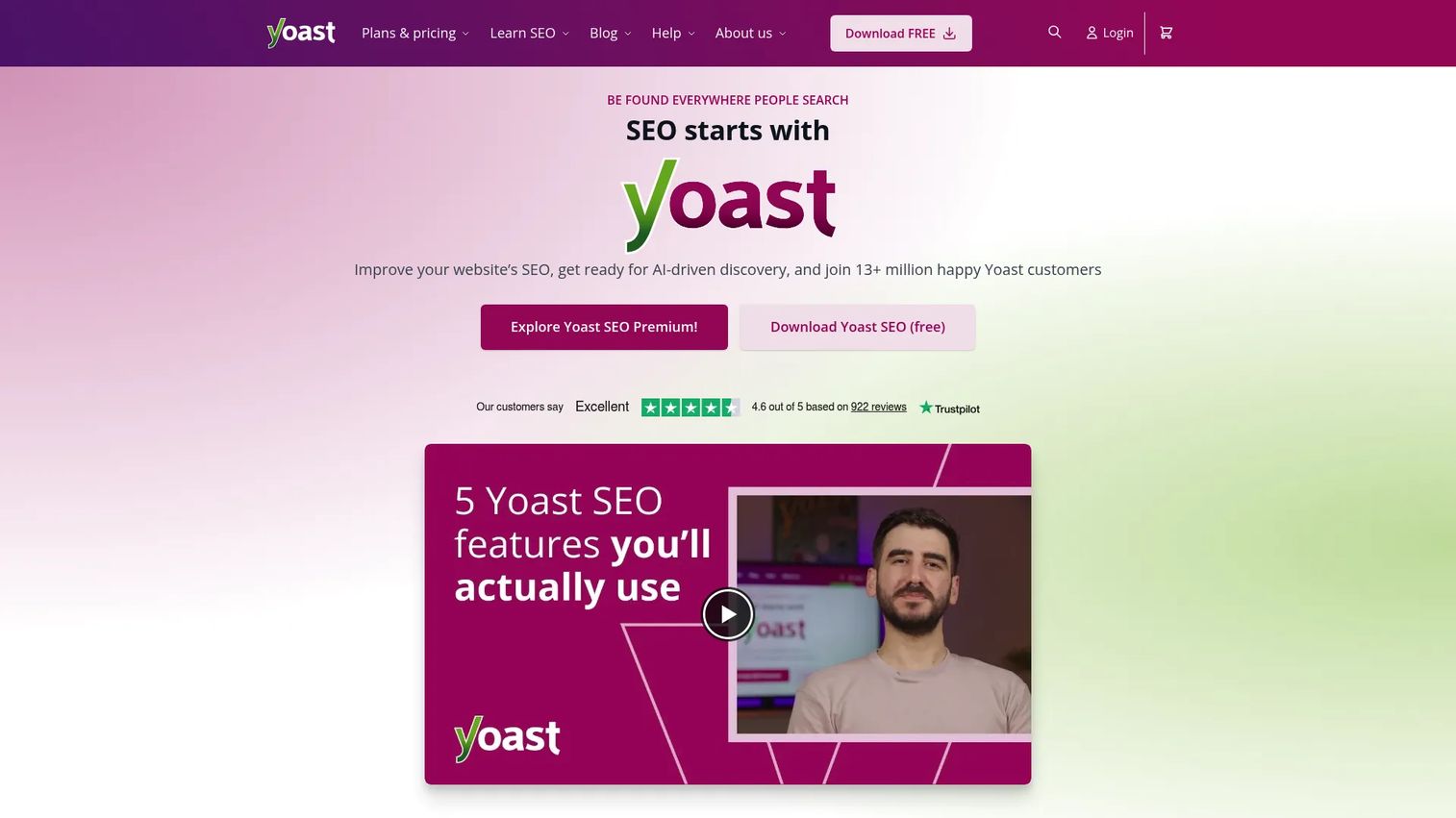
Yoast SEO is a WordPress SEO plugin that runs real-time content and readability analysis directly inside the page editor. As you write, it checks keyword placement, sentence length, passive voice, transition words, metadata, slug, and schema settings. The snippet preview shows how the page will appear in Google search results before you publish.
Best for: WordPress marketers and content teams who want on-page SEO checks built into their publishing workflow.
Key features
- Real-time SEO score and readability analysis
- Snippet preview for Google search-result preview
- Automatic XML sitemap generation
- Schema markup and rich-results support
- Internal linking suggestions (Premium)
Why choose Yoast SEO: It reduces publishing friction for WordPress teams by embedding the SEO checklist into the editor rather than making it a separate step. It is not a full content strategy suite or qualitative analysis platform, so pair it with a tool like Google Search Console or Semrush for site-level visibility.
Yoast SEO pricing: The core plugin is free and covers essential SEO analysis. Yoast SEO Premium runs $118.80/year (ex. VAT) and adds AI-assisted optimization, advanced content tools, and priority support.
G2 rating: 4.5/5
7. SEO Review Tools
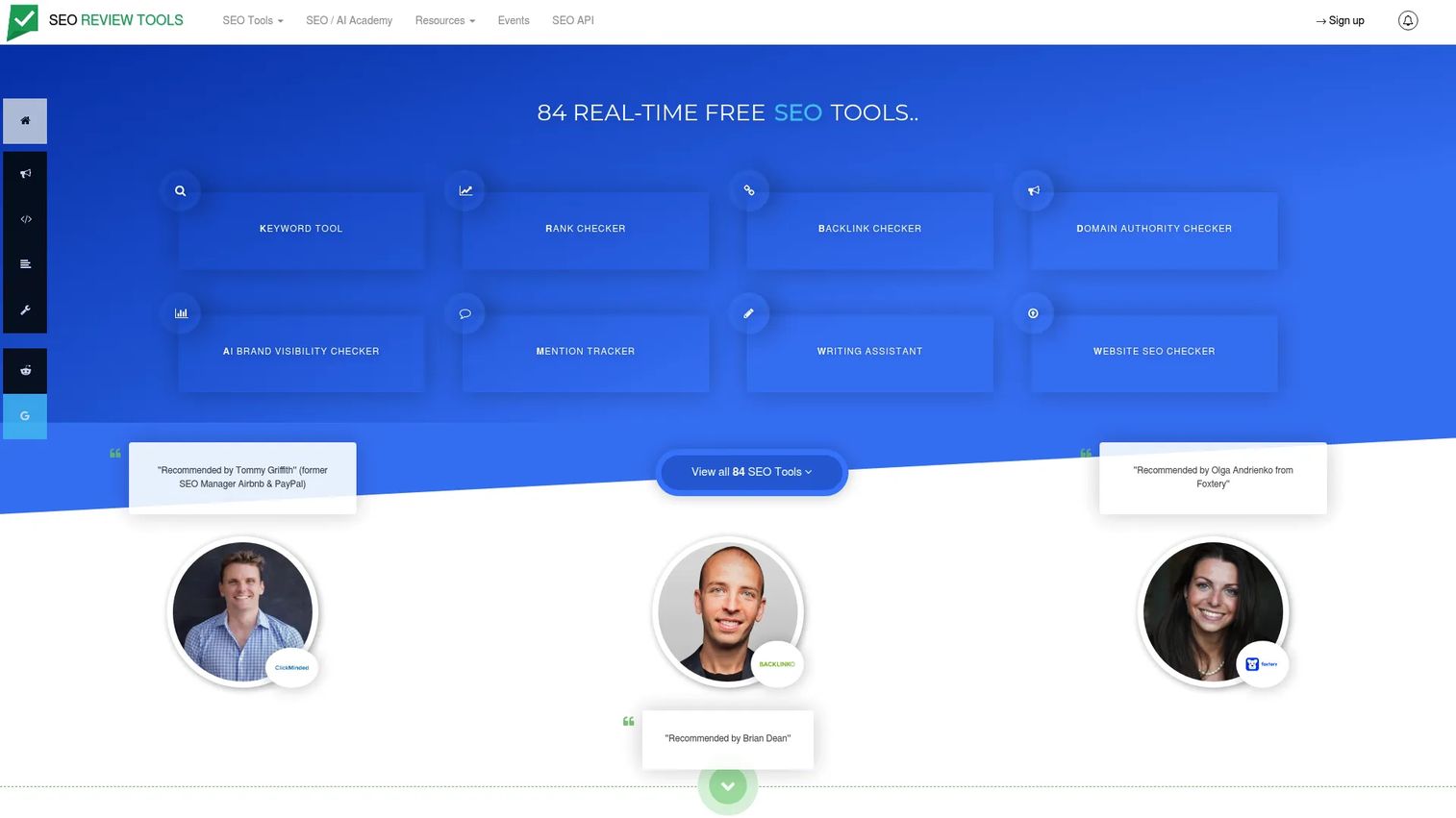
SEO Review Tools is a cloud-based platform offering free SEO, content, and AI tools alongside paid API access. The content analysis tool scores a page against target keywords, shows a snippet preview, checks keyword placement, and returns improvement recommendations, all without requiring an account for the free tools.
Best for: Marketers who need fast spot checks on individual pages without committing to a monthly subscription.
Key features
- SEO score and on-page content checker
- Google search-result preview with snippet rendering
- Keyword placement and content recommendations
- Readability and content coverage checks
- Free access to most tools without login
Why choose SEO Review Tools: It earns its place as a quick diagnostic option when you need to check a specific page or validate a client's content without opening a paid platform. Teams needing collaboration, historical tracking, or integrated reporting will outgrow it.
SEO Review Tools pricing: Most content and SEO tools are free to use. API plans for developers start at $75/month (or $60/month billed annually), with Standard at $175/month and Advanced at $450/month.
8. MAXQDA
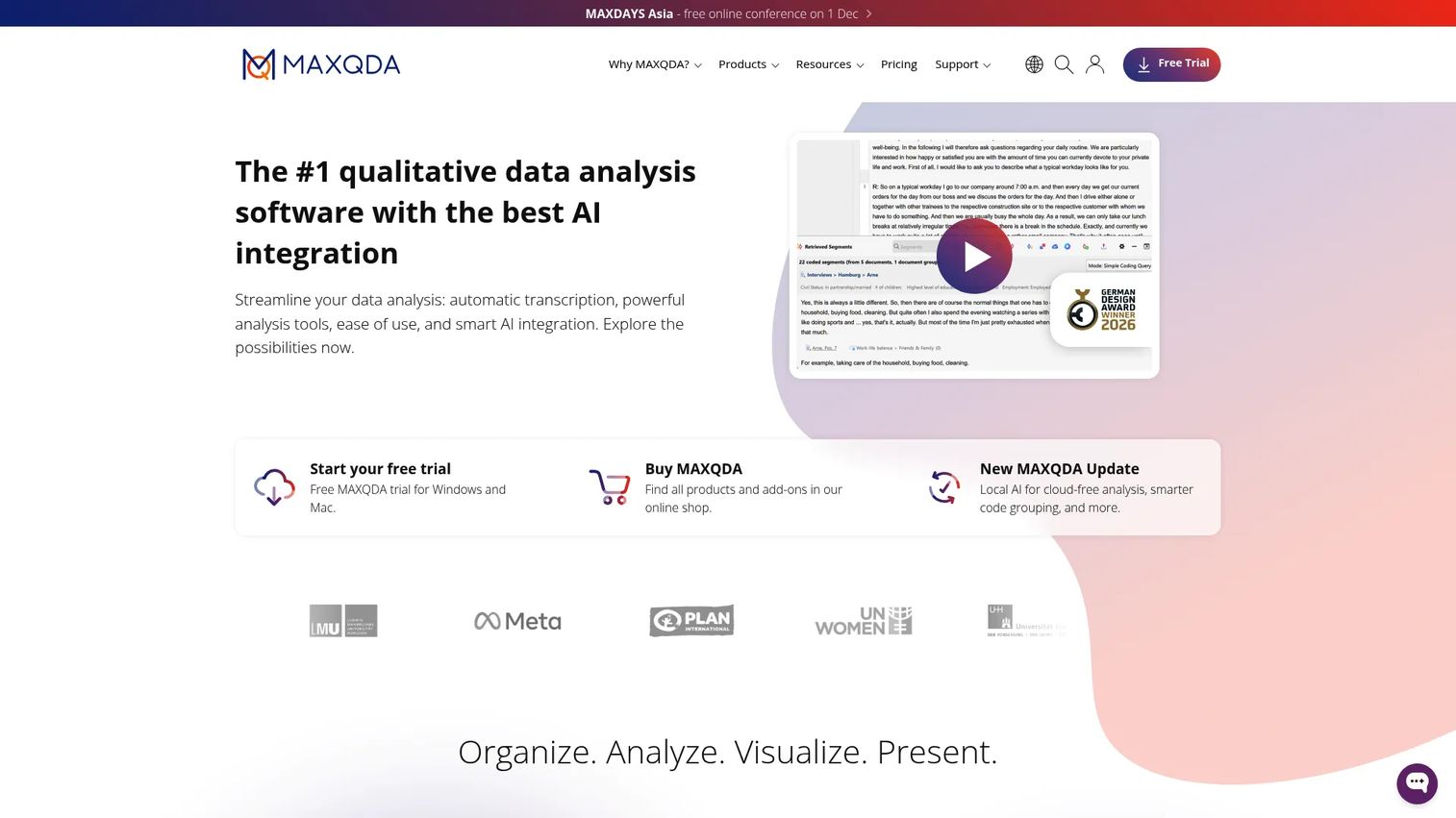
MAXQDA is qualitative and mixed-methods data analysis software for researchers and insights teams. It handles interviews, survey responses, literature reviews, focus-group transcripts, and multimedia data through a structured coding system, memo tools, and visualizations. Its AI Assist features add automated transcription, AI-assisted summarization, and subcode suggestions to speed up research workflows.
Best for: Research, UX, and marketing insights teams analyzing qualitative content from interviews, open-ended surveys, or customer conversations.
Key features
- Qualitative coding and mixed-methods data analysis
- AI Assist for transcription and AI-assisted summarization
- MAXDictio for quantitative text analysis
- Visualization and report-generation tools
- Memo tools for researcher notes and interpretations
Why choose MAXQDA: Use it when your content analysis includes customer interviews or message-testing transcripts that need systematic coding. It is research software, not an SEO content checker, so it belongs in a stack alongside an SEO tool, not instead of one. A 14-day free trial is available.
MAXQDA pricing: Pricing requires contacting the vendor directly. Licenses cover annual subscription, 3-year, and 5-year terms. MAXQDA Analytics Pro adds quantitative statistical analysis.
G2 rating: 4.5/5
9. NVivo
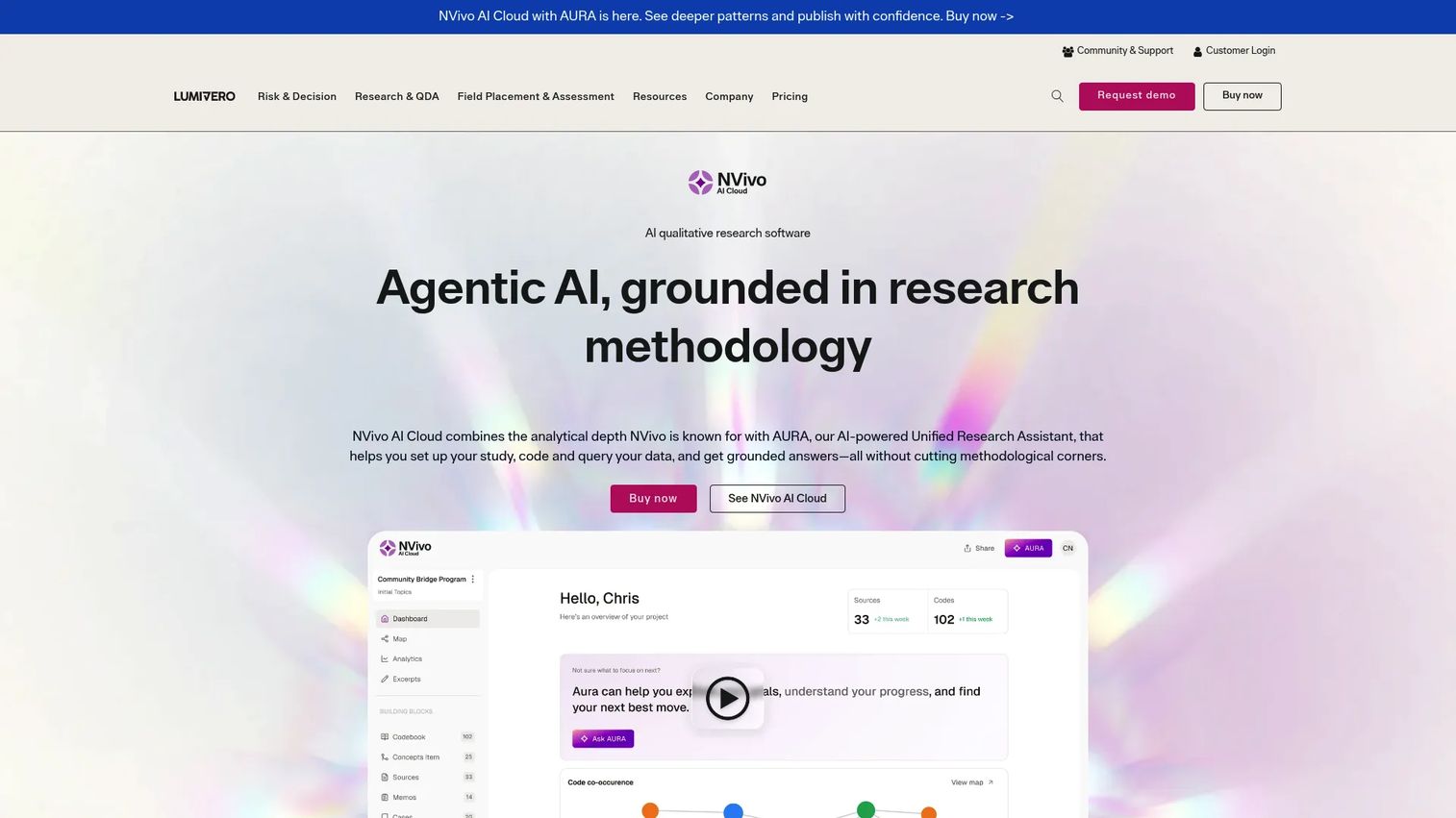
NVivo is qualitative and mixed-methods research software for organizing, coding, querying, and analyzing complex research datasets. It handles interviews, focus groups, documents, surveys, audio, video, and social media data through a structured project-based workflow. AI-assisted topic analysis, pattern detection, and query tools sit alongside traditional coding frameworks.
Best for: Teams running structured research projects, including customer evidence synthesis and message strategy development, where rigor and traceability matter.
Key features
- Interview coding and cases with attribute tagging
- AI-assisted topic and pattern analysis with human review
- Transcription add-on for audio and video files
- Query tools and mixed-methods comparisons
- Visualization: Cluster maps, word frequencies, charts
Why choose NVivo: It is the right tool when research needs to withstand scrutiny, whether that's a customer insight presentation to leadership or a formal research project. Reliability and coding traceability are built into its structure. Add-ons include Desktop Transcription at $499 annually and Collaboration Cloud at $99 annually.
NVivo pricing: Core NVivo license pricing is not displayed on the official shop and requires contacting Lumivero directly.
G2 rating: 4.0/5
10. ATLAS.ti
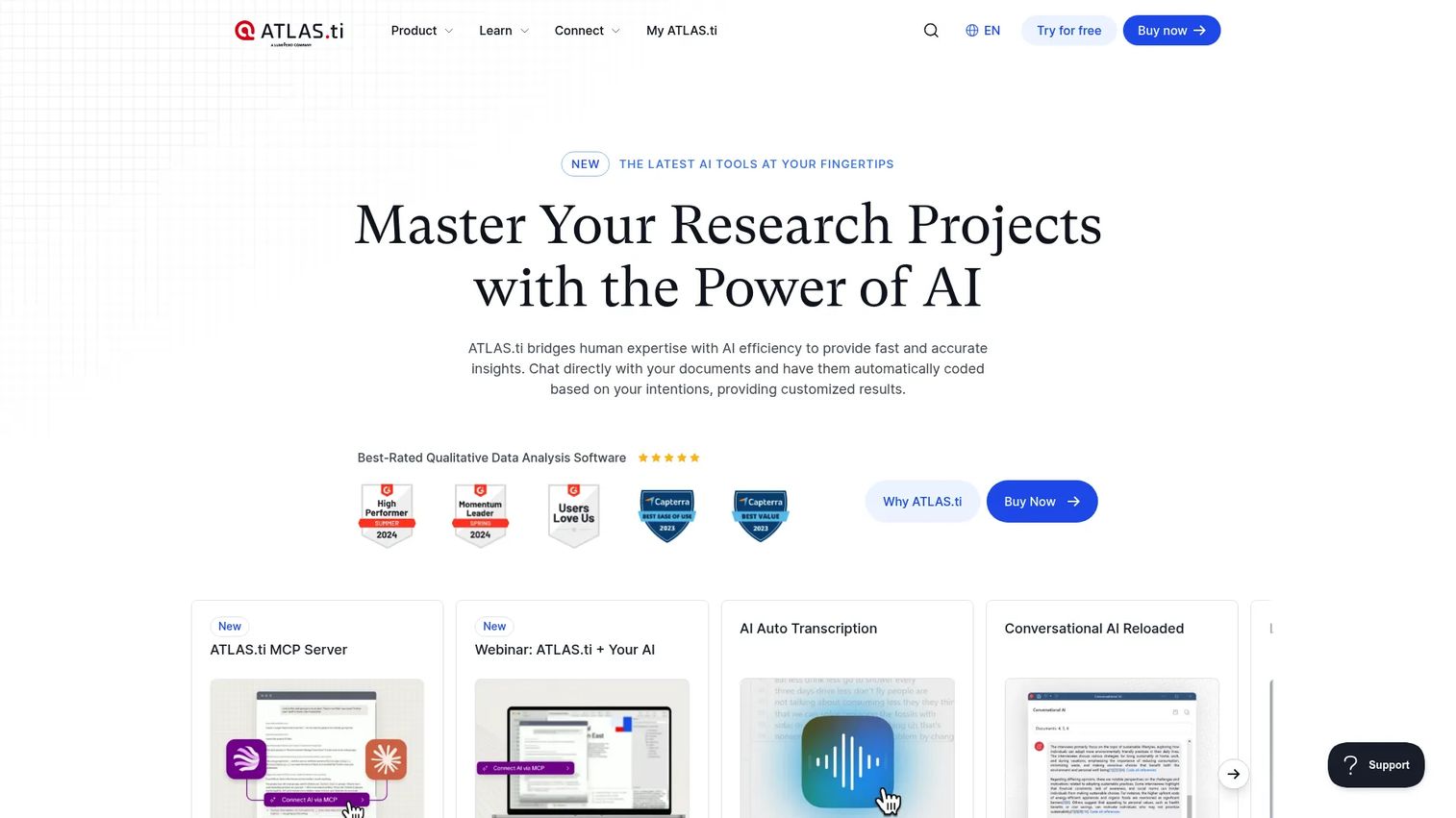
ATLAS.ti is qualitative data analysis software for coding text, PDFs, images, audio, video, surveys, and social media content. Its AI-assisted coding, conversational AI, and AI summaries reduce the time researchers spend on initial categorization. Network views and Sankey diagrams make it easier to present findings to stakeholders who weren't part of the coding process.
Best for: Research and insights teams analyzing content across multiple data formats, particularly when visual presentation of findings matters.
Key features
- AI-assisted coding, conversational AI, and AI summaries
- Analysis of text, images, audio, video, and survey data
- Network views, word clouds, and Sankey diagrams
- Sentiment analysis and opinion mining
- Real-time team collaboration across Windows, Mac, and Web
Why choose ATLAS.ti: Choose it when your qualitative analysis spans more than written documents, such as recorded customer interviews, UX research sessions, or social media comment sets. It is a research platform, not an SEO tool, and is overbuilt for simple page-level content scoring.
ATLAS.ti pricing: The official shop states a flat-fee license covering all features across platforms. Pricing requires visiting the ATLAS.ti shop or contacting the vendor directly.
G2 rating: 4.7/5
11. Google Search Console
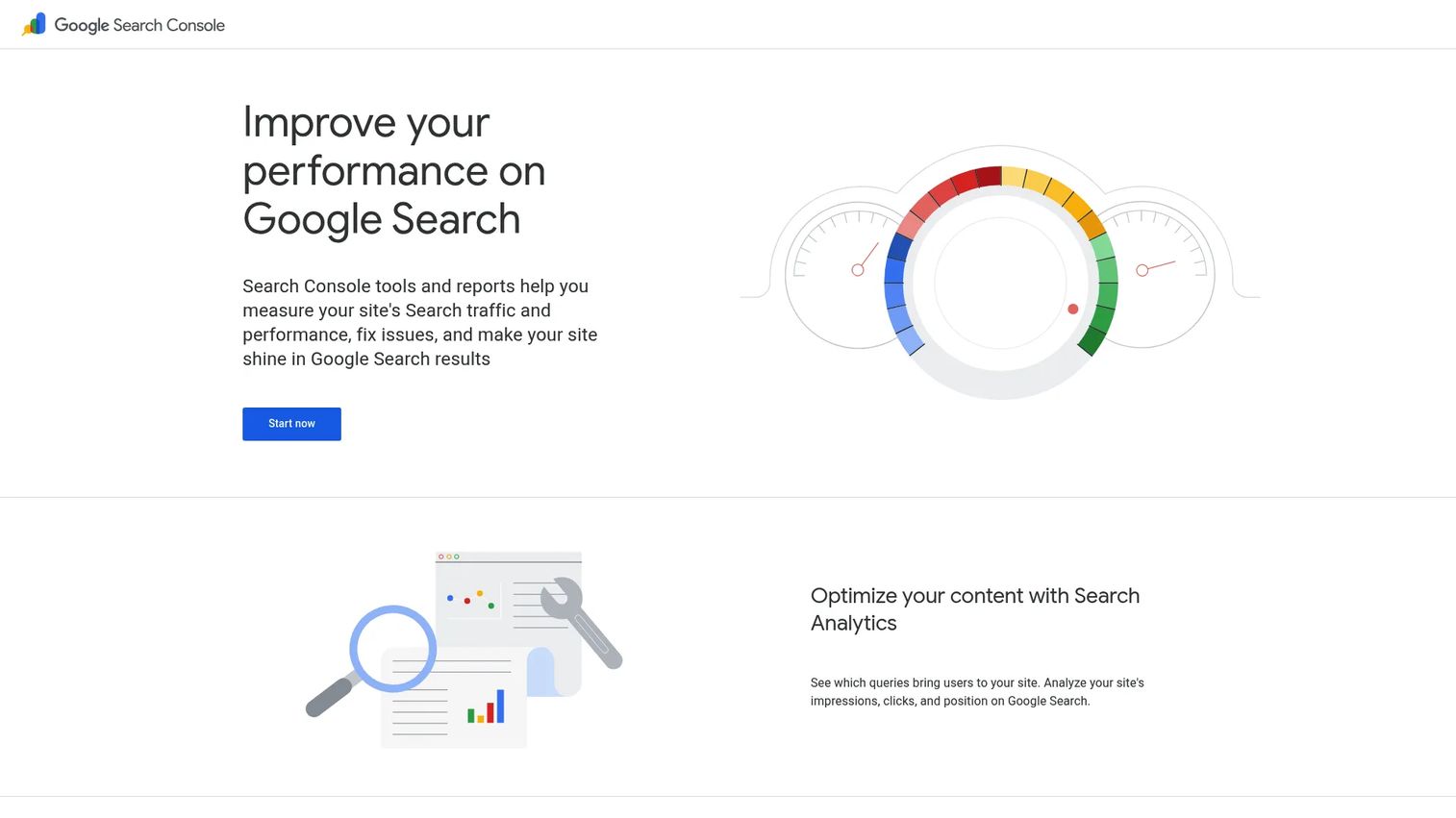
Google Search Console is Google's free set of tools and reports for measuring search traffic, monitoring indexing, and diagnosing visibility issues. For content analysis specifically, its Search Analytics report shows which queries are driving impressions and clicks to which pages, making it the starting point for identifying content decay, low-CTR pages, and ranking opportunities.
Best for: Every marketer who publishes content. Google Search Console belongs in every content analysis stack as the free, first-party baseline.
Key features
- Search Analytics for queries, clicks, impressions, and average position
- URL Inspection with crawl and indexing detail
- Index coverage monitoring and sitemap submission
- Core Web Vitals and Rich Results reports
- Email alerts for detected site issues
Why choose Google Search Console: It shows you what Google actually sees, which no third-party SEO tool can replicate. Its limitation is that it doesn't grade content or generate optimization recommendations. Pair it with a content scoring tool like Surfer SEO or Clearscope for the full picture.
Google Search Console pricing: Free.
G2 rating: 4.7/5
Considerations when choosing content analysis tools
Match the tool to the content job
Before evaluating features, name the specific job: Optimizing a draft, auditing existing pages, analyzing customer interviews, or planning topical coverage. SEO content optimization, qualitative coding software, and content audit workflows require different tools, and buying the wrong category wastes both money and onboarding time.
Check whether it replaces another tool in your stack
Growth marketers deal with tool sprawl. Ask whether the new platform replaces a keyword tool, content brief builder, audit spreadsheet, or research coding tool. Semrush can consolidate several SEO point tools; MAXQDA or NVivo may replace a manual interview-coding workflow in a spreadsheet.
Verify what's behind the data and recommendations
Content scores are only useful when the underlying data is current and clear. For SEO tools, check how often SERP data refreshes and whether the recommendations are based on live competitor pages. For research tools, evaluate whether coding reliability and exportability match your reporting standards.
Look for integrations that cut manual work
The most useful content analysis tools connect to existing workflows. For SEO tools, check Google Search Console integration, WordPress or CMS publishing, and CRM or analytics connections. For research tools, check export formats that work with your reporting stack.
Compare pricing against actual publishing or research volume
A $39/month tool and a quote-based enterprise platform solve different problems. Pricing scales differently across this category: Surfer SEO charges per document, Clearscope charges per query tracked, and enterprise qualitative platforms price by user seat and license term. Match the pricing model to your monthly output, not to the most impressive feature set.
Conclusion
The best content analysis tool for your team depends on which content problem you're trying to solve.
For all-in-one SEO and content analysis, Semrush offers the broadest coverage and consolidation value. Surfer SEO is the strongest pick for teams optimizing drafts at a regular publishing cadence. Clearscope earns its price for editorial teams that need clean grading reports without ambiguity. MarketMuse fits teams that need strategy-level analysis across a large library. Frase is the value option for lean teams who want brief-to-publish workflows at a lower entry cost.
Yoast SEO and SEO Review Tools handle page-level checks well, with Yoast built directly into WordPress and SEO Review Tools covering quick free diagnostics. Google Search Console belongs in every stack regardless of what else you use, since no other tool gives you first-party data on what Google actually indexes.
If your content work includes customer interviews, survey analysis, or message testing, MAXQDA, NVivo, and ATLAS.ti each handle qualitative coding at a research-grade level. The choice between them turns on collaboration needs, data format variety, and AI feature requirements.
Start with the problem. Then choose the tool. That order matters more than any feature checklist.
Start your journey with Guideflow today!
FAQs
Content analysis tools are software platforms that evaluate content to surface patterns, quality issues, optimization gaps, or insights. The category includes SEO content analysis tools that score pages against search results, qualitative content analysis software that codes interviews and surveys, content audit platforms that track page performance over time, and AI-assisted tools that automate briefs, summaries, and recommendations.
The right answer turns on your workflow. Semrush is the strongest pick for teams that want keyword research, site audits, and content scoring in one place. Surfer SEO is better suited to writers optimizing individual drafts against SERP data. Clearscope produces the cleanest grading reports for editorial teams. Google Search Console provides the first-party query and indexing data that every other tool builds on.
Google Search Console is the most useful free option, covering query data, page performance, indexing, and Core Web Vitals for every published page. SEO Review Tools offers free on-page content scoring, snippet previews, and keyword placement checks without requiring an account. Free tools generally lack collaboration features, historical reporting, and content brief generation, which matters once a team grows past one or two people.
SEO content analysis evaluates how well a page covers a topic for search, checking keyword placement, metadata, heading structure, readability, and competitive term coverage. Qualitative content analysis codes themes, sentiment, and patterns in unstructured text: Interviews, survey responses, reviews, and transcripts. Both are "content analysis" but they answer completely different questions. The first asks "will this page rank?" The second asks "what are customers actually saying?"
They reduce the spreadsheet work behind content decisions. SEO tools surface which pages are losing clicks and what topics competitors cover that you don't. Qualitative tools pull patterns from customer conversations that inform messaging without requiring another round of manual analysis. Together, they help marketers prioritize refreshes, improve briefs, and present content ROI in terms that hold up in a pipeline review.
AI recommendations speed up topic extraction, summarization, and brief creation, but they still require human review before they drive publishing decisions. For SEO tools, AI-generated term recommendations are only as accurate as the SERP data underneath them, which changes as rankings shift. For qualitative tools, AI coding suggestions reduce initial categorization time but still need researcher validation for reliability and validity. Use AI output as a starting point, not a final answer.
No. Google Analytics tracks user behavior: Sessions, bounce rate, goal completions, and conversion paths on your site. Content analysis tools evaluate search visibility, page quality, topic coverage, or qualitative patterns in text. The two answer different questions and most teams need both. Google Search Console sits closest to both categories, since it covers search performance, but it doesn't replace behavioral analytics.
Start with the specific job: Optimizing drafts, auditing existing pages, analyzing customer language, or planning topic clusters. Then compare how each tool prices for your publishing or research volume, which integrations connect to your existing CRM or CMS, and whether the platform replaces another tool you're already paying for. Consolidation matters as much as capability for most growth marketing teams.