You built a self-paced onboarding path. New reps signed up, watched three videos, and never finished module four. Completion sat somewhere between disappointing and invisible, and nobody could tell you why the certification numbers looked so soft.
Here is the gap most enablement and L&D owners hit: self-paced online courses see completion rates between 3% and 15%, while cohort-based programs consistently land at or above 90% (Disco, 2026). That is not a marginal difference. It is the difference between a program that ramps reps and one that quietly dies in the backlog.
The pattern behind that number is accountability. When learners start together, move through milestones together, and show up to live sessions with peers watching, the social contract does [the work your reminder emails could not. That mechanic matters most for the exact jobs enablement teams own: onboarding new hires, certifying reps on new messaging, rolling out product launches, and keeping frontline managers coaching consistently.
The market is voting with its wallet. The cohort-based learning platforms market was valued at $4.0 billion in 2026 and is projected to reach $15.2 billion by 2034, growing at a 16.2% CAGR (Stratistics MRC, 2024](https://www.disco.co/blog/what-is-cohort-based-learning)). Professional development cohorts alone held 38.2% of the broader cohort-based courses market in 2025 (Dataintelo, 2024). Buyers are moving budget from static content toward formats that actually finish.
The catch is that "cohort platform" now means everything from a creator course store to an AI-native training operation. Picking wrong costs you a quarter of setup and a program nobody trusts.
What's inside
This guide is for enablement, L&D, and training operations owners choosing software to run cohort programs at scale. We cover what a cohort-based learning platform is, how it differs from self-paced tooling, and which platforms fit which motion.
We evaluated seven platforms on four criteria that decide whether a program survives contact with real reps:
- Live session support: scheduling, calendars, reminders, attendance tracking.
- Community and peer interaction: discussion, groups, peer review, accountability.
- Automation and scalability: repeatable cohort setup, workflows, multi-cohort management.
- Pricing transparency: clear tiers you can forecast against, not a black box.
TL;DR
- Best for structured corporate training operations: Disco, with AI-assisted cohort operations and branded academies.
- Best community-first cohort programs: Mighty Networks and Circle, where peer connection carries the program.
- Best all-in-one creator and monetization stack: Kajabi, combining courses, community, and checkout.
- Best for peer review and structured assessment: Teachfloor, built around collaborative evaluation.
- Best premium instructor-led cohorts: Maven, for expert-led programs with marketplace discovery.
- Best lower-complexity course delivery: Thinkific, for smaller teams that want structure without heavy ops.
What is a cohort-based learning platform?
A cohort-based learning platform is software that runs group learning programs where a set of learners starts on the same date, progresses through a shared schedule, attends live sessions, and interacts with peers under built-in accountability. It is the operational opposite of "log in whenever and watch a video."
The category exists because completion is the real problem, not content. You can build the best onboarding curriculum in the world, but if reps finish it at a 12% rate, the curriculum does not exist in practice. Cohorts solve for finishing.
Core capabilities you should expect from a modern cohort platform:
- Scheduled cohorts: shared start dates, structured pacing, and milestone gates that keep a group moving together.
- Live session infrastructure: built-in or integrated video, calendars, reminders, and attendance data.
- Peer interaction: discussion spaces, group work, peer review, and member directories that create social accountability.
- Automation: repeatable cohort templates, reminder workflows, and multi-cohort management so one person can run many groups.
- Measurement: completion tracking, participation data, and reporting you can hand to leadership.
The global cohort-based courses market reached $3.8 billion in 2024, driven specifically by demand for higher-completion, community-driven learning over self-paced formats (Disco, 2026). That demand signal is the whole thesis of the category: people pay for finishing, not just for access.
Why cohort learning works
Three mechanics do the heavy lifting. Shared timing creates urgency, so learners do not defer indefinitely. Peer visibility creates accountability, because falling behind is public inside the group. Live sessions create commitment, because a scheduled event is harder to ignore than a passive library.
For enablement, that maps directly to outcomes. Onboarding cohorts ramp new reps faster because the group moves in lockstep toward certification. Recurring training keeps completion high because managers can see participation in real time. Messaging rollouts stick because reps practice new talk tracks live, with peers and coaches present, instead of skimming a doc.
Cohort-based learning vs self-paced learning
Both models have a place. Self-paced wins on flexibility and cost per learner. Cohort-based wins on completion, engagement, and behavior change. Here is the practical breakdown for a buyer.
| Dimension | Cohort-based learning | Self-paced learning |
|---|---|---|
| Completion rate | Consistently 90%+ (Disco, 2026) | Typically 3–15% (Disco, 2026) |
| Accountability | Built in via peers, schedule, live sessions | Self-driven, easy to defer |
| Best for | Onboarding, certification, messaging rollouts, coaching | Reference material, refreshers, compliance basics |
| Coordination effort | Higher upfront, automation reduces it | Low, set and forget |
| Behavior change | Strong, practice and feedback loops | Weaker, passive consumption |
| Scale model | Multi-cohort, scheduled | Unlimited, on-demand |
The takeaway: use self-paced for things people reference, use cohorts for things people need to actually learn and apply.
When to use a cohort-based learning platform
Run onboarding and certification programs
Cohort design shines when new hires or new customers need to hit structured milestones on a timeline. A cohort of five new reps moving through a four-week ramp together certifies faster than five reps each starting whenever their calendar allows. The shared schedule is the forcing function that gets everyone to the certification gate at roughly the same time, which also makes your ramp time by cohort a clean, comparable metric.
Deliver recurring training with accountability
Manager-led enablement and ongoing L&D need momentum, not just content. When a platform shows live participation and completion in real time, managers can nudge the reps who slip before they disappear. That visibility is what keeps a monthly training cadence from decaying into an ignored content library. Accountability is a feature, not a nice-to-have.
Build learning communities across geographies
Global teams cannot all attend the same live session. The strongest cohort platforms pair scheduled live moments with asynchronous discussion and peer feedback, so a rep in one time zone contributes to the same thread as a rep twelve hours away. Learning at scale across regions depends on this sync-and-async blend, not on forcing everyone into a single call.
Comparison table
We shortlisted these seven platforms based on live session support, community and peer features, automation, and pricing transparency, then sorted by relevance to corporate training and enablement use cases. Pricing and G2 ratings below reflect verified values at publish time and can shift, so confirm current figures on each vendor's page before you buy.
| # | Product | Intent | Key differentiation | Pricing | G2 rating |
|---|---|---|---|---|---|
| 1 | Kajabi | All-in-one creator and monetization | Courses, community, live sessions, checkout in one | From $71/mo | 4.1/5 |
| 2 | Disco | AI-native training operations | AI-assisted cohort operations, branded academies | From $399/mo | 4.4/5 |
| 3 | Mighty Networks | Community-first cohorts | Member networking, events, courses under your brand | From $79/mo | 4.6/5 |
| 4 | Thinkific | Lower-complexity delivery | Course builder with assignments and community | From $54/mo | 4.5/5 |
| 5 | Maven | Premium instructor-led | Expert-led cohorts, marketplace discovery | From $200/course | 4.5/5 |
| 6 | Teachfloor | Peer review and assessment | Collaborative evaluation, white-label academy | From $89/mo | 5.0/5 |
| 7 | Circle | Community infrastructure | Branded home for courses, discussion, events | From $89/mo | 4.5/5 |
1. Kajabi
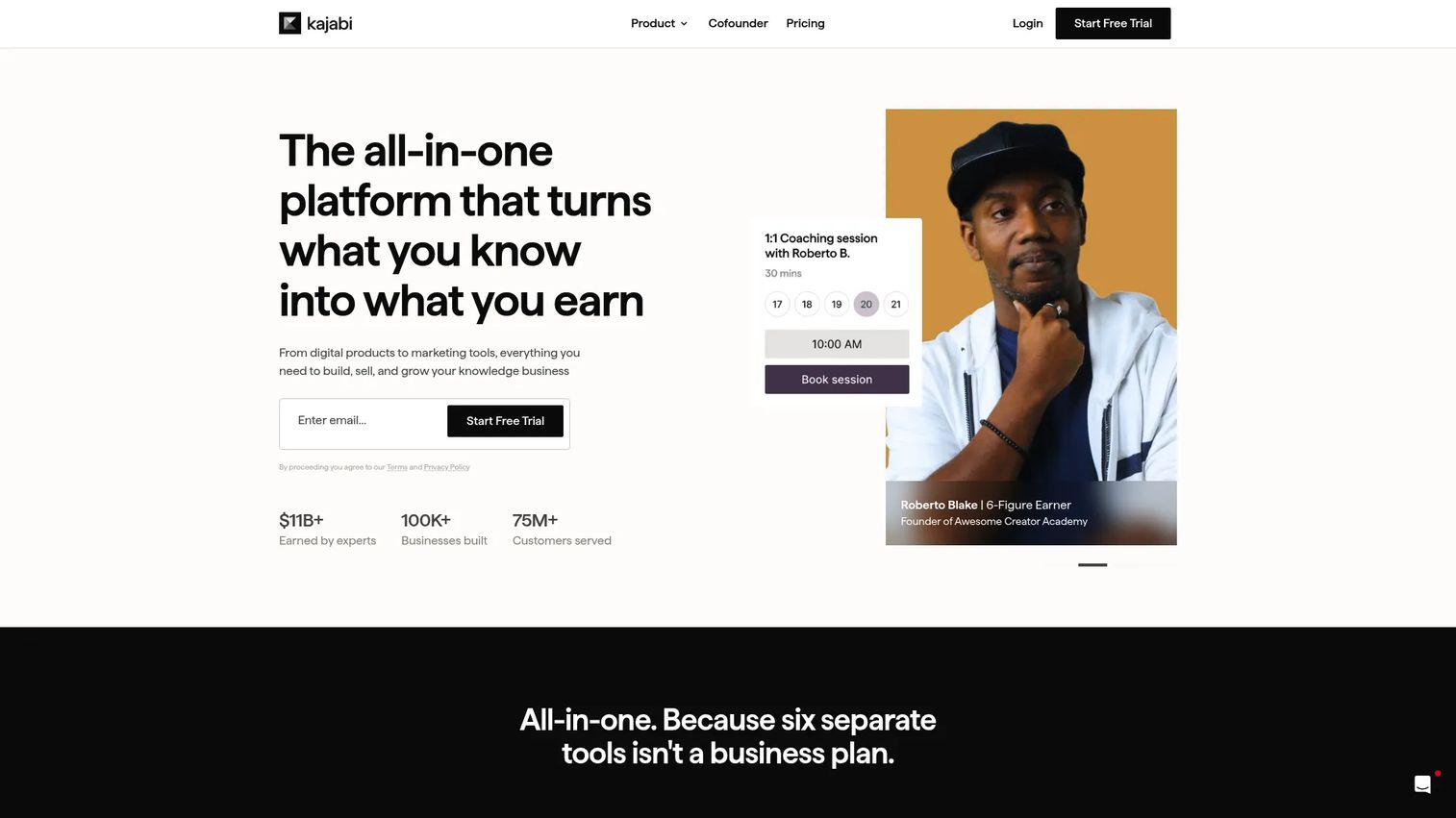
Kajabi is an all-in-one platform for creating, marketing, and selling digital products and expertise. It bundles online courses, coaching, memberships, and communities with the business layer around them: email marketing, landing pages, funnels, automations, and checkout. For a team that wants to run cohort programs and monetize them in the same place, that consolidation is the pitch.
Best for: Creators and experts selling courses, coaching, and memberships from a single platform.
Key strengths
- All-in-one stack: Courses, community, and checkout live together, so you are not stitching five tools into a cohort program.
- Built-in marketing engine: Email, landing pages, funnels, and automations mean you can recruit and nurture cohorts without a separate marketing platform.
- Analytics and websites: Reporting and a hosted site give a program a real home and measurable performance.
Why choose Kajabi: Kajabi fits when monetization is part of the goal, not an afterthought. If your cohort program is a revenue line, or you sell training externally, having checkout, funnels, and community under one roof cuts operational drag. For a purely internal enablement program, some of that commerce machinery goes unused, but the course and community depth still hold up.
Kajabi pricing: Kajabi runs four tiers, all billed annually: Starter at $71/mo, Basic at $143/mo, Growth at $199/mo, and Pro at $399/mo. There is no permanent free tier, though each plan offers a free 14-day trial. Kajabi states no hidden fees or revenue sharing, which matters when you are forecasting total cost of ownership.
2. Disco
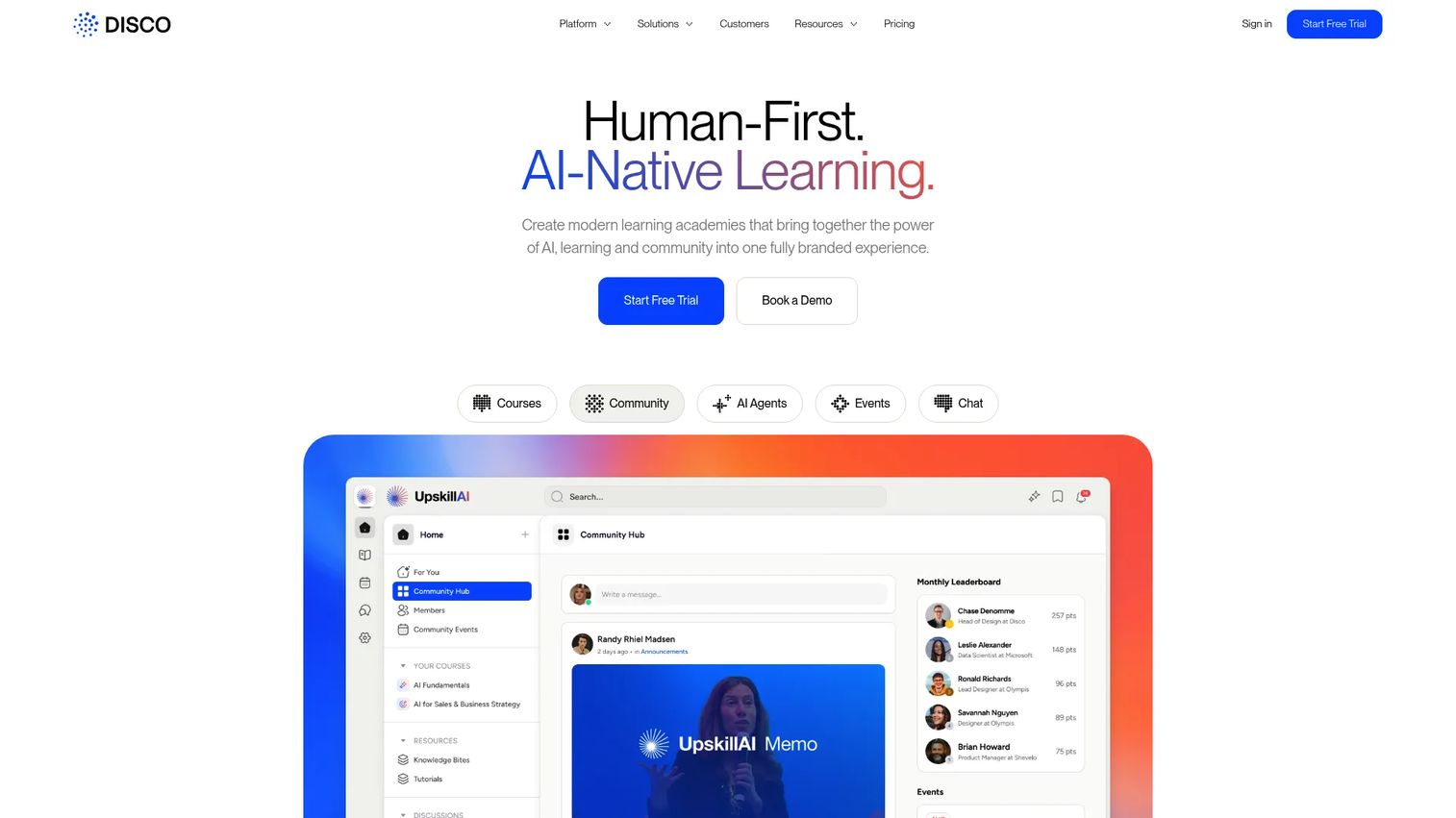
Disco is an AI-native learning community platform for branded academies, courses, and member engagement. It combines cohorts, courses, community, events, and automation, then layers AI agents and AI-powered content tools on top. For a training operation that runs many cohorts and wants to cut the manual coordination behind each one, that automation focus is the differentiator.
Best for: Training businesses and customer education teams that need a branded learning and community platform.
Key strengths
- AI-assisted operations: AI agents and content tools reduce the manual work of building and running cohorts at volume.
- Branded academy: Run your learning experience on your own domain, so the program feels like your company, not a generic portal.
- Cohorts plus community plus events: The full cohort mechanic sits in one place, alongside the automation to repeat it.
Why choose Disco: Disco fits enablement and customer education teams operating at scale, where one person may run several concurrent cohorts. The AI layer targets exactly the coordination overhead that makes multi-cohort management painful. If your program is small and infrequent, the platform is more capability than you need, but for a genuine training operation it earns its place.
Disco pricing: Disco's Organization plan starts at $399/mo billed annually, with an Enterprise tier at custom pricing. There is no permanent free tier, though a 14-day free trial is available. This is a step up from creator-tier tools, priced for teams treating learning as an ongoing operation rather than a side project.
3. Mighty Networks
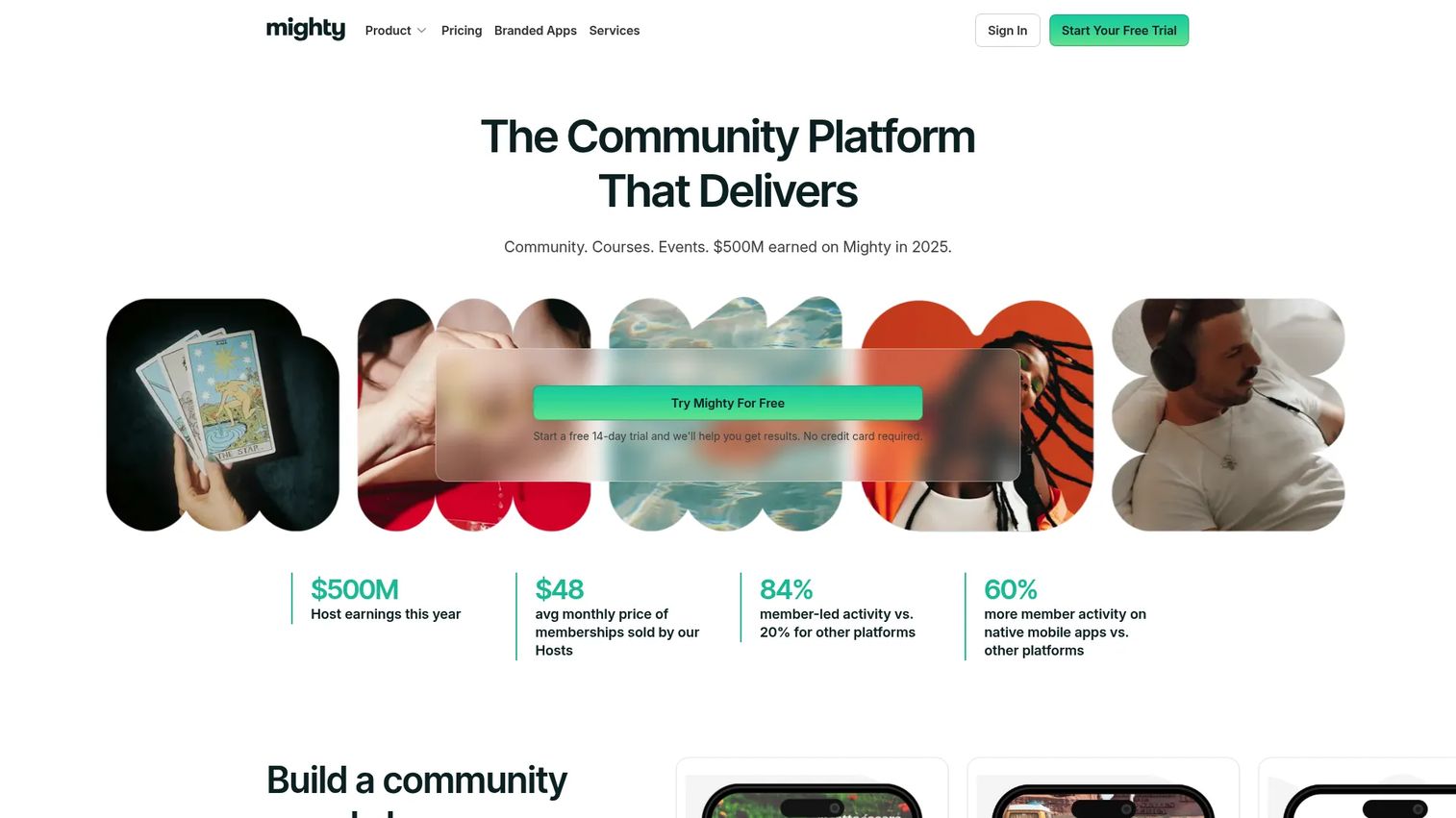
Mighty Networks is an all-in-one community platform for creators and businesses to build memberships, courses, and events under their own brand. Its center of gravity is community: activity feeds, livestreams, member profiles, and spaces where people connect. Courses and events run inside that social fabric, which suits programs where peer connection matters as much as curriculum.
Best for: Creators and organizations building branded community memberships with courses and events.
Key strengths
- Community-first design: Activity feed, member directory, and spaces make peer networking the default, not an add-on.
- Courses and paid memberships: Deliver structured learning and monetize access inside the same community.
- Live and async blend: Livestreams and spaces support both scheduled sessions and ongoing discussion across time zones.
Why choose Mighty Networks: Choose it when the community is the product. If your cohort program lives or dies on peer relationships, ongoing engagement, and members returning after the program ends, Mighty Networks builds for that. For programs where structured assessment or heavy commerce is the priority, other tools here match those needs more directly.
Mighty Networks pricing: The Launch plan is $79/month, or $950/year on annual billing. Scale runs $179/month, and Mighty Pro is custom pricing. There is no permanent free tier, but a 14-day free trial is available. The pricing is transparent at the lower tiers, which helps when you are forecasting a growing community.
4. Thinkific
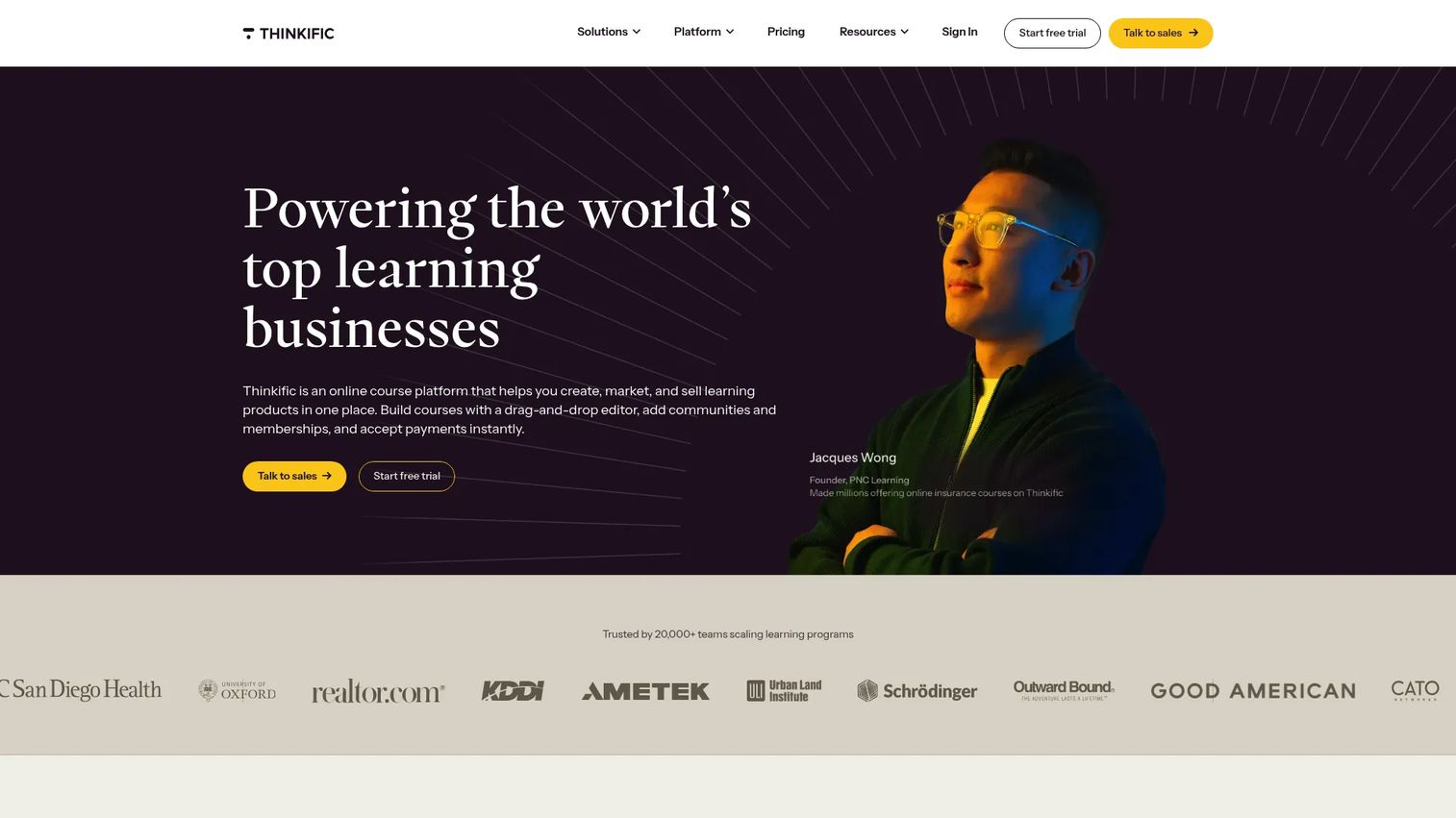
Thinkific is an online learning commerce platform for creating and selling courses, communities, memberships, and digital learning products. Its course builder handles video lessons, quizzes, assignments, certificates, and community spaces, with direct messaging built in. For smaller teams that want structured delivery without heavy operational overhead, it hits a practical middle ground.
Best for: Creators and businesses that want to sell and manage online learning products in one platform.
Key strengths
- Complete course builder: Video, quizzes, assignments, and certificates cover the mechanics of a structured program end to end.
- Commerce built in: Payments, bundles, upsells, and subscriptions handle monetization without a bolt-on tool.
- Admin and marketing features: Landing pages, analytics, API and webhooks, and SSO on higher plans support governance as you grow.
Why choose Thinkific: Thinkific fits when you want structure and certificates without standing up a full training operation. It is approachable for a smaller enablement team or a creator, with enough depth (SSO, API, assignments) to grow into. Community and cohort-specific mechanics are present but lighter than the community-first tools on this list, which is fine when delivery is your priority.
Thinkific pricing: Four plans: Basic at $54/mo, Start at $109/mo, Grow at $219/mo, and Plus at custom pricing via sales. There is no permanent free plan, though a free trial is offered. The transparent lower tiers make it easy to start small and scale spend as cohorts grow.
5. Maven
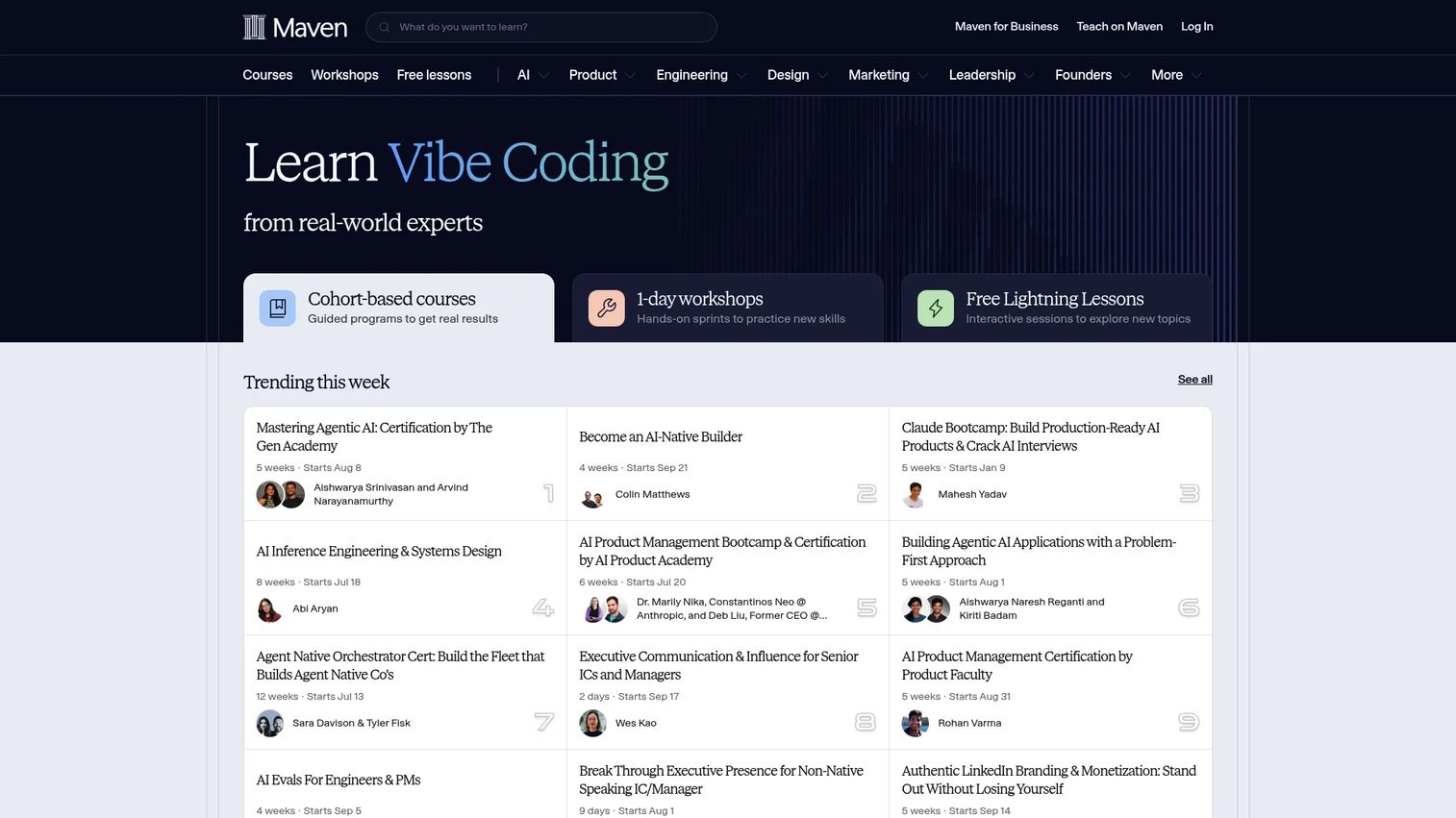
Maven is a platform for live cohort-based courses, workshops, and free lessons. It is the most cohort-native tool on this list, built specifically around expert-led, live programs, one-day workshops, and free Lightning Lessons. Marketplace discovery means courses can attract learners beyond your own audience, which matters if credibility and reach are part of the goal.
Best for: Experts and creators selling live, cohort-based learning products.
Key strengths
- Purpose-built for cohorts: The entire platform assumes live, scheduled, instructor-led programs rather than retrofitting them.
- Marketplace discovery: Courses can be found by new learners, adding reach beyond your existing list.
- Program packaging: Workshops and Lightning Lessons give you formats for short and long learning experiences.
Why choose Maven: Choose Maven when instructor credibility and live teaching are the core of the experience. It is strong for premium, expert-led programs where the teacher's reputation and the live cohort dynamic carry the value. It is less oriented toward internal, always-on training operations, since the model centers on packaged, sold courses.
Maven pricing: Maven's model is creator-side. Course prices typically range from $800 to $2,500, with a minimum price option of $200 per course. Maven is free to use until a student pays to enroll, then takes a 10% fee on paid enrollments. That makes it low-risk to launch a course, with cost scaling only when you earn.
6. Teachfloor
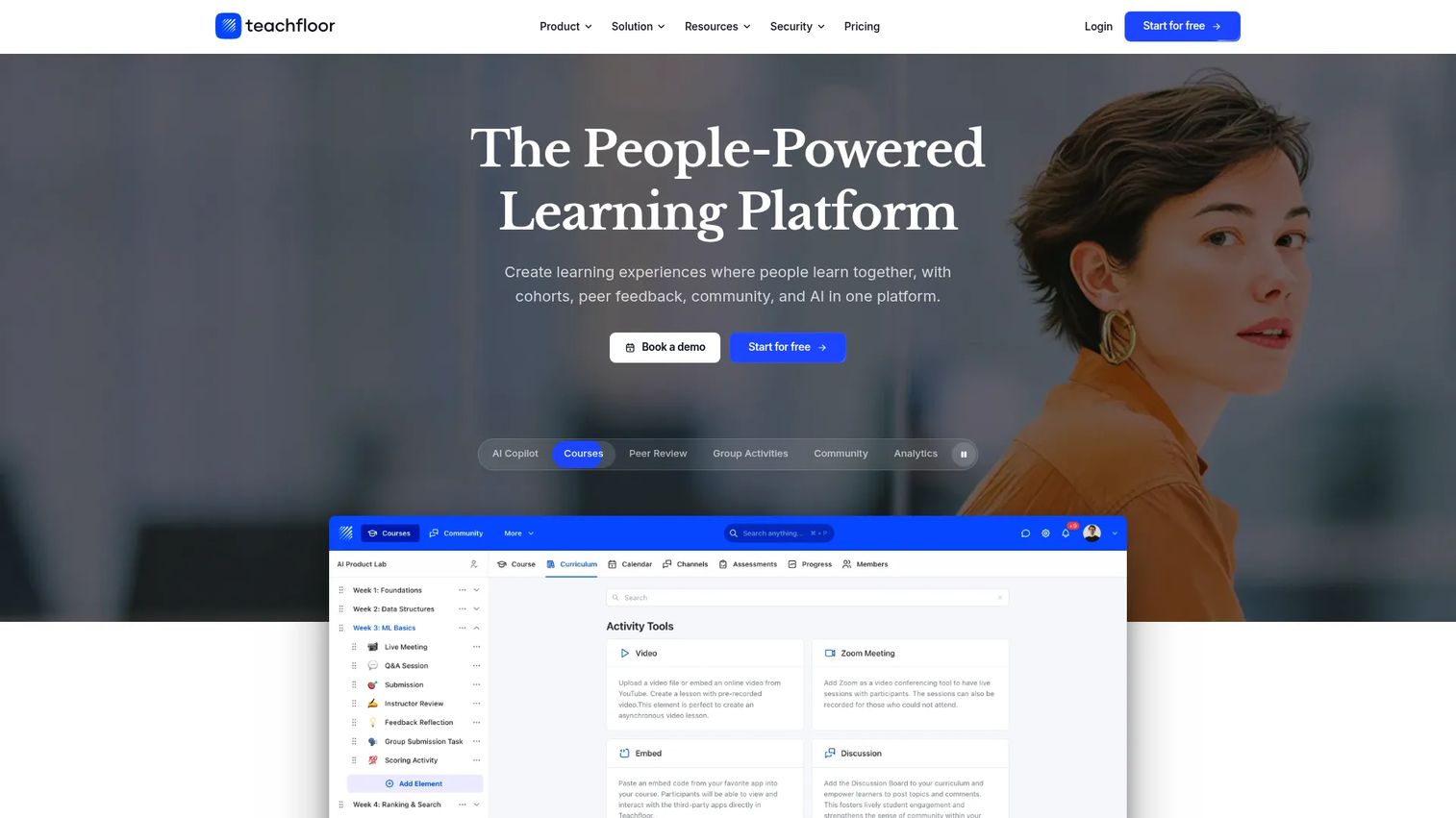
Teachfloor is a cohort-based learning platform for creating, delivering, and monetizing branded online courses. Its standout is collaborative evaluation: cohort-based courses with live sessions and peer review sit at the center, backed by white-label customization, commerce, automations, and a full integration layer including API, webhooks, and an SDK. For cohorts that need real assessment, not just video consumption, it is purpose-built.
Best for: Teams running cohort-based courses or academies that need collaborative learning and white-label delivery.
Key strengths
- Peer review and assessment: Structured feedback and collaborative evaluation make learning active, not passive.
- White-label academy: Custom domain, branding, and multilingual support let the program feel fully yours across regions.
- Deep integration layer: API, webhooks, and SDK mean it plugs into an existing stack rather than becoming a silo.
Why choose Teachfloor: Choose Teachfloor when assessment and peer feedback are central to whether learners actually improve. Programs that rely on projects, peer critique, and structured evaluation get more from this than from a pure delivery tool. The white-label and multilingual features also make it a strong fit for global academies that need consistent branding.
Teachfloor pricing: Teachfloor's Startup plan starts at $89 a month, with a higher Full Features tier priced to team needs. A free trial is available, and the platform indicates flexible pricing tailored to larger deployments. The public starting price gives you a clear entry point before scaling into custom terms.
7. Circle
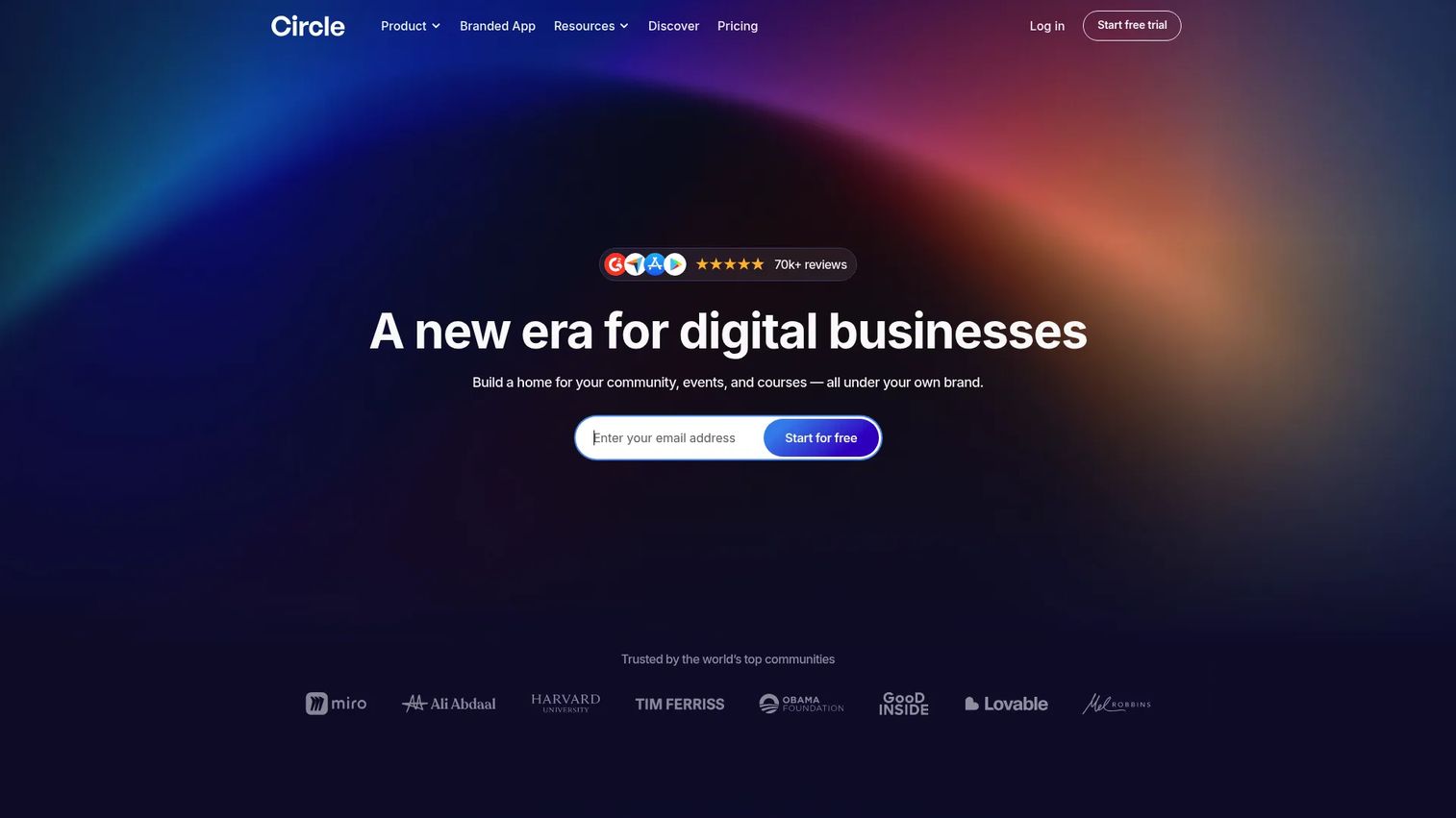
Circle is an all-in-one branded community platform for creators and businesses. It fuses community spaces and discussions with courses, events, chat, and live streams, plus workflows, APIs, and branded mobile apps. For teams that want one branded home where courses, ongoing discussion, and member engagement all live together, Circle is built around that fusion.
Best for: Teams building a branded online community with memberships, courses, and events.
Key strengths
- Community plus courses: Discussions, courses, events, and live streams share one branded space.
- Automation workflows: Workflows and APIs support cohort scheduling and repeatable setup as you scale.
- Branded mobile apps: A dedicated app keeps members engaged between live sessions, wherever they are.
Why choose Circle: Choose Circle when you want a persistent, branded community that hosts cohort programs rather than a course tool with a community bolted on. It works well when ongoing member engagement matters as much as the structured cohort itself, and the mobile apps help sustain participation between sessions. If your priority is deep assessment or marketplace reach, tools focused on those areas fit more precisely.
Circle pricing: Professional is $89/mo, Business is $199/mo, and Circle Plus is custom pricing. A 14-day free trial is available, though there is no permanent free tier. The transparent mid-tier pricing makes it straightforward to forecast as your community grows.
Considerations
Live session and scheduling support
Look at how the platform handles the mechanics of live learning: does it offer built-in video or integrate cleanly with your conferencing tool, and can it manage calendars, automated reminders, and attendance tracking? Weak scheduling is where cohort momentum leaks. If reps miss sessions because reminders never fired, the whole accountability model breaks. Verify that attendance data flows into your reporting, not just into a separate dashboard nobody checks.
Community and peer interaction
The peer layer is what separates a cohort from a scheduled video playlist. Check the discussion tools, member directories, and group spaces, and ask how the platform supports peer accountability specifically. Can learners see each other's progress? Can they give structured peer feedback? For enablement, peer visibility is often the difference between a rep finishing and quietly dropping off.
Automation and scalability
The real question is how many cohorts one person can run before the coordination collapses. Evaluate reusable cohort templates, automated reminder workflows, and multi-cohort management. If every new cohort means rebuilding the setup by hand, you will hit a ceiling fast. Automation is what turns a program from a one-off into a repeatable operation.
Measurement and reporting
You need numbers leadership will trust. Look for completion tracking, participation data, feedback loops, and reporting you can actually export and share. Tie these to enablement KPIs: ramp time by cohort, certification completion, and participation by segment. If the platform cannot show you who finished and who slipped, you cannot prove the program worked.
Pricing and total cost of ownership
Cohort platform pricing comes in several shapes: flat monthly tiers, seat-based, marketplace revenue share, and enterprise custom. Each affects long-term scalability differently. A flat tier is predictable but may cap features you need. Revenue share is low-risk to start but scales with success. Model the cost at the cohort volume you expect in a year, not the one you are running today, so you are not re-platforming after two quarters.
Conclusion
The right cohort-based learning platform depends on your dominant motion, not on a generic "best" label.
If you run a real training operation with many concurrent cohorts, Disco leads on AI-assisted operations and branded academies. If community and peer connection carry your program, Mighty Networks and Circle build for that first. If monetization is part of the goal, Kajabi consolidates courses, community, and checkout. For structured assessment and peer review, Teachfloor is purpose-built. For premium, instructor-led cohorts with marketplace reach, Maven fits. And for structured delivery without heavy operational overhead, Thinkific hits a practical middle ground.
Start with the platform that matches how you actually run programs. Map your top two criteria (usually live session support and accountability, plus either community depth or assessment), then trial the one or two tools that lead on both. Cohort learning wins on completion, and completion comes from picking a tool your team will actually operate consistently.
Start your journey with Guideflow today!
FAQs
It is software that runs group learning programs where learners start together on a set date, move through a shared schedule, attend live sessions, and interact with peers under built-in accountability. The core purpose is high completion, which self-paced formats struggle to achieve. Platforms typically bundle scheduling, community, and progress tracking in one place.
Self-paced learning lets people log in and progress whenever they want, which is flexible but easy to abandon. Cohort-based learning adds shared timing, live sessions, and peer accountability, which drives completion rates consistently above 90% versus 3–15% for self-paced (Disco, 2026). Use self-paced for reference material and cohorts for anything people need to actually learn and apply.
For structured corporate training and enablement at scale, Disco stands out because of its AI-assisted cohort operations, branded academies, and multi-cohort management. Teams that prioritize community can look at Mighty Networks or Circle, while those needing structured assessment often prefer Teachfloor. The best choice depends on whether your priority is operations, community, or evaluation.
Yes. Most platforms on this list support multi-cohort management, letting you run concurrent groups with separate schedules and rosters. The differentiator is automation: platforms with reusable cohort templates and automated reminder workflows let one person run several cohorts without the coordination collapsing. Check this capability directly if you plan to scale beyond a single group.
There is no universal number, but most effective cohorts run between 15 and 50 learners. Small enough that peer interaction stays personal and facilitators can track participation, large enough that discussion has energy and momentum. For onboarding, smaller cohorts (5 to 20) often work best because milestones and certification stay tightly coordinated.
Use the platform's real-time participation and completion data to spot slipping learners early, before they disappear. Automated reminders help, but a manager or facilitator nudge based on visible progress data is what actually re-engages people. Cohort formats make falling behind visible inside the group, which is part of why accountability is stronger than in self-paced programs.
Yes, when the platform blends synchronous and asynchronous learning. Pair scheduled live sessions (sometimes recorded or offered in two time slots) with asynchronous discussion and peer review, so learners in different regions contribute to the same threads. Platforms with strong community spaces and mobile apps make this sync-and-async blend workable for global teams.
Model total cost at the cohort volume you expect in a year, not the one you run today, and account for the pricing shape (flat tier, seat-based, revenue share, or enterprise custom). For ROI, tie the program to enablement outcomes like ramp time by cohort, certification completion, and win rate influence, since completion alone is a leading indicator, not the final result. A platform that lifts completion from 12% to 90% changes the math on every downstream metric.