

Revenue operations software unifies data, workflows, and intelligence across your sales, marketing, and customer success teams into a single platform. The goal is simple: create one source of truth that drives predictable revenue instead of three departments working from three different versions of reality.
By 2025, 75% of the highest-growth companies will have a dedicated RevOps function, according to Gartner. This guide covers 12 leading platforms across the core RevOps categories, along with selection criteria and the metrics that actually matter for measuring success.
What's inside
This guide covers what revenue operations software is, the main tool categories, and detailed reviews of 12 leading platforms. You'll also find key selection criteria and the metrics that matter for measuring success. The tools were evaluated based on integration capabilities, data unification features, forecasting accuracy, and buyer engagement functionalities.
TL;DR
RevOps software defined: Revenue operations platforms unify sales, marketing, and customer success data into a single source of truth to drive predictable revenue.
Top categories: The core RevOps stack includes CRMs, revenue intelligence, forecasting, sales enablement, and workflow automation tools.
Selection criteria: When choosing a tool, prioritize integration depth, data quality management, scalability, and a fast time to value.
Demo automation matters: Platforms like Guideflow are a key part of the modern RevOps stack, providing crucial buyer engagement signals that feed directly into your CRM.
Action: Jump to the comparison table for a quick reference of the top 12 platforms.
What is revenue operations software
Revenue operations (RevOps) software unifies data, workflows, and intelligence across marketing, sales, and customer success teams to create a single, cohesive revenue engine. The core concept is establishing a "single source of truth." By integrating disparate systems and standardizing data, RevOps platforms ensure every team works from the same information.
Unified data model: Creates a single customer record that is accessible and consistent across all teams.
Automated workflows: Connects different tools to eliminate manual handoffs and streamline processes like lead routing and data enrichment.
Real-time dashboards: Provides immediate visibility into pipeline health, forecasting, and other key performance indicators.
Sales intelligence: Analyzes customer interactions to predict deal outcomes and identify coaching opportunities.
Why revenue operations software matters
Companies adopt revenue operations software to solve critical business challenges that hinder growth. With the global RevOps market projected to reach $16.98 billion by 2033, the primary driver is the need to eliminate data silos, improve cross-team alignment, and create a consistent, high-quality customer journey from the first touchpoint to renewal.
Unified data across sales marketing and customer success
When sales, marketing, and customer success use separate systems, it creates fragmented data and blind spots in the customer journey. 68% of organizations cite data silos as their top concern. RevOps software solves this by creating one unified customer record that everyone uses. This eliminates the "shadow systems" problem, where teams maintain their own spreadsheets, leading to conflicting information.
Accurate forecasting and pipeline visibility
Without a unified platform, revenue leaders often rely on manual report pulling and weekly syncs to understand pipeline health. RevOps software provides real-time dashboards that give all stakeholders instant visibility into the pipeline. Teams can see deal progression, identify risks, and make data-driven decisions without waiting for manual updates.
RevOps data automation and operational efficiency
A significant amount of time in revenue teams is wasted on repetitive, manual tasks like data entry, lead assignment, and updating records between systems. RevOps software automates workflows, reducing administrative burden and freeing up teams to focus on high-value activities.
Buyer engagement signals beyond the CRM
A modern RevOps stack goes beyond traditional CRM data by capturing rich engagement signals from various buyer interactions. Tools for interactive demos, content engagement, and conversation analytics provide deep insights into buyer intent. For example, demo analytics can feed crucial intent signals back into the CRM, allowing revenue teams to tailor their follow-up and prioritize the most engaged leads.
Revenue operations tools by category
Revenue Operations is best understood as a tech stack, not a single, all-in-one tool. Different categories of software work together to solve specific challenges across the revenue process.
CRM and data management
Customer Relationship Management (CRM) systems like HubSpot and Salesforce are the foundational layer of any RevOps stack. A CRM is a central database that stores all customer and prospect information, interactions, and deal history. CRM platforms serve as the primary data repository that other RevOps tools connect to.
Revenue intelligence and conversation analytics
Revenue intelligence tools automatically record, transcribe, and analyze customer interactions, including calls, emails, and meetings. Conversation analytics uses AI to surface key topics, talk patterns, and deal risks from recorded interactions. This provides invaluable insights for sales coaching, deal inspection, and understanding the voice of the customer.
Sales forecasting and pipeline management
While CRMs offer basic forecasting, dedicated forecasting platforms provide more advanced capabilities. Forecasting tools use AI to predict revenue outcomes with greater accuracy, analyze pipeline health, and help revenue leaders identify and mitigate risks in their forecast.
Sales enablement and demo automation
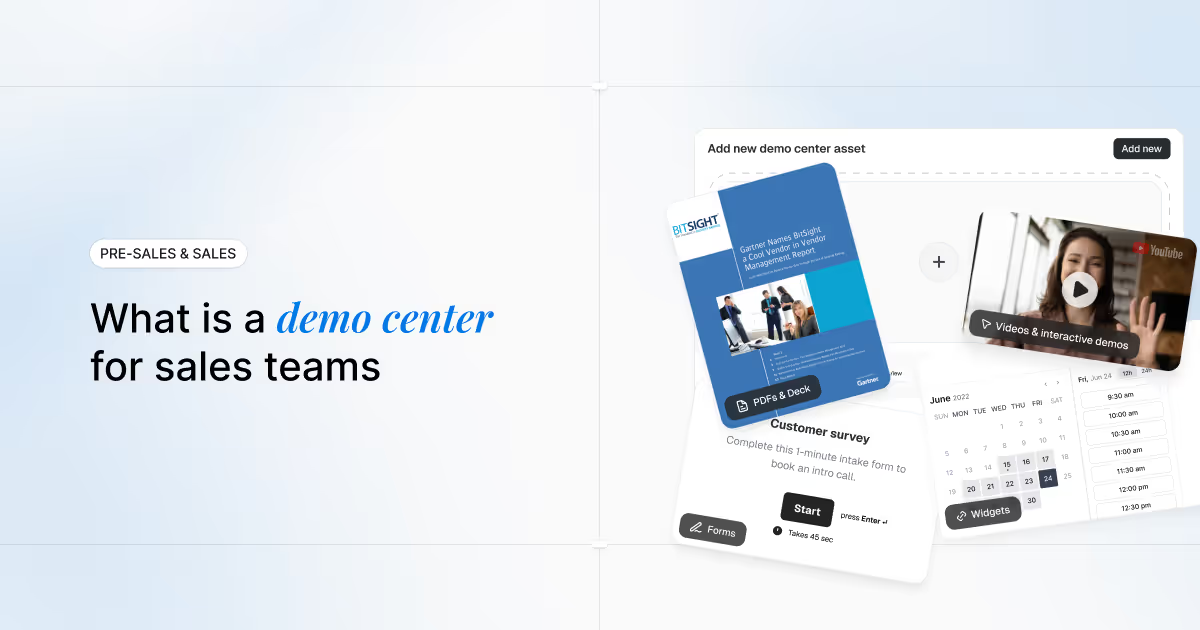
Sales enablement includes tools that help sales representatives deliver the right content and experiences to buyers at the right time. Demo automation is a key sub-category, where platforms allow teams to create and share interactive demos. Interactive demos not only improve the buyer experience but also capture valuable buyer intent data based on how prospects interact with the product.
Workflow orchestration and integration
Workflow orchestration platforms act as the connective tissue for the entire RevOps tech stack. Orchestration tools specialize in connecting different tools and automating the flow of data between systems. This ensures data consistency and allows for the creation of complex, cross-functional workflows without custom code.
Category |
Primary function |
Example use case |
|---|---|---|
CRM |
Central data repository |
Single customer record |
Revenue intelligence |
Interaction analysis |
Call coaching, deal insights |
Forecasting |
Prediction and visibility |
Pipeline health tracking |
Sales enablement |
Buyer engagement |
Demo delivery, content sharing |
Workflow automation |
Tool connection |
Data sync, lead routing |
Best revenue operations software platforms
The following 12 platforms represent the core categories of a modern RevOps stack. Our selection was based on integration capabilities, data unification features, and overall impact on streamlining revenue processes and driving growth.
1. Guideflow
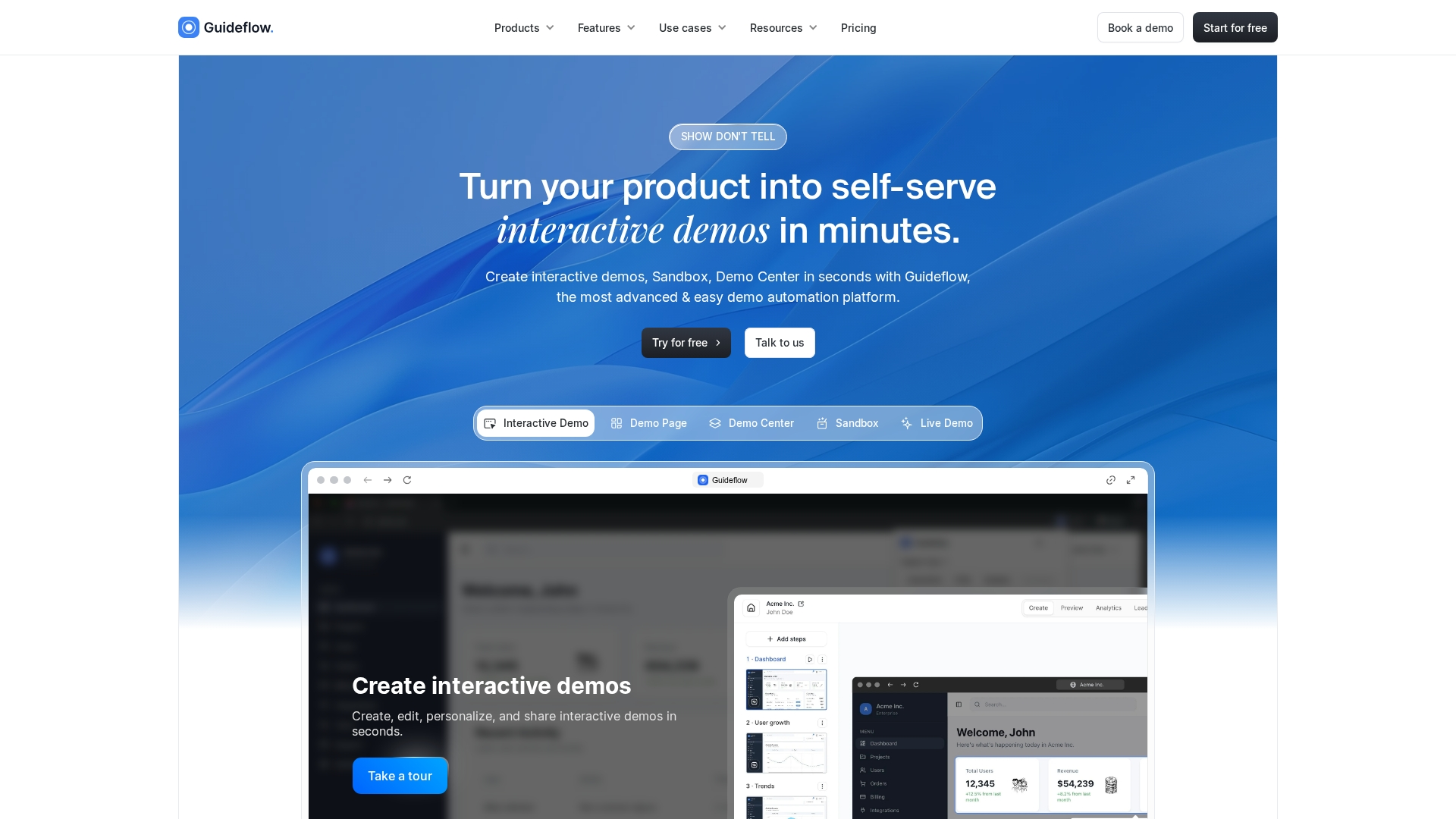
Guideflow is a demo automation platform that plays a crucial role in the modern RevOps stack by capturing deep buyer engagement and intent signals. It allows pre-sales and marketing teams to create and share personalized interactive demos that guide prospects through a product's key features.
As buyers engage with demos, Guideflow captures detailed analytics on what they click, view, and spend time on. This engagement data is then synced directly to the CRM, enriching lead and account records with powerful intent signals that sales teams can use to tailor their outreach and prioritize opportunities.
Key strengths
No-code demo creation: Build clickable, step-by-step product demos without engineering resources.
Deep personalization: Tailor demos by persona, account, or use case using dynamic variables from your CRM.
Robust analytics: Track impressions, completion rates, and feature-specific engagement to understand buyer intent.
CRM integration: Sync engagement data directly to platforms like HubSpot and Salesforce for lead scoring and prioritization.
Why choose Guideflow
Choose Guideflow to turn passive website visitors into qualified, sales-ready leads by giving them a hands-on product experience and feeding that engagement data back to your revenue team. Pricing is based on a tiered subscription model.
Start your journey with Guideflow today!
2. Gong
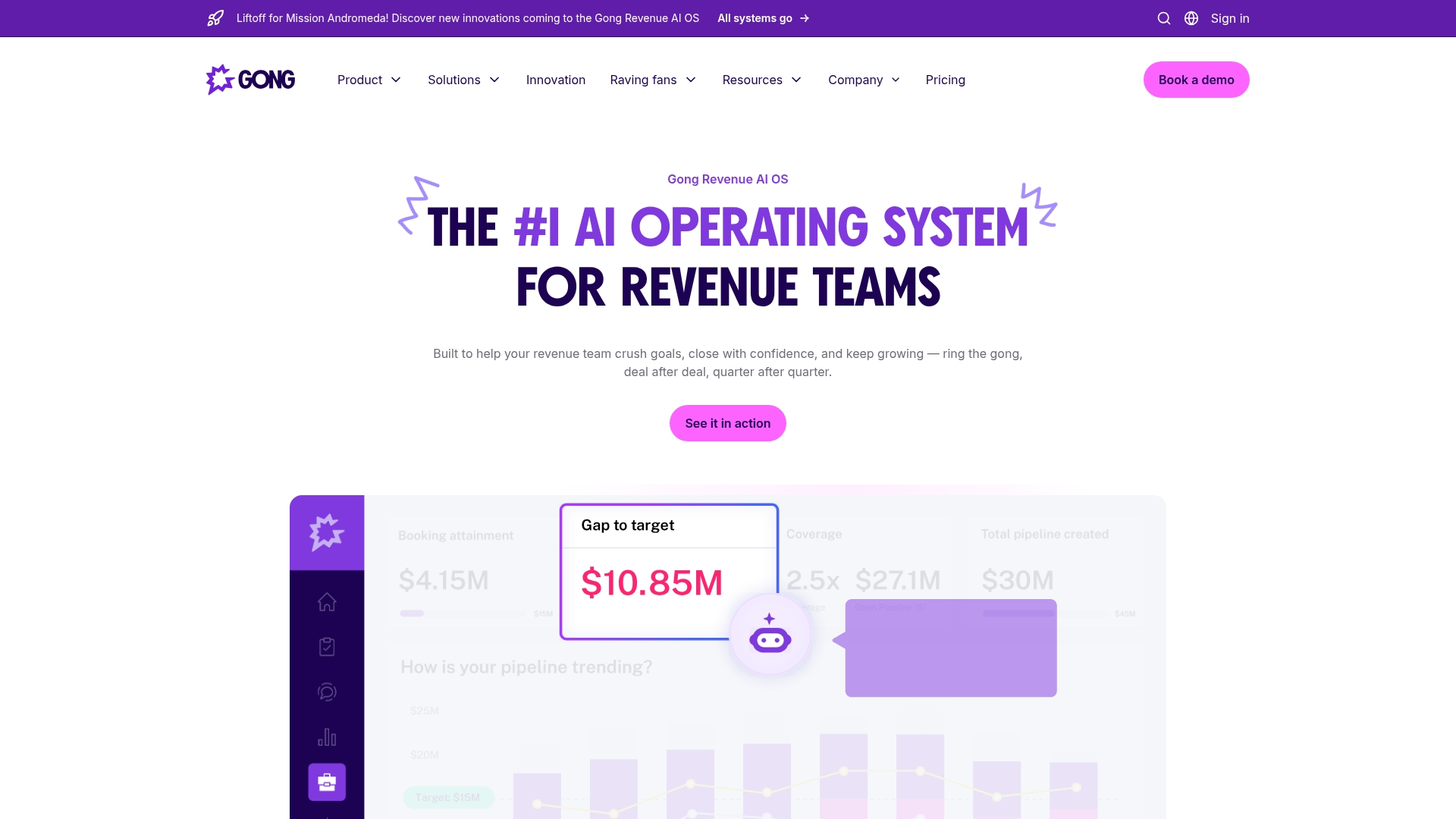
Gong is a leading revenue intelligence platform that focuses on conversation analytics to provide deep insights into customer-facing interactions. It automatically records, transcribes, and analyzes sales calls, meetings, and emails, using AI to identify key topics, action items, and talk patterns.
Key strengths
AI-powered conversation analysis: Automatically surfaces key moments, risks, and opportunities from every customer interaction.
Deal intelligence: Flags at-risk deals and provides visibility into what's happening across the pipeline.
Sales coaching: Identifies what top performers do differently so you can replicate winning behaviors across the team.
Why choose Gong
Gong is best for sales teams that want to unlock the reality of their customer conversations for better coaching, deal visibility, and forecasting. Pricing is typically per user, per year.
3. Clari
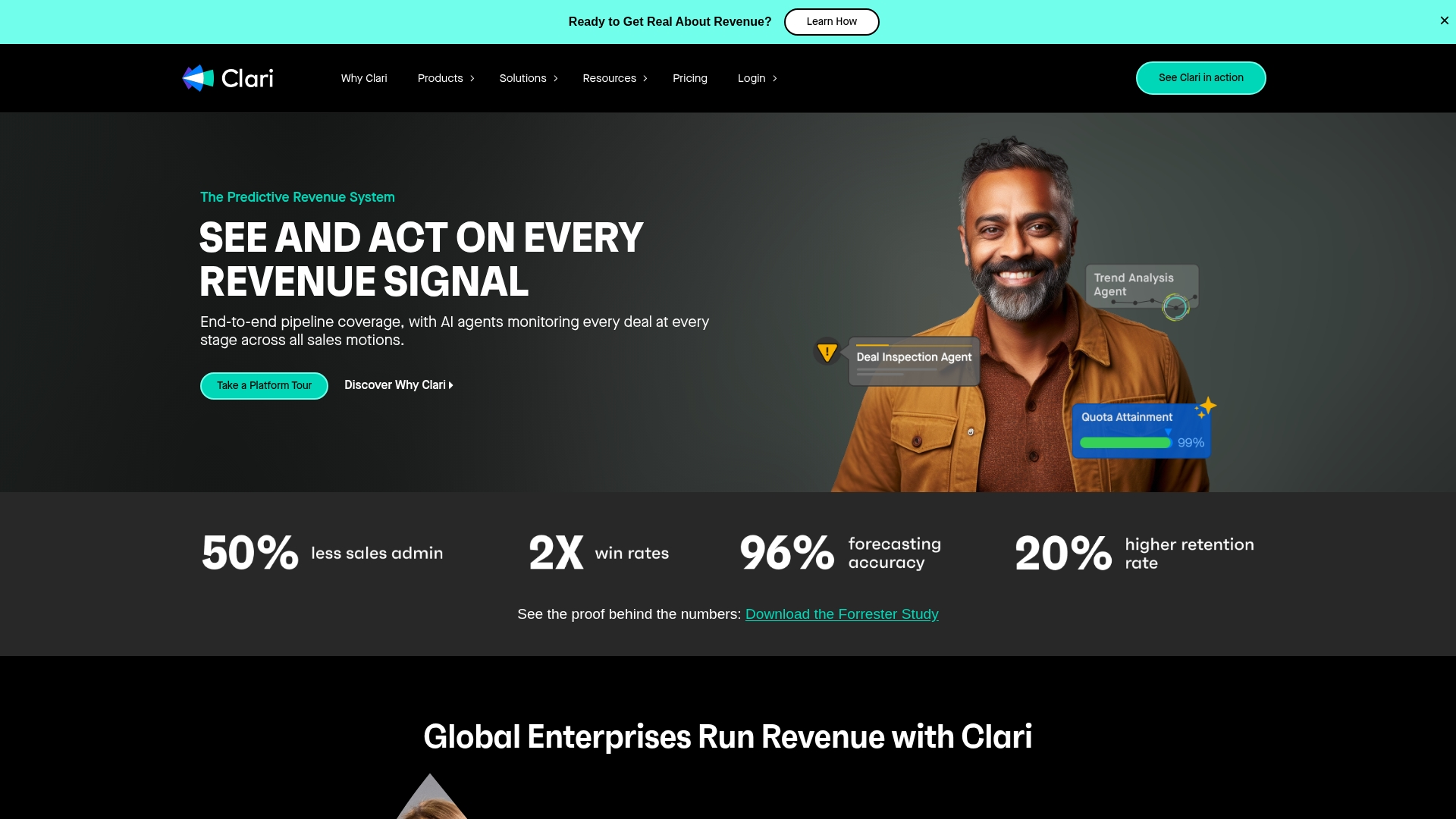 Clari is a purpose-built revenue platform designed for high-performance forecasting and pipeline management. It connects to your CRM and other revenue signals to provide a complete and accurate view of your business.
Key strengths
AI-driven forecasting: Generates data-driven predictions to reduce revenue slippage and improve forecast accuracy.
Pipeline inspection: Allows managers to see the health of any deal in real-time and identify bottlenecks.
Mutual action plans: Tracks progress against key milestones to keep deals on track.
Why choose Clari
Clari is best for RevOps teams and sales leaders who want to improve forecast accuracy and run their revenue process with more predictability and control. Pricing is per user, per year.
4. HubSpot Operations Hub
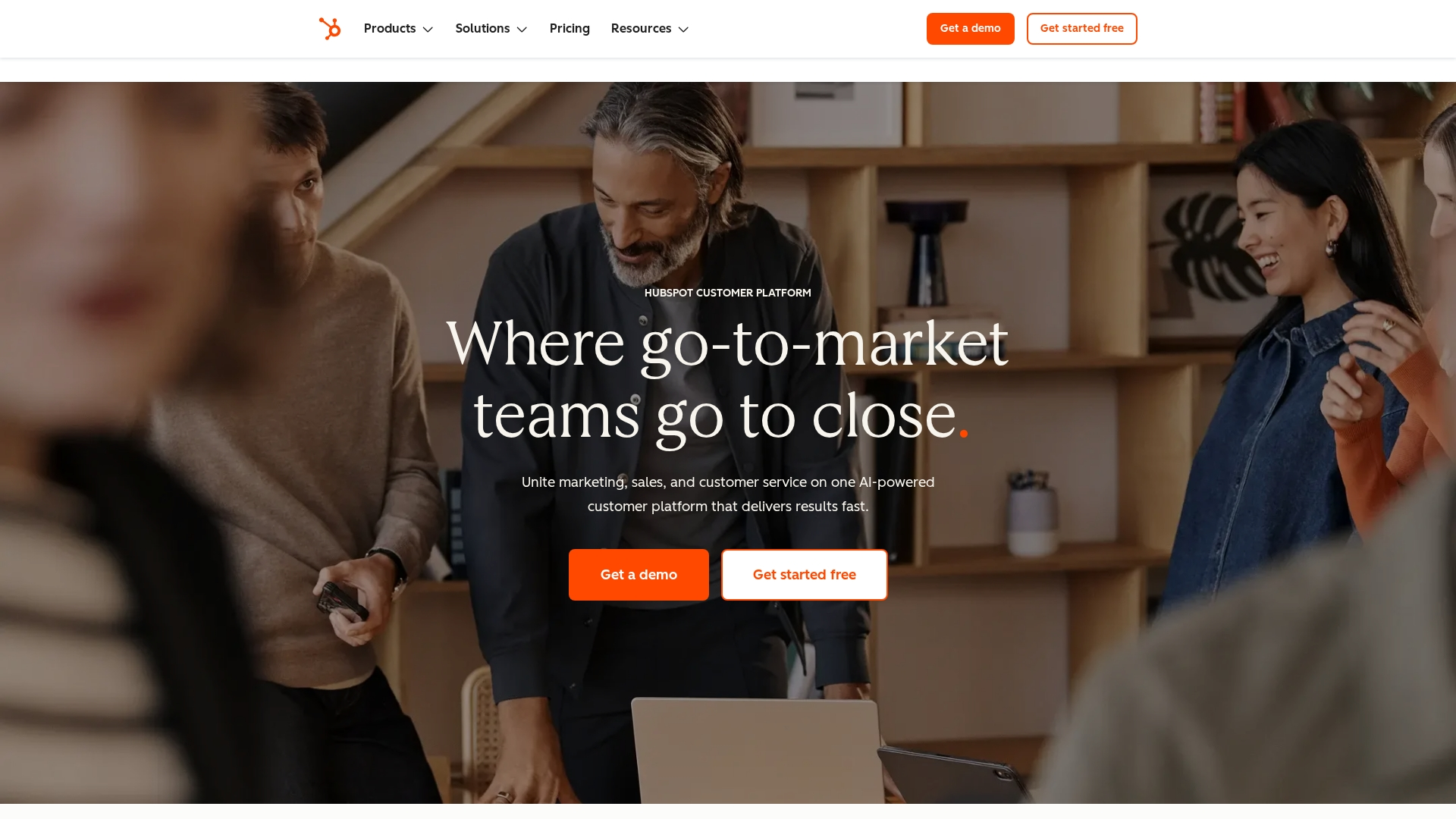 HubSpot Operations Hub is an all-in-one platform designed to connect and clean data across marketing, sales, and service departments. It's built to be the central nervous system for a company's RevOps strategy, especially for companies already using the HubSpot ecosystem.
Key strengths
Robust data sync: Connects hundreds of apps to keep customer data consistent across your entire stack.
Data quality automation: Automatically cleans and formats customer data to maintain CRM hygiene.
Programmable automation: Allows for custom-coded workflows to solve complex business process challenges.
Why choose HubSpot Operations Hub
HubSpot Operations Hub is best for companies that want a unified RevOps solution within a single system, eliminating the need for multiple point solutions. Pricing is based on a tiered subscription model.
5. Salesforce Revenue Cloud
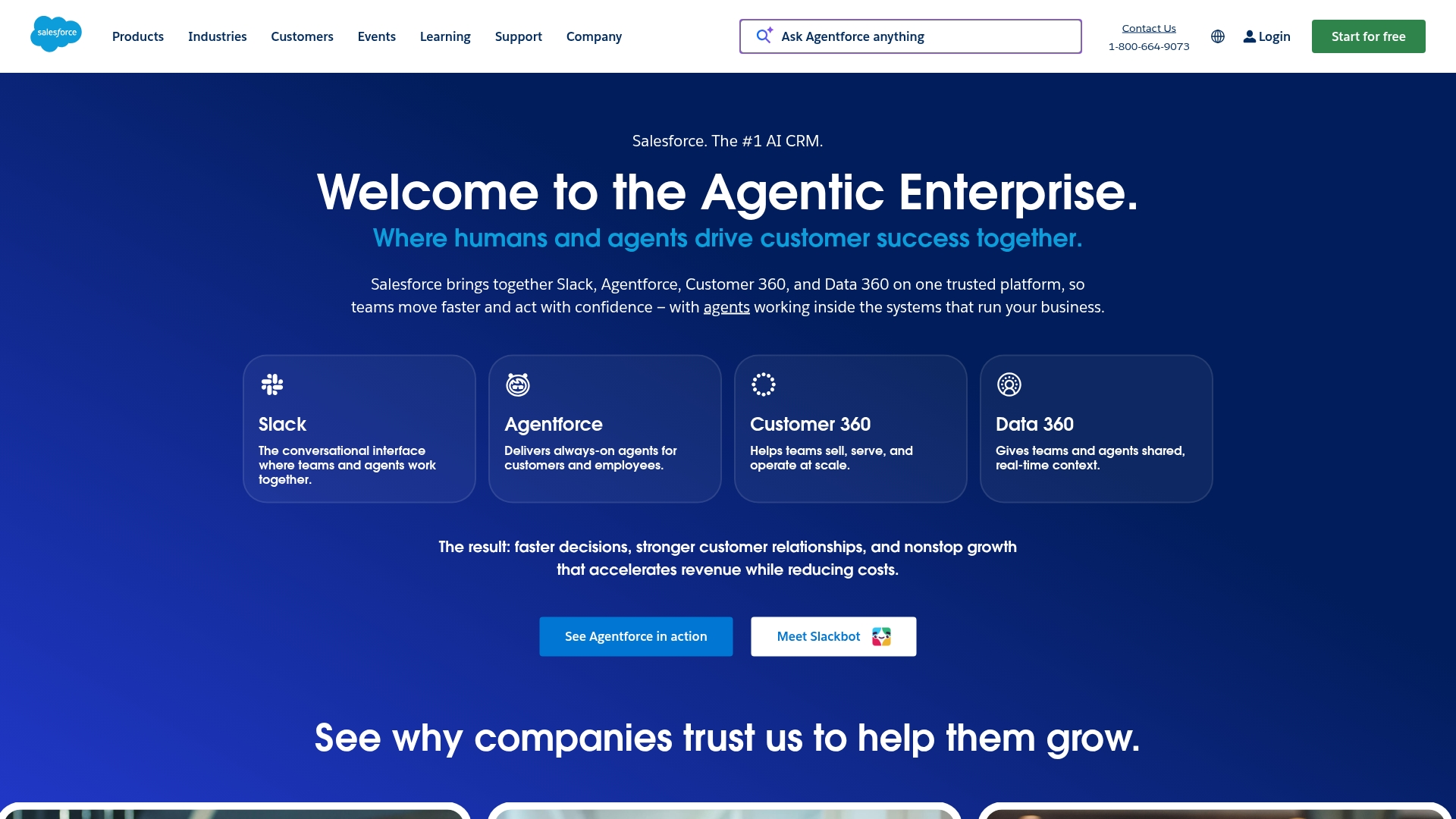 Salesforce Revenue Cloud is an enterprise-grade solution that combines CPQ (Configure, Price, Quote) and billing capabilities to manage the entire revenue lifecycle on the Salesforce platform.
Key strengths
Quoting and pricing automation: Streamlines complex product configurations and pricing rules.
Contract lifecycle management: Manages contracts from creation through renewal.
Subscription billing: Handles complex billing scenarios for recurring revenue businesses.
Why choose Salesforce Revenue Cloud
Salesforce Revenue Cloud is best for large organizations with complex product catalogs, multi-channel sales, and sophisticated billing requirements. Pricing is per user, per month.
6. Outreach
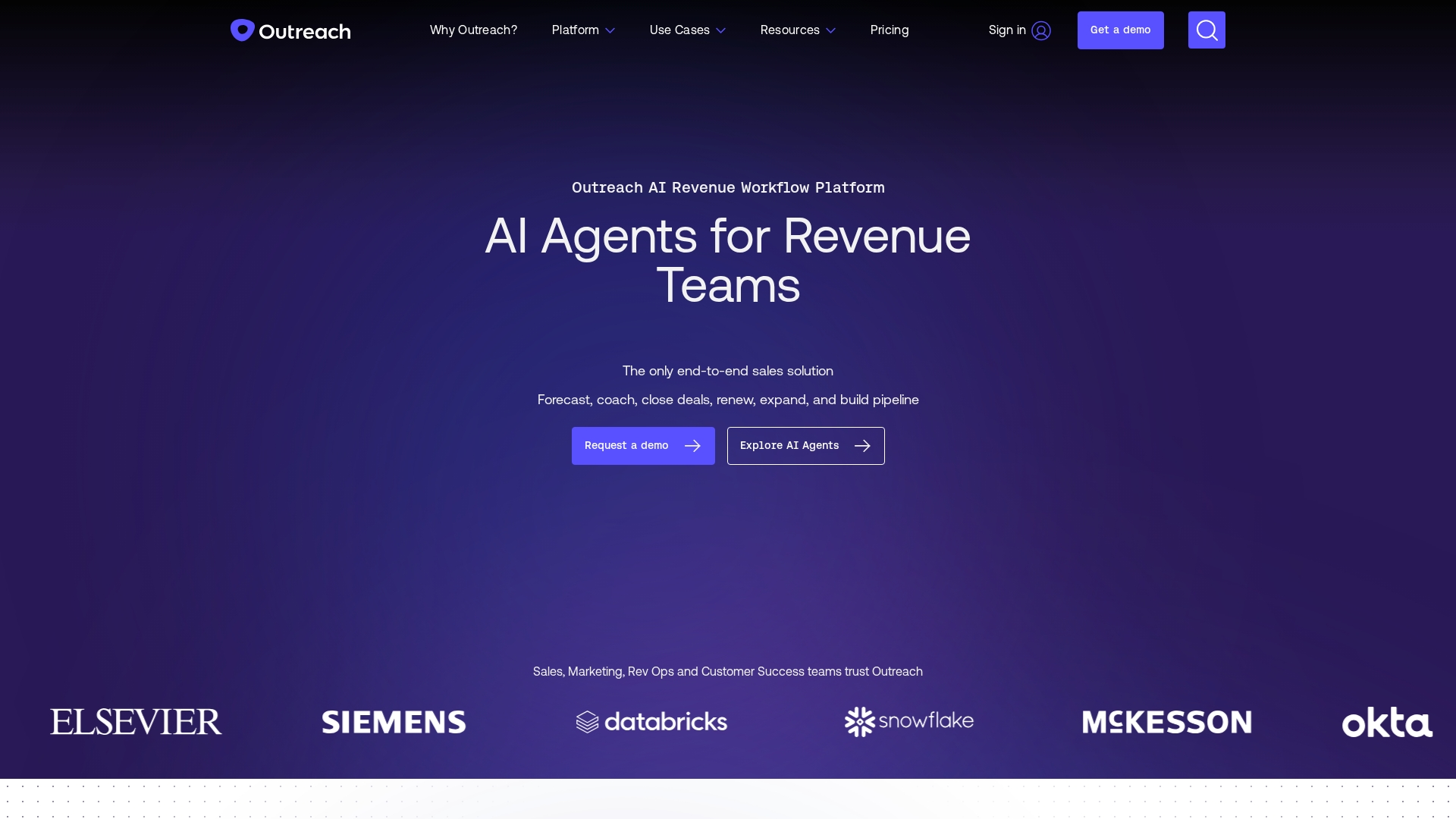 Outreach is a leading sales engagement platform that helps revenue teams automate and optimize their outbound and inbound communication sequences. It empowers SDRs and AEs to run effective outbound motions by managing multi-channel touchpoints across email, phone, and social media.
Key strengths
Multi-channel sequences: Automate personalized outreach across email, phone, and social.
AI-driven recommendations: Get suggestions for next best actions to move deals forward.
Deep CRM integration: Ensures all activity is logged and tracked in Salesforce.
Why choose Outreach
Outreach is best for SDR and AE teams focused on generating pipeline through systematic and personalized outreach. Pricing is per user, per year.
7. Salesloft
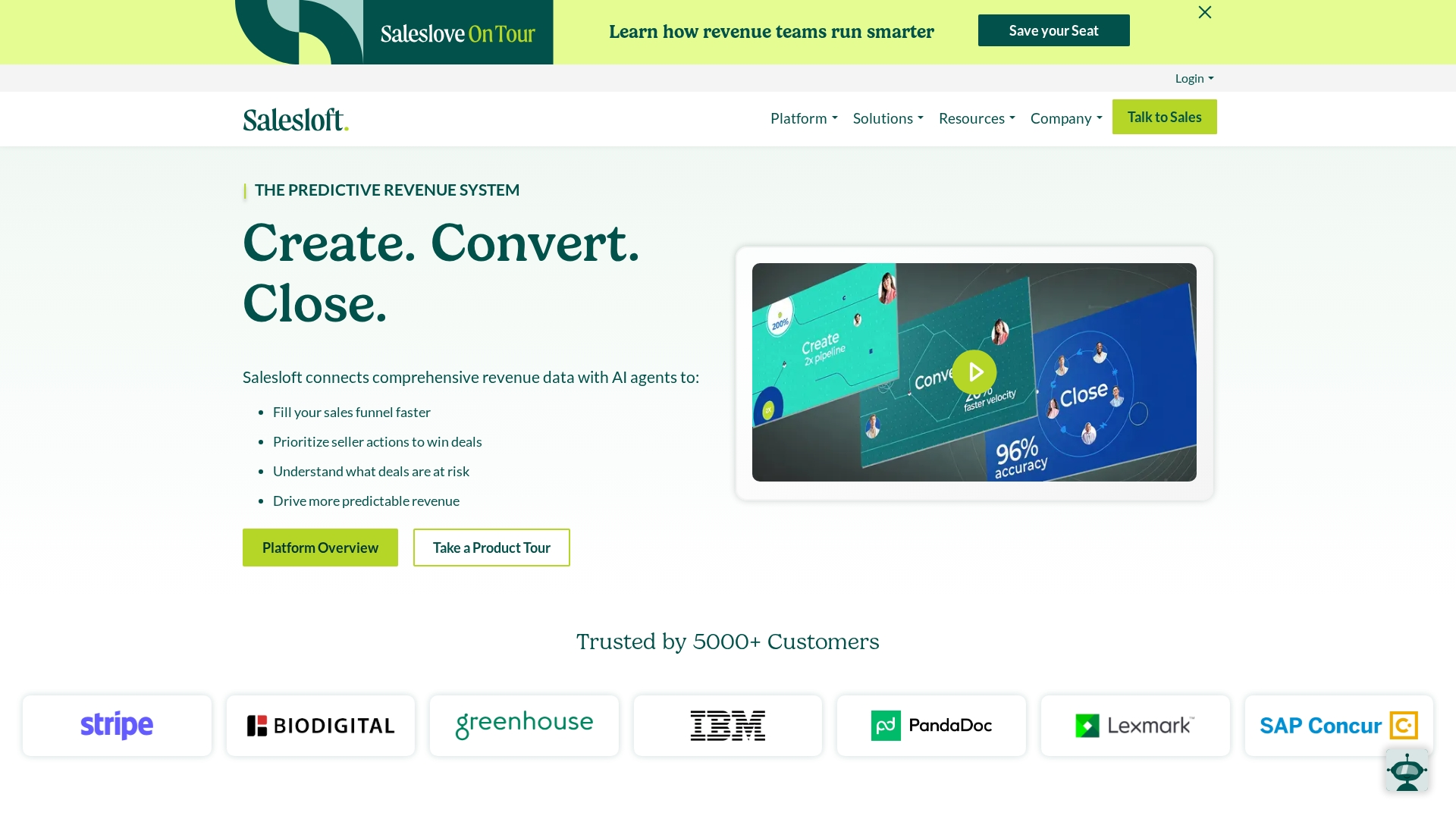 Salesloft is a comprehensive revenue workflow platform that combines sales engagement, conversation intelligence, and forecast management into a single solution.
Key strengths
Unified platform: Combines cadences, call analysis, and forecasting in one place.
Conversation intelligence: Analyzes calls for coaching and deal visibility.
Forecasting module: Provides visibility into pipeline health and deal progression.
Why choose Salesloft
Salesloft is best for teams that want a unified platform for both sales engagement and revenue operations functions like forecasting. Pricing is per user, per year.
8. Chorus
 Chorus, part of ZoomInfo, is a conversation intelligence platform that analyzes sales calls, meetings, and emails to provide insights for rep coaching and deal visibility.
Key strengths
Call recording and transcription: Automatically captures and transcribes all customer interactions.
AI-powered insights: Highlights key moments, tracks competitor mentions, and identifies deal risks.
Deal analytics: Links conversation data directly to CRM outcomes.
Why choose Chorus
Chorus is best for teams that are highly focused on improving rep performance through data-driven coaching. Pricing is per user, per year.
9. InsightSquared
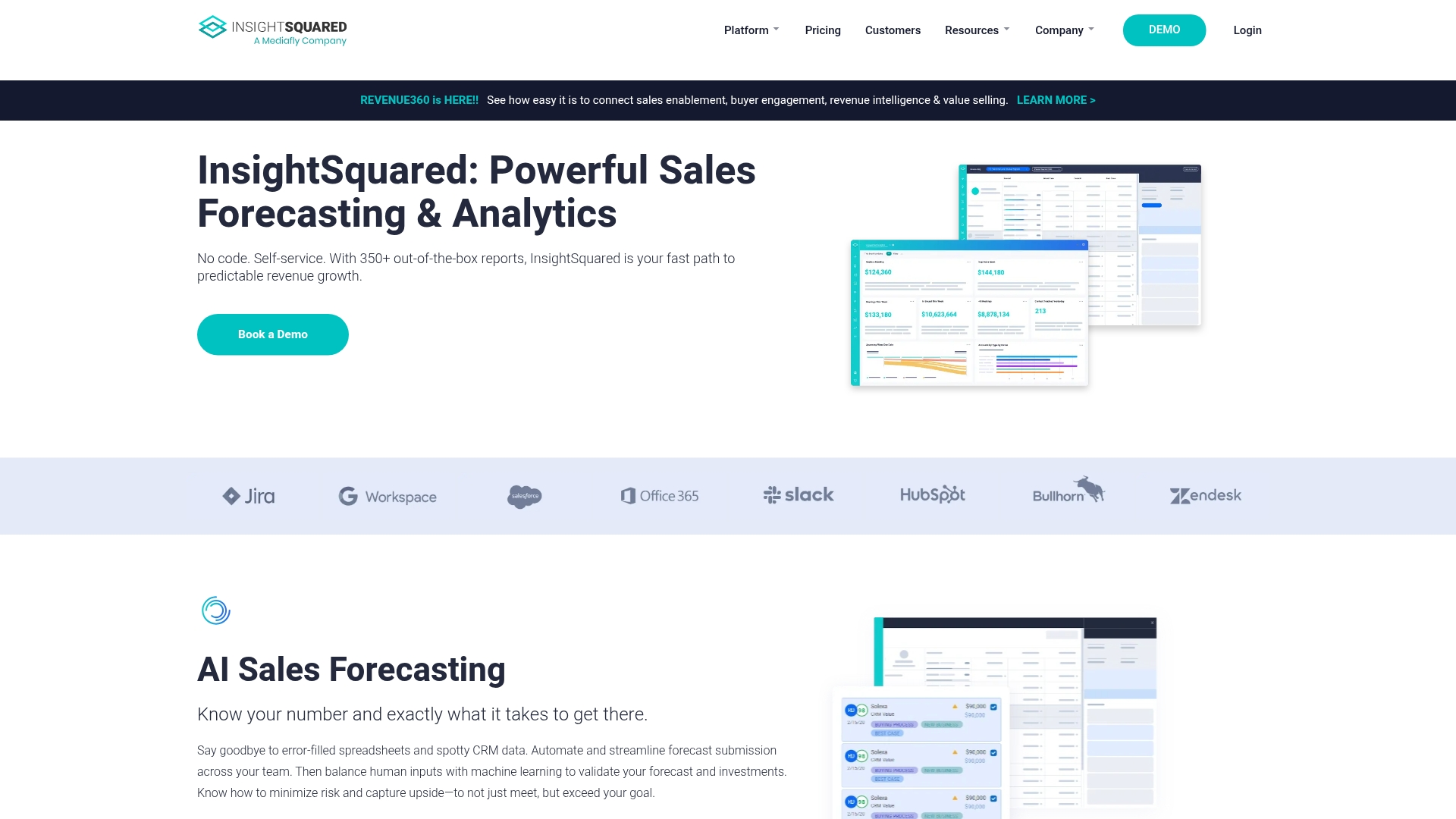 InsightSquared is a sales analytics and performance management platform that provides deep visibility into revenue operations.
Key strengths
Pipeline analytics: Build custom dashboards to track pipeline health and deal progression.
Activity capture: Automatically logs activity from email and calendar.
Advanced forecasting: Helps leaders inspect their pipeline and call their number with confidence.
Why choose InsightSquared
InsightSquared is best for RevOps teams and sales leaders who want to build custom dashboards and conduct in-depth analysis without relying on spreadsheets. Pricing is custom.
10. Clearbit
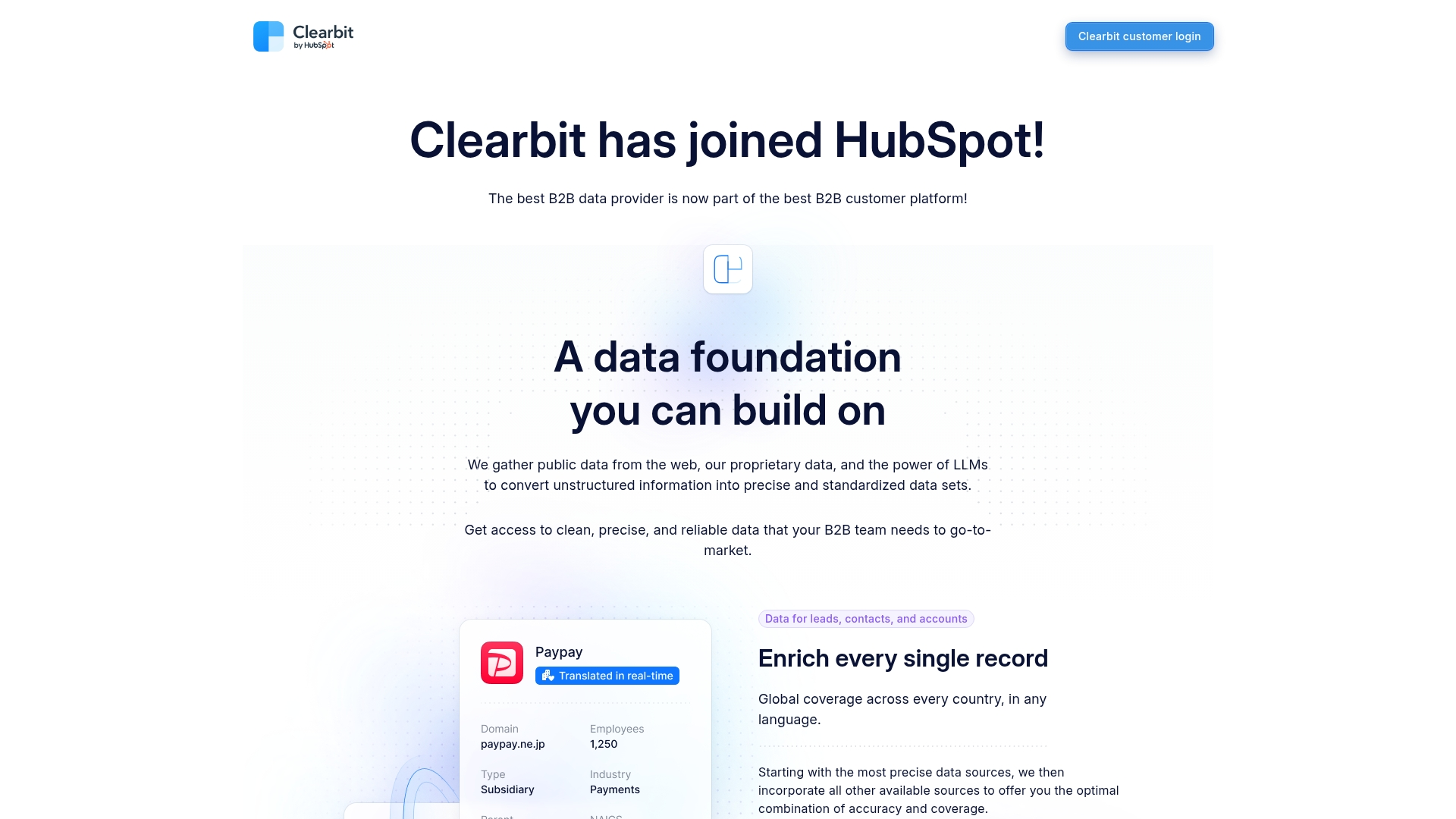 Clearbit is a data enrichment and intelligence platform that provides accurate and up-to-date information on accounts and contacts.
Key strengths
Data enrichment: Automatically adds over 100 data points to contact and account records.
Website de-anonymization: Identifies companies visiting your website.
Intent signals: Surfaces buying behavior to help prioritize outreach.
Why choose Clearbit
Clearbit is best for teams that want to improve data quality, shorten lead forms, and gain a deeper understanding of their target accounts. Pricing is usage-based.
11. LeanData
 LeanData is a specialized lead routing and matching platform built to handle complex go-to-market motions within Salesforce.
Key strengths
Lead-to-account matching: Accurately matches leads to the correct accounts.
Drag-and-drop routing: Build sophisticated routing rules without code.
Marketing attribution: Understand the impact of campaigns on revenue.
Why choose LeanData
LeanData is best for RevOps teams at companies with complex routing rules based on territory, account ownership, or other custom logic. Pricing is based on a tiered subscription model.
12. Openprise
Openprise is a no-code RevOps data automation platform designed to help teams clean, orchestrate, and unify their go-to-market data.
Key strengths
Data cleansing and deduplication: Automatically cleans and standardizes data across systems.
Lead routing: Build complex routing logic without engineering resources.
Data orchestration: Manages the flow of data across the entire tech stack.
Why choose Openprise
Openprise is best for teams that want to automate data hygiene, orchestrate data flows between systems, and build a solid data foundation for their RevOps strategy. Pricing is custom.
Revenue operations platform comparison
This table provides a high-level comparison of the 12 platforms reviewed. It is designed to help you quickly assess which tools might be the best fit for your specific needs.
# |
Product |
Intent |
Key differentiation |
Pricing |
G2 rating |
|---|---|---|---|---|---|
1 |
Guideflow |
Buyer Engagement |
Interactive demos with deep engagement analytics |
Tiered Subscription |
4.8/5 |
2 |
Gong |
Conversation Intelligence |
AI-driven analysis of all customer interactions |
Per User/Year |
4.7/5 |
3 |
Clari |
Forecasting |
AI-powered revenue prediction and deal inspection |
Per User/Year |
4.7/5 |
4 |
HubSpot Operations Hub |
Data Automation |
Native integration within the HubSpot ecosystem |
Tiered Subscription |
4.6/5 |
5 |
Salesforce Revenue Cloud |
CPQ and Billing |
Enterprise-grade quote-to-cash on Salesforce |
Per User/Month |
4.2/5 |
6 |
Outreach |
Sales Engagement |
Outbound sequence automation and analytics |
Per User/Year |
4.3/5 |
7 |
Salesloft |
Sales Engagement |
All-in-one platform for cadences and forecasting |
Per User/Year |
4.5/5 |
8 |
Chorus |
Conversation Intelligence |
Focus on rep coaching and deal visibility |
Per User/Year |
4.5/5 |
9 |
InsightSquared |
Sales Analytics |
Customizable dashboards and deep pipeline analysis |
Custom |
4.3/5 |
10 |
Clearbit |
Data Enrichment |
Real-time data enrichment and de-anonymization |
Usage-based |
4.4/5 |
11 |
LeanData |
Lead Routing |
Advanced, no-code routing for complex GTM motions |
Tiered Subscription |
4.4/5 |
12 |
Openprise |
Data Automation |
No-code platform for data cleansing and orchestration |
Custom |
4.6/5 |
How to choose the best revenue operations software
The selection process for RevOps software depends on your company's specific pain points, growth stage, and existing tech stack. Instead of chasing the tool with the most features, focus on finding the solution that best addresses your most critical revenue bottlenecks.
Evaluate integration with your tech stack
The most important factor is how well a new tool integrates with your existing systems, especially your CRM, marketing automation platform, and communication tools. Check for deep, native integrations that support bidirectional data flow. If native integrations are limited, ensure the platform has a robust API.
Prioritize data quality and CRM hygiene
Your RevOps strategy is only as good as the data it runs on. According to Gartner, poor data quality costs organizations $12.9 million per year on average. Look for tools that have built-in features to automatically clean, enrich, and deduplicate data. A platform that contributes to data chaos will undermine every other RevOps investment you make.
Assess scalability for your growth stage
The right tool for a startup may not be the right tool for an enterprise. Entry-level tools may lack the security, customization, and advanced features needed to operate at enterprise scale. Evaluate tools based on your current needs and your projected growth over the next 18-24 months.
Check security and compliance requirements
For mid-market and enterprise buyers, security and compliance are non-negotiable. Verify that the platform meets your company's security standards, such as SOC 2 Type II certification. Additionally, ensure it complies with data privacy regulations like GDPR and CCPA.
Calculate time to value and total cost
The sticker price is only one part of the equation. Consider the total cost of ownership, which includes implementation time, training needs, and ongoing maintenance. A platform that can be implemented quickly and demonstrate value in weeks often provides a better ROI than a more feature-rich solution that takes six months to get running.
RevOps vs sales operations
While often used interchangeably, RevOps and sales operations have distinct scopes.
Sales operations: Focused on sales team processes, territory planning, quota setting, and compensation plans.
Revenue operations: Spans marketing, sales, and customer success with a mandate to create a unified data model, align cross-functional processes, and manage the entire revenue tech stack.
Revenue operations metrics to track
Measuring the success of your RevOps initiatives is crucial for demonstrating ROI and justifying tool investments. The right metrics provide a clear picture of how well your people, processes, and technology are aligned.
Customer acquisition cost and lifetime value
Customer Acquisition Cost (CAC) is the total cost of sales and marketing to acquire a new customer. Lifetime Value (LTV) is the total revenue a business can expect from a single customer account. The LTV:CAC ratio is a critical measure of revenue efficiency; a healthy ratio (typically 3:1 or higher) indicates a sustainable growth model.
Sales cycle length and win rate
Sales cycle length measures the average time it takes to close a deal. Win rate is the percentage of opportunities that are won. Improvements in both metrics are strong indicators that RevOps alignment is successfully removing friction from the buying process.
Pipeline conversion and forecast accuracy
Track the conversion rates between each stage of your sales pipeline to identify bottlenecks. Alongside this, measure forecast accuracy by comparing what your team predicted it would close versus what it actually closed. Increasing accuracy is a direct reflection of better data quality and pipeline visibility.
Demo engagement and buyer intent signals
Modern RevOps teams capture granular data on how prospects interact with key assets like demos and content. Tracking metrics like demo completion rates and feature-specific engagement time provides powerful buyer intent signals. This data feeds directly into lead scoring and prioritization models, helping sales focus on the most engaged buyers.
RevOps tech stack examples by company size
The ideal RevOps tech stack varies significantly based on a company's size, complexity, and budget.
Startup and early stage
At this stage, the stack is lean and focused on establishing a solid CRM foundation plus one or two point solutions. The priority is speed, simplicity, and low cost.
CRM: HubSpot (free or starter tier)
Engagement: Outreach or Salesloft for basic sequencing
Demos: Guideflow for creating interactive demos and tracking buyer engagement
SMB and mid market
As the company grows, the tech stack expands to include dedicated forecasting and intelligence tools. Integration between systems becomes more critical.
CRM: Salesforce Sales Cloud or HubSpot Professional
Revenue Intelligence: Gong or Chorus
Forecasting: Clari
Data Enrichment: Clearbit
Demo Automation: Guideflow
Enterprise
At the enterprise level, the stack becomes a full RevOps infrastructure with specialized, best-in-class tools for each function. A dedicated data orchestration layer is essential.
CRM: Salesforce Unlimited Edition
Data Orchestration: Openprise or LeanData
Revenue Intelligence: Gong
Forecasting: Clari
Sales Engagement: Outreach or Salesloft
Demo Automation: Guideflow
CPQ and Billing: Salesforce Revenue Cloud
Optimize your revenue operations processes today
The right revenue operations software is essential for breaking down departmental silos, improving forecast accuracy, and creating a scalable revenue engine. The key is to move beyond a fragmented collection of tools and build an integrated stack that provides a single source of truth across the entire customer lifecycle.
Start by identifying your most critical revenue bottlenecks and evaluate tools against specific use cases. By focusing on integration, data quality, and time-to-value, you can build a tech stack that empowers your teams and drives predictable growth.
Start your journey with Guideflow today!
FAQs about revenue operations software
Q: What is the difference between RevOps software and revenue management software?
A: RevOps software aligns sales, marketing, and customer success teams around shared data and processes. Revenue management software typically focuses on pricing, billing, and financial revenue recognition. While there is some overlap, RevOps is primarily an operational and strategic function, whereas revenue management is more financial.
Q: How long does revenue operations software implementation typically take?
A: Implementation timelines range from a few days for simple point solutions to several months for complex, enterprise-wide platforms. The duration depends on data complexity, the number of integrations, and internal resource availability. Starting with a focused use case can help you demonstrate value quickly before expanding.
Q: Can small businesses benefit from revenue operations platforms?
A: Yes, small businesses can benefit greatly by starting with lightweight RevOps tools. Platforms like HubSpot Operations Hub or focused point solutions for data quality or engagement can establish good habits early. This provides a foundation to build upon as the business grows.
Q: What role do interactive demos play in a revenue operations stack?
A: Interactive demos are a critical source of buyer intent data. They capture deep engagement signals, like which features a prospect explores, that feed directly into the CRM and lead scoring models. This gives RevOps teams early visibility into prospect interest and helps sales prioritize the most qualified leads.
Q: How do revenue operations teams calculate ROI from RevOps tools?
A: Teams typically measure ROI by tracking improvements in key business metrics. Common indicators include increases in forecast accuracy, reductions in sales cycle length, higher win rates, and significant time saved on manual data entry and administrative tasks.
Q: Do companies need to replace their CRM to adopt revenue operations software?
A: No, in most cases, you do not need to replace your CRM. The vast majority of RevOps tools are designed to integrate with and enhance existing CRMs like Salesforce and HubSpot. They add new capabilities without requiring a disruptive platform replacement.



.avif)
.avif)