Organic traffic dropped, but your priority pages barely moved. Before the next pipeline review, you need to explain what changed.
A position report alone leaves questions unanswered. An AI answer may occupy more screen space. A competitor may have gained a prominent search feature. Your national average may hide a decline in the market that generates qualified leads.
The best rank tracker helps you investigate those differences without adding another underused subscription to your stack.
iPullRank’s 2026 research found that 46.96% of Google searches ended without a click. That makes visibility broader than a numbered position.
For growth marketers, the buying decision comes down to useful evidence. Can you separate ranking movement from search layout changes? Will the report help you prioritize a content refresh or explain declining acquisition?
The best SEO rank tracker should support those decisions while fitting your existing reporting workflow. Otherwise, you gain another dashboard and still spend Friday rebuilding the explanation in a spreadsheet.
What’s inside
This guide compares 15 rank tracker tools for marketers evaluating their SEO stack, including Google Search Console as a free performance baseline.
The selection focuses on four buying criteria:
- Tracking coverage: Keyword positions, locations, devices, and supported search surfaces
- Operational fit: Update cadence, reporting workflows, and the effort required to turn data into decisions
- Visibility depth: Competitor analysis and coverage beyond traditional organic links
- Commercial fit: Subscription pricing, billing commitments, and capacity considerations
Product details and pricing draw on vendor research dated November 24, 2026. Ratings use the supplied G2 sources where available. Recommendations reflect documented capabilities rather than a comparative accuracy test.
TL;DR
- Best overall for SEO consolidation: Semrush fits teams combining position tracking with competitive research and broader marketing analysis.
- Best for research-led SEO: Ahrefs suits marketers who investigate rankings alongside backlinks and content opportunities.
- Best agency shortlist: SE Ranking combines SEO operations with client workflows; Advanced Web Ranking emphasizes reporting and tracking scale.
- Best dedicated tracking shortlist: AccuRanker offers daily and on-demand updates. Nozzle suits deeper analysis of the entire results page.
- Best for local SEO: BrightLocal focuses on geographic visibility and related local marketing operations.
- Best free baseline: Google Search Console costs nothing. For AI search visibility tracking, compare supported surfaces separately from traditional keyword coverage.
What is rank tracking software?
Rank tracking software monitors where a website appears for target keywords across search engines, locations, devices, and search result features over time.
A rank tracking tool creates a repeatable view of search visibility. You select the terms and market conditions that matter, then compare changes against previous observations.
Modern SERP tracking software also examines the results surrounding your listing. Featured snippets, maps, video results, and People Also Ask can change the opportunity to attract a click.
Core capabilities to evaluate
- Keyword position tracking: Historical movement for selected queries and landing pages
- Location and device coverage: Separate observations for relevant markets and screen types
- Competitor visibility: Comparisons against businesses competing for the same searches
- SERP feature tracking: Monitoring beyond traditional organic listings
- Reporting and access: Scheduled delivery, exports, dashboards, and available integrations
Mobile rank tracking deserves separate attention because a desktop report does not describe every buyer’s search experience. Local campaigns also need geographic detail beyond a national average.
Share of voice tracking summarizes visibility across a keyword set. Treat it as a comparative indicator, then inspect the commercially important terms underneath.
Keep the category boundaries clear. An SEO suite bundles rank tracking with research or auditing. A dedicated search engine ranking tracker concentrates on monitoring and reporting.
Google Search Console provides first-party performance data from Google. Its average position reflects observed search activity rather than a controlled check of your chosen keyword list.
A SERP API supplies data for custom applications. Choose that route when someone can own the collection process and reporting logic.
AI search visibility tracking is another measurement layer. Google AI Overviews tracking concerns a search result feature; monitoring citations in ChatGPT or Perplexity concerns generated answers.
Gemini and Copilot are also surfaces to evaluate, not interchangeable ranking databases. Ask which platforms a vendor supports and what its visibility metric measures.
Finally, rankings are diagnostic data. Connect them with landing-page traffic and conversion outcomes before treating improved visibility as evidence of pipeline growth.
When to use a rank tracker
Monitor rankings after important changes
Use keyword monitoring around site migrations, content refreshes, algorithm updates, and competitor launches. Establish a baseline before making changes, then compare affected pages against unaffected groups.
Record deployment dates alongside your observations. That makes a ranking investigation more useful than a screenshot showing that traffic declined sometime last month.
Prove SEO impact to stakeholders
Bring ranking evidence into reporting when leadership asks why organic acquisition changed. Segment commercial pages separately from informational content and branded searches.
Connect those movements with qualified leads or purchases from the relevant landing pages. Rankings help explain performance; attribution data establishes the business outcome.
Keep the action visible in your report. A recommendation to refresh a product comparison page is more useful than an unexplained visibility score.
Watch competitors and search layouts
Competitor rank tracking helps identify where another business is gaining attention across priority topics. Inspect the surrounding SERP before assuming every lost click came from a lower organic position.
For location-sensitive campaigns, use local rank tracking to investigate geographic differences. Compare mobile results separately where those visitors matter to acquisition.
AI answers deserve their own observation process. Track citations and brand presence without treating them as equivalent to an organic position.
Rank tracker tools comparison
The best rank tracking software depends on what you already own. A broad suite can consolidate research work; a specialist can deepen monitoring without replacing existing tools.
Compare rank tracker pricing using the same workload. Include your required markets and update schedule, then account for reporting access.
The table distinguishes monthly subscriptions from annual commitments. EUR prices remain in their original currency rather than using an assumed exchange rate.
Entry prices do not establish equivalent keyword allowances. For example, an inexpensive platform entry plan may not provide the tracking capacity your reporting requires.
“N/A” means a current headline G2 rating was unavailable in the supplied research. It does not indicate product quality. ProRankTracker’s vendor-reported rating is omitted because direct G2 confirmation was unavailable.
| # | Product | Best for | Key differentiator | Pricing | G2 rating |
|---|---|---|---|---|---|
| 1 | Semrush | Consolidating SEO workflows | Position tracking within a broad visibility platform | SEO $117.33/month, billed annually | 4.4/5 |
| 2 | Ahrefs | Research-led SEO teams | Rankings alongside backlink and keyword research | Platform Starter $29/month | 4.5/5 |
| 3 | SE Ranking | Agencies and growing teams | SEO operations with agency options | Core €87.20/month, billed annually | 4.8/5 |
| 4 | AccuRanker | Dedicated monitoring | Daily and on-demand rank updates | Professional $224/month | 4.8/5 |
| 5 | Nightwatch | Search and AI monitoring | Daily tracking across multiple search surfaces | Starter €79/month | 4.7/5 |
| 6 | Advanced Web Ranking | Reporting-heavy teams | White-label reporting and unlimited projects | Pro $139/month | N/A |
| 7 | Mangools | Lean marketing teams | SERPWatcher within an accessible SEO toolset | Basic $37.70/month | 4.7/5 |
| 8 | Wincher | Focused SEO monitoring | Daily tracking with client reporting | 7-day free trial | 4.6/5 |
| 9 | SEO PowerSuite | Desktop SEO workflows | Rank tracking within desktop software | Free; Professional $349/year | 4.5/5 |
| 10 | Nozzle | SERP data analysis | Pixel position and detailed result-page data | Basic $421/month, annual term | N/A |
| 11 | ProRankTracker | Agencies tracking many terms | Multi-location monitoring and branded reports | Starter $99/month | N/A |
| 12 | Keyword.com | Shareable visibility reporting | Search and AI monitoring packages | Search Visibility $3/month annually or $4 monthly | 4.7/5 |
| 13 | BrightLocal | Local businesses and agencies | Geographic rankings alongside local SEO operations | Track $41/month for one location | 4.6/5 |
| 14 | Serpstat | Combined SEO research workflows | Ranking analysis within a broader toolkit | Individual $50/month introductory promotion | 4.6/5 |
| 15 | Google Search Console | First-party performance analysis | Google query and page performance data | Free | N/A |
Sources are linked in the individual entries below. Serpstat’s listed promotion applies to the first billing period and ends November 30, 2026.
Best 15 rank tracker tools for 2026
1. Semrush
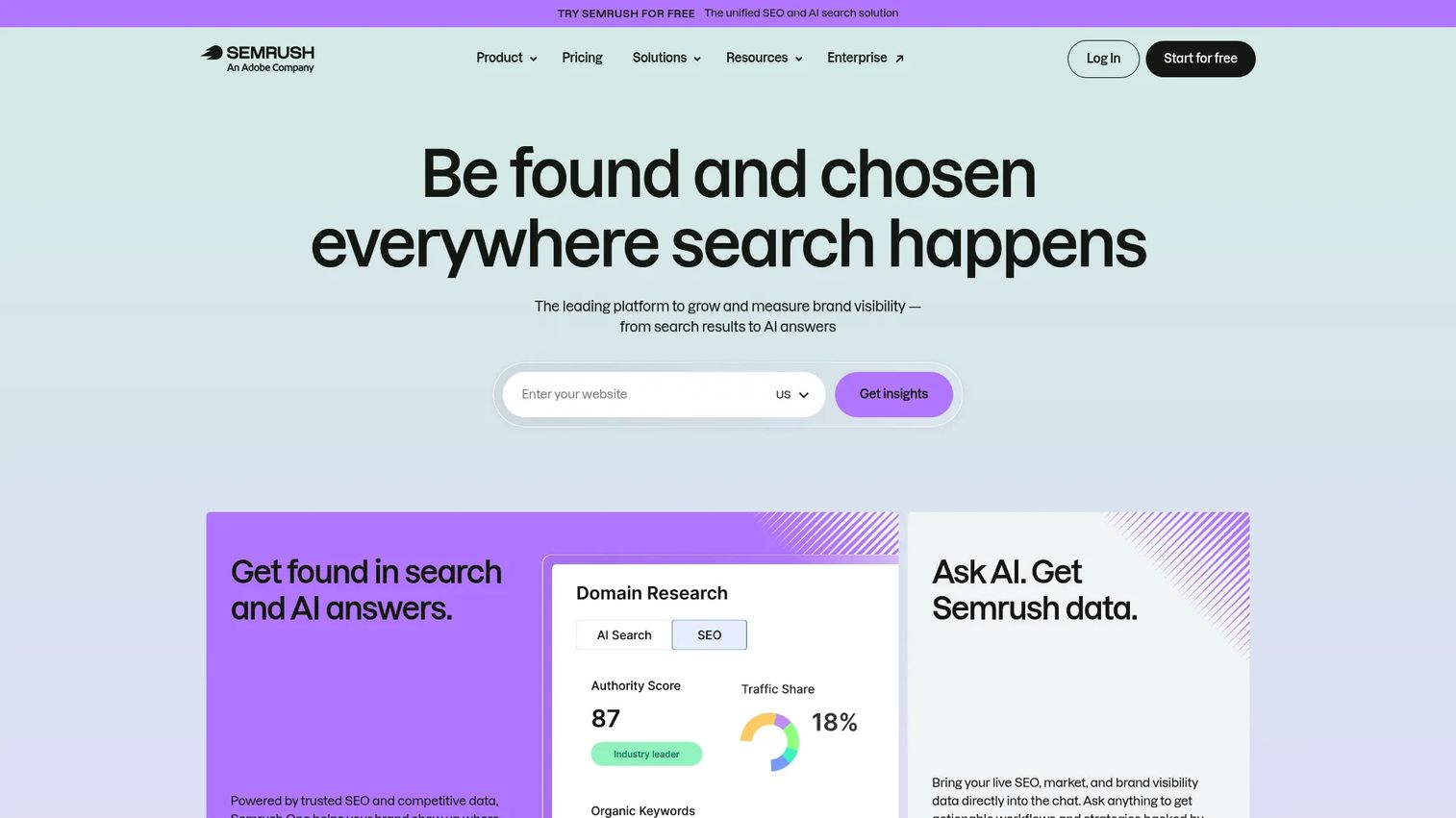
Semrush is the strongest starting point here for marketers consolidating SEO work. Its position tracking sits alongside technical auditing and competitor research. The broader platform also covers AI search visibility and other marketing disciplines, making the buying decision larger than keyword monitoring alone.
Best for: Growth teams that want search performance analysis and competitive intelligence within an existing SEO workflow.
For a marketer managing several acquisition channels, consolidation only helps if the additional capabilities get used. Start by identifying subscriptions that Semrush would replace, rather than comparing its price with a basic position checker.
A useful evaluation would begin with a priority landing page. Examine the ranking trend, investigate competing content, and use the audit tools to explore technical issues.
Then ask whether that investigation produces a decision your team can act on. The objective is a defensible explanation for performance, not a longer export.
Key features
- Position tracking
- Keyword and competitor research
- Technical site auditing
- AI visibility monitoring
- Brand sentiment analysis
For AI reporting, distinguish brand visibility from conventional keyword positions. Include each metric only where someone owns a corresponding action, such as improving source content or investigating competitor mentions.
During procurement, map your required website count and reporting access to the chosen package. The vendor’s SEO and AI Search plans expand capacity and capabilities across tiers.
Why choose Semrush: Choose it when research consolidation matters as much as monitoring. A dedicated tracker deserves consideration when those research jobs already have an owner elsewhere.
Semrush pricing: The SEO plan costs $117.33/month billed annually. A free tier is available.
G2 rating: 4.4/5.
2. Ahrefs
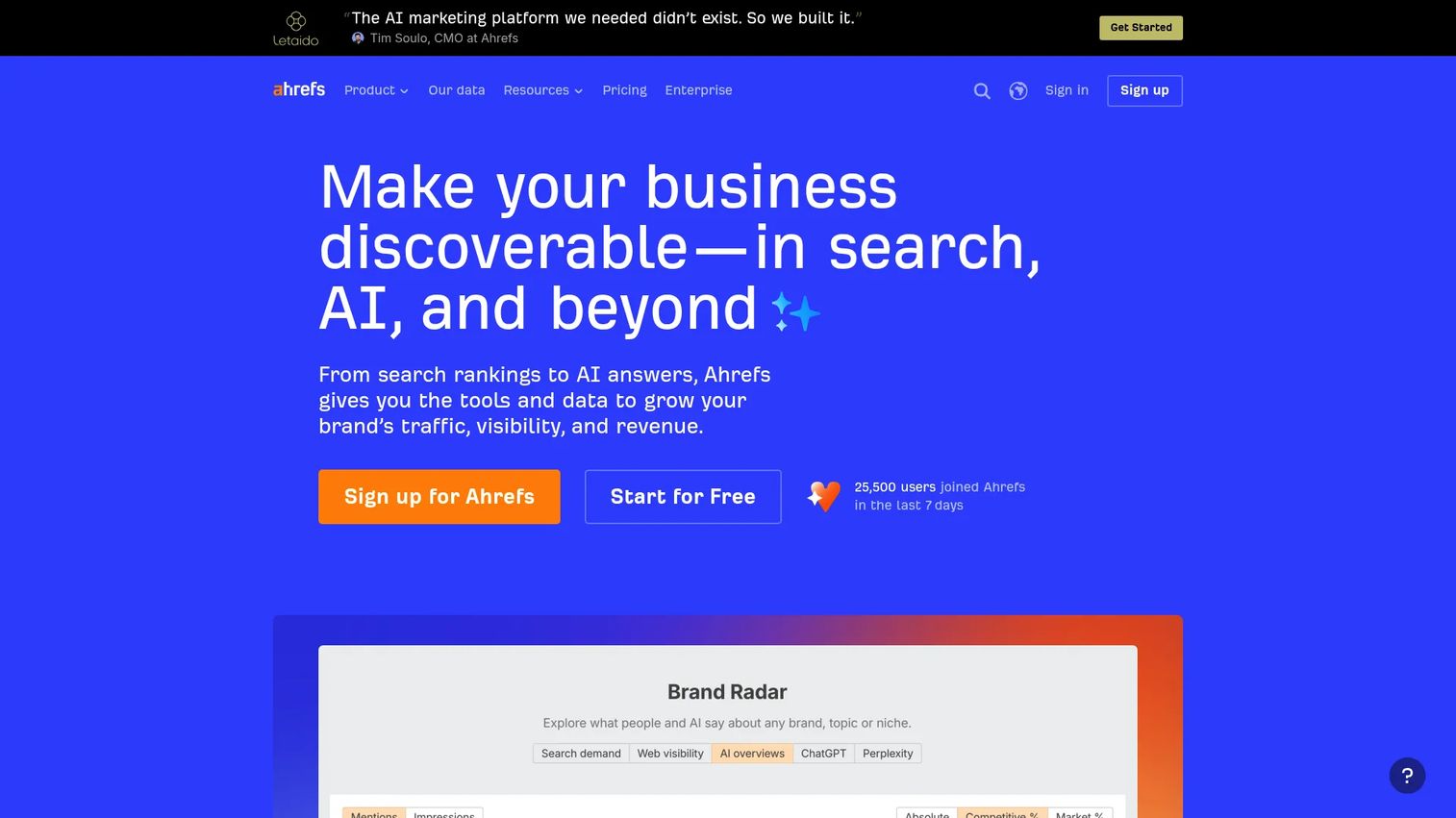
Ahrefs fits teams that treat ranking changes as the beginning of an investigation. Rank Tracker belongs to a platform containing Site Explorer and Keywords Explorer. Site Audit adds technical analysis, while Brand Radar addresses AI search visibility.
Best for: SEO teams that need to connect ranking movement with backlink research and content opportunity analysis.
The practical advantage is investigative context. When an important page loses visibility, your next question might concern competing domains or the search opportunity surrounding that topic.
Evaluate the platform using that sequence rather than reviewing each dashboard independently. Pick a commercially important page and determine whether the available information changes your next content decision.
For teams already using Ahrefs, assess existing access before purchasing another keyword rank tracker. The relevant comparison is the incremental cost of solving a monitoring gap.
Key features
- Rank Tracker
- Site Explorer
- Keywords Explorer
- Site Audit
- Brand Radar
Keep the distinction between platform pricing and tracking requirements explicit. The cheapest subscription is an entry into Ahrefs, not evidence that it matches your required monitoring workload.
Prepare a list of priority sites and keyword groups before reviewing plans. Ask for the exact capacity and reporting access associated with that workload.
Also test the handoff to whoever owns content production. Research depth has limited operational value if recommendations remain inside the SEO team’s account.
Why choose Ahrefs: Choose it when backlink and content research shape your SEO decisions. Compare a specialist if your purchase is strictly about recurring position reports.
Ahrefs pricing: Starter costs $29/month, while Lite costs $129/month on monthly billing. Ahrefs Free is also available.
G2 rating: 4.5/5.
3. SE Ranking
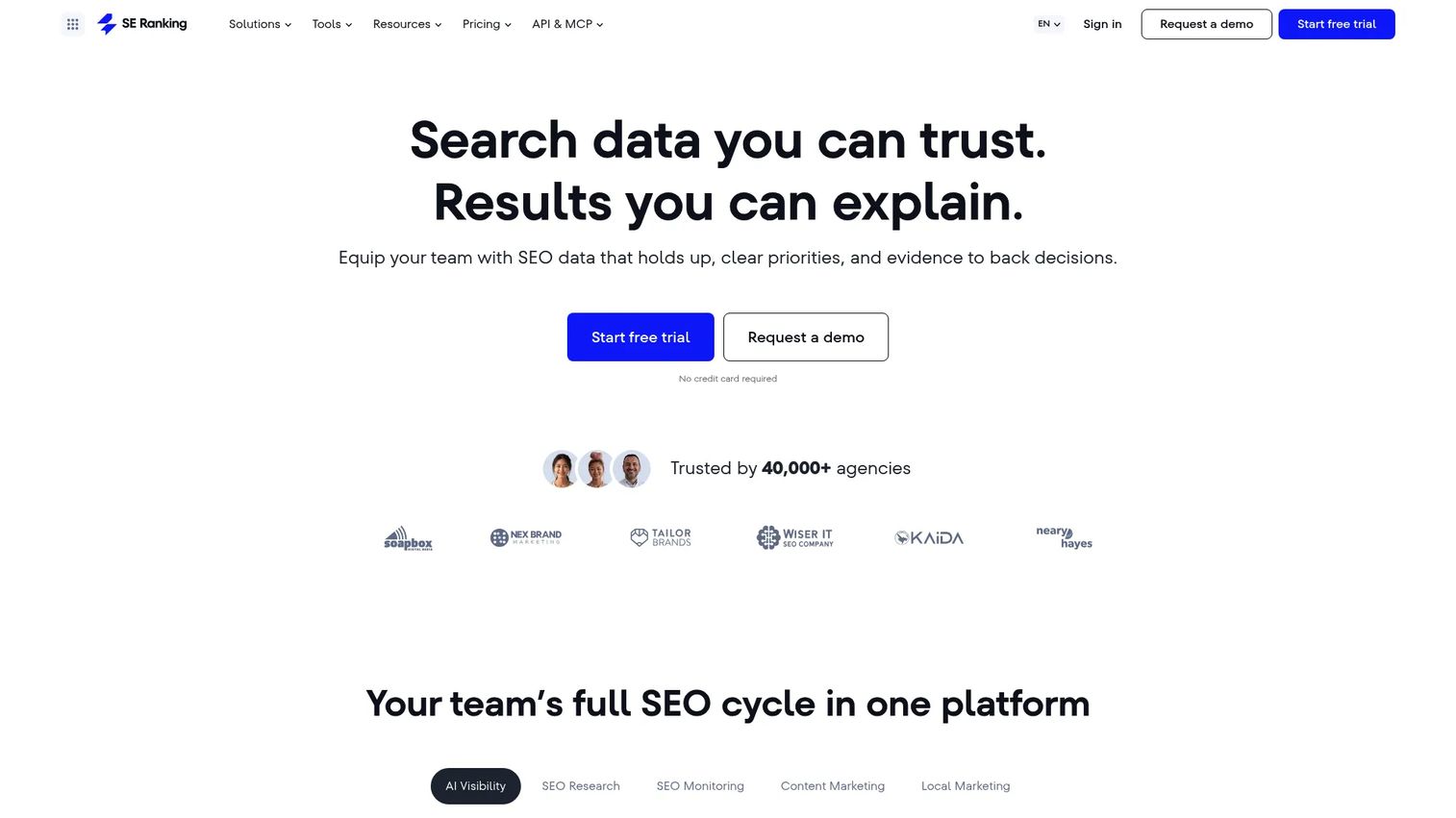
SE Ranking combines ranking analysis with broader SEO operations. Its documented coverage includes major search engines, website audits, backlink research, and AI visibility tracking. Local and content marketing tools make it relevant to agencies managing different client requirements.
Best for: Agencies and growing in-house teams that need several SEO functions without managing separate subscriptions for each task.
For an agency, the evaluation should follow a client engagement. Start with the visibility report, investigate the issue, and determine how the findings become a deliverable.
An in-house marketer can use the same approach around a product line. Ask whether the platform helps explain why a group of landing pages gained or lost attention.
Pay attention to commercial packaging. The Agency Pack and API appear as separately priced options, making the base subscription only part of some teams’ budgets.
Key features
- Multi-engine rank tracking
- Keyword and backlink research
- Website and on-page audits
- AI visibility tracking
- Local marketing tools
Include your reporting stakeholders in the trial. A platform can serve the SEO specialist well while still requiring manual work for a monthly leadership presentation.
For custom reporting, define the required destination and fields before evaluating API access. Avoid buying integration capacity without an owner for the workflow.
The supplied pricing uses EUR. Keep that currency visible when comparing annual commitments against USD subscriptions.
Why choose SE Ranking: Choose it when tracking needs to sit beside audits and research. Budget for agency or integration requirements separately from the core plan.
SE Ranking pricing: Core costs €87.20/month billed annually; Growth costs €188/month on annual billing. A 14-day free trial is available.
G2 rating: 4.8/5.
4. AccuRanker
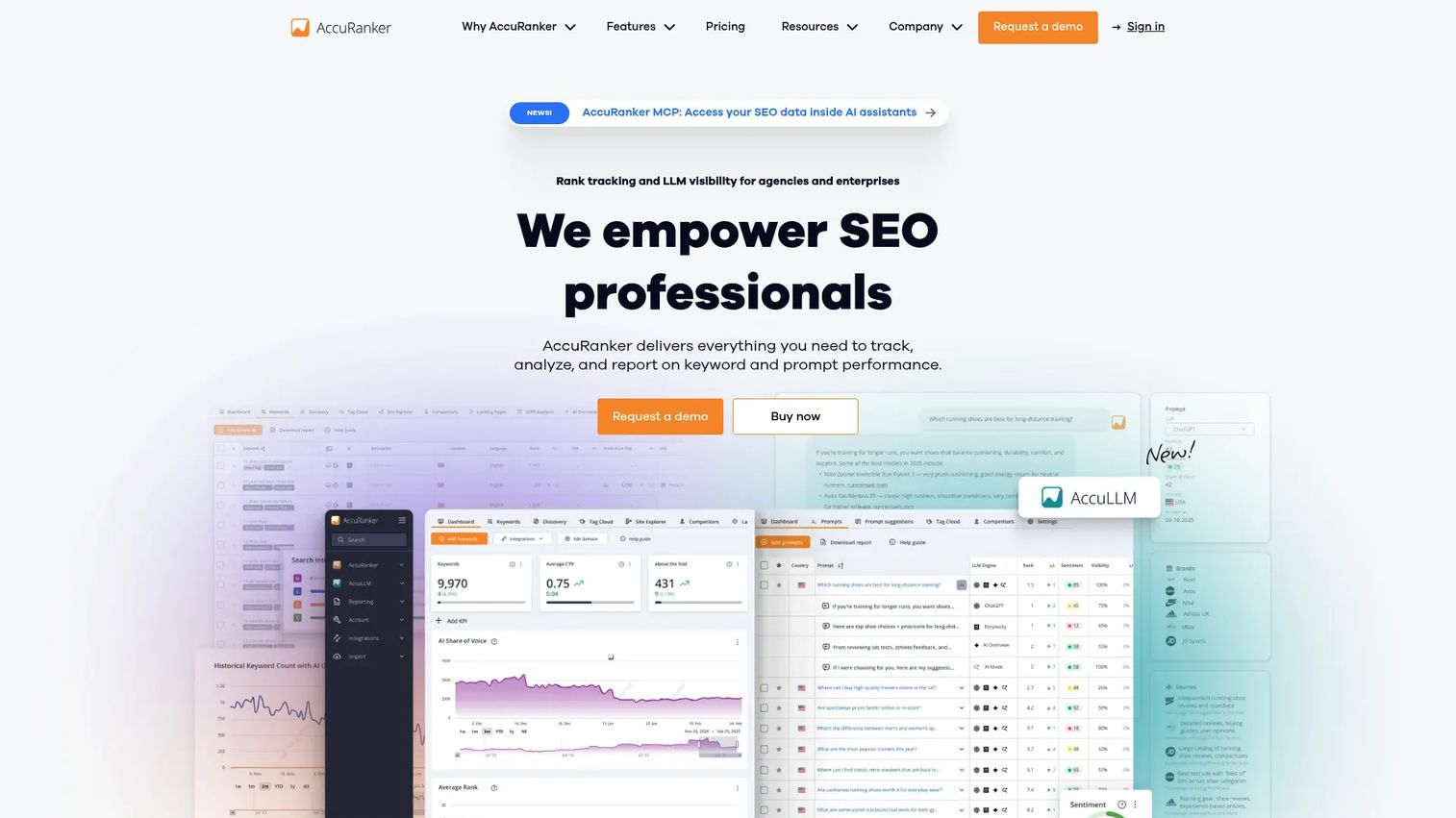
AccuRanker belongs on your shortlist when monitoring is the purchase priority. Daily and on-demand updates support recurring reporting and immediate investigations. Its documented capabilities also include full SERP analysis and competitor Share of Voice.
Best for: SEO teams and agencies that want dedicated rank tracking alongside their existing research stack.
Use the evaluation to test an operational question. After a product-page refresh, can the team inspect relevant terms without rebuilding the entire reporting view?
Filtering and tagging matter here. Organize terms around the decisions you make, such as product categories or markets, rather than leaving everything in an undifferentiated list.
For growth marketers, the integration options are especially relevant. AccuRanker documents connections with Google Search Console and Google Analytics, alongside reporting and warehouse destinations.
Key features
- Daily and on-demand updates
- Competitor Share of Voice
- Full SERP analysis
- Advanced filtering and tagging
- AccuLLM AI visibility tracking
Plan selection affects the reporting architecture. Expert adds unlimited read API access, while Enterprise includes BigQuery and raw SERP HTML access.
Ask the person responsible for dashboards to participate before procurement. That prevents buying a monitoring platform whose data requires an unexpected manual export process.
Do not treat update speed as proof of universal accuracy. Evaluate consistent locations and devices, then inspect discrepancies on business-critical queries.
Why choose AccuRanker: Choose it when rank monitoring deserves a dedicated operating workflow. Its value is clearest when you already have separate research tools.
AccuRanker pricing: Professional costs $224/month; Expert costs $764/month. Enterprise uses custom pricing.
G2 rating: 4.8/5.
5. Nightwatch
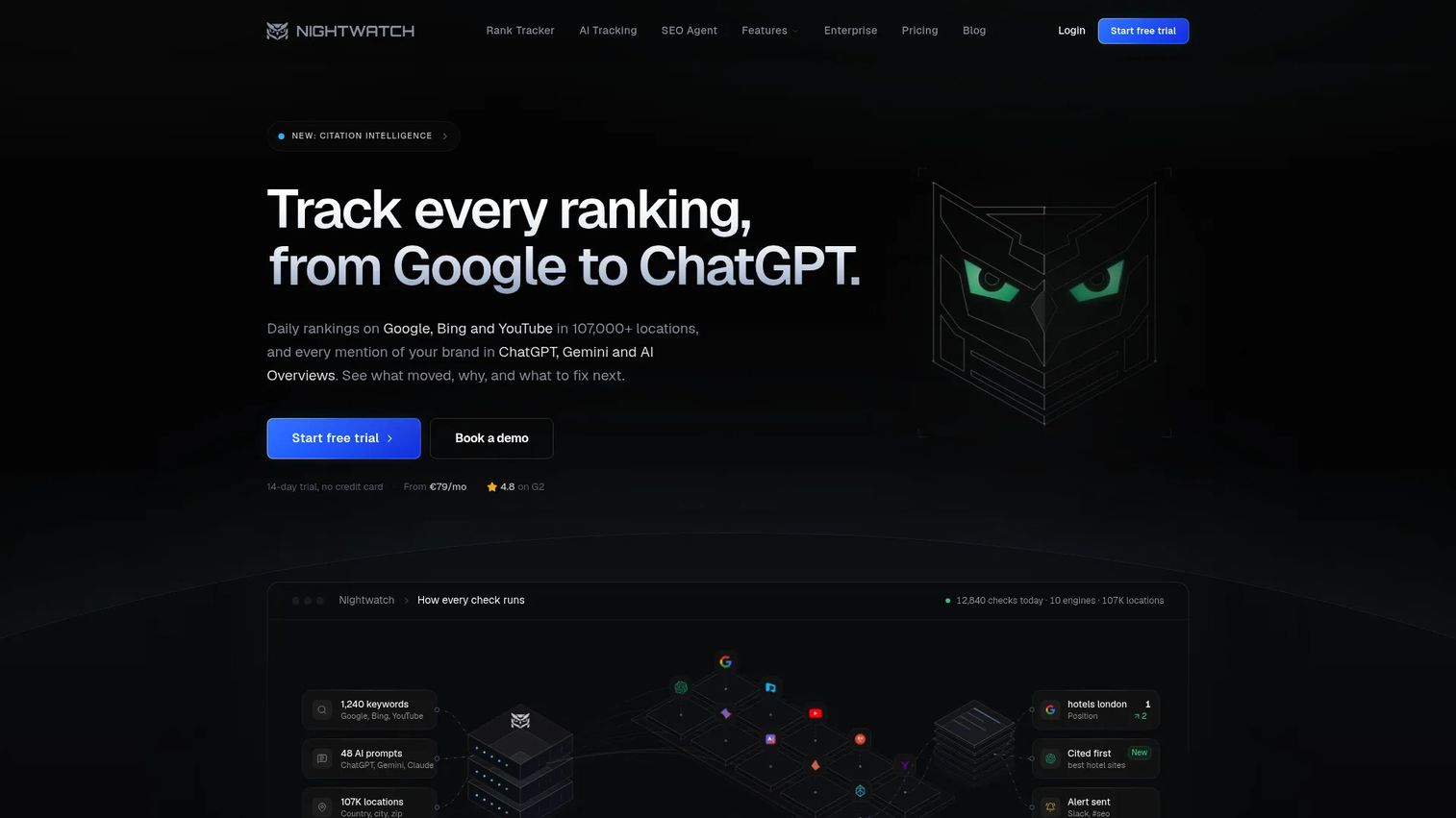
Nightwatch brings conventional ranking and AI visibility into the same product offering. Daily tracking covers Google, Bing, YouTube, Yahoo, DuckDuckGo, and Google Maps. Its documented AI coverage includes ChatGPT and Gemini, plus Perplexity and Google’s AI results.
Best for: Teams monitoring search visibility across several surfaces while keeping access available to multiple collaborators.
This is a useful shortlist candidate when your reporting has expanded beyond a Google organic chart. Build an evaluation around the specific markets and platforms your audience uses.
Keep each surface’s measurement separate. A video ranking, a map result, and a citation in an AI answer describe different forms of visibility.
For a growth team, the question is whether combining these observations improves decision-making. Ask who will respond to each signal before adding it to the executive report.
Key features
- Daily multi-engine rank tracking
- Google Maps tracking
- AI citation monitoring
- Keyword and prompt research
- Site auditing
Nightwatch’s plans include unlimited user seats. That makes access planning relevant for agencies where account managers and SEO specialists both need visibility.
Usage allowances still vary by package. Model the monitoring volume you expect after adding more clients or markets, rather than evaluating only the initial account.
During a trial, recreate a recurring report with your own terminology. Check whether a colleague can identify the business issue without needing a separate explanation of every metric.
Why choose Nightwatch: Choose it when conventional search and AI monitoring belong in the same workflow. Assess the supported surfaces against your audience rather than buying breadth alone.
Nightwatch pricing: Starter costs €79/month, and Professional costs €159/month. A 14-day free trial is available.
G2 rating: 4.7/5.
6. Advanced Web Ranking
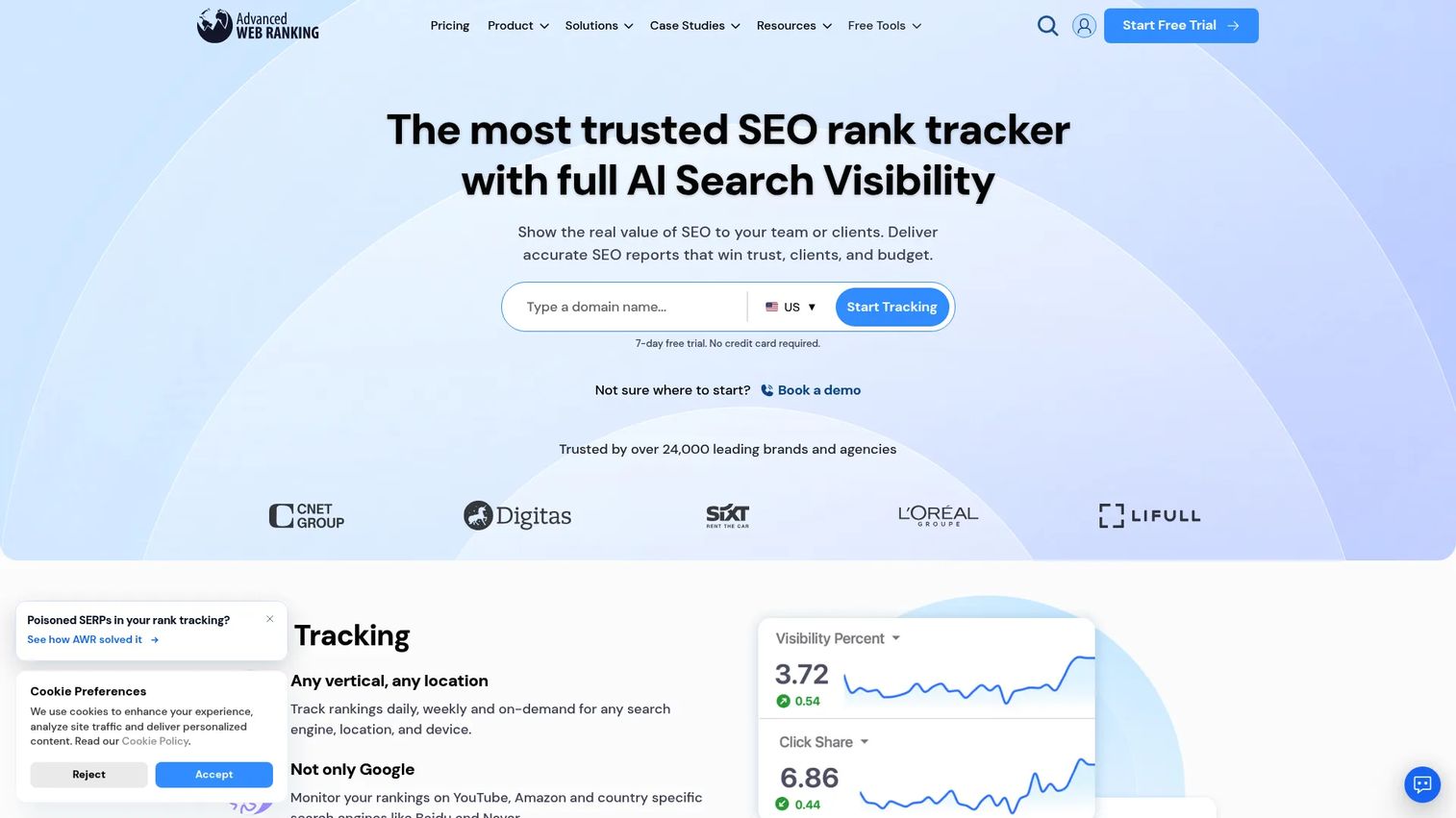
Advanced Web Ranking emphasizes tracking depth and report delivery. Its platform includes competitor analysis and SERP feature reporting, with AI search visibility monitoring alongside them. White-label dashboards and scheduled reports make it relevant to teams serving several stakeholders.
Best for: Agencies and in-house SEO teams with substantial reporting requirements across projects or locations.
An agency rank tracker needs to produce something a client can interpret. During evaluation, build the report you would send after a difficult month, not a sample full of positive movements.
Check whether it separates priority landing pages from the rest of the account. Include the context needed to explain what happened and what your team recommends doing next.
Advanced Web Ranking also offers SEO forecasting. Use forecasts as planning inputs and keep their assumptions distinct from observed ranking results.
Key features
- Multi-location rank tracking
- White-label reporting
- Scheduled reports and dashboards
- Competitor market-share analysis
- AI search visibility monitoring
Paid plans include unlimited projects and users. That is useful when account structure and collaboration matter independently of keyword capacity.
Before choosing a tier, map the required tracking workload and delivery schedule. Unlimited projects should not be interpreted as unlimited monitoring volume.
For procurement, ask for a reporting demonstration using your intended organization structure. The important test is whether account managers can retrieve the right view without creating duplicate versions.
Why choose Advanced Web Ranking: Choose it when reporting consistency is a major buying criterion. A lean monitoring requirement may not need this level of reporting structure.
Advanced Web Ranking pricing: Pro costs $139/month, and Agency costs $279/month. A 7-day free trial is available.
7. Mangools
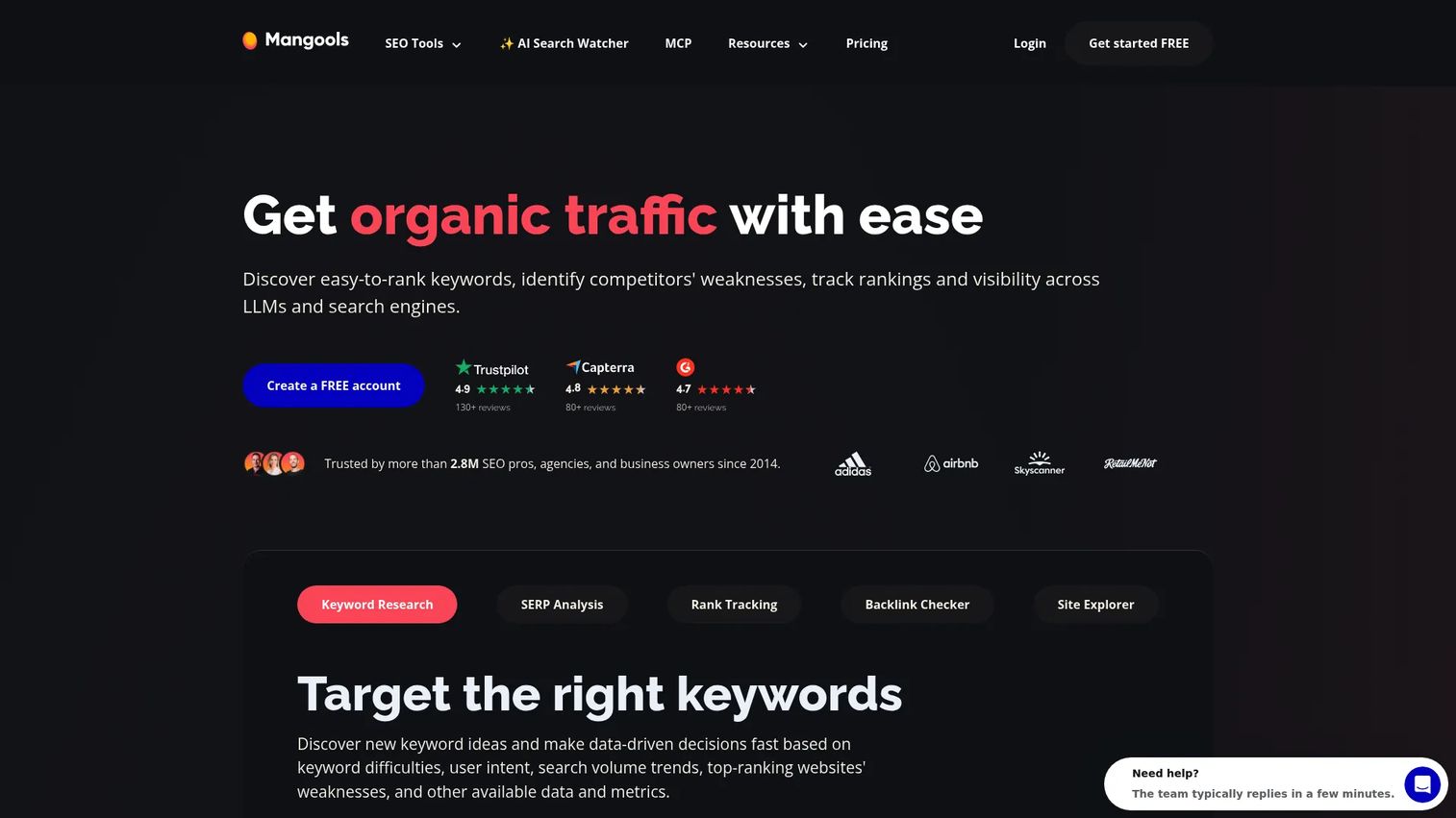
Mangools packages rank tracking within an accessible SEO toolset. SERPWatcher handles monitoring, while KWFinder supports keyword research. SERPChecker, LinkMiner, and SiteProfiler cover adjacent analysis, and AI Search Watcher adds AI search monitoring.
Best for: Solo marketers and small teams that need practical SEO coverage without an enterprise reporting operation.
For a lean team, the useful test is whether you can move from a content idea to ongoing measurement. Evaluate the complete weekly routine rather than buying on the appearance of a single dashboard.
Start with a manageable group of commercially important pages. Use research to choose the terms, then decide how ranking changes will influence your publishing queue.
Avoid treating every suite component as another workflow to maintain. Assign a job to each capability you expect to use.
Key features
- SERPWatcher rank monitoring
- KWFinder keyword research
- SERPChecker search result analysis
- LinkMiner backlink analysis
- AI Search Watcher monitoring
Mangools is a sensible comparison against larger suites when your team values approachable analysis. The evaluation should still include report delivery and the capacity required for your keyword set.
Have a generalist marketer complete a routine task during the trial or account evaluation. Note where they need specialist guidance and whether the result is useful for the next campaign review.
If your organization expects custom warehouse reporting or complex client permissions, make those explicit purchasing questions. Do not infer enterprise capabilities from the availability of basic reports.
Why choose Mangools: Choose it when a small team wants research and monitoring together. Prioritize the workflow you can sustain over the longest feature list.
Mangools pricing: Basic costs $37.70/month, with Premium at $52.70/month on monthly billing. Free account access and mini SEO tools are available.
G2 rating: 4.7/5.
8. Wincher
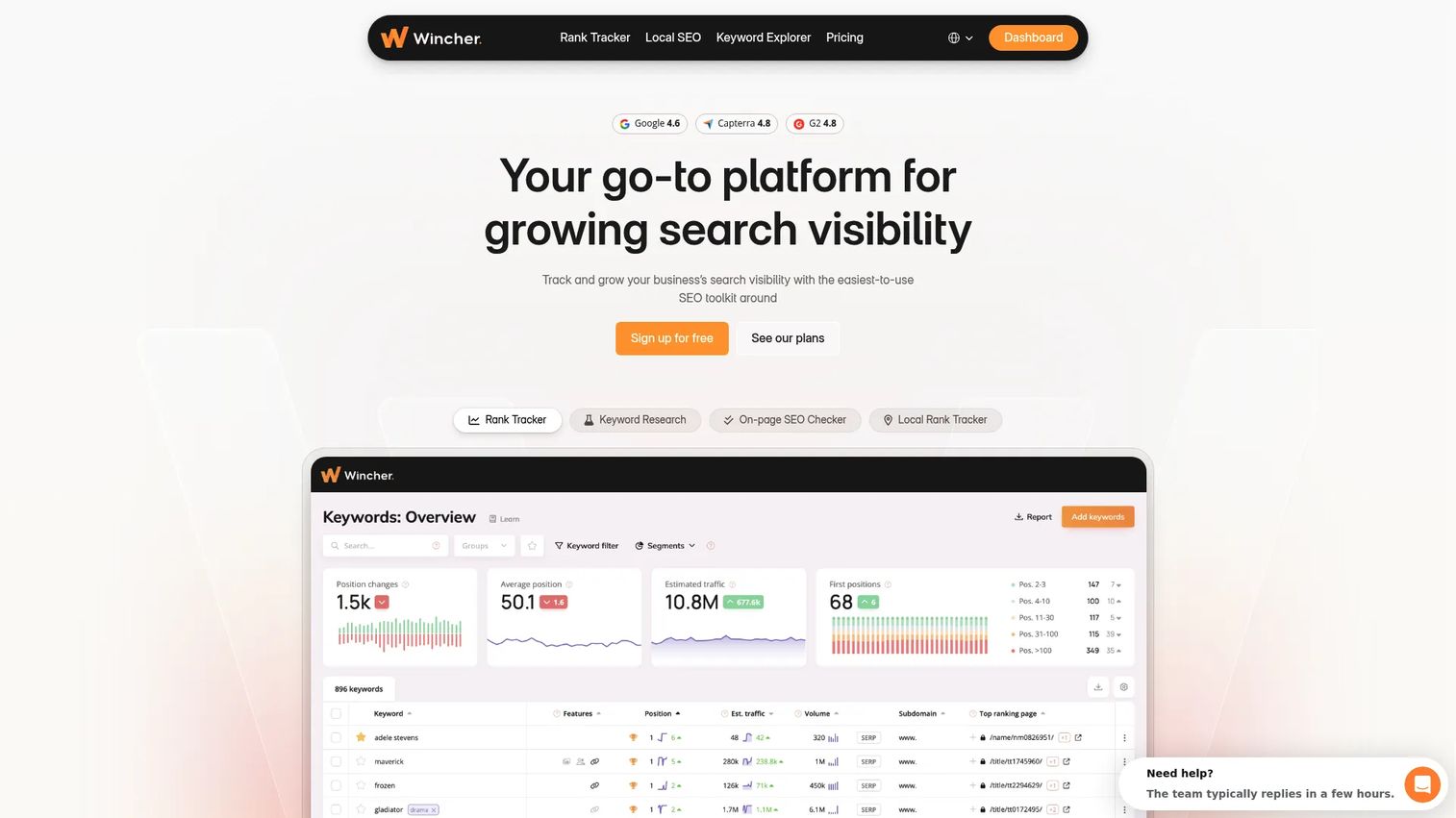
Wincher focuses on search monitoring and related optimization work. It documents daily keyword updates and local Google Maps tracking. Keyword Explorer and keyword gap analysis help connect observations with new opportunities, while reporting supports client communication.
Best for: SMB marketing teams and agencies that want focused monitoring with practical reporting tools.
A useful evaluation starts with a familiar question from your content team. Which priority pages need attention, and what evidence should determine the next refresh?
Then inspect how the answer reaches the person doing the work. A clear report matters more than a dashboard that only the SEO specialist understands.
Wincher offers scheduled, customizable PDF reports with white-label options. For an agency, assess these using a client’s existing reporting requirements.
Key features
- Daily keyword updates
- Google Maps rank tracking
- Keyword gap analysis
- On-page SEO Checker
- Customizable white-label PDF reports
The documented Google Search Console and Looker Studio integrations deserve attention if you already report through those systems. Evaluate the fields required for your monthly acquisition review.
Build the same report manually and through the proposed workflow. Compare the steps involved, including any cleanup before stakeholders can use it.
Keep purchasing decisions tied to your configured account. Enter the intended keyword workload and required reporting access before evaluating the subscription offered.
Why choose Wincher: Choose it when monitoring and report delivery are the immediate priorities. Test the full reporting handoff before deciding that another SEO suite is necessary.
Wincher pricing: A 7-day free trial is available.
G2 rating: 4.6/5.
9. SEO PowerSuite
SEO PowerSuite takes a desktop-based approach to SEO work. Rank Tracker is part of its suite, alongside technical auditing and backlink analysis. The product also includes keyword research and reporting, making it a broader purchase than a standalone monitoring dashboard.
Best for: SEO practitioners who prefer desktop software and want several research functions in the same toolkit.
The deployment model is the first decision. Consider who owns the machine and how colleagues will access the results they need.
For a single specialist supporting a marketing team, that arrangement can be practical. For a distributed operation, evaluate the handoff before comparing subscription prices.
Use a pilot to complete the weekly routine from start to finish. Include opening the project and producing the final stakeholder deliverable.
Key features
- Desktop keyword rank tracking
- Multi-engine search coverage
- Keyword and competitor research
- Technical SEO auditing
- Custom white-label reports
SEO PowerSuite documents unlimited keyword rank tracking. Still, keyword capacity alone does not answer questions about operational scheduling or the team’s reporting process.
Ask how the workload behaves under your intended setup. Evaluate a representative project rather than extrapolating from a small sample.
Annual license costs also deserve a different comparison from monthly cloud subscriptions. Record the billed total and relevant renewal terms in your procurement worksheet.
Why choose SEO PowerSuite: Choose it when desktop software fits the person managing SEO. Confirm the collaboration process before standardizing it across a distributed team.
SEO PowerSuite pricing: A free version is available; Professional costs $349/year. Enterprise costs $599/year, and Max costs $899/year.
G2 rating: 4.5/5.
10. Nozzle
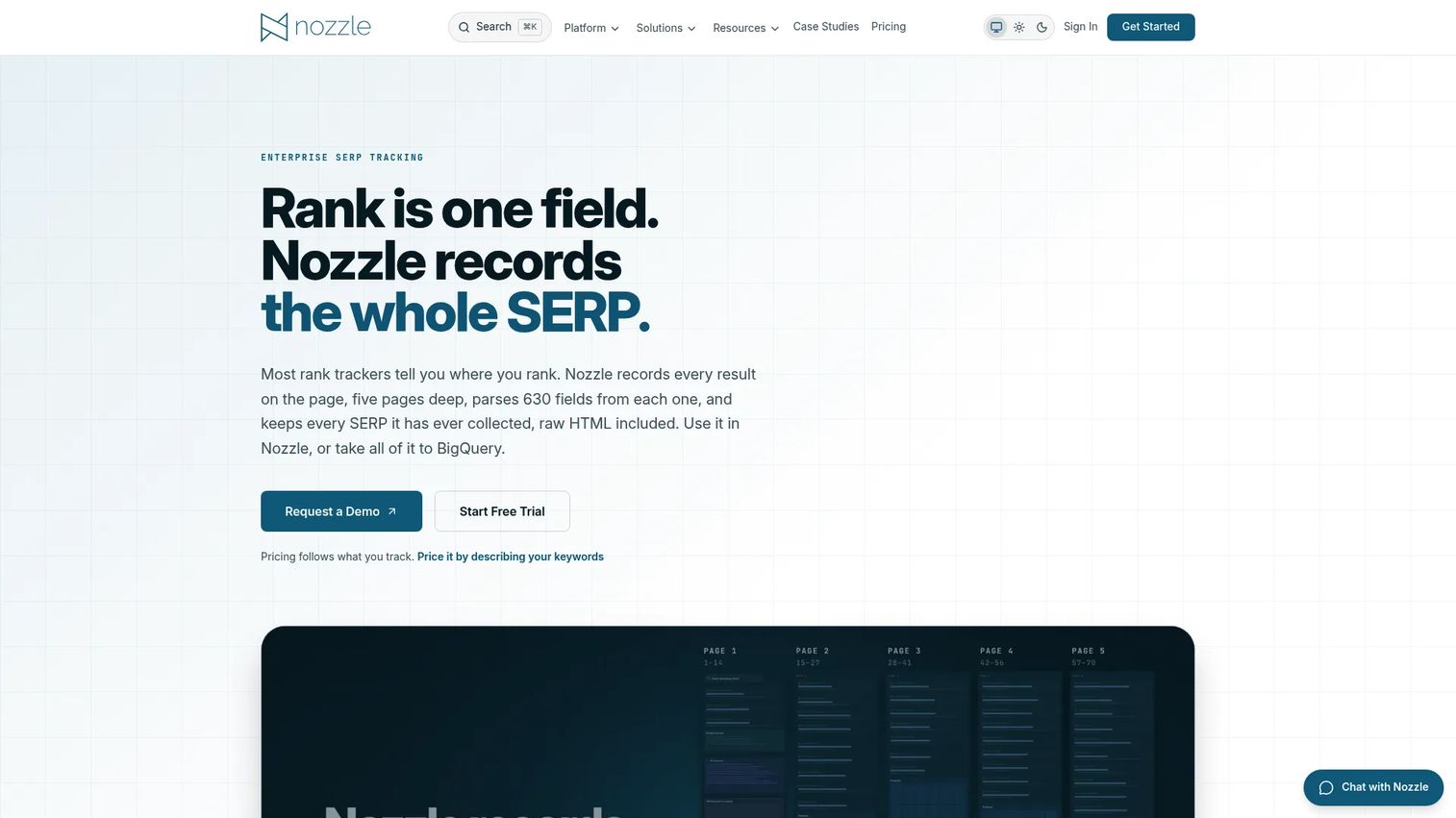
Nozzle is a specialist choice for teams examining the whole search results page. Its documented data includes pixels from the top and SERP feature information. Flexible scheduling and warehouse exports make it relevant to advanced SEO operations with dedicated analytical support.
Best for: SEO and data teams investigating search visibility beyond a conventional organic position.
Consider a page whose numbered ranking stays stable while its clicks decline. Your investigation needs to examine how the surrounding result page changed.
Nozzle’s positioning is relevant to that question. Evaluate whether the additional detail leads to a useful explanation, rather than collecting fields without a reporting purpose.
Competitive analysis is another reason to shortlist it. Define the brands and result types that matter before building a visibility model.
Key features
- Full SERP monitoring
- Pixels-from-top measurements
- Unlimited competitor tracking
- Flexible monitoring schedules
- API and BigQuery export
All plans include the same features, without per-user charges. Plan differences instead center on monthly SERP allowances.
That makes scheduling part of cost planning. Use frequent observations for urgent commercial terms and consider less frequent checks for lower-priority research topics.
Bring your reporting owner into the evaluation. Decide which data belongs in an executive summary and which should remain available for investigations.
Avoid building a dashboard where every chart needs an analyst to interpret it. The final output should still explain a business decision in plain language.
Why choose Nozzle: Choose it when standard position reports leave important questions unanswered. Its detailed data is most useful when someone owns the analytical work.
Nozzle pricing: The Basic plan is listed at $421/month on an annual term. A 14-day free trial is available without a credit card.
11. ProRankTracker
ProRankTracker concentrates on rank monitoring and client reporting. Its coverage includes local and mobile searches, plus Google Business Profile and YouTube. Daily updates support routine tracking, while agency capabilities address branded delivery and shared access.
Best for: Agencies and SEO teams managing substantial keyword sets across markets.
The practical evaluation should begin with how the product counts a tracked term. Ask how your chosen markets and device configurations affect the account’s capacity.
Next, build a client report using the same structure your agency already sends. Check whether the output answers what changed and which work you recommend.
ProRankTracker supports white-label reports with PDF, XLSX, and CSV exports. Choose the format that fits the recipient rather than sending every available view.
Key features
- Daily ranking updates
- Local and mobile tracking
- Google Business Profile monitoring
- White-label report exports
- Agency-plan API access
Starter includes 1,000 terms, while Pro includes 2,000. Agency supports larger workloads and adds capabilities including API access and on-demand updates.
For reporting operations, documented integrations include Google Drive and Dropbox, along with Google Sheets. Assess whether these reduce manual delivery steps in your existing process.
The specialist focus matters when comparing it with a broader SEO suite. Your team may still use another product for research or technical audits.
Why choose ProRankTracker: Choose it when tracking and client delivery are defined operational needs. Compare the full configured term workload before selecting a plan.
ProRankTracker pricing: Starter costs $99/month and Pro costs $149/month, according to G2’s provider-supplied pricing. A 7-day trial tracks 10 terms daily.
12. Keyword.com
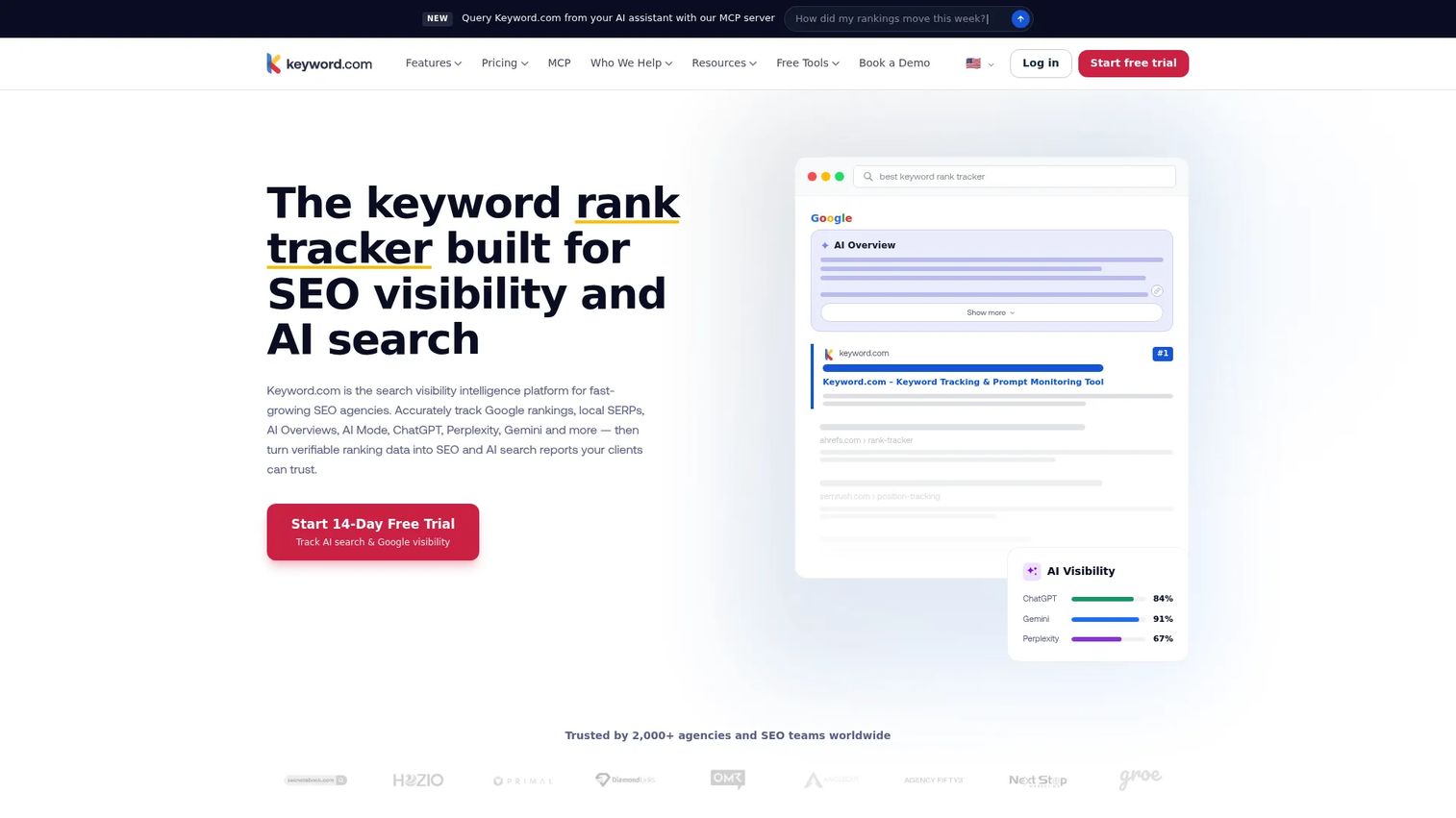
Keyword.com combines Google rank tracking with separate options for AI visibility. Its documented capabilities include local monitoring and share of voice analysis. Scheduled reporting and white-label delivery make it relevant to agencies and in-house teams that need understandable stakeholder updates.
Best for: Marketers who want focused visibility reporting with a choice between search monitoring and combined AI coverage.
Its packaging encourages a useful distinction. Decide whether you need traditional Google measurement, AI answer monitoring, or both before comparing plans.
For agency reporting, keep the commercial question visible. A client needs to understand which topics gained attention and what the agency recommends doing next.
Avoid combining different visibility metrics into a single unexplained score. Present search positions and AI citations as separate evidence.
Key features
- Google and local rank tracking
- Share-of-voice analysis
- AI citation and sentiment monitoring
- Scheduled white-label reporting
- Rank Tracker API
The documented AI coverage includes ChatGPT and Google AI Overviews, alongside Perplexity and Gemini. Match those surfaces to your reporting requirements.
A rank tracking API is also available. Evaluate it when you need custom data delivery, with a clear owner for implementation and maintenance.
The low entry price needs context. Build the intended keyword configuration before treating it as the total cost for an agency or multi-market business.
Ask for a representative export during evaluation. Confirm that its labels and fields match the way your team organizes accounts.
Why choose Keyword.com: Choose it when reporting clarity and focused monitoring matter. Compare search-only and combined visibility packages using the workload you intend to maintain.
Keyword.com pricing: Search Visibility costs $3/month annually or $4/month on monthly billing. A 14-day free trial is available.
G2 rating: 4.7/5.
13. BrightLocal
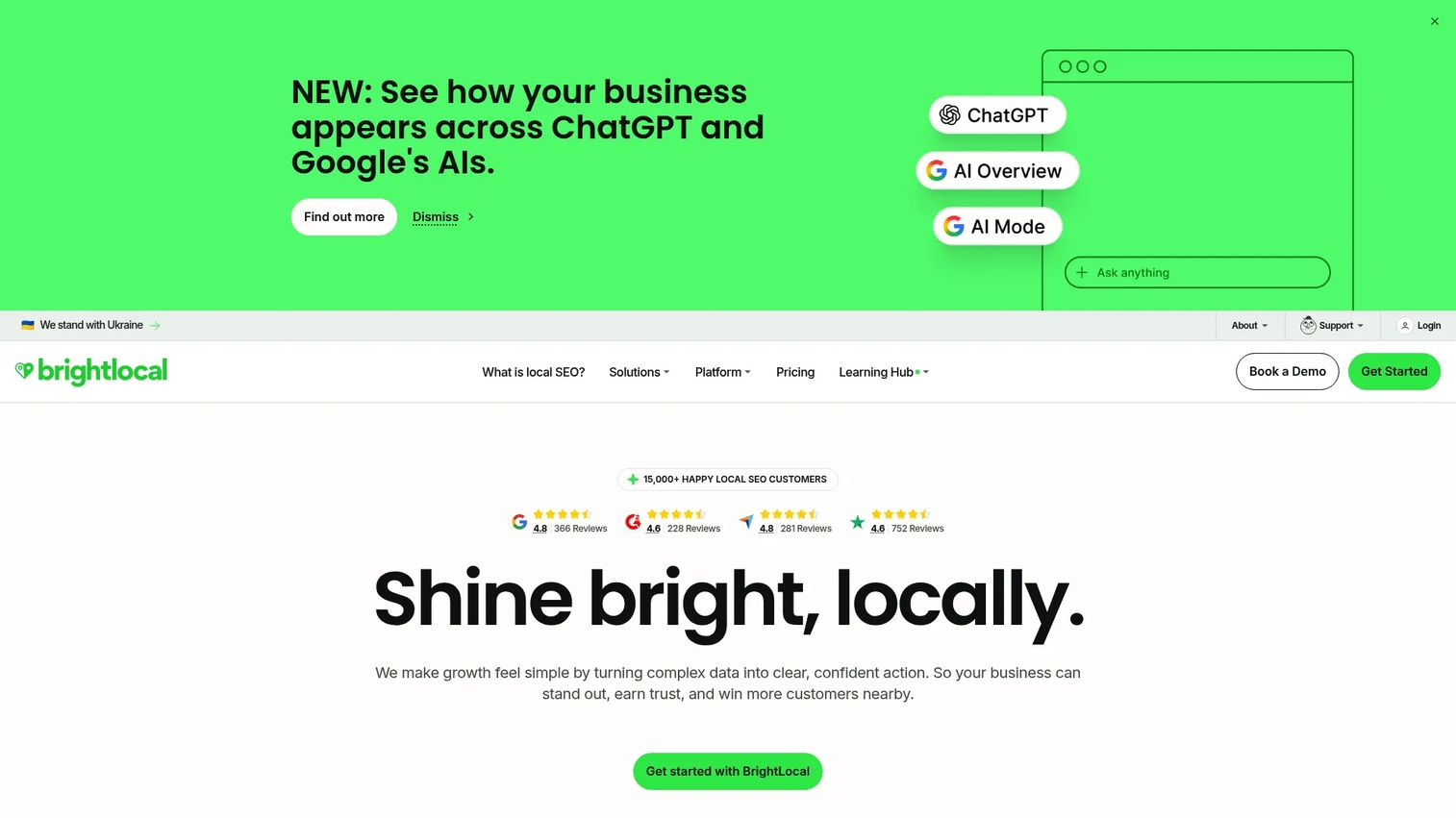
BrightLocal is the local SEO specialist in this comparison. It combines geographic ranking analysis with listings and reputation work. Local Search Grid supports geo-ranking and competitor analysis, while related tools address citations and Google Business Profile management.
Best for: Local businesses and agencies whose acquisition depends on visibility around particular locations.
For these teams, a national ranking report can answer the wrong question. Your evaluation should reflect where customers search and which business locations serve them.
Build the pilot around an individual location and its commercial search terms. Then examine how the findings would change the work assigned to that branch or client.
Keep map visibility separate from general website traffic. Each supports a different part of the local acquisition story.
Key features
- Local search rank tracking
- Local Search Grid
- Citation and listing management
- Google Business Profile auditing
- Review monitoring
BrightLocal also documents local AI visibility tracking across ChatGPT and Google AI. Include this in evaluation when local recommendations are part of your reporting remit.
Pricing varies by location count. Map the full estate before comparing subscriptions, including branches that may need separate reporting.
Citation Builder and managed SEO services are separate offerings. Treat those as additional purchasing decisions rather than assuming they belong to the core tracking subscription.
For a SaaS company targeting national informational searches, a broader SEO tracker is a more relevant starting point.
Why choose BrightLocal: Choose it when geography determines acquisition opportunities. Its surrounding local marketing tools matter most when your team owns those operations too.
BrightLocal pricing: Track costs $41/month for one location, or $369 billed annually. A 14-day free trial is available.
G2 rating: 4.6/5.
14. Serpstat
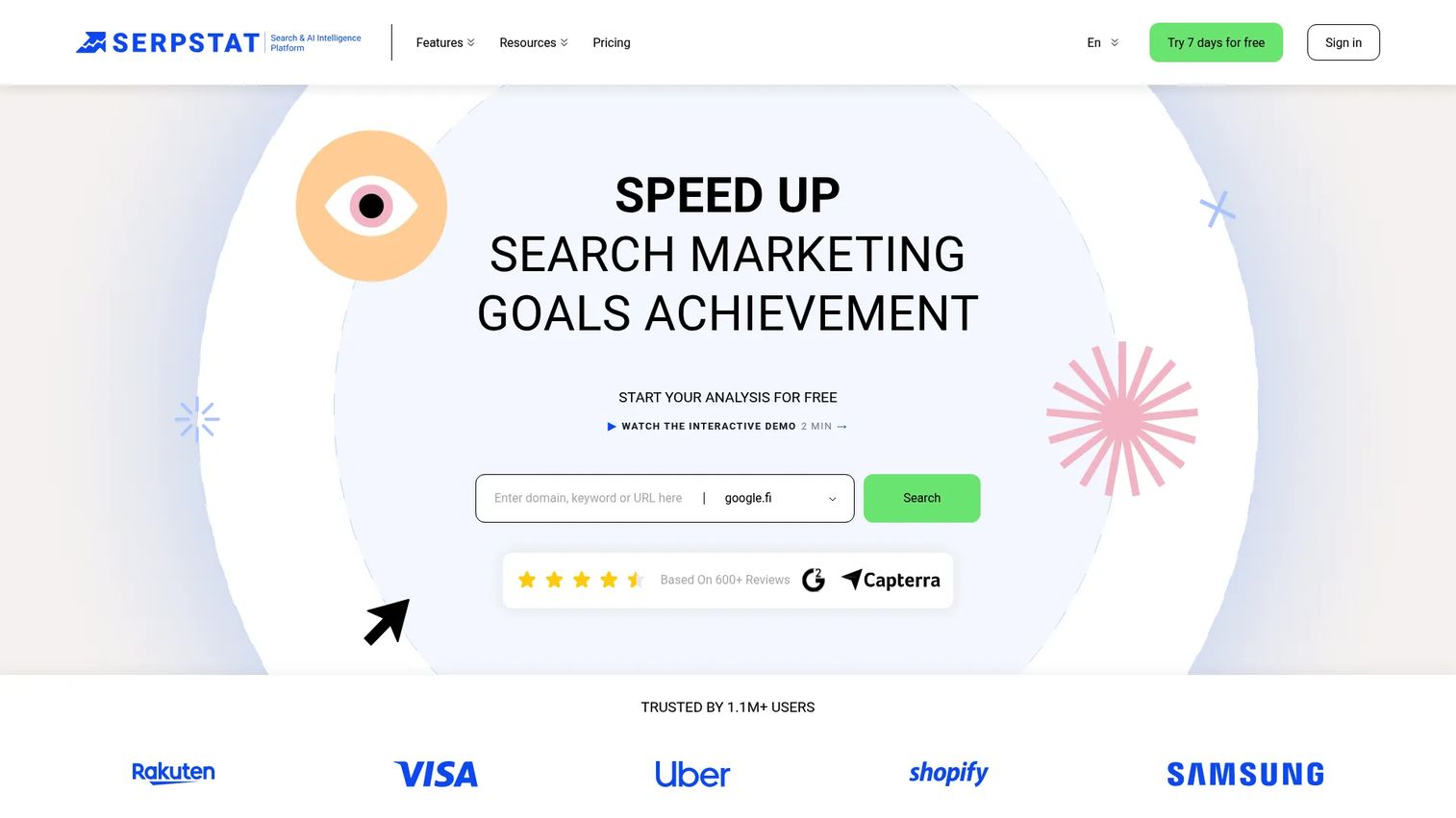
Serpstat places rank tracking inside a broader search intelligence platform. Keyword research and competitor analysis support planning, while audits and backlink analysis support investigation. The platform also documents AI Visibility monitoring.
Best for: Marketing teams that want to combine ranking analysis with adjacent SEO research tasks.
The value depends on how much of the toolkit your team needs. Compare it against the subscriptions you would keep, rather than assuming a bundle automatically reduces cost.
A useful trial begins with a content cluster you already manage. Review its visibility, investigate competing pages, and identify the next work item.
Then test whether a colleague can understand the recommendation without retracing your entire analysis. That handoff is where a platform starts contributing to marketing execution.
Key features
- Rank tracking
- Keyword research
- Competitor analysis
- Site auditing
- Backlink analysis
For a budget-conscious team, renewal economics deserve attention alongside the introductory price. The offer captured in the supplied research applies to the first billing period.
Set a procurement reminder to review the ongoing rate before committing. A promotion should support an already sound purchasing decision.
Also establish which product areas the team expects to use every month. Unused capabilities do not become valuable because they share a subscription with rank tracking.
Why choose Serpstat: Choose it when a combined research toolkit matches your working routine. Evaluate the ongoing contract cost separately from temporary promotional pricing.
Serpstat pricing: Individual costs $50/month for the first billing period under a promotion ending November 30, 2026. A 7-day free trial is available.
G2 rating: 4.6/5.
15. Google Search Console
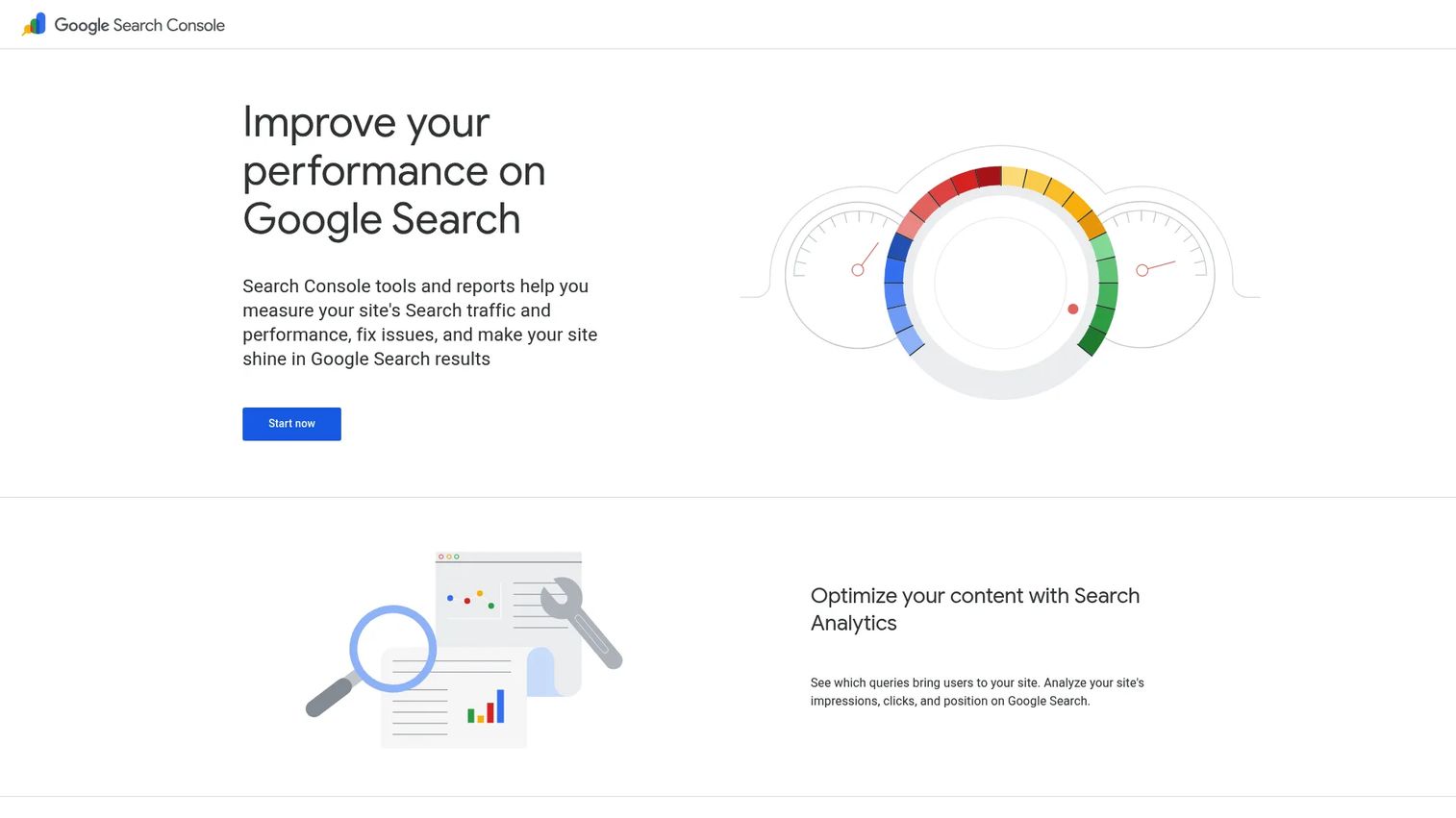
Google Search Console provides first-party information about your website’s presence in Google Search. Its performance reporting includes queries and pages, with clicks, impressions, and position data. URL Inspection and indexing reports support technical investigations beyond acquisition reporting.
Best for: Website owners and marketing teams that need a free foundation for understanding Google organic performance.
Google Search Console rank tracking requires a different interpretation from a dedicated monitoring tool. Average position summarizes observed search activity rather than a fixed check of a chosen term.
Use it to investigate which pages lost clicks and whether impressions changed. That provides context before deciding that a content refresh is necessary.
For a growth marketer, the page view is particularly useful. Connect the affected landing pages with conversion reporting to determine whether the decline concerns commercially important traffic.
Key features
- Query and page performance
- Click and impression data
- Average position reporting
- URL Inspection
- Indexing and sitemap reports
It is not a competitor monitoring platform. Nor does it replace a controlled local tracking setup for comparing selected search conditions.
Keep Search Console as the baseline when adding a paid tracker. The two data sources answer different questions and should not be expected to produce identical position numbers.
If you only need to understand your own Google performance, start here before purchasing another subscription. Add a specialist when you can name the specific monitoring gap.
Why choose Google Search Console: Choose it for first-party search performance and indexing evidence. Pair it with a dedicated tracker when selected keywords or competitor comparisons require ongoing monitoring.
Google Search Console pricing: Free.
Considerations when choosing a rank tracker
Tracking depth
List the markets, devices, languages, and search engines included in your monthly report. Test important landing pages and ask how the platform identifies competing URLs or potential cannibalization.
For mobile rank tracking, reproduce the device conditions that matter to acquisition. Local businesses should evaluate geographic detail separately.
Update frequency
Match daily rank tracking to decisions that need daily evidence, such as a migration investigation or volatile commercial category. Weekly review may be enough for a content planning meeting.
Ask whether on-demand refreshes are included and how additional observations affect capacity.
Reporting and stakeholder trust
Rebuild an existing stakeholder report during evaluation. Check scheduled delivery and exports, including white label rank tracking requirements for agencies.
For custom dashboards, inspect the rank tracking API and required fields. An integration logo does not establish that your specific reporting workflow is covered.
Pricing and keyword volume
Compare cost per 1,000 tracked keyword configurations at the same update cadence. Include additional locations and devices in the calculation, then add required seats or reporting options.
Record the billed annual total. Keep trial access, introductory promotions, and renewal costs separate.
AI search and SERP feature visibility
Ask which surfaces the product measures directly, including Google AI Overviews and any required AI assistants. Request examples of citation reporting and competitor comparisons.
Keep these results separate from organic positions. Your report should make the measurement method clear before drawing conclusions about search visibility.
Conclusion
The best rank tracker earns its place by answering a recurring business question. Start with the gap in your current workflow, then choose the product that addresses it.
Semrush is a practical first shortlist for teams consolidating SEO research and monitoring. Ahrefs makes sense when ranking investigations depend on backlink and content analysis.
SE Ranking deserves evaluation for combined SEO operations, particularly across several websites. AccuRanker suits teams that want dedicated monitoring alongside an established research stack.
For local acquisition, BrightLocal addresses a different operating reality from national SEO. Google Search Console remains the free baseline for understanding your own Google performance.
Before buying, configure the same keyword set in your shortlisted products. Include the reporting destinations and market coverage you expect to maintain.
Then produce the report your manager or client asks for every month. Compare the work required and the decisions each output supports.
The top rank trackers should help you explain what changed and choose what to do next. Another chart of average positions is not enough.
FAQs
Semrush is a strong starting point for teams consolidating SEO workflows, while Ahrefs fits research-led investigations into content and backlinks. SE Ranking suits combined SEO operations, and AccuRanker emphasizes dedicated monitoring. Choose the best SEO rank tracker by recreating your reporting workload, then comparing the relevant package rather than the lowest advertised subscription.
Google Search Console is the strongest free baseline here for first-party query and page performance. For readers seeking the best rank checker, it answers questions about their own Google visibility rather than a controlled competitor-monitoring setup. Add paid SEO ranking software when you need selected keyword tracking, precise geographic observations, or recurring client reporting beyond that baseline.
A ranking observation reflects particular search conditions, including location and device, at a particular time. Compare tools using matching settings before interpreting different numbers as an accuracy problem. Focus on consistent trends across important keyword groups, and inspect high-value searches individually when an unexpected change would affect a commercial decision. Avoid selecting software based on an unsupported accuracy superlative.
Review rankings at the cadence of your decisions, rather than reacting whenever a number changes. Weekly analysis can support a content planning routine, while daily observations help during migrations or urgent acquisition investigations. Keep a record of relevant changes and look for sustained movement before redirecting production work. Collection frequency and the frequency of human review can differ.
A dedicated keyword rank tracker monitors a selected set of queries under specified search conditions. Google Search Console reports observed performance for your property, including clicks and impressions alongside average position. Use the former for controlled monitoring and the latter to understand search activity that reached your website’s listings. Differences between their figures do not automatically indicate incorrect data.
Several products in this comparison document AI visibility capabilities, but coverage and measurement differ. Ask whether the product monitors Google AI Overviews, standalone assistants, or both, and request examples from the surfaces you need. ChatGPT citations and conventional Google positions should appear as distinct measures. Do not assume support for Gemini, Perplexity, or Copilot from a generic AI tracking label.
Prioritize client reporting and permissions alongside the monitoring workload. Test scheduled delivery, keyword grouping, geographic coverage, and the exports your account managers need. If you require a rank tracking API, involve the reporting owner before procurement to assess available fields and implementation work. Compare rank tracker pricing using the full client portfolio, including anticipated growth and required reporting options.
Track a set that represents your priority landing pages and the commercial questions you need to answer. Include relevant product lines and locations, while separating branded searches from acquisition terms. Start with coverage you can maintain and expand when a reporting gap becomes clear. A larger keyword list is useful only when its additional observations support a decision or reveal meaningful market movement.