Your employee handbook lives in a shared drive somewhere. It was last updated by someone who left the company. Half the team hasn't read it, and no one can prove who acknowledged which version.
That's the real problem handbook software solves. Not just document creation, but the full operational cycle: Draft, update, distribute, confirm, and audit. According to the Brightmine Employee Handbooks Survey Report (2025), 53% of organizations review their handbook only once a year, and 28% review it infrequently or sporadically. When employment law changes mid-year, that gap becomes a liability.
The employee handbook software market was valued at $500 million in 2024, with a projected 10.5% CAGR through 2033, according to Verified Market Reports (2025). That growth reflects how much demand has shifted from static PDFs toward digital employee handbook platforms that keep policies current and acknowledgment tracking auditable.
This guide cuts through the noise to help you pick the right tool for your team's specific situation.
What's inside
This guide covers seven employee handbook software and policy management tools for 2026. It's written for HR leaders, People Ops managers, and compliance-minded operations teams evaluating digital options. Tools were selected based on four criteria:
- Compliance coverage: State-specific updates, attorney-reviewed content, and law-change alerts
- Acknowledgment tracking: E-signatures, completion status, and audit trails
- Version control: Edit history, approval workflows, and multi-location publishing
- Integrations: HRIS, identity providers, and payroll connectivity
TL;DR
- Best for template-driven handbook creation: Employee Handbook Builder (SHRM) gives HR teams a structured, state-aware builder at $499/year
- Best for policy management and acknowledgment tracking: Blissbook pairs branded online handbooks with robust e-signature workflows
- Best for interactive handbook walkthroughs and onboarding demos: Guideflow turns handbook navigation and policy tours into guided, interactive experiences
- Best for legal compliance and multi-state coverage: BLR Employee Handbook Builder provides attorney-reviewed content and jurisdiction filtering
- Best for frontline and mobile teams: Connecteam bundles handbook access with scheduling and chat, free for up to 30 users
- Best for ongoing HR compliance support: Mitratech Mineral monitors 3,000+ employment laws with expert guidance
- Best for branded digital handbooks: AirMason produces design-forward handbooks with HRIS and SSO integrations
What is employee handbook software?
Employee handbook software is a dedicated platform for creating, updating, distributing, and tracking company policies and employee handbooks online, replacing static document workflows with governed, measurable processes.
Core capabilities to look for:
- Centralized policy creation: A structured editor or builder with pre-built templates organized by policy type and jurisdiction
- Handbook templates: State-specific, federal, and industry-specific policy libraries that reduce drafting time
- Version control: Full edit history, tracked changes, and approval workflows so you can see what changed and when
- Acknowledgment tracking: Digital e-signatures, completion dashboards, and audit-ready records showing who read which version
- Distribution controls: Role-based access, searchable handbooks, mobile-friendly delivery, and multi-location publishing
- HRIS integration: Sync with HR platforms so new hires automatically receive the right handbook version
- Policy update alerts: Automated notifications when employment law changes affect existing policies
The category spans a range of tools, from pure handbook builders focused on document creation, to policy management software that monitors compliance changes and manages the full update lifecycle. Some tools are purpose-built for handbooks; others bundle handbook functionality inside broader HR or workforce platforms. The right choice depends on whether your primary bottleneck is creating the handbook, keeping it current, or proving employees actually read it.
When to use employee handbook software
Replace static PDFs with a trackable digital employee handbook
A PDF handbook cannot tell you who read it, which version they received, or whether they acknowledged the latest update. When your team grows past 25 people or operates across multiple states, that gap becomes operationally unmanageable. Online employee handbook software gives you a single source of truth with a complete acknowledgment record.
Keep policies current across locations
Multi-state employers face different minimum wage laws, leave policies, and harassment training requirements by jurisdiction. Manual updates across separate documents create inconsistencies and compliance risk. Version control in handbook software lets you publish location-specific policies from one platform and push updates to the right employee groups without rebuilding the document from scratch.
Reduce onboarding friction for new hires
Handbook review is often buried in a stack of day-one paperwork. When it's online and searchable, new hires can find the policies that matter to them without sitting through a two-hour orientation reading session. Connecting handbook software to your HRIS means the right handbook version reaches each employee automatically, reducing manual coordination during onboarding.
Employee handbook software comparison
The tools below were evaluated on compliance coverage, acknowledgment tracking, version control, and HRIS integration depth. Pricing reflects verified figures from each vendor's website as of August 2026. G2 ratings reflect current listings where available.
| # | Product | Best for | Key differentiator | Pricing | G2 rating |
|---|---|---|---|---|---|
| 1 | Employee Handbook Builder | Template-driven handbook creation | SHRM-backed state and federal compliance updates | $499/year | N/A |
| 2 | Blissbook | Policy management and e-signatures | Branded handbooks with full acknowledgment tracking | From $249/mo | 4.7/5 |
| 3 | Guideflow | Interactive handbook walkthroughs and onboarding demos | Interactive product tours and guided walkthroughs for policies and onboarding | Free; paid plans available | 5.0/5 |
| 4 | BLR Employee Handbook Builder | Multi-state legal compliance | Attorney-reviewed policies and jurisdiction filtering | $499/year | N/A |
| 5 | Mitratech Mineral | Ongoing HR compliance monitoring | 3,000+ law alerts within 24 to 48 hours | Custom pricing | 4.8/5 |
| 6 | Connecteam | Frontline and mobile-first teams | All-in-one workforce app with free tier | Free; paid from $29/mo | 4.6/5 |
| 7 | AirMason | Branded digital handbooks | Design-forward handbooks with HRIS and SSO integrations | From $999/year | 5.0/5 |
7 best employee handbook software tools for 2026
1. Employee Handbook Builder
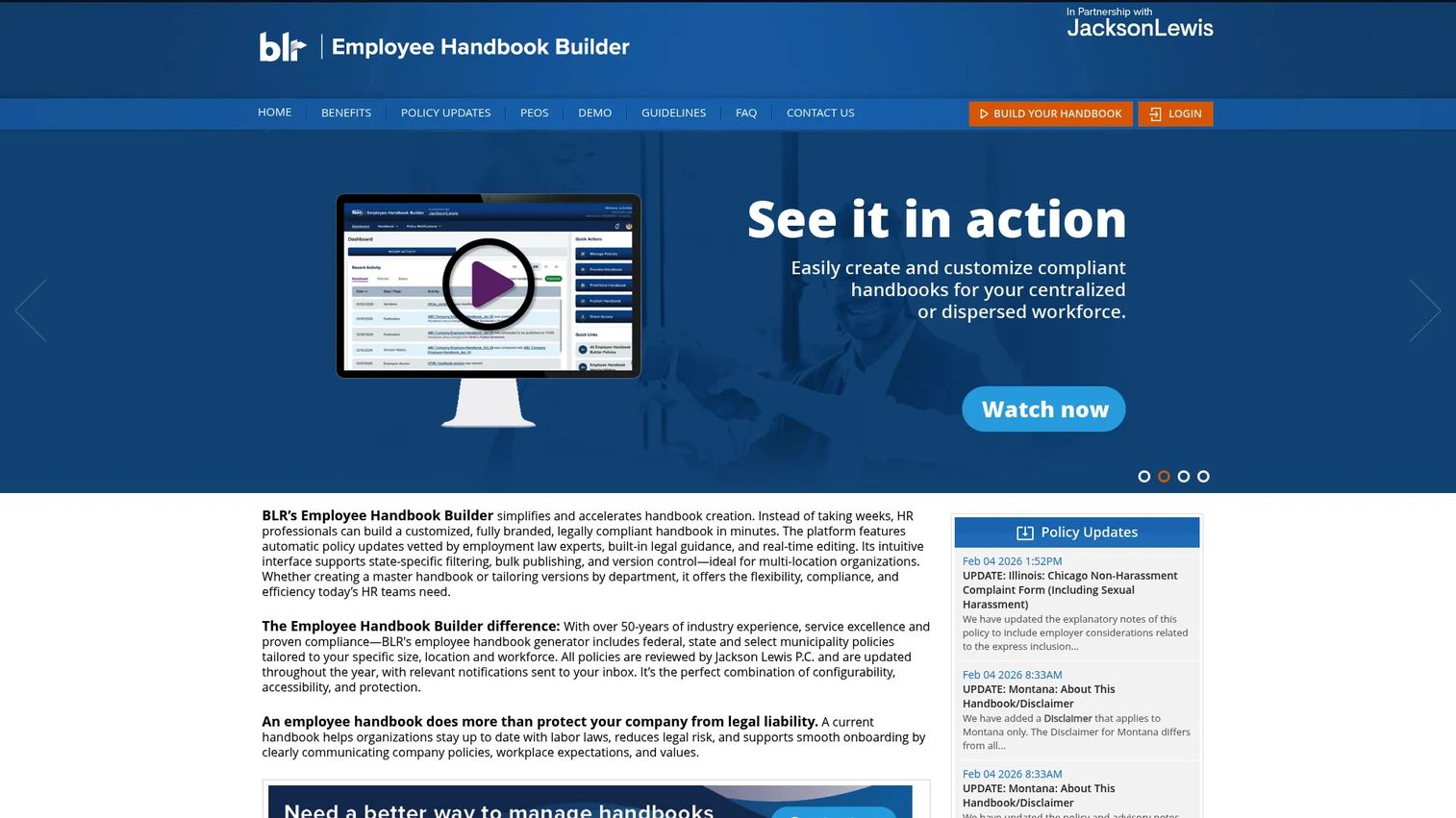
Employee Handbook Builder, developed by SHRM, is a web-based platform for building and maintaining compliant employee handbooks. It walks HR teams through a structured, step-by-step process covering all 50 states and federal requirements, producing a finished handbook in digital and print-ready formats. SHRM's backing means the underlying policy content reflects current employment law across jurisdictions.
Best for: HR teams and small to mid-size businesses that need a guided, compliant handbook without starting from scratch.
Key features
- Step-by-step guided handbook builder with policy prompts
- State-specific and federal policy coverage for all 50 states
- Compliance alerts when laws change and affect existing policies
- Digital and printer-friendly handbook output
Why choose Employee Handbook Builder: This tool is the right fit when your primary need is getting a legally sound handbook built quickly, not managing ongoing policy governance. The structured workflow removes guesswork for HR generalists who aren't employment lawyers.
Employee Handbook Builder pricing: An annual subscription runs $499/year, covering all 50 states and federal updates in one flat fee.
G2 rating: Not currently listed on G2. Check Capterra or TrustRadius for reviewer feedback before purchasing.
2. Blissbook
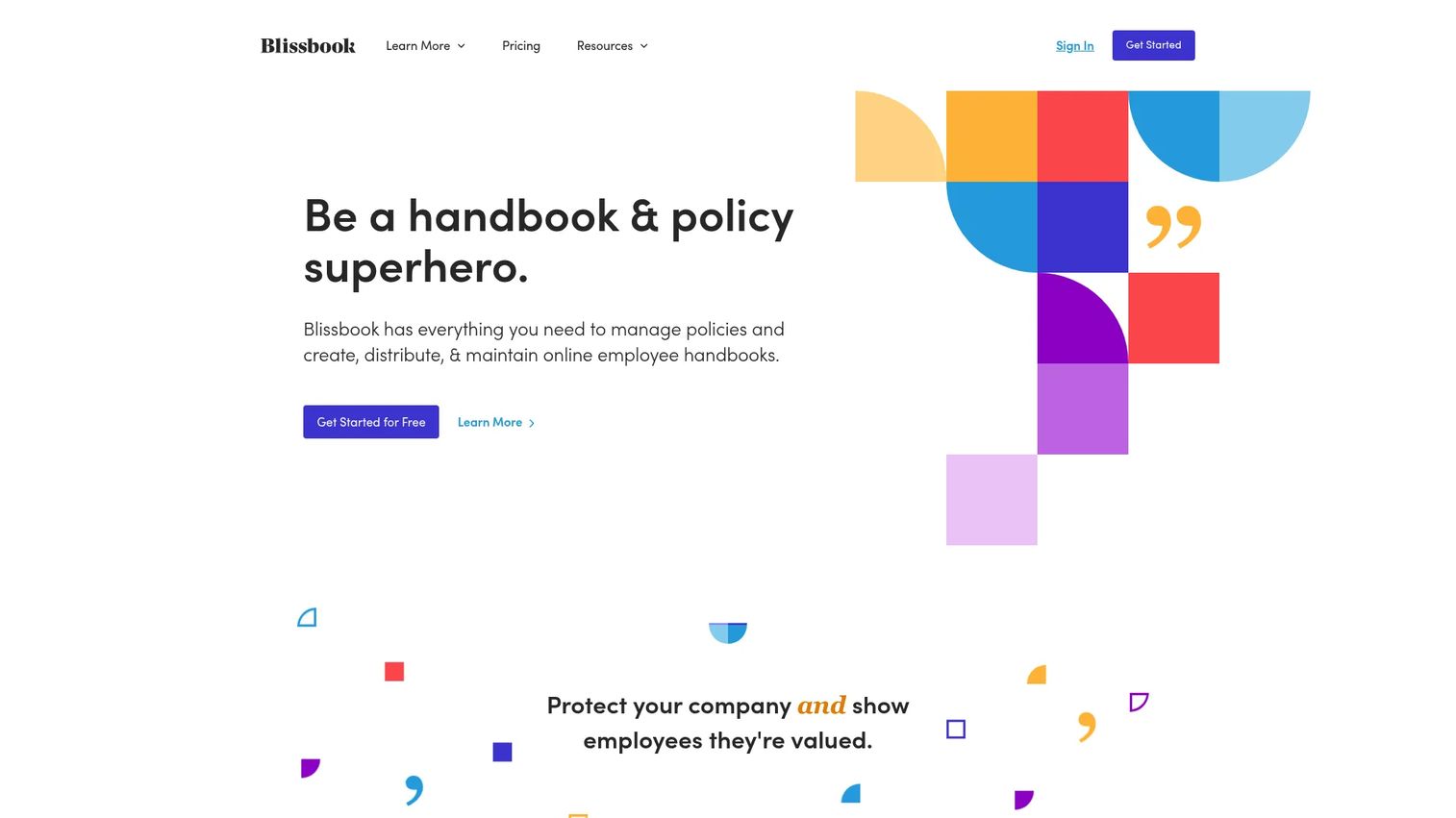
Blissbook is employee handbook software built around the full policy lifecycle: Create, publish, track acknowledgments, and update. It produces branded online handbooks that employees can read on any device, with e-signature collection and real-time completion dashboards for HR. Where most handbook builders stop at the document, Blissbook extends into policy management and compliance tracking.
Best for: HR teams that need a polished, branded digital employee handbook combined with auditable acknowledgment workflows.
Key features
- Branded online handbooks with custom fonts, colors, and logo
- E-signatures and signature tracking with completion dashboards
- Policy management with version history and tracked changes
- Employee notification workflows when policies update
Why choose Blissbook: The strongest case for Blissbook is acknowledgment tracking. If you need to prove that every employee read and signed the updated harassment policy before a compliance deadline, Blissbook gives you the audit trail. Teams that only need a document editor will find the platform more than they require at this price point.
Blissbook pricing: Two plans are available. Blissbook runs $249/month billed annually. Blissbook PRO runs $349/month billed annually. Add-ons and implementation services are priced separately. No free tier is available.
Rated 4.7/5 on G2.
3. Guideflow
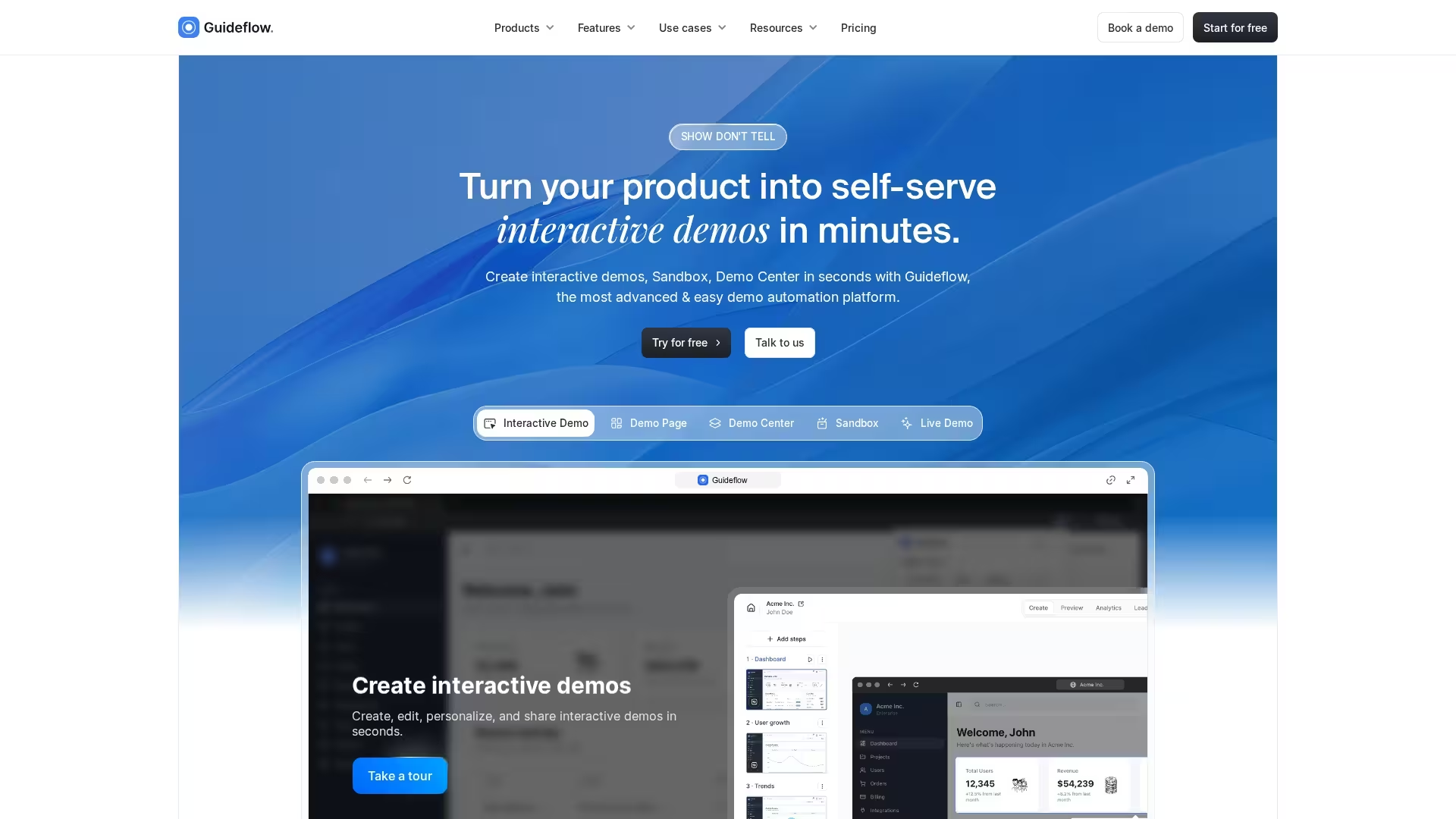
Guideflow is an interactive demo and product-tour platform that turns static walkthroughs into clickable, guided experiences. While it isn't a traditional policy builder, it's a strong complement to any handbook workflow: HR and People Ops teams use it to create interactive walkthroughs that show new hires how to navigate the handbook, complete onboarding steps, and find specific policies without wading through a wall of text. Instead of expecting employees to read a static document end to end, you can guide them through it step by step.
Best for: HR and People Ops teams that want to make handbook navigation and onboarding interactive, boosting the odds that new hires actually engage with policies.
Key features
- Interactive product tours and step-by-step guided walkthroughs
- Clickable demos for onboarding, handbook navigation, and policy explainers
- Easy sharing via link or embed inside your handbook, HRIS, or onboarding portal
- Analytics on views and engagement to see who's actually completing walkthroughs
Why choose Guideflow: The strongest case for Guideflow is engagement. A handbook only works if people read and understand it, and interactive walkthroughs consistently outperform static PDFs for retention. Guideflow layers a guided experience on top of whatever handbook tool you already use, making it a practical add-on for onboarding-heavy teams. It isn't a replacement for a compliance-focused builder or acknowledgment-tracking platform, so pair it with a dedicated handbook tool when audit trails and attorney-reviewed content are required.
Guideflow pricing: Guideflow offers a free plan to get started, with paid plans that add advanced customization, analytics, and collaboration features. Check the Guideflow pricing page for current tiers.
Rated 5.0/5 on G2.
4. BLR Employee Handbook Builder
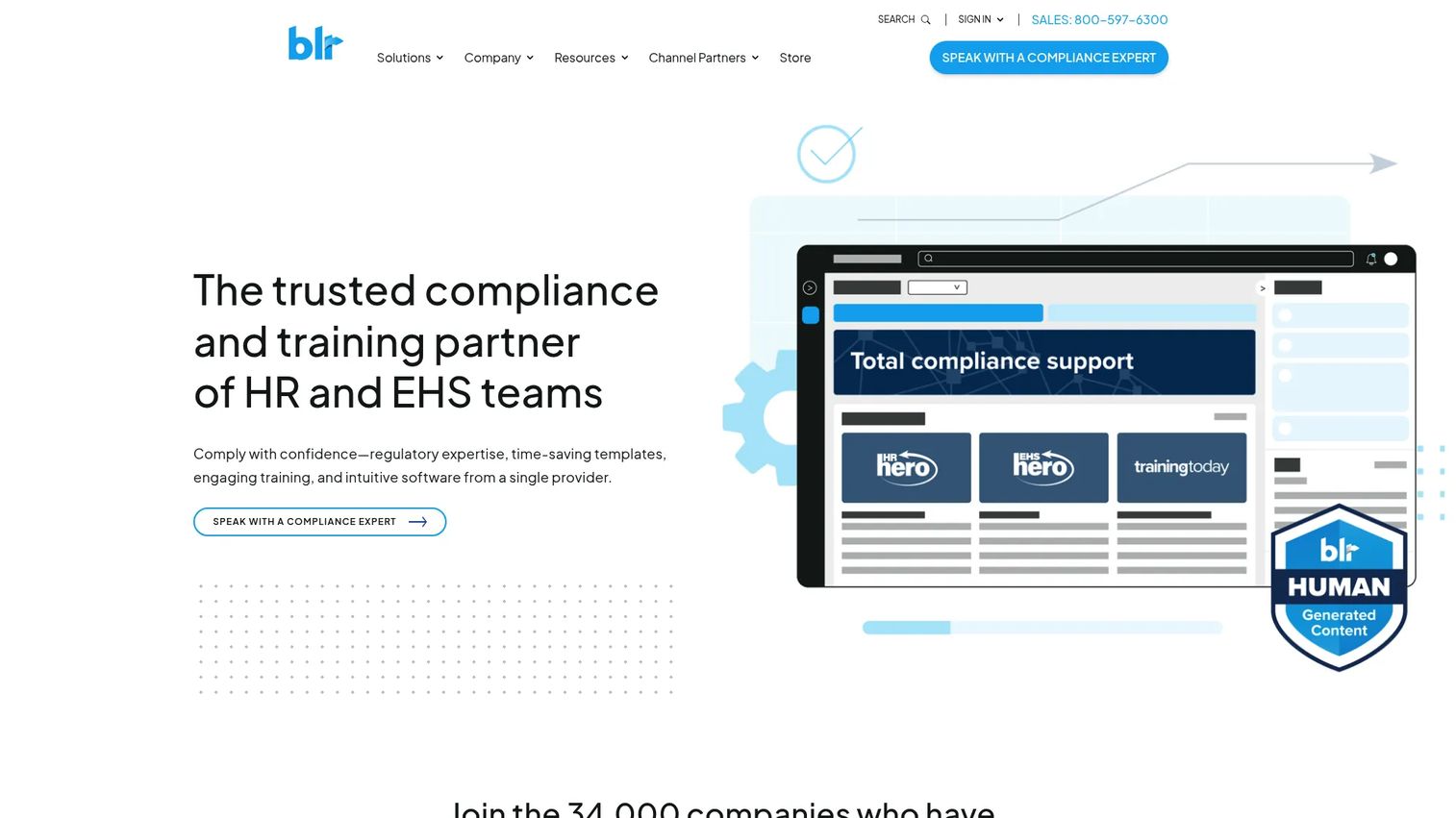
BLR's Employee Handbook Builder is a cloud-based handbook platform built for compliance-first HR teams. It provides attorney-reviewed policies, multi-state jurisdiction filtering, and policy update alerts with version history. The platform is structured for teams managing handbooks across multiple locations or employee classifications with different legal requirements.
Best for: HR teams and PEOs that need attorney-vetted handbook content and multi-state policy management in one place.
Key features
- Guided handbook creation with attorney-reviewed policy content
- Multi-state policy management with jurisdiction filtering
- Policy update alerts, version history, and tracked changes
- Digital distribution and handbook output options
Why choose BLR Employee Handbook Builder: The attorney-reviewed content is what separates this tool from generic builders. For companies with significant multi-state exposure, reducing legal review time on policy updates has real cost implications. If your primary concern is risk reduction rather than design flexibility, BLR is the more defensible choice.
BLR Employee Handbook Builder pricing: A flat subscription runs $499/year and covers up to 50 states plus Washington D.C.
G2 rating: Not currently listed on G2. Review on Capterra or TrustRadius for peer feedback before committing.
5. Mitratech Mineral
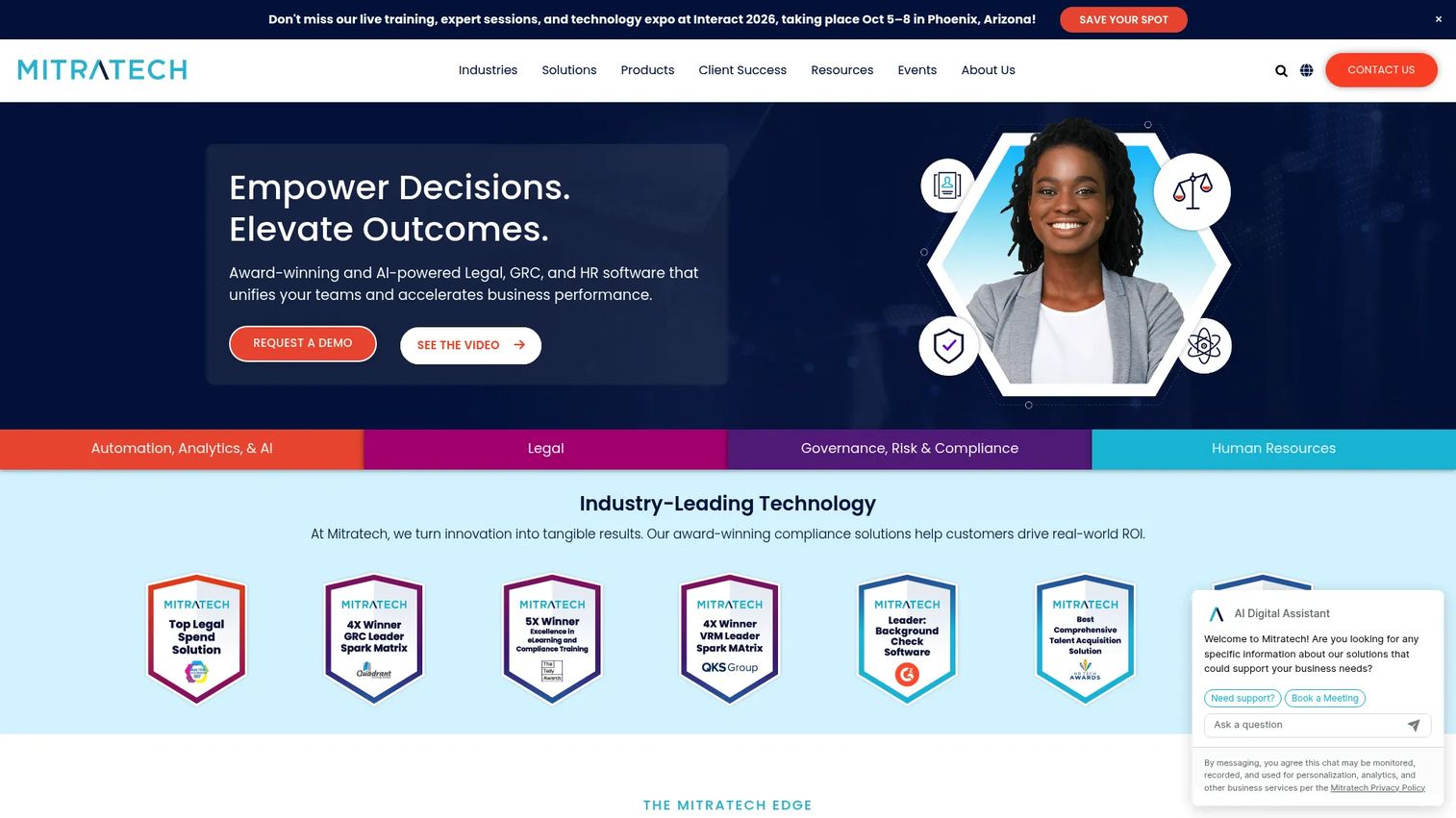
Mitratech Mineral is an HR compliance platform that monitors 3,000+ federal, state, and local employment laws and delivers alerts within 24 to 48 hours of a change. It includes handbook and job description tools, training resources, and access to HR experts for compliance questions. Mineral sits closer to an HR compliance management system than a standalone handbook builder.
Best for: Small and mid-sized businesses that need continuous compliance monitoring, expert HR guidance, and handbook tools in one subscription.
Key features
- Proactive alerts for 3,000+ employment law changes within 24 to 48 hours
- HR expert access for compliance questions and guidance
- Employee handbook, job description, and HR document tools
- Training resources and compliance workflow support
Why choose Mitratech Mineral: Mineral is the right tool when policy maintenance is more demanding than initial creation. If your legal environment changes frequently and you don't have in-house counsel reviewing every update, Mineral's monitoring and expert access fill that gap. The platform is less suited for teams whose primary need is design, distribution, or acknowledgment tracking.
Mitratech Mineral pricing: Custom pricing. Contact Mitratech directly for a quote, as no plans are listed on the product page.
Rated 4.8/5 on G2.
6. Connecteam
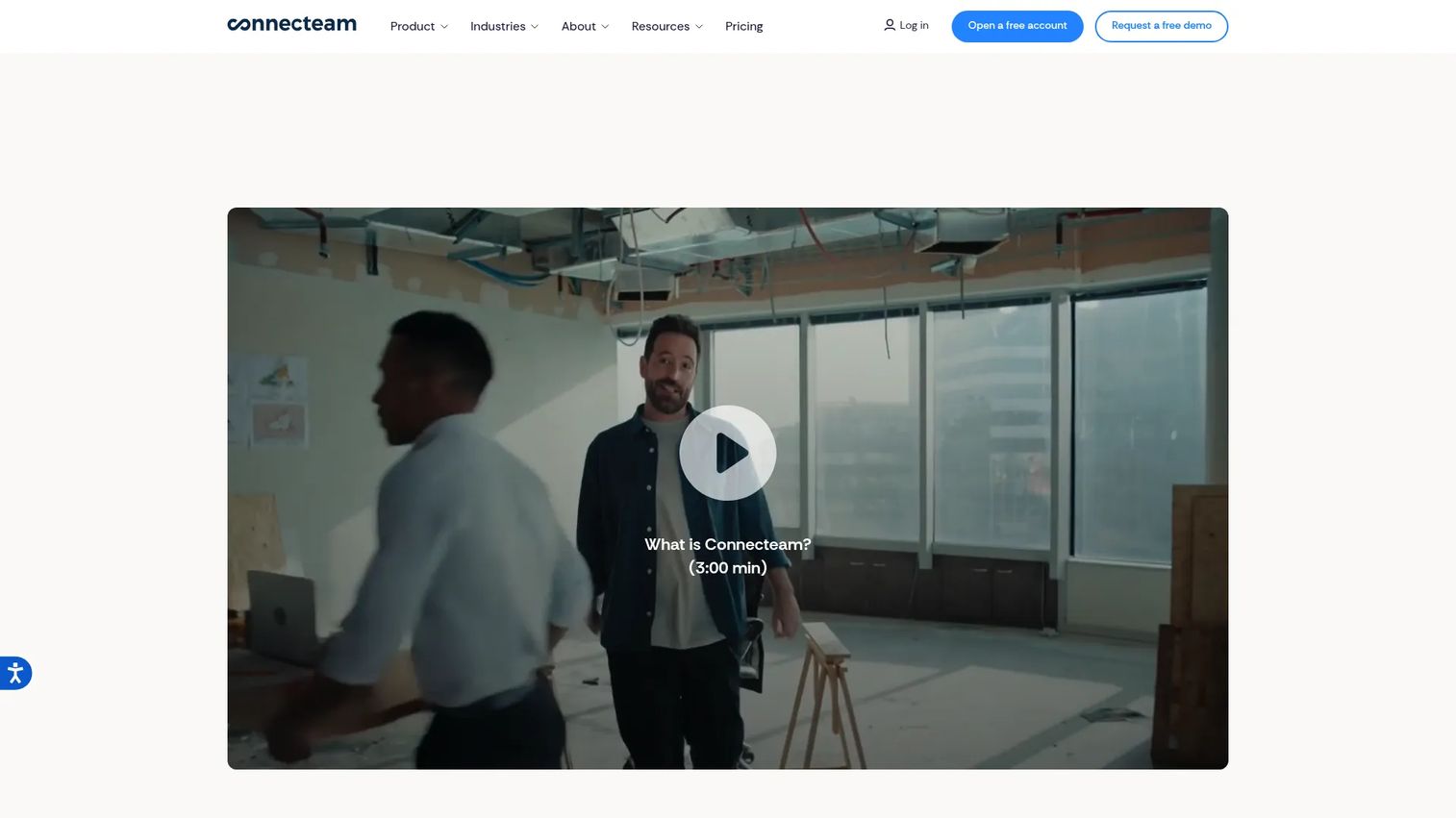
Connecteam is an all-in-one workforce management platform for frontline and deskless teams. It bundles time tracking, scheduling, team communication, and a knowledge base where HR documents and handbooks can be stored and distributed. Handbook access is one capability within a broader operational platform, which makes Connecteam practical for teams that don't want separate tools for HR documentation and day-to-day workforce management.
Best for: Frontline operations teams that want handbook access and HR document distribution inside the same app they use for scheduling and communication.
Key features
- Knowledge base for storing and distributing HR documents and handbooks
- Time clock with GPS clock-in/out for field and frontline workers
- Job scheduling and task management
- Team chat, updates, and company-wide announcements
Why choose Connecteam: The free tier for up to 30 users makes Connecteam the most accessible entry point on this list. For growing SMBs managing a frontline workforce, consolidating handbook distribution with scheduling and communication inside one mobile app reduces tool sprawl. If dedicated policy versioning, attorney-reviewed content, or detailed acknowledgment audit trails are non-negotiable, a purpose-built handbook tool is a better match.
Connecteam pricing: The Limited plan is free for up to 30 users. Paid plans start at $29/month (Basic), $49/month (Advanced), and $99/month (Expert), all covering the first 30 users with additional user fees above that. Enterprise is custom. A 14-day free trial is available.
Rated 4.6/5 on G2.
7. AirMason
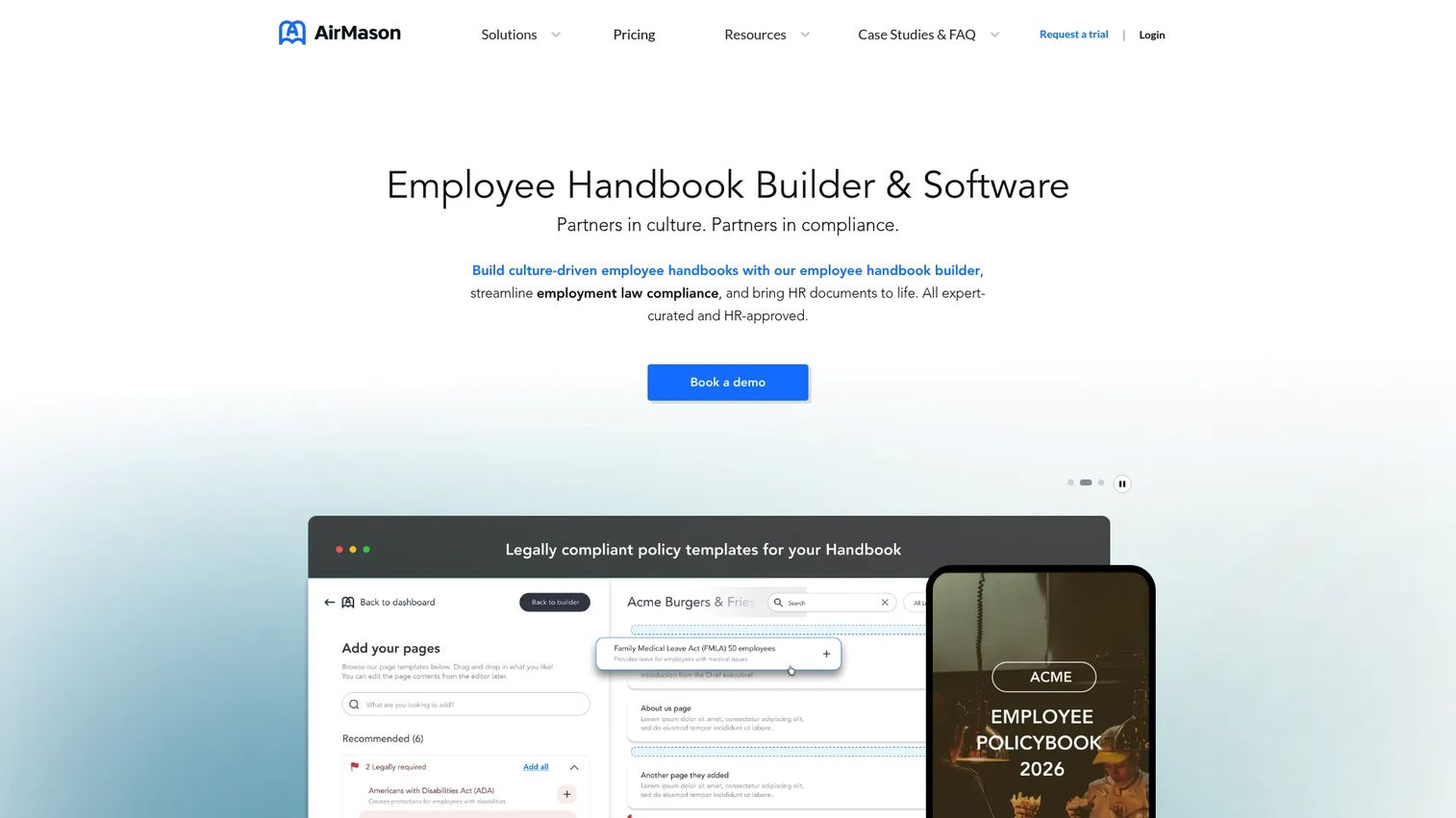
AirMason is digital employee handbook software focused on creating polished, branded handbooks with built-in distribution and compliance controls. It supports digital signature collection, automatic versioning with real-time updates, and HRIS and SSO integrations to automate handbook delivery to new hires. AirMason sits between a document design tool and a policy management platform, emphasizing the employee experience of reading the handbook as much as the HR team's operational workflow.
Best for: HR teams that want a visually branded digital handbook with distribution controls and HRIS connectivity, particularly at companies where employer brand matters.
Key features
- Digital handbooks with signature collection and completion tracking
- Automatic versioning and real-time policy updates
- HRIS and SSO integrations for automated distribution
- Branded design with custom colors, fonts, and layout
Why choose AirMason: AirMason is the right call when the handbook is a culture-carrying document, not just a compliance artifact. The design flexibility makes it useful for companies where how the handbook looks reflects how they treat employees. The G2 rating is based on a small review sample, so weigh it accordingly and check Capterra for additional context.
AirMason pricing: The Startup plan (1 to 99 employees) starts at $999/year or $149/month. The Small Business plan (100 to 199 employees) runs $1,499/year or $199/month. Enterprise pricing for 200+ employees is custom.
Rated 5.0/5 on G2 (based on a small number of reviews).
Considerations
Before committing to any handbook software, run through these four evaluation areas:
Compliance updates
Ask how the tool handles mid-year law changes. Some platforms send alerts and let you update manually; others, like Mitratech Mineral, monitor statutes continuously and flag your affected policies directly. The right answer depends on how much in-house HR or legal capacity you have to act on those alerts.
Version control and audit history
Verify whether the tool stores full edit history and tracks who approved each change. For regulated industries or companies with a history of employment disputes, having a timestamped record of every policy version matters more than ease of formatting. Check whether old handbook versions remain accessible after updates.
Acknowledgment tracking
Confirm that the tool captures individual e-signatures, timestamps them, and ties each signature to a specific handbook version. A completion dashboard is useful; an exportable audit report is what you actually need during an investigation or compliance review. Not every tool on this list offers both.
HRIS integration depth
Surface-level integrations sync employee names and departments. Deeper integrations trigger handbook delivery automatically at hire, update records when an employee acknowledges a new policy version, and deactivate access when someone offboards. Understand exactly what data flows between systems before assuming the integration covers your workflow.
Distribution and mobile access
If a significant share of your workforce doesn't sit at a desk, test the mobile experience before purchasing. A handbook that's hard to navigate on a phone won't get read, which defeats the purpose of tracking whether anyone read it.
Conclusion
The right employee handbook software depends primarily on two factors: How often your policies change and how rigorously you need to prove compliance.
For teams with frequent policy updates across multiple states, BLR Employee Handbook Builder or Mitratech Mineral offer the strongest legal infrastructure. For teams prioritizing acknowledgment tracking and a polished employee experience, Blissbook and AirMason are the clearest fits. If your challenge is getting new hires to actually engage with the handbook, Guideflow's interactive walkthroughs pair well with any of these tools. Fast-growing teams with frontline workers and limited budget should look at Connecteam's free tier first. And if you need a guided, template-driven build across all 50 states, SHRM's Employee Handbook Builder is the fastest path to a compliant handbook.
Start by mapping your actual bottleneck: Creation, updating, distribution, or acknowledgment tracking. The tools that solve your specific constraint are worth more than the ones with the most features overall. Request a trial or demo from your top two candidates, then test the update workflow specifically, not just the initial build.
FAQs
Employee handbook software is a platform for creating, updating, distributing, and tracking company policy documents and employee handbooks online. It replaces static PDFs with governed workflows that include version control, e-signature collection, and acknowledgment audit trails.
A complete handbook typically covers employment classifications, compensation and benefits, time-off policies, code of conduct, anti-discrimination and harassment policies, safety procedures, and disciplinary processes. State-specific policies covering leave, minimum wage, and mandatory disclosures should reflect each jurisdiction where you employ people.
Dedicated handbook software captures digital e-signatures tied to specific policy versions, records timestamps, and stores completion status per employee. HR teams can generate audit reports showing who acknowledged which version and when, which is the documentation you need during a compliance review or legal dispute.
At minimum, review your handbook annually. The Brightmine Employee Handbooks Survey Report (2025) found that 53% of organizations do exactly that, though 28% review infrequently or sporadically. A better practice is reviewing after any significant employment law change in your jurisdictions, after a policy incident, or when you expand into a new state.
For businesses with fewer than 20 employees and stable, single-state operations, a well-maintained document may suffice. Once you cross state lines, hire remotely, or start tracking acknowledgments for compliance reasons, the operational overhead of manual management typically exceeds the cost of software. Tools like Connecteam's free tier and SHRM's $499/year builder make the entry point low enough to justify for most small businesses.
Yes, though the degree depends on the tool. Platforms like Mitratech Mineral actively monitor employment law changes and alert you to policies that need updating. Others, like BLR Employee Handbook Builder, provide attorney-reviewed content that reflects current law at the time of publishing. Acknowledgment tracking creates the documentary evidence that employees were informed of your policies, which is relevant in employment disputes and regulatory audits.
A handbook builder focuses specifically on creating, updating, and distributing policy documents. Broader HR software, like an HRIS or workforce management platform, manages employee records, payroll, scheduling, and benefits, with handbook distribution as one feature among many. Connecteam and similar platforms fall into the second category. If policy governance is your primary need, a dedicated handbook tool gives you more depth in that specific workflow.
There's no universal legal requirement to collect signatures, but it's standard practice because a signed acknowledgment establishes that the employee received and reviewed the policies. In employment disputes, that record is often the difference between a defensible position and an exposed one. Most handbook software makes e-signature collection part of the standard distribution workflow.