You run one system for online ticketing. Another for point of sale. A third for memberships. A fourth for access control at the gate. When a guest buys a season pass online, redeems it at a kiosk, grabs food at a stand, and scans in at the ride queue, that journey touches five tools that were never built to talk to each other.
The cost shows up everywhere. Lines back up at entry because scan and validation live in separate systems. Staff spend hours every night reconciling POS totals against ticketing revenue. Membership renewals slip because the CRM never learned the pass expired. And when you try to answer a simple question, like how much a specific promotion actually earned, the data is scattered across four dashboards that each tell a slightly different story.
The global amusement park management software market is projected to hit USD 9.7 billion by 2030, up from USD 4.8 billion in 2024, growing at 11.0% a year, according to Strategic Market Research (2024). More than 68% of the world's 4,000-plus amusement parks have already deployed at least one centralized software platform for ticketing, operations, or visitor analytics, per Market Growth Reports (2024). The direction is clear: operators are consolidating fragmented tools into single platforms that handle the full guest journey and the full back office.
This matters because every disconnected system is a place where revenue leaks and guest experience degrades. The right platform closes those gaps. The wrong one adds another silo. So the question is not whether you need amusement park software, it is which platform actually replaces the stack you already pay for.
What's inside
This guide compares seven amusement park management software platforms built for parks, theme parks, water parks, and family entertainment centers. It is written for operators, GMs, and revenue leaders who are past the "do we need this" stage and are now comparing vendors on operational fit.
We selected platforms on four criteria: breadth of native modules (ticketing, POS, memberships, access control, reporting), quality of the guest-facing booking and entry experience, depth of operational and labor tooling, and how completely each one replaces separate systems. The list includes all-in-one cloud platforms and operational suites used across attraction venues of different sizes.
TL;DR
- Best all-in-one cloud platform: ROLLER Software covers online ticketing, POS, memberships, kiosks, and analytics in one system, with strong revenue and queue-reduction tooling.
- Best for labor and operational control: CenterEdge Advantage pairs admissions and retail POS with scheduling and team management for FECs.
- Best for high-volume online ticketing: accesso Passport is built for scale, with mobile-first checkout and smart pricing for large venues.
- Best for cashless RFID operations: Parafait (Semnox) leads on RFID wristbands, cashless spend, and integrated access control.
- Best for karting and activity-led venues: Clubspeed handles booking, POS, and recurring-visitor management with transparent pricing.
- Best focused venue suite: Tixera unifies ticketing, POS, and access control for amusement and water parks that want a tighter stack.
What is amusement park management software?
Amusement park management software is an operational platform that runs ticketing and admissions, point of sale, memberships, access control, guest engagement, and reporting for parks, theme parks, water parks, and family entertainment centers from a single system.
Instead of stitching together a webstore, a POS terminal, a gate scanner, a CRM, and a spreadsheet for reporting, a theme park management software platform connects those functions so a guest transaction flows end to end and the data lands in one place. The best amusement park management software is typically delivered as a cloud platform, which is why cloud-based deployments already account for 58.5% of category spend, according to Strategic Market Research (2024).
Core components you should expect:
- Ticketing and admissions: Online booking, timed entry, group sales, reservations, and multi-channel sales so guests buy before arrival and staff process entry fast.
- Amusement park POS software: Retail, food and beverage, and concessions checkout with inventory, so on-site spend is captured and tracked alongside ticketing revenue.
- Memberships and season passes: Recurring billing, renewals, and pass validation that connect to CRM for targeted promotions and repeat visitation.
- Access control: Gate scanning, RFID wristbands, and cashless payments that validate entry and spend without a separate system.
- Webstore and self-service kiosks: Omnichannel guest purchasing that shifts transactions to lower-cost channels and cuts lines at the gate.
- Reporting and analytics: Revenue, capacity, labor, and guest behavior data in one dashboard so you stop reconciling numbers across tools.
When to use amusement park software
Replace separate systems
If your team logs into one tool for online ticketing, another for POS, a third for memberships, and a fourth for reporting, you are paying the fragmentation tax. Data lives in silos, staff manually reconcile totals every night, and no single view shows how a promotion or a season pass performed end to end. This is the clearest trigger to move to an all-in-one platform: you are outgrowing disconnected tools and the manual work between them is eating labor hours that should go to guests.
Improve guest flow and entry
When lines at the gate are your bottleneck, the fix is usually software, not more staff. Online booking shifts purchases before arrival. Timed entry spreads demand across the day. Scan-and-go entry and RFID wristband validation move guests through the gate in seconds instead of minutes. If your peak-day entry experience is where complaints cluster, prioritize amusement park ticketing software with fast validation and mobile-friendly checkout.
Grow revenue with pre-arrival and on-site spend
Every guest is a chance to sell more than admission. Pre-arrival upsells, add-ons, and webstore purchases lift average order value before the guest even shows up. On-site retail, food and beverage, gift cards, and cashless spend capture the rest. When these connect to memberships and CRM, you can target promotions to the guests most likely to convert, which lifts guest lifetime value over a season, not just a single visit.
Comparison table
Here is a compact side-by-side view to help you shortlist before reading the full sections. Ratings are from G2 where available; pricing reflects each vendor's public pricing page at time of writing.
| # | Product | Intent | Key use case | Pricing | G2 rating |
|---|---|---|---|---|---|
| 1 | ROLLER Software | All-in-one cloud platform | Booking, POS, memberships, kiosks, analytics | 4 plans (Lite, Pro, Premium, Enterprise); 14-day free trial | 4.3/5 |
| 2 | CenterEdge Advantage | Operations + labor control | Admissions, retail POS, scheduling, team management | From $300/month (1–3 workstations) | 3.9/5 |
| 3 | accesso Passport | High-volume online ticketing | Mobile-first checkout, smart pricing, guest commerce | Quote-based | Not listed |
| 4 | Parafait (Semnox) | Cashless RFID operations | RFID wristbands, POS, access control, events | Quote-based | 4.6/5 |
| 5 | Tixera | Focused venue suite | Ticketing, POS, RFID access control | Quote-based | 4.4/5 |
| 6 | Clubspeed | Activity-led venues | Booking, POS, recurring-visitor management | From $399/month (Core) | 4.7/5 |
| 7 | Aluvii | All-in-one for smaller operators | POS, ticketing, memberships, waivers, HR | Quote-based | Not yet rated |
1. ROLLER Software
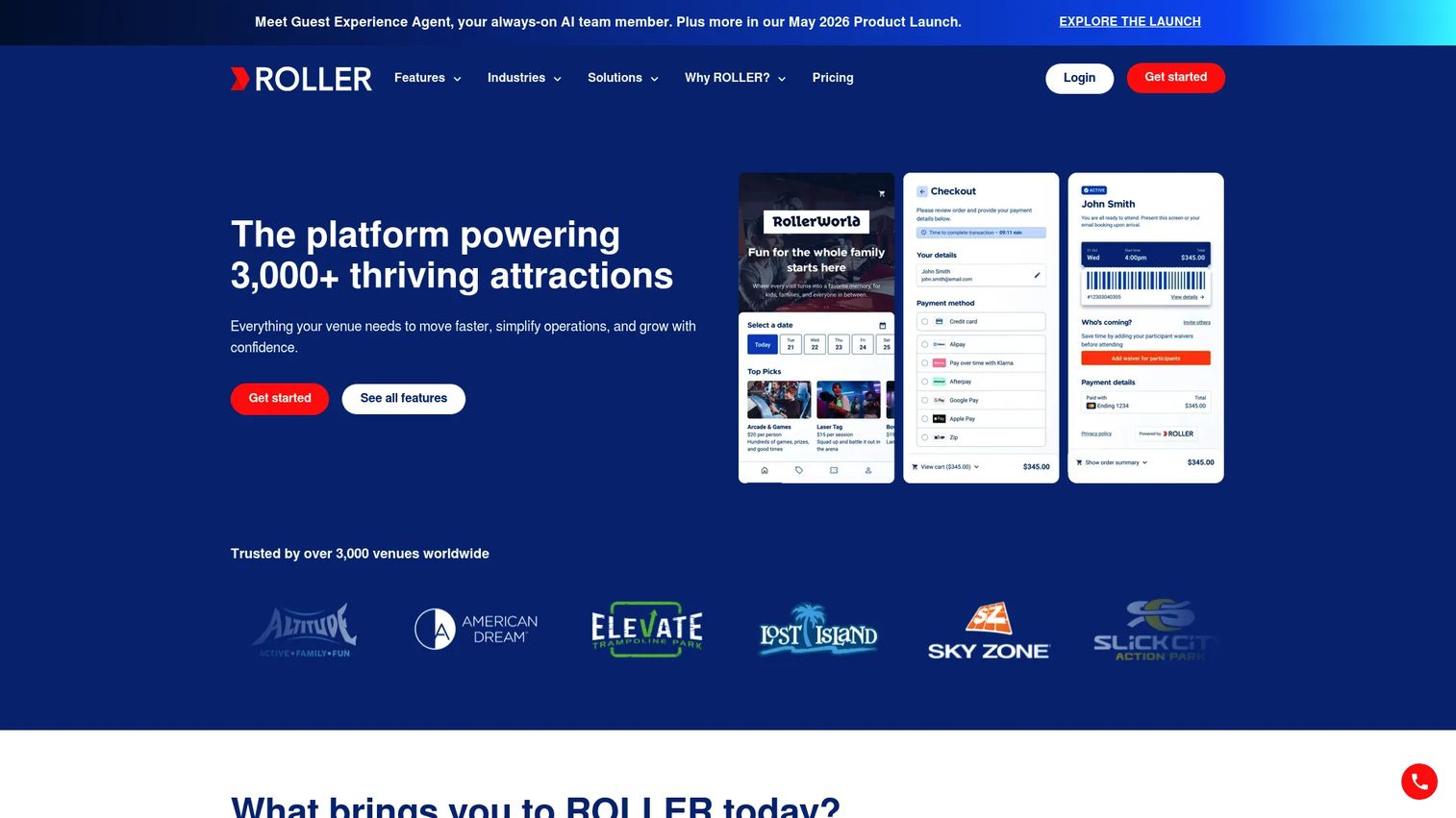
ROLLER Software is a cloud-based venue management platform built for attractions businesses that want booking, POS, and operations in one system. It positions itself as an all-in-one platform for amusement and theme parks, covering the full guest journey from the moment someone books online to the moment they scan in at the gate and spend on-site. The pitch is consolidation: one system instead of a stack of disconnected tools.
Best for: Attractions venues that need an all-in-one booking, POS, and venue management platform without stitching together separate systems.
Key strengths
- Online ticketing and checkout: Guests book and pay before arrival, shifting demand off the gate and lifting pre-arrival revenue.
- Point of sale and self-serve kiosks: Retail, food and beverage, and self-service kiosks capture on-site spend and cut entry lines.
- Memberships, waivers, reporting, and analytics: Season passes, digital waivers, and a unified analytics view connect repeat visitation to revenue data.
Why choose ROLLER Software: If your priority is replacing four or five tools with one cloud platform, ROLLER is built for exactly that consolidation. It leans hard into revenue growth and queue reduction, which are the two metrics operators feel most on peak days. The all-in-one breadth means fewer nightly reconciliations and one dashboard instead of four.
ROLLER Software pricing: ROLLER publicly lists four plans: Lite, Pro, Premium, and Enterprise. The pricing page does not display numeric prices, so packaging is tailored to venue needs, and the company offers 14-day free trials so you can evaluate the platform before committing. ROLLER holds a 4.3/5 rating on G2.
2. CenterEdge Advantage
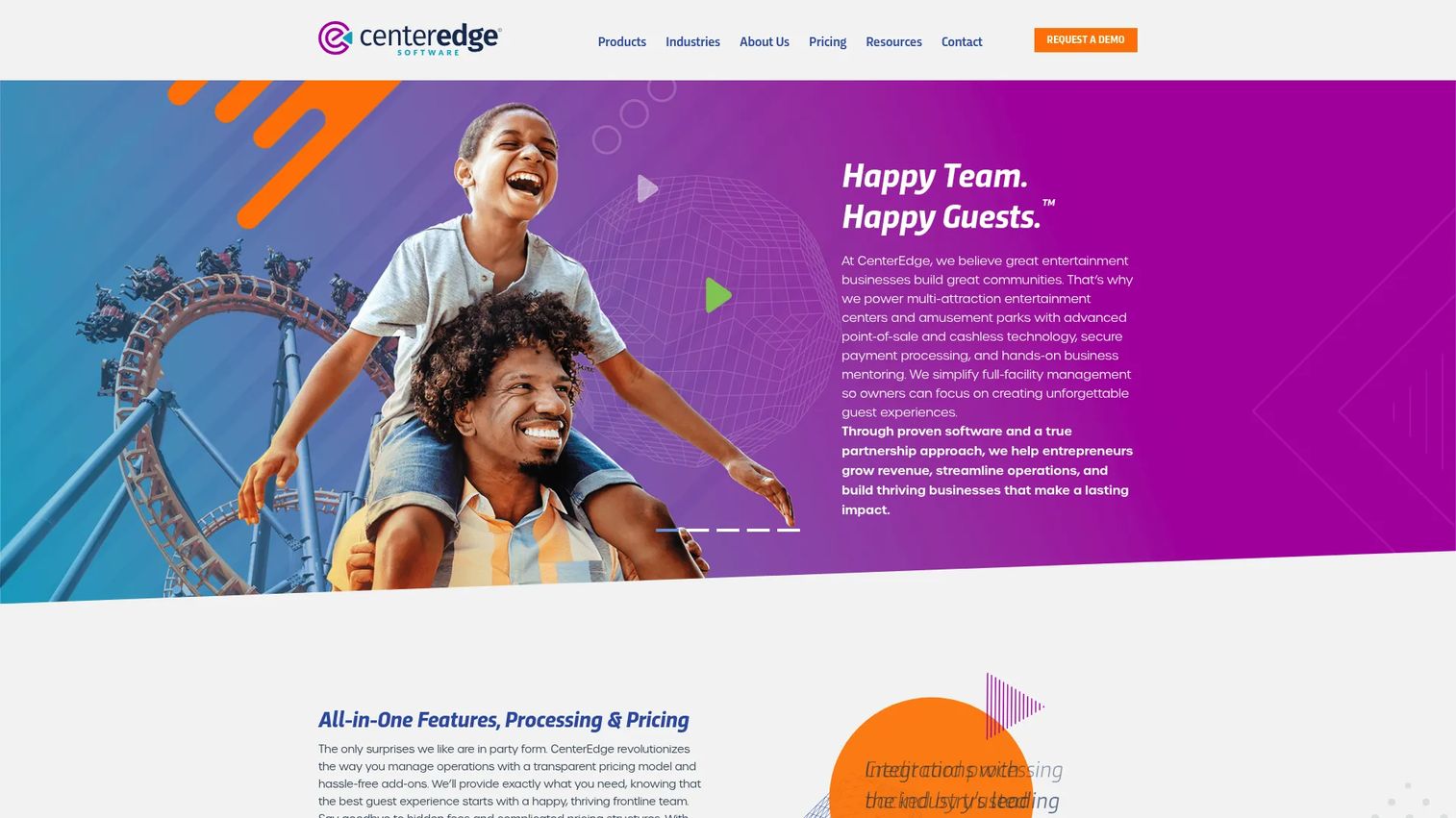
CenterEdge Advantage is software for amusement, entertainment, and family entertainment centers to manage POS, sales, reporting, and operations. Its strongest angle is operational and labor control: alongside admissions and retail POS, it brings scheduling and team management into the same platform, which matters when labor is one of your largest controllable costs. The Advantage Suite spans sales, events, and a management console.
Best for: Amusement and family entertainment businesses that need an all-in-one operations platform with real labor visibility.
Key strengths
- Full Advantage Suite: Advantage Sales, Events, and Console cover admissions, group sales, and back-office operations in one platform.
- Integrated payments and web theming: CenterEdge Payments and web-theming keep the guest-facing webstore and checkout consistent with your brand.
- Cashless play and add-ons: CenterEdge Play cashless access plus add-ons like Redemption, Integrations, and Digital Signage extend the platform to arcades and attractions.
Why choose CenterEdge Advantage: Choose CenterEdge when labor efficiency and operational control are your top priorities, not just guest-facing checkout. The scheduling and team management tooling reduce the manual reconciliation that eats staff hours, and the workstation-based pricing scales predictably as you add terminals.
CenterEdge Advantage pricing: CenterEdge uses bundled monthly pricing based on workstation count. Plans start at $300/month for 1–3 workstations, $550/month for 4–9, and $800/month for 10–15, with 16 or more workstations quoted directly. Optional add-ons include Redemption, Integrations, and Digital Signage. CenterEdge Advantage holds a 3.9/5 rating on G2.
3. accesso Passport
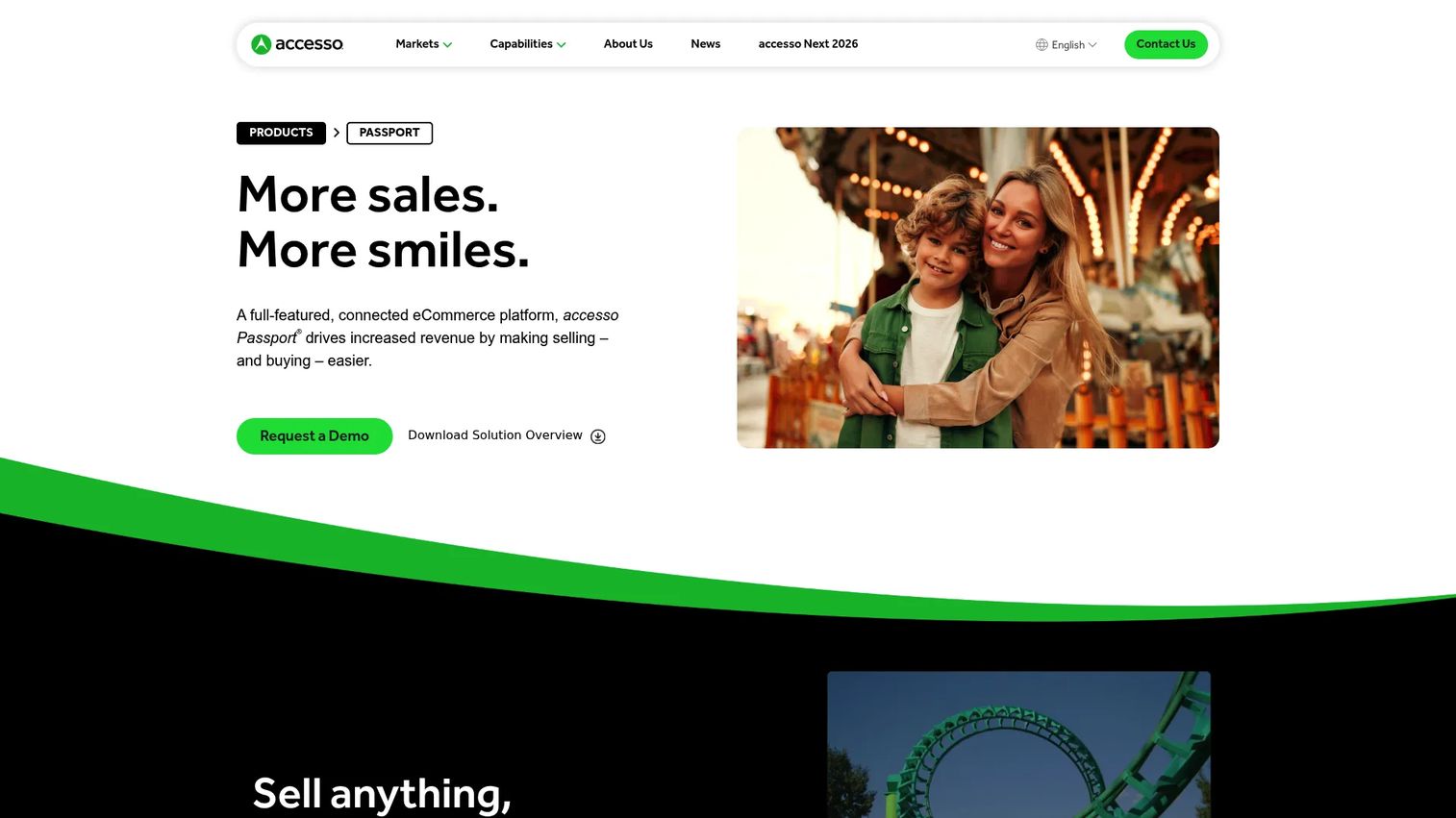
accesso Passport is an end-to-end SaaS online ticketing and eCommerce sales platform built for high-volume venues. Where some tools cover breadth, Passport goes deep on the ticketing and guest commerce side, which is why it fits larger venues and complex attractions where entry volume and checkout conversion drive the business. It is a strong choice when the sheer scale of ticketing is the operational challenge.
Best for: Attractions and larger venues that need a scalable online ticketing and guest commerce platform.
Key strengths
- Mobile-first checkout and e-commerce: A checkout built for phones lifts conversion where most guests now buy tickets.
- Smart pricing and capacity tools: Dynamic pricing and capacity management spread demand and protect margin on peak days.
- Self-service guest portal with POS integration: A guest portal plus Android scanning and POS integration connect online sales to on-site entry and spend.
Why choose accesso Passport: Choose Passport when the online ticketing volume itself is your bottleneck and you need a platform engineered for scale. The mobile-first checkout, smart pricing, and 24/7 SaaS support are built for venues where thousands of transactions per hour are normal and downtime is expensive.
accesso Passport pricing: accesso does not publish numeric pricing for Passport; the platform is quote-based, so packaging reflects venue scale and volume. A current G2 star rating for the specific product was not publicly listed at time of writing. For high-volume operators, the evaluation is best done through a direct scoping conversation with accesso.
4. Parafait
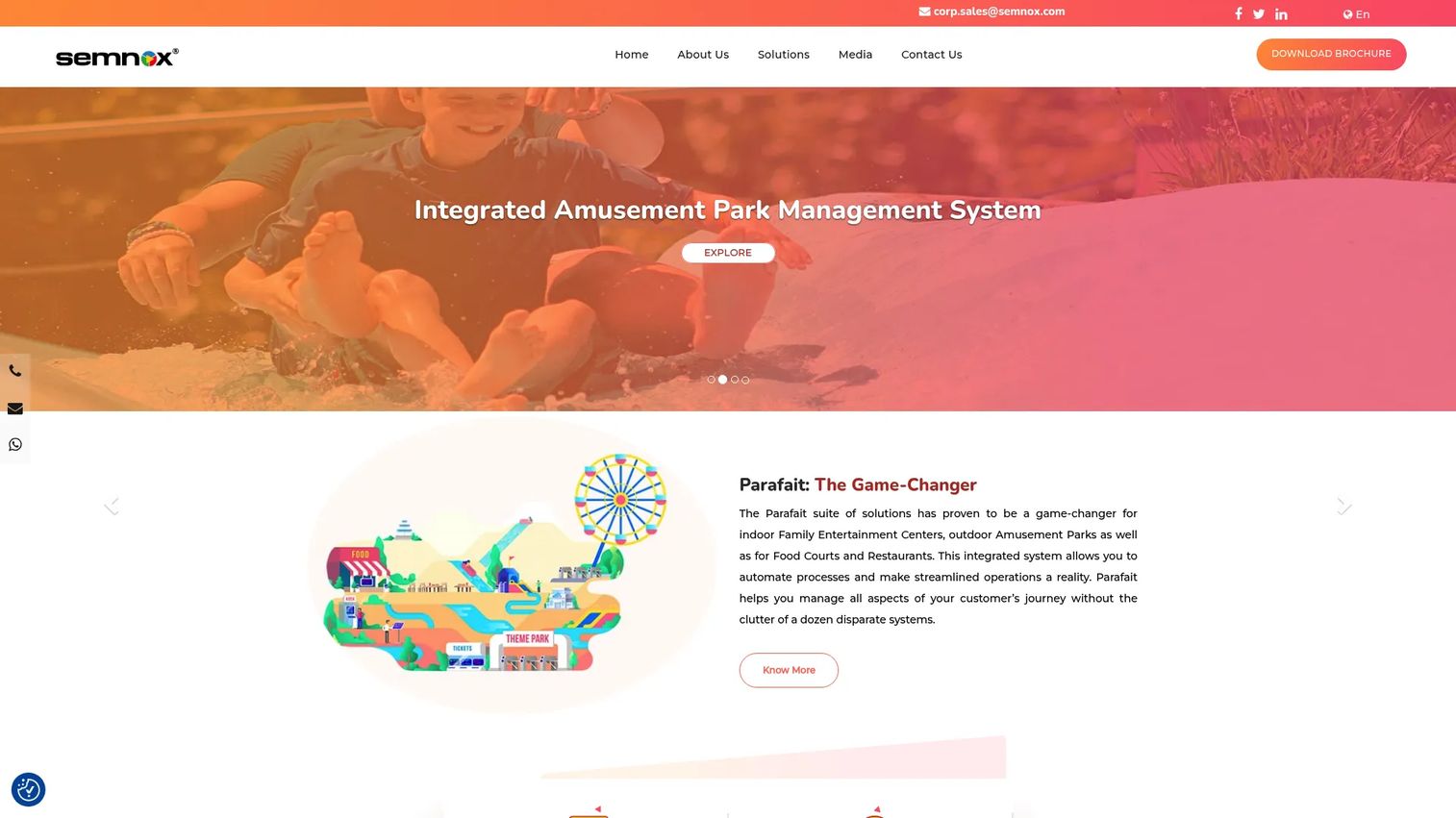
Parafait, Semnox's integrated venue management suite, is built for FECs, amusement parks, water parks, theme parks, and food and beverage operations. Its signature strength is cashless RFID: wristbands and cards paired with wireless readers that handle both entry and on-site spend. For parks that want a single credential to move guests through the gate and let them tap to pay everywhere inside, Parafait is purpose-built for that model.
Best for: Entertainment venues that need an integrated operations platform with strong cashless RFID and access control.
Key strengths
- Cashless RFID cards and wristbands: Wireless readers turn one credential into entry, spend, and access, reducing friction across the park.
- Point of sale with staff controls: Table service, bill-splitting, and staff permissions cover food and beverage alongside retail.
- Party booking, ticketing, and access control: Event and party bookings, ticketing, and gate access run in one connected suite.
Why choose Parafait: Choose Parafait when cashless spend and RFID access are central to how your park operates, especially in mixed entertainment and admissions environments. The RFID-first design ties admission, spend, and access to one credential, which simplifies both the guest experience and back-office reconciliation.
Parafait pricing: Semnox does not publish a public first-party price for Parafait, so pricing is quote-based and tailored to venue scope. The product carries a 4.6/5 rating on G2, one of the higher scores in this list, based on reviewer feedback about its integrated operations and RFID capabilities.
5. Tixera
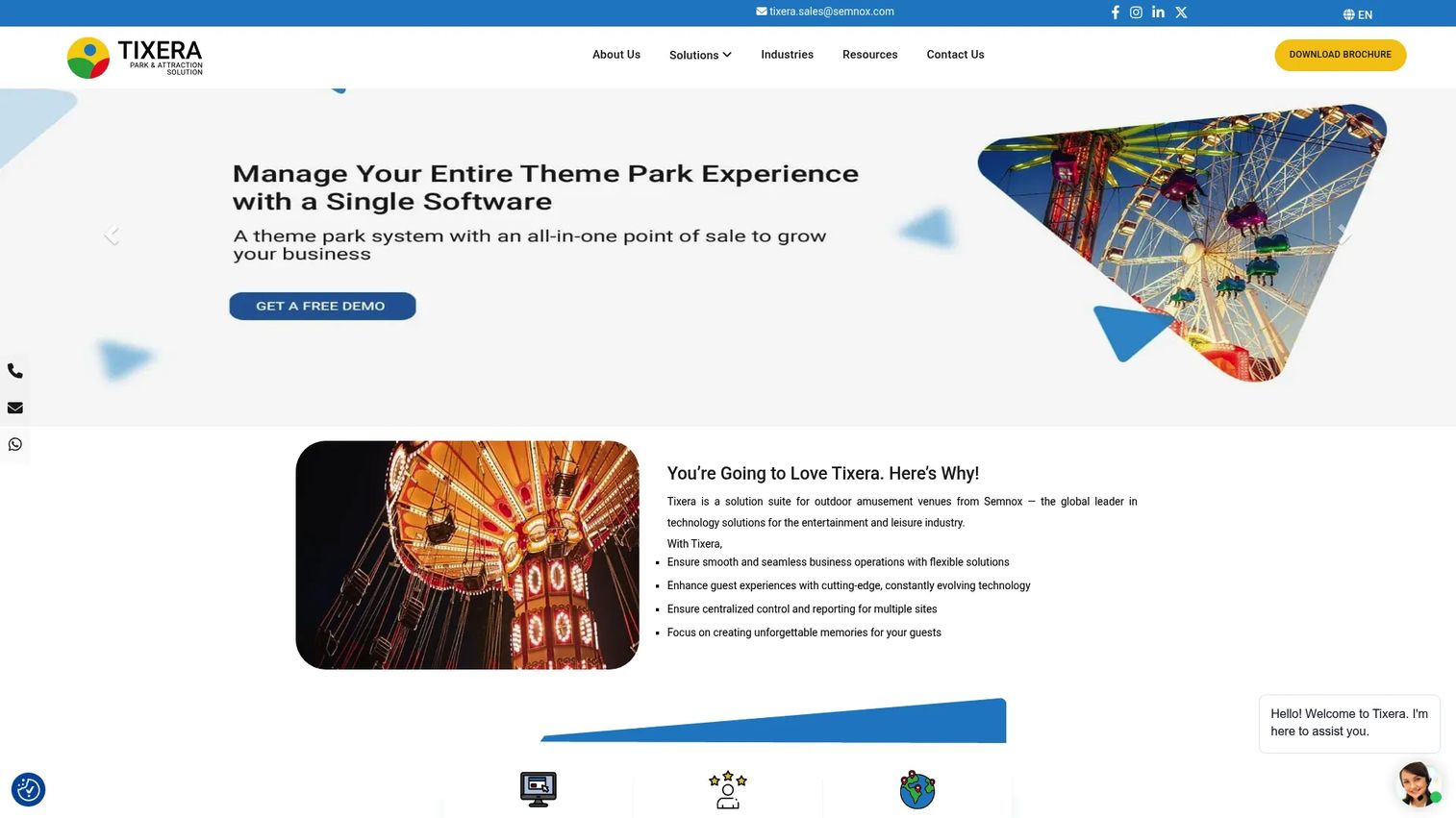
Tixera is unified outdoor venue management software for amusement and water parks. It focuses on the core operational stack: online ticketing, POS and entry ticketing, and cashless RFID access control. For venues that want a tighter, more focused software stack rather than a sprawling suite, Tixera keeps the essential guest journey modules connected without excess.
Best for: Amusement, theme, and water park operators who want a focused all-in-one platform centered on the core guest journey.
Key strengths
- Online ticketing: Guests buy before arrival, shifting demand off the gate and improving entry flow.
- POS and entry ticketing: Retail, food and beverage, and admissions checkout run in one connected system.
- Cashless and RFID access control: RFID access ties entry and spend to a single credential, cutting friction at the gate.
Why choose Tixera: Choose Tixera when you want the essential ticketing, POS, and access control modules working together without a heavier enterprise suite. The focused scope suits operators who value guest-journey simplification and a cleaner stack over exhaustive feature breadth.
Tixera pricing: Tixera does not display public pricing; the vendor directs prospects to request a free demo and a scoping conversation. Packaging is therefore quote-based and tied to venue needs. Tixera holds a 4.4/5 rating on G2, reflecting positive reviewer sentiment on its unified approach for outdoor venues.
6. Clubspeed
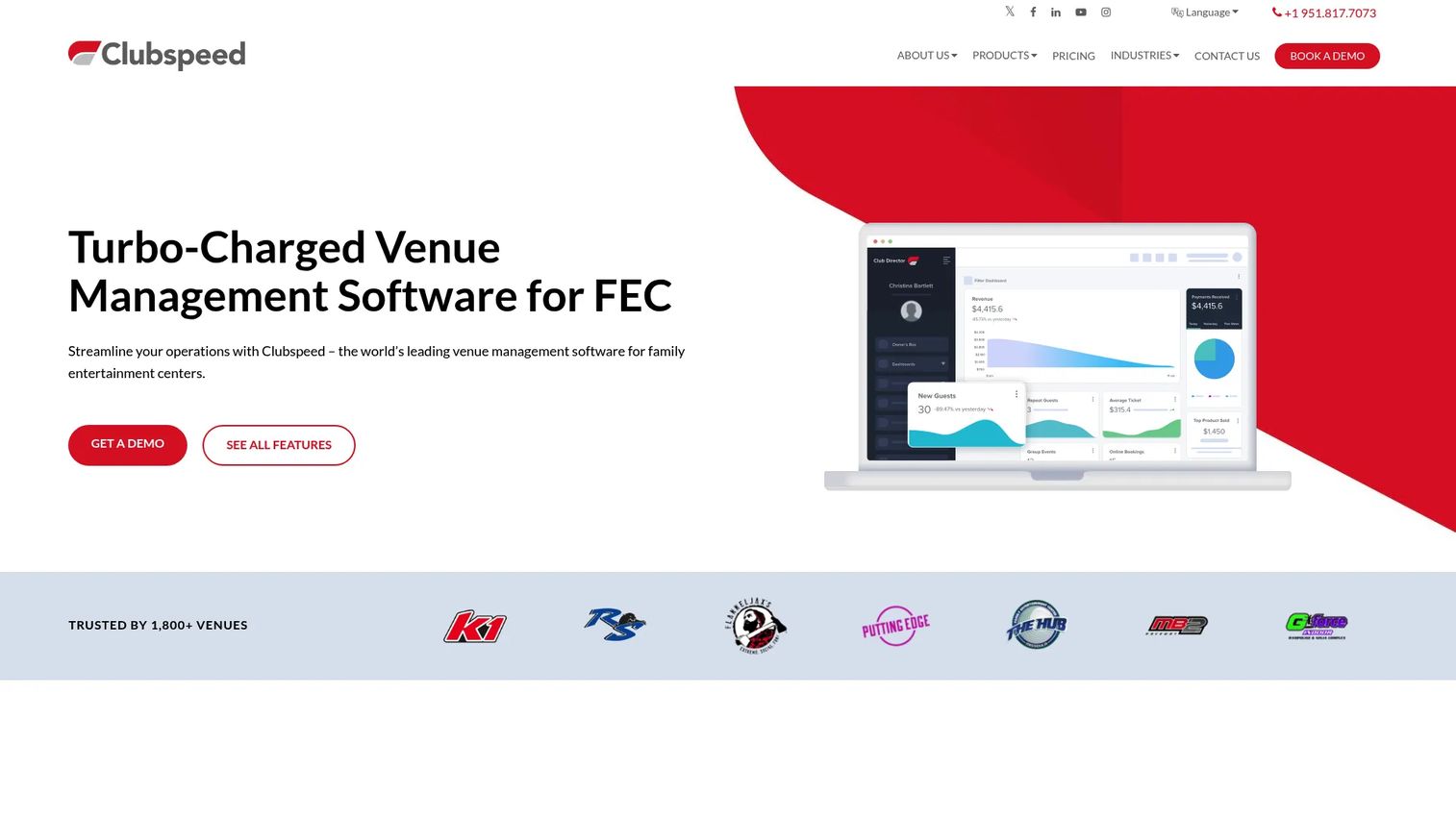
Clubspeed is venue management software for activity centers, karting, family entertainment centers, and similar entertainment venues. Its strength is managing recurring visitors and the operational flow of activity-led attractions: booking, POS, memberships, and reporting in one system. For venues where repeat visitation and loyalty drive the business, Clubspeed keeps booking and membership management tightly connected.
Best for: Karting and family entertainment venues that need booking, POS, and operations management in one system with strong repeat-visitor support.
Key strengths
- Point of sale: Retail, food and beverage, and activity checkout run through one POS.
- Online booking: Guests reserve slots and activities in advance, smoothing capacity and reducing walk-up friction.
- Customizable reporting and analytics: Configurable reporting surfaces revenue, capacity, and repeat-visitor behavior.
Why choose Clubspeed: Choose Clubspeed when repeat visits and memberships are core to your model and you want transparent, fixed-fee pricing. The booking and membership tooling suit attraction-heavy venues with loyalty needs, and the published pricing makes budgeting straightforward without a lengthy sales cycle.
Clubspeed pricing: Clubspeed publishes fixed monthly-fee plans. Core starts at $399/month and Premium at $699/month, with annual pricing also available for both, and Enterprise quoted directly. There is no free tier listed. Clubspeed holds a 4.7/5 rating on G2, the highest score in this list, reflecting strong reviewer satisfaction with booking, POS, and operations.
7. Aluvii
Aluvii is cloud-based amusement and leisure management software that covers POS, ticketing, e-commerce, memberships, bookings, and staff operations. Its angle is all-in-one breadth for smaller and mid-sized operators who want to run the whole venue from one platform rather than assembling separate systems. Because it bundles operations tooling like time clock and HR alongside guest-facing modules, it aims to be the single system for the full venue.
Best for: Amusement and leisure venues, especially smaller to mid-sized operators, that want an all-in-one operations platform without stitching together separate tools.
Key strengths
- POS, ticketing, gift cards, e-commerce: Guest-facing sales across online and on-site channels run through one platform.
- Memberships, birthdays, events, and digital waivers: Season passes, party bookings, classes, and waivers cover repeat visitation and events.
- Time clock, HR, and payroll reporting: Built-in labor tooling keeps scheduling and staff operations inside the same system.
Why choose Aluvii: Choose Aluvii when you want broad coverage across guest-facing and back-office operations in a single cloud platform and you run a smaller to mid-sized venue. The breadth means one login for ticketing, POS, memberships, and staff management, which appeals to lean teams that would rather not manage a multi-vendor stack.
Aluvii pricing: Aluvii does not expose a public numeric price on its own domain; the site references a free demo and monthly payment without listed figures, so pricing is best confirmed directly with the vendor. Aluvii is not yet rated on G2, as its listing shows no reviews at time of writing, so lean on a demo and reference checks to evaluate fit.
Considerations before you buy
Before you commit to any amusement park software, work through this checklist against your actual operation.
All-in-one breadth
Confirm the platform truly replaces your separate ticketing, POS, CRM, and access control tools rather than covering some and integrating loosely with others. Ask which modules are native and which are add-ons or third-party integrations. A platform that owns the full guest journey natively will reconcile cleaner and break less than one bolted together from parts.
Guest-facing experience
Evaluate the online booking flow, kiosk screens, mobile entry, and every self-service step a guest touches. Buy a test ticket on your phone. Time how long a scan takes at the gate. Families and repeat visitors abandon slow checkouts, so the guest-facing journey has to be fast and obvious, not just functional.
Operations and labor
Look for scheduling, time clock, labor visibility, and staff workflow controls, because labor is usually your largest controllable cost. Prioritize platforms that cut manual reconciliation, since every hour staff spend matching POS totals to ticketing revenue is an hour not spent on guests.
Reporting and integrations
Confirm reporting covers revenue, capacity, labor, and guest behavior in one view, not four exports you merge yourself. Then verify integrations with your payment processor, CRM, accounting, and business intelligence tools. Integrations are what stop your team from rebuilding data by hand every week.
Deployment and support
Clarify whether the platform is cloud, hosted, or on-site, and match that to your infrastructure and connectivity. Cloud dominates the category for a reason, but your venue's realities matter. Confirm implementation support, hardware compatibility for scanners and kiosks, and the service levels you get on a peak Saturday when something breaks.
Conclusion
The right amusement park management software depends on venue size, operational complexity, and how much consolidation your team actually wants. There is no single best answer, only the best fit for how your park runs.
If you want a cloud all-in-one platform that covers booking, POS, memberships, and analytics, ROLLER Software is the broad pick. If labor and operational control top your list, CenterEdge Advantage brings scheduling and team management alongside POS. For high-volume online ticketing at scale, accesso Passport is engineered for it. Parafait leads on cashless RFID and access control, Tixera keeps the core guest-journey stack focused, and Clubspeed fits activity-led and karting venues with transparent pricing. Aluvii suits smaller to mid-sized operators who want breadth in one system.
Your next step is simple: shortlist two or three platforms that match your venue type, then request demos and comparison calls. Buy a test ticket, time an entry scan, and pull a sample report during each demo. The platform that replaces the most tools while making the guest journey faster is the one worth your budget.
FAQs
Amusement park management software is an operational platform that runs ticketing and admissions, POS, memberships, access control, guest engagement, and reporting for parks and attractions from a single system. It replaces the disconnected tools most venues start with, so a guest transaction flows end to end and the data lands in one place instead of scattered across dashboards.
Look for admissions and online booking, amusement park POS software for retail and food and beverage, memberships and season passes, access control with RFID, self-service kiosks, reporting and analytics, and integrations with payment and CRM tools. All-in-one coverage matters because every module you cannot run natively becomes another system to reconcile and another place for revenue to leak.
Amusement park ticketing software reduces line friction by moving purchases online before arrival and validating entry with fast scanning or RFID wristbands. It lets teams manage admissions across multiple sales channels from one view, which improves guest flow at the gate and frees staff from manual entry work on peak days.
Ticketing software handles admissions and access, meaning entry, timed slots, and gate validation. Amusement park POS software handles retail, food, beverage, and other on-site purchases. Many theme park ticketing software platforms combine both, so admission revenue and on-site spend are captured in one system and reported together rather than reconciled by hand.
Yes, most amusement park management platforms support season passes and memberships, and that capability matters for repeat visitation and retention. Membership management usually connects to CRM, so you can trigger renewals, target promotions to specific pass holders, and track guest lifetime value across a whole season rather than a single visit.
The choice depends on your infrastructure, connectivity, support needs, and operational complexity. Cloud platforms account for the majority of category spend and suit multi-location operations and lean teams that want automatic updates. Hosted or on-site models can fit venues with specific infrastructure or connectivity requirements. Match the deployment model to how your park actually runs rather than to a default.
Integrations are critical. They connect payment processing, CRM, accounting, reporting, and business intelligence so your park is not rebuilding data by hand every week. Before buying, verify the platform integrates with the tools you already run, because clean integrations are what turn a collection of modules into one reliable operational picture.