AI referrals appear in your acquisition report, but nobody can explain what they contributed to pipeline. Meanwhile, another dashboard shows brand mentions without connecting them to website activity.
Buying another subscription won’t automatically reconcile those numbers. AI traffic analytics becomes useful when you distinguish human visits from crawler activity and answer visibility.
Similarweb’s 2026 research puts worldwide AI referral traffic at an average of 770.7 million monthly visits. That establishes the channel’s scale, but your budget decision needs company-level evidence.
Your CFO will care whether AI search traffic produces qualified leads and revenue. A rising mention count answers a different question.
Start with the reporting gap you need to close. Measuring AI referrals from ChatGPT requires different data than investigating crawler access or tracking citations. The right purchase should improve an existing decision, rather than add another dashboard nobody checks.
What’s inside
- Who this helps: Growth marketers, SEO teams, marketing operations, and analytics owners evaluating AI discovery against acquisition costs and pipeline targets.
- Selection criteria: Coverage of human referrals, AI answer visibility, content analysis, and conversion measurement, with distinctions between those jobs.
- What’s compared: Fifteen platforms with different measurement models, including their practical fit, entry pricing, and available G2 ratings.
- How to use the shortlist: Start with your existing reporting stack, identify missing evidence, then evaluate the smallest addition that closes the gap.
The comparison draws on vendor product and pricing information, alongside available G2 listings. Product boundaries matter throughout, particularly where broader platforms contain separately packaged capabilities.
TL;DR
- Best for privacy-focused referral measurement: Plausible combines AI assistant traffic reporting with website goals and revenue tracking.
- Best free starting point: Google Analytics 4 provides baseline acquisition and event measurement before you commit to another subscription.
- Best for integrated SEO work: SE Ranking and Semrush connect AI-search monitoring with broader search operations; Ahrefs Brand Radar adds detailed answer research.
- Best for focused visibility monitoring: Peec AI suits competitive analysis, while Otterly.AI starts at $29/month for a smaller prompt program.
- Best for enterprise requirements: Profound addresses AI answer visibility; Adobe Analytics addresses governed digital measurement. Similarweb supplies competitive market context.
- Best for turning findings into content work: Writesonic, Cognizo, and AthenaHQ combine monitoring with optimization capabilities rather than stopping at reporting.
What is AI traffic analytics?
AI traffic analytics measures human visits from AI platforms, automated crawler activity, and answer visibility, then connects relevant signals to website outcomes.
The category covers different measurement layers. No single metric represents all of them, and tools vary considerably in which evidence they collect.
AI referral traffic
AI referral traffic consists of people clicking from an assistant or AI search experience to your website. Sources can include ChatGPT, Claude, Perplexity, Gemini, and Copilot.
AI website analytics measures what those visitors do after arrival. Some referrals lose their source information and appear as direct traffic, leaving attribution incomplete.
AI crawler activity
AI crawler monitoring examines automated requests rather than buyer sessions. Examples include GPTBot, ClaudeBot, and PerplexityBot.
Request logs can reveal accessed pages and response errors. A crawler revisiting an article indicates automated access, not a purchase decision or guaranteed citation.
JavaScript visitor tracking and server-side AI crawler analytics therefore answer different questions. Evaluate collection methods before combining their results.
AI visibility and citations
AI visibility tools monitor how brands appear in generated answers. They can analyze mentions, cited URLs, competitive presence, and sentiment.
Answer engine optimization uses those findings to improve how content addresses relevant questions. A citation creates an opportunity for discovery, but it does not establish a website visit.
Conversion and revenue attribution
Revenue attribution from AI traffic connects identifiable visits with actions such as purchases or trial signups. For B2B marketers, qualified opportunities provide a stronger outcome than raw form submissions.
Keep these capabilities on your evaluation checklist:
- AI source identification and segmentation
- Human traffic separated from automated requests
- Landing-page and conversion reporting
- Citation research and competitive comparisons
- Historical trends and reporting exports
An LLM-referred traffic analytics tool should support a clearly defined measurement job. Ask whether its primary unit is a session, request, or sampled answer.
That distinction determines which questions its dashboard can answer. It also prevents an AEO analytics score from being presented as revenue evidence.
When to use AI traffic analytics
Prove whether AI search drives pipeline
Use referral measurement when leadership asks whether AI discovery deserves more investment. Compare lead quality and conversion rates with established acquisition channels.
Agree on attribution rules with RevOps before claiming influenced revenue. Keep acquisition costs separate from content-production costs when evaluating channel economics.
Separate human visits from crawler activity
Investigate automated access when technical teams report AI bot requests but marketing sees little corresponding traffic. Maintain separate reports for crawlers and human sessions.
A retrieval request can explain content access without demonstrating buyer demand. If infrastructure data matters, require request-level evidence rather than a visitor dashboard carrying an AI label.
Prioritize content for answer engine optimization
Use visibility research when you need to understand which questions expose competitors instead of your brand. Compare cited content with the pages receiving measurable referrals.
Turn those findings into a focused refresh queue. Improve answer clarity and supporting evidence, then track downstream behavior rather than assuming citation growth guarantees conversions.
AI traffic analytics tools comparison
These AI traffic analytics tools span website measurement, answer monitoring, and competitive intelligence. Choose a category before comparing subscription prices.
Plausible and GA4 emphasize visitors to your properties. Dedicated visibility platforms examine generated answers, while Similarweb adds market-level context.
An AI chatbot traffic tool should therefore be evaluated against the question you need answered. Tracking Perplexity traffic after a click differs from monitoring whether Perplexity cites your content.
Pricing below reflects the supplied November 24, 2026 source snapshot. Annual billing is identified wherever it changes the entry price.
G2 scores refer to the available listings, including broader Ahrefs and Google Analytics ratings. Empty rating cells mean no score is included.
| # | Product | Best for | Key differentiator | Pricing | G2 rating |
|---|---|---|---|---|---|
| 1 | Plausible | Privacy-focused AI referrals | AI traffic reporting with website conversion analytics | From $9/month | 4.9/5 |
| 2 | Writesonic | Visibility and content execution | AI-search monitoring alongside content optimization | From $79/month, billed annually | 4.7/5 |
| 3 | Cognizo | AEO and content operations | Prompt research with citations and content generation | From $499/month | 4.8/5 |
| 4 | SE Ranking | Integrated SEO teams | Search operations alongside AI-search visibility | From $103.20/month, billed annually | 4.8/5 |
| 5 | Google Analytics 4 | Baseline website measurement | Configurable reporting and event measurement | Free standard offering | 4.5/5 |
| 6 | Ahrefs Brand Radar | AI answer research | Custom prompts and AI visibility indexes | Custom prompts from $50/month | 4.5/5, Ahrefs |
| 7 | Semrush AI SEO Toolkit | Combined SEO and AI search | AI visibility within broader search workflows | Free option; Starter $165.17/month, billed annually | |
| 8 | Profound | Enterprise answer visibility | Answer-engine insights and AI marketing workflows | Custom pricing | 4.5/5 |
| 9 | Peec AI | Competitive AI-search analysis | Citation analysis and visibility recommendations | From $95/month | 4.7/5 |
| 10 | Otterly.AI | Smaller prompt-monitoring programs | Recurring mention and citation monitoring | From $29/month | 4.7/5 |
| 11 | AthenaHQ | Visibility-to-action workflows | Optimization actions with website integrations | Free Essential; Starter $295/month | 4.9/5 |
| 12 | Matomo | Analytics ownership | Cloud and self-hosted measurement options | Free Community option | 4.2/5 |
| 13 | Cloudflare Web Analytics | Free visitor and performance analytics | Privacy-focused JavaScript measurement | Free | |
| 14 | Adobe Analytics | Governed enterprise attribution | Flexible segmentation and digital journey analysis | Custom pricing | 4.2/5 |
| 15 | Similarweb | Competitive market intelligence | External traffic benchmarking and AEO research | From $125/month, billed annually | 4.4/5 |
Best 15 tools for AI traffic analytics
1. Plausible
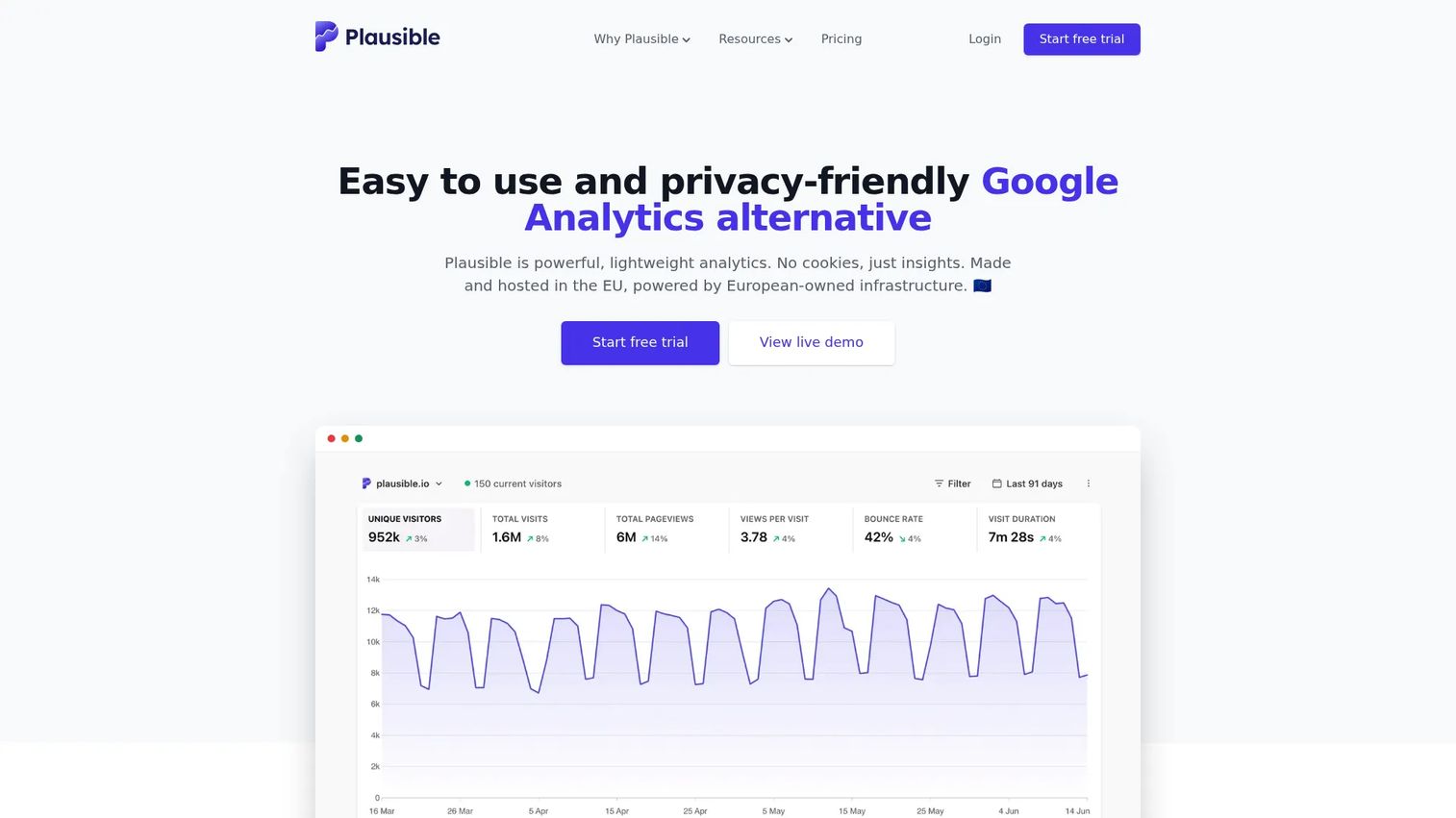
Plausible is a privacy-focused web analytics platform with dedicated AI traffic analytics. It combines acquisition reporting with goals and ecommerce measurement. The emphasis is on activity occurring on your website, making it a practical choice for evaluating human AI assistant referrals.
Best for: Growth teams that want understandable referral reporting without building their entire measurement program around complex tracking.
For a useful evaluation, follow a visitor from an AI source to an entry page and conversion event. Compare that journey with another acquisition channel using the same reporting period.
This keeps the buying decision connected to an operating question. Can your team identify which AI-referred landing pages deserve conversion work?
Plausible’s saved segments and shared dashboards also give reporting owners a way to distribute a consistent view. Its Stats API and Data Studio connector support reporting beyond the main interface.
Treat this as a website measurement purchase. If your priority is discovering every answer that mentions your brand, evaluate that requirement separately.
Key features
- Dedicated AI traffic analytics
- Goals and custom events
- Funnels and user journeys
- Revenue tracking and ecommerce attribution
- Shared and embedded dashboards
Why choose Plausible: Choose it when acquisition clarity matters more than expanding your SEO toolkit. Its appeal is connecting identifiable referral activity to website outcomes.
Plausible pricing: Starter starts at $9/month, with pageview-based pricing and a 30-day trial. Annual billing includes two months free.
G2 rating: 4.9/5.
2. Writesonic
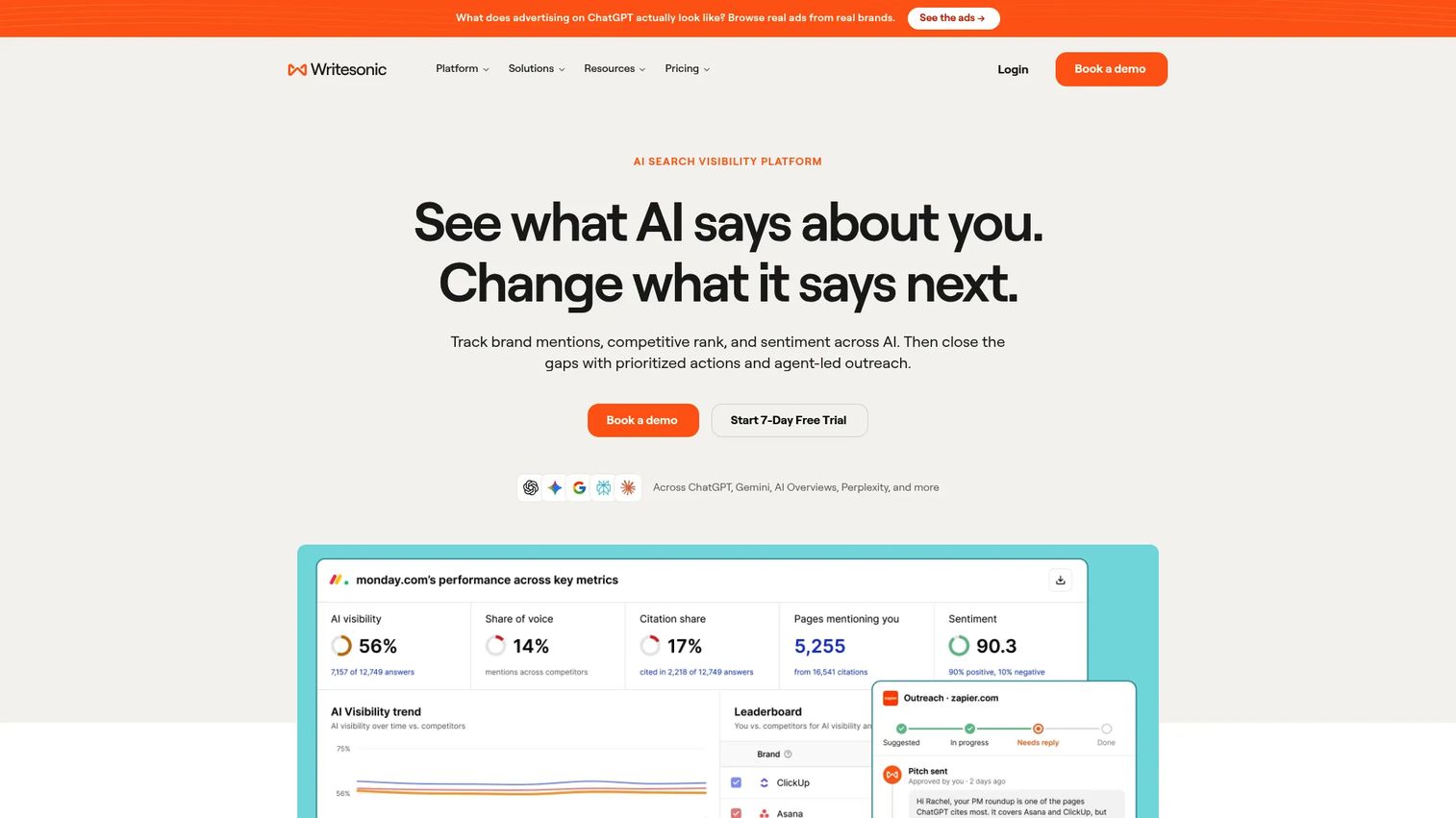
Writesonic combines AI-search visibility tracking with content production and optimization. Its documented coverage includes ChatGPT, Gemini, and Google AI Overviews. Site audits help teams identify search-related gaps before moving into publishing work.
Best for: Marketing teams that want monitoring and content execution in the same buying decision.
This platform deserves consideration when your bottleneck is acting on findings. A visibility dashboard has limited operational value if nobody owns the resulting content changes.
Give the evaluation a concrete brief. Select an important buying question, inspect your brand’s presence, and assess the proposed work against your editorial standards.
Then estimate which existing content or optimization subscriptions it could replace. Consolidation only helps when the resulting workflow supports the people responsible for publishing.
Keep the measurement boundary clear. The capabilities established here support AI visibility and optimization; they should not be treated as proof of request-level crawler auditing.
If AI crawler logs are a purchase requirement, request a separate demonstration covering collection methods and status-code reporting. Evaluate that requirement independently from answer monitoring.
Key features
- AI-search visibility tracking
- AI article generation
- Content optimization workflows
- SEO and AI-search site audits
Why choose Writesonic: It suits teams whose reporting needs to produce an actionable editorial queue. Evaluate it around content ownership rather than referral attribution alone.
Writesonic pricing: Starter costs $79/month billed annually, or $99 monthly. Basic starts at $199/month annually; Growth starts at $399/month annually.
G2 rating: 4.7/5.
3. Cognizo
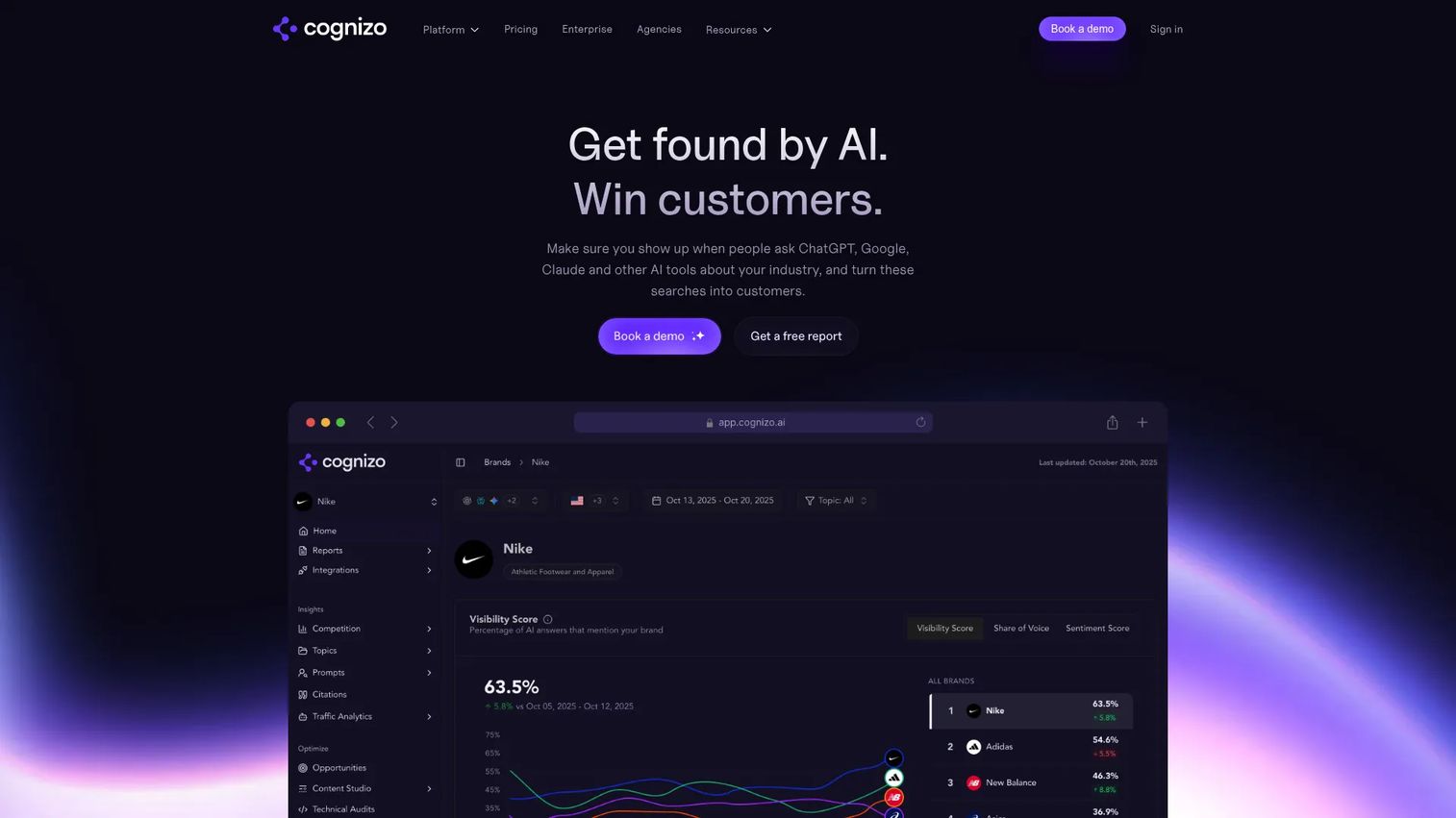
Cognizo is an answer engine optimization platform combining visibility research with content generation. It tracks brand representation and includes AI traffic analytics. Prompt discovery helps teams investigate the questions buyers bring to answer engines.
Best for: SEO and growth teams that want an AEO program tied to an ongoing publishing workflow.
Cognizo makes sense when reporting needs to inform content production rather than sit beside it. Its scope includes competitor tracking and AI-optimized articles with auto-publishing.
Build your assessment around a commercial topic. Inspect which brands appear, identify cited sources, and review whether proposed content addresses the buyer’s question.
Avoid treating visibility improvement as a completed attribution story. If you are buying an LLM-referred traffic analytics tool, ask to see the underlying source and conversion definitions.
Its plans also make prompt coverage an important budgeting consideration. Growth includes 150 tracked prompts and eight monthly articles across five platforms.
Pro expands those allowances to 350 prompts and 20 articles. Decide which topics deserve recurring measurement before estimating capacity, rather than filling the allocation with loosely related questions.
Key features
- Prompt research and buyer-question discovery
- Brand mentions and citation tracking
- Sentiment and share-of-voice analysis
- AI-optimized content generation
- AI traffic analytics
Why choose Cognizo: Consider it when one team owns both answer visibility and editorial output. Its package combines measurement with production capacity.
Cognizo pricing: Growth costs $499/month, and Pro costs $999/month. Enterprise uses custom pricing; there is no free tier.
G2 rating: 4.8/5
4. SE Ranking
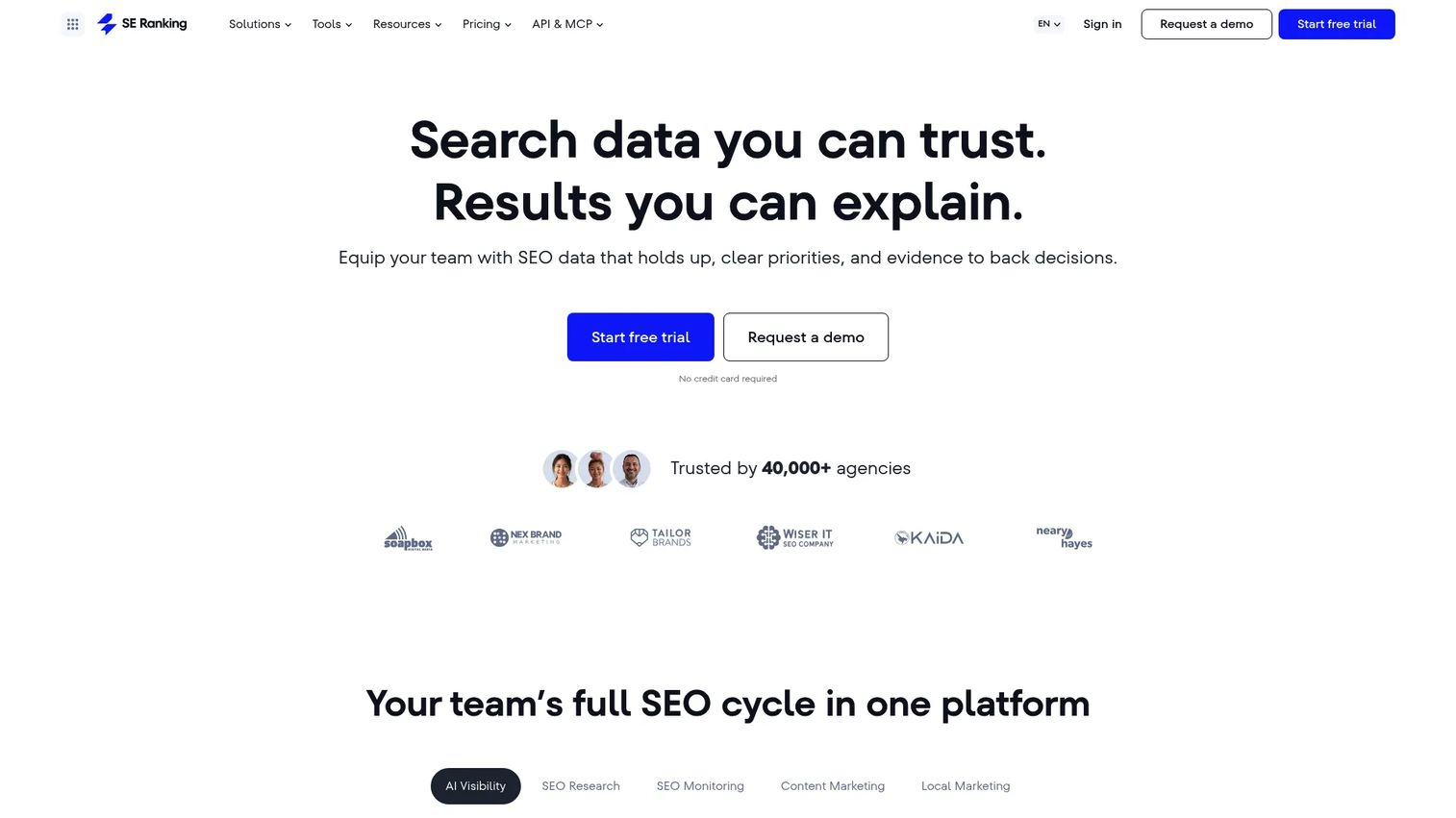
SE Ranking combines search research and rank tracking with website audits and AI-search visibility. It also supports content work, backlinks, and agency reporting. The platform fits teams evaluating AI discovery as part of their existing SEO responsibilities.
Best for: Agencies and in-house SEO teams that want to avoid maintaining separate subscriptions for every search workflow.
Start with the reporting question your current account cannot answer. For example, can an account manager explain changes in AI visibility alongside conventional search performance?
Next, inspect the output that clients or leadership will receive. Evaluate whether the report supports decisions about specific pages instead of simply adding another score.
Its integration options include an API and MCP, which matter when reporting must connect with other systems. Confirm the access required for your intended implementation.
Treat AI traffic measurement and AI-search monitoring as separate acceptance criteria. Ask the vendor to demonstrate the relevant capability and its plan entitlement before you consolidate tools.
This approach prevents a broad feature checklist from hiding the requirement that triggered the purchase. Existing suite users should assess their available reporting before adding another specialist.
Key features
- Search rank tracking
- Keyword and competitor research
- Website audits and on-page checks
- AI-search visibility monitoring
- SEO reporting and integrations
Why choose SE Ranking: Choose it when AI discovery belongs inside an established SEO operating process. Agencies should prioritize repeatable client reporting during evaluation.
SE Ranking pricing: Core starts at $103.20/month billed annually, or $129 monthly. A 14-day free trial is available.
G2 rating: 4.8/5.
5. Google Analytics 4
Google Analytics 4 measures website and app activity through configurable reports and events. Its standard offering provides a starting point for evaluating identifiable AI referrals. Marketing teams can examine acquisition alongside the actions they already measure.
Best for: Teams that need baseline evidence before purchasing a dedicated AI chatbot traffic tool.
To track ChatGPT traffic, begin with source-level reporting and inspect identifiable referrals. Apply the same conversion definitions used elsewhere in your acquisition analysis.
Create a documented AI-source grouping rather than relying on a label everyone interprets differently. Treat a “GA4 AI Assistant channel” as a reporting configuration to validate.
The important comparison is between equivalent populations. Use matching date ranges and conversion events when assessing AI visitors against organic search or paid acquisition.
GA4 also connects with Google Ads and Search Console. That existing footprint can make it a sensible first evaluation step for teams reducing subscription overlap.
Its boundary is equally important. Website event reporting does not, by itself, explain every generated answer mentioning your company or every crawler request reaching your infrastructure.
Missing referrer information also remains a measurement issue. Avoid relabeling all direct traffic as AI-influenced because an identifiable source is absent.
Key features
- Website and app measurement
- Custom reports and dimensions
- Event creation and modification
- Google Ads integration
- Audience and user-role management
Why choose Google Analytics 4: Start here when you already have a functioning event model. Establish measurable demand before buying specialist reporting.
Google Analytics 4 pricing: The standard offering is free.
G2 rating: 4.5/5
6. Ahrefs Brand Radar
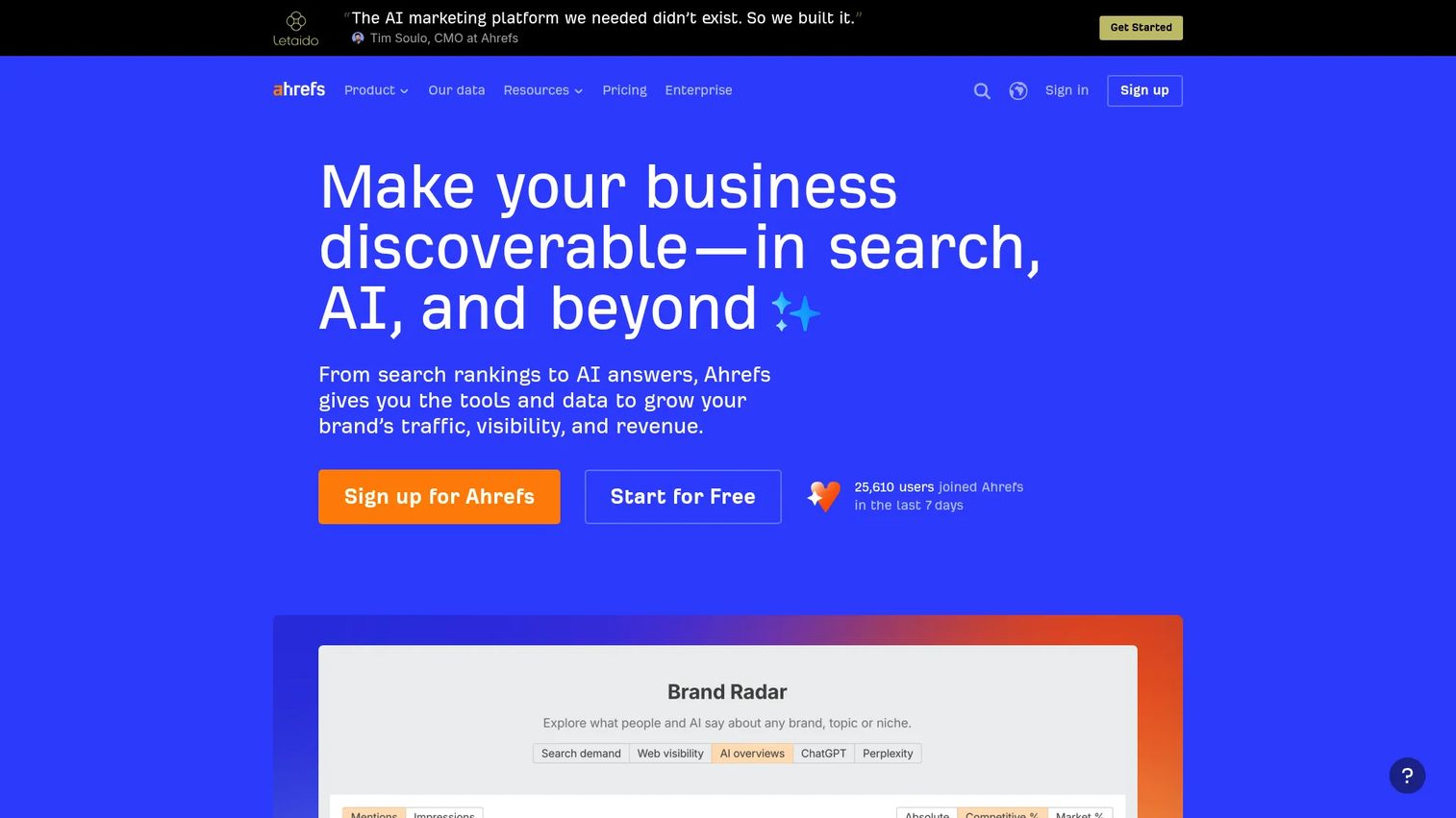
Ahrefs Brand Radar examines brand presence across AI answers and related discovery sources. It supports custom prompts alongside AI visibility indexes. Documented capabilities also include monitoring AI traffic and bot visits to website pages.
Best for: SEO teams that want detailed answer research alongside competitive search intelligence.
Its distinguishing buying question concerns coverage. Do you need to track a defined set of prompts, explore a wider answer index, or combine both approaches?
Those are different research tasks, with separate pricing implications. Start by writing down the questions your content team must answer each month.
For example, investigate which sources influence answers about a product category. Then compare your brand’s presence against named competitors and inspect the cited pages.
That research can inform an editorial decision without claiming the resulting mention caused a sale. Keep website conversion evidence alongside the visibility analysis.
Brand Radar’s coverage extends across major AI platforms, including AI Mode and Claude. Source research also reaches channels such as YouTube and Reddit.
Evaluate which environments matter to your buyers before expanding the monitoring scope. A larger index is valuable when it informs action your team can execute.
Key features
- Custom prompt tracking
- AI visibility indexes
- Brand mentions and citations
- Competitor and sentiment analysis
- AI traffic and bot-visit monitoring
Why choose Ahrefs Brand Radar: Choose it for research depth and competitive context. Separate prompt-monitoring needs from broader index access during procurement.
Ahrefs Brand Radar pricing: Custom prompts Basic costs $50/month. AI Visibility Index access costs $199/month per platform or $699/month for all platforms.
G2 rating: 4.5/5,
7. Semrush AI SEO Toolkit
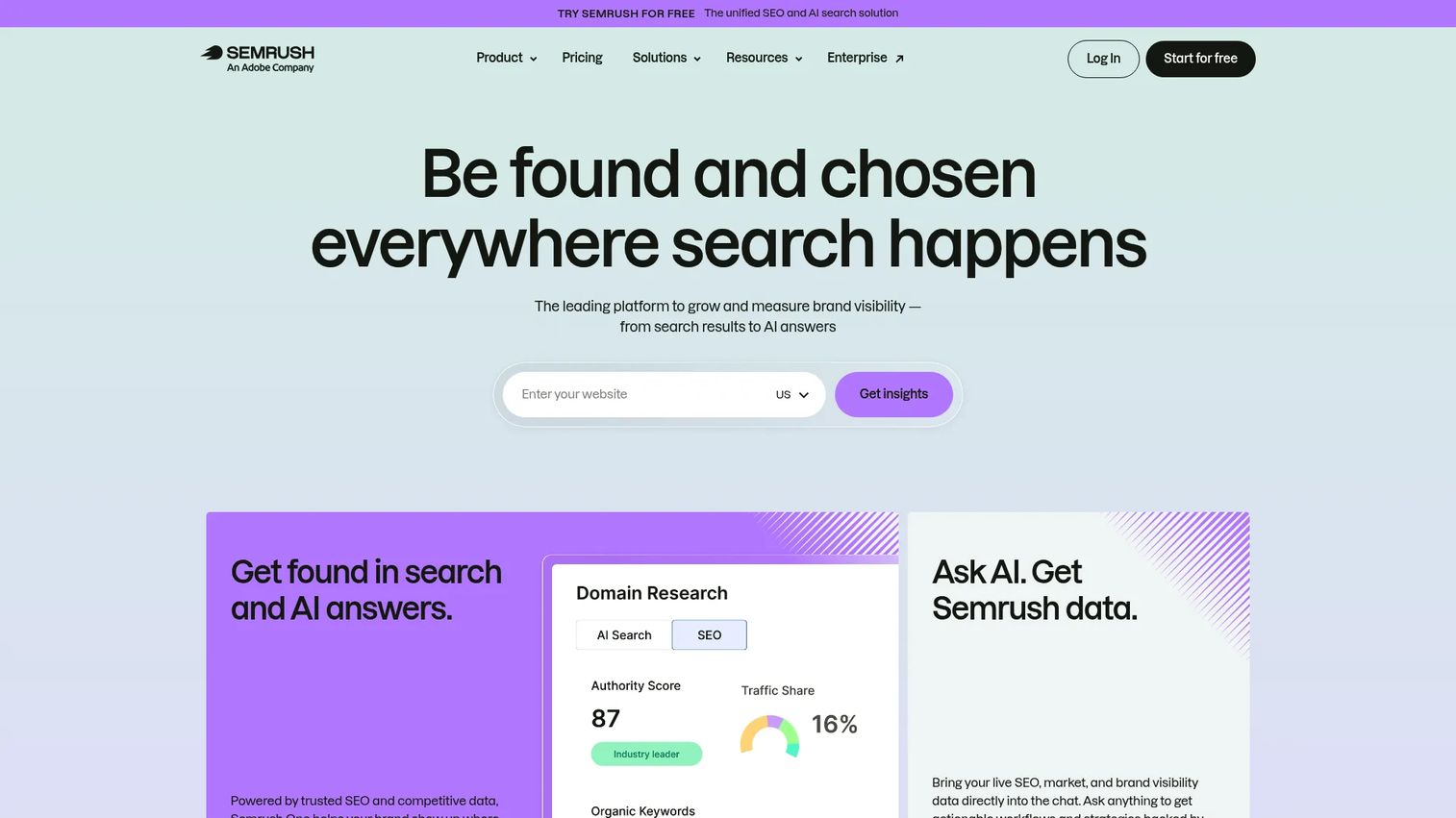
Semrush AI SEO Toolkit brings AI-search visibility into a broader SEO platform. Its coverage includes keyword research and technical audits alongside AI monitoring. Current packaging presents these capabilities through SEO + AI Search plans.
Best for: Search teams that already use Semrush and want to evaluate additional AI reporting within that workflow.
The practical benefit is operational continuity. Your team can assess AI visibility while continuing the search work it already manages.
Use a content planning meeting as the evaluation context. Identify whether AI findings change which pages you refresh or which questions deserve new coverage.
Documented tracking covers ChatGPT and Perplexity, alongside other major AI experiences. Confirm the engines and usage allowances included in the package you are considering.
Avoid comparing the cheapest SEO-only subscription with a dedicated AI-monitoring product. The relevant cost is the package containing your required workflow.
The same caution applies to attribution. A visibility report can guide optimization, while conversion reporting must still explain what happens after identifiable visits reach your properties.
For existing customers, assess unused capabilities before buying another dashboard. Consolidation is useful when the added report changes decisions without creating duplicate ownership.
Key features
- AI-search visibility tracking
- Keyword and competitive research
- Search position tracking
- Technical website audits
- Backlink analysis
Why choose Semrush AI SEO Toolkit: It fits teams managing conventional SEO and AI discovery together. Evaluate the combined workflow rather than treating AI reporting as an isolated purchase.
Semrush AI SEO Toolkit pricing: A free option is available. SEO + AI Search Starter costs $165.17/month billed annually; Pro+ costs $248.17/month billed annually.
8. Profound
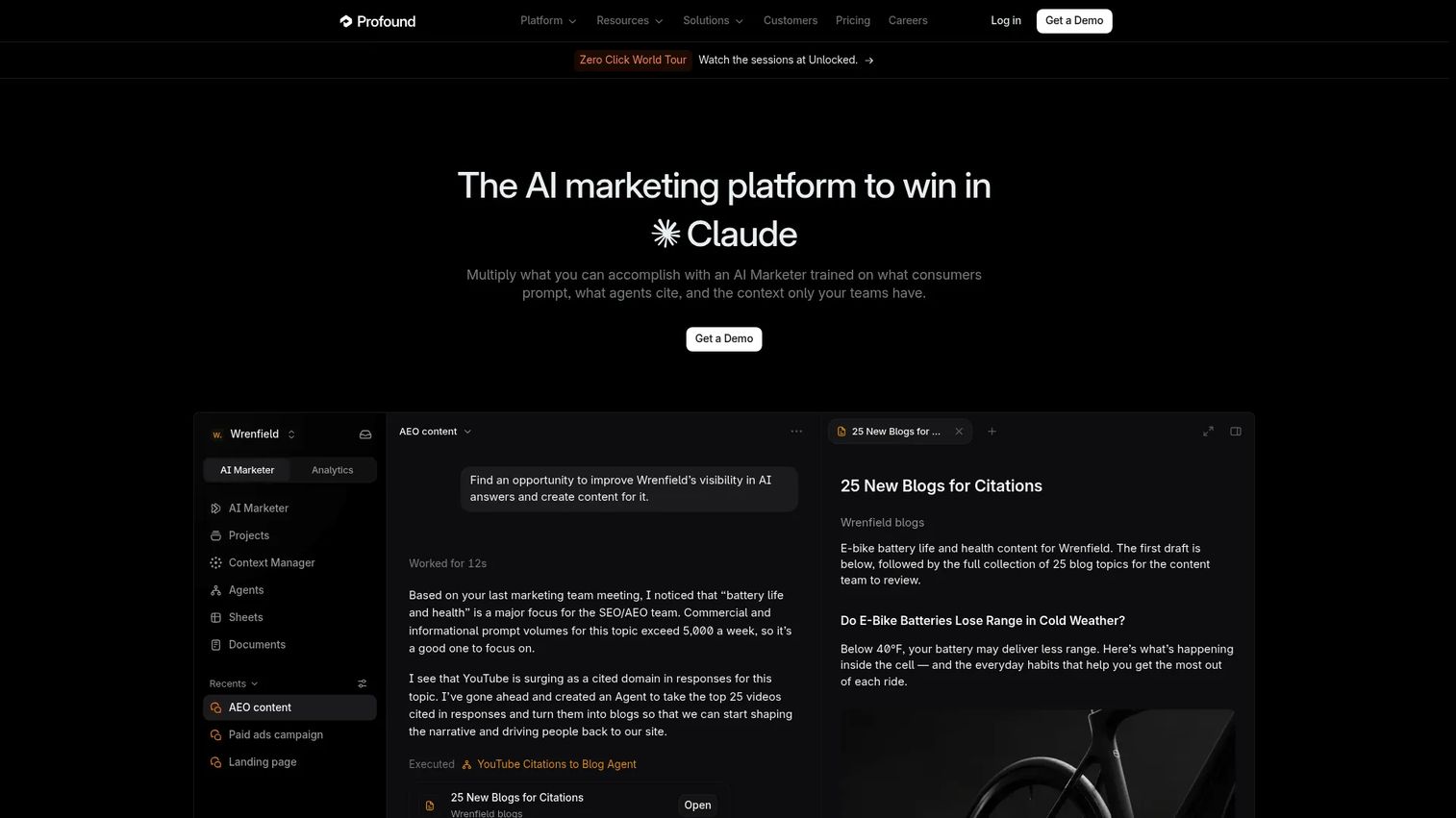
Profound is an AI marketing platform centered on answer-engine visibility and related workflows. It combines answer insights with prompt-volume analysis. AI Marketer agents support research, writing, reporting, and execution.
Best for: Enterprise marketing organizations that need AI-search reporting alongside access controls and integration requirements.
The evaluation should include the people who will consume the findings. A brand leader assessing representation needs a different report from an SEO manager planning revisions.
Build acceptance criteria around both audiences. Ask for the underlying answer evidence as well as the executive interpretation.
Profound’s Enterprise package includes daily answer-engine tracking and API access. It also includes unlimited seats and SSO, which are relevant to wider organizational deployment.
Plan the reporting handoff before procurement. Decide who investigates unexpected visibility changes and who owns the corresponding content or communications work.
Keep its role distinct from enterprise web analytics. Answer-engine insights explain discovery and representation; revenue reporting needs evidence connecting visits to business outcomes.
Evaluate the proposed package against your monitoring scope. Markets, prompt coverage, and internal reporting expectations should determine the implementation brief.
Key features
- AI answer-engine insights
- Prompt and keyword volume analysis
- AI Marketer agents
- Daily visibility tracking
- Enterprise API access and SSO
Why choose Profound: Consider it when AI visibility has cross-functional ownership and enterprise procurement requirements. Assess reporting usability alongside governance.
Profound pricing: Custom pricing for Enterprise. Starter and Growth plans were retired in September 2026.
G2 rating: 4.5/5.
9. Peec AI
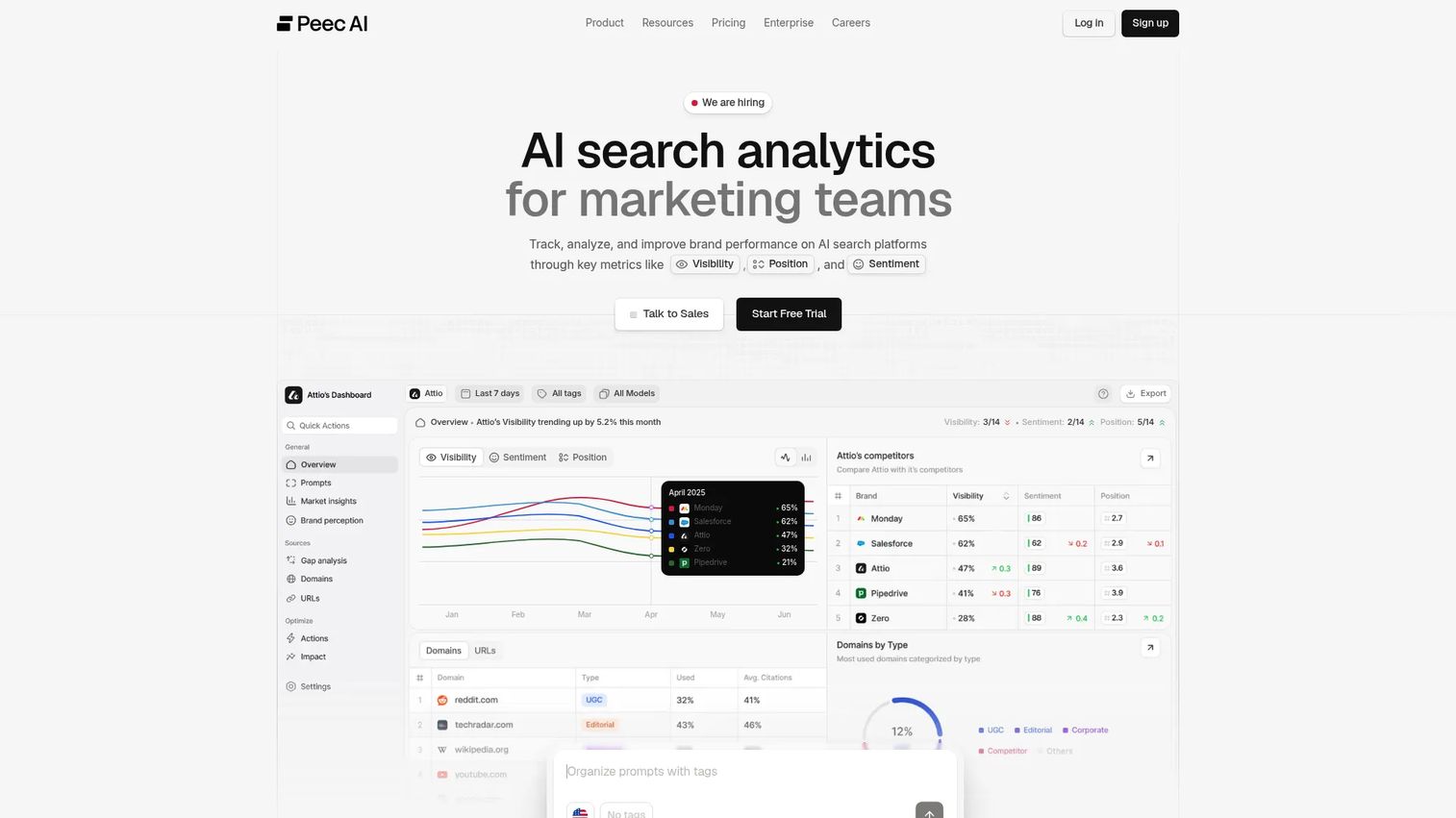
Peec AI focuses on AI-search analytics for marketing teams. It measures visibility and competitive presence, with citation analysis extending to domains and URLs. Recommendations help translate those findings into optimization work.
Best for: Marketing teams that want a focused AI-search reporting layer instead of another full SEO suite.
A useful assessment starts with a defined competitor set. Select the buyer questions that matter, then inspect the sources and brands appearing in answers.
Peec also supports AI shopping and SKU-level tracking. That makes product-level evaluation relevant for teams whose discovery questions concern individual items rather than company names.
For reporting operations, available capabilities include CSV exports and Looker Studio integration. API and MCP support are also documented, with access requirements worth evaluating during plan selection.
Budget around projects and prompt coverage. Starter includes 50 prompts and one project, while Pro supports 150 prompts across two projects.
Map those allowances to your reporting structure before upgrading. Separate markets or product lines may require distinct analysis even when leadership wants one summary.
Keep the success criterion concrete. The tool should help your team decide what to investigate or change, rather than simply produce a larger visibility chart.
Key features
- Visibility and share-of-voice tracking
- Prompt discovery and management
- Domain and URL citation analysis
- AI shopping and SKU tracking
- Recommendations and reporting exports
Why choose Peec AI: It suits teams seeking focused competitive AI-search analysis. Reporting connections make it worth evaluating alongside existing dashboards.
Peec AI pricing: Starter costs $95/month, and Pro costs $245/month. Advanced costs $495/month; Enterprise uses custom annual pricing.
G2 rating: 4.7/5.
10. Otterly.AI
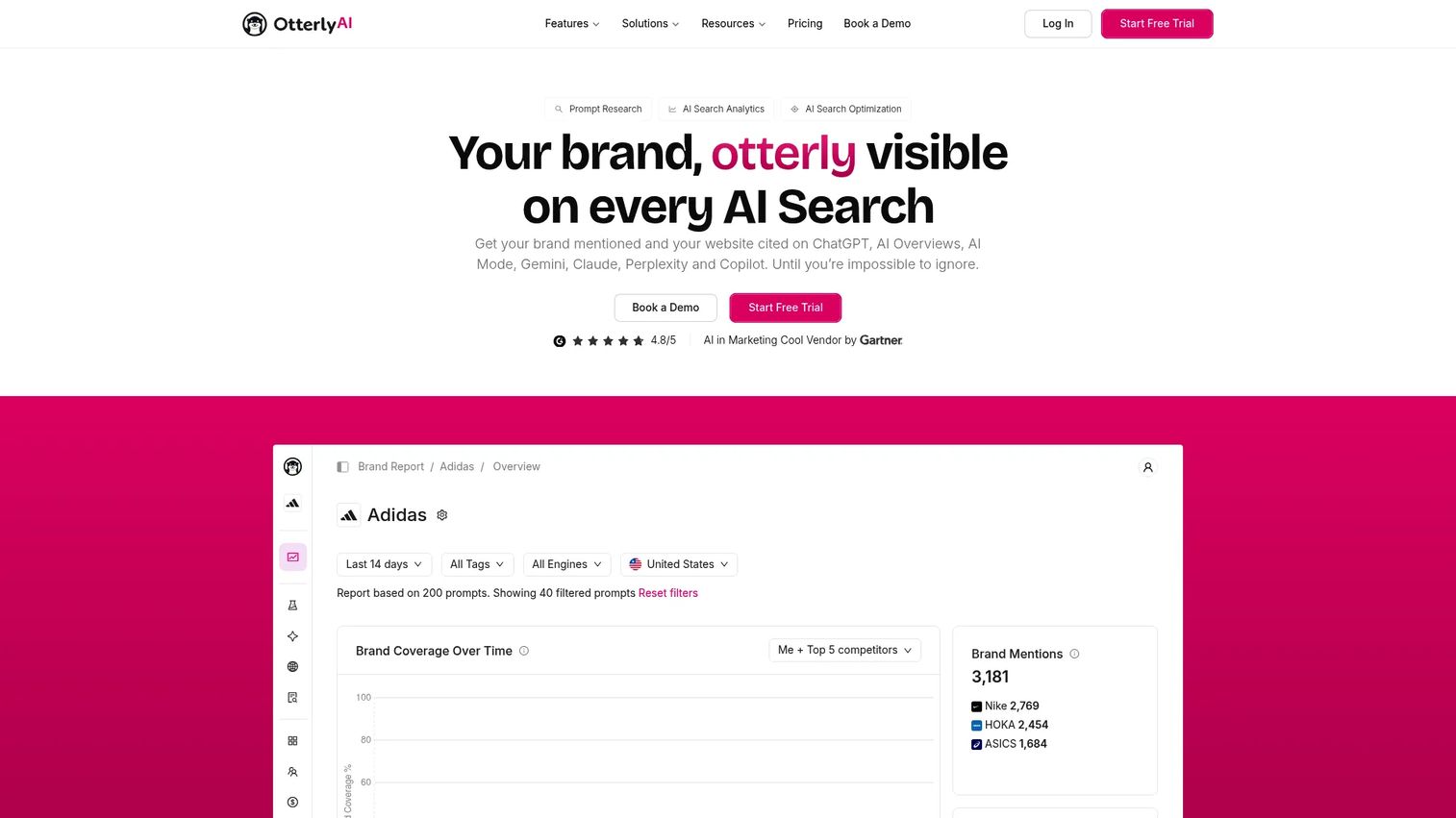
Otterly.AI monitors brand mentions and website citations across AI search engines. It combines prompt research with competitive benchmarking. Content audits and optimization recommendations give teams a route from observation to editorial work.
Best for: Smaller SEO and content teams starting a recurring AI visibility program.
Its entry package encourages a focused monitoring scope. Lite includes 15 search prompts, while Standard and Premium provide larger allocations.
Choose questions that correspond to buying decisions rather than generic industry interest. A small prompt set is more useful when each result has an owner.
During evaluation, inspect how a report supports action. Can an editor identify the cited URL and understand which content change warrants investigation?
Otterly.AI also documents multi-country tracking and sentiment analysis. Teams expanding beyond a single market should assess how geographic differences affect their interpretation.
Remember that recurring answer checks and human website visits represent different evidence. Use a referral analytics system alongside monitoring when conversion measurement is the objective.
Treat the trial as an operational test. Review the output in the meeting where content priorities are decided, rather than evaluating dashboard appearance alone.
Key features
- AI prompt research
- Brand visibility analytics
- Citation and domain tracking
- Content audits and optimization recommendations
- Competitive benchmarking and sentiment analysis
Why choose Otterly.AI: It offers an accessible entry into focused answer monitoring. Evaluate whether the prompt allowance covers your highest-value questions.
Otterly.AI pricing: Lite costs $29/month, and a free trial is available. Standard costs $189/month; Premium costs $489/month.
G2 rating: 4.7/5
11. AthenaHQ
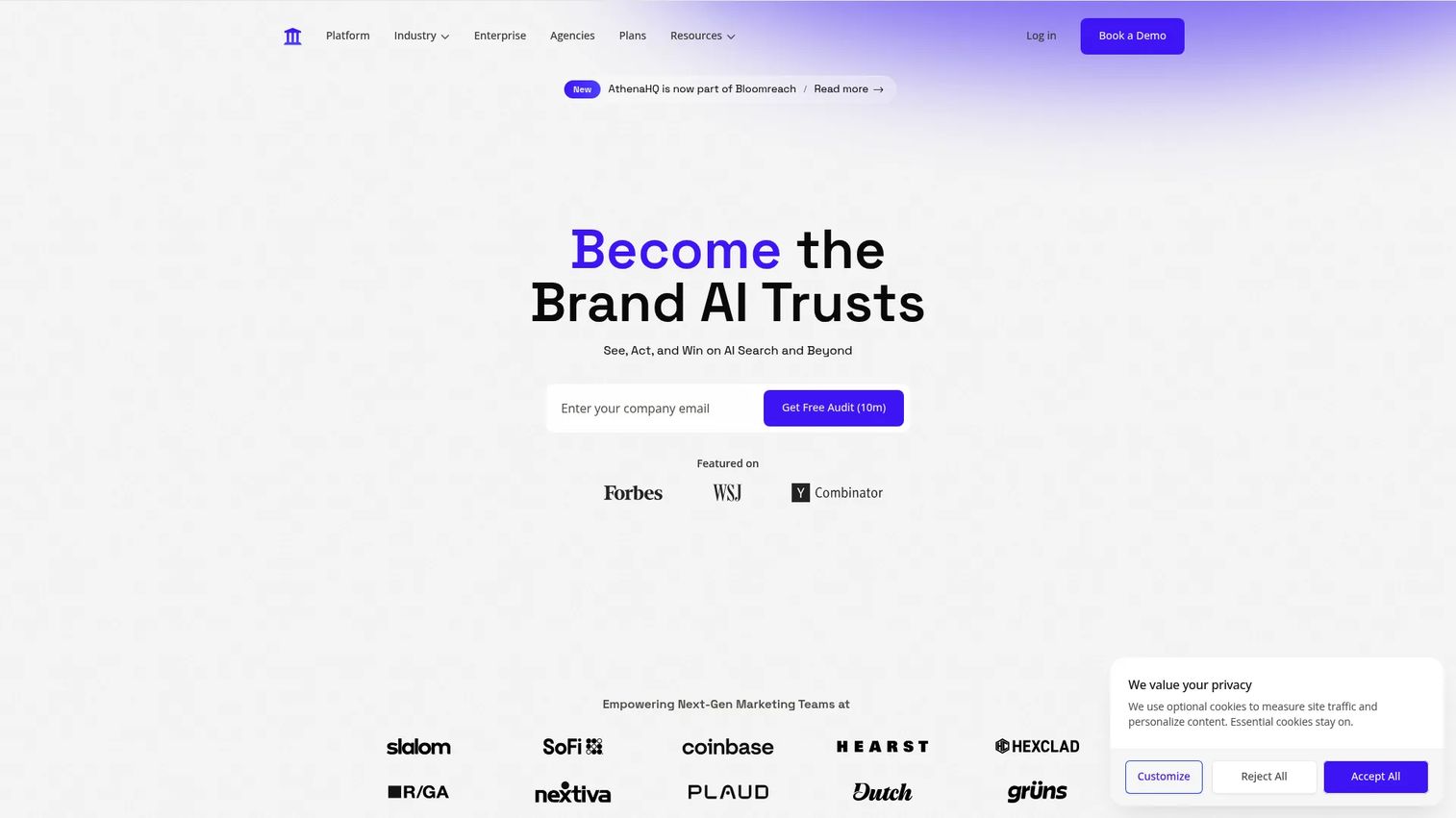
AthenaHQ combines AI visibility monitoring with optimization actions. It covers major answer platforms and includes citation intelligence. Integrations with Shopify and Webflow connect its scope with website execution.
Best for: Teams that want AI-search findings connected to content work and website operations.
Its evaluation should involve whoever implements recommendations. A report only becomes useful when the proposed action fits your publishing process and approval requirements.
Test a commercially important question, then inspect the recommended change. Assess whether the reasoning is clear enough for an editor to accept or reject.
AthenaHQ also integrates with Google Analytics and Search Console. That connection is relevant when you want discovery research considered alongside existing measurement.
For larger organizations, documented governance includes role-based access and audit logs. Enterprise SSO and BI support extend the procurement conversation beyond the marketing team.
The Essential plan provides 300 credits for core analysis. Starter expands that allocation to 3,600 credits and includes optimization actions, integrations, and exports.
Before comparing allowances, ask how your intended workflow consumes credits. Translate the proposed monitoring and execution program into a monthly usage estimate.
Key features
- Cross-platform AI visibility monitoring
- Citation and competitor intelligence
- Content optimization agents
- Shopify and Webflow integrations
- Role-based access and audit logs
Why choose AthenaHQ: Consider it when implementation is the missing step between research and results. Include content owners in the evaluation.
AthenaHQ pricing: Essential is free. Starter costs $295/month; Enterprise uses custom pricing.
G2 rating: 4.9/5.
12. Matomo
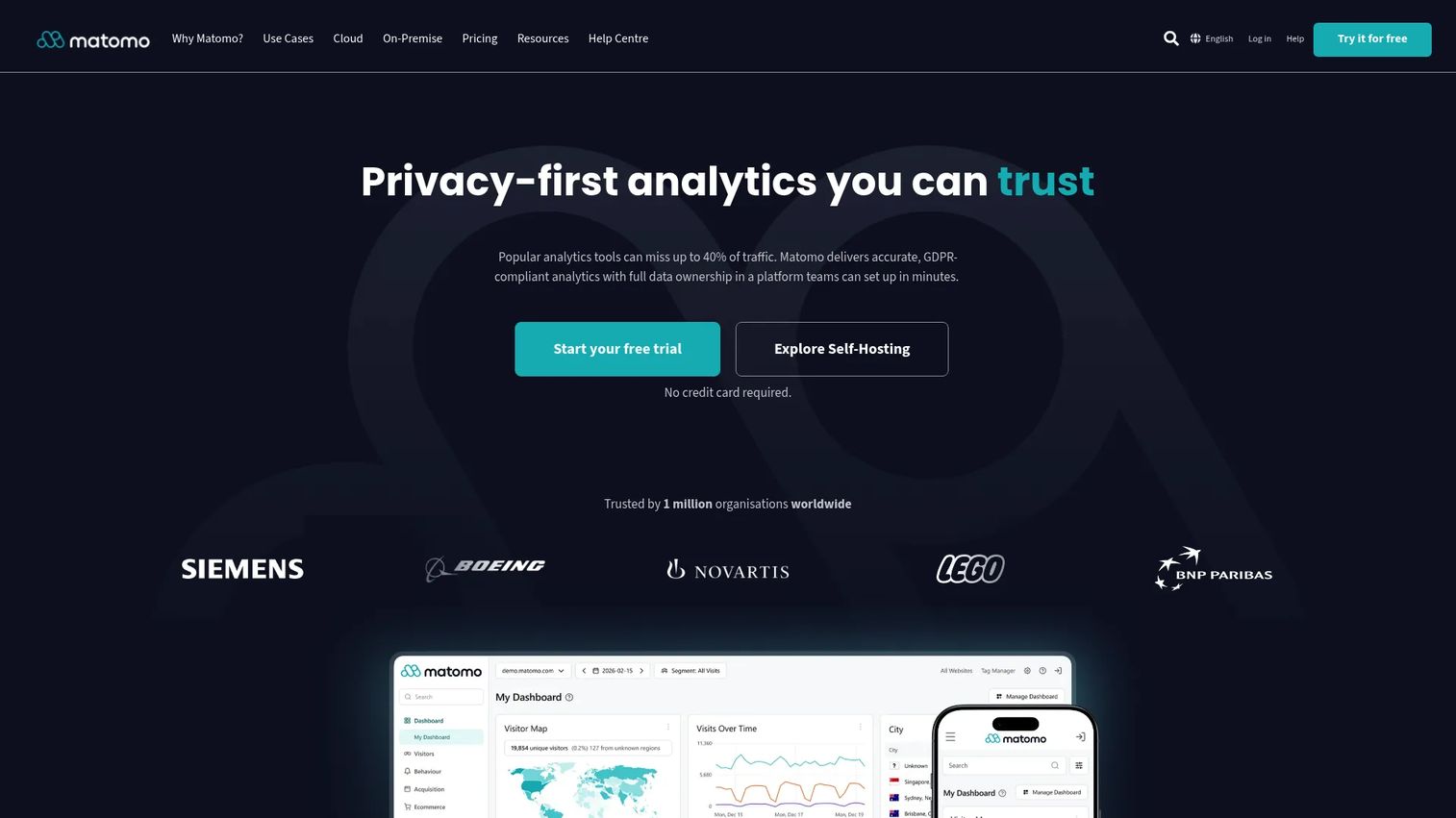
Matomo offers privacy-focused website analytics with cloud and self-hosted options. Its capabilities include conversion measurement and custom segmentation. That makes it relevant to organizations evaluating AI website analytics within a broader data-ownership strategy.
Best for: Teams that want control over their analytics environment and can maintain documented source definitions.
For AI assistant referrals, start by defining the identifiable sources you want to analyze. Apply that segment to the same goals used in your broader acquisition reporting.
This requires an owner for classification rules. As your reporting requirements change, someone must maintain definitions and communicate their effect on historical comparisons.
Matomo’s wider capabilities include heatmaps and session recordings. Those can support investigation after you identify a page with weak conversion performance.
Separate that diagnostic work from acquisition attribution. Understanding what a visitor does on a page does not establish the origin of a visit with missing source data.
Evaluate the hosting decision with the people responsible for operations. Free software and the total cost of running a measurement environment are different budget questions.
The strongest buying case combines data ownership with an ongoing analytics requirement. Avoid rebuilding your measurement stack solely to obtain another source filter.
Key features
- Cloud and self-hosted options
- Custom segmentation and reporting
- Goals and ecommerce tracking
- Heatmaps and session recordings
- Analytics and tracking APIs
Why choose Matomo: Choose it when analytics ownership is a strategic requirement. Include maintenance responsibilities in the decision alongside reporting functionality.
Matomo pricing: Community is free. Paid plans add premium capabilities and support.
G2 rating: 4.2/5.
13. Cloudflare Web Analytics
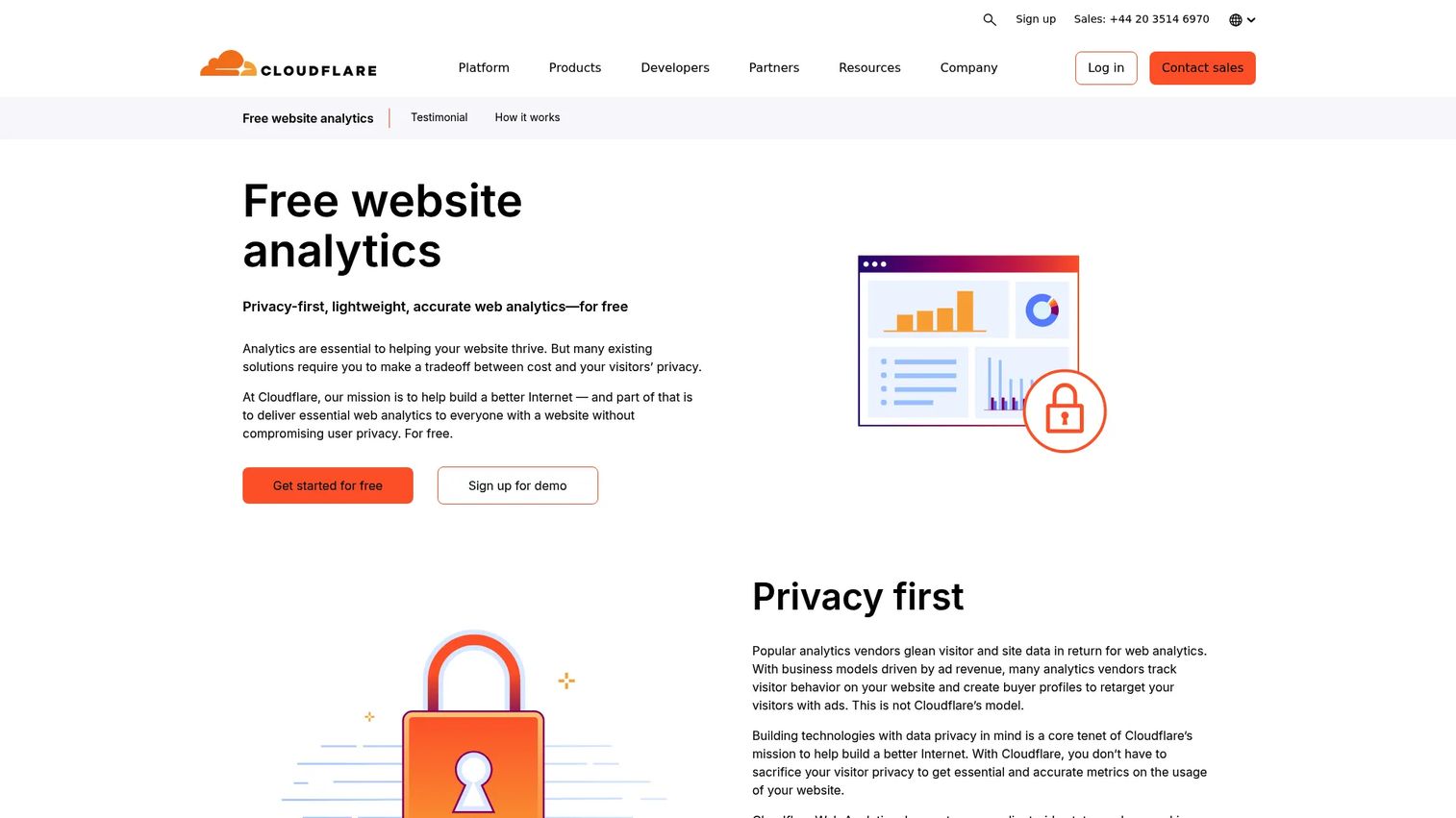
Cloudflare Web Analytics provides free, privacy-focused visitor and page-performance measurement. It uses a JavaScript beacon for real user monitoring. Its documented scope includes filters and dimensions for refining analytics data.
Best for: Website owners who need a visitor and performance baseline without purchasing another analytics subscription.
The product boundary matters here. Cloudflare Web Analytics should not be confused with every bot-management or request-analysis capability available elsewhere within Cloudflare.
A JavaScript visitor dashboard is not equivalent to server-side crawler logs. If your requirement is GPTBot analytics, establish which product collects the required requests.
Apply the same scrutiny to ClaudeBot analytics and PerplexityBot analytics. Ask for evidence showing user-agent classification and the specific pages accessed.
Within its documented scope, Web Analytics helps teams examine visitor experience. That is relevant after AI-referred users arrive, particularly when page performance needs investigation.
Its privacy approach avoids cookies, localStorage, and individual fingerprinting. Review that collection model against your organization’s measurement requirements rather than assuming every analytics product captures equivalent detail.
This entry is therefore a baseline option, not a substitute for specialized AEO reporting. Keep infrastructure auditing as a separate procurement question.
Key features
- JavaScript real user monitoring
- Page-performance analytics
- Privacy-focused visitor measurement
- Filters and reporting dimensions
Why choose Cloudflare Web Analytics: Use it for free visitor and performance visibility. Evaluate crawler monitoring separately from this product’s documented scope.
Cloudflare Web Analytics pricing: Free on all Cloudflare plans.
14. Adobe Analytics
Adobe Analytics provides enterprise digital measurement across web and mobile experiences. Flexible segmentation and attribution support detailed analysis. Governance and privacy controls make it relevant to organizations with established analytics operations.
Best for: Large businesses evaluating AI referrals within an existing enterprise measurement program.
For these teams, the question extends beyond identifying a source. Reporting definitions must remain consistent across business units and stakeholder dashboards.
An AI referral segment should therefore use the same governance as other acquisition categories. Document who owns its definition and how conversions enter the analysis.
Adobe’s journey analysis supports examining activity across digital channels. That broader context matters when leadership wants to understand acquisition alongside subsequent customer behavior.
Avoid assuming an enterprise platform removes attribution uncertainty. Missing source information still requires careful interpretation, regardless of reporting sophistication.
The purchasing case is strongest when wider digital analytics requirements already exist. A team needing a basic referral count should first evaluate its current measurement setup.
During procurement, ask analysts to reproduce a familiar business report. Then assess how the proposed AI segment changes the workflow without introducing conflicting metrics.
Key features
- Flexible audience segmentation
- Cross-channel journey analysis
- Advanced reporting and attribution
- Real-time data reporting
- Data governance and privacy controls
Why choose Adobe Analytics: It fits organizations that need AI-referral analysis inside governed enterprise reporting. Evaluate the operating model alongside functionality.
Adobe Analytics pricing: Custom pricing. Packages include Select, Prime, and Ultimate.
G2 rating: 4.2/5.
15. Similarweb
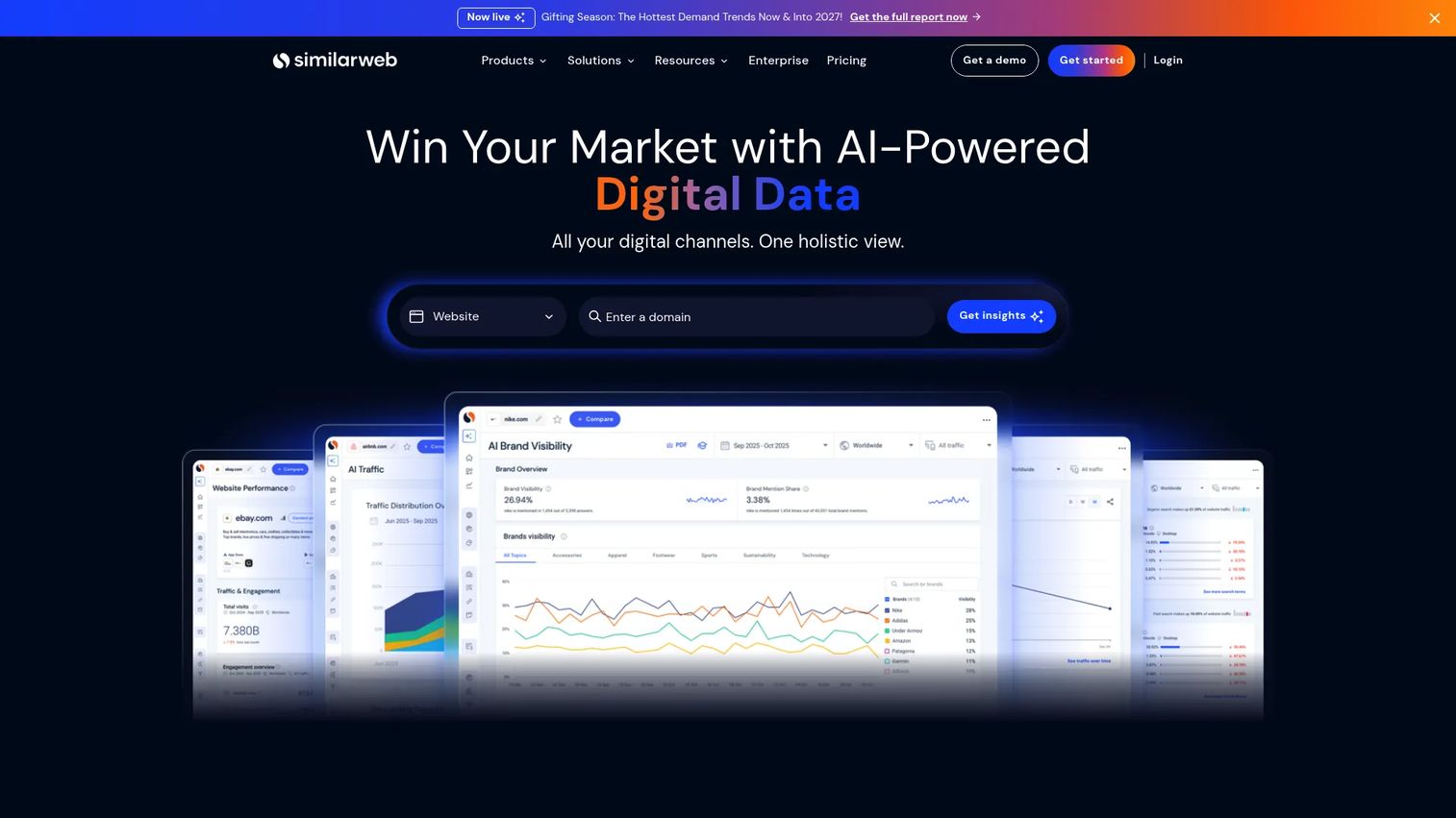
Similarweb provides digital intelligence for market and competitor analysis. Its scope includes traffic benchmarking and marketing-channel research. AI brand visibility and citation analysis add another perspective on competitive discovery.
Best for: Marketers who need external context for their own acquisition performance.
First-party analytics can explain activity on your website. Competitive intelligence helps you investigate whether that activity reflects a broader market pattern.
Use this distinction to structure the evaluation. Define the competitors and categories you need to understand, then inspect whether the available coverage supports that comparison.
Similarweb’s broader platform also includes SEO research and advertising intelligence. Consider those capabilities when assessing overlap with subscriptions your team already maintains.
Keep market-level estimates separate from recorded website sessions. They answer different questions and should not be combined as if they share identical collection methods.
For AI search work, inspect the package containing AEO capabilities. The lowest-priced competitive intelligence plan is not the same purchasing decision as the combined SEO and AEO offering.
The useful outcome is a benchmark that changes strategy. Ask what you would do differently if a competitor’s discovery profile diverged from yours.
Key features
- Competitive website traffic analysis
- Traffic and engagement benchmarking
- Marketing-channel research
- AI brand visibility and sentiment
- Citation analysis
Why choose Similarweb: Choose it when internal reporting needs competitive context. Retain first-party analytics for evaluating your own conversion outcomes.
Similarweb pricing: Competitive Intelligence starts at $125/month annually, or $199 monthly. Competitive Intel & SEO & AEO costs $333/month annually, or $399 monthly.
G2 rating: 4.4/5.
Considerations when choosing AI traffic analytics tools
Decide which evidence you need
Identify whether the decision requires visitor activity, crawler requests, or generated-answer research. A visibility score cannot replace a conversion report.
Write the business question before selecting the dashboard. This also exposes overlap with tools you already pay for.
Check human and bot separation
Require distinct definitions for human sessions and automated access. Ask how unidentified activity is handled rather than assuming every request belongs to a buyer.
For crawler investigations, inspect collection methods and request-level detail. Visitor tracking alone does not establish complete infrastructure visibility.
Validate conversion and revenue attribution
Test the journey from an identifiable AI referral to your chosen business event. Compare the resulting totals with established analytics and CRM reporting.
Agree on attribution windows before interpreting pipeline impact. Keep observed conversions separate from broader influence claims.
Inspect page-level usefulness
Source totals should lead to decisions about specific content. Ask whether the report identifies landing pages or cited URLs that warrant investigation.
Assign an owner for each resulting action. AEO analytics earns its place when findings enter the publishing or optimization process.
Match spending to reporting maturity
Start with existing measurement when your event definitions still need work. Add specialist software after identifying the evidence your current stack cannot supply.
Budget for ongoing monitoring and implementation ownership. Enterprise teams should also evaluate access controls and reporting exports before procurement.
Conclusion
The best AI traffic analytics tool is the one that answers the question your team must defend this quarter.
For human referral measurement, Plausible offers a focused option, while GA4 provides a free starting point. Matomo deserves consideration when analytics ownership shapes the decision.
Search teams should assess existing SE Ranking, Semrush, or Ahrefs capabilities before adding another subscription. Focused platforms such as Peec AI and Otterly.AI make sense when recurring answer monitoring needs dedicated ownership.
Writesonic, Cognizo, and AthenaHQ connect visibility findings with content work. Profound addresses enterprise AI-search programs, while Adobe Analytics supports governed digital measurement. Similarweb adds competitive context.
Keep Cloudflare Web Analytics in its documented visitor and performance role. Evaluate request-level crawler requirements separately.
Choose a business question and a representative set of pages. Run a limited evaluation against your current reporting, then compare the decisions each product enables.
Before committing, revisit plan allowances and billing terms. Buy the missing evidence and an actionable workflow, rather than another version of a chart you already have.
FAQs
AI traffic analytics examines how AI-assisted discovery relates to website activity and business results. Its scope can include human referrals, automated crawler requests, and visibility within generated answers. The strongest evaluation separates those signals before comparing them with conversions, because a citation or bot request does not establish buyer demand.
Start by examining identifiable referral sources in your existing website analytics, then build a documented grouping for the AI platforms you want to monitor. To track Perplexity traffic alongside ChatGPT, apply consistent date ranges and conversion definitions across both sources. Missing referrers can send some visits into direct traffic, making the identifiable segment an incomplete view.
AI referral traffic describes a person clicking from an assistant or AI-search experience to your website. Crawler traffic describes automated requests made to retrieve or collect content. Analyze the former against business outcomes and the latter against accessibility or content-discovery questions. Keep their totals separate in leadership reporting.
GA4 can measure identifiable AI referrals and the events associated with those visits. Configured source groupings help organize reporting, but they do not recover source information that was never received. Generated-answer visibility and server-side crawler activity require different evidence. Begin by validating your acquisition reports before investing in additional measurement.
GA4 is a sensible starting point when the immediate need is acquisition and conversion measurement. Plausible suits teams seeking a focused, privacy-oriented reporting experience, while Otterly.AI addresses recurring answer visibility. Choose between those jobs before comparing subscriptions. A small team should also name the person responsible for acting on findings.
Enterprise teams should evaluate Profound for answer visibility, Adobe Analytics for governed digital measurement, and Similarweb for external competitive context. Existing SEO platforms may already cover part of the requirement. Compare governance and reporting access alongside monitoring scope. The strongest fit depends on who owns the data and which decisions the output must support.
AI attribution is incomplete because source information can disappear and generated answers can influence buyers without producing an immediate click. First-party analytics establishes observed website behavior, while visibility research and crawler logs add different context. Use these sources together without treating them as interchangeable. Report measured outcomes separately from inferred influence.
Track identifiable sessions by source alongside landing-page performance and conversion outcomes. For business reporting, prioritize qualified pipeline or revenue rather than combining every engagement signal into one score. Maintain separate diagnostic reports for crawler requests and answer citations. Document metric definitions before comparing ChatGPT, Claude, Perplexity, and Gemini traffic across dashboards.