The draft looks polished. The byline belongs to a trusted freelancer. Yet the voice feels oddly uniform, leaving your editor to choose between publishing, revising, or investigating.
That situation is becoming common. The 2026 study The Impact of AI Generated Text on the Internet classified 35% of newly published websites as AI generated or AI assisted by mid 2025.
An AI detector can help you decide which drafts deserve closer review. It cannot prove authorship on its own. False positives remain a serious concern, especially with short, edited, multilingual, or formulaic writing.
The best AI detection software provides evidence beyond one percentage. Look for sentence level signals, useful explanations, clear reports, and integrations that fit your editorial process. Treat every result as a review signal rather than courtroom evidence.
What’s inside
This guide is for marketers, editors, educators, publishers, and teams reviewing AI assisted writing.
We selected the tools using these criteria:
- Category relevance and supported content formats
- Sentence level evidence and probability scoring
- False positive handling and mixed authorship analysis
- Workflow fit, pricing visibility, and review presence
- Integrations, reports, privacy controls, and API access
Shortlist two or three options from the comparison. Then test each detector against your own human written archive and known AI samples before changing any workflow.
TL;DR
- Best overall for education and enterprise workflows: GPTZero combines detection with writing process evidence and integrations
- Best for strict false positive discipline: Pangram analyzes AI assistance across text, images, and video
- Best free AI checker for quick editorial review: QuillBot places detection inside a broader writing suite
- Best for high volume publishing: Originality.ai combines AI detection with plagiarism and content quality checks
- Best for plagiarism plus AI review: Quetext prioritizes similarity, while Winston AI adds shareable reports and OCR
- Best rule: Test every AI detector on your own human written archive before rollout
What is AI detection software?
AI detection software analyzes text, documents, or media to estimate whether content was likely generated or assisted by an AI model.
An AI text detector typically uses classifiers trained on human and machine written examples. It looks for statistical language patterns, stylistic consistency, perplexity, and burstiness. Some products also compare passages with patterns associated with specific generation models.
Most modern tools provide an AI probability score rather than a definitive authorship verdict. Better products add sentence level AI detection, highlighted segments, or evidence about how a document was written.
A GPT checker or ChatGPT detector is usually the same category under a narrower search term. The tool may evaluate text from several models rather than one platform.
Reliability changes with the material being checked. Short passages provide less evidence. Heavy editing can remove detectable patterns, while technical or formulaic human writing can resemble machine output. Multilingual content and mixed human AI text create further uncertainty.
AI detection also differs from plagiarism checking. An AI plagiarism checker may offer both functions, but they answer separate questions:
- AI detection estimates whether writing resembles machine generated text
- Plagiarism checking compares passages against existing sources
- Citation review checks whether borrowed material is attributed
- Editorial review evaluates quality, accuracy, and brand fit
Key features to look for
- AI probability scoring
- Sentence level highlighting
- Mixed human and AI detection
- Humanized text detection
- Plagiarism or similarity checking
- Multilingual support
- Document uploads
- Browser and document workflows
- LMS or API integrations
- Privacy and retention controls
- Exportable reports
How to interpret scores responsibly
A 90% AI probability score is a reason to inspect the draft. It is not proof that a writer submitted machine generated work.
Review highlighted passages alongside source drafts, citations, writing history, and author context. Ask what the detector measured and whether another tool reaches a similar conclusion.
Employment decisions, school discipline, and contractual disputes require corroborating evidence. Build a human review process with a clear route for corrections or appeals.
When to use AI detection software
Review AI assisted marketing drafts before publishing
Use an AI detector for marketers as a quality control filter before content enters your CMS. Flag repetitive sections, check citations, and compare the draft with your brand voice.
AI content detection for SEO works best when it triggers editing rather than automatic rejection. Search quality depends on usefulness and accuracy, neither of which a detector score measures directly.
Check outsourced or freelance content at scale
Agencies and content teams can scan incoming drafts before detailed editing. Combine the AI probability report with plagiarism checks, source verification, and the writer’s revision history.
This process helps you direct editorial time toward higher risk submissions. It can also consolidate similarity review and basic content QA within one workflow.
Support academic or compliance review without overreaching
An AI detector for teachers can identify passages that deserve discussion. Writing process evidence, draft history, and source review provide stronger context than a score alone.
Compliance sensitive teams can apply the same principle. Use detection for triage, then require human judgment before reaching conclusions about authorship.
AI detection software comparison
AI detection software pricing often reflects words, credits, seats, documents, or API calls. Compare monthly volume before choosing a plan.
The table also separates dedicated detectors from broader writing tools. G2 ratings appear only where a current listing supplied a verifiable headline score. “N/A” means no usable rating was available during research.
| # | Product | Best for | Key differentiator | Pricing | G2 rating |
|---|---|---|---|---|---|
| 1 | GPTZero | Education and institutional workflows | Writing process evidence and integrations | Free detector, paid plans by quote | 4.3/5 |
| 2 | Pangram | Low false positive review workflows | AI assistance and synthetic media detection | Free daily credits, paid from $20/month | 0.0/5 |
| 3 | QuillBot | Free checks and writing support | Detector inside a broader writing suite | Free, Premium from $8.33/month annually | 4.4/5 |
| 4 | Originality.ai | Publishers and SEO content teams | AI detection plus plagiarism review | Free Basic, Pro from $12.95/month annually | 4.4/5 |
| 5 | Winston AI | Education and report sharing | OCR, similarity checks, and PDF reports | Free, Pro access from $2.99 for 7 days | 4.4/5 |
| 6 | Quetext | Plagiarism first content review | Source matching with AI detection | Free, AI Detector Only at $7.99/month | N/A |
| 7 | Humalingo | Detection and text refinement | Detection with humanization controls | Contact Humalingo for pricing | N/A |
| 8 | Proofademic | Academic and multilingual review | Sentence evidence across 23 languages | Free trial, paid from $15/month | N/A |
| 9 | Detecting-AI | Lightweight scan workflows | High daily free allowance | Free, paid from $6/month annually | N/A |
| 10 | Monica | Browser based productivity | Detection within a multi tool assistant | Free, Pro from $8.30/month annually | N/A |
| 11 | Undetectable AI | Detector resistance testing | Multi format detection and humanization | Free trial, paid from $9.99/month | 4.4/5 |
| 12 | Phrasly.AI | Editing and retesting workflows | Detection with rewriting tools | Free, paid access from $2 | 4.0/5 |
| 13 | GetSolved AI | Writing support with detection | Detection plus editing tools | From $2 for 7 days | N/A |
| 14 | Clever AI Detector | Simple free AI checks | Sentence signals without signup | Free | N/A |
Best 14 tools for AI detection software in 2026
No single detector fits every workflow. Education teams need writing history, while publishers often prioritize plagiarism review, volume, and reporting.
Use these rankings as a shortlist. Before adoption, run the same human, AI generated, edited, and mixed samples through every candidate.
1. GPTZero
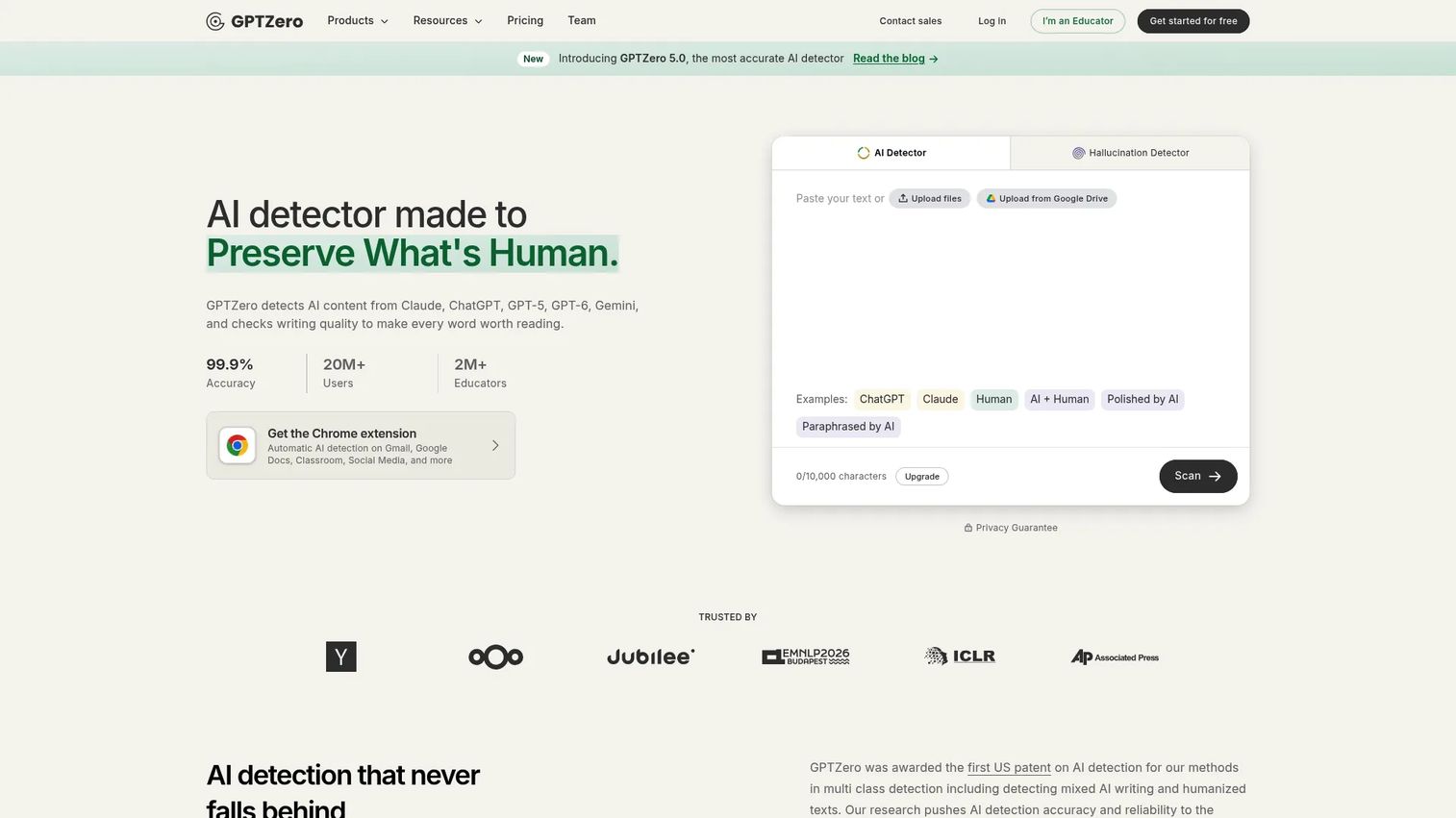
GPTZero is an AI detection platform for educators, publishers, recruiters, and businesses. It combines AI text detection with plagiarism review, grammar feedback, and writing authorship evidence.
Its Writing Replay feature shows document composition, pasted sections, and typing patterns. Integrations cover document workflows, classroom platforms, browser use, automation, and API access.
Best for: Schools, publishers, and organizations needing context beyond a pasted text score.
Key features
- Sentence level AI explanations
- Writing Replay evidence
- Plagiarism and grammar checks
- Classroom and document integrations
- API access
Why choose GPTZero: Choose it when audit friendly evidence matters more than a single AI probability score. Writing history adds useful context for higher stakes reviews.
Marketers can also use it to inspect outsourced content before publication. However, editorial judgment still determines whether flagged passages are inaccurate, generic, or simply formulaic.
GPTZero pricing: A free detector is available. Contact GPTZero for individual paid plan and Professional Team Plan pricing.
G2 rating: 4.3/5.
2. Pangram
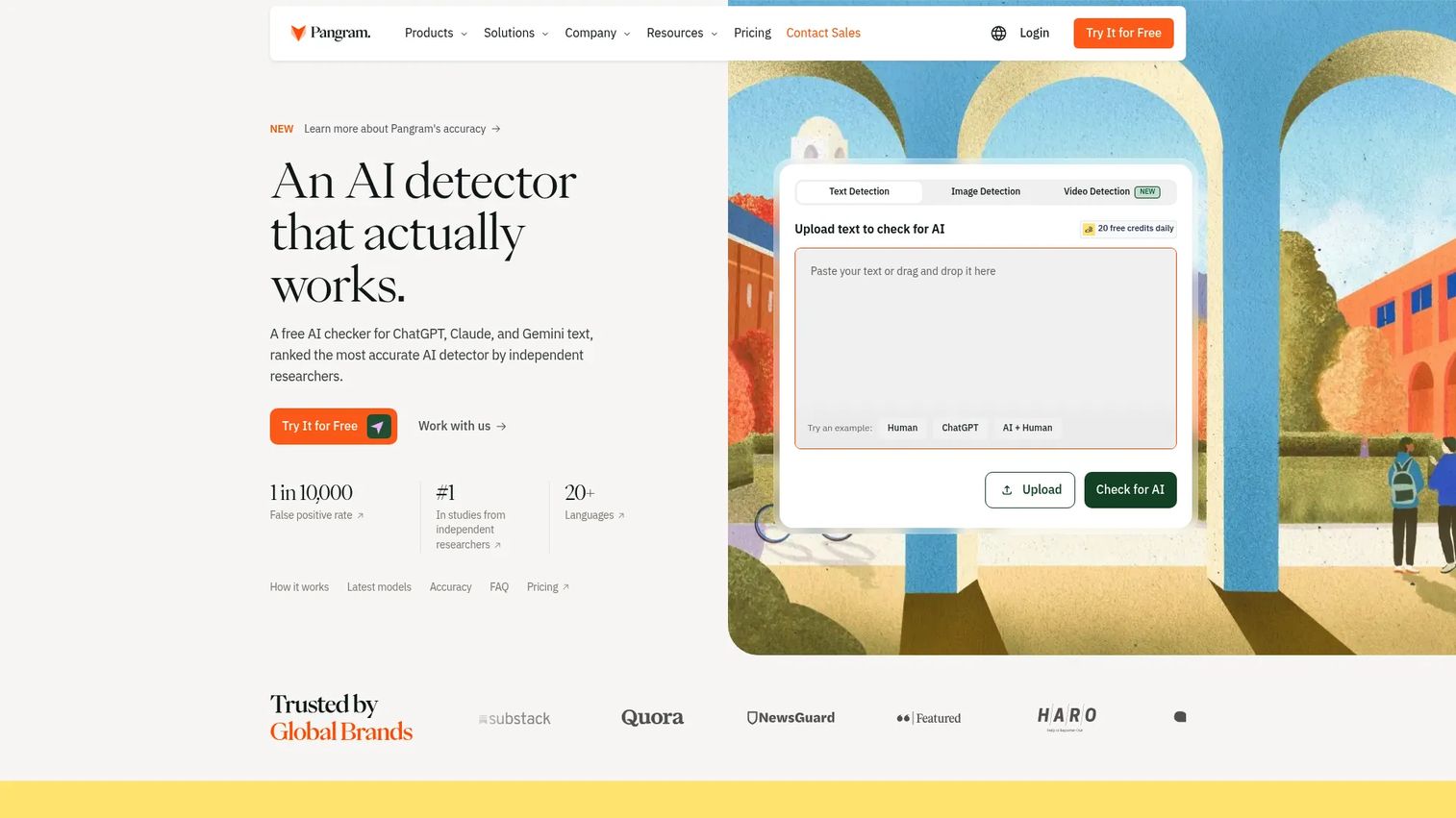
Pangram checks text, images, and video for likely AI generation. Its text workflow includes segment analysis, assistance detection, file uploads, OCR, and similarity review.
Support for more than 20 languages makes it relevant to teams publishing across regions. Document and email integrations can bring checks closer to existing editorial work.
Best for: Teams that prioritize careful interpretation and strict false positive controls.
Key features
- Text, image, and video detection
- AI assistance analysis
- Similarity and plagiarism checks
- More than 20 supported languages
- API and MCP access
Why choose Pangram: Choose it when your review process must distinguish possible AI assistance from broader machine generation. The synthetic media coverage also extends beyond a standard AI writing detector.
Pangram works for publishers, recruiters, and education teams. Test its scoring on your own multilingual material before applying one threshold across every language.
Pangram pricing: Individual costs $20 monthly after a seven day trial. Professional costs $65 monthly, while free users receive 20 daily credits.
3. QuillBot
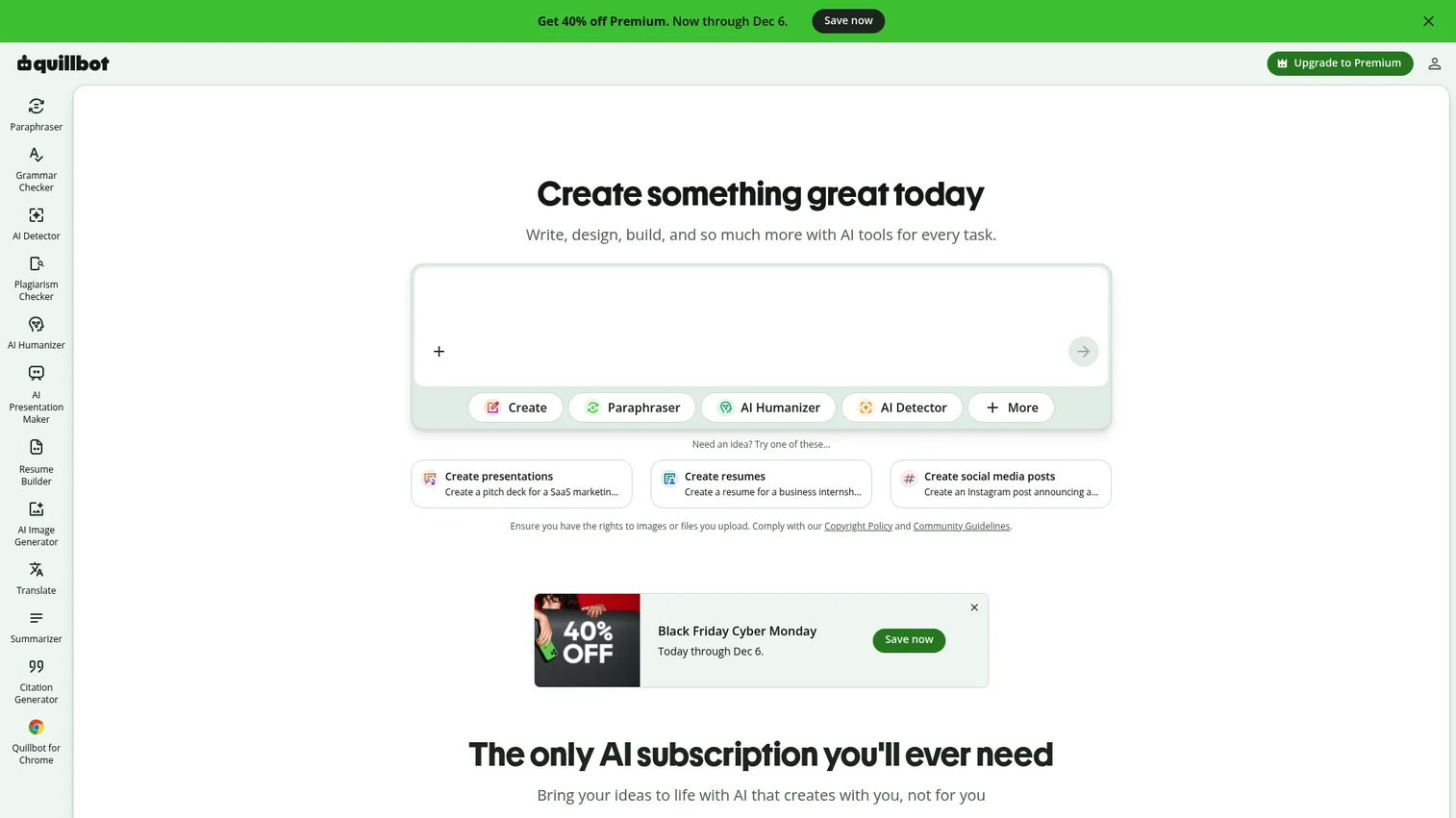
QuillBot places an AI checker inside a broader writing platform. The suite includes paraphrasing, grammar review, summarization, translation, plagiarism detection, and citation tools.
This breadth suits marketers who want fewer disconnected writing subscriptions. Free access covers limited AI detection alongside other editing functions.
Best for: Marketers, editors, and students needing quick checks within an established writing workflow.
Key features
- Free AI checker
- Paraphrasing and grammar tools
- Plagiarism checking
- AI humanizer
- Translation and summarization
Why choose QuillBot: Choose it when detection is one step in editing rather than a separate institutional process. It offers more consolidation value than a single purpose AI scanner.
The platform works well for early review and rewriting. For disputes or disciplinary decisions, add writing history and corroborating evidence from outside the detector.
QuillBot pricing: Free costs $0. Premium costs $8.33 monthly with annual billing, $13.31 quarterly, or $19.95 month to month.
G2 rating: 4.4/5.
4. Originality.ai
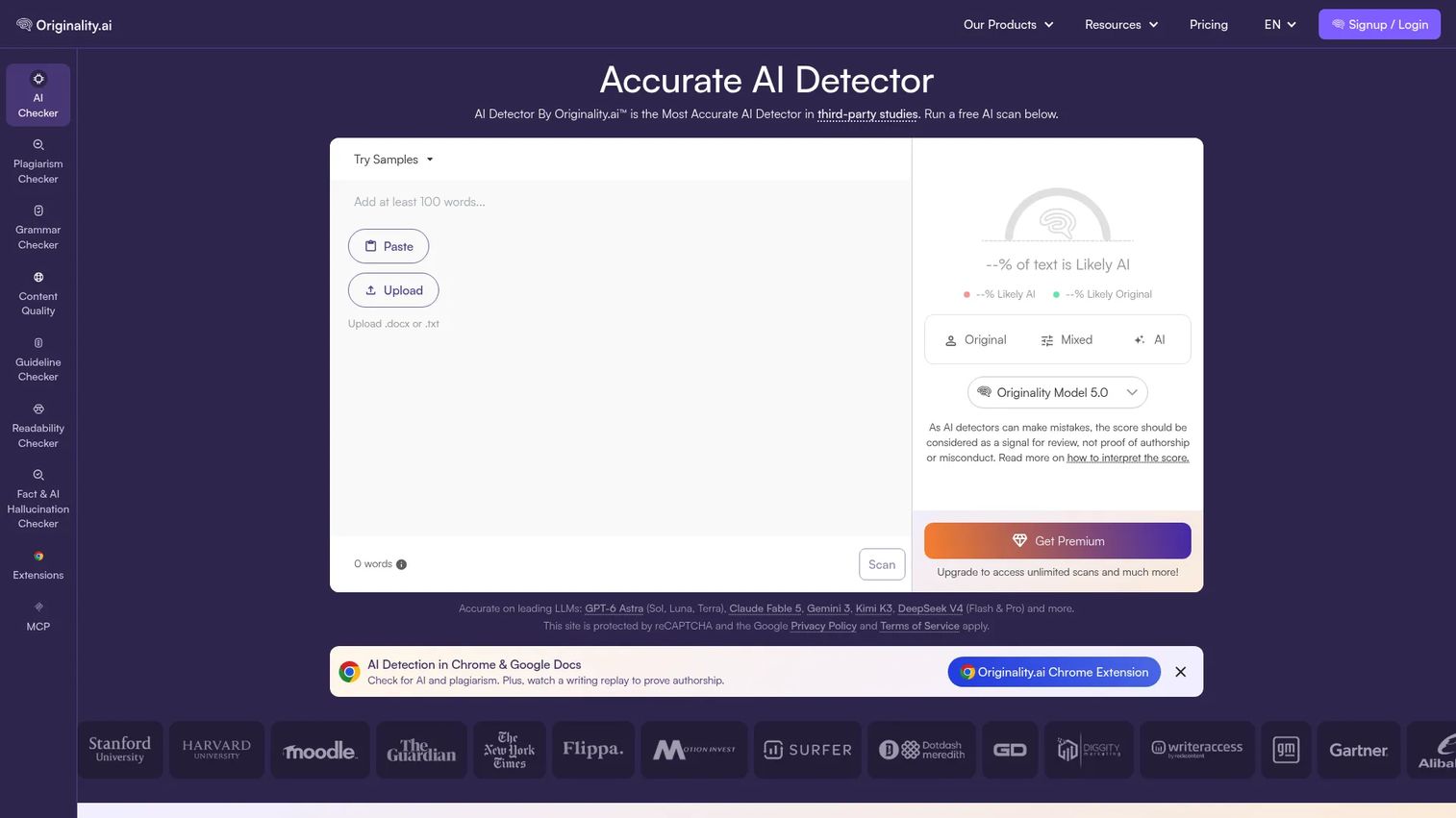
Originality.ai targets publishers, agencies, and SEO content teams. It combines AI content detection with plagiarism review, readability analysis, grammar checking, and a fact checking aid.
A browser extension adds writing replay, while team features support recurring editorial operations. API access serves higher volume workflows that need automated screening.
Best for: Content teams reviewing SEO articles, freelance submissions, and publication ready drafts.
Key features
- AI content detection
- Plagiarism checking
- Readability and grammar review
- Browser based writing replay
- Team and API workflows
Why choose Originality.ai: Choose it when content QA happens daily and plagiarism review already belongs in the process. The broader toolset can replace separate similarity and readability checks.
For AI content detection for SEO, use the score to prioritize editing. Quality, factual accuracy, and search intent still need direct review.
Originality.ai pricing: Basic is free with limited detection. Pro costs $12.95 monthly with annual billing or $14.95 month to month.
Enterprise costs $136.58 monthly with annual billing or $179 month to month.
G2 rating: 4.4/5.
5. Winston AI
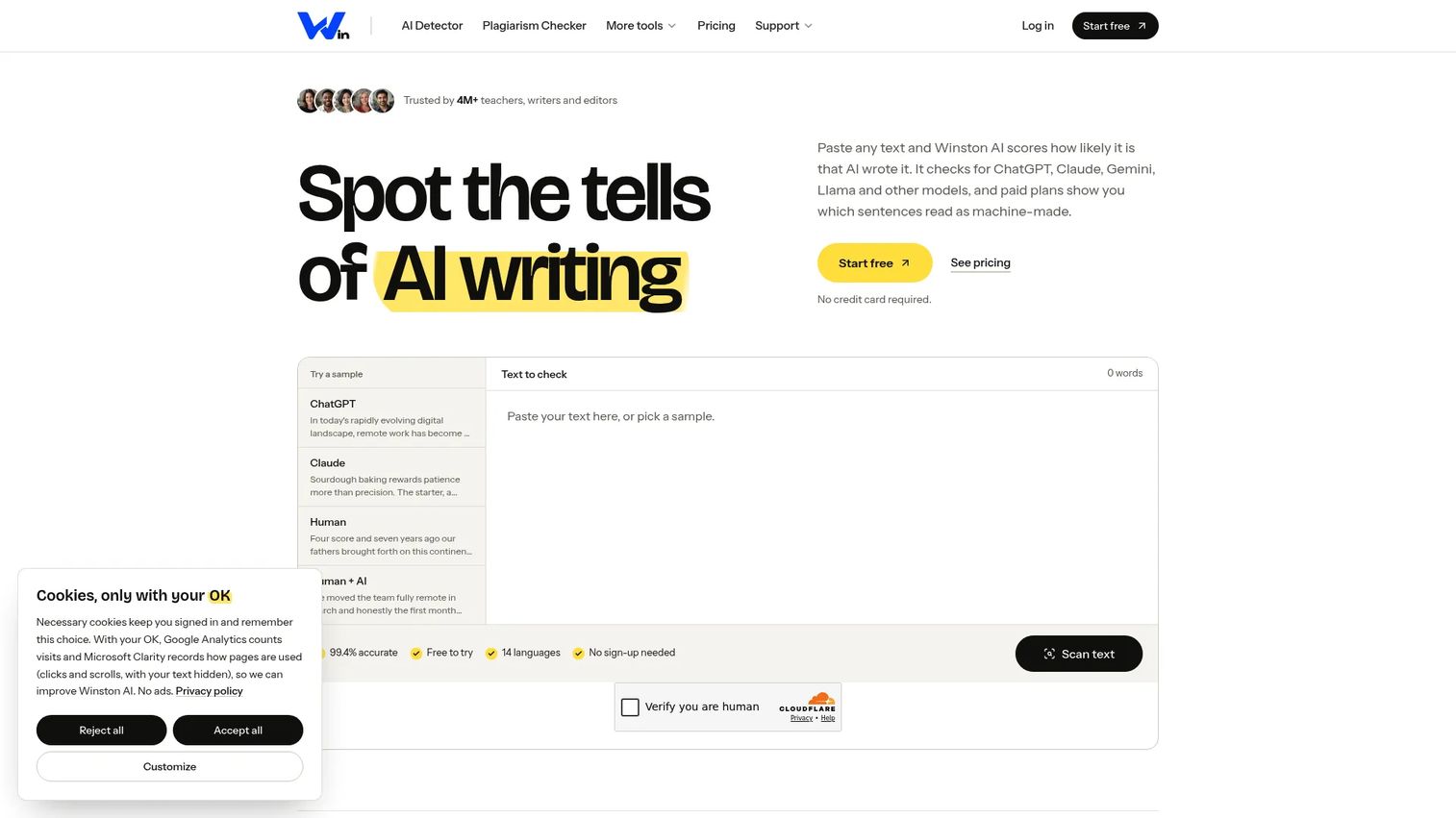
Winston AI combines AI detection and plagiarism checking for education, publishing, and SEO workflows. It accepts standard documents plus images and handwriting through OCR.
Sentence level detection helps reviewers inspect specific passages. Shareable PDF reports make findings easier to discuss with editors, clients, or academic reviewers.
Best for: Educators and content teams that need saved, shareable AI detection reports.
Key features
- Sentence level AI detection
- Plagiarism checking
- Image and handwriting OCR
- Shareable PDF reports
- Browser, classroom, and API integrations
Why choose Winston AI: Choose it when several stakeholders must examine the same evidence. OCR also helps when material arrives as scans rather than editable documents.
Reports can support a structured review process, but they should never become an automatic verdict. Include the source document and reviewer notes whenever decisions carry consequences.
Winston AI pricing: Free includes 1,000 credits. Pro costs $2.99 for seven days, $15 monthly, or $120 yearly.
G2 rating: 4.4/5.
6. Quetext
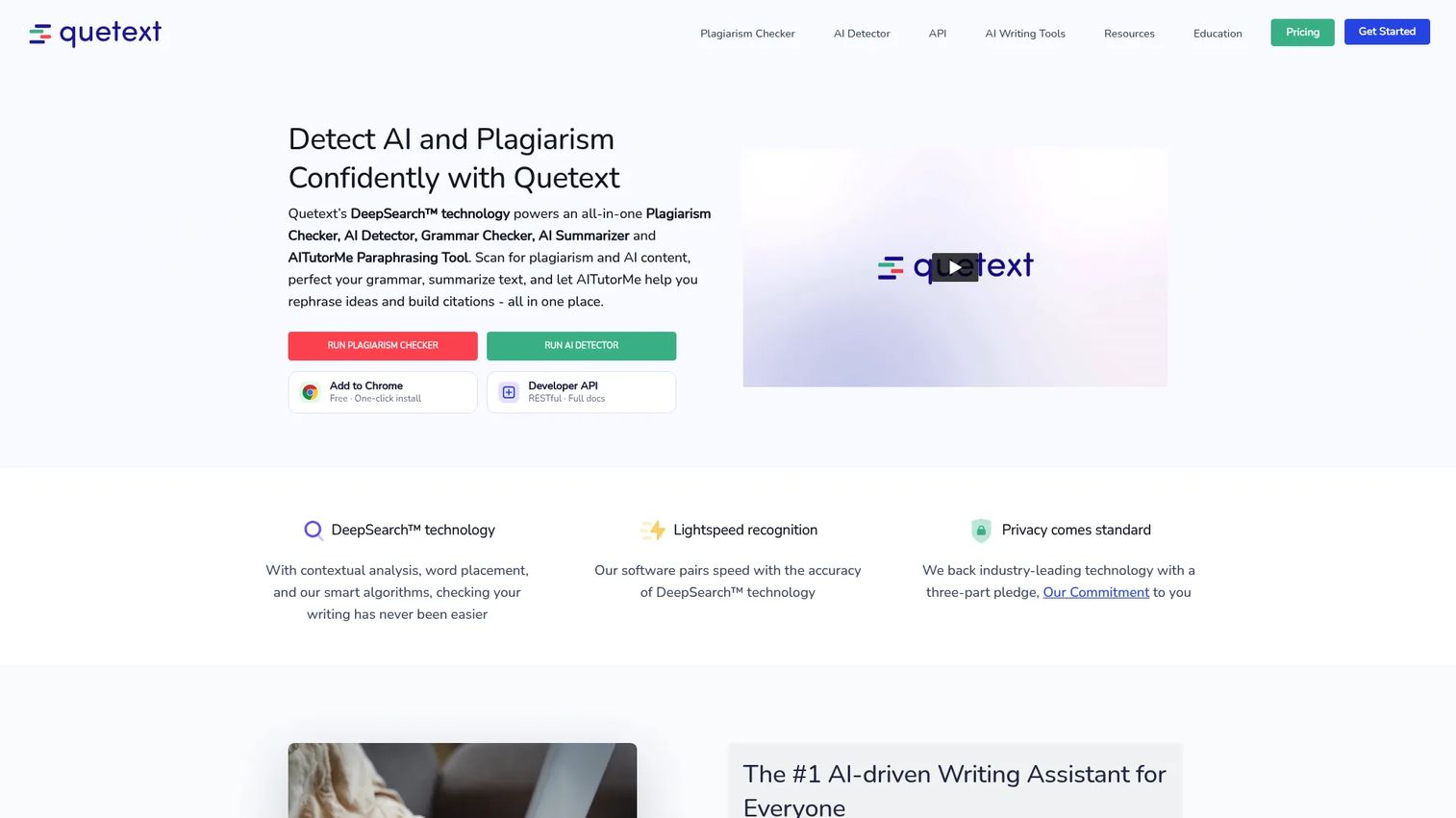
Quetext is a plagiarism first platform with AI content detection and writing support. Its DeepSearch plagiarism engine pairs source matching with citation assistance and color coded feedback.
Teams can add paraphrasing, grammar support, file uploads, and API access. This structure fits workflows where source originality remains the primary concern.
Best for: Teams prioritizing plagiarism checks while adding AI detection as a separate signal.
Key features
- DeepSearch plagiarism detection
- AI content detection
- Citation assistance
- Bulk file uploads
- Browser extension and API
Why choose Quetext: Choose it when your review begins with source overlap rather than probable authorship. It can consolidate plagiarism and AI review without treating them as the same problem.
Marketers reviewing outsourced work may find this pairing useful. Run source checking first, then inspect AI signals only where a deeper authorship review is warranted.
Quetext pricing: Free includes limited scans. AI Detector Only costs $7.99 monthly, while Plagiarism Checker Only costs $9.99 monthly.
Essential starts at $19.99 monthly. Professional starts at $29.98 monthly.
7. Humalingo
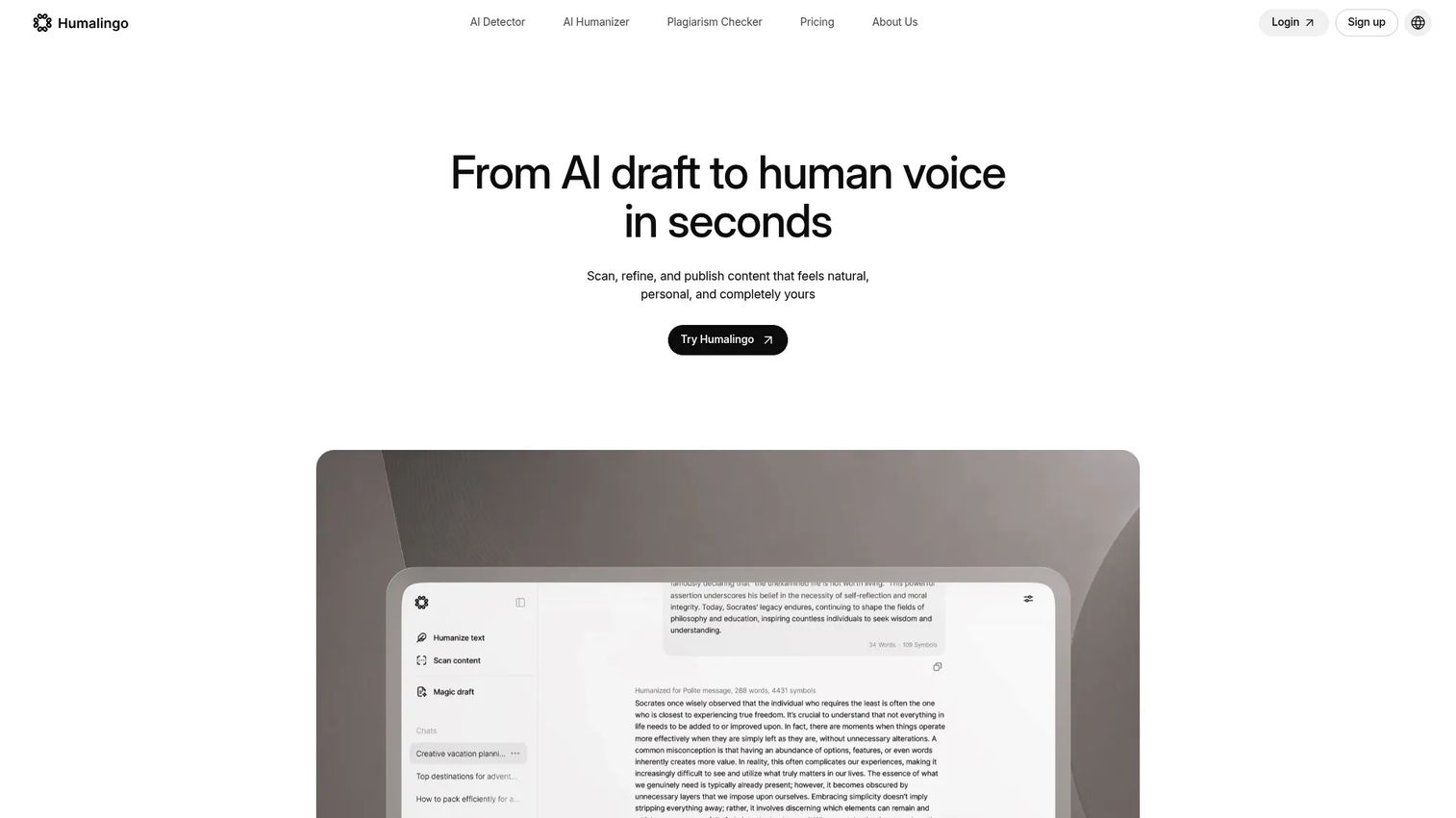
Humalingo combines AI generated content detection with humanization and plagiarism checking. Users can refine text by purpose, tone, or selected rewriting mode.
The platform fits writers who want detection and revision within the same environment. Its plagiarism feature also surfaces matched sources and citation support.
Best for: Writers and teams reviewing AI assisted drafts before refining their language.
Key features
- AI generated content detection
- Configurable text humanization
- Plagiarism checking
- Matched source review
- Citation support
Why choose Humalingo: Choose it when detection feeds directly into editing. The combined workflow can reduce copying between a checker and a separate rewriting tool.
Its role is closer to writing QA than institutional authorship evidence. Teams should still preserve original drafts and editorial notes when provenance matters.
Humalingo pricing: Contact Humalingo for pricing.
8. Proofademic
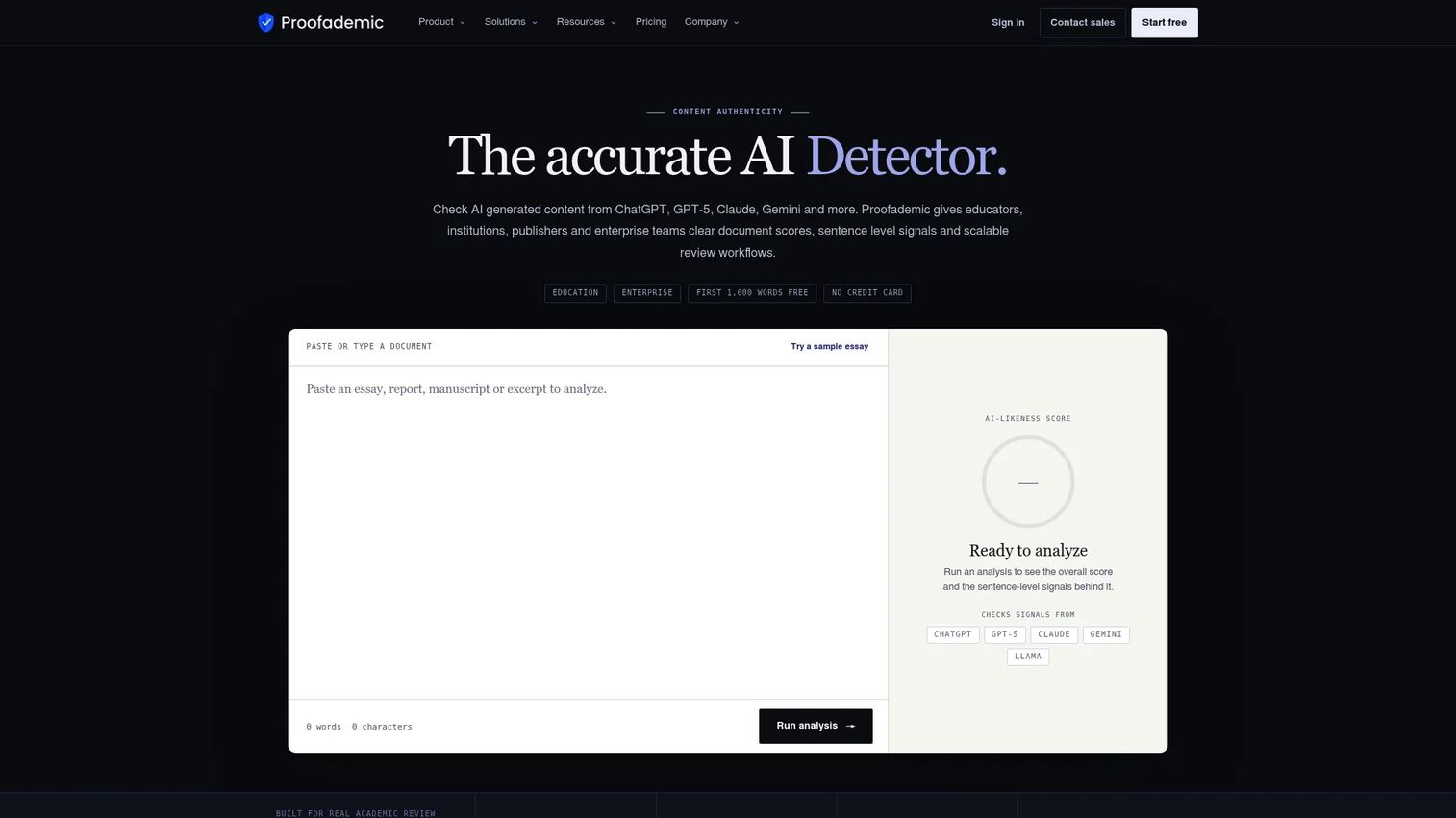
Proofademic focuses on education, publishing, and enterprise originality review. It provides sentence level AI evidence alongside plagiarism checks and multilingual detection across 23 languages.
Batch scanning and API access support repeated reviews. Its Paraphrase Shield targets text that has been rewritten after generation.
Best for: Academic and publishing teams reviewing multilingual material at volume.
Key features
- Sentence level AI evidence
- Plagiarism checking
- Detection across 23 languages
- Paraphrase Shield
- Batch scanning and API access
Why choose Proofademic: Choose it when language coverage or batch processing matters. Academic teams can use its reports to identify passages that warrant discussion.
Multilingual AI detection accuracy can vary between languages and content types. Build separate test samples for each publishing market rather than applying one threshold globally.
Proofademic pricing: Free includes 1,000 words during a three day trial. Essential costs $15 monthly, Premium costs $25, and Professional costs $45.
9. Detecting-AI
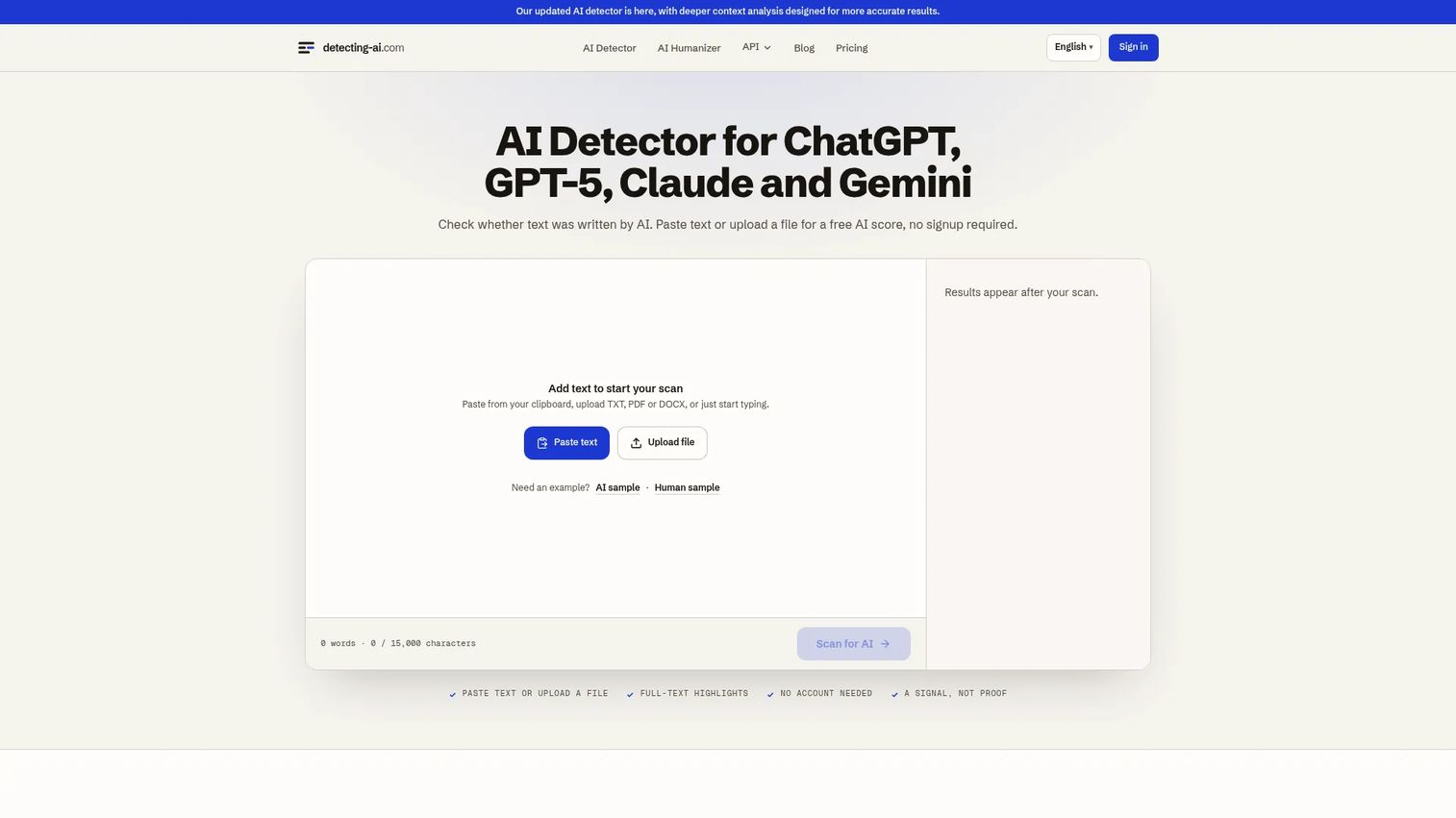
Detecting-AI provides quick text scanning with highlighted AI signals. It accepts pasted text plus TXT, PDF, and DOCX files.
Additional tools cover humanization, plagiarism review, and fact checking. Technical teams can connect the detector through its REST API or MCP server.
Best for: Editors and individuals needing frequent scans without a complex institutional workflow.
Key features
- Highlighted AI text signals
- Document file uploads
- Plagiarism and fact checks
- AI humanizer
- REST API and MCP server
Why choose Detecting-AI: Choose it when scan allowance and accessibility matter more than classroom or governance features. The free tier supports repeated daily checks.
Vendor accuracy claims should not replace internal testing. Include known human writing in your sample set to measure false positives before automating decisions.
Detecting-AI pricing: Free supports 300 daily detections. Writer costs $6 monthly with annual billing, Pro costs $13, and Scholar costs $20.
10. Monica
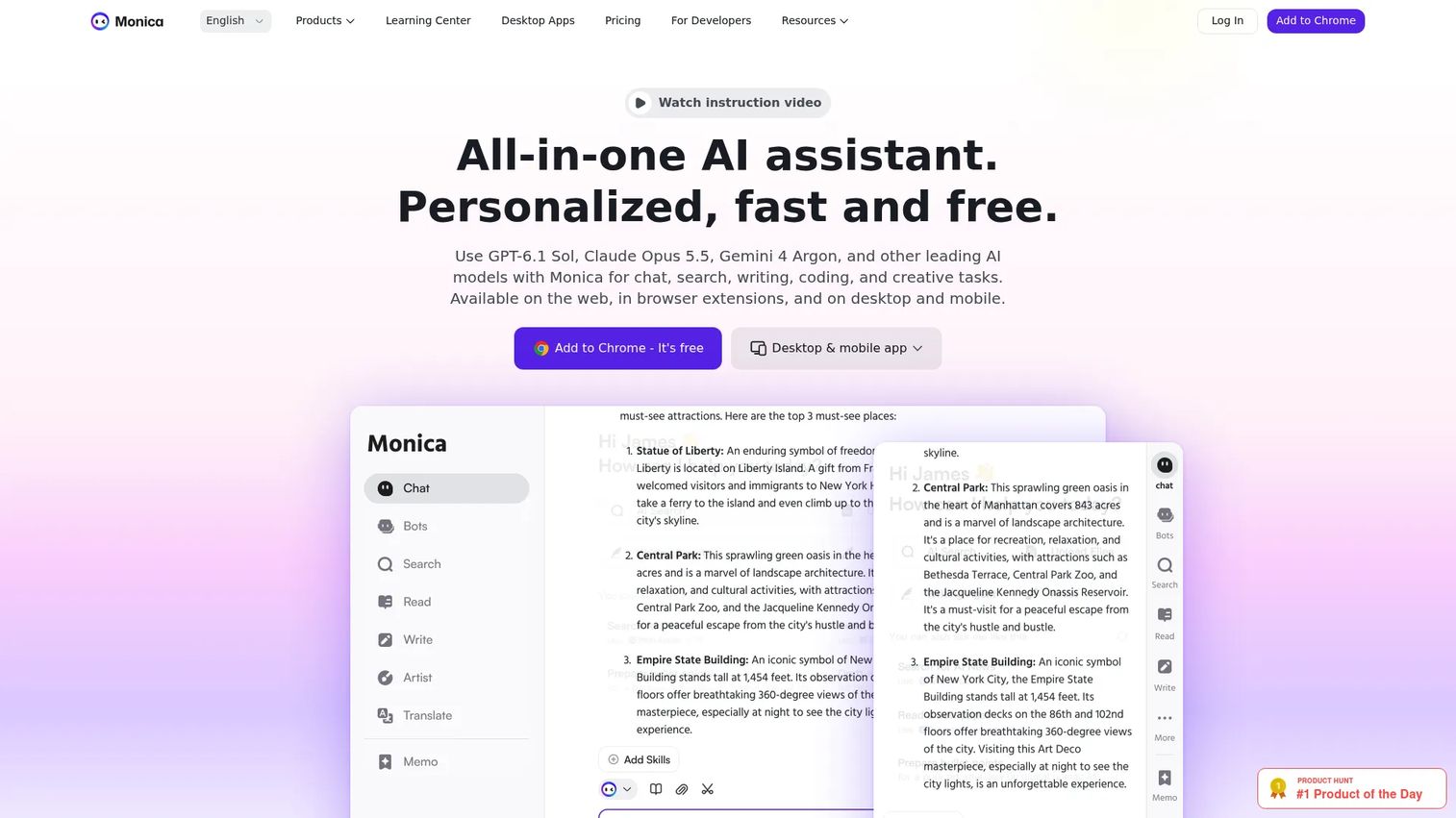
Monica is a broad AI assistant for writing, research, summarization, translation, and media generation. It works across browsers, desktop devices, mobile devices, and code editing environments.
Detection is therefore an adjacent task within a larger productivity system. Buyers seeking one dedicated authorship review platform should weigh that broader scope carefully.
Best for: Individuals who want content review inside a multipurpose AI assistant.
Key features
- Multi model AI chat
- Writing and rewriting tools
- Translation and summarization
- Document and image reading
- Cross platform access
Why choose Monica: Choose it when detection belongs inside a broader research and writing workflow. A general assistant may reduce tool switching for individual marketers.
Teams needing sentence evidence, formal reports, or academic review controls should evaluate a dedicated detector alongside it.
Monica pricing: Free includes limited daily access. Pro costs $8.30 monthly annually, Max costs $16.60, and Ultra costs $82.90.
11. Undetectable AI
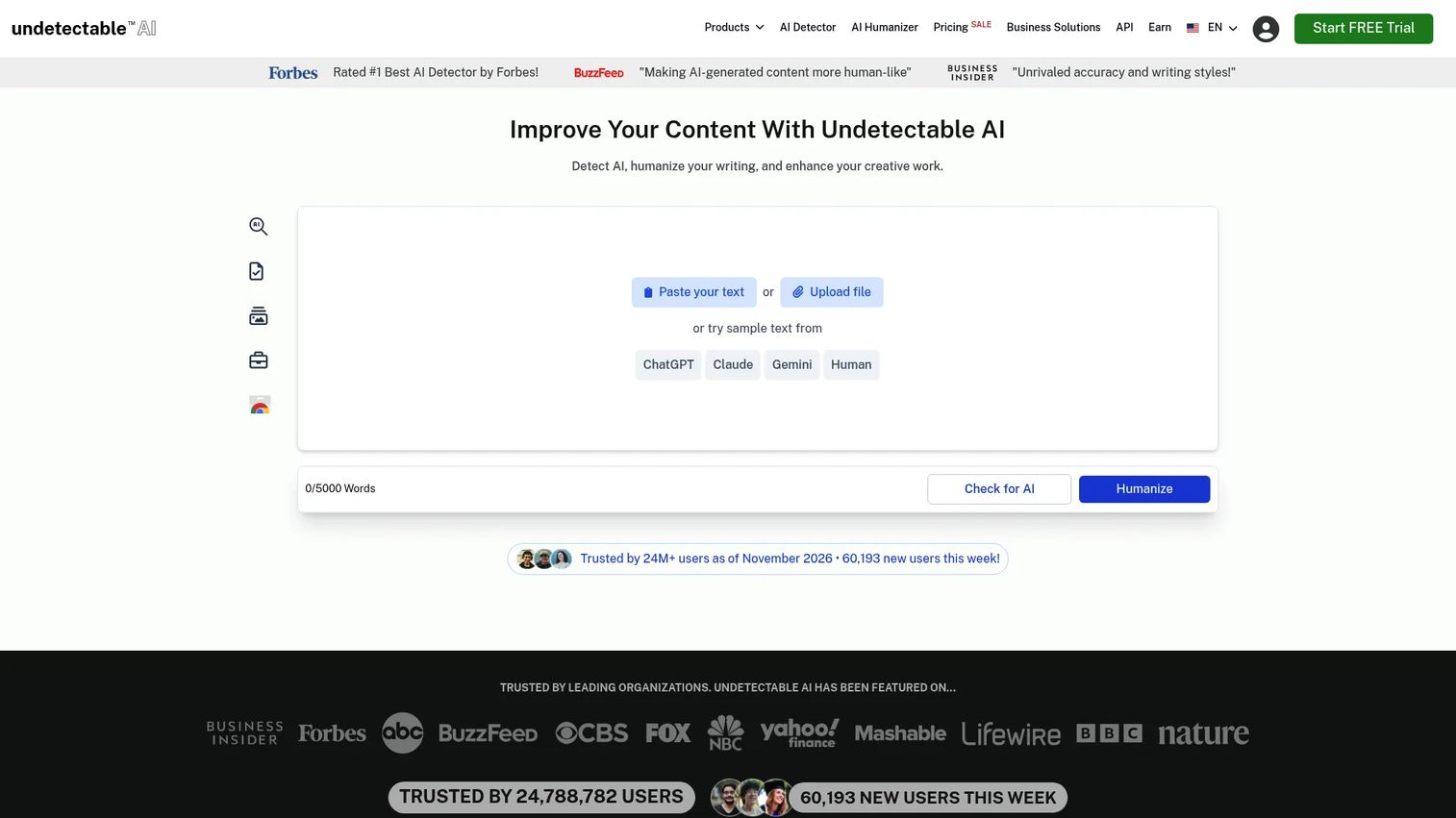
Undetectable AI combines AI content detection with text humanization. It also supports detection across images, video, and audio.
The platform is relevant for testing how rewriting affects detector output. Teams can compare the original draft with edited versions to understand detection resistance.
Best for: Reviewers stress testing detector results against rewritten AI assisted content.
Key features
- AI text detection
- Image, video, and audio checks
- AI text humanizer
- Writing level matching
- API compatibility
Why choose Undetectable AI: Choose it for controlled testing rather than proving authorship. It can expose how detector scores change after heavy rewriting.
Use this workflow responsibly. Marketers can assess detector reliability without using humanization to misrepresent content provenance or bypass client requirements.
Undetectable AI pricing: A 250 word trial is available. Paid plans start at $9.99 monthly for 10,000 words, with Business sold through custom pricing.
G2 rating: 4.4/5.
12. Phrasly.AI
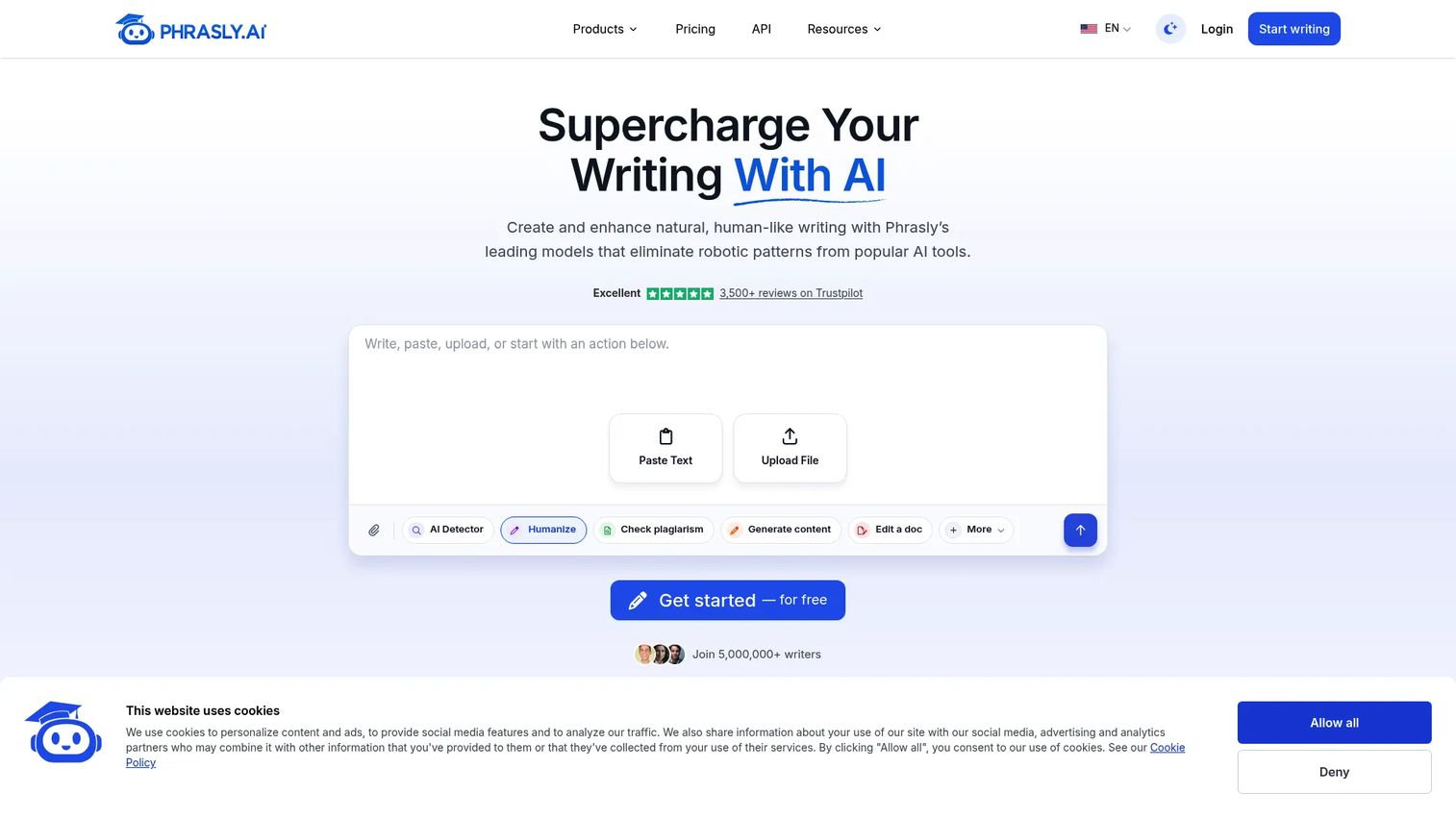
Phrasly.AI combines AI detection with humanization, content generation, plagiarism checking, and document editing. Its editor supports citations and document exports.
An API extends detection and humanization into other workflows. The platform suits users who want to edit and retest within the same environment.
Best for: Writers and reviewers examining how revisions change AI detection results.
Key features
- AI content detector
- AI humanizer
- Plagiarism checker
- Document editor and citations
- Detection and humanization API
Why choose Phrasly.AI: Choose it when your process includes drafting, editing, and repeated checks. The surrounding writing tools can reduce manual handoffs.
Treat humanized AI detection as an uncertain signal. Rewriting can alter scores without proving that a person authored the underlying ideas.
Phrasly.AI pricing: Free includes unlimited AI detection with limited humanization. Three day access costs $2, while Unlimited costs $20 monthly or $131.88 yearly.
G2 rating: 4.0/5.
13. GetSolved AI
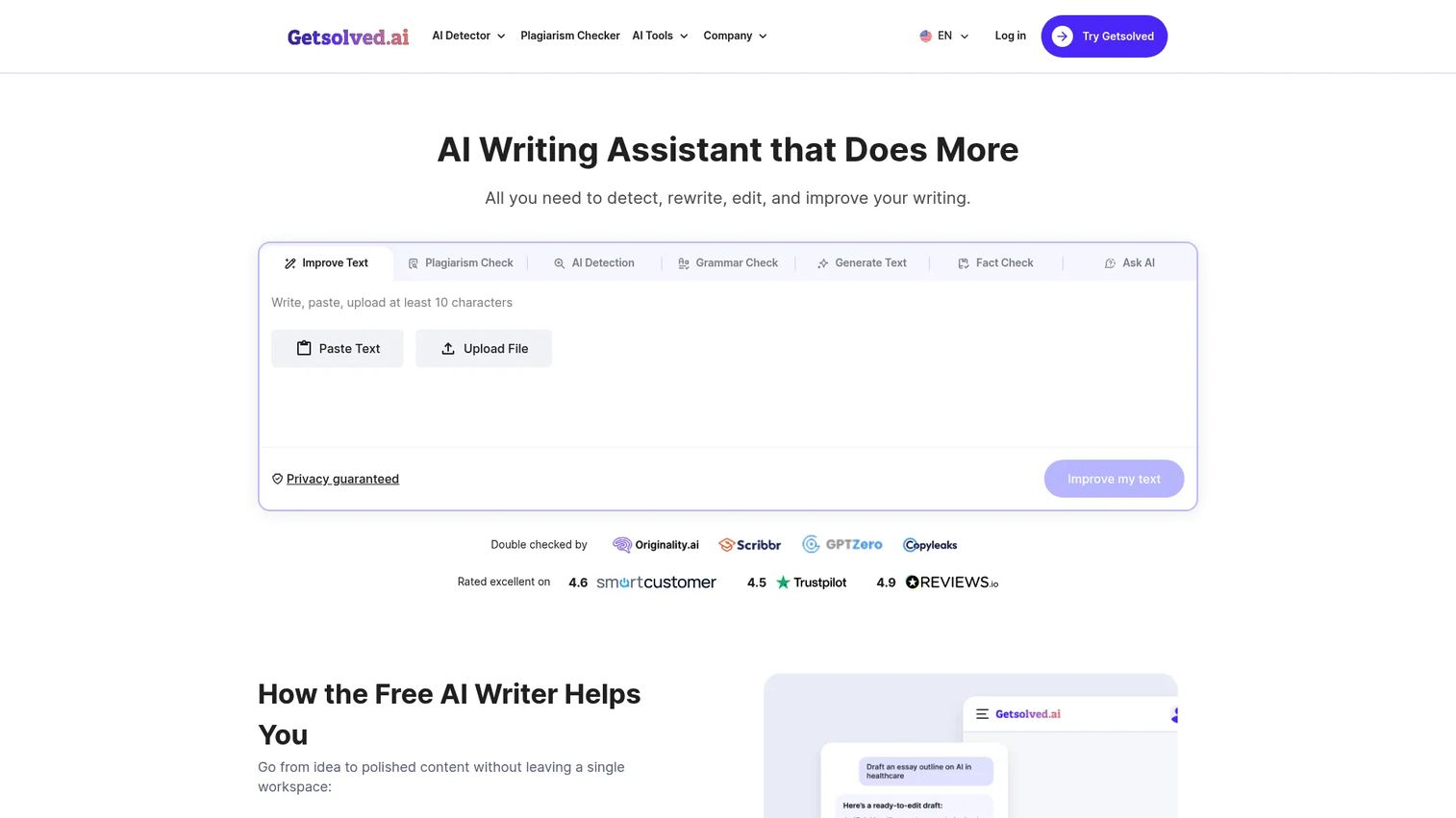
GetSolved AI is a writing assistant with AI content detection, grammar review, fact checking, and plagiarism checking. It also includes rewriting, paraphrasing, and tone adjustment.
The combined feature set fits users who want feedback and revision support around a draft. Detection forms one part of the wider writing process.
Best for: Students and writers who want AI detection alongside editing assistance.
Key features
- AI content detection
- Grammar and style checks
- Fact and plagiarism review
- Tone adjustment
- Rewriting and paraphrasing
Why choose GetSolved AI: Choose it when you want to improve a draft after checking it. The tool can consolidate several writing review tasks.
It is better suited to individual content support than a formal enterprise evidence process. Teams requiring APIs, batch controls, or institutional reporting should assess those capabilities separately.
GetSolved AI pricing: Seven day access costs $2 and renews at $39.99 every 30 days. Monthly access costs $19.99, while annual access costs $95.88.
14. Clever AI Detector
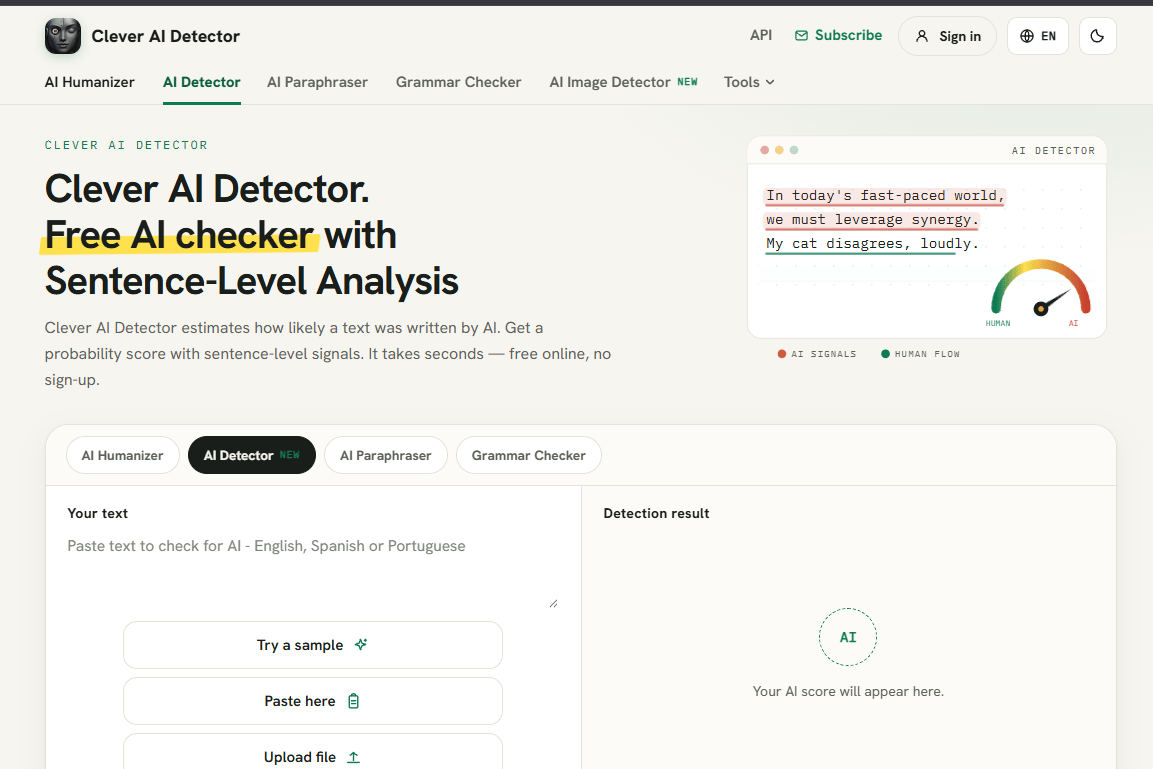
Clever AI Detector is a free AI checker for English text. It provides a document level AI probability score with sentence level signals and explanations.
Users can scan up to 10,000 words per check without signup. An account adds access to previous checks.
Best for: Editors and writers needing a quick AI checker free of subscription requirements.
Key features
- Document level probability score
- Sentence level AI signals
- Explanations for flagged text
- Ten thousand words per check
- Free unlimited checks
Why choose Clever AI Detector: Choose it for one off checks and early editorial triage. The low commitment makes it useful for testing whether detection belongs in your process.
A simple AI scanner should not anchor high stakes decisions. Pair its output with another detector, source review, and author context when consequences extend beyond revision.
Clever AI Detector pricing: Free with unlimited checks. No paid plan was identified.
Considerations when choosing AI detection software
Test false positives before rollout
Build a test set from your own human written archive. Include several writers, multiple formats, different topics, and every publishing language you support.
Add known AI generated samples plus heavily edited and mixed authorship drafts. Measure how often each tool flags human work before trusting its AI detection accuracy.
Look for evidence beyond scores
Prioritize sentence highlights, explanations, draft replay, and exportable reports. A single percentage gives reviewers little context for the next decision.
Writing history is especially useful when authorship matters. Publishers may care more about source matching and URL level review.
Match the tool to your workflow
Marketers need editorial QA, useful integrations, and manageable review volume. Educators benefit from writing process evidence and classroom connections.
Publishers often need team reporting, plagiarism analysis, and API access. A free AI checker may cover occasional use without adding another subscription.
Check privacy and data retention
Your team may paste unpublished campaigns, student work, confidential client drafts, or internal research into the detector. Check storage periods, deletion controls, and whether submitted text trains future models.
Review access permissions for shared accounts. Enterprise teams should also examine contractual privacy terms before uploading sensitive material.
Verify pricing against volume
Map your monthly word count before comparing plans. Credit based pricing becomes expensive when every draft receives several scans.
Include revisions and retesting in the estimate. API calls, seats, document limits, and plagiarism credits may affect the final cost.
Conclusion
AI detection software is useful for triage, editorial review, and content risk management. No detector should be treated as perfect evidence of authorship.
GPTZero offers strong workflow context for education and institutional review. Pangram fits teams focused on AI assistance and false positive discipline. QuillBot provides accessible checks within a broader writing suite.
Originality.ai suits recurring publisher workflows, while Winston AI emphasizes reports and OCR. Quetext is worth considering when plagiarism review remains the primary job.
Simpler tools can cover quick checks without adding another costly platform. Their scores still need context.
Exercise extra caution with short, multilingual, heavily edited, humanized, or mixed authorship content. The best AI checker is the one that performs reliably on your material and fits your editorial process.
Build a small benchmark from previous work. Compare two or three candidates, document the false positives, and define what happens after a draft gets flagged.
FAQs
AI detection software analyzes text or other media to estimate whether an AI model generated or assisted the content. Most tools use probability based classification rather than definitive authorship identification.
An AI generated content detector may also highlight individual passages. Some platforms combine this function with plagiarism or similarity review.
AI detectors use classifiers trained on examples of human and machine generated writing. They examine language patterns, perplexity, burstiness, stylistic consistency, and sentence level signals.
Different products use different models and thresholds. Two detectors can therefore return conflicting scores for the same passage.
Accuracy varies with content length, language, editing depth, model type, and benchmark design. Results from a controlled benchmark may not transfer cleanly to your content pipeline.
Test each tool on known human writing and representative AI samples. Track false positives separately from missed AI content.
Yes. Polished, formulaic, short, heavily edited, or non native human writing may receive a high AI probability score.
A false positive can damage writer trust and create unnecessary review work. Require human inspection before rejecting content or escalating concerns.
Some tools claim humanized AI detection or paraphrase resistance. Reliability varies because rewriting can remove the patterns a classifier uses.
Compare the original and edited versions whenever possible. Treat a changed score as evidence about detector sensitivity, not proof of human authorship.
AI detection estimates whether text resembles machine generated writing. Plagiarism checking compares the passage with existing sources to identify overlap.
A draft can be AI generated without plagiarizing a source. Human writing can also contain unattributed copied material, so serious reviews often need both checks.
An AI detector free plan can handle quick checks and low volume editorial review. Free options often limit words, documents, reports, or workflow integrations.
Paid plans usually add higher allowances, team controls, plagiarism review, APIs, or exportable evidence. Calculate your monthly volume before upgrading.
No. High stakes decisions require human review, corroborating evidence, and writing process context.
Review drafts, citations, document history, and the author’s explanation. Organizations should also provide a clear process for correcting inaccurate classifications.