An inquiry comes in through a web form. Nobody follows up for four days. By then the prospective student has requested information from three other schools, all of which replied within the hour.
That gap is where enrollment leaks. Admissions teams juggle inquiries, applications, texts, email drips, applicant portals, event RSVPs, and board-ready reports across systems that rarely talk to each other. The result is inconsistent follow-up, dirty data, and no clear view of where students drop off between "interested" and "enrolled."
The admission management software market is projected to reach USD 4.01 billion by 2034, growing at a 10.2% CAGR from 2025, according to Market.us (2024). Roughly 63% of these solutions now include AI-driven capabilities. Schools are investing because the manual approach no longer scales against student expectations for fast, personalized communication.
An admissions CRM fixes the leaks. Better follow-up. Cleaner data. Predictable workflows that move applicants from first touch to deposit without anyone rebuilding a spreadsheet at midnight. This guide breaks down the 12 tools worth evaluating, with pricing, ratings, and the criteria that actually matter.
What's inside
This guide is for higher education admissions, recruitment, and enrollment teams comparing admissions CRM software in 2026. It covers higher-ed-native platforms and flexible general CRMs adapted for admissions work.
We evaluated each tool against four criteria:
- Workflow automation: how well it handles application stages, reminders, and status updates
- Communication features: email, SMS, and applicant portal reach
- Reporting depth: funnel visibility, yield tracking, and campaign analytics
- Integration quality and higher-ed fit: SIS alignment, ecosystem connections, and admissions-specific design
You get a comparison table, per-tool breakdowns, pricing where public, and a buyer's checklist.
TL;DR
- Best overall for complex higher-ed admissions: Slate. Deep application management, reading workflows, and reporting built for the full student lifecycle.
- Best for enterprise-scale recruitment and analytics: Salesforce Education Cloud. AI-assisted recruitment plus a broad platform ecosystem.
- Best for AI-first admissions teams: Element451. Purpose-built AI agents for marketing, admissions, and student success.
- Best broader CRM with education customization: HubSpot. Flexible pipelines and automation you configure for higher-ed use.
- Best budget-conscious pick: Zoho CRM. A free tier and low per-user pricing with strong customization.
- Best for high-volume communication and follow-up: LeadSquared. Lead management and multi-channel automation for recruitment at scale.
What is admissions CRM software?
Admissions CRM software is a system that helps higher education institutions manage prospective student recruitment, applications, communications, status tracking, and enrollment reporting in one place.
Unlike a generic sales CRM, a higher education CRM is built around the admissions funnel: inquiry, application, review, decision, and yield. It centralizes every touchpoint so a counselor sees the full history of a prospective student without switching tabs.
Core capability buckets to expect:
- Centralized data: one record for each prospect covering inquiries, applications, and communication history
- Admissions workflow automation: stage-based tasks, application routing, and reading or review queues
- Applicant portals: self-serve status pages where students check requirements and decisions
- Texting and email: SMS and email admissions outreach with drip campaigns and reminders
- Admissions analytics: funnel drop-off, yield management, and campaign effectiveness reporting
- Integrations: SIS alignment, marketing tools, and event or payment platforms
The strongest recruitment and admissions software ties these together so applicant tracking and engagement happen in a single, measurable flow rather than across five disconnected tools.
When to use an admissions CRM
Not every team needs the same depth. Match the tool to the problem you actually have.
Centralize inquiry and applicant data
If your leads live in one spreadsheet, applications in another system, and email history in individual inboxes, you need a crm for admissions that unifies them. This matters most for smaller teams or institutions pulling data from fragmented sources like fairs, web forms, and third-party lists. One record per student means no counselor works blind.
Automate admissions communication
Manual follow-up does not scale past a few hundred applicants. A student recruitment crm sends deadline reminders, nurture drips, and status updates automatically across email, SMS, and portal notifications. When an application goes incomplete, the system nudges the student without a human remembering to. That consistency is what closes the four-day response gap.
Improve visibility into yield and conversion
Admissions leaders need to see where the enrollment funnel breaks. An enrollment management crm shows funnel drop-off, yield performance by segment, and which campaigns drive deposits. When you can see that transfer applicants stall at document upload, you fix the step instead of guessing. Reporting turns admissions from reactive to planned.
Admissions CRM software comparison
The table below helps you compare workflow depth, AI capability, reporting, and higher-ed fit at a glance. Pricing reflects publicly listed figures where available; several higher-ed platforms use quote-based models tied to institution size.
| # | Product | Best for | Key differentiator | Pricing | G2 rating |
|---|---|---|---|---|---|
| 1 | Slate | Complex higher-ed admissions | Full lifecycle depth with reading workflows | From $30,000/year | 4.4/5 |
| 2 | Salesforce Education Cloud | Enterprise recruitment and analytics | AI plus broad platform ecosystem | From $87/user/mo | 4.2/5 |
| 3 | Element451 | AI-first admissions teams | Purpose-built AI agents | Quote-based | Not rated |
| 4 | Ellucian CRM Recruit | Ellucian-ecosystem institutions | Native SIS and ERP alignment | Quote-based | 2.5/5 |
| 5 | TargetX | Student lifecycle recruitment | Recruitment plus retention suites | Quote-based | Not rated |
| 6 | Creatrix Campus | Admissions plus campus operations | Integrated higher-ed platform | Quote-based | 4.5/5 |
| 7 | Embark Campus | Configurable application review | Inquiry forms and review workflows | From $1,000/year | 4.2/5 |
| 8 | HubSpot | Flexible general CRM | Configurable pipelines and automation | Free / from $7/mo | 4.4/5 |
| 9 | Blackbaud | Advancement plus admissions | Constituent lifecycle breadth | Quote-based | 3.8/5 |
| 10 | Zoho CRM | Budget-conscious teams | Free tier plus deep customization | Free / from ₹420/user/mo | 4.1/5 |
| 11 | LeadSquared | High-volume communication | Multi-channel automation at scale | From $1,200/year | 4.5/5 |
| 12 | CrmOne | Simpler admissions operations | Lightweight all-in-one CRM | From $99/mo | 4.8/5 |
1. Slate
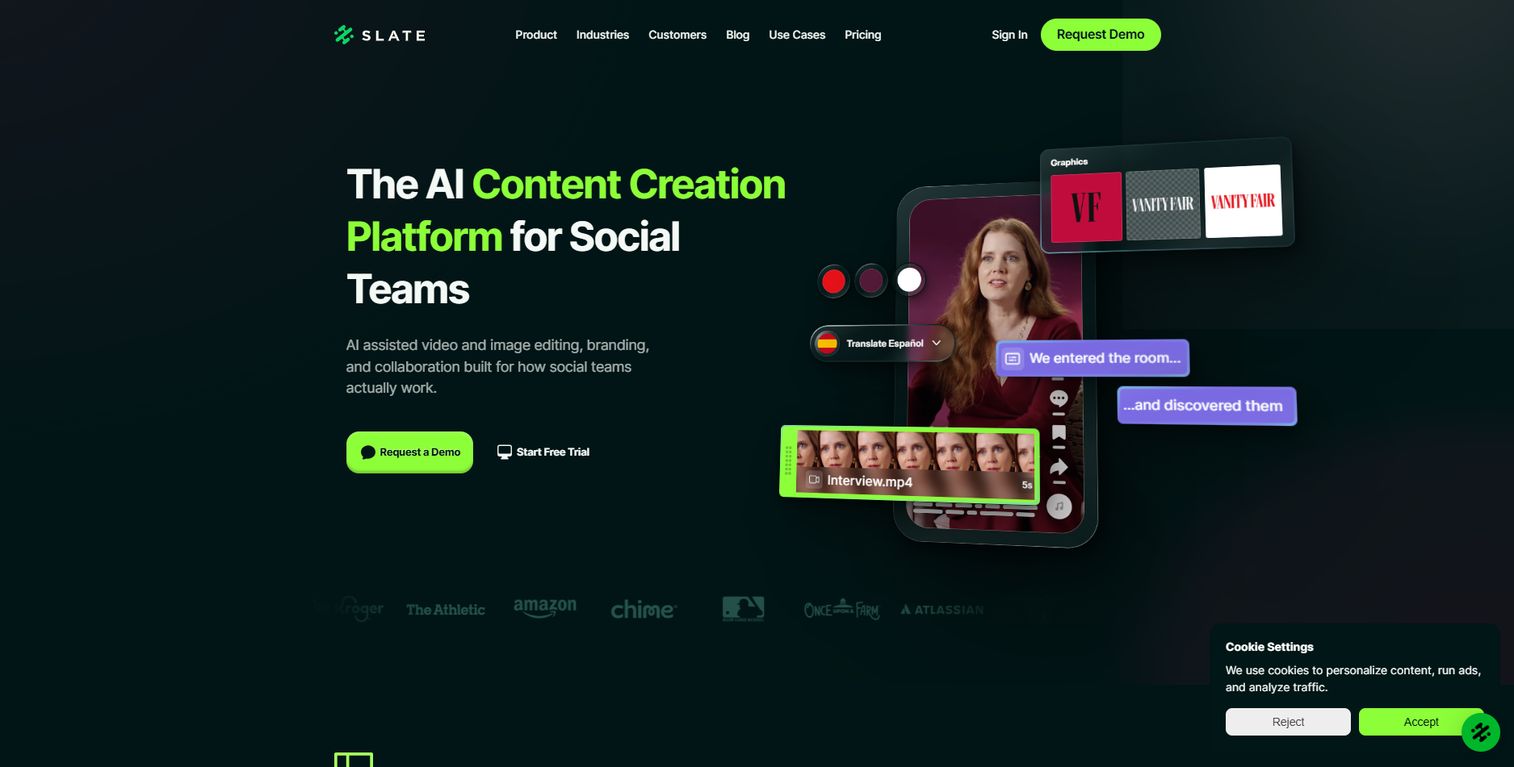
Slate, built by Technolutions, is the admissions-first platform most complex higher education programs standardize on. It covers the full student lifecycle: application management, reading and review workflows, decision release, texting, event management, and applicant portals, all with reporting depth that admissions offices rely on for board reviews.
The reason large and selective institutions choose it is workflow control. Reading queues route applications to the right reviewers. Decision release handles thousands of outcomes at once. Event tools manage open houses and interviews inside the same system that tracks the applicant. When your admissions process has genuine complexity, Slate absorbs it rather than forcing workarounds.
Slate also supports AI features and student success and advancement modules, so the platform grows with the institution beyond admissions alone.
Best for: Selective colleges and universities that need deep application management and reading workflows across the full lifecycle.
Key strengths
- Reading and review workflows with reviewer routing
- Bulk decision release and status updates
- Built-in event management for open houses and interviews
- Applicant portals for self-serve status tracking
- Reporting depth for yield and funnel analysis
Why choose Slate: It fits teams with real workflow complexity that need one system for reading, communication, events, and reporting. Smaller programs with simple needs may find the depth more than they use.
Slate pricing: Technolutions lists annual Admissions licenses starting at $30,000/year for institutions under 1,500 applications, scaling up to $175,000/year for the largest volumes. A Student Success license runs $30,000/year. No free tier.
2. Salesforce Education Cloud
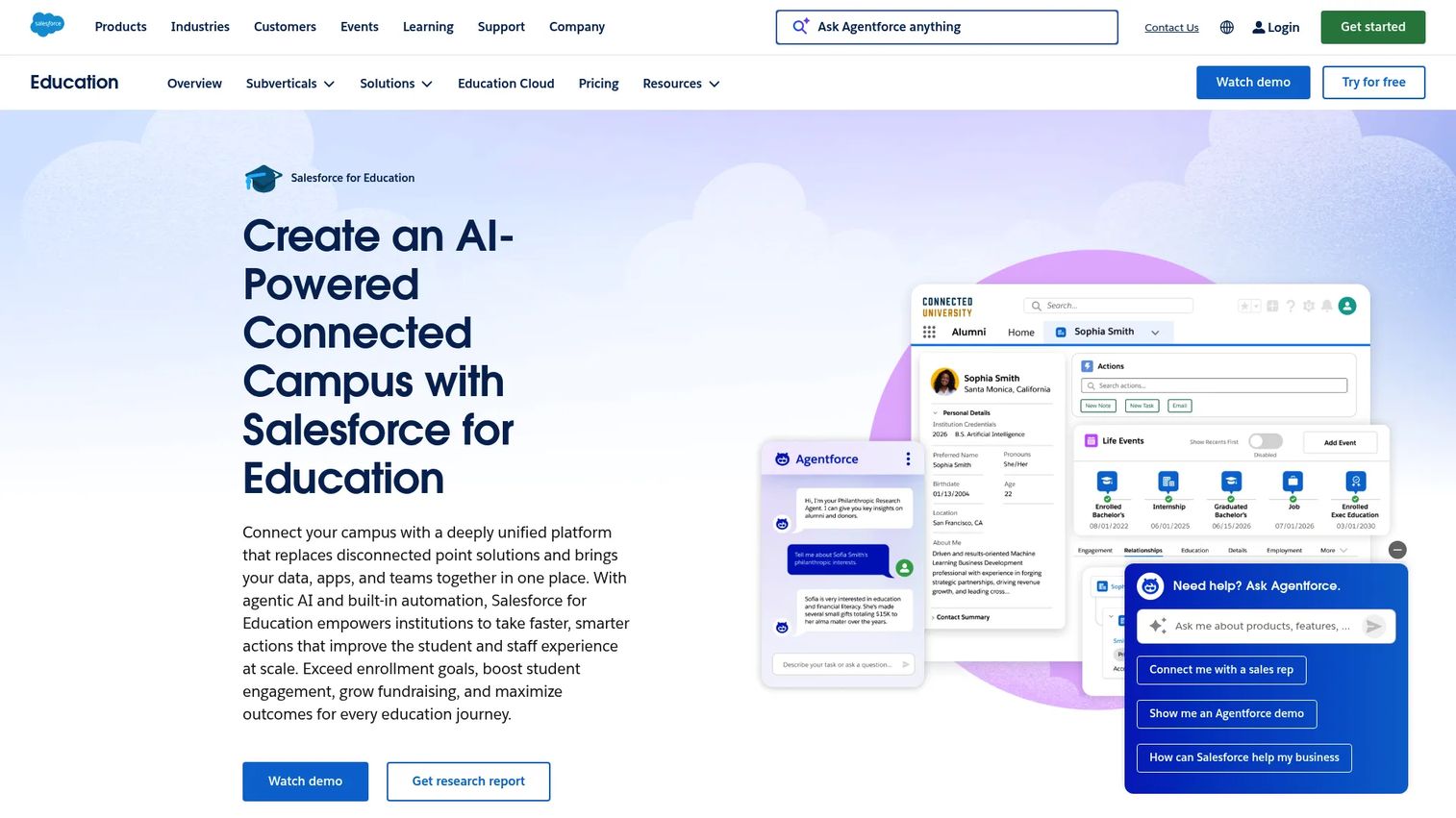
Salesforce Education Cloud is the enterprise-grade choice for institutions that want recruitment intelligence, AI assistance, and analytics inside a platform they may already run. It spans the constituent journey with purpose-built modules, next-gen SIS capabilities, and a common data foundation.
For admissions specifically, it handles recruitment intelligence, AI-assisted engagement, transfer credit, financial aid automation, dynamic applications, applicant portals, and dashboards. The draw is breadth: a large university already using Salesforce elsewhere can extend the same platform into admissions without adding a disconnected vendor.
That ecosystem reach makes it strong for institutions with IT teams ready to configure and maintain a university admissions crm at scale.
Best for: Large universities and multi-department institutions already invested in the Salesforce ecosystem.
Key strengths
- Purpose-built modules across the constituent journey
- Agentic AI and analytics for recruitment
- Transfer credit and financial aid automation
- Dynamic applications and applicant portals
- Common data foundation and next-gen SIS capabilities
Why choose Salesforce Education Cloud: It fits institutions wanting one platform across recruitment, student success, and advancement. Teams without Salesforce admin capacity should weigh the configuration commitment.
Salesforce Education Cloud pricing: Education Cloud Enterprise Edition starts at $87/user/month, billed annually. Unlimited Edition is $145/user/month. Agentforce 1 editions run $375/user/month. A 30-day free trial is available.
3. Element451
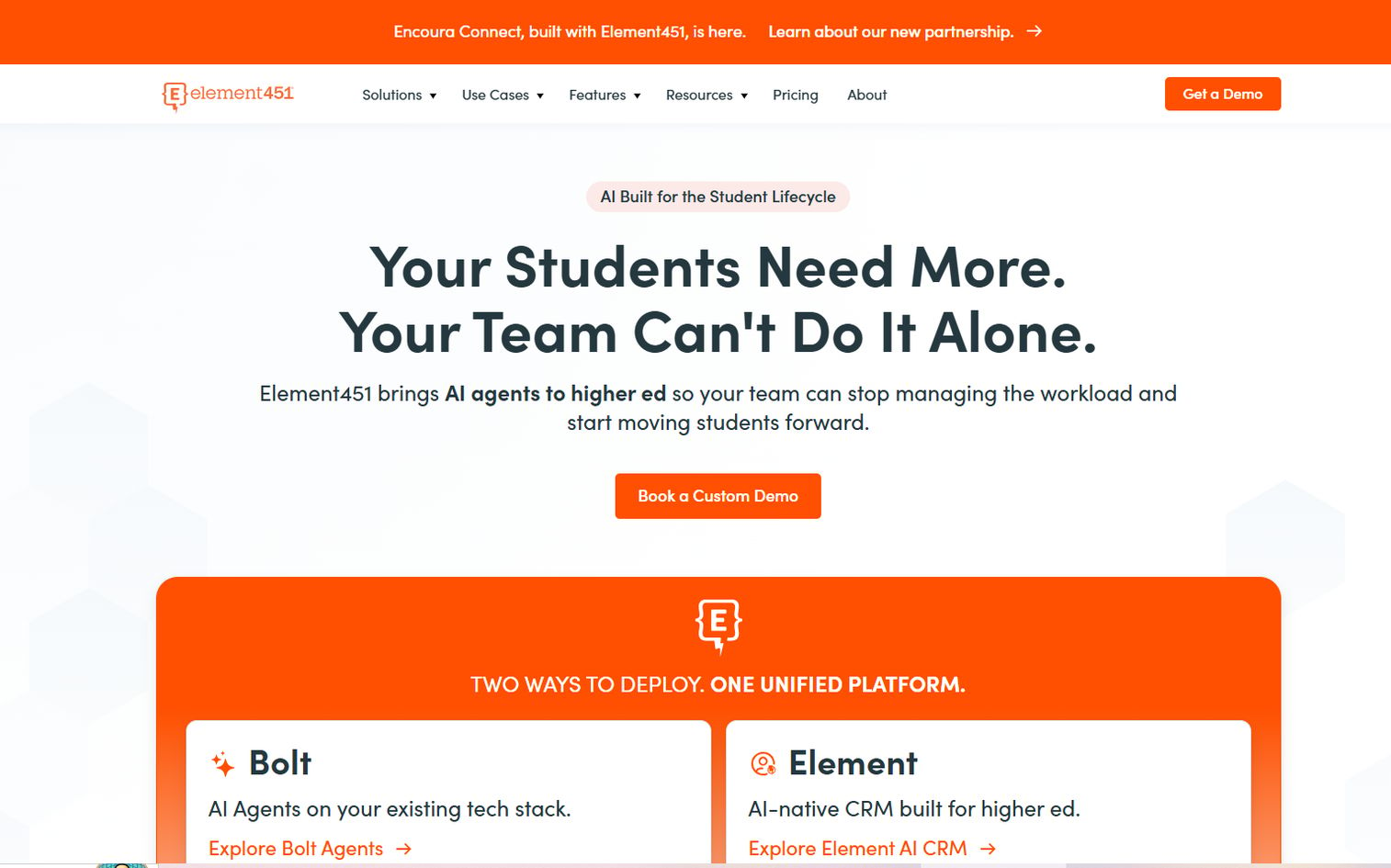
Element451 is an AI-forward higher education CRM built around AI agents for marketing, admissions, and student success. It unifies contact data and workflows, then layers automation and personalization on top so outreach adapts to each prospect.
The platform covers email and SMS campaigns, chat, voice, appointment booking, and analytics, with institutional messaging alignment across channels. Its AI positioning matters most for admissions teams that want to personalize at scale without a large staff manually segmenting audiences and drafting sequences.
For teams betting on an AI admissions crm as their core recruitment engine, Element451 is built around that thesis rather than bolting AI onto an older architecture.
Best for: Higher education institutions prioritizing AI-powered admissions, marketing, and student success workflows.
Key strengths
- AI agents for marketing, admissions, and student success
- Unified contact database and workflows
- Email, SMS, chat, and voice campaigns
- Appointment booking and engagement tools
- Analytics with institutional messaging alignment
Why choose Element451: It fits teams that want AI at the center of recruitment and engagement. Institutions wanting a long public track record of reviews may want a closer reference check first.
Element451 pricing: Pricing is annual and based on institution size and support tier. Element451 uses a quote-based calculator rather than a published starting price. No free tier.
4. Ellucian CRM Recruit
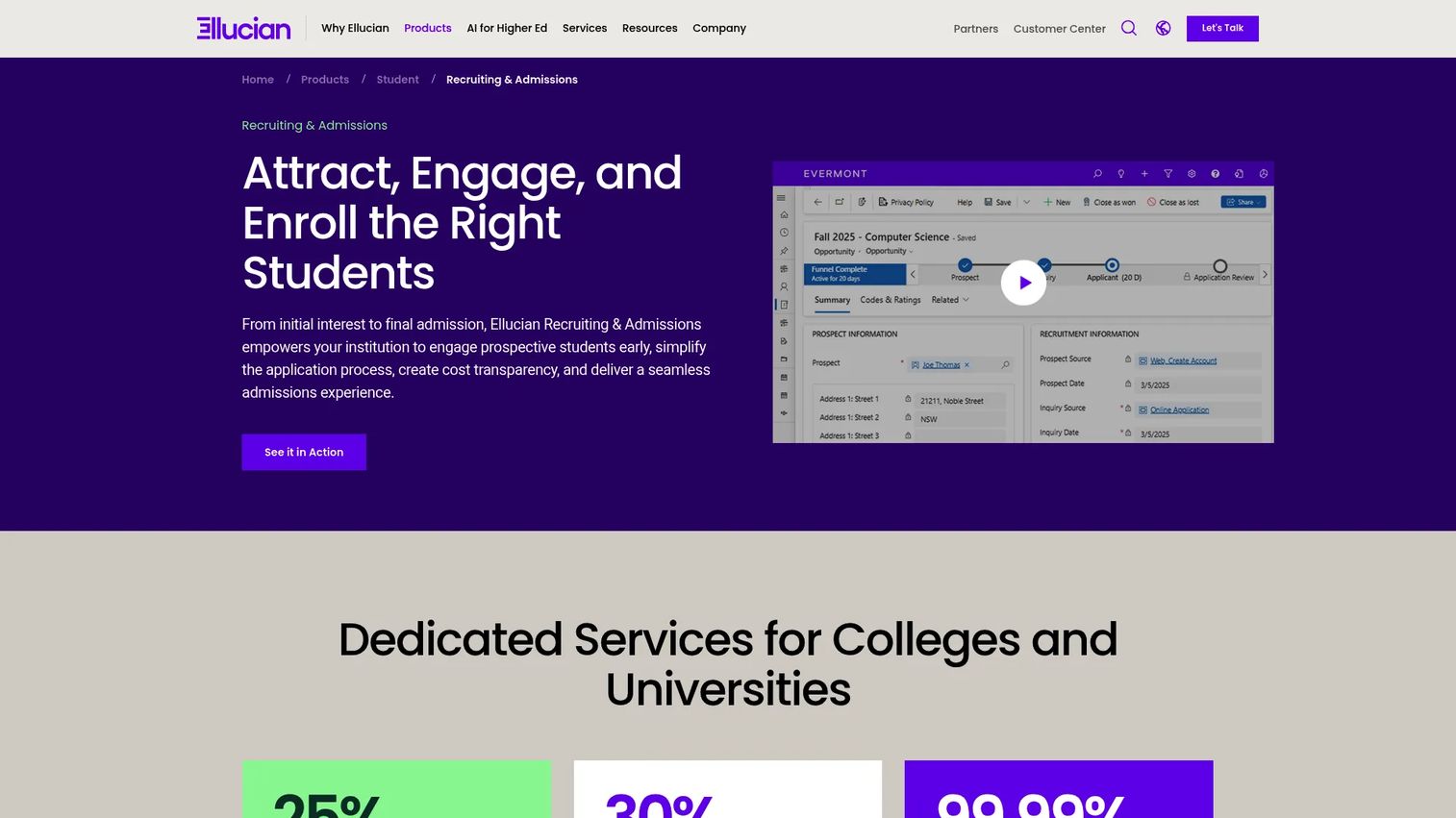
Ellucian CRM Recruit is the higher-ed-native option for institutions already running Ellucian systems. It manages prospect engagement, applications, events, and enrollment workflows, with the SIS and ERP alignment that makes it a natural fit inside that infrastructure.
The platform handles personalized communications across email, texting, and chat, plus application and event management with automated follow-up. Workflow automation and dashboards give admissions teams visibility into the recruitment pipeline and broader student lifecycle.
The main reason to choose it is continuity. If your student records already live in Ellucian, keeping recruitment and admissions software in the same family reduces integration friction and keeps data consistent from prospect to enrolled student.
Best for: Colleges and universities with existing Ellucian SIS or ERP infrastructure.
Key strengths
- Personalized email, texting, and chat communications
- Application and event management with automated follow-up
- Workflow automation and dashboards
- SIS and ERP integration
- Recruitment pipeline and lifecycle visibility
Why choose Ellucian CRM Recruit: It fits institutions committed to the Ellucian ecosystem that want native data alignment. Schools outside that ecosystem may find more flexible options elsewhere.
Ellucian CRM Recruit pricing: Ellucian does not publish a public price for CRM Recruit. Pricing is arranged directly through the vendor based on institution needs.
5. TargetX
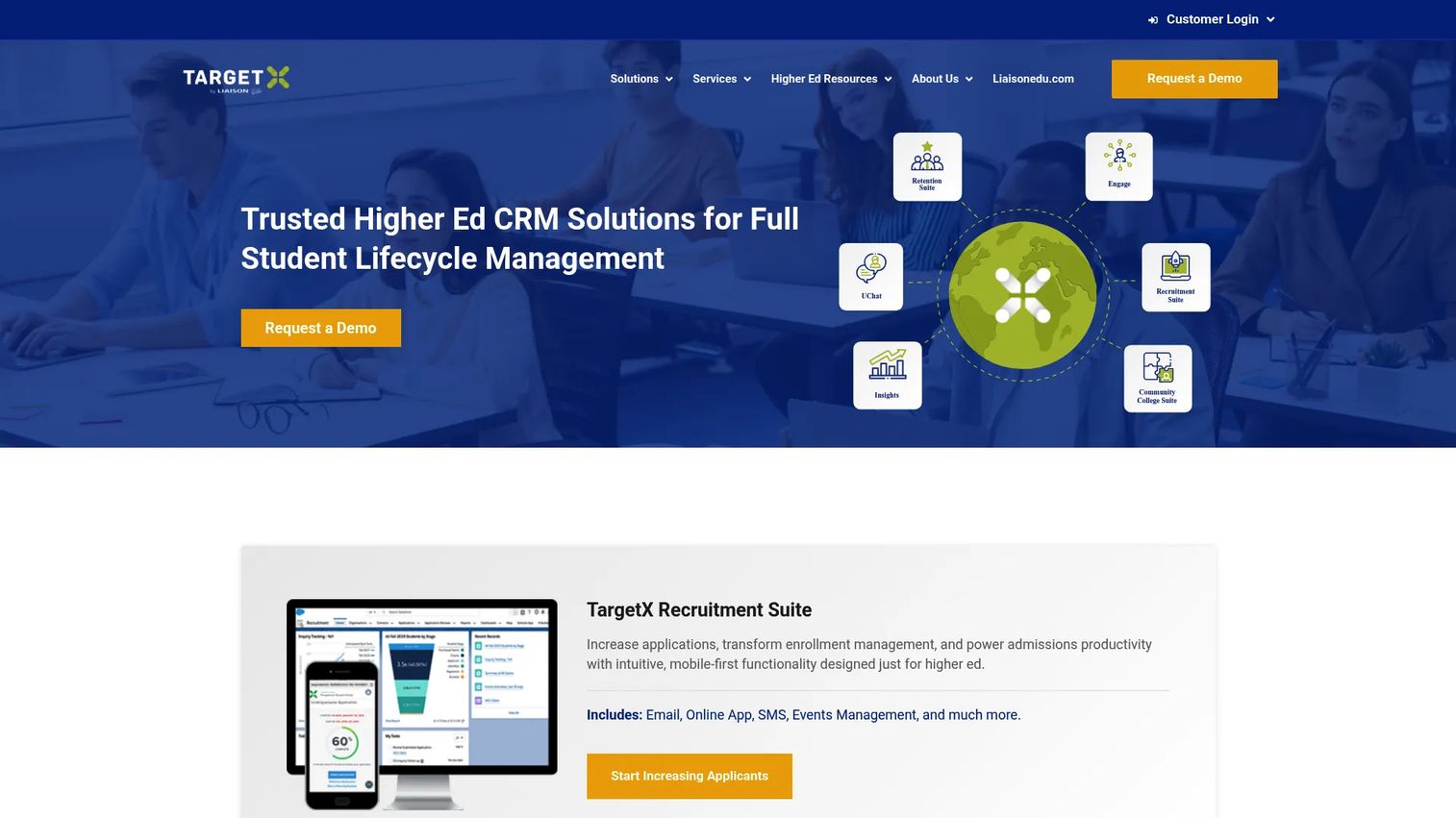
TargetX is a higher-ed CRM covering the full student lifecycle through its Recruitment, Retention, and Community College suites. It gives admissions teams lead capture, segmentation, communication automation, and the workflow support recruiters need to move applicants through each stage.
The lifecycle lens is what sets it apart. Rather than treating admissions as an isolated funnel, TargetX connects recruitment to retention, so the same platform that captures a prospect also supports the student after they enroll. That continuity appeals to institutions thinking beyond the deposit.
For admissions teams that want student recruitment crm capabilities inside a broader student-success framework, TargetX offers both without stitching tools together.
Best for: Colleges and universities wanting recruitment and retention in one lifecycle-focused platform.
Key strengths
- Recruitment Suite for admissions workflows
- Retention Suite for post-enrollment support
- Community College Suite for two-year institutions
- Lead capture and segmentation
- Communication automation
Why choose TargetX: It fits institutions that want recruitment and retention connected in one system. Teams needing only top-of-funnel recruitment may not use the full suite.
TargetX pricing: TargetX does not publish public pricing and directs prospective buyers to request a demo. Pricing is arranged based on institution needs.
6. Creatrix Campus
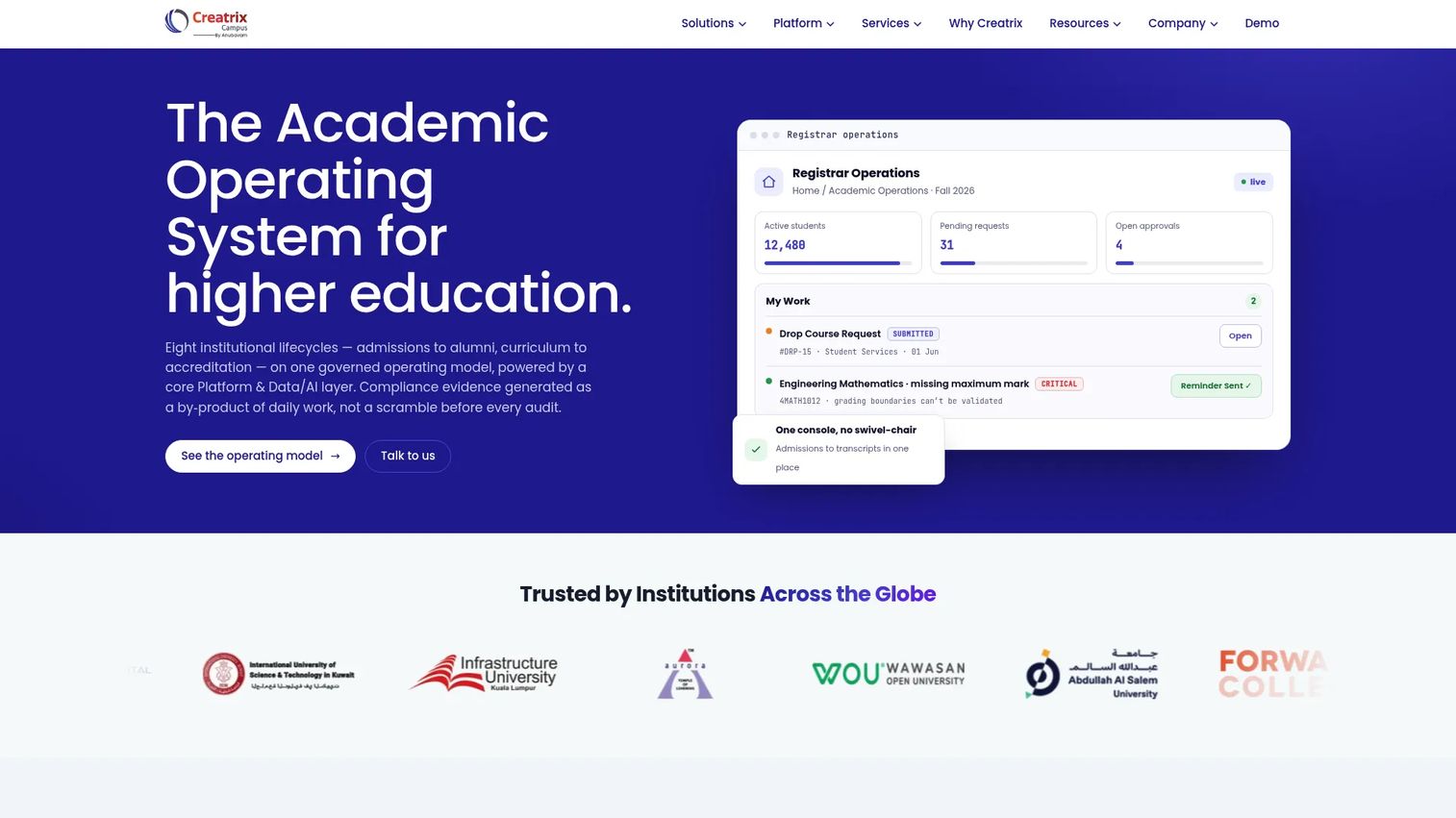
Creatrix Campus is a broader higher education platform with admissions CRM capabilities inside a wider suite covering the student lifecycle, learning, faculty, and campus operations. Admissions teams get workflow management, automation, student communications, and reporting as part of an integrated system.
The appeal is consolidation. Schools that want admissions handled alongside learning management, outcomes, assessments, and institutional operations can run it all from one vendor. That reduces the number of platforms IT maintains and keeps data flowing across departments.
For institutions where admissions is one piece of a larger operational picture, Creatrix Campus offers admissions workflow automation without a standalone point tool.
Best for: Colleges and universities seeking admissions inside an integrated campus management platform.
Key strengths
- Student lifecycle management
- Admissions workflow automation and communications
- Learning management, outcomes, and assessments
- Faculty and staff operations
- Reporting across institutional functions
Why choose Creatrix Campus: It fits schools that want admissions plus broader campus operations from one vendor. Teams needing a focused, admissions-only CRM may prefer a specialist.
Creatrix Campus pricing: Creatrix Campus does not display public pricing and asks visitors to request a customized quote based on institution requirements.
7. Embark Campus
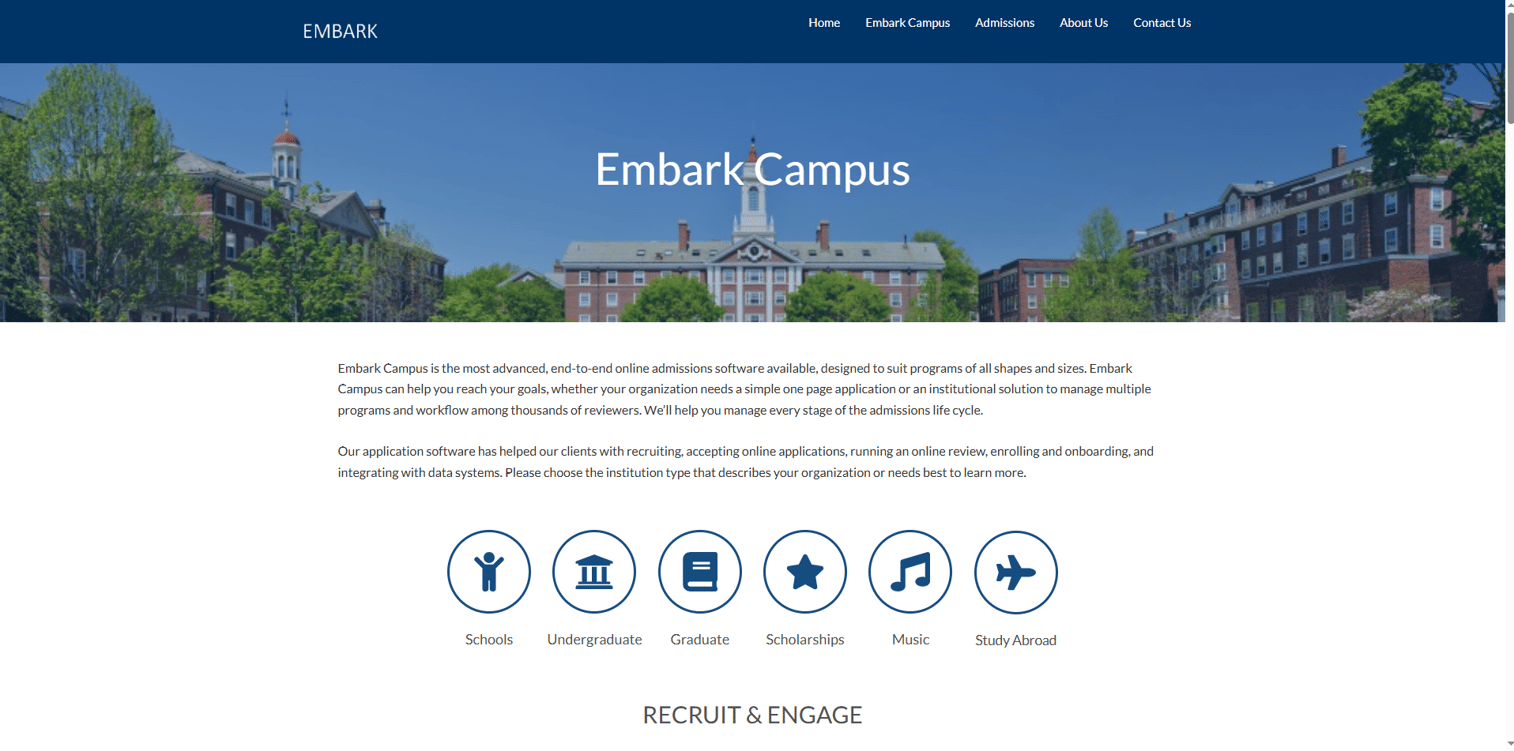
Embark Campus is a student recruitment and admissions platform focused on applicant engagement and application review. It lets teams create inquiry forms, run online reviews, and use AI-assisted workflows to move applications through evaluation.
The positioning is modern admissions interaction without heavy complexity. Schools that want clean forms, structured review, and configurable workflows get them without the overhead of an enterprise platform. It supports admissions across universities, fellowships, scholarships, music programs, and study abroad.
For institutions that need solid applicant tracking and engagement plus a workable review process, Embark Campus covers the core without excess.
Best for: Institutions needing configurable admissions workflows and structured application review.
Key strengths
- Inquiry form creation
- Online application review workflows
- AI-assisted evaluation
- Applicant portals and workflow support
- Admissions communication
Why choose Embark Campus: It fits teams wanting modern application review without enterprise complexity. Institutions needing deep multi-department reporting may want a broader platform.
Embark Campus pricing: Capterra lists a Starter plan at $1,000 per year, usage-based, with no free trial or free version.
8. HubSpot
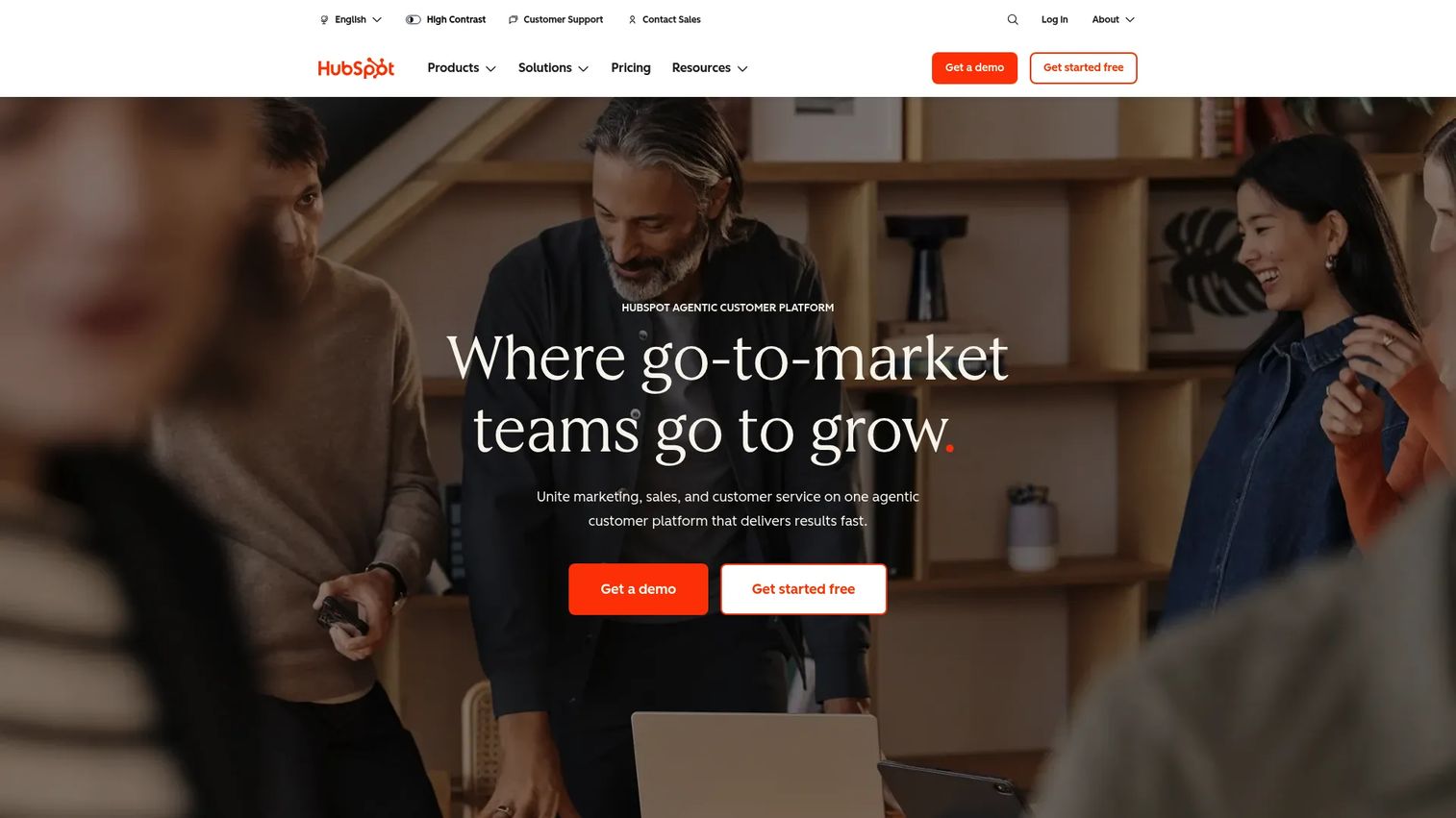
HubSpot is a flexible general CRM that admissions teams can adapt for recruitment and applicant tracking. It brings pipeline tracking, email automation, forms, reporting, and a wide integration library, all configurable to model an admissions funnel.
The trade-off is direction. HubSpot is not built for higher education out of the box, so it works best when the team can configure stages, properties, and automations for their admissions process themselves. Schools with marketing operations experience often find that flexibility a strength rather than a gap.
Choose a general CRM like HubSpot over a specialized platform when you value adaptability, a strong free tier, and integrations across your marketing stack over prebuilt admissions workflows.
Best for: Admissions teams with the marketing-ops capacity to configure a general CRM for higher-ed use.
Key strengths
- Pipeline tracking for application stages
- Email automation and nurture sequences
- Forms for inquiry capture
- Reporting and dashboards
- Broad integration library
Why choose HubSpot: It fits teams that want flexibility and a generous free tier and can build higher-ed workflows themselves. Teams needing prebuilt admissions logic may prefer a native tool.
HubSpot pricing: A Free plan covers up to 2 users with no credit card. Starter starts at $7/month per seat, Professional at $90/month per seat, and Enterprise at $150/month per seat.
9. Blackbaud
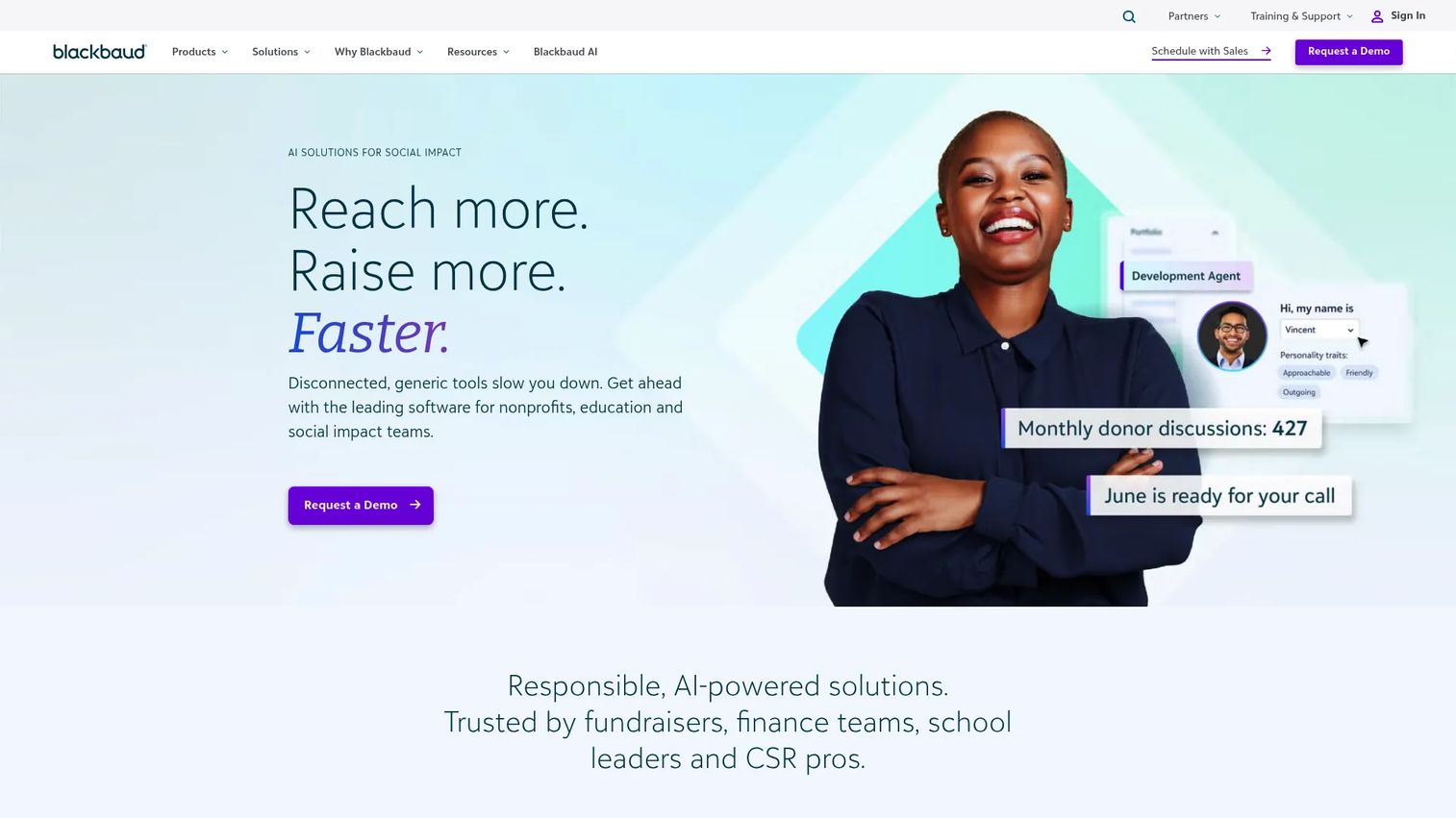
Blackbaud is cloud software for nonprofits, schools, and social-impact organizations, with strengths in fundraising, engagement, and broader constituent management. It fits admissions and lifecycle communication most naturally when advancement and student data matter together.
The value is breadth beyond admissions. Institutions that care about donor management, fund accounting, education management, and constituent engagement as a connected picture get all of it from one provider. Admissions becomes one thread in a longer relationship that continues into alumni and advancement.
It is broader than admissions alone, so evaluate it when the goal is a full constituent lifecycle rather than a focused recruitment engine.
Best for: Schools and nonprofits wanting admissions connected to advancement and constituent management.
Key strengths
- Fundraising and donor management
- Fund accounting and financial management
- Education management
- Constituent engagement across the lifecycle
- Payment processing and grantmaking
Why choose Blackbaud: It fits institutions where advancement and student data belong in one system. Teams focused only on admissions may find it wider than they need.
Blackbaud pricing: Blackbaud uses customized, quote-based pricing and does not publish public list prices. Pricing is tailored to the organization.
10. Zoho CRM
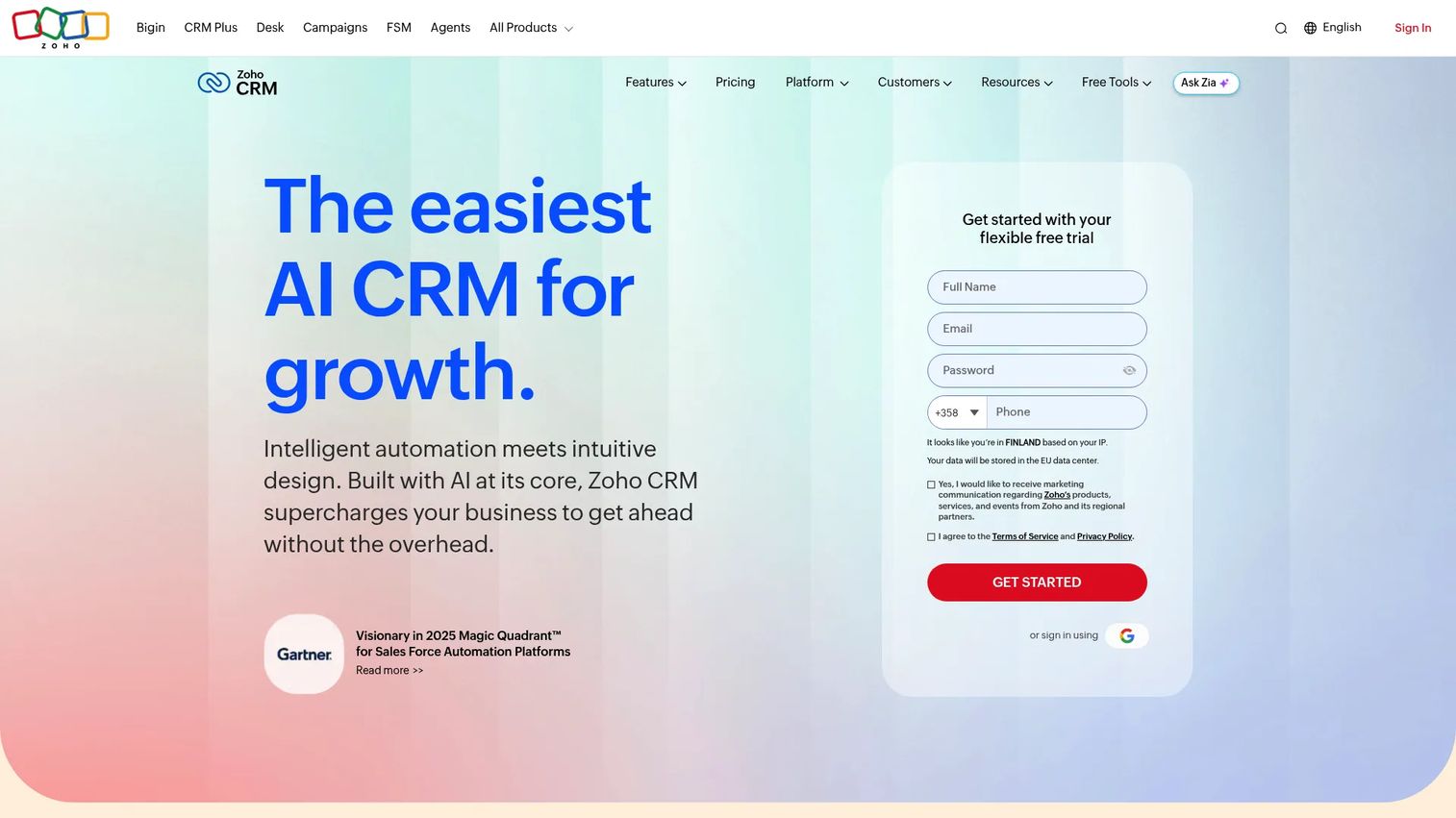
Zoho CRM is the value-oriented pick for admissions teams that want flexibility without a large budget. It offers workflow automation, deep customization, reporting, journey orchestration, and a wide integration library at prices well below specialized higher-ed platforms.
The trade-off matches HubSpot: it is a general CRM, so it works for admissions when the team can configure it well. Zoho's customization depth means you can model inquiry stages, application steps, and communication cadences to fit your process, provided you invest the setup time.
For a budget-conscious student admissions crm that still scales in capability, Zoho gives you room to grow without enterprise pricing.
Best for: Budget-conscious admissions teams comfortable configuring a general CRM.
Key strengths
- Sales, marketing, and service automation
- Journey orchestration
- Deep customization for admissions stages
- Business analytics and dashboards
- Wide integration library
Why choose Zoho CRM: It fits teams that want low cost and high flexibility and can handle configuration. Teams needing prebuilt admissions workflows may want a native platform.
Zoho CRM pricing: A free edition covers up to 3 users. Paid plans start at ₹420/user/month (Starter), with Standard, Professional, and Enterprise tiers above it. Monthly and annual billing are available.
11. LeadSquared
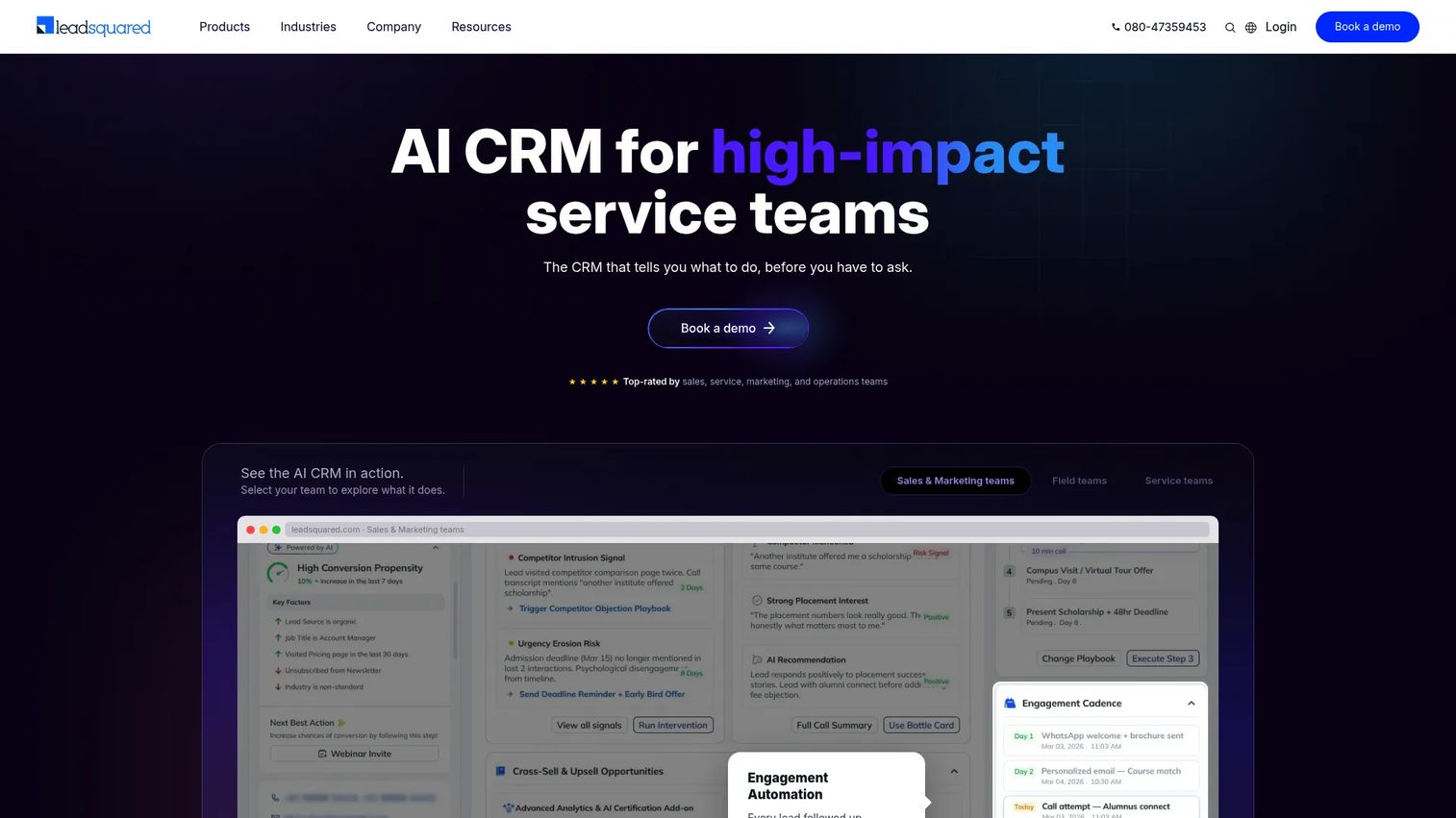
LeadSquared is an AI-powered CRM and automation platform strong on lead management, multi-channel communication, and conversion tracking. For admissions teams running high-volume recruitment campaigns, it keeps every inquiry moving with automated follow-up and clear pipeline visibility.
The strength is throughput. When you generate thousands of leads across channels, LeadSquared routes, scores, and nurtures them without counselors losing track. Its sales, marketing, and service CRM capabilities combine into a workflow that tracks each prospect from first touch to enrollment decision.
For teams where volume is the challenge, LeadSquared's automation depth makes it a practical enrollment management crm.
Best for: High-volume admissions teams that need strong automation and follow-up across channels.
Key strengths
- Sales CRM for lead management
- Marketing automation
- Multi-channel communication
- Service CRM
- Conversion tracking
Why choose LeadSquared: It fits teams running high-volume recruitment that need automation to keep pace. Small teams with low applicant counts may not use its full capacity.
LeadSquared pricing: The Marketing Automation Pro plan is $1,200 per account, billed annually. Marketing Super is $2,000 per account, billed annually. Custom plans are also offered.
12. CrmOne
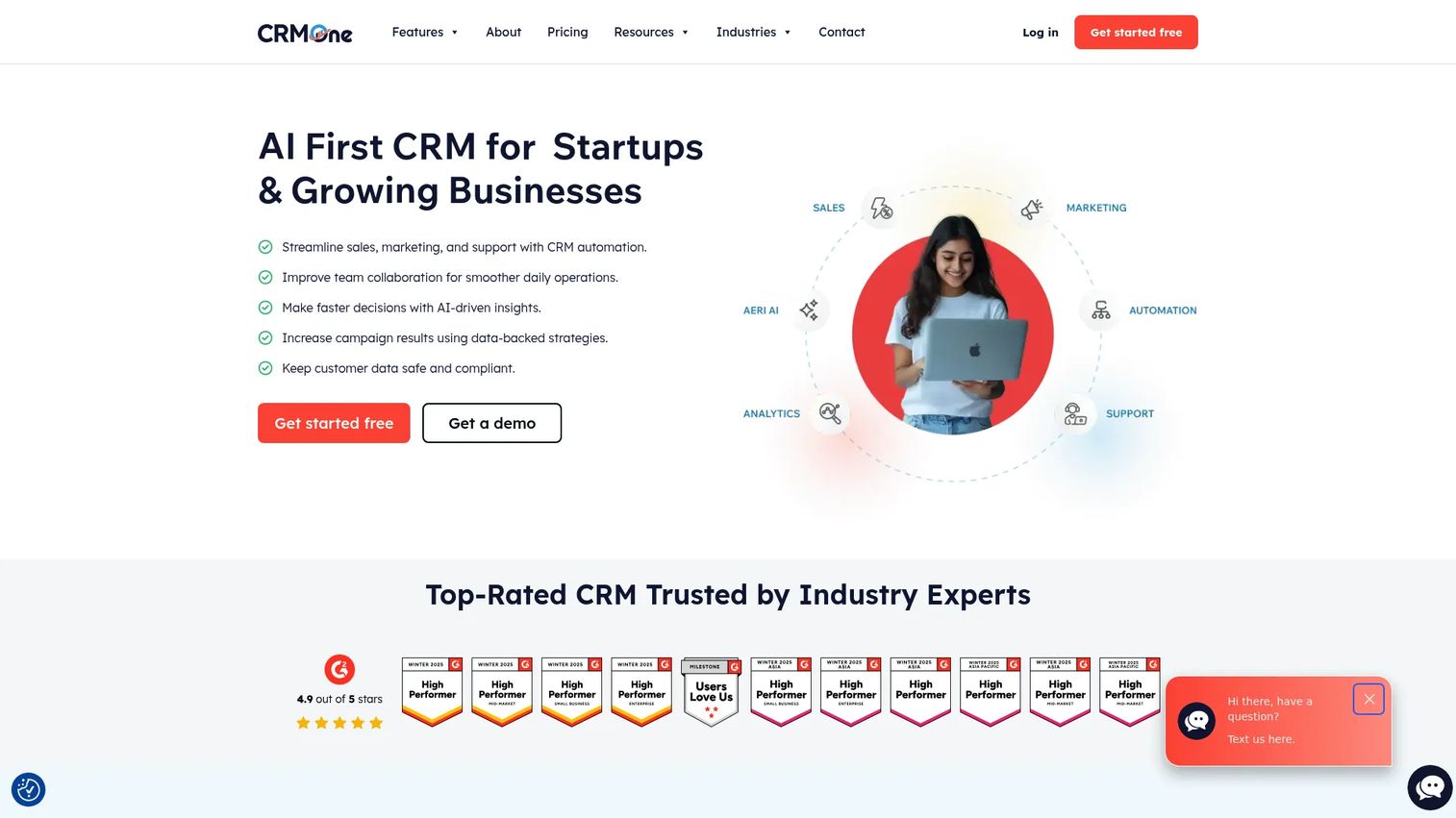
CrmOne is a lightweight all-in-one CRM for schools that need simple admissions workflow support without enterprise weight. It combines contact management, communications, and basic automation with a unified inbox, AI chatbot, and multichannel campaigns.
The positioning is simplicity. Smaller admissions teams or programs with straightforward processes get contact management, deal pipelines, email, SMS, and WhatsApp campaigns, plus AI builders for pages and forms, in one affordable package. It is better suited to simpler operations than to complex, multi-department enterprise admissions.
For a small team that wants a workable admissions crm software without a long implementation, CrmOne covers the essentials.
Best for: Small to mid-sized admissions teams wanting an affordable all-in-one CRM.
Key strengths
- Core CRM and deal pipeline
- Unified inbox and AI chatbot
- AI builders for pages, forms, and surveys
- Multichannel campaigns (email, SMS, WhatsApp)
- Website and funnel builder
Why choose CrmOne: It fits smaller teams that want an easy, affordable CRM with AI and messaging built in. Institutions with complex enterprise workflows will outgrow it.
CrmOne pricing: The Essentials plan is $99/month and Unlimited is $299/month. A 14-day free trial is offered, with a credit card required at registration.
Considerations before you buy
Feature count is a distraction. Buy for the workflow complexity and reporting you actually need. Run each finalist through this checklist.
Workflow fit
Map your real admissions process first: inquiry, application, review, decision, yield. Then check whether the tool models those stages natively or requires heavy configuration. Native higher-ed platforms save setup time; general CRMs trade that for flexibility.
Communication reach
Confirm the tool covers email, SMS, and portal notifications, not just one channel. Students expect texts. If SMS and email admissions outreach are gated behind higher tiers, factor that into the real cost.
Reporting and yield visibility
You need funnel drop-off, yield by segment, and campaign attribution to plan enrollment. Ask to see the actual dashboards, not a screenshot. Weak admissions analytics means you are flying blind on the metrics leadership cares about.
Integration and SIS alignment
The CRM must sync cleanly with your SIS so records stay consistent from prospect to enrolled. Verify which systems it connects to and whether integration is native or requires middleware.
Internal admin capacity
A powerful platform you cannot configure is a stalled project. Be honest about whether your team can maintain a general CRM or needs the guardrails of a higher-ed-native tool.
Conclusion
The right admissions CRM depends on your workflow complexity and reporting needs, not the length of the feature list.
For selective institutions with genuine process depth, Slate remains the standard for admissions and the full student lifecycle. Enterprise universities already in the ecosystem get scale and analytics from Salesforce Education Cloud. AI-first teams should look hard at Element451. And teams that want flexibility on a budget can build capable admissions workflows in HubSpot or Zoho CRM, provided they have the capacity to configure.
Your next step: shortlist two or three tools that match your process, then request live walkthroughs using your own funnel data. Watch how each handles your actual inquiry-to-deposit flow. The platform that fits your workflow, not the one with the most features, is the one that will move your yield.
FAQs
Admissions CRM software is a system that helps higher education institutions manage prospective student recruitment, applications, communications, and enrollment reporting in one place. It centralizes inquiries, application data, and outreach so admissions teams work from a single record per student instead of scattered spreadsheets and inboxes.
It automates repetitive follow-up, centralizes prospect and applicant data, and gives leaders visibility into yield and conversion. Instead of manually chasing incomplete applications, the system sends reminders automatically and reports on where students drop off, so teams can fix the leaks in the enrollment funnel.
Prioritize applicant portals, texting and email automation, admissions workflow automation, funnel and yield reporting, SIS integrations, and user permissions. The right mix depends on your process, but any serious higher education crm should handle multi-channel communication and give you clear funnel analytics.
Yes, for the right institution. Salesforce Education Cloud is strong for large universities and ecosystem-heavy teams that already run Salesforce and have IT capacity to configure it. It brings recruitment intelligence, AI, and analytics at enterprise scale. Smaller teams without admin resources often find a higher-ed-native tool faster to deploy.
It can be, if your team is willing to configure it for higher-ed use. HubSpot is a flexible general CRM with pipelines, automation, forms, and a strong free tier, but it lacks prebuilt admissions logic. Teams with marketing-ops experience adapt it well; teams wanting turnkey admissions workflows may prefer a native platform.
Common metrics include inquiry-to-application conversion, response time, yield rate, application completion rate, and communication engagement. Track how quickly counselors follow up, how many applicants finish their applications, and what share of admitted students enroll. Those numbers show whether the CRM is actually moving the funnel.
An admissions CRM manages engagement and workflow: recruitment, communication, application tracking, and reporting before enrollment. A student information system (SIS) manages official records and academic administration after enrollment, like registration, grades, and transcripts. Most institutions run both and integrate them so data flows from prospect to enrolled student.
It depends on workflow complexity, integration needs, budget, and internal admin capacity. Native platforms like Slate or Ellucian CRM Recruit come with prebuilt admissions logic and SIS alignment but cost more. General CRMs like HubSpot or Zoho offer flexibility and lower entry pricing if your team can configure and maintain higher-ed workflows itself.