Your quarterly access review starts with a spreadsheet export. Two weeks later, reviewers are still asking what each entitlement means.
Meanwhile, audit evidence sits across identity systems, HR records, application logs, and ticketing tools. Presales teams feel the same fragmentation during technical validation. Buyers want proof that access follows least privilege, with clear approval and removal records.
Access governance software brings those records into a controlled review process. The need is widespread. CyberArk’s 2025 State of IGA Survey found that 84% of surveyed organizations primarily use manual processes for user access reviews and provisioning.
The right platform should answer a harder question than “Did someone complete the campaign?” It should show who has access, why they have it, who approved it, and what changed after the entitlement review.
What’s inside
This guide compares 13 access governance tools for enterprise security evaluations, audit preparation, and technical validation.
We selected products using these criteria:
- Access review and certification depth
- Coverage across applications, identity systems, cloud resources, and data stores
- Risk analysis and access remediation workflows
- Reporting quality and usable audit evidence
- Fit for Microsoft, SAP, SaaS, infrastructure, or hybrid environments
The list separates identity governance software from data, application, and infrastructure access platforms. That distinction matters when mapping a tool to buyer requirements.
TL;DR
- Best for unstructured data access governance: OpenText Data Access Governance covers sensitive files, Microsoft environments, permissions analysis, and remediation
- Best for modern identity governance: Okta Identity Governance connects requests, certifications, lifecycle controls, and application entitlements
- Best for infrastructure and privileged access: StrongDM provides governed access to databases, servers, Kubernetes, cloud resources, and internal applications
- Best for Microsoft permissions visibility: Netwrix covers hybrid data access, while SolarWinds focuses on directory and Microsoft service administration
- Best for SAP and ERP access risk: SAP Access Control and Pathlock address segregation of duties, elevated access, and compliant provisioning
- Best for broad enterprise identity security: SailPoint supports lifecycle governance, certifications, access modeling, and cloud entitlement management
What is access governance software?
Access governance software helps organizations review, certify, monitor, and control access to applications, data, infrastructure, and privileged systems.
The category answers four practical questions:
- Who has access?
- Why do they have it?
- Should that access continue?
- What happened after the review?
Identity governance and administration focuses on identities, application entitlements, lifecycle events, and access provisioning. It often connects an identity provider with HR systems and business applications.
Data access governance software looks deeper into files, collaboration platforms, and sensitive information. It helps teams identify excessive permissions across on premises and cloud data stores.
Application access governance evaluates permissions inside business systems. SAP and ERP environments often require segregation of duties controls, access risk analysis, and emergency access oversight.
Cloud and infrastructure governance covers databases, servers, clusters, cloud consoles, and other technical resources. This area often overlaps with privileged access governance and just in time authorization.
Access governance is broader than single sign on. Authentication proves identity. Governance decides whether a role, group, license, or privilege remains appropriate.
Key capabilities to look for
- Access review campaigns: Route entitlements to managers, owners, or control teams
- Entitlement certification: Record approval, rejection, delegation, and remediation decisions
- Role management: Build role based access control from job context
- Risk analysis: Identify excessive access and segregation of duties conflicts
- Lifecycle automation: Manage joiners, movers, leavers, and contractors
- Provisioning controls: Grant or remove access through governed workflows
- Data discovery: Find sensitive information and risky permission paths
- Privileged controls: Govern elevated, standing, and service account access
- Audit reporting: Preserve decisions, timestamps, exceptions, and remediation records
- System integrations: Connect IAM, HRIS, ITSM, cloud, SaaS, and ERP platforms
Adjacent categories include IAM, PAM, DSPM, DLP, and ITSM. They overlap with access governance, but each addresses a different control layer.
When to use access governance software
Certify access before an audit
Use access governance software when compliance teams need repeatable evidence for internal controls or external audits. The platform should document entitlement scope, reviewer signoff, exceptions, and completed remediation.
This replaces scattered spreadsheets with a traceable access certification record. It also makes historical evidence easier to retrieve when auditors sample past decisions.
Reduce access risk after role changes
A promotion, transfer, or departure can leave stale access behind. Contractors and privileged users create similar risk when ownership changes.
Joiner, mover, leaver automation connects lifecycle events with access removal. The governance layer then checks whether retained privileges still match the person’s responsibilities.
Prove least privilege in enterprise deals
Security conscious buyers ask how your product handles roles, approval history, account removal, and privileged access. Presales teams need clear answers during security review and proof of concept planning.
Access governance tools provide the control evidence behind those answers. They also help sales engineers distinguish policy claims from demonstrable workflows.
Access governance software comparison
These products cover different governance layers. Some focus on user access reviews, while others inspect file permissions or infrastructure access.
Start with the systems your buyer needs to govern. Then compare review context, remediation options, and audit output. A strong entitlement review tool for SaaS applications may offer little visibility into SAP roles or unstructured data.
| # | Product | Best for | Key differentiator | Pricing | G2 rating |
|---|---|---|---|---|---|
| 1 | OpenText Data Access Governance | Unstructured data governance | Microsoft and file permission visibility | Custom pricing | N/A |
| 2 | Okta Identity Governance | Modern identity governance | Requests, reviews, and lifecycle controls | Essentials starts at $17 per user monthly, billed annually | 4.5/5 |
| 3 | StrongDM | Infrastructure access governance | Just in time access across technical resources | Custom per user pricing | 4.6/5 |
| 4 | Netwrix Data Access Governance | File permissions and data risk | Sensitive data mapped to identity permissions | Custom pricing | 4.3/5 |
| 5 | SecurEnds | Access reviews and certification | Automated certification across varied identity types | Starts at $10,000 yearly | N/A |
| 6 | SolarWinds Access Rights Manager | Microsoft access rights management | Directory, file server, and Microsoft service auditing | Custom pricing, 30 day trial | 3.5/5 |
| 7 | Evidian IGA | Enterprise identity governance | Policy driven lifecycle and certification workflows | Custom pricing | N/A |
| 8 | SAP Access Control and Governance | SAP access risk | SoD analysis and emergency access controls | Custom pricing | 4.5/5 |
| 9 | Zluri | SaaS access governance | SaaS discovery tied to lifecycle automation | Custom pricing | 4.6/5 |
| 10 | Zilla Security | Access review automation | Contextual reviews across hybrid applications | Custom pricing | 0.0/5, insufficient reviews |
| 11 | CyberArk IGA | Identity and privileged governance | Governance connected to broader identity security | Identity Compliance starts at $5 per user monthly | 4.5/5 |
| 12 | SailPoint Identity Security Cloud | Enterprise identity security | Access modeling for large identity environments | Custom pricing | 4.6/5 |
| 13 | Pathlock | SAP and ERP application governance | SoD, elevated access, and compliant provisioning | SAP Cybersecurity editions start at $0 | 4.3/5 |
Best 13 tools for access governance software
1. OpenText Data Access Governance
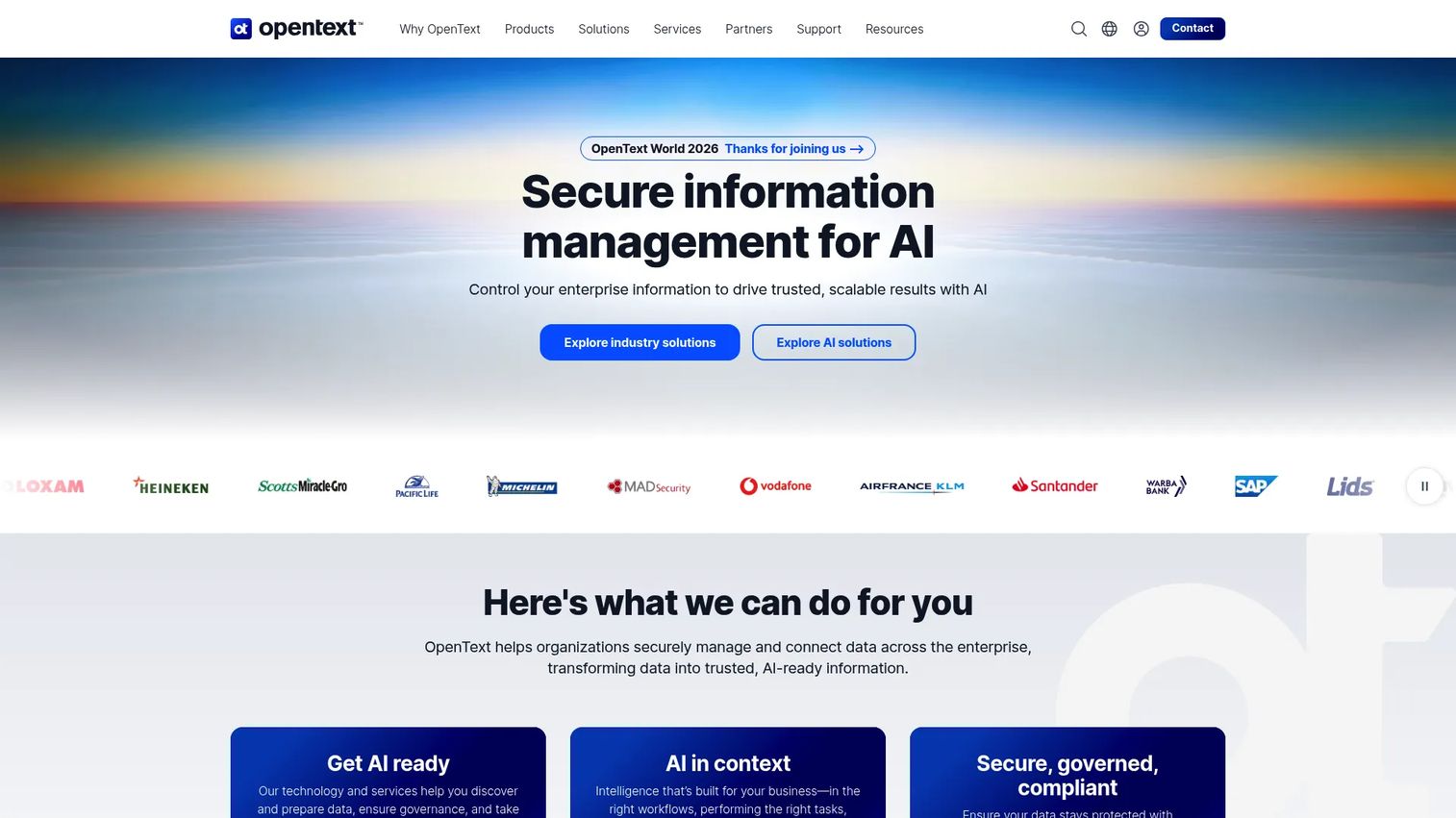
OpenText Data Access Governance focuses on sensitive unstructured data and the identities that can reach it. It reports on files, storage locations, duplicate information, access rights, and usage across on premises and Microsoft environments.
The platform also supports automated policies for restricting access, sending notifications, and restoring permissions. Reporting covers Active Directory and Microsoft Entra ID, with custom queries and Power BI export.
Best for: Large organizations governing sensitive files, collaboration content, Microsoft 365, and related identity permissions.
Key features
- On premises and Microsoft 365 reporting
- Active Directory and Entra ID analysis
- Automated data security policies
- Custom queries and Power BI export
- Data cleanup and archiving workflows
Why choose OpenText Data Access Governance: Choose it when the access problem begins with unstructured data rather than application accounts. Its reporting and remediation capabilities fit compliance teams that need evidence around sensitive file access.
OpenText Data Access Governance pricing: Custom pricing. Contact OpenText for a quote.
2. Okta Identity Governance
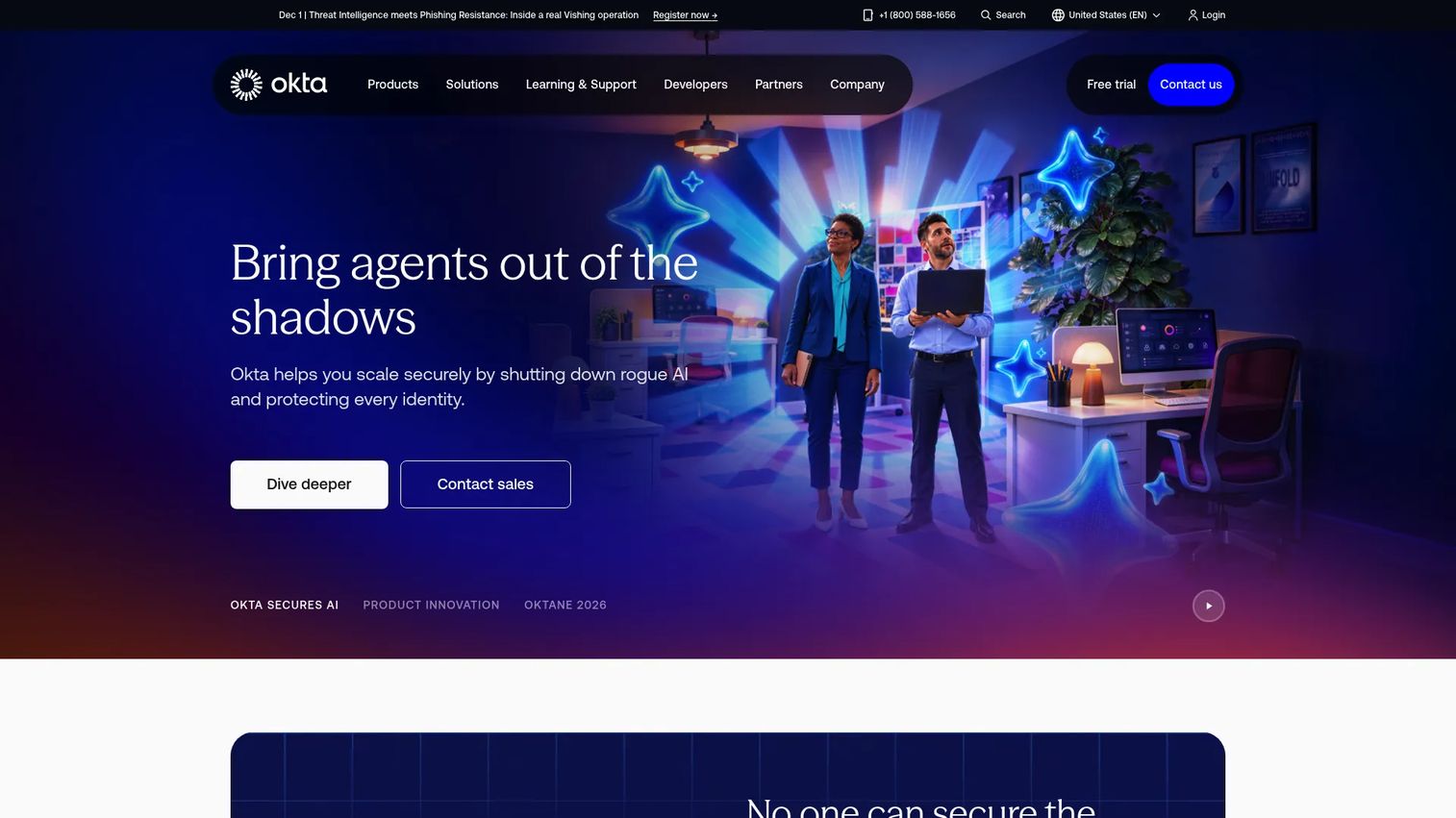
Okta Identity Governance brings access requests, certifications, entitlement management, and lifecycle controls into Okta’s workforce identity environment. It supports security access reviews alongside workflow driven provisioning.
Teams can organize resources, apply separation of duties policies, and automate approvals without code. This makes the platform relevant for SaaS heavy organizations already standardizing identity through Okta.
Best for: Enterprises that want identity governance close to their identity provider and application access workflows.
Key features
- Access certification campaigns
- Self service access requests
- Entitlement and resource management
- Separation of duties policies
- Automated provisioning workflows
Why choose Okta Identity Governance: It fits environments where SSO, user lifecycle, and IAM governance need shared policy context. Presales teams should validate connector depth for the buyer’s critical applications.
Okta Identity Governance pricing: Essentials starts at $17 per user monthly, billed annually. Okta requires a $1,500 annual contract minimum.
G2 rating: 4.5/5 for Okta in the identity governance category.
3. StrongDM
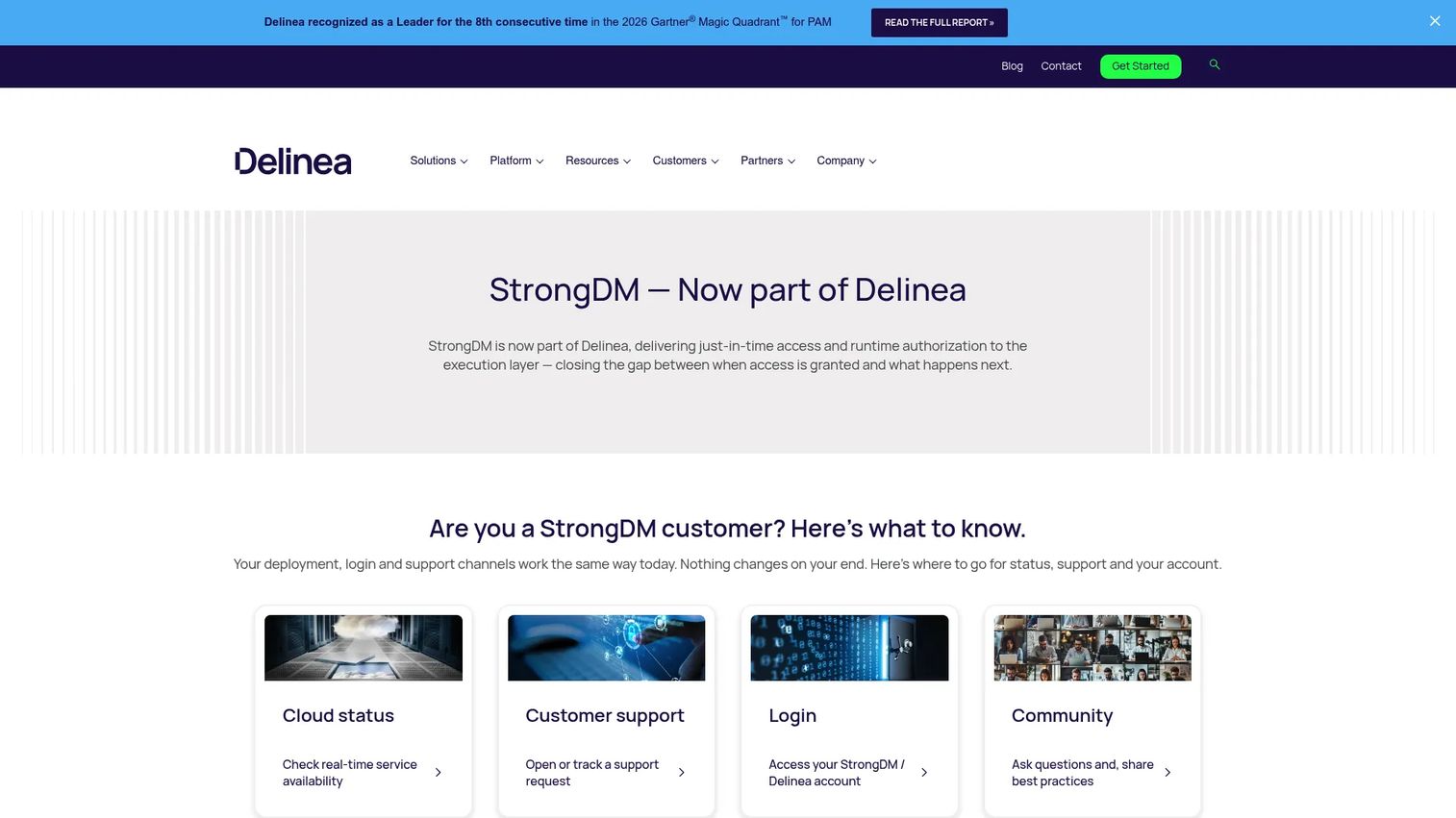
StrongDM is a privileged access management platform for infrastructure. It governs access to databases, servers, Kubernetes, cloud resources, and internal web applications.
The platform supports just in time access, runtime policies, session recording, and audit logging. It also connects SSO, group provisioning, MFA, and credential leasing with infrastructure authorization.
This focus differs from classic identity governance software. StrongDM addresses technical resource access rather than centering on periodic spreadsheet style certification.
Best for: Security and infrastructure teams governing privileged access across hybrid or cloud native environments.
Key features
- Just in time access workflows
- Runtime authorization policies
- Session recording and audit logs
- Database and server access controls
- Kubernetes and cloud access governance
Why choose StrongDM: Choose it when the buyer’s greatest risk sits in production access paths. It gives sales engineers concrete answers for questions about approvals, session records, and technical resource access.
StrongDM pricing: Custom per user pricing through one SKU. Contact StrongDM for a quote.
G2 rating: 4.6/5.
4. Netwrix Data Access Governance
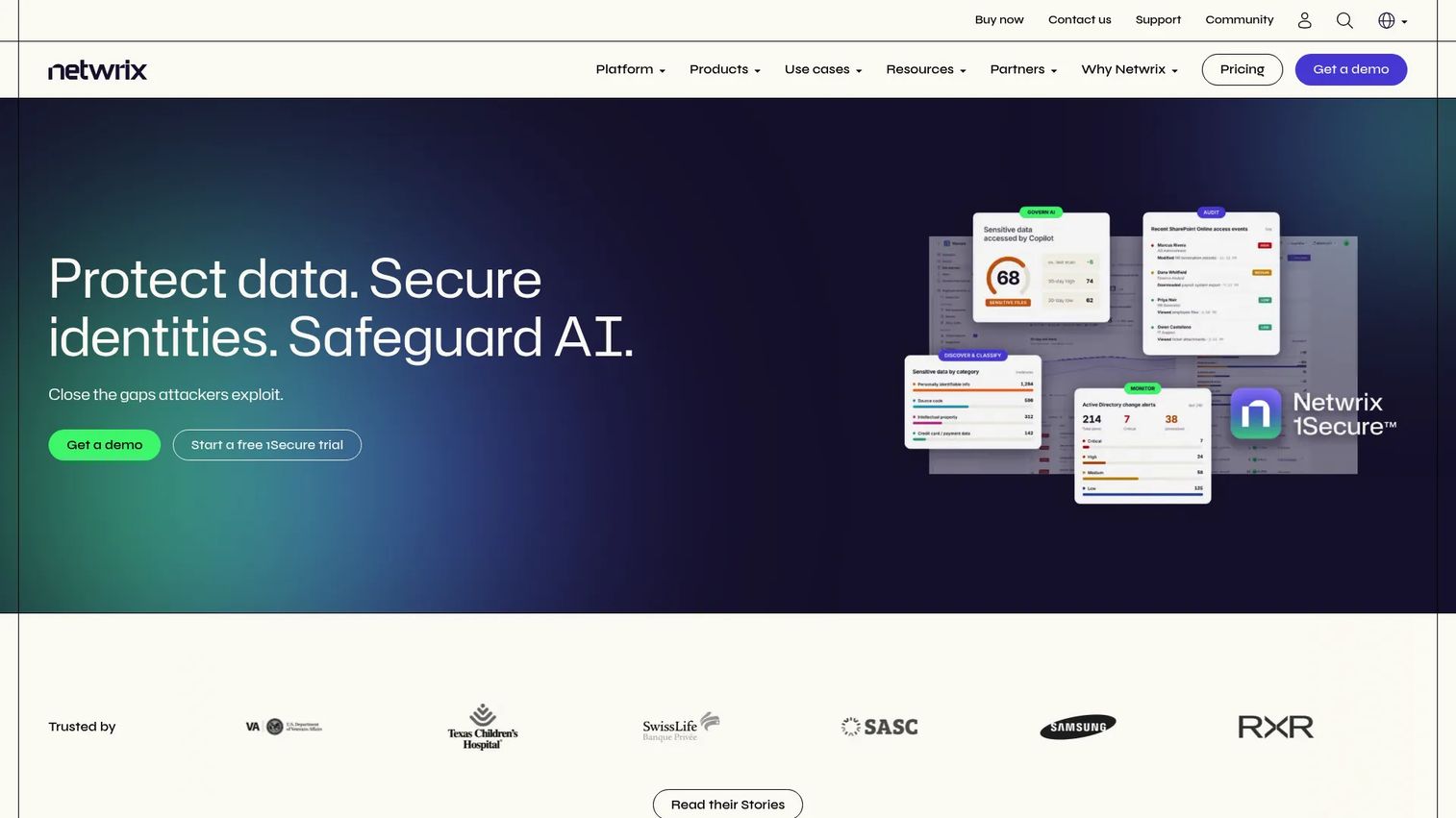
Netwrix Data Access Governance links sensitive data with the identities and groups that can access it. Its permissions analysis resolves nested rights across Active Directory, Entra ID, and SharePoint.
The platform discovers sensitive information across more than 40 sources. It identifies stale, inherited, excessive, and broadly assigned permissions across hybrid environments.
Netwrix can also automate access reviews and delegate decisions to data owners. That makes the review more useful than a list of account names without resource context.
Best for: IT and security teams reviewing file permissions, sensitive data exposure, and inherited access paths.
Key features
- Sensitive data discovery
- Nested permission resolution
- Excessive access identification
- Delegated owner reviews
- Least privilege remediation
Why choose Netwrix Data Access Governance: It fits data heavy environments where excessive file access creates audit risk. The product is especially relevant for hybrid Microsoft estates.
Netwrix Data Access Governance pricing: Custom pricing. Contact Netwrix for a personalized quote.
G2 rating: 4.3/5 for Netwrix Access Analyzer.
5. SecurEnds
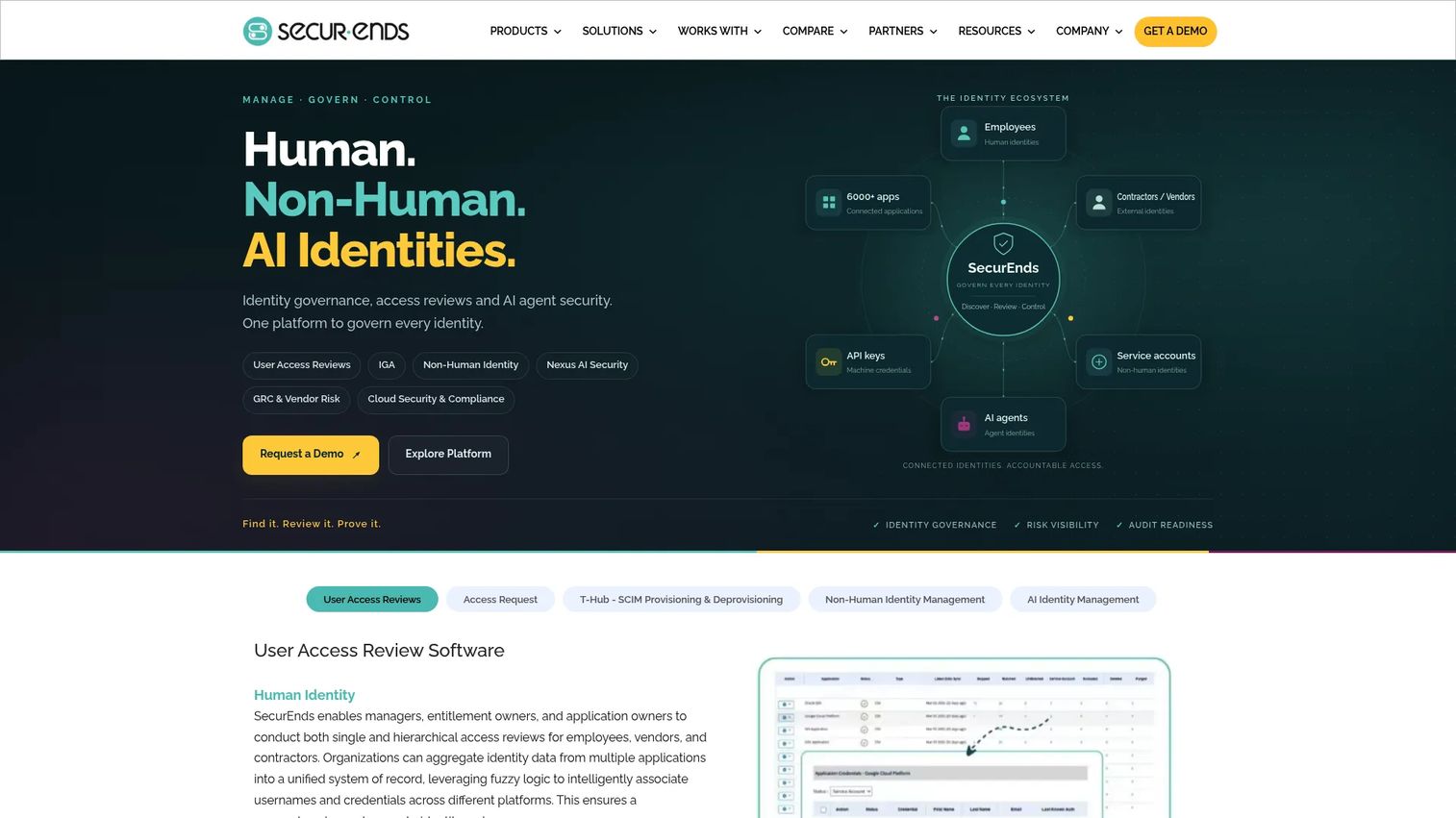
SecurEnds provides identity governance for human, non human, and AI identities. Its core workflows cover user access reviews, certification campaigns, access requests, and identity lifecycle controls.
The platform connects applications, databases, files, APIs, and legacy systems. SCIM support enables provisioning and deprovisioning where connected systems support that standard.
For compliance teams, the practical appeal is campaign automation. Reviewers receive an organized decision workflow instead of disconnected spreadsheet tabs.
Best for: Organizations replacing manual certification processes across mixed application and identity environments.
Key features
- User access review campaigns
- Automated certification workflows
- Access request approvals
- Non human identity governance
- SCIM based provisioning
Why choose SecurEnds: Choose it when recurring access certification consumes compliance and application owner time. Its identity coverage also suits teams evaluating service account governance.
SecurEnds pricing: User Access Reviews starts at $10,000 yearly for up to 200 users and 25 applications. One time implementation starts at $2,500.
6. SolarWinds Access Rights Manager
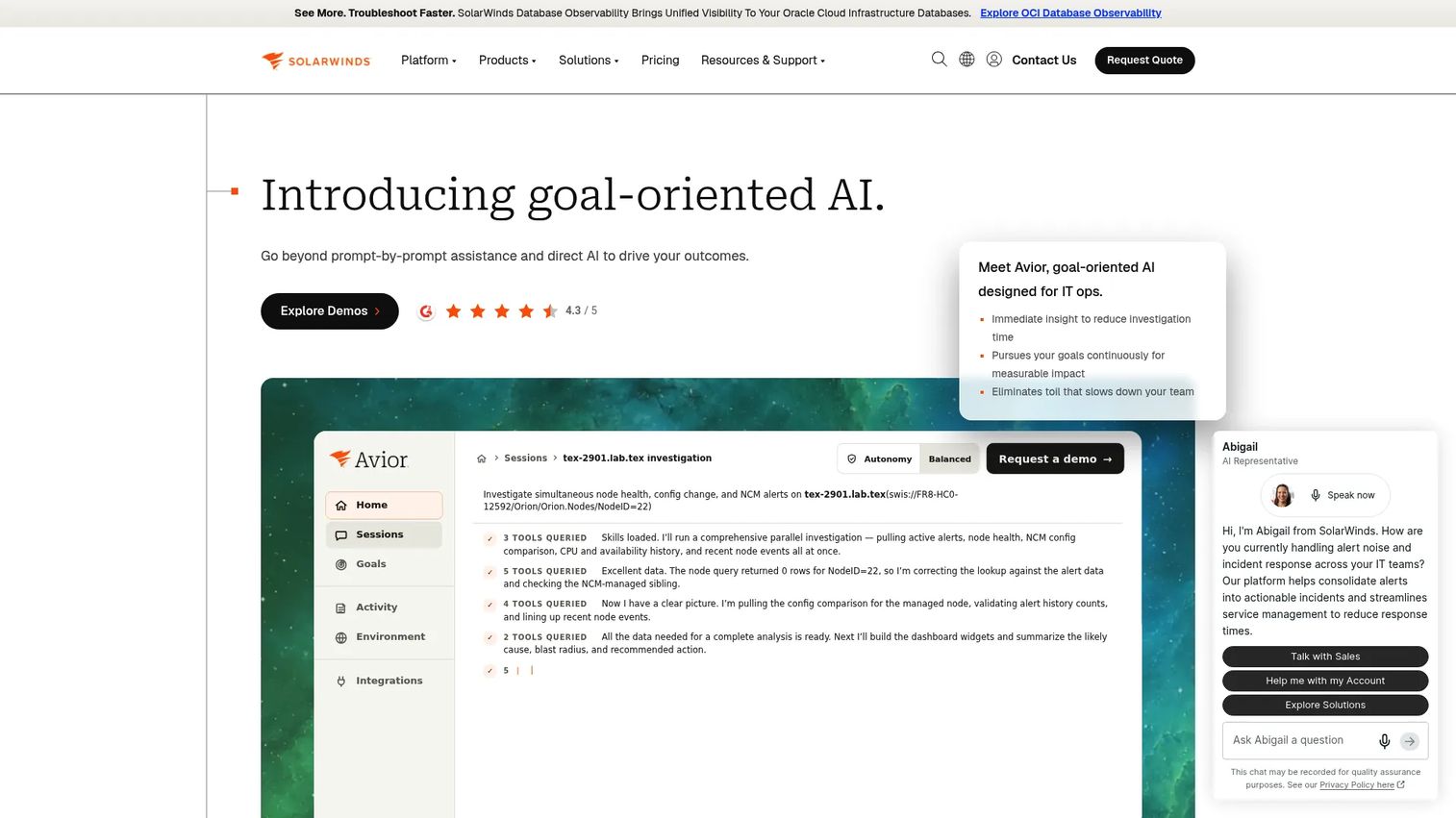
SolarWinds Access Rights Manager helps administrators control, provision, audit, and report access across Microsoft oriented environments. Coverage includes Active Directory, Exchange, SharePoint, file servers, OneDrive, and Teams.
Permission analysis dashboards surface risky assignments and support day to day access administration. The platform also provides delegated management and a self service permissions portal.
Its operational focus suits IT teams that manage Windows access directly. Presales readers should distinguish this from broader identity governance and administration suites with extensive application certification.
Best for: Microsoft centric IT teams managing directories, file servers, collaboration services, and user provisioning.
Key features
- Active Directory permission analysis
- Exchange and SharePoint auditing
- File server access tracking
- Automated user provisioning
- Delegated permission management
Why choose SolarWinds Access Rights Manager: It fits organizations that need practical access governance for Microsoft systems. The 30 day trial supports evaluation before a wider deployment.
SolarWinds Access Rights Manager pricing: Custom pricing. A 30 day fully functional trial is available.
G2 rating: 3.5/5.
7. Evidian IGA
Evidian IGA provides enterprise identity governance and administration across identity lifecycles, access rights, policy controls, and compliance processes. It supports centralized governance for complex identity environments.
Capabilities include role based access control, approval workflows, certification campaigns, and separation of duties management. Standard connectors support application provisioning, while synchronization aligns directories with identity sources.
This formal policy model suits organizations that require structured approval paths and documented control ownership.
Best for: Medium and large enterprises with complex identity lifecycles, approval policies, and certification requirements.
Key features
- Identity lifecycle management
- Role based access control
- Access certification campaigns
- Separation of duties management
- Standard application connectors
Why choose Evidian IGA: Choose it for formal enterprise identity governance where lifecycle events and policy enforcement share one operating model. Validate connector coverage against the buyer’s priority systems.
Evidian IGA pricing: Custom pricing. Contact Evidian for a quote.
8. SAP Access Control and Governance
SAP Access Control and Governance automates access risk analysis and governed provisioning across SAP and connected systems. Its controls focus on segregation of duties, critical access violations, and auditable authorization decisions.
Emergency access management uses controlled firefighter identities for elevated tasks. Periodic user access reviews and authorization certifications support recurring control testing.
Business role maintenance adds application context that generic directory reviews may miss. This matters when finance, procurement, and operational permissions create conflicting duties.
Best for: SAP centric enterprises that need native access risk, SoD controls, and emergency access oversight.
Key features
- Segregation of duties analysis
- Emergency access management
- Workflow driven access requests
- Business role maintenance
- Periodic access certifications
Why choose SAP Access Control and Governance: It fits organizations where critical processes run through SAP. Buyers should test cross system coverage if their access risk extends beyond that environment.
SAP Access Control and Governance pricing: Custom pricing. Contact SAP for a quote.
G2 rating: 4.5/5.
9. Zluri
Zluri combines SaaS discovery with identity security and governance. It discovers identities and applications, then connects access review workflows with lifecycle automation.
The platform detects dormant accounts and excessive permissions across managed applications. Risk prioritized remediation helps teams focus on access that needs attention first.
This combined view suits SaaS heavy organizations where offboarding, license ownership, and application access have grown across many departments.
Best for: Midmarket and enterprise teams governing SaaS applications, identity lifecycles, and scattered app access.
Key features
- Identity and application discovery
- SaaS access reviews
- Lifecycle access orchestration
- Dormant account detection
- Risk prioritized remediation
Why choose Zluri: Choose it when SaaS sprawl and inconsistent offboarding drive the governance project. Its discovery layer connects software visibility with access decisions.
Zluri pricing: Custom pricing. Contact Zluri for a quote.
G2 rating: 4.6/5.
10. Zilla Security
Zilla Security provides identity governance across cloud, SaaS, and on premises applications. Its workflows cover access reviews, provisioning, lifecycle management, and identity risk.
The platform supplies entitlement context and access recommendations to reviewers. That context can reduce rubber stamping when managers cannot interpret technical permission names.
Zilla also supports segregation of duties detection and risk alerts. Its integration catalog covers more than 1,000 applications across hybrid environments.
Best for: Organizations seeking contextual access reviews and automated identity governance across varied applications.
Key features
- Automated user access reviews
- Unified entitlement visibility
- Lifecycle provisioning workflows
- Access risk alerts
- Segregation of duties detection
Why choose Zilla Security: It fits teams that need stronger review context without relying on raw entitlement exports. The original product site now redirects to a broader modern identity governance page.
Zilla Security pricing: Custom pricing. Contact the current vendor organization for a quote.
11. CyberArk IGA
CyberArk IGA combines access discovery, certification, lifecycle management, and provisioning with a broader identity security portfolio. It supports governance across hybrid identity environments.
Role based policies control access, while analytics and reporting create evidence for compliance processes. AI driven recommendations assist with role and entitlement decisions.
The platform integrates with more than 1,000 applications. Its wider identity security context makes it relevant when access certification and privileged access governance share stakeholders.
Best for: Midmarket and enterprise organizations connecting identity governance with privileged access concerns.
Key features
- Access discovery and certifications
- Identity lifecycle provisioning
- Role based access policies
- Audit evidence reporting
- Entitlement recommendations
Why choose CyberArk IGA: Choose it when privileged identity risk is central to the evaluation. Presales teams should map the IGA scope against the buyer’s existing CyberArk products.
CyberArk IGA pricing: Identity Compliance starts at $5 per user monthly.
G2 rating: 4.5/5 for CyberArk Workforce Identity.
12. SailPoint Identity Security Cloud
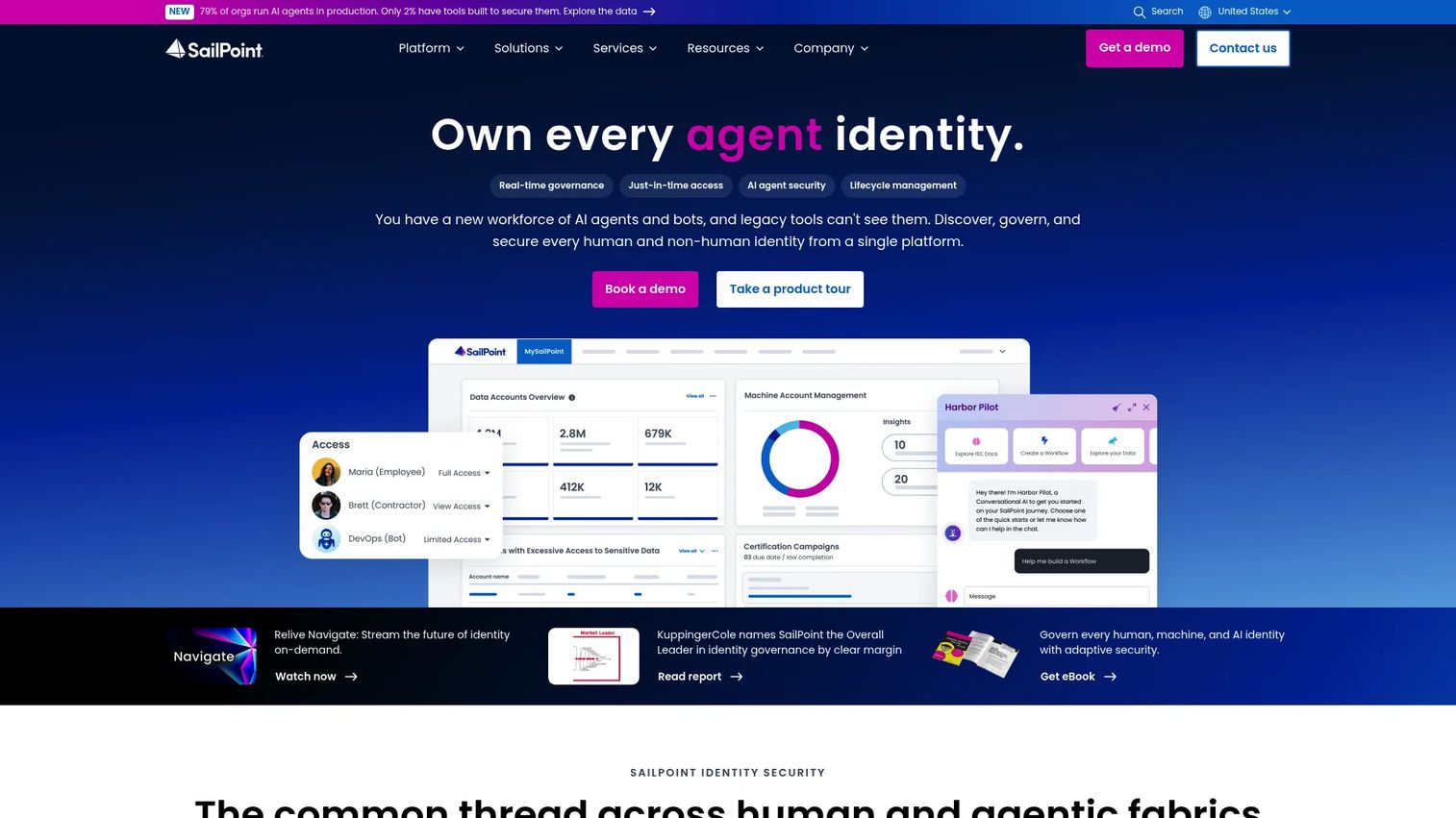
SailPoint Identity Security Cloud governs identities, access, and entitlements across large enterprise environments. It covers access certifications, lifecycle automation, compliance management, and separation of duties.
AI driven access modeling supports recommendations and role design. Activity insights and identity outlier detection add risk context to governance decisions.
Cloud infrastructure entitlement management extends coverage beyond traditional applications. This breadth suits organizations with many identities, connectors, and formal audit requirements.
Best for: Large enterprises needing centralized identity governance across complex application and cloud estates.
Key features
- Access certification campaigns
- Automated lifecycle provisioning
- AI driven access modeling
- Cloud entitlement management
- Identity activity analytics
Why choose SailPoint Identity Security Cloud: It is built for broad enterprise identity programs with complex governance requirements. Buyers should evaluate implementation scope and connector priorities early.
SailPoint Identity Security Cloud pricing: Standard, Business, and Business Plus use custom pricing. Contact SailPoint for a quote.
G2 rating: 4.6/5 for SailPoint.
13. Pathlock
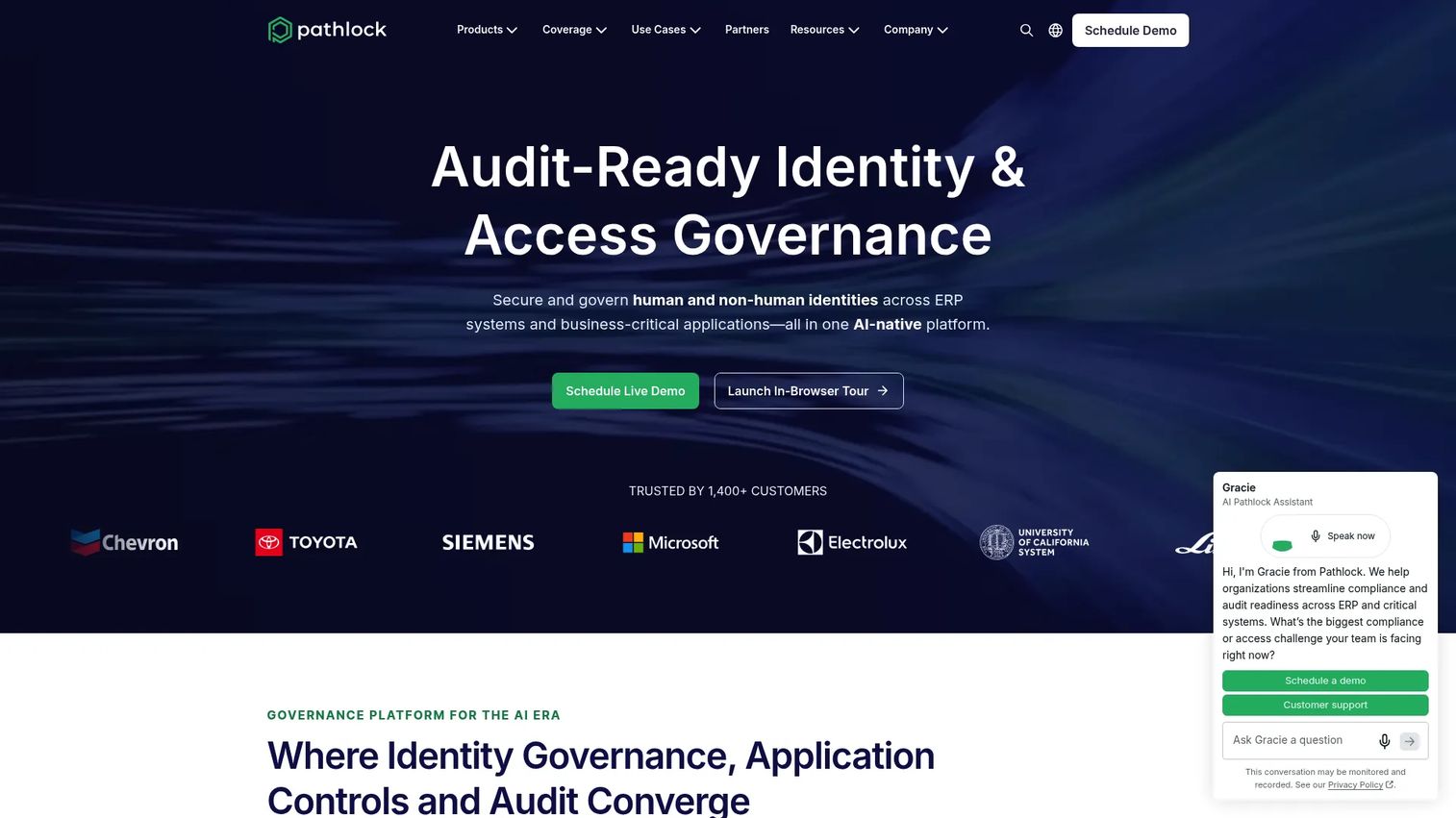
Pathlock combines identity governance, application controls, audit assurance, and ERP cybersecurity. Its access governance capabilities include segregation of duties analysis, compliant provisioning, and access certifications.
Privileged and emergency access management addresses elevated workflows inside critical business applications. Continuous control monitoring records risks that may appear between periodic reviews.
Pathlock also provides sensitive data discovery, dynamic masking, and audit reporting. Its application context makes it relevant for SAP and ERP estates where generic identity records lack transaction level meaning.
Best for: Large enterprises governing access risk across SAP, ERP, and other mission critical applications.
Key features
- Segregation of duties controls
- Access risk analysis
- Compliant access provisioning
- Privileged access management
- Continuous controls monitoring
Why choose Pathlock: Choose it when audit findings originate from role conflicts or elevated ERP access. It also fits teams that need application access governance alongside continuous controls.
Pathlock pricing: SAP Cybersecurity editions include Free at $0. Paid editions start at $7,500 yearly, then $15,000 and $30,000 yearly.
G2 rating: 4.3/5.
Considerations when choosing access governance software
Start with the systems you need to govern
Map the environment before comparing vendors. Separate SaaS applications, Microsoft services, SAP and ERP, cloud infrastructure, databases, file systems, and privileged accounts.
This prevents a broad IGA label from hiding weak coverage in the systems that create the most risk.
Check review context before automation claims
Access reviews lose value when reviewers see only account names and technical entitlements. Look for HR attributes, manager data, usage signals, risk scores, and clear permission descriptions.
Ask whether the platform can route decisions to application owners when a line manager lacks enough context.
Validate audit evidence output
A completed campaign is only part of the evidence. Buyers often need timestamps, reviewer decisions, exceptions, remediation records, and policy history.
Test exports during the proof of concept. Confirm whether auditors can trace one entitlement from discovery through final removal.
Look at remediation workflows
The tool should close the loop after a rejected entitlement. Evaluate direct deprovisioning, ticket creation, revocation confirmation, exception handling, and approval records.
Manual handoffs can recreate the spreadsheet problem after the review ends.
Test integration depth
Review identity providers, HRIS, ITSM, PAM, SIEM, cloud platforms, and business applications. A connector name alone says little about available entitlement detail.
Confirm whether each integration supports read only discovery, access changes, or both.
Conclusion
The best access governance software depends on where access risk lives.
OpenText and Netwrix focus on unstructured data, file permissions, and hybrid Microsoft environments. SolarWinds serves administrators who need operational visibility across Microsoft access rights.
Okta, Evidian, SailPoint, CyberArk, and Zilla cover identity governance and access certification. Their fit varies by identity stack, connector requirements, lifecycle complexity, and privileged access strategy.
StrongDM addresses infrastructure authorization across databases, servers, Kubernetes, and cloud resources. Zluri is a closer fit for SaaS heavy environments where application discovery and offboarding are recurring problems.
SAP Access Control and Pathlock focus on application access risk, segregation of duties, and elevated ERP access. SecurEnds centers on certification campaigns across varied identity types.
Before shortlisting, ask each vendor to prove four things with your Who has access, why they have it, who approved it, and what happens after rejection.
Need to explain a complex security or governance workflow to buyers? Start your journey with Guideflow today!
FAQs
Access governance software reviews, certifies, monitors, and controls access to applications, data, infrastructure, and privileged systems. It helps organizations enforce least privilege and preserve audit evidence.
Common workflows include access reviews, entitlement certification, role management, lifecycle automation, and access remediation.
IAM authenticates identities and grants access through accounts, policies, and sign on controls. Access governance evaluates whether that access remains appropriate.
Identity governance and administration combines these areas through lifecycle management, certification, access requests, and provisioning controls. The exact boundary varies by platform.
An access review is a recurring process where managers, application owners, or control owners evaluate assigned permissions. Each reviewer approves, rejects, delegates, or requests remediation for an entitlement.
The resulting audit trail records who made each decision and when. Strong review tools also track whether rejected access was removed.
Entitlement review examines specific permissions assigned to an identity. These may include roles, groups, licenses, application privileges, or infrastructure access.
The process helps teams identify excessive access and confirm least privilege. It also produces evidence for internal controls and external audits.
OpenText, Netwrix, and SolarWinds address different Microsoft governance needs. OpenText focuses on sensitive unstructured data and related permissions.
Netwrix maps identity access to sensitive information across hybrid sources. SolarWinds suits operational administration across Active Directory, SharePoint, Exchange, OneDrive, and Teams.
SAP Access Control suits organizations seeking native SAP access risk analysis, emergency access management, and business role controls. Pathlock covers SAP and broader ERP application governance.
Compare both on segregation of duties analysis, compliant provisioning, user access reviews, and elevated access workflows. Your connected application landscape should guide the decision.
Access governance identifies excessive or stale permissions, then routes them to appropriate reviewers. Approved remediation removes access that no longer matches the identity’s role.
Automation helps when entitlement data is accurate and understandable. Poor source data can make a fast review no more reliable than a spreadsheet.
Access governance questions often appear during security reviews and technical validation. Presales teams should understand roles, permissions, approval history, audit logs, and access removal workflows.
You should also know which systems provide identity context and how remediation is confirmed. Clear answers reduce follow up cycles with security and compliance stakeholders.