Feedback gets scattered quickly. One manager uses a form, another keeps coaching notes, and enablement collects comments after certification sessions. Nobody can compare results across teams.
This becomes a measurement problem. Sales enablement needs consistent evidence about coaching quality, readiness, behavior change, and manager effectiveness.
According to Gallup’s 2025 workplace research, only 22% of U.S. employees had received meaningful feedback during the previous week. A structured 360 review can widen the input beyond one manager. However, the process needs clear rules for confidentiality, reviewer groups, and follow-up.
The right 360 degree feedback software makes multi-rater input structured, trackable, and useful for development planning. It also replaces spreadsheet chasing with repeatable review cycles.
What’s inside
This guide compares 17 tools for 360 reviews, manager development, employee feedback, and performance review workflows.
We selected the platforms by practical workflow fit, rather than filling the list with general HR products. The evaluation covers:
- Questionnaire design and competency models
- Rater management and anonymity controls
- Reporting and development planning
- Pricing and current G2 ratings
The guide is particularly useful for HR, people operations, learning teams, and sales enablement leaders. Use it to shortlist software for manager coaching, rep development, or broader performance programs.
TL;DR
- Best specialist performance platform: PerformYard supports structured review cycles and formal performance management workflows
- Best for engagement plus development: Culture Amp connects employee listening with performance feedback and development planning
- Best for dedicated assessments: CustomInsight and Focal 360 support competency models, participant management, and formal reporting
- Best flexible survey builders: QuestionPro, Jotform, and Zoho Survey suit configurable feedback programs
- Best broader HR platforms: UKG Pro, Factorial, Sage HR, Access PeopleHR, and Deel connect feedback with wider people operations
- Best for Microsoft 365 teams: Teamflect brings reviews and feedback into Microsoft Teams and Outlook
What is 360 degree feedback software?
360 degree feedback software collects structured, multi-rater feedback about an employee from managers, peers, direct reports, self-assessments, and sometimes external stakeholders.
A 360 appraisal gives the participant several perspectives on the same competencies or behaviors. This differs from a manager-only performance review, which relies on one reporting relationship.
For sales enablement teams, a 360 feedback platform can measure coaching quality, communication, pipeline inspection habits, or leadership behavior. The results can then inform manager training and readiness programs.
Core jobs 360 feedback software handles
A dedicated 360 degree feedback tool usually supports these workflow stages:
- Questionnaire design: Build competency-based questions and rating scales
- Rater nomination: Select reviewers and approve participant groups
- Review administration: Send requests, reminders, and completion notices
- Feedback confidentiality: Apply anonymity thresholds and visibility rules
- Participant management: Track response rates across cohorts or teams
- Feedback reporting: Analyze scores by behavior, competency, role, or group
- Development planning: Convert findings into measurable follow-up actions
Who gives feedback in a 360 review?
Most multi-rater feedback programs combine several perspectives:
- Self-assessment: The participant rates their own performance
- Manager feedback: The direct manager assesses observed behavior
- Peer feedback: Colleagues provide input from day-to-day collaboration
- Direct report feedback: Team members assess leadership and coaching
- Cross-functional feedback: Internal partners comment on shared work
- External feedback: Customers or partners contribute where relevant
What separates 360 feedback software from basic survey tools?
A basic survey collects answers. Dedicated 360 review software manages the relationships between participants, raters, reviewer groups, and competency frameworks.
Specialist platforms may also provide anonymity thresholds, automated reminders, group reports, and development plans. Survey-first tools can still work, but administrators must configure more of the process themselves.
The deciding factor is workflow depth. Choose specialist software when confidentiality, formal reporting, and repeatable review cycles matter. A form builder can cover smaller programs with simpler governance.
When to use 360 degree feedback software
Run manager development programs
Use 360 reviews for managers when leadership behavior needs evidence from several working relationships. Direct reports can assess coaching quality, while peers comment on collaboration and communication.
Sales enablement teams can use the results to shape frontline manager training. This connects feedback with coaching effectiveness and consistent execution.
Replace ad hoc feedback with repeatable review cycles
Spreadsheets and informal comments work until participant volume grows. Review software adds standard questionnaires, reviewer categories, reminders, and completion tracking.
A repeatable process also makes results easier to compare across onboarding cohorts or leadership groups. Enablement can then identify recurring readiness gaps.
Turn feedback into development plans
Collecting feedback without follow-up creates frustration. Useful software helps teams identify themes, choose priority behaviors, and assign measurable actions.
For example, a sales manager might focus on deal coaching or objection handling. The next review cycle can then measure whether those behaviors changed.
360 degree feedback software comparison
The table below provides a quick comparison of the 17 shortlisted tools. Read the detailed entries before choosing, because each product handles the workflow differently.
Dedicated 360 platforms suit formal assessment programs. Performance management products connect feedback with reviews or goals. Survey builders offer more flexibility, while HR suites place feedback beside employee records and wider people operations.
| # | Product | Best for | Key differentiator | Pricing | G2 rating |
|---|---|---|---|---|---|
| 1 | PerformYard | Performance review teams | Structured 360 review workflows | $5 to $15 per person monthly, annual billing | 4.7/5 |
| 2 | Culture Amp | Engagement and development | Feedback plus employee engagement insights | Custom pricing | 4.5/5 |
| 3 | CustomInsight | Enterprise assessment programs | Large-scale 360 evaluation management | $750 setup plus $95 per participant | N/A |
| 4 | Focal 360 | Dedicated 360 assessments | Competency-based assessment programs | $750 setup plus $95 per participant | N/A |
| 5 | Peoplebox | OKR-linked performance feedback | Reviews connected to goals and performance | 360 module costs $8 per employee monthly | 4.5/5 |
| 6 | QuestionPro | Survey-first feedback programs | Flexible questionnaires and analytics | Free plan; paid plans from $99 monthly | 4.5/5 |
| 7 | Jotform | Simple form-based reviews | Fast form creation and workflow automation | Free plan; paid plans from $39 monthly | 4.6/5 |
| 8 | Zoho Survey | Budget-conscious survey teams | Surveys inside the Zoho stack | Free plan; paid plans from $7.42 monthly | 4.4/5 |
| 9 | Teamflect | Microsoft 365 teams | Feedback inside Microsoft workflows | Free for 10 users; paid from $9 per user | 4.5/5 |
| 10 | Achievers | Recognition-led cultures | Recognition plus employee listening tools | Custom pricing | 4.6/5 |
| 11 | UKG Pro | Enterprise HR teams | Talent workflows inside an HCM suite | Custom pricing | 4.3/5 |
| 12 | Factorial | Growing HR teams | HR operations plus talent modules | From $8 per user monthly | 4.3/5 |
| 13 | Sage HR | Small and midsize teams | Modular HR and performance management | From $6.50 per employee monthly | 4.3/5 |
| 14 | Access PeopleHR | UK HR teams | Performance reviews inside core HR | From £4 per employee monthly | 4.0/5 |
| 15 | Deel | Global workforce teams | International HR and worker management | From $14 per worker monthly | 4.7/5 |
| 16 | AssessTEAM | Continuous performance tracking | Evaluations plus productivity reporting | From $2 per user monthly | 4.2/5 |
| 17 | EchoSpan | Leadership assessment teams | Dedicated 360 feedback administration | Custom core pricing; add-ons from $17 per review | N/A |
Best 17 tools for 360 degree feedback software
1. PerformYard
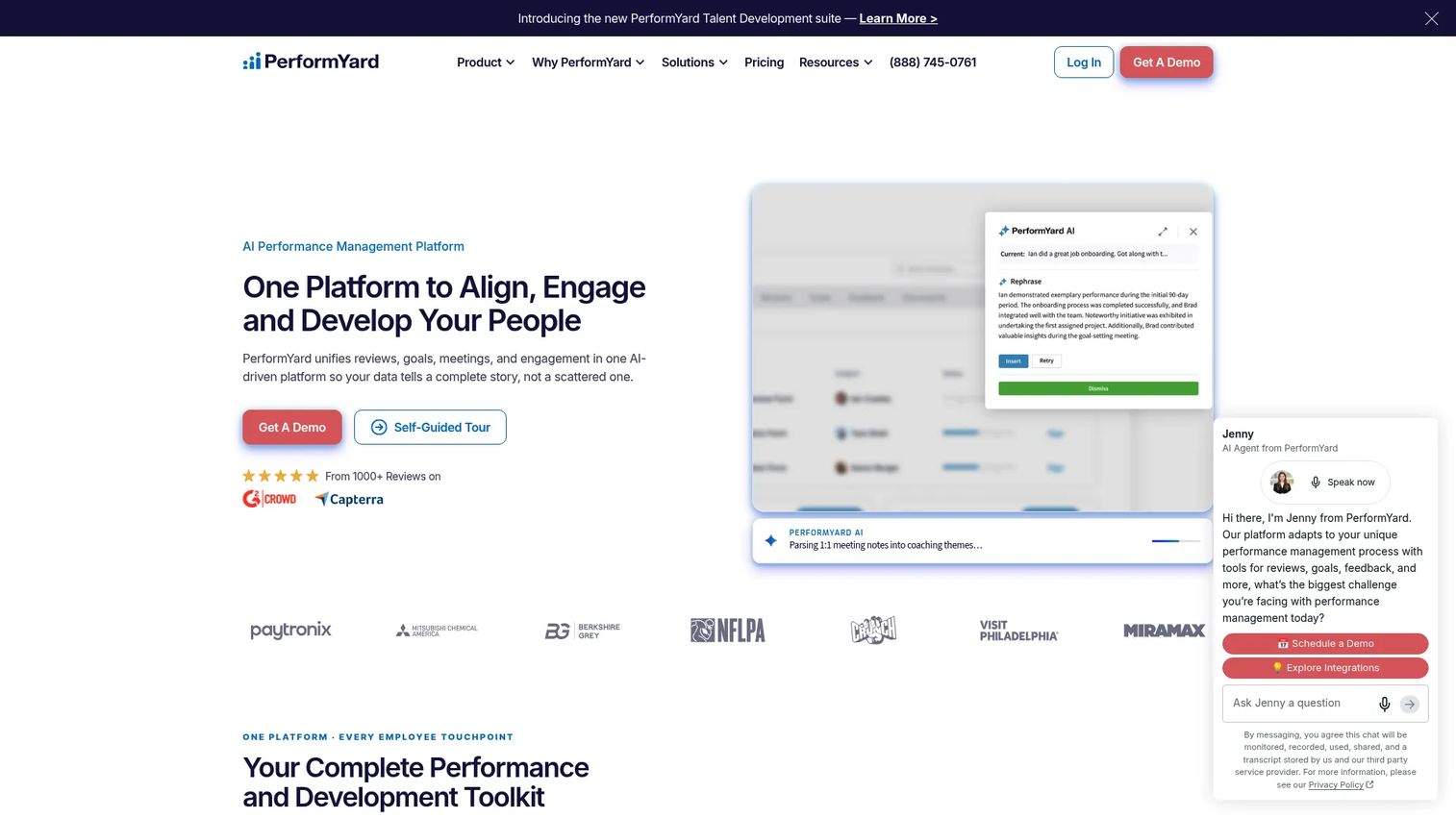
PerformYard combines performance reviews, 360 degree feedback, goals, meetings, engagement surveys, and talent development. Administrators can run annual reviews, quarterly check-ins, or project-based assessments.
Its reporting covers completion tracking, rating distributions, calibration, and nine-box analysis. These capabilities suit enablement teams that need formal manager assessment alongside wider performance management.
Best for: HR and enablement teams running structured review cycles tied to employee development.
Key features
- Configurable 360 review cycles
- Goal and competency management
- Anonymous employee surveys
- Completion and rating reports
- Coaching and career development
Why choose PerformYard
Choose PerformYard when 360 reviews must fit an established performance process. It supports recurring cycles without separating feedback from goals or development conversations.
For sales enablement, that structure helps connect manager feedback with coaching plans and readiness expectations.
PerformYard pricing: Performance and Talent Development each cost $5 to $15 per person monthly. Billing is annual, with volume pricing available.
G2 rating: 4.7/5.
2. Culture Amp
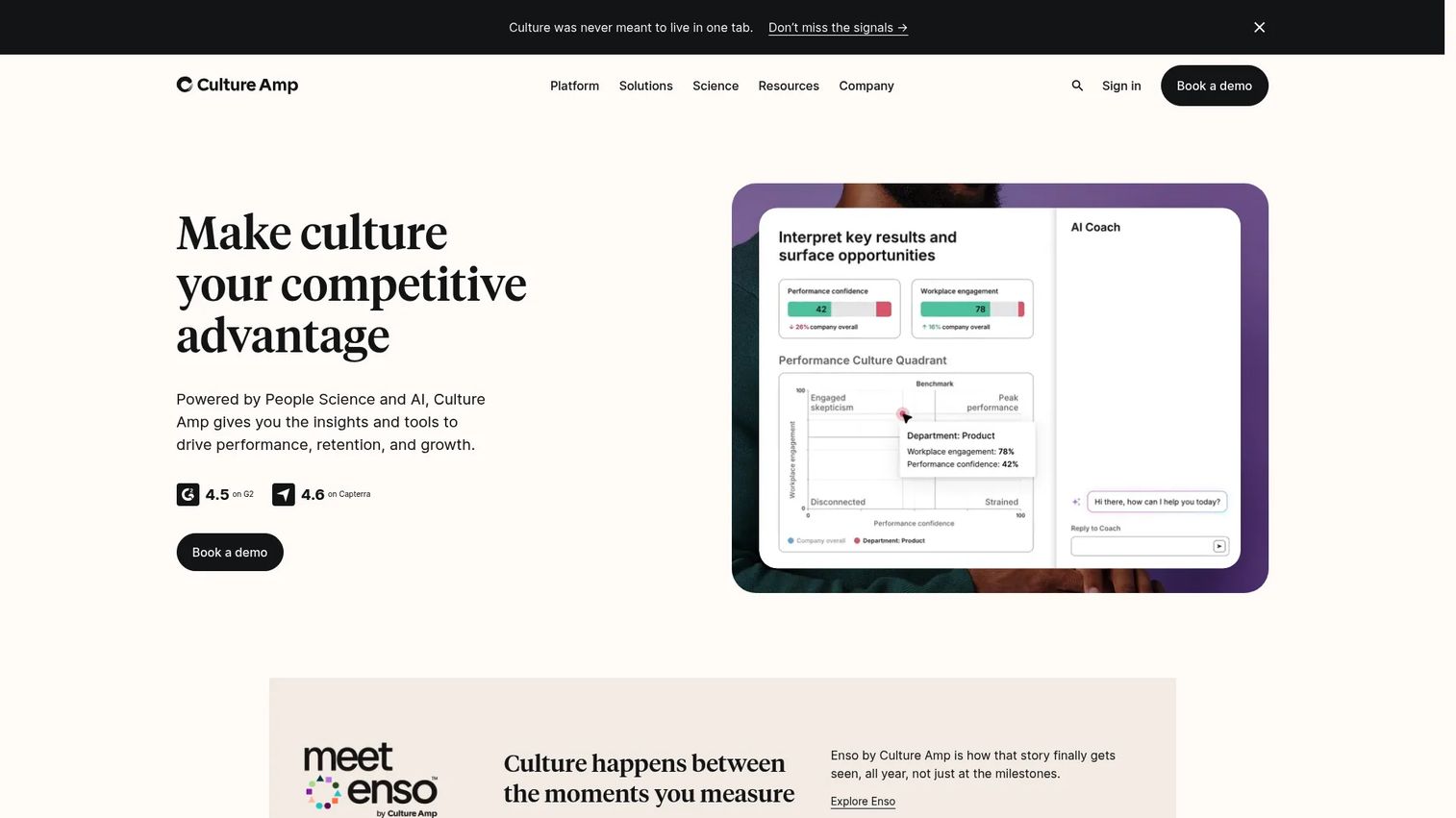
Culture Amp connects employee engagement, performance management, feedback, and development data. Its platform covers engagement surveys, calibration, continuous feedback, manager conversations, and goal management.
Development plans and manager insights help teams act on feedback after a review. This makes the product useful where 360 feedback forms part of a wider employee experience program.
Best for: People teams connecting employee listening with performance and manager development.
Key features
- Employee engagement surveys
- Performance review workflows
- Continuous feedback tools
- Development plans
- People analytics
Why choose Culture Amp
Choose Culture Amp when engagement data and performance feedback need to inform the same people strategy. It fits organizations that want manager development alongside broader culture measurement.
Sales enablement can use that shared view to coordinate manager coaching with HR and learning teams.
Culture Amp pricing: Custom pricing covers Engage, Perform, and optional People Science Consulting. Contact Culture Amp for a quote.
G2 rating: 4.5/5.
3. CustomInsight
CustomInsight provides employee surveys and customizable 360 degree feedback programs. Its assessment tools support competency models, participant management, benchmarking, and development planning.
Interactive dashboards help administrators compare results and monitor progress. Group reports also make the platform relevant for leadership cohorts or company-wide manager programs.
Best for: Organizations running configurable assessment programs across large participant groups.
Key features
- Custom competency models
- Configurable survey content
- Participant management
- Benchmarking and gap analysis
- Group reporting
Why choose CustomInsight
Choose CustomInsight when you need a dedicated assessment program rather than a general performance review module. Its pricing also works well for projects measured by participants.
Enablement teams can use group reports to spot common coaching gaps across regional or frontline managers.
CustomInsight pricing: 360 feedback costs $750 for setup, then $95 per person receiving feedback. A one-person trial is available.
4. Focal 360
Focal 360 is a focused multi-rater assessment system for individuals, teams, and leadership programs. It supports customizable surveys, automated reminders, interactive dashboards, and configurable reports.
The platform centers the assessment workflow rather than broader HR administration. This helps teams that already have an HR system but need stronger 360 review operations.
Best for: Organizations seeking dedicated 360 assessments with configurable competency content.
Key features
- Custom 360 evaluations
- Competency model support
- Automated review reminders
- Interactive reporting dashboards
- Configurable assessment reports
Why choose Focal 360
Choose Focal 360 when formal assessment depth matters more than broader HR functions. It works for leadership programs that require repeatable content and participant-level reporting.
The per-participant model also makes project costs easier to estimate before launch.
Focal 360 pricing: Pricing starts with a $750 setup fee. Each person receiving feedback costs $95.
5. Peoplebox
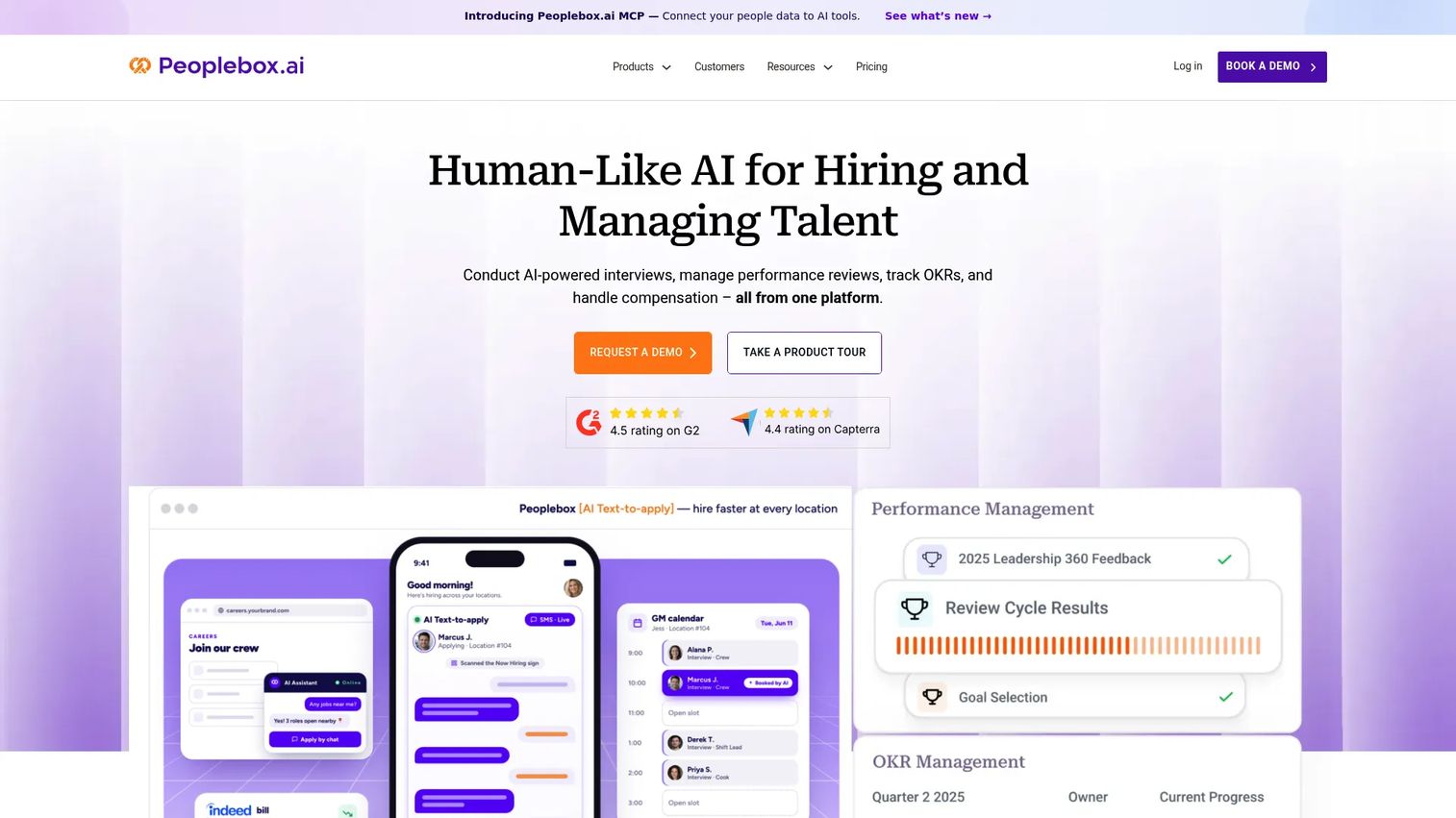
Peoplebox combines performance reviews, OKRs, continuous feedback, employee engagement, compensation, and development plans. Its 360 degree module connects multi-rater input with goals and manager conversations.
This structure suits enablement teams that want feedback tied to measurable performance expectations. Development plans can carry review findings into later check-ins.
Best for: Teams connecting 360 feedback with OKRs, performance goals, and manager follow-up.
Key features
- 360 degree reviews
- Performance management
- Cascaded OKRs
- Continuous feedback
- Individual development plans
Why choose Peoplebox
Choose Peoplebox when feedback needs to inform business goals and regular manager conversations. It provides more performance context than a standalone survey builder.
The separate module pricing lets buyers select 360 feedback without taking every talent product.
Peoplebox pricing: The 360 degree module costs $8 per employee monthly with annual billing. Development plans cost $3 per employee monthly.
G2 rating: 4.5/5.
6. QuestionPro
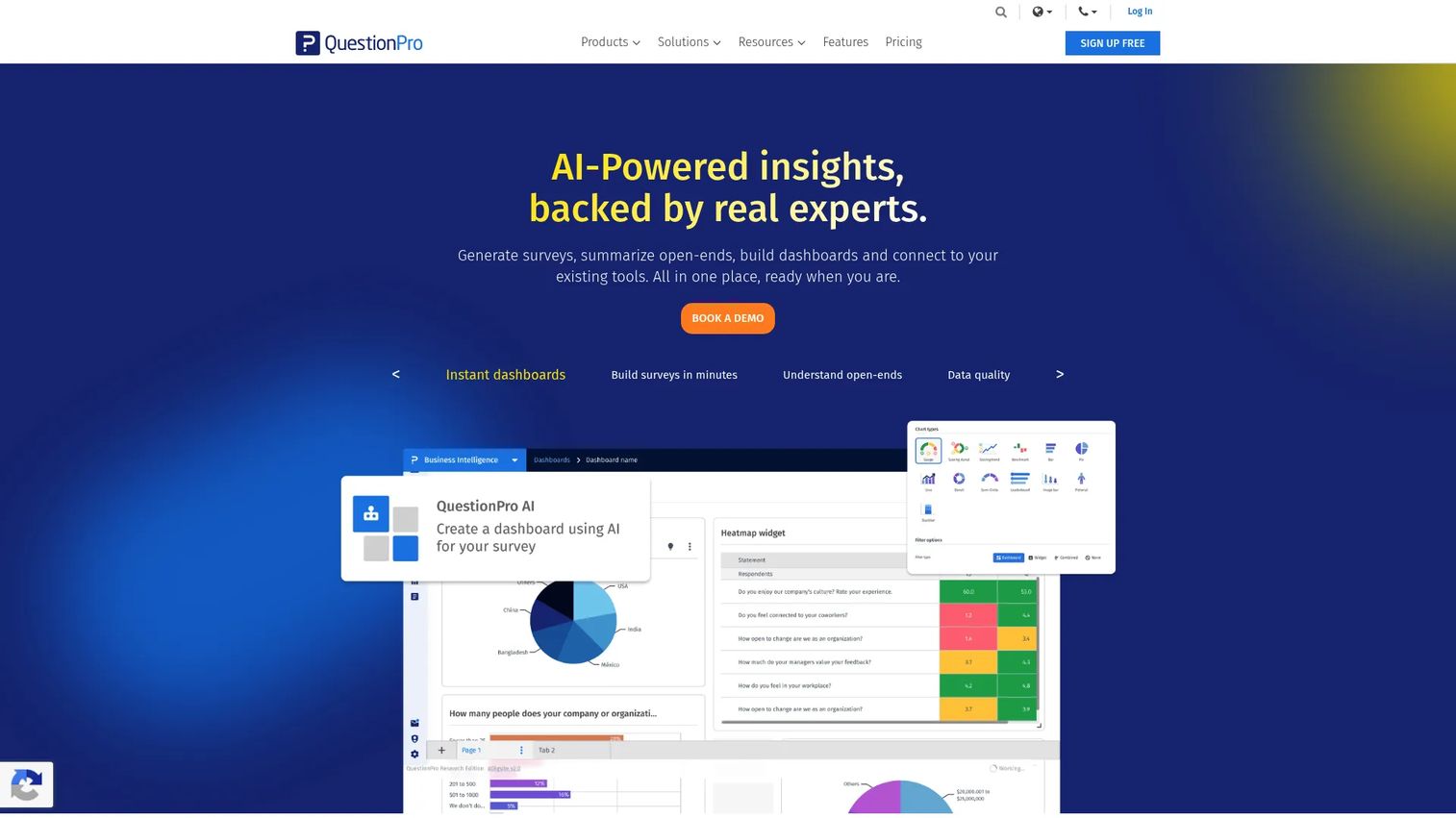
QuestionPro is a survey and research platform with customizable questionnaires, distribution controls, and analytics. Teams can build a 360 feedback questionnaire with branching, multilingual content, and reporting dashboards.
Because QuestionPro is survey-first, administrators must define reviewer categories and governance themselves. That flexibility suits teams with established survey operations.
Best for: Teams that want configurable feedback surveys and advanced analysis tools.
Key features
- Custom survey creation
- Advanced branching logic
- Multilingual questionnaires
- Sentiment analysis
- Raw data exports
Why choose QuestionPro
Choose QuestionPro when questionnaire flexibility matters more than a predefined performance workflow. It can support employee feedback software use cases beyond 360 reviews.
Before launch, document how responses will be grouped and who can access raw data.
QuestionPro pricing: Essentials is free. Advanced costs $99 per user monthly, while Team Edition costs $83 with annual billing.
G2 rating: 4.5/5.
7. Jotform
Jotform provides a no-code form builder with templates, approval flows, automated notifications, and response reports. Small teams can use it to launch lightweight 360 feedback questions without adopting performance review software.
Formal reviewer anonymity needs deliberate configuration. Administrators should separate response access and avoid reports that expose small reviewer groups.
Best for: Small teams launching a straightforward feedback form with minimal administration.
Key features
- Drag-and-drop form builder
- Ready-made form templates
- Automated notification emails
- Approval workflows
- Submission reports
Why choose Jotform
Choose Jotform when you need a configurable form rather than a full 360 review system. It works well for pilot programs or smaller manager cohorts.
Use clear naming conventions and access controls to keep each review cycle manageable.
Jotform pricing: Starter is free. Bronze starts at $39 monthly, or $34 monthly with annual billing.
G2 rating: 4.6/5.
8. Zoho Survey
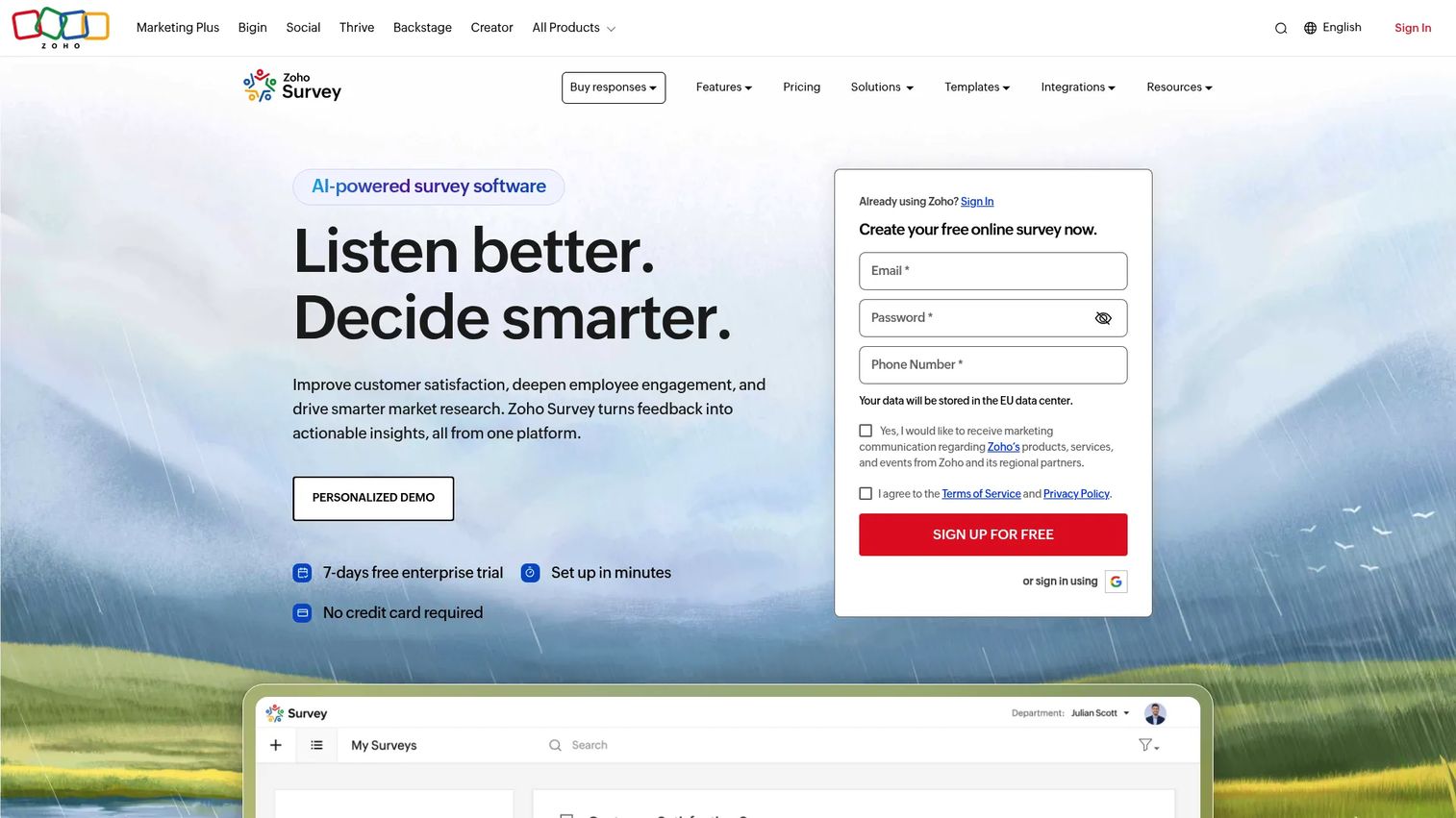
Zoho Survey supports online questionnaires, multiple logic types, multilingual surveys, and several distribution channels. Its dashboards include cross-tab reports, sentiment analysis, and structured response metrics.
The product suits basic multi-rater feedback programs, especially for organizations already using Zoho. Teams must still create the reviewer structure and development workflow.
Best for: Budget-conscious teams that want feedback collection inside the Zoho product family.
Key features
- AI survey creation
- Multiple logic options
- Multilingual surveys
- Cross-tab reports
- Offline response collection
Why choose Zoho Survey
Choose Zoho Survey when cost and questionnaire flexibility carry more weight than formal 360 administration. Its free tier can support early testing.
For recurring programs, create a documented process for reviewer nomination, reminders, and report access.
Zoho Survey pricing: A free plan is available. Basic starts at $7.42 monthly when billed annually.
G2 rating: 4.4/5.
9. Teamflect
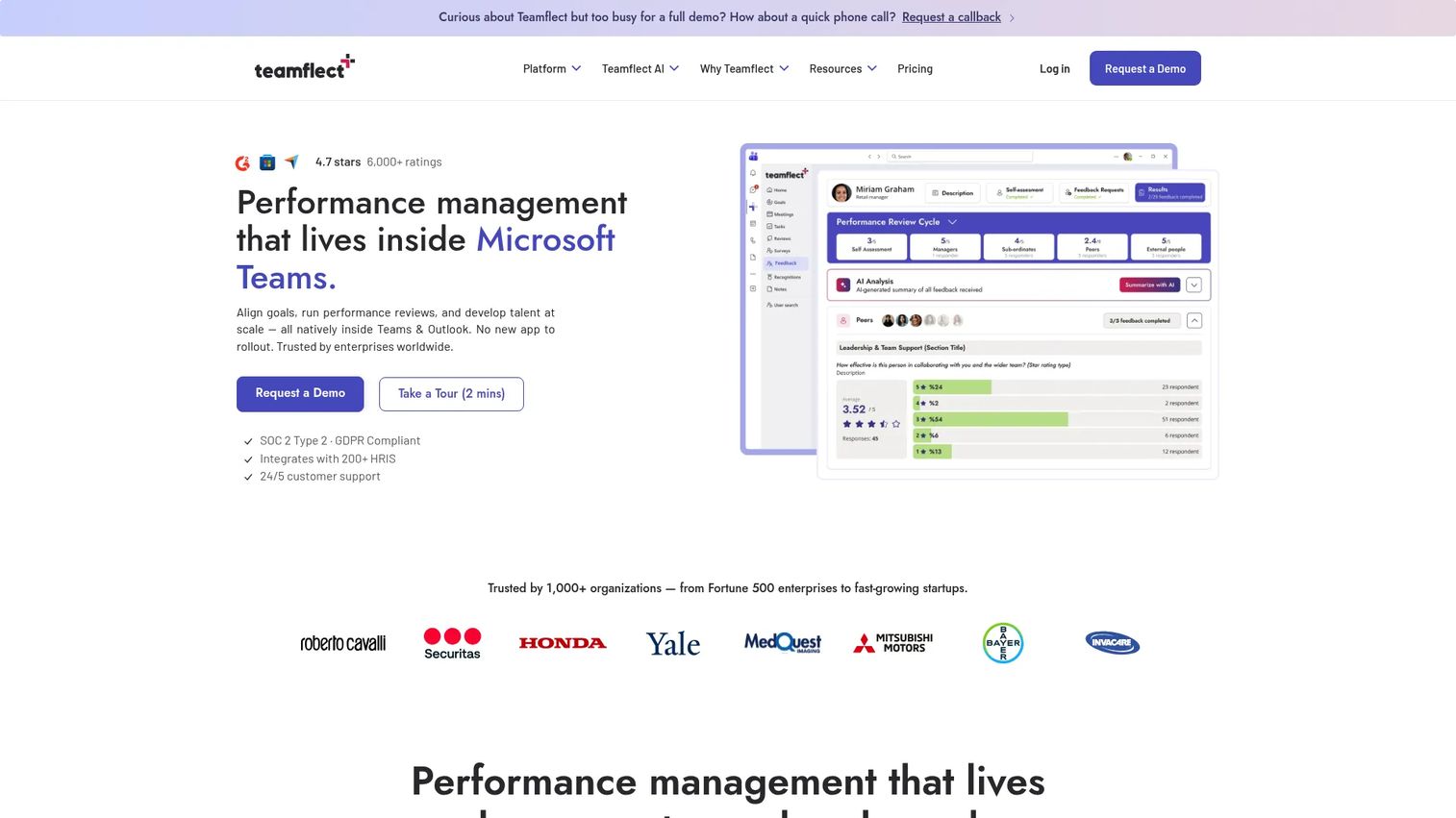
Teamflect provides performance management and employee engagement features inside Microsoft Teams and Outlook. It covers 360 degree feedback, reviews, goals, one-to-one meetings, and pulse surveys.
The in-workflow design can support adoption because managers do not need a separate destination for every conversation. Sales enablement teams can connect coaching discussions with goals and review results.
Best for: Organizations managing performance conversations through Microsoft 365.
Key features
- Microsoft Teams integration
- 360 degree feedback
- Performance reviews
- Goals and OKRs
- One-to-one meetings
Why choose Teamflect
Choose Teamflect when tool adoption depends on meeting managers inside existing Microsoft workflows. It keeps feedback close to routine meetings and development conversations.
This can reduce the administrative gap between receiving a report and discussing the next coaching action.
Teamflect pricing: The free plan supports up to 10 users. Essential costs $9 per user monthly, while Professional costs $14.
G2 rating: 4.5/5.
10. Achievers
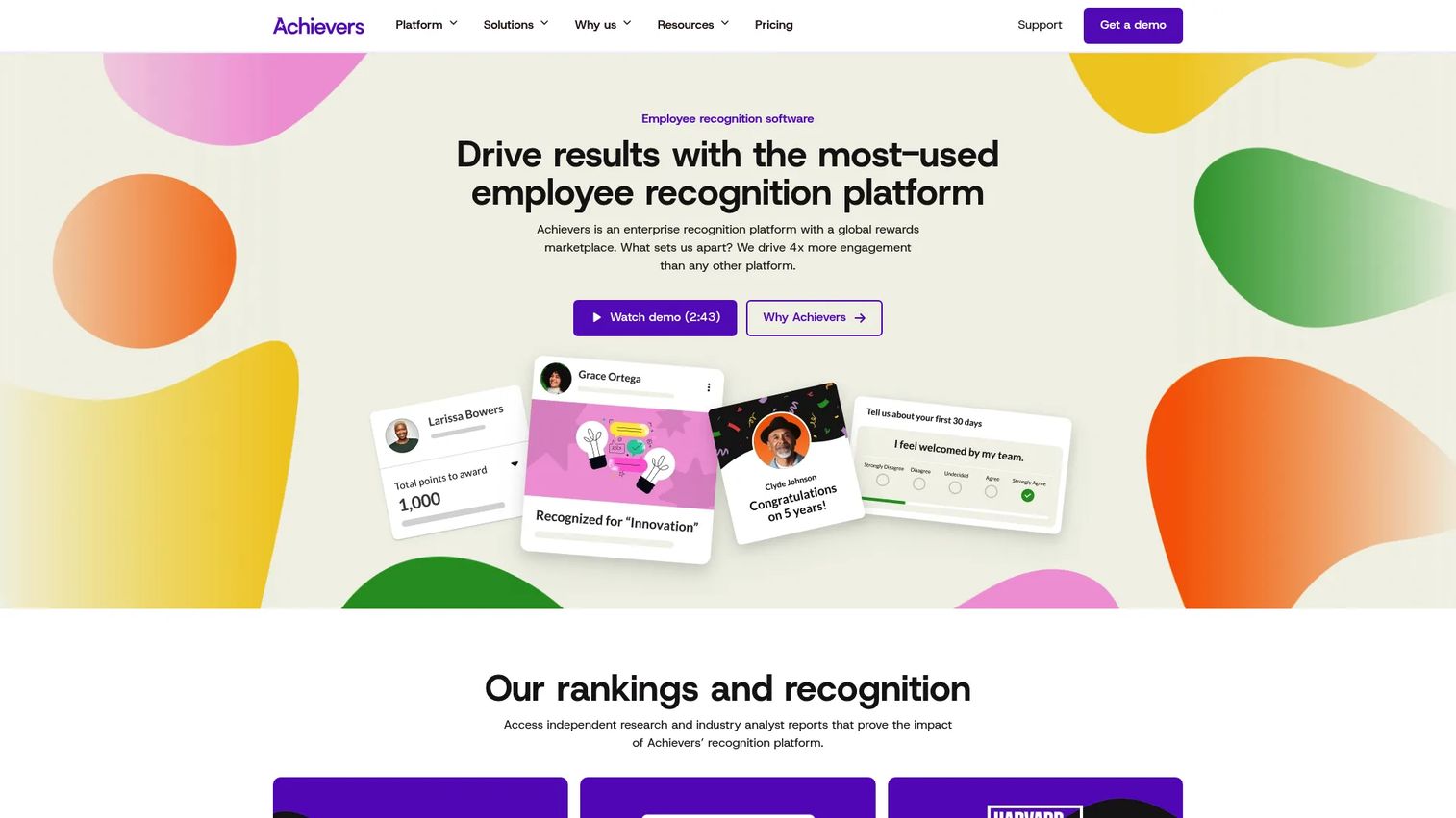
Achievers focuses on employee recognition, rewards, engagement, communications, and feedback. Its platform supports surveys and listening alongside recognition programs.
This makes Achievers relevant when the feedback program reinforces company behaviors or cultural priorities. Buyers seeking specialist rater workflows should examine the available assessment configuration closely.
Best for: Larger organizations connecting feedback with recognition and employee engagement programs.
Key features
- Employee recognition programs
- Global rewards marketplace
- Engagement surveys
- Feedback tools
- Culture analytics
Why choose Achievers
Choose Achievers when recognition and employee listening are central to the program. It can help teams reinforce behaviors while gathering workforce input.
For formal 360 appraisals, confirm the required reviewer groups and confidentiality controls during evaluation.
Achievers pricing: Custom pricing reflects organization size, goals, priorities, and platform requirements. Contact Achievers for a quote.
G2 rating: 4.6/5.
11. UKG Pro
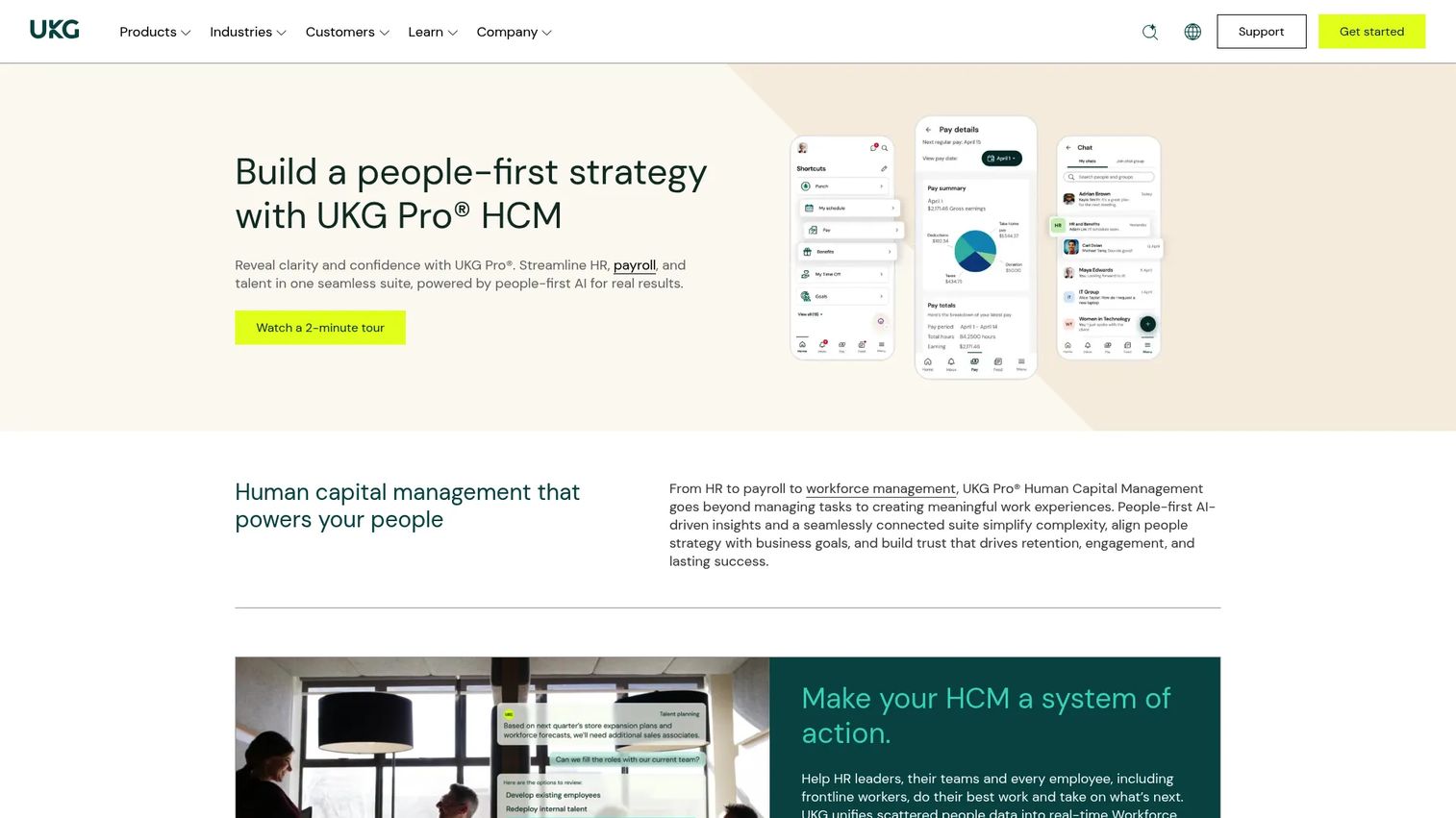
UKG Pro is an enterprise HCM platform covering HR, payroll, talent management, workforce planning, and analytics. Performance management sits alongside recruiting, onboarding, and learning.
The suite fits organizations that prefer feedback within their HR system of record. It also gives talent teams broader workforce context around participants.
Best for: Enterprise HR teams managing talent and performance within a wider HCM platform.
Key features
- Enterprise HR management
- Talent management workflows
- Performance management
- Workforce analytics
- Learning and onboarding
Why choose UKG Pro
Choose UKG Pro when your organization already needs enterprise HR and workforce management. Keeping performance data within the same system can reduce duplicated employee records.
Confirm that the available review configuration matches your rater nomination and anonymity requirements.
UKG Pro pricing: Custom pricing reflects organization size, selected modules, implementation scope, and service requirements. Contact UKG for a quote.
G2 rating: 4.3/5.
12. Factorial
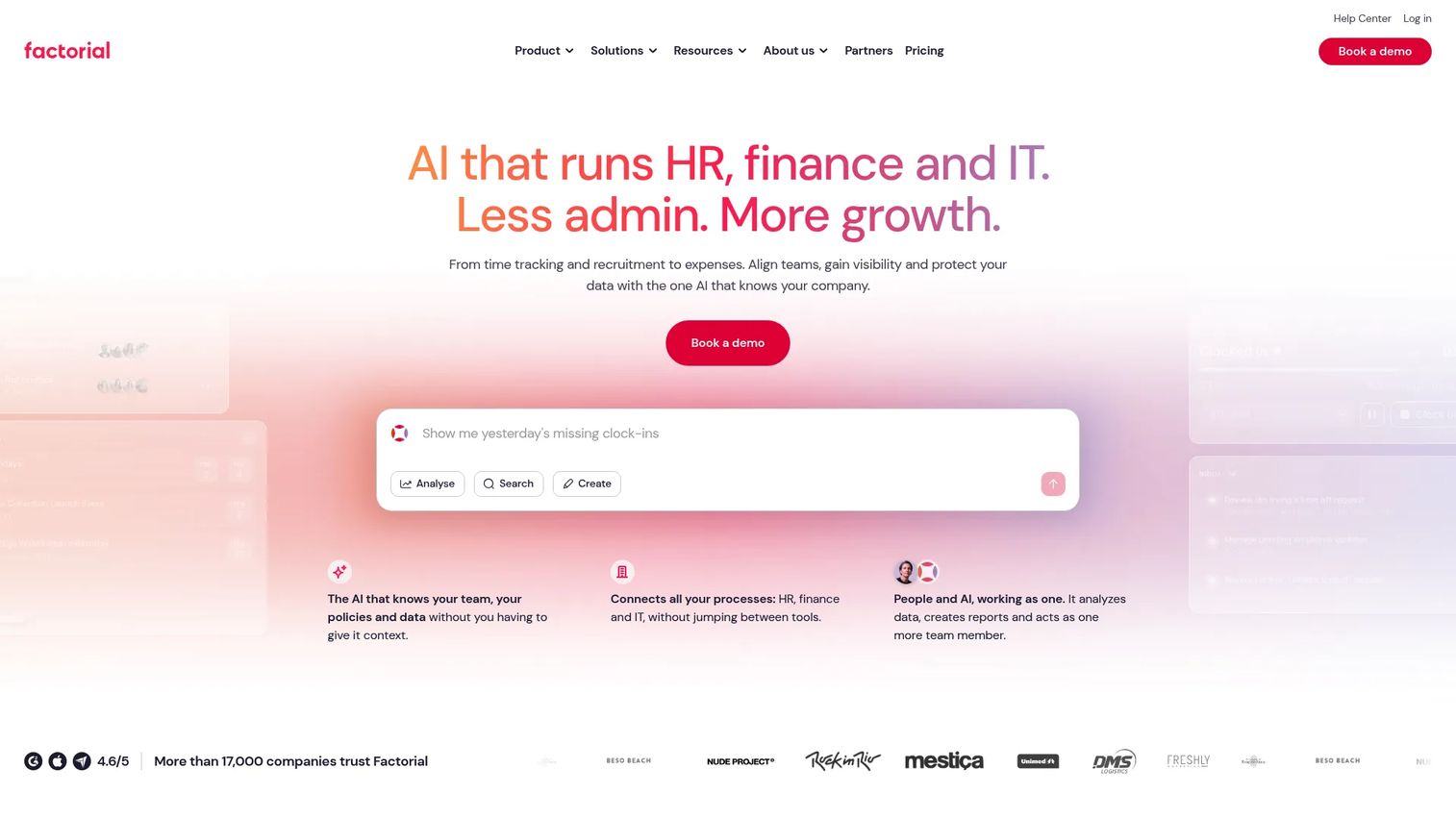
Factorial combines HR records, time management, document workflows, recruitment, and reporting. Organizations can add talent products to the core platform.
Factorial fits growing companies that want employee operations and talent processes connected. Buyers should assess the talent module against their planned 360 review workflow.
Best for: Growing HR teams seeking performance processes alongside everyday people operations.
Key features
- Core employee records
- Reports and analytics
- Document management
- Recruitment workflows
- Optional talent products
Why choose Factorial
Choose Factorial when consolidating HR administration matters more than adopting a standalone assessment platform. Its starting price makes the core system accessible to growing teams.
During evaluation, map each requirement from rater nomination through development planning.
Factorial pricing: Factorial Core starts at $8 per user monthly. Additional talent products are priced through a quote.
G2 rating: 4.3/5.
13. Sage HR
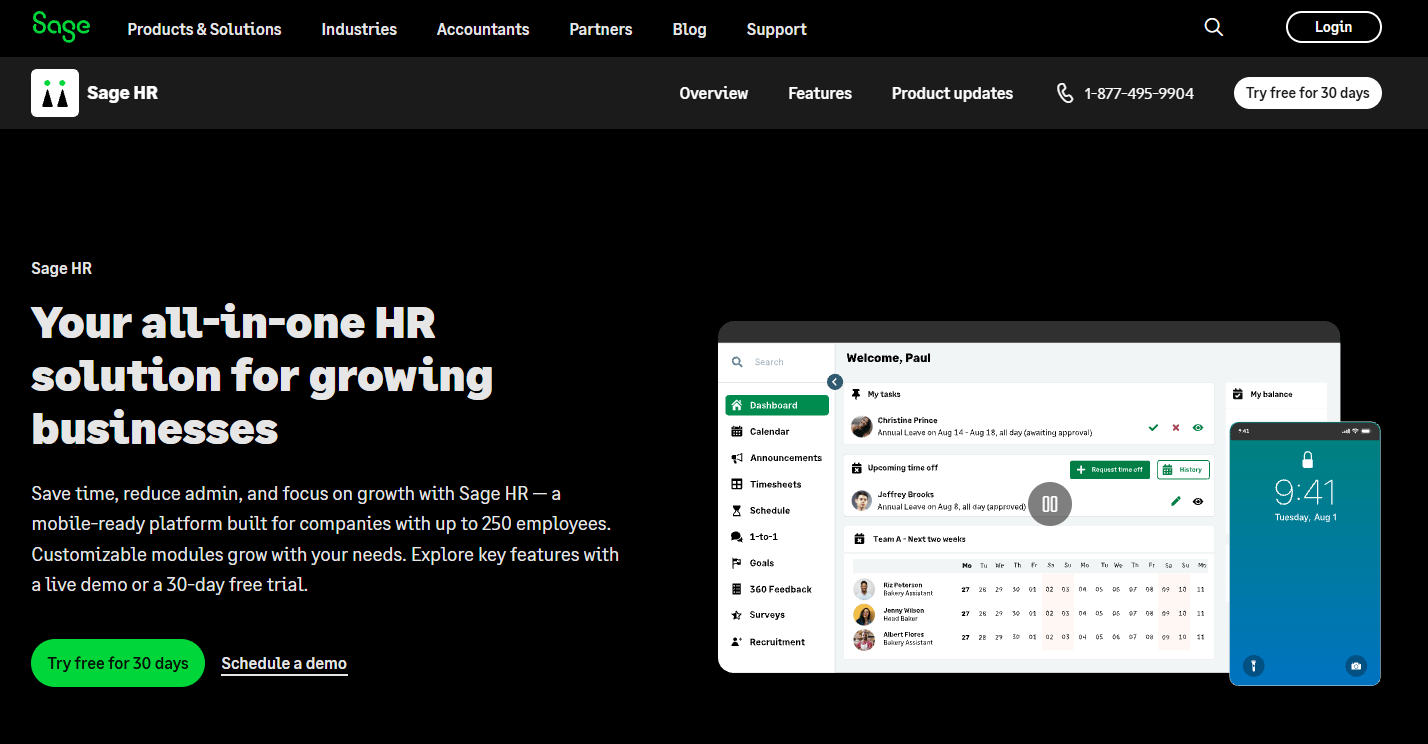
Sage HR is a modular HR platform for small and midsize businesses. Its Performance module includes goals, 360 feedback, surveys, and one-to-one conversations.
Teams can combine performance management with employee records, leave administration, scheduling, or recruitment. This modular approach avoids buying unrelated functions at the start.
Best for: Smaller organizations that want practical HR administration and structured feedback together.
Key features
- 360 degree feedback
- Performance goals
- Employee surveys
- One-to-one meetings
- Modular HR tools
Why choose Sage HR
Choose Sage HR when a smaller people team needs performance features without adopting an enterprise HCM platform. Its modular pricing makes the cost drivers visible.
For sales enablement, the Performance module can support manager conversations and development follow-up.
Sage HR pricing: Core HR costs $6.50 per employee monthly. The Performance module adds $3.25 per employee monthly, with a 30-day trial available.
G2 rating: 4.3/5.
14. Access PeopleHR
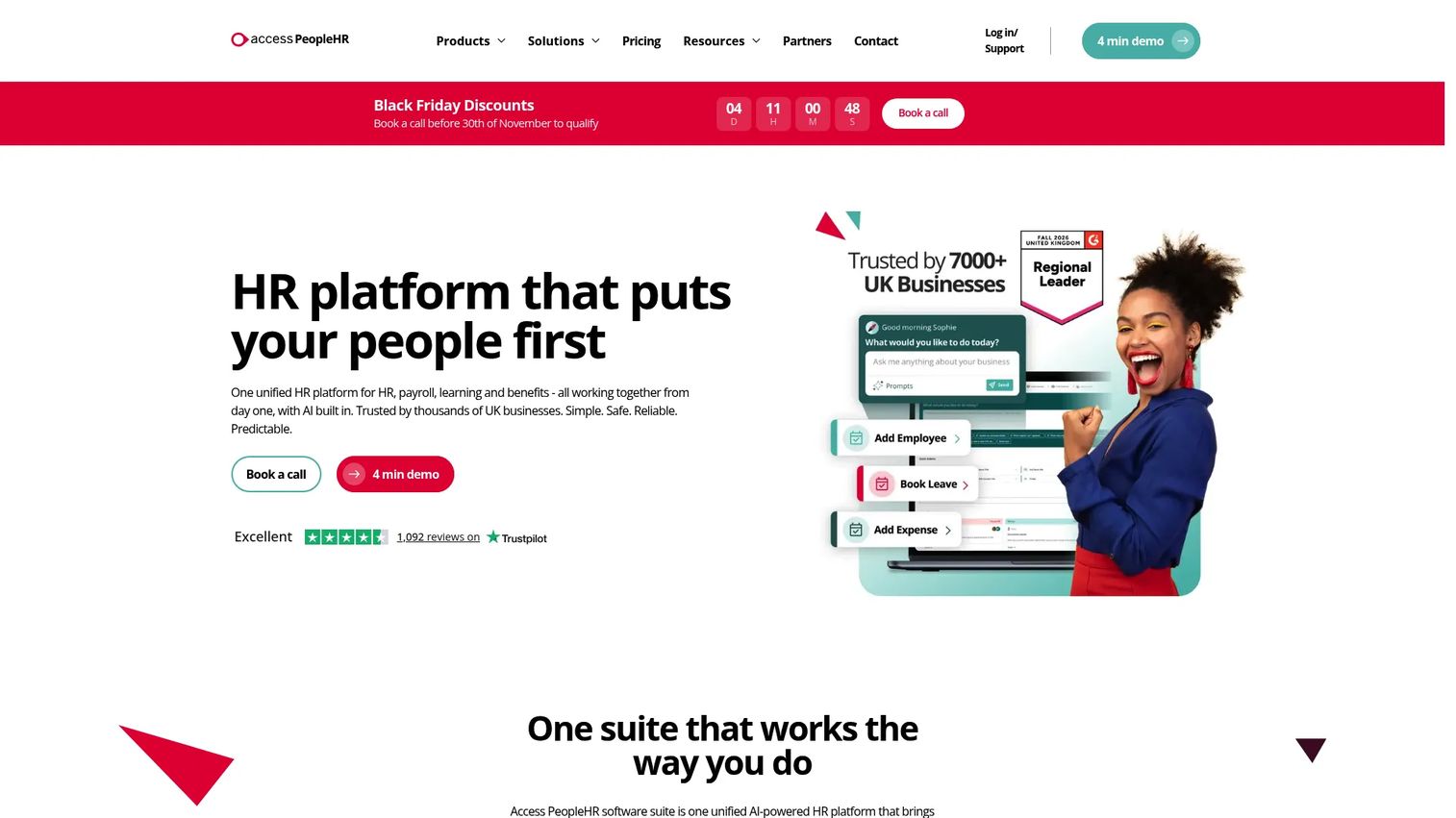
Access PeopleHR centralizes employee records, absence management, onboarding, reporting, and performance workflows. Performance management and surveys become available through its higher packages.
The product primarily serves UK small and midsize businesses. It suits teams that want feedback connected with core employee data.
Best for: UK HR teams seeking performance reviews within a practical HR platform.
Key features
- Centralized employee records
- Performance management
- Employee surveys
- HR reporting
- Automated workflows
Why choose Access PeopleHR
Choose Access PeopleHR when employee administration and performance reviews need shared records. The tier structure lets teams add deeper workflows as requirements grow.
Check which package contains every reporting and feedback capability on your shortlist.
Access PeopleHR pricing: Starter costs £4 per employee monthly. Performance management and surveys are included in Pro at £9.25 per employee monthly.
G2 rating: 4.0/5.
15. Deel
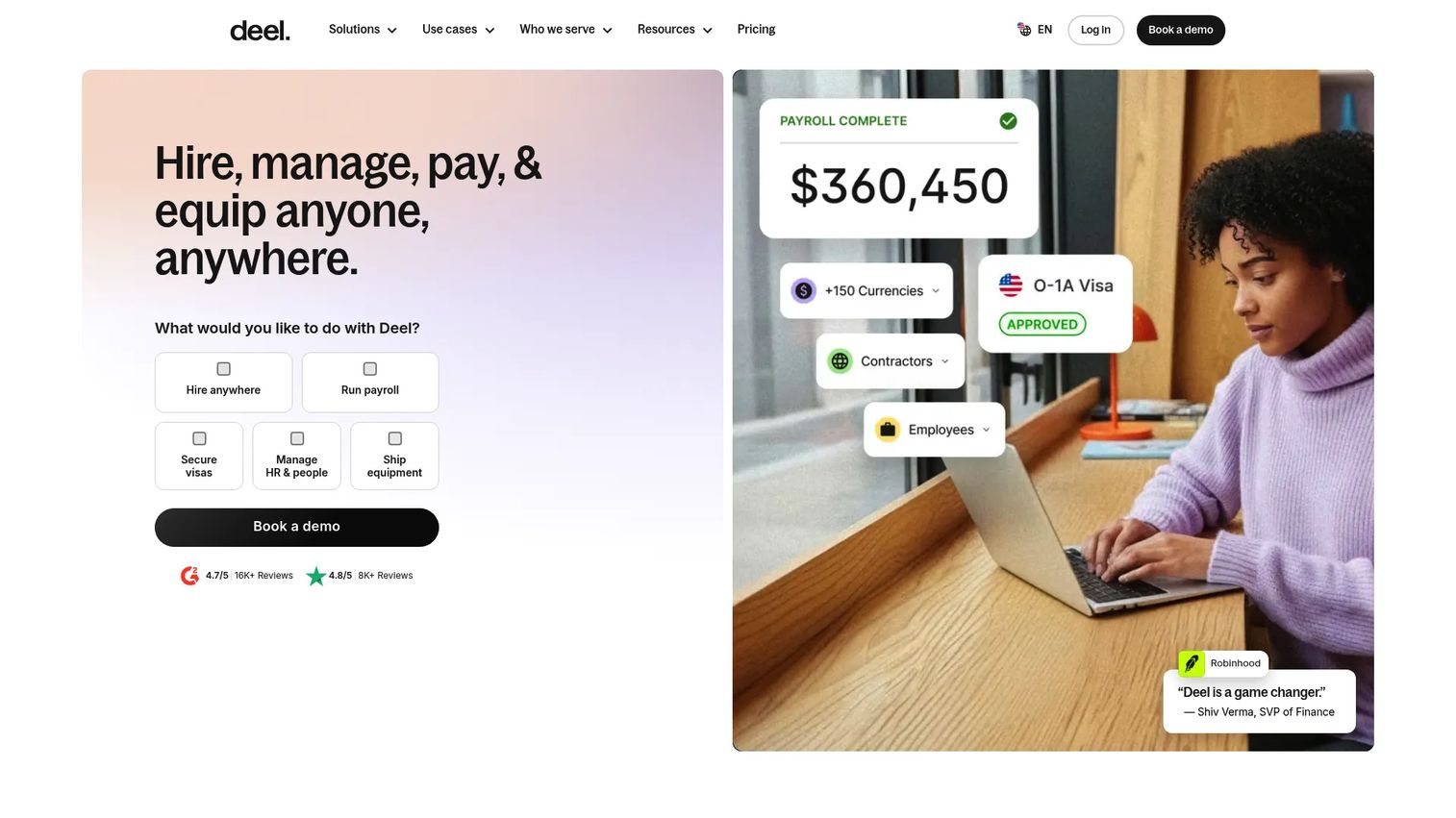
Deel is a global payroll and HR platform for hiring, managing, paying, and equipping international workers. It covers global HR, contractor management, Employer of Record services, and workforce reporting.
Deel belongs on this shortlist for distributed workforce administration rather than specialist 360 assessment depth. Global teams should confirm how their feedback process fits the available HR workflows.
Best for: Distributed organizations prioritizing international worker management and unified people records.
Key features
- Global HR management
- International payroll
- Contractor administration
- Employer of Record services
- Workforce reporting
Why choose Deel
Choose Deel when global employment operations drive the software decision. It can reduce fragmented workforce records across countries and worker types.
For formal 360 reviews, compare its available performance workflow with a dedicated feedback platform before committing.
Deel pricing: Find Talent starts at $14 per worker monthly. Contractor management starts at $49 per contractor monthly.
G2 rating: 4.7/5.
16. AssessTEAM
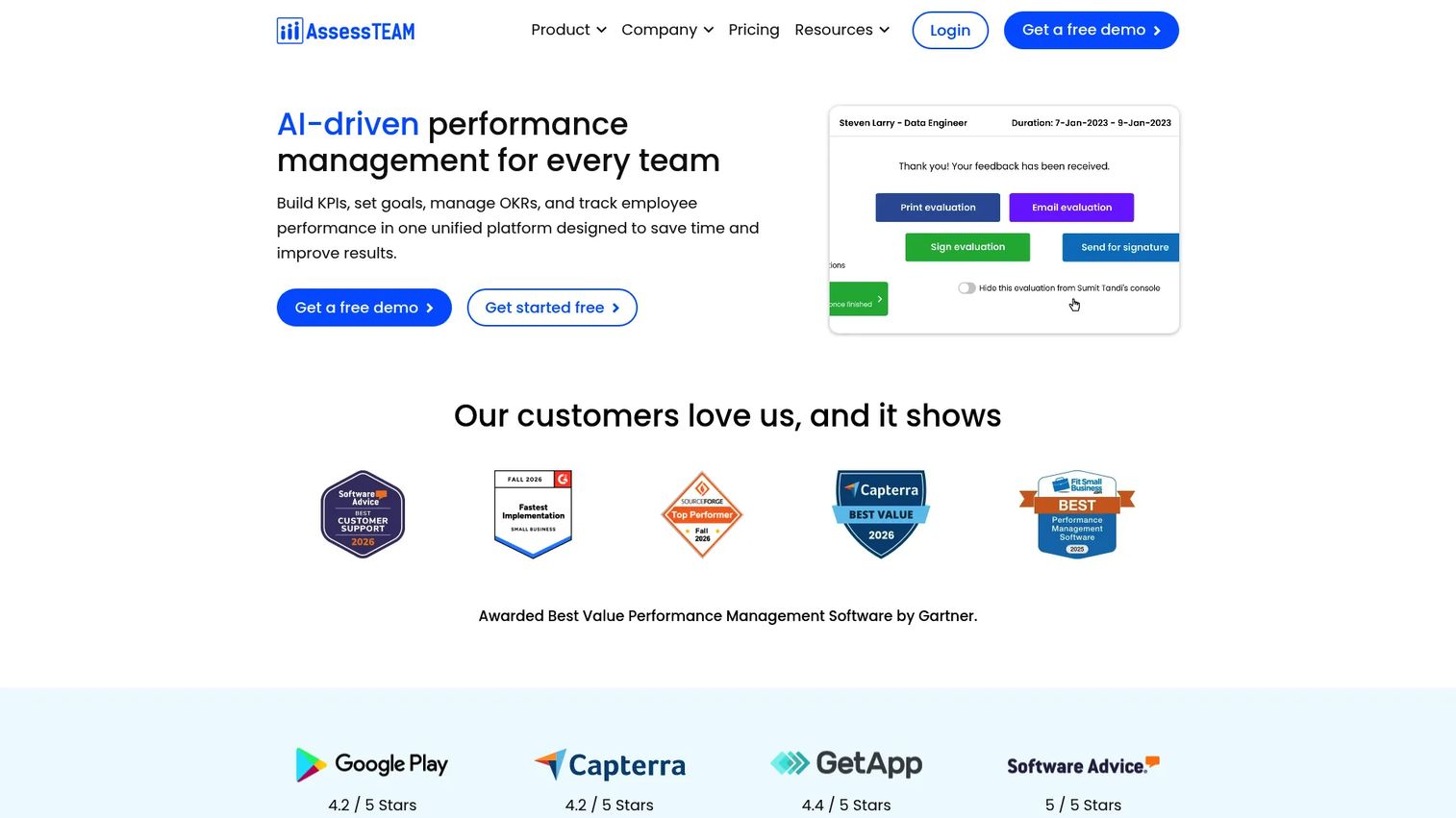
AssessTEAM combines employee evaluations, 360 degree feedback, goals, OKRs, time tracking, and project profitability. Its performance approach emphasizes ongoing measurement rather than one isolated annual review.
KPI-based evaluations can connect feedback to role expectations. Productivity reporting adds operational context for teams that need both performance and project data.
Best for: Organizations connecting continuous feedback with goals and productivity measurement.
Key features
- KPI-based evaluations
- 360 degree feedback
- Goal and OKR tracking
- Time tracking
- Profitability dashboards
Why choose AssessTEAM
Choose AssessTEAM when continuous performance measurement matters alongside multi-rater input. Its low entry price suits teams testing a more frequent review cadence.
Sales enablement can use the goal structure to connect coaching priorities with measurable behavior.
AssessTEAM pricing: Evaluations cost $2 per user monthly with no minimum user count. A trial is available.
G2 rating: 4.2/5.
17. EchoSpan
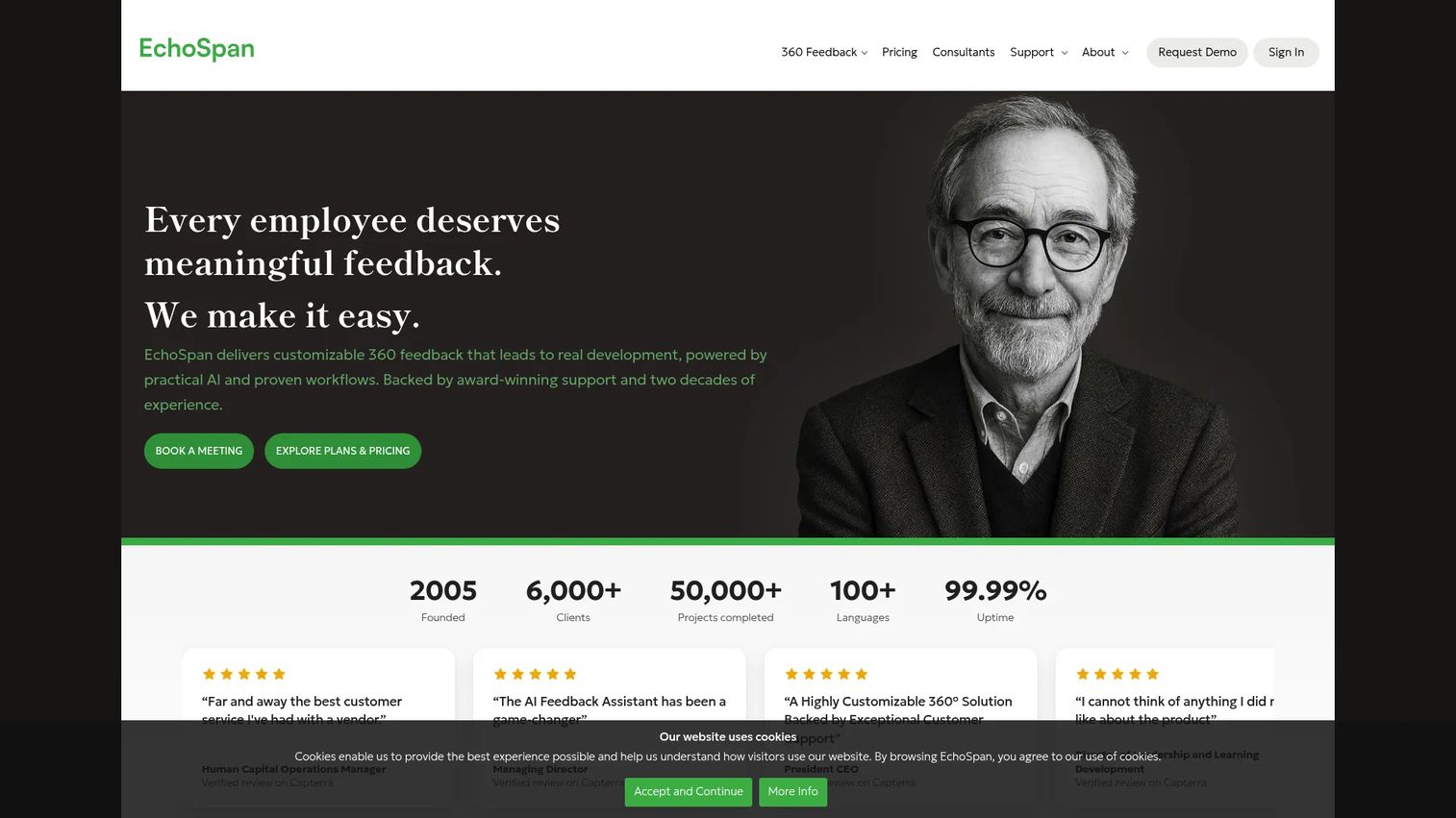
EchoSpan is a dedicated 360 degree feedback platform for HR teams, coaches, and consultants. It supports competency libraries, automated project schedules, branded reports, and development planning.
Advanced scoring and group reporting suit leadership development programs. Optional services add multilingual surveys, year-round feedback, and project management.
Best for: Leadership development teams running customizable assessment programs.
Key features
- Custom 360 surveys
- Competency library
- Automated project schedules
- Branded PDF reports
- Development planning
Why choose EchoSpan
Choose EchoSpan when assessment administration and reporting are the core requirements. Its dedicated workflow fits executive coaching or succession planning programs.
The add-on model also lets teams select specialized capabilities for each project.
EchoSpan pricing: Core subscriptions use custom pricing. Add-ons start at $17 per review, while the Insights Toolkit costs $44 per review.
Considerations when choosing 360 degree feedback software
Anonymity and confidentiality controls
Feedback gets political when employees cannot tell who will see their comments. Check anonymity thresholds, aggregated reporting, visibility settings, and role-based access.
Ask what happens when a reviewer group contains only one person. The system should prevent reports from exposing an individual through context.
Rater selection and participant management
Look for nominations, approvals, bulk imports, automated reminders, and completion tracking. Reviewer categories should remain distinct throughout reporting.
For enablement programs, confirm that you can manage separate cohorts for managers, new hires, or regional teams.
Questionnaire design and competency frameworks
Compare custom questions, templates, comment fields, and rating scales. Reusable competency models help teams maintain consistency across review cycles.
Sales manager assessments may need coaching, forecast inspection, communication, or deal leadership competencies.
Reporting and development planning
Scores alone rarely change behavior. Useful feedback reporting should surface themes and support clear action plans.
Check whether managers can document next steps, assign ownership, and review progress later. This turns assessment into a coaching process.
Fit with your existing HR and enablement stack
Review integrations with your HRIS, learning platform, collaboration tools, and reporting systems. Avoid creating another isolated data source.
Sales enablement teams should also decide how findings affect onboarding, certification, manager coaching, and field feedback loops.
Conclusion
The best 360 degree feedback software carries the entire workflow from questionnaire design through development planning.
Dedicated assessment platforms suit formal leadership programs that need strong participant management and competency reporting. Performance management products work better when 360 reviews feed recurring goals or employee evaluations.
Survey-first tools give smaller teams flexibility at a lower entry cost. They also require more process design around anonymity and reviewer categories. Broader HR suites make sense when shared employee records and fewer systems carry more weight.
Build your shortlist around the operating model first. Start with four questions:
- How many people will receive feedback?
- Which reviewer groups must remain anonymous?
- What reporting depth will managers need?
- How will results become measurable development actions?
For sales enablement, the final question matters most. Feedback should improve coaching quality, readiness, and consistent execution. If the report lands and nothing changes, the software has only organized the paperwork.
FAQs
360 degree feedback software collects structured feedback about an employee from several reviewer groups. These often include managers, peers, direct reports, and self-assessments.
The software can manage questionnaires, reviewer categories, confidentiality, progress tracking, and reports. Some platforms also connect findings with development plans.
Survey software primarily creates questionnaires and collects responses. A dedicated 360 feedback platform adds participant relationships, rater groups, anonymity controls, and competency reporting.
Specialist systems may also support reviewer nominations, reminders, or development planning. Survey tools can handle lighter programs when administrators configure those workflows themselves.
HR, people operations, learning teams, and leadership development functions commonly manage 360 reviews. Sales enablement teams can also use them for manager coaching or rep development.
The software is most useful when several stakeholders observe the same participant. It provides a more balanced evidence base than one manager’s assessment.
Prioritize questionnaire design, rater nomination, anonymity thresholds, reminders, and reporting. The platform should also support development planning or export results into an existing coaching process.
Check access controls before comparing cosmetic features. Feedback confidentiality directly affects response quality and participant trust.
Yes. Sales enablement teams can assess coaching quality, communication, pipeline inspection habits, team support, and readiness leadership.
Use role-specific competencies rather than a generic leadership questionnaire. Connect the final report with manager coaching and a scheduled follow-up review.
Annual or semiannual cycles often suit formal leadership reviews. Quarterly or project-based cycles can support shorter development programs.
Avoid collecting feedback more often than teams can act on it. Every cycle should end with clear priorities and a follow-up date.
Set minimum reviewer-group sizes and aggregate responses before showing results. Role-based access should limit who can view raw comments or participant reports.
Explain the confidentiality rules before launch. Employees need to know who will see their feedback and how results will be used.
Pricing models include per-participant fees, per-employee subscriptions, per-user plans, and module-based HR pricing. Enterprise assessment platforms may use custom annual contracts.
Check participant limits, administrator seats, setup fees, and reporting access. Optional services such as multilingual surveys or project management can increase the total cost.