The phone rings at 7:15 p.m. The host is seating a walk-in. The reservation book shows two parties arriving in ten minutes, and nobody updated the note about the anniversary table in the corner. Meanwhile, three no-shows from last Friday cost you seventeen covers at peak rate.
Manual reservation management scales to a point, then it breaks. According to TouchBistro, as reported by FSR in 2026, 90% of full-service restaurant operators already use a reservation system to manage operations. The question is no longer whether to run software. It is which system fits your booking model, protects your margins, and gives your team the signal they need to run a tighter service.
The right restaurant reservation software handles booking intake, table allocation, guest reminders, no-show prevention, and guest data in one workflow. It also tells you, after the service, which nights performed and why.
This guide compares 10 platforms across those dimensions and helps you pick the one that earns its place in your stack.
What's inside
This guide covers the top restaurant reservation platforms for 2026. Items were chosen based on:
- Reservation and table management capabilities
- No-show prevention tools: Reminders, deposits, card holds
- Guest data and CRM functionality
- Pricing transparency across plan tiers
- G2 ratings or verified third-party review data
The guide is for independent restaurant operators, hospitality group managers, hotel F&B directors, and founders evaluating vertical technology in the hospitality category.
TL;DR
- Best for diner discovery: OpenTable, for restaurants that want reservations from a broad consumer network alongside a full operations platform
- Best for restaurant groups: Eat App, for multi-venue operators who need guest CRM and direct bookings without commission
- Best for independent restaurants: Tableo, for straightforward booking management, no-show controls, and guest marketing
- Best free option: Resos, for restaurants that want commission-free reservations with a genuinely usable free plan
- Best for premium dining: Resy, for high-demand restaurants that want a strong consumer-facing reservation brand
- Best for prepaid experiences: Tock, for tasting menus, events, and experience-led venues where revenue protection matters most
What is restaurant reservation software?
Restaurant reservation software is a digital system that lets restaurants accept bookings, manage table inventory, control waitlists, store guest data, reduce no-shows, and track dining-room performance from one operational dashboard.
Modern platforms handle far more than a reservation log. The best ones serve as the operational backbone for the entire guest journey, from the moment a diner books online to the note a host reads before they walk in.
Key features to look for:
- Online booking widget: Accepts reservations from your website, Google, and social channels without phone calls
- Table and floor-plan management: Assigns covers to tables, tracks turn times, and prevents double-booking
- Automated reminders: Sends confirmations and pre-service messages via email or SMS to cut no-show rates
- Deposits and card holds: Collects payment at booking to protect high-value seats and peak-time slots
- Waitlist management: Handles walk-ins and cancellation backfill without host-stand chaos
- Guest CRM: Stores visit history, dietary preferences, VIP tags, and spend data for personalized service
- Reporting dashboard: Shows covers by shift, no-show rates, turn times, and revenue trends
- POS integrations: Connects reservation data to spend and payment history for a fuller guest picture
- Multi-location controls: Manages booking rules, guest databases, and reporting across venues
- Marketing tools: Runs campaigns, review requests, and promotional offers to past guests
The category splits into two meaningful models. A direct booking system sits on your own channels and keeps margins clean. A marketplace platform also pushes demand from a consumer-facing network, which adds value but typically adds cost. Some tools do both. Understanding which model fits your restaurant is the most important buying decision.
When to use restaurant reservation software
Control peak-time capacity
Stagger arrivals, cap slot sizes, and enforce turn times with booking rules rather than manual host decisions. This directly protects revenue per service. A 7:30 p.m. Friday slot filled by a no-show costs more than the cover fee; a system with card holds or deposits makes that risk the guest's, not yours.
Reduce no-shows before they hit revenue
Automated reminders via SMS and email reduce no-show rates before you need deposits or card holds. For high-demand nights, tasting menus, or private rooms where a cancellation cannot be backfilled easily, deposits and prepayments change the math. Build this into your evaluation before picking a platform.
Build a guest database you can actually use
A reservation system that only stores names and times misses the operational upside. Profiles with visit history, allergies, occasion notes, and spend data let hosts personalize service on arrival and let marketing teams run re-engagement campaigns between visits. Guest data ownership is especially important when moving between platforms, so check export options before signing.
Restaurant reservation software comparison
The table below reflects pricing and ratings verified from vendor pricing pages and live G2 listings. Where G2 data was not available, N/A is noted. Quandoo has ceased operations and is included only for reference.
| # | Product | Best for | Key differentiator | Pricing | G2 rating |
|---|---|---|---|---|---|
| 1 | OpenTable | Diner discovery and operations | Large diner network plus full reservation platform | From $149/mo | 4.4/5 |
| 2 | Tableo | Independent restaurants | Direct bookings, no-show tools, guest marketing | Free plan available | N/A |
| 3 | Eat App | Restaurant groups and hotels | Direct bookings, guest CRM, multi-venue support | Free plan; paid from $99/mo | 4.7/5 |
| 4 | Resos | Budget-conscious restaurants | Commission-free bookings with a free tier | Free plan; paid from €45/mo | N/A |
| 5 | Resy | Premium and high-demand dining | Curated diner network with guest management | From $289/mo | 4.1/5 |
| 6 | Yelp Guest Manager | Yelp-driven restaurants | Yelp discovery plus front-of-house tools | Contact for pricing | 4.2/5 |
| 7 | Tock | Prepaid dining and events | Ticketing, deposits, and experience booking | From $289/mo | 4.2/5 |
| 8 | Quandoo | (Ceased operations) | Previously: Consumer reservation network | N/A | N/A |
| 9 | ResDiary | Hospitality venues needing detail | Booking rules, deposits, and table management | Add-ons from $45/mo | N/A |
| 10 | DesignMyNight | Bars and event venues | Reservations plus ticketing and venue discovery | Free for free tickets; fees on paid tickets | N/A |
Best 10 tools for restaurant reservation software
1. OpenTable
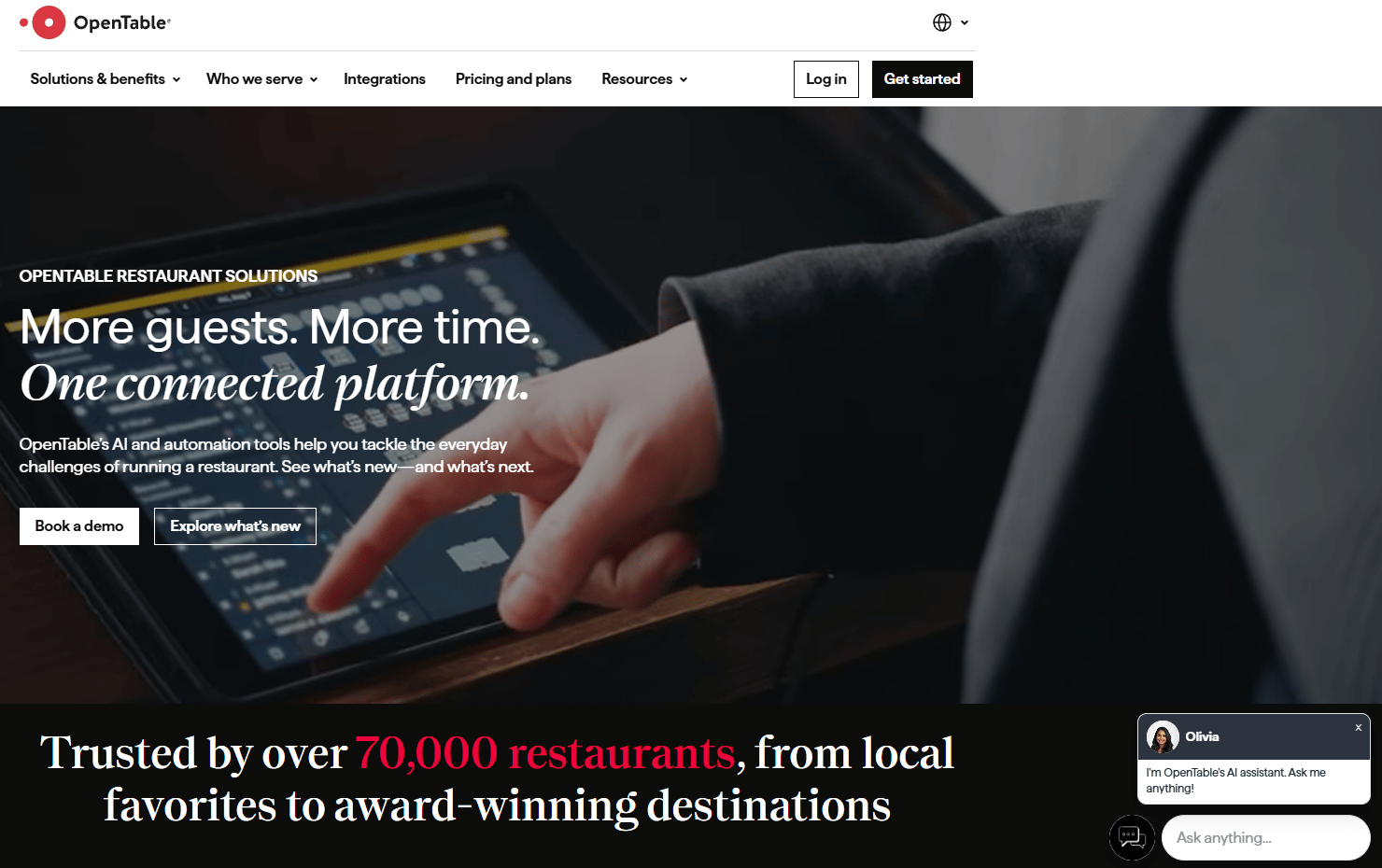
OpenTable is one of the most established restaurant reservation platforms, covering online bookings, table management, guest profiles, deposits, marketing tools, and operational reporting. It operates a large consumer-facing diner network that sends reservations directly to your book alongside your own online booking channels. The platform suits restaurants that want both a demand channel and a full reservation operations system.
Best for: Restaurants that want discovery-driven demand combined with internal reservation and table management.
Key features
- Online bookings from the OpenTable consumer network
- Table management with floor plans and waitlist controls
- Guest profiles, notes, and messaging
- Deposits, card holds, and ticketed dining experiences
- Reporting on covers, turn times, and performance
Why choose OpenTable: Choose OpenTable when access to a broad diner network matters alongside internal operations. It fits restaurants in markets where OpenTable diners represent a meaningful share of covers, particularly those where reputation and reviews drive discovery.
OpenTable pricing: Plans run $149/month (Basic), $299/month (Core), and $499/month (Pro), all billed monthly. A 30-day free trial is available for eligible new customers. Additional per-cover or service fees may apply depending on market and plan.
G2 rating: 4.4/5
2. Tableo
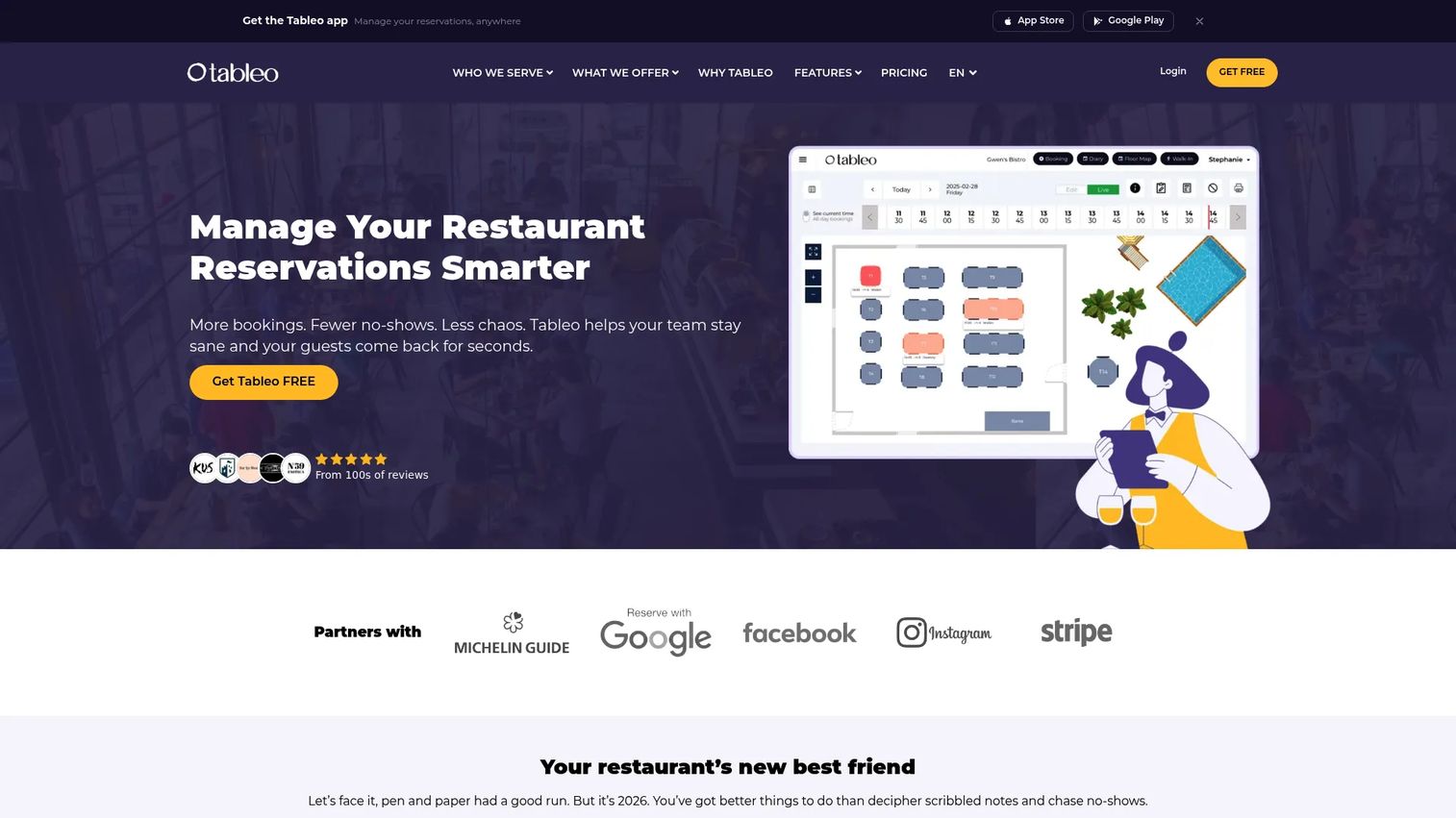
Tableo is a restaurant reservation management platform built around a central booking diary, online booking channels, table allocation, guest communication, and no-show prevention. It accepts bookings from your website, Google, Facebook, and Instagram, and handles the guest side with automated reminders, a guest database, deposits, and prepayments. An AI messaging assistant handles Facebook and Instagram inquiries.
Best for: Independent restaurants and small groups that want direct bookings, clean table management, and no-show controls in one workflow.
Key features
- Real-time booking diary with interactive floor plans
- Online bookings via website, Google, Facebook, and Instagram
- Automated guest reminders and messaging
- Deposits, prepayments, and card verification
- Guest database and marketing automation
Why choose Tableo: Choose Tableo when you want to cut host-stand manual work without overbuilding your stack. The free plan is a genuine starting point, and paid tiers add marketing, reporting, and advanced payment tools as the operation scales.
Tableo pricing: A free plan handles up to 100 covers monthly. Paid plans are Organise ($69/month), Grow ($115/month), and Expand ($299/month). All billed monthly. SMS and payment fees may apply separately.
3. Eat App
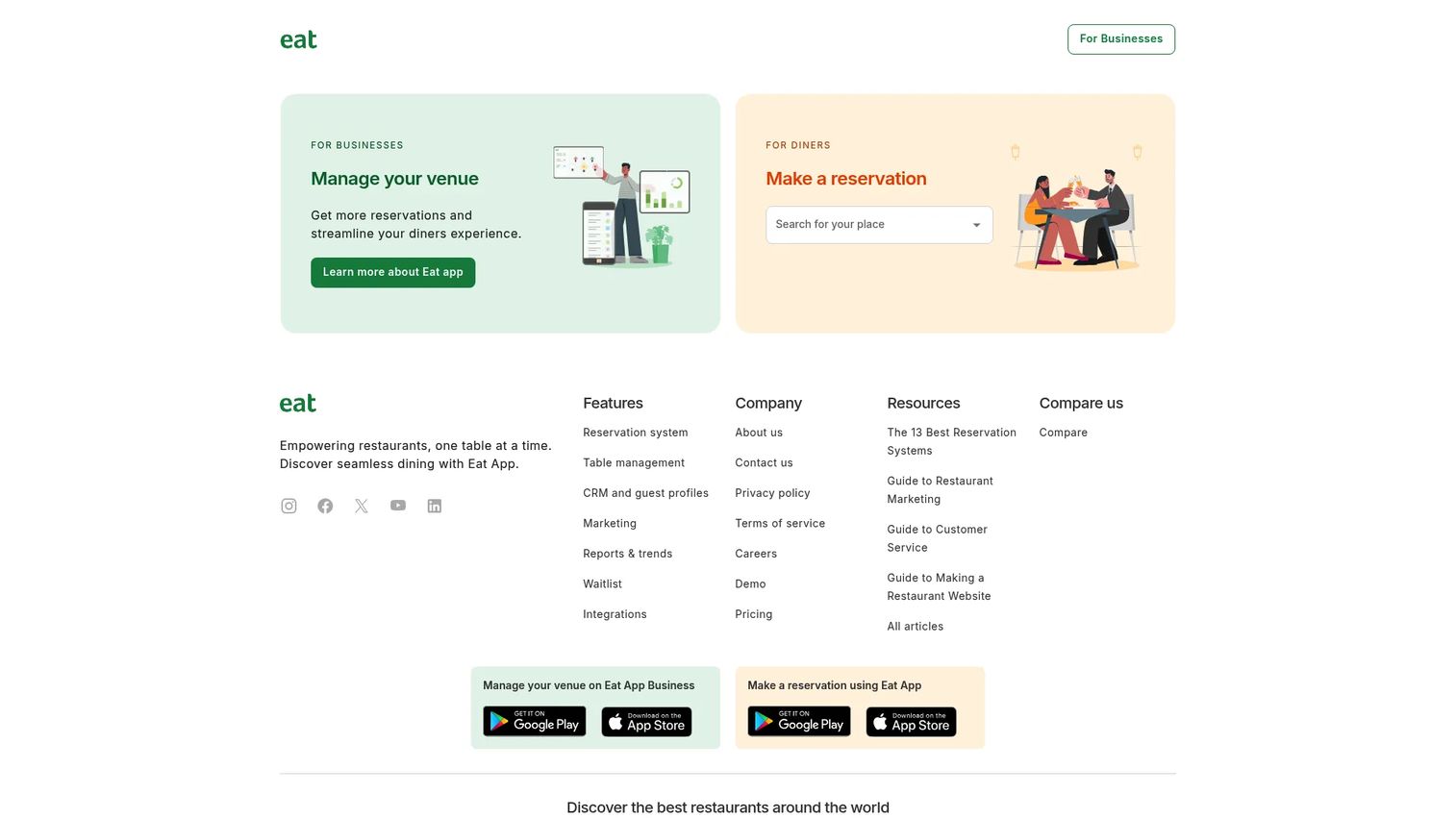
Eat App is a reservation and guest management platform for restaurants, hotels, and hospitality groups. It covers direct online bookings, table and waitlist management, a guest CRM with visit history and profiles, marketing automation, review management, analytics, and AI tools. The emphasis on direct bookings and commission-free guest ownership makes it a strong choice for operators who want to build a reusable guest database across locations.
Best for: Restaurant groups and hotels that need guest CRM and reservation management across multiple venues without per-cover fees.
Key features
- Direct online reservations via your own channels
- Floor-plan and table management with waitlists
- Guest CRM with profiles, notes, and visit history
- Multi-venue guest database and analytics
- AI assistant, chatbot, and automated marketing
Why choose Eat App: Choose Eat App when owning the guest relationship matters more than marketplace reach. The multi-venue database is a practical fit for groups managing shared guest data across properties.
Eat App pricing: A free plan covers up to 100 guests monthly. Paid plans are Lite ($99/month or $69/month annual), Core ($199/month or $159/month annual), Pro ($389/month or $299/month annual), and Enterprise (contact for quote). A 14-day free trial applies to paid plans.
G2 rating: 4.7/5
4. Resos
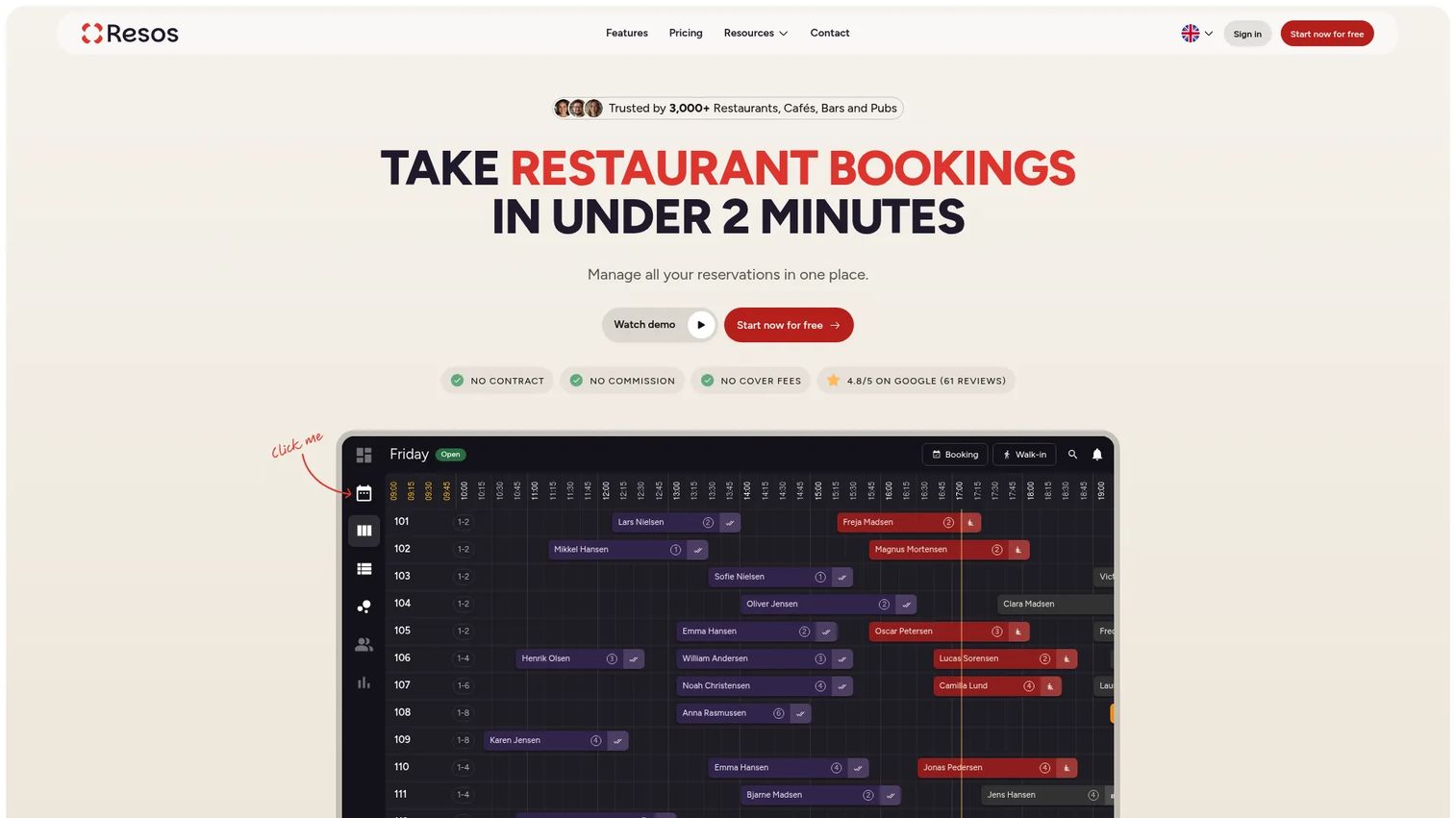
Resos is a restaurant booking and reservation management system focused on commission-free online reservations, visual table management, automated confirmations, and guest communication. It integrates with Google, Facebook, and Instagram for booking intake and includes waitlist management, prepayments, and no-show fees. A developer API is available for custom integrations, and the platform supports multiple locations.
Best for: Small restaurants that want commission-free reservations and core booking features without a large monthly commitment.
Key features
- Commission-free online bookings via widget and social channels
- Visual floor-plan and table management
- Automated confirmations and reminders
- Prepayments and no-show fees
- Waitlist management and guest communication
Why choose Resos: Choose Resos when budget and simplicity drive the decision. The free plan handles 25 bookings per month, which is a practical starting point for a restaurant moving off phone-only reservations. Paid plans scale by booking volume rather than a flat feature gate.
Resos pricing: Pricing is in EUR. Free handles up to 25 bookings monthly at no cost. Basic runs €45/month (up to 350 bookings), Plus is €85/month (up to 750 bookings), and Unlimited is €125/month. Add-ons are available on paid plans.
5. Resy
Resy is a restaurant reservation and guest management platform known for its consumer-facing presence in premium and high-demand dining. It handles reservations, table management, waitlists, walk-ins, guest profiles, analytics, and event booking. Resy connects restaurants to a diner audience that skews toward higher spend and culinary interest, which makes it a fit for restaurants where brand positioning and diner demand quality both matter.
Best for: Premium restaurants and high-demand venues that want a strong consumer-facing reservation brand alongside guest management tools.
Key features
- Reservation and table management
- Waitlists and walk-in handling
- Guest profiles, analytics, and reporting
- Diner discovery via the Resy consumer platform
- Event and experience booking tools
Why choose Resy: Choose Resy when the diner audience quality matters as much as booking volume. The platform suits restaurants where reputation and curated demand are part of the positioning, not just throughput.
Resy pricing: Platform and Essential plans both run $289/month; Essential adds a 3% fee on prepayments. Platform 360 and Premium plans both run $459/month; Premium applies a 2% fee on prepayments. No free plan was confirmed on the current pricing page.
G2 rating: 4.1/5
6. Yelp Guest Manager
Yelp Guest Manager connects Yelp's consumer discovery platform to a front-of-house reservation and waitlist system. It handles in-house and online reservations, waitlist management, two-way guest texting, to-go management, table status tracking, POS integration, and daily analytics. For restaurants that already generate meaningful review traffic and walk-in demand through Yelp, keeping reservations, waitlists, and guest data in the same workflow reduces friction.
Best for: Restaurants in markets where Yelp drives a material share of diner discovery and walk-in demand.
Key features
- Reservations and waitlists from Yelp and your own channels
- Two-way guest texting for confirmations and updates
- Customizable floor plan and table tracking
- To-go order management
- Daily analytics and POS integration
Why choose Yelp Guest Manager: Choose Yelp Guest Manager when your Yelp page already generates traffic that you want to convert directly into covers. The strongest case is restaurants where disconnecting Yelp discovery from the reservation flow creates unnecessary friction.
Yelp Guest Manager pricing: Contact Yelp sales for current plan details and fees.
G2 rating: 4.2/5
7. Tock
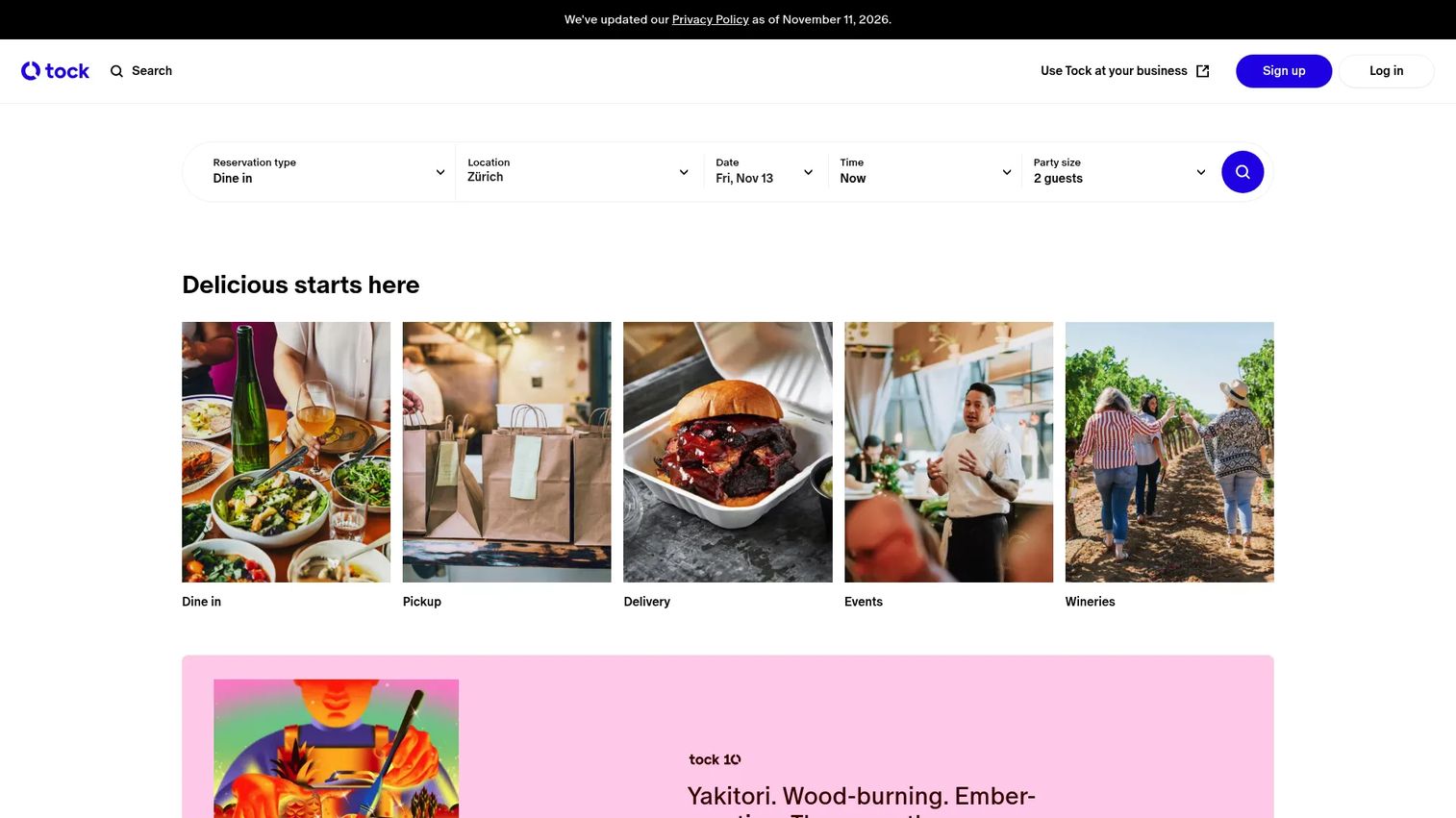
Tock is a hospitality reservation and table-management platform built for restaurants, wineries, hotels, and bars that sell prepaid experiences, ticketed dining, and events. It covers reservations, walk-in waitlists, takeout and delivery, experience booking, ticketing, guest data, marketing tools, and POS integrations. The prepaid model protects revenue from no-shows by collecting payment at booking rather than at service.
Best for: Tasting-menu restaurants, wineries, pop-up events, and experience-led venues that want prepaid reservations and revenue protection.
Key features
- Prepaid reservations and experience ticketing
- Walk-in waitlists and table management
- Takeout with pickup and delivery options
- Guest data, reporting, and marketing tools
- POS and discovery integrations
Why choose Tock: Choose Tock when reservations carry a revenue commitment. If your highest-margin nights involve limited seats, tasting menus, or ticketed events, collecting payment upfront changes the operational math compared with reminder-only no-show management.
Tock pricing: Platform and Essential plans both run $289/month; Essential adds a 3% fee on prepayments. Platform 360 and Premium plans are $459/month; Premium applies a 2% fee on prepayments.
G2 rating: 4.2/5
8. Quandoo
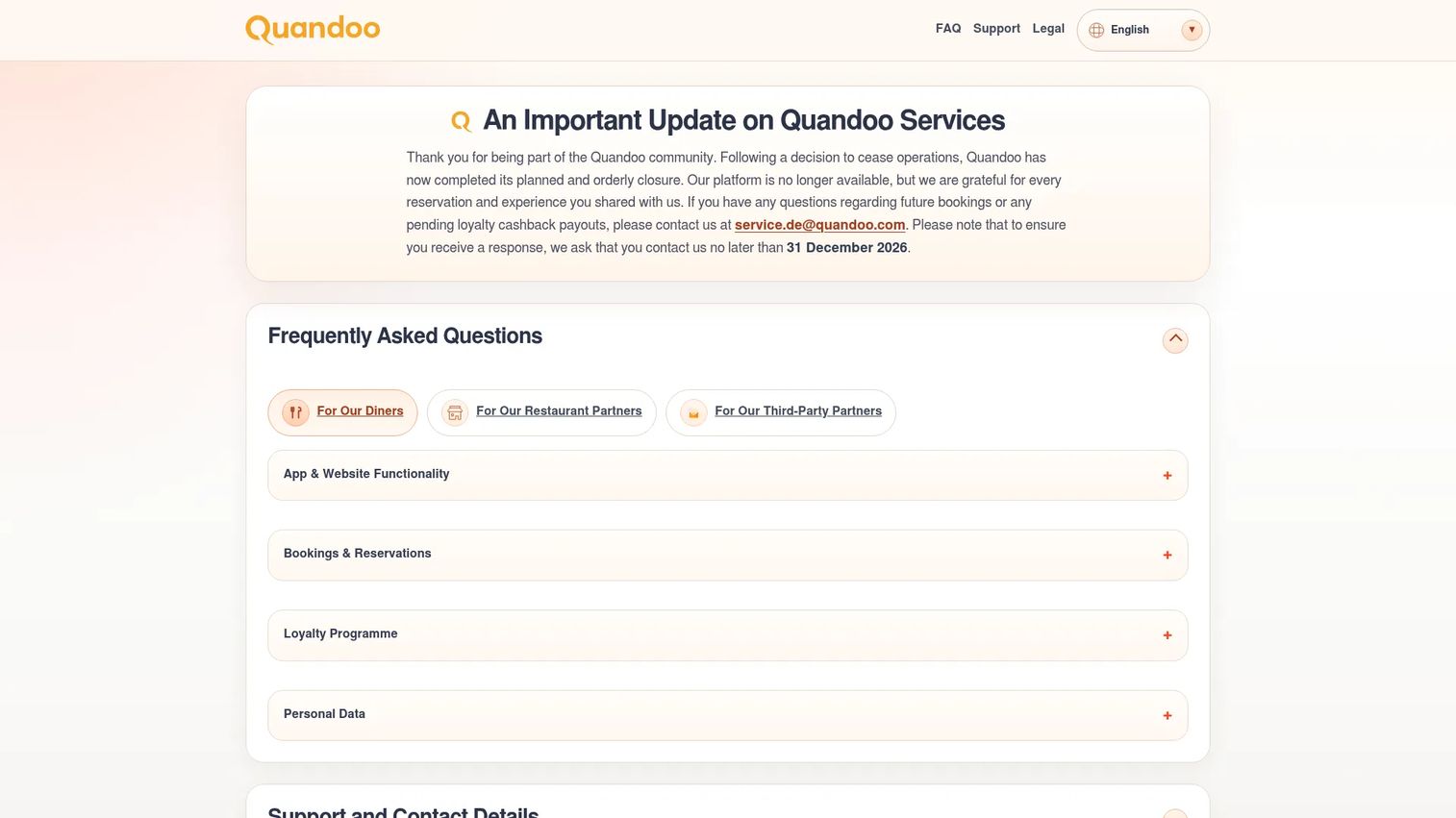
Important note: Research conducted in November 2026 found that Quandoo has ceased operations. The official homepage redirects to a closure notice. If you have an active Quandoo account or integration, contact the platform directly for transition guidance. Quandoo is retained in this list for reference because it may still appear in search comparisons, but it should not be shortlisted for new implementations.
G2 rating: No current G2 rating verified.
9. ResDiary
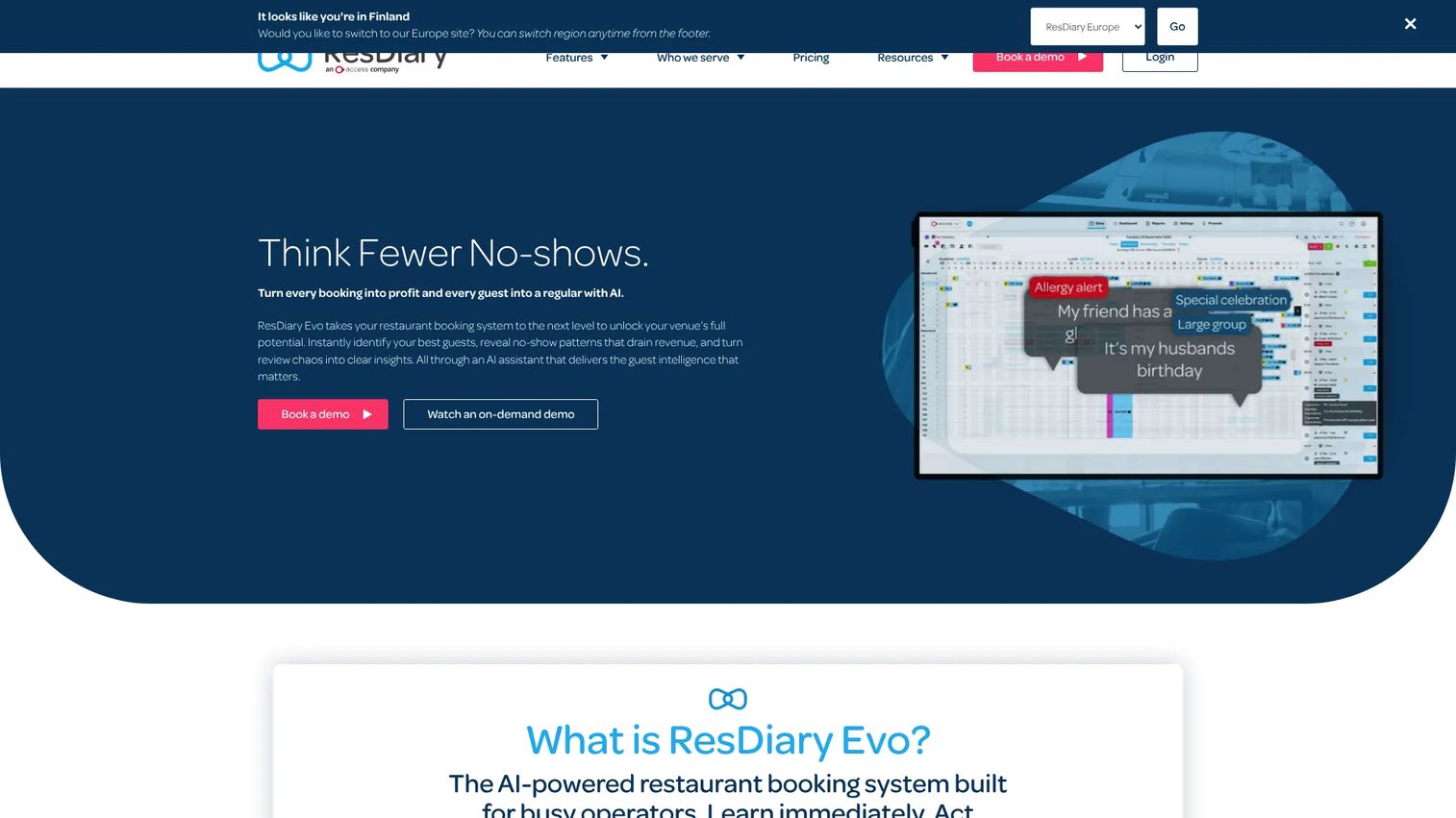
ResDiary is a commission-free restaurant reservation and table-management platform for restaurants, hotels, bars, cafes, and hospitality groups. It handles 24/7 online bookings via website, social, Google, and DesignMyNight, alongside table plans, yield management, deposits, prepayments, no-show prevention, promotions, events, vouchers, and integrations with EPOS, PMS, and CRM systems.
Best for: Hospitality venues that need detailed booking rules, deposit controls, and commission-free table management with integration flexibility.
Key features
- Online bookings via website, social, Google, and DesignMyNight
- Table plans, floor management, and yield management
- Deposits, prepayments, and no-show prevention
- Events, promotions, vouchers, and marketing tools
- EPOS, PMS, CRM, and other integrations
Why choose ResDiary: Choose ResDiary when operational control matters more than marketplace reach. Commission-free pricing and a wide integration library make it a practical fit for venues with existing POS or PMS systems that need to stay connected.
ResDiary pricing: Core plan pricing is volume-based and tailored per venue. Publicly listed add-on prices include pre-orders, gift vouchers, and event manager at $45/month each; ResPhone at $50/month; and SMS at $15/month. Contact ResDiary for base plan pricing.
10. DesignMyNight
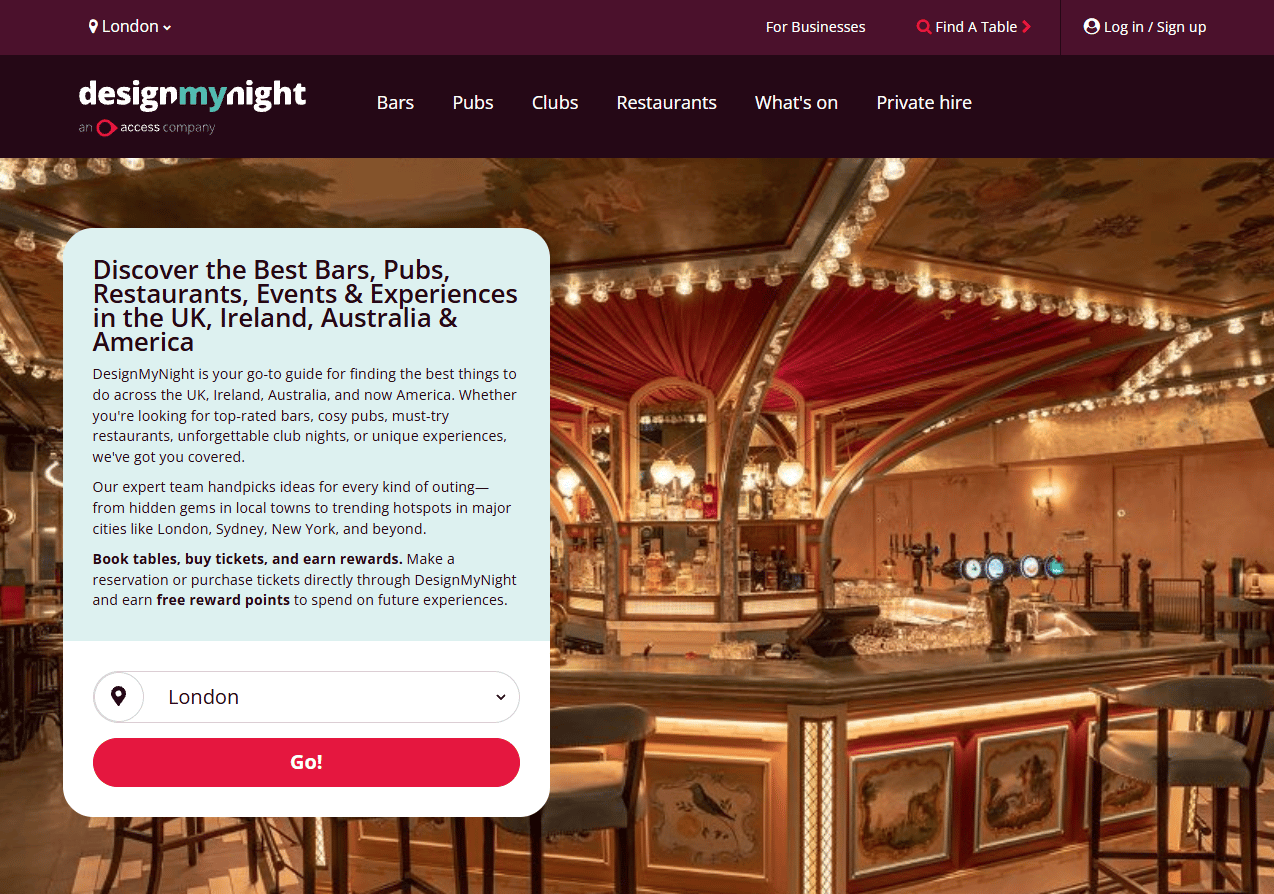
DesignMyNight is a hospitality discovery and booking platform for bars, restaurants, pubs, nightlife venues, and event organizers. It covers table bookings, event ticketing, venue and event listings, ticket scanning, food and drink add-ons, real-time sales tracking, and guest lists. The platform sits at the intersection of venue discovery and booking operations, which makes it particularly relevant for event-led venues that need both consumer exposure and booking management.
Best for: Bars, pubs, and event-led hospitality venues that need a combined discovery listing and booking platform with ticketing built in.
Key features
- Online table bookings and venue discovery listings
- Event ticketing with real-time sales tracking
- Ticket scanning app for event entry
- Food and drink add-ons at booking
- Guest lists and private hire tools
Why choose DesignMyNight: Choose DesignMyNight when bookings extend beyond standard dining reservations. It suits operators running ticketed events, private hire, and high-volume nightlife where discovery and booking need to work as one flow rather than two separate systems.
DesignMyNight pricing: Tonic Ticketing charges no setup fee. Free tickets carry no booking fee. Paid tickets run a 10% fee for tickets priced under £39.99, 8% for £40 to £69.99, and 6% for £70 and above. Fees may be passed to buyers or absorbed by the organizer.
Considerations when choosing restaurant reservation software
Match the booking model to your revenue model
A marketplace platform that sends diners from a consumer network adds value, but also adds cost per cover. If your restaurant already fills most seats from regulars and direct channels, a direct booking system protects margins better. If you need new-diner demand, the marketplace fee may pay for itself. Run the math on your actual monthly cover volume before comparing subscription costs.
Check no-show controls before signing
Not every platform treats no-show prevention the same way. Automated reminders reduce no-shows at the margin. Deposits and card holds change the guest's calculation more significantly. For small dining rooms, tasting menus, or high-demand Friday nights, losing two or three tables to no-shows changes the week's performance. Confirm whether the tool handles deposits natively or requires a third-party payment integration.
Compare the full cost, not just the monthly fee
Restaurant reservation software can carry subscriptions, setup fees, per-cover charges, SMS fees, payment processing rates, and ticketing commissions. Build a sample month using your actual cover volume and booking channel mix. A $99/month plan with cover fees may cost more than a $299/month flat plan at the right volume.
Look for POS and payment integrations that fit your existing stack
Reservation data becomes operationally useful when it connects to spend history, table status, and payment behavior. Confirm whether the platform integrates with your specific POS, not just a generic list. Some integrations are native and real-time; others require middleware or a manual export.
Evaluate guest data ownership before signing
A reservation system should help you build a guest database you can use and keep. Check whether the platform lets you export your guest list, segment by visit frequency or spend, run marketing campaigns independently, and migrate data if you switch platforms. Some marketplace-first tools make guest export deliberately difficult.
Conclusion
For most independent restaurants, the shortlist starts with two or three platforms matched to your booking model and no-show exposure. OpenTable fits restaurants that need discovery-driven demand alongside a full operations system. Eat App suits groups that want to own guest data and run direct bookings across venues. Tableo works well for independent operators who want clean booking management without complexity. Resos gives budget-conscious teams a genuine free-plan starting point. Resy serves premium restaurants where the diner audience quality matters. Tock is the right call when reservations carry a revenue commitment through prepaid dining or ticketed events.
Pick based on booking model first, then price the full cost across your monthly cover volume. If no-show risk is high, make deposit or card-hold capability a requirement, not a nice-to-have.
One note for SaaS founders studying this vertical: The category splits cleanly between direct booking tools and diner marketplaces, and that split drives most of the pricing and positioning differences you see. Tools that do both tend to charge for both.
Start your journey with Guideflow today!
FAQs
Restaurant reservation software is a digital platform that manages table bookings, availability windows, waitlists, guest reminders, and dining-room reporting. Advanced platforms also include guest CRM, deposits, prepayments, marketing automation, and integrations with POS and payment systems.
Resos and Tableo are the strongest starting points for small restaurants. Resos offers a free plan handling up to 25 bookings monthly and paid plans starting at €45/month. Tableo's free plan covers up to 100 covers monthly. Both support automated reminders and no-show prevention without large upfront costs.
Monthly subscriptions typically run from free tiers to $500 or more for enterprise-tier platforms. The full cost adds per-cover fees, SMS charges, payment processing rates, setup fees, and in some cases ticketing commissions. Calculate your expected monthly spend using your actual booking volume and channel mix, not just the headline plan price.
Core features are online booking intake, table and floor-plan management, automated confirmations and reminders, waitlist controls, and a guest database. No-show tools such as deposits and card holds add revenue protection. Useful additions include POS integrations, marketing automation, multi-location controls, and reporting on covers and turn times. Not every restaurant needs every feature from day one.
Yes, when it includes the right tools. Automated SMS and email reminders reduce no-show rates by prompting guests to cancel or confirm ahead of service. Deposits and card holds shift the financial risk to the guest. Waitlist backfill reduces the revenue impact when cancellations do occur. The combination of reminders plus a deposit policy is more effective than reminders alone, particularly for high-demand nights and limited-seat formats.
A reservation system manages your bookings, tables, guests, and operations. A marketplace also sends diners from a consumer-facing network where people browse and book restaurants. OpenTable and Resy operate both: They provide the management tools and the consumer network. Eat App, Tableo, Resos, and ResDiary focus on direct booking management without a marketplace model. Commission or cover fees typically apply to marketplace placements; direct booking tools more commonly use flat subscription pricing.
Subscription pricing fits restaurants with strong direct demand and an established guest base. The monthly cost is predictable and does not scale with cover volume. Commission or cover-fee models can make sense when the platform delivers new diners that would not have found you otherwise. If the platform's network sends 20% of your monthly covers, the per-cover fee may cost less than building that demand yourself. If you already fill those seats, you are paying for discovery you do not need.
Many platforms integrate with common POS systems, but integration depth varies. Some connections are real-time and native, pushing reservation and table data directly into the POS. Others rely on middleware or CSV exports. Before selecting a platform, confirm that your specific POS is on the integration list and ask whether the connection handles table status updates, spend history, and guest profile enrichment, not just basic booking data.