Resident records need updating. An MDS deadline is approaching. Two staff members called out, a family wants an update, and billing is waiting for documentation.
Each request touches a different workflow. When those workflows sit across paper files, spreadsheets, and disconnected applications, staff spend more time finding information.
Software adoption is already widespread. The U.S. HHS Office of the Assistant Secretary for Planning and Evaluation reported in 2023 that 84% of nursing homes had adopted electronic health records by 2018.
Adoption alone doesn’t fix fragmented work. The best nursing home software must fit the facility’s care model, reimbursement requirements, staffing pressures, and existing systems.
This guide helps you choose based on the work that needs attention first.
What’s inside
This guide compares 17 nursing home software products for administrators, clinical leaders, MDS coordinators, billing teams, and operations managers.
We evaluated each option using these criteria:
- Clinical documentation and resident record coverage
- Staffing, medication, billing, and analytics fit
- Family communication and staff support capabilities
- Pricing clarity, review presence, security, and implementation factors
Some entries are broad long term care software platforms. Others focus on one workflow, such as scheduling or medication administration.
Start with your largest operational bottleneck. Then decide whether you need a core platform, a point tool, or both.
TL;DR
- Best overall nursing home software: PointClickCare offers broad clinical, financial, operational, and care coordination coverage
- Best for EHR centered skilled nursing operations: MatrixCare connects resident records with point of care and revenue cycle workflows
- Best for post acute networks: myUnity supports coordinated records across multiple care settings
- Best for workforce management: Smartlinx and OnShift focus on scheduling, labor visibility, and employee engagement
- Best for family communication: StoriiCare, InTouchLink, and Cliniconex address different communication needs
- Best for medication workflows: MedRight and Eldermark include electronic medication administration capabilities
What is nursing home software?
Nursing home software is healthcare software that helps long term care facilities manage resident records, care plans, clinical documentation, medication administration, staffing, billing, communication, and performance reporting.
Unlike software designed around episodic appointments, nursing home management software supports ongoing resident care. Nurses, aides, therapists, MDS coordinators, administrators, and billing teams may all contribute to the same resident record.
A broad nursing home EHR software platform can connect charting with care plans and financial workflows. A point tool addresses a narrower need, such as scheduling or family outreach.
Core nursing home software categories
- Clinical EHR: Resident charting, assessments, orders, and care plans
- MDS and PDPM: Assessment tracking, error checking, reimbursement support, and deadline visibility
- Medication management: Electronic administration records, medication logs, and pharmacy workflows
- Staffing and workforce: Scheduling, timekeeping, PBJ reporting, and labor analysis
- Billing and revenue cycle: Claims, collections, authorizations, and financial reporting
- Communication: Family updates, staff alerts, resident engagement, and service requests
- Analytics and quality: Benchmarking, survey preparation, QAPI support, and outcome reporting
Key features to look for
Your requirements should reflect the facility’s resident population and operating model. Common capabilities include:
- Resident profiles and care plans
- Clinical charting and documentation
- MDS software and PDPM support
- eMAR software and medication workflows
- Scheduling and labor management
- Nursing home billing software
- Family and staff communication
- Role based access and audit history
- Quality and operational reporting
- Pharmacy, payroll, laboratory, and EHR integrations
No single tool covers every requirement equally. A skilled nursing facility may prioritize MDS and reimbursement workflows. An assisted living community may place more weight on engagement and family communication.
When to use nursing home software
Replace fragmented resident records
Use resident records software when staff must search across binders, spreadsheets, or disconnected modules to understand a resident’s current status.
A central record gives authorized staff access to care plans, assessments, notes, and status changes. This can reduce duplicate data entry and shorten routine information searches.
Manage MDS, staffing, and reimbursement pressure
Skilled nursing software becomes important when clinical documentation affects assessment windows, reimbursement, quality reporting, or claims.
Look for MDS software when assessment tracking and error checking drive the decision. Evaluate nursing home staffing software separately if call outs, overtime, and PBJ reporting create the larger burden.
Improve communication with families and staff
Family communication software for senior care can reduce repeated calls by sending consistent updates through portals, messages, or automated outreach.
This matters for support teams as well as clinical staff. Proactive communication gives families a dependable information channel before questions become phone calls.
Nursing home software comparison
This nursing home software comparison includes broad EHR platforms and specialized products. The rows are not interchangeable.
Use the table to shortlist products by primary workflow. A staffing platform won’t replace resident charting. Likewise, a family portal won’t manage MDS or PDPM.
Pricing comes from vendor sources where figures were available. “Custom pricing” means you’ll need a vendor quote. G2 ratings use current verified listings supplied in the research. N/A means no suitable rating was confirmed.
| # | Product | Best for | Key differentiator | Pricing | G2 rating |
|---|---|---|---|---|---|
| 1 | PointClickCare | Broad skilled nursing operations | Integrated clinical, financial, and care coordination workflows | Custom pricing | 4.3/5 |
| 2 | MatrixCare Skilled Nursing Facility | EHR centered facility operations | Clinical, revenue cycle, nutrition, and partner workflows | Custom pricing | N/A |
| 3 | myUnity | Post acute organizations across care settings | Unified records and care coordination | Custom pricing | N/A |
| 4 | WellSky Long Term Care | Long term care clinical and financial workflows | EHR with revenue cycle and referral capabilities | Custom pricing | 3.5/5 |
| 5 | Net Health | Therapy, rehab, and specialty care | Specialty documentation and clinical analytics | From $4 per user daily | 4.5/5 |
| 6 | Aline | Legal contract teams | AI contract analysis and redlining | From $200 per full user monthly | 4.6/5 |
| 7 | EHR 24/7 | General clinical documentation | Web based charting with scheduling and billing | $44.95 per provider monthly | N/A |
| 8 | StoriiCare | Community care and family visibility | Care records with engagement and family tools | Custom pricing | 4.7/5 |
| 9 | myResidentCare | Smaller residential care settings | Resident, diet, activity, and lead management | Leads module from $0 | N/A |
| 10 | Eldermark | Integrated senior living operations | EHR, eMAR, billing, and analytics | Custom pricing | 4.0/5 |
| 11 | SHP for Skilled Nursing | MDS accuracy and quality analytics | MDS scrubbing, benchmarks, and survey preparation | Custom pricing | N/A |
| 12 | Smartlinx | Senior care workforce management | Scheduling, payroll, HR, and PBJ reporting | Custom pricing | 3.8/5 |
| 13 | OnShift | Scheduling and employee engagement | Workforce operations built for senior care | Custom pricing | 4.5/5 |
| 14 | MedRight | Medication administration | eMAR with care documentation | Custom pricing | N/A |
| 15 | InTouchLink | Resident and family engagement | Portals, digital signage, messaging, and activities | Custom pricing | N/A |
| 16 | Cliniconex | Automated care communication | EHR connected outreach and reminders | From $35 monthly | N/A |
| 17 | eMAR | Digital marketing and retail services | The supplied vendor is unrelated to medication records | Custom pricing | N/A |
Best 17 tools for nursing home software
1. PointClickCare
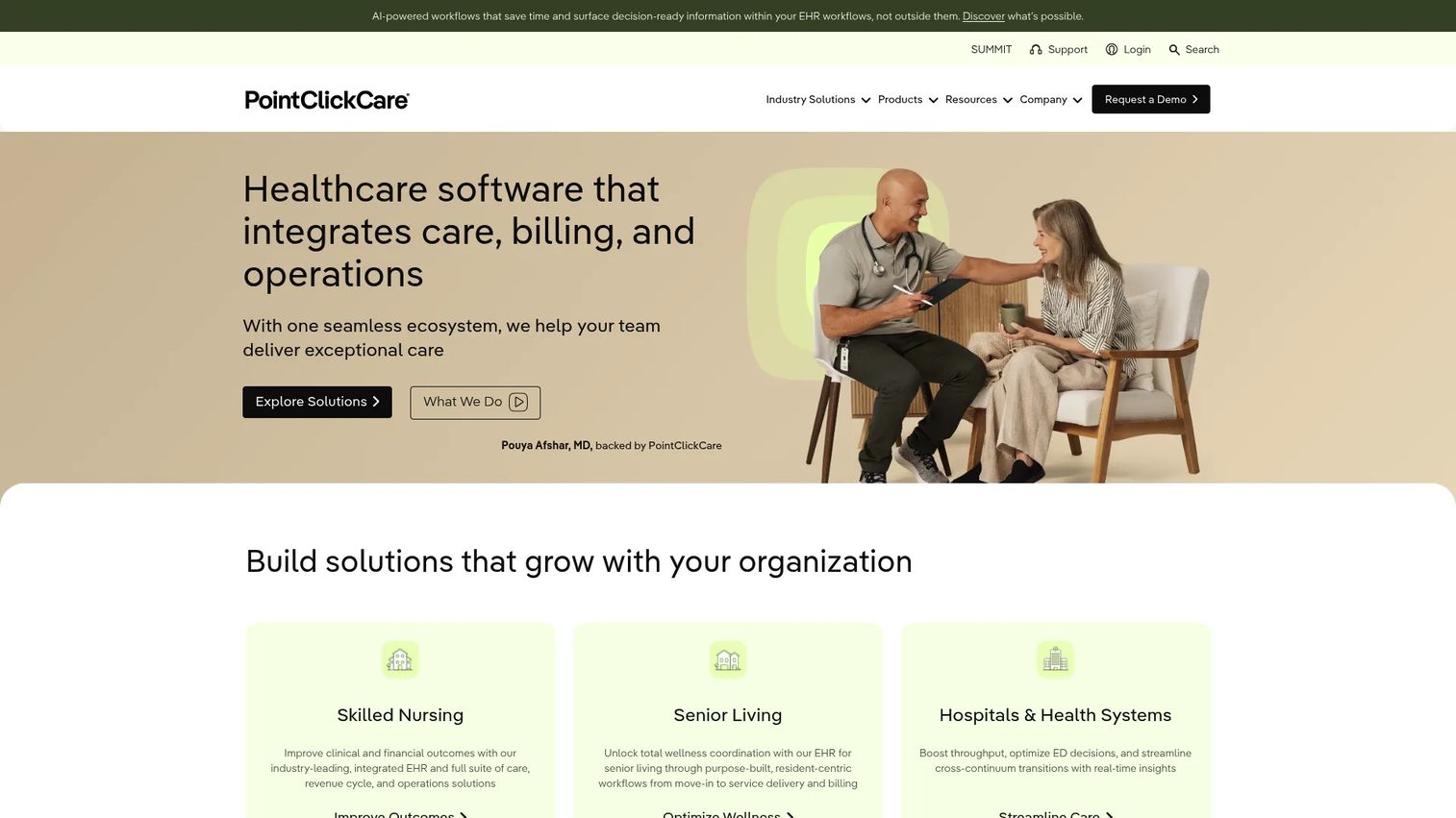
PointClickCare provides cloud software for skilled nursing, senior living, and post acute healthcare organizations. Its coverage includes clinical records, medication management, financial processes, care coordination, and operational intelligence.
The breadth makes it relevant when several departments need to work from connected information. Facilities should map each required workflow to a specific product or module during evaluation.
Best for: Skilled nursing facilities and multisite operators seeking a broad post acute platform.
Key features
- Skilled nursing clinical platform
- Medication management and prescribing
- Mobile point of care documentation
- Financial and operational insights
- Care coordination intelligence
Why choose PointClickCare: Choose it when clinical, administrative, and financial teams need connected workflows. Plan for implementation, staff training, and integration work across departments.
PointClickCare pricing: Custom pricing. Ask sales to separate implementation, monthly service, integration, and facility costs.
G2 rating: 4.3/5.
2. MatrixCare Skilled Nursing Facility
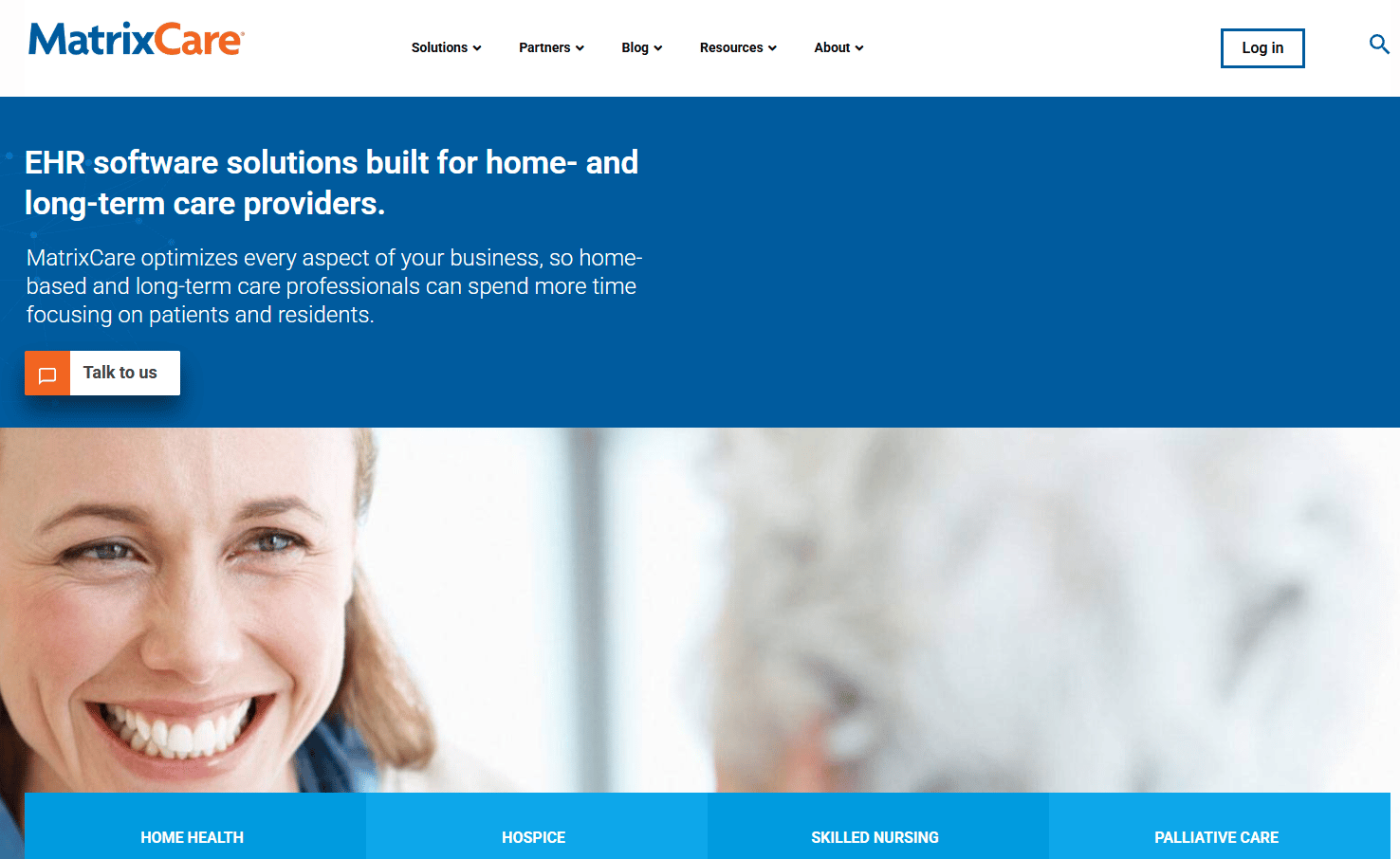
MatrixCare Skilled Nursing Facility connects clinical records with point of care, nutrition, revenue cycle, analytics, and partner workflows. It is designed for skilled nursing organizations rather than general medical practices.
Its EHR centered approach suits operators that want care documentation and business processes within a connected environment. Confirm which modules support your facility structure and reimbursement model.
Best for: Skilled nursing teams connecting resident records with administrative workflows.
Key features
- Clinical and resident records
- Point of care workflows
- Nutrition management
- Revenue cycle management
- Pharmacy and partner integrations
Why choose MatrixCare: It fits evaluations where resident documentation and financial processes need close alignment. Validate module coverage for MDS, PDPM, billing, and pharmacy connections.
MatrixCare pricing: Custom pricing. Request costs for facilities, modules, onboarding, users, and ongoing support.
3. myUnity
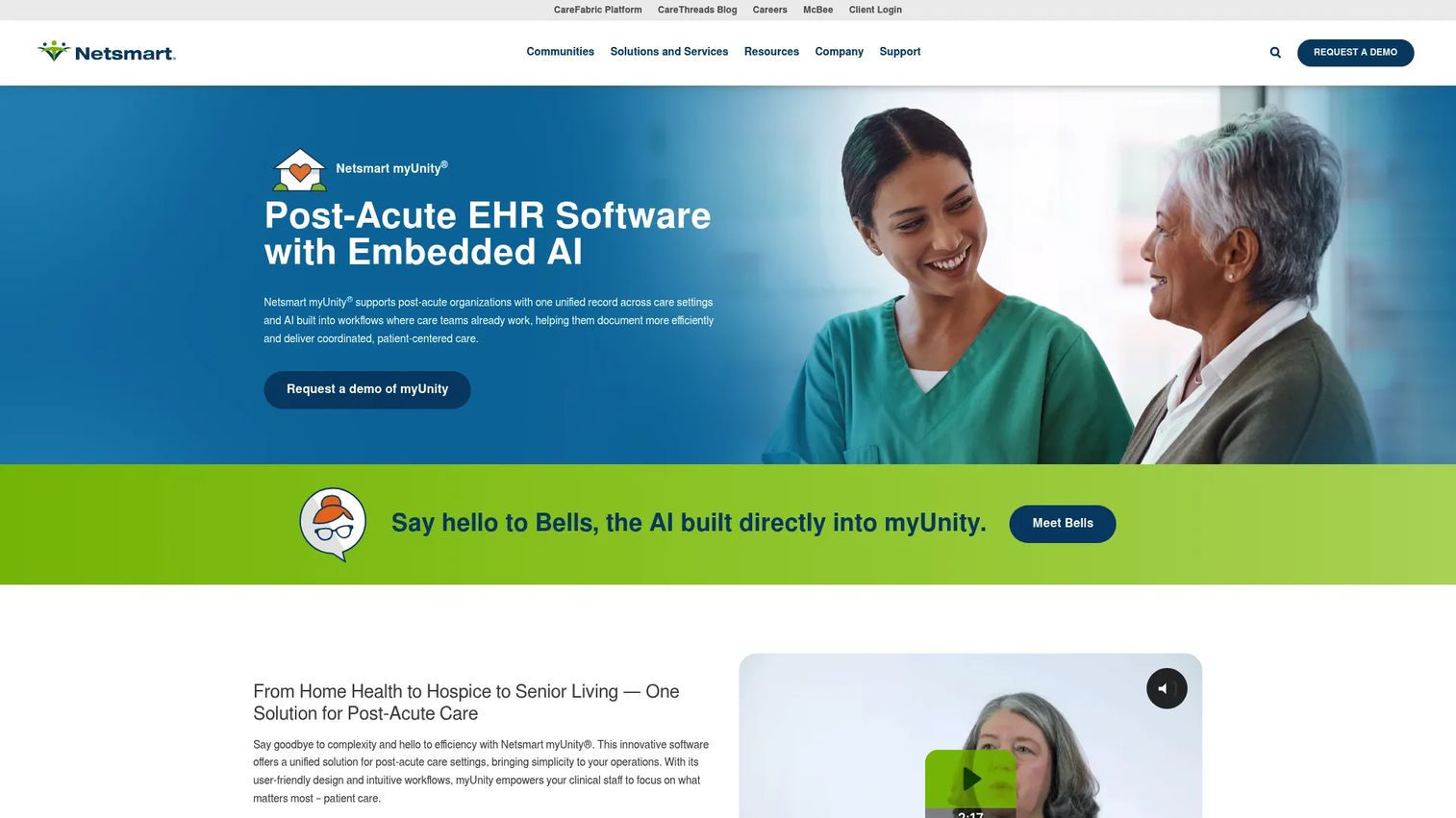
myUnity is a post acute EHR for organizations spanning senior living, home health, hospice, personal care, and related settings. It provides unified records, billing support, analytics, medication management, and care coordination.
The platform also connects with health information exchanges and hospital EHR systems. Near real time alerts can inform care teams about emergency department visits or hospitalizations.
Best for: Post acute organizations managing residents across multiple care settings.
Key features
- Unified post acute records
- Clinical workflow assistance
- Care transition alerts
- Integrated billing and prescribing
- Clinical and operational analytics
Why choose myUnity: Consider it when continuity across care settings matters more than a facility specific point tool. Review interoperability requirements with every external organization involved.
myUnity pricing: Custom pricing. Ask sales to separate licensing, implementation, training, and integration fees.
4. WellSky Long Term Care
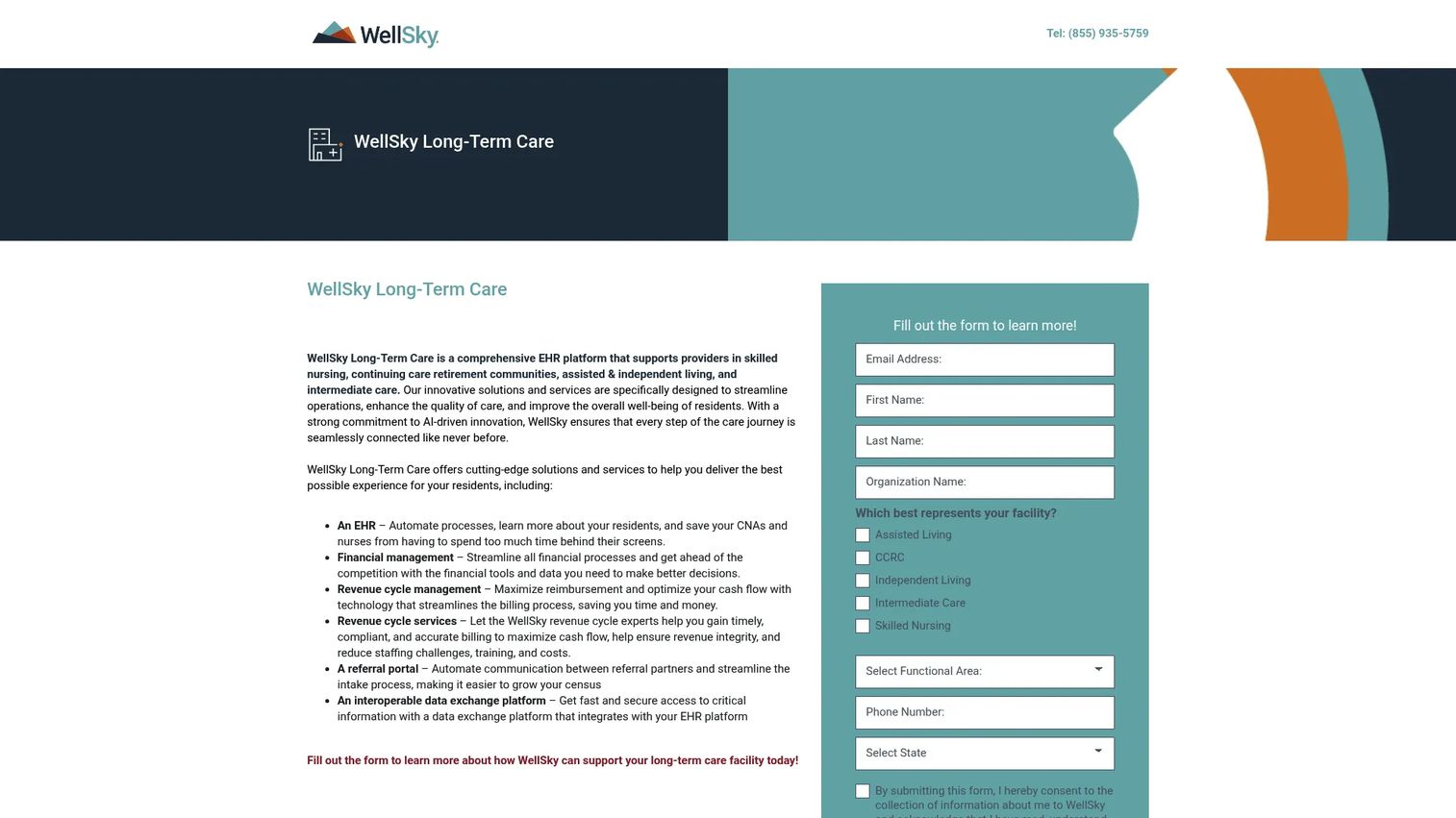
WellSky Long Term Care serves skilled nursing, continuing care communities, assisted living, and independent living providers. Its platform combines EHR functions with financial management, revenue cycle capabilities, referrals, and data exchange.
This option fits organizations evaluating long term care software within a broader healthcare technology portfolio. Buyers should identify which workflows belong to this product before comparing proposals.
Best for: Long term care providers seeking connected clinical and financial capabilities.
Key features
- Electronic health records
- Financial management
- Revenue cycle workflows
- Referral portal
- Interoperable data exchange
Why choose WellSky Long Term Care: Consider it when EHR and revenue cycle workflows share the same evaluation. Ask for a product level demonstration tied to your facility type.
WellSky Long Term Care pricing: Custom pricing. Request a module level breakdown with implementation and integration charges.
G2 rating: 3.5/5.
5. Net Health
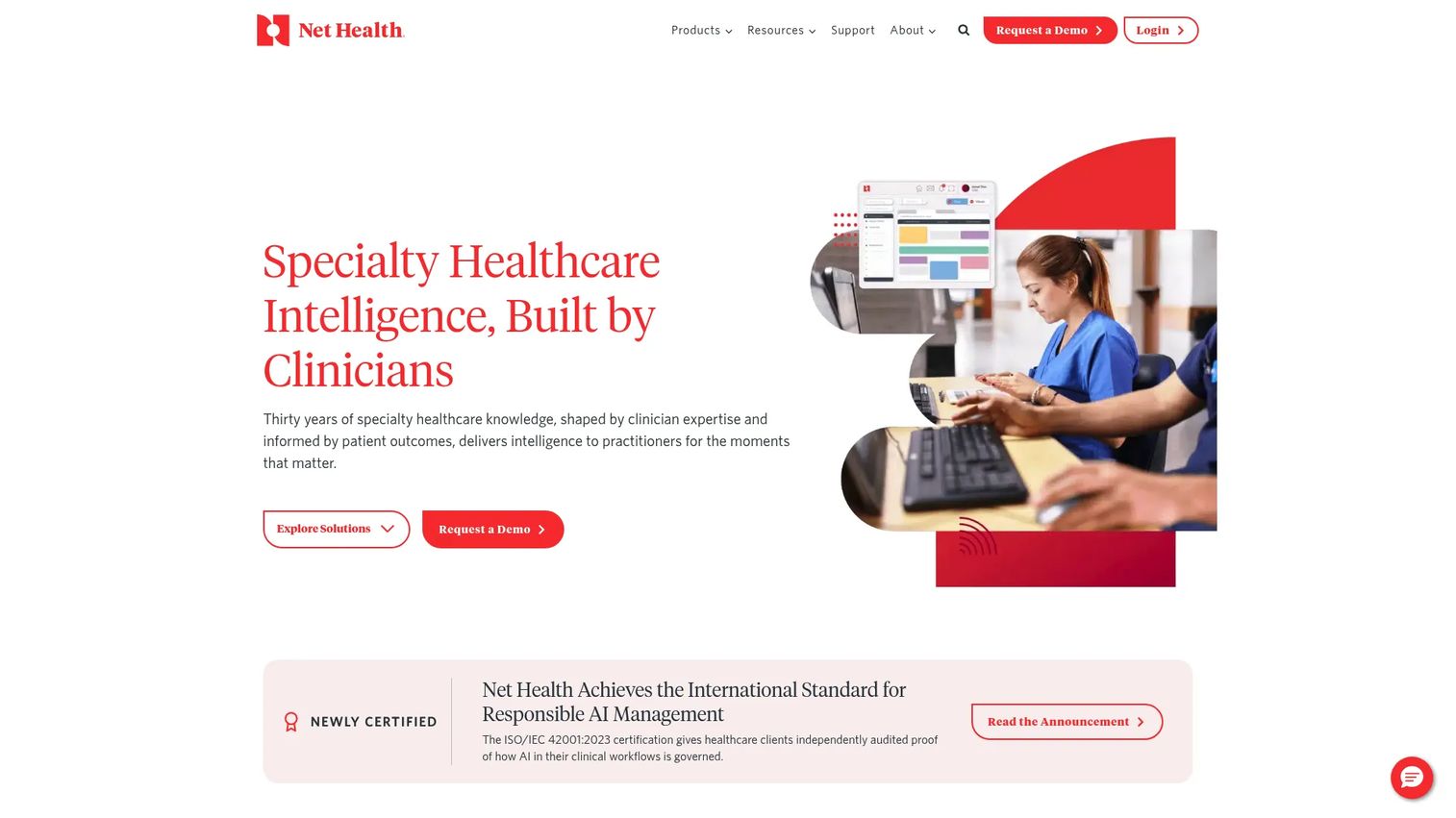
Net Health provides specialty healthcare software for rehabilitation therapy, wound care, occupational health, and skilled nursing. Its products cover clinical documentation, billing processes, patient engagement, imaging, and analytics.
This specialization matters when therapy or wound care represents a substantial part of facility operations. Buyers should decide whether Net Health will serve as a specialty layer or a core clinical system.
Best for: Facilities with significant therapy, rehabilitation, or wound care workflows.
Key features
- Specialty clinical documentation
- Therapy and wound workflows
- Billing and compliance support
- Clinical analytics
- Predictive wound imaging
Why choose Net Health: Evaluate it when specialty documentation requires deeper capabilities than a general resident record. Confirm how data moves into the facility’s main EHR.
Net Health pricing: TherapySource starts at $4 per user daily. TherapySource with FOTO Analytics costs $7 per user daily.
G2 rating: 4.5/5 for Net Health Employee Health, based on one review.
6. Aline
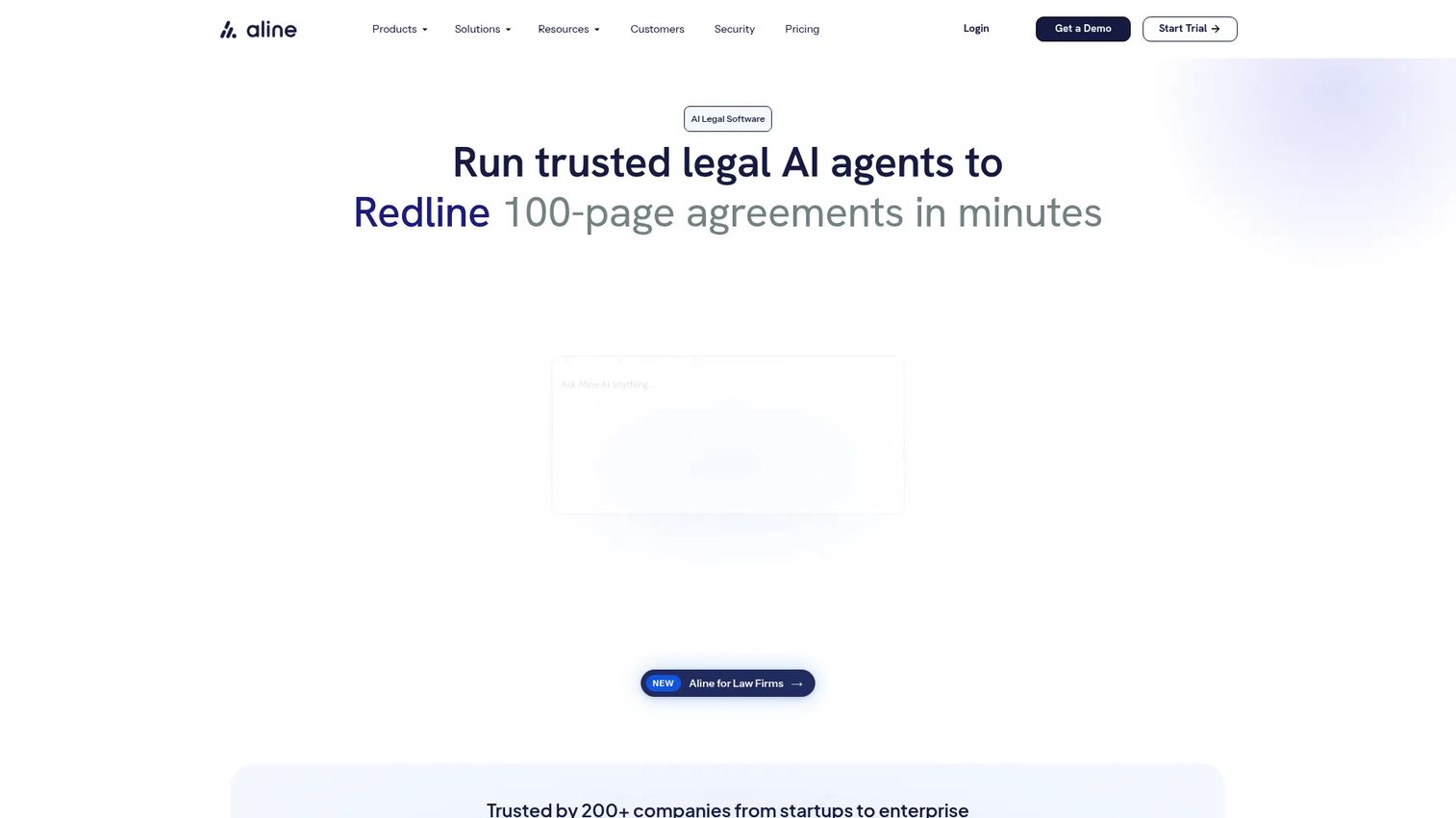
Aline at the supplied URL is legal contract software. It supports legal research, contract analysis, redlining, electronic signatures, approvals, and portfolio reporting.
The researched product does not match the senior living operating platform described in the original shortlist. Nursing home buyers should remove this listing unless a different vendor identity and URL are established.
Best for: In house legal teams managing contract review and approval workflows.
Key features
- AI legal research
- Contract analysis
- Playbook based redlining
- Approval workflows
- Electronic signatures
Why choose Aline: Choose this product for legal contract work, not nursing home management. It doesn’t belong in an EHR, resident care, staffing, or medication evaluation.
Aline pricing: Team pricing starts at $200 per full user monthly. Support users start at $50 monthly.
G2 rating: 4.6/5.
7. EHR 24/7
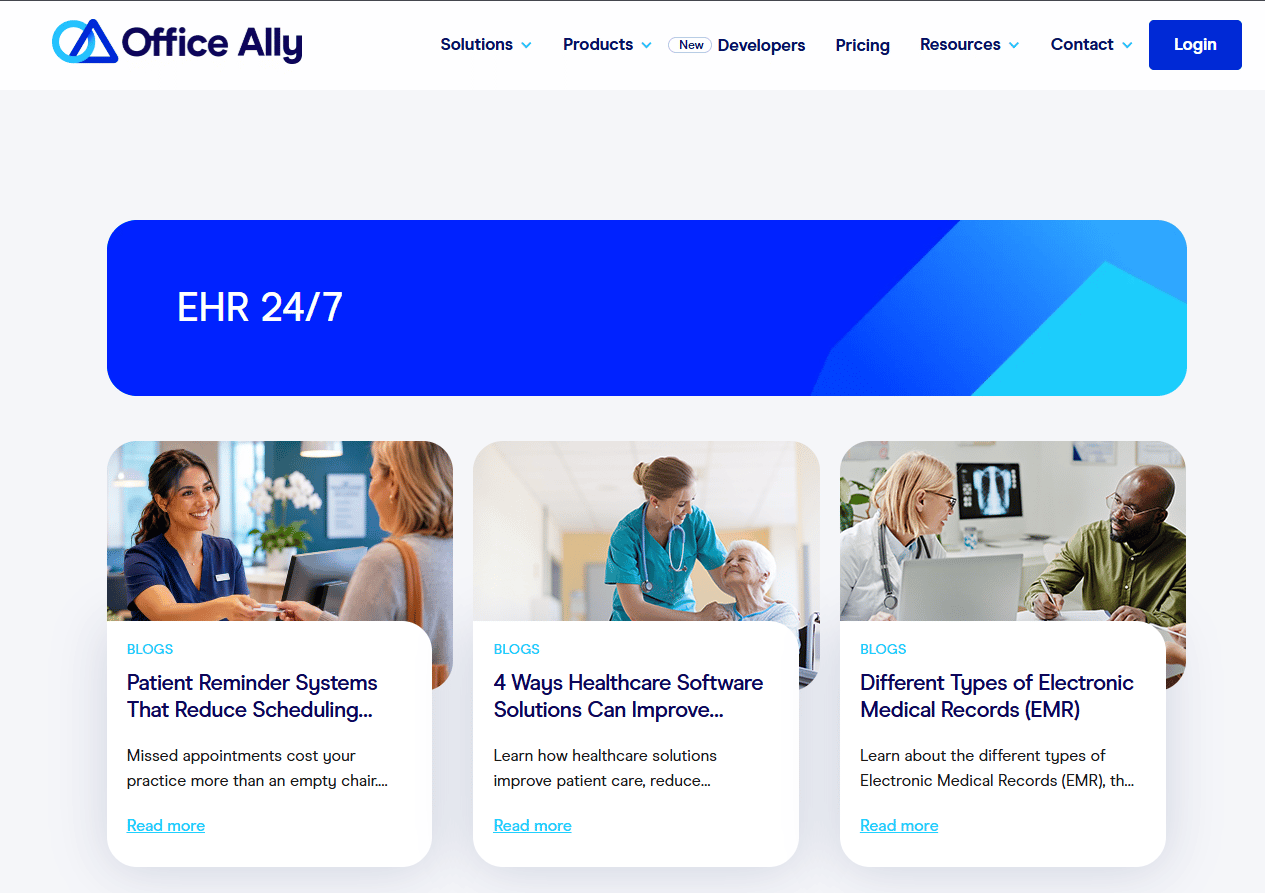
EHR 24/7 is a web based electronic health record product from Office Ally. It supports clinical charting, patient records, scheduling, billing, laboratory interfaces, and electronic prescribing.
Its verified positioning targets small and medium medical practices. Nursing homes should assess long term care requirements carefully before treating it as skilled nursing facility software.
Best for: Smaller medical practices needing an integrated general EHR workflow.
Key features
- Customizable clinical charting
- Patient document management
- Laboratory and HIE interfaces
- Electronic prescribing
- Scheduling and billing
Why choose EHR 24/7: The accessible monthly price may suit smaller practices. Nursing home buyers must validate MDS, PDPM, care planning, eMAR, and long term care billing capabilities.
EHR 24/7 pricing: $44.95 per provider monthly. The plan includes Service Center and Practice Mate.
8. StoriiCare
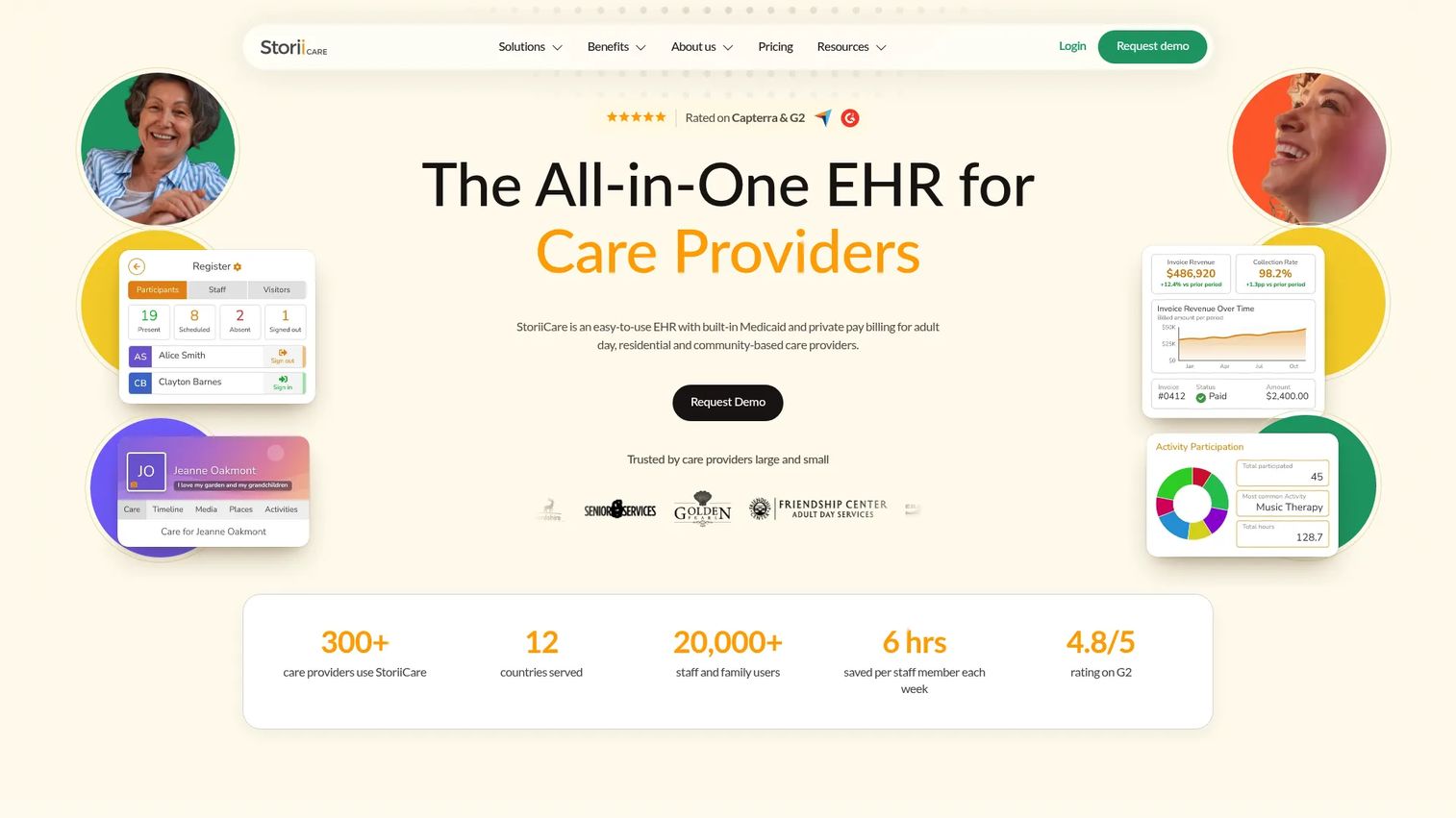
StoriiCare combines electronic care records with activity planning, billing, incident reporting, and family connectivity. It serves adult day programs, residential care, assisted living, memory care, and community based providers.
Its family portal gives relatives a defined channel for updates. That structure can reduce repeated status requests while supporting resident engagement.
Best for: Community care providers needing care records and family visibility.
Key features
- Digital care plans
- eMAR and attendance tracking
- Progress and incident notes
- Billing and invoicing
- Family connectivity portal
Why choose StoriiCare: It fits facilities where care recording and family engagement share the same bottleneck. Skilled nursing operators should validate MDS and reimbursement depth.
StoriiCare pricing: Custom pricing based on active clients and average daily participants. Staff user access is unlimited.
G2 rating: 4.7/5.
9. myResidentCare
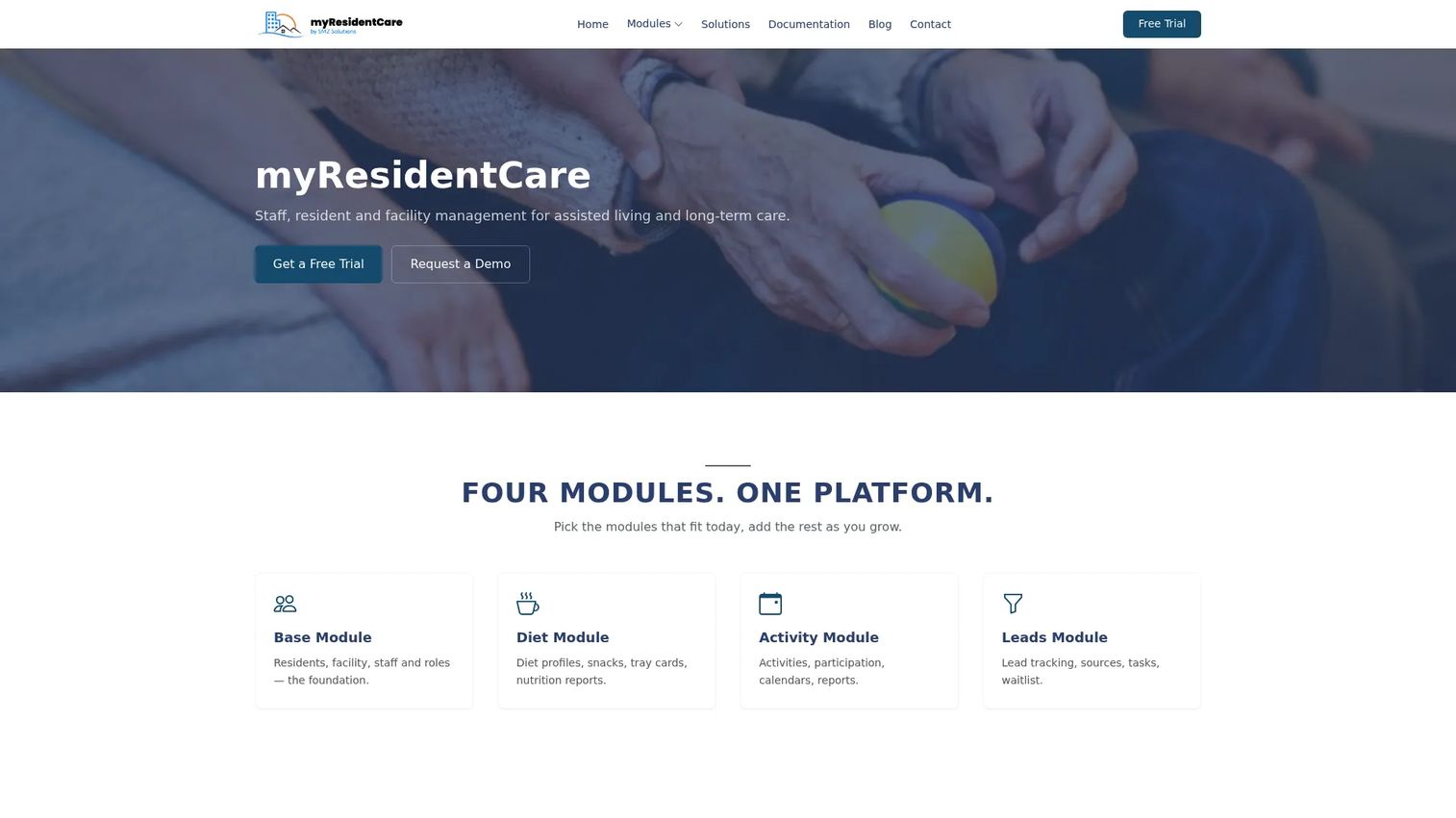
myResidentCare serves assisted living, board and care, and smaller long term care facilities. Its modules cover resident records, dietary needs, activities, waitlists, and lead management.
The product emphasizes practical daily records rather than a broad enterprise EHR. Smaller operators can evaluate modules against their immediate administrative workload.
Best for: Smaller residential care settings needing structured resident operations.
Key features
- Resident records and audit trails
- Diet and nutrition tracking
- Activity participation records
- Lead and waitlist management
- Multifacility reporting options
Why choose myResidentCare: Consider it when resident, dietary, and activity records are the priority. Verify clinical documentation and billing requirements before purchase.
myResidentCare pricing: The Leads and Waitlist module has a free plan. Paid plans cost $25 or $75 monthly.
10. Eldermark
Eldermark connects senior living EHR, eMAR, billing, operations, customer relationship management, and analytics. Assessments and care plans feed clinical documentation, while medication tools support administration records.
Its financial functions include payment processing and revenue visibility. The combined scope suits senior living operators looking beyond a single point tool.
Best for: Senior living providers connecting clinical, medication, and financial workflows.
Key features
- Connected assessments and care plans
- Clinical documentation
- eMAR and medication management
- Billing and payment processing
- Operational analytics
Why choose Eldermark: Choose it when care, medication, and billing data need stronger connections. Confirm skilled nursing requirements for MDS and PDPM during evaluation.
Eldermark pricing: Custom pricing. Ask for module, community, implementation, integration, and support costs.
G2 rating: 4.0/5.
11. SHP for Skilled Nursing
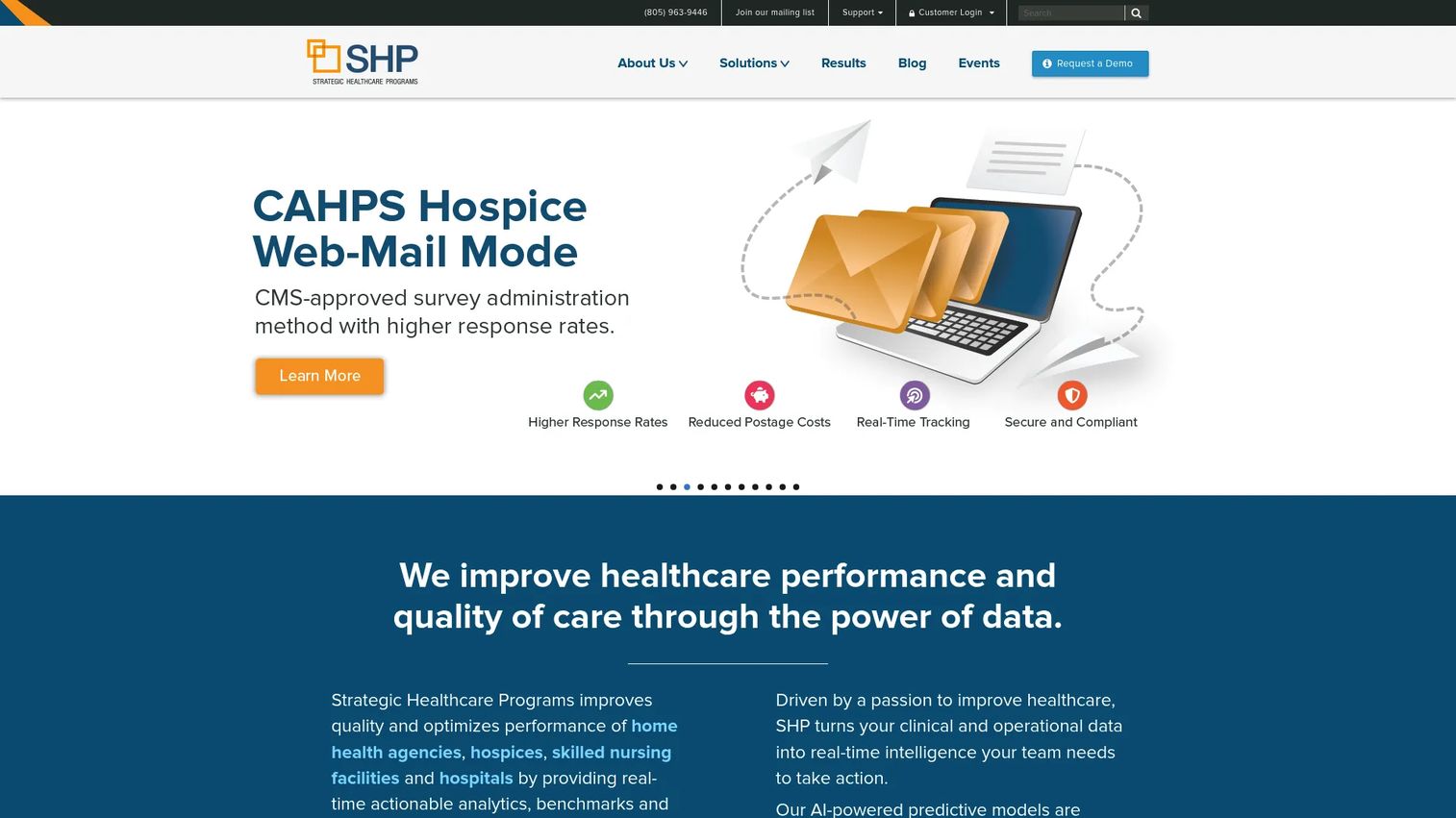
SHP for Skilled Nursing is an analytics product rather than a complete nursing home EHR. It focuses on MDS error detection, Five Star management, PBJ reporting, survey preparation, and performance analysis.
Automatic EHR interfaces bring data into its reporting environment. Facilities can use the resulting insights alongside their existing clinical platform.
Best for: Skilled nursing teams improving MDS accuracy and quality visibility.
Key features
- MDS error detection
- Five Star benchmarking
- PBJ Manager
- Survey preparation analytics
- CASPER reporting support
Why choose SHP for Skilled Nursing: Choose it when your core records system lacks actionable quality analytics. It complements an EHR rather than replacing resident charting.
SHP for Skilled Nursing pricing: Custom pricing. Ask for facility, reporting module, onboarding, and data interface costs.
12. Smartlinx
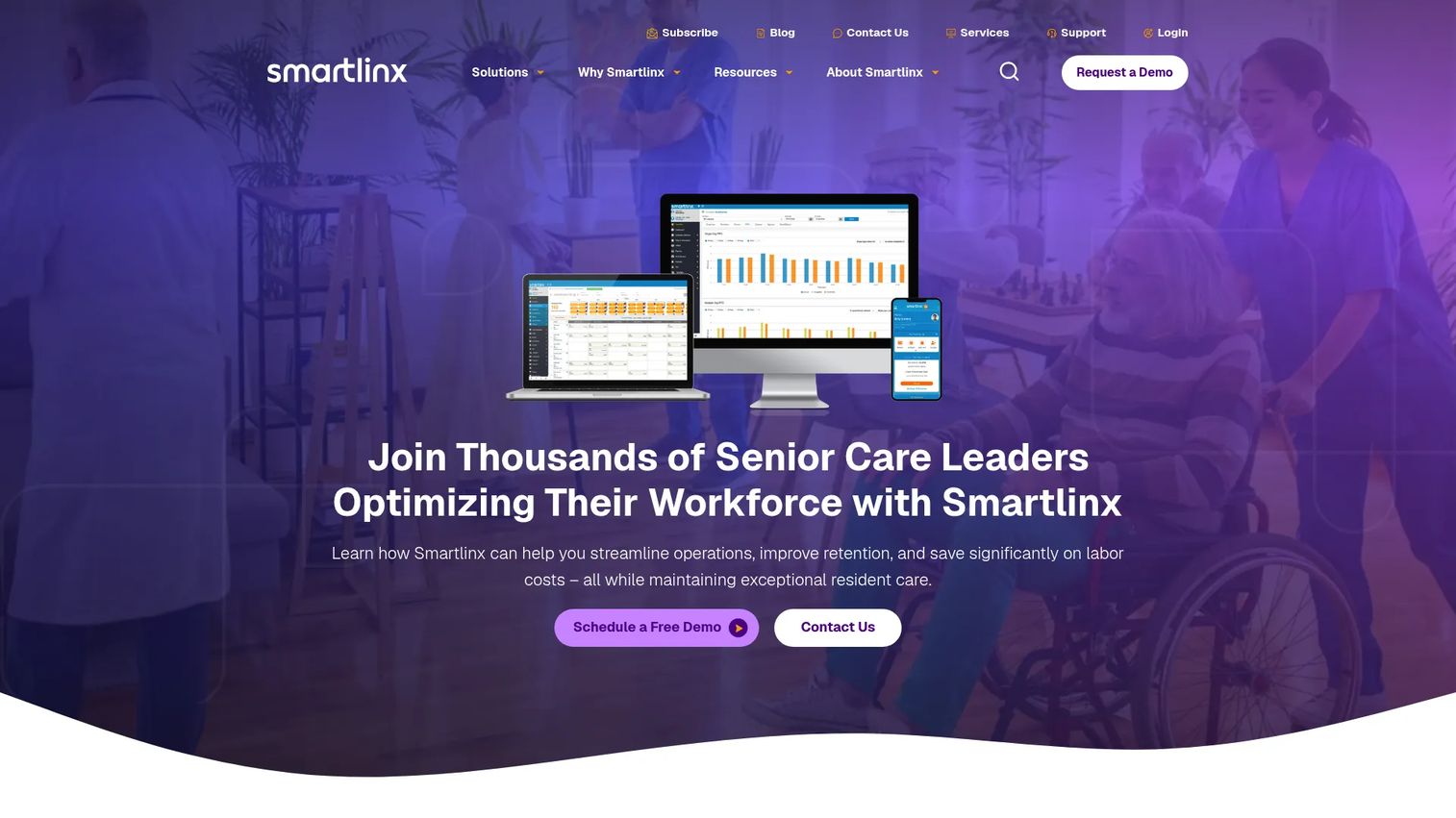
Smartlinx provides workforce management and HR software for senior care organizations. It covers scheduling, time and attendance, payroll, recruiting, agency staff, and workforce analytics.
The platform also supports PBJ reporting and a CMS Five Star Predictor. These capabilities make it relevant when staffing data and compliance reporting drive the purchase.
Best for: Facilities dealing with scheduling gaps, agency use, and labor visibility.
Key features
- Employee scheduling
- Time and attendance
- Payroll and HR
- PBJ reporting
- Agency staff management
Why choose Smartlinx: It addresses nursing home staffing software requirements rather than resident charting. Confirm connections with payroll and clinical systems before rollout.
Smartlinx pricing: Custom pricing. Request costs for employees, modules, implementation, and payroll integrations.
G2 rating: 3.8/5.
13. OnShift
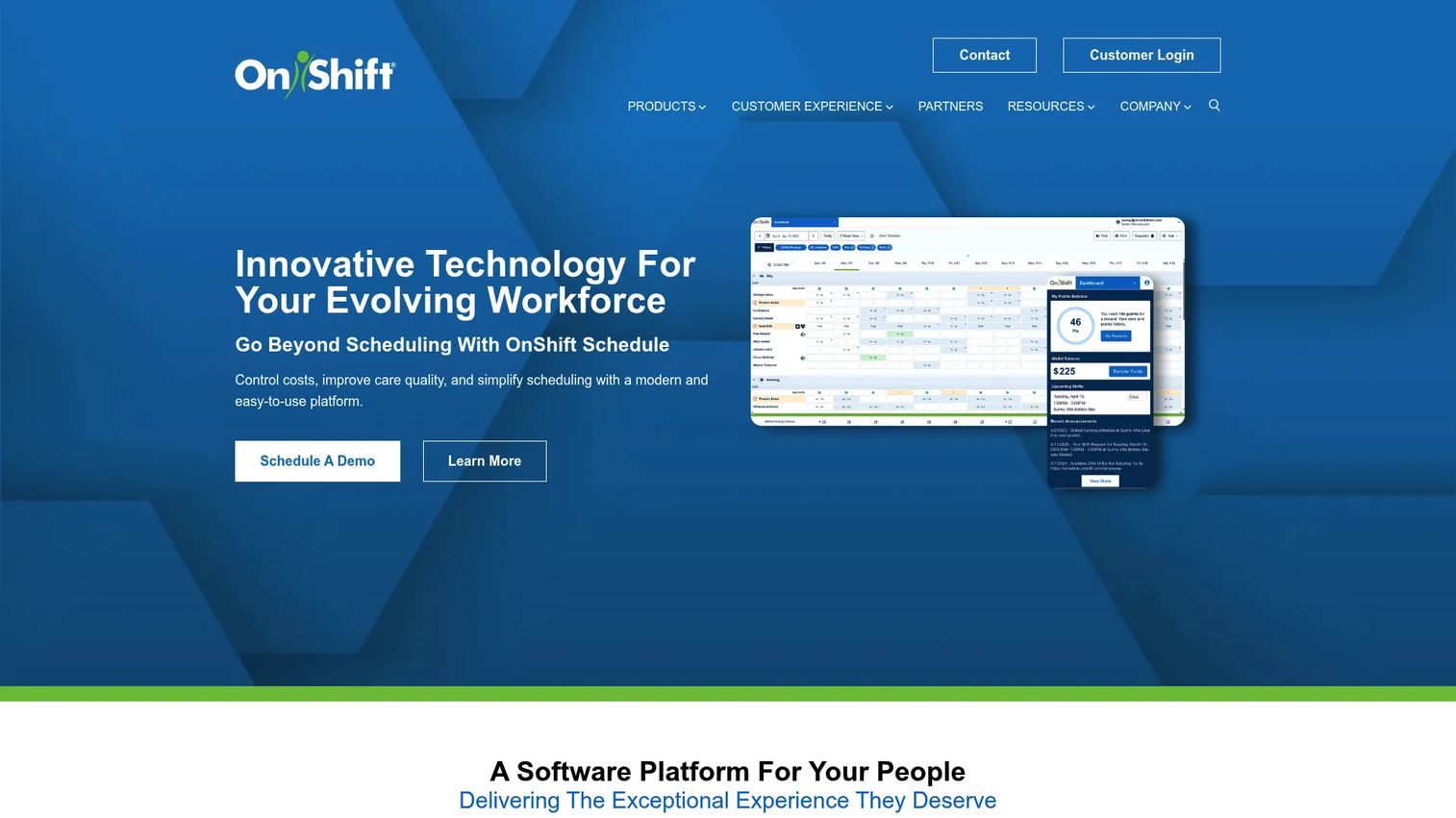
OnShift provides workforce software for long term care and senior living providers. Its coverage includes hiring, scheduling, labor management, staff communication, engagement, and PBJ reporting.
Mobile access gives employees a route into scheduling and communication workflows. Managers can monitor labor and engagement through reporting tools.
Best for: Senior care operators prioritizing scheduling and workforce engagement.
Key features
- Workforce scheduling
- Overtime monitoring
- Employee communication
- Hiring and onboarding
- PBJ reporting
Why choose OnShift: Consider it when workforce pressure creates the largest operational problem. It should connect with your payroll, timekeeping, and clinical applications.
OnShift pricing: Custom pricing. Ask for employee, scheduling, engagement, implementation, and integration costs.
G2 rating: 4.5/5.
14. MedRight
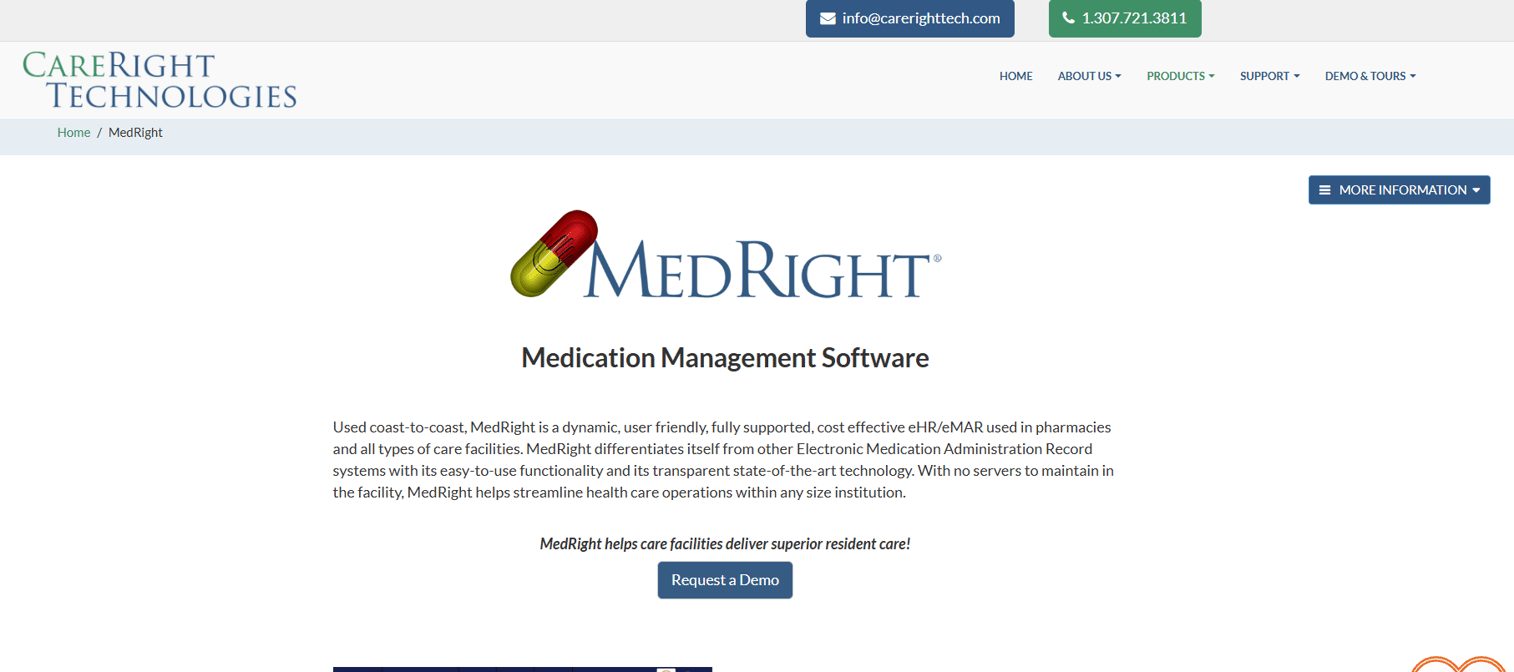
MedRight provides electronic medication administration and care documentation for group homes and assisted living facilities. Its capabilities include eMAR, care plans, ADLs, assessments, narcotic logs, scheduling, and alerts.
Medication focused coverage makes it relevant when med pass documentation is the central problem. Buyers should verify its fit with their pharmacy and core clinical record.
Best for: Group homes and assisted living providers improving medication workflows.
Key features
- Electronic medication administration
- Electronic charting
- Care plans and assessments
- Narcotic logs
- Alerts and trend monitoring
Why choose MedRight: Evaluate it when medication administration requires stronger control and documentation. Confirm pharmacy connections and resident data exchange before implementation.
MedRight pricing: Custom pricing. Ask for resident, medication, pharmacy, onboarding, and training costs.
15. InTouchLink
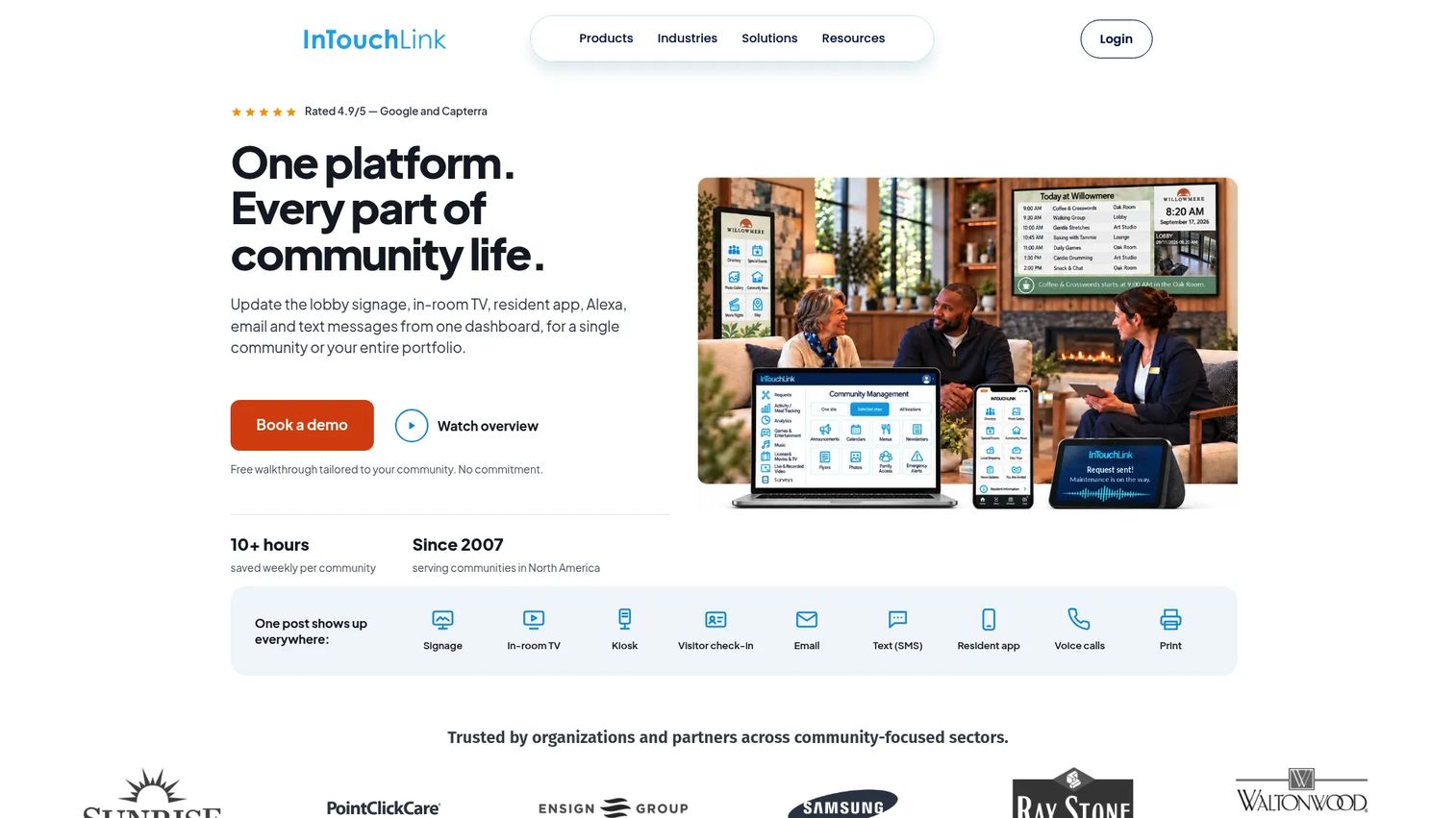
InTouchLink is a communication and resident engagement platform for senior living communities. It combines family portals, digital signage, messaging, activity calendars, dining information, visitor check in, and service requests.
Facilities can use these channels to publish routine information before families call staff. Multisite reporting supports operators managing communication across several communities.
Best for: Senior living communities needing a dedicated engagement and communication layer.
Key features
- Resident and family portal
- Digital signage
- Activity calendars and RSVPs
- Dining communication
- Visitor and service requests
Why choose InTouchLink: Choose it when repeated updates and scattered content overwhelm staff. It supports communication but doesn’t replace clinical resident records software.
InTouchLink pricing: Custom pricing across Essential, Community, Community Plus, and Innovation plans. Community size and add ons affect the quote.
16. Cliniconex
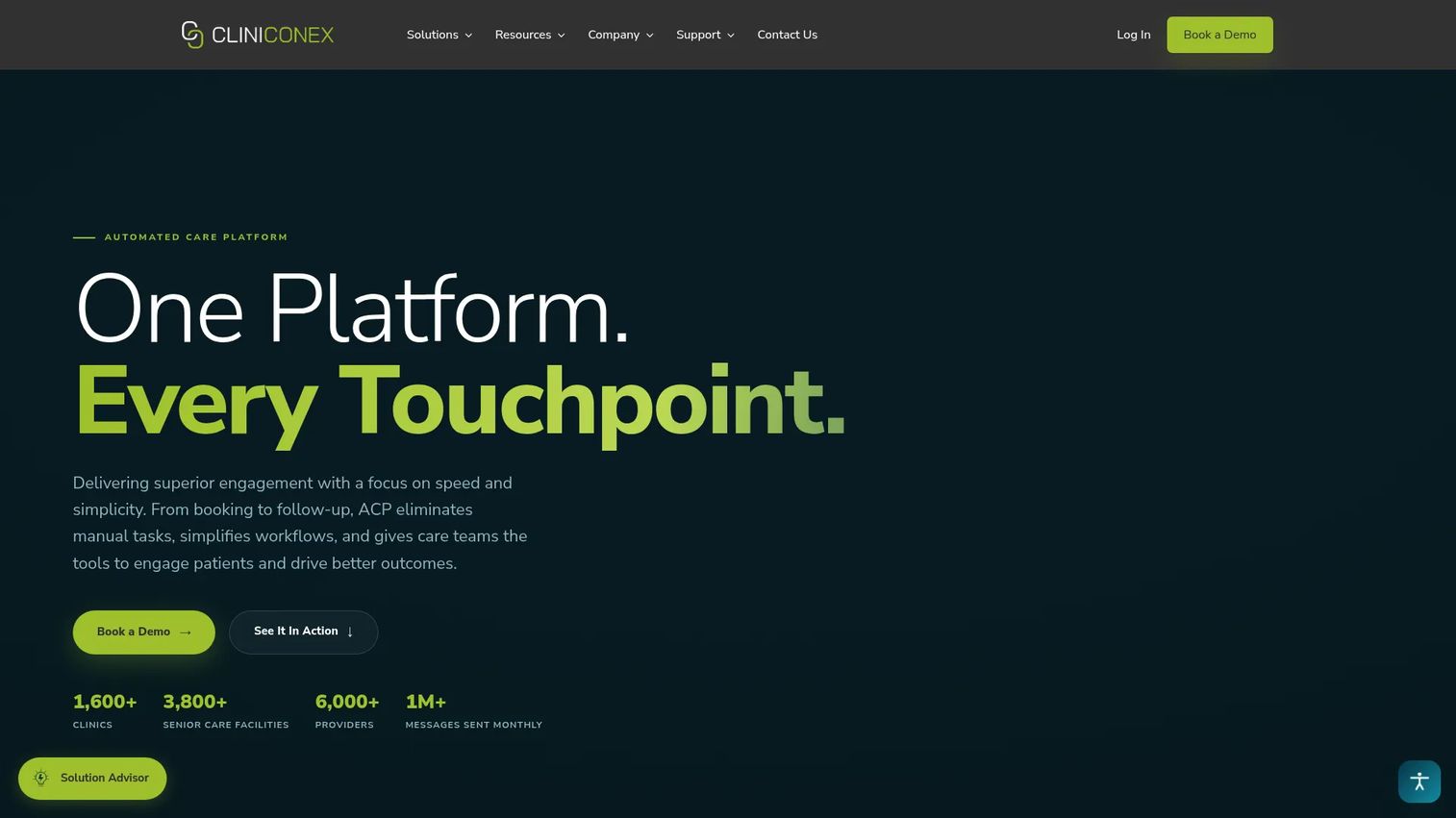
Cliniconex automates voice, text, and email communication for healthcare organizations. It supports reminders, online booking, digital forms, surveys, and secure two way messaging.
EHR connections and audit trails help teams manage outreach within existing workflows. Automated updates can reduce manual calls to residents, families, and staff.
Best for: Healthcare organizations with high communication and reminder volume.
Key features
- Automated voice and text
- Email reminders
- Secure two way messaging
- Digital forms and surveys
- EHR connected audit trails
Why choose Cliniconex: Use it when manual outreach consumes staff time. Map each message type to a clear owner and escalation path before launch.
Cliniconex pricing: Appointment reminders start at $35 monthly for 100 appointments. Higher volumes cost $70 to $350 monthly.
17. eMAR
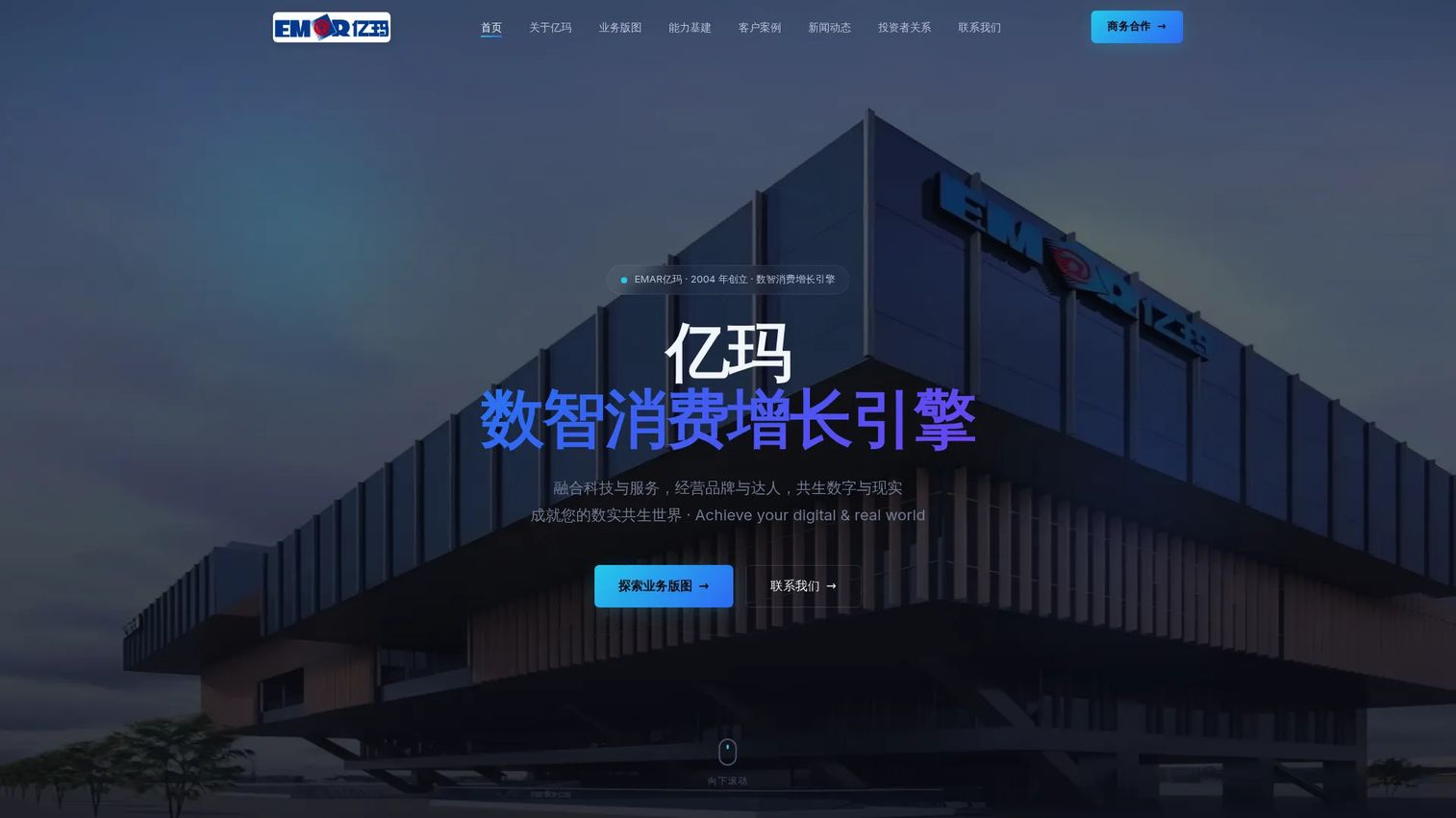
eMAR at the supplied URL is Beijing Emar Online Technology, a digital marketing and retail services company. Its documented offerings include information feed marketing, livestream marketing, and extended reality marketing.
This vendor isn’t electronic medication administration record software. Facilities should remove it from medication evaluations and identify the intended healthcare vendor before proceeding.
Best for: Businesses seeking digital marketing services in China.
Key features
- Digital marketing services
- Digital retail services
- Information feed marketing
- Livestream marketing
- Extended reality marketing
Why choose eMAR: This researched vendor doesn’t fit nursing home operations. Search by the complete medication software vendor name to avoid an identity mismatch.
eMAR pricing: Custom pricing. No healthcare software plans were identified for this vendor.
Considerations when choosing nursing home software
Start with the workflow that is breaking first
Rank operational problems before vendors. A facility missing MDS checkpoints needs different capabilities from one overwhelmed by call outs or family updates.
Define one measurable target for the pilot. Examples include documentation time, duplicate calls, open shifts, or claim delays.
Separate full platforms from point tools
Nursing home EHR software can act as the core resident system. Scheduling, communication, analytics, and eMAR products usually address narrower workflows.
Document which system owns each data field. This prevents duplicate records and unclear responsibility after implementation.
Verify security controls and audit history
Ask every vendor about business associate agreements, role based permissions, audit logs, encryption, retention, and hosting. Review the answers with your security and legal teams.
Software supports HIPAA sensitive workflows. It doesn’t make a facility compliant by itself.
Check integrations before the pilot
Request documentation for pharmacy, laboratory, payroll, accounting, claims, billing, EHR, and communication connections. A logo on an integration page doesn’t explain data direction or update frequency.
Test the highest risk connection during the pilot. Don’t postpone it until facility wide rollout.
Plan for staff adoption
Evaluate the product during real work, including med passes, charting, shift changes, and family outreach. A clean administrator dashboard means little if frontline staff create workarounds.
Assign super users and define escalation routes. Track support requests during the pilot to identify confusing workflows early.
Conclusion
The best nursing home software depends on the workflow your facility needs to fix first.
PointClickCare, MatrixCare, myUnity, and WellSky belong in broad platform evaluations. Compare their module coverage and integration requirements before discussing price.
Smartlinx and OnShift address workforce pressure. StoriiCare, InTouchLink, and Cliniconex focus on communication or engagement from different angles.
MedRight and Eldermark support medication administration workflows. SHP adds MDS, quality, and performance analytics to an existing clinical stack.
Build your shortlist around one primary system of record. Add one or two point tools only when they solve a defined gap.
During vendor evaluation, request a line item quote and an integration map. Then pilot one workflow in one unit or facility before expanding.
Start your journey with Guideflow today!
FAQs
Nursing home software helps long term care and skilled nursing facilities manage daily care and administrative work. It can cover resident records, care plans, charting, medication, staffing, billing, communication, and reporting.
The category includes broad EHR platforms and focused point tools. Buyers should identify which system will own the resident record before adding specialized products.
PointClickCare, MatrixCare, myUnity, and WellSky are useful starting points for broad skilled nursing platform evaluations. The best fit depends on facility structure, required modules, implementation capacity, and existing integrations.
Facilities focused on quality analytics may also evaluate SHP. Workforce problems may require Smartlinx or OnShift alongside the clinical platform.
Many long term care vendors use custom pricing. The quote may reflect facility count, resident volume, modules, users, implementation, training, support, and integrations.
Request separate totals for the first contract year and each renewal year. Include migration, interface, hardware, and implementation charges in the comparison.
Some focused products publish prices. EHR 24/7 costs $44.95 per provider monthly, while Net Health TherapySource starts at $4 per user daily.
Core requirements often include resident records, care plans, nursing home charting software, access controls, reporting, and external system connections.
Skilled nursing facilities may also need MDS and PDPM support. Other common requirements include eMAR, staffing, PBJ reporting, billing, family communication, and quality analytics.
Build the feature list from observed workflows. Avoid buying modules without a named owner and measurable use case.
Skilled nursing software often requires deeper clinical documentation, assessment, reimbursement, medication, and billing capabilities. MDS and PDPM support may be central to the evaluation.
Assisted living software often gives more attention to resident tasks, engagement, community operations, and family communication. Some platforms serve both settings through separate products or modules.
Confirm the vendor’s fit for your license type. Similar marketing language doesn’t guarantee equivalent clinical depth.
Nursing homes handle protected health information, so their software must support secure healthcare workflows. Evaluate business associate agreements, permissions, audit logs, encryption, hosting, retention, and incident procedures.
No application makes a facility compliant on its own. Compliance also depends on configuration, staff practices, access management, and organizational policies.
Have security and legal teams review vendor documentation before signing. This article provides buying guidance, not legal advice.
Choose a full EHR when resident records, clinical documentation, care plans, medication data, and financial processes need a core system.
Add point tools when a defined workflow needs deeper support. Common examples include scheduling, MDS analytics, family communication, or medication administration.
Keep the number of systems manageable. Each added product creates another integration, login, support path, and data ownership decision.
Pilot one important workflow within a single unit or facility. Include frontline users, a manager, an administrator, and the team responsible for integrations.
Measure documentation time, staff adoption, duplicate calls, missed handoffs, billing delays, and vendor response times. Record the baseline before the pilot starts.
Test access controls and data exchange during the trial. Finish with a written decision covering usability, support demand, implementation risk, and expected operating cost.