Your organic report looks healthy, but mobile landing pages aren’t producing the leads you expected. Checking the same keywords from your laptop doesn’t explain the gap.
A mobile rank tracker gives you a different view of search visibility. Mobile rank tracking helps separate device differences from location changes and shifts in the search results themselves.
StatCounter reported that mobile phones generated 58.5% of worldwide web page views in 2025. That measures browsing rather than search demand, but it makes mobile visibility difficult to ignore.
For growth marketers, the practical question is whether another subscription will improve decisions or create another reporting tab. Mobile-first SEO needs evidence you can connect to landing-page performance and pipeline.
Start by asking what your current reporting misses. You need to understand which mobile Google rankings changed, where the change happened, and whether it affected acquisition.
What's inside
This guide compares seven options for marketers responsible for website search visibility or app acquisition. Those are different jobs, and the distinction matters before you buy.
The evaluation focuses on four areas:
- Tracking scope: Website rankings, device comparisons, and app-store visibility
- Location coverage: Regional monitoring and local campaign requirements
- Visibility evidence: SERP features, competitor comparisons, and historical reporting
- Operating cost: Subscription pricing, credit purchases, and reporting work
You’ll find starting prices and available G2 ratings alongside each tool’s best-fit workflow. Product details come from vendor documentation and the supplied November 2026 research.
The aim is a defensible shortlist, with clear distinctions between ongoing monitoring and occasional checks.
TL;DR
- Best starting point for broader SEO reporting: Nightwatch combines search-rank tracking with AI visibility monitoring and agency reporting capabilities.
- Best for detailed mobile visibility: Infigrowth Mobile Rank Tracker documents device-specific tracking alongside AI Overviews and SERP screenshots.
- Best for budget-conscious ongoing monitoring: Serpotrack offers daily keyword tracking and ranking history, starting at €1.30 per month.
- Best for occasional checks: Search Rank Tracker uses nonexpiring credits rather than a recurring subscription.
- Best for local campaigns: Local Rank Tracker combines area-based ranking reports with Google Business Profile workflows.
- Best for app marketers: App Rank Tracker covers app-store discovery; Rank Tracker: SEO, ASO, SERPTrack also supports website monitoring from an iPhone or iPad.
What is mobile rank tracker software?
Mobile rank tracker software monitors where a website ranks in mobile search results for specific keywords, locations, devices, and SERP features over time.
Mobile SERPs are the search engine results pages shown to people searching on mobile devices. Tracking mobile rankings means checking defined search conditions repeatedly, then recording changes.
A mobile rank checker usually answers an immediate question about a keyword. An ongoing tracker builds mobile ranking history that supports campaign reviews and comparisons across reporting periods.
The distinction matters when someone sends a screenshot saying your page has disappeared. A single observation gives you a starting point. Historical monitoring helps establish whether the change extends beyond that search.
Look for these capabilities according to your reporting requirements:
- Position monitoring: Keyword rankings and the URLs appearing for them
- Device comparison: Mobile versus desktop results under comparable conditions
- Geographic targeting: Country, city, or more specific local coverage
- SERP feature monitoring: Visibility around Local Packs and other search modules
- Historical evidence: Ranking trends and, where supported, SERP screenshots
- Operational reporting: Alerts, exports, or scheduled delivery
These capabilities aren’t universal. For example, AI Overview tracking and screenshot archives require explicit product support.
Mobile keyword rankings should also sit alongside business performance. Use them to identify pages worth investigating, then review landing-page traffic and conversion outcomes. Avoid treating a ranking increase as proof that pipeline improved.
For mobile-first SEO, organize monitoring around pages that support acquisition. Separate branded searches from non-brand opportunities, and keep local campaigns distinct from national reporting.
The useful output is a prioritized question, such as whether a service page lost visibility in an important market. A dashboard full of movement becomes valuable when someone can decide what to investigate next.
Website monitoring also differs from app rank tracking. The former measures search visibility for web pages; ASO rank tracking measures discovery within app stores.
An application running on a phone can support either workflow. Check what it measures, rather than assuming its interface tells you its purpose.
When to use a mobile rank tracker
Compare mobile and desktop rankings
Use device comparisons when mobile acquisition looks different from the broader organic report. Keep keywords and locations consistent before interpreting the gap.
Separate numerical ranking movement from changes in screen space. A Local Pack or AI Overview can change how prominently an organic result appears.
Investigate the affected page before deciding that content needs rewriting.
Monitor local mobile visibility
Track local mobile rankings when customers search within specific service areas. A national average won’t answer whether an individual branch appears where its customers search.
Agencies and retailers should define the locations that matter before building reports. For a franchise, that means reviewing branch-level visibility rather than presenting one blended number.
Ask vendors to demonstrate the geographic precision your campaign requires.
Catch ranking movement before traffic drops
Scheduled monitoring helps you notice changes without repeating manual searches. Use rank movement alerts, where supported, to prioritize commercial pages and important keyword groups.
Historical evidence can guide an investigation, but movement alone doesn’t establish the cause. Compare competitor changes and SERP layouts before attributing a drop to technical work.
Assign an owner to each alert category so reporting produces action rather than another inbox notification.
Mobile rank tracker software comparison
The right mobile rank tracker depends on what you need to measure. Website search results, local visibility, and app-store discovery require different evidence.
Use this table to narrow the field, then test the relevant workflow. A mobile rank checker suited to occasional investigations may have a different cost structure from daily campaign monitoring.
The products also overlap. App Rank Tracker is a specialized offering from Search Rank Tracker, rather than an unrelated vendor. The separate iOS application in the final row serves a different interface preference.
For mobile ranking positions, prioritize documented device support over broad SEO feature counts. The prices below reflect the supplied November 2026 vendor research; rating qualifications appear in the corresponding entries.
| # | Product | Best for | Key differentiator | Pricing | G2 rating |
|---|---|---|---|---|---|
| 1 | Nightwatch | Broader SEO and agency reporting | Search rankings alongside AI visibility and reporting | From €79/month, billed yearly | 4.8/5, vendor cites G2 |
| 2 | Infigrowth Mobile Rank Tracker | Device-specific visibility reporting | Mobile devices, AI Overviews, and SERP screenshots | Free option; Starter $40/month | 4.8/5 |
| 3 | Serpotrack | Budget-conscious keyword monitoring | Daily tracking with full ranking history | From €1.30/month, excluding Dutch sales tax | N/A |
| 4 | Search Rank Tracker | Occasional multi-platform checks | Nonexpiring credit packs | From $5 for 500 credits | N/A |
| 5 | Local Rank Tracker | Local SEO campaigns | Area-based reporting and business profile management | $57/month or $47.50/month, billed annually | N/A |
| 6 | App Rank Tracker | App-store visibility | Keyword and category monitoring across app stores | From $5 for 500 credits | N/A |
| 7 | Rank Tracker: SEO, ASO, SERPTrack | Website and app monitoring from iOS | Mobile and desktop search tracking in an iOS app | From $2.99 for 100 credits | N/A |
Best 7 tools for mobile rank tracking
1. Nightwatch
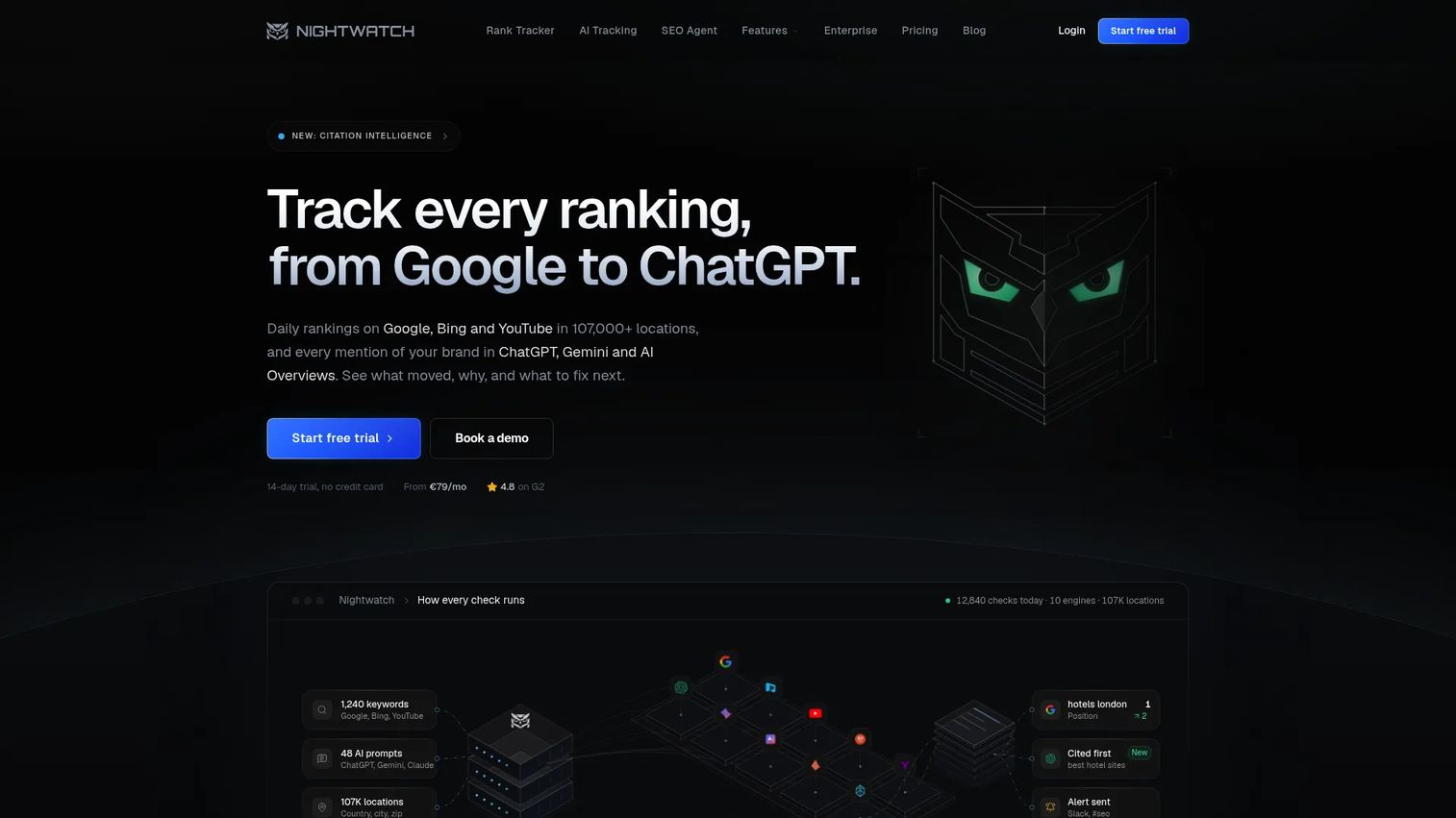
Nightwatch combines traditional search-rank monitoring with AI visibility reporting. It supports daily tracking across search engines and includes site audits within its broader toolkit. For marketers consolidating subscriptions, the appeal is evaluating search performance and AI discovery without treating them as unrelated reporting projects.
Best for: SEO teams and agencies that want broader visibility reporting alongside their rank-tracking workflow.
Key features
- Daily search-engine rank tracking
- AI mention and citation monitoring
- White-label reporting
- Looker Studio connector
- Site audits and keyword research
For a growth team, evaluate this platform against the work your current stack already handles. Start with the reporting output leadership receives, rather than its total feature count.
Ask whether you can produce a useful campaign review without exporting several files. Include the affected landing pages and explain how the findings would change your next experiment.
Agency buyers should also test how client reporting fits their existing process. A connector matters most when it removes a recurring preparation step.
For this particular purchase, make device comparison part of your acceptance test. Run identical keywords under mobile and desktop conditions, then inspect how the resulting report presents the difference.
Why choose Nightwatch: Choose it when search visibility and AI monitoring belong in the same reporting process. For occasional position checks, evaluate the credit-based options below.
Nightwatch pricing: Starter costs €79/month billed yearly or €99 monthly. A 14-day free trial is available.
G2 rating
Nightwatch’s website cites a 4.8/5 G2 rating. The supplied research did not independently expose the headline score on its G2 listing.
2. Infigrowth Mobile Rank Tracker
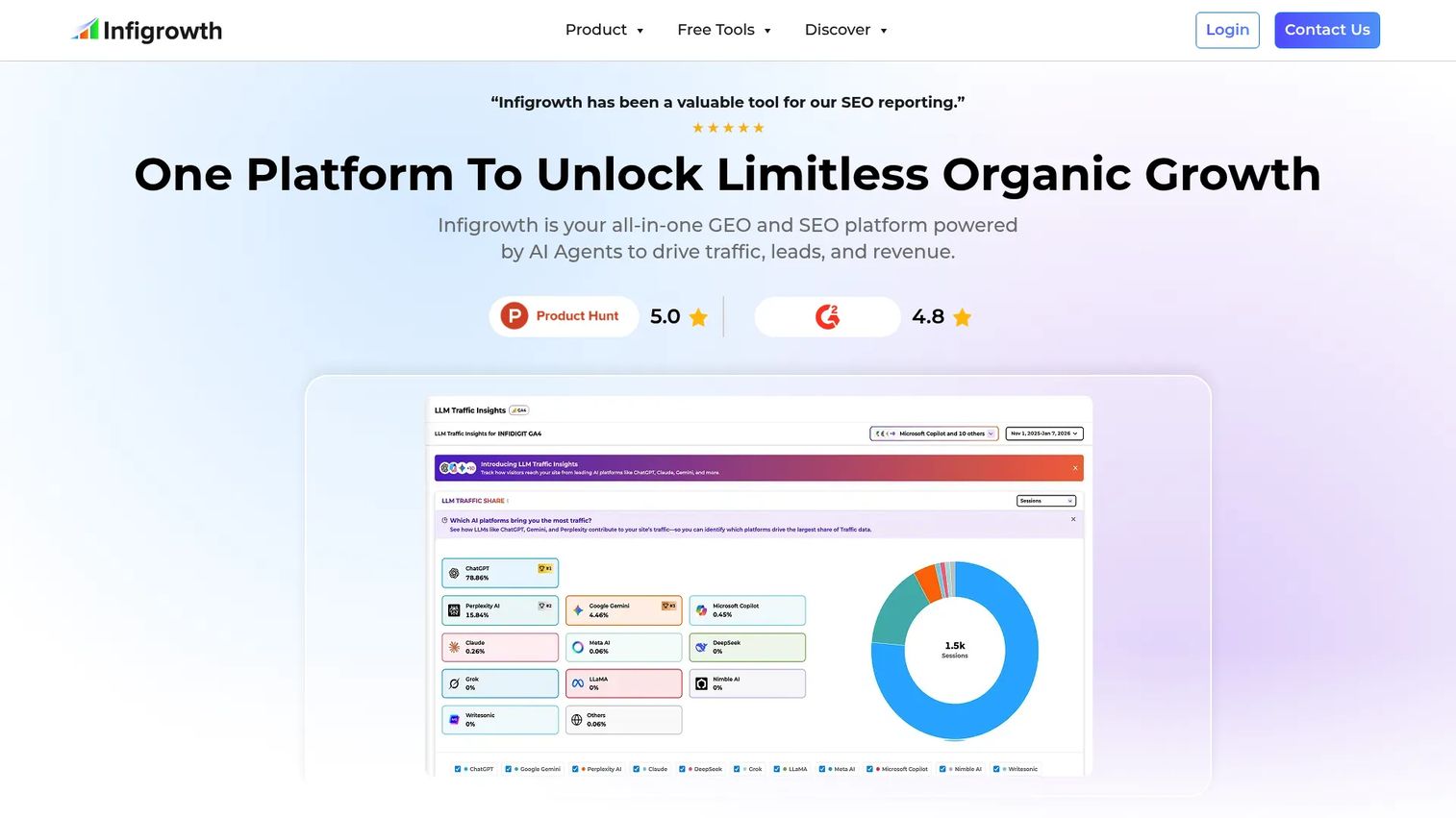
Infigrowth Mobile Rank Tracker provides documented tracking across Android, iPhone, and tablet devices. Its visibility reporting includes AI Overviews and other SERP features. Screenshots add visual context when a position number doesn’t explain what changed on the results page.
Best for: SEO teams that need device-specific evidence for regional campaigns and stakeholder reporting.
Key features
- Device-specific mobile keyword tracking
- AI Overview and SERP feature monitoring
- SERP screenshots
- Share-of-voice analysis
- Keyword categorization and rank buckets
This is the clearest fit here for marketers investigating mobile visibility in detail. Rather than checking one blended keyword list, organize the evaluation around commercially meaningful groups.
Separate branded queries from category searches. Then examine whether a change affects a particular device or region before assigning work to content or engineering.
Share of voice can help frame competitor movement, while rank buckets support a broader view of keyword distribution. Treat both as reporting perspectives rather than direct measures of revenue.
During evaluation, ask for the same campaign presented at two levels. Leadership needs a concise explanation of the business exposure; the SEO owner needs enough detail to investigate individual pages.
Also inspect the billing selection before checkout. The supplied research found inconsistent monthly and yearly labels, so request a written billing-period confirmation.
Why choose Infigrowth Mobile Rank Tracker: Choose it when leadership asks why mobile visibility changed, rather than simply requesting another position report. Its device coverage supports that investigation directly.
Infigrowth Mobile Rank Tracker pricing: Starter is listed at $40/month, with a free option available.
G2 rating
4.8/5 on G2.
3. Serpotrack
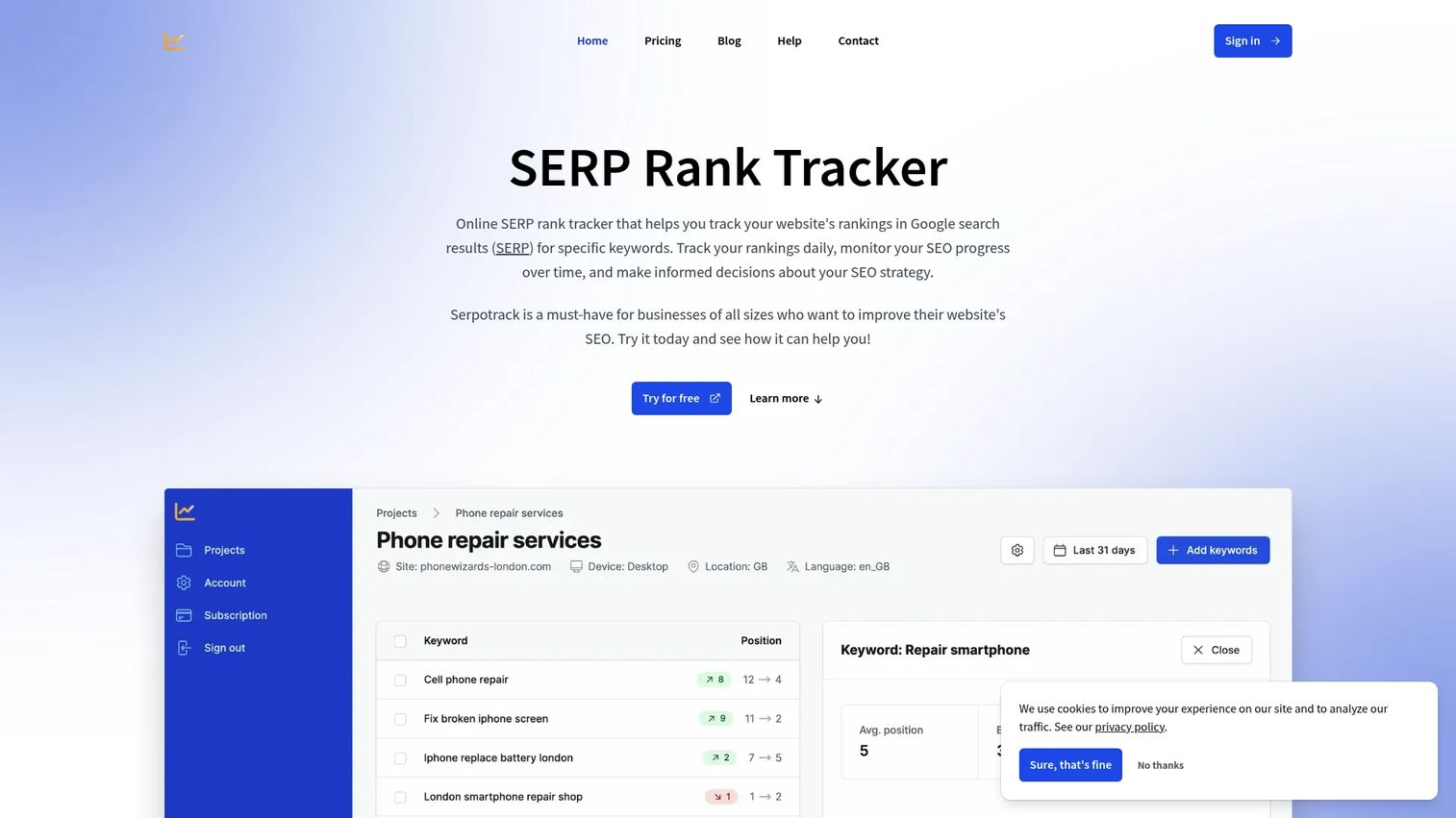
Serpotrack is a keyword-based tracker for Google search results. Its documented capabilities emphasize daily monitoring and full ranking history. Unlimited projects make it relevant to freelancers or agencies organizing separate websites, while CSV export supports reporting outside the application.
Best for: Budget-conscious marketers who need recurring keyword monitoring and historical evidence.
Key features
- Daily keyword ranking updates
- Unlimited projects
- Competitor analysis
- Ranking URLs and CSV export
- People-also-ask question monitoring
The main buying question is whether its focused tracking workflow covers your reporting requirements. Begin with a short list of commercially important searches and review the history over several reporting cycles.
Look beyond whether a keyword moved. Check whether the reported URL matches the page you intended to promote.
For a team managing content experiments, record publication changes beside the relevant dates. That creates a useful investigation trail without assuming every position change came from your work.
Before adopting Serpotrack specifically for mobile SERP tracking, ask for a demonstration of the required device and location settings. Make mobile versus desktop separation a purchase condition when that comparison drives your campaign decisions.
The low starting price deserves context, too. Its custom plans vary by keyword volume, update frequency, and maximum position checked. Build a sample workload before treating the entry figure as your operating budget.
Why choose Serpotrack: Choose it for focused monitoring when historical positions and exports cover your reporting needs. Teams requiring detailed mobile-device evidence should validate that workflow first.
Serpotrack pricing: Plans start at €1.30/month, excluding 21% Dutch sales tax. A free trial requires no payment details.
4. Search Rank Tracker
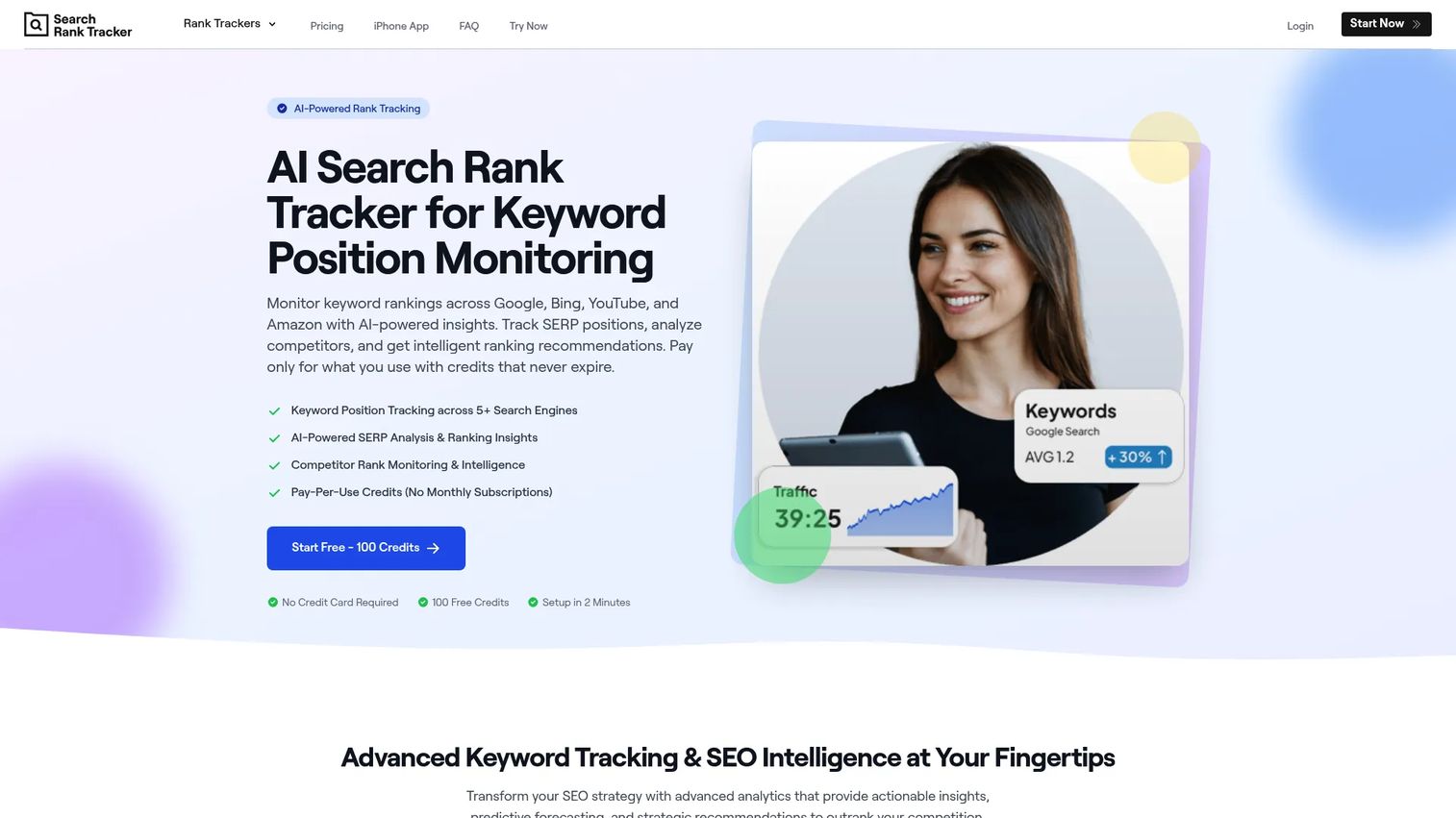
Search Rank Tracker uses a pay-as-you-go model for monitoring rankings across search engines and other discovery platforms. Its coverage extends to marketplaces, app stores, and local maps. That breadth suits marketers whose acquisition reporting crosses several channels, especially when checking volume varies between campaigns.
Best for: Freelancers and marketing teams that prefer flexible usage purchases over a monthly subscription.
Key features
- Search-engine and marketplace rank tracking
- App-store and local-map coverage
- Competitor analysis
- Historical analytics
- Scheduled scans and white-label reports
The credit model changes how you should evaluate the purchase. Begin with the questions you expect to investigate each month, then estimate the scans required.
Include recurring checks as well as one-off requests from stakeholders. Otherwise, an inexpensive initial purchase tells you little about the cost of maintaining coverage.
For mobile versus desktop comparison, ask to see the exact device controls and reporting output. Broad platform coverage alone doesn’t establish how precisely a tool separates smartphone rankings.
A useful trial should follow one issue from discovery to reporting. Select a landing page, examine its target queries, and determine whether the findings support a clear next action.
Also decide who owns the account balance. Usage-based purchasing works best when someone monitors consumption and keeps important scheduled checks funded.
Why choose Search Rank Tracker: Choose it when demand for ranking checks is uneven and you want to avoid a fixed subscription. Validate device-specific reporting before selecting it primarily for mobile SEO.
Search Rank Tracker pricing: Packs cost $5 for 500 credits, $15 for 2,000, or $25 for 5,000. New accounts receive 100 free credits; purchased credits never expire.
5. Local Rank Tracker

Local Rank Tracker focuses on local search visibility and Google Business Profile operations. It supports ranking scans across city areas, including service-area businesses. The broader platform also covers citation work and review management, making it relevant when local SEO ownership extends beyond position reporting.
Best for: Local SEO agencies and businesses managing search visibility across service areas or multiple locations.
Key features
- City-area ranking scans
- Service-area business tracking
- Scheduled and white-label reports
- Shareable reporting URLs
- Google Business Profile automation
Local campaigns need a different evaluation sample from national SEO programs. Test locations that represent how customers search around each branch, rather than selecting only the business address.
For home services, examine the territory the business serves. Retail teams should test the areas where competing stores create meaningful differences.
The reporting process deserves equal attention. Ask whether a client can understand the affected area without an account manager rebuilding the explanation in slides.
For mobile-specific work, validate the search conditions behind those local reports. Area-based tracking and mobile device segmentation are separate purchasing requirements.
The wider feature set can support consolidation if your team also manages profiles and reviews. If another system already handles those tasks, compare the overlap before assigning value to the bundle.
Budget around your operating footprint. The vendor differentiates plans through location capacity and usage allowances, alongside support and onboarding benefits.
Why choose Local Rank Tracker: Choose it when the core question is where a business appears across its service territory. Its wider local operations coverage matters when the same team owns execution.
Local Rank Tracker pricing: Starter costs $57/month or $47.50/month billed annually.
6. App Rank Tracker
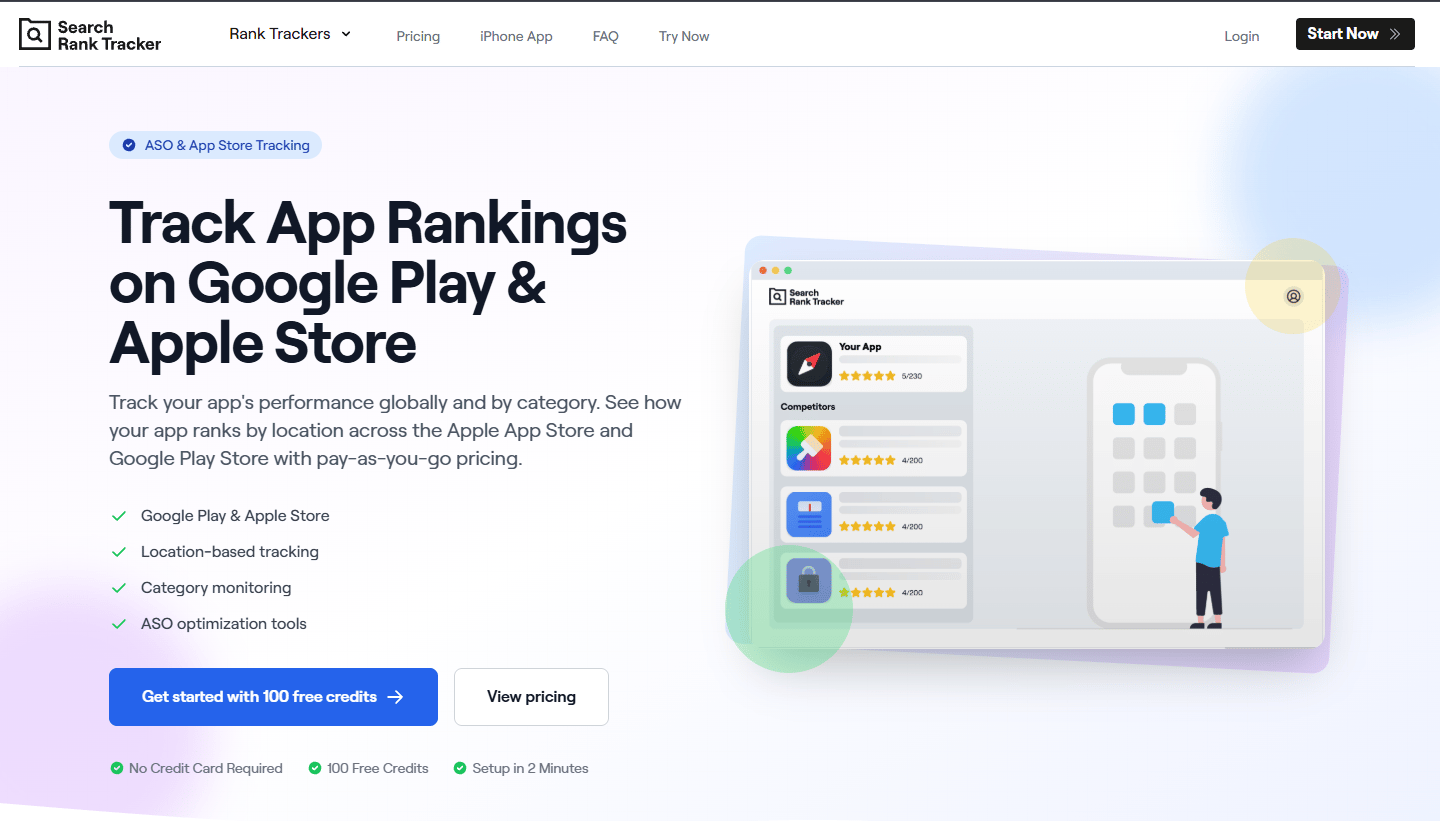
App Rank Tracker monitors discovery within the Apple App Store and Google Play. It belongs to Search Rank Tracker’s product offering. Its focus is app rankings by keyword, category, and market, rather than a website’s position in mobile Google results.
Best for: App developers and ASO teams evaluating app-store acquisition across markets.
Key features
- Apple App Store and Google Play tracking
- Country-based ranking coverage
- Category monitoring
- ASO keyword insights
- Cross-platform competitor comparisons
Choose the acquisition surface before choosing the software. An app’s marketing website and its store listing can both attract users, but they require separate reporting questions.
For store discovery, build the evaluation around searches relevant to the app’s purpose. Include competitor names only where they belong in your acquisition strategy.
Then compare markets independently. A blended international report can conceal the territory where your next localization experiment belongs.
Category monitoring adds another perspective alongside keyword movement. Use it to investigate competitive context, while keeping installation and activation outcomes in the reporting process.
This offering is particularly relevant if your team already wants Search Rank Tracker’s wider coverage. Assess the shared account and credit workflow before treating the two entries as separate software purchases.
Ask the vendor to demonstrate how a scan is charged across stores and countries. A credit balance becomes meaningful only when you can map it to your recurring workload.
Why choose App Rank Tracker: Choose it when app-store discovery is the acquisition problem you’re solving. Website SEO teams should evaluate the web tracking options instead.
App Rank Tracker pricing: Credit packs start at $5 for 500 credits, with 100 free credits for new accounts. The offering uses Search Rank Tracker’s shared pricing model.
7. Rank Tracker: SEO, ASO, SERPTrack
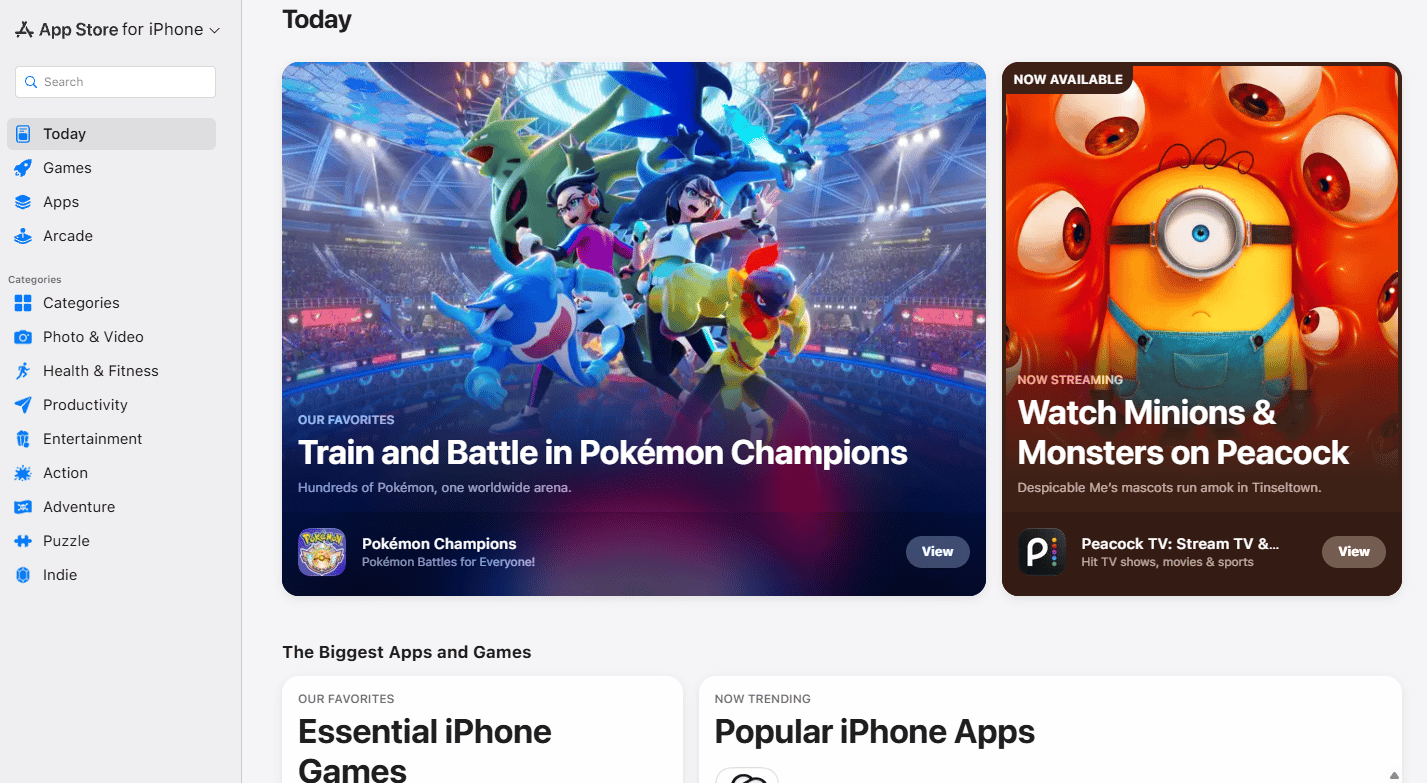
Rank Tracker: SEO, ASO, SERPTrack is listed in the App Store as “Rank Tracker: SEO, ASO, SERP.” It supports website and app ranking workflows from an iPhone or iPad. Its documented coverage includes mobile and desktop results for Google and Bing.
Best for: Marketers who want website and app visibility monitoring through an iOS application.
Key features
- Mobile and desktop Google tracking
- Bing SERP monitoring
- Country-level App Store rankings
- YouTube keyword positions
- Competitor trends and digest views
This entry addresses a different preference from the browser-based platforms. The interface is mobile, while the searches being measured can be mobile or desktop.
That distinction makes it worth evaluating for marketers who review changes between meetings or away from their desks. Keep the buying decision tied to the reporting task, rather than the convenience of the device alone.
For mixed acquisition ownership, separate website keywords from app-store queries in your evaluation. Both can matter to growth, but neither should stand in for the other.
Inspect whether the trend views help you identify changes worth investigating. Then test how you would communicate those findings to the person responsible for the affected channel.
The application uses credit purchases rather than subscriptions. Before scheduling ongoing checks, calculate how your keyword list and monitoring frequency translate into recurring consumption.
Why choose Rank Tracker: SEO, ASO, SERPTrack: Choose it when an iOS interface suits your routine and you need documented mobile versus desktop tracking. Test stakeholder reporting before adopting it across a team.
Rank Tracker: SEO, ASO, SERPTrack pricing: The app is free to download and includes 50 starting credits. Additional purchases begin at $2.99 for 100 credits.
Considerations when choosing a mobile rank tracker
Mobile versus desktop comparison
Require a report that compares identical keywords under equivalent location settings. Include the target URL and historical movement, not just a current position.
Before signing, demonstrate how someone would investigate a mobile keyword ranking gap using that report.
Location and device precision
Ask vendors to distinguish country-level monitoring from city or ZIP-code rank tracking. Test the geographic setting that matches your customer acquisition footprint.
If tablet, iOS, or Android segmentation matters, request evidence for each required device rather than accepting “mobile” as sufficient.
SERP feature coverage
Check coverage for Local Packs, Featured Snippets, ads, and AI Overviews individually. A broad SERP feature monitoring claim doesn’t establish support for every module.
Inspect screenshot history where available, especially when stakeholders need to understand a visibility change visually.
Reporting and alerts
Choose reporting that removes a task your team already performs. Nightwatch’s documented Looker Studio connector and Serpotrack’s CSV export serve different operating preferences.
Test whether alerts identify issues someone can act on. Too many undifferentiated notifications create another review queue.
Pricing model and scaling cost
Calculate the workload across keyword volume, locations, devices, and update frequency. Ask how each variable affects subscriptions or credit consumption.
For mobile SEO performance reporting, also include the time spent preparing stakeholder updates. A lower software bill can still leave expensive manual work untouched.
Conclusion
Start with the reporting gap you need to close. Nightwatch deserves evaluation when broader SEO monitoring and agency reporting belong in the same purchase. Infigrowth is the more explicit mobile-device option in this shortlist.
Serpotrack suits focused keyword monitoring, while Search Rank Tracker offers a flexible approach to occasional checks. Local Rank Tracker addresses service-area visibility and local operations.
For app-store acquisition, evaluate App Rank Tracker. The separate iOS application suits marketers who want website and app monitoring from a phone or tablet.
Before buying, choose 20 to 50 important keywords and test at least two relevant locations. Compare mobile and desktop results wherever the product supports both.
Include a branded query and a commercial landing page in the sample. Review the findings alongside Search Console impressions and landing-page traffic, then ask who would act on the report.
The strongest mobile versus desktop SEO workflow produces a clear investigation path. Choose the tool that improves decisions and replaces recurring work.
Start your journey with Guideflow today!
Start your journey with Guideflow today!
FAQs
A mobile rank tracker records website positions in mobile search results for selected keywords and search conditions. Historical data lets marketers compare periods instead of relying on a single manual search. For buying decisions, specify the required locations and device profiles before comparing vendors. A quick checker suits an isolated question; recurring monitoring supports campaign evaluation over time.
Mobile and desktop searches can return different results because location, intent, and SERP presentation affect what appears. A Local Pack or AI Overview can also change an organic result’s prominence without an equivalent numerical ranking change. Compare the same query and geography before diagnosing a device gap. Treat mobile-first indexing as context, rather than proof of what caused an individual change.
Accuracy depends on how closely the configured search conditions match the question you’re investigating. Review location precision and device profiles, then account for update frequency when comparing observations. Validate patterns against Search Console and landing-page analytics instead of demanding identical numbers from different measurement systems. When evidence disagrees, inspect the settings and timing before deciding which report to trust.
Yes, when the selected product supports the required geographic precision and mobile search conditions. Country coverage does not automatically establish city-level or ZIP-code support. Ask the vendor to run a sample from your service territory before purchasing. Local agencies should also confirm that reports distinguish each branch or service area rather than blending them into a national result.
Mobile rank tracking measures website visibility in mobile search results, while app rank tracking measures discovery within app stores. ASO monitoring concerns app keywords and category visibility rather than web page positions. A business with an app and a marketing website may need both datasets. Keep their reporting separate enough to identify whether the next acquisition experiment belongs on the website or store listing.
Use daily monitoring for active campaigns or important changes that require prompt investigation. Weekly reviews can be sufficient for stable pages when nobody needs to act between reporting cycles. Match the cadence to commercial importance and the team’s response capacity, rather than checking everything equally. With usage-based tools, calculate how the schedule affects credit consumption before expanding the tracked keyword set.
Some products document feature monitoring, including AI Overviews, while others focus primarily on keyword positions. Check support for each module you care about, including Local Packs and Featured Snippets. Screenshots can help explain changes in presentation when numerical position alone leaves questions unanswered. Ask how historical evidence is retained and displayed before making SERP archives part of your reporting process.
Prioritize the ability to track Google mobile rankings under the locations and device conditions relevant to your campaigns. Then evaluate whether reporting connects affected keywords to pages your team can improve. Compare total operating cost, including recurring exports and stakeholder preparation time, rather than the entry price alone. The purchase should produce clearer decisions about organic acquisition without claiming that ranking movement itself proves revenue impact.