Your local rankings look healthy from the office. Across town, customers see a competitor first. Meanwhile, leadership wants to know whether your optimization work generated more inquiries.
A local rank tracker helps separate geographic variation from meaningful performance changes. The buying decision starts with what you need to measure, then which reporting workflow you can replace.
Rio SEO’s 2025 research found that 84% of consumers search online for local businesses daily. That makes visibility worth measuring carefully, especially across several storefronts or service areas.
A single position tells you little without its search location and date. Local Pack rankings also answer a different question from organic website rankings.
Useful local rank tracking gives you a repeatable baseline. You can investigate where visibility changed, compare nearby competitors, and connect those findings with customer actions.
The goal is a report that tells you what to do next, without another afternoon of spreadsheet cleanup.
What’s inside
This guide helps digital marketers and agency operators choose tools for defensible local search reporting.
- Coverage: Dedicated tracking platforms alongside profile management, keyword research, and dashboard tools
- Geographic precision: Location targeting and map grids that reveal differences across a service area
- Reporting depth: Historical comparisons, exports, and client presentation options
- Workflow fit: Whether a subscription replaces manual work or duplicates an existing platform
Product details and commercial information draw on vendor research dated November 24, 2026. Ratings identify broader platform listings where relevant.
Each local rank tracker tool has a specific role. Supporting products are clearly distinguished from software that collects ranking positions.
TL;DR
- Best overall local rank tracker: Whitespark Local Rank Tracker combines localized search monitoring with agency reporting across Maps and organic results.
- Best for profile optimization: Localo connects position maps with actionable profile tasks. Its paid entry plan supports one active business profile.
- Best for map heatmaps: Semrush Map Rank Tracker offers geographic grids, competitor monitoring, and a free allocation for initial testing.
- Best for listing ownership: Google Business Profile gives eligible businesses direct control over their information and customer interactions.
- Best for reporting workflows: Google Looker Studio combines supplied data into shareable dashboards rather than collecting rankings itself.
- Best for broader SEO context: Ahrefs supports keyword research and competitive website analysis around local campaigns.
What is a local rank tracker?
A local rank tracker monitors where a business appears in search results for selected keywords and geographic locations.
Those results can include Google Maps, the Local Pack, and organic website listings. Coverage differs by product, making search surface an important buying criterion.
Google local rank tracking needs a geographic reference. A business visible near its storefront can have a different position farther into its service area.
For a dentist, that means measuring nearby neighborhoods. A plumbing company might need visibility checks across several ZIP codes.
How map grid tracking works
Map grid tracking measures positions at multiple geographic points. A local SEO heatmap displays those results spatially, making stronger and weaker areas easier to compare.
Grid spacing and distance determine the territory you inspect. Keep those settings consistent when comparing periods; changing the measurement area changes the question.
Coordinate targeting and postal code tracking provide other ways to define search locations. Choose the method that matches where customers live or request service.
Capabilities worth evaluating
A local SEO rank checker or tracking platform can cover several jobs:
- Keyword positions tied to specific search locations
- Maps and Local Pack monitoring
- Competitor comparison across selected areas
- Historical trends and exportable reports
- Device or search engine segmentation
For Google Business Profile visibility, combine position data with profile performance. Ranking shows discoverability; customer actions help explain the commercial significance.
Avoid treating every improvement as attributable revenue. Compare inquiries and website conversions over the same period, then investigate other changes affecting demand.
A checker versus a tracker
A local rank checker produces a snapshot. Ongoing tracking preserves a comparable record that helps you evaluate progress.
Neither keyword research nor dashboard software replaces that collection process. Research helps decide what to monitor, while reporting software presents information supplied by another source.
Start with the business question. “Where are we losing visibility for emergency plumbing?” produces a more useful setup than tracking every keyword you can find.
When to use a local rank tracker
Measure local visibility by neighborhood
Use a Google Maps rank tracker when a citywide result hides differences across the territory you serve. Restaurants and storage facilities need a different geographic footprint from mobile service businesses.
Set grid pins and radius settings around customer demand. For ZIP code rank tracking, choose areas your business serves rather than every neighboring postal district.
Prove whether local SEO work moved the number
Establish a baseline before changing profile information or location landing pages. Record review campaigns and citation cleanup in the same activity log.
Compare equivalent periods after each change. Pair visibility trends with inquiry quality, rather than presenting a higher position as proof of additional revenue.
Compare locations and competitors
Hyperlocal rank tracking helps identify which storefronts need attention before spreading effort evenly across the business. Competitor local ranking analysis adds context when your position changes.
For agencies, use consistent measurement settings across reporting periods. A client should understand whether movement reflects competitive changes, optimization work, or a different tracking configuration.
Local rank tracker tools comparison
This table includes dedicated local SEO rank tracker platforms and supporting products. Google’s business and research tools serve different purposes from scheduled ranking software.
Prioritize a dedicated platform when you need geographic monitoring and historical comparisons. Add a reporting layer only when it improves an existing local SEO reporting process.
Prices below reflect the supplied November 2026 vendor research. Annual commitments are labeled, and ratings refer to the named product unless a broader listing is identified.
“N/A” means a suitable product-specific rating is unavailable here. It does not indicate poor quality.
Local Rank Tracker requires further product and commercial due diligence before a purchase recommendation. Its name alone should not establish capability or value.
| # | Product | Best for | Key differentiator | Pricing | G2 rating |
|---|---|---|---|---|---|
| 1 | Whitespark Local Rank Tracker | Dedicated local and organic monitoring | Geographic targeting with white-label reporting | From $14/month, billed annually | 4.5/5 |
| 2 | Localo | Profile optimization and monitoring | Position maps connected with optimization tasks | From $39/month, billed annually, plus tax | 4.9/5 |
| 3 | Local Rank Tracker | Evaluation before purchase | Request a current product demonstration | Request current plan details | N/A |
| 4 | Semrush Map Rank Tracker | Hyperlocal Maps analysis | Custom grids with competitor tracking | Free plan; paid from $30/month | 4.4/5, Semrush overall |
| 5 | Google Business Profile | Listing management and performance | Direct control over business information | Free | 4.6/5, Google My Business listing |
| 6 | Google Maps | Manual customer-view checks | Place discovery and business context | Free consumer service | N/A |
| 7 | Google Keyword Planner | Choosing keywords to monitor | Search demand and advertising forecasts | Free; Google Ads setup required | N/A |
| 8 | Google Looker Studio | Dashboard reporting | Custom visualizations from supplied data | No-cost core product | N/A |
| 9 | Ahrefs | Organic SEO research | Website, keyword, and backlink analysis | Free option; Starter $29/month | 4.5/5 |
| 10 | Rating Captain Local | Profile operations and map monitoring | Rank grids alongside publishing and review responses | Free plan; paid from $24 net/month | 4.8/5 |
Best 10 local rank tracker tools for 2026
The order starts with dedicated tracking and profile workflows, then covers tools for investigation and reporting. Choose by operational fit, not position alone.
1. Whitespark Local Rank Tracker
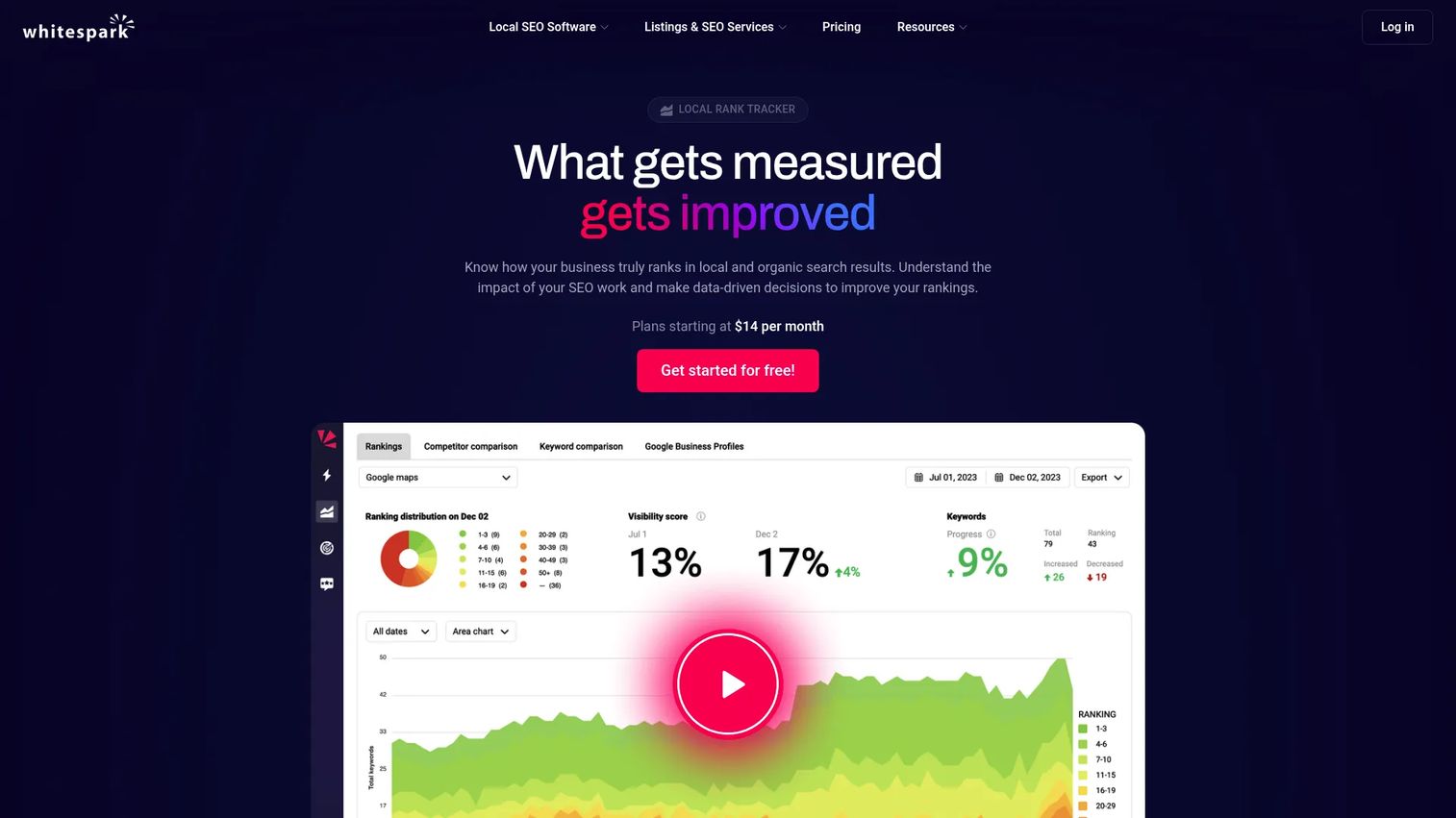
Whitespark Local Rank Tracker monitors local, Maps, and organic search performance across Google and Bing. Its reporting options suit agencies that need to deliver results without assembling every client update manually.
Location targeting includes postal codes and geographic coordinates. That gives marketers a way to define meaningful search areas instead of relying on a broad city label.
Best for: Agencies and multi-location marketers that need dedicated ranking collection with client reporting.
Key features
- Local Pack, Maps, and organic monitoring
- Postal code and coordinate targeting
- Competitor tracking and comparison
- White-label reports with custom domains
- Email reports and CSV/PDF exports
A useful evaluation starts with an existing client report. Recreate its keyword groups and geographic coverage, then check whether the output answers the same questions.
Plans include unlimited domains and locations, while allowances are expressed in location keywords. Budget around that measurement unit rather than assuming every additional storefront is free to monitor at any depth.
Integrated search volume adds context when prioritizing tracked terms. Use it alongside business relevance; a lower-volume service can still represent valuable inquiries.
Why choose Whitespark Local Rank Tracker: Choose it when recurring client delivery matters as much as collecting positions. Its localized coverage suits teams managing ongoing optimization programs rather than occasional checks.
Whitespark Local Rank Tracker pricing: Small Business starts at $14/month billed annually or $17 monthly. A 14-day free trial is available.
G2 rating
2. Localo
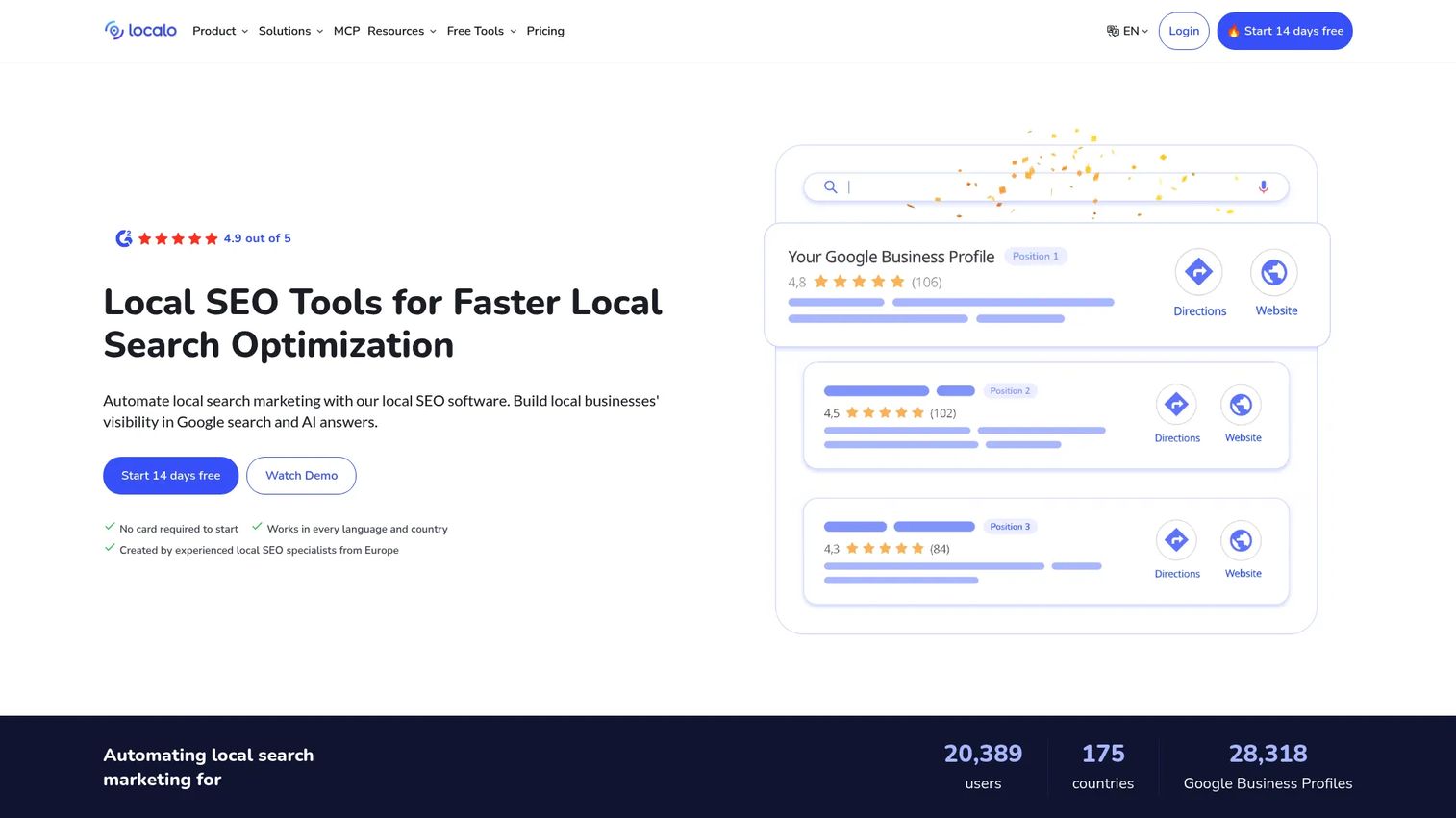
Localo combines Google Business Profile rank tracking with optimization tasks and profile audits. Position maps sit alongside review management and content publishing, giving operators a broader maintenance workflow.
This approach fits marketers who need to act on findings after reviewing visibility. The product also includes citations management and profile protection.
Best for: Business owners and agencies that want monitoring connected with practical profile maintenance.
Key features
- Business profile position maps
- Profile audits and optimization tasks
- Review management and content publishing
- Citations management
- Profile protection
If you searched for a free local rank checker, distinguish a diagnostic tool from an ongoing subscription. Localo’s current commercial details establish a trial, without establishing a permanent free subscription.
Treat the trial as an operating test. Assign someone to complete the recommended tasks, then assess whether the workflow fits your existing responsibilities.
For agencies, active profiles and optimization seats deserve separate attention. The Pro plan supports 60 active profiles and up to 30 optimization seats.
A local SEO checker becomes more useful when its findings have an owner. Decide who approves suggested changes before introducing another task queue.
Why choose Localo: Choose it when your bottleneck is turning visibility findings into profile work. A reporting-only buyer should evaluate whether those additional operational functions will get used.
Localo pricing: Single Business costs $39/month billed annually, plus tax; Pro costs $149/month on the same basis. A 14-day free trial is available.
See Localo’s pricing for plan details.
G2 rating
3. Local Rank Tracker
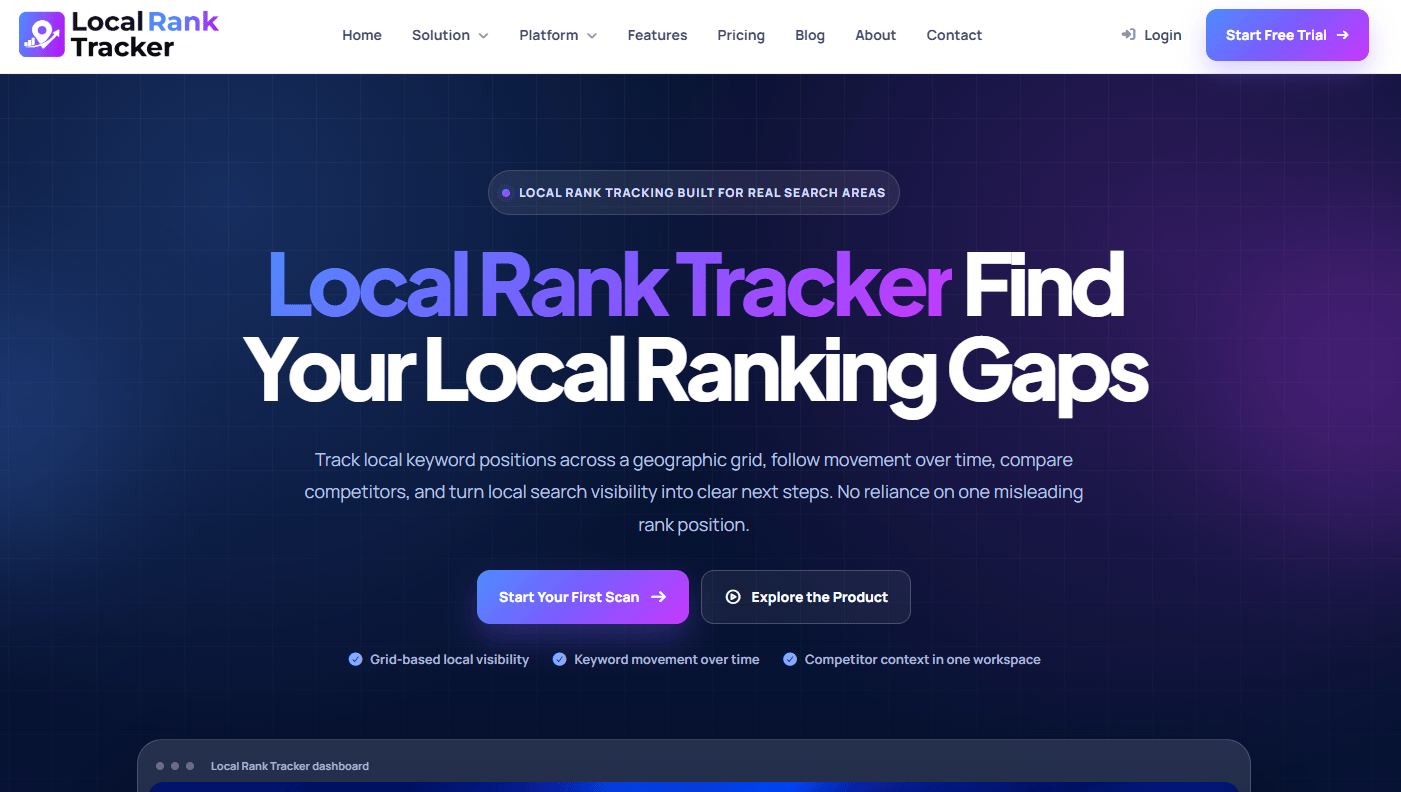
Local Rank Tracker needs a current product demonstration before it belongs on a purchase shortlist. Establish what the active offering includes rather than relying on earlier marketplace descriptions.
Ask the vendor to demonstrate the exact workflow you intend to run. For an agency, that means following a location from configuration through a finished client report.
Best for: Buyers prepared to complete product and commercial due diligence before committing.
Key features
Evaluate these capabilities during the demonstration:
- Scheduled keyword collection
- Pin-based rank tracking controls
- Historical exports and report sharing
- Profile permissions and account ownership
These are evaluation requirements, not confirmed product capabilities. Request evidence for each function that matters to your operation.
Why choose Local Rank Tracker: Consider it only after a current demonstration establishes the required coverage. Compare the written offer with another dedicated tracker before transferring client workflows.
Local Rank Tracker pricing: Request current plan details and purchase terms directly.
4. Semrush Map Rank Tracker
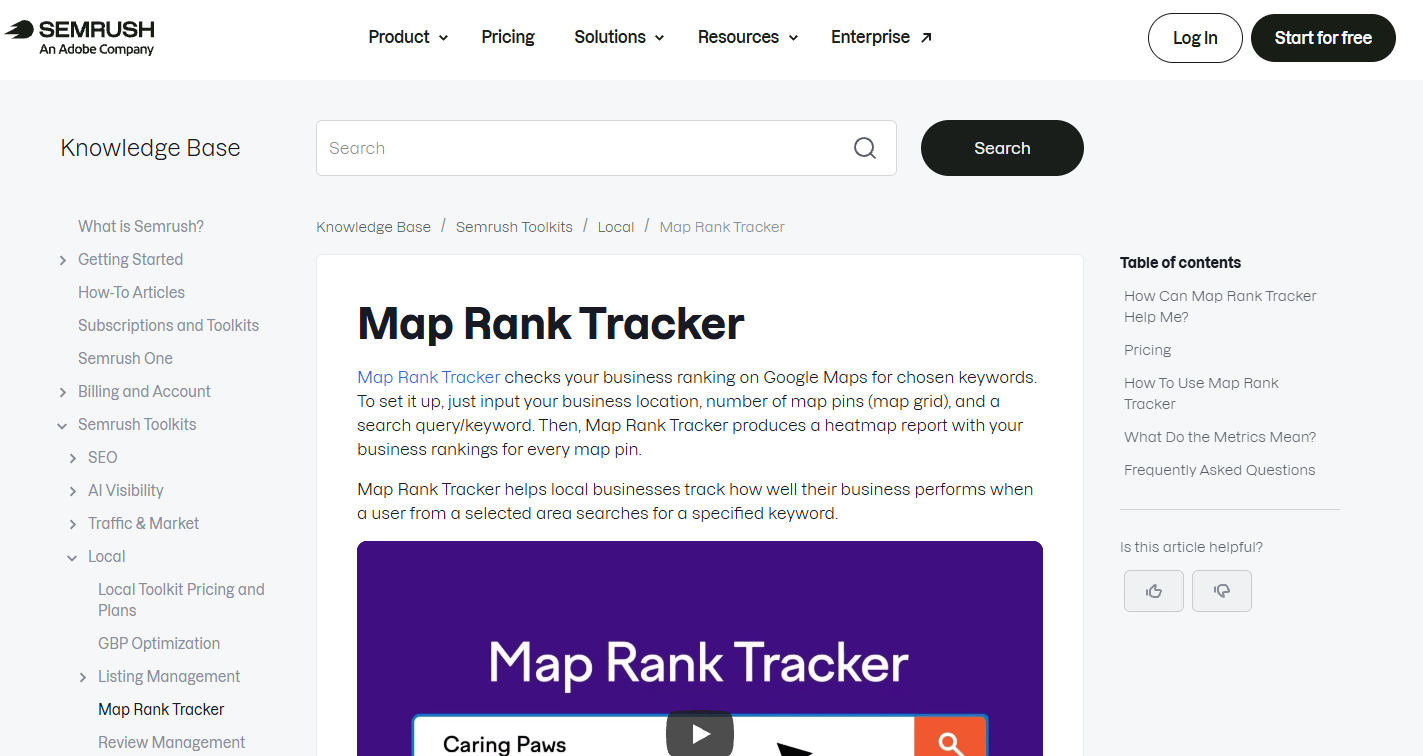
Semrush Map Rank Tracker measures Google Maps positions across customized geographic grids. Heatmaps make it useful for investigating how visibility changes around a storefront or service area.
The product supports competitor tracking and historical progress comparisons. Scheduled reports help turn repeated scans into a monitoring routine.
Best for: Local businesses and agencies that need geographic Maps analysis, including existing Semrush users.
Key features
- Google Maps ranking heatmaps
- Adjustable grid size and distance
- Competitor position tracking
- AI-generated keyword recommendations
- Scheduled reports and historical comparisons
Before testing, choose a territory that matches your customer base. A dense grid around an irrelevant area produces detailed data without improving decisions.
Keep settings stable when comparing periods. A wider radius introduces different search locations, which can change the overall picture even without a competitive shift.
Google local rank tracking also needs a keyword strategy. Review generated recommendations against your services before spending scan credits on them.
The free plan includes one campaign and 50 credits. Basic Paid includes 4,000 credits, making credit consumption an important evaluation point.
Why choose Semrush Map Rank Tracker: Choose it when seeing geographic patterns matters more than receiving a single position. Existing Semrush customers should compare their current package with standalone app access.
Semrush Map Rank Tracker pricing: A free plan is available; Basic Paid costs $30/month. Additional credit packages cost $5/month, and additional campaign packages cost $10/month.
The tool is also included in Semrush Local plans.
G2 rating
4.4/5 for Semrush overall, rather than a separate Map Rank Tracker rating.
5. Google Business Profile
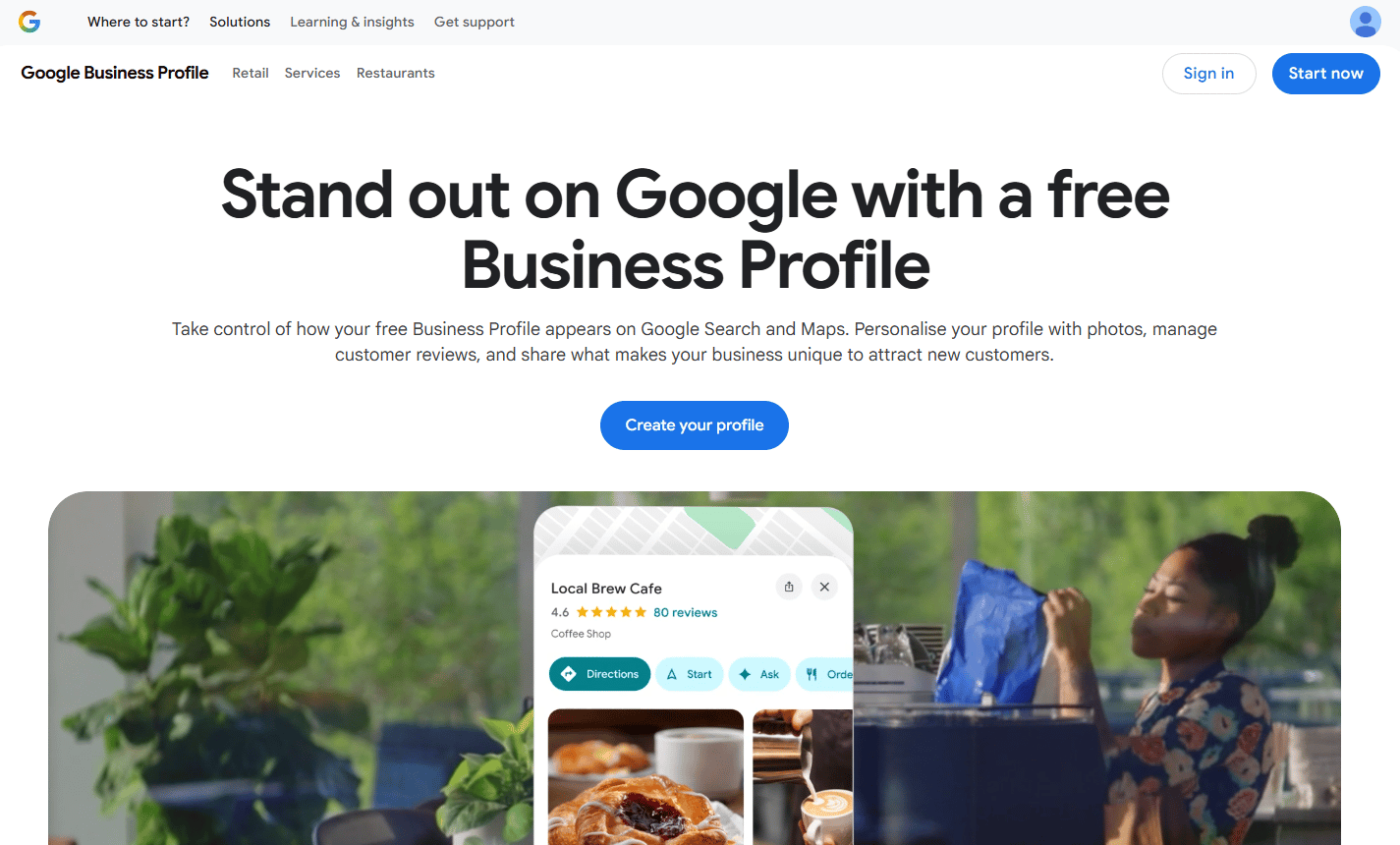
Google Business Profile manages how eligible businesses appear on Google Search and Maps. It provides direct control over listing information, alongside customer interactions and performance insights.
This is a profile management tool rather than a full local rank tracker. Use it to maintain the business information that prospective customers encounter.
Best for: Eligible storefront and service-area businesses managing their presence on Google.
Key features
- Business information and service-area management
- Customer review responses
- Photos, posts, and offers
- Booking and appointment links where available
- Search, call, and website-click insights
For marketers, profile performance provides useful context beside ranking data. A visibility report and a customer-action report answer related but different questions.
Start with operational accuracy. Check business hours and contact information before attributing weak inquiry performance entirely to search position.
Booking and ordering options vary by availability. Evaluate the interactions relevant to your business rather than building a dashboard around every possible metric.
When several people manage listings, establish a clear owner for updates. Keep changes in an activity log that your reporting team can consult.
Google Business Profile visibility should be reviewed alongside the website experience. A customer who reaches an outdated location page still needs accurate information to proceed.
Why choose Google Business Profile: Use it for direct listing maintenance and customer-action context. Pair it with geographic tracking when you need to understand competitive positions across an area.
Google Business Profile pricing: Creating and managing a profile is free.
G2 rating
4.6/5 on G2, under the former Google My Business name.
6. Google Maps
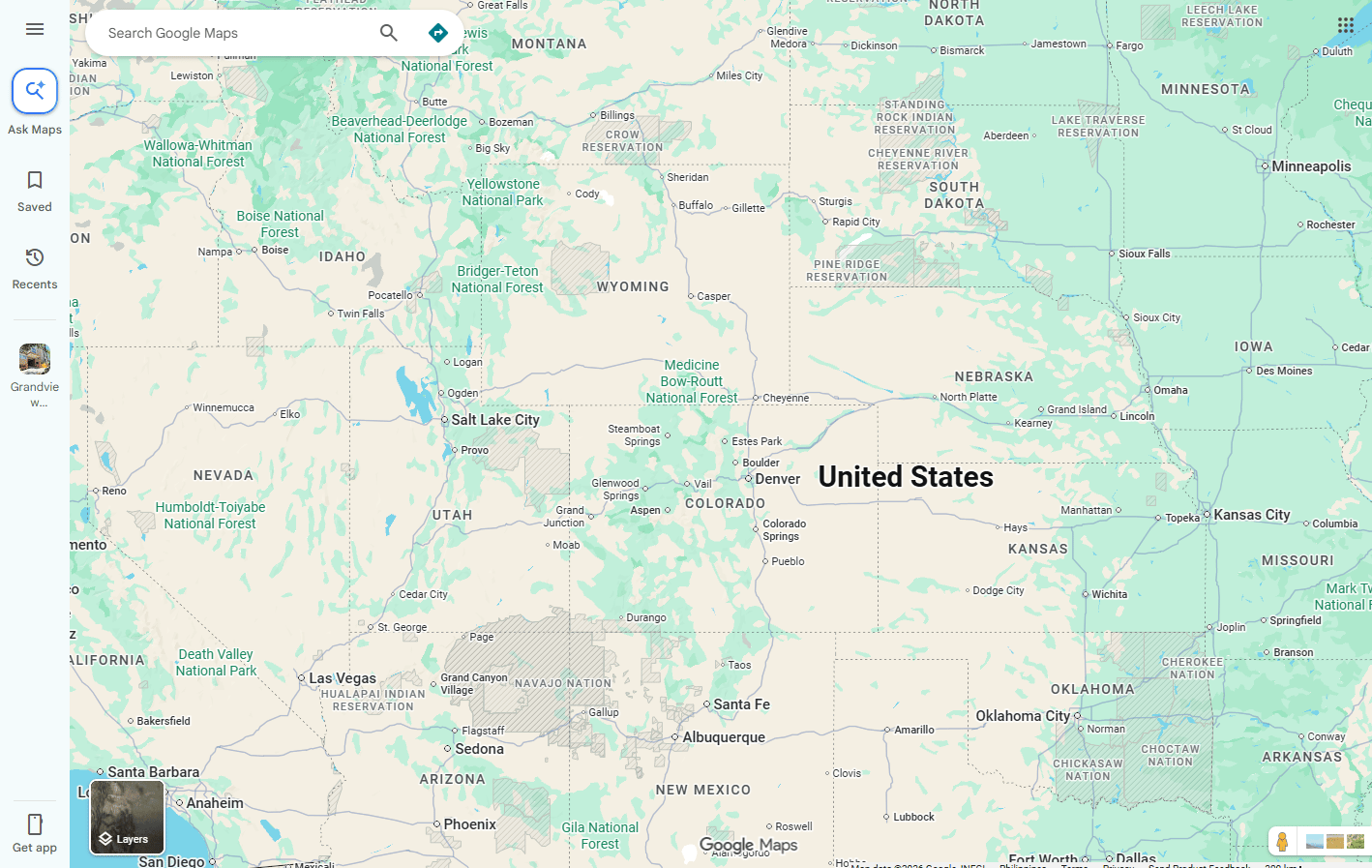
Google Maps lets marketers inspect the place-discovery experience customers use. Business details and reviews provide context that a ranking chart alone cannot show.
Manual research is useful for understanding nearby alternatives and inspecting how listings present themselves. It should complement repeatable measurement rather than become your reporting database.
Best for: Customer-view checks and local competitor discovery.
Key features
- Business and place searches
- Reviews, photos, and listing details
- Directions and route information
- Street View
- Saved places and lists
Use Maps to investigate a finding from your tracking platform. If a competitor gains visibility, examine its listing and the surrounding results before deciding what changed.
Record the search phrase and viewing context during a manual check. Results viewed from different locations or devices should not be treated as equivalent observations.
For example, inspect whether customers can recognize the correct entrance or find the right phone number. These checks concern the buying experience, even when rankings remain steady.
A free rank checker can help diagnose visibility, but manual browsing has a different purpose. It helps you see the information customers encounter around the result.
Avoid turning isolated searches into a monthly performance claim. Repeatable settings and stored history belong in the measurement workflow.
Why choose Google Maps: Use it when you need to understand a listing in context. It is particularly useful for investigating unexpected results before changing your optimization plan.
Google Maps pricing: The consumer service is free.
7. Google Keyword Planner
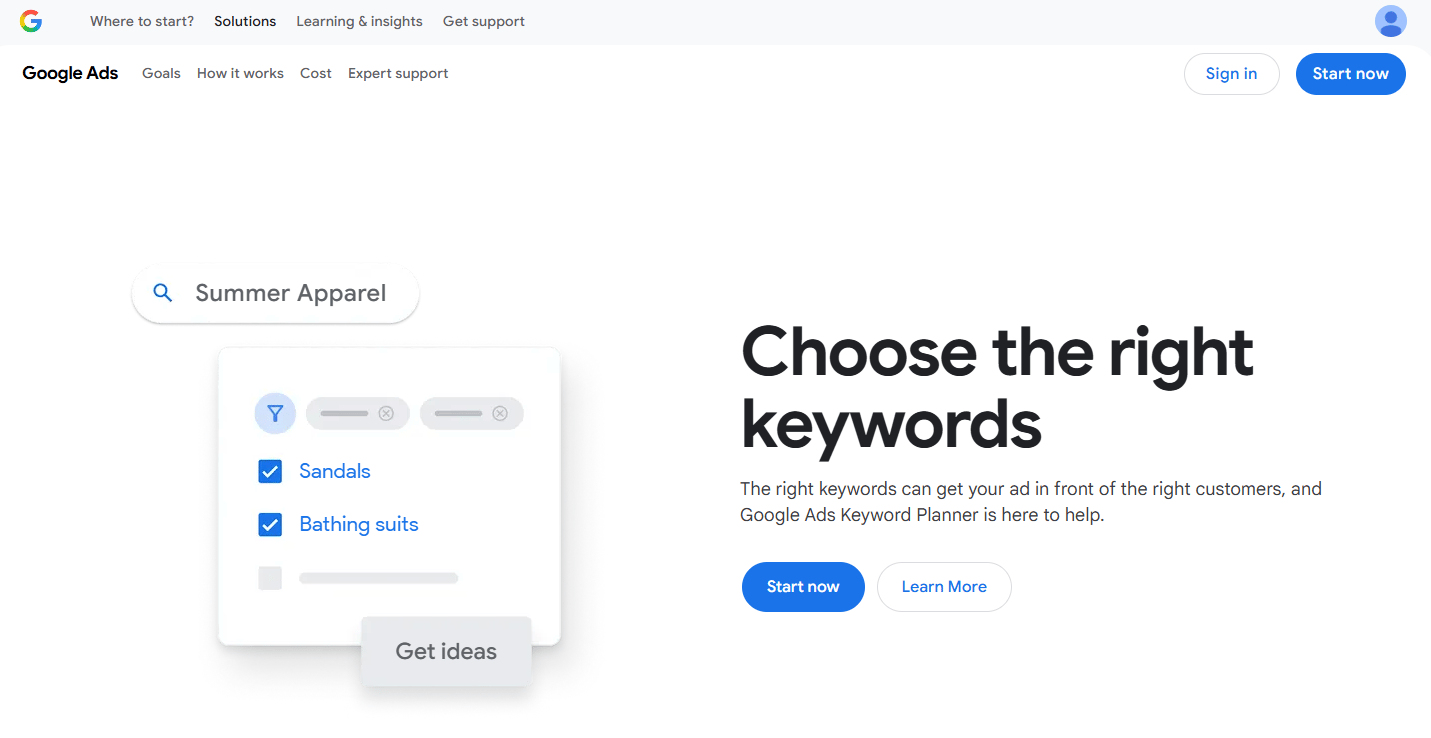
Google Keyword Planner generates keyword ideas and estimates advertising demand. It supports the planning stage of local SEO by helping marketers select terms worth investigating.
The product also provides bid estimates and forecasts. Those are advertising inputs, rather than measurements of your business’s organic or Maps position.
Best for: Marketers building a focused keyword list before configuring rank tracking.
Key features
- Product and service keyword ideas
- Search frequency and trend analysis
- Suggested bid estimates
- Keyword forecasts
- Saved and shareable keyword plans
Begin with the services that contribute to revenue. Then inspect how customers describe those services, including terminology your internal team rarely uses.
Separate branded searches from discovery queries in your tracking plan. Someone searching your business name has a different starting point from someone comparing nearby providers.
Demand estimates help prioritize research, but they do not establish commercial value alone. Consider the service margin and whether your business can fulfill the inquiry.
Keep the resulting monitoring list manageable. A focused set makes it easier to explain what changed and assign optimization work.
Access requires completing Google Ads account setup and creating a campaign, according to Google’s current guidance. Establish that requirement before assigning the research task to someone without account access.
Why choose Google Keyword Planner: Use it to decide what deserves measurement. Another tool must collect and preserve local ranking positions over time.
Google Keyword Planner pricing: The tool is free; advertising expenditure is separate.
8. Google Looker Studio
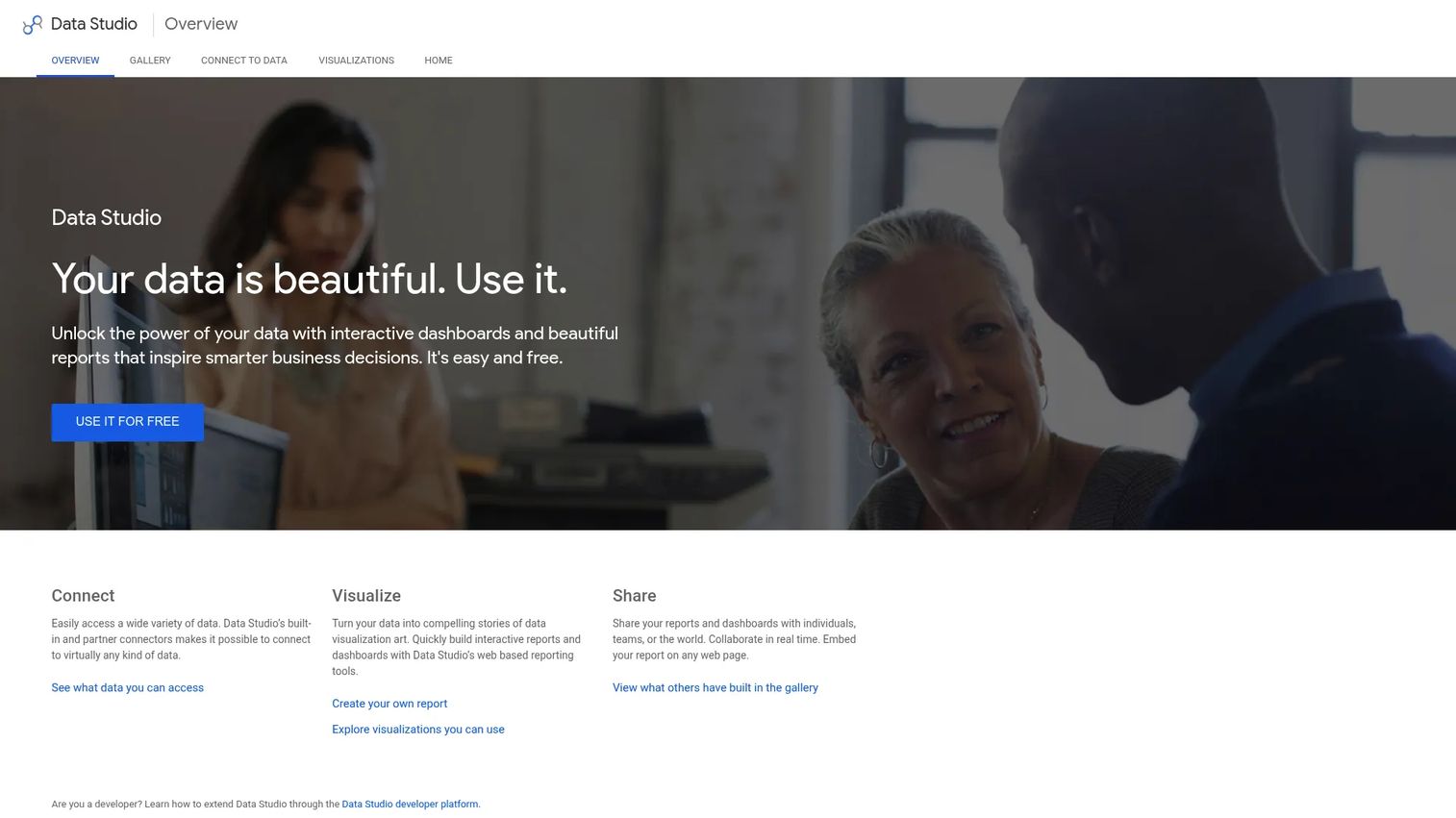
Google Looker Studio provides customizable dashboards and shareable reports from connected data. Google’s documentation identifies its April 2026 rename to Data Studio.
Its role in local SEO is presentation and analysis. Ranking collection still needs a source, with a suitable connection or import process.
Best for: Marketers who need a consistent reporting layer across locations and performance measures.
Key features
- Drag-and-drop report editing
- Charts, tables, and map visualizations
- Interactive filters and date controls
- Reusable data controls
- Collaborative report sharing
Design the dashboard around decisions rather than available charts. A location manager needs to know which service area deserves attention and what action follows.
Separate visibility indicators from customer outcomes. Showing both together helps discussion, but it does not establish that a position change caused a conversion.
Before choosing a connector, examine its fields and refresh behavior. Also test whether historical values remain comparable after the source platform changes.
For agency delivery, build a sample report using one client’s data. Ask a colleague unfamiliar with the account to explain its main finding.
That exercise exposes unclear labels and unnecessary complexity. A dashboard should reduce explanation time, not create a second reporting project.
Why choose Google Looker Studio: Choose it when assembling reports consumes time across several sources. Keep a tracker’s native reporting if it already answers the business question clearly.
Google Looker Studio pricing: The core product is available at no cost. Pro is a paid subscription.
9. Ahrefs
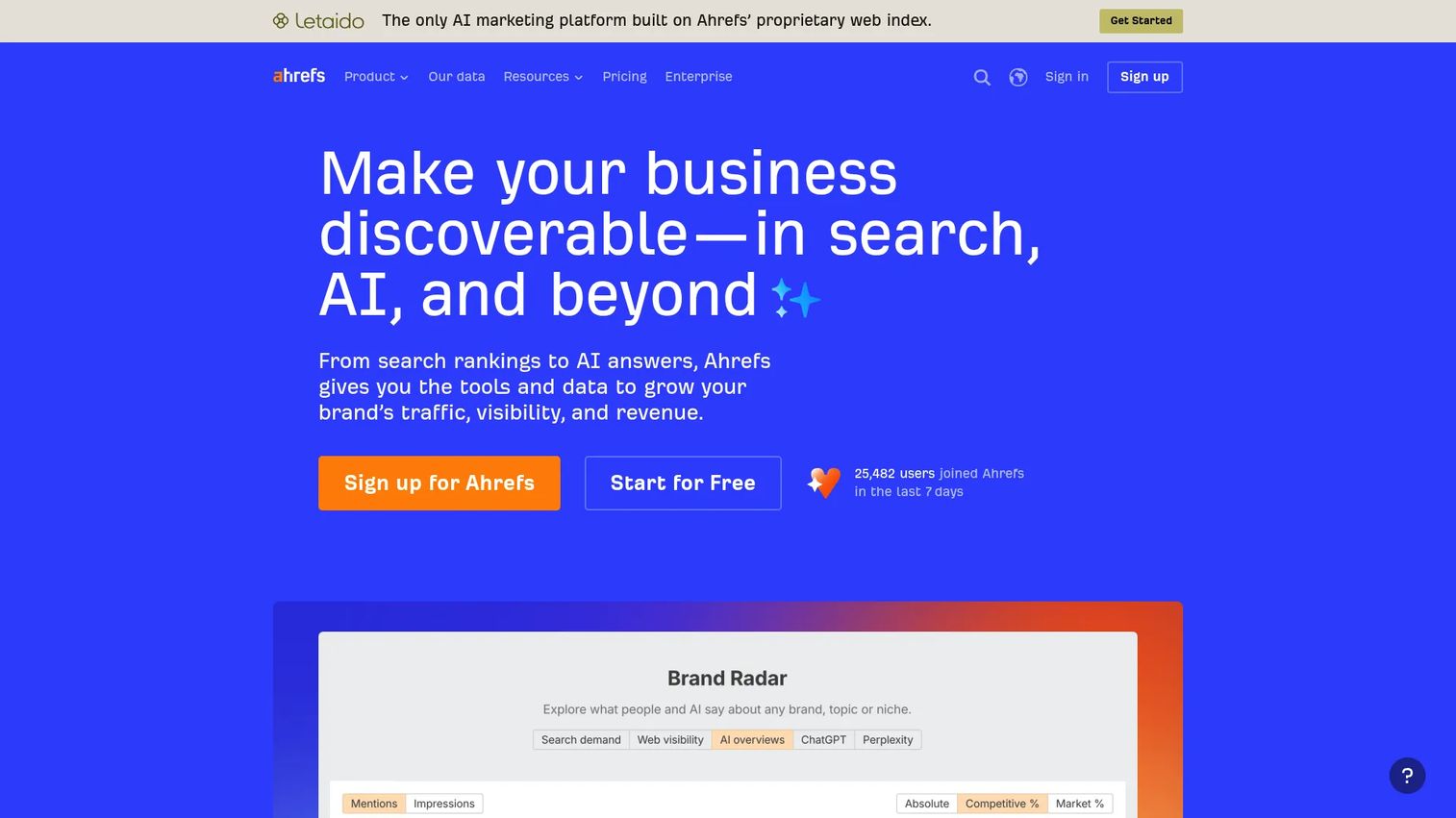
Ahrefs supports website research and competitive SEO analysis through tools including Site Explorer and Keywords Explorer. Its wider platform also includes Rank Tracker and Site Audit.
For local campaigns, evaluate it around website visibility and content opportunities. Map-grid requirements should be assessed separately rather than assumed from general SEO coverage.
Best for: SEO teams that need organic research alongside local business monitoring.
Key features
- Site Explorer
- Keywords Explorer
- Rank Tracker
- Site Audit
- Content Explorer
A local campaign can involve both listing improvements and website work. Use research to decide whether the next task belongs on a location page or elsewhere.
For example, investigate which competing pages address services your website barely explains. Then assess whether creating or improving content fits your commercial priorities.
Backlink research provides another perspective on competing websites. Treat that evidence as part of an investigation, not a promise that acquiring a link will change Maps positions.
If you already pay for a broad SEO platform, identify the specific missing workflow before adding Ahrefs. Tool consolidation matters when several subscriptions repeat the same research tasks.
The lowest entry price should not determine your buying decision. Confirm that your intended workflow is included in the chosen package.
Why choose Ahrefs: Choose it when local campaigns require substantial website and competitive research. A dedicated geographic tracker remains the relevant comparison for map-first measurement.
Ahrefs pricing: Ahrefs Free is available; Starter costs $29/month, and Lite costs $129/month. Standard is $249/month, while Advanced is $449/month, excluding tax.
See Ahrefs pricing for current package details.
G2 rating
10. Rating Captain Local
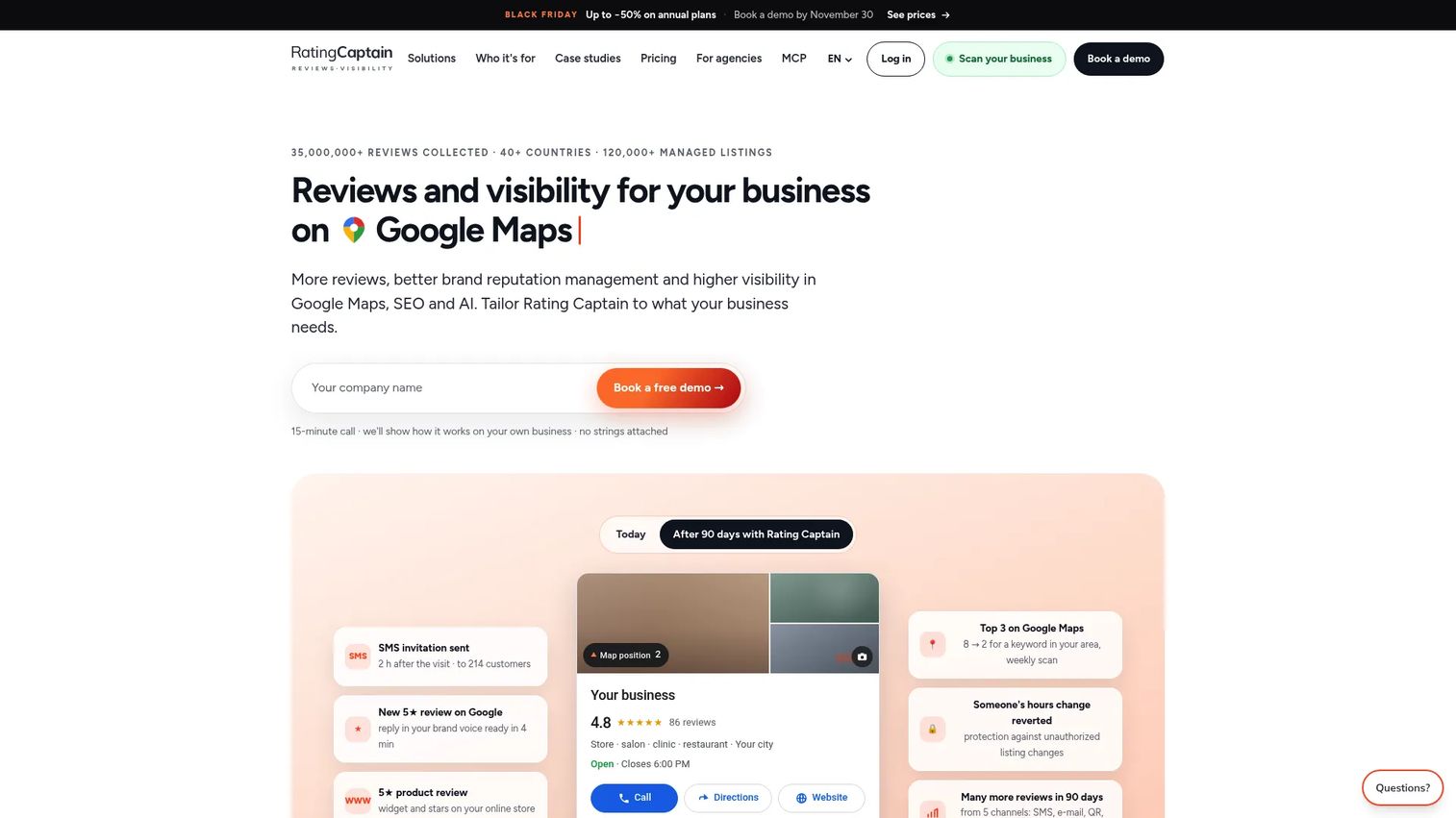
Rating Captain Local combines local keyword tracking and map grids with Google Business Profile operations. Its feature set includes profile monitoring and protection, plus AI-assisted publishing and review responses.
This combination fits teams that manage listing activity alongside visibility. The buying question is whether those tasks belong with the same operator.
Best for: Local businesses and agencies seeking map monitoring with profile maintenance.
Key features
- Local keyword tracking and map grids
- Business profile monitoring and protection
- AI-generated posts
- Scheduled publishing
- Assisted review responses
Start an evaluation with one location and a defined operating routine. Review the visibility findings, assign a profile task, and inspect the approval process before publishing.
Generated responses still need business context. Set clear rules for complaints and sensitive situations that require a person’s judgment.
For multi-location teams, distinguish tracking responsibility from reputation management. They can share a platform without sharing every permission or approval.
The free Explorer plan supports one location. Paid packages expand location capacity and usage limits, with additional agency functions at higher levels.
Keep Rating Captain Local’s offer separate from other review-collection packages on the vendor’s website. Matching the product to the quoted plan prevents a misleading cost comparison.
Why choose Rating Captain Local: Choose it when profile operations and geographic monitoring need to share a workflow. Evaluate reporting requirements separately before adopting it across client accounts.
Rating Captain Local pricing: Explorer is free; Voyager costs $24 net/month. Orbiter costs $149 net/month, and Supernova costs $249 net/month.
See Rating Captain pricing for the relevant product packages.
G2 rating
Considerations when choosing a local rank tracker
Geographic precision
Choose measurement locations that reflect customer demand. Compare postal code targeting with coordinates and grid coverage before standardizing your setup.
For hyperlocal rank tracking, test the area around an actual storefront. A map that looks detailed can still miss your important service territory.
Search surface coverage
Write down whether your team needs Maps positions, Local Pack rankings, organic results, or Bing coverage. Confirm each requirement separately.
Also establish device requirements during evaluation. Avoid buying a broad SEO subscription before checking the search surfaces your customers use.
Reporting and attribution
Test exports and white-label local SEO reports using your own account structure. Check connector availability before planning an automated dashboard.
Pair visibility with business outcomes, while keeping attribution claims proportionate. A shared timeline is useful evidence, but it does not prove causation.
Competitor monitoring
Ask whether you can investigate which nearby businesses gained visibility. A position drop becomes more actionable when the report explains the surrounding competitive picture.
If share of voice matters, request the metric’s definition. Different calculation methods should not be treated as interchangeable.
Pricing that scales with locations
Model costs using expected keywords and scan frequency. Include grid credits, users, reporting access, and any separately purchased connections.
Choose a local SEO rank tracker that replaces identifiable work. Compare the subscription with the time currently spent collecting evidence and preparing reports.
Conclusion
Whitespark Local Rank Tracker is the starting point for dedicated local monitoring and agency reporting. Semrush Map Rank Tracker deserves attention when geographic heatmaps drive your analysis.
Localo and Rating Captain Local connect visibility work with profile operations. Evaluate them when the same team owns ongoing listing maintenance.
Google Business Profile and Maps provide direct operational context. Keyword Planner helps define research targets, while Looker Studio organizes supplied data and Ahrefs supports broader SEO investigation.
For multiple clients or locations, pilot a dedicated tracker using consistent settings. If you are diagnosing one business, begin with profile accuracy and a focused visibility check.
Build executive reporting only after the underlying measurements are stable. The useful outcome is a clear decision about where to invest next.
Show how your marketing product works
If you sell marketing software, Guideflow supports a different job. Its interactive demos help explain product workflows through website embeds, sales follow-ups, customer education, and partner enablement.
Show prospects how a reporting task works, then reuse that experience across the customer journey.
Start your journey with Guideflow today!
FAQs
Whitespark is a practical starting point for agencies needing geographic tracking and white-label reporting. Evaluate candidates with an existing client account, including the report your team must deliver each month. Prioritize reliable exports and manageable account organization over a longer feature list. The best purchase removes recurring preparation work while preserving the detail clients need to approve their next investment.
A local rank checker captures a position at a particular moment and location. A tracker records comparable observations over time, allowing you to investigate trends. Use a checker for an initial diagnosis or a specific question. Choose ongoing online local rank tracking when you need evidence for recurring client reports, campaign evaluations, or decisions across several business locations.
Accuracy depends on whether the measurement represents the search context you intend to study. Geographic settings and device selection matter, as do the search surface and collection time. Compare consistent configurations rather than expecting every manual search to reproduce the same position. Investigate unexpected results with customer-view checks, and document configuration changes before interpreting them as gains or losses.
You can inspect results manually, and some dedicated platforms provide free tracking allocations. Semrush Map Rank Tracker and Rating Captain Local offer free options with defined allowances. Evaluate whether those allowances cover your keywords and geographic footprint before building a reporting routine around them. Regular historical analysis across several locations may justify a paid plan once your measurement requirements are clear.
Include the tracked query and geographic reference, along with the search surface and collection date. Show comparable historical observations and relevant competitor context so readers can understand the movement. Add business outcomes where available, clearly separating position changes from attributed revenue. Finish with the recommended action and its owner, rather than leaving clients to interpret a heatmap without guidance.
Weekly monitoring is a reasonable starting point when your team reviews optimization work on that schedule. Consider daily collection during active campaigns or when competitive changes require closer investigation. Match frequency to the decisions you can make, rather than collecting more data automatically. Keep the schedule consistent enough to distinguish a sustained pattern from an isolated observation before changing your priorities.
Yes, a business can appear differently across nearby search locations. Grid or pin-based rank tracking helps visualize that variation within a defined territory. Choose locations that represent where customers search and where your business operates, rather than scanning an arbitrary circle. When comparing periods, preserve the geographic footprint so a changed measurement area does not masquerade as an optimization result.
Google Business Profile provides listing controls and performance insights, but it does not replace a dedicated geographic ranking record. Use it to understand customer interactions alongside a tracker’s visibility measurements. That combination helps distinguish being discoverable from receiving meaningful inquiries. Review both against the same period, and keep profile changes documented so your team can investigate possible relationships without overstating attribution.