
Candidates check your Glassdoor page before they read your job description. They ask employees on LinkedIn what it's actually like before they open your application. By the time a strong candidate lands on your careers page, they have already formed an opinion, and a polished hero image does not change it.
That is the core problem employer branding software exists to solve. Trust is built by people, not by the recruiting team's copy. The market has responded: the global employer branding platform market hit $1.4B in 2025 and is projected to reach $3.4B by 2034 at a 12.3% CAGR, according to MarketIntelo (2025). The broader talent acquisition software market reached $20.63B in 2024 and is forecast to hit $46.75B by 2035, per Market Research Future (2024).
The shift underneath those numbers is simple. Employer branding used to be a soft awareness exercise. Now it has to prove candidate trust, extend reach through employee voices, and report on results the way a demand-gen team reports on pipeline. If you own traffic, conversion, or content distribution for talent, you need tools that measure lift, not just publish content.
What's inside
This guide is for talent acquisition, employer brand, people ops, and digital marketers who own or influence how a company attracts and converts candidates. We looked at platform-style suites and focused point solutions, not every adjacent HR tool.
We chose the seven tools below on four criteria:
- Employee advocacy depth: does it turn employees into authentic storytellers, or just publish corporate posts
- Candidate experience: does it improve the branded career site and application journey
- Employer branding analytics: does it measure reach, engagement, and downstream candidate actions
- Governance and stack fit: approvals, brand control, and integration with your ATS and CRM
TL;DR
- Best for employee advocacy and analytics: DSMN8, for teams that want employees extending reach with measurable social sharing
- Best for employee-generated content and advocacy at scale: The Martec, for teams building an employer-brand content engine
- Best for research and strategy: Universum, for teams refining their EVP with benchmarking data
- Best for AI screening plus branding: Puck, for recruiting teams that want a branded career site in the same tool
- Best for social recruiting reach: CareerArc, for teams distributing jobs and brand content across social
- Best for enterprise recruiting operations: Beamery and Jobylon, for larger teams with complex hiring workflows
What employer branding software is
Employer branding software is a category of employer branding tools that helps companies manage, publish, distribute, and measure their employer brand across owned and social channels. The core job is turning an EVP, employee stories, and career page content into candidate-facing experiences that build trust and convert applicants.
Most platforms cluster around a few capabilities:
- Employee advocacy: letting employees share company content and their own stories through an employee advocacy platform
- Candidate trust and social proof: surfacing authentic employee voices instead of polished corporate messaging
- Branded career site support: publishing and customizing a career experience separate from a generic jobs list
- Employer branding analytics: tracking reach, engagement, clicks, and downstream application actions
- Content governance and approvals: permissions, review flows, and brand consistency when many teams contribute
Some of these tools overlap with talent acquisition software and applicant tracking systems. The distinction is intent. Employer branding platforms shape perception and drive engagement at the top of the funnel. An ATS manages applicants once they are already in the pipeline. The strongest stacks connect the two so brand engagement feeds clean data back into hiring.
Why employer branding matters now
Candidates compare employers the way buyers compare software: across review sites, social feeds, and career pages, mostly before anyone from your team is involved. A generic careers page with strong ad traffic still converts poorly if the surrounding social proof is thin or absent.
Treating employer brand like pipeline changes the conversation. More qualified visibility at the top, better conversion in the middle, and clearer attribution at the bottom. Employee advocacy is the engine because a post from an engineer on your team carries more candidate trust than any campaign asset. The tools that win in 2026 are the ones that measure that trust and tie it to hiring outcomes.
When to use employer branding software
Build a branded career site
Reach for a dedicated career experience when job traffic is high but application conversion is weak. A generic jobs page treats every visitor the same. A branded career site reinforces your EVP, shows real teams, and reduces the friction between "interested" and "applied." If you are spending on recruitment ads but seeing high bounce, the destination is usually the problem.
Activate employees as storytellers
Employee advocacy is the right move when you need to reach passive talent who never visit job boards. Authentic employee stories travel further than corporate posts and land with more credibility. Expect these outcomes:
- Wider organic reach into networks you cannot buy
- Higher engagement than brand-account posts
- More candidate trust from real faces and real voices
- A steady stream of employee storytelling for career page content
Measure employer brand performance
Bring in employer branding analytics when leadership wants numbers, not awareness slides. This matters when you are defending budget or reporting on ROI. Track reach, engagement, click-through, and application conversion, then connect those signals to hires. Attribution is imperfect, but a baseline plus trend lines beats anecdotes every time.
Comparison table
The list below is ordered to move from advocacy and content platforms, through career-site and social distribution tools, to enterprise talent CRM. Pricing and G2 ratings reflect the most current values available at generation time; where a vendor keeps pricing private, we note that plainly.
| # | Product | Best for | Key differentiator | Pricing | G2 rating |
|---|---|---|---|---|---|
| 1 | Universum | Research and EVP strategy | Employer brand research and advisory | Custom | 4.5/5 |
| 2 | The Martec | Employee content at scale | AI-powered employee content and advocacy | Contact for pricing | Not rated |
| 3 | DSMN8 | Employee advocacy and analytics | Advocacy platform with reporting depth | From $799/mo (managed services) | 4.6/5 |
| 4 | Puck | Recruiting plus employer brand | AI Recruiter screening and branding | From $300/mo | Not rated |
| 5 | CareerArc | Social recruiting reach | Automated social job and brand posting | From $196/mo | Not rated |
| 6 | Jobylon | Customizable ATS plus branding | Career sites plus job advertising | Custom | 4.8/5 |
| 7 | Beamery | Enterprise talent operations | Talent CRM and skills intelligence | Custom | 4.1/5 |
Best 7 employer branding software for 2026
1. Universum
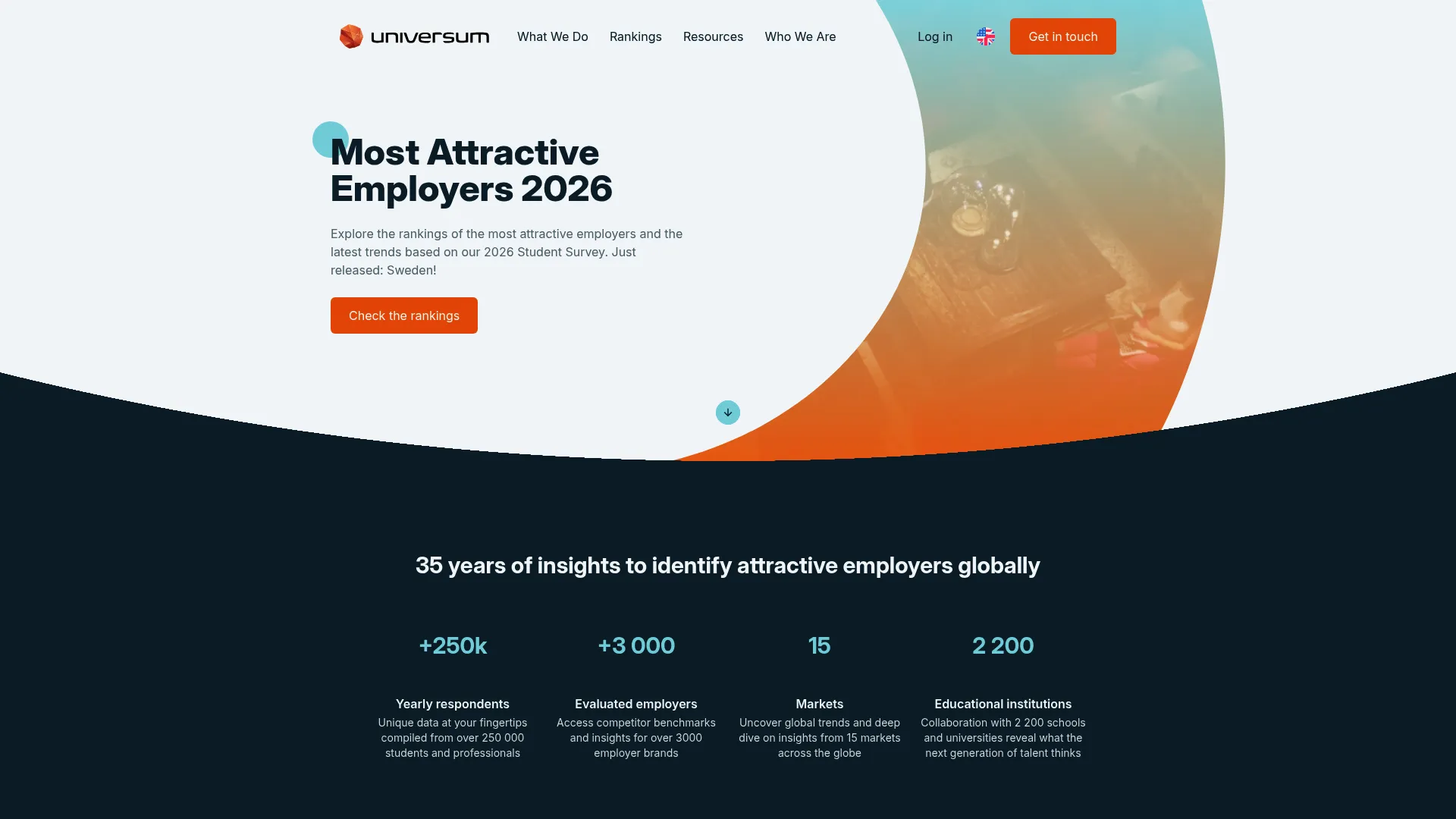
Universum is an employer branding research, advisory, and training company rather than a pure publishing tool. It helps large organizations understand how talent perceives them, benchmark against competitors, and sharpen their EVP with data instead of guesswork. If your team keeps debating positioning without evidence, Universum brings the research to end the debate.
Best for: Enterprises that want research-led employer brand strategy and EVP development.
Key strengths
- Employer brand and talent insights with benchmarking
- Employer value proposition development
- Employer brand concepts and content
- Advisory and training for internal teams
Why choose Universum: It sits earlier in the process than most tools here. You use Universum to decide what your employer brand should say, then use publishing and advocacy platforms to distribute it. It fits teams that treat positioning as a research problem first.
Universum pricing: Universum does not publish pricing on its site. Engagements run through a contact and book-a-call flow, so expect custom pricing scoped to your research and advisory needs.
2. The Martec
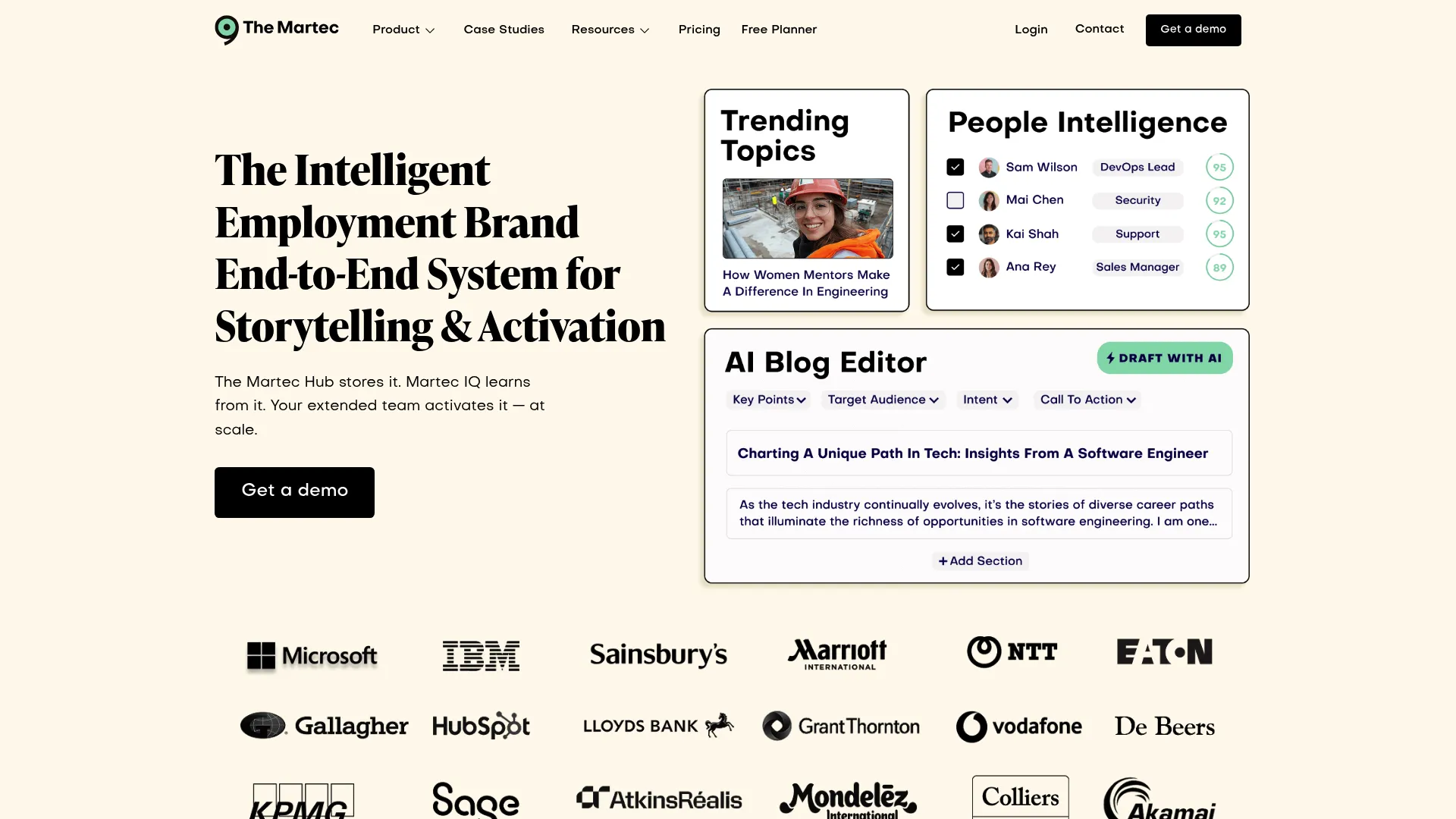
The Martec is an AI-powered talent marketing platform built around employee-generated content. It collects video and written stories from your own people, then turns them into career page content, social posts, and advocacy assets. As an employee advocacy platform, it leans hard into authenticity: real employees talking about real work.
Best for: Employer branding teams that need a steady flow of employee content and advocacy at scale.
Key strengths
- Employee video and written content collection
- Employee advocacy and social sharing
- AI-assisted job descriptions and career site content
- Conversion widgets for career pages
Why choose The Martec: It solves the hardest part of employer branding, which is producing enough authentic content to feed every channel. If your bottleneck is content velocity rather than strategy, this is the operating layer that keeps the pipeline full.
The Martec pricing: The Martec does not list public numeric pricing. The core platform is licensed by admin-user seats with optional add-ons like recruiter job descriptions and conversion widgets, all quoted on request.
3. DSMN8
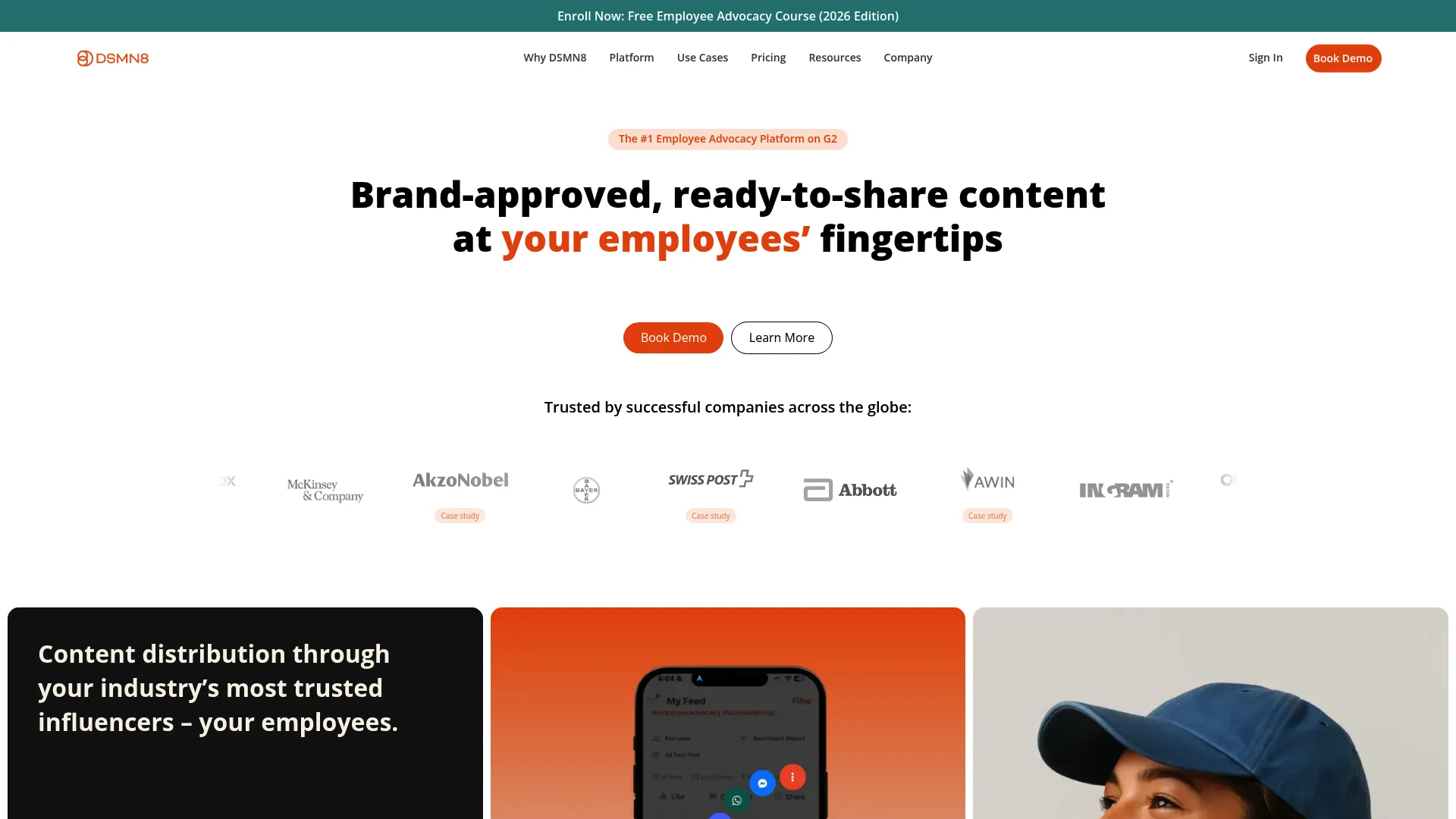
DSMN8 is an employee advocacy platform focused on getting employees to share content and measuring what that sharing produces. It gives employees a content library, one-click sharing, and analytics that tie social sharing to reach and engagement. For employer brand teams, that means turning your workforce into a distribution channel with numbers attached.
Best for: Mid-market to enterprise teams running structured employee advocacy programs.
Key strengths
- Analytics dashboard and reporting
- Boost Post one-click sharing
- Content library and AI content tools
- Employee leaderboards and participation tracking
Why choose DSMN8: The analytics depth is the draw. If you need to report on earned reach and prove ROI from advocacy, DSMN8 gives you the reporting to defend the program. It fits teams where "did advocacy actually work" is a question leadership keeps asking.
DSMN8 pricing: Core platform pricing is quoted on request. DSMN8 publicly lists managed service tiers starting at $799 per month for Bronze, $1,499 per month for Silver, and $1,999 per month for Gold.
4. Puck
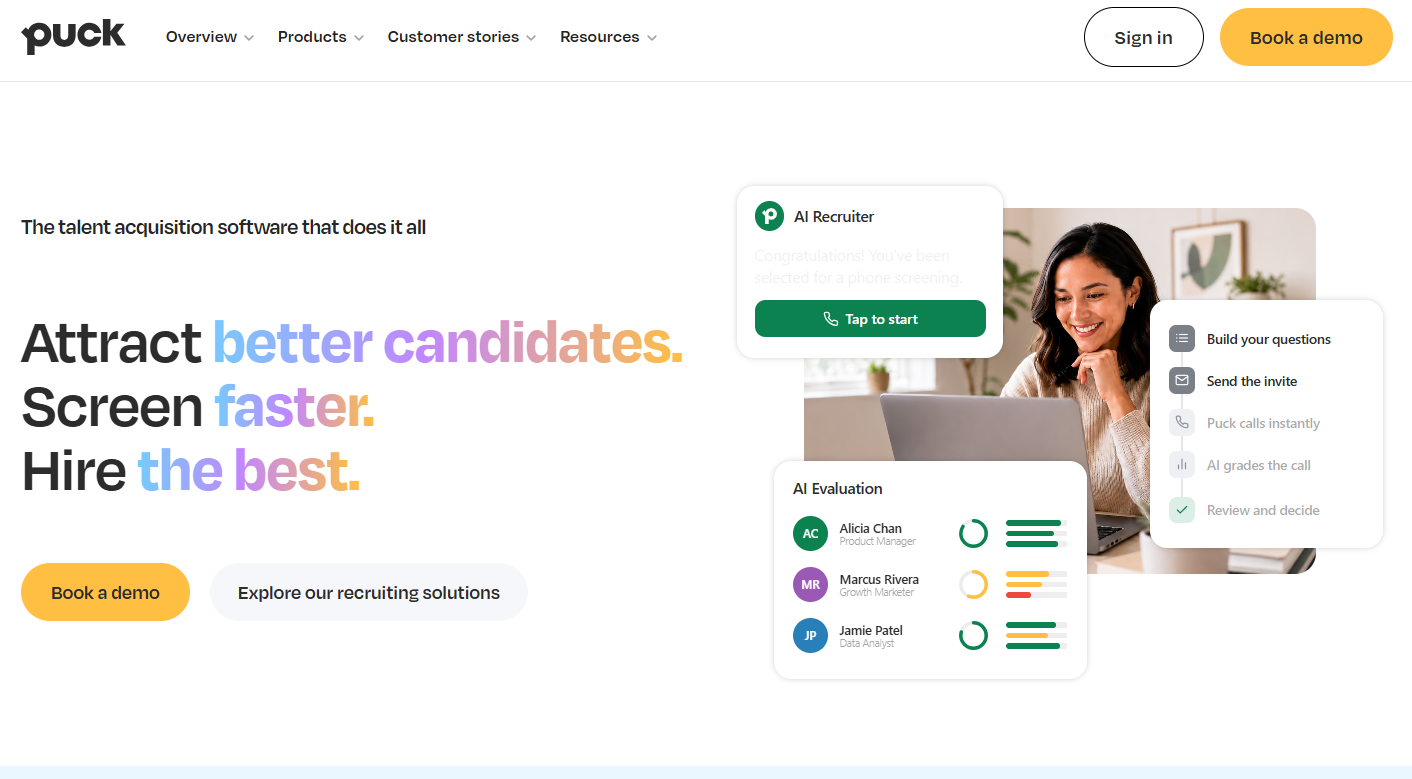
Puck is recruiting software positioned around AI screening, employer branding, and candidate engagement. Its standout feature is AI Recruiter, an asynchronous phone-screening tool that handles first-round conversations, paired with a lightweight ATS and talent CRM. Employer branding sits inside the same platform through career sites and branded content.
Best for: Recruiting teams that want AI screening plus employer branding in a single tool.
Key strengths
- AI Recruiter asynchronous phone screening
- Lightweight ATS
- Talent CRM and candidate matching
- Employer branding and career site tools
Why choose Puck: The async AI screening is the differentiator. If your team burns hours on repetitive first-round calls, Puck moves that work off your plate while keeping candidate experience branded and consistent.
Puck pricing: Puck plans start at $300 per month for Starter, $600 per month for Standard, and $1,000 per month for Pro, all billed yearly, with custom Enterprise pricing and no free tier.
5. CareerArc
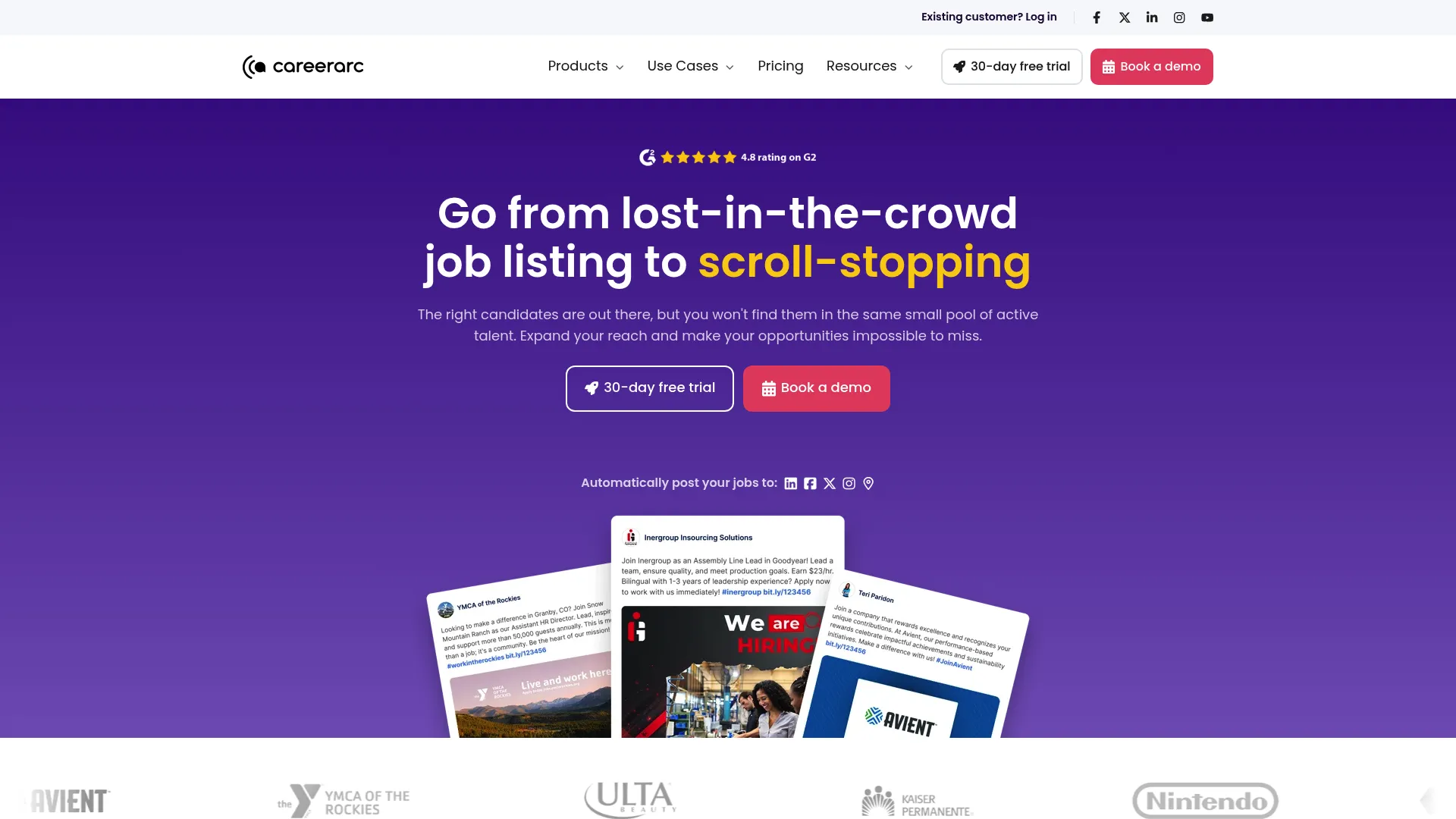
CareerArc is social recruiting software that automates publishing jobs and employer-brand content across social channels. It connects to your ATS, autosyncs job feeds, and generates captions with AI so your team is not manually posting every role. For social sharing at volume, it removes the grind of keeping every channel current.
Best for: Mid-market and enterprise hiring teams that want automated social recruiting and ATS-connected job promotion.
Key strengths
- AI-generated captions
- Unlimited publishing across channels
- ATS and XML feed autosync
- Unlimited connected social profiles
Why choose CareerArc: It is built for reach and distribution rather than research or screening. If your gap is getting jobs and brand content in front of passive talent on social, CareerArc handles the automation so recruiters focus on candidates.
CareerArc pricing: Starter starts at $196 per month and Growth at $959 per month, both with monthly and annual options. Enterprise is custom on an annual commitment. A 30-day free trial is available.
6. Jobylon
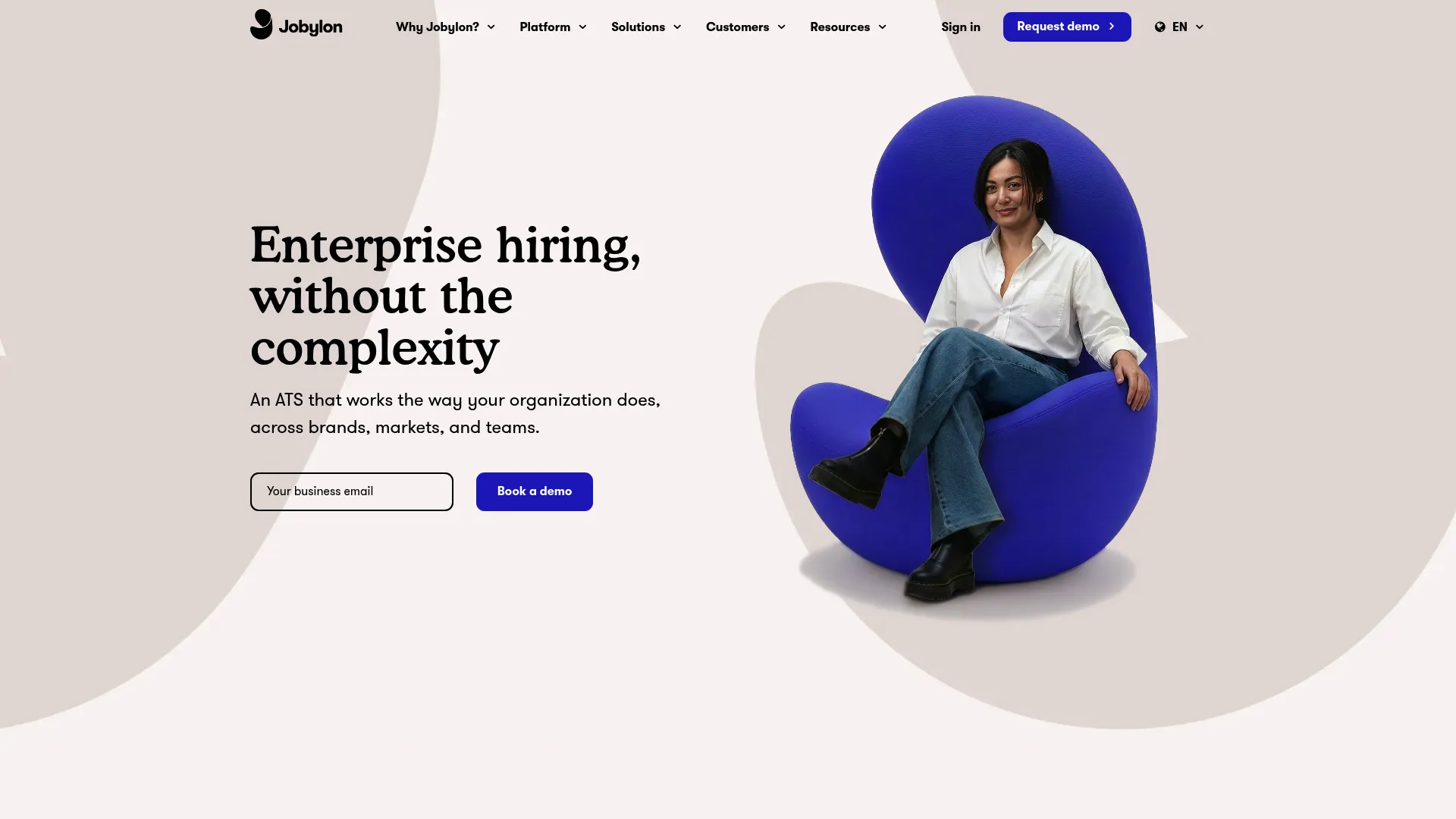
Jobylon is a talent acquisition and recruiting platform that pairs a customizable ATS with employer branding and job advertising. It supports branded career sites, social recruiting, candidate management, and analytics in one workflow. The pitch is a structured hiring journey where branding and process are not separate systems.
Best for: Mid-market and enterprise teams that want a customizable ATS with built-in job advertising and branding.
Key strengths
- Social recruiting and job advertising
- Candidate management and hiring workflow tools
- Employer branding and analytics
- Customizable branded career sites
Why choose Jobylon: It fits teams that want branding and hiring workflow in the same platform rather than stitching tools together. The customizable career sites and job advertising make it a fit where a polished, structured candidate journey matters.
Jobylon pricing: Jobylon does not publish pricing on its site. The company runs a book-a-demo flow and references discounts and credits for job advertising, so pricing is scoped per team on request.
7. Beamery
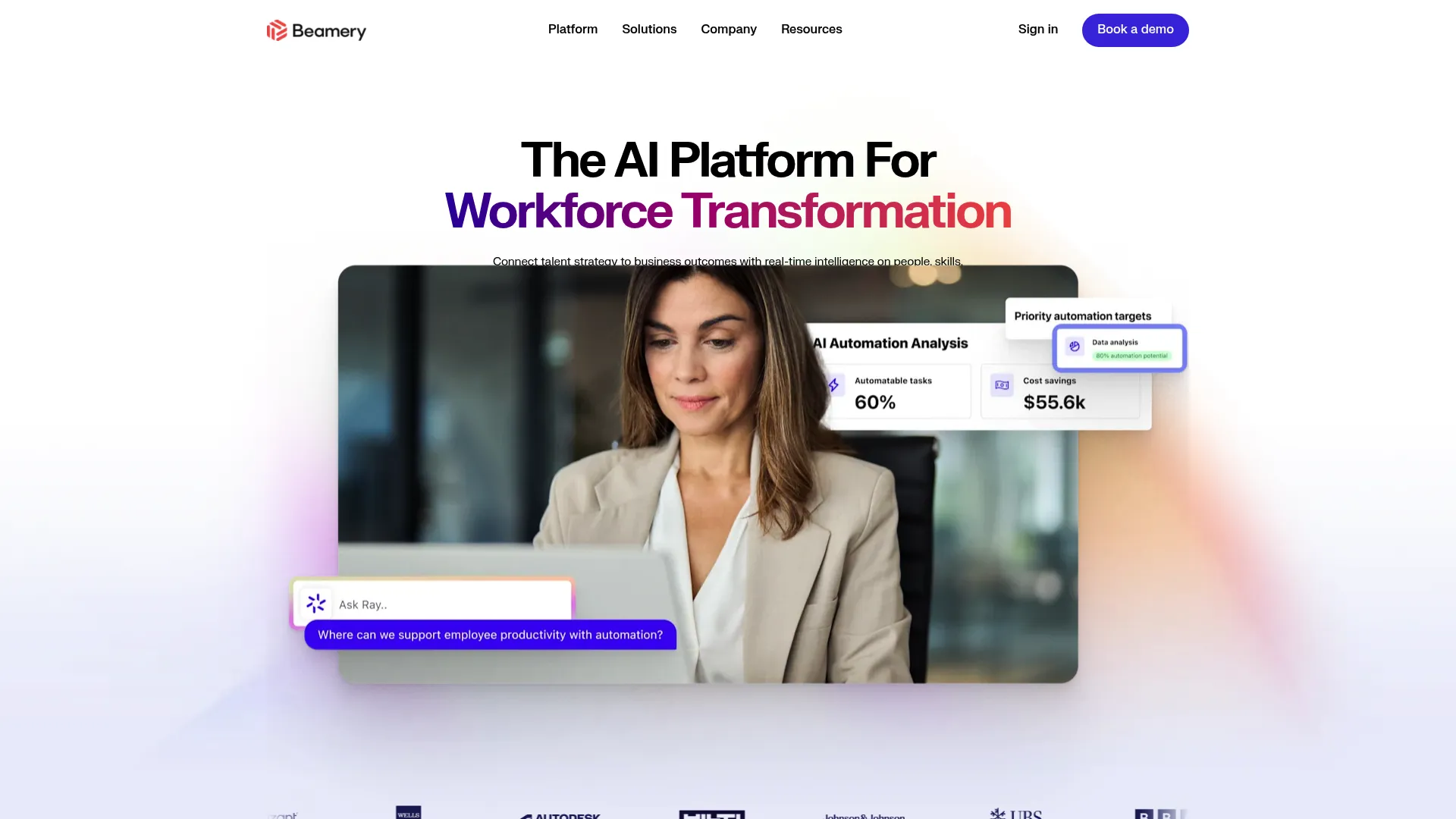
Beamery is an AI platform for workforce transformation, built around skills, talent, and workforce intelligence. Its talent CRM and candidate sourcing sit alongside employer-brand support, making it a fit for large organizations managing complex, high-volume recruiting operations. Beamery is less a branding point tool and more the enterprise layer that branding feeds into.
Best for: Large enterprises hiring, retaining, and planning workforce skills at scale.
Key strengths
- Workforce Intelligence
- Skills Intelligence
- Talent CRM and candidate sourcing
- Employer-brand and pipeline support
Why choose Beamery: It is the pick when recruiting operations are the real challenge, not just brand visibility. Enterprise teams with multi-region hiring and skills planning get a CRM-grade backbone that connects brand engagement to long-term talent strategy.
Beamery pricing: Beamery does not publish public pricing. The company states pricing and limits are available on request through sales, so expect custom enterprise scoping.
Considerations
Employee advocacy depth
Check whether the tool only publishes company posts or truly enables an advocacy program. Look for approvals, scheduling, employee participation controls, and leaderboards. A platform that just broadcasts corporate content will not generate the authentic social proof that moves passive candidates.
Analytics and attribution
Verify the platform measures more than vanity impressions. You want clicks, reach, engagement, and ideally downstream candidate actions like application starts. Reporting has to be something leadership can read without a translator, or the ROI conversation stalls before it starts.
Career site and candidate experience
Make sure the tool improves the candidate journey, not just your internal workflow. Test mobile performance, content flexibility, and page customization. A branded career site that loads slowly or breaks on a phone will lose the exact candidates your ads paid to attract.
Governance and brand control
Confirm approval flows, permissions, and brand consistency features. This matters most when many teams and employees contribute content. Without governance, employer branding tools produce volume at the cost of coherence, and your brand drifts across every channel.
Stack integration
Check how the tool connects to your ATS, CRM, analytics, and social platforms. The goal is less manual work, not another silo. If engagement data does not flow into your hiring systems, you lose the attribution that justified the tool in the first place.
Conclusion
The right employer branding software depends on your main bottleneck. If it is strategy and positioning, start with Universum. If it is content velocity, The Martec keeps the pipeline full. For measurable employee advocacy and social sharing, DSMN8 gives you the analytics to prove ROI. Puck fits teams that want a branded career site with AI screening built in. CareerArc handles social distribution at scale, while Jobylon and Beamery serve larger teams that need branding wired into serious recruiting operations.
The decision rule is simple: optimize for trust, reach, conversion, or measurement, and pick the tool built for that job. Do not buy a platform and hope it fixes a problem it was not designed for. Map your weakest link first, then match the tool to it. A team drowning in first-round screens needs Puck, not a research subscription. A team defending budget to a CFO needs DSMN8's reporting, not another publishing surface.
FAQs
It helps teams manage employer brand content, run employee advocacy, publish branded career sites, and measure candidate engagement. The practical goal is attracting and converting talent by building trust across owned and social channels. Most employer branding tools combine content, distribution, and analytics in one workflow.
Start with reach, engagement, and click-through on branded content, then track application conversion and downstream hiring signals. The hard part is attribution, since a candidate may see employee posts, review sites, and your career page before applying. Establish a baseline first, then measure trend lines against hires and cost-per-hire rather than chasing a single perfect number.
An ATS manages applicants once they are in your pipeline: tracking, screening, and moving them through stages. An employer branding platform shapes perception and drives engagement earlier, before someone becomes an applicant. They are complementary, and the best stacks connect the two so brand engagement feeds clean data into the ATS.
Yes, when they help employees share authentic content and extend your brand reach to passive talent. An employee advocacy platform like DSMN8 or The Martec turns your workforce into a credible distribution channel. Look for governance and analytics so advocacy stays on-brand and measurable rather than random.
A branded career site reduces friction, reinforces trust, and makes the opportunity feel real through team stories and consistent messaging. A generic jobs page treats every visitor the same and often loses interested candidates before they apply. Better candidate journey quality usually shows up as lower bounce and higher application starts.
Focus on distribution, analytics, content control, and measurable lift, the same lens you apply to any acquisition channel. Ask what a new tool replaces, since tool sprawl and consolidation are constant pressures. Prioritize platforms that report attribution your leadership will actually believe and that integrate with the stack you already run.
There is no single winner. Enterprises should weigh security, content governance, integration depth with the ATS and CRM, and the ability to support employee participation at scale. Beamery and Jobylon suit complex recruiting operations, while research-led teams often start with Universum before layering advocacy and distribution tools on top.
Avoid platforms that only publish content with no measurement or governance, because you end up with volume and no proof of impact. Avoid tools that cannot support employee participation or report on reach and engagement. If a platform cannot show downstream candidate signals or connect to your hiring stack, it will not survive the next budget review.