Your drivers are your biggest operational risk and your least visible asset. You know when a vehicle needs service. You don't always know when a driver skipped a pre-trip inspection, let a a certification lapse, or drove hard enough to spike your insurance exposure.
Most fleet operators still stitch this together with spreadsheets, paper DVIRs, and a group text thread. It works until a compliance audit lands or a preventable incident hits the news. Then the gaps become expensive.
A driver management system closes those gaps by putting driver records, inspections, safety scores, documents, and real-time alerts in one place. The category is growing fast for a reason. The global driver and staff management software market was valued at $3.2 billion in 2025 and is projected to reach $9.4 billion by 2035 at an 11.4% CAGR, according to Future Market Insights (2025). Fleet management is the single largest application, accounting for 32.4% of driver management software revenue, per MarketIntelo (2025).
This is not about the Windows "update your drivers" meaning of the phrase. This guide is about fleet driver management software: the platforms that manage the humans behind the wheel, their safety behavior, their compliance obligations, and their day-to-day mobile workflows. If you are evaluating tools to get operational control over drivers without babysitting a spreadsheet, this shortlist is for you.
What's inside
This guide is built for fleet operators, safety leads, and operations managers evaluating driver management software for 2026. We selected eight platforms based on four criteria that actually move the needle: depth of driver safety and behavior tracking, inspection and compliance workflows (including eDVIR and ELD support), driver-facing mobile experience, and integration flexibility with your existing stack. Every tool here is a real fleet operations platform with verified pricing or plan structure, current G2 sentiment where available, and a documented feature set. No Windows driver utilities, no vaporware.
TL;DR
- Best for maintenance-led fleets: Fleetio pairs driver records with deep maintenance, inspection, and asset workflows.
- Best for digital inspections: Driveroo leads on visual inspection workflows and a strong driver management app experience.
- Best for telematics depth: Geotab offers an open telematics platform with granular driver behavior data.
- Best for real-time safety at scale: Samsara combines AI dash cams, telematics, and compliance in one place.
- Best for compliance-heavy trucking: Motive (and its former KeepTruckin brand) centers ELD, safety, and dispatch.
- Best for smaller fleets: Azuga delivers GPS tracking, driver scorecards, and rewards at a transparent per-vehicle price.
What is driver management software?
Driver management software is a system that centralizes driver records, safety behavior, compliance documents, inspections, and real-time visibility so fleet operators can manage the people behind the wheel, not just the vehicles. It sits at the intersection of safety, compliance, and operations, replacing scattered spreadsheets and paper forms with a single source of truth.
A strong driver management system usually covers the following:
- Driver records and documents: Licenses, certifications, medical cards, and training history with expiration alerts before compliance lapses.
- Inspections and DVIR: Digital pre-trip and post-trip inspections, eDVIR workflows, and defect reporting that flows straight to maintenance.
- Safety and behavior tracking: Driver scorecards, harsh-event detection, speeding alerts, and coaching workflows tied to telematics.
- Compliance automation: ELD hours-of-service logging, IFTA support, and audit-ready reporting for FMCSA and DOT requirements.
- GPS tracking and telematics: Real-time location, route visibility, geofences, and engine data from vehicle hardware.
- Mobile workflows: A driver-facing mobile app for inspections, messaging, documents, and daily tasks in the field.
- Alerts and integrations: Real-time alerts to managers plus an open API and integrations into maintenance, HR, and payroll systems.
The category overlaps heavily with fleet management software. The distinction is emphasis: fleet management leads with the asset, while driver management leads with the person and their safety, compliance, and behavior. Most modern platforms deliver both, which is why the tools below blur the line.
When to use driver management software
Get compliance under control before an audit
If your DVIRs live on paper and your certification tracking is a shared spreadsheet, you are one audit away from a bad week. Driver management software automates compliance record-keeping, flags expiring documents, and produces audit-ready reports on demand. This is the trigger for most regulated fleets, especially those running ELD-mandated vehicles.
Turn safety from reactive to proactive
Waiting for an incident report is the expensive way to manage risk. A driver safety management system surfaces harsh braking, speeding, and distraction patterns through telematics and dash cams, then routes coaching to the right drivers. Fleets prioritizing insurance costs and incident reduction lean on this hard.
Give managers real-time visibility into the field
When drivers are distributed and mobile, spreadsheets go stale within hours. Driver management software gives managers live dashboards for location, inspection status, and alerts, so decisions happen on current data. This matters most for fleets with dispatch coordination and time-sensitive routes.
Comparison table
Here is how the eight platforms compare on intent, key use case, pricing, and current G2 sentiment. Pricing reflects each vendor's published plans as of July 2026. Where a vendor gates pricing behind a sales conversation, that is noted directly.
| # | Product | Intent | Key use case | Pricing | G2 rating |
|---|---|---|---|---|---|
| 1 | Fleetio | Maintenance-led fleet operations | Driver records, inspections, and asset management | From $4 per vehicle/mo (billed annually) | Not published |
| 2 | Driveroo | Digital inspections and driver app | Visual inspection workflows and maintenance | From $5 per asset/mo (annual) | 4.9/5 |
| 3 | Geotab | Open telematics platform | Driver behavior data and reporting | Contact sales | 4.5/5 |
| 4 | Verizon Connect | Centralized fleet tracking | GPS tracking, safety, and compliance | Quote-based | 3.8/5 |
| 5 | Samsara | Connected operations at scale | AI safety, telematics, and compliance | Contact sales | 4.5/5 |
| 6 | Motive | Compliance and safety operations | ELD, driver safety, and workforce management | Contact sales | 4.4/5 |
| 7 | KeepTruckin | Trucking safety and telematics | ELD-centric driver management (now Motive) | Contact sales | 4.5/5 |
| 8 | Azuga | GPS tracking for smaller fleets | Driver scorecards, safety, and rewards | From $25 per vehicle/mo | 4.7/5 |
1. Fleetio
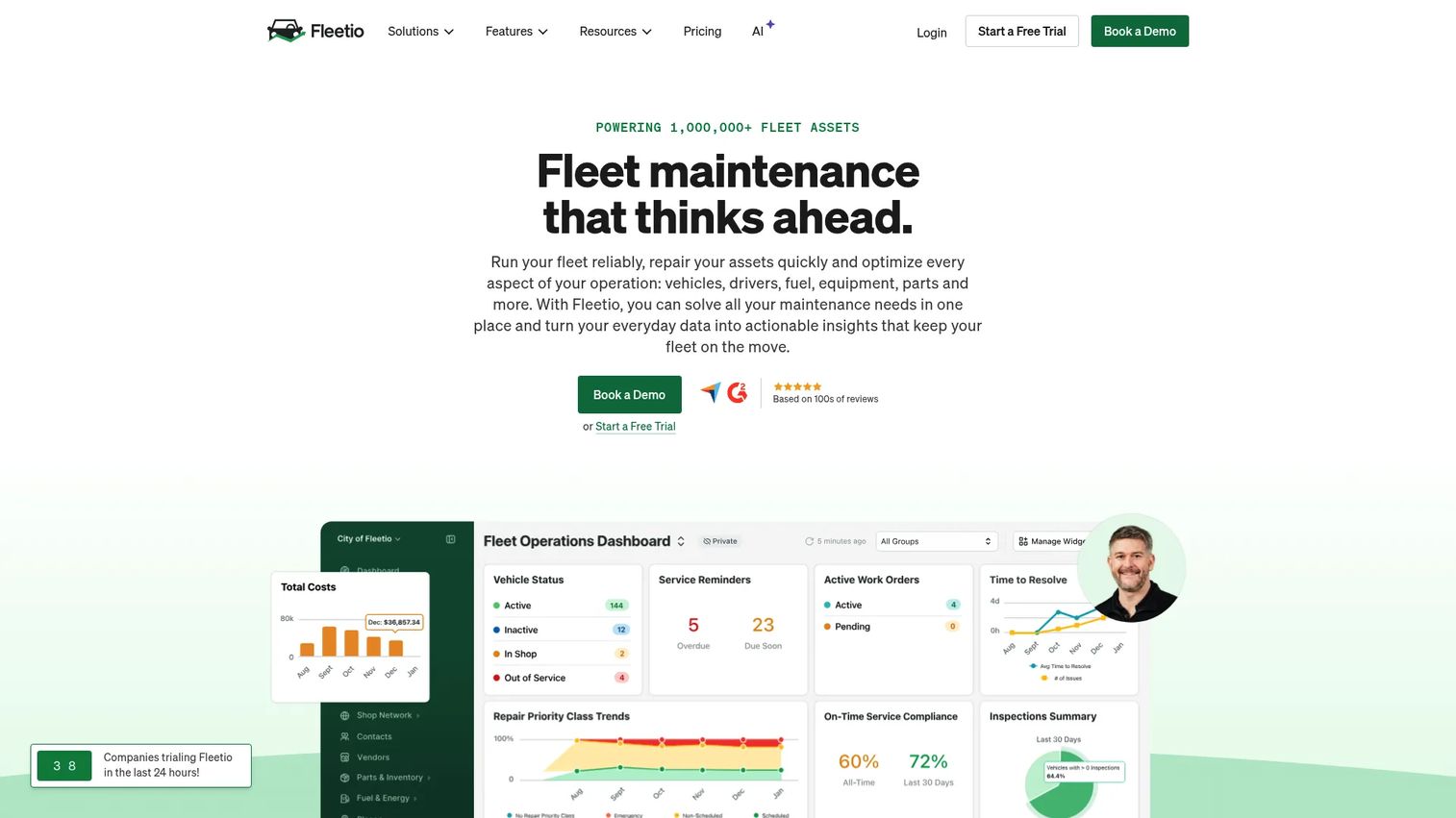
Fleetio is cloud-based fleet maintenance and asset management software that treats driver management as part of a larger operational system. Instead of bolting driver records onto a tracking tool, it connects drivers to inspections, service history, and asset data in one web-based platform. That makes it a strong fit for fleets where maintenance and driver oversight cannot be separated.
The platform handles vehicle inspections through digital forms, so a driver's pre-trip check flows straight into work orders and service reminders. Parts inventory and asset tracking sit alongside driver records, which means a defect flagged in an inspection becomes a maintenance task without anyone re-keying data. For operations managers drowning in maintenance overhead, that closed loop is the draw.
Best for: Fleet teams that need one web-based system to manage maintenance, inspections, and driver assets together.
Key strengths
- Maintenance scheduling: Service reminders and preventive maintenance tied to vehicle and driver activity.
- Digital inspections: Configurable inspection forms and DVIR workflows that feed directly into work orders.
- Parts and asset tracking: Inventory management so defects flagged by drivers link to available parts and service history.
Why choose Fleetio: If your operation lives and dies by maintenance uptime, Fleetio's advantage is the tight loop between what drivers report and what your shop acts on. It is less of a pure driver safety telematics tool and more of an operations backbone where driver workflows feed asset health.
Fleetio pricing: Fleetio publishes three plans, all billed annually: Essential at $4 per vehicle per month, Professional at $7 per vehicle per month, and Premium at $10 per vehicle per month. Prices vary by fleet size band, contract term, and payment terms. There is a 14-day free trial with no credit card required, though no permanent free tier is offered.
2. Driveroo
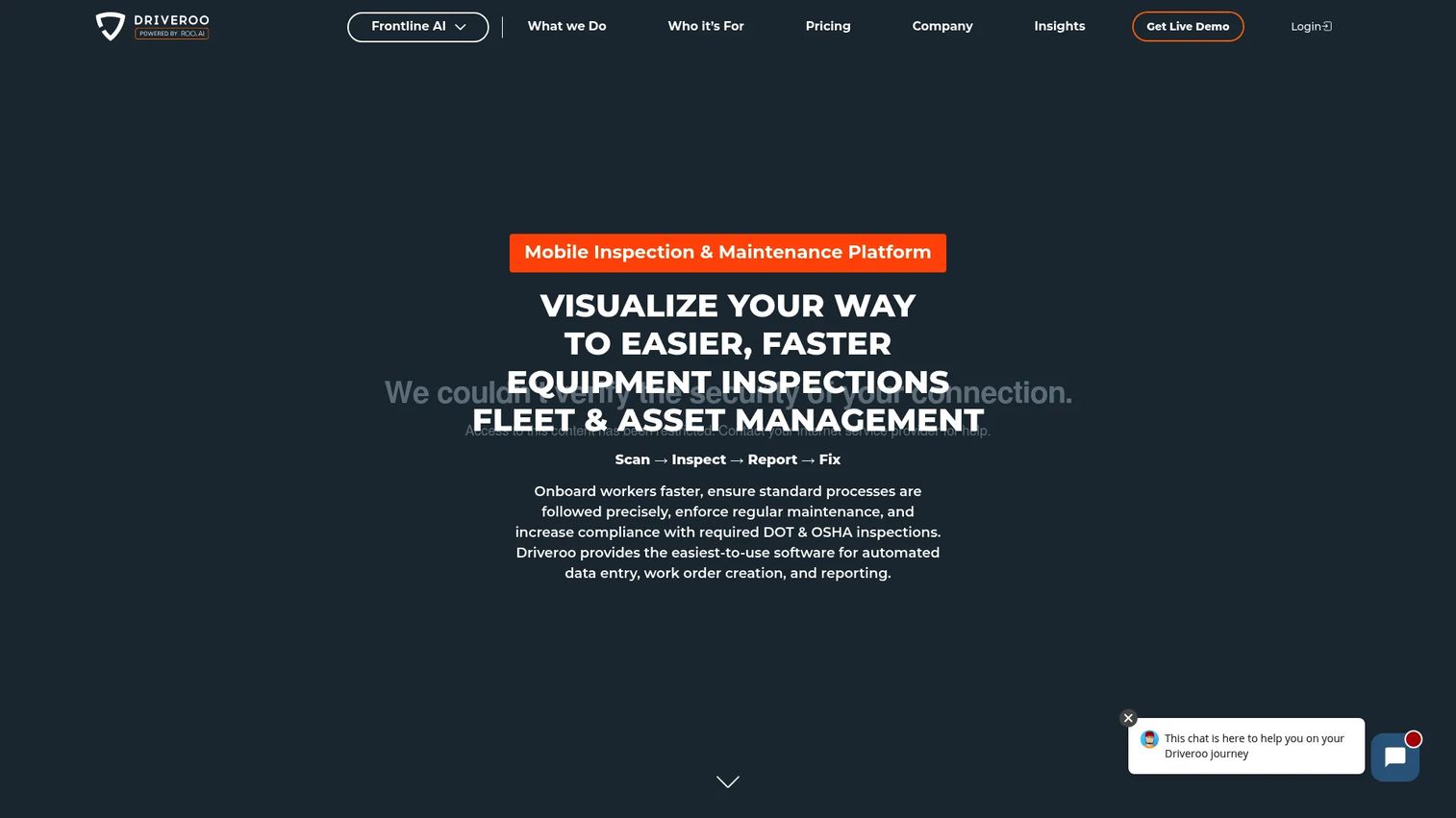
Driveroo is asset and fleet management software built around digital inspections, maintenance, and work management. Its standout is the visual inspection workflow: drivers document vehicle condition with photos and videos through a mobile app, giving managers evidence-based records instead of a checkbox someone may have rushed. For fleets where inspection quality drives everything downstream, that visual layer matters.
The platform pairs those inspections with work orders, alerts, and reminders, plus an open API and offline mobile apps that keep working when drivers lose signal in the field. That mobile-first design makes Driveroo one of the more capable driver management app experiences on this list, especially for teams where drivers are the primary users, not just the subjects.
Best for: Teams needing high-quality digital equipment and fleet inspections with connected maintenance workflows.
Key strengths
- Visual inspection workflows: Photo and video capture that turns inspections into evidence, not just a form.
- Offline mobile apps: Field workflows that keep functioning without connectivity, syncing when signal returns.
- API and integrations: An open API to connect inspection and maintenance data into your broader stack.
Why choose Driveroo: Driveroo fits teams that want drivers actively engaged in the day-to-day, submitting rich inspections and receiving alerts, rather than passively tracked. Its 4.9/5 G2 rating reflects strong sentiment around the app experience and inspection depth.
Driveroo pricing: Driveroo offers three annual-contract plans. Essentials starts at $5 per asset per month and includes inspections, asset management, and alerts. Pro is $7 per asset per month and adds preventive maintenance and work orders. Enterprise is contact-sales and adds advanced features. Minimums apply, and all plans require an annual contract.
3. Geotab
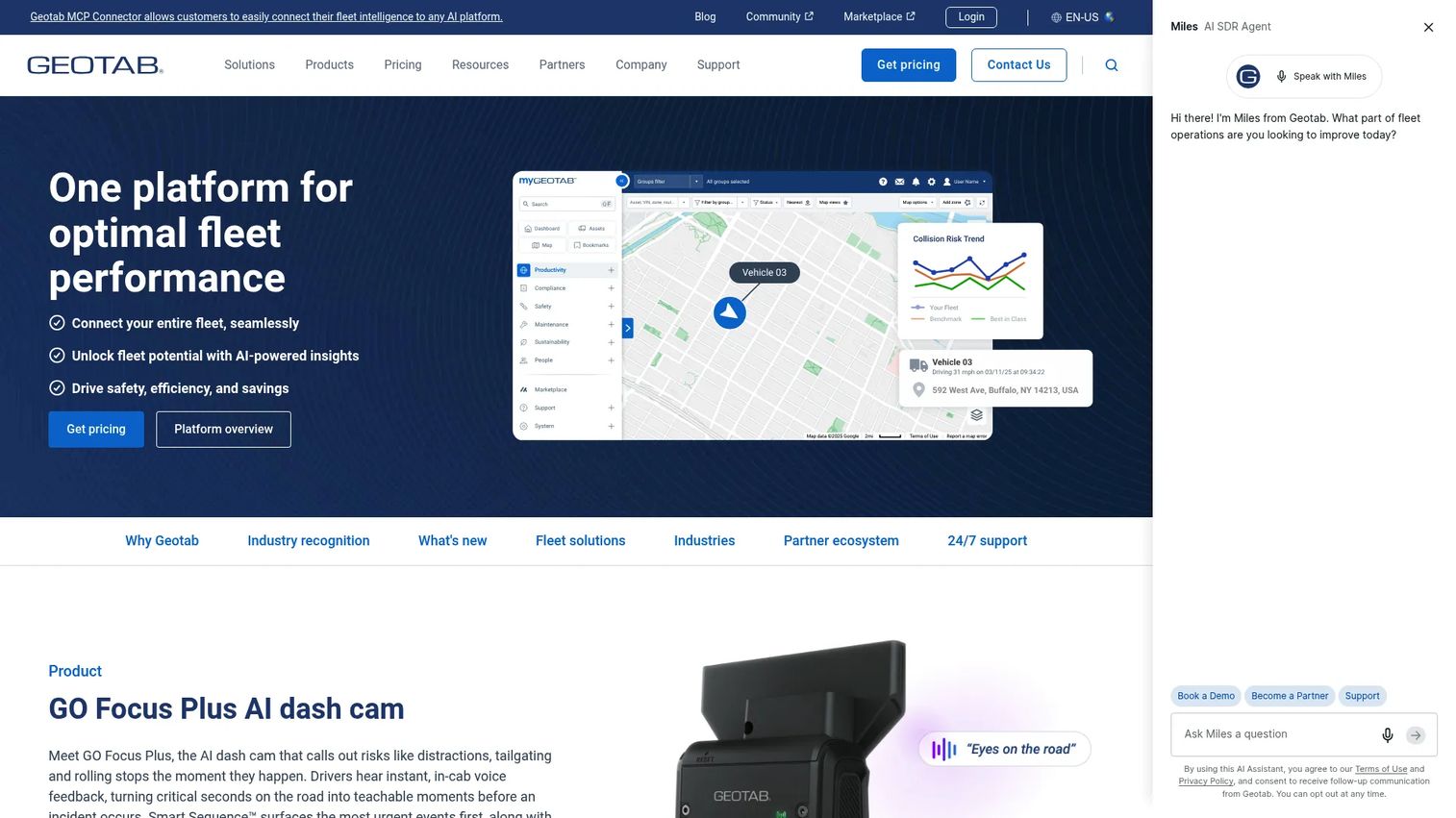
Geotab is a connected fleet management platform built on deep telematics. Where some tools treat driver behavior as a summary score, Geotab pulls granular engine and driving data straight from vehicle hardware, then exposes it through advanced reporting and dashboards. For fleets that want to interrogate the data behind a driver's safety profile, that depth is the reason to shortlist it.
The platform delivers real-time vehicle and driver visibility, driver behavior monitoring, and engine data reporting, all extensible through a large marketplace of add-ons and integrations. That openness is Geotab's calling card: it functions as a telematics foundation you build on, connecting GPS tracking, safety reporting, and third-party tools into one view of driver performance.
Best for: Fleets needing an open telematics platform with granular reporting, tracking, and integrations.
Key strengths
- Real-time telematics: Live vehicle and driver data pulled directly from engine and GPS hardware.
- Advanced reporting: Configurable dashboards and reports for driver behavior and fleet performance.
- Open ecosystem: A marketplace of add-ons and integrations to extend the platform into adjacent workflows.
Why choose Geotab: Choose Geotab when telematics depth and data flexibility matter more than an out-of-the-box packaged experience. It rewards teams with the appetite to configure reporting and connect tools, and its 4.5/5 G2 rating reflects that reputation among data-driven fleets.
Geotab pricing: Geotab publishes software packages including GO Core, GO Plan, Base, Regulatory, Pro, and ProPlus, but does not disclose prices on its site. Pricing is quote-based through Geotab or its reseller network, and typically depends on hardware, plan tier, and fleet size. Contact sales for a current quote.
4. Verizon Connect
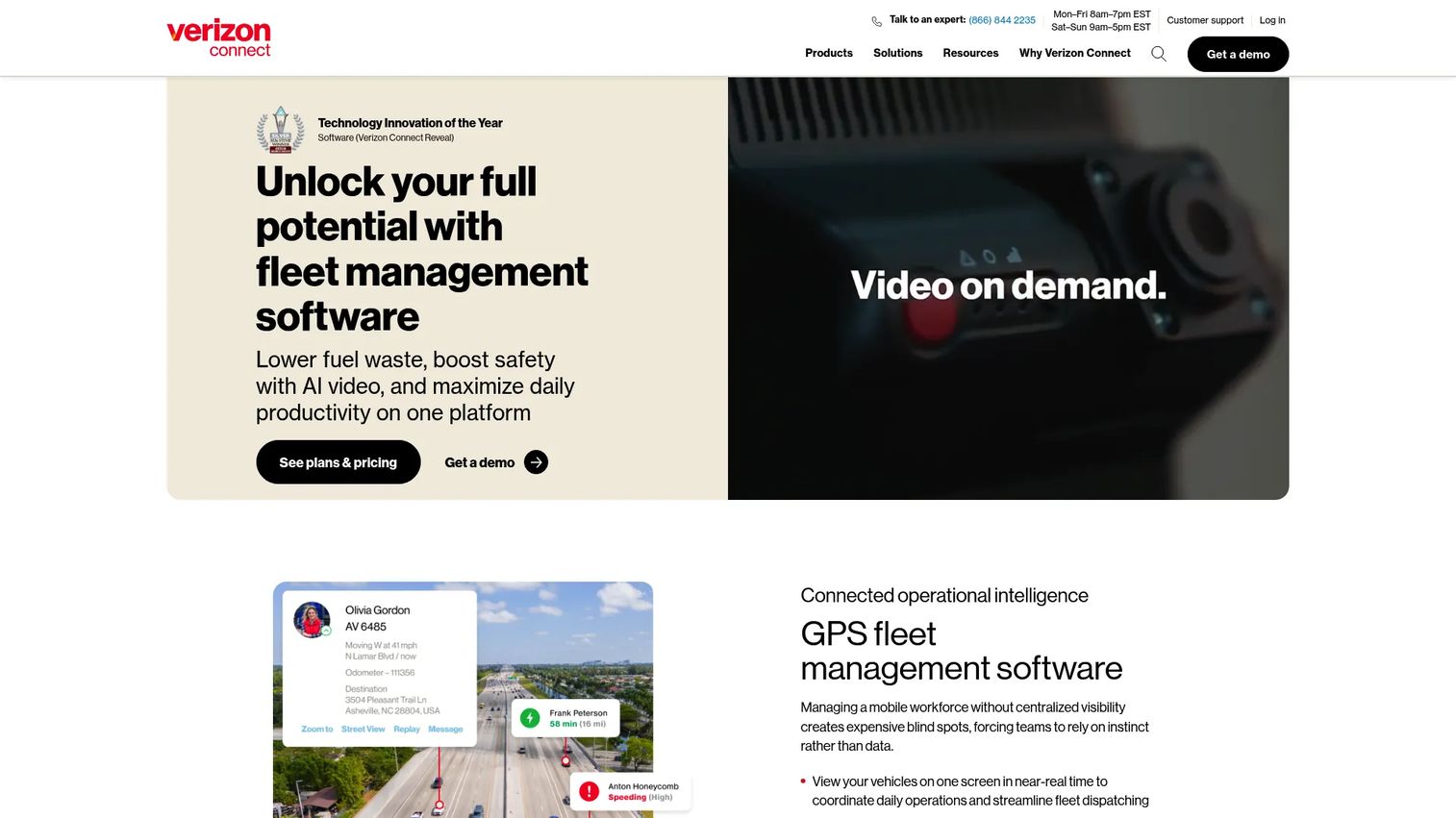
Verizon Connect is fleet management software for tracking vehicles, assets, drivers, compliance, and field operations from one place. Its strength is centralized visibility: near real-time GPS fleet tracking, geofences, and route history give managers a live operational picture, while dash cams and AI driver safety features surface risky behavior. As driver tracking software, it covers the tracking and safety fundamentals thoroughly.
The platform also handles maintenance tracking and compliance reporting, so safety, location, and regulatory needs live under one roof. That breadth makes it a fit for mixed fleets that want a single vendor across tracking, safety, and compliance rather than a specialized point tool.
Best for: Fleets that need centralized GPS tracking, driver safety, and compliance tooling from one platform.
Key strengths
- Near real-time GPS tracking: Live location, geofences, and route history for operational visibility.
- AI driver safety: Dash cams and AI-based safety features that flag risky driving behavior.
- Compliance reporting: Maintenance tracking and compliance reports consolidated with tracking data.
Why choose Verizon Connect: Verizon Connect suits fleets that value a single, established vendor for tracking, safety, and compliance across mixed vehicle types. Its 3.8/5 G2 rating reflects a broad user base with varied experiences, so weigh implementation scope and support fit against your own operational needs during evaluation.
Verizon Connect pricing: Verizon Connect does not publish fixed pricing on its site, using a demo and quote flow instead. Pricing typically depends on fleet size, hardware, and the specific tracking, safety, and compliance features selected. Request a quote through the Reveal product page for a configuration tailored to your fleet.
5. Samsara
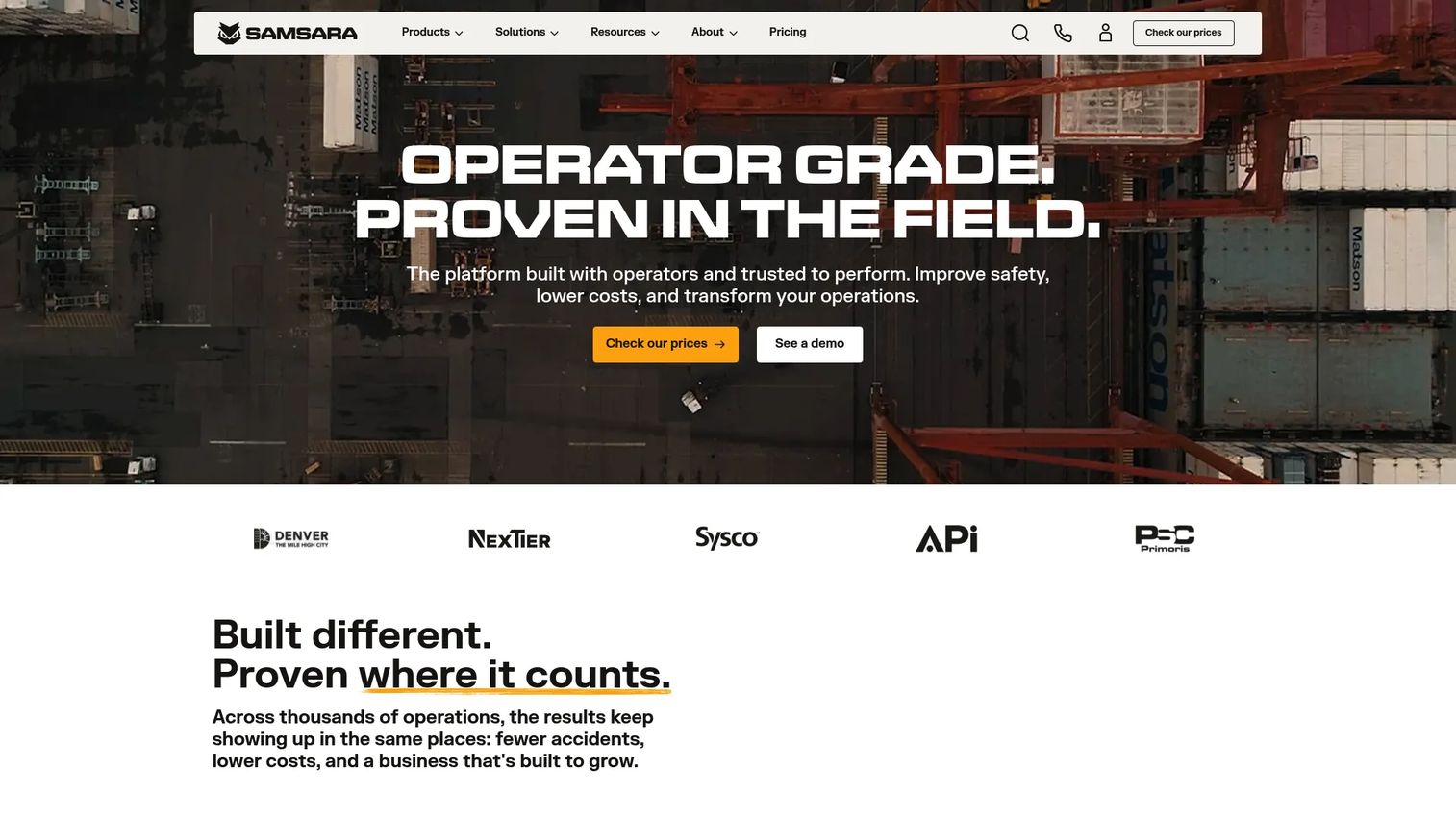
Samsara is a connected operations platform spanning fleet, equipment, and site management, with real-time safety as its center of gravity. Its AI video safety and dash cams pair with GPS fleet tracking to catch risky events as they happen and route coaching quickly, which is why safety-focused fleets gravitate to it. As fleet management software, it aims to unify telematics, safety, and compliance in a single system.
The platform also covers ELD and compliance workflows plus routing, so hours-of-service logging, safety, and dispatch coordination live together. That combination makes Samsara a fit for mid-market and enterprise fleets that want visibility and safety operations at scale rather than a lightweight tracker.
Best for: Mid-market and enterprise fleets needing unified telematics, AI safety, and compliance tools.
Key strengths
- AI video safety: Dash cams and AI event detection that surface distraction and risky driving in real time.
- GPS fleet tracking: Live location and telematics data across vehicles and equipment.
- ELD and compliance: Hours-of-service logging and compliance workflows integrated with routing.
Why choose Samsara: Samsara is the pick when real-time safety and operational visibility at scale are the priority, and when you want telematics, video, and compliance in one platform. Its 4.5/5 G2 rating reflects strong sentiment among larger fleets managing complex safety operations.
Samsara pricing: Samsara does not publish public pricing or a plan table on its site, directing buyers to request a quote. Pricing generally reflects hardware (cameras and gateways), the mix of safety, telematics, and compliance features, and fleet size. Contact sales for a configuration and quote.
6. Motive
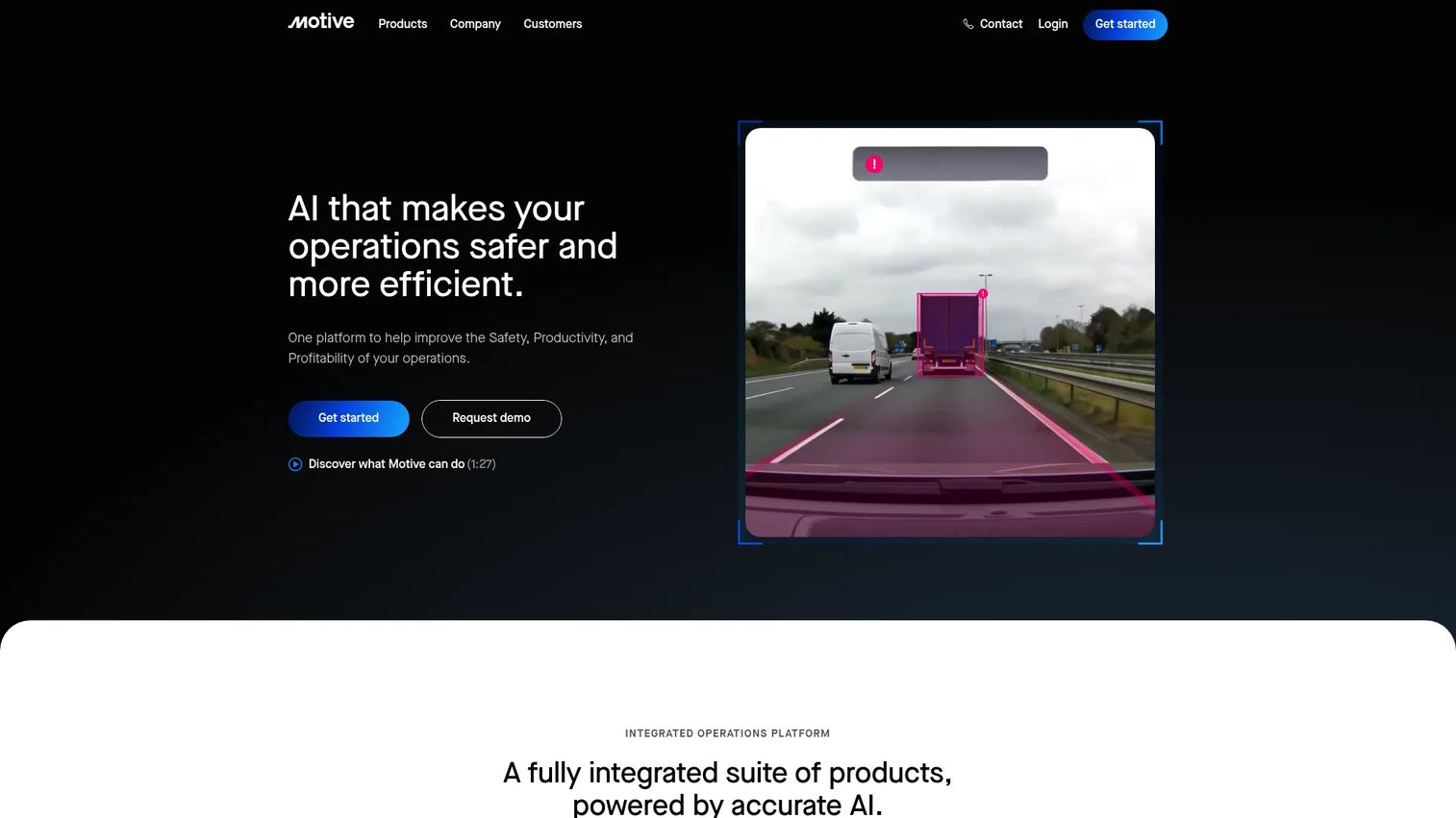
Motive is fleet management and operations software built around safety, compliance, telematics, and workforce management. Its center of gravity is compliance-heavy operations: ELD support, hours-of-service logging, inspections, and GPS tracking sit alongside AI-powered fleet analytics. For fleets balancing FMCSA compliance with day-to-day dispatch, that combination is the draw.
Motive extends beyond tracking into workforce management, with coaching, training, rewards, driver qualification, and timecards, plus asset tracking and real-time location visibility. That makes it more than a driver safety management system: it aims to be the operational hub where safety, compliance, and driver development live together for trucking and logistics operations.
Best for: Fleet operators needing an all-in-one platform for safety, compliance, and workforce operations.
Key strengths
- AI fleet analytics: AI-powered reporting across safety, utilization, and driver performance.
- Workforce management: Coaching, training, rewards, qualification, and timecards in one driver system.
- Compliance and ELD: Hours-of-service logging, inspections, and asset tracking for regulated fleets.
Why choose Motive: Motive fits operators who want compliance, safety, and driver development consolidated rather than spread across point tools. Its 4.4/5 G2 rating reflects solid sentiment among mixed fleets, and its workforce features push it toward teams managing driver lifecycle, not just vehicles.
Motive pricing: Motive does not publish public pricing on its site and directs visitors to contact sales. Its workforce management documentation references a free tier and paid subscription, but no public price is shown. Pricing typically depends on hardware, feature mix, and fleet size, so request a quote for your configuration.
7. KeepTruckin
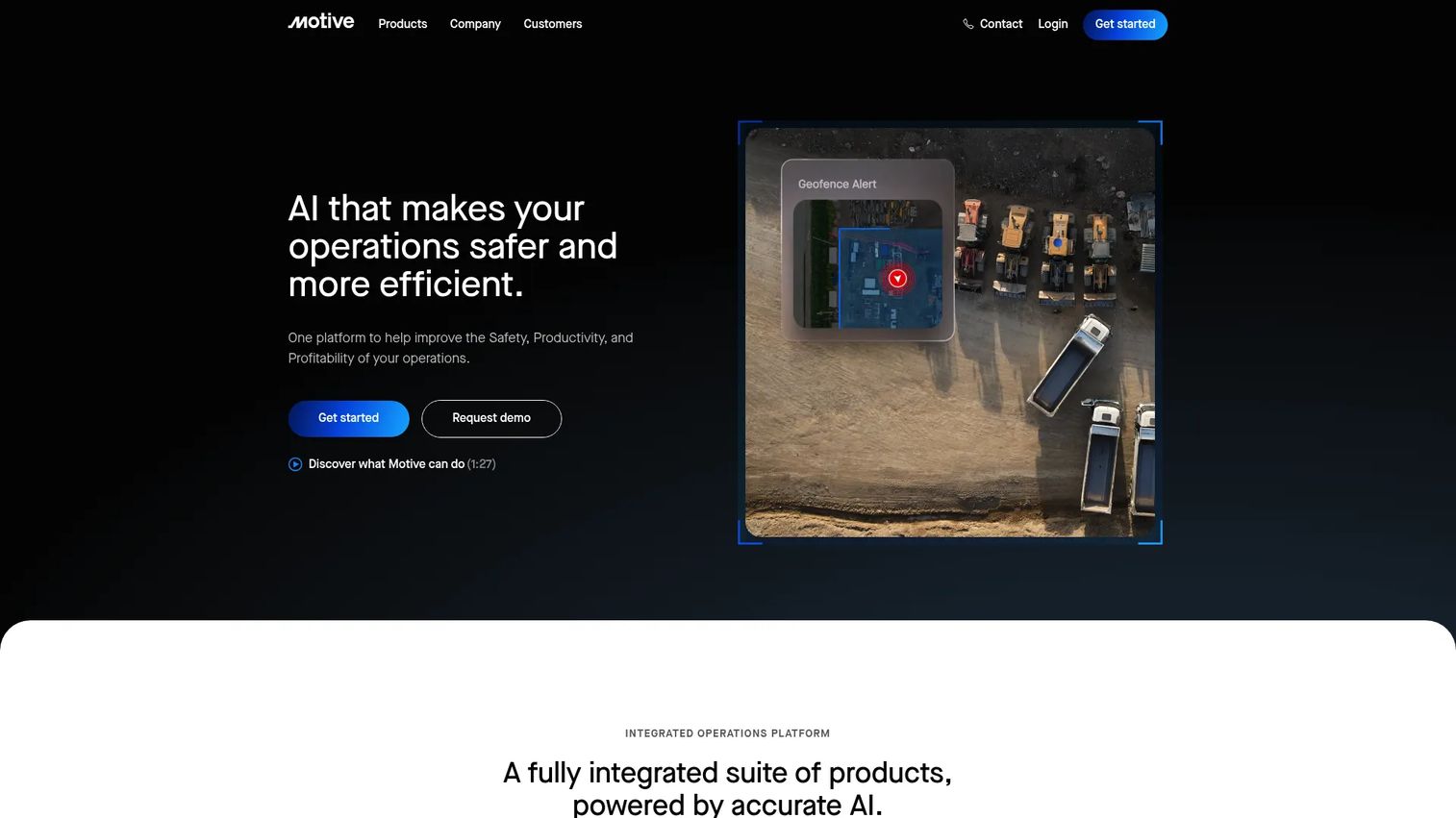
KeepTruckin is fleet management and driver safety software that now operates as Motive. The brand rebranded, and the KeepTruckin homepage redirects to Motive content, but the market still searches and evaluates the platform under both names, so it earns its own entry here. If you are researching KeepTruckin specifically, know that you are evaluating today's Motive platform.
Historically, KeepTruckin built its reputation on ELD-centric workflows, driver safety and coaching, GPS fleet tracking, and telematics for trucking and logistics fleets. Those strengths carry forward into Motive, where compliance-heavy driver management remains a core focus. For fleets that came to know the product under the KeepTruckin name, the underlying capability set is intact and expanded.
Best for: Trucking and logistics fleets that want an integrated ELD, safety, and telematics platform.
Key strengths
- ELD-centric compliance: Hours-of-service logging and DOT-ready workflows built for regulated trucking.
- Driver safety and coaching: Safety event detection paired with structured coaching for drivers.
- Fleet telematics: GPS tracking and telematics that feed both safety and maintenance workflows.
Why choose KeepTruckin: If your team knows the product as KeepTruckin, you are choosing the compliance-first heritage now delivered inside Motive. Its 4.5/5 G2 rating on the Motive listing reflects the combined platform. Evaluate it as Motive, with confidence that the ELD and safety foundation you remember remains central.
KeepTruckin pricing: Because KeepTruckin now operates as Motive, pricing follows the Motive model: no public price is published, and buyers are directed to contact sales. Expect pricing to depend on hardware, ELD and safety feature selection, and fleet size. Request a quote through Motive for current figures.
8. Azuga
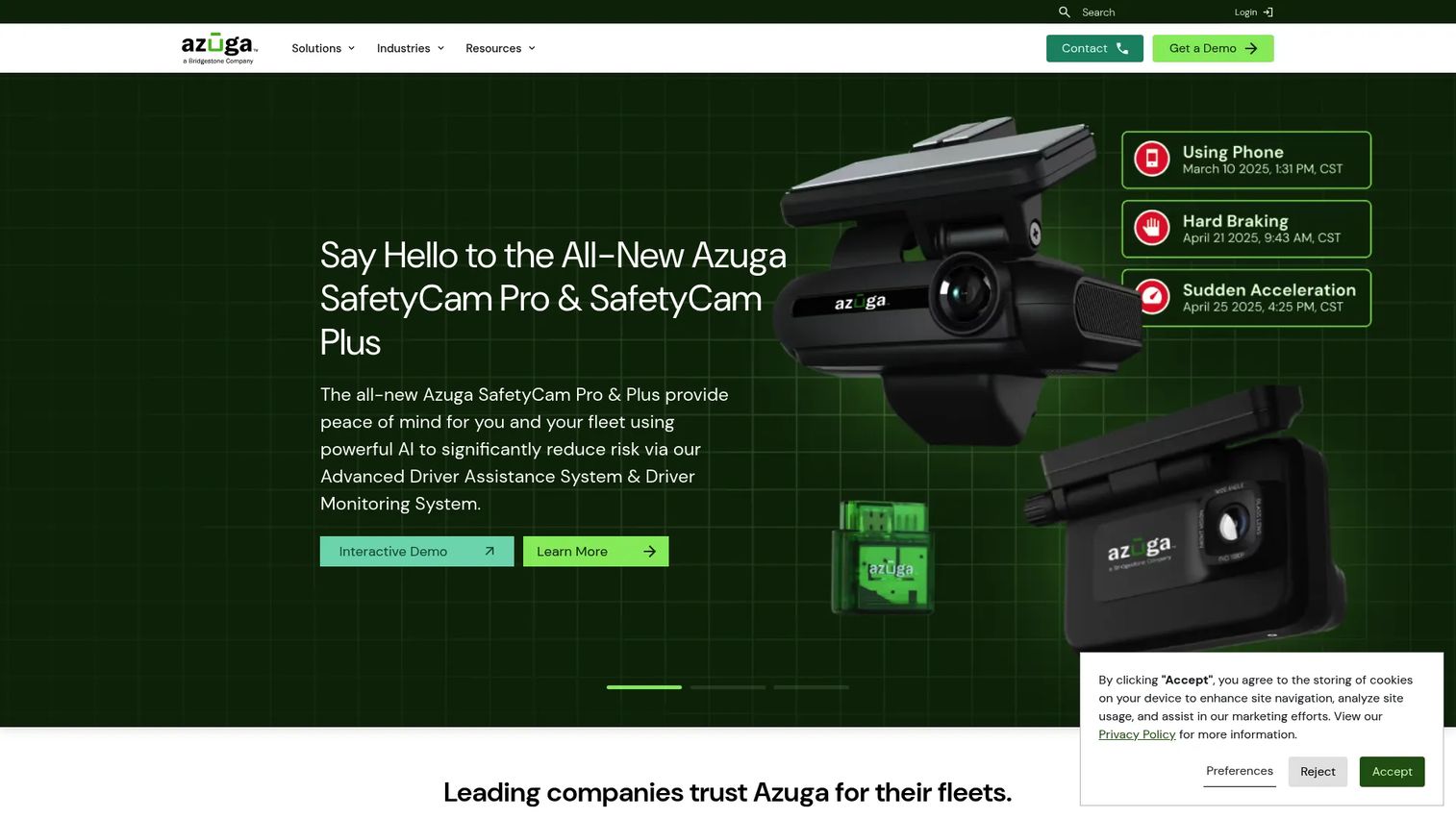
Azuga is fleet management and GPS tracking software for vehicles, drivers, and assets, with a pragmatic bent toward smaller and mid-market fleets. Its differentiator is transparent, per-vehicle pricing paired with driver scores and rewards, which turns safety into something drivers can see and improve on rather than a hidden metric managers use against them. As fleet management software, it keeps the setup approachable.
The platform covers GPS fleet tracking, driver scorecards, and safety features including AI dashcams and alerts, so behavior tracking and real-time visibility come standard. For fleets that need pragmatic driver oversight without a heavy enterprise rollout, Azuga hits a practical middle ground.
Best for: Smaller and mid-market fleets wanting GPS tracking with driver safety scores and rewards.
Key strengths
- Driver scorecards and rewards: Behavior scores paired with rewards to drive safer habits, not just flag them.
- GPS fleet tracking: Real-time location and route visibility across vehicles and assets.
- AI dashcams and alerts: Safety cameras and real-time alerts for risky driving events.
Why choose Azuga: Azuga fits teams that want transparent pricing and a driver-friendly approach to safety, where scorecards and rewards encourage adoption. Its 4.7/5 G2 rating reflects strong sentiment, especially among fleets that value straightforward setup and clear per-vehicle costs.
Azuga pricing: Azuga publishes three fleet tracking tiers per vehicle per month: BasicFleet at $25, SafeFleet at $30, and CompleteFleet at $35. SafetyCam AI is listed starting at $49.99 per month, with an add-on price of $41.99 per month also shown. No free tier is offered on the pricing page.
Considerations before you buy
Before committing to a platform, pressure-test it against these five criteria. The right choice depends less on feature counts and more on how the tool fits your actual operation.
Safety and behavior tracking depth
Decide whether you need summary driver scorecards or granular event data. Fleets focused on insurance costs and incident reduction should confirm harsh-event detection, dash cam support, and coaching workflows. A driver safety management system is only useful if the data drives action, so evaluate how coaching gets routed.
Compliance and inspection coverage
If you run ELD-mandated vehicles, confirm hours-of-service logging, eDVIR support, and audit-ready reporting are native, not add-ons. Check that document expiration alerts cover licenses, medical cards, and certifications. Compliance automation is where paper-based fleets see the fastest return.
Mobile workflow quality
Your drivers will use the mobile app daily, so its quality directly affects adoption. Test inspection speed, offline capability, and how alerts reach the field. A clunky driver management app gets ignored, and ignored tools produce no data.
Integration and API flexibility
Confirm the platform connects to your maintenance, HR, payroll, and telematics systems. An open API and documented integrations prevent the data silos that killed your spreadsheet approach. This matters most for fleets running multiple systems that need to share driver and vehicle data.
Pricing model and total cost
Per-vehicle pricing scales predictably, but hardware, cameras, and contract minimums change the real number. Get a quote based on your actual fleet size and confirm what each tier gates. Transparent per-vehicle pricing is easier to budget than quote-based enterprise packaging.
Conclusion
There is no single best driver management software, only the best fit for your priority. If maintenance and inspections drive your operation, Fleetio and Driveroo give you the tightest loop between what drivers report and what your shop does about it. If telematics depth and data flexibility come first, Geotab is built for you.
For real-time safety at scale, Samsara pairs AI dash cams with telematics and compliance in one platform. Compliance-heavy trucking fleets should shortlist Motive, including teams that still know it as KeepTruckin, for its ELD and workforce depth. And smaller fleets that want transparent pricing with driver-friendly scorecards will find Azuga hits a practical middle ground. Verizon Connect rounds out the field for fleets wanting one established vendor across tracking, safety, and compliance.
The smart move is to shortlist two or three based on your top priority, run a trial or demo with your own drivers and vehicles, and confirm the mobile experience and integrations before you sign. Fleet driver management software only pays off when your drivers actually use it, so let the field test decide.
FAQs
Driver management software is a system that centralizes driver records, safety behavior, compliance documents, inspections, and real-time visibility so fleet operators can manage the people behind the wheel. It replaces spreadsheets and paper forms with a single source of truth for driver safety, compliance, and daily workflows. It is distinct from the Windows "driver update" utilities that share the same phrase.
The features that move the needle are safety and behavior tracking (scorecards and harsh-event detection), inspection and DVIR workflows, compliance automation including ELD and document expiration alerts, GPS tracking and telematics, a capable mobile app for drivers, and real-time alerts to managers. Integration flexibility through an open API rounds out the list, since driver data rarely lives in isolation.
They overlap heavily but differ in emphasis. Fleet management software leads with the vehicle and asset, while driver management software leads with the person, their safety behavior, compliance status, and inspections. Most modern platforms deliver both, which is why tools like Geotab, Samsara, and Motive appear in both categories.
Not always, but it depends on your goals. If you want granular behavior tracking, harsh-event detection, and real-time GPS visibility, telematics hardware is essential and platforms like Geotab and Samsara are built around it. If your priority is inspections, documents, and compliance records, a mobile-first tool like Driveroo can deliver strong value with lighter hardware requirements.
A driver safety management system surfaces risky behavior through telematics and dash cams, then routes coaching to the right drivers before incidents happen. On compliance, it automates ELD hours-of-service logging, tracks document and certification expirations, digitizes DVIR inspections, and produces audit-ready reports on demand. Together, that shifts safety and compliance from reactive paperwork to proactive management.
Prioritize speed and simplicity, because drivers use the app daily and abandon anything clunky. Confirm it handles inspections with photo and video capture, works offline in areas with poor signal, delivers alerts and documents clearly, and syncs reliably when connectivity returns. A well-designed driver management app drives adoption, and adoption is what produces the data managers need.
Integrations determine whether your driver data stays siloed or flows into the systems that depend on it, such as maintenance, HR, payroll, and existing telematics. An open API and documented connectors let inspection defects trigger work orders, expiring certifications alert HR, and safety scores feed insurance reporting. For fleets running multiple systems, integration flexibility is often the deciding factor between two otherwise comparable platforms.