A retailer short-pays an invoice by $4,200. No explanation. Just a smaller check than the one you expected. Your analyst opens a portal, hunts for backup documents, cross-references a promotion that may or may not have applied, and three weeks later the deduction is still sitting in an aging bucket. Multiply that by a few hundred claims a month and you have the daily reality of most accounts receivable teams.
The money adds up fast. The global deductions management market grew from $1.93B to $2.18B between 2025 and 2026, a 12.8% CAGR, and Research and Markets projects it will reach $3.56B by 2030. That growth is not vanity. It reflects how much cash gets trapped in unresolved deductions, and how many finance leaders are done absorbing invalid claims as a cost of doing business with big retailers.
Manual deduction handling is slow, error-prone, and expensive. Claims bounce between retailer portals, email inboxes, and ERP screens. Analysts spend more time retrieving documents than actually validating claims. And the longer a deduction ages, the harder it is to recover. That is the core problem deduction management software solves: it validates claims against invoices, promotions, and shipment data, routes disputes automatically, and connects the whole workflow to your accounting and trade promotion systems.
The right tool depends on your context. A supplier drowning in retailer chargebacks needs something different from a CPG brand trying to tie deductions back to trade spend. This guide compares seven deduction management solutions on the criteria that actually move recovery numbers: workflow automation, ERP integration, document retrieval, routing, analytics, and trade promotion linkage.
What's inside
This guide compares seven real deduction management software tools built for finance and AR teams. We evaluated each on five things: workflow automation depth, integration with ERP and finance systems, reporting and KPI dashboard quality, industry fit (broad AR versus CPG-specific), and recovery focus. Some tools are AR-first and vertical-agnostic. Others are built around CPG trade promotion management. A few sit inside broader invoice-to-cash or financial operations platforms. We call out which is which so you can match the tool to your team, your volume, and your existing stack instead of buying on brand recognition alone.
TL;DR
- Best for supplier-heavy retail deductions: SPS Commerce Revenue Recovery, built to detect and dispute invalid deductions and chargebacks across retail partners.
- Best for CPG trade spend visibility: Vividly, which pairs deduction work with promotion analytics.
- Best for AI-heavy enterprise workflows: HighRadius Deductions Management Software, with AI agents, worklist prioritization, and 3-way matching.
- Best for strong AR workflow control: Esker Deduction & Dispute Management, with AI matching and full audit trails inside an invoice-to-cash context.
- Best for TPM-linked CPG teams: UpClear BlueDeductions, for brands already invested in the BlueRGM ecosystem.
What is deduction management software?
Deduction management software is a finance and accounts receivable tool that identifies, validates, disputes, and helps recover customer deductions taken against invoices, so teams can protect margin and reduce the cash flow impact of invalid claims.
In practice, a deductions management software platform handles the full lifecycle of a short pay: capturing the claim, retrieving backup documentation, matching it against invoices and promotions, routing valid and invalid claims to the right owner, and pushing resolution data back into the ERP.
Core capabilities of claims and deduction management software typically include:
- Deduction capture and classification across short pays, chargebacks, returns, shortages, damaged goods, and pricing discrepancies
- Document retrieval that pulls proof of delivery, invoices, and claim backup from retailer portals and email automatically
- Validation and matching against invoices, shipment data, and trade promotions to flag invalid claims
- Approvals workflow and routing that sends disputes to the right team member or retailer contact
- ERP integration so resolved deductions post back to accounting without manual re-keying
- KPI dashboard and analytics covering deductions days outstanding (DDO), aging buckets, recovery rates, and root-cause trends
Where this gets interesting is the connection to trade promotion management. For consumer goods brands, a large share of deductions are promotional: a retailer claims a trade allowance you agreed to, or one you did not. When your deduction data links to your trade promotion and gross-to-net records, you can validate promotional claims instantly and stop paying for deals that never ran. That linkage is the difference between clearing deductions and actually understanding where trade dollars leak.
When to use deduction management software
Clean up short pays and invalid claims
If your team validates claims by hand, comparing invoices to promotions to shipment records one deduction at a time, automation earns its keep quickly. This matters most when volumes are high and document sources are scattered across multiple retailer portals, EDI feeds, and email threads. Software that automates document retrieval and 3-way matching turns a multi-day investigation into a same-day decision, which is where invalid claims actually get disputed before the window closes.
Reduce deduction aging and cash flow drag
Watch for the signs: DDO climbing quarter over quarter, aging deductions stacking up in the 90-plus bucket, and analysts who can never get ahead of the backlog. When resolution speed lags claim volume, cash sits trapped. Deduction management software attacks this by prioritizing high-value and time-sensitive claims, automating the repetitive research, and giving managers a live view of where each deduction sits. Faster resolution means faster deduction recovery and a measurable improvement in working capital.
Link AR, ERP, and trade spend
Deduction work does not live in a vacuum. Claims data needs to flow into accounting for accurate cash application, and into trade promotion systems so CPG teams can reconcile deductions against planned spend. Strong ERP integration matters when finance, operations, and sales all touch the same accounts. When a deduction ties back to a specific promotion and posts cleanly to the general ledger, you get multi-team collaboration instead of finger-pointing between departments.
Comparison table
Here is how the seven tools compare at a glance. Pricing is shown where vendors publish it; several use custom or contact-sales models. G2 ratings reflect current listings.
| # | Product | Intent | Key use case | Pricing | G2 rating |
|---|---|---|---|---|---|
| 1 | SPS Commerce Revenue Recovery | Broad supplier recovery | Detecting and disputing invalid retail deductions and chargebacks | Custom, flexible pricing | 4.6/5 |
| 2 | Vividly | CPG trade + deductions | Pairing deduction management with trade spend analytics | Not publicly listed | 4.8/5 |
| 3 | Trewup | CPG deductions | Centralized deduction management and trade spend visibility | From $599/month | 5.0/5 |
| 4 | Confido | CPG financial operations | Deductions inside a broader AI finance stack | Contact sales | 5.0/5 |
| 5 | HighRadius Deductions Management | Enterprise invoice-to-cash | AI-driven deduction research, matching, and backup retrieval | Subscription, custom | 4.3/5 |
| 6 | Esker Deduction & Dispute Management | Broad AR / invoice-to-cash | AI matching and workflow control for AR deductions | Not publicly listed | 4.3/5 |
| 7 | UpClear BlueDeductions | TPM-linked CPG | Deduction validation tied to trade promotion management | Not publicly listed | 4.6/5 |
The split is worth noticing. Rows 1, 5, and 6 lean broad AR and work across industries. Rows 2, 3, 4, and 7 are CPG-first, with trade promotion linkage baked in. Match the row to your world.
1. SPS Commerce Revenue Recovery
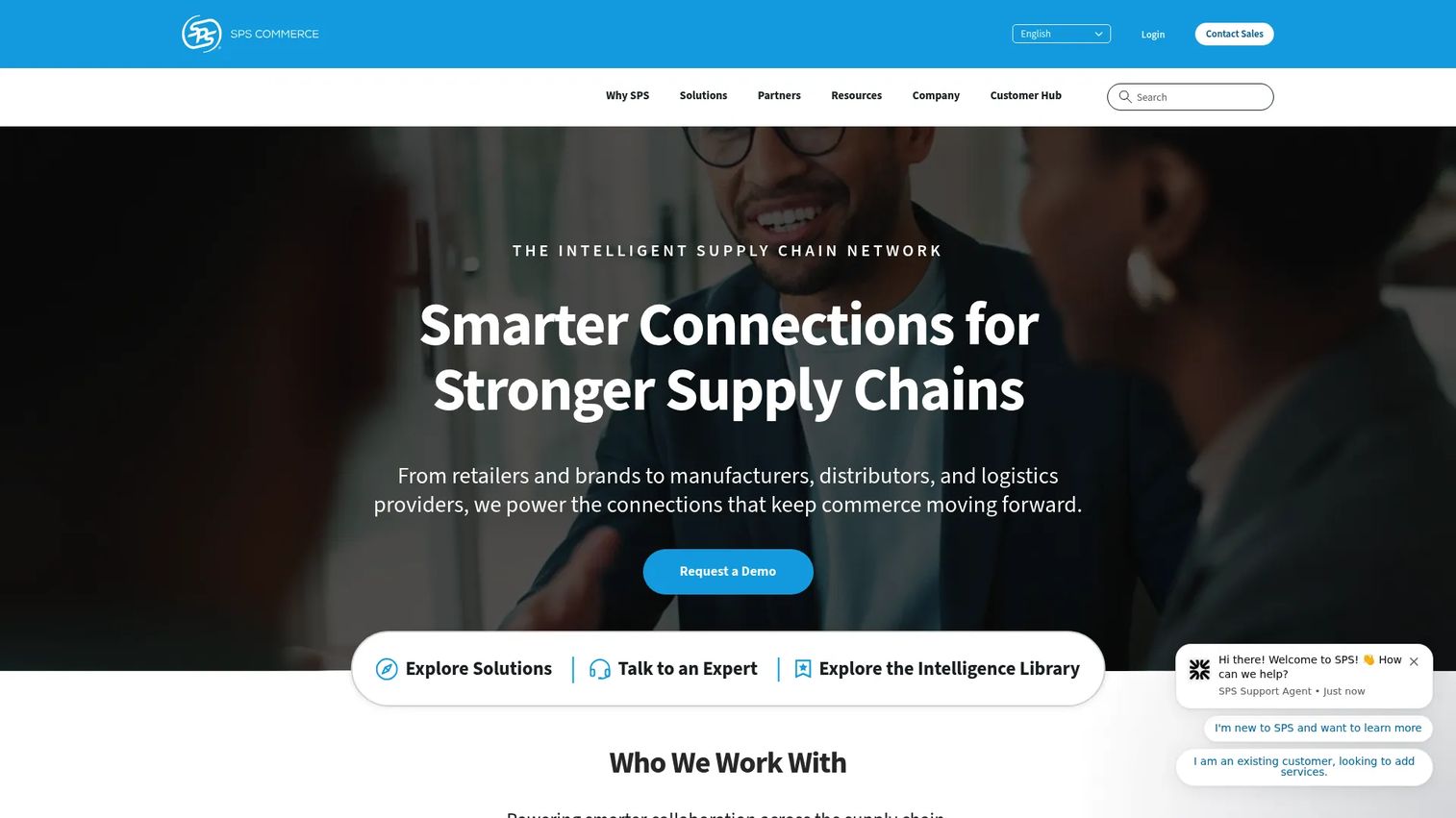
SPS Commerce Revenue Recovery is deduction management and revenue recovery software built for brands and suppliers selling into retail. It automatically identifies, validates, disputes, and helps prevent revenue loss from deductions, chargebacks, and compliance fines. What sets it apart in practice is the depth of its retail network. SPS Commerce sits on years of retailer relationships and document access, which means it can retrieve dispute backup and understand retailer-specific deduction codes that a generic AR tool would stumble over.
Best for: Brands and suppliers recovering deductions, chargebacks, and compliance fines across multiple retail partners.
Key strengths
- Automated detection and dispute: Identifies, validates, and disputes invalid deductions, then helps prevent the same loss from recurring.
- Document and data retrieval: Pulls dispute backup and claim documentation automatically, cutting the manual portal hunt.
- Full-service or self-guided: Choose full-service recovery where SPS works claims for you, or platform access where your team drives.
Why choose SPS Commerce Revenue Recovery: If retailer deductions and chargebacks are your biggest recovery leak, this is the tool built specifically for that fight. The full-service option is compelling for lean teams that cannot staff a dedicated deductions desk. You essentially rent an expert recovery team plus the software, which changes the math for suppliers where headcount is tight but deduction volume is high.
SPS Commerce Revenue Recovery pricing: SPS Commerce does not publish a public price. The company states it offers flexible pricing options and invites prospects to talk to an expert to scope a plan around volume and service level. Because it offers both a full-service and a platform-access model, expect pricing to reflect which of those you choose.
2. Vividly

Vividly is a trade promotion and deduction management platform aimed squarely at consumer goods brands. Its pitch is combining the two problems that usually live in separate tools: managing trade promotions and resolving the deductions those promotions generate. For a CPG finance team, that pairing matters, because a large share of deductions are promotional claims, and validating them is far easier when your promotion data and your deduction data sit in the same system.
Best for: CPG brands that want deduction management and trade spend visibility working from the same source of truth.
Key strengths
- Trade promotion and deduction in one place: Manage promotions and resolve related deductions without stitching two systems together.
- Trade spend analytics: Reporting that ties deductions back to specific promotions and spend, surfacing where trade dollars leak.
- Strong user sentiment: A 4.8/5 G2 rating signals CPG teams find the combined workflow genuinely useful, not just theoretically neat.
Why choose Vividly: If your deductions are mostly promotional and your current process forces analysts to jump between a TPM tool and a spreadsheet to validate claims, Vividly closes that gap. The value is less about raw deduction throughput and more about connecting recovery to trade spend decisions, so finance and sales stop arguing about which promotions actually ran.
Vividly pricing: Vividly does not publicly list pricing. Plans are scoped through the sales team based on your brand size, deduction volume, and trade promotion needs. Its 4.8/5 G2 rating reflects consistent satisfaction among the CPG teams that use it.
3. Trewup
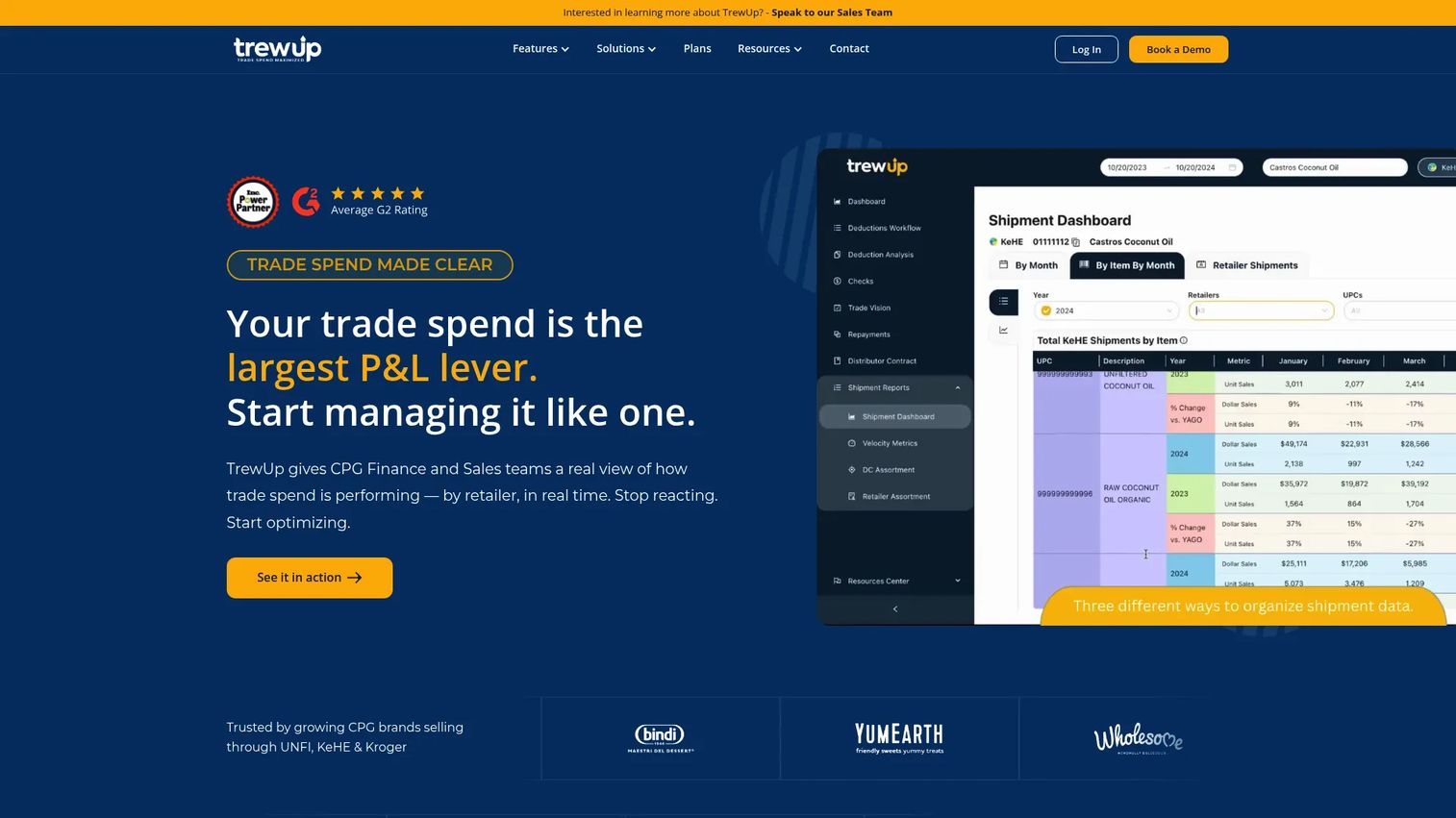
Trewup is CPG trade spend and deduction management software built for finance and sales teams that handle repeated deduction workflows. It centralizes deduction management, layers in trade spend visibility and analytics, and supports cash application. For emerging and mid-size CPG brands, the appeal is a purpose-built tool with published starting pricing, which is refreshingly rare in this category.
Best for: CPG brands that need centralized deduction management and trade spend visibility without an enterprise-scale commitment.
Key strengths
- Deduction management: Centralizes claim capture, validation, and resolution so nothing gets lost across portals and inboxes.
- Trade spend visibility and analytics: Live dashboards tie deductions to trade spend, giving finance a clear read on where money goes.
- Cash application support: Helps match incoming payments and deductions so AR reconciliation stays clean.
Why choose Trewup: Trewup fits brands that have outgrown spreadsheets but do not want a six-figure enterprise platform. The published $599/month entry point and month-to-month licensing lower the commitment risk, which matters for a growing brand still proving out its deduction recovery process. A perfect 5.0/5 G2 rating suggests early users are getting real value.
Trewup pricing: The Emerging tier starts at $599/month with month-to-month licensing. SMB and Enterprise tiers require contacting sales for a scoped quote. Annual plans are available at a discounted rate. There is no free tier, but the low entry price and monthly billing make it easy to trial in a real workflow.
4. Confido
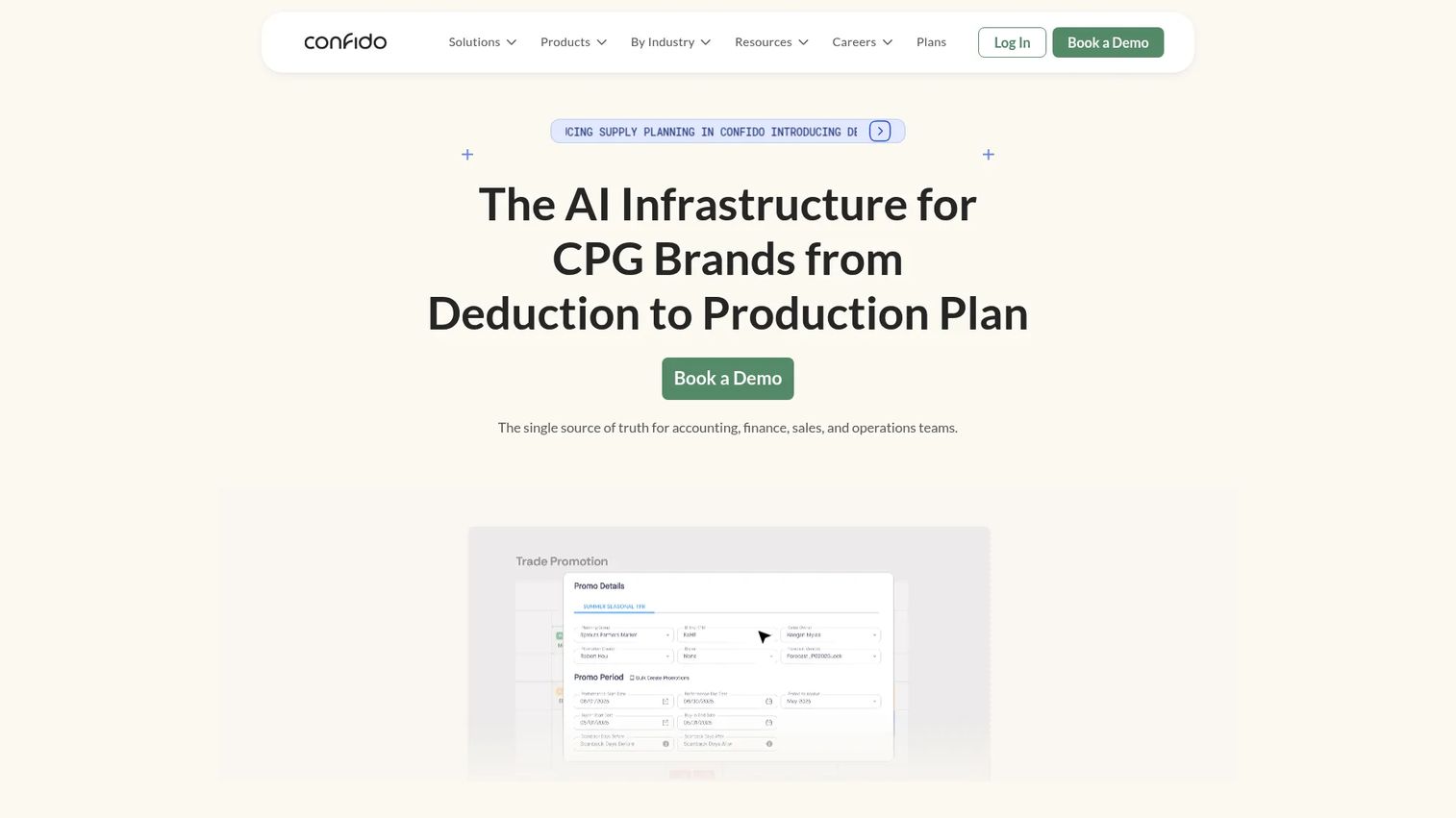
Confido positions itself as AI infrastructure for CPG brands, spanning accounting, finance, sales, and operations. Deduction management is one module inside a broader financial operations platform that also covers cash application, trade promotion management, demand planning, and forecasting. For brands that want their deductions handled inside a wider finance stack rather than as a standalone tool, that breadth is the draw.
Best for: CPG brands needing unified deductions, cash application, trade planning, and forecasting in one platform.
Key strengths
- AI cash application: Aggregates documents, extracts data, and matches invoices automatically to speed reconciliation.
- Deduction management and auto-disputes: Handles deduction resolution and automatically files disputes on invalid claims.
- Planning and forecasting: Adds sales forecasting, trade promotion management, demand planning, and supply planning under one roof.
Why choose Confido: Confido suits brands consolidating a fragmented finance stack. If you are running separate tools for cash application, deductions, and trade planning, folding them into one AI-driven platform reduces the seams where data and context get lost. The trade-off is that you are buying into a broader platform vision, so it fits best when you actually want that breadth.
Confido pricing: Confido does not display public dollar prices. Pricing is tailored to the business and offered modularly across Accounting & Finance and Sales & Operations packages, plus a Starter Plan. Plans are annual, and you contact the team to scope which modules you need. Its 5.0/5 G2 rating comes from a small but positive set of reviews.
5. HighRadius Deductions Management Software
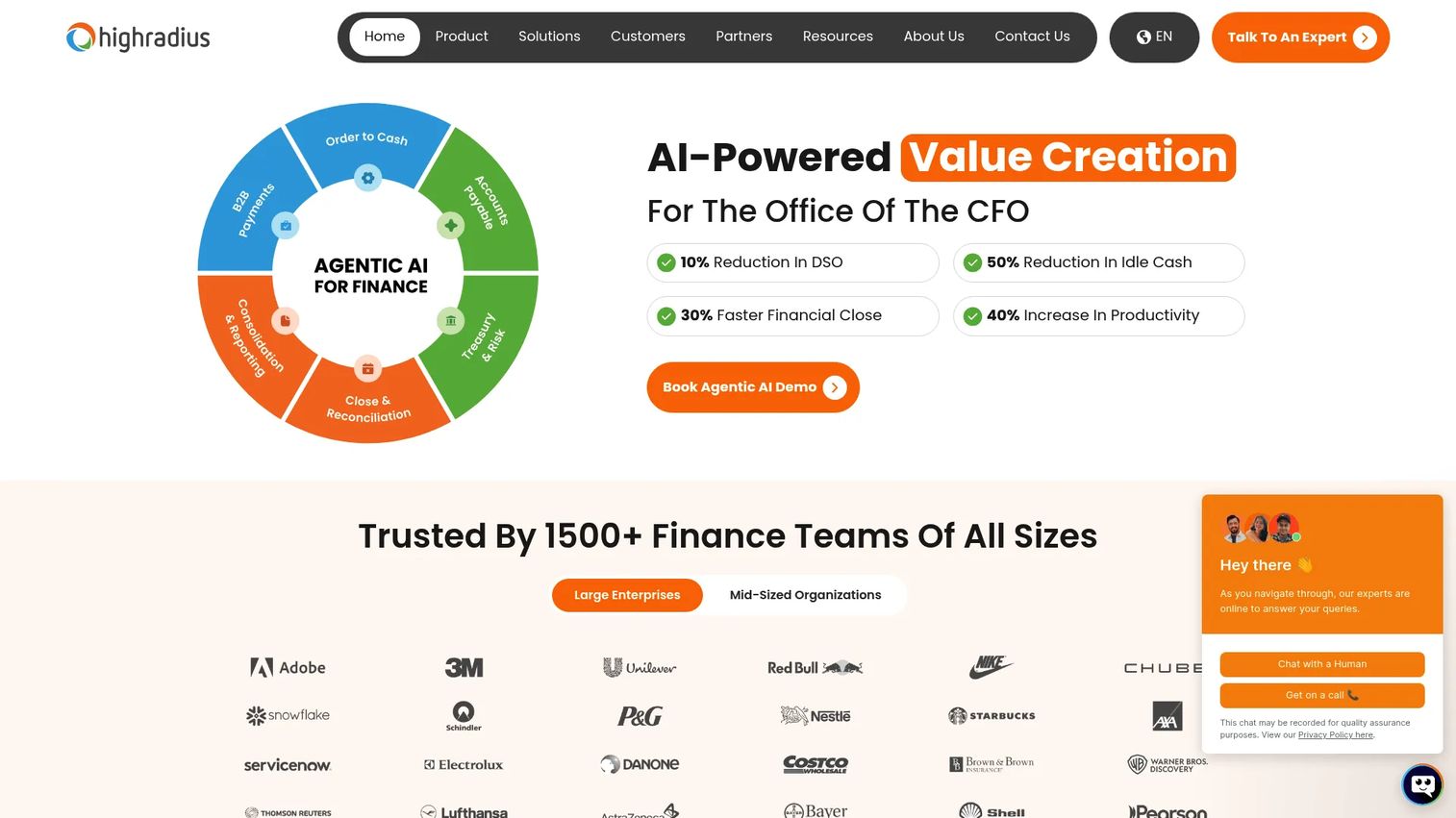
HighRadius Deductions Management Software is AI-powered software that automates deduction research, validation, and resolution as part of a broad invoice-to-cash platform. It is built for the enterprise end of the market, with AI agents that handle repetitive research, worklist prioritization that surfaces the highest-value claims first, and 3-way matching that validates deductions against invoices and supporting documents. For large finance teams processing thousands of deductions a month, that automation depth is the headline.
Best for: Mid-market and enterprise finance teams needing automated deduction resolution and backup retrieval at scale.
Key strengths
- Portal claim download: Automatically pulls deduction claims from retailer portals so analysts skip the manual login grind.
- Email claim capture: Captures deduction claims arriving by email and routes them into the workflow.
- Trade promotion matching: Matches deductions against trade promotions to validate promotional claims and flag invalid ones.
Why choose HighRadius: HighRadius fits teams that want a complete invoice-to-cash platform, not just a deductions point tool. If you are already evaluating cash application, collections, and credit as a suite, running deductions on the same platform keeps everything connected. The AI agents and worklist prioritization pay off most when claim volume is high enough that manual triage is the bottleneck.
HighRadius pricing: HighRadius uses a subscription-based, pay-as-you-go model but does not display a public product-specific price for its deductions software. You engage the sales team to scope pricing around volume and which invoice-to-cash modules you deploy. Its G2 rating sits at 4.3/5.
6. Esker Deduction & Dispute Management
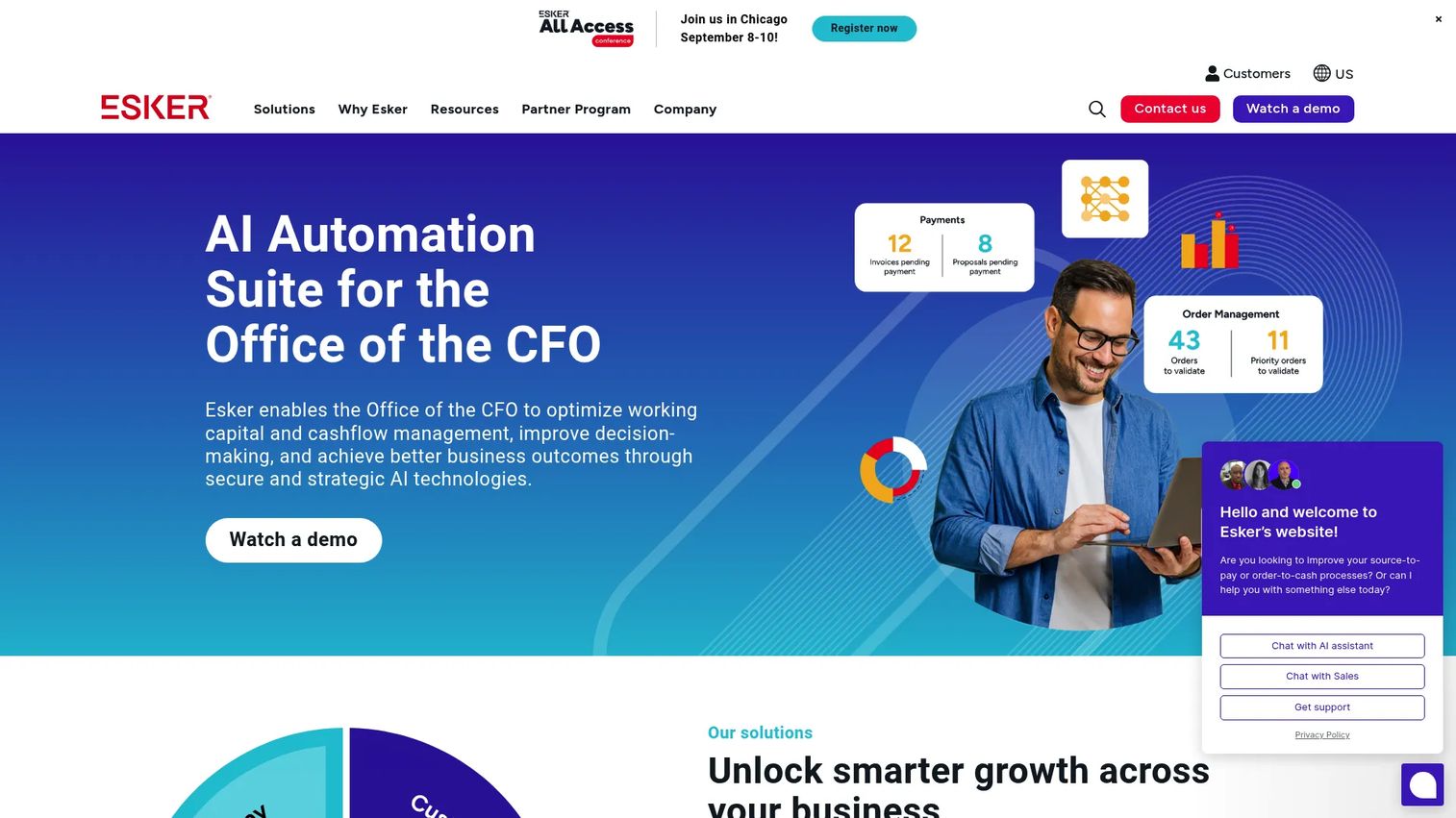
Esker Deduction & Dispute Management is AI-powered deduction and dispute management software for accounts receivable teams, part of Esker's broader invoice-to-cash suite. It leans on AI-driven data capture, an automated approve-or-dispute workflow, and dashboards that give managers clear KPI visibility into deduction status. The emphasis here is workflow control: routing claims cleanly, keeping a full audit trail, and reducing the portal fatigue that comes from chasing backup across dozens of retailer sites.
Best for: Mid-market and enterprise AR teams that want strong workflow control over customer deductions and disputes.
Key strengths
- AI-driven data capture: Extracts deduction data automatically so analysts spend less time keying and more time deciding.
- Automated resolution workflow: Routes each claim through an approve-or-dispute path with clear ownership and a full audit trail.
- KPI dashboards: Gives finance leaders visibility into DDO, aging, and recovery so they can manage the queue proactively.
Why choose Esker: Esker suits AR teams that value governance and a clean audit trail as much as raw automation. Because deductions sit inside a wider invoice-to-cash context, the tool fits finance organizations standardizing collections, cash application, and disputes on one vendor. The customer communication features also help when disputes require back-and-forth with the retailer.
Esker pricing: Esker does not expose public pricing for its deduction and dispute product. Pricing is scoped through sales based on volume, modules, and deployment scale. The product carries a 4.3/5 G2 rating on Esker's overall profile.
7. UpClear BlueDeductions
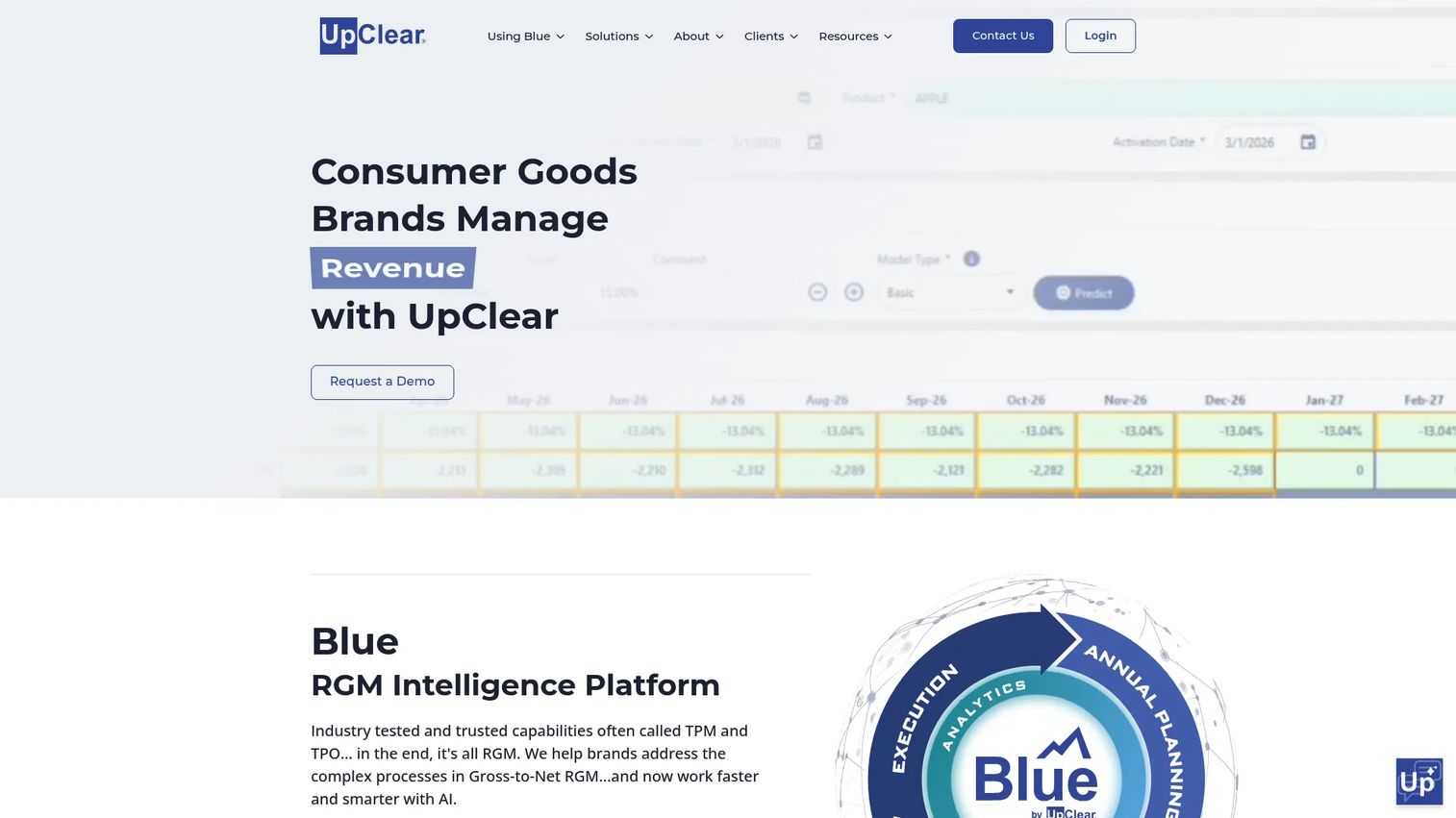
UpClear BlueDeductions is UpClear's deduction management solution for consumer goods brands, built to validate, categorize, and analyze customer deductions. Its distinguishing feature is how tightly it links to the broader BlueRGM trade promotion ecosystem, including BluePlanner and BlueAccruals. For CPG teams already running trade planning in UpClear's tools, BlueDeductions closes the loop between promotions planned and deductions claimed.
Best for: CPG and FMCG teams managing deduction research, validation, and resolution, especially those already using BlueRGM or BluePlanner.
Key strengths
- Automated document retrieval: Acquires deduction backup documents so analysts do not chase paperwork across portals.
- AI validation and categorization: Uses AI to validate and categorize deductions, separating valid claims from invalid ones.
- AR and TPM integration: Integrates with AR systems and BlueRGM modules, with clean ERP export for accounting.
Why choose UpClear BlueDeductions: BlueDeductions makes the most sense as part of the UpClear ecosystem. If your trade promotion management already runs on BluePlanner, adding BlueDeductions means promotion data and deduction data live in one connected system, so validating promotional claims is direct rather than a reconciliation project. Standalone, it is a capable deductions tool; connected to BlueRGM, it is a full trade-to-cash story.
UpClear BlueDeductions pricing: UpClear does not publish a public price for BlueDeductions. Pricing is scoped through the team based on your deduction volume and which BlueRGM modules you run. UpClear's seller profile carries a 4.6/5 G2 rating.
Considerations before you buy
The right choice comes down to a handful of operational realities. Use this checklist to pressure-test any tool before you commit.
Automation depth
Ask exactly what the tool automates versus what your team still touches. Does it retrieve documents from your specific retailer portals? Does it do 3-way matching against invoices and promotions, or just capture claims? The gap between "captures deductions" and "resolves deductions" is where recovery numbers are won or lost.
ERP and finance integration
Confirm the tool connects to your actual ERP and accounting system, not a generic connector that needs custom work. Clean ERP integration means resolved deductions post back without re-keying, cash application stays accurate, and you avoid a manual reconciliation step that quietly eats the time you thought you saved.
Industry and trade promotion fit
Broad AR tools work across industries, but CPG teams with heavy promotional deductions need trade promotion linkage. If most of your deductions are trade claims, a tool that ties deductions to promotions will validate faster and expose spend leaks that a generic AR tool never sees.
Reporting and recovery metrics
Look at the KPI dashboard closely. Can you see DDO, aging buckets, recovery rate, and root-cause trends without exporting to a spreadsheet? Good reporting turns deduction data into prevention, so you stop the same invalid claim from recurring next quarter.
Conclusion
The deduction management software you choose should match your industry and your biggest recovery leak, not the vendor with the loudest marketing. For suppliers fighting retailer deductions and chargebacks, SPS Commerce Revenue Recovery is purpose-built for that fight, with a full-service option for lean teams. For CPG brands where trade promotion drives most deductions, Vividly, Trewup, Confido, and UpClear BlueDeductions each connect deduction recovery to trade spend, differing mainly in scope and ecosystem. For enterprise finance teams that want deductions inside a full invoice-to-cash platform, HighRadius and Esker bring AI-driven automation and deep workflow control.
Whatever you pick, weigh the same criteria: workflow automation that actually resolves claims, document retrieval from your portals, ERP integration depth, trade promotion linkage if you are CPG, and reporting that surfaces aging deductions before they become uncollectible. Shortlist two or three tools that fit your industry, then request demos and run a real batch of your own deductions through each. The tool that clears your backlog fastest, and prevents the next claim, is the one worth paying for.
FAQs
Deduction management software identifies, validates, disputes, and helps recover customer deductions taken against invoices. It captures claims, retrieves backup documents, matches deductions against invoices and promotions, routes disputes, and posts resolutions back to your ERP. The goal is to recover invalid claims and reduce the cash flow impact of aging deductions.
Finance leaders, AR managers, deductions analysts, and CPG or retail operations teams use it. In consumer goods companies, sales and trade marketing teams also rely on it because a large share of deductions are promotional claims tied to trade spend. It sits at the intersection of finance, operations, and sales.
It handles short pays, chargebacks, returns, shortages, damaged goods, pricing discrepancies, and promotional or trade allowance claims. Good claims and deduction management software classifies each type automatically, then routes valid and invalid claims to the right owner so nothing sits unresolved in an aging bucket.
It reduces cash flow impact by resolving deductions faster and recovering invalid claims that would otherwise be written off. Automating document retrieval and matching shrinks resolution time, prioritization surfaces high-value claims first, and clean ERP posting keeps working capital accurate. Faster deduction recovery means less cash trapped in aging cases.
Look for automation that resolves claims rather than just capturing them, document retrieval from your specific retailer portals, ERP integration that posts back without re-keying, and a KPI dashboard covering DDO, aging, and recovery. CPG teams should also require trade promotion linkage to validate promotional claims quickly.
Trade promotion management plans and tracks promotional spend, while deduction management resolves the claims retailers take, many of which relate to those promotions. The two overlap heavily in CPG, which is why some tools combine them. When they connect, teams can validate a promotional deduction against the actual planned promotion instantly.
Yes. ERP integration is a core capability, letting resolved deductions post back to accounting without manual re-keying and keeping cash application accurate. When you evaluate tools, confirm the integration supports your specific ERP rather than relying on a generic connector that needs custom development work.
AI is genuinely useful for the repetitive research that consumes analyst time. It automates document capture, extracts data from claims, validates and categorizes deductions, and matches them against invoices and promotions. That frees analysts to focus on the judgment-heavy disputes where human review still drives recovery.