


Your best customer segment lives in the warehouse. Your growth team needs it in the ad platform. Your CS team needs it in the support tool. Right now, someone exports a CSV every Tuesday and someone else uploads it, until they forget.
That gap is the whole problem. Analysts model customer data beautifully, then it sits in dashboards nobody acts on. The global data integration software market is expected to reach $6.8B in 2026, growing to $16.1B by 2033 at a 13.1% CAGR, according to Persistence Market Research (2024). Spend keeps climbing because the storage layer got solved and the activation layer did not.
Data activation software closes that gap. It moves governed customer data out of the warehouse and into the CRM, email tool, ad platform, and support system where teams actually work. This is the layer that turns a modeled table into a live segment, a triggered email, or an updated lead score.
If you are a product manager, the real question is not "what is data activation." It is how to make customer data useful across product, marketing, and support without building brittle pipelines you have to babysit every release.
What's inside
This guide compares seven data activation tools for teams that need to sync governed customer data into operational destinations, not just analytics dashboards.
We picked tools based on the criteria that matter most when you evaluate this category:
- Destination coverage: how many CRMs, ad platforms, and support tools the tool syncs to
- Identity unification: how well it resolves users into a single profile
- Governance and data quality: permissions, observability, and data governance controls
- Sync model: real-time activation versus batch, and how that fits your workflows
- Ease of use: whether a PM or analyst can ship without heavy engineering
TL;DR
Quick picks by need, so you can skip to the right tool:
- Best for warehouse-first activation: Hightouch, for reverse ETL and audience syncing straight from your warehouse
- Best for reliable warehouse activation and lifecycle orchestration: Census, for governed sync workflows across sales, marketing, and support
- Best for teams already running ingestion: Fivetran, for moving warehouse data into operations next to your existing pipelines
- Best for identity-heavy and cross-channel activation: LiveRamp, for identity resolution and audience portability
- Best for real-time customer data orchestration: Tealium, for collecting and activating events as they happen
- Best for product-led CDP activation: mParticle, for identity resolution and segmentation across product and marketing
- Best for collection plus activation: Segment, for unifying first-party data and routing it everywhere
Background
A data activation platform moves data from your warehouse, CDP, or modeled datasets into the downstream operational destinations where teams take action.
That is the plain-English version. The category exists because analytics tooling got very good at storing and modeling customer data, and very bad at getting that data back out to the systems that run the business. Data activation is the return trip.
Most tools in this space handle some or all of the following:
- Identity unification: stitching events and attributes into a single customer profile so you activate the right person, not three fragments of them
- Audience building and syncing: defining segments once, then pushing them to every destination (audience activation and audience syncing)
- Event and attribute activation: sending both real-time events and modeled attributes downstream
- Destination delivery: syncing to analytics destinations, operational destinations, CRM, marketing automation, and BI tools
- Governance and observability: data governance, permissions, and monitoring so you know what synced, when, and whether it broke
Two terms come up constantly, so worth defining. Reverse ETL is the mechanism that reads modeled data from the warehouse and writes it to operational tools. It is the plumbing under warehouse activation. Customer data activation is the broader outcome: taking unified, governed data and making it usable for personalization, segmentation, and triggered workflows. Many CDP alternatives are really reverse ETL tools sitting on top of a warehouse you already own.
The distinction that matters for your stack: some tools activate data that lives in your warehouse (warehouse-native), and some collect and store the data themselves (CDP-style). Both feed activation workflows. Which one fits depends on where your governed data lives today.
When to use
Sync customer segments into the tools teams actually use
Your product team defines a "high-intent trial" segment. It is worthless if it stays in the warehouse. Data activation pushes that segment into the ad platform for suppression, the CRM for lead scoring, and the email tool for a nudge sequence. The moment fresh customer data has to live in an operational tool, this is the layer that gets it there.
Turn warehouse data into operational workflows
PMs and analytics teams model retention risk, expansion signals, and account health in the warehouse. Activation pushes those trustworthy attributes into CRM, email, and support tools so CS reps see churn risk on the account record, not in a dashboard they never open. The data you already governed becomes an operational trigger.
Improve personalization without rebuilding pipelines
Personalization breaks when segmentation, trigger logic, and sync reliability live in five different scripts. Data activation centralizes the segment definition and handles the delivery. You change the audience once, and every destination updates. That matters more than raw storage when the goal is real-time activation across changing product surfaces.
Comparison table
This table helps you compare stack fit, activation depth, and governance strength at a glance. Use it to shortlist two or three tools, then read the full sections. Pricing in this category is mostly usage-based and often quote-led, so treat starting points as directional.
| # | Product | Best for | Key differentiator | Pricing | G2 rating |
|---|---|---|---|---|---|
| 1 | Hightouch | Warehouse-first activation | Reverse ETL to 300+ destinations with governance | Free Basic Reverse ETL tier; paid plans demo-led | 4.6/5 |
| 2 | Census | Reliable warehouse activation and lifecycle | Audience Hub plus 200+ integrations | Free plan; usage-based paid, enterprise quote | 4.5/5 |
| 3 | Fivetran | Teams already running ingestion | 700+ managed connectors for movement | Free tier; usage-based paid plans | 4.3/5 |
| 4 | LiveRamp | Identity-heavy cross-channel | Identity resolution and clean rooms | Consumption-based, custom quote | 4.2/5 |
| 5 | Tealium | Real-time data orchestration | 1,300+ integrations, real-time activation | Usage-based quote | 4.3/5 |
| 6 | mParticle | Product-led CDP activation | SDK collection plus identity resolution | Growth from $199/mo; enterprise custom | 4.4/5 |
| 7 | Segment | Collection plus activation | First-party collection with reverse ETL | Free plan; Team from $120/mo | 4.5/5 |
Best data activation software for 2026
1. Hightouch
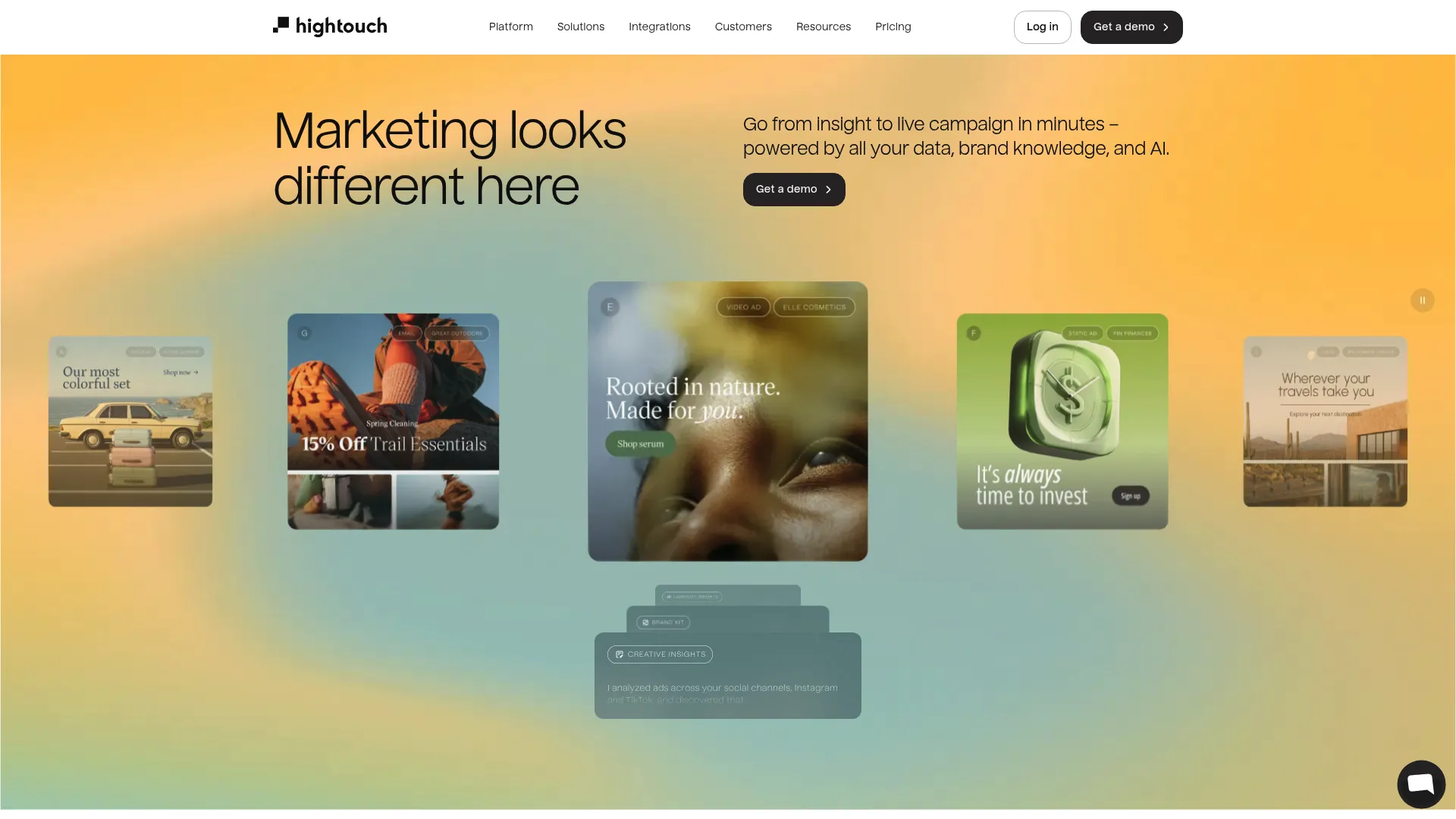
Hightouch is a warehouse-native customer data and AI platform for syncing, activating, and governing customer data. It reads modeled data straight from your warehouse and pushes it to the tools teams use, which is exactly the reverse ETL job most PMs need without building custom pipelines. If your governed data already lives in Snowflake, BigQuery, or Databricks, Hightouch activates it in place.
Best for: Teams that want to activate warehouse data into marketing and operational tools without building custom pipelines.
Key strengths
- Reverse ETL syncs to 300+ destinations
- Real-time personalization and event collection
- Security, governance, and observability features
Why choose Hightouch: It fits the PM reality of needing usable customer data in operational tools without a quarter of engineering work. The warehouse stays the source of truth, so you avoid duplicating governed data into another system. That keeps your data governance model intact while still shipping audience activation fast.
Hightouch pricing: A free Basic Reverse ETL tier is available. The Composable CDP and Agentic Marketing Platform plans are demo-led, with usage-based pricing and no public numeric price shown.
2. Census
Census is a data activation and reverse ETL platform for syncing warehouse data into business tools. It leans hard into reliable sync workflows and audience activation, with an Audience Hub that lets teams define segments on top of governed warehouse data. For teams that care about lifecycle orchestration across sales, marketing, and support, Census is built to keep those syncs trustworthy and observable.
Best for: Teams that want to activate warehouse data across sales, marketing, and support tools.
Key strengths
- 200+ integrations
- Reverse ETL and data activation syncs
- Audience Hub for audience activation
Why choose Census: The pull here is dependable warehouse activation. If your worry is a sync that silently fails and leaves stale segments in your CRM, Census puts observability and data quality controls at the center. That reliability is why lifecycle teams pick it for recurring, high-stakes activation workflows rather than one-off pushes.
Census pricing: A free plan is available. Paid plans are usage-based, and Enterprise and Business Critical tiers are quote-based through contact sales.
3. Fivetran
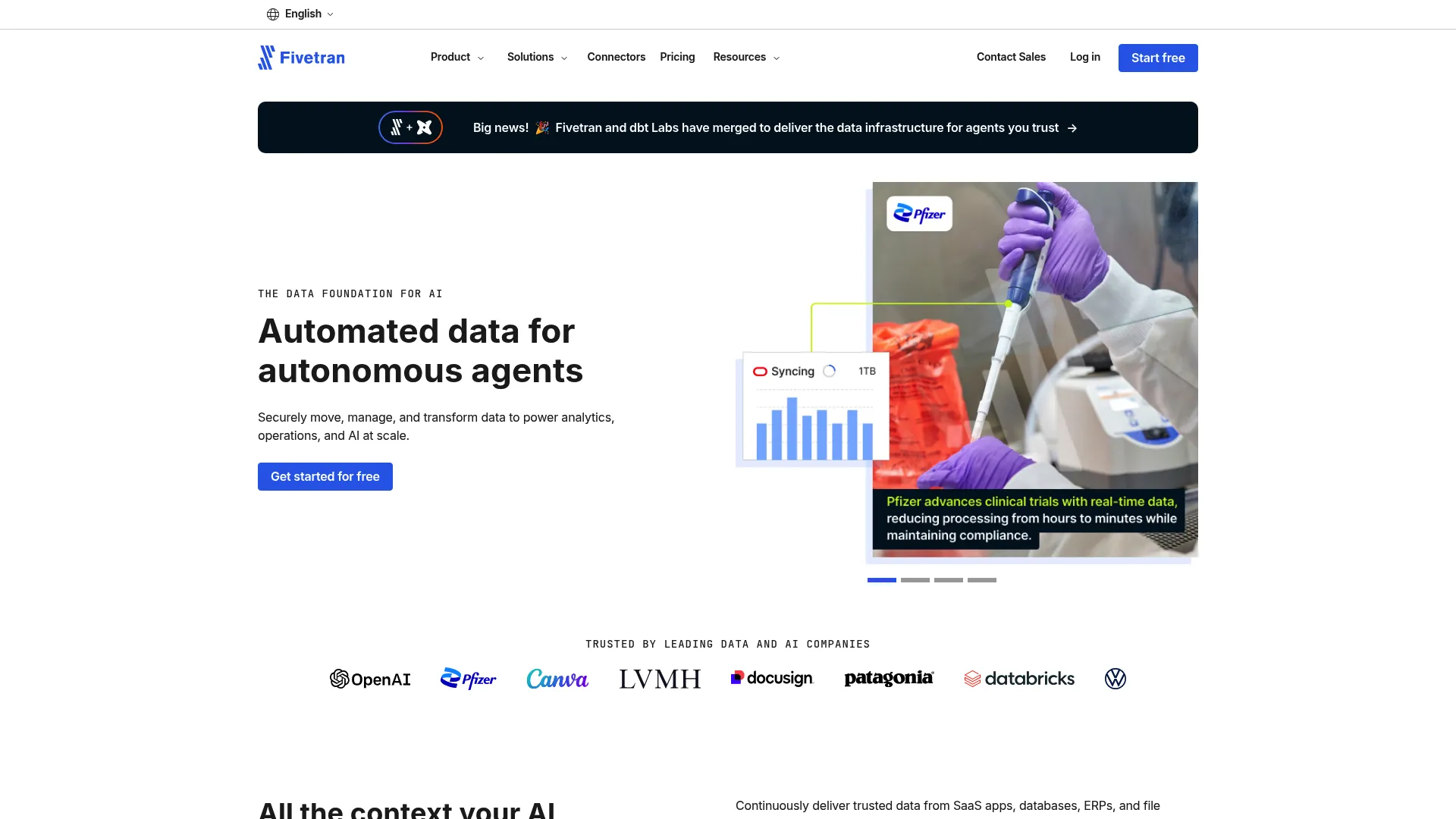
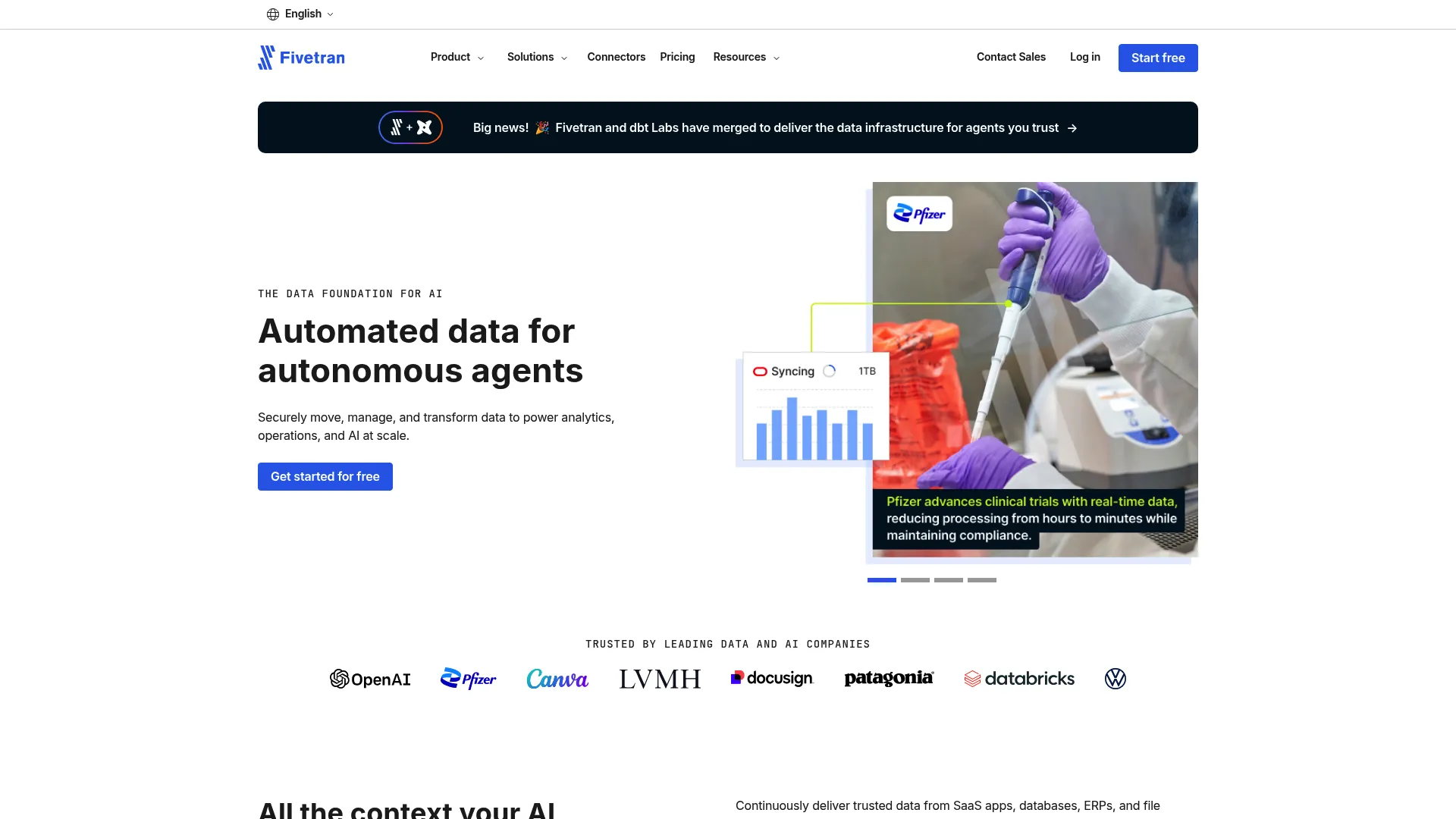
Fivetran is a data movement platform for automated ELT and replication into warehouses, lakes, and databases. Its core strength is managed ingestion, and it fits activation best for teams already running Fivetran to load their warehouse. If ingestion and warehouse-to-operations movement are already living in one place, keeping activation adjacent reduces the friction between your analytics layer and your execution layer.
Best for: Teams that need managed data ingestion into modern analytics destinations.
Key strengths
- 700+ fully managed connectors
- 15-minute syncs on Standard, 1-minute syncs on Enterprise
- Hybrid deployment and REST API
Why choose Fivetran: If your team already trusts Fivetran to move data reliably, extending that same stack toward activation means fewer vendors and one consistent movement layer. Fast sync intervals also help when your activation workflows depend on reasonably fresh data. The fit is strongest for teams that value one dependable movement backbone.
Fivetran pricing: A free tier is available with limited monthly usage. Standard, Enterprise, and Business Critical plans are usage-based, and annual contracts can reduce cost. Public per-plan prices are not shown.
4. LiveRamp
LiveRamp is a data collaboration platform for identity resolution, activation, measurement, and data monetization. Where the warehouse-native tools focus on syncing your own data, LiveRamp specializes in identity unification and audience portability across channels and partners. For marketing and identity-heavy use cases, it resolves fragmented identifiers into a durable identity you can activate across ad platforms and clean rooms.
Best for: Enterprises needing governed data collaboration and identity-based activation.
Key strengths
- Identity resolution and translation
- Clean rooms
- Segmentation and activation
Why choose LiveRamp: Choose it when customer data activation depends on resolving identity across many sources and pushing audiences into channels you do not own. The clean room capability matters for teams that need governed collaboration with partners without exposing raw data. It is the identity backbone for cross-channel audience activation at enterprise scale.
LiveRamp pricing: Pricing is consumption-based. LiveRamp directs buyers to contact sales for a custom quote and does not publish a public price.
5. Tealium
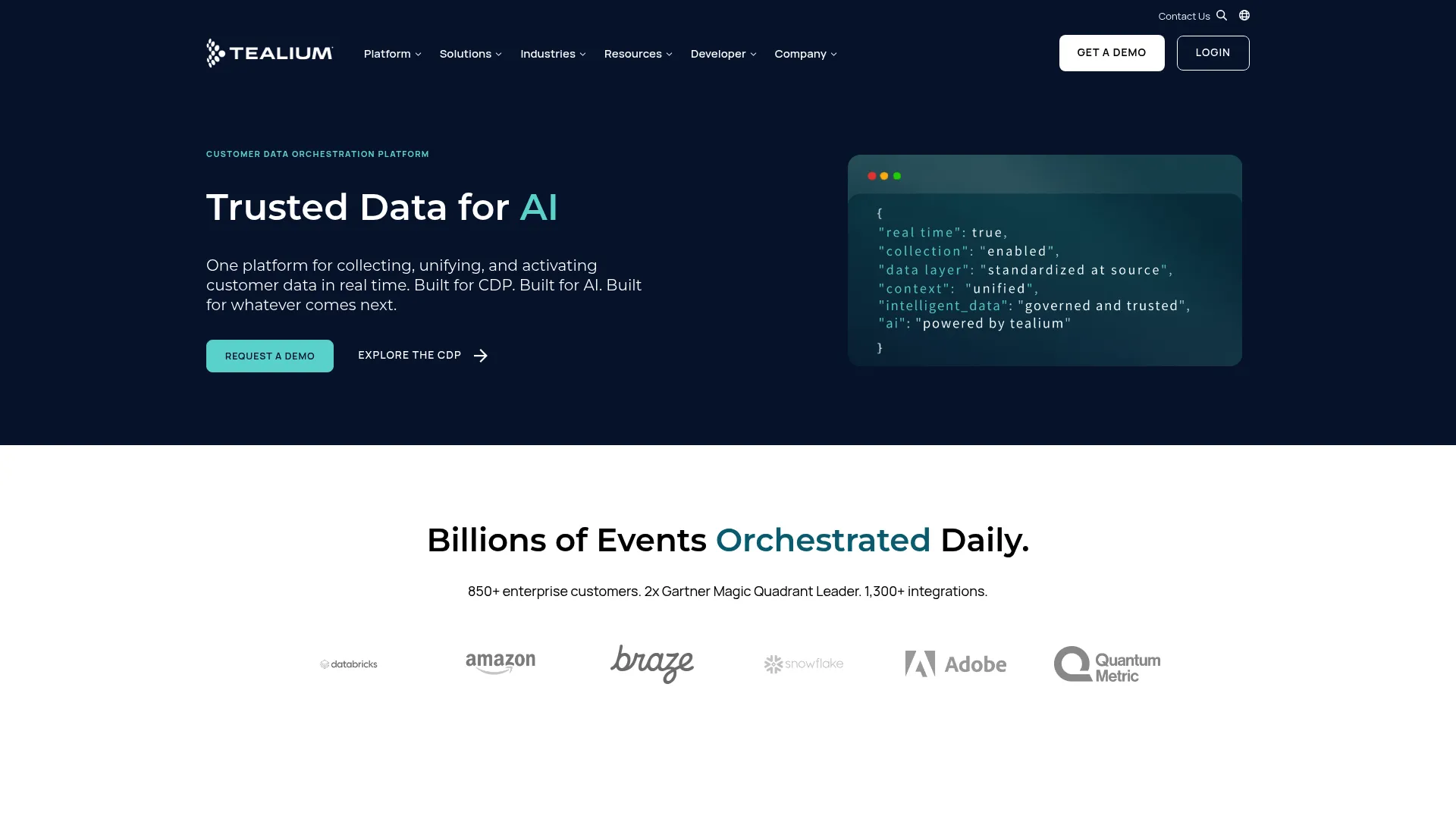
Tealium is a customer data platform and data orchestration tool for collecting, unifying, enriching, and activating customer data in real time. It pulls data from web, mobile, and server sources, builds customer profiles, and activates audiences the moment behavior happens. For teams that need real-time audience and lifecycle activation with consent and privacy governance built in, Tealium orchestrates the whole flow.
Best for: Enterprises needing real-time customer data orchestration across marketing and analytics tools.
Key strengths
- Data collection from web, mobile, server, and other sources
- Identity resolution, customer profiles, and audience segmentation
- 1,300+ integrations with real-time activation and consent governance
Why choose Tealium: The case for Tealium is speed of activation. If your personalization depends on reacting to behavior in the moment, its real-time collection and orchestration model fits better than a batch-first tool. Built-in consent and privacy governance also help teams that treat data governance as a first-class requirement.
Tealium pricing: Pricing is usage-based on inbound events. Tealium directs buyers to request a quote and does not publish a public numeric price.
6. mParticle
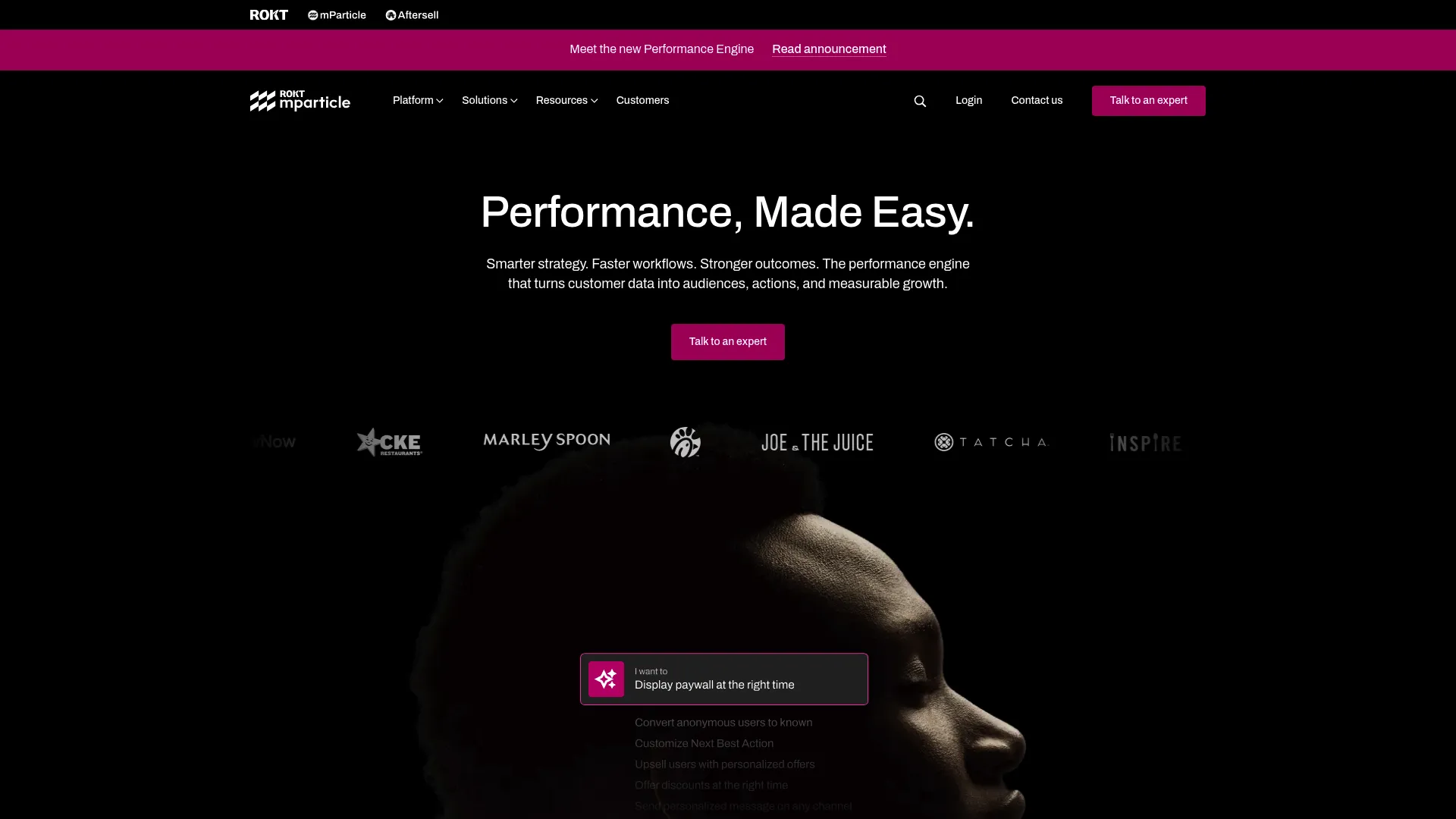
mParticle is a customer data platform for collecting, validating, and routing customer data across tools. It leans toward product-led teams, with SDK and API collection, data planning and validation, and identity resolution feeding segmentation and operational activation. For teams building customer data activation across product and marketing systems, mParticle handles collection through activation in one place.
Best for: Enterprise teams needing a CDP to unify and activate customer data.
Key strengths
- Data collection via SDKs, APIs, and partner feeds
- Data planning and validation
- Identity resolution and audiences
Why choose mParticle: The validation layer is the draw. If bad instrumentation and inconsistent tracking are your data quality pain, mParticle's data planning catches issues before they pollute downstream tools. Product-led teams that own their own event streams get a CDP-style path from collection to activation without stitching separate systems together.
mParticle pricing: A documented Growth plan starts at $199/mo for legacy analytics customers, with Enterprise on custom pricing. The current platform model is value-based and contract-based.
7. Segment
Segment is a customer data platform for collecting, unifying, and activating first-party data. It captures events once, unifies profiles, and routes data to many destinations, including reverse ETL back to operational tools. For customer data activation across analytics destinations and operational tools, Segment plays the role of the collection and routing layer that feeds everything else.
Best for: Teams that need a CDP to collect, unify, and route customer data across many tools.
Key strengths
- First-party data collection
- Destinations and reverse ETL
- Debugging, privacy, and data governance
Why choose Segment: Its breadth of destinations makes it the connective layer for teams that want one collection point feeding both analytics and operational systems. If you are early in building your customer data infrastructure and want collection plus activation together, Segment covers both. Debugging and privacy controls help keep governed data clean as you scale.
Segment pricing: A free plan is available. The Team plan starts at $120 per month, and the Business plan is quote-based. Pricing is based on monthly tracked users.
Considerations
Before you commit, run every shortlisted tool through this checklist. The gaps between these tools show up in operation, not in the demo.
Destination coverage and sync latency
Confirm the tool syncs to your actual destinations, not just the big-name ones. Check whether it supports the specific CRM, ad platform, and support system your teams use. Then check sync latency: does real-time activation matter for your use case, or is batch fine? Match the sync model to the workflow.
Identity resolution quality
Weak identity unification means you activate fragmented profiles. Evaluate how each tool stitches events and attributes into a single customer view, and how it handles anonymous-to-known transitions. For identity-heavy audience activation, this is the difference between reaching a person and reaching three ghosts of them.
Governance and permissions
Data governance is not optional once more than one team touches the data. Check role-based permissions, audit logging, and consent handling. If you operate under privacy requirements, verify the tool tracks consent and lets you enforce it at the activation layer, not just at collection.
Instrumentation and data quality
Activation only works on trustworthy data. Look for data quality controls, validation, and observability that tell you when a sync fails or a schema changes. Bad instrumentation upstream poisons every downstream tool, so favor tools that catch problems before they ship.
Maintenance burden and ownership
Ask who owns this after launch. Warehouse-native tools keep governed data in one place, which reduces duplication. CDP-style tools centralize collection. Either way, map ownership across product, analytics, and engineering before you buy, so activation workflows do not rot the next time your product surface changes.
Conclusion
The right pick comes down to where your governed data lives and what job you need activation to do.
For warehouse-first teams that want to activate data in place, Hightouch and Census lead, with Fivetran a strong fit when you already run its ingestion stack. For identity-heavy, cross-channel audience activation, LiveRamp is the identity backbone. For real-time customer data orchestration, Tealium fits. And for product-led teams that want collection plus activation in one place, mParticle and Segment cover the full path from event to operational destination.
Next step: list your actual activation destinations and your data governance requirements, then test your two shortlisted tools against that list. The tool that syncs cleanly to your real stack, resolves identity well, and keeps governed data trustworthy is the one worth buying. Do not evaluate on the demo destinations. Evaluate on yours.
If your team also needs to show product value through guided, self-serve experiences, you can build an interactive demo with Guideflow and share it wherever your buyers are.
FAQs
A CDP collects and stores customer data itself, then activates it. Data activation software, especially warehouse-native reverse ETL tools, activates data that already lives in your warehouse without storing a second copy. Many CDP alternatives are reverse ETL tools sitting on the warehouse you already own. The choice depends on whether your governed data lives in a warehouse or needs a dedicated store.
Reverse ETL is the mechanism; data activation is the outcome. Reverse ETL reads modeled data from the warehouse and writes it to operational tools. Data activation is the broader practice of making unified, governed data usable for segmentation, personalization, and triggered workflows. Reverse ETL is one way to power activation, and it is the dominant approach for warehouse-first teams.
Growth and marketing teams use it to build and sync audiences into ad platforms and email tools. Product and analytics teams push modeled attributes into operational systems. Sales and CS teams use activated data for lead scoring and churn signals inside the CRM and support tools. In practice, any team that needs governed customer data in the tool where it works is a user.
Tie activation to the operational metric it feeds, not to the sync itself. If you activate a suppression audience, measure wasted ad spend saved. If you sync churn risk to CS, measure retention on flagged accounts. For product teams, measure activation rate, time to first value, and lift in the workflow the data powers. The sync is the input; the downstream metric is the return.
At minimum, your CRM, marketing automation, ad platforms, support tools, and analytics destinations. Strong tools also cover operational destinations like data warehouses, BI tools, and internal systems through APIs. The right answer is specific to your stack, so list your real destinations first, then confirm each shortlisted tool supports them natively rather than through a workaround.
It is foundational for any customer data activation that targets people rather than events. Weak identity unification means you activate fragmented or duplicate profiles, which wastes spend and creates inconsistent experiences. For cross-channel audience activation, identity resolution quality often matters more than raw destination count. Evaluate how each tool handles anonymous-to-known transitions and profile stitching.
It is not just for marketing. Product teams use activation to push modeled signals, like retention risk or feature adoption, into the tools where CS, sales, and lifecycle teams act. That turns warehouse analysis into operational triggers, which improves activation, retention, and support deflection. Data activation is as much a product and analytics tool as a marketing one.