Your onboarding content exists. Customers still ask the same five setup questions every week.
That gap is not a content problem. It is a delivery problem. Static docs get ignored, Zoom recordings collect dust, and CSMs spend hours re-explaining the same flows instead of doing strategic account work. Only 26% of employees felt fully informed and confident during their most recent onboarding experience, according to Enboarder (2024). Customer onboarding suffers the same dynamics.
The right customer onboarding LMS changes this. Structured training replaces ad hoc explanations. Completion data replaces guesswork. Support tickets drop because customers find answers before picking up the phone.
The decision is not simple, though. Some teams need courses, certifications, and learner records. Others need customers to practise a product workflow without sitting through another course module. The right platform depends on which problem you are actually solving.
What's inside
This guide compares 12 customer onboarding LMS platforms and adjacent customer education tools for 2026.
- Who it is for: CS teams, onboarding managers, and customer education leaders scaling beyond live calls
- How tools were chosen: Customer training fit, learning analytics depth, CRM and CS stack integrations, and scalability
- What to compare: Courses, certifications, product practice, analytics, support ticket reduction
- What to verify: Pricing and G2 ratings are checked live; check vendor pages before final decisions
- Note on Guideflow: Included as a demo automation platform for hands-on product practice, not as a full LMS
TL;DR
- Best for hands-on product practice: Guideflow, because customers click through real product workflows instead of completing another passive course module
- Best for enterprise customer education: D2L Brightspace or Docebo, depending on whether formal accessibility governance or AI-assisted academy features matter more
- Best for smaller CS teams: TalentLMS, with public pricing starting at $119/month and a free plan for up to five users
- Best for customer academies: Skilljar or LearnUpon, depending on whether certification monetization or multi-portal management is the priority
- Best for CS data alignment: Gainsight Customer Education, when the broader CS stack already runs on Gainsight
- Best for revenue and customer enablement together: WorkRamp, when the same team owns customer training and field readiness
What is a customer onboarding LMS?
A customer onboarding LMS is a learning platform that helps companies deliver, track, and improve structured training for new customers, typically through courses, learning paths, certifications, analytics, and integrations with customer-facing systems.
The category splits into three distinct layers, and knowing which layer solves your problem is the whole decision.
Full LMS platforms handle course delivery, curriculum management, certification, learner records, SCORM and xAPI compliance, and detailed reporting. These are the right tools when customers need formal education with transcripts and completion records.
Customer education platforms focus on branded academies, external learner management, audience segmentation, and training analytics tied to adoption and renewal signals. They often overlap with full LMS capabilities but are built specifically for external audiences rather than internal employees.
Product practice tools let customers learn by doing, through interactive demos, sandbox environments, and demo centers. There is no curriculum, no certification, and no learner record. Customers click through a real product flow, get stuck somewhere visible, and move on.
Key capabilities to look for across the category:
- Course and learning path delivery
- Customer segmentation by role, plan, region, or lifecycle stage
- Certification tracking and completion records
- Learning analytics connected to adoption and support volume
- CRM, support desk, SSO, and CS platform integrations
- Branded customer academy experiences
- Content reuse across onboarding, partner training, and customer education
- Self-serve product practice for workflow-level learning
The practical rule: If your customers need certificates and transcripts, choose an LMS. If they need to practise a product flow and you want visibility into where they drop off, layer in a demo automation platform alongside it.
When to use a customer onboarding LMS
Onboard customers without adding more live calls
An LMS standardizes the education every customer receives, regardless of which CSM handles the account. Teams that have scaled past 50 accounts per CSM cannot afford to deliver onboarding manually. A structured course library with self-serve access removes the dependency on live calls for basic setup questions.
Teach complex products across different customer roles
Admins, end users, managers, and technical teams each need different onboarding paths. Learning paths segmented by role or plan tier mean each customer group follows a curriculum built for their actual workflow, not a generic feature overview.
Prove onboarding impact with training data
Completion rates, certification records, and engagement data let CS leaders show leadership that onboarding investment reduces churn. Without learning analytics, the connection between training and retention stays anecdotal. A customer education LMS makes that link measurable.
Add product practice when courses are not enough
Course completion does not always mean product confidence. A customer can pass a quiz and still not know what to click on Monday morning. This is the gap interactive demos fill: Customers practice the workflow step by step, and analytics show exactly where they hesitate or stop.
Customer onboarding LMS comparison
Use this table as a fast-scan decision layer. Pricing and G2 ratings reflect verified data from each vendor's pricing page and G2 listing. Contact vendors directly for custom quotes.
| # | Product | Best for | Key use case | Pricing | G2 rating |
|---|---|---|---|---|---|
| 1 | D2L Brightspace | Enterprise customer education | Multi-audience LMS with accessibility and analytics | Custom pricing | 4.4/5 |
| 2 | Docebo | AI-assisted customer education | Global academies with personalized learning paths | Custom pricing | 4.3/5 |
| 3 | TalentLMS | Smaller CS teams | Fast course rollout with portals and certifications | From $119/month | 4.6/5 |
| 4 | EducateMe | Cohort-based customer programs | Collaborative onboarding with AI course creation | From $239/month | 4.8/5 |
| 5 | Northpass | Branded customer academies | External learning portals with certification and monetization | Custom pricing | 4.5 |
| 6 | Guideflow | Hands-on product practice | Interactive demos and demo centers for product workflows | Free plan available; paid from $35/month | 5.0/5 |
| 7 | Gainsight Customer Education | CS data alignment | Customer education tied to health scores and renewal signals | Custom pricing | 4.6/5 |
| 8 | Litmos | Compliance and external training | Certifications, learning paths, and enterprise compliance | From $8K/year | 4.3/5 |
| 9 | Absorb LMS | Enterprise training operations | Customer and partner training at scale | Custom pricing | 4.6/5 |
| 10 | Skilljar | Customer academies and certification | Branded portals with monetized external education | Custom pricing | 4.6/5 |
| 11 | LearnUpon | Multi-portal external training | Customer, partner, and employee learning from separate portals | Custom pricing | 4.5/5 |
| 12 | WorkRamp | Revenue and customer enablement | Customer academies connected to GTM enablement | Custom pricing | 4.4/5 |
Best 12 customer onboarding LMS platforms for 2026
1. D2L Brightspace
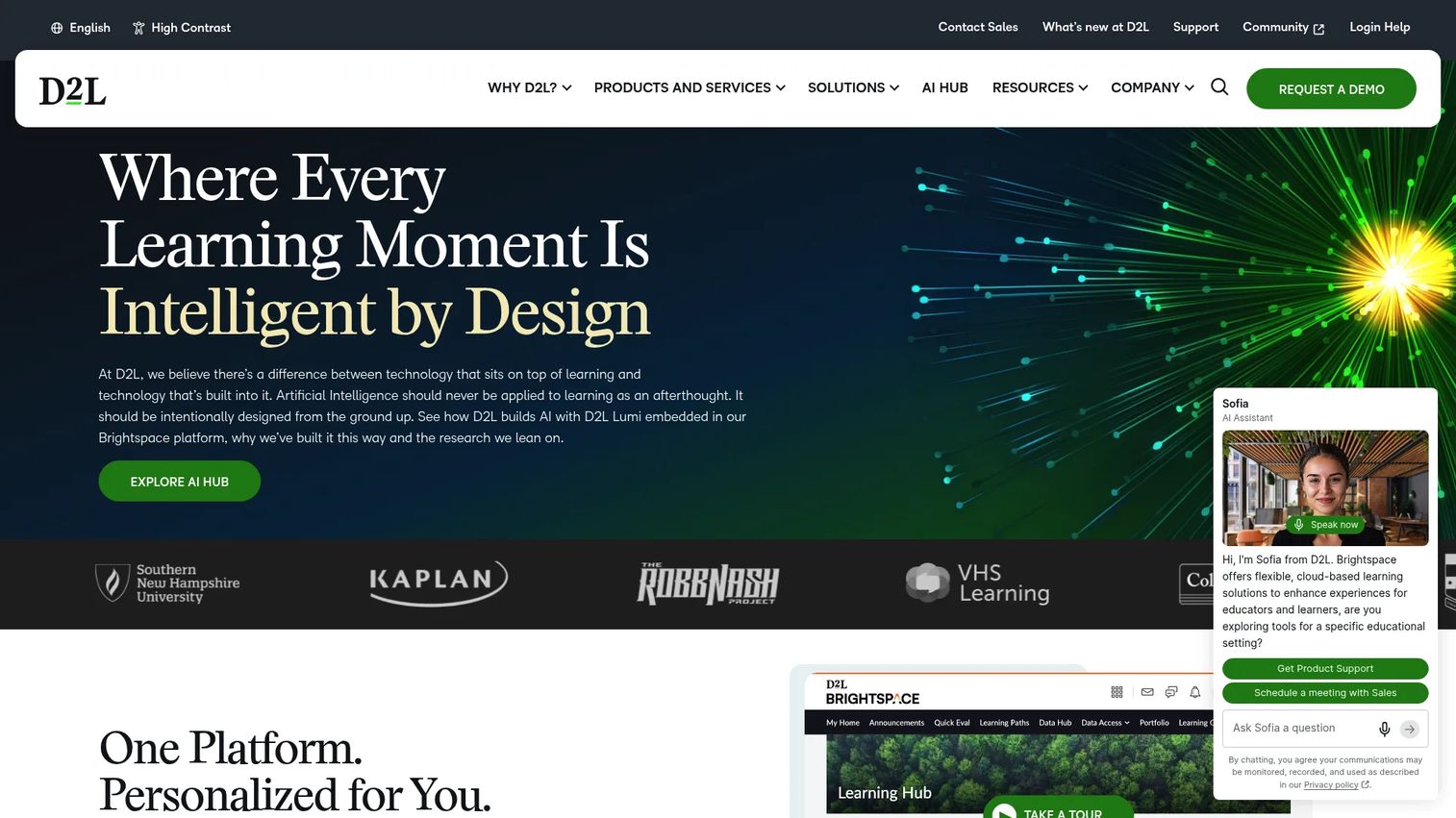
D2L Brightspace is a cloud-based learning management platform serving K-12, higher education, businesses, government agencies, and training organizations. For customer onboarding purposes, it fits companies that need a formal learning environment for external audiences at scale. The platform emphasizes accessibility, personalized learning, and analytics that connect training activity to business outcomes.
Best for: Enterprise CS teams delivering structured customer education across multiple regions, roles, or learner segments.
Key features
- Course authoring and content delivery for multi-audience programs
- Personalized learning paths with adaptive content recommendations
- Learner analytics and detailed reporting dashboards
- Accessibility-focused learning design tools
- Enterprise integrations, APIs, and SSO support
Why choose D2L Brightspace: It suits organizations where onboarding requires governance, accessibility compliance, and reporting tied to learner progress across large customer bases. Teams looking for a quick course-and-portal setup will find it heavier than necessary.
D2L Brightspace pricing: D2L prices by engagement and agreement. Sales conversations focus on learner volume, portal requirements, integrations, and support level.
G2 rating: 4.4/5
2. Docebo
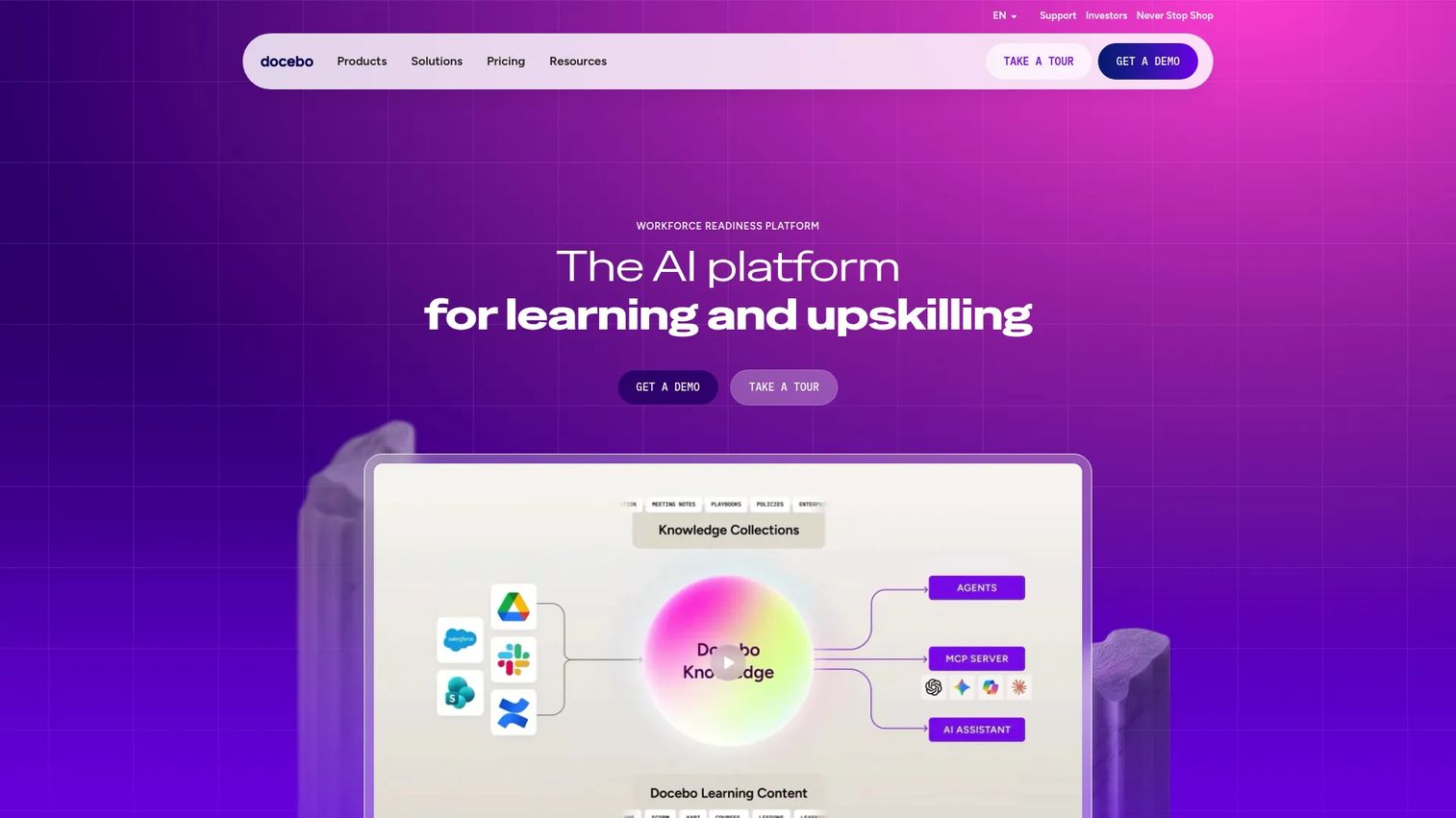
Docebo is an AI-powered learning platform for employee, customer, and partner education. Its customer education capabilities center on branded academies, audience segmentation, and AI-assisted content and recommendations. For CS teams, it handles global customer training programs where personalization, automation, and scalable delivery matter.
Best for: Mid-market and enterprise teams building formal customer education functions with AI-assisted learning and branded academy experiences.
Key features
- AI-powered content creation, recommendations, and search
- Branded customer academy portals
- Audience segmentation for multi-group learning
- Certification and compliance tracking
- CRM, analytics, and business system integrations
Why choose Docebo: Choose Docebo when customer education is a formal function with its own team, budget, and measurement framework. It is heavier than entry-level tools, and that weight is the point when the goal is a mature customer academy.
Docebo pricing: Docebo lists Elevate and Enterprise plans, with pricing customized to usage and agreement terms. Teams will need to contact sales with learner counts and integration requirements.
G2 rating: 4.3/5
3. TalentLMS
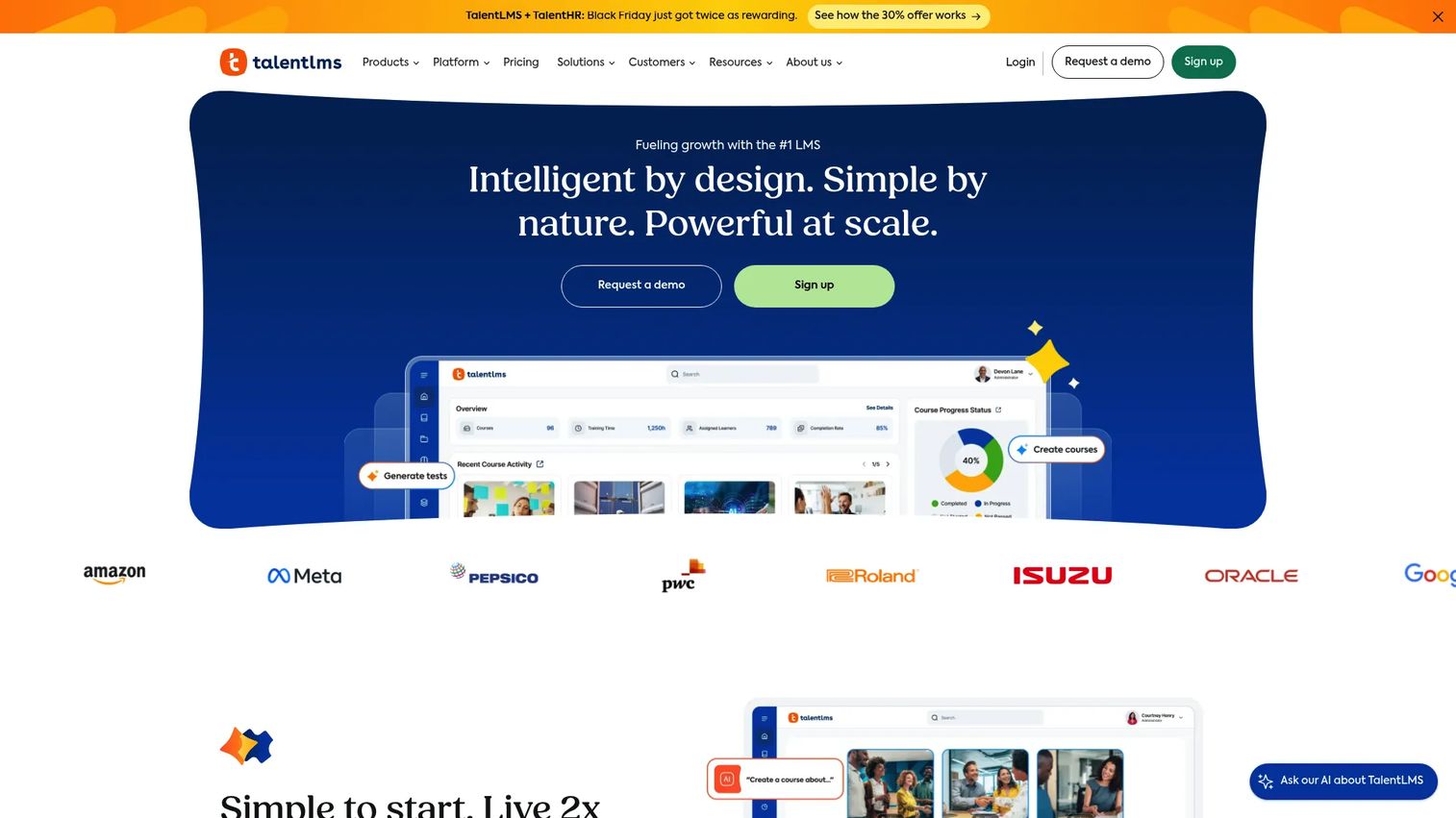
TalentLMS is a cloud LMS designed for quick training deployment across employee, customer, partner, and compliance use cases. CS teams value it for getting from zero to a structured training program without a lengthy implementation cycle. It covers courses, quizzes, certifications, and branded portals with a free plan to test the basics.
Best for: Smaller CS teams moving from ad hoc docs and Zoom recordings to a repeatable, standardized training path.
Key features
- Unlimited course creation with AI-assisted authoring
- Learning paths with automated enrollment
- Certificates and quizzes with custom branding
- Branch portals for separate customer segments
- SCORM, Tin Can, cmi5, and LTI 1.3 standards support
Why choose TalentLMS: The combination of published pricing, a free plan, and a fast setup path makes TalentLMS the most accessible starting point for CS teams without a dedicated customer education function. It is not the deepest platform for enterprise-scale academies, but it covers the most common onboarding training needs.
TalentLMS pricing: A free plan supports up to five users. Core starts at $119/month, Grow at $229/month, and Pro at $449/month (billed monthly, annual billing available). Enterprise pricing is custom and starts at 1,000 users.
G2 rating: 4.6/5
4. EducateMe
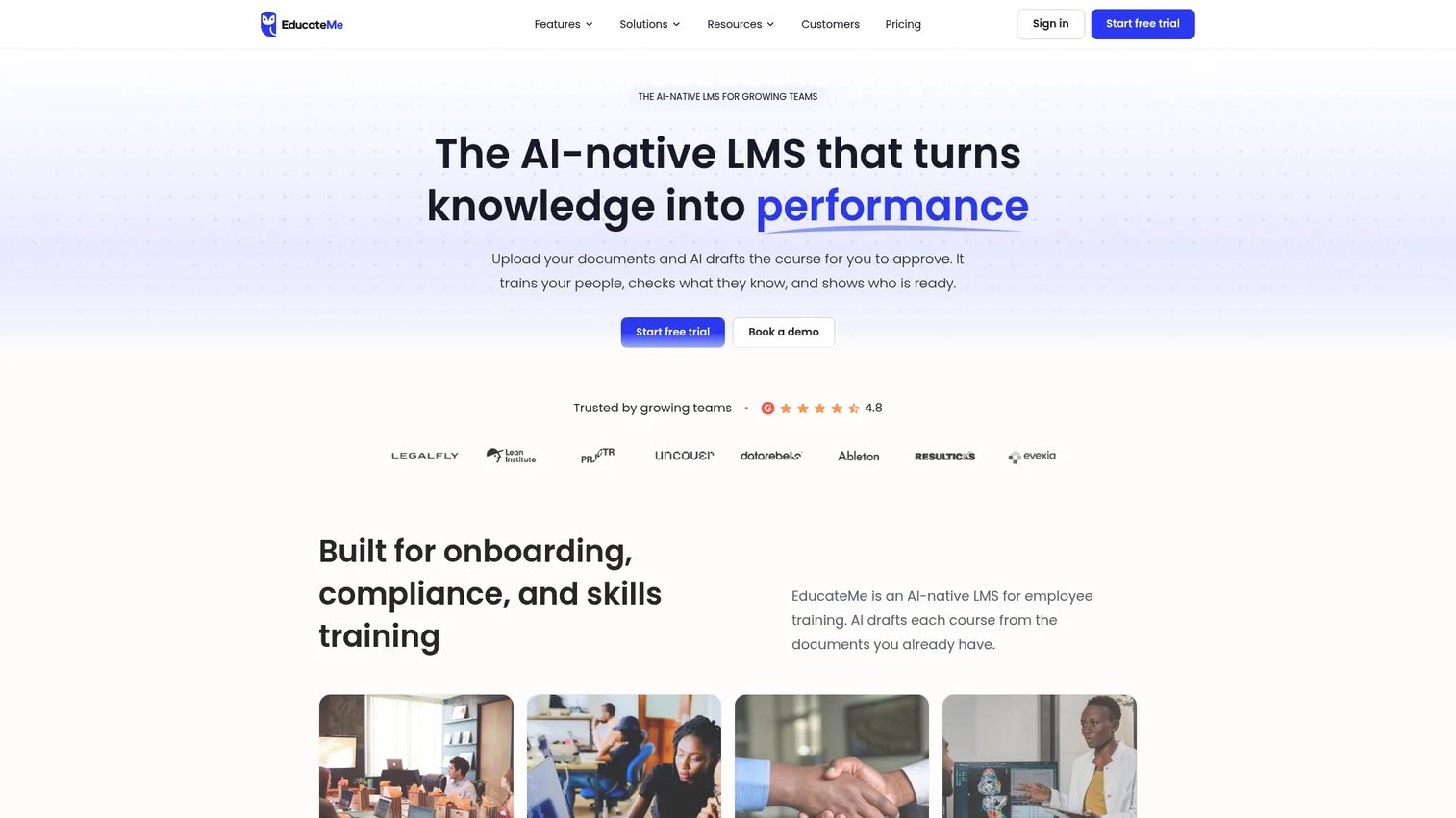
EducateMe is an AI-native LMS for structured learning programs, with particular strength in cohort-based delivery. For customer onboarding, it fits teams that still want human-led moments (live sessions, assignments, group discussions) but want structure around them instead of scattered Zoom links and Slack threads.
Best for: Customer education teams running cohort-style onboarding programs where group accountability, live sessions, and feedback loops matter.
Key features
- AI course creation from uploaded materials
- Cohort management and recurring programs
- Assignments, tasks, and discussion spaces
- Live session support with progress tracking
- Certificates, SCORM, analytics, and integrations
Why choose EducateMe: It bridges the gap between fully self-serve LMS content and purely manual facilitated onboarding. If your customer programs benefit from cohort dynamics and you want that experience organized in one platform, EducateMe handles it cleanly. A 14-day free trial is included with all plans.
EducateMe pricing: Pro starts at $239/month for 80 users, Premium at $399/month for 100 users, and Scale at $999/month for 200 users. Enterprise pricing is custom. Annual billing saves 10%.
G2 rating: 4.8/5
5. Northpass
Northpass now operates as part of Gainsight's Skilljar customer education platform. The product delivers external learning portals with branded academy customization, certifications, proctored exams, and training monetization. It connects with Salesforce, Gainsight CS, Zoom, Zendesk, Marketo, and 80-plus additional tools.
Best for: Mid-market and enterprise companies delivering branded customer or partner education with certification and revenue tracking.
Key features
- Branded academy portals with SSO and custom domains
- On-demand courses, instructor-led sessions, and learning paths
- Certificates, credentials, proctored exams, and re-certification flows
- Training monetization through subscriptions and one-time purchases
- Integrations with Salesforce, Gainsight CS, Zoom, Zendesk, and Marketo
Why choose Northpass: Teams that want a polished branded academy, strong certification workflows, and the ability to monetize customer training will find Northpass covers those requirements. Because it now sits within the Gainsight ecosystem, it is best evaluated alongside Gainsight Customer Education if your CS stack uses Gainsight broadly.
Northpass pricing: Contact sales through the Gainsight pricing page; relevant buying factors include active learner count, portal requirements, integrations, and support level.
6. Guideflow
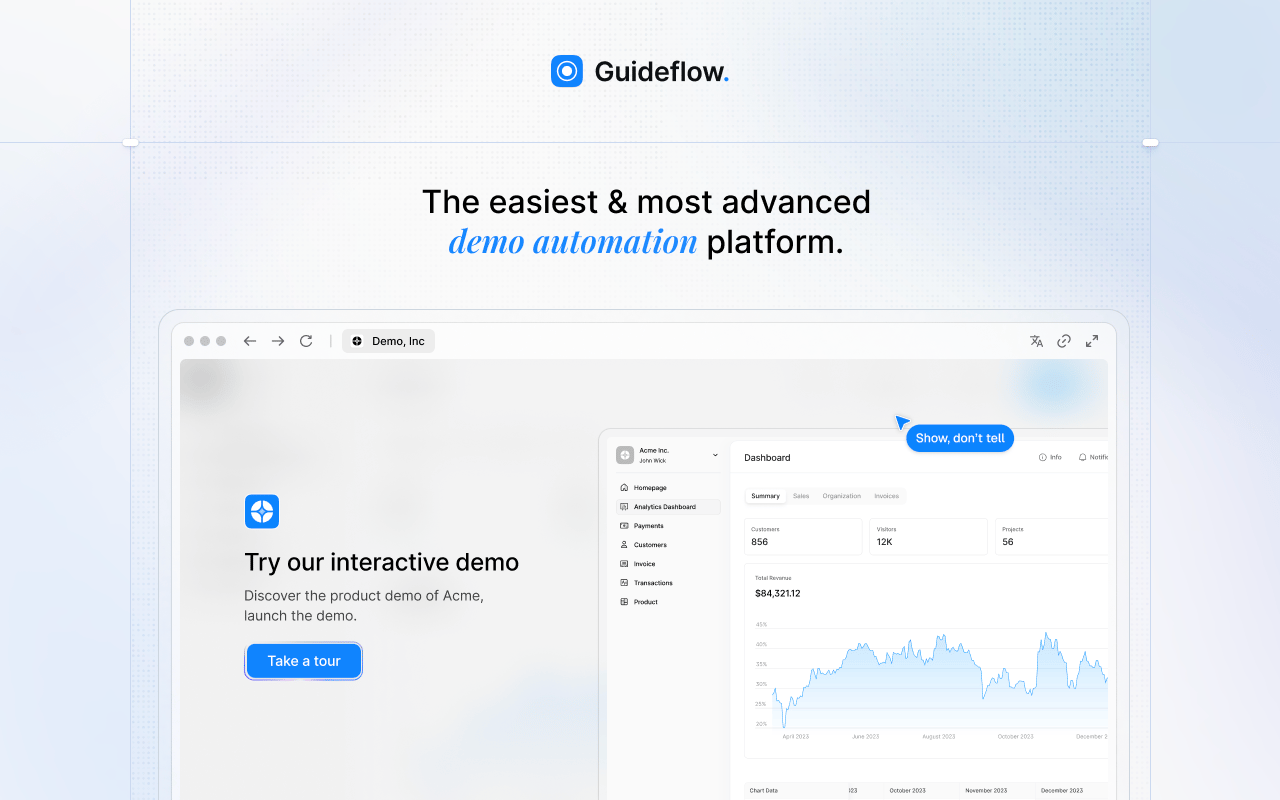
Guideflow is a demo automation platform that turns product flows into self-serve interactive demos in minutes. It is not an LMS. There is no certification, no curriculum management, and no learner reporting. What it does is give customers a way to practise a product workflow instead of watching a passive video or reading static documentation.
For CS teams, the value is specific: Customers click through the actual product steps, Guideflow's analytics show where they complete or drop off, and CSMs get visibility into which flows cause confusion before those customers open a ticket.
Best for: CS teams whose onboarding problem is product confidence rather than course administration. Guideflow fits when customers need to click through the workflow, not complete another module.
Key features
- Interactive demos with step-level engagement analytics
- Sandboxes for open product exploration
- Demo Center to organize demos by feature, persona, or onboarding stage
- Mobile demo support for mobile-first products
- No-code capture and editing with personalization controls
Why choose Guideflow: Choose it when customers do not need another course. They need to click through the workflow, understand what to do next, and get unstuck without booking a CSM call. Guideflow can sit alongside an LMS: The LMS hosts curriculum and certification, while Guideflow gives customers hands-on product practice inside onboarding modules, help content, or lifecycle emails. It also connects to the broader CS stack through integrations with CRM and marketing automation tools.
Guideflow pricing: A free plan is available. Solo starts at $35/month (billed annually), Growth at $499/month, and Advanced at $1,499/month. Enterprise pricing is custom.
G2 rating: 5.0/5
Start your journey with Guideflow today!
7. Gainsight Customer Education
Gainsight Customer Education (now represented as Skilljar by Gainsight) is an external learning management platform for educating customers and partners through branded academies, courses, certifications, and learning paths. For CS teams, its strongest differentiator is proximity to customer health data: Training signals can feed directly into renewal and expansion workflows when the broader CS stack already runs on Gainsight.
Best for: CS organizations that want training completion and engagement data connected to customer health scores, adoption tracking, and renewal motions.
Key features
- Branded academy portals with SSO and AI-assisted content creation
- On-demand courses and instructor-led sessions with learning paths
- Certifications, credentials, proctored exams, and re-certification
- Integrations with Salesforce, Gainsight CS, Zoom, Zendesk, and Marketo
- Training monetization through subscriptions, training credits, and Stripe
Why choose Gainsight Customer Education: Teams already using Gainsight CS for health scores and lifecycle management get the clearest benefit here, because onboarding progress becomes part of the customer health picture. For teams outside the Gainsight stack, evaluate Skilljar on its standalone academy and certification capabilities.
Gainsight Customer Education pricing: Key buying factors include active learner count, Gainsight stack scope, and integration requirements.
G2 rating: 4.6/5
8. Litmos
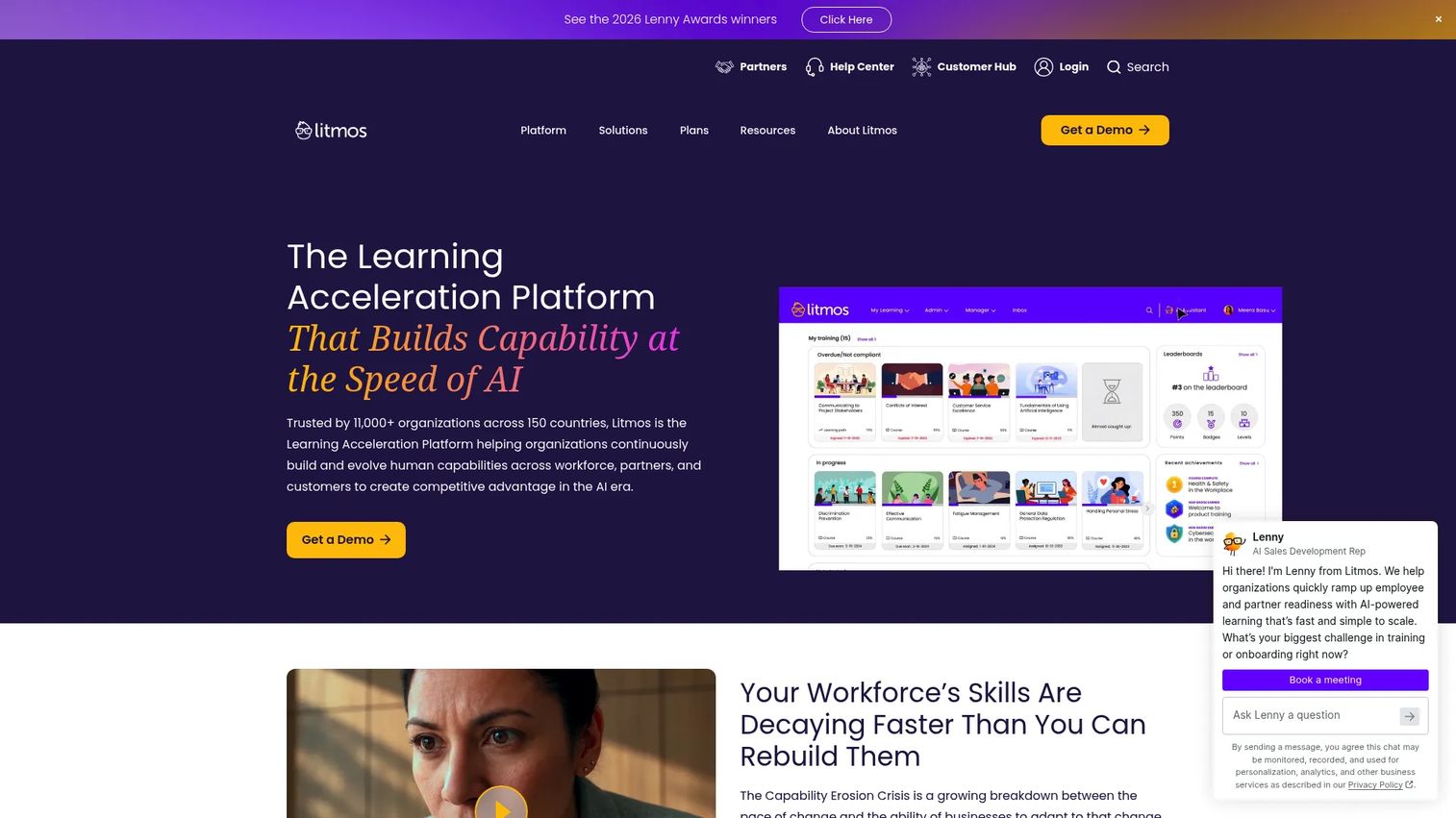
Litmos is an AI-powered LMS for training employees, customers, and partners. For customer onboarding, it fits programs where formal structure matters: Compliance requirements, knowledge checks, training records, and certifications. The AI layer assists with content authoring, assessment generation, and automated enrollment.
Best for: Organizations where customer onboarding includes regulatory or compliance elements, formal knowledge certification, or external training records.
Key features
- Learning paths, instructor-led sessions, and mobile learning
- AI-powered content authoring and assessment generation
- Compliance management and certifications
- SCORM support and reporting dashboards
- Automated enrollment and reminder workflows
Why choose Litmos: Its annual pricing structure and compliance depth make it a strong fit for organizations where customer training carries regulatory or records requirements. It is not the fastest path to a lightweight onboarding course, which is the point for programs that need that level of structure.
Litmos pricing: Foundation starts at $8,000/year. Platinum starts at $15,000/year with advanced compliance and authoring features. Platinum AI pricing requires a sales conversation.
G2 rating: 4.3/5
9. Absorb LMS
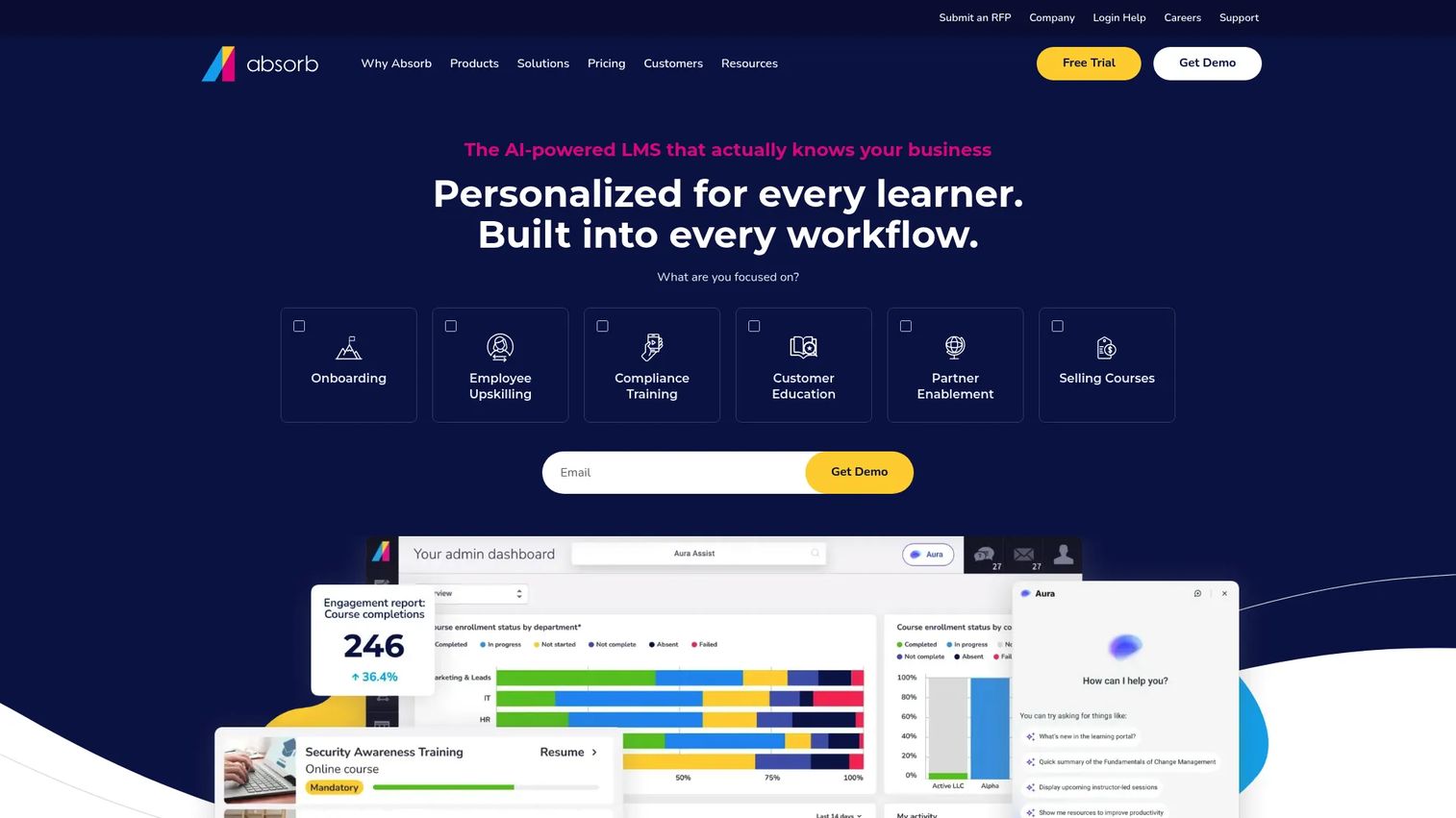
Absorb LMS is an AI-powered LMS for employee, customer, partner, and compliance training. It suits organizations running multiple learner audiences from a single platform, with strong external portal support, AI-assisted course authoring, and integration depth across HR systems, CRM, and analytics tools.
Best for: Enterprise teams managing customer and partner training alongside internal learning programs from one centralized platform.
Key features
- Personalized learning assignments by role, department, and skill gaps
- AI-assisted course authoring with quizzes, videos, and translations
- External customer and partner training portals
- Integrations with Salesforce, Workday, ADP, and 40-plus systems
- Custom reporting for learner engagement and training ROI
Why choose Absorb LMS: Its strength is breadth. Teams that need one platform spanning customers, partners, and employees without managing multiple systems will find it covers those operations cleanly. For teams whose only need is customer onboarding training, its scale may exceed the requirement.
Absorb LMS pricing: Absorb prices by quote, with no published standard tiers. The buying conversation will cover learner count, external portal requirements, integrations, and support level.
G2 rating: 4.6/5
10. Skilljar
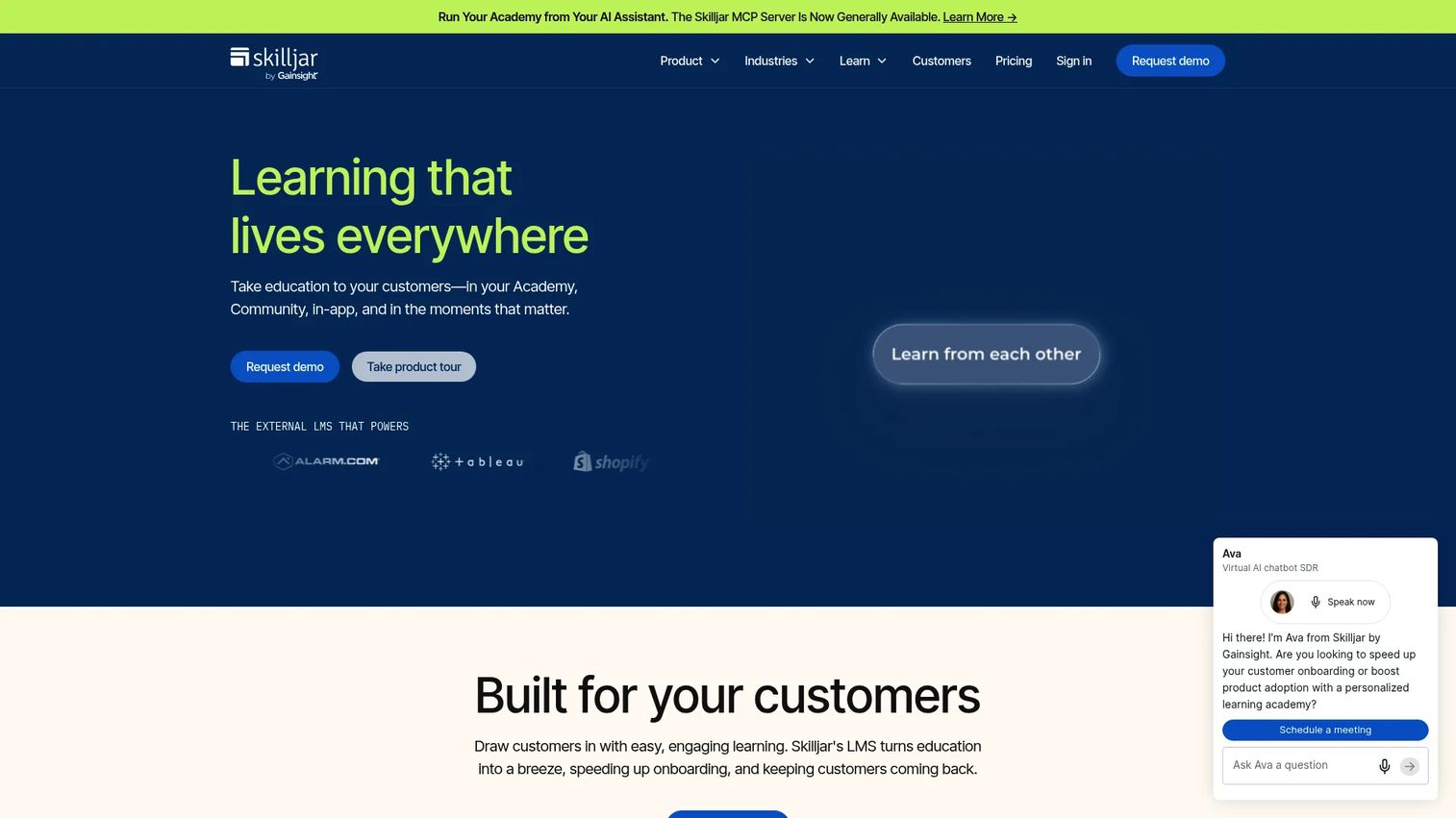
Skilljar is an external learning management and customer education platform. It is built specifically for companies that want a formal customer academy: Branded portals, certifications, learning paths, and the ability to monetize training through paid courses or subscriptions. SaaS companies with mature customer education programs use Skilljar to turn training into a scalable, measurable channel.
Best for: Customer education leaders building a formal training program with branded portals, certification, and optional course monetization.
Key features
- Customizable branded academy portals with SSO
- Certificates, certifications, and learning paths
- Course monetization with payments and multiple currencies
- Instructor-led training integrations with Zoom and Webex
- CRM and marketing automation integrations
Why choose Skilljar: When customer education is a strategic program rather than a reactive onboarding layer, Skilljar fits that mandate. The certification depth and monetization options are strong arguments for teams where training ROI needs to be directly measurable.
Skilljar pricing: Skilljar lists Essentials, Professional, and Enterprise plans. Contact sales for specifics.
G2 rating: 4.6/5
11. LearnUpon
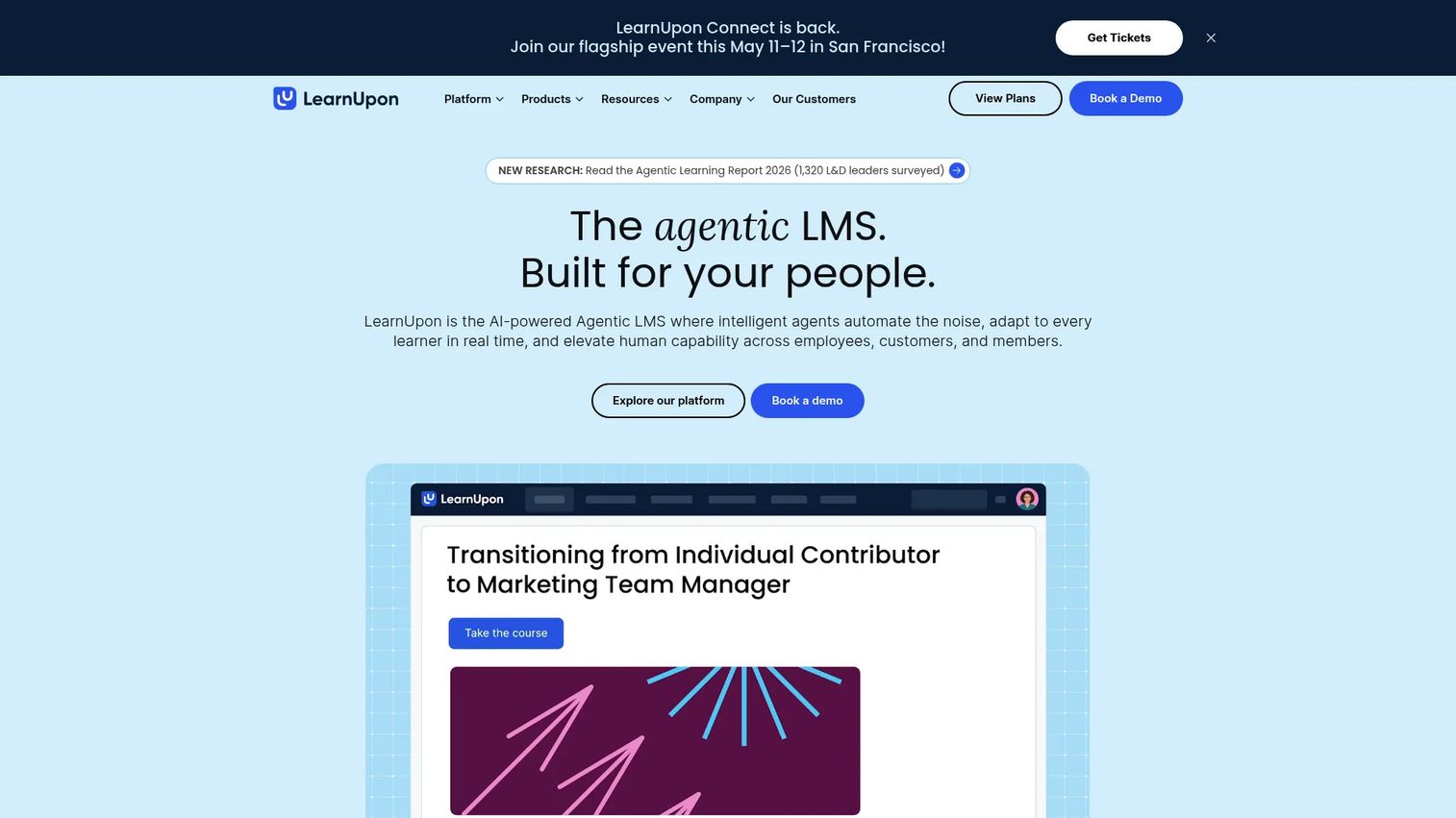
LearnUpon is an agentic learning platform for employee, customer, and partner training. Its practical differentiator for CS teams is multi-portal management: Each audience (customers, partners, resellers) can have a separate, controlled training experience from one administrative platform. The AI-powered Create+ tool and AI content discovery (Ask Lia) help teams build and maintain course content without heavy authoring overhead.
Best for: Teams training multiple distinct external audiences and needing separate portal experiences for each group.
Key features
- AI-powered course authoring with branching learning journeys
- Multiple separate learning portals per audience
- Certification and skills tracking
- eCommerce for paid training
- Reporting, analytics, and 24/7 support
Why choose LearnUpon: For CS teams that also manage partner or reseller training alongside customer onboarding, the multi-portal model eliminates the need for separate platforms per audience. The Customer Education product requires a minimum of 300 users, so it is best suited to organizations with established learner volumes.
LearnUpon pricing: All plans include implementation consulting, customer success, and 24/7 technical support.
G2 rating: 4.5/5
12. WorkRamp
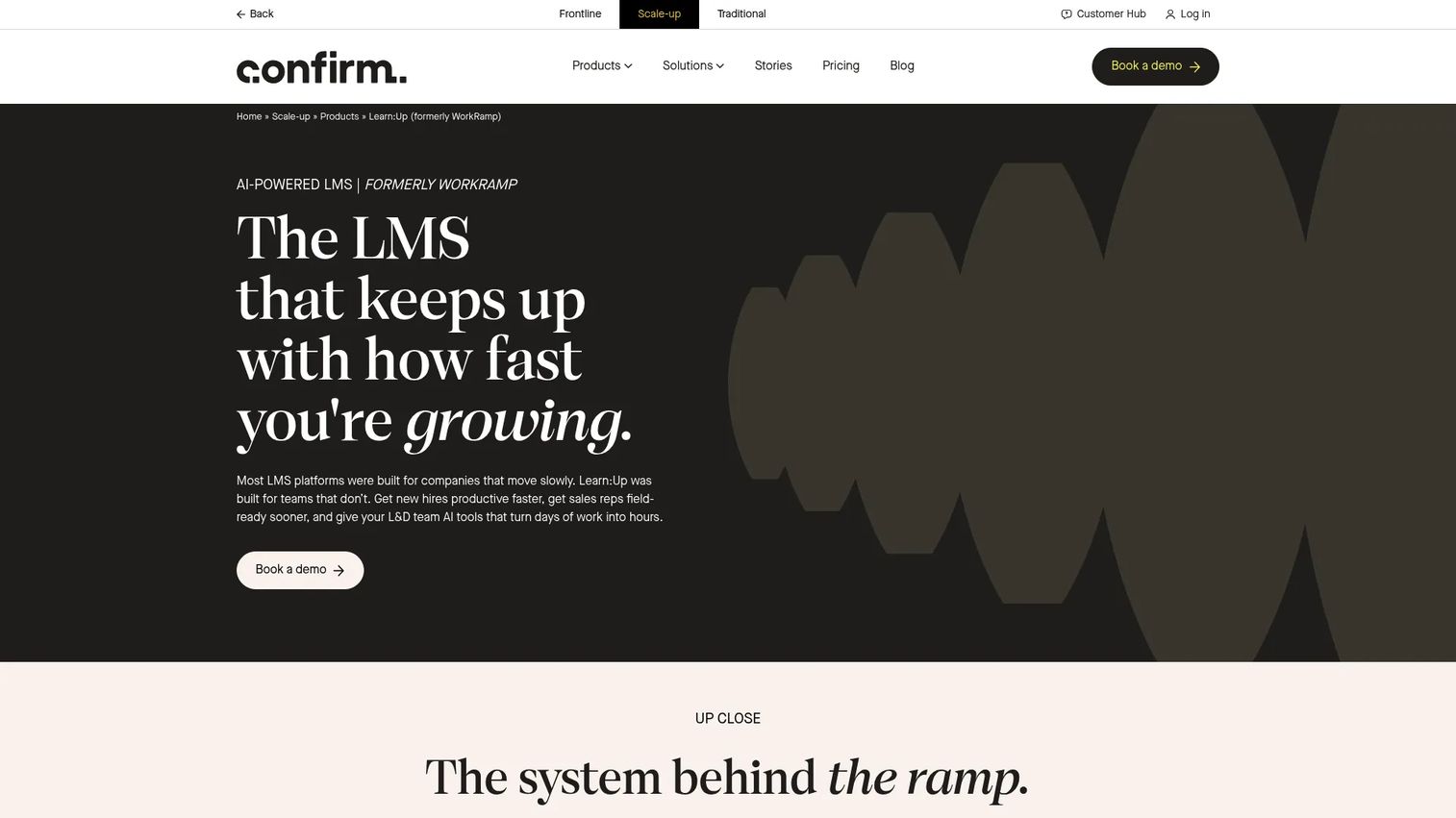
WorkRamp (now presented as Learn:Up by Confirm) is an AI-powered learning platform for customer, partner, and employee training. Its strongest positioning for CS teams is the connection between customer education and revenue enablement: The same platform can run customer academy programs and GTM training, so customers and sellers learn from a consistent source.
Best for: Teams where customer onboarding and field enablement overlap and a single platform for both is operationally simpler than managing separate tools.
Key features
- AI-driven role plays and simulations
- Customer academies with certification and learning paths
- AI-assisted content creation
- Analytics, reporting, and training ROI tracking
- HRIS, HCM, SSO, and scheduling integrations
Why choose WorkRamp: When the CS team and the sales enablement team are evaluating tools in parallel, WorkRamp's shared platform argument is real. Customer training and rep training use the same content infrastructure. For teams where those two functions are separate, the consolidation benefit is less relevant.
WorkRamp pricing: WorkRamp prices by quote. Contact the team for current packaging; relevant factors include customer academy scope, seat count, integrations, and support tier.
G2 rating: 4.4/5
Considerations when choosing a customer onboarding LMS
Course delivery versus product practice
The first question is structural. If customers need formal courses, assessments, certification records, and learning transcripts, choose an LMS. If the problem is customers not knowing what to click after completing a course, layer in interactive demos or a sandbox to cover the practice gap. Many CS teams need both.
Customer segmentation
Check whether a platform segments learners by role, plan tier, region, or lifecycle stage. Admins, end users, and executives follow different onboarding paths. A platform that forces all customers through a single curriculum wastes their time and understates the problem for the CSM.
Analytics that connect to CS outcomes
Go past course completion rates. The metrics that matter to CS leaders are time to value, support ticket volume before and after training, product adoption by feature, CSAT, and renewal risk signals. Confirm that the platform you evaluate can connect training data to those outcomes, not just report raw completions.
Integration with the CS stack
The LMS should not create a data silo. Training completion, certification, and engagement signals should flow to your CRM, support desk, and customer health platform. Integrations with Salesforce, HubSpot, Zendesk, Intercom, and CS platforms like Gainsight or Totango are worth confirming before committing to a contract.
Maintenance against product release cycles
A course about a product that shipped three months ago is a credibility problem. Evaluate how easy it is to update specific steps, re-record individual modules, and push changes across all customer-facing content. The platforms that require full re-publication for a UI change will fall behind your release cadence.
Conclusion
For formal customer education programs with courses, certifications, and learner records, D2L Brightspace, Docebo, Absorb LMS, and Litmos handle enterprise depth. TalentLMS is the fastest path to a structured training program for smaller CS teams, with published pricing and a free plan. EducateMe fits cohort-style onboarding where facilitated group learning still matters. Gainsight Customer Education and Northpass both sit within the Gainsight ecosystem and are worth evaluating together if Gainsight CS is already in your stack. Skilljar and LearnUpon lead for formal customer academy programs with certification and multi-portal requirements. WorkRamp connects customer education to revenue enablement for teams where those two functions share ownership.
Guideflow belongs in the picture when customers need to practise the product, not complete another course. It is a demo automation platform that sits alongside your LMS, covering the hands-on product confidence gap that course modules leave open.
Start your journey with Guideflow today!
FAQs
A customer onboarding LMS is software for delivering, tracking, and improving structured training for new customers. It typically includes course delivery, learning paths, certification, analytics, and integrations with CRM or support systems. The core job is replacing manual, repetitive education with a scalable, measurable training program.
An LMS focuses on learning delivery and tracking: Courses, certifications, learner records, and reporting. Customer onboarding software is a broader category that may include project plans, in-app guidance, success plans, product practice tools, and customer portals. Some teams use both, with the LMS handling structured training and onboarding software managing milestones and CS workflows.
Not always. Teams that need structured, repeatable, certification-driven training benefit from an LMS. Teams whose main problem is customers not understanding what to do next in the product may be better served by interactive demos or a sandbox environment that lets customers practise the workflow directly. The right answer depends on whether the gap is knowledge or practice.
Segmentation by role, plan, or lifecycle stage matters because different customer types need different paths. Certification and analytics connect training to CS outcomes like adoption and renewal. CRM and support integrations prevent training data from sitting in a silo. Content maintenance tools determine whether your training stays current after product releases.
Yes, when training answers the questions customers would otherwise open tickets about. Teams should measure ticket volume by category before and after launch and compare the topics that training covers. Completion rates alone do not confirm ticket reduction; matching ticket topics to course content is the diagnostic step.
The most useful metrics are time to value from signup to first meaningful product action, ticket volume on topics the LMS covers, product adoption by feature cohort, and certification completion rates for key onboarding milestones. CSAT and NPS trends after training launch add customer-side signal. Renewal and expansion rates over a 90-day post-training window give the clearest indicator of business impact.
No. Guideflow is a demo automation platform. It helps customers practise product workflows through interactive demos, sandboxes, and demo centers, but it does not provide certification, curriculum management, or learner reporting. It fits as a practice layer alongside an LMS, covering the hands-on product confidence gap that course content alone does not close.
Each format serves a different job. An LMS handles structured learning with courses and certification. A help center answers specific questions when customers are already in the product and need a quick answer. An interactive demo helps customers practise a workflow before or during active use. Teams with complex products often need all three: The LMS for curriculum, the help center for reactive support, and demos for product practice.