You wired money to a contractor in Manila. The transfer took four business days. The FX spread ate 3%. Your finance lead spent an afternoon reconciling it against a bank statement that made no sense. Then it happened again the next month, and the month after that.
That is what cross border payments feels like before you have the right infrastructure. Money moves slowly, margin leaks quietly, and nobody on your team can tell you exactly where the cost went.
The stakes keep rising. J.P. Morgan projects total cross border payment flows to grow from USD 194 trillion in 2024 to USD 320 trillion by 2032. As more of your revenue, payroll, and vendor spend crosses a border, the difference between good and bad cross border payment software stops being a rounding error and starts showing up in your gross margin.
The problem for a founder is not "what are cross border payments." It is choosing a provider that fits your operating model without creating compliance risk, margin leakage, or engineering drag. A marketplace paying thousands of sellers needs something very different from a SaaS company collecting subscription revenue in twelve currencies. This guide compares the strongest cross border payment solutions for 2026 and gives you a framework to choose by how your business actually moves money.
What's inside
This guide is for founders, operators, and finance-adjacent buyers at companies scaling internationally. You are paying contractors and vendors across markets, collecting revenue in multiple currencies, or building payouts into your product. You want a shortlist plus a decision framework, not a glossary.
We evaluated each cross border payment platform on six criteria that matter when you are choosing for scale:
- Compliance coverage: licensing, AML/KYC, and regulatory reach across your markets
- FX transparency: whether the spread is visible or buried
- Settlement speed: how fast money actually lands
- API flexibility: how well it embeds into your product and stack
- Scalability: whether it holds up as volume grows
- Pricing clarity: whether you can predict the cost per transaction
TL;DR
Different operating models point to different cross border payments companies. Here are the fastest decision paths:
- Best for broad coverage and clear pricing: Wise, for teams that want simple international transfers and multi-currency balances.
- Best for API-first global payouts: Stripe, for product-led and platform businesses embedding payments.
- Best for multi-currency business operations: Airwallex, for companies running both collections and disbursements in one system.
- Best for enterprise-scale orchestration: Adyen, for larger teams with complex checkout and acquiring needs.
- Best for embedded payment infrastructure: Currencycloud, for platforms that want FX and payment rails behind their own brand.
What cross border payments software actually does
Cross border payments software is a platform that lets businesses send, receive, convert, and track money across countries while handling the FX conversion, compliance checks, and settlement complexity that international transfers require.
In plain terms, it does four jobs at once. It moves money between countries. It converts one currency into another. It runs the AML/KYC and regulatory checks that keep the flow legal. And it settles the funds into an account you can actually use.
The modern cross border payment platform stack breaks into three layers:
- Compliance and risk controls: licensing in each market, sanctions screening, AML/KYC onboarding, and fraud monitoring. This layer decides where you are legally allowed to operate.
- FX and pricing: the exchange rate applied and the margin taken on top. FX transparency here is where most hidden cost lives.
- Settlement and rails: how money physically moves. Legacy correspondent banking routes payments through a chain of intermediary banks, which adds days and opaque fees. Modern API-driven providers use local funding, local clearing schemes, and increasingly real time cross border payments to land money faster and cheaper.
The shift from correspondent banking to modern rails is the single biggest change in the category. Legacy routing was slow because every hop added a bank, a fee, and a delay. Local-funded and real-time architectures cut out the middle, which is why settlement that once took days can now clear in hours or minutes on supported corridors.
The digital cross border payments market reflects this pace of change. CSIFF analysis puts it at USD 125 billion in 2025, growing to USD 450 billion by 2033. The providers below are the ones building for that trajectory.
Why cross border payments gets expensive fast
The sticker price on an international transfer is rarely the real cost. Founders underestimate four line items that compound at scale.
- FX spread: the gap between the mid-market rate and the rate you actually get. A 2% to 4% spread on high volume is real money that never shows up as a "fee."
- Failed and returned transfers: wrong account details, compliance holds, or unsupported corridors trigger reversals. Each failure means manual rework and a delayed vendor.
- Manual reconciliation: when funds land in different currencies on different days, someone on your finance team burns hours matching payments to invoices.
- Compliance delays: a payment held for AML/KYC review does not just cost time. It costs trust with the contractor or supplier waiting on it.
Picture a Series B SaaS company paying 40 contractors across eight countries every month. At a 3% blended FX spread on $200,000 in payouts, that is $6,000 a month, or $72,000 a year, leaking straight out of gross margin. The right cross border payment gateway compresses that number and makes it visible.
How we chose the best tools
We ranked these cross border payment solutions by relevance to founders and operators choosing for scale, not by brand recognition. Five criteria carried the most weight:
- Compliance depth: breadth of licenses and strength of AML/KYC and sanctions screening.
- FX transparency: how visible and predictable the exchange margin is.
- Settlement speed: how fast funds clear, including real-time or same-day corridors.
- API and integration quality: how cleanly the platform embeds into your product and finance stack.
- Scalability and pricing clarity: whether the model holds up and stays predictable as volume grows.
Comparison table
Here is how the eight cross border payment software options compare by operating model, differentiation, pricing, and rating. Read it as a map of buyer archetypes, not a feature dump.
| # | Product | Intent | Key differentiation | Pricing | G2 rating |
|---|---|---|---|---|---|
| 1 | Wise | Simple, transparent international transfers | Mid-market FX rate with an upfront fee | Free account; card from 9 USD | 4.7/5 |
| 2 | Airwallex | Multi-currency business operations | Collections plus disbursements in one platform | Free plan; Grow from $12 per user/month | 4.2/5 |
| 3 | Stripe | API-led platform and product payments | Programmable payments with global support | From 2.9% + 30¢ per transaction | 4.2/5 |
| 4 | Payoneer | Marketplace and contractor payouts | Local receiving accounts and multi-market payouts | Free account; conditional annual fees | 3.8/5 |
| 5 | Adyen | Enterprise global commerce | Unified online, in-person, and omnichannel | From $0.13 + 4.29% + $0.30 per transaction | 4.0/5 |
| 6 | Currencycloud | Embedded payment infrastructure | White-label FX and payment rails via API | Custom pricing | 4.5/5 |
| 7 | Worldpay | Enterprise global processing | Broad market and currency coverage | Custom pricing | 2.9/5 |
| 8 | Banking Circle | Regulated banking infrastructure | Bank-grade rails for financial institutions | Price on request | Not yet rated |
1. Wise
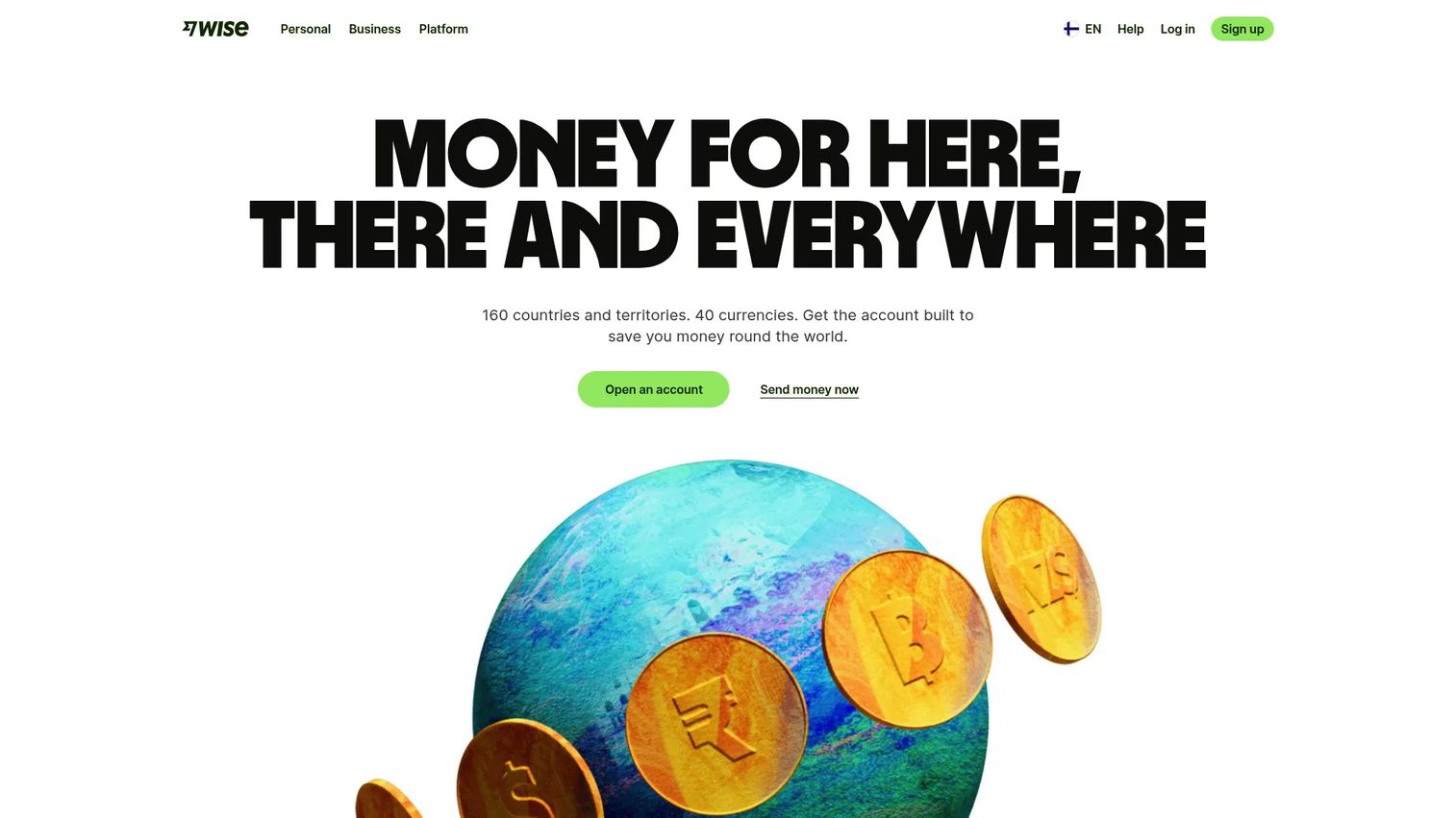
Wise is an international money transfer and multi-currency account platform built around one promise: use the real mid-market exchange rate and charge a clear fee on top, instead of hiding margin in a marked-up rate. For a founder tired of guessing what a transfer actually cost, that transparency is the whole point. Wise sends money to 140+ countries and lets you hold and convert 40+ currencies in one account.
Best for: Teams that want low-cost, transparent international transfers and multi-currency balances without a banking project.
Key strengths
- FX transparency: Transfers use the mid-market rate with the fee shown upfront, so you can predict cost per payment.
- Multi-currency support: Hold and convert 40+ currencies and receive local account details in multiple currencies.
- Broad reach: Send money to 140+ countries, which covers most corridors a scaling team touches.
Why choose Wise: Wise is the cleanest option when your main job is moving money out and in without margin surprises. It is less of a fit when you need deep API orchestration or embedded platform payments, where an infrastructure-heavy provider serves better. For clear pricing and operational simplicity, it is hard to beat.
Wise pricing: A personal account is free to open, with no subscription. Fees vary by transaction type and currency. The Wise multi-currency card is a one-time 9 USD, and a card replacement is 5 USD. There are no monthly plan fees for personal accounts.
2. Airwallex
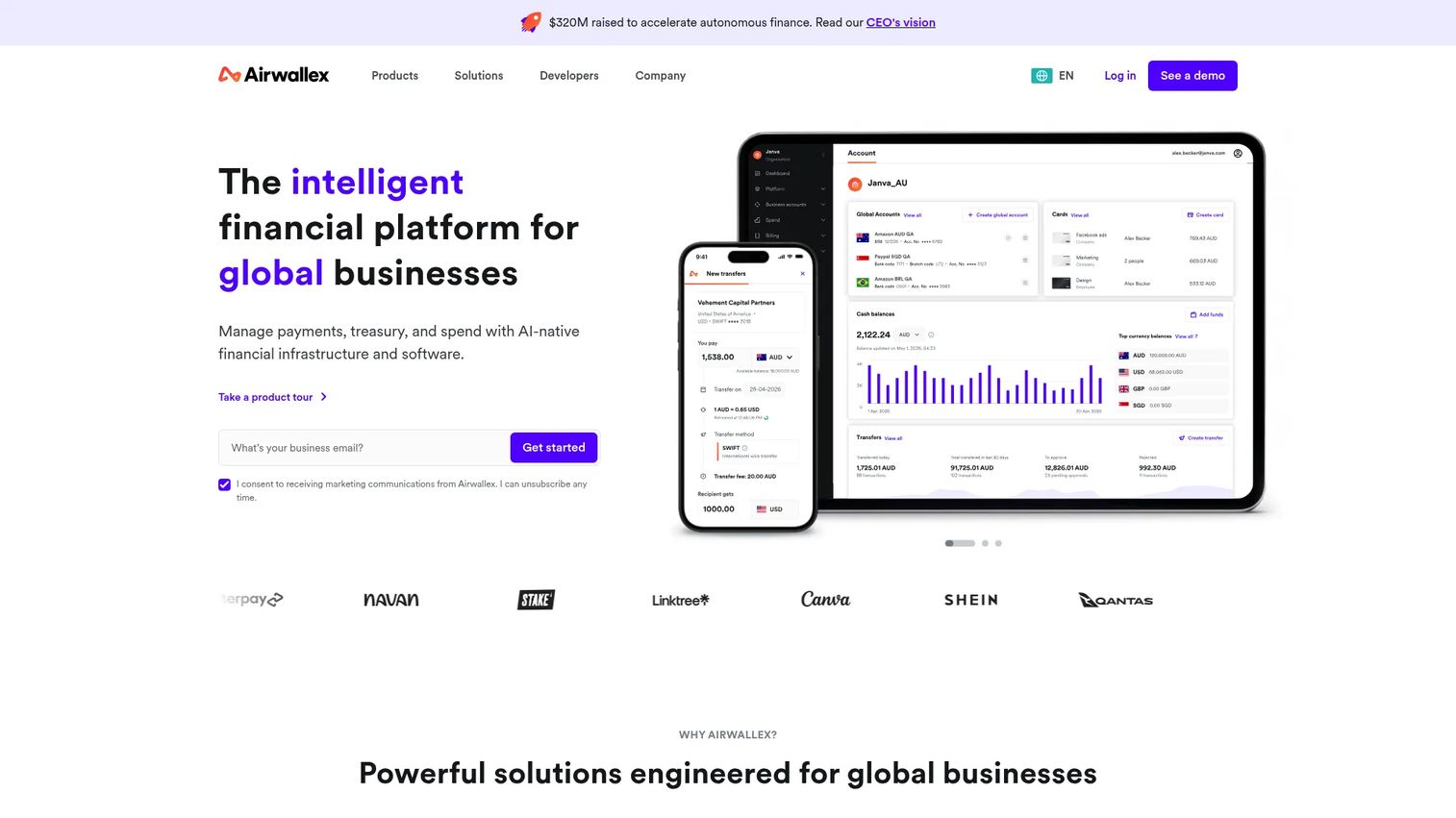
Airwallex is a global financial platform that pulls cross border payments, multi-currency accounts, and spend control into one system. For a company running both sides of the flow, collecting revenue and paying out vendors, it consolidates what would otherwise be several tools. That consolidation is exactly the kind of stack simplification a Series B founder is looking for.
Best for: Businesses that need one platform for cross-border payments, multi-currency funds management, and spend control.
Key strengths
- Collections and disbursements together: Accept payments with local methods and global acquiring, then pay out from the same balance.
- Multi-currency accounts: Business accounts and multi-currency funds management reduce conversion round-trips.
- Spend management: Corporate cards and expense workflows tie payables into the same platform.
Why choose Airwallex: Airwallex fits teams operating across regions that are tired of stitching collections, payouts, and card spend across separate vendors. It gives finance a single view of money in and money out. If you only need one-directional transfers, a lighter tool may be enough, but for two-way global operations this earns its place.
Airwallex pricing: The Explore plan is $0 per user per month. Grow is $12 per user per month plus a platform fee that scales with team size. Accelerate is custom pricing through sales. Transaction fees apply on top of plan pricing.
3. Stripe
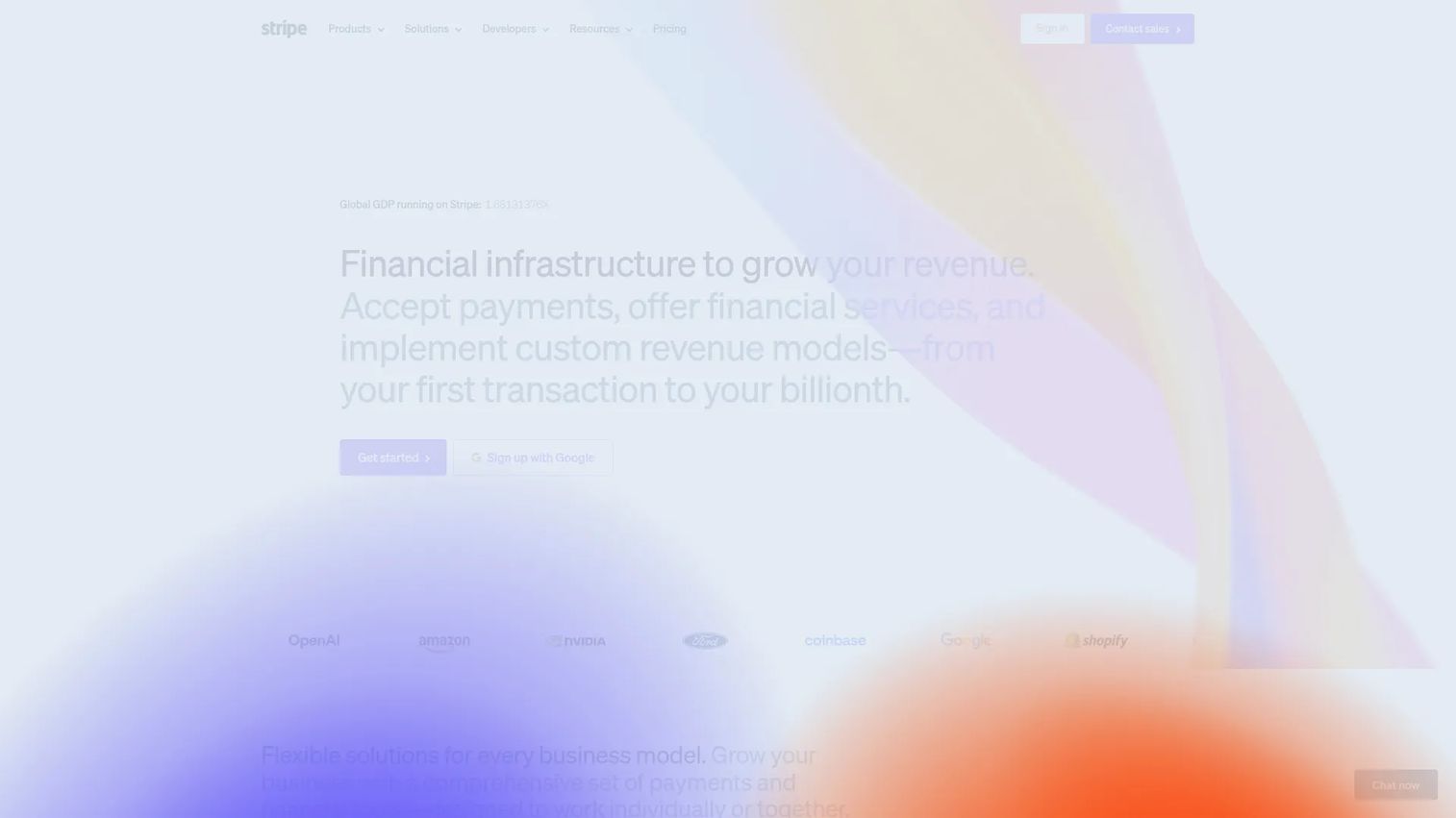
Stripe is a programmable payments platform that developers reach for when payments need to live inside the product, not beside it. For SaaS and platform businesses, Stripe handles cross-border collections, subscriptions, and global payout tooling through a clean, well-documented API. If your engineering team already knows Stripe, extending it to international flows is a short hop rather than a migration.
Best for: Product-led and platform businesses that want to embed cross-border payments directly into their product.
Key strengths
- API-first payments: Prebuilt checkout, payment links, and a mature API make embedding fast.
- Billing depth: Subscriptions, invoicing, and billing cover recurring SaaS revenue across currencies.
- Fraud and reporting: Built-in fraud prevention and reporting tools reduce the tooling you bolt on.
Why choose Stripe: Stripe is the default when payments are part of the product experience and you want developers to own the integration. It is strongest for collections and platform payouts rather than bank-to-bank treasury. For a founder building payments into the roadmap, the API depth pays back quickly.
Stripe pricing: Standard pricing is 2.9% + 30¢ per successful domestic card transaction, billed as pay-as-you-go with no monthly minimum. Custom pricing is available for higher volume or unique businesses. Some products carry separate published fees.
4. Payoneer
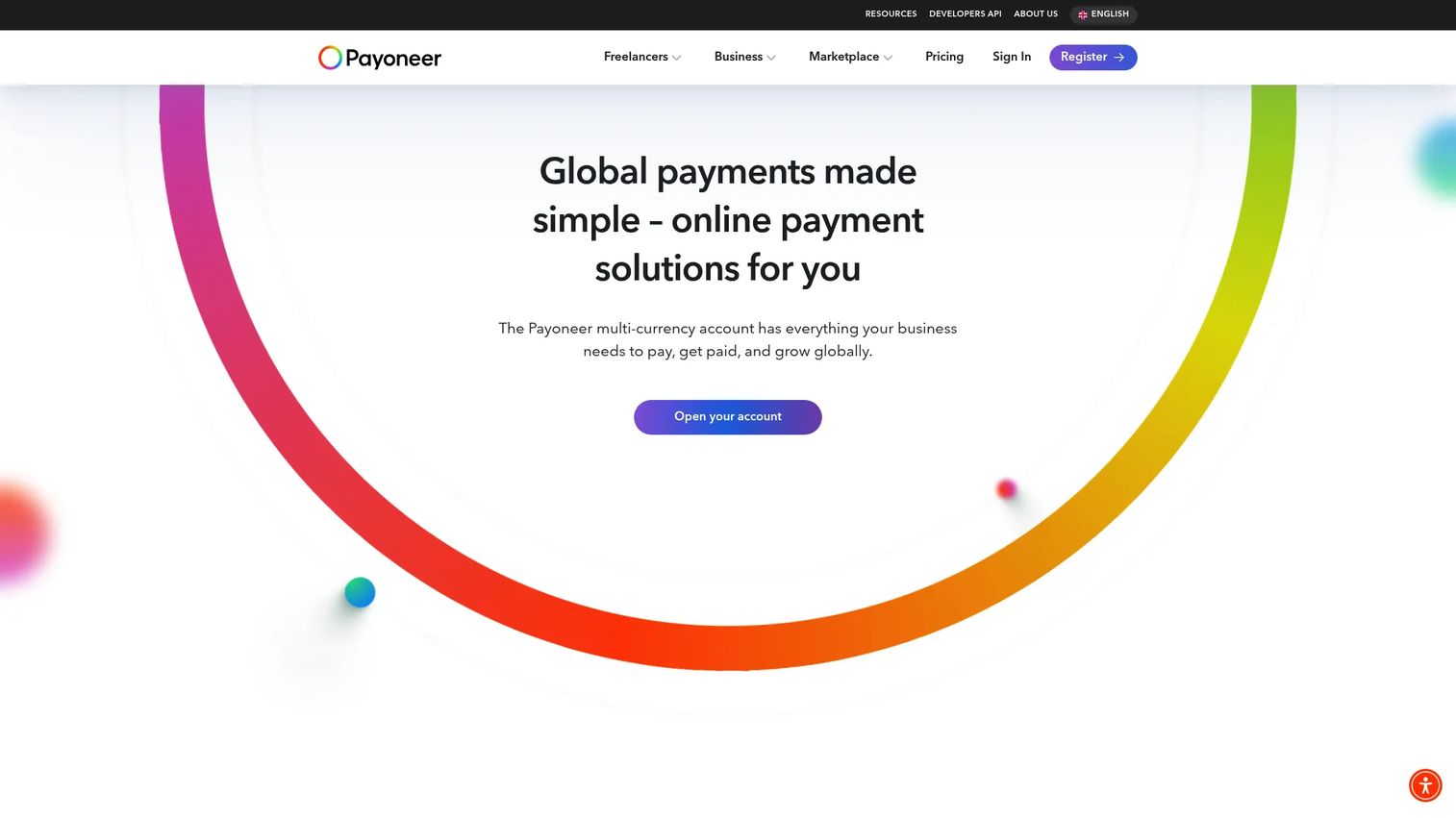
Payoneer is a global payments platform built for the messy reality of paying and getting paid across borders. It shines for marketplace payouts, freelancer and contractor payments, and multi-market disbursements. If you run a distributed team or pay international suppliers, Payoneer's local receiving accounts and broad payout network cover corridors that traditional banking makes painful.
Best for: Businesses and freelancers handling cross-border payments, marketplace payouts, and multi-currency funds.
Key strengths
- Global payouts: Send payments to contractors, suppliers, and other Payoneer users across markets.
- Local receiving accounts: Receive payments via local accounts and marketplace integrations.
- Multi-currency balances: Hold, convert, and withdraw across currencies from one account.
Why choose Payoneer: Payoneer is the practical pick when your payment volume is outbound to many recipients in many countries. It removes the need for a bank relationship in every market. For collections-heavy SaaS billing, a platform-native tool may fit better, but for distributed payouts Payoneer is purpose-built.
Payoneer pricing: A Payoneer account is free to open, with transaction-based fees that vary by payment type, method, currency, and corridor. An annual account fee of 29.95 USD applies only if the account receives less than 6,000 USD or equivalent over 12 consecutive months. The card carries a 29.95 USD annual fee.
5. Adyen
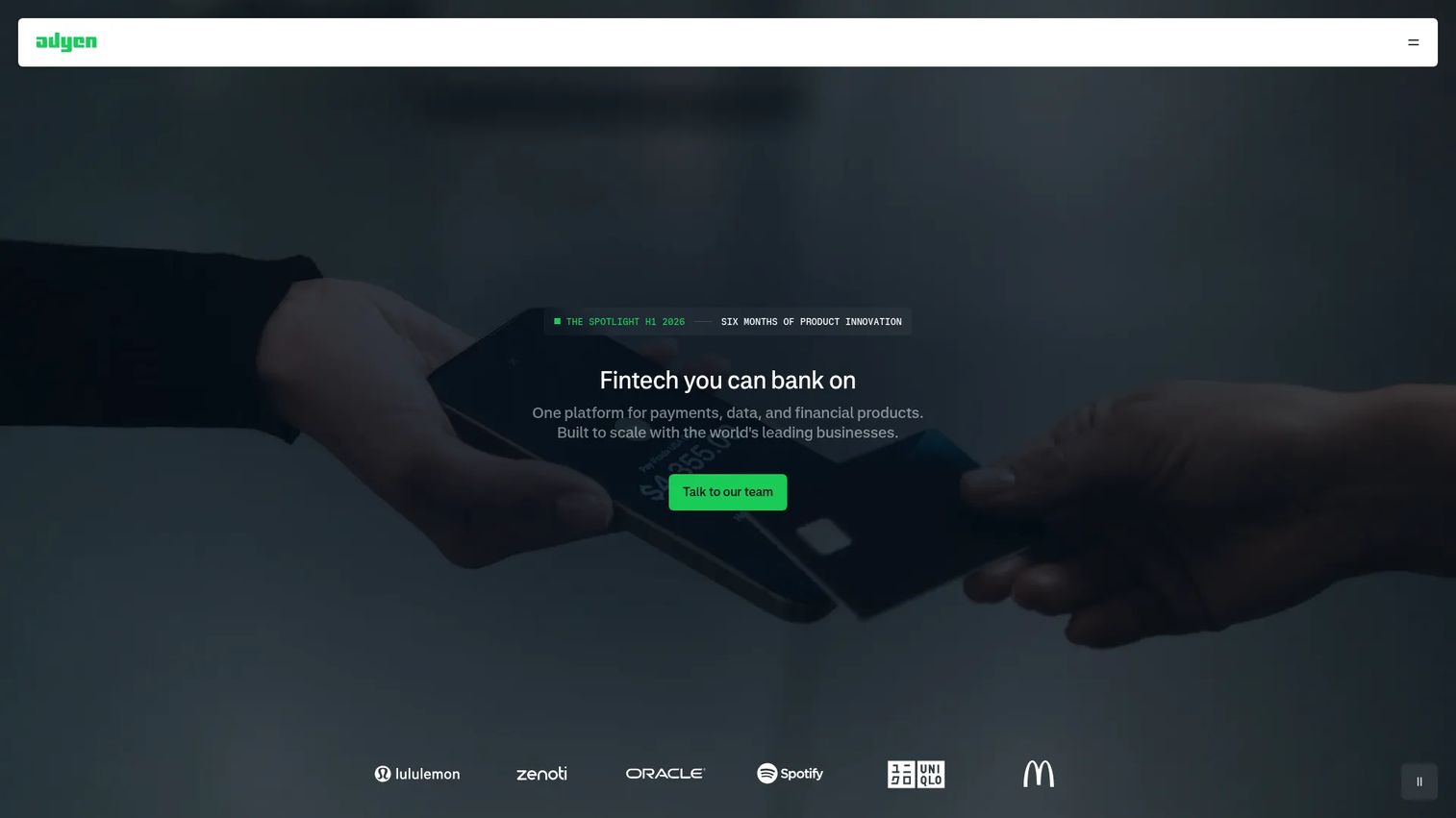
Adyen is a global financial technology platform built for enterprises that need online, in-person, and omnichannel payments on one system. It is a payments orchestration layer for multinational commerce, supporting 100+ payment methods with risk management, authentication, and revenue optimization tooling. For larger teams with complex checkout and acquiring needs, Adyen consolidates what would otherwise be a patchwork of regional processors.
Best for: Enterprises needing a unified global payments platform across online, in-person, and omnichannel.
Key strengths
- One platform: Online and in-person payments run through a single integration.
- Payment method breadth: 100+ payment methods globally cover regional preferences.
- Revenue optimization: Risk management, authentication, and optimization tools lift authorization rates.
Why choose Adyen: Adyen fits companies operating at genuine scale where checkout complexity and multi-country acquiring are the core problem. It is enterprise-grade infrastructure rather than a quick-start tool. Smaller teams may find a lighter platform faster to launch, but at scale the orchestration depth matters.
Adyen pricing: Adyen uses transaction-based pricing with no setup fee and no monthly fees. The visible United States rate on its pricing page is $0.13 + 4.29% + $0.30 per transaction, with rates varying by payment method and country. Other products are priced separately.
6. Currencycloud
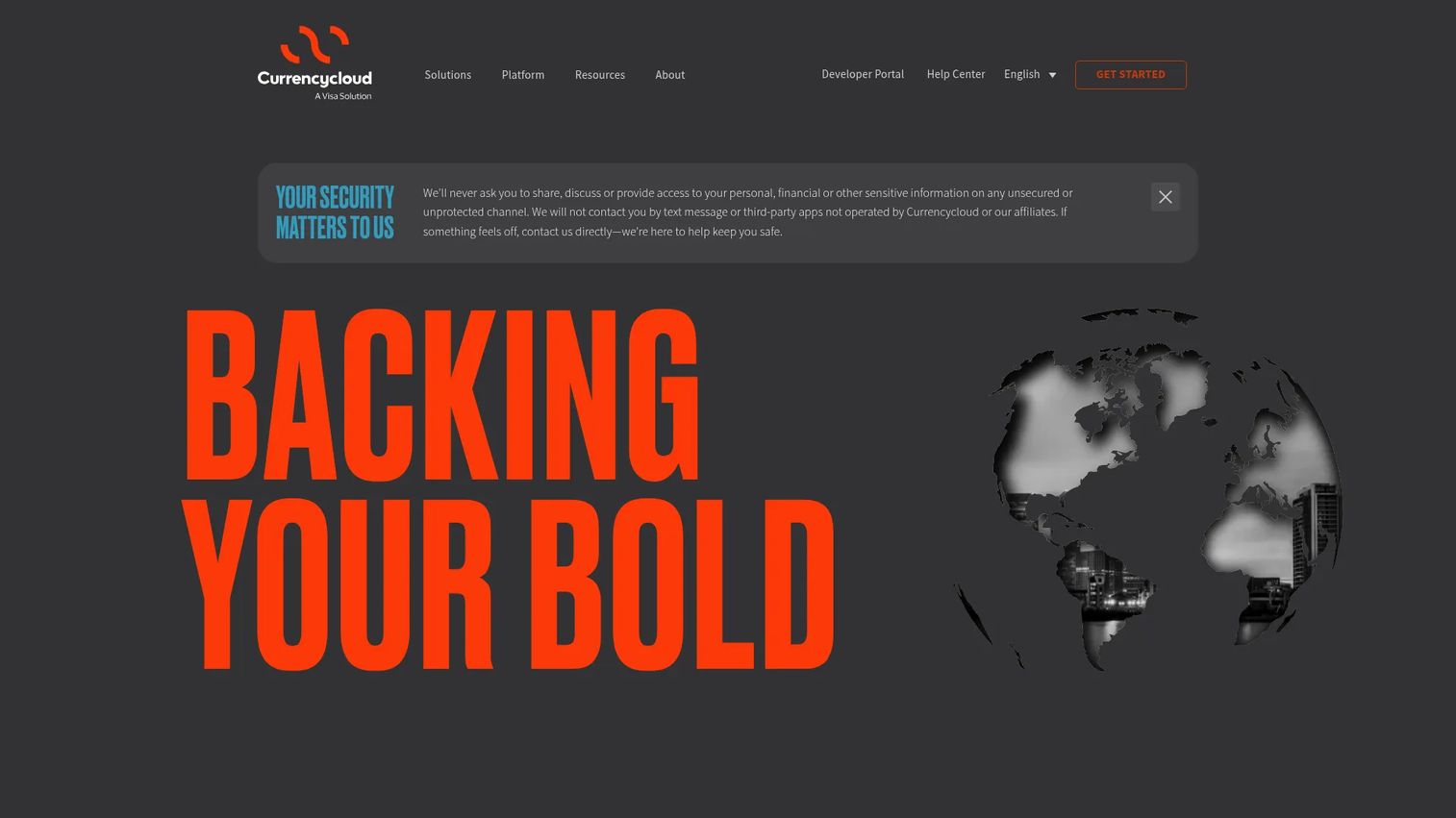
Currencycloud is a B2B cross-border payments and FX platform designed to sit behind other products rather than in front of end customers. Banks, fintechs, and FX businesses use it as embedded infrastructure to collect, convert, pay, and manage multi-currency funds through APIs. If you are building a product that needs payment rails under your own brand, Currencycloud is the layer that powers it without becoming the customer-facing name.
Best for: Banks, fintechs, and FX businesses needing embedded cross-border payments infrastructure.
Key strengths
- API-first infrastructure: Cross-border payments via APIs, Currencycloud Direct, and white-label options.
- Real-time FX: Real-time FX rates and currency conversion built into the flow.
- Multi-currency accounts: Virtual accounts for collecting payments across currencies.
Why choose Currencycloud: Currencycloud is the choice when you want to own the customer experience and let a proven partner handle the regulated plumbing. It excels as a behind-the-scenes engine for platform teams. If you need a ready-to-use front-end account, a direct-to-business provider fits better, but for embedded rails this is built for the job.
Currencycloud pricing: Currencycloud does not publicly display pricing figures. Pricing is arranged directly based on volume, corridors, and the embedded use case, so plan to scope it through their team.
7. Worldpay
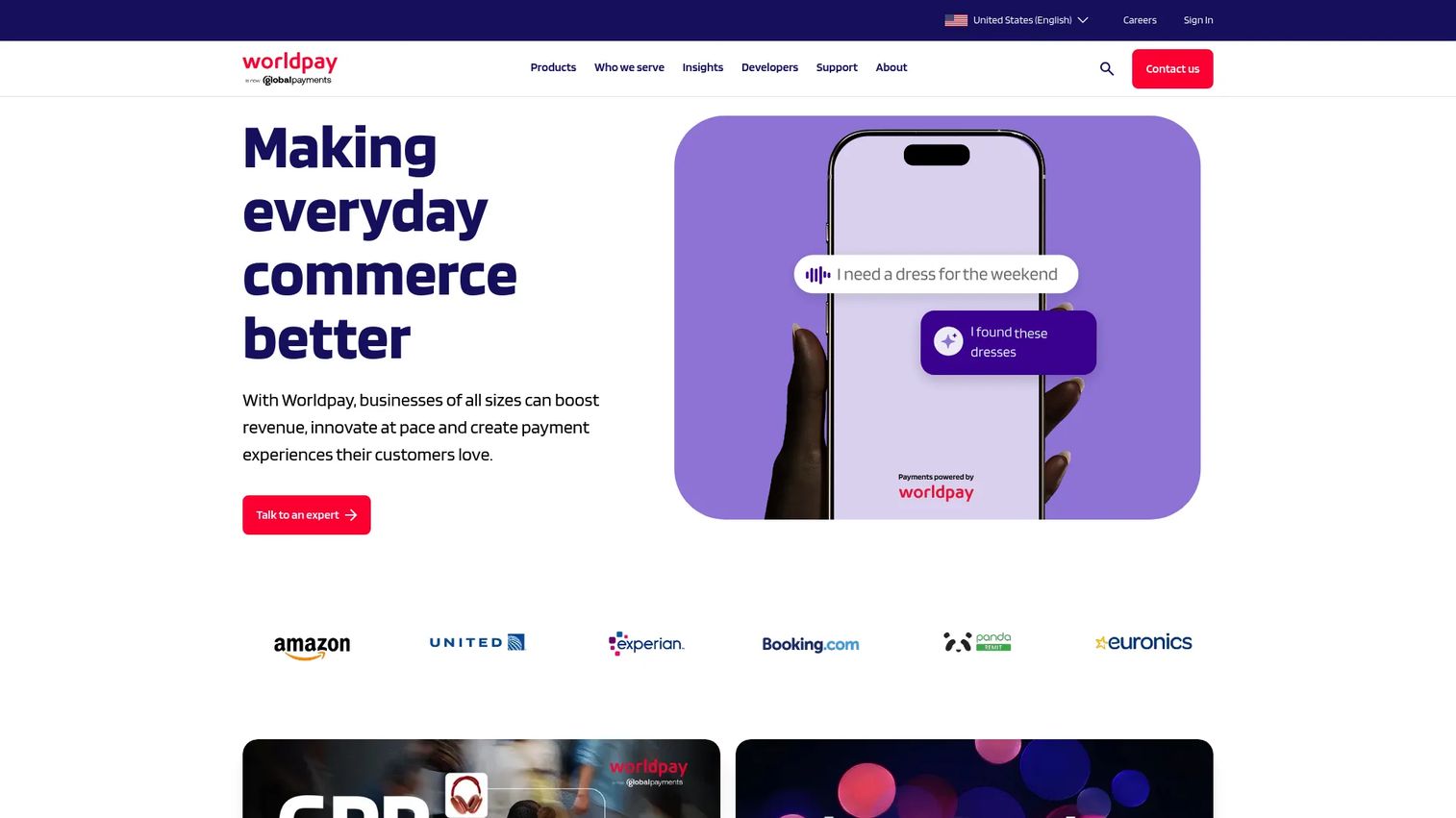
Worldpay is a global payments technology provider focused on taking, making, and managing payments online, in-person, and across markets. It is built for established businesses with real international volume, processing across 70+ markets and 190 countries with 135+ currencies and 60+ payment methods. For firms that need proven, broad-coverage payment rails rather than a startup-friendly quick start, Worldpay's reach is the draw.
Best for: Enterprises and global merchants needing omnichannel payment processing at scale.
Key strengths
- Global coverage: Online payment processing across 70+ markets and 190 countries.
- Currency and method breadth: 135+ currencies and 60+ payment methods.
- Fraud protection: Fraud protections and scalable checkout for high-volume merchants.
Why choose Worldpay: Worldpay suits enterprises that prioritize established rails and geographic breadth over a lightweight onboarding experience. It is a fit for merchants processing significant cross-border commerce. Earlier-stage teams often move faster with an API-first platform, but for broad enterprise coverage Worldpay earns consideration.
Worldpay pricing: Worldpay does not publish a public pricing figure. Pricing is quoted based on processing volume, markets, and payment methods, so expect a custom quote through sales.
8. Banking Circle
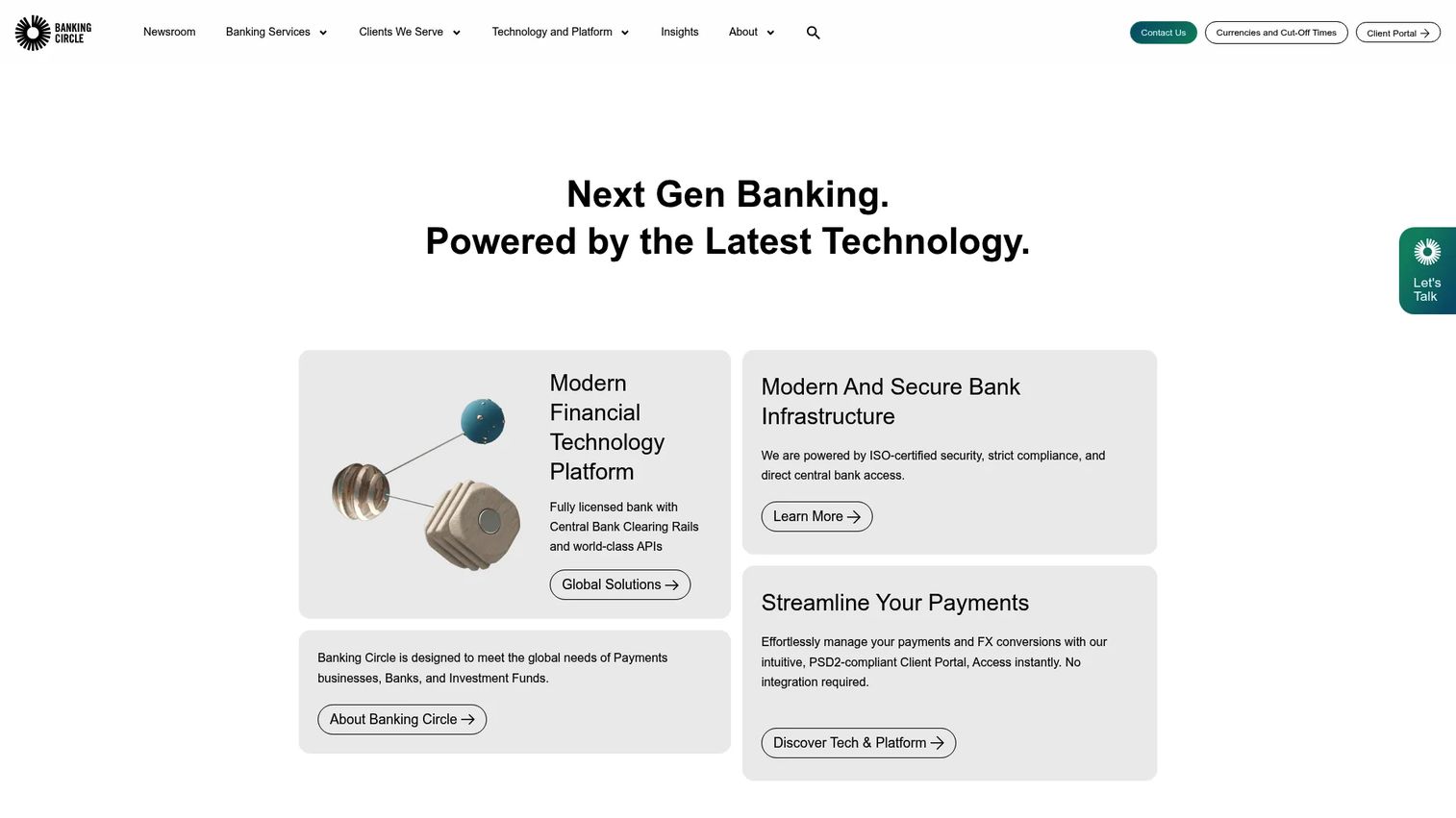
Banking Circle is a regulated B2B bank that provides payments, FX, accounts, and banking infrastructure to financial institutions. It sits at the deepest layer of the stack, offering bank-grade rails to banks, PSPs, and other regulated players that need direct connectivity rather than a front-end product. If you operate regulated financial flows or run a platform that needs genuine correspondent banking depth, Banking Circle is infrastructure, not an app.
Best for: Banks, PSPs, and other regulated financial institutions needing banking infrastructure.
Key strengths
- Regulated rails: Cross-border payments in 24 currencies from a licensed bank.
- Local clearing access: Direct access to 10 local clearing schemes.
- Multi-currency accounts: Virtual and physical multi-currency accounts.
Why choose Banking Circle: Banking Circle is the right layer when you need real banking connectivity and regulatory standing, not a consumer-style dashboard. It fits platform operators and institutions building on top of banking rails. For a typical SaaS company paying vendors, a direct-to-business provider is a faster fit, but for regulated infrastructure Banking Circle plays a role few can.
Banking Circle pricing: Banking Circle does not publish a public rate card. Its operational fees page lists several items as price on request, and other fees require direct sales contact.
What to look for before you buy
Before you commit to a cross border payment solution, run it through this checklist. Each criterion maps to a real cost or risk you will feel at scale.
Geographic coverage
Confirm the provider supports every corridor you send to and receive from today, plus the markets on your roadmap. A tool that covers 90% of your flows still leaves you managing a second vendor for the rest.
Regulatory fit
Check licensing in your key markets and the strength of AML/KYC and sanctions screening. Compliance-first infrastructure protects you from held payments and regulatory exposure as volume grows.
FX pricing transparency
Ask whether the provider uses the mid-market rate with a visible fee or bakes margin into the rate. FX transparency is the single biggest driver of hidden cost, so demand a clear breakdown before you sign.
Settlement speed
Understand how fast funds actually land on your corridors. Real time cross border payments and real-time settlement are increasingly available, but coverage varies by market, so verify the corridors you care about.
API and integration quality
Evaluate the API-first payments experience, documentation depth, and CRM or finance-stack integrations. For product-led teams, integration quality determines how much engineering time the tool costs you.
Support and implementation effort
Assess onboarding time, contract terms, and support responsiveness. A provider that takes a quarter to go live is a real cost when you needed payouts working this month.
Which cross border payments software fits which company
The best cross border payment platform depends entirely on how your business moves money. Here is how the shortlist maps to common operating models.
- SaaS platforms embedding payments: Stripe for API-led collections and platform payouts, or Currencycloud when you want FX rails under your own brand.
- Marketplaces paying many sellers: Payoneer for distributed, multi-market payouts, with Airwallex when you also need collections in the same system.
- Global payroll and contractor payouts: Wise for transparent, low-cost transfers, or Payoneer for high-volume payouts across many corridors.
- Enterprise commerce and checkout: Adyen for unified orchestration, or Worldpay for broad established coverage across markets.
- Regulated financial infrastructure: Banking Circle for bank-grade rails, or Currencycloud for embedded FX and payment infrastructure.
Match the tool to your dominant flow first, then check it against geography, compliance, and FX transparency before you shortlist.
Conclusion
There is no single best cross border payment software, only the best fit for how your money moves. Simple international transfers point to Wise. Marketplace and contractor payouts point to Payoneer. API-led platform payments point to Stripe or Currencycloud. Multi-currency operations point to Airwallex. Enterprise orchestration points to Adyen or Worldpay. Regulated infrastructure points to Banking Circle.
The next step is not to sign with the most recognizable name. It is to build a shortlist of two or three cross border payments companies based on your geography, compliance requirements, FX transparency, and integration needs, then run a real transaction through each. The provider that lands money fastest, cleanest, and cheapest on your actual corridors is the one that belongs in your stack.
For SaaS founders specifically, weigh the API depth against the settlement transparency. The tool that removes reconciliation work and keeps FX cost visible will pay for itself in finance-team hours long before it shows up in gross margin.
FAQs
Cross border payments software is a platform that lets businesses send, receive, convert, and track money across countries. It handles FX conversion, AML/KYC and sanctions compliance, and settlement so you do not have to manage a separate bank relationship in every market.
A traditional international bank transfer routes money through correspondent banking, a chain of intermediary banks that adds days and opaque fees. Modern cross border payment solutions use local funding, local clearing schemes, and API-driven rails to settle faster and price FX more transparently.
For SaaS companies, Stripe is the strongest fit when payments live inside the product, thanks to its API-first payments and billing depth. Airwallex works well when you run both collections and payouts, and Currencycloud fits when you want embedded FX rails under your own brand.
Ask whether each provider uses the mid-market rate with a separate visible fee or marks up the exchange rate itself. Providers like Wise show the fee upfront, while others embed margin in the rate. Run the same transaction through two providers and compare the amount that actually lands.
For product-led and platform businesses, yes. An API-first cross border payment gateway lets you embed collections and payouts directly into your product and automate reconciliation. If you only need occasional manual transfers, a simpler account-based tool may be enough.
Speed varies by corridor and provider. Legacy correspondent banking can still take days, while modern real time cross border payments and real-time settlement clear in hours or even minutes on supported corridors. Always verify settlement speed on the specific markets you send to.
Prioritize licensing in your key markets, strong AML/KYC onboarding, sanctions screening, and fraud monitoring. Compliance-first infrastructure keeps payments from being held and protects you from regulatory exposure as volume scales.
Payoneer is purpose-built for marketplace and multi-market payouts with local receiving accounts and a broad payout network. Airwallex is a strong option when you need collections and disbursements in one platform, and Stripe fits marketplaces already building payouts into their product.