You can manage one commercial property in spreadsheets. You cannot run a growing portfolio that way for long.
Every new asset adds lease clauses, rent escalations, vendor invoices, maintenance requests, and reporting demands. CAM reconciliation creates another layer of work. Critical information ends up spread across inboxes, accounting systems, and individual employees.
The operational cost becomes visible when leadership cannot answer basic questions without assembling another spreadsheet. Which leases need attention? What remains unpaid? Where is maintenance spending rising?
Building Engines and BOMA found that 49% of commercial real estate professionals reported portfolio growth during 2025. More assets make fragmented processes harder to defend.
The right commercial property management software gives your operating team a dependable system for managing those workflows. Your choice should reflect portfolio complexity rather than the longest feature list.
What’s inside
This guide compares software for commercial property management across enterprise suites, commercial focused platforms, and lighter tools for smaller portfolios.
We evaluated each product against the workflows that create the most operating risk:
- Commercial lease administration and critical date tracking
- CAM recovery and triple net billing support
- Accounting depth and portfolio reporting
- Tenant portals, payments, and maintenance workflows
Pricing comes from vendor research completed for this guide. G2 ratings use the relevant current listing where one was available.
TL;DR
- Best enterprise suite: Yardi Commercial Suite covers connected commercial accounting, leasing, tenant services, and portfolio operations
- Best for growing mixed portfolios: AppFolio combines property accounting with leasing, maintenance, communications, and reporting
- Best lighter systems: TenantCloud or DoorLoop suit teams replacing spreadsheets and disconnected payment tools
- Best for accounting heavy teams: Buildium, Rent Manager, or MRI Commercial Management provide deeper financial and reporting workflows
- Best for commercial lease control: Re-Leased or Entrata Commercial emphasize critical dates, recoveries, and tenant obligations
- Best for portfolio reporting: RealPage Commercial supports commercial reporting, while Propertyware serves distributed single family operations
What is commercial property management software?
Commercial property management software is a platform that centralizes leases, billing, CAM reconciliation, maintenance, accounting, tenant communication, and portfolio reporting.
Owners and operators use commercial real estate management software to replace fragmented spreadsheets and disconnected operational tools. The platform becomes the working record for property data, tenant obligations, financial activity, and maintenance.
Common capabilities include:
- Lease administration: Stores terms, amendments, options, and critical dates
- CAM reconciliation: Tracks recoverable expenses and tenant allocations
- Triple net billing: Assigns taxes, insurance, and maintenance charges
- Rent escalation tracking: Applies scheduled increases from lease terms
- Tenant and owner portals: Centralizes payments, documents, and requests
- Work order management: Routes maintenance tasks and vendor activity
- Commercial accounting: Handles billing, payables, reconciliations, and reporting
- Budgeting and forecasting: Compares planned and recorded property performance
- Document management: Stores leases, invoices, insurance records, and notices
- Business intelligence: Presents property and portfolio performance data
- Mobile access: Lets field teams update work away from the office
Commercial real estate property management software differs from residential software because the underlying contracts carry more variation. A residential platform usually organizes residents, units, renewals, payments, and maintenance.
Commercial lease management software must account for amendments, recovery clauses, rent reviews, options, and tenant specific obligations. Commercial property accounting software also needs property level reporting and flexible billing calculations.
Some platforms cover the entire operating model. Others focus on lease control, accounting, or daily property work. The best commercial real estate property management software is the one that fits your existing risk profile and operating structure.
When to use commercial property management software
Manage commercial leases without spreadsheet drift
Commercial leases change through amendments, renewals, options, and scheduled increases. A central lease record helps your team track those changes without relying on individual calendars.
Use dedicated software when missed dates or inconsistent lease data can affect billing and negotiations.
Track CAM, triple net charges, and tenant billing
Basic rent collection cannot manage every recovery calculation. CAM reconciliation software should support budgets, expense pools, allocations, reconciliations, and tenant level reporting.
Test the platform with a complicated lease. Clean sample data rarely exposes the problems your finance team faces at month end.
Give owners and teams one operating view
Commercial building management spans rent collection, maintenance, tenant requests, financial reporting, and vendor work. Leadership needs those workflows connected.
The goal is a dependable operating rhythm. Your property lead should answer portfolio questions without routing every request through the founder or rebuilding the numbers manually.
Commercial property management software comparison
This table compares each platform by its strongest documented fit. Pricing reflects vendor research, including billing conditions and minimums where available.
Treat the shortlist as a starting point. Commercial property accounting software varies widely in lease calculations, integrations, and implementation work. A lower subscription price can still create higher operating costs if your team handles CAM or reporting outside the system.
| # | Product | Best for | Key differentiator | Pricing | G2 rating |
|---|---|---|---|---|---|
| 1 | Yardi Commercial Suite | Connected commercial portfolios | Broad suite spanning property operations and investment workflows | Custom pricing | 4.2/5 for Yardi Voyager |
| 2 | AppFolio | Growing property and investment teams | Integrated accounting, leasing, maintenance, and communications | Custom pricing for Property Manager | 4.6/5 |
| 3 | TenantCloud | Smaller landlords and managers | Free entry plan with payments and screening | Free plan, paid plans from $12.42/month | 4.4/5 |
| 4 | Buildium | Growing mixed portfolios | Accounting and property operations in one platform | From $65/month | 4.4/5 |
| 5 | MRI Commercial Management | Complex commercial accounting | Configurable recoveries, billing, and reporting | Custom pricing | Not available |
| 6 | Re-Leased | Commercial lease administration | Commercial focused lease events and portfolio controls | Custom pricing | 4.6/5 |
| 7 | Entrata Commercial | Office, industrial, retail, and mixed use assets | Lease abstracts and triple net reconciliation | Custom pricing | 4.6/5 for Entrata |
| 8 | RealPage Commercial | Small to mid market commercial managers | Commercial lease accounting and recovery billing | Custom pricing | Not available |
| 9 | DoorLoop | Smaller teams replacing spreadsheets | Accessible accounting, portals, and maintenance tools | From $69/month billed yearly | 4.8/5 |
| 10 | Rent Manager | Accounting heavy property operations | Configurable accounting with more than 450 reports | Custom pricing | 4.6/5 |
| 11 | Propertyware | Distributed single family portfolios | Custom workflows and open API connectivity | From $1/unit/month, $250 minimum | 3.7/5 |
| 12 | Innago | Cost conscious landlords | Free landlord platform with usage fees | $0 platform fee | 4.8/5 |
Best 12 tools for commercial property management software
1. Yardi Commercial Suite
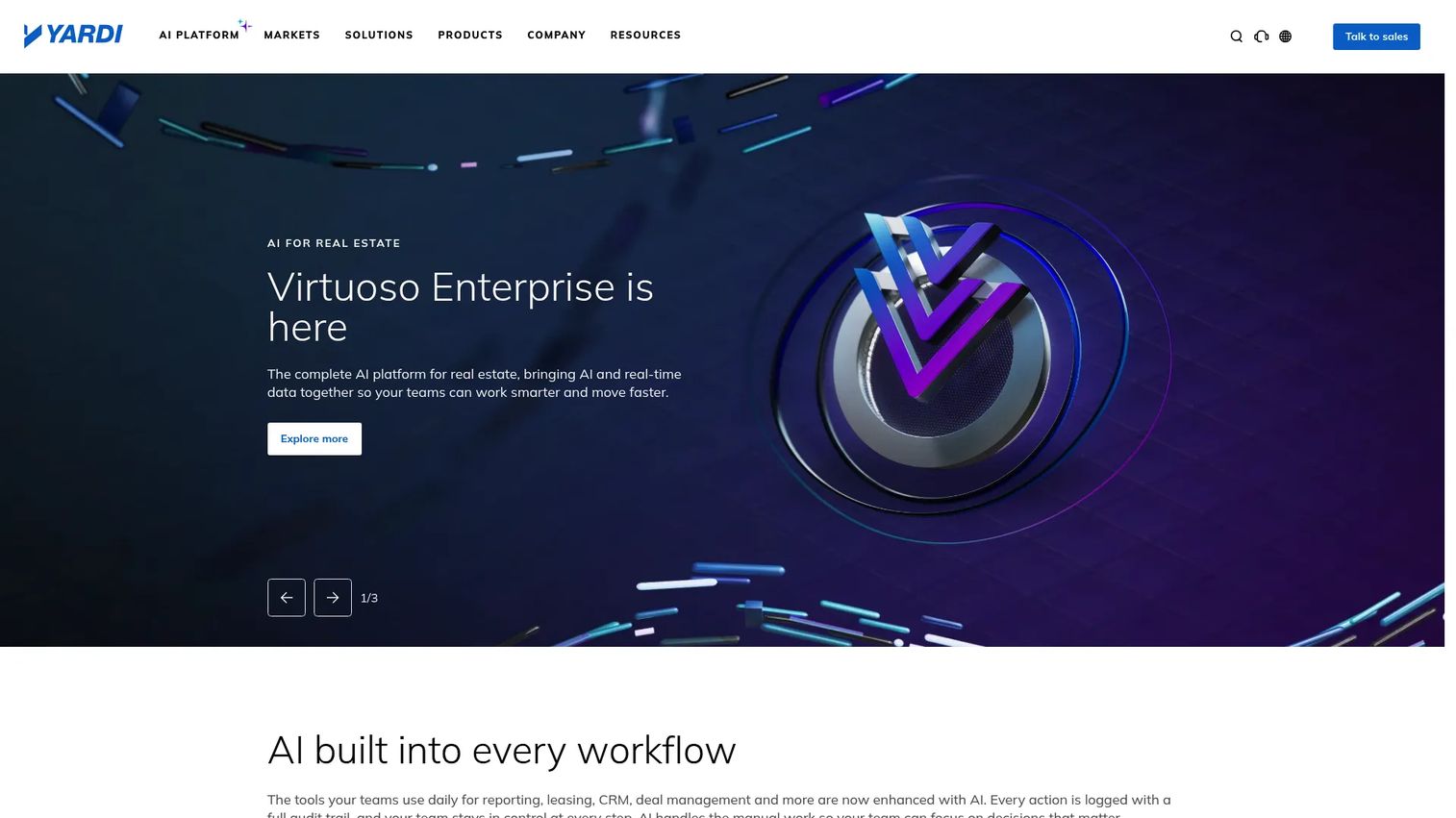
Yardi Commercial Suite connects commercial property management with integrated accounting and tenant services. Its wider suite also covers procurement, facilities, construction, energy, investment management, and business intelligence.
Smart Lease supports lease abstraction, while CommercialCafe provides tenant self service through a portal and mobile app. Elevate Suite adds portfolio visibility and analytics.
This is a broad operating environment rather than a lightweight property tool. Buyers should map the required modules and implementation ownership before evaluating total cost.
Best for: Enterprise commercial owners and asset managers that need connected front office and back office operations.
Key features
- Commercial property management and accounting
- Smart Lease abstraction
- CommercialCafe tenant portal
- Elevate portfolio analytics
- Facilities and investment workflows
Why choose Yardi Commercial Suite: It fits organizations that want property operations, accounting, and investment workflows connected across a complex portfolio. Dedicated implementation capacity matters because the suite extends across several operating functions.
Yardi Commercial Suite pricing: Custom pricing.
G2 rating: 4.2/5 for Yardi Voyager, the suite’s core platform.
2. AppFolio
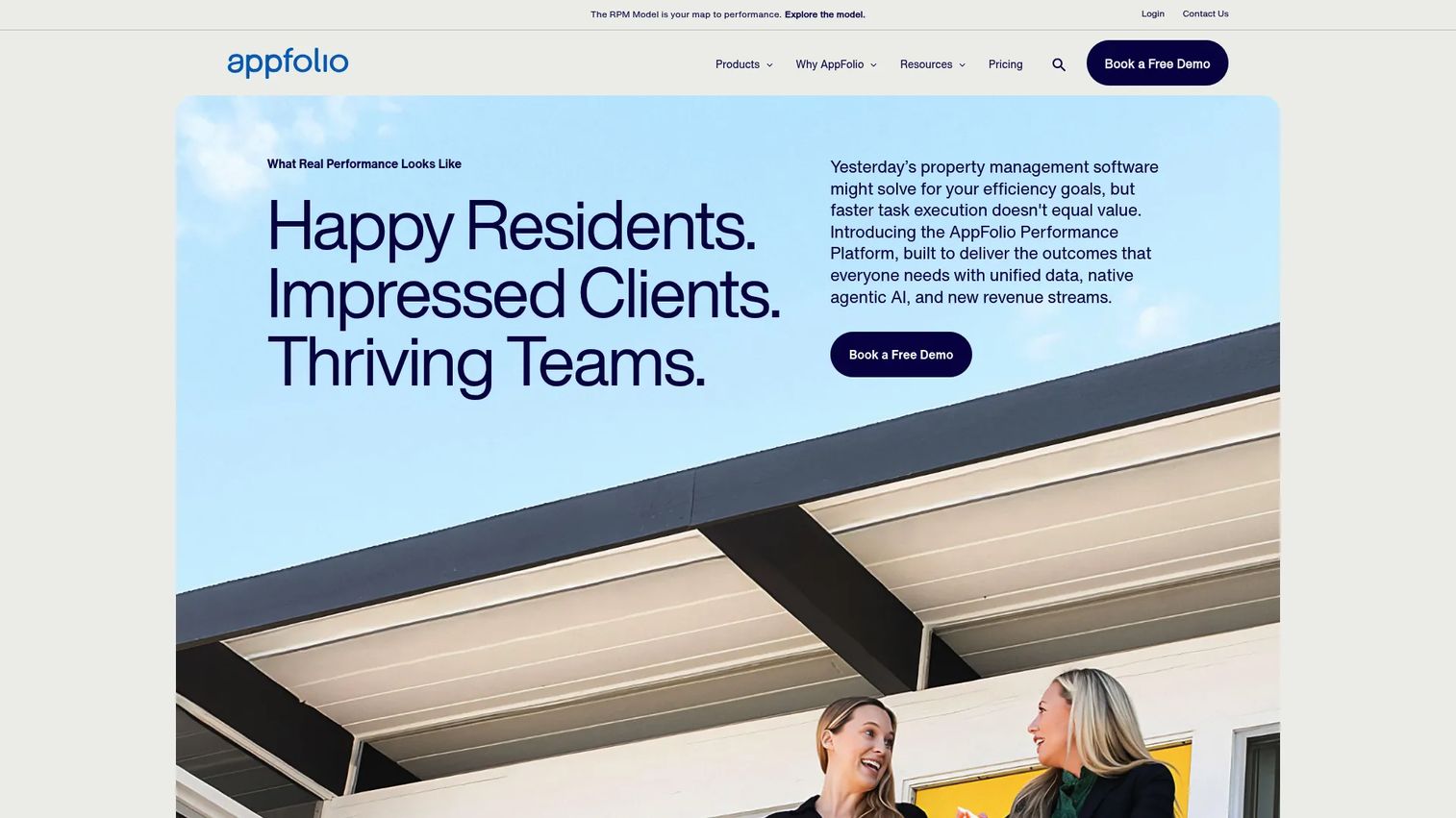
AppFolio combines property accounting, leasing, maintenance, and communications within one platform. It also provides mobile apps for residents, vendors, and owners.
Reporting tools support day to day financial visibility. The AppFolio API gives teams a path to connect outside systems, while its data analysis capabilities support broader portfolio decisions.
For operators, the attraction is consolidation. A team can replace separate systems for leasing, work orders, communications, and core property accounting without adopting a wider commercial ERP.
Best for: Growing property management and investment teams that need connected operational workflows.
Key features
- Property accounting and reporting
- Marketing and leasing tools
- Work order management
- Owner and vendor mobile apps
- AppFolio API
Why choose AppFolio: It suits teams that want one operational platform across accounting, leasing, maintenance, and communication. Buyers should test their commercial lease calculations and reporting requirements during evaluation.
AppFolio pricing: Property Manager Core, Plus, and Max use custom pricing. Minimum spend and unit requirements apply.
G2 rating: 4.6/5.
3. TenantCloud
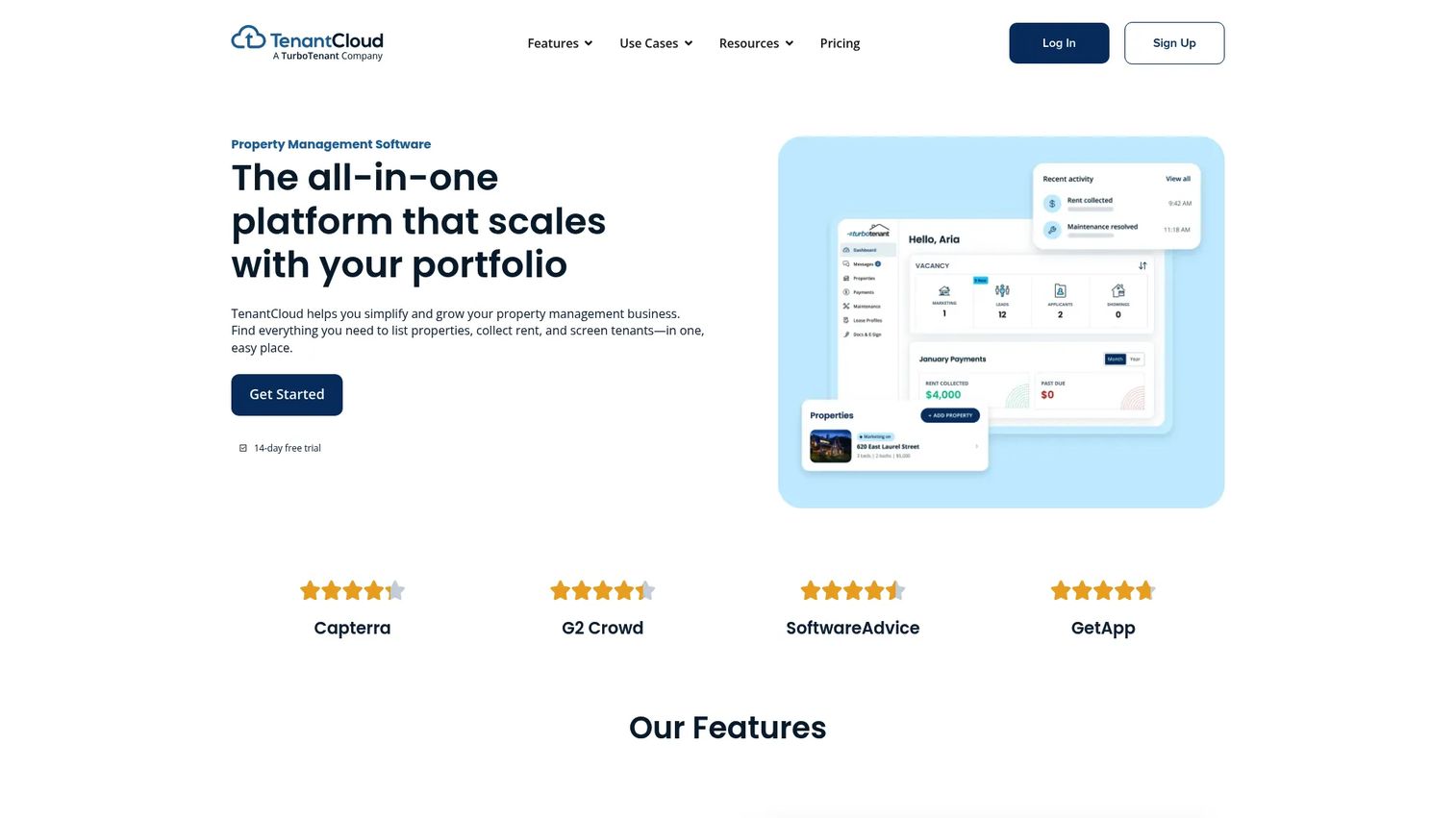
TenantCloud gives landlords and property managers a central system for listings, tenant screening, online rent collection, and maintenance requests. It also includes lease storage, electronic signatures, accounting, and reporting across its plans.
The platform makes sense when a smaller team wants to replace spreadsheets, email threads, and separate payment tools. Its Business plan adds owner management and team functions for property management companies.
TenantCloud serves rental operations broadly. Commercial buyers should test their lease structure, CAM calculations, and accounting needs before treating it as a full commercial operating system.
Best for: Independent landlords and smaller management teams seeking an accessible starting point.
Key features
- Online rent collection
- Tenant screening and applications
- Online leases and signatures
- Maintenance and vendor management
- Accounting and bank reconciliation
Why choose TenantCloud: It offers a low cost path into centralized property management. Larger commercial portfolios may need deeper recovery calculations and lease controls than its documented feature set covers.
TenantCloud pricing: Free plan available. Essentials starts at $12.42/month, Pro at $16.58/month, and Business at $100/month.
G2 rating: 4.4/5.
4. Buildium
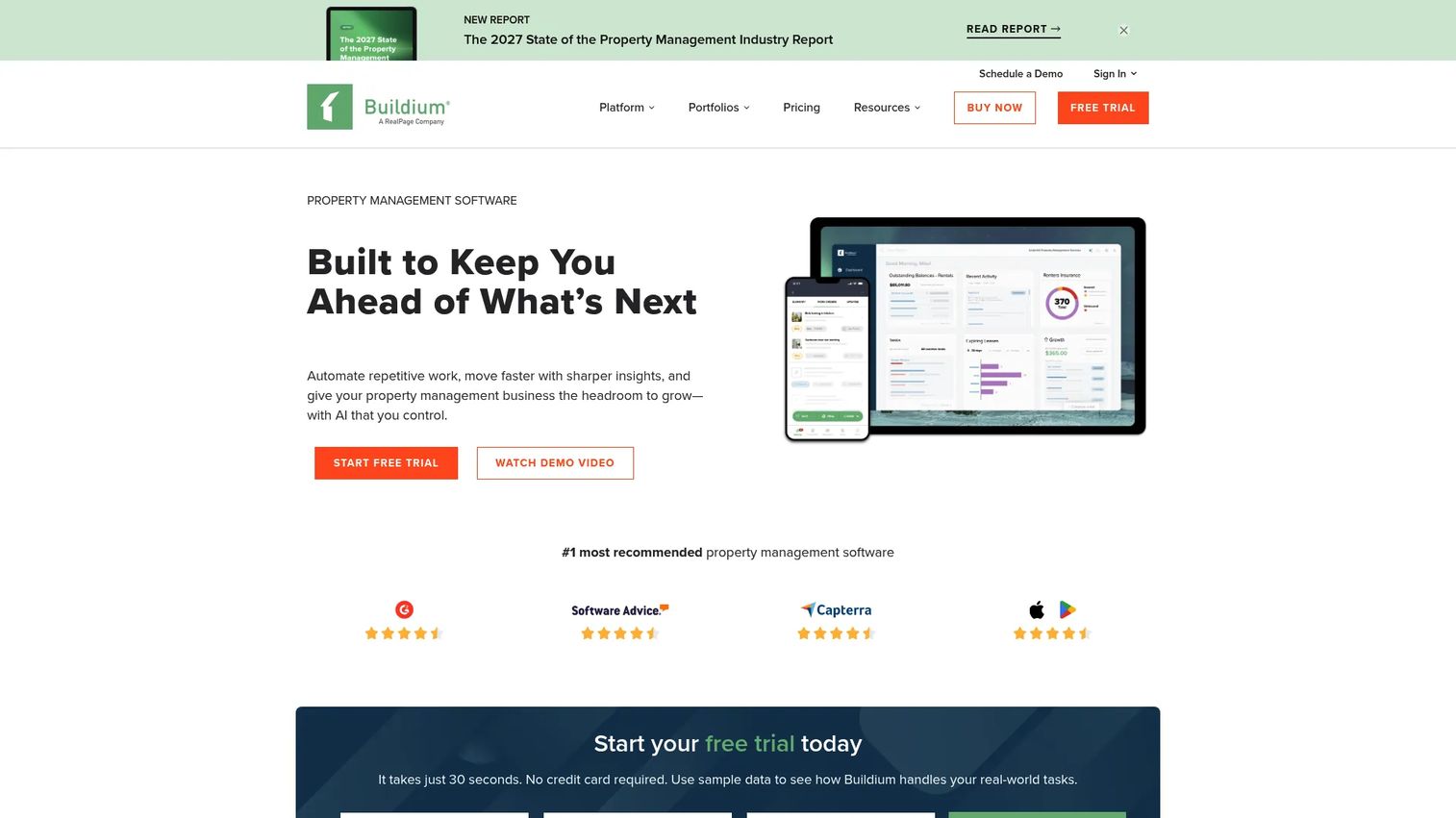
Buildium supports residential, commercial, student housing, and community association portfolios. Its core platform combines property accounting, payments, leasing, maintenance, communications, and reporting.
Managers can handle rental listings, applications, screening, work orders, and inspections from the same system. Higher plans add reporting automation, customization, analytics, API access, and more advanced automation.
Buildium fits the point where operational consistency matters more than assembling specialist tools. Its published pricing also makes initial cost comparison easier than quote driven platforms.
Best for: Small to mid sized property managers that need accounting and daily operations in one system.
Key features
- Property accounting and payments
- Leasing and tenant screening
- Maintenance requests and work orders
- Portfolio communications
- Reporting and analytics
Why choose Buildium: It gives growing teams a practical operating base with documented support for commercial portfolios. Confirm that its lease and recovery workflows match your most complicated assets.
Buildium pricing: Essential starts at $65/month, Growth at $202/month, and Premium at $420/month. A 14 day trial is available.
G2 rating: 4.4/5.
5. MRI Commercial Management
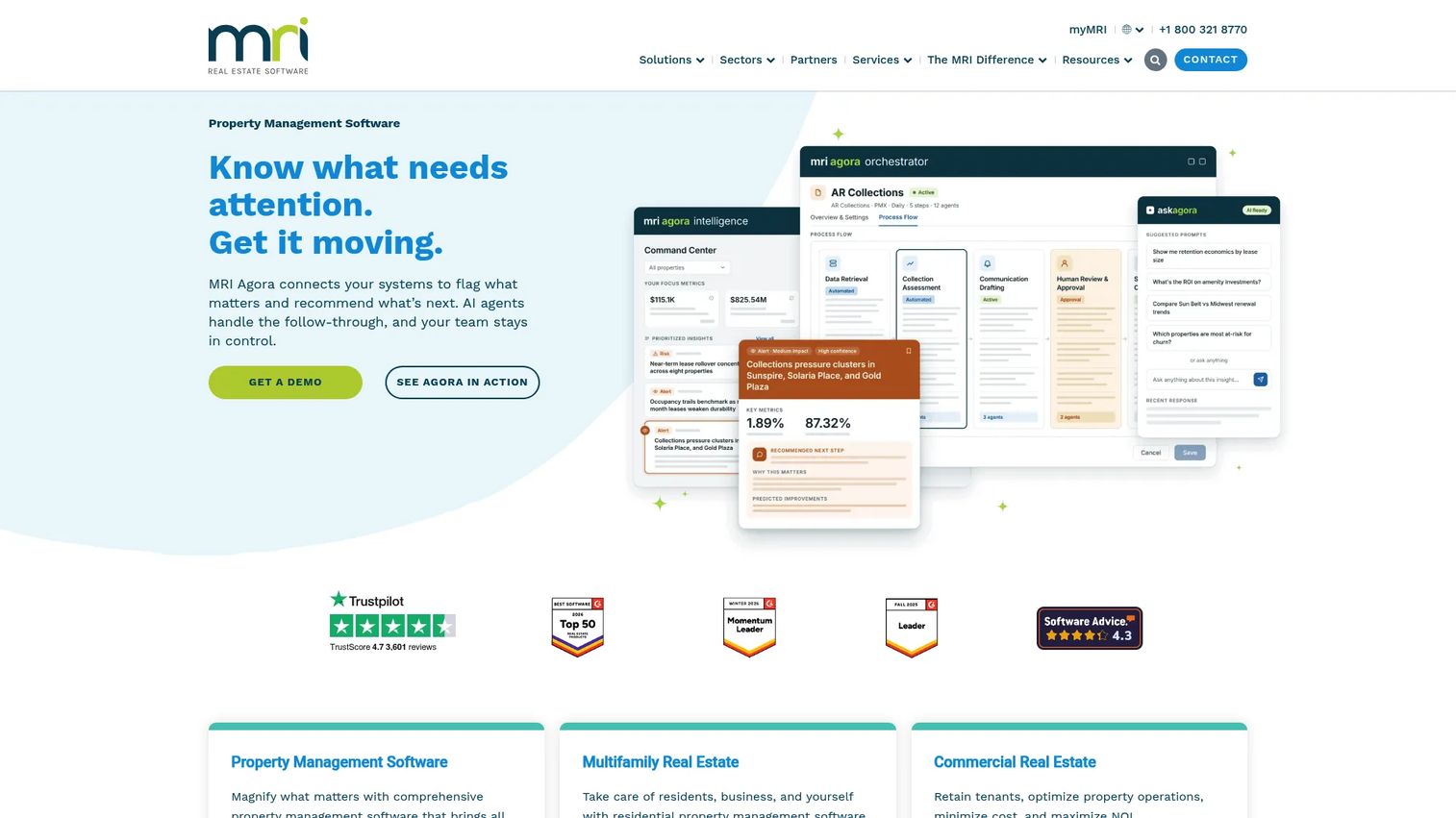
MRI Commercial Management supports commercial accounting, lease administration, billing, reporting, project management, and automated workflows. It is designed for commercial owners and operators with established financial processes.
The platform handles calculations such as recoveries and straight line rent. Configurable accounts receivable reporting supports direct billing, while connections with MRI General Ledger and Job Cost extend financial control.
MRI supports software as a service and self hosted deployment. That flexibility can matter for organizations with defined infrastructure requirements and existing MRI products.
Best for: Commercial real estate operators needing configurable accounting, billing, and lease administration.
Key features
- Commercial lease administration
- Recovery and straight line calculations
- Configurable accounts receivable reporting
- General Ledger integration
- Advanced retail management
Why choose MRI Commercial Management: It fits organizations where commercial accounting requirements shape the software decision. Plan implementation around existing processes, data migration, and the MRI modules your team needs.
MRI Commercial Management pricing: Custom pricing.
6. Re-Leased
Re-Leased is commercial focused property management software for owners, investors, and managers. It centralizes lease events, arrears, maintenance, tenant communication, and portfolio reporting.
Critical date alerts help teams manage rent reviews and lease obligations. CAM and outgoings tools cover budgeting and reconciliation, while credit control automation supports arrears work.
Accounting integrations include Xero, Sage Intacct, NetSuite, and QuickBooks Online. Mobile apps serve tenants, landlords, and property managers across the operating workflow.
Best for: Commercial teams that prioritize lease administration, critical dates, and portfolio control.
Key features
- Lease and tenancy management
- Critical date alerts
- CAM budgeting and reconciliation
- Arrears automation
- Property accounting integrations
Why choose Re-Leased: It concentrates on commercial lease and portfolio workflows without requiring a broader enterprise suite. This fit is strongest when options, obligations, and rent reviews drive daily work.
Re-Leased pricing: Core, Pro, and Enterprise use custom pricing. Enterprise targets portfolios with more than 1,000 tenancies.
G2 rating: 4.6/5.
7. Entrata Commercial
Entrata Commercial serves office, industrial, retail, and mixed use portfolios. It provides commercial lease abstracts, tenant portal access, and custom reporting within the wider Entrata platform.
Triple net reconciliation and expense pool management address commercial billing requirements. Insurance compliance tracking gives operators another control point for tenant obligations.
Commercial rent roll reports support portfolio visibility. Entrata Commercial deserves consideration when an organization already uses Entrata or wants commercial functions inside its broader property operations environment.
Best for: Property operators managing commercial assets alongside wider Entrata based operations.
Key features
- Commercial lease abstracts
- Triple net reconciliations
- Expense pool management
- Insurance compliance tracking
- Commercial rent roll reporting
Why choose Entrata Commercial: It fits organizations that want commercial capabilities connected to a broader property platform. Validate module coverage against your accounting process and asset mix.
Entrata Commercial pricing: Custom pricing.
G2 rating: 4.6/5 for Entrata overall.
8. RealPage Commercial
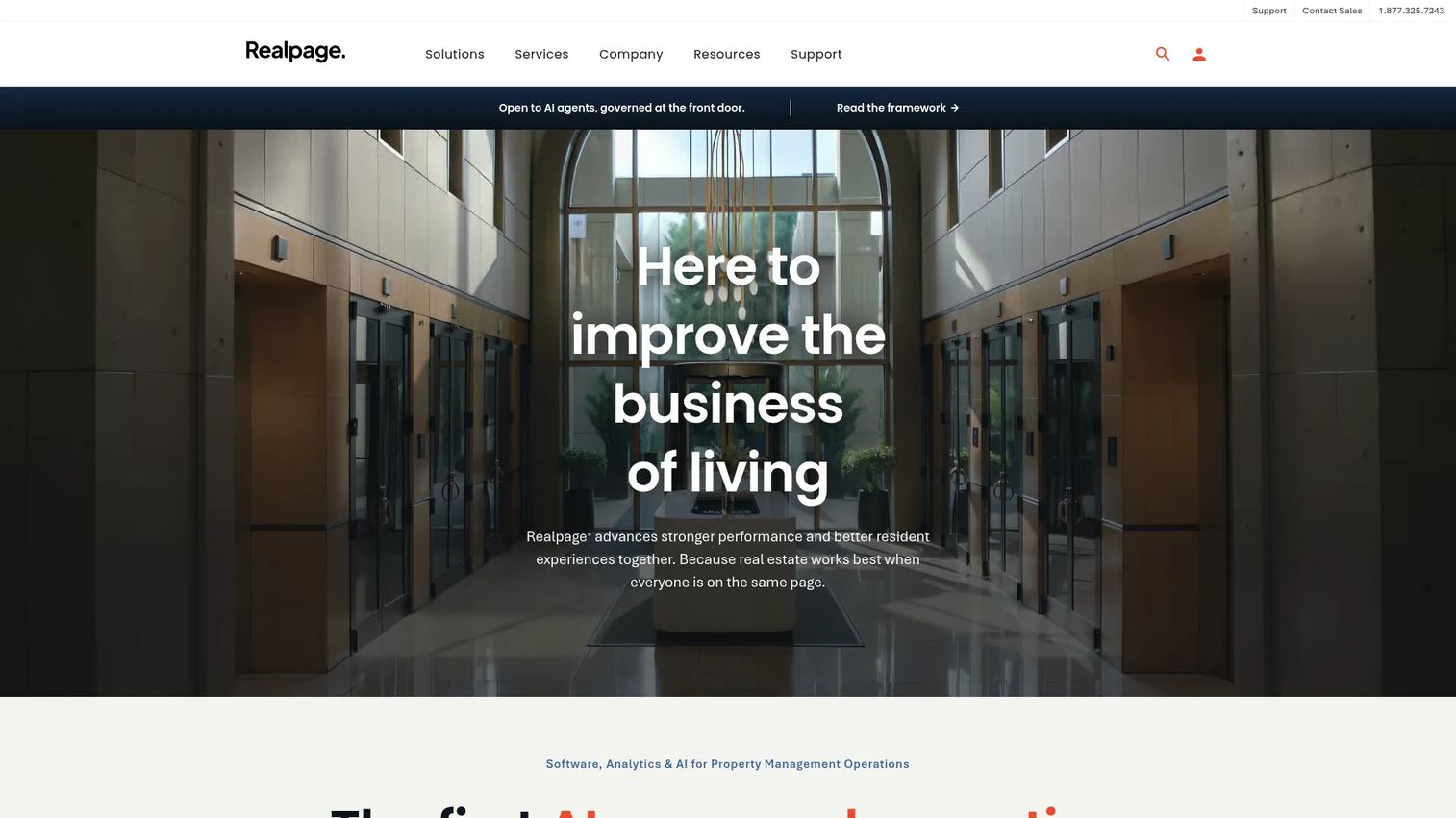
RealPage Commercial combines commercial lease administration, accounting, tenant services, and reporting. Its documented fit covers office, industrial, and retail portfolios.
Lease management features include templates, amendments, history, and custom fields. CAM recovery tools support recovery billing calculations across commercial tenants.
The accounting layer handles CPI increases, percentage rent, late fees, recurring charges, and straight line rents. Those capabilities make it relevant when lease calculations drive the selection process.
Best for: Small to mid market commercial managers handling office, industrial, or retail portfolios.
Key features
- Commercial lease administration
- Lease amendments and history
- CAM recovery calculations
- Percentage rent billing
- Straight line rent accounting
Why choose RealPage Commercial: It supports the lease accounting details that generic property tools can miss. Review the complete commercial product configuration with sales before planning migration.
RealPage Commercial pricing: Custom pricing.
9. DoorLoop
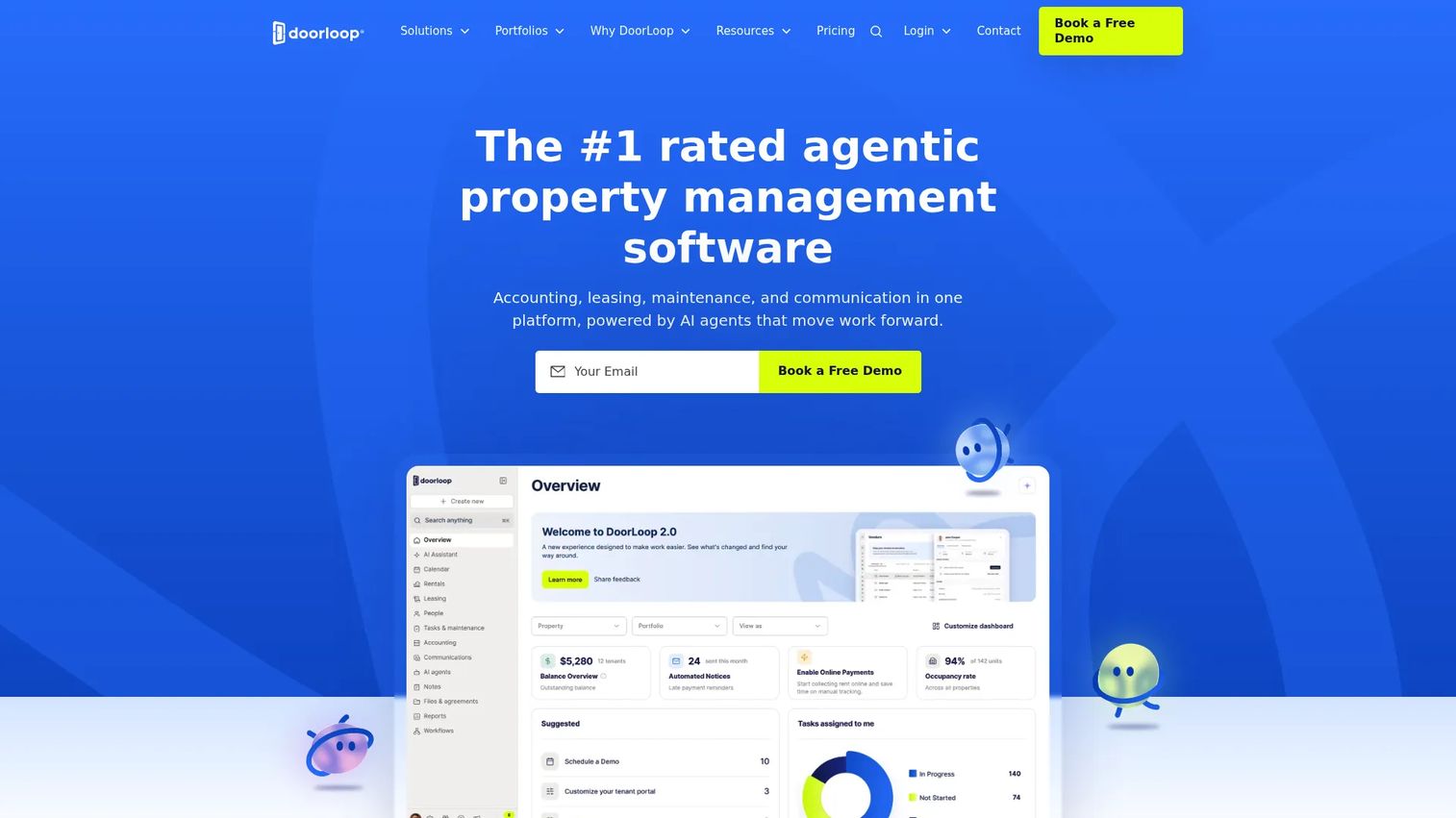
DoorLoop brings accounting, rent collection, leasing, maintenance, and portals into one property management system. It targets property managers and owners who want broad operational coverage.
The platform includes applications, screening, electronic signatures, rental marketing, and owner reporting. Higher plans add workflows, bank connectivity, QuickBooks synchronization, API access, and additional customization.
DoorLoop is easier to assess when your current operating model relies on spreadsheets and separate tools. Commercial teams still need to test recovery billing and complex lease structures.
Best for: Smaller property teams seeking broad core functions and a defined starting price.
Key features
- Accounting and reporting
- Online rent collection
- Tenant and owner portals
- Maintenance management
- Leasing and electronic signatures
Why choose DoorLoop: It gives smaller teams a structured move away from manual property administration. Its fit is strongest when adoption speed matters more than specialist commercial modules.
DoorLoop pricing: Starter begins at $69/month for up to 10 units when billed yearly. Pro costs $149/month and Premium costs $209/month.
G2 rating: 4.8/5.
10. Rent Manager
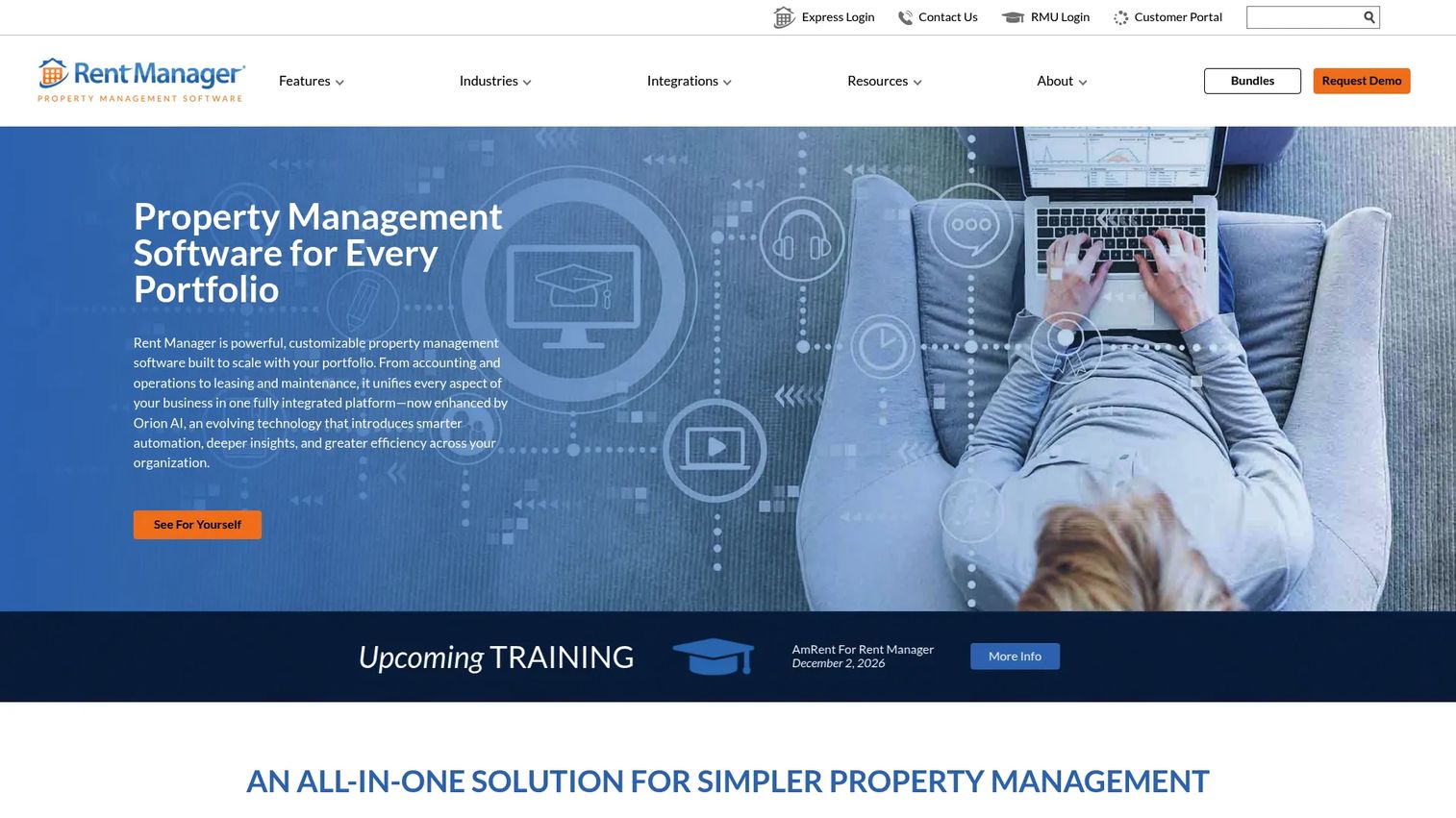
Rent Manager is configurable property management software for accounting, leasing, maintenance, reporting, and integrations. It supports commercial properties alongside several other real estate asset types.
The accounting system sits at the center of the platform. More than 450 reports give finance and operations teams considerable room to shape their reporting process.
Work orders, mobile capabilities, custom workflows, and API integrations extend the product beyond bookkeeping. The main question is whether your team has the process discipline to configure that flexibility well.
Best for: Property management companies that place accounting control and reporting depth first.
Key features
- Complete accounting system
- More than 450 reports
- Work order management
- Custom operational workflows
- API integrations
Why choose Rent Manager: It suits teams that cannot compromise on accounting and reporting. Its configurability rewards operators with clear ownership of setup and process design.
Rent Manager pricing: Basic, Plus, and Premium use custom pricing.
G2 rating: 4.6/5.
11. Propertyware
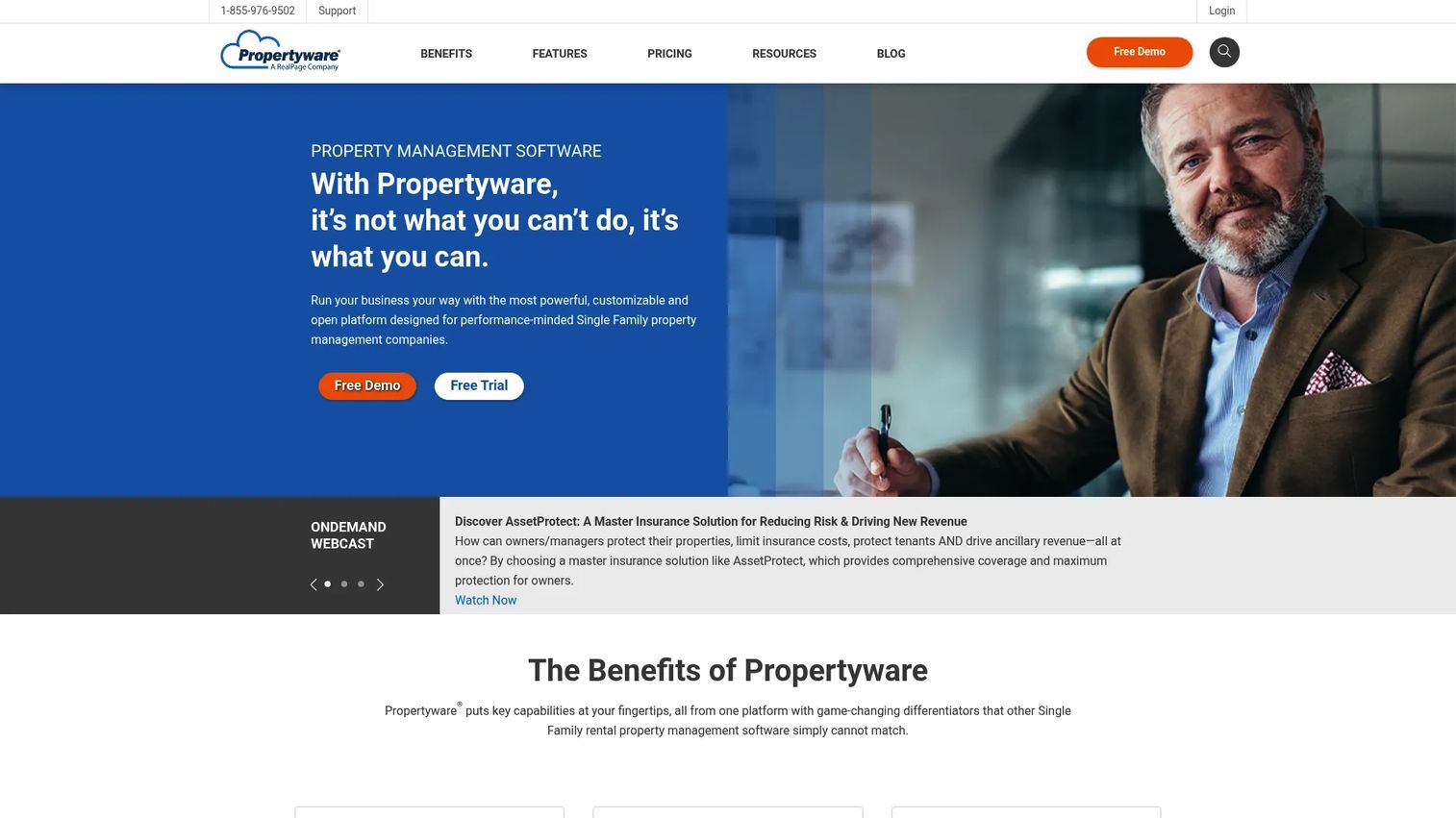
Propertyware is built primarily for single family property management companies. It combines accounting, rent collection, portals, maintenance, inspections, and leasing workflows.
Custom dashboards and reports support distributed portfolio oversight. Its open API provides two way data exchange for teams connecting Propertyware with other systems.
The product appears here as a mixed portfolio consideration rather than a dedicated commercial platform. Buyers should validate commercial leases, CAM, and recovery calculations before including it on a final shortlist.
Best for: Distributed single family operators that also need to assess limited mixed portfolio requirements.
Key features
- Custom dashboards and reports
- Property accounting and reconciliation
- Tenant and owner portals
- Maintenance and vendor management
- Open API connectivity
Why choose Propertyware: It offers configurable operations for distributed portfolios with strong single family requirements. Commercial depth needs direct validation against your leases and billing model.
Propertyware pricing: Basic starts at $1 per unit monthly with a $250 minimum. Plus starts at $1.50, while Premium starts at $2 per unit.
G2 rating: 3.7/5.
12. Innago
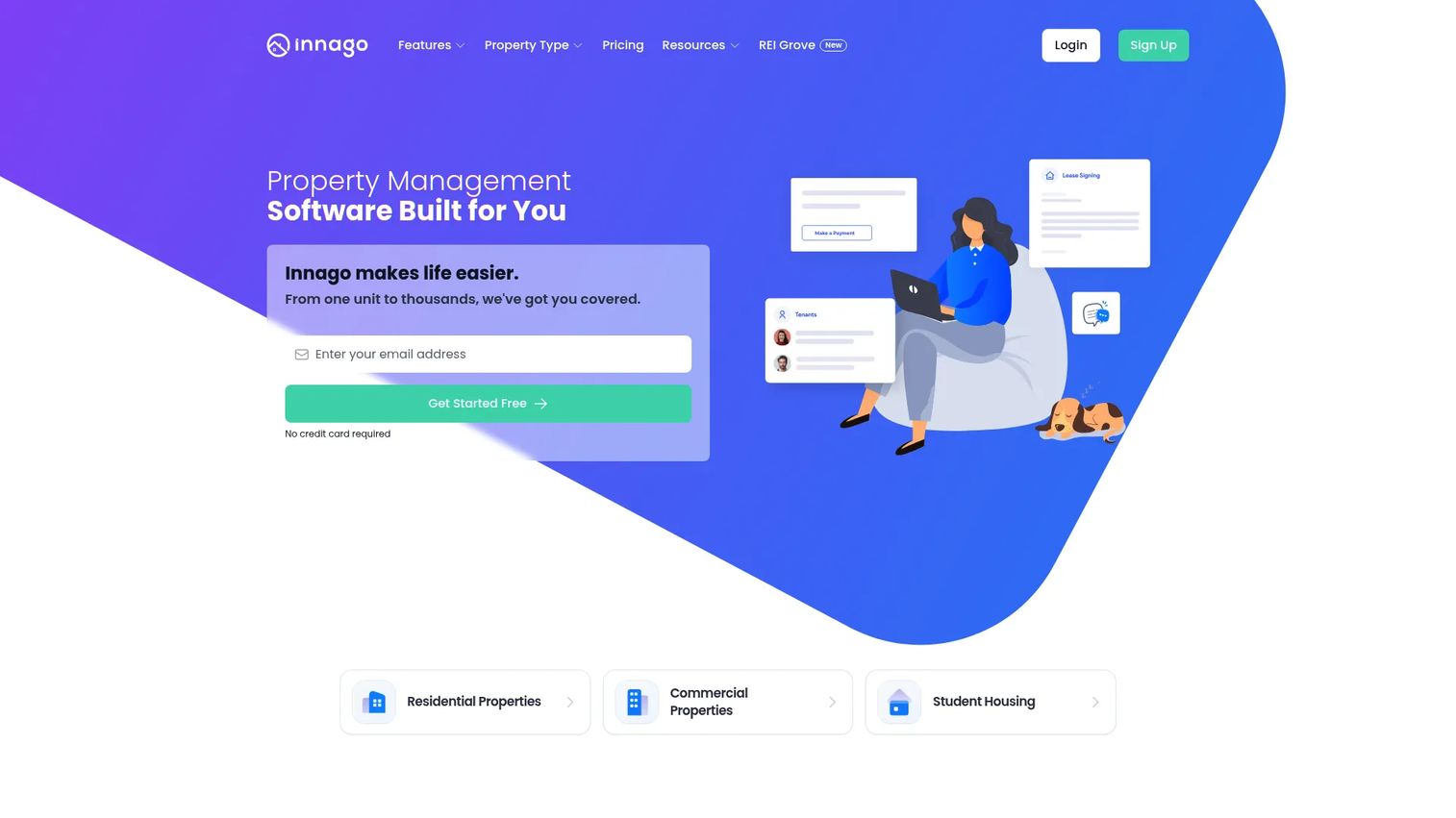
Innago provides free cloud property management software for independent landlords and smaller management companies. It covers rent collection, leasing, tenant screening, maintenance requests, communication, and financial reporting.
The absence of a landlord subscription lowers the barrier for teams leaving spreadsheets. Tenant portals and mobile apps support everyday communication and payments.
Innago targets straightforward rental management rather than complex commercial asset operations. Test lease calculations, owner reporting, and accounting requirements before using it for commercial portfolios.
Best for: Cost conscious landlords and smaller teams with lighter property management requirements.
Key features
- Online rent collection
- Digital lease signing
- Tenant screening
- Maintenance request management
- Expense tracking and reporting
Why choose Innago: It provides a practical entry point when software cost blocks the move away from manual work. Sophisticated commercial accounting will require a different product class.
Innago pricing: The landlord platform costs $0 with no setup fee or contract. Tenants may pay transaction and screening fees.
G2 rating: 4.8/5.
Considerations when choosing commercial property management software
Lease complexity
Check whether the system handles amendments, renewals, options, escalations, and recoveries. Lease data should remain traceable when terms change.
Use an amended lease during evaluation. A clean new agreement will not reveal how the platform handles conflicting dates or historical terms.
CAM and triple net billing
CAM workflows should cover estimates, expense tracking, allocation rules, reconciliation, and tenant reporting. Ask your finance lead to run a complicated recovery scenario.
The result should be understandable to both staff and tenants. Avoid any system that simply moves the final calculation back into spreadsheets.
Accounting depth
Commercial property accounting can include rent rolls, owner statements, payables, bank reconciliation, and property reporting. Map each month end task before comparing products.
The software should reduce manual financial work. A polished dashboard has little value if the controller still rebuilds every report.
Tenant and owner experience
Review portals from the user’s perspective. Tenants need clear payments, documents, and maintenance requests, while owners need dependable reporting.
Adoption falls when either group requires repeated instruction. Test the portal with someone outside the procurement team.
Implementation and migration effort
Assign an internal owner before signing. Lease cleanup, chart of accounts design, integrations, and staff training determine whether the rollout sticks.
Ask vendors for an implementation plan tied to your portfolio. Your leadership team needs named owners, migration stages, and acceptance criteria.
Conclusion
Commercial property management software should remove operational dependence on individual employees. It should give leadership a dependable view of leases, accounting, maintenance, and tenant obligations.
Yardi Commercial Suite fits complex commercial portfolios that need broad operating coverage. AppFolio offers a more consolidated platform for growing property and investment teams.
Re-Leased stands out for commercial lease administration. MRI Commercial Management and Rent Manager deserve attention when accounting depth drives the decision.
Smaller teams can evaluate TenantCloud, DoorLoop, or Innago before committing to a larger implementation. Buildium offers a practical middle ground with documented commercial portfolio support.
Shortlist three products based on portfolio size, lease complexity, and financial requirements. Then test each platform with:
- One amended commercial lease
- One CAM reconciliation
- One maintenance work order
- One owner report
The best platform is the one your operations lead can run without rebuilding the process outside the system.
FAQs
The answer depends on portfolio complexity. Yardi Commercial Suite fits connected enterprise operations, while AppFolio suits growing property and investment teams.
Re-Leased focuses on commercial lease control. Smaller operators can compare DoorLoop or TenantCloud against their accounting and billing requirements.
Commercial property management software manages leases, billing, CAM reconciliation, maintenance, tenant communication, accounting, documents, and portfolio reporting.
Operators use it to centralize data that would otherwise sit across spreadsheets, inboxes, and separate financial systems. The platform also creates clearer ownership for recurring property workflows.
Commercial platforms handle variable lease clauses, recovery calculations, triple net charges, rent escalations, and tenant specific obligations. They also support more complex property level accounting.
Residential software centers more heavily on residents, units, renewals, rent collection, and routine maintenance. Some products support both, but depth varies by workflow.
Yardi Commercial Suite, MRI Commercial Management, Re-Leased, Entrata Commercial, RealPage Commercial, and Rent Manager warrant evaluation for commercial recovery workflows.
Feature labels alone are insufficient. Test each platform with one complicated lease, estimated expenses, allocation rules, and a final tenant statement.
A small landlord benefits from software when recurring invoices, maintenance requests, lease dates, or owner reporting become difficult to track. One simple property may only require a lightweight system.
TenantCloud, DoorLoop, and Innago provide accessible starting points. Confirm commercial lease and CAM requirements before choosing any general property platform.
Prioritize lease abstraction, amendments, options, critical dates, rent escalations, and CAM clauses. Document storage and reporting should preserve a clear history.
Accuracy matters more than interface polish. Your team must trace every billed amount back to the governing lease terms.
Pricing ranges from free landlord platforms to custom commercial suites. Costs can reflect unit counts, modules, users, implementation services, and support.
Published entry prices include TenantCloud from $12.42/month and Buildium from $65/month. Several commercial platforms require a vendor quote.
Many commercial platforms support multiple asset types, including retail, office, industrial, and mixed use portfolios. The depth of support differs.
Test workflows specific to your properties. Retail percentage rent, industrial recoveries, and office tenant services can require different configurations.