A batch clears production, yet shipping stops because the quality records are incomplete. Elsewhere, purchasing uses one formula revision while production follows another. Then a recall request arrives, and nobody can reconstruct the full lot genealogy quickly.
These are operating risks, not minor system gaps. They affect margins, working capital, customer confidence, and the numbers leadership takes into board meetings.
The pressure to fix them is rising. According to L.E.K. Consulting’s 2024 research, 85% to 90% of chemical organizations expected digital tool investment to increase over the following three years.
The right chemical manufacturing software connects plant activity with finance and quality records. The wrong system creates another layer of manual work.
Choose software that fits the batch reality of your plant, not software that only looks complete during evaluation.
What's inside
This guide compares 17 platforms across chemical manufacturing ERP, process manufacturing software, MES, QMS, and EHS categories.
- Who this is for: Founders, COOs, finance leaders, plant managers, and quality teams
- Selection criteria: Batch fit, formulation depth, traceability, compliance support, and deployment options
- What to test: One workflow from raw material receipt through shipment and accounting
- How to read the list: Some products run the business, while others address plant execution, quality, or EHS
- Evidence used: Vendor documentation, current pricing pages, and live G2 listings
TL;DR
- Best overall for chemical-specific ERP: BatchMaster ERP centers formula, batch, quality, and compliance workflows
- Best for chemical industry depth: Datacor ERP covers manufacturing and distribution with regulatory records and lot traceability
- Best flexible cloud ERP: Acumatica suits growing companies with a capable process-manufacturing implementation partner
- Best for complex global operations: SAP S/4HANA and IFS Cloud support broad, multi-site operating models
- Best for regulated quality or EHS: MasterControl focuses on production records, while Intelex covers EHSQ management
- Best plant-floor system: TrakSYS provides manufacturing execution, material visibility, and production monitoring
What is chemical manufacturing software?
Chemical manufacturing software manages formulas, batch production, inventory, quality, compliance, safety documentation, traceability, and financial workflows.
The category covers several system types. Your shortlist should reflect the operating problem you need to solve.
- ERP: Finance, purchasing, inventory, production, costing, and sales orders
- MES: Plant execution, work instructions, production visibility, and performance monitoring
- QMS: Quality records, CAPA, batch release, controlled documents, and audit trails
- EHS: Safety, incidents, inspections, environmental reporting, and risk management
- PLM and formulation systems: Product development, recipe control, revision management, and approvals
- Inventory platforms: Lots, expiry dates, FEFO, warehousing, and shipment controls
Core capabilities often include:
- Formula and recipe management
- Batch production records
- Lot genealogy and traceability
- Quality testing and batch release
- SDS and GHS documentation
- Expiry dates and FEFO controls
- Yield, potency, rework, and co-products
- Labeling and certificate of analysis workflows
- Cloud, hybrid, or on-premises deployment
A generic ERP may cover finance and basic inventory. Chemical manufacturing ERP adds support for variable yields, formulas, quality status, regulated records, and hazardous material workflows.
The distinction matters because one product rarely owns every operational job. ERP records transactions and financial impact. MES controls plant activity. QMS manages quality evidence. EHS software covers safety and environmental processes.
A focused system can complement an existing ERP. Replacing the ERP is unnecessary when the bottleneck sits in production execution, batch release, or incident management.
When to use chemical manufacturing software
Control formulas before they reach production
Use formula management software when revisions, approved substitutes, and potency changes live in spreadsheets or employee knowledge. The system should control approvals before purchasing or production acts.
Strong recipe management software also scales quantities and maintains version history. This reduces the chance of different departments working from conflicting specifications.
Trace every lot from receipt to shipment
Use lot traceability software when reconstructing material movement requires emails, spreadsheets, or paper records. Forward and backward tracing should connect supplier lots with WIP, finished goods, and customer shipments.
Batch traceability software also supports quality investigations and recall analysis. Treat traceability as operational insurance rather than administrative paperwork.
Connect quality, compliance, and plant execution
Disconnected production and quality systems delay batch release. Operators wait while test results, deviations, or approvals move between teams.
Chemical compliance software can centralize SDS records, GHS labeling data, and regulatory documentation. MES, QMS, or EHS software may still be needed for deeper execution and control.
Chemical manufacturing software comparison
This table is a shortlist, not a universal ranking. Start with plant complexity, regulatory exposure, batch depth, and deployment constraints.
Then decide whether you need ERP for chemical manufacturers or a focused operational platform. A QMS, EHS, or MES product may complement your current ERP rather than replace it.
| # | Product | Best for | Key differentiator | Pricing | G2 rating |
|---|---|---|---|---|---|
| 1 | BatchMaster ERP | Chemical-specific ERP | Formula, batch, QC, and compliance focus | Custom pricing | 3.2/5 |
| 2 | Datacor ERP | Specialty chemical operations | Chemical industry depth across manufacturing and distribution | Custom pricing | 3.2/5 |
| 3 | Acumatica Cloud ERP | Growing manufacturers | Configurable cloud ERP with manufacturing depth | Custom pricing | 4.5/5 |
| 4 | Oracle NetSuite ERP | Multi-entity businesses | Cloud finance and operations across multiple entities | Custom pricing | 4.0/5 |
| 5 | SAP S/4HANA | Global chemical enterprises | Broad ERP for complex multi-site operations | From $295 per user monthly | 4.4/5 |
| 6 | Microsoft Dynamics 365 Business Central | Microsoft-centered manufacturers | ERP connected with Microsoft business tools | From $8 per user monthly | 4.0/5 |
| 7 | Infor CloudSuite Chemicals | Chemical industry ERP | Chemical workflows with formulation and planning | Custom pricing | Not verified |
| 8 | IFS Cloud | Asset-heavy chemical operations | ERP combined with asset and service management | Custom pricing | 4.0/5 |
| 9 | Deacom ERP | Batch process manufacturers | Process ERP designed to reduce separate systems | Custom pricing | 4.2/5 |
| 10 | Aptean Process Manufacturing ERP | Formula-based manufacturers | Recipe, batch, compliance, and traceability controls | Custom pricing | 4.2/5 |
| 11 | Sage X3 | Mid-market process manufacturers | Process and mixed-mode manufacturing support | Custom pricing | 4.5/5 |
| 12 | QAD Adaptive ERP | Global manufacturers | Manufacturing ERP with planning and multi-site support | Custom pricing | 3.5/5 |
| 13 | SYSPRO | Manufacturing and distribution | Strong production and inventory management | Custom pricing | 4.1/5 |
| 14 | DELMIAWorks | ERP and shop-floor coordination | Integrated manufacturing ERP and MES capabilities | Custom pricing | 4.1/5 |
| 15 | MasterControl Manufacturing Excellence | Regulated production quality | Electronic batch records and controlled manufacturing documents | Custom pricing | 4.4/5 |
| 16 | Intelex EHS & Quality Management Software | EHSQ management | Safety, environmental, quality, and risk workflows | From $44 per user monthly | 4.1/5 |
| 17 | TrakSYS | Plant-floor execution | MES for production visibility and digital workflows | From $1,999 monthly | Not verified |
Best 17 tools for chemical manufacturing software
1. BatchMaster ERP
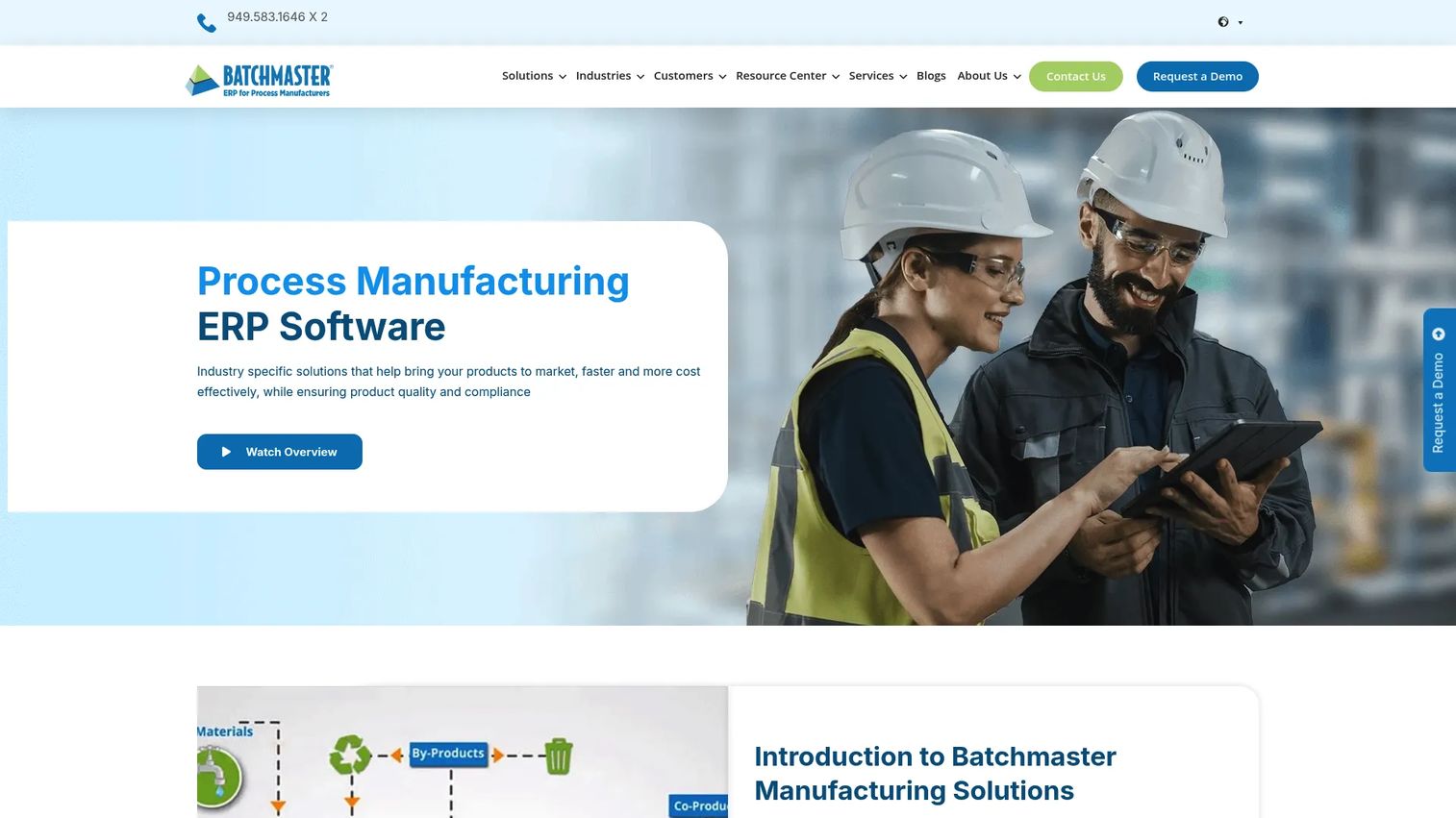
BatchMaster ERP is built for formula-based process manufacturers. It brings samples, formulation, batch production, quality management, compliance, and scheduling into an ERP environment.
This focus makes it a strong chemical manufacturing ERP candidate when generic accounting and inventory software no longer reflects plant operations. Its scope fits companies producing chemicals, coatings, cosmetics, food ingredients, or similar formula-based products.
Best for: Small and mid-market manufacturers that need chemical workflows inside the ERP core.
Key features
- Samples and formulation
- Batch production and scheduling
- Lot traceability
- Quality management
- Compliance controls
Why choose BatchMaster ERP: Put it on the shortlist when formula control and batch production drive the purchase. Its process-manufacturing focus reduces the amount of chemical logic an implementation partner must add.
Run a complete batch during evaluation. Include raw material receipt, formula issue, production, QC hold, COA, shipment, and accounting.
BatchMaster ERP pricing: Custom pricing. Ask for costs covering users, modules, deployment, implementation, and support.
G2 rating: 3.2/5.
2. Datacor ERP

Datacor ERP serves process manufacturers and chemical distributors. Its scope covers batch production, inventory, warehouse operations, demand planning, finance, and order management.
The platform also addresses laboratory management, SDS and COA documentation, regulatory records, and formula version control. That combination makes Datacor relevant when manufacturing and distribution operate under the same company.
Best for: Specialty chemical companies seeking software from a vendor focused on their industry.
Key features
- Batch and formula production
- Inventory and warehouse management
- Laboratory and quality records
- SDS and COA documentation
- Financial and margin reporting
Why choose Datacor ERP: Industry depth is the main reason to evaluate it. Datacor can fit companies where chemical terminology and regulatory documentation matter more than horizontal ERP flexibility.
Ask the vendor to show how approved formula changes move into planning and production. Follow the same transaction into inventory valuation and customer documentation.
This test reveals whether the software can replace disconnected work or simply adds another database.
Datacor ERP pricing: Custom pricing. Request separate figures for software, implementation, migration, integrations, and training.
G2 rating: 3.2/5.
3. Acumatica Cloud ERP
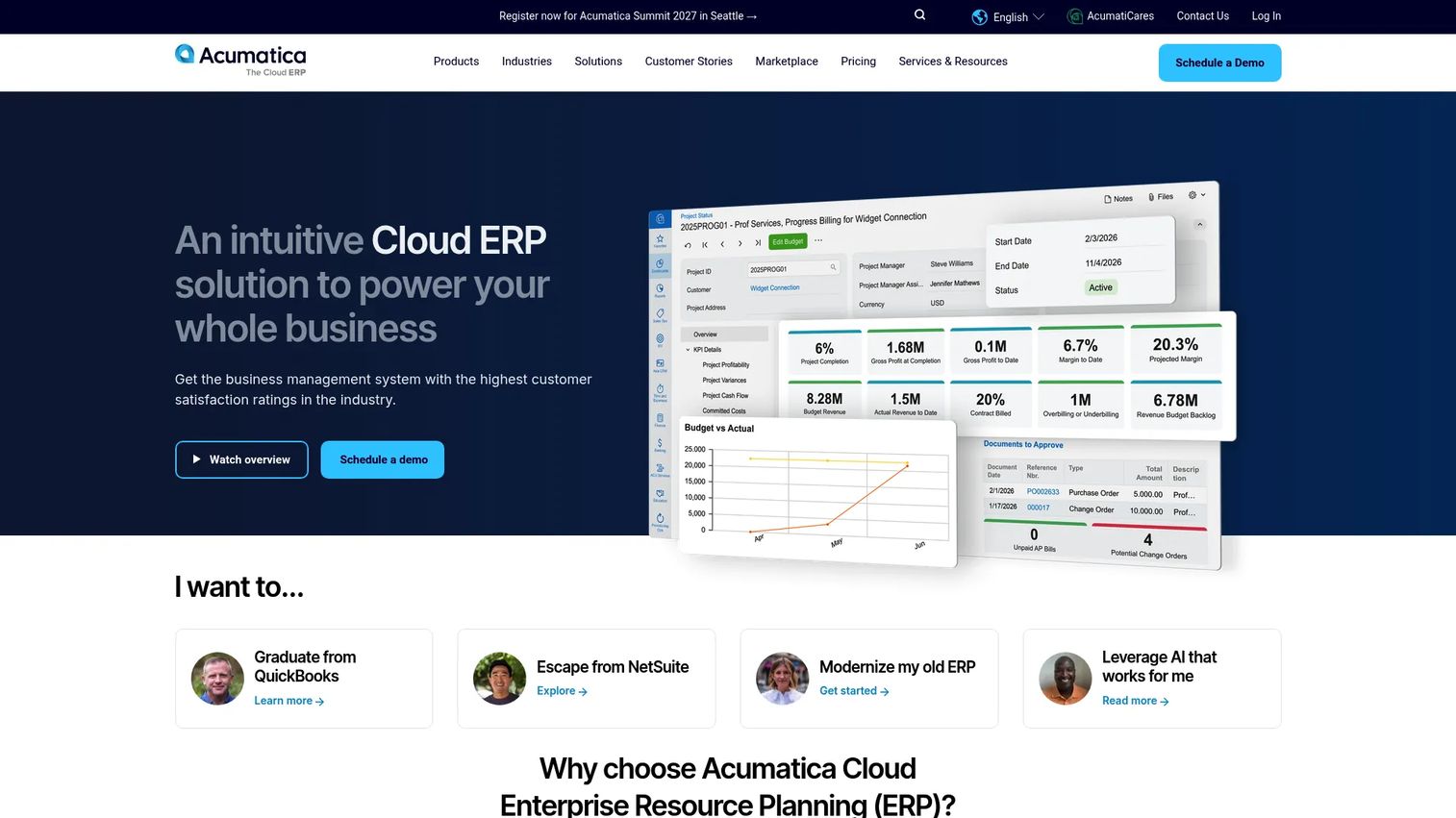
Acumatica Cloud ERP is a cloud business management platform for growing small and midsize companies. It covers financials, CRM, projects, distribution, manufacturing, inventory, and reporting.
Acumatica is broader than chemical ERP software. Its fit depends on configuration and the implementation partner’s process-manufacturing knowledge.
Best for: Growing manufacturers that want cloud flexibility with partner-led configuration.
Key features
- Financial management
- Manufacturing management
- Inventory and warehouse control
- Project accounting
- Reporting and dashboards
Why choose Acumatica Cloud ERP: Consider it when you want a configurable cloud ERP that can support several business functions. It suits teams that have a qualified partner and clearly documented batch requirements.
Before committing, validate formula revisions, production quantities, lot genealogy, QC status, and labeling. Do the same for chemical inventory management software requirements such as expiry controls.
A polished finance demonstration proves little about plant fit. Make the partner show where each chemical-specific workflow lives and who maintains it after launch.
Acumatica Cloud ERP pricing: Custom pricing. Applications, expected usage, resource requirements, and deployment preferences drive the quote.
G2 rating: 4.5/5.
4. Oracle NetSuite ERP
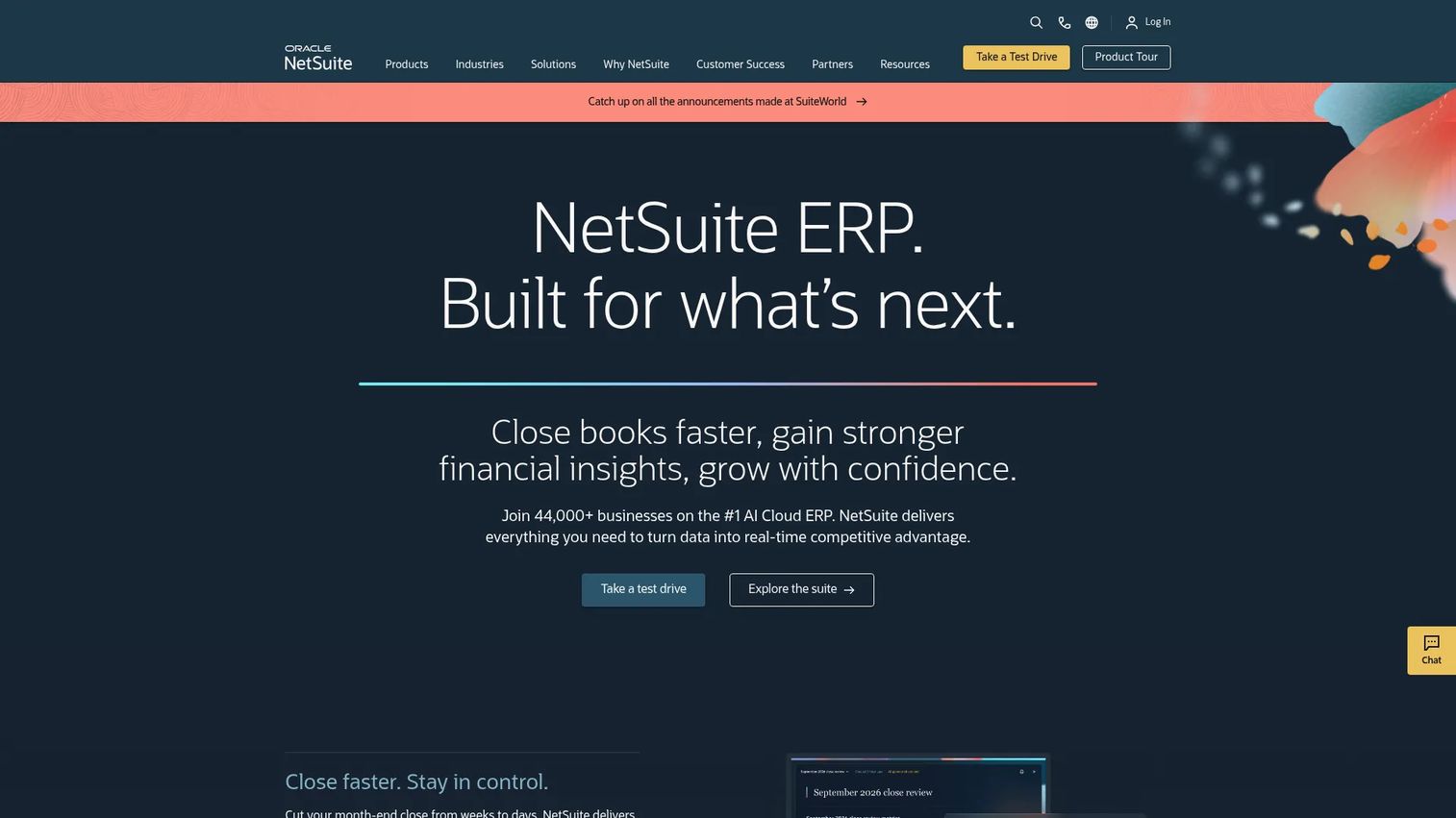
Oracle NetSuite ERP is a cloud ERP for finance, inventory, orders, procurement, supply chains, and warehouse management. It also supports subsidiaries, currencies, and consolidated reporting.
For chemical businesses, the clearest fit appears in financial control and multi-entity operations. Chemical-specific capabilities may rely on configuration, optional modules, or partner applications.
Best for: Multi-entity chemical companies that prioritize cloud finance and operational consolidation.
Key features
- Cloud financial management
- Inventory and order management
- Procurement workflows
- Warehouse management
- Multi-entity consolidation
Why choose Oracle NetSuite ERP: Evaluate it when the business is adding entities, facilities, or product lines. The platform can give leadership a common financial and operational record across the group.
Chemical manufacturers still need to test formula management, batches, quality status, SDS workflows, and plant execution. Ask which requirements use native functionality and which require partner extensions.
NetSuite licenses the core platform annually. Optional modules and user access add to the contract, while implementation carries a separate fee.
Oracle NetSuite ERP pricing: Custom pricing. Model the core license, users, optional modules, implementation, and ongoing support.
G2 rating: 4.0/5.
5. SAP S/4HANA
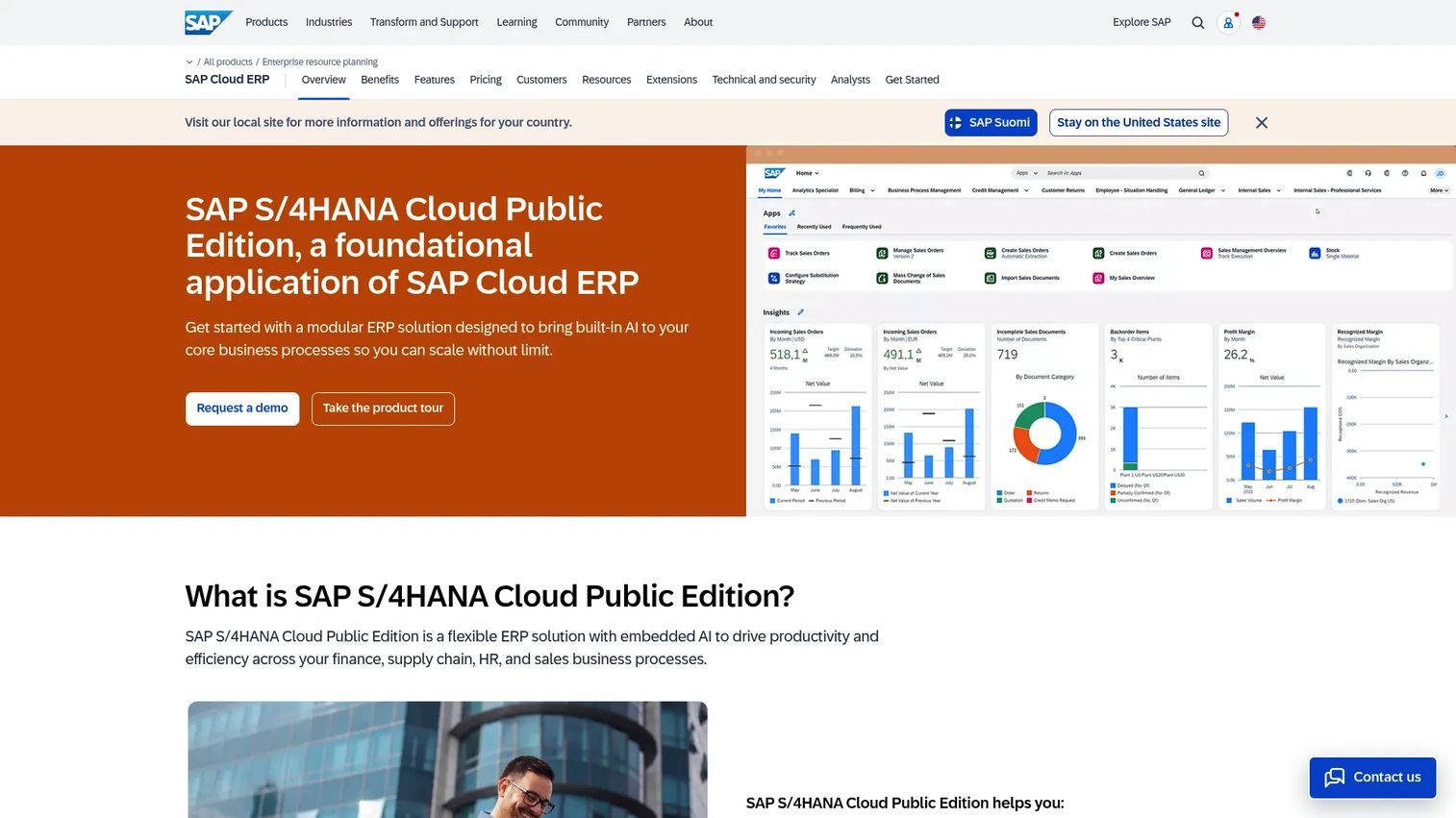
SAP S/4HANA is an enterprise ERP platform available across cloud and on-premises deployment models. It covers finance, supply chain, manufacturing, quality, sales, and operational reporting.
Its breadth suits large chemical companies with global facilities and complex governance. SAP also supports industry processes and integration through its wider technology platform.
Best for: Large chemical manufacturers with multi-site operations and substantial internal IT capacity.
Key features
- Enterprise ERP core
- Industry process configurations
- Quality management
- Real-time analytics
- Flexible deployment options
Why choose SAP S/4HANA: Choose it when scale and global operating control justify a large ERP program. The platform can support broad business standardization across plants and legal entities.
Plan for significant governance. Leadership must fund process design, data cleanup, migration, integration work, internal staffing, and change management.
A weak operating model will not improve because the software is large. Define ownership before the implementation partner starts configuring the system.
SAP S/4HANA pricing: SAP Finance Base starts at $295 per user monthly for 25 to 39 users, with a 15-user minimum. Premium costs $403 per user monthly.
G2 rating: 4.4/5 for SAP Cloud ERP.
6. Microsoft Dynamics 365 Business Central
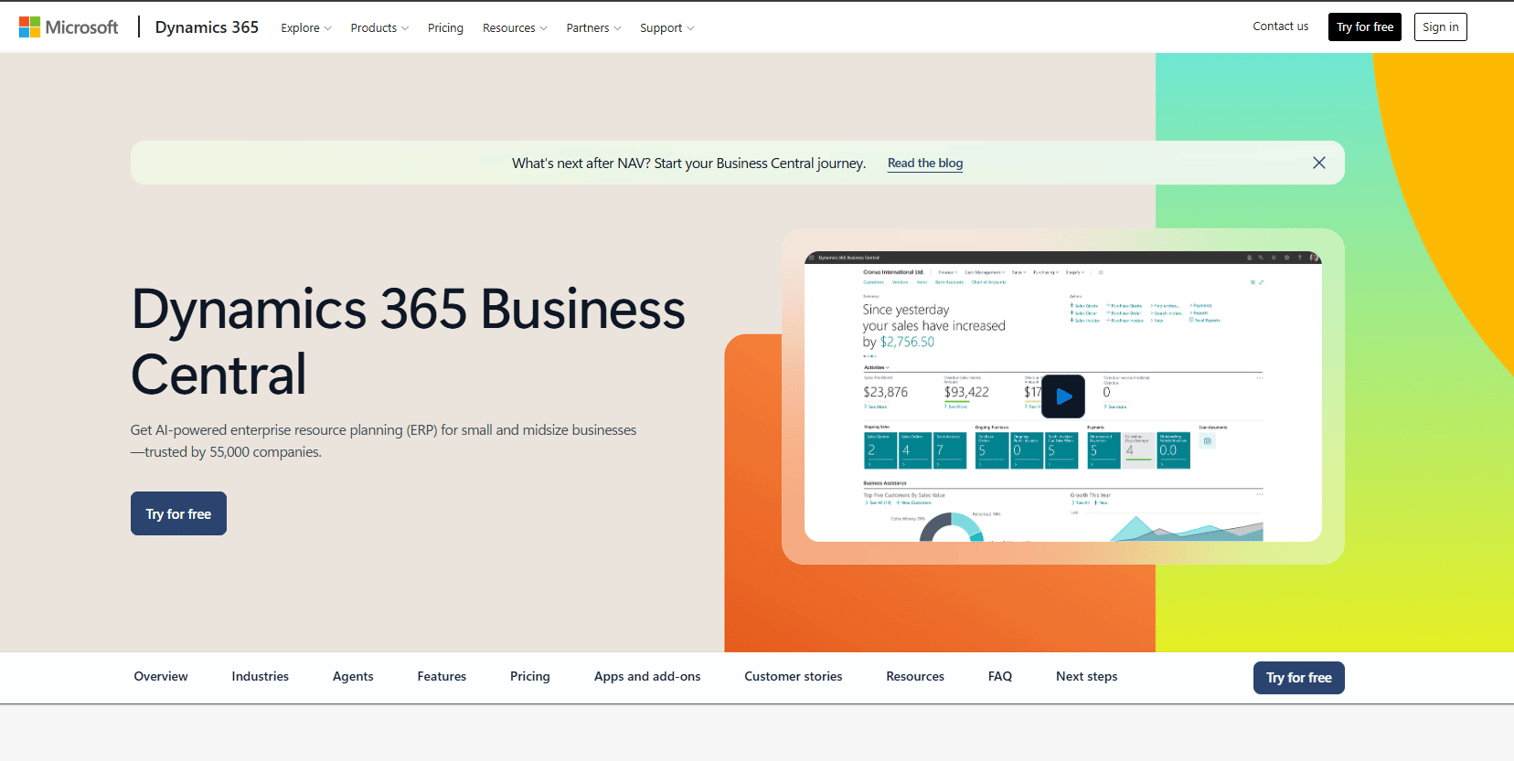
Microsoft Dynamics 365 Business Central connects finance, sales, service, inventory, projects, and operations. The Premium plan adds manufacturing and service management.
Business Central fits companies already working inside Microsoft 365 and Power BI. Its partner network can add industry configuration, though chemical-specific depth must be examined separately.
Best for: Small and midsize manufacturers committed to Microsoft business software.
Key features
- Financial management
- Inventory and warehouse control
- Manufacturing management
- Microsoft 365 connectivity
- Power BI reporting
Why choose Microsoft Dynamics 365 Business Central: Familiar Microsoft workflows can reduce adoption friction across finance and operations. The platform also gives growing companies a broad ERP foundation.
Chemical manufacturers should inspect formulation, batch production, quality, genealogy, and labels during vendor evaluation. Ask the partner to identify every add-on and custom workflow.
That detail matters because extensions affect cost, upgrade planning, and accountability after launch.
Microsoft Dynamics 365 Business Central pricing: Team Members costs $8 per user monthly. Essentials costs $80, while Premium costs $110 per user monthly, paid yearly. A 30-day trial is available.
G2 rating: 4.0/5.
7. Infor CloudSuite Chemicals
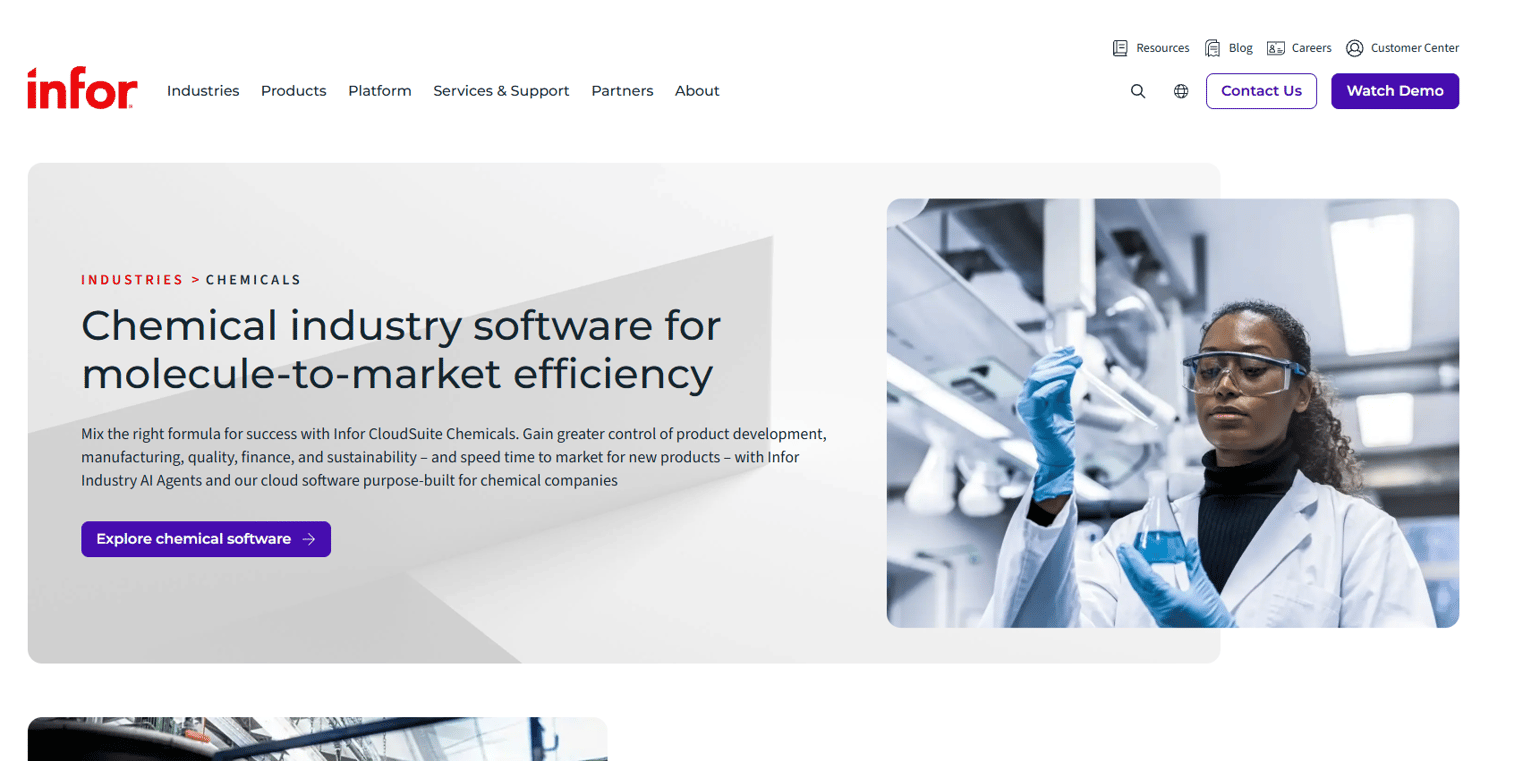
Infor CloudSuite Chemicals is an industry-specific cloud suite for chemical manufacturing. It combines ERP with formulation, product lifecycle management, supply-chain planning, warehouse operations, and quality management.
The product also supports multi-facility production and tank scheduling. That scope makes it relevant to companies seeking chemical-specific operational depth.
Best for: Chemical manufacturers that prefer an industry suite over a generic ERP project.
Key features
- Multi-facility production scheduling
- Tank and liquid scheduling
- Formulation management
- Quality and traceability
- Regulatory support
Why choose Infor CloudSuite Chemicals: Put Infor on the shortlist when process manufacturing requirements reach beyond finance and inventory. Its chemical focus supports a more direct conversation about formulations and plant scheduling.
Test the workflows that create margin or risk. Include formula approval, production planning, quality release, warehouse movement, and regulatory documentation.
Also confirm the exact products included in the proposed architecture. A suite can span several applications, which affects implementation ownership and integration design.
Infor CloudSuite Chemicals pricing: Custom pricing. Request a breakdown for subscriptions, implementation, integrations, training, and support.
G2 rating: A product-specific rating was not verified.
8. IFS Cloud
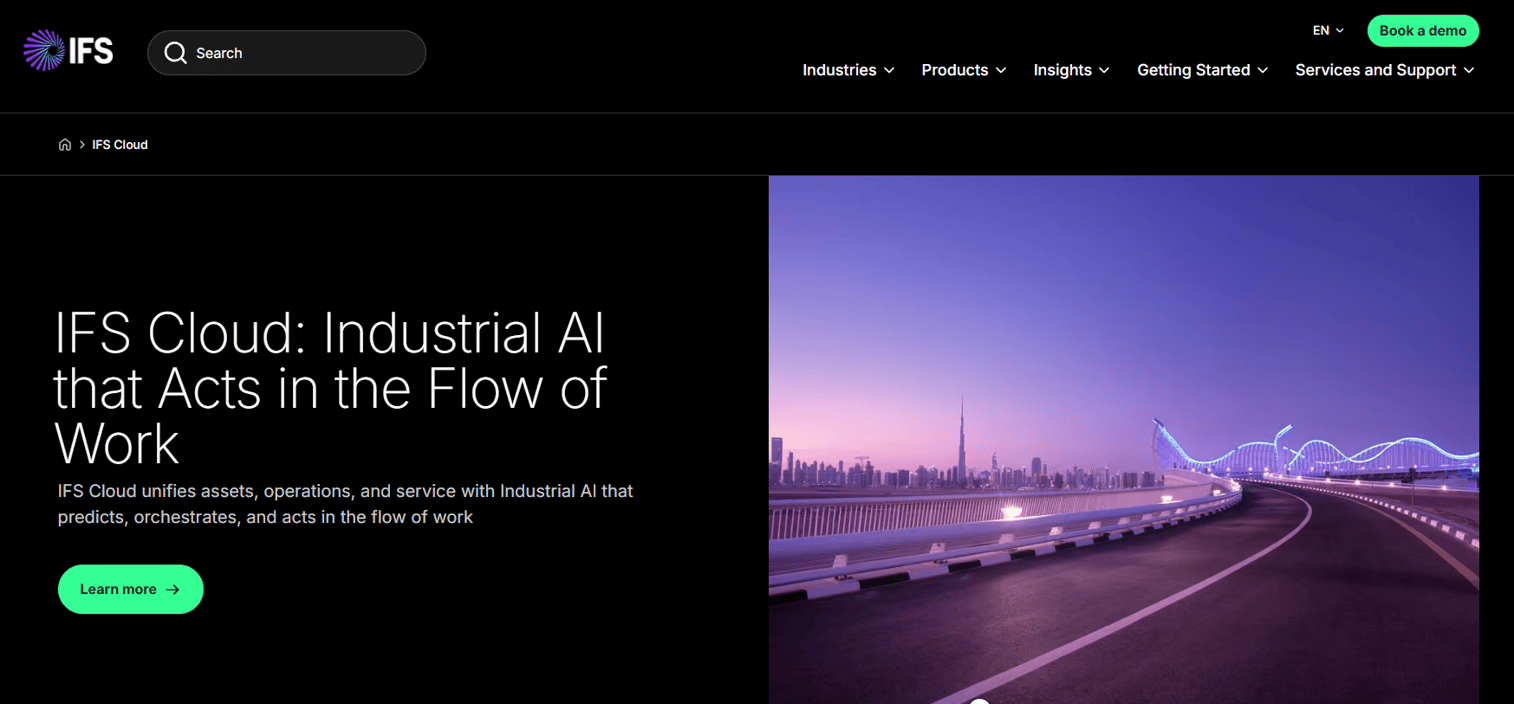
IFS Cloud combines ERP, enterprise asset management, supply-chain management, and field service capabilities. Its focus on industrial and asset-intensive organizations distinguishes it from finance-led ERP platforms.
Chemical plants can use this breadth to connect production planning with maintenance and asset performance. Mobile capabilities also support work across operational settings.
Best for: Asset-heavy chemical companies where reliability and maintenance affect operating results.
Key features
- Enterprise resource planning
- Enterprise asset management
- Supply-chain management
- Predictive maintenance
- Mobile offline synchronization
Why choose IFS Cloud: Evaluate IFS when equipment uptime and plant reliability deserve the same attention as financial control. It can suit companies managing costly assets across several sites.
This fit matters to founders and operating leaders who need fewer surprises in board reporting. Maintenance backlogs and unexpected downtime can distort output, inventory, and forecast credibility.
Map the proposed modules against each operating owner. Finance, maintenance, production, and IT should agree on system boundaries before selection.
IFS Cloud pricing: Custom pricing. Ask sales to separate the platform, modules, implementation, integrations, and support.
G2 rating: 4.0/5.
9. Deacom ERP
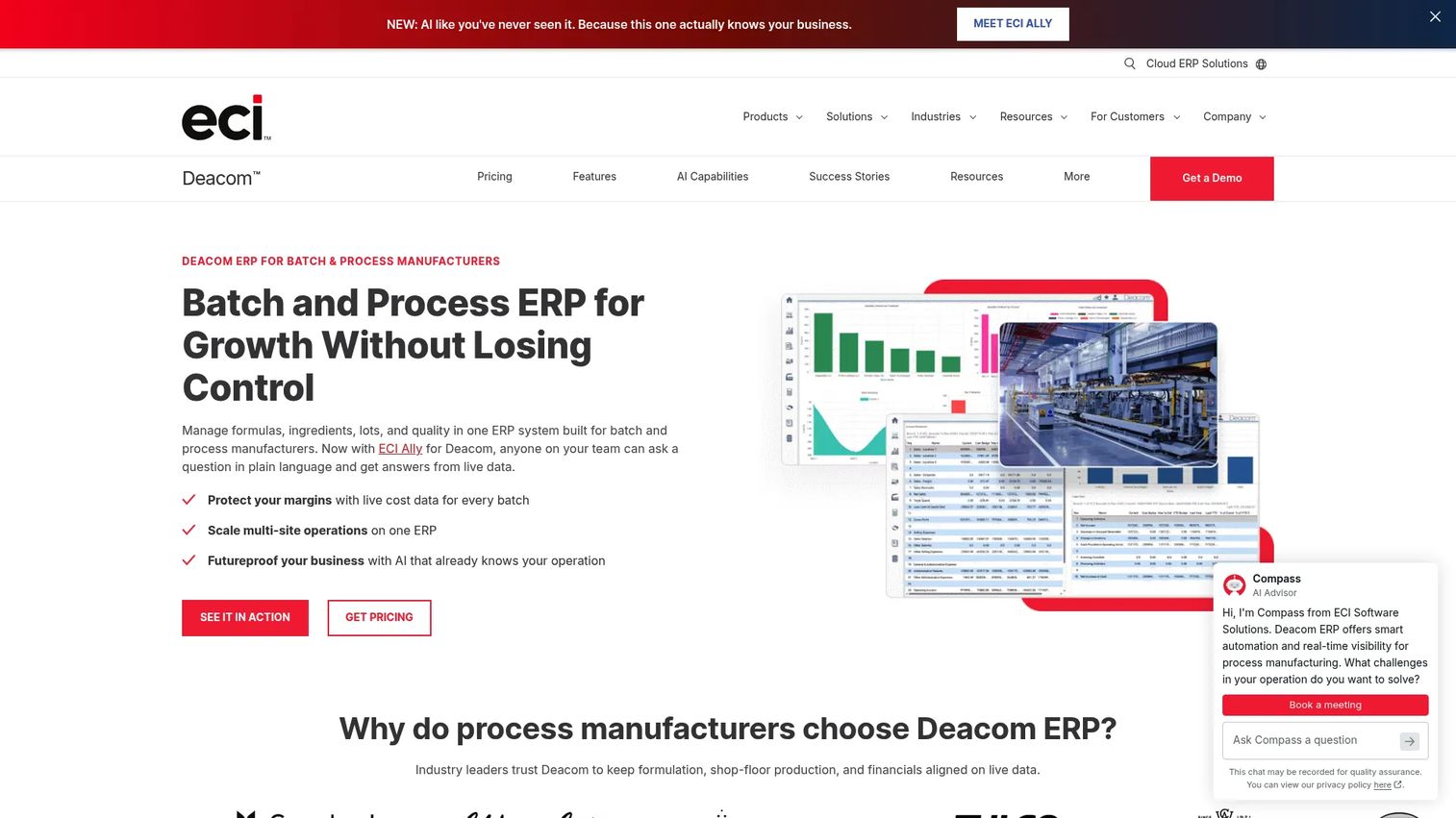
Deacom ERP serves batch and process manufacturers across chemicals, food, nutraceuticals, and health products. It combines formulas, ingredients, lots, quality, planning, production, and financials.
The product’s single-system approach is designed to reduce dependence on separate operational add-ons. Its capabilities include lot traceability and certificate of analysis management.
Best for: Batch manufacturers seeking unified control across production and business operations.
Key features
- Formula and ingredient management
- Lot tracking and traceability
- Quality and COA management
- Production planning
- Inventory forecasting
Why choose Deacom ERP: Consider Deacom when too many system handoffs create inconsistent data. It brings process manufacturing functions closer to sales, purchasing, and accounting.
The official pricing page lists Essentials and Enterprise editions. Both include cloud deployment, supply-chain planning, lot traceability, document storage, and AI assistance.
Ask for a demonstration of exceptions rather than ideal transactions. Rework, failed quality checks, substitutions, and partial batch completion show how the system behaves under pressure.
Deacom ERP pricing: Custom pricing for Essentials and Enterprise. Ask for user costs, implementation scope, support, and required services.
G2 rating: 4.2/5.
10. Aptean Process Manufacturing ERP
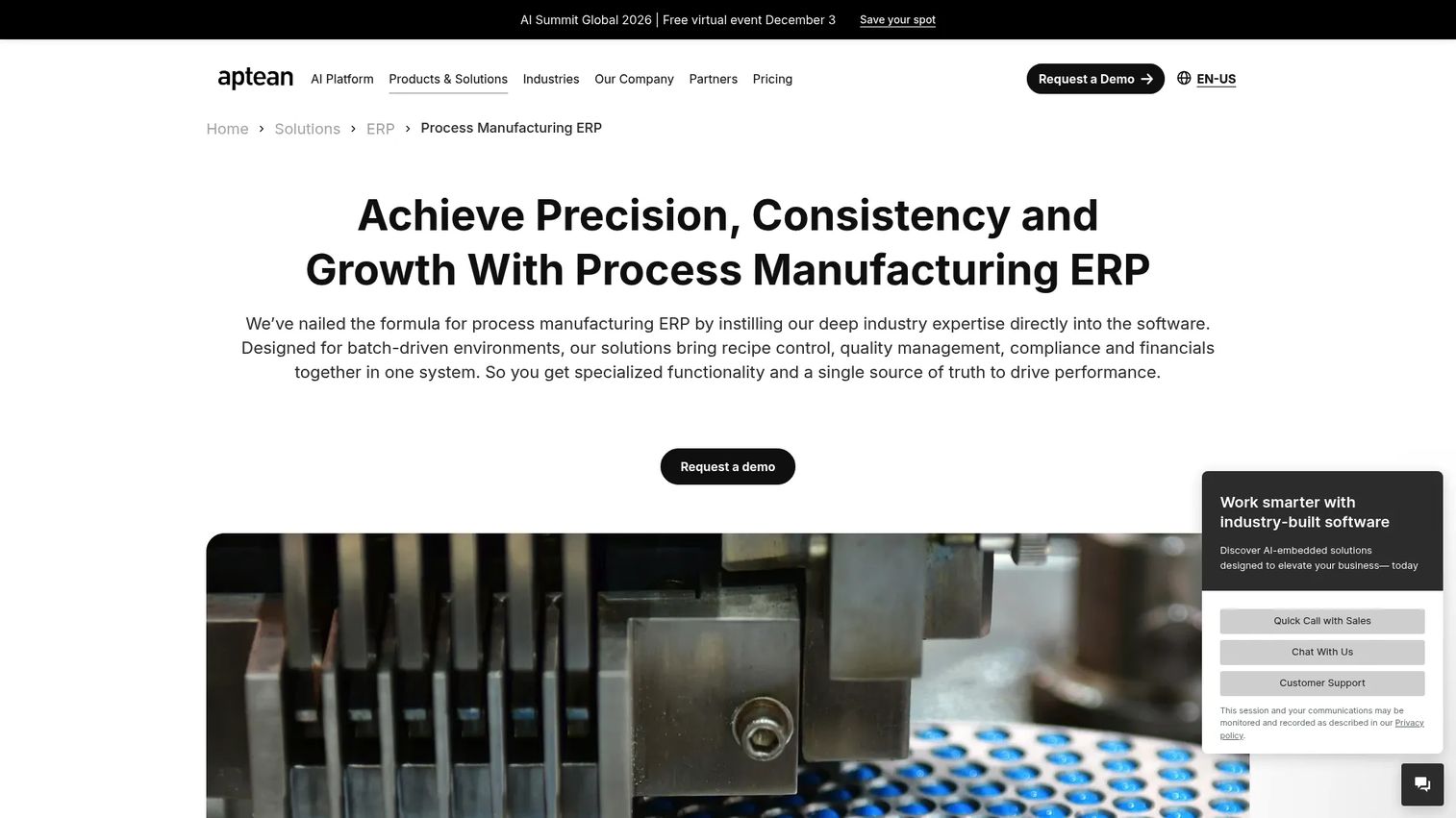
Aptean Process Manufacturing ERP supports formula-based manufacturing across production, inventory, supply chain, finance, quality, and compliance.
Its process manufacturing capabilities include recipe management software, material planning, production scheduling, and lot traceability. These functions suit companies managing batch variability and regulated records.
Best for: Mid-sized and large formula-based manufacturers with traceability requirements.
Key features
- Formula and recipe management
- Batch production
- Lot and recall visibility
- Quality management
- Production scheduling
Why choose Aptean Process Manufacturing ERP: Evaluate Aptean when formulas and batch traceability software sit at the center of the buying decision. Its process orientation gives the vendor a relevant foundation for chemical workflows.
Still, product fit must be tested against your production model. Include variable yields, substitutions, quality holds, and rework in the evaluation scenario.
Ask how formula revisions affect planning, labels, inventory commitments, and costing. Those connections expose the practical depth of formula management software.
Aptean Process Manufacturing ERP pricing: Custom pricing. Request module-level costs and the assumptions behind implementation services.
G2 rating: 4.2/5 for the Ross Edition listing.
11. Sage X3
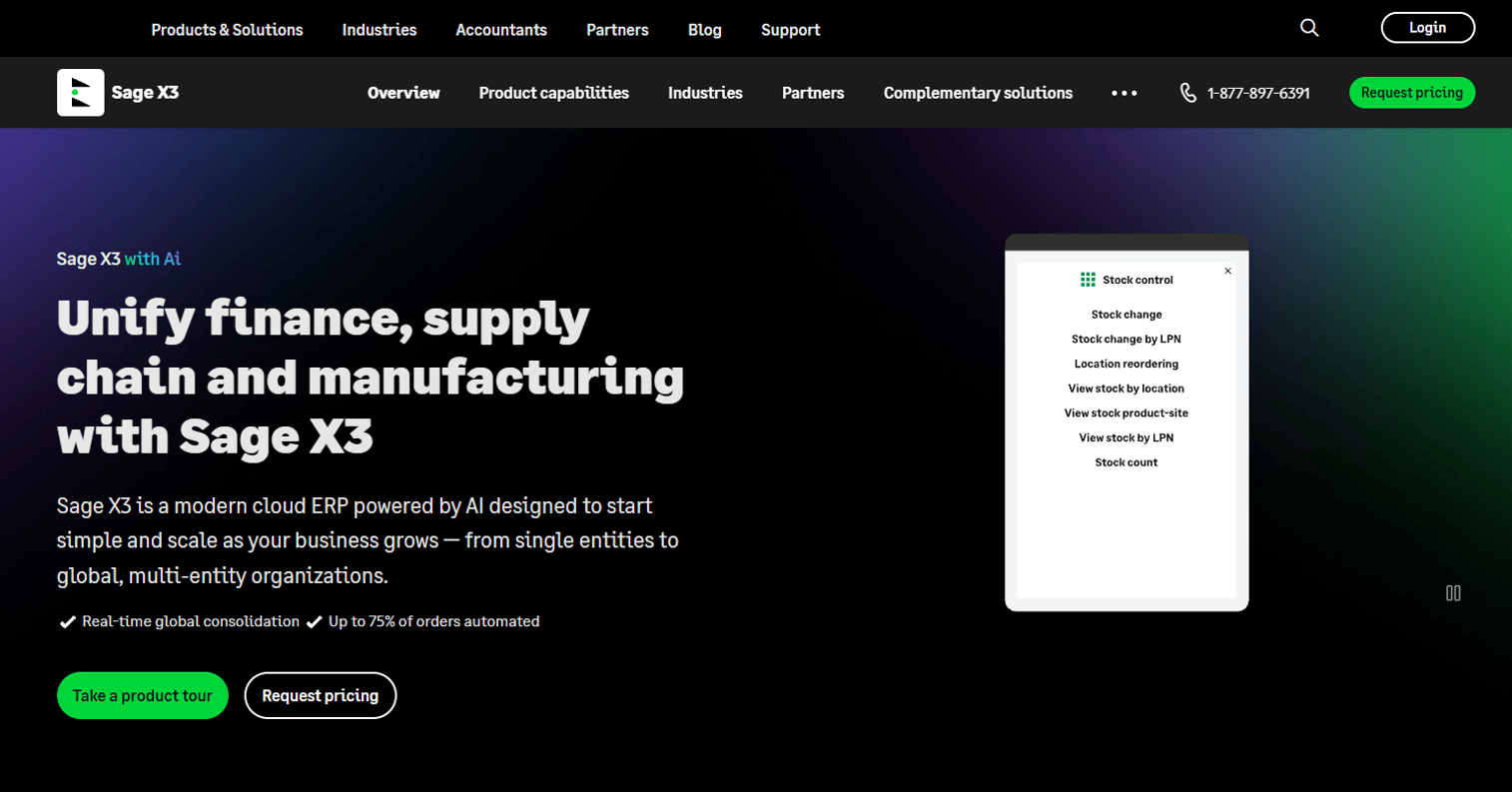
Sage X3 is a cloud ERP for mid-sized, product-centric organizations. It handles finance, supply chain, inventory, purchasing, warehouses, and manufacturing.
Sage X3 supports discrete, process, and mixed-mode production. Verified capabilities include batch and lot management, quality controls, and end-to-end traceability.
Best for: Mid-market process manufacturers needing broad ERP without a large enterprise footprint.
Key features
- Multi-company financial management
- Process manufacturing
- Batch and lot controls
- Quality management
- Low-code configuration
Why choose Sage X3: Sage X3 fits companies moving beyond basic accounting and inventory systems. It can support more structured production while maintaining multi-company financial control.
Its broad manufacturing model means chemical buyers should test their exact requirements. Use formulas, quality status, traceability, and regulated documents during evaluation.
Review internal capacity as carefully as product functionality. Data migration and process ownership will determine time-to-value more than a long feature list.
Sage X3 pricing: Custom pricing. Ask Sage or its partner for software, hosting, users, modules, implementation, and support costs.
G2 rating: 4.5/5.
12. QAD Adaptive ERP
QAD Adaptive ERP is a manufacturing-focused cloud ERP for global organizations. It covers production, planning, financials, sales, service management, assets, and supply-chain operations.
QAD supports scheduling, costing, subcontract manufacturing, and traceability. Its internationalization capabilities extend across 66 countries.
Best for: Global manufacturers with complex supply chains and multi-site requirements.
Key features
- Manufacturing planning and scheduling
- Production and costing
- Global financial management
- Asset management
- Traceability controls
Why choose QAD Adaptive ERP: Consider QAD when manufacturing discipline and supply-chain coordination matter across facilities. It can support companies operating under several currencies and accounting structures.
Chemical manufacturers should examine formulation depth before committing. The platform’s broad manufacturing focus does not automatically prove fit for every formula-heavy operation.
Test how batch records, quality events, and material genealogy connect with production planning. Include intercompany movements if plants exchange materials or finished goods.
QAD Adaptive ERP pricing: Custom pricing. Ask about users, modules, hosting, implementation, integrations, and support.
G2 rating: 3.5/5.
13. SYSPRO

SYSPRO is an ERP platform for manufacturing and distribution businesses. It covers production, inventory, warehousing, material planning, quality, traceability, and business intelligence.
The platform fits mid-sized organizations seeking stronger operational control without adopting the largest enterprise suite. Its manufacturing orientation is broader than chemical production.
Best for: Manufacturers and distributors that prioritize inventory and production discipline.
Key features
- Manufacturing operations management
- Inventory and warehouse management
- Material requirements planning
- Quality and traceability
- Embedded analytics
Why choose SYSPRO: Evaluate SYSPRO when finance needs cleaner production and inventory data. Its manufacturing foundations can help replace disconnected planning and warehouse processes.
Formula-heavy companies must validate chemical-specific depth. Bring a representative recipe, variable yield, quality hold, and lot investigation to the evaluation.
SYSPRO is moving toward a named-user subscription model. Organization size, user count, modules, deployment, training, and support affect the commercial proposal.
SYSPRO pricing: Custom pricing. Request a quote that separates subscriptions, implementation, training, and support.
G2 rating: 4.1/5.
14. DELMIAWorks
DELMIAWorks combines manufacturing ERP with MES capabilities for mid-market manufacturers. It covers production monitoring, supply chains, quality, planning, costing, and financial controls.
The connection between ERP and plant-floor activity is its clearest differentiator. DELMIAWorks supports discrete, repetitive, and batch-process environments.
Best for: Manufacturers that want ERP decisions connected closely with production data.
Key features
- Real-time production monitoring
- Integrated quality management
- Scheduling and planning
- Supply-chain management
- Costing and financial controls
Why choose DELMIAWorks: Consider it when delayed plant data prevents leadership from seeing current operating performance. Connecting production activity with ERP records can improve throughput and cost analysis.
Chemical buyers should separate general manufacturing fit from chemical-specific depth. Test formula revisions, batch genealogy, QC release, and COA workflows directly.
Also map the system against existing controls and machines. Integration scope can shape the budget as much as licensing.
DELMIAWorks pricing: Custom pricing. Ask for software, implementation, migration, integrations, and training costs.
G2 rating: 4.1/5.
15. MasterControl Manufacturing Excellence
MasterControl Manufacturing Excellence is a cloud platform for regulated manufacturing. It focuses on electronic batch records, manufacturing execution, logbooks, equipment records, and review by exception.
MasterControl serves pharmaceutical, biotechnology, and medical-device manufacturers. Chemical companies with similar documentation pressure can evaluate it as a focused quality and production layer.
Best for: Regulated manufacturers that need stronger batch records and quality execution.
Key features
- Electronic batch records
- Manufacturing execution
- Electronic logbooks
- Review by exception
- Equipment calibration records
Why choose MasterControl Manufacturing Excellence: Put MasterControl on the shortlist when documentation and batch release slow production. It digitizes controlled manufacturing records rather than replacing every business system.
Companies may still need ERP for finance, procurement, inventory valuation, and accounting. Define the integration boundary before selecting either platform.
During evaluation, follow a batch through record creation, exception handling, review, and release. Include a quality event to see how information moves between operations and quality.
MasterControl Manufacturing Excellence pricing: Custom pricing. Request costs for users, sites, modules, validation services, implementation, and support.
G2 rating: 4.4/5.
16. Intelex EHS & Quality Management Software

Intelex EHS & Quality Management Software centralizes environmental, health, safety, quality, risk, and sustainability processes. Its applications cover incidents, observations, audits, training, inspections, and reporting.
Intelex is chemical compliance software rather than an ERP. It complements systems that manage production, finance, and inventory.
Best for: Chemical companies whose largest operational gap involves EHS, safety, or quality risk.
Key features
- Incident management
- Audit management
- Inspection workflows
- Quality management
- Reports and dashboards
Why choose Intelex: Evaluate it when environmental or safety workflows remain scattered across spreadsheets and email. Centralized records can improve visibility across sites and operating teams.
Intelex will not replace chemical manufacturing ERP. Its role is to manage EHSQ processes that transactional systems often handle lightly.
Before buying, map incidents and inspections through corrective actions and management reporting. Include mobile use if plant teams complete records away from desks.
Intelex pricing: Safety Essentials starts at $44 per user monthly, billed annually, with a 25-user minimum. Advanced and Enterprise use custom pricing.
G2 rating: 4.1/5.
17. TrakSYS
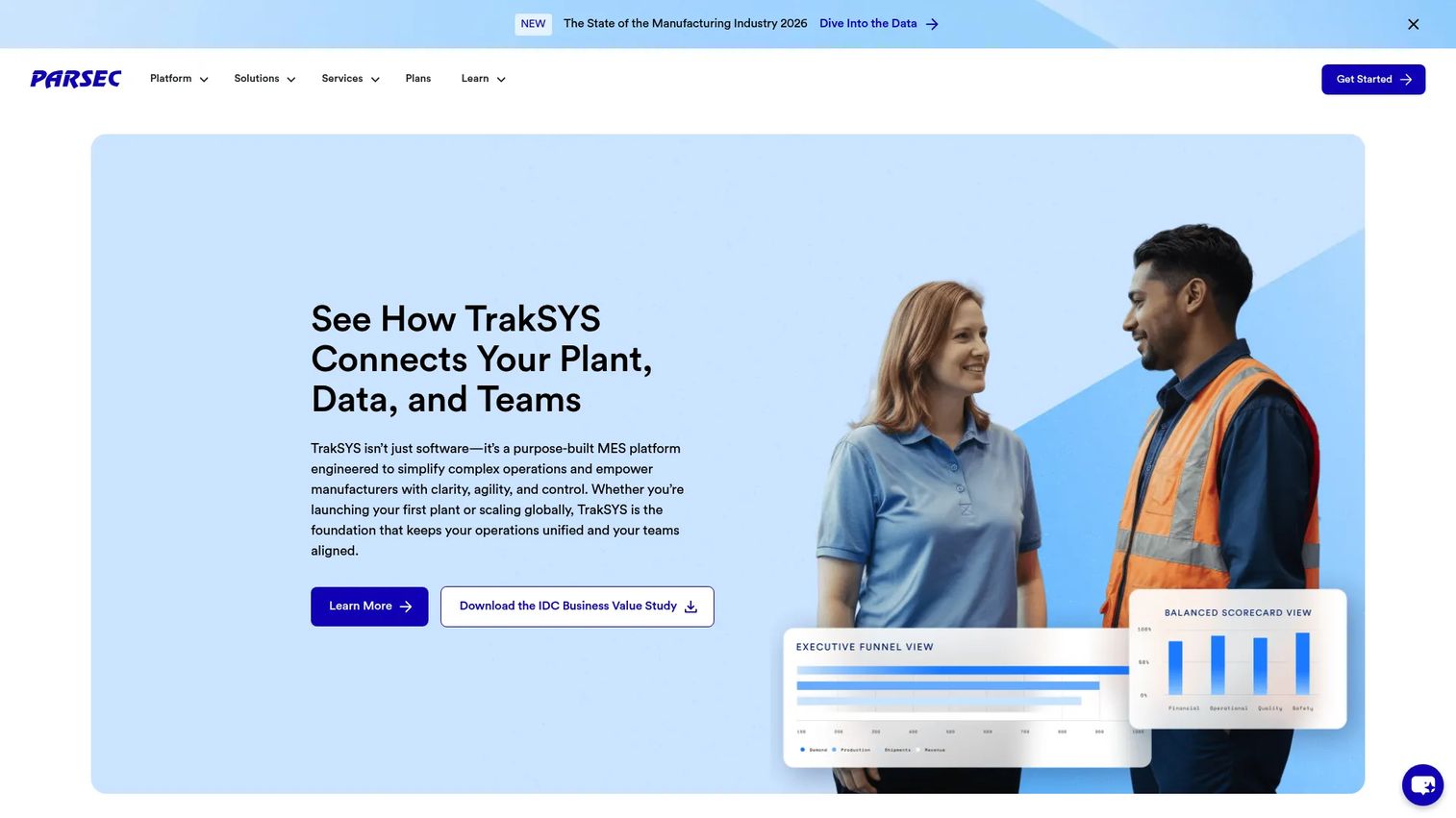
TrakSYS is manufacturing execution software for chemicals and other complex production environments. It provides production visibility, KPI tracking, alerts, digital workflows, quality checkpoints, and material traceability.
The platform integrates with plant systems and business applications. Supported technologies include PLCs, sensors, ERP, LIMS, SCADA, OPC UA, MQTT, REST, and SQL.
Best for: Plants that need manufacturing execution and current production visibility more than a replacement ERP.
Key features
- Real-time production visibility
- Digital work instructions
- Quality checkpoints
- Material traceability
- Industrial system integration
Why choose TrakSYS: Evaluate TrakSYS when an ERP exists but plant data remains delayed or fragmented. It can help operations track downtime, throughput, material movement, and quality events closer to production.
This distinction protects implementation scope. TrakSYS addresses plant execution, while ERP retains finance and core transactions.
Ask the vendor to connect one line or work center to your existing architecture. The test should show data capture, operator workflow, quality response, and reporting.
TrakSYS pricing: Essentials starts at $1,999 monthly. Growth costs $4,999, Premier costs $10,999, and Ultimate costs $15,999 monthly on annual terms.
Considerations when choosing chemical manufacturing software
Test one representative batch before signing
Give every vendor the same operating scenario. Start with raw material receipt, then move through production, QC, release, shipment, invoice, and accounting.
Add rework and potency adjustments if they occur. Include yield variance and a quality hold to expose exception handling.
Validate formula and revision control
Formula management is central to chemical ERP fit. Test version history, approval routing, scaling, units of measure, and approved substitutes.
Confirm which record controls production. Purchasing, labels, quality specifications, and batch instructions should follow the approved revision.
Check lot genealogy and recall speed
Ask each vendor to demonstrate forward and backward traceability. The workflow should connect supplier lots, WIP, finished goods, customer shipments, COAs, and expiry dates.
Time the exercise. A traceability function that requires exports and manual reconciliation creates risk during a customer investigation.
Separate ERP, MES, QMS, and EHS jobs
Assign ownership before evaluating products. ERP usually owns transactions and finance, while MES manages plant execution.
QMS holds quality evidence and CAPA. EHS covers safety incidents, inspections, and environmental workflows.
Model implementation capacity alongside license cost
Chemical manufacturing software pricing tells only part of the story. Model migration, integrations, formula cleanup, labels, training, and internal project staffing.
Then compare first-year cash requirements with steady-state annual cost. A cheaper license can become the expensive option when customization and maintenance expand.
Conclusion
The best chemical manufacturing software depends on the operational layer you need to fix.
BatchMaster ERP and Datacor ERP deserve early consideration for chemical-specific ERP depth. Aptean and Deacom also fit formula-based process manufacturing.
Acumatica, NetSuite, Business Central, and Sage X3 suit growing businesses that need broader cloud ERP. Their chemical fit often depends on configuration and implementation partners.
Larger organizations should evaluate SAP S/4HANA, Infor CloudSuite Chemicals, IFS Cloud, or QAD. These platforms fit complex operating models but require stronger governance and internal ownership.
MasterControl addresses regulated production records. Intelex focuses on EHSQ, while TrakSYS adds plant-floor execution and visibility.
Pick three vendors. Give each one the same batch scenario. Ask them to show the workflow live, including the ugly parts.
A useful evaluation ends with evidence about system fit, implementation capacity, and total cost. It should never end with the longest feature checklist.
FAQs
Chemical manufacturing software manages formulas, batch production, quality, inventory, compliance, traceability, and financial workflows. The category includes ERP, MES, QMS, EHS, and formulation systems.
A company may use one broad platform or connect several focused products. The right architecture depends on which system owns transactions, plant execution, quality records, and safety processes.
Generic ERP typically covers finance, purchasing, inventory, orders, and basic production. Chemical manufacturing ERP adds formula control, batch records, quality status, lot genealogy, and expiry management.
Chemical-specific platforms may also support SDS documentation, GHS labeling, certificates of analysis, and regulated records. Buyers should verify each workflow rather than assume an industry label proves depth.
Start with the failure mode that costs the business the most. It may involve formula errors, delayed release, weak traceability, or inaccurate batch costing.
Core capabilities usually include formula management, batch traceability, quality workflows, inventory status, expiry controls, production planning, and regulatory documentation. Prioritize what affects margin, shipment reliability, and customer risk.
Cost varies with users, modules, sites, deployment, implementation, integrations, and support. Enterprise projects also require internal staff time and change management.
Compare total first-year cost with steady-state annual spending. Include migration, validation, training, custom reports, and future upgrade work in the model.
Cloud chemical ERP can reduce infrastructure ownership and support centralized access across facilities. It also shifts upgrade responsibility toward the vendor.
On-premises chemical manufacturing software or hybrid deployment may fit specific plant connectivity, IT policy, validation, or data-governance requirements. Evaluate deployment against operating constraints rather than default preference.
SDS management software can centralize records, support documentation workflows, and improve access to current safety information. GHS labeling software can connect approved data with label processes.
Software does not replace legal, regulatory, or safety expertise. Your compliance owners must define the rules and verify that system outputs meet applicable requirements.
Lot genealogy traces materials forward and backward through raw materials, batches, WIP, finished goods, and shipments. It connects supplier inputs with production records and customer deliveries.
This capability supports recalls, quality investigations, supplier issues, and customer questions. Strong lot traceability software should produce both directions without manual spreadsheet reconstruction.
Give each vendor an identical plant scenario. Include formula revision, raw material receipt, batch production, QC hold, rework, COA generation, shipment, invoice, and accounting impact.
Ask who configures each step and which parts require extensions. Then compare implementation capacity, ownership, total cost, and the evidence produced by the workflow.