You exported backlink data from two SEO tools last week. The numbers didn't match. Your head of SEO still can't tell leadership which links came from the PR push, which went missing after the site migration, and which competitors just picked up 400 referring domains while you weren't watching.
The problem isn't effort. The reporting pipeline breaks because the backlink data flowing into it is stale, inconsistent, or trapped inside a UI with no programmatic exit.
A backlink checker API solves this by returning structured backlink data directly into dashboards, scripts, or SEO tools, so the analysis runs on demand rather than whenever someone remembers to export a CSV. According to Postman's 2025 State of the API report, 82% of organizations have adopted some level of an API-first approach. For SEO teams, that shift matters: Backlink data is now a feed, not a file.
This guide compares 11 options across developer-first APIs, SEO suite APIs, and free checker tools, with verified pricing and ratings for each.
What's inside
This guide is for growth marketers, SEO leads, marketing operations analysts, and developers evaluating backlink APIs for link-building, competitor research, dashboard reporting, and automated workflows.
Tools were selected based on four criteria:
- Backlink data coverage: Index size, freshness, and field depth (anchors, link type, first seen, lost links)
- API access and developer fit: Endpoints, rate limits, pagination, and documentation quality
- Monitoring depth: New link tracking, lost link alerts, and historical data
- Pricing transparency: Whether costs make sense at your actual domain volume and refresh rate
TL;DR
- Best for developer-first backlink data: DataForSEO Backlinks API, pay-as-you-go with broad endpoint coverage
- Best for SEO platform users who want API access: SE Ranking Backlinks API, with new and lost link monitoring built in
- Best for free backlink checks before committing to an API: SEO Review Tools Backlink Checker
- Best for teams already in a major SEO suite: Semrush API or Ahrefs API, depending on your existing subscription
- Best for deep link intelligence and historic index depth: Majestic API, with Trust Flow and Citation Flow built in
- Best buying advice: Test the same 10 domains across your three finalists before spending a dollar on credits
What is a backlink checker API?
A backlink checker API is a software interface that lets applications retrieve structured backlink data for a domain, subdomain, page, or URL.
Unlike a manual export from an SEO tool, an API call returns structured data you can pipe directly into dashboards, Looker Studio reports, spreadsheets, or internal tools. The data arrives in a consistent format on whatever schedule your workflow demands.
A well-built backlink data API typically returns:
- Total backlink counts and referring domain totals
- Referring pages with URL-level detail
- Anchor text and anchor text distribution
- Follow, nofollow, and sponsored link status
- Link discovery dates (first seen and last seen)
- New and lost backlinks since the previous crawl
- Domain authority or proprietary strength scores
- IP addresses, subnets, country of origin, and TLD data
- Spam, toxicity, or risk indicators where available
Key features to look for
- Live or frequently refreshed backlink index
- Historical backlink records with configurable date ranges
- New and lost link monitoring with timestamps
- Bulk domain or URL batch processing
- Anchor text filtering and link-type segmentation
- Pagination and async export for large datasets
- Transparent rate limits and credit consumption per request
- Integrations with BI tools, spreadsheets, and automation platforms
One important clarification before you evaluate vendors: A backlink API is not a feed from Google's index. Every provider runs its own crawler, which means their results will differ from Google Search Console and from each other. The right choice depends on which fields you need, at what scale, and how fresh the data must be for the decisions you are making.
When to use a backlink checker API
Automate competitor backlink research
Pulling competitor referring domains, top-linked pages, and anchor profiles manually is slow and inconsistent. An API lets you schedule domain-level comparisons, spot new referring domains as competitors acquire them, and feed that data into campaign planning or content prioritization without a weekly export ritual.
Monitor new and lost backlinks at scale
PR campaigns, affiliate partnerships, and content syndication all generate links that are hard to track manually. A backlink monitoring API tracks which links appeared after a launch, which disappeared after a site migration, and in some cases why a link was lost. This matters especially for teams attributing organic performance to specific campaigns.
Feed SEO reporting dashboards
Growth teams running Looker Studio, Airtable, or internal BI tools need backlink metrics alongside traffic, rank, and conversion data. An API eliminates the manual export step and keeps the reporting current, so you spend time interpreting results instead of moving files.
Backlink checker API comparison
The table below gives a directional view for quick comparison. Pricing and ratings were verified against vendor pages and G2 listings. Where no G2 listing exists for the specific product, N/A is used.
| # | Product | Best for | Key differentiator | Pricing | G2 rating |
|---|---|---|---|---|---|
| 1 | DataForSEO Backlinks API | Developer-first backlink data | Broad endpoints with pay-as-you-go billing | From $0.024/request | N/A |
| 2 | SE Ranking Backlinks API | SEO teams and monitoring workflows | New and lost link tracking with CSV exports | From $179/mo | 4.7/5 |
| 3 | Bishopi Backlink API | Bulk backlink quality analysis | Real-time data with authority and spam scoring | From $39/mo | 5.0/5 |
| 4 | Semrush API | Enterprise SEO teams in Semrush | Backlink metrics inside a broader SEO data layer | From $100/mo (API units) | 4.4/5 |
| 5 | Ahrefs API | Technical SEO teams | Strong backlink index with historical data | From $129/mo | 4.5/5 |
| 6 | Moz Links API | Domain authority reporting | DA, PA, and spam score via the Moz link index | Contact Moz | N/A |
| 7 | Majestic API | Deep link intelligence | Trust Flow, Citation Flow, and historic index | $399.99/mo | 4.3/5 |
| 8 | LinkResearchTools API | Link audits and risk workflows | Bulk URL analyzer with link risk scoring | From $599/mo | 4.0/5 |
| 9 | SEO Review Tools Backlink Checker | Free backlink checks | Accessible free checker with CSV export | Free | N/A |
| 10 | Serpstat API | Multi-dataset SEO workflows | Backlink plus keyword and rank data in one API | From $100/mo | 4.6/5 |
| 11 | CognitiveSEO API | Backlink audits and monitoring | Unnatural link detection and audit workflows | From $199/mo | 4.4/5 |
Best 11 backlink checker API tools for 2026
1. DataForSEO Backlinks API
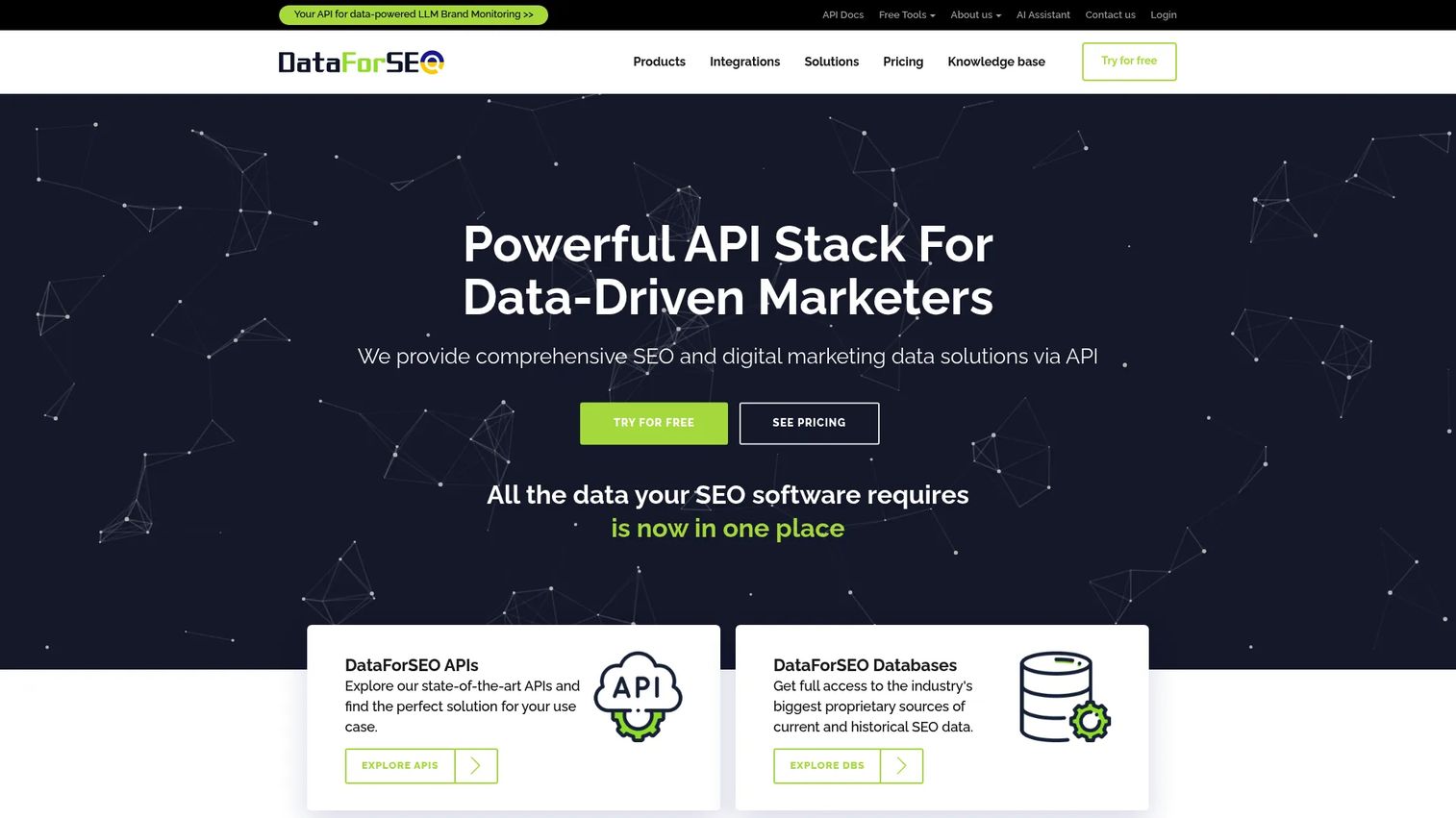
DataForSEO is a developer-focused data API provider built for SEO software teams, agencies, and analysts who need programmatic backlink data at scale. The Backlinks API covers live backlink profiles, referring domains, anchor text, link history, and competitor link intersections, all accessible via REST with up to 10,000 API calls per minute. The index holds approximately 1.9 trillion live backlinks, with a roughly two-second turnaround on live requests.
Best for: Developers and SEO teams building backlink dashboards, internal data products, or automated competitive research workflows.
Key features
- Live backlinks and referring-domain data with \~2-second response
- Backlink history reaching back to 2019
- Link intersection endpoint for competitor gap analysis
- Bulk metrics requests for multi-domain batching
- Summary, history, and filtering endpoints
Why choose DataForSEO Backlinks API: This is the strongest fit when you want flexible API infrastructure rather than a boxed SEO interface. Growth teams can push backlink data directly into Looker Studio, Airtable, or any BI tool without waiting on an engineering sprint.
DataForSEO pricing: Pay-as-you-go billing starts at $0.024 per request plus $0.000036 per row returned. A 1,000-row pull costs around $0.06. New accounts get a $1 trial credit, and the minimum top-up is $50.
2. SE Ranking Backlinks API
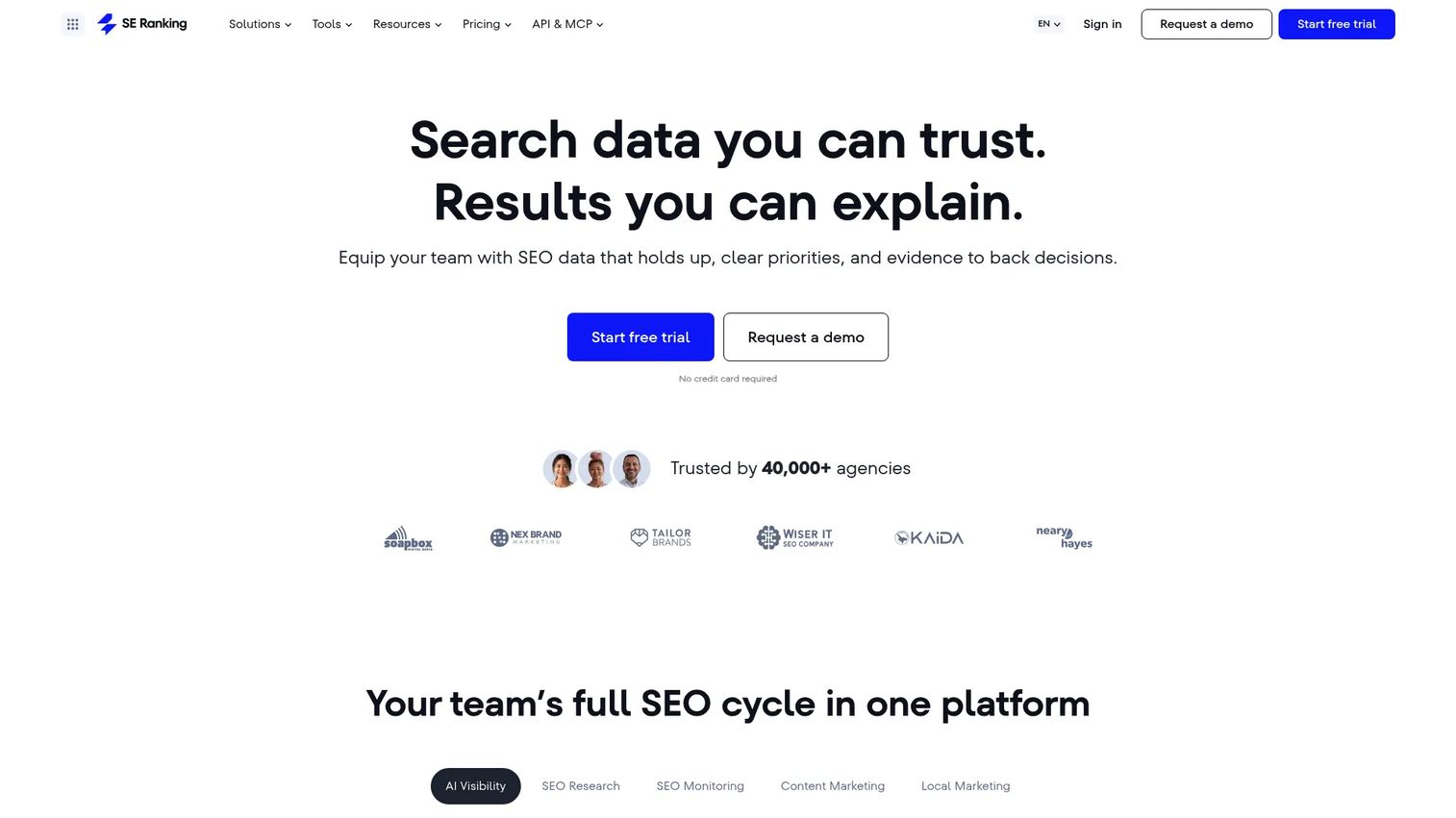
SE Ranking offers a Backlinks API connected to its broader SEO platform, covering domain, host, and URL-level analysis. The API returns backlink summaries, referring domains, full backlink lists, and historical data, with monitoring for new and lost links since previous crawl dates. It supports cursor pagination for large datasets and asynchronous CSV exports for teams pulling bulk backlink records.
Best for: SEO teams that want API access tied to a broader platform rather than a standalone data feed.
Key features
- New and lost backlink tracking with historical data
- Anchor text, link type, dofollow/nofollow, and image-link data
- InLink Rank and Domain InLink Rank authority metrics
- Cursor pagination for large dataset retrieval
- Asynchronous CSV exports
Why choose SE Ranking Backlinks API: The monitoring and export combination works well for growth teams running weekly link reports without manual intervention. Existing SE Ranking subscribers can add API access from $45/mo, making it a consolidation-friendly option.
SE Ranking pricing: Standalone Data API plans start at $179/mo (billed annually) for 12M credits per year. Existing subscribers pay from $45/mo as an add-on. Enterprise pricing is custom. A 14-day trial includes 100,000 free API credits.
G2 rating: 4.7/5 for SE Ranking overall.
3. Bishopi Backlink API
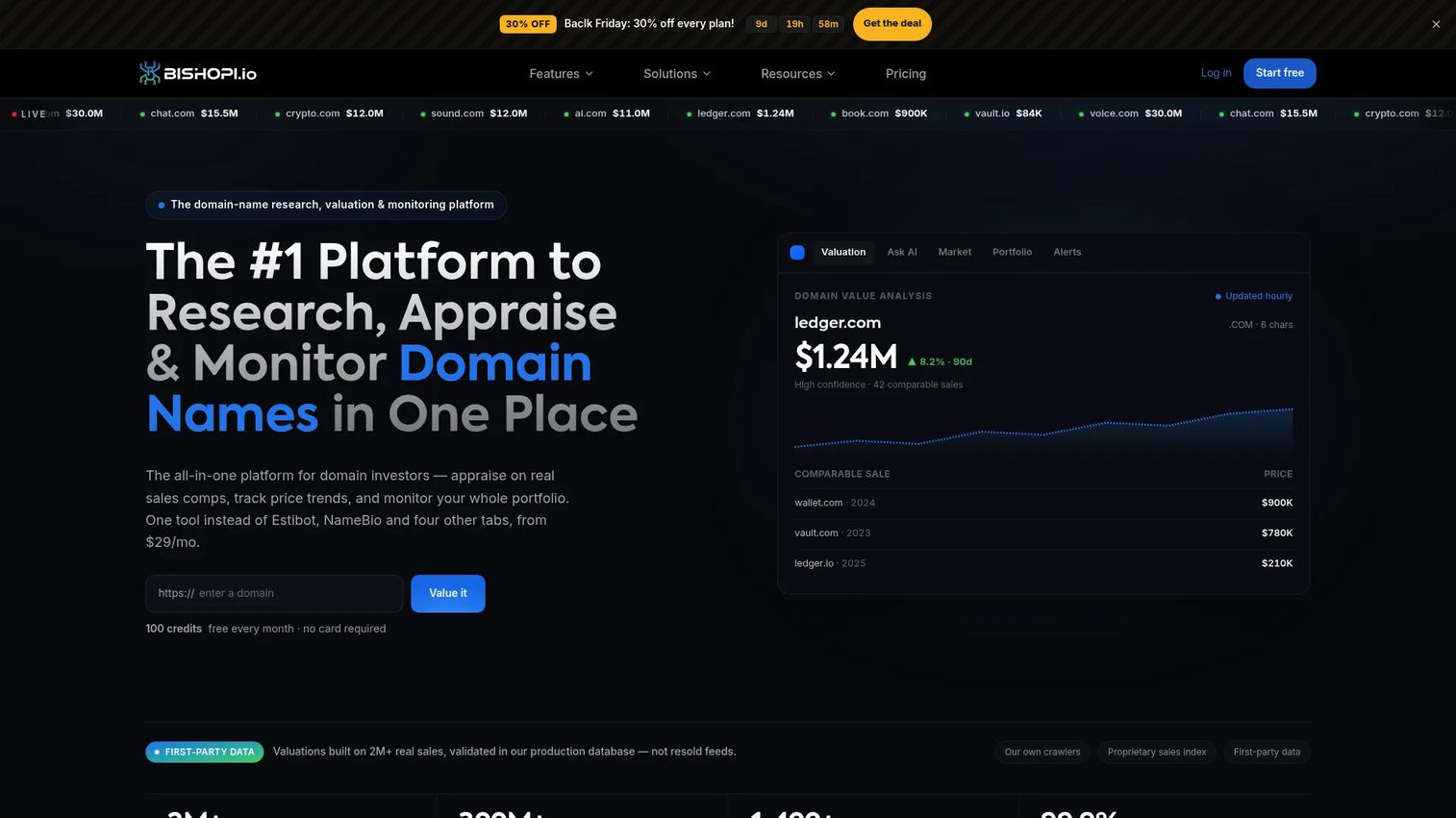
Bishopi provides real-time backlink profiles, referring-domain data, anchor-text analysis, and link-quality metrics through a REST API with structured JSON responses. It covers source authority, discovery dates, dofollow/nofollow status, and spam indicators, making it suited for teams that care about link quality rather than raw link counts.
Best for: SEO teams and agencies focused on backlink quality scoring, authority analysis, and competitor benchmarking via API.
Key features
- Real-time backlink profiles with discovery dates
- Anchor text, follow/nofollow, and link-status data
- Source authority metrics and spam indicators
- Referring-domain and historical backlink records
- Structured JSON responses via REST API
Why choose Bishopi Backlink API: If your workflow centers on link quality and authority rather than bulk volume, Bishopi's combination of real-time data and spam scoring makes the analysis more actionable. The subscription model fits teams that run regular checks rather than sporadic one-off pulls.
Bishopi pricing: Pay-as-you-go access starts with a $10 minimum wallet deposit. Subscription plans run $39/mo (Basic, 10,000 credits), $119/mo (Start-Up, 50,000 credits), and $279/mo (Business, 150,000 credits). Enterprise API pricing is available through sales. Prices exclude VAT.
G2 rating: 5.0/5
4. Semrush API
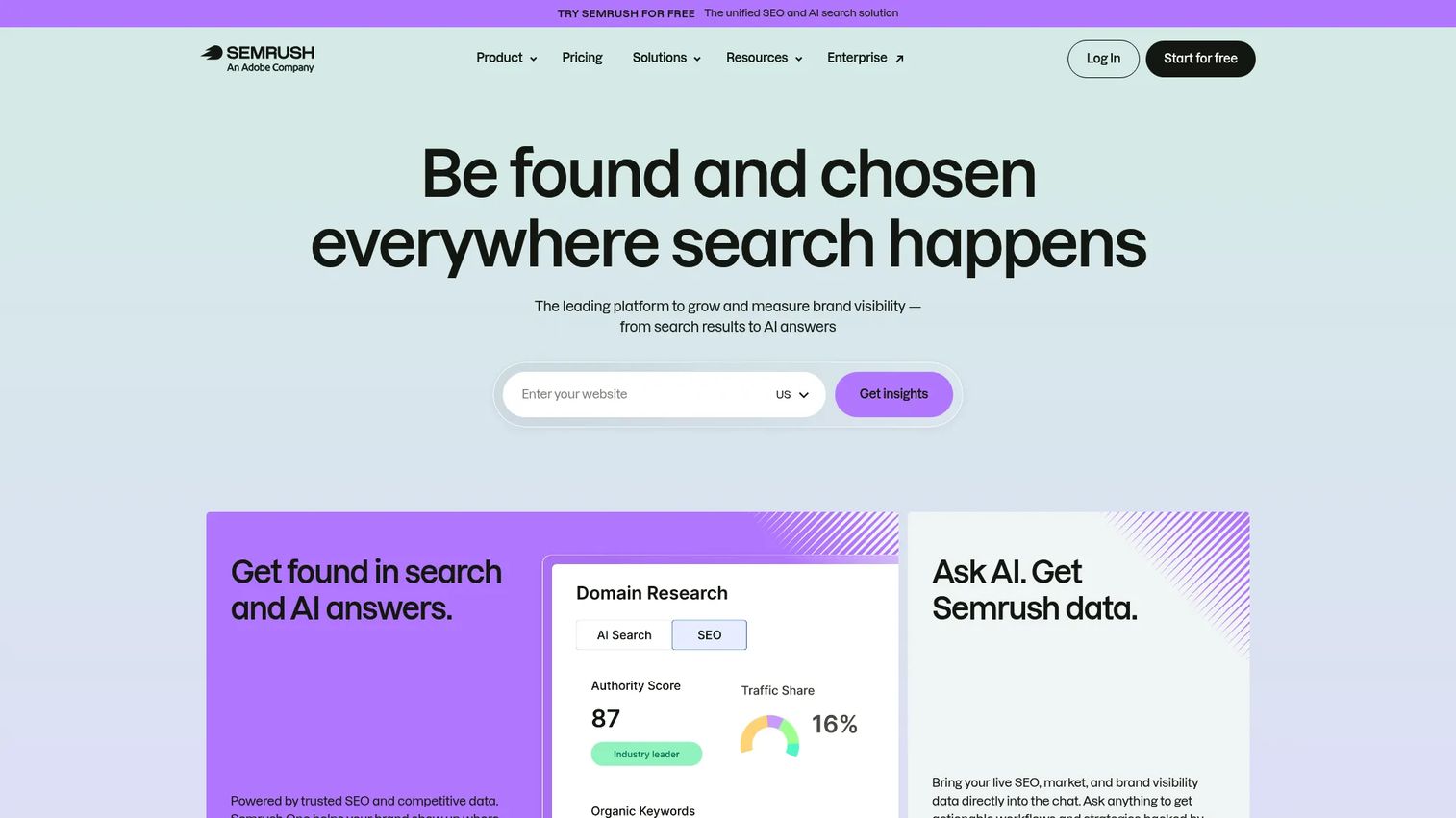
Semrush exposes its backlink analytics, domain reports, authority metrics, and competitor research data through a programmatic API alongside keyword, traffic, and site audit endpoints. Teams that already rely on Semrush for SEO reporting can extend that data into custom dashboards or automated workflows without adopting a separate backlink data vendor.
Best for: Enterprise SEO teams and agencies already running Semrush as their primary SEO platform.
Key features
- Backlink analytics and referring domain data
- Domain authority metrics and competitor research
- Traffic and keyword data alongside backlink endpoints
- Reporting integrations via JSON and CSV responses
- API-key and OAuth authentication options
Why choose Semrush API: The consolidation case is straightforward. If your team already trusts Semrush data for keyword and rank reporting, using the same index for backlink analysis removes the reconciliation problem that comes from mixing data sources.
Semrush pricing: API access requires an eligible Semrush subscription (Business or above). API units are purchased separately: 1M units at $100/mo, 5M at $450/mo, 10M at $750/mo, and 20M at $1,300/mo. Custom enterprise options are available through sales.
G2 rating: 4.4/5 for Semrush overall.
5. Ahrefs API
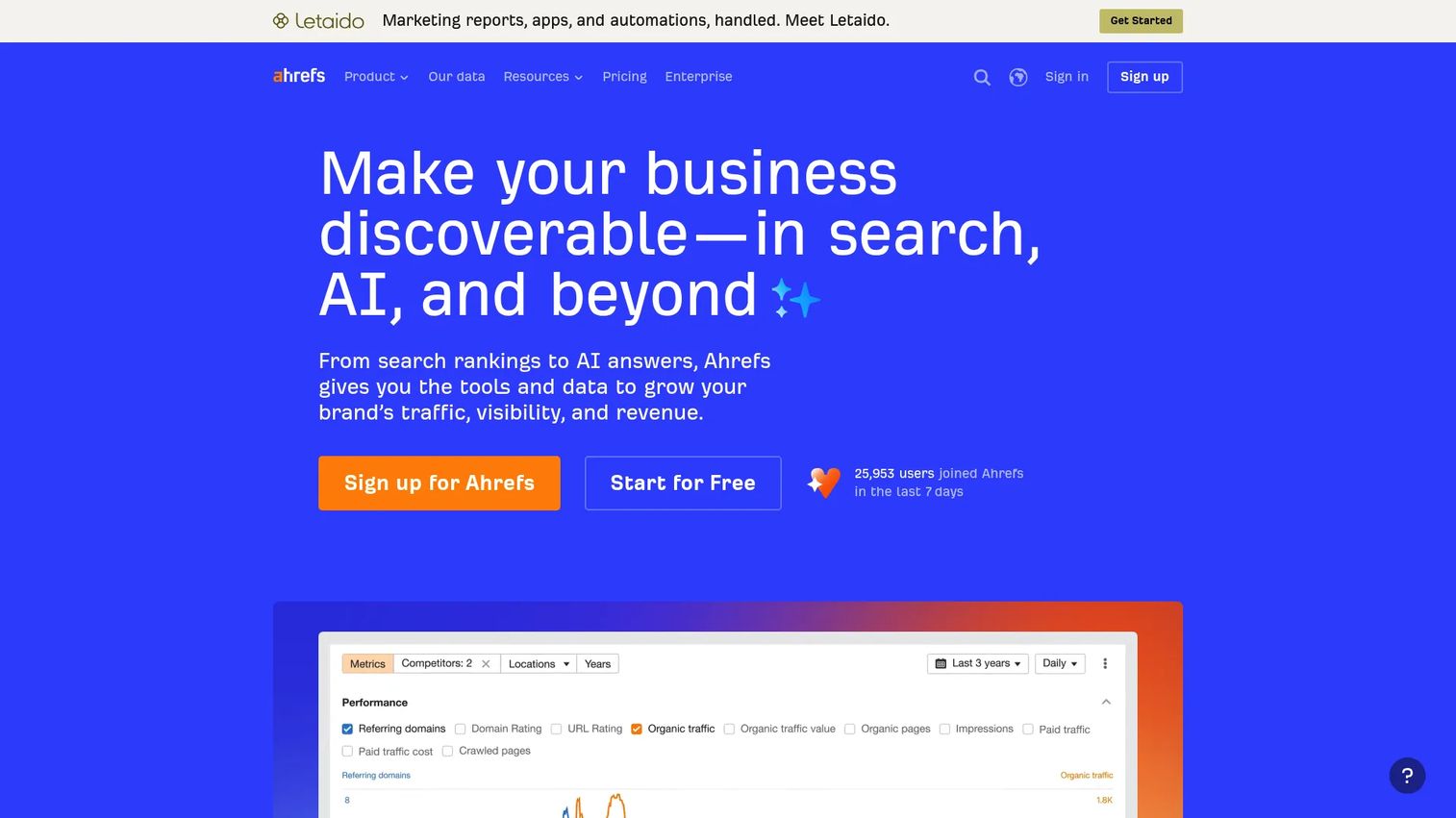
Ahrefs includes API access across its subscription plans, covering Site Explorer data for backlinks, referring domains, organic and paid traffic, and historical charts, alongside Keywords Explorer, Rank Tracker, and Site Audit endpoints. API access is included from the Lite plan, with the number of API integration units scaling up across tiers.
Best for: Technical SEO teams and product teams that already trust Ahrefs metrics and want them available programmatically.
Key features
- Referring domains and backlink reports with historical data
- URL-level and domain-level backlink metrics
- Site Explorer data including organic and paid traffic
- Rank Tracker and Site Audit endpoints
- Batch Analysis for multi-domain requests
Why choose Ahrefs API: Ahrefs has a strong backlink index reputation among technical SEO practitioners. If the team already uses Ahrefs for audits and competitive research, API access on existing plans avoids adding another vendor and another monthly invoice.
Ahrefs pricing: Plans run $129/mo (Lite), $249/mo (Standard), $449/mo (Advanced), and custom for Enterprise. Lite includes 200,000 API integration units per month, Standard includes 800,000, and Advanced includes 2,000,000. Enterprise includes 4M units with custom options. Prices are shown before tax.
G2 rating: 4.5/5 for Ahrefs overall.
6. Moz Links API
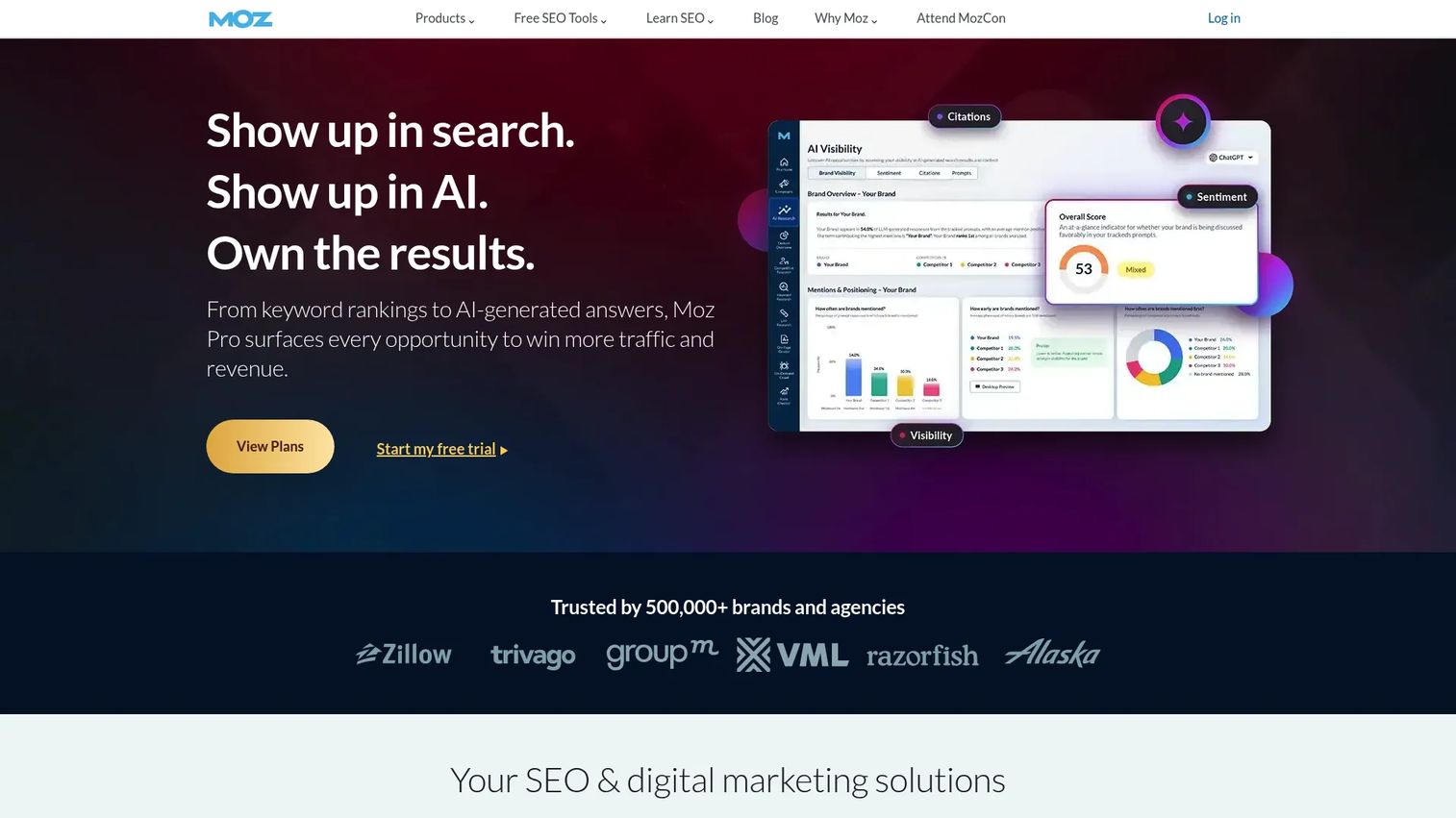
Moz provides programmatic access to its link index through the Links API, covering Domain Authority, Page Authority, linking domains, anchor text, and spam score signals. For teams whose stakeholders think in terms of DA when evaluating link value, this API keeps those metrics available in custom reports and dashboards.
Best for: Teams that report on domain authority and page authority metrics and want those figures available programmatically.
Key features
- Domain Authority and Page Authority scores
- Linking domains and backlink data from Moz's index
- Anchor text data
- Spam score signals
- Programmatic access for dashboards and applications
Why choose Moz Links API: The authority metrics case is real for teams presenting link health to non-technical stakeholders. DA is a recognizable shorthand in many organizations, and keeping it inside a reporting feed avoids manual lookups.
Moz pricing: Contact Moz directly for current API plan options and quotas.
7. Majestic API
Majestic is a backlink intelligence provider whose API gives programmatic access to its Fresh and Historic indexes. The API returns Trust Flow, Citation Flow, Topical Trust Flow, anchor text, redirect data, crawl history, and discovery dates in JSON or XML. SDK connectors exist for Python, PHP, Java, Ruby, Perl, and C#.
Best for: SEO agencies and analysts who evaluate link quality through Trust Flow and topical relevance signals rather than generic authority scores.
Key features
- Trust Flow and Citation Flow metrics
- Topical Trust Flow for niche relevance analysis
- Fresh Index and Historic Index access
- Anchor text, redirects, image links, and nofollow markers
- JSON or XML responses with API-key and OpenApp authentication
Why choose Majestic API: Trust Flow and Citation Flow are distinct metrics with a dedicated user base, particularly in agencies doing link audits and outreach qualification. If your workflow already references these figures, the API keeps them in your reporting layer rather than in a browser tab.
Majestic pricing: The API plan costs $399.99/mo (monthly) or the equivalent of $333.33/mo billed annually at $3,999.90 per year. The plan includes 5 users, 100M analysis units, and 950 report units per month. Custom higher-volume options are available.
G2 rating: 4.3/5 for Majestic.
8. LinkResearchTools API
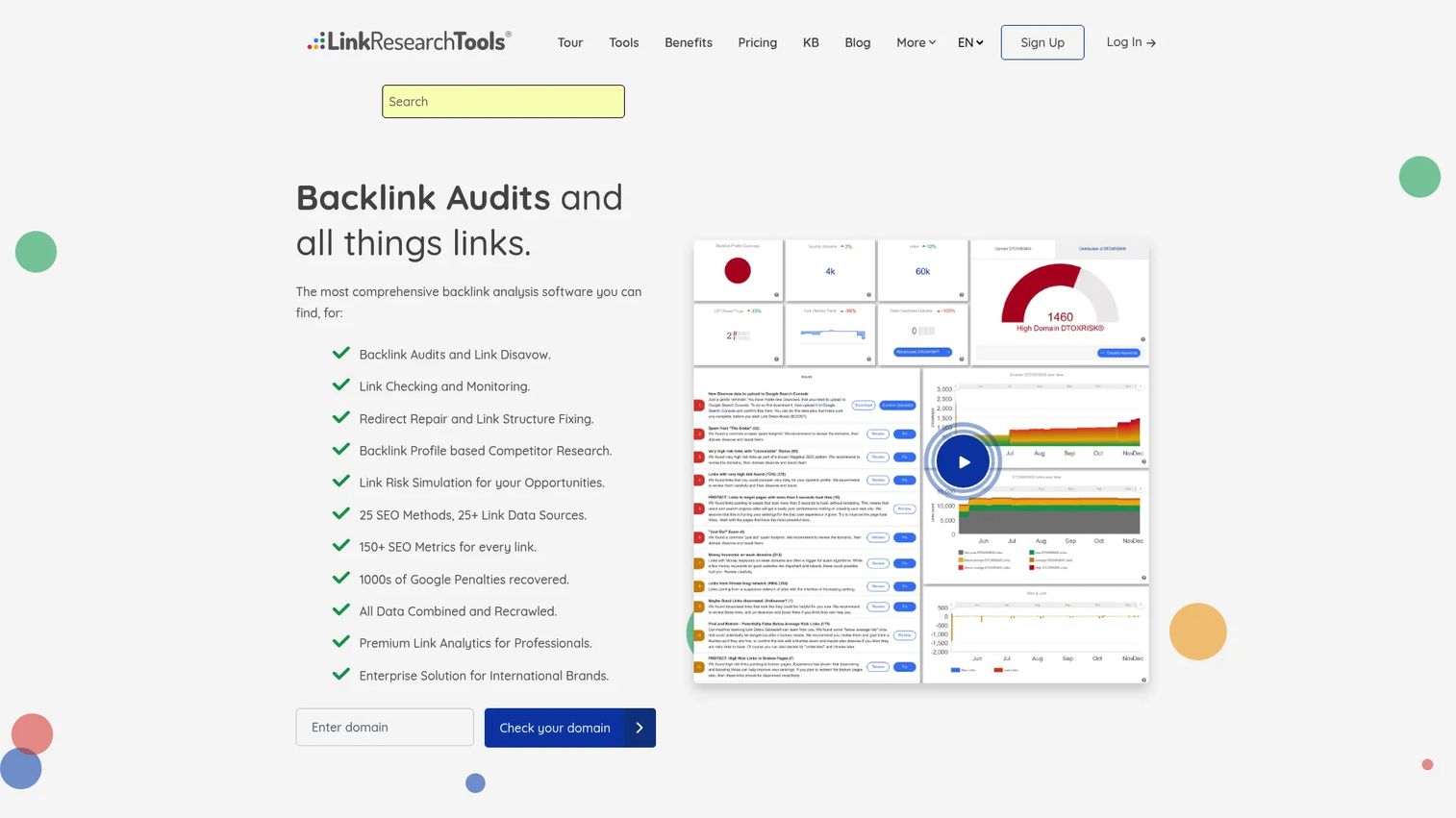
LinkResearchTools offers an API for starting Bulk URL Analyzer reports programmatically and retrieving backlink metrics in JSON format. The platform is built around link-risk workflows: Link detox, penalty recovery, toxic link detection, and competitive link analysis. API queries run as reports against package credits.
Best for: Agencies and enterprise SEO teams running link audits, disavow campaigns, or recovery monitoring after penalty events.
Key features
- Bulk URL Analyzer via HTTP POST or GET (up to 10,000 URLs per query)
- Link risk scoring and detox workflows
- Backlink audit data in JSON format
- Competitive link analysis
- Recovery monitoring for penalty scenarios
Why choose LinkResearchTools API: This is a risk-first tool, not a general backlink lookup API. The right fit is a team dealing with toxic links, manual actions, or disavow work where the decision requires a risk score per link, not just a count.
LinkResearchTools pricing: Plans start at $599/mo (Superhero Small, with a $17 for 7-day trial), then $999/mo (Superhero Standard) and $2,499/mo (Superhero Plus). Enterprise pricing is bespoke. API use counts against package report credits.
G2 rating: 4.0/5 for LinkResearchTools.
9. SEO Review Tools Backlink Checker
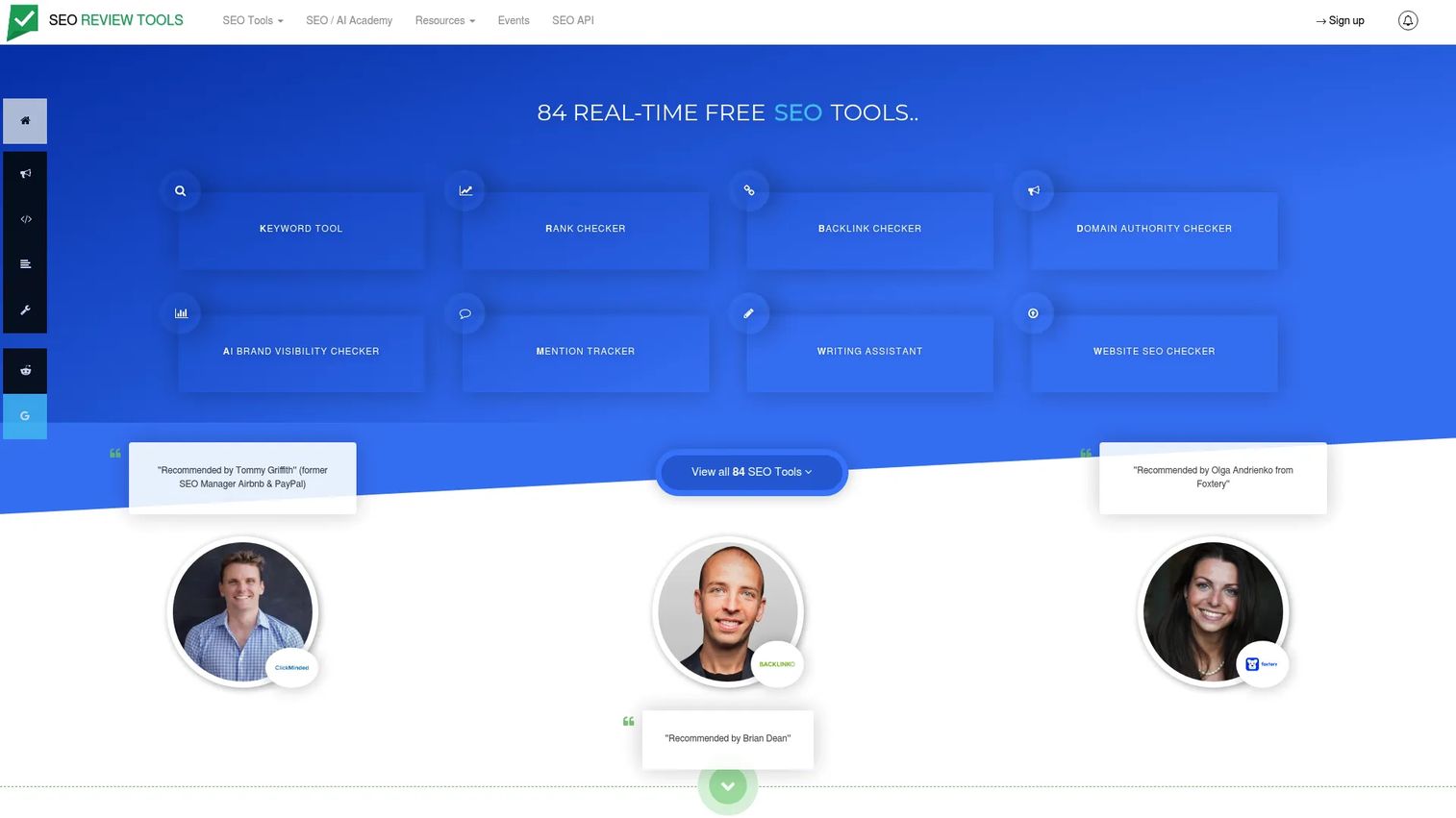
SEO Review Tools provides a free backlink checker that shows up to 100 of the most valuable backlinks for a domain or URL, including anchor text, follow/nofollow status, referring domains, referring IPs, and total external links. Results export to CSV. The tool also surfaces broken, new, and competitor backlink views within the same interface.
Best for: Marketers who need a quick backlink check for a domain or page before committing budget to a paid API.
Key features
- Free backlink lookup for domain or specific URL
- Up to 100 most valuable backlinks per check
- Anchor text, follow/nofollow status, and referring IPs
- Broken, new, and competitor backlink views
- CSV export
Why choose SEO Review Tools Backlink Checker: This is a pre-purchase research tool, not a production API. Use it to get a quick read on a site's backlink profile, sanity-check a competitor's link count, or run a one-off lookup before deciding which paid API to trial.
SEO Review Tools pricing: The backlink checker is free, with a limit of 100 unique backlinks per domain or page. Separate paid API plans start at $75/mo for teams that need higher volumes.
10. Serpstat API
Serpstat offers a JSON-RPC 2.0 API covering keyword research, domain analysis, backlink analysis, site audit, and rank tracking from a single authenticated endpoint. Backlink data sits alongside search and keyword datasets, making Serpstat a consolidation option for teams that want multiple SEO datasets without maintaining separate API keys and billing relationships.
Best for: SEO teams that want backlink, keyword, and rank data accessible from one API without managing multiple vendors.
Key features
- Backlink analysis and referring domain data
- Anchor text reports
- Keyword research and domain analysis endpoints
- Rank tracking and site audit data
- Integrations with Google Sheets, Looker Studio, Python, and R
Why choose Serpstat API: The consolidation argument is straightforward for growth teams running multi-dataset SEO reports. If you need backlinks, rank, and keyword data in the same workflow, a single API key and one monthly invoice is easier to justify than maintaining separate subscriptions.
Serpstat pricing: API access starts with the Team plan at $100/mo. The Team x2 plan runs $169/mo and the Agency plan $410/mo. The Individual plan at $50/mo does not include API access. API-only and enterprise solutions are available on request. A 7-day trial is available.
G2 rating: 4.6/5 for Serpstat overall.
11. CognitiveSEO API
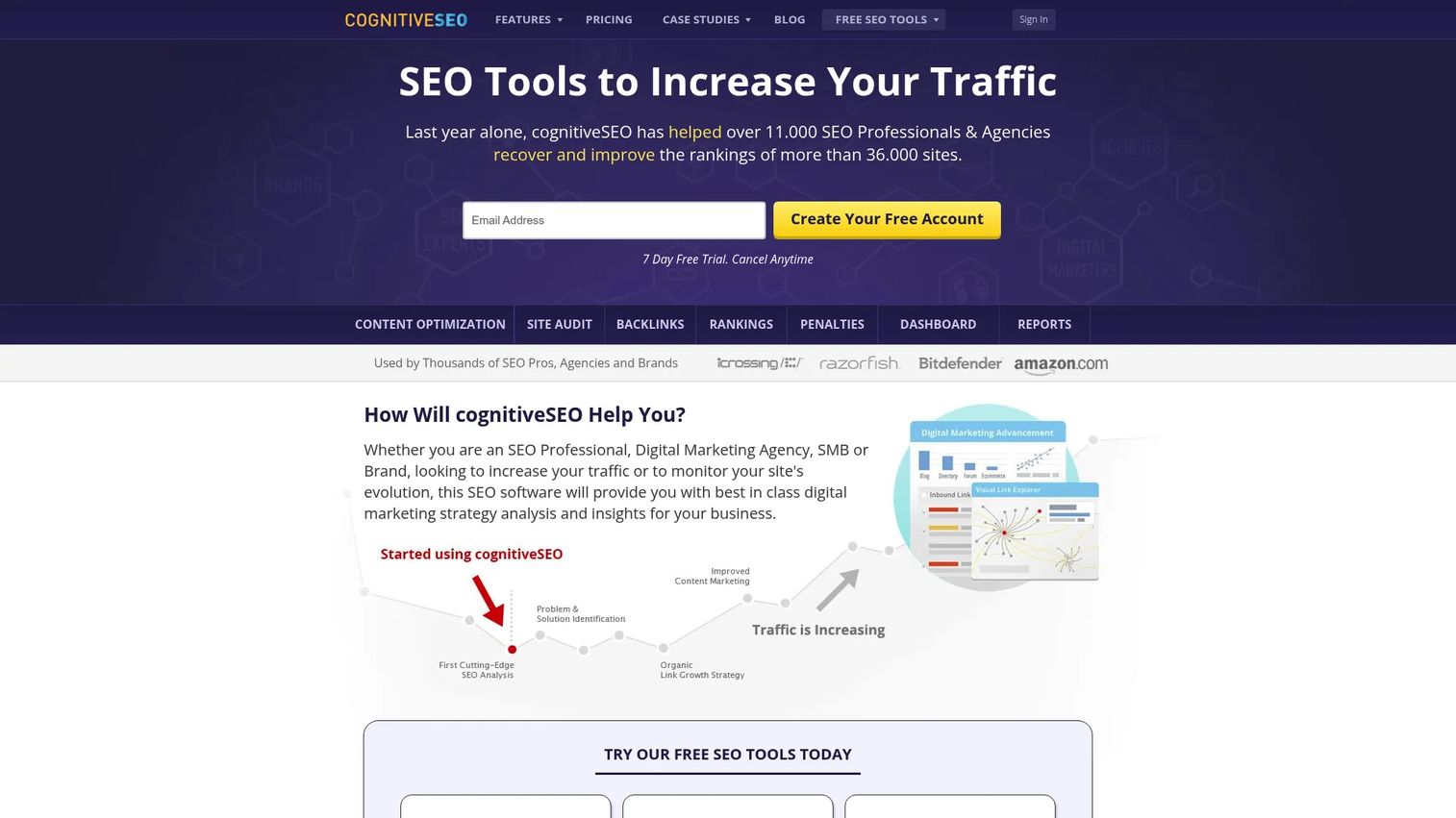
CognitiveSEO is an SEO platform with backlink analysis, link audit workflows, unnatural link detection, keyword rank tracking on Google, Bing, and Yahoo, and social visibility data. The API exposes these datasets for integration into applications and business workflows. API access is available on Premium and above plans.
Best for: Teams focused on backlink audits, unnatural link pattern detection, and ongoing SEO campaign monitoring.
Key features
- Link analysis and backlink audits
- Unnatural link detection for manual action recovery
- Keyword rank tracking across Google, Bing, and Yahoo
- Social visibility data processing
- Campaign and dashboard integrations
Why choose CognitiveSEO API: The unnatural link detection capability makes this relevant for teams managing sites with historical link spam issues or running proactive audits before link-building campaigns. The rank tracking and social data round out the reporting picture without requiring a separate tool.
CognitiveSEO pricing: A 7-day free trial is available. Plans run $129.99/mo (Starter), $199/mo (Premium), and $499/mo (Elite). API access is documented for Premium and above, with the Elite plan listing it in the feature table.
G2 rating: 4.4/5 for CognitiveSEO.
Considerations when choosing a backlink checker API
Index freshness and crawl coverage
No third-party backlink index matches Google's. Every vendor crawls the web at a different frequency and depth, so results will vary, sometimes significantly. Before committing, test the same set of domains across your top two or three finalists and compare how many referring domains each returns, which new links each detects, and how long it takes for a recently published link to appear.
Metrics that match your reporting model
Authority scores (DA, Trust Flow, InLink Rank) are useful for stakeholder communication but not universal. Some teams need first-seen dates and lost-link records for PR attribution. Others need anchor text distribution for SEO audits. Map the fields you need to the API's actual schema before signing up.
Bulk access and rate limits
A team checking 50 domains monthly has very different needs than a SaaS platform checking thousands of URLs daily. Check the API's requests-per-minute ceiling, row limits per call, and credit consumption per request type. The entry price rarely reflects what you'll pay at production volume.
Historical data and link-loss tracking
Historical depth varies by provider. Some APIs return first-seen dates back to 2019; others have shallower records. For PR attribution, migration recovery, or competitive trend analysis, ask specifically what date range the history endpoint covers and whether lost-link records include a reason code.
Pricing that survives scale
Calculate cost from your actual workflow volume, not the entry tier. Take your monthly domain count, multiply by refresh frequency, estimate average rows returned per request, then apply the per-row or per-credit rate. A tool that looks affordable at $100/mo can become a budget issue at 10,000 domains per week.
Conclusion
The right backlink API depends on where the data needs to go, how often it needs to refresh, and which metrics your team actually acts on.
For pure API infrastructure at developer-friendly pricing, DataForSEO Backlinks API leads on endpoint breadth and pay-as-you-go flexibility. SE Ranking is the stronger choice for teams that want monitoring and exports without building everything from scratch. Semrush and Ahrefs make sense when your team already relies on those platforms and wants one fewer vendor to reconcile. Majestic and LinkResearchTools serve teams with specific link intelligence needs: Deep historic data or link-risk workflows respectively. SEO Review Tools covers the free check use case well before any budget decision is made.
Before you commit, pick three finalists, run the same 10 domains through each, and compare returned links, anchor data, freshness, and total cost at your actual domain volume. That test takes an afternoon and usually makes the decision obvious.
Start your journey with Guideflow today!
FAQs
A backlink checker API is an interface that lets applications retrieve structured backlink data for a domain, page, or URL without manual exports. It returns referring domains, anchor text, link status, discovery dates, and authority metrics in a consistent format. Teams use it to automate competitive research, feed dashboards, and monitor link profiles at scale.
At minimum, expect total backlinks, referring domains, anchor text, follow/nofollow status, and first-seen dates. Stronger APIs also return lost backlinks, link-loss timestamps, domain authority scores, spam or risk indicators, and country or TLD breakdowns. The fields that matter most depend on whether you're doing audit work, monitoring, or competitive gap analysis.
No. Third-party backlink APIs use their own crawlers and maintain independent indexes. Results will differ from Google Search Console and from each other, sometimes substantially. Google Search Console shows links Google has indexed for your own site; third-party APIs show what their crawlers have discovered across the whole web, which is a different picture.
Developer fit depends on documentation quality, endpoint variety, rate limits, response format, and pricing model. DataForSEO Backlinks API and SE Ranking Backlinks API both offer well-documented REST endpoints, pay-per-use or subscription billing, and clear rate limit specifications. The best choice comes down to whether you need a pure data feed (DataForSEO) or monitoring with platform context (SE Ranking).
Yes. Most APIs support domain-level queries that return referring domains, top-linked pages, anchor text distribution, and new link acquisition over time. DataForSEO also offers a link intersection endpoint specifically for identifying domains that link to competitors but not to you, which is a practical starting point for outreach campaigns.
Pricing models vary: DataForSEO charges per request and per row, Bishopi and SE Ranking sell monthly credit bundles, Ahrefs and Semrush gate API access behind subscription plans with separate unit purchases, and Majestic charges a flat monthly fee for API plan access. Calculate your actual cost by multiplying your monthly domain volume by your refresh frequency and the per-request rate, not by comparing entry prices.
Accuracy depends on crawler coverage, index freshness, and how the provider handles canonicalization, redirects, and noindex pages. No provider is complete. The most reliable approach is to treat accuracy as relative rather than absolute: Test your most important domains against two or three finalists and choose the provider whose data best matches your known link acquisition history.
Several do, but depth varies. DataForSEO's history endpoint reaches back to 2019. Other providers have shallower records or offer historical depth only on higher-tier plans. For PR attribution, content performance analysis, or understanding how a competitor's link profile grew over time, verify the specific date range a provider covers before committing.