The quote lives in a spreadsheet. The job lives in a scheduling app nobody on the crew opens. The invoice gets typed up two days late from a photo of a handwritten work order. And the customer who asked for a follow-up estimate? They booked with the competitor who replied first.
That gap between office and field is where tree care companies lose money. Not on the trees. On the handoffs.
The shift toward digital is already well underway. By 2024, more than 67% of arboriculture professionals were using digital tools for tree inventory and scheduling, and those tools boosted operational speed by 48% compared with manual methods, according to Industry Research (2024). The worldwide arborist management software market reached USD 245.5 million in 2025 and is forecast to hit USD 517.8 million by 2032 at an 11.25% CAGR, per PW Market Research (2024). Translation: the paper-and-text-message era is closing, and the companies that fix their quote-to-invoice workflow are the ones pulling ahead.
The tricky part is that "arborist software" is not one thing. Some tools are dedicated tree care platforms with plant inventory and job costing baked in. Others are general field service management software that tree crews adapt. A few are lightweight field apps built for speed. This guide sorts them by the job you actually need done.
What's inside
This is a practical comparison of arborist software, tree care software, and broader tree service management software for teams shopping in 2026. It covers dedicated arborist platforms, general field service tools that tree crews use well, and lighter field-first apps.
We chose each tool against the criteria that decide whether software sticks:
- Scheduling and dispatch for crews and changing calendars
- Estimating and invoicing that move quotes to cash fast
- Tree and plant inventory plus field records, photos, and job history
- CRM and client communication, including client portals
- Mobile access so the field and office share one source of truth
The list includes options for solo operators, growing crews, and multi-location operations.
TL;DR
- Best all-in-one for tree, lawn, and landscape: Arborgold, with CRM, estimating, scheduling, inventory, and job costing in one system.
- Best dedicated arborist platform: ArboStar, purpose-built with an arborist CRM, live job map, and GPS tracking.
- Best for smaller and growing crews: Jobber, for clean quoting, scheduling, invoicing, and payments.
- Best for broader field-service operations: Service Autopilot, with routing, automation, and marketing tools alongside scheduling.
- Best tree-service specialist for end-to-end ops: SingleOps, for estimating, job workflow, and payments.
- Best lightweight field-first app: Treezi, for paperless estimates, unlimited tree inventory, and fast invoicing.
- Best simple option for small teams: Kickserv, for scheduling, estimates, invoicing, and payments without the overhead.
What is arborist software?
Arborist software is a category of tree service management software that helps tree care companies quote jobs, schedule crews, track trees and plants, invoice customers, and keep the office connected to the field. It sits at the intersection of arborist CRM, arborist estimating software, arborist scheduling software, and field service management software, tailored to the realities of tree work: site assessments, tree inventory, and multi-crew dispatch.
The strongest arborist business software pulls the whole job lifecycle into one place. A lead becomes an estimate, the estimate becomes a scheduled work order, the crew logs progress and photos from the field, and the invoice goes out before the truck is back in the yard.
Core capabilities to expect:
- Arborist CRM: contact records, communication history, and lead tracking
- Estimating and proposals: tree service estimate software with reusable line items and digital approvals
- Scheduling and dispatch: crew calendars, route and dispatch planning, and change management
- Tree inventory software: trees, plants, notes, photos, and service history tied to a site
- Work order management: job status, crew notes, and field capture
- Invoicing and payments: invoicing software with online payment and follow-up
- Mobile arborist app: field access for crews on phones and tablets
- Client portal: self-serve estimates, invoices, and service records for customers
Cloud-based delivery is now the default. In 2024, cloud solutions accounted for over 65% of arborist software deployments, and mobile apps were preferred by over 60% of arborists for job tracking and client communication, per Global Market Statistics (2024).
When to use arborist software
Use it when scheduling and dispatch are breaking down
If you are juggling crews across sites by text message, missed appointments and double-bookings become routine. Arborist scheduling software assigns crews, absorbs last-minute calendar changes, and keeps everyone looking at the same plan. This matters most as job volume climbs past what one person can hold in their head. Crew scheduling and route and dispatch features turn a chaotic morning into a set sequence of stops.
Use it when quotes and invoices are slowing cash flow
Every day between finished job and sent invoice is a day you are financing your customer. Tree service estimate software with a clean estimate-to-invoice workflow closes that gap. Mobile approvals let a customer sign off on-site, and automated follow-up chases the unpaid balance so you do not have to. Faster quote and invoice workflow is often the single biggest cash-flow lever a tree care business can pull.
Use it when tree inventory and field records are getting messy
Tree work generates records: species, condition, treatment history, before-and-after photos, hazard notes. When those live in someone's phone or a filing cabinet, they are effectively gone. Tree inventory software with field-first capture and asset tracking keeps every tree, plant, and job note attached to the site, ready for the next visit or the next estimate.
Use it when the office and crews need one source of truth
When the office and the field work from different information, jobs slip. An arborist CRM with a client portal and shared work tracking gives everyone the same view: what was quoted, what was scheduled, what got done, and what the customer sees.
Comparison table
Use this table to separate dedicated arborist platforms from broader field-service tools and lighter field-first apps. Pricing and ratings are current as of mid-2026; verify on each vendor's site before you buy.
| # | Product | Intent | Key use case | Pricing | G2 rating |
|---|---|---|---|---|---|
| 1 | Arborgold | All-in-one arborist business software | CRM, estimating, scheduling, inventory, job costing | From $129/mo | 4.3/5 |
| 2 | ArboStar | Dedicated arborist platform | Arborist CRM, live job map, GPS tracking | From $250/mo | Not listed |
| 3 | Jobber | Field service management software | Quoting, scheduling, invoicing, payments | From $29/mo | 4.6/5 |
| 4 | Service Autopilot | Broad field-service platform | Routing, automation, billing, marketing | From $49/mo | Not listed |
| 5 | SingleOps | Tree-service specialist | Estimating, job workflow, invoicing, payments | Contact vendor | Not listed |
| 6 | Treezi | Lightweight field-first app | Paperless estimates, tree inventory, invoicing | From $49.99/user/mo | 4.2/5 |
| 7 | Kickserv | Simple field-service tool | Scheduling, estimates, invoicing, payments | From $60/mo | 4.5/5 |
1. Arborgold
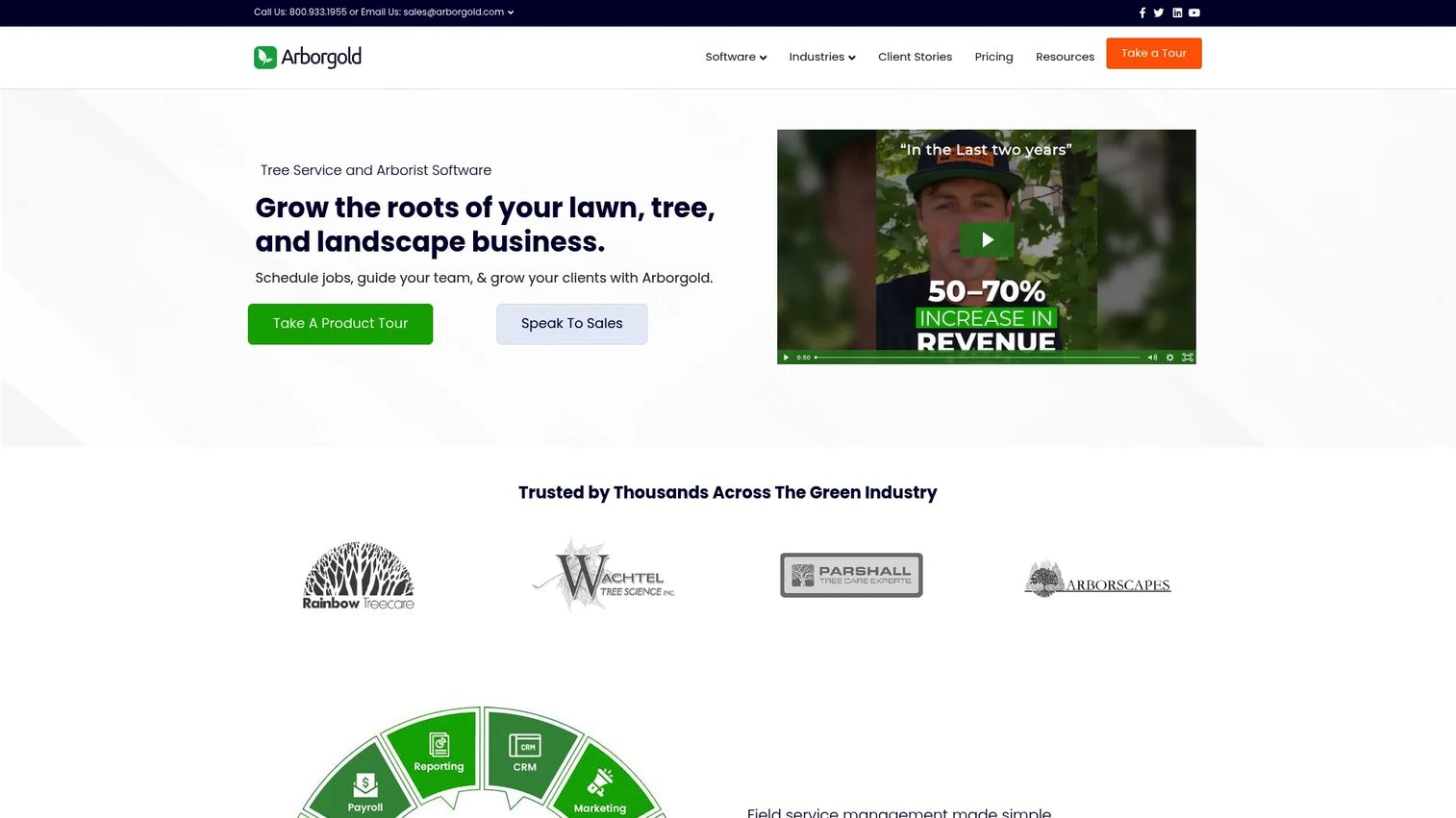
Arborgold is all-in-one field service and business management software built for tree, lawn, and landscape companies. It brings CRM, estimating, scheduling, and invoicing into a single system, then layers on the operational depth tree crews actually need: job costing, renewals, and material inventory. For an owner tired of stitching together three apps, it is one of the most complete arborist business software options on this list.
Best for: Tree, lawn, and landscape service businesses that need scheduling, estimating, and job management in one platform.
Key strengths
- End-to-end business management: CRM, estimating, scheduling, and invoicing run in one connected workflow.
- Job costing and renewals: Track profitability per job and automate recurring service renewals.
- Field and office sync: Mobile crew tracking, messaging, and QuickBooks plus calendar integrations keep everyone aligned.
Why choose Arborgold: If your operation spans tree care plus lawn or landscape work, Arborgold's breadth pays off. The material inventory and job costing depth suit companies that want to know margin by job, not just revenue by month. It is a fuller commitment than a lightweight app, and that is the point for teams scaling past a handful of crews.
Arborgold pricing: Arborgold publishes three plans: Starter at $129/mo, Professional at $299/mo, and Enterprise at $499/mo. An annual contract is required, and the company advertises savings of up to $100/mo on annual billing. There is no free tier. Its G2 rating is 4.3/5.
2. ArboStar
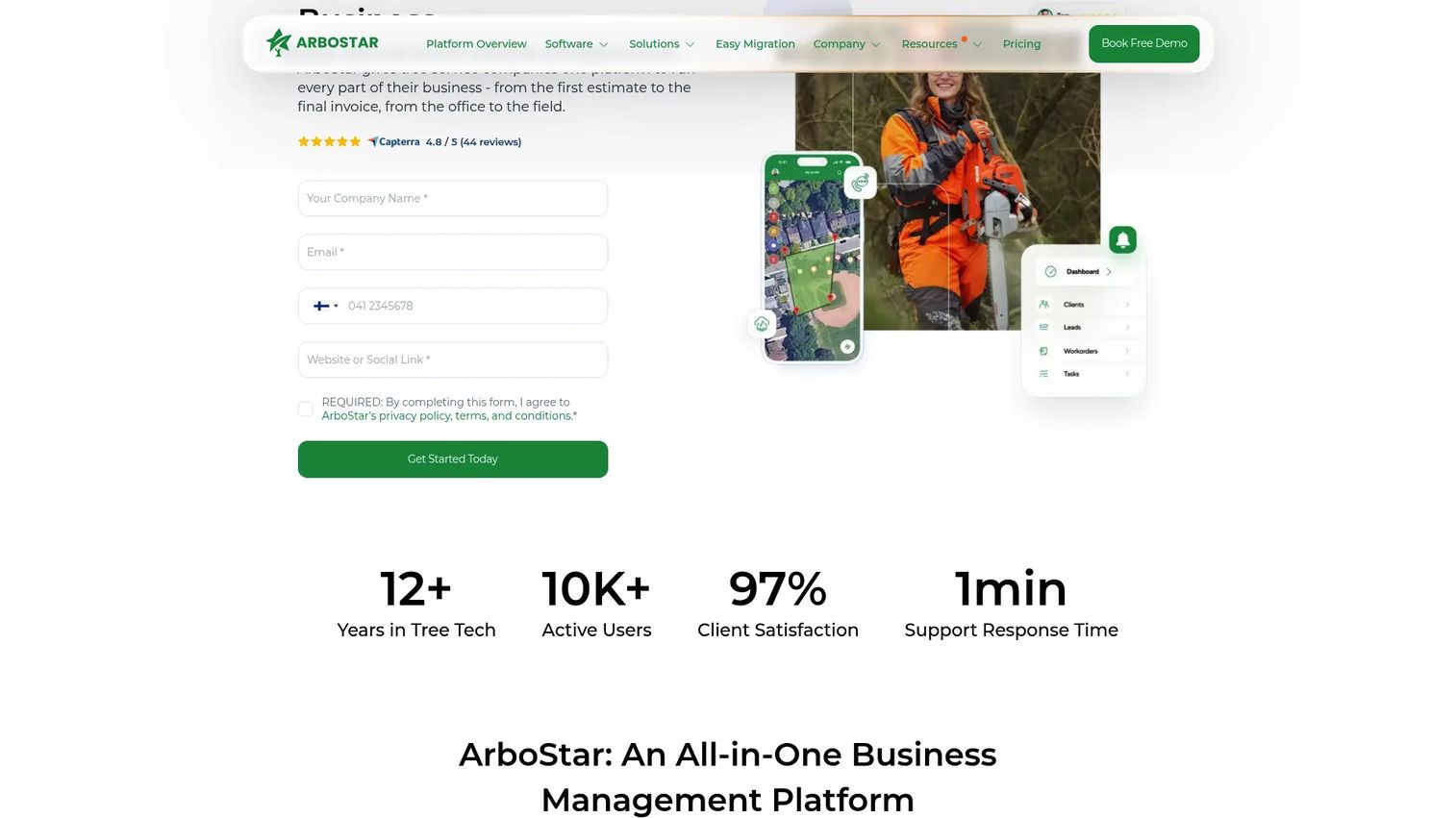
ArboStar is tree care and arborist business management software built specifically for the trade. Where general tools get adapted to tree work, ArboStar starts there. Its arborist CRM, scheduling, and invoicing tools are paired with a Live Job Map and GPS tracking, so you can see where crews are and what they are doing in real time. For companies that want a dedicated tree care system rather than a repurposed field service app, it is a natural shortlist entry.
Best for: Tree service and arborist companies that want an all-in-one operations platform designed for the trade.
Key strengths
- Purpose-built arborist CRM: Contact, lead, and job management shaped around tree care workflows.
- Live Job Map and GPS tracking: Real-time visibility into crew location and job status.
- Scheduling and invoicing: Estimate-to-invoice flow with dispatch built for multi-crew operations.
Why choose ArboStar: The pitch is specialization. If your workflows are distinctly arboricultural and you would rather not bend a generic tool to fit, ArboStar's trade-specific design removes friction. Teams that value live field visibility over a bare-bones interface will find the GPS and job-mapping tools genuinely useful for daily dispatch.
ArboStar pricing: ArboStar uses customized pricing that starts from $250 per month, with annual subscriptions offering two months free. Plans are tailored to your operation rather than sold off a fixed tier list, so the starting price is a floor rather than a flat rate. There is no free tier.
3. Jobber
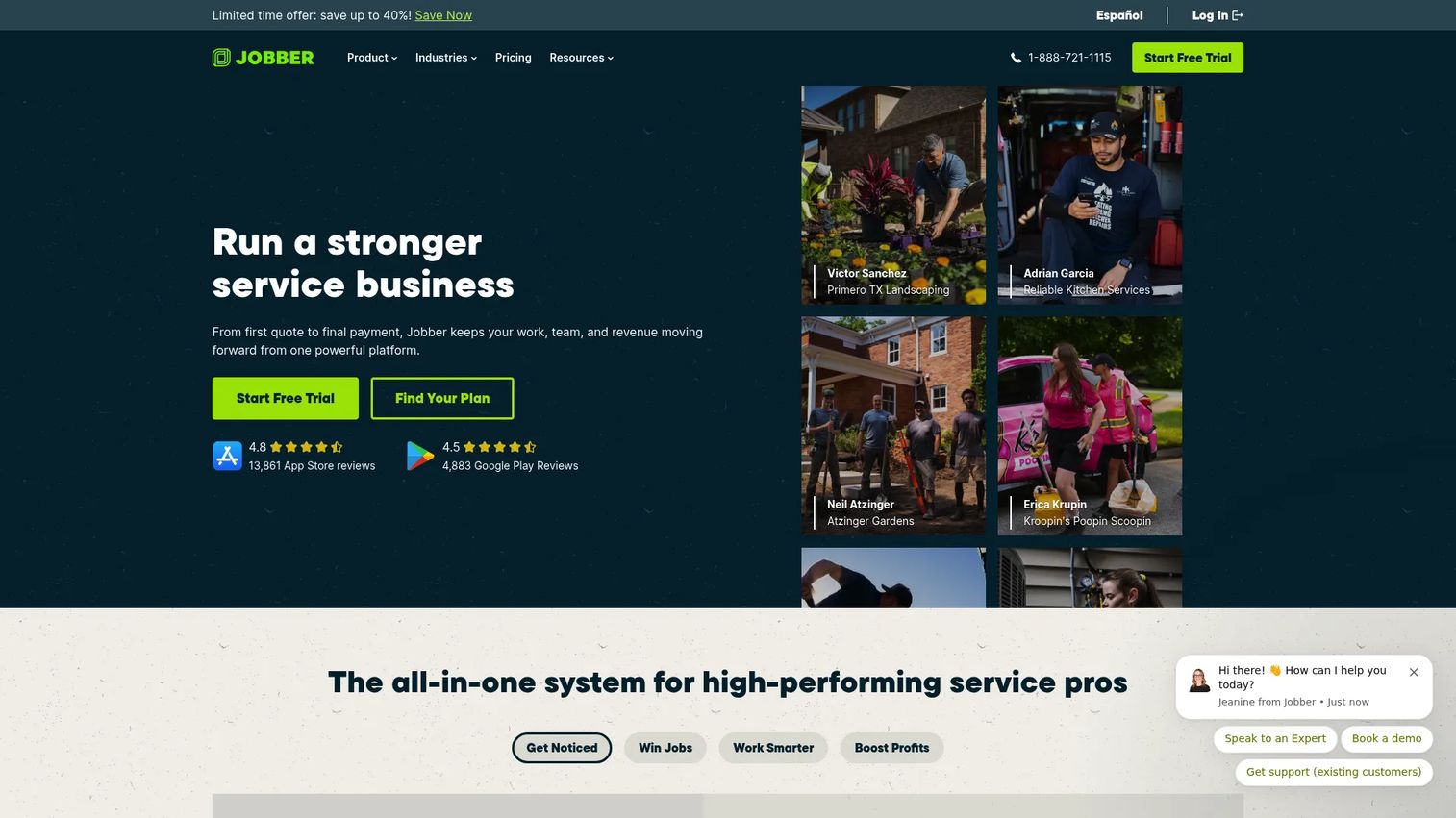
Jobber is field service management software for small service businesses, and it is a strong fit for tree crews that want a clean, fast platform without a steep ramp. It handles quoting, scheduling, invoicing, and payments in one place, with a client hub that gives customers a self-serve portal for approvals and payment. It is not arborist-specific, so deep tree inventory tracking is lighter than the dedicated platforms, but for many growing crews that trade-off is worth the simplicity.
Best for: Home service and field service teams that need quoting, scheduling, invoicing, and payments in one straightforward system.
Key strengths
- Scheduling and dispatching: Assign crews, adjust the calendar, and keep the day organized.
- Quoting and invoicing: Turn estimates into invoices quickly and get paid faster.
- Client hub and online payments: A client portal for approvals, invoices, and self-serve payment.
Why choose Jobber: Jobber wins on ease of use and speed to value. Smaller and growing crews that prioritize a simple quote and invoice workflow over specialized tree inventory software will get running fast. If you later need deeper arborist-specific inventory, you may pair it with a specialist tool, but many teams never feel the gap.
Jobber pricing: Jobber's Grow plan runs $199/mo monthly or $149/mo billed annually, and the Plus plan is $499/mo monthly or $399/mo annually. Add-ons include a Marketing Suite at $79/mo, an AI Receptionist at $29/mo, and Pipeline at $49/mo. There is a 14-day free trial with full access to the Grow plan, though no permanent free tier. Its G2 rating is 4.6/5.
4. Service Autopilot
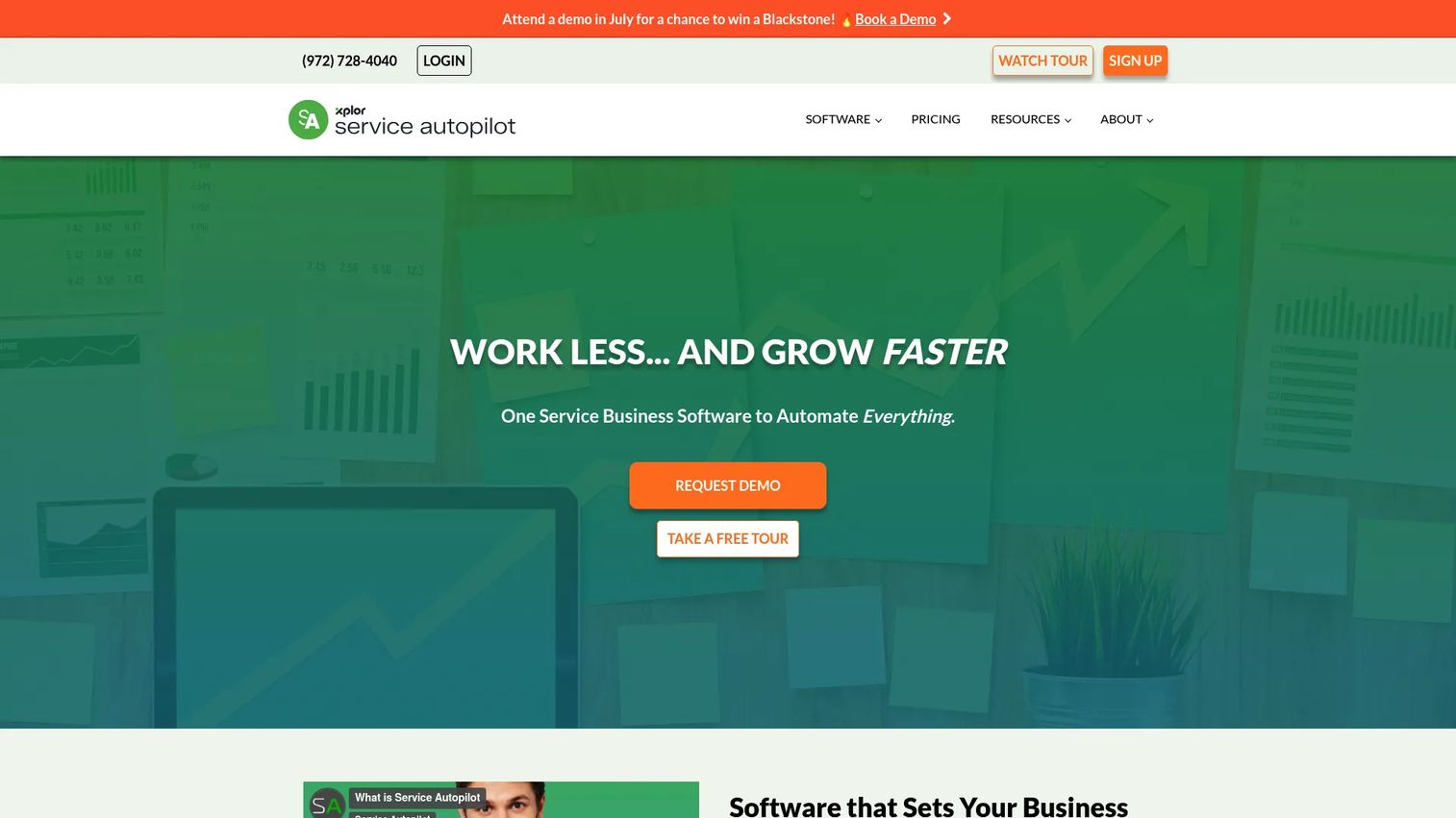
Service Autopilot is field service management software built for service businesses like lawn care, cleaning, snow removal, and landscaping, and tree care teams with broader service lines use it well. Its strength is operational breadth: scheduling and route optimization, invoicing and payments, plus automations, a client portal, and marketing tools that most tree-specific platforms leave out. If your business runs multiple service types alongside tree work, its range fits.
Best for: Small to mid-sized service businesses that need scheduling, dispatch, invoicing, and automation across several service lines.
Key strengths
- Scheduling and route optimization: Plan efficient routes and dispatch crews across sites.
- Automations and marketing: Automate follow-ups, reminders, and customer marketing.
- Billing and integrations: Invoicing, payments, expense tracking, and QuickBooks integration.
Why choose Service Autopilot: Choose it when tree care is one of several services you run. The automation engine and route planning shine for companies managing high stop counts and recurring visits. It is a broader field service platform rather than an arborist-first system, so it suits operators who value operational range over trade-specific tree inventory depth.
Service Autopilot pricing: Service Autopilot lists four plans on annual subscription rates: Startup at $49/mo, Pro at $199/mo, Pro Plus at $499/mo, and Elite at custom pricing, each with a sign-up fee. There is no free tier.
5. SingleOps
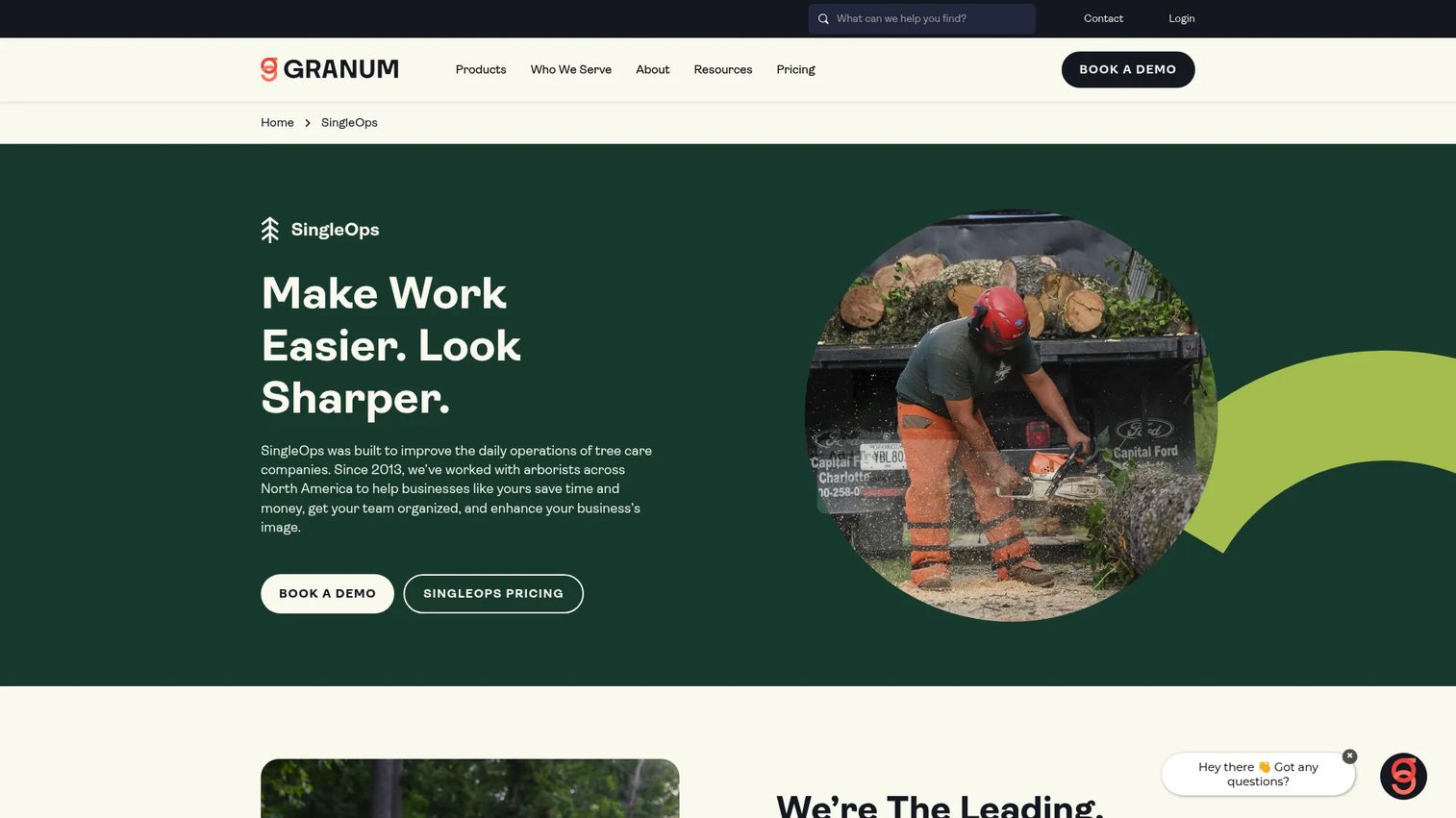
SingleOps is a software platform for tree service and landscaping companies to manage jobs, scheduling, estimates, invoicing, payments, and customer communication. It is built as an end-to-end tree service management software system, so the workflow from lead to paid invoice stays in one place. For tree care companies that want a specialized platform rather than a general FSM tool, it is a serious contender.
Best for: Tree care and landscaping businesses that need end-to-end field service operations software.
Key strengths
- Client management and CRM: Centralized contact, lead, and communication records.
- Job workflow and scheduling: Move jobs through estimating, scheduling, and completion in one flow.
- Digital documents and payments: Digital documents, invoicing, and integrated payments.
Why choose SingleOps: SingleOps suits operators who want tree-service depth without cobbling together apps. The job workflow management is the core draw, keeping estimating, scheduling, and invoicing connected. It fits teams ready to invest in a specialized platform and grow into its full operational feature set.
SingleOps pricing: SingleOps publishes three subscription tiers, Essential, Plus, and Premier, but prices are not listed publicly. You contact the company for a quote based on your operation. Because pricing is quote-based, budget an evaluation call into your buying timeline.
6. Treezi
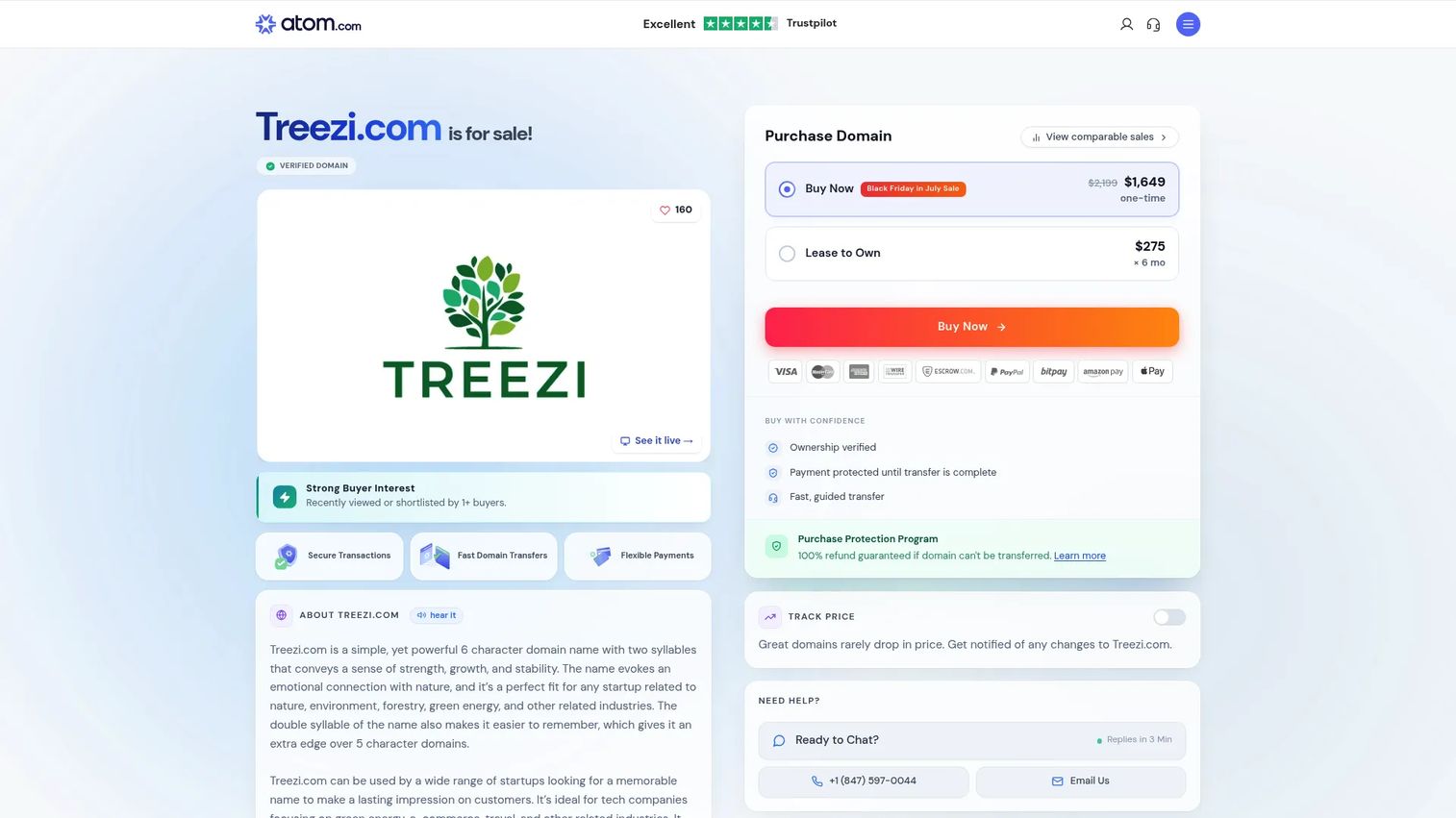
Treezi is tree service software for estimates, scheduling, job tracking, invoicing, and client management, built to feel light and field-friendly. Its standout is unlimited tree inventory paired with fast paperless estimates and proposals, so crews capture what they see on-site and turn it into a customer-facing deliverable quickly. For teams that want a mobile arborist app without a heavy back office, Treezi hits the mark.
Best for: Tree care companies that want an all-in-one field operations and estimating tool that stays simple.
Key strengths
- Unlimited tree inventory: Capture trees and plants without hitting record caps.
- Estimates and proposals: Build paperless estimates and send professional proposals fast.
- Scheduling and job progress: Track scheduling and field progress in one view.
Why choose Treezi: Treezi is the lightweight, field-first pick. If your priority is quick inventory capture and clean customer-facing estimates over deep back-office job costing, it fits. It works well for smaller crews that want speed and simplicity, with the option to contact sales as you scale past nine crews.
Treezi pricing: Treezi's Boost-In plan is $49.99 per user per month, or $503.88 per user per year (about $41.99/mo) on annual billing. Teams with nine crews or more are asked to contact sales. The pricing page notes a free way to get started, though a separate free plan is not detailed. Its G2 rating is 4.2/5.
7. Kickserv
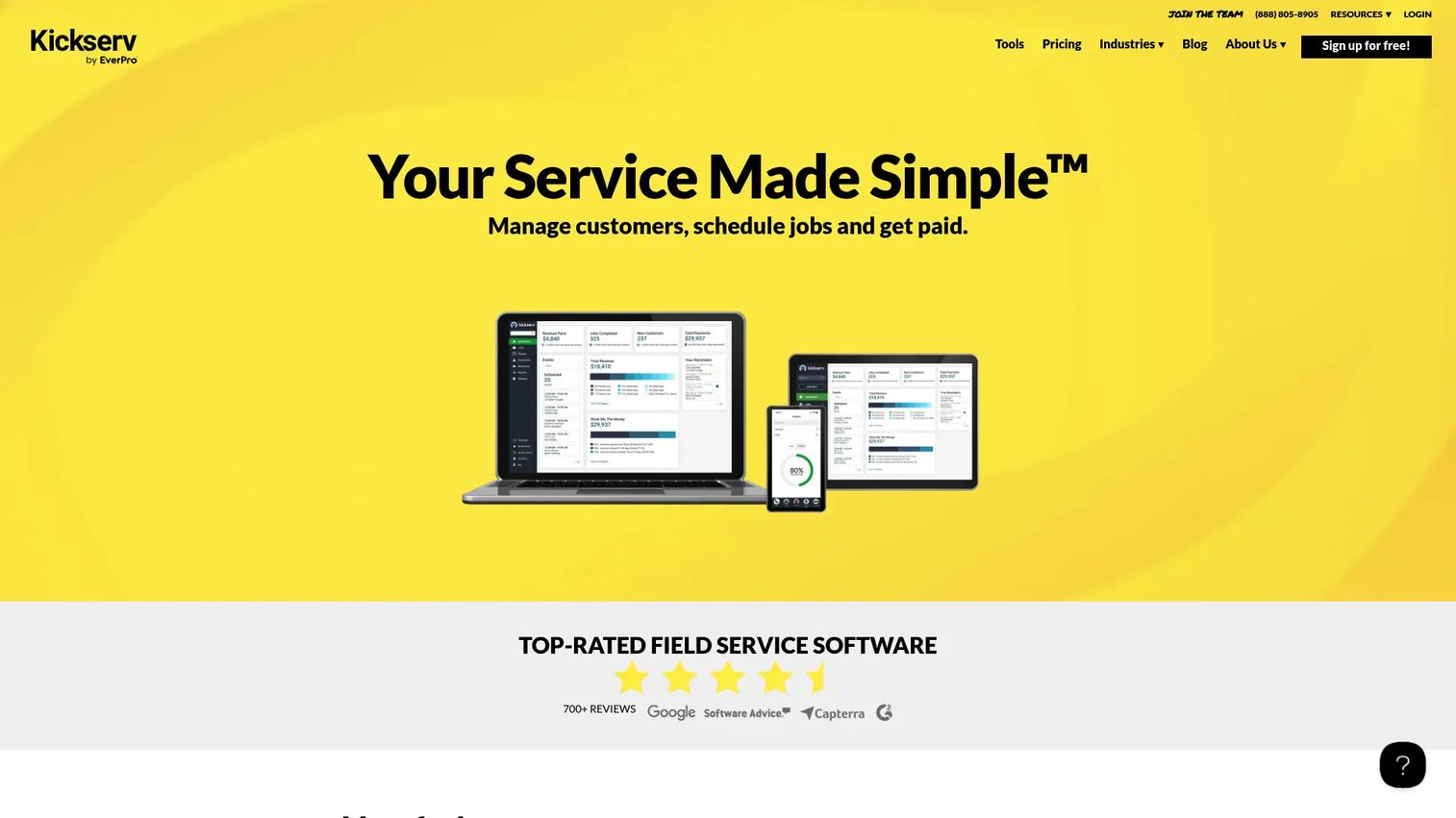
Kickserv is field service management software for scheduling, customer management, estimates, invoicing, and payments. It is a practical, no-frills option for smaller tree service teams that value speed and simplicity over specialized depth. Estimates with signature approval, job scheduling with GPS and time tracking, and clean customer job history cover the daily essentials without overwhelming a small crew.
Best for: Small to mid-sized field service businesses that need scheduling, dispatch, invoicing, and payments in one system.
Key strengths
- Customer management and job history: Keep contacts, jobs, and history in one place.
- Estimates with signature approval: Send estimates and capture on-site sign-off.
- Scheduling, GPS, and time tracking: Dispatch jobs, track crews, and log time.
Why choose Kickserv: Kickserv is the straightforward choice for small teams. It handles the core service-business workflow without arborist-specific inventory depth, so tree crews with heavy plant-tracking needs may use workarounds. For operators who mainly want fast scheduling, estimating, and invoicing, that simplicity is a feature, not a gap.
Kickserv pricing: Kickserv publishes three plans: Start at $60/mo for 5 users, Run at $119/mo for 10 users, and Scale at $199/mo for 20 users. Each plan offers a 30-day free trial, though there is no permanent free version. Its G2 rating is 4.5/5.
How to choose the right arborist software
The right pick depends less on rank and more on the shape of your operation.
Match the tool to your service mix. If tree care is your whole business, a dedicated platform like ArboStar or SingleOps removes the friction of adapting a generic tool. If tree work is one of several services, a broader field service management software platform like Service Autopilot or an all-in-one like Arborgold covers more ground.
Weigh inventory depth against simplicity. Specialist tools with real tree inventory software (ArboStar, Treezi, SingleOps) suit companies whose records matter for repeat work and estimates. If you rarely revisit sites, a simpler tool like Jobber or Kickserv may be plenty.
Test the quote-to-invoice workflow. The fastest ROI usually comes from closing the gap between finished job and sent invoice. Run a real estimate through a trial and time how long it takes to reach a payable invoice.
Check mobile usability with your crew. The office may buy the software, but the field decides whether it survives. Put the mobile arborist app in a lead crew member's hands before you commit.
Confirm pricing and contract terms. Annual contracts, sign-up fees, and per-user pricing vary widely across this list. Confirm current terms directly with each vendor.
Conclusion
There is no single best arborist software, only the best fit for how your company runs. Arborgold is the strongest all-in-one for tree, lawn, and landscape operations that want CRM, estimating, scheduling, and job costing together. ArboStar and SingleOps are the specialists to shortlist when tree care is the whole business. Jobber and Kickserv suit smaller and growing crews that value a clean quote and invoice workflow. Service Autopilot fits operators running multiple service lines. And Treezi is the lightweight, field-first app for teams that want fast inventory capture and paperless estimates.
Your next step: pick two tools that match your service mix, start a trial on each, and run one real job from estimate to paid invoice through both. The tool that gets you paid fastest, with the least friction for your crew, is the one worth keeping.
FAQs
Arborist software manages the core workflows of a tree care business: estimating jobs, scheduling and dispatching crews, invoicing customers, tracking tree and plant inventory, and coordinating between the office and the field. It replaces the mix of spreadsheets, texts, and paper work orders most tree companies start with. The goal is one connected system from lead to paid invoice.
The features that decide daily usefulness are mobile access for crews, crew scheduling and dispatch, tree inventory with field capture, an arborist CRM for client records, and job tracking from estimate to invoice. Payments and a client portal round out the essentials. Prioritize the workflows where your team currently loses the most time.
They overlap heavily. Arborist software is a specialized form of field service management software, tuned for tree work with features like tree and plant inventory, site assessments, and multi-crew dispatch. General FSM tools like Jobber and Kickserv handle scheduling, estimates, and invoicing well, but dedicated arborist platforms add trade-specific depth that generic tools do not.
Smaller teams usually do best with a simpler, faster tool. Jobber and Kickserv both offer clean scheduling, estimating, invoicing, and payments without heavy setup. Treezi is another strong small-team option, with a light, field-first app and unlimited tree inventory for crews that want quick on-site capture.
Specialist platforms with real tree inventory software depth are the better fit. Treezi offers unlimited tree inventory built for field capture, while ArboStar and SingleOps tie inventory and job records into a full tree-service workflow. If revisiting sites and referencing past work drives repeat business, prioritize inventory depth in your shortlist.
Many do. Jobber's client hub, Service Autopilot's client portal, and the customer-facing tools in dedicated arborist platforms let clients view estimates, approve work, pay invoices, and see service history. A client portal reduces back-and-forth and speeds up approvals, which shortens the gap between finished job and paid invoice.
Crews use a mobile arborist app to view the day's schedule, capture tree inventory and site photos, update job status, and log time on-site. Many apps also let a customer approve an estimate or sign off on completed work in person. Mobile access keeps the office and field working from the same records in real time.
Look for scheduling that scales past a single dispatcher, a fast estimate-to-invoice flow, an arborist CRM with enough client and job history to support repeat work, mobile usability your crews will actually adopt, and reporting that shows job-level profitability. Test each on a real job before committing, and confirm contract terms and pricing directly with the vendor.